
How to Select the Right AMLR Provider.
From 10 July 2027, the EU Anti-Money Laundering Regulation (AMLR) replaces the patchwork of national rules with one directly applicable rulebook.
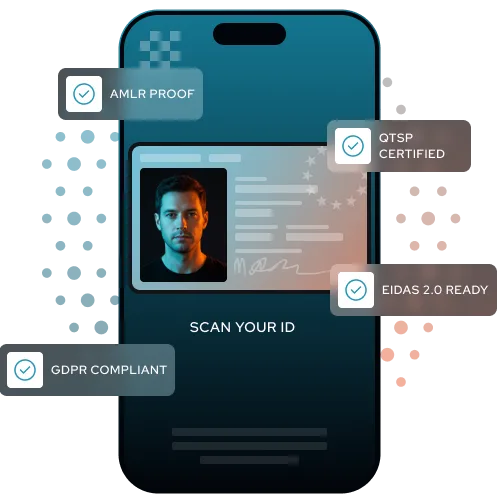
Selecting an AMLR provider, made simple.
Will your provider still be compliant on 10 July 2027?
The market is loud, and every vendor claims to be ready. Cut through the noise by checking three things, we’ll walk you through them.

The three criterias to make the right AMLR provider choice
IDnow’s (and soon to be your) secret weapon for AMLR
The Three Routes.
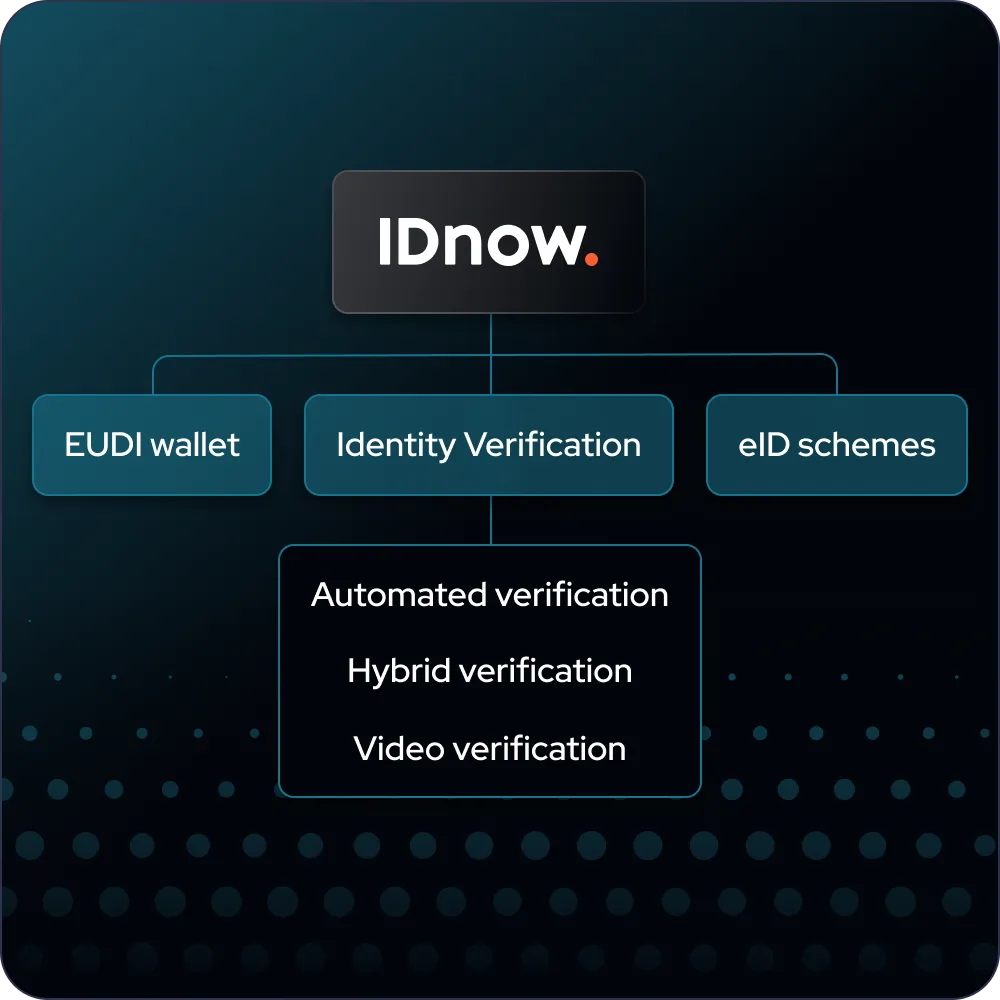
The AMLR regulation clearly defines three paths it recognizes as a compliant onboarding route.
IDnow’s offer cover all three.

EUDI Wallet
EUDI Wallets let customers share verified identity straight from their phone, and it becomes mandatory across the EU from November 2027. With integration taking 12 to 18 months, having it in your stack now is what keeps you compliant on day one.

eID Schemes
National eID schemes let citizens onboard with the government-issued digital identity they already trust, at the high assurance AMLR requires under Article 22. Supporting them means you capture the millions of customers who already carry one, rather than sending them down a slower route.

IDV + QES & QEAA
IDV with QES & QEAA covers everyone who has neither a wallet nor an eID, using document and video proofing built to the ETSI EN 119 461 standard. It is the route that keeps onboarding open for every customer, which is exactly why it belongs in your stack as the dependable fallback.
Read more on why a single provider is the wisest option for your AMLR compliant KYC
Look for real versatility in document verification.
The wallet won’t be everywhere on day one, so document verification will carry most of your volume for years. When you compare providers, check that all three of these are true.
 A qualified provider
Certifications and QTSP status are the line between a verification that is accepted and one that is challenged.
Versatility in methods
Auto, hybrid and video-assisted on one flow. When NFC fails or risk spikes, the journey adapts instead of dropping the customer
ETSI 119 461
The standard for compliant remote identity proofing. No certification, no AMLR onboarding.
Read more on What Versatility brings to your AMLR compliant onboarding
How IDnow does it.
Two closer looks at how IDnow delivers on AMLR — one on the platform that carries every method, one on the qualifications that make each one count.

One platform. Every method. Complexity managed.
One integration covers Qualified Trust Services, eID schemes, and EUDI Wallets. Routing and fallback are automatic. Wallet onboarding across Member States is carried for you.
Certification, qualification, and the audit trail.
QTSP status on the EU Trusted List. ETSI TS 119 461 certification from an independent assessor. Every claim verifiable without asking us first.
Every AMLR attribute. One consistent journey.
Address, tax ID, personal administrative number — one attribute-proofing journey across 27 markets, adapted to whatever registers, eIDs, or documents each country offers. Not twenty-seven different builds.
Why IDnow.
Licensed and audited
QTSP status under eIDAS, checked and renewed. Not self-declared.
Certified to the standard that matters
ETSI EN 119 461 certified for remote identity proofing.
QES and QEAA issuer
The credentials that feed the EUDI Wallet ecosystem, issued directly by IDnow.
Ready across all three routes today
EUDI wallet, eID schemes, and document + video verification, live in one integration.
Built for scale
145M+ transactions a year, 750+ video agents, 600+ customers worldwide.
European built, secure and compliant by design, multi-certified: GDPR, DORA, SOC2, ISO 27001.
Is your organisation ready for the AMLR deadline?
Complete our free AMLR Readiness Check to identify your biggest gaps.

FAQs.
What are the three AMLR-compliant onboarding routes?
The AMLR clearly defines three recognised paths for compliant customer onboarding:
– EUDI Wallet — customers share verified identity attributes directly from their EU Digital Identity Wallet, mandatory across the EU from November 2027.
– eID Schemes — national government-issued digital identity schemes, accepted under Article 22 of the AMLR at the required high assurance level.
– IDV + QES (Identity Verification + Qualified Electronic Signature) — document and video-based identity proofing built to the ETSI EN 119 461 standard, serving as the universal fallback route for customers without a wallet or eID.
Why does my provider need to support all three routes?
No single route will cover 100% of your customer base on day one. The EUDI Wallet will take time to reach mass adoption, not all customers carry a recognised national eID, and some will always require document-based verification. A provider that covers all three routes through a single integration ensures you remain compliant for every customer — and future-proofs your onboarding stack as adoption shifts.
What is QTSP certification and why does it matter for AMLR?
A Qualified Trust Service Provider (QTSP) is an entity formally recognised under the eIDAS regulation to issue qualified trust services — including Qualified Electronic Signatures (QES) and Qualified Electronic Attestations of Attributes (QEAA). Under the AMLR, QTSP status is a key signal that a provider meets the highest regulatory bar. Without it, a provider’s verification may be legally challenged. IDnow holds full QTSP qualification.
What does ETSI EN 119 461 certification mean, and is it mandatory?
ETSI EN 119 461 is the European technical standard for remote identity proofing. It defines the requirements that identity verification processes must meet to be considered compliant for regulated use cases, including AMLR onboarding. If your provider does not hold ETSI 119 461 certification, their document verification solution cannot be used as a compliant onboarding route under the AMLR. It is a non-negotiable requirement.
How does IDnow cover all three AMLR onboarding routes?
IDnow provides a single gateway that integrates all three AMLR-recognised routes: EUDI Wallet acceptance, support for national eID schemes, and a fully certified IDV solution (automated, hybrid, and video-assisted) built to ETSI EN 119 461. All three are accessible through one integration, minimising technical overhead while maximising compliance coverage.
What certifications does IDnow hold for AMLR compliance?
IDnow is:
– QTSP qualified under eIDAS
– ETSI EN 119 461 certified for remote identity proofing
– A QES & QEAA issuer
– Operating a 750+ video agent network for human-assisted verification
IDnow is also European-built and multi-certified: GDPR, DORA, SOC2, and ISO 27001.
How long does it take to integrate an AMLR-ready solution?
Integration timelines vary by route. EUDI Wallet integration typically takes 12 to 18 months, which is why starting now is critical to be compliant on day one (November 2027). eID scheme and IDV integrations can be faster depending on your existing infrastructure. IDnow’s unified gateway approach significantly reduces total integration time by consolidating all three routes under a single API.

You’ve got the process. We’ll help you finish the decision.
The countdown is the same for everyone selecting a provider today. The only difference is whether you pick one that’s already ready. Let’s check your readiness together.