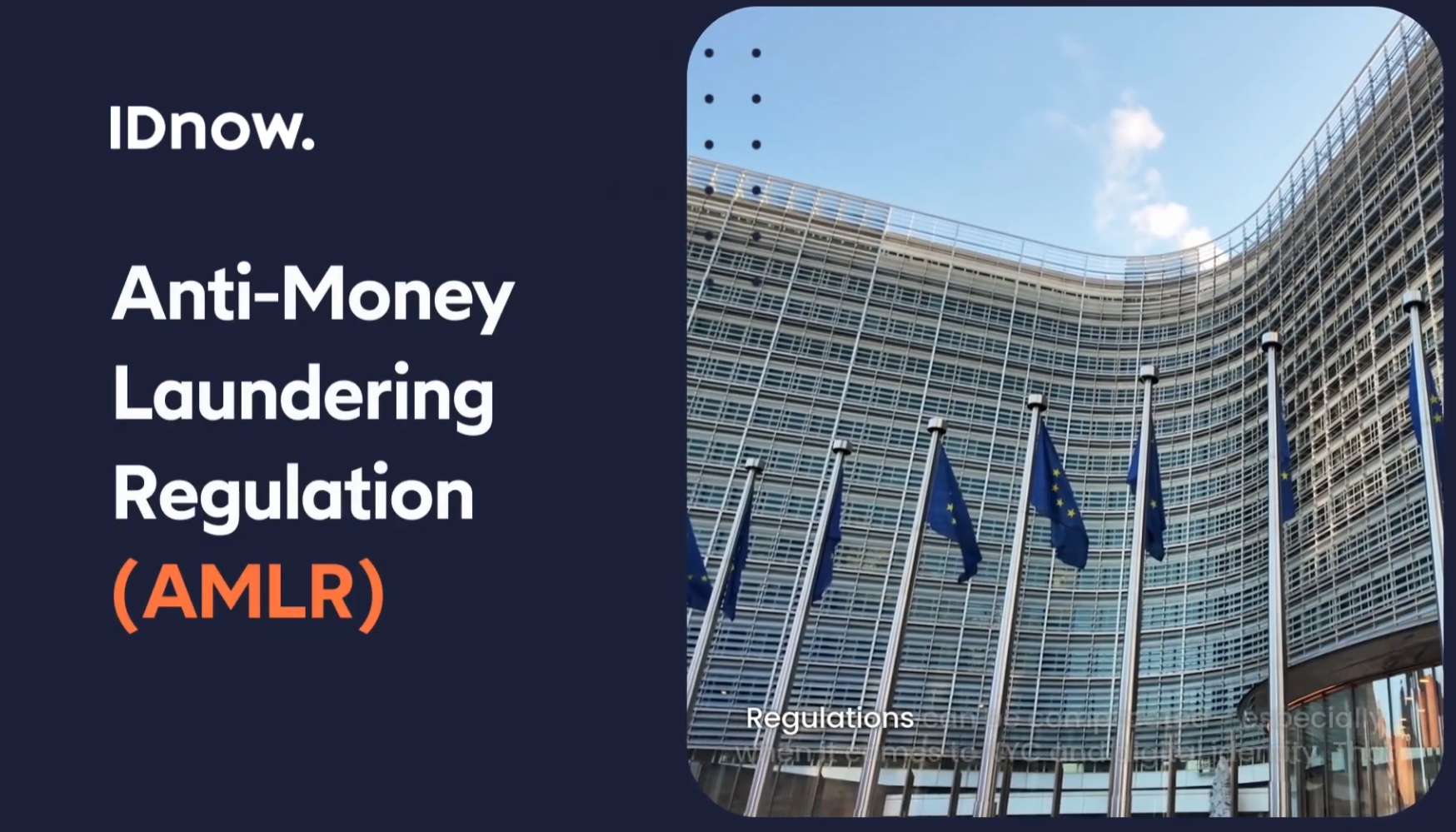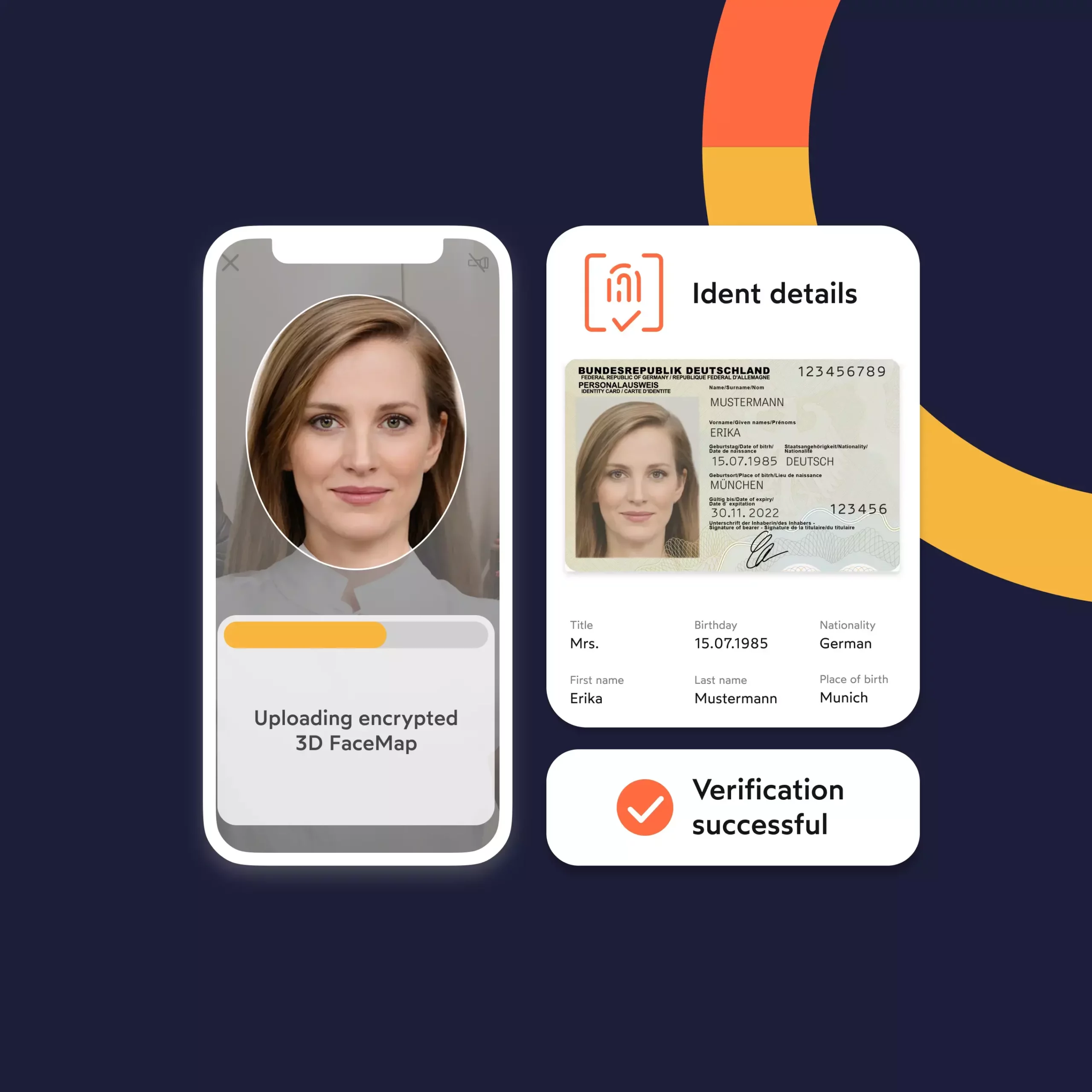
On 30 September 2026, AMLA submitted the final draft of its Regulatory Technical Standards (RTS) on Customer Due Diligence (CDD) to the European Commission. After two consultation rounds and hundreds of responses from the industry, the text now moves to adoption. And while it’s not in force yet, the direction is clear, and there are three changes in it that matter for how you onboard customers.

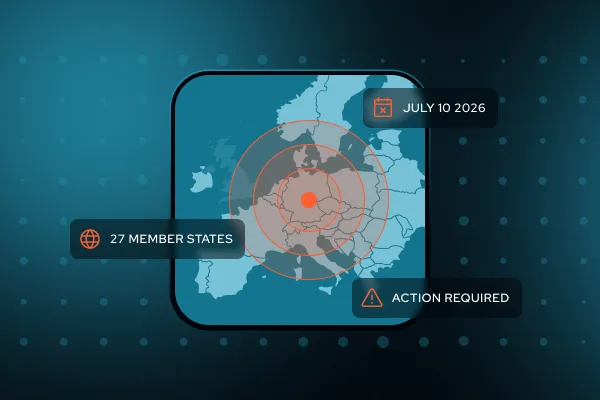
The RTS may not be in force yet as the Commission still needs to adopt it, followed by a non-objection period for Parliament and the Council, but it’s expected that only the wording may still change before publication in the Official Journal. The Anti-Money Laundering Regulation (AMLR) itself, however, is already law and applies from 10 July 2027. The RTS only adds detail to obligations that already exist.

Three changes in the final draft matter most for customer onboarding:

  • eID and qualified trust services can now be used in every channel, both remotely and in person.
  • Remote document verification is a narrow exception, and each use must be justified to your supervisor.
  • eID and trust services come with a defined set of attributes, making it clear what data a compliant flow must deliver.

The starting point: two lawful routes to verify identity

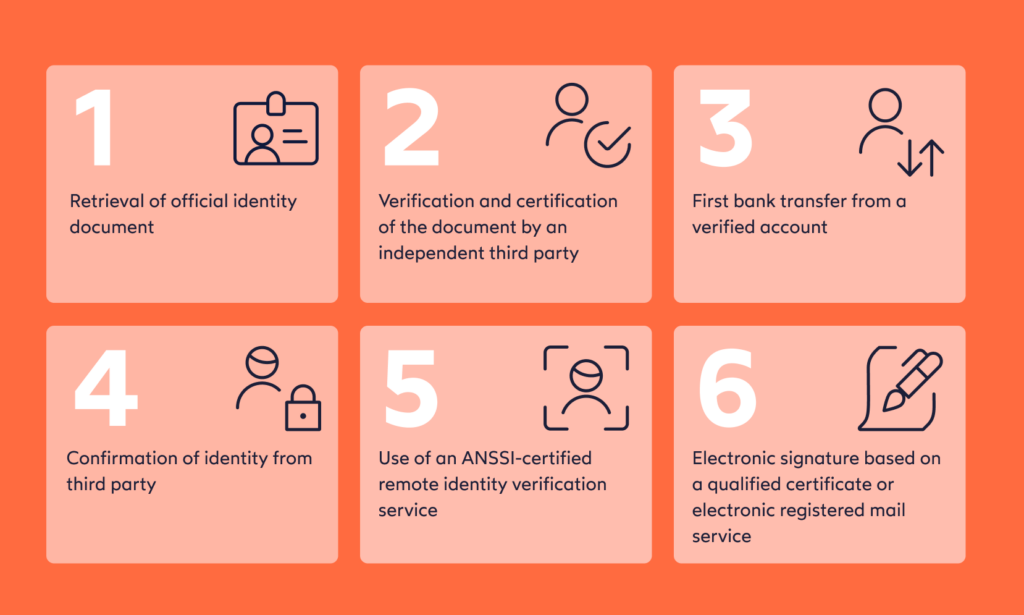
Under Article 22(6) AMLR, an obliged entity must verify a natural person’s identity using one of two routes: an identity document, passport or equivalent, or an eIDAS electronic identification means at assurance level “substantial” or “high”, or a relevant qualified trust service.

The regulation treats these two routes equally. Neither is ranked above the other. The final draft RTS clarifies where each route can be used.

Change 1: eID and qualified trust services can now be used in every channel

Until now, the common assumption was that eID and trust services were methods for remote verification, while documents were used in branches. Article 6(4) of the RTS removes that distinction: eID means and relevant qualified trust services can also be used to verify identity face to face.

For banks and lenders running separate control frameworks for branch and digital onboarding, this is an important practical change. One verification flow, one evidence format and one audit trail can now serve the app, the branch, the agent and the point of sale.

One more detail worth knowing: the RTS confirms that an eID does not have to be notified under eIDAS to qualify. What matters is the assurance level, substantial or high, not whether the eID has been notified.

Change 2: remote document verification is now a narrow exception

Remote document-based verification remains possible under Article 7 of the RTS, “alternative verification measures”. However, the final draft has tightened the conditions compared with the consultation version.

Two conditions must be met for the specific customer: the person cannot reasonably be expected to submit their document in person, and they do not have access to an eID or a qualified trust service. They must also hold a valid identity document, as Article 7 relies on that document to verify their identity.

Who might realistically qualify? A third-country national outside the EU with a valid passport and no branch available in their country. A residence-permit holder in a Member State whose eID scheme only issues to nationals. Or someone whose disability prevents them from using the available eID app. The provision exists to ensure these people are not excluded from financial services. It is not a cheaper onboarding alternative.

Using this route comes with two distinct obligations under Article 7(3). First, you must be able to justify, for each customer, why the standard routes could not be used. Second, you must demonstrate to your supervisor that the alternative solution itself complies with Article 7. A general policy document is not enough for the first requirement, and individual case files do not satisfy the second. Most firms do not yet have both an eligibility rule and a process for capturing evidence in each case.

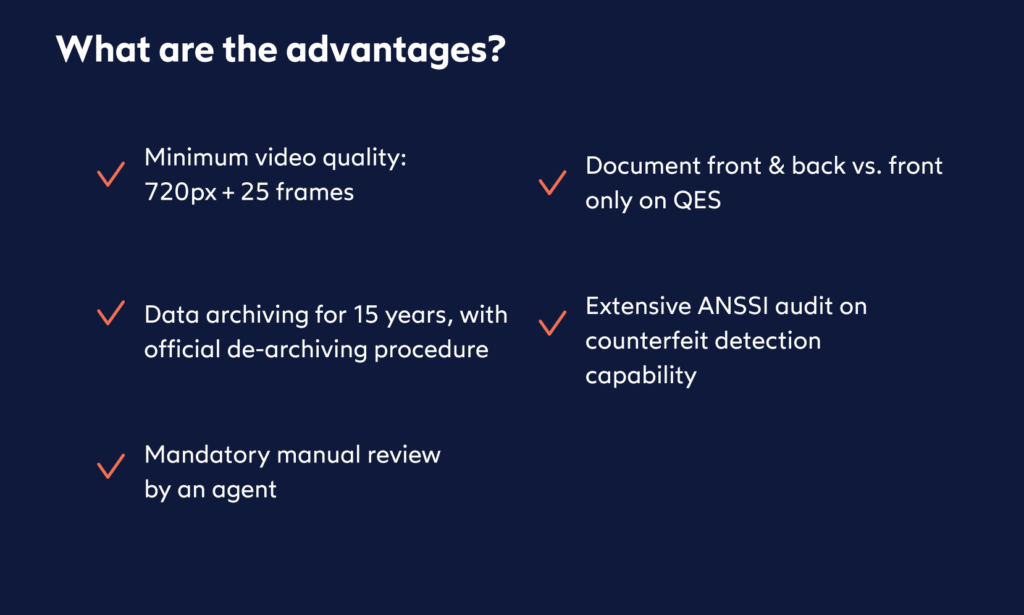
The alternative route also comes with specific safeguards: controls to confirm that the person presenting the document is its holder, integrity and confidentiality of the communication, readable image quality, stopping the process if doubts arise, and secure, time-stamped retention of records for later verification.

Change 3: missing attributes must be filled

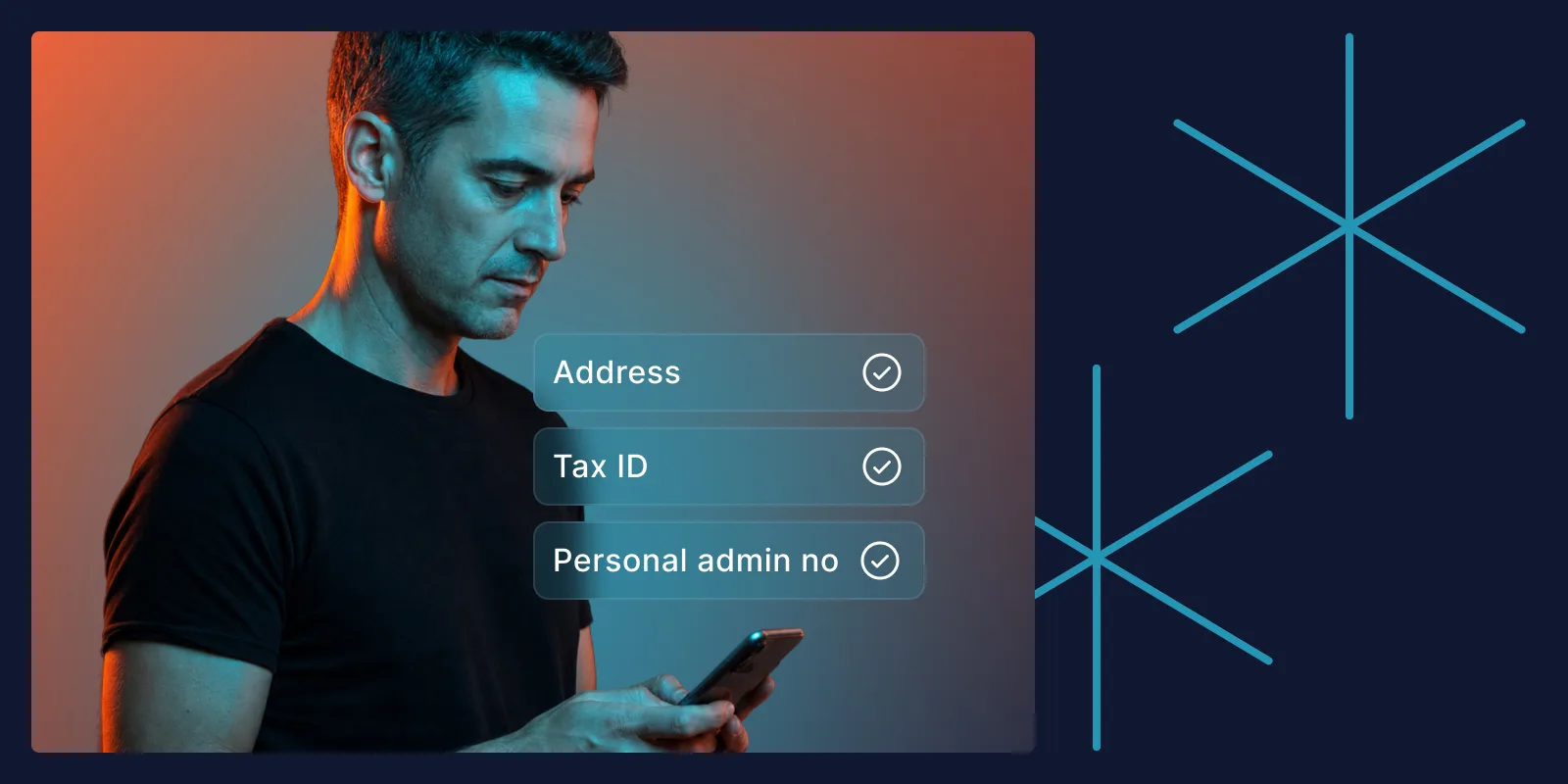
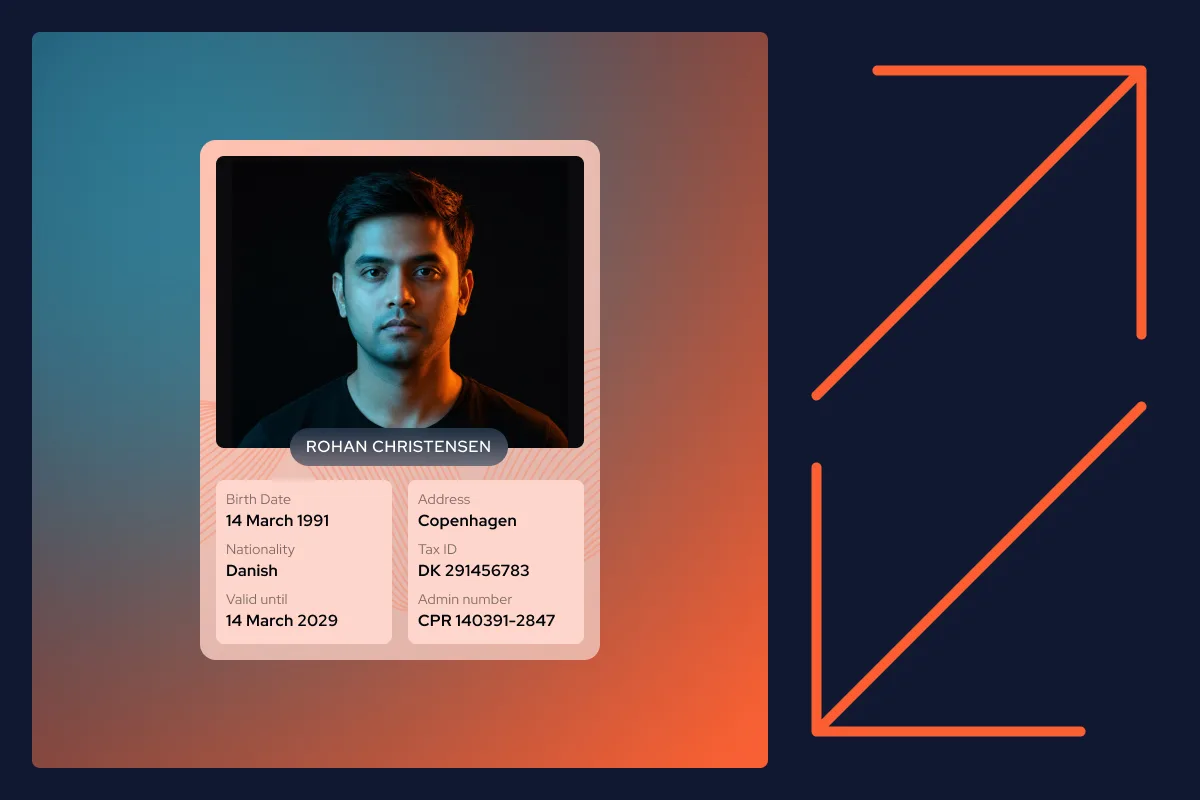
The RTS defines the data an eID or qualified trust service must carry, and what to do when something is missing. It lists all names, place and full date of birth, nationality, the personal administrative number where applicable, usual place of residence, and the tax identification number where available.

Two practical consequences follow.

If the attributes are there, don’t ask for more. The RTS states that when you verify through an eID or a qualified trust service, no additional data points need to be obtained.

If one is missing, you must fill it. Address and tax ID are the usual gaps. Organisations must obtain and verify them through other permitted means in line with Article 22(6). A QEAA is one option, when the customer wants a qualified, reusable attestation.

Low-risk relationships need less. Where a relationship has been assessed and documented as low risk, the minimum data to identify a person is names, place and date of birth and nationality. No address and no tax ID are required. You still verify the customer, and low risk must be assessed, never assumed.

What else changed

Sanctions and PEP screening must cover customers and beneficial owners when the relationship begins, when sanctions lists change, and when due diligence data changes. Automated tools, manual checks or a combination of both are acceptable, provided they are effective and proportionate to the firm’s size and risk.

Simplified due diligence was also not made automatic for any sector, product or customer category. AMLA declined these requests because the regulation requires an individual risk assessment.

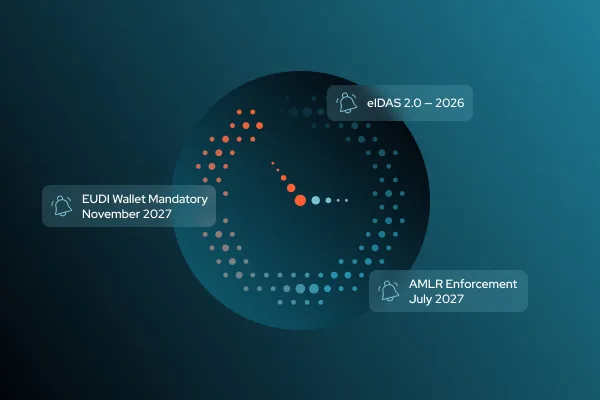
The timeline

When What happens
9 February – 8 May 2026 AMLA public consultation, with 325 responses
30 September 2026 Final draft RTS submitted to the Commission
Next Commission adoption, Parliament and Council non-objection, and publication in the Official Journal
20 days after publication in the Official Journal The RTS enters into force
6 months after entry into force The RTS applies
10 July 2027 AMLR applies directly across all 27 Member States

One detail worth considering in your planning: for business relationships that already exist when the RTS enters into force, the one-year and five-year periods for updating customer information run from the entry-into-force date, not from the date the customer was onboarded.

What to do now

  • Confirm your scope. If you provide consumer credit, personal finance, lending or mortgage finance, you are an obliged entity.
  • Map your current verification flow against the two routes. If remote document verification accounts for most of your volume, work out how you will justify its use under Article 7 for each customer.
  • Check the attributes you collect today against Annex I and decide how you will obtain and verify any missing attributes.
  • Review screening and evidence retention. Screening must take place at onboarding, when lists change and when customer data changes. Records must also be retained for later verification.
  • Plan for existing customers. The update period starts when the RTS enters into force, not before.

Waiting for adoption does not change what firms should be preparing for now. AMLA largely retained the EBA’s text, making amendments only where justified. The substance is therefore largely settled, even though the formal process remains.

How IDnow can help

The IDnow Trust Platform brings all these verification routes together in one flow: notified and non-notified eIDs, EUDI Wallets, qualified trust services from a certified QTSP, and document-based verification with the safeguards required under Article 7.

Where an eID or wallet is missing an attribute, the platform can help complete it through other permitted means or issue a QEAA. Screening, audit logs and evidence retention are also built in.

You can start with the flows you use today and add new methods as they become applicable, without needing new integrations.

Ready to map out what compliance looks like for your setup?

Complete our free AMLR Readiness Check to identify your biggest gaps.
How to select the right AMLR provider

Frequently asked questions

Is the RTS law now?

No. It is a final draft submitted to the European Commission. It becomes law after adoption, the non-objection period and publication in the Official Journal.

When does it apply?

Six months after it enters into force, which happens 20 days after publication in the Official Journal. AMLR itself applies from 10 July 2027 regardless.

Can we keep using remote document verification?

Yes, under Article 7, where the specific customer cannot reasonably be expected to verify in person and has no access to an eID or a qualified trust service. Each use must be justified to your supervisor, with the required safeguards and time-stamped records.

Is a QEAA mandatory when attributes are missing?

No. It is one permitted way to obtain and verify missing attributes, particularly useful when the customer wants a qualified, reusable attestation.

Do eID schemes have to be notified to qualify?

No. The test is the assurance level, substantial or high. Notification is not required.

Does the RTS require manual review of document checks?

The AMLR and the RTS do not require human involvement. However, ETSI TS 119 461 still requires a registration officer for non-NFC hybrid flows, and national AML law may introduce additional requirements.

Want to read more about AMLR?

Nikita Rybová

Nikita Rybová
Customer & Product Marketing Manager at IDnow

Nikita Rybova is a Customer & Product Marketing Manager with 8+ years in tech, SaaS and e-commerce. At IDnow, she specializes in customer and product marketing, turning the complexities of identity verification into compelling narratives that drive growth.

Connect with Nikita on LinkedIn

Ready to partner with IDnow?

Turn faces into trusted identities.

Munich / Stockholm, October 2026 — IDnow today announces that IDnow Trust Services AB has received certification from the Swedish supervisory authority PTS for two qualified trust services under eIDAS2 (Regulation (EU) 2024/1183): Qualified Preservation and Qualified Electronic Archiving. With this, IDnow Trust Services joins an exclusive group of pioneers on the EU Trusted List, among the very first Qualified Trust Service Providers in Europe to hold QArchiving certification under the new eIDAS2 framework – and the first QTSP to combine both of eIDAS2’s landmark new services, Qualified Electronic Archiving and Qualified Electronic Attestation of Attributes, under one roof.

QArchiving is one of the newest qualified trust services introduced by eIDAS2. Under Article 45i(2), electronic data and documents preserved by a qualified archiving service carry an EU-wide legal presumption of integrity and origin throughout the entire preservation period – a powerful evidentiary safeguard recognised across all 27 Member States. This shifts the burden of proof in audits, disputes, and litigation, and provides regulated organisations with a legally robust foundation for long-term record retention.

Closing the Loop: Europe’s First Fully Qualified End-to-End Trust Chain

This certification is not an isolated milestone – it is the final link in a complete, qualified trust chain that IDnow now uniquely brings to market. Combined with IDnow’s existing capabilities for identity verification, Qualified Electronic Attestation of Attributes, qualified signing and sealing, and QPreservation, QArchiving enables a fully qualified, AMLR-compliant end-to-end process:

  • Identity verification and QEAA issuance – regulated digital onboarding
  • Qualified signatures and seals – legally binding execution of documents
  • Qualified Preservation – maintaining the long-term validity of signed records
  • Qualified Electronic Archiving – legally presumed integrity and origin of archived data and documents for their full legal or contractual retention period

For banks, insurers, and other regulated entities facing retention obligations under AMLR (up to ten years for KYC records), DORA, MiFID II, and GDPR, IDnow now offers what no single platform has offered before: every step of the customer journey – from first identity check to long-term archival – executed under one qualified, legally coherent framework.

“Being among the first Qualified Trust Service Providers on the EU Trusted List for Qualified Electronic Archiving is a testament to the depth of our regulatory expertise and the robustness of our technical infrastructure. Qualified Electronic Archiving under eIDAS2 is a genuinely new category of trust service, and earning this certification from PTS confirms that IDnow Trust Services meets the highest standards the European framework demands. We are proud to offer our customers a service that carries the full legal weight of eIDAS2 – across all 27 Member States.”

Johannes Leser, CEO, IDnow Trust Services AB

“IDnow has always believed that identity verification is only the beginning. What truly matters is the integrity of the entire evidence chain – from the moment a customer is onboarded to the day their records are retrieved in a regulatory audit or legal proceeding, potentially decades later. With Qualified Electronic Archiving, we close that loop completely. We are delivering a fully qualified, AMLR-ready end-to-end process, and we are doing it as one of the first in Europe. This is what thought leadership looks like in practice.”

Philippe Morel, CEO, IDnow

About IDnow Trust Services AB

IDnow Trust Services AB is a Swedish Qualified Trust Service Provider, supervised by PTS and listed on the EU Trusted List. It provides qualified trust services including electronic signatures, seals, timestamps, qualified preservation, and – as of October 2026 – qualified electronic archiving, in full compliance with eIDAS2 and applicable ETSI and CEN standards.

About IDnow

IDnow is Europe’s leading identity verification and trust services platform, enabling organisations to verify, authenticate, and trust their customers across the full digital journey. IDnow integrates the qualified trust services of IDnow Trust Services AB into a unified, API-first platform serving regulated industries across Europe.

Financial institutions have become good at answering one question: is this person who they claim to be? Now, AMLR requires them to ask further questions, but the answers may not come from the same place as before.

Key Takeaways

  • AMLR expands onboarding requirements beyond identity verification to include verified attributes such as address, nationality, occupation and tax identification numbers.
  • Qualified Electronic Attestations of Attributes (QEAAs) provide trusted, machine-readable and reusable proof of these attributes.
  • Financial institutions should identify their current attribute gaps, define acceptable credential sources and integrate QEAA verification into onboarding and periodic reviews.
  • QEAAs can strengthen KYC evidence and auditability, but they do not replace broader customer due diligence, risk assessment or ongoing monitoring.

Why AMLR creates an attribute challenge

The Anti-Money Laundering Regulation (AMLR) extends the obligations that financial institutions face under the existing AML framework. Among other changes, it requires the collection and verification of specific attributes — data points such as place of birth, nationality, and occupation — during customer due diligence.

These attributes are not new. What is new is the expectation that they be verified, not merely declared. A customer can tell you their date of birth. A QEAA can confirm it from a trusted source.

The gap lies in the infrastructure. Most existing identity verification processes are built around document checks and biometric matching. They are designed to confirm who someone is, not to extract and attest structured attributes about them. AMLR requires both, and the second part is harder than the first.

What changes in onboarding

The practical impact on onboarding is a shift from single-question to multi-question flows. Today, most financial institutions ask: can we verify this person’s identity? AMLR asks that and more.

Current problem Capability to look for
Identity verified but attributes only declared Attribute attestation from a trusted source
Separate checks for different data points Single credential carrying multiple verified attributes
Manual re-verification at each interaction Reusable, machine-readable attestations
No audit trail for attribute provenance Cryptographically signed, traceable trust chain
Friction for customers with non-standard documents Flexible acceptance of EUDI Wallet and other QEAA sources
Limited interoperability across EU member states eIDAS 2.0-compliant credentials accepted cross-border

Financial institutions designing for AMLR compliance need to ask three questions of their current onboarding flow:

1. Which attributes do we currently collect, and from what source?

2. Are those sources sufficient to meet the verification standard AMLR requires?

3. If not, where can a verified attribute come from, and how does it enter our systems?

How QEAA fits into customer due diligence

A Qualified Electronic Attestation of Attributes (QEAA) is a credential issued by a qualified trust service provider under eIDAS 2.0. It attests to one or more attributes about a person — such as their address, nationality, or tax identification number — with a legal and technical assurance level that mirrors that of a qualified electronic signature.

“The value of a QEAA is the trust chain behind the credential: the source, the proofing process, the issuance and the status over time.”

Sebastian Elfors, CSO at IDnow Trust Services

In a financial-services journey, the QEAA enters the process at the point where an attribute needs to be verified:

1. The customer presents a QEAA during onboarding, either from an EUDI Wallet or through a provider-hosted flow.

2. The financial institution’s system verifies the credential’s signature and issuer status against the EU Trust List.

3. The verified attribute is extracted and stored in line with data minimisation requirements.

4. The audit log records the provenance — who issued it, when, and under what assurance level.

This replaces a document scan and manual data entry with a machine-readable, cryptographically verifiable record.

What financial institutions can use QEAAs for

The scope extends beyond identity. Financial institutions can use QEAAs to verify:

  • Proof of address for account opening and periodic review
  • Nationality and country of residence for sanctions screening and tax reporting
  • Professional status or accreditation for investment eligibility checks
  • Age for age-restricted products
  • Tax identification numbers for CRS and FATCA obligations

Each of these has previously required either self-declaration or a document upload followed by manual verification. A QEAA transforms each one into a structured, signed, reusable data point.

How to prepare

Preparation for QEAA-based attribute verification involves four steps:

1. Map your attribute gaps. Identify which attributes AMLR requires you to verify, which you currently collect, and which are currently self-declared or document-based without machine-readable verification.

2. Define your acceptance criteria. Decide which trust service providers and credential types you will accept. This is a policy and procurement decision as much as a technical one.

3. Build the verification flow. Integrate credential presentation and signature verification into your onboarding and periodic review processes. This includes handling fallback paths for customers who do not yet have a QEAA.

4. Update your records and audit trail. Ensure your CDD system can record attribute provenance — not just the attribute value, but its source, assurance level, and timestamp.

How IDnow can help

IDnow is a qualified trust service provider under eIDAS 2.0 and issues QEAAs through its Trust Services offering. For financial institutions, this means:

  • QEAAs issued under a regulated, audited process with a traceable trust chain
  • Integration with existing IDnow identity verification flows, so attribute attestation can follow identity verification in a single customer journey
  • Support for EUDI Wallet presentation and provider-hosted flows, so customers can participate regardless of their current level of digital access
  • Compliance documentation and audit logs designed to meet AML supervisory expectations

“The fallback path is part of the compliant journey. Customers will arrive with different documents, eIDs and levels of digital access, so resilience has to be designed into the flow.”

Sebastian Elfors, CSO at IDnow Trust Services

Map your AMLR attribute gaps — one platform for both.

Frequently asked questions

Do customers need an EUDI Wallet?

No. Depending on the implementation, a QEAA can be delivered through an organisation’s existing onboarding flow. It can also be issued to or presented through an EUDI Wallet where supported.

Is a QEAA the same as an electronic ID?

No. An electronic ID establishes identity through a recognised identification scheme. A QEAA attests to a specific attribute, such as an address or tax identification number. The two can work together.

Does a QEAA replace KYC?

No. A QEAA can support KYC evidence, but the financial institution remains responsible for customer due diligence, risk assessment, screening, monitoring and other applicable controls.

Want to read more about QEAA?

Nikita Rybová

Nikita Rybová
Customer & Product Marketing Manager at IDnow

Nikita Rybova is a Customer & Product Marketing Manager with 8+ years in tech, SaaS and e-commerce. At IDnow, she specializes in customer and product marketing, turning the complexities of identity verification into compelling narratives that drive growth.

Connect with Nikita on LinkedIn
Most businesses treat standards compliance as a cost. Sebastian Elfors, Chief Security Officer at IDnow Trust Services and active contributor to ETSI and CEN working groups, argues it could be the opposite, if businesses only knew how to use them.

I have spent much of my working life attending standardisation meetings that many in the identity verification industry may not know take place.  

They are long, detailed, sometimes contentious discussions between technical experts, regulators, national standards bodies and industry representatives who are all trying to agree, in precise and unambiguous language, what ‘compliant’ means for a given technology or process. The output is a document that most businesses will only encounter as a compliance checkbox, if they encounter it at all. 

Despite all this, it is incredibly inspiring to be working with some of Europe’s best experts to develop the standards that will ultimately define the upcoming EUDI Wallet eco-system. 

Here, I explain some of the most important technical standards that are working tirelessly in the background [much like me!] to lay the groundwork for the future of identity verification.


Sebastian Elfors, Chief Security Officer, IDnow Trust Services

What ETSI 119 461 Actually Certifies

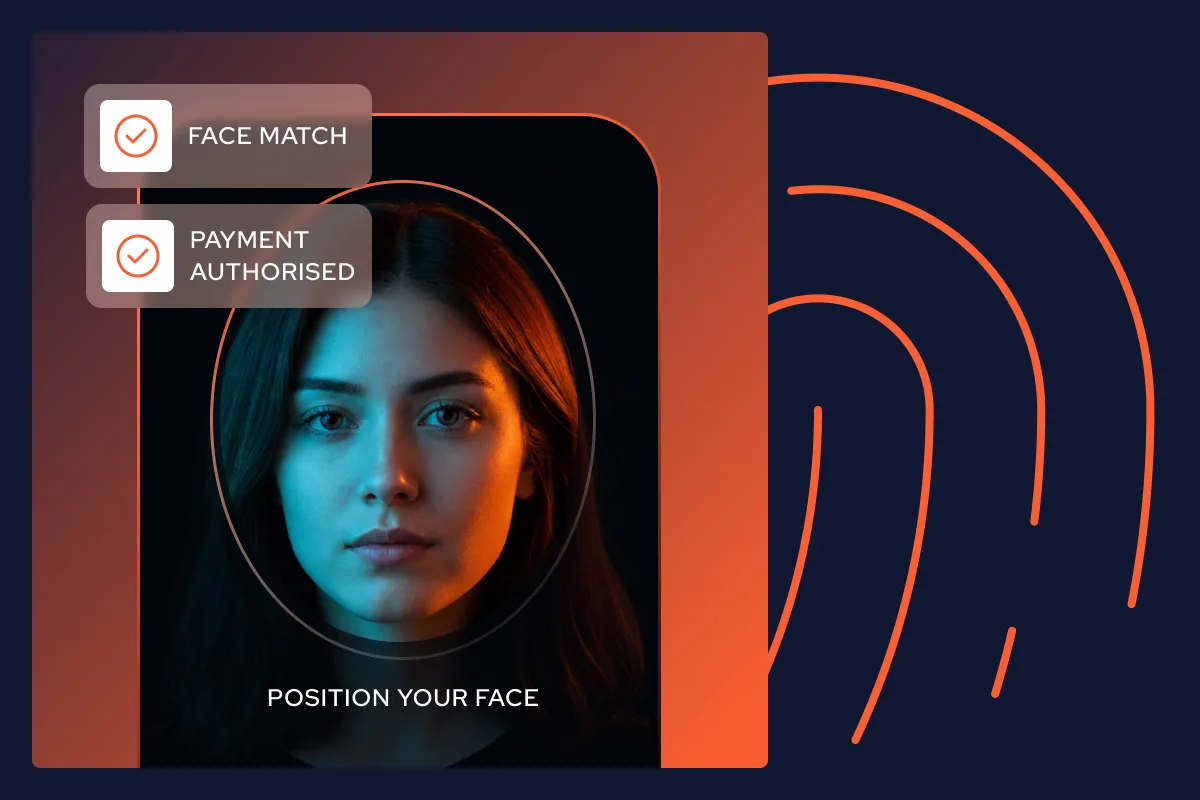
ETSI TS 119 461 is the European technical standard for identity proofing, which means it’s the process by which a person’s identity is established and verified before a qualified trust service is issued. Version 2.1.1, which IDnow is certified against, specifies the requirements for identity proofing processes in terms of the countermeasures that must be in place against the attack vectors that exist. 

This is the standard’s most important characteristic, and the one most misunderstood. ETSI 119 461 does not simply say “verify that the document is genuine and the face matches.” It specifies, at a technical level, what the verification process must be able to resist, including: 

Presentation Attacks, in which a fraudster presents a photograph, mask or deepfake video instead of a live face. 

Injection Attacks, in which a fraudulent video stream is injected into the verification process at the software level, bypassing the device’s physical camera. 

Document Fraud typologies, including counterfeit documents, altered genuine documents, and fraudulently obtained genuine documents.

Certification against ETSI 119 461 v2.1.1 means that an identity proofing process has been assessed against all the above, and that the countermeasures in place meet the standard’s requirements. 

An identity proofing process that has been certified against this standard verifies that is has been independently assessed against the threat landscape as it currently exists. Plus, as the standard evolves and as new attack vectors emerge, the certification requirements update accordingly.

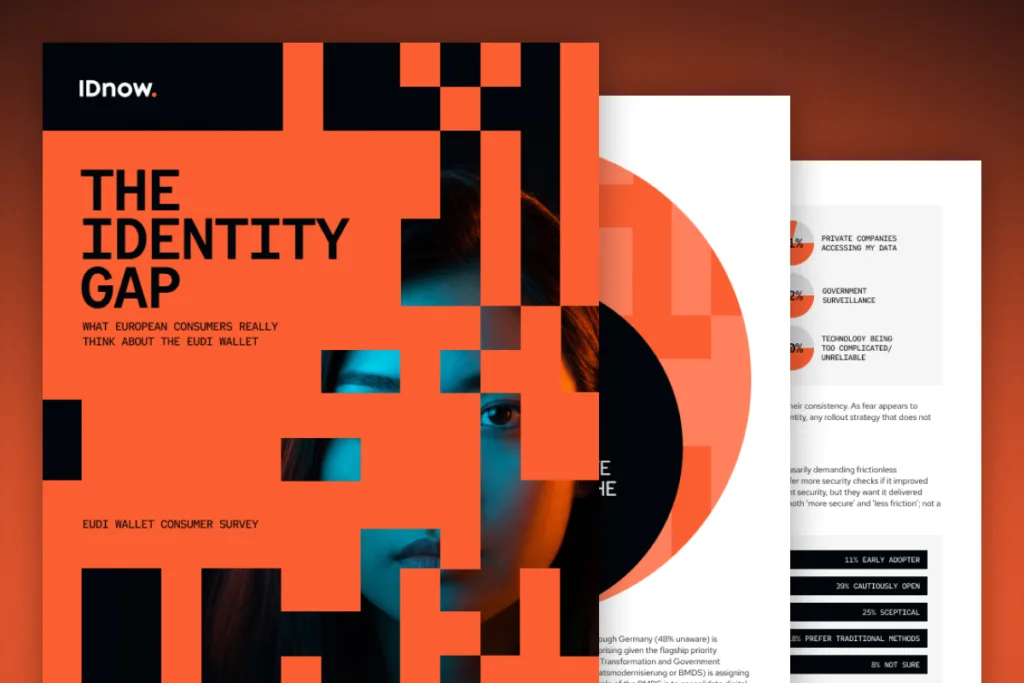
EUDI Wallet Consumer Survey

Download ‘The Identity Gap’ to discover what 2,000 European consumers really think about the EUDI Wallet, and what it means for banks, telcos, governments, and every organisation building their identity verification stack.

[Download the full report →]

The ETSI Standards Shaping the Next Phase of Digital Identity

While ETSI TS 119 461 defines the requirements for identity proofing, a cluster of newer ETSI standards is now shaping the next phase of digital identity in Europe, specifically within the EUDI Wallet ecosystem and the issuance of Qualified Electronic Attestations of Attributes (QEAAs). 

ETSI TS 119 471 sets out the policy requirements that a Qualified Trust Service Provider must meet when issuing QEAAs, and the attestations that will underpin attribute-based credentials in the EUDI Wallet. It defines the governance framework within which QTSP operations must sit, covering everything from registration and issuance policies to revocation and audit obligations. ETSI TS 119 472-3 goes a level deeper, specifying the technical requirements for the actual issuance protocol: how a QEAA is generated, bound to a wallet, and delivered to the end user in a way that preserves the integrity of the underlying identity verification.  

ETSI TS 119 478 addresses access to authentic sources, which refers to the authoritative data repositories (such as population registers or official databases) from which identity attributes are drawn before being attested in a QEAA. This standard defines what it means for a source to be considered authentic and how the link between the source data and the issued attestation must be maintained and auditable.  

Meanwhile, ETSI TS 119 476-3 covers Wallet Unit Attestation: the mechanism by which a wallet instance i and key storage tself is certified as trustworthy before it is permitted to receive and hold QEAAs. The fact that a QEAA is only as reliable as the EUDI Wallet environment it lives in, and this standard defines the bar that wallet providers must meet is a critical but often overlooked layer of the trust chain. Taken together, these four ETSI standards define the full trust chain for QEAA issuance: from the policies governing QTSPs, through the issuance process itself, to the authenticity of the underlying data sources and the integrity of the wallet environment receiving the credential. 

For businesses that will be accepting EUDI Wallet credentials, understanding these standards matters because they collectively define the bar for the credentials they will be accepting.

Sebastian Elfors, Chief Security Officer, IDnow Trust Services

A QEAA issued by a provider operating in compliance with ETSI TS 119 471 and 119 472-3, drawing on authentic sources as defined by ETSI TS 119 478, and delivered into a wallet attested under ETSI TS 119 476-3, carries a level of assurance that a credential from a non-conformant provider simply does not.  

What the AMLR RTS Defines — and What it Leaves to Standards

One of the most important things to consider about the Anti-Money Laundering Regulation’s (AMLR) customer due diligence Regulatory Technical Standards is the relationship between the regulation and the technical standards. A good way of thinking about it is the regulation defines obligations and the standards define how those obligations are met. 

Article 22(6) of the AMLR specifies that non-face-to-face identity verification must use either electronic identification means at substantial’ or ‘high’ assurance level under eIDAS 2.0, and relevant qualified trust services. The RTS specifies, in more detail, the attributes that those means and services must carry, and the conditions under which simplified or enhanced due diligence applies. 

What neither the AMLR nor the RTS specify, because it is not their function, is the precise technical implementation of the verification process. That is the domain of ETSI TS 119 461 and the suite of ETSI standards governing QEAA issuance and wallet attestation. AMLR states to use a method that meets assurance level ‘substantial’ or ‘high’. ETSI 119 461 mandates what a verification process must do to meet that assurance level. The two instruments work together and neither is sufficient without the other. 

It is therefore important that businesses treat the regulatory and technical standards as complementary. A business that understands only the regulatory obligation, such as “we must use a method at ‘substantial’ assurance level’ without understanding the technical standard that defines what that means in practice, cannot make an informed assessment of whether their current processes are compliant. So, naturally, a business that understands both is in a materially stronger position.

Why IDnow’s Standards Contributions Matter for Customers 

IDnow contributes directly to the development of the standards I have described. I contribute to all ETSI working groups. More specifically, I’ve been the editor of ETSI TR 119 476-1 and ETSI TS 119 476-3. 

Being in the room where standards are developed means understanding what the standard says today and why it says it; what attack vectors drove specific requirements; what debates shaped decisions, and what directions the standard is likely to move in as the threat landscape evolves. That understanding feeds directly into product and architecture decisions. 

It also means something more practical for customers: when a standard is updated, the IDnow Trust Platform updates to reflect it. The compliance burden of tracking, interpreting and implementing standard changes falls on IDnow, not on the compliance team at the bank or fintech or telecoms operator using the platform. The customer does not need to know the difference between ETSI 119 461 V1.1.1 and v2.1.1 to benefit.  

This is what I mean when I say standards are a competitive advantage rather than a cost but only if you know how to use them. A business that is building its own identity verification capability – and using a combination of tools – needs to track standard changes manually and implementing them through its own development cycle. In this sense, keeping up with standards is like a continuous, expensive, and never-quite-finished compliance project.  

As the IDnow Trust Platform is maintained by standards contributors, users face none of that overhead. The standards become an asset and a guarantee that the verification methods in use are current, independently assessed, and defensible to any regulator who asks.

The Practical Implication: One Question to Ask Your Vendor

If there is one thing I would recommend that every compliance or technology leader reading this does in the next week, it’s this: ask your identity verification vendor which standards they are certified against, and who in their organisation contributed to writing those standards. 

The first question has a straightforward answer. Either a vendor is certified against ETSI 119 461 v2.1.1 by an accredited conformity assessment body, or they are not. Either their identity proofing process has been independently assessed by lab testing against Presentation Attacks, Injection Attacks and document fraud typologies, or it has not.  

The second question is more revealing. Standards are not written by regulators in isolation, they are developed through working groups in which industry experts participate, argue and ultimately agree in consensus. A vendor whose technical team contributes to those working groups understands the standards at a depth that a vendor who merely reads the published output does not. That depth shows up in product decisions, in architecture choices, and in how quickly the platform responds when a standard changes. 

Standards compliance is the floor, not the ceiling. But it is a floor worth understanding because the difference between a business that understands it and one that treats it as a checkbox is, increasingly, the difference between a business that is ready for 2027 and one that will spend 2027 catching up.

Interested in more ‘Lessons From’ our subject matter experts? Click below!

  • Former INTERPOL Coordinator, and current Forensic Document Examiner at IDnow, Daniela Djidrovska explains why IDnow offers document fraud training to every customer, regardless of sector.
  • Research Scientist in the Biometrics Team at IDnow, Elmokhtar Mohamed Moussa explores the dangers of face verification bias and what steps must be taken to eradicate it.
  • Research Scientist at IDnow, Nathan Ramoly explores the dangers of deepfakes and explains how identity verification can help businesses stay one step ahead of the fraudsters and build real trust in a digital world.
  • Senior Product Owner at IDnow, Christophe Chaput explains why the steps we took to comply with the European Accessibility Act made our solutions better – for all our customers.

Written by

Sebastian Elfors
Chief Security Officer at IDnow Trust Services

Connect with Sebastian on LinkedIn

Jody Houton profile picture

Edited by

Jody Houton
Senior PR & Content Manager at IDnow

Connect with Jody on LinkedIn

24% of European consumers still prefer branch-based onboarding, while 16% won’t open a bank account online at all. Here’s why a successful EUDI Wallet integration must work for every customer.

Key takeaways: 

  • 24% of consumers still prefer in-person branch verification — the single most popular onboarding method, ahead of digital wallets (14%). 
  • Digital identity wallets are already the second most preferred onboarding method, despite 51% of consumers having never heard of the EUDI Wallet. 
  • 16% of consumers will not open a bank account online under any circumstances 
  • The only viable long-term strategy supports every verification method from a single orchestration layer — routing each customer to the right method for them. 

In the ‘Identity Gap: Friction vs Conversion’ and ‘The Identity Gap: Privacy vs Compliance’ blogs, we explored why 46% of consumers abandon identity verification and how selective disclosure is the single most powerful adoption driver in our dataset. In this final piece, we turn to the practical question of how to build an integration strategy that works for your entire customer base. 

As the EUDI Wallet has ultimately been designed to make identity verification faster, safer, and more portable, it would be a safe assumption that it will eventually replace all existing identity verification infrastructure. But this assumption misses a key point discovered in our research. Banks that build their integration strategy around this belief will find themselves with a compliance solution that works for some of their customers and a conversion problem with the rest. 

The IDnow EUDI Wallet Consumer Survey Report reveals a customer base that is far more fragmented in its onboarding preferences than most digital transformation strategies account for. The data does not describe a market moving uniformly towards wallet-native verification. It describes a market that will require financial institutions to offer every method simultaneously — and will penalise those that cannot do so.

EUDI Wallet Consumer Survey

Download ‘The Identity Gap’ to discover what 2,000 European consumers really think about the EUDI Wallet, and what it means for banks, telcos, governments, and every organisation building their identity verification stack.

Download the full report →

How Consumers Want to Open a Bank Account Today. 

When consumers were asked how they would prefer to verify their identity when opening a bank account, the responses were far from consistent: 

  • 24% prefer in-person verification at a branch 
  • 14% prefer a digital identity wallet 
  • 13% prefer NFC chip scanning 
  • 11% prefer photo upload and selfie verification 
  • 10% prefer a video call with a human agent 
  • 16% would not open a bank account online at all 

Read those numbers again.  

The most popular onboarding method is still the physical branch. Interestingly, digital identity wallets are already the second most popular option, despite 51% of respondents having never heard of the EUDI Wallet, showing that consumers are interested in the concept before the product has even launched. Equally important is that 16% of consumers would not complete the process online under any circumstances. This should act as a stark warning that the market is not ready to abandon existing identity verification methods.

Age Is [Not] Just a Number.

Among Gen Z consumers (18–29), digital-first preferences dominate, but the picture is more nuanced than might be expected. Although they’re most likely to prefer wallet-based and NFC-based onboarding, and the least likely to want a branch visit, they’re also the most likely to abandon a transaction when verification gets in the way, with a 56% abandonment rate that reflects impatience with friction, not loyalty to any single method. 

Among Boomers (62–80), the picture is almost inverted with branch preference highest and online lowest. A quarter of Boomers say they would not open a bank account online at all, compared to 16% across the full sample. Boomer awareness of the EUDI Wallet is also the lowest of any age group, at just 30%. 

While the need to offer multiple identity verification methods will remain important for the foreseeable future, it’s also necessary to ensure any Wallet-onboarding strategy factors in multiple demographic differences. For example, while a strategy that is optimised for Gen Z may lead to increased adoption among that group, it may result in losing a significant portion of its older customer base. Likewise, a bank that maintains and/ or promotes just branch-only or document-upload-only verification will retain its Boomer customers and haemorrhage the younger ones who expect something faster and less intrusive.  

Neither is really viable on a long-term basis. As such, the only successful long-term identity verification strategy is one that supports all of them, intelligently, from a single integration layer, such as the IDnow Trust Platform. 


What the Security–Friction Paradox Means for Onboarding Design.

There’s a stat from the EUDI Wallet Consumer Survey that potentially complicates the standard digital transformation narrative: 47% of consumers said they would prefer more identity checks, if it meant improved security. Nearly half of your potential customers are telling you they would rather wait longer and feel more secure than move faster and feel exposed. And that preference is broadly distributed across age groups. 

The implication for onboarding design suggests that the goal is not necessarily to minimise the number of verification steps but to make each step feel proportionate, purposeful, and secure. Friction is verification that feels arbitrary, repetitive, or excessive. Assurance is verification that feels necessary, transparent, and trustworthy. The former drives abandonment. The latter builds the kind of customer relationship that survives the EUDI Wallet transition and everything that follows.

How to Please Everyone, All the Time.

The IDnow Trust Platform can seamlessly connect to every EU member state’s EUDI Wallet through just one API and handles the complexity of integration, compliance, and evolving standards so you can focus on delivering a trustworthy experience for every customer. In doing so, it allows financial services to: 

  • Accept EUDI Wallet credentials: verifying PID and attestations cryptographically, in real time, across all EU member states 
  • Support eID and NFC chip scanning: for the significant proportion of consumers who prefer chip-based verification, and for high-assurance scenarios where wallet credentials alone may not be sufficient 
  • Deliver document verification and biometric matching for customers not yet wallet-ready, for cross-border scenarios where wallet interoperability is still maturing, and for the fallback cases that every integration will encounter 
  • Offer video-assisted onboarding: for the 10% who prefer human-assisted verification, for high-value transactions that warrant additional assurance, and for customer segments where digital-only onboarding is not appropriate 
  • Route intelligently between methods: based on the customer’s device, location, the transaction’s assurance requirements, and the customer’s own preferences, without requiring the customer to understand the underlying logic 

IDnow is independently certified to the highest identity assurance levels under eIDAS 2.0, actively participating in national pilots across France, Germany, and at European Commission level, and has the regulatory expertise to keep your integration current as standards evolve between now and December 2027 and beyond.

The Competitive Case for Getting This Right Now.

The institutions that move earliest to build full-spectrum onboarding will be able to offer a materially better customer experience than those that treat the EUDI Wallet as a checkbox and leave everything else unchanged. They will also have a data advantage. Every onboarding interaction that passes through an orchestrated, intelligent verification layer generates signals — about customer preferences, about where friction occurs, about which methods convert and which do not.  

“Trust is earned through transparency and demonstrated security. The fact that banks lead governments in consumer trust reflects decades of investment in secure, reliable financial infrastructure. The EUDI Wallet ecosystem needs to build on that foundation, not compete with it.” Uwe Stelzig, Managing Director DACH, IDnow 

One size fits none. The banks that build for every customer — not just the digital-first ones — will be the ones that consumers trust with their identity when the EUDI Wallet arrives. And trust, as the data consistently shows, is the only thing that drives adoption at scale. 

You’ve reached the end of The Identity Gap series. If you’ve found this useful, the full report goes further — with data broken down by market, age group, and awareness level across all seven chapters. Download it now, or revisit the series from the beginning: 

The Identity Gap: Friction Vs Conversion. What the EUDI Wallet Will and Won’t Fix Tomorrow.


The Identity Gap: Privacy vs Compliance. Why Selective Disclosure Is the EUDI Wallet’s Most Powerful Feature.

Frequently Asked Questions About EUDI Wallet Integration.

What are the most popular identity verification methods for bank onboarding in Europe?

According to IDnow’s 2026 consumer research, in-person branch verification is still the most preferred onboarding method (24%), followed by digital identity wallets (14%), NFC chip scanning (13%), and photo upload with selfie (11%), and video calls with human agents (10%). 16% of consumers say they would not open a bank account online at all. 

Will the EUDI Wallet replace existing identity verification methods?

No. The EUDI Wallet will become a mandatory acceptance requirement for regulated businesses by December2027, but it will not replace existing verification methods. A significant proportion of consumers — particularly older demographics — will continue to prefer branch-based, video-assisted, or document-based verification. Banks need to support all methods from a single orchestration layer.

What is the EUDI Wallet customer onboarding process?

EUDI Wallet onboarding allows a customer to present a verified credential, such as their Person Identification Data (PID), directly from their wallet. The receiving institution verifies the credential cryptographically in real time, with no document upload or manual review required. The customer can selectively disclose only the attributes required for the specific transaction.

How should banks design their EUDI Wallet integration strategy?

Banks should build — or integrate with — an orchestration layer that supports the full spectrum of verification methods: EUDI Wallet credentials, eID and NFC chip scanning, document verification and biometric matching, and video-assisted onboarding. For example, the IDnowTraut Platform routes each customer to the right method based on their device, location, transaction assurance requirements, and preferences.

What is the IDnow Trust Platform?

The IDnow Trust Platform is an identity orchestration solution that connects organisations to every EU member state’s EUDI Wallet through a single API, with intelligent routing across the full spectrum of verification methods — wallet-native, eID, NFC, document, and video-assisted. IDnow is independently certified to the highest eIDAS 2.0 assurance levels and is actively involved in EUDI Wallet development at national and European Commission level. 

About the Author

10 Steps that European Banks Must Take to Meet the EUDI Wallet Deadline. 5

Jody Houton
Senior PR & Content Manager at IDnow
Jody Houton is a B2B content marketer at IDnow, where he creates and edits engaging content about KYC, fraud and digital identity. He also oversees the company’s public relations.

Connect with Jody on LinkedIn

63% of consumers say they’re more likely to use the EUDI Wallet because of selective disclosure. Here’s why that number is really a conversion figure and what it means for your onboarding strategy.

Key takeaways: 

  • 63% of consumers are more likely to use the EUDI Wallet if it lets them share only what’s needed — rising to 74% among Gen Z and 70% among Millennials. 
  • Selective disclosure is not an optional feature: it is a core design principle of the EUDI Wallet under eIDAS 2.0. 
  • Consumers will share data for security and convenience (62% accept it for fraud protection) but not for commercial gain (only 18% accept it for marketing or advertising). 

In Blog 1 of The Identity Gap EUDI Wallet series, we revealed that 46% of European consumers have abandoned a transaction because identity verification was too difficult, and that the EUDI Wallet’s ‘verify once, present everywhere’ model is the most credible structural fix. In this second piece, we look at the single feature that moves the adoption needle further than anything else in our dataset: selective disclosure. 

Of all the findings from IDnow’s EUDI Wallet Consumer Survey report, one stands out. It’s not the revelation that only one in five are aware of what the EUDI Wallet is, nor that almost half of all consumers have abandoned an identity verification process. The single most actionable number in the entire dataset is this: when consumers were told that the EUDI Wallet would allow them to prove they are over 18 without revealing their name, address, date of birth, or any other detail, 63% said they would be more likely to use it. 

This feature is called selective disclosure. Understanding its purpose does not require a technical background, but it does require an understanding of the value that customers place on it, what they’re afraid of, and what they’re willing to do when that fear is removed.

EUDI Wallet Consumer Survey

Download ‘The Identity Gap’ to discover what 2,000 European consumers really think about the EUDI Wallet, and what it means for banks, telcos, governments, and every organisation building their identity verification stack.

[Download the full report →]

What Does Selective Disclosure Mean (in Simple Terms)?

Think about the last time you were asked to prove your age online. You probably uploaded a photograph of your passport or driving licence, and along with it handed over your name, address, date of birth, document number, and photograph, to confirm a single fact: that you are old enough to proceed. 

The organisation asking the question needed one piece of information. You provided five. 

Selective disclosure changes this. With the EUDI Wallet, a consumer can present a verified confirmation that they meet an age threshold (via a simple yes or no) without revealing anything else. No name. No address. No date of birth. The service receives the answer it needs and the customer retains everything else. 

This is the principle at the heart of the EUDI Wallet: minimum data, maximum trust. 

It sounds simple. The reason it has not existed at scale until now is that it requires a shared and trusted infrastructure, and a credential that any organisation can verify without needing to see the underlying document. The EUDI Wallet, mandated under eIDAS 2.0 across all 27 EU member states, provides exactly that infrastructure.

“The data from the EUDI Wallet Consumer Survey clearly shows that consumers value the ability to provide selectively disclosed attributes to protect their privacy. When consumers can share exactly what a service needs and nothing more, trust increases, conversion improves, and the regulatory burden of data minimisation takes care of itself. The IDnow Trust Platform is built to make this a reality at scale.”
 

Sebastian Elfors, Senior Architect, IDnow.

Why 63% Is Actually a Conversion Number.

The 63% uplift from selective disclosure is the highest single adoption driver identified in our research. Nothing else moves the needle as far, and the breakdown by age group makes the commercial case even clearer: 

  • Gen Z (18–29): 74% more likely to use the wallet with selective disclosure 
  • Millennials (30–45): 70% more likely 
  • Gen X (46–61): 63% more likely 
  • Boomers (62–80): 51% more likely 

Even more than half of Boomers (the most sceptical age group) say they would be more likely to use the wallet if minimum data sharing were guaranteed. 

This sends a very clear message to financial services, and it has direct business implications. The consumers most likely to respond to selective disclosure (Gen Z and Millennials) are also the most likely to abandon an onboarding flow when verification feels intrusive or excessive. Selective disclosure addresses the reason they leave. Institutions that lead with selective disclosure and that design onboarding flows around minimum data and promote that principle to customers will convert more of the people they are currently losing. Not because they have made verification easier, but because they have made it feel fairer.

What Consumers Will and Will Not Share and Why that Distinction Matters.

IDnow’s research also reveals something important about the conditions under which consumers are willing to share personal data, which has important implications for how wallet-based onboarding should be designed and communicated. 

Consumers are pragmatic. They will share data when the purpose is clear and the benefit is tangible. For example, 62% said it was acceptable for the EUDI Wallet to share their data for fraud protection and security purposes, and 50% accepted it as a way of avoiding repeated identity checks. 

But acceptability drops sharply when the purpose shifts to commercial use, with just 18% accepting it for advertising and marketing. 

Consumers will share data when they understand what it is for and when the benefit — security, convenience, reduced friction — accrues to them. They will not share it when the benefit is primarily for the institution. This is a new constraint on how identity verification should be designed.

“The EUDI Wallet does not give institutions more access to customer data. It gives customers more control over what they share and when. Institutions that design their integrations around that control, rather than against it, will find a more receptive audience.”

Jonas Mendes, Product Director, IDnow Trust Platform

The GDPR Connection: Data Minimisation Is Already the Law.

There is a regulatory dimension to selective disclosure that goes beyond the EUDI Wallet framework itself. GDPR requires that personal data be limited to what is necessary for the purpose of processing. In practice, this means that collecting a full date of birth to verify that a customer is over 18 is not just inefficient, strictly speaking, it is a compliance risk, as you are collecting more data than the purpose requires. 

The current identity verification model creates this risk at scale. Every document upload, every selfie, every manual review collects and stores more personal data than the specific transaction demands. The cumulative data liability is significant, and largely invisible until something goes wrong. 

Selective disclosure structurally resolves this. When a customer presents a wallet attribute confirming they meet an age threshold, no date of birth is transmitted, stored, or processed. The compliance obligation is met. The data liability does not arise. GDPR’s data minimisation principle is now satisfied by design, not by policy. 

For legal, compliance, and data protection teams, this matters. Rather than building post-hoc data minimisation policies around a verification process that inherently over-collects, selective disclosure makes minimum data the default at the point of collection. The compliance posture improves not because the policy changes, but because the architecture does.

The EUDI Wallet Opportunity in a Sentence.

Selective disclosure is the feature that turns the EUDI Wallet from a compliance obligation into a competitive advantage. The 63% of consumers who say it would make them more likely to use the wallet are telling you exactly what to build and exactly how to communicate it. 

Institutions that lead with data minimisation, design flows that request only what they need, and make that principle visible to customers will convert more, carry less data liability, and build the kind of trust that the EUDI Wallet’s rollout demands. The IDnow Trust Platform’s Decide layer is built around this principle and enables institutions to request only the specific attributes required for each transaction, present that request to customers in a way that makes the purpose clear, and deliver an onboarding experience that converts because it respects the customer’s data.

“The data tells a clear story: European consumers understand the problem that the EUDI Wallet is designed to solve, but they have not yet been convinced that this is the solution. They know that identity fraud is rising. They know that online verification is broken. They know that sharing more data than necessary carries real risk. What they have not yet seen is a solution they can trust, and that is precisely the gap the EUDI Wallet must close.”

Philippe Morel, CEO, IDnow.

The selective disclosure findings go deeper in the full report — including how data-sharing acceptability varies by purpose, age group, and market, and what the full breakdown of adoption drivers looks like across demographics. If you’re designing an onboarding flow for the EUDI Wallet era, this is the data you need.

Of course, selective disclosure only works if your integration supports every customer not just the digital-first ones. In Blog 3 of the Identity Gap EUDI Wallet series, we look at the onboarding preference data: 24% of consumers still prefer branch verification, 16% won’t open a bank account online at all, and digital wallets are already the second most popular method despite 51% of people having never heard of them.

FAQs on Selective Disclosure

What is selective disclosure in the EUDI Wallet?

Selective disclosure is the ability to share a specific, verified piece of information from an identity credential (e.g. proof that you are over 18) without revealing the underlying document or any additional personal data. It is a core design principle of the EUDI Wallet under eIDAS 2.0.

Why does selective disclosure matter for banks and financial institutions?

Selective disclosure directly addresses the most common reason consumers abandon identity verification: the feeling that they are being asked to share more personal data than the transaction requires. IDnow’s research shows that 63% of consumers are more likely to use the EUDI Wallet if selective disclosure is available, rising to 74% among Gen Z and 70% among Millennials. For banks, this is a measurable conversion opportunity.

How does selective disclosure help with GDPR compliance?

GDPR’s data minimisation principle requires that personal data be limited to what is necessary for the purpose of processing. Selective disclosure satisfies this requirement by design as only the specific attribute required for a transaction is shared, with no over-collection of personal data. This reduces data liability and simplifies compliance documentation without requiring additional policy work.

What data will consumers share through the EUDI Wallet?

IDnow’s research shows consumers are willing to share data when the purpose is clear and the benefit is tangible. 62% accept data sharing for fraud protection and 50% for avoiding repeated identity checks. However, acceptability drops sharply for commercial purposes, with just 18% for advertising. Institutions that request only what they need, and explain why, will see higher completion rates.

About the author

Jody Houton profile picture

Jody Houton
Senior PR & Content Manager at IDnow

Jody Houton is a B2B content marketer at IDnow, where he creates and edits engaging content about KYC, fraud and digital identity. He also oversees the company’s public relations.

Connect with Jody on LinkedIn

IDnow’s EUDI Wallet Consumer Survey reveals almost half of French and German consumers have abandoned transactions because identity verification was too difficult. 

Nearly half (46%) of European consumers have abandoned a transaction due to identity verification being too difficult or too time-consuming. Not because they changed their mind. Not because they found a better offer but because proving who they were was simply too hard. 

That figure comes from our recently released EUDI Wallet Consumer Survey, which surveyed 2,000 consumers in France and Germany.  

For banks, fintechs, insurers, and any regulated business that depends on converting prospects into customers, this is a major revenue problem as well as a compliance problem. And it is happening right now.  

The EUDI Wallet, which will allow users to store digital IDs, share official documents, and sign files electronically across Europe, has the potential to make identity verification faster and more secure than ever before, but only if it addresses your customers current gripes with identity verification. 

Understanding the business impact of the EUDI Wallet before the rollout in December 2026, and mandatory acceptance by regulated businesses in 2027 is therefore imperative.

EUDI Wallet Consumer Survey

Download ‘The Identity Gap’ to discover what 2,000 European consumers really think about the EUDI Wallet, and what it means for banks, telcos, governments, and every organisation building their identity verification stack.

[Download the full report →]

What’s Age Got to Do With it?

The 46% figure is striking on its own, but our research reveals some interesting differences between age groups. 

Among Millennials (30–45), the abandonment rate rises to 54%, while for Gen Z consumers (18–29), it jumps to 56%. As these are the most digitally active and highest-lifetime-value customer segments in financial services, they are the most likely to give up when complicated or slow verification gets in the way. 

The problem is consistent across markets (France: 45%, Germany: 48%) suggesting that drop-off rates aren’t related to a quirk or failing of one country’s digital infrastructure but something deeper and structural about how identity verification currently works in Europe.

“Every abandoned transaction is a customer who wanted to proceed but couldn’t. The EUDI Wallet, when integrated well, addresses the root cause of this conversion crisis: a verification process that asks for too much, takes too long, and must be repeated every time.”

Uwe Stelzig, Managing Director DACH, IDnow

Compliance vs Conversion: Why the Current Model is Broken.

The identity verification process most consumers encounter today was not necessarily designed with conversion in mind. It was designed for compliance and compliance alone. The result is a user experience that asks people to: 

  • Upload photographs of physical documents, often multiple times 
  • Submit a selfie, sometimes under specific lighting conditions 
  • Wait — sometimes minutes, sometimes longer — for manual review 
  • Repeat the entire process the next time they need something from a different provider 

The inefficiency is baked into the architecture. Each organisation that needs to verify your identity has built — or bought — its own capability to do so in isolation. There is no shared infrastructure, no portable credential, no way for a bank to tell an insurer: “We already verified this person, to a recognised standard and here is the evidence.” Every organisation starts from scratch, every time. 

The cumulative effect on consumers is significant. According to Juniper Research, there were 75 billion digital identity verification checks globally in 2024 — a 16% increase on the previous year. For the average adult navigating financial services, telecoms, travel, and public services, the repeated friction of identity verification has become one of the most consistent pain points in the digital economy.

Here’s How Your Customers Would Improve Identity Verification.

When we asked what would most improve their identity verification experience, the answers were unambiguous. Consumers want: 

  • Better fraud protection and security (40%) 
  • More control over their data (31%) 
  • Faster, simpler verification (29%) 
  • Reusable identity (27%) 
  • Fewer repeated checks across services (24%) 

These are the precise capabilities the EUDI Wallet has been designed to deliver. Instead of uploading a passport every time a new service requires identity verification, a consumer presents a verified credential from their wallet. The receiving organisation verifies its authenticity cryptographically, in real time. There is no document upload, no manual review, no waiting. The check still happens; it just happens in the backend and is invisible to the user. 

The current model asks every organisation to verify every person, every time, independently. The EUDI Wallet creates a shared foundation: verify once, to a recognised standard, by an authoritative source, and present that credential wherever it is needed. 

For businesses, the implications are direct and immediate. Onboarding flows that currently lose nearly half of all prospects at the verification step become materially shorter. Drop-off rates fall and conversion improves.

The Friction Problem is Also a Trust Problem.

There is a second dimension to the abandonment data that deserves attention. The IDnow EUDI Wallet Consumer Survey Report discovered that the consumers most likely to abandon a transaction due to friction are also the consumers most likely to adopt the EUDI Wallet if they understand what it offers. 

For example, 74% of Gen Z and Millennials said they would use the EUDI Wallet if it allowed them to share only the information required for a specific transaction, without revealing anything more, which is known as selective disclosure and is a key feature of the EUDI Wallet. The appetite is there. The infrastructure is arriving. The question is whether the institutions that serve these customers will be ready to meet them. 

The data also reveals something important about the relationship between friction and trust. When asked whether they would prefer more security checks even if it meant a slower process, 47% of respondents said they would accept more friction in exchange for stronger security. This shows that consumers are not asking for less verification. They are asking for verification that does not feel like an obstacle. The distinction matters enormously for how financial institutions should think about their onboarding design. 

With the IDnow Trust Platform, the friction disappears for the user, but the assurance does not. Rather than treating the EUDI Wallet as a replacement for verification, it treats the Wallet credential as one input into a broader, continuous identity assurance model that combineswallet-native onboarding with ongoing KYC, fraud signal analysis, and risk monitoring across the customer lifecycle. The friction disappears for the user. The assurance does not.

What the 46% Figure Means for Your Business Today.

The EUDI Wallet is often discussed alongside the compliance deadline — something to prepare for because the regulation requires it. That framing is accurate but incomplete. 

The more immediate case for action is commercial. The 46% abandonment rate is not a future problem contingent on the EUDI Wallet’s rollout. It is happening today, in your current onboarding flows, with your current customers. Every week that verification friction persists is a week in which nearly half of the people who tried to become your customers decided not to. 

The EUDI Wallet offers the most credible structural solution to the identity verification problem and the institutions that move earliest to integrate Wallet-native onboarding flows will have a measurable conversion advantage over those that treat it as a compliance checkbox.

“Member states and the institutions that serve their citizens have less than 18 months to move from awareness to readiness. The data shows that the communications work has barely begun.”

Liudmyla Rabchynska, Director of Global and Regulatory Affairs, IDnow.

FAQs about the EUDI Wallet

What is the EUDI Wallet?

The European Digital Identity (EUDI) Wallet is a government-issued digital wallet that allows EU citizens to store and present verified identity credentials — such as a national ID, driving licence, or proof of age — across borders and services without repeated verification. It is mandated under eIDAS 2.0, with member states required to issue wallets by December 2026 and regulated businesses required to accept them by November 2027.

What is the EUDI Wallet business impact for banks and fintechs?

The primary EUDI Wallet business impact for financial institutions is a material reduction in onboarding friction and customer abandonment. By replacing document uploads and manual review with cryptographically verified wallet credentials, banks and fintechs can shorten onboarding flows, reduce drop-off rates, and lower the cost of KYC compliance while maintaining full eIDAS 2.0 regulatory alignment.

Why do customers abandon identity verification?

According to IDnow’s 2026 consumer research, the most common reasons customers abandon identity verification include processes that take too long, require too many document uploads, and must be repeated with every new service provider. The abandonment rate is highest among Gen Z (56%) and Millennials (54%) — the most commercially valuable customer segments for financial services.

When is the EUDI Wallet mandatory?

EU member states must make the EUDI Wallet available to citizens by December 2026. Regulated businesses — including banks, payment institutions, telecoms providers, and insurers — must be capable of accepting EUDI Wallet credentials by November 2027. 

How does the EUDI Wallet reduce onboarding friction?

Rather than requiring each organisation to independently verify a customer’s identity from scratch, the EUDI Wallet allows consumers to present a pre-verified credential issued by a trusted authority. The receiving organisation verifies its authenticity in real time with no document upload, no manual review, and no waiting. For businesses, this means shorter onboarding flows, lower drop-off rates, and a compliance posture that can be inherited from the credential issuer rather than rebuilt independently. 

This is the first blog in our ‘The Identity Gap’ series. Next up: ‘Privacy vs Compliance. Why Selective Disclosure Is the EUDI Wallet’s Most Powerful Feature’. 

By

10 Steps that European Banks Must Take to Meet the EUDI Wallet Deadline. 5

Jody Houton
Senior PR & Content Manager at IDnow
Connect with Jody on LinkedIn

New IDnow research shines a light on the trust gap, friction costs, and features set to shape EUDI Wallet adoption.

Munich, 8 September 2026 — IDnow, Europe’s leader in digital identity and fraud prevention, today published the full findings of its EUDI Wallet Consumer Survey, ahead of the EUDI Wallet’s scheduled December 2026 launch.

The report, which features responses from 2,000 adults across France and Germany, reveals that the EUDI Wallet is entering a market where awareness is low, friction is already costing financial services, and consumer trust is there to be won, but only by those who earn it.

According to respondents, current identity verification processes leave significant room for improvement, with nearly half (46%) of respondents stating they often abandon a transaction when processes are too complex or take too long.

Security and Transparency Matter More Than Speed

Security is crucial for the EUDI Wallet to gain consumer acceptance. 40% of respondents cited better protection against fraud as the most important factor for using it. For just under a third (31%), greater control over what data they disclose is also of central importance, while 29% want more transparency and the ability to track what data is being used. Faster and simpler processes, on the other hand, are decisive for 28%.

Acceptance will Largely Depend on the Benefits

Additional identity checks do not generally deter consumers, with 47% of respondents saying they would accept additional checks if they increased security, even if that lengthened the process. If the risk of fraud were to increase, only 13% would still opt for fewer checks.

Nearly two-thirds (63%) of consumers also stated they would be more likely to use the EUDI Wallet if they could confirm certain details, such as their age, without having to disclose all their information. The ability to share the minimum necessary information via ‘selective disclosure’ is the core value proposition of the EUDI Wallet.

Adoption Will Not Happen Overnight

Although EU member states must make the EUDI Wallet available to every citizen by December 2026 and banks are required to accept them by December 2027, the EUDI Wallet Consumer Survey shows that it will likely take some time before the EUDI Wallet becomes widely adopted.

When asked about their preferred method for verifying their identity when opening a bank account, consumers remain divided: 24% prefer in-person verification, 14% a digital identity wallet, 13% scanning an NFC chip, 11% submitting an ID along with a selfie, and 10% a video call with an agent.

This suggests that the rise of digital wallets will not cause other methods to disappear. The best-prepared institutions will be able to guide each customer toward their preferred onboarding process and required level of assurance, without disrupting the experience. The IDnow Trust Platform was recently launched for that very purpose.

“The data tells a clear story: European consumers understand the problem that the EUDI Wallet is designed to solve, but they have not yet been convinced that this is the solution. They know that identity fraud is rising. They know that online verification is broken. They know that sharing more data than necessary carries real risk. What they have not yet seen is a solution they can trust and that is precisely the gap the EUDI Wallet must close.”

Philippe Morel, CEO of IDnow.

EUDI Wallet Consumer Survey

Download ‘The Identity Gap’ to discover what 2,000 European consumers really think about the EUDI Wallet, and what it means for banks, telcos, governments, and every organisation building their identity verification stack.

[Download the full report →]

The EUDI Wallet Consumer Survey, ‘The Identity Gap,’ provides a detailed analysis of current habits regarding digital identity, consumer expectations, security and privacy concerns, barriers to adoption, and attitudes toward future use cases.

Methodology

The IDnow EUDI Wallet Consumer Survey was conducted by Sapio Research in June 2026, covering 2,000 adults aged 18–80 across France (n=1,000) and Germany (n=1,000), weighted by age and gender.


IDnow is Europe’s leader in digital identity and fraud prevention, with a mission to transform trust into a powerful asset in the digital world. Through its broad portfolio of AI-driven, SaaS-based identity and fraud prevention solutions, IDnow establishes, maintains and enriches trust throughout the customer journey, enabling businesses to operate securely while driving growth and scalability.

The IDnow Trust Platform provides unified access to identity verification, fraud prevention, biometric authentication and qualified digital trust services. IDnow has offices in Germany, the United Kingdom, Romania and France and is backed by Corsair Capital.

Ready to partner with IDnow?

Turn faces into trusted identities.

IDnow runs every AMLR-recognised identity verification method behind one integration and takes the operational load off your team. Qualified Trust Services, eID schemes, and EUDI Wallets are all orchestrated through the IDnow Trust Platform, with automatic routing, built-in fallback, risk-based fraud friction, and full-lifecycle identity management. IDnow also carries the EUDI Wallet relying-party work, so each new national wallet arrives as a configuration switch. One platform. Every method. The complexity managed for you.

AMLR has settled which methods count; the open question for buyers is who runs all of them at once so the burden does not land on your team. For what to look for on this criterion, see our companion guide on selecting a versatile, single-gateway IDV setup.

AMLR identity verification

The IDnow approach: coverage is table stakes, management is the product 

AMLR named the methods, and that is genuinely useful. AMLR (Regulation (EU) 2024/1624) applies directly across all EU Member States from 10 July 2027, replacing the patchwork of national AML rules with a single rulebook Regulation (EU) 2024/1624 on EUR-Lex. Its Article 22 sets the customer due diligence obligations that govern how you identify and verify a customer before a business relationship begins. Qualified Trust Services (automated and video-based document verification), eID schemes, and EUDI Wallets are the recognised routes for compliant remote identity verification, alongside QES and QEAA. The ambiguity about which methods count is largely resolved. 

Harmonisation did not remove the implementation challenge, it concentrated it. Regulated institutions must be capable of offering all three categories as a compliance baseline, while eID schemes and EUDI Wallets take years to reach real consumer adoption and document verification stays dominant in the meantime. Fraud is accelerating, UX expectations are rising, and customers want onboarding that is fast and trustworthy at the same time. 

IDnow treats that operating environment as the actual product problem. The differentiator is not how many methods a vendor lists, it is whether the vendor absorbs the complexity or hands it back to you. The Trust Platform is built to absorb it. 

How it works 

One integration, every method

The Trust Platform connects to your product through a single API. Behind it sit the methods your business is likely to need: 

Adding any method to your flow does not require a new integration. The engineering you do once keeps serving you as regulation and adoption evolve. 

Fallback built into the flow architecture 

Primary methods fail for ordinary reasons: a device without NFC, an eID scheme unavailable in a market, a document outside the standard set, or a technical environment where liveness is unreliable. With a point solution, that failure ends the journey and creates a manual exception. On the Trust Platform, fallback is designed into the flow. 

The platform routes each user to the method that fits their context, based on device capability, country, document type, and risk profile. A user who cannot complete NFC verification moves to OCR document verification; a user who cannot complete automated verification moves to a hybrid or video flow. The verification still happens and the journey holds. Every recovered session is a conversion you would otherwise have lost. 

IDnow delivers every AMLR compliant KYC method

Risk-based fraud friction, applied automatically 

Compliance is one axis; fraud prevention and customer experience are the other two, and they pull in different directions. The answer is to apply the right level of friction to the right person at the right moment. Genuine customers move through a verification flow matched to their context, quickly and without unnecessary steps. Where fraud signals or elevated risk indicators appear, the platform adds friction: hybrid review, additional liveness checks, or a higher-assurance method. The difference stays invisible to the legitimate user and consequential for the fraudster. 

Identity across the full customer lifecycle 

Identity is not a one-time event. AMLR treats customer due diligence as an ongoing obligation, not a single check at onboarding. Customers return, risk profiles change, and regulated institutions need re-verification, step-up authentication for higher-risk transactions, and continuous monitoring. The Trust Platform is designed for the full lifecycle, not only the front door. 

Why this is hard to replicate

The hardest part of AMLR readiness is the EUDI Wallet adoption gap. Under eIDAS 2.0 (Regulation (EU) 2024/1183), Member States must make at least one wallet available to citizens by the end of 2026, and regulated relying parties such as banks must accept EUDI Wallet credentials by December 2027 Baker McKenzie on the EUDI Wallet timeline. Consumer adoption will lag that deadline for years; the EU’s Digital Decade target of 80% of citizens using a digital ID by 2030 signals the intended scale, and the 2027 reality will fall well short of it European Commission Digital Decade target, via IDnow. So institutions must accept wallets for compliance while still serving most users through document verification and eID schemes. 

Wallet acceptance is not a single switch. Each national wallet a relying party wants to accept brings its own onboarding and technical alignment, and doing that independently across Member States is a standing operational burden. IDnow carries that relying-party work on customers’ behalf, so a new national wallet becomes available through the Trust Platform without a separate integration project on your side. A vendor without this hands the backlog back to you. That is the gap to probe in any procurement. 

FAQs

What are the AMLR-recognised methods for remote identity verification?

AMLR recognises Qualified Trust Services (automated OCR and NFC document verification, plus video identification), eID schemes at LoA substantial or high, and EUDI Wallets. QES and QEAA are also set out in the framework. These categories are defined and stable.

Do regulated institutions need to support all AMLR categories?

Institutions need to be capable of offering the recognised routes from 10 July 2027. In practice, eID schemes and EUDI Wallets take years to reach meaningful adoption, so document verification stays dominant and institutions must support the full range at once, not in sequence.

When does EUDI Wallet acceptance become mandatory?

Under eIDAS 2.0, Member States must make at least one wallet available by the end of 2026, and regulated relying parties such as banks must accept EUDI Wallet credentials by December 2027. Wallet availability and consumer adoption will vary by Member State, so 2027 coverage will be uneven.

What is EUDI Wallet relying-party onboarding and why does it matter for IDV vendors?

To accept a national EUDI Wallet, a relying party must complete the registration and technical alignment that wallet requires. Doing this for every national wallet across Member States is a significant burden. IDnow manages it on customers’ behalf, so new wallets become available through the Trust Platform without a separate project.

What is fallback verification and why does it matter?

Fallback verification covers what happens when the primary method cannot complete because of a user’s device, country, document type, or a technical limit. Without built-in fallback, that failure means a lost conversion. The Trust Platform routes users automatically to the most appropriate alternative, so verification completes even when the first choice is unavailable.

How does identity verification relate to fraud prevention?

Identity verification is part of a broader fraud strategy. The Trust Platform applies risk-based decisioning across the flow: genuine customers get a fast, low-friction journey, while sessions with elevated fraud signals trigger liveness checks, hybrid review, or a higher-assurance method. This extends across the full lifecycle, not only onboarding.

What does full customer lifecycle identity management mean?

AMLR treats customer due diligence as ongoing. After onboarding, customers return for higher-risk transactions, circumstances change, and rules may require re-verification or step-up authentication. Full lifecycle management means ongoing identity assurance, including continuous monitoring and re-verification, not just the initial check. 

The methods are set. The burden is running all of them at once, across a user base with rising expectations and a threat landscape that is not standing still. That is what the Trust Platform is built to carry. One platform. Every method. The complexity managed for you.

See how the Trust Platform manages verification complexity across every AMLR-recognised category: Explore IDnow

How does IDnow prove it meets the AMLR compliance and certification bar for qualified identity verification?

IDnow holds Qualified Trust Service Provider (QTSP) status on the EU Trusted List, is independently certified against ETSI TS 119 461 for remote identity proofing, and operates inside the full eIDAS regulatory framework. You don’t have to take our word for any of it. The QTSP listing sits on a public register, the ETSI certificate comes from an independent assessor, and both map straight onto the legal definitions AMLR uses. So when a regulated institution picks IDnow, it is picking a provider a conformity assessment body has already vetted and a Member State supervisor has already listed. The compliance work doesn’t vanish. But the heavy lifting no longer lands on your team.

The IDnow approach: certification is the foundation, qualification is the proof

ETSI 119 461 certification is necessary for AMLR Compliant IDV

Why credentials matter, not just capabilities

AMLR Article 22 does more than name remote identity verification as a valid CDD method. It names Qualified Trust Services as the route, which means the service has to come from an entity formally recognised as a Qualified Trust Service Provider under eIDAS. That one word, qualified, carries the weight.

A vendor can build sophisticated document verification and never become a QTSP. Technical polish is not the same as legal qualification. For a regulated institution, using a non-QTSP to deliver what AMLR treats as a Qualified Trust Service opens a compliance gap that no contract clause can close. The qualification has to sit with the provider, instead of the paperwork between you.

IDnow holds QTSP status. It is recorded on the EU Trusted List, the public register each Member State’s supervisory body maintains, so anyone can confirm it in a minute without asking us first. That listing is the primary proof that the qualified-trust route under AMLR Article 22 is genuinely open to institutions using the IDnow platform.

What ETSI TS 119 461 adds and why it matters

QTSP status is a legal designation. ETSI TS 119 461 is the technical standard that spells out how remote identity proofing for Trust Services must actually be carried out. It sets requirements for the proofing process: document authenticity checks, biometric comparison, liveness detection, fraud controls, and the assurance levels each of those has to reach.

Conformity is assessed by an independent conformity assessment body. It is not self-declared, and it is not a checkbox. The assessor examines whether the real process matches the standard, at the level of detail regulators and auditors expect to see. IDnow has passed that assessment, and the certificate is verifiable from the assessment body itself, with no IDnow marketing in the loop.

For a buyer, the effect is concrete. The proofing engine behind IDnow’s automated and video-based verification has been benchmarked by a third party against the exact standard eIDAS and AMLR reference. The assurance level is documented rather than asserted.

eIDAS as the regulatory frame that connects everything

eIDAS, and its updated form eIDAS 2.0 under Regulation (EU) 2024/1183, is the legal framework QTSP status lives inside, and the framework under which EUDI Wallets and Qualified Electronic Attestations of Attributes (QEAAs) operate. It is not a separate certificate. It is the architecture the other credentials hang from.

Working inside eIDAS means IDnow’s qualified services are legally recognised across every EU Member State, not only where the QTSP status was first granted. For a bank onboarding customers in France, Germany and Poland at once, or planning to, that cross-border recognition is the part of eIDAS that actually matters.

Taken together, QTSP status, ETSI TS 119 461 certification, and eIDAS compliance cover the full AMLR compliance and qualification picture asks of the qualified-trust route. They complement each other rather than repeat each other, and they stack across every verification method IDnow runs.

How the credentials map to the methods

The table below shows how IDnow’s qualifications apply across the verification methods AMLR recognises.

MethodWhat it deliversRelevant qualification
Automated document verificationAI-based OCR and NFC chip reading at scaleQTSP status; ETSI TS 119 461 certification
Video identificationQualified, agent-led remote identificationQTSP status; ETSI TS 119 461 certification
Hybrid flowsAutomated verification with human reviewQTSP status; ETSI TS 119 461 certification
National eID schemesGovernment-backed digital identities at LoA substantial and higheIDAS framework; QTSP acceptance of eID assurance levels
EUDI WalletsWallet-based identity under eIDAS 2.0eIDAS 2.0 (Regulation (EU) 2024/1183); QEAA acceptance
QES issuance and acceptanceQualified Electronic Signatures for binding consentQTSP status under eIDAS
MethodAutomated document verification
What it deliversAI-based OCR and NFC chip reading at scale
Relevant qualificationQTSP status; ETSI TS 119 461 certification
MethodVideo identification
What it deliversQualified, agent-led remote identification
Relevant qualificationQTSP status; ETSI TS 119 461 certification
MethodHybrid flows
What it deliversAutomated verification with human review
Relevant qualificationQTSP status; ETSI TS 119 461 certification
MethodNational eID schemes
What it deliversGovernment-backed digital identities at LoA substantial and high
Relevant qualificationeIDAS framework; QTSP acceptance of eID assurance levels
MethodEUDI Wallets
What it deliversWallet-based identity under eIDAS 2.0
Relevant qualificationeIDAS 2.0 (Regulation (EU) 2024/1183); QEAA acceptance
MethodQES issuance and acceptance
What it deliversQualified Electronic Signatures for binding consent
Relevant qualificationQTSP status under eIDAS

No method sits outside the qualified framework. Every route a regulated institution needs to offer from 10 July 2027 is covered by credentials that are independently audited and publicly verifiable.

AMLR Compliance achieved through QTSP provider

The spectrum of AMLR compliance: why partial qualification is a hidden risk

Plenty of IDV vendors cover part of this picture. Some have built strong document verification but hold no QTSP status, so their service cannot formally count as a Qualified Trust Service under AMLR. Some have earned QTSP status but never been assessed against ETSI TS 119 461, so the proofing process has never been independently benchmarked. Some are eIDAS-aware without being eIDAS-qualified.

Each gap leaves the buyer with a different problem.

No QTSP status: the qualified-trust route under AMLR Article 22 is legally closed to you. You either carry a compliance gap or stand up a parallel qualified process, which adds cost and operational drag.

No ETSI TS 119 461 certification: the proofing process has never been independently assessed. When regulators and auditors review your CDD programme, they find vendor assurance where third-party evidence should be. That is a defensibility problem, not merely a technical one.

eIDAS-aware but not eIDAS-qualified: cross-border recognition of Qualified Trust Services depends on membership of the eIDAS framework. A provider outside it cannot deliver legally recognised services in Member States whose supervisory bodies look to the EU Trusted List.

None of this is theoretical. AMLR enforcement starts in July 2027, and the regulators reviewing CDD programmes will ask whether the qualified-trust route is genuinely qualified, not just functionally similar. The gap between a QTSP and a vendor who looks like one is a matter of public record.

Why the full spectrum is harder to replicate than it looks

Holding QTSP status, keeping ETSI TS 119 461 certification current, and operating inside eIDAS is not a one-time achievement. Each one demands recurring audit cycles, regulatory engagement, and process governance. QTSP status carries continuous supervisory oversight. ETSI TS 119 461 conformity needs periodic re-assessment. eIDAS 2.0 obligations keep shifting as Member State implementation matures and the EUDI Wallet ecosystem takes shape.

For the vendor, that is a standing operational cost. For the buyer, it is the assurance that today’s qualifications will still be in place, and still current, the day regulators come to examine the programme.

So the real question in procurement is not whether a vendor cleared a qualification once. It is whether they have the governance, the regulatory relationships, and the internal process to keep renewing it. That is where the distance between a QTSP and a vendor who hopes to become one starts to bite.

How to verify our claims

Don’t take any vendor’s word, ours included. Cross-check against independent sources:

  • EU Trusted List: the authoritative public register of Qualified Trust Service Providers. It confirms QTSP status directly, with no vendor documentation involved, and it is the primary proof that the qualified-trust route under AMLR Article 22 is legally available.
  • ETSI TS 119 461 certificate and conformity assessment body: issued by an independent body, not self-declared, and verifiable straight from the assessor. It proves the remote proofing process has been benchmarked against the standard eIDAS and AMLR reference.
  • Primary regulatory texts: Regulation (EU) 2024/1624 (AMLR) and Regulation (EU) 2024/1183 (eIDAS 2.0) on EUR-Lex define the obligations and the legal framework qualified services operate within.

FAQs

What is a Qualified Trust Service Provider and why does it matter under AMLR?

A Qualified Trust Service Provider is an entity formally recognised under eIDAS and listed on the EU Trusted List that Member State supervisory bodies maintain. AMLR Article 22 recognises Qualified Trust Services as a valid route for remote CDD. Use a provider without QTSP status to deliver what AMLR defines as a Qualified Trust Service and you open a compliance gap that a contract cannot close. The qualification has to sit at the provider level.

What does ETSI TS 119 461 certify and who issues it?

ETSI TS 119 461 is the technical standard for remote identity proofing in the context of Trust Services. It sets requirements for document verification, biometric comparison, liveness detection, and fraud controls. Conformity is assessed by an independent conformity assessment body, not self-declared, and the certificate is verifiable directly from the assessor rather than from the vendor.

How does eIDAS fit alongside QTSP status and ETSI 119 461?

eIDAS is the regulatory framework QTSP status exists inside. It provides the legal basis for cross-border recognition of Qualified Trust Services across EU Member States, and it defines the obligations that apply to eID schemes, EUDI Wallets, and QEAAs. QTSP status and ETSI TS 119 461 certification operate within that framework rather than apart from it.

Is QTSP status recognised across all EU Member States?

Yes. eIDAS provides the legal basis for mutual recognition of Qualified Trust Services across Member States, so a QTSP listed on any one Member State’s Trusted List is recognised in all of them. That mutual recognition is what makes the qualified-trust route workable for institutions operating across several jurisdictions.

What happens if an IDV vendor is not a QTSP?

The qualified-trust route under AMLR Article 22 is closed to you. You then either accept a compliance gap, run a separate qualified process through a different provider, or fall back on a CDD method that does not rely on Qualified Trust Services. Each option carries operational or regulatory risk.

How often must QTSP status and ETSI TS 119 461 certification be renewed?

Supervisory oversight of QTSPs is continuous, not a single approval, and ETSI TS 119 461 conformity requires periodic re-assessment by the conformity assessment body. So the question worth asking in procurement is not whether a vendor achieved certification once. It is whether they maintain the governance and process to keep it current through every assessment cycle.

Does eIDAS 2.0 change the qualification requirements?

eIDAS 2.0 (Regulation (EU) 2024/1183) extends the framework to cover EUDI Wallets and QEAAs and sets the timeline for Member State wallet availability and relying-party acceptance obligations. It does not remove existing QTSP obligations. It adds to them, and providers inside the eIDAS framework have to track and respond to those extensions as Member State implementation matures.

Can IDnow’s qualifications be verified without contacting IDnow?

Yes. QTSP status is verifiable on the EU Trusted List, ETSI TS 119 461 certification is verifiable from the conformity assessment body, and the regulatory texts are public on EUR-Lex. None of these checks need contact with IDnow, and every one of them is more authoritative than vendor-supplied documentation.

Every AMLR-recognised method, one qualified platform, and the audit trail kept ready for you.

→ See how IDnow’s Trust Platform covers every AMLR-recognised verification route

For most small business owners, getting a loan has always meant paperwork, branch visits and days of waiting. Teylor set out to change that, and identity verification turned out to be one of the unexpected linchpins of the whole experience.

SME lending has long been one of the last holdouts of analogue finance. Stacks of documents, wet signatures, and multi-week turnarounds were simply accepted as the cost of doing business. Teylor, Europe’s leading SME lending platform, decided that wasn’t good enough. By building a fully digital journey – from credit scoring to identity verification to legally binding contract signing – they’ve compressed what used to take weeks into under two working days. We spoke with Andre Cordesmeyer, Chief Commercial Officer at Teylor, about what that journey actually looks like, and what they’ve learned along the way.

Meet the Speaker

Andre Cordesmeyer, Chief Commercial Officer at Teylor, oversees all loan origination activities across the Teylor Group. He brings over eight years of experience in B2B sales and business development, with a focus on direct sales and building high-performing commercial teams. Before joining Teylor, he led sales development for LIQUI MOLY across Northern England and Scotland. He holds a degree in International Business Management and Marketing from Newcastle University and is based in Zurich.

CHAPTER 1: The Journey

1. Walk us through the SME onboarding journey, from loan application to funds disbursed. Where does identity verification sit in that flow, and how does it connect to the contract signing step?

Our goal is to make the entire SME financing journey digital while maintaining the strict regulatory standards in financial services. Our vision was to deliver a frictionless application experience: one that could be completed in just a few minutes and provide customers with an instant decision.

Typically, an SME customer begins by completing a digital loan application. Through the use of Artificial Intelligence and other technologies, Teylor is able to score the customer’s creditworthiness in milliseconds and provide a loan offer instantly. If the customer decides to proceed, the next step is uploading the required business documentation through our customer portal. Part of this process is that the authorized company representative completes an identity verification.  Through IDnow, a company representative completes a short, secure video call to verify their identity, with an instant decision delivered the moment it’s done.

Once the identity has been successfully verified, the borrower can proceed directly to finalizing the loan agreement. The whole process from application to payout should not take longer than one to two working days.

CHAPTER 2: Trust & Security

2. SME loan applicants are making a significant financial decision. How does having a live agent in the video verification step influence how borrowers feel about Teylor as a lender?

For many business owners, financing is one of the most important decisions they make. Fast finance can mean a critical project is realized in time, a new warehouse gets built to increase capacity, a go-to-market plan gets executed or – in an extreme case – bankruptcy is avoided. While business customers expect digital convenience, they also value confidence and transparency.

Having a trained identity verification specialist available during the video identification process provides reassurance that the verification is being carried out securely and professionally. It also gives applicants immediate assistance if they have questions or encounter difficulties with their identification documents.

Rather than feeling like an anonymous automated process, customers experience a secure digital interaction supported by a real person. We believe this helps build trust, particularly for first-time borrowers or companies completing a significant financing transaction online.

3. SME owners often have different expectations around data privacy and security than individual consumers. How does video identification and/or instant reverification address any specific security or data privacy concerns?

Business customers expect both convenience and compliance. They want assurance that sensitive personal and company information is handled securely and in accordance with the relevant regulations.

IDnow’s video identification supports this by providing a regulated identity verification process that satisfies KYC requirements while reducing the risk of identity fraud. Qualified electronic signatures provide a legally recognized way to sign financing contracts digitally, eliminating the need for paper-based processes without compromising legal compliance.

By combining secure identity verification with instant re-verification and qualified signing, customers know their identity is verified only once, their contract is legally binding, and the entire process remains fully digital and compliant with applicable regulations, provided in one single audit trail.

CHAPTER 3: Operations & Reality

4. Instant reverification from IDnow lets you create a qualified signature directly from the verified identity data. How has that changed your process compared to using separate tools for IDV and signing? What impact has it had on speed and the client experience?

Connecting identity verification and qualified signing into a single workflow reduces unnecessary handoffs between systems.

Instead of asking customers to complete identity verification and then start a separate signing process, the verified identity data can flow directly into the signing step. This creates a more seamless experience for borrowers while simplifying operational processes for our teams.

From a customer perspective, it reduces clicks, eliminates duplicate steps, and reduces confusion. Operationally, it also lowers the likelihood of abandoned applications caused by switching between different providers or workflows.

Our objective has never been to maximize speed at the expense of security. Instead, we focus on using technology to remove unnecessary manual work while ensuring that identity verification, compliance, and contract execution remain robust and legally compliant.

“Having one vendor for both IDV and signing lowers the likelihood of abandoned applications caused by switching between different providers.”

Andre Cordesmeyer, Chief Commercial Officer at Teylor

5. Many SME loans involve multiple people who need to be verified or sign contracts. How do you orchestrate that today – sequential, parallel, or something else? What’s been the hardest part of coordinating multi-party flows?

The exact workflow depends on the legal representation rules of the borrowing company.

Where appropriate, multiple authorized representatives can complete their verification and signing steps independently, while in other cases signatures need to follow a defined sequence based on company authorization requirements.

The biggest operational challenge is usually not the technology itself, but coordinating availability across multiple decision-makers while ensuring each person completes the required verification and signing steps without delaying the financing process.

6. How long does the typical SME applicant take to complete the full verification and signing journey? Are they mostly on mobile, desktop, or switching between devices?

If a borrower has their documents at hand, the whole process should not take more than a few minutes. Our goal is to complete the whole financing process from application to loan payout in less than two working days.

In practice, many SME customers complete their entire financing application on one device, mostly a smartphone or laptop, where they have access to company financial documents. Identity verification is completed using the camera of the smartphone or laptop.

Some customers also switch between devices, for example, if their desktop setup does not include a camera. Supporting a seamless cross-device experience is therefore important, allowing customers to complete the journey using whichever device is most convenient at each stage.

CHAPTER 4: What’s Next

7. When it comes to expanding to new markets, what are your main strategic focus areas – regulations, operational setup, or anything else?

Teylor is a multi-country, multi-product operation that has to balance different operational and regulatory requirements across jurisdictions. While regulations are increasingly harmonized across Europe, national rules still differ, and this matters for workflows like onboarding and identity verification. As we continue expanding across Europe, navigating additional regulatory requirements will only become more important. That’s why having a partner like IDnow, with strong international expertise and the ability to service our identification needs across borders, is critical for us.

“That’s why having a partner like IDnow, with strong international expertise and the ability to service our identification needs across borders, is critical for us.”

Andre Cordesmeyer, Chief Commercial Officer at Teylor

8. Looking back at your experience with IDnow’s video identification and instant reverification, what has made the biggest difference for your business and your clients? What’s the value you didn’t expect, or underestimated at the start?

One of the biggest benefits has been the ability to offer customers a truly continuous digital journey, from application to identity verification and legally compliant contract signing, without introducing unnecessary friction.

Initially, the focus was on compliance and operational efficiency. Over time, we have also seen how much customers value simplicity. Reducing process interruptions, avoiding duplicate data entry, and enabling borrowers to complete important financing steps in one digital journey has a meaningful impact on customer satisfaction as well as internal efficiency.

The key requirement is compliance, which we have prioritized from the start. The second priority is a frictionless onboarding process. In a digital world, it is not enough to “just” be digital, you need to make it as easy as possible for your customers.

The Infrastructure Behind the Promise

Speed is easy to promise. It is much harder to deliver when every step of a loan journey; credit scoring, compliance, identity verification, contract signing, has to meet the standards of regulated financial services.

What Teylor’s story makes clear is that the two-day turnaround is not a marketing claim built on shortcuts. It is the result of connecting the right technology at the right points in the journey, so that nothing has to stop, restart, or be repeated. Identity verification is not a gate customers pass through, it is a critical piece to make a complicated process easier.

For SME owners who have spent years navigating slow, paper-heavy lending processes, that continuity is not a small thing. It is the difference between a process that respects their time and one that doesn’t.

As Teylor continues to expand internationally, the fundamentals remain the same: compliance cannot be compromised, but friction can always be reduced. And in a market where trust is everything, the ability to offer borrowers a fast, transparent, and fully digital experience, backed by a real person at the moment it matters most, turns out to be a competitive advantage that compounds over time.

Ready to make lending faster? See how IDnow helps lenders verify borrowers and sign contracts digitally.

About the author

Nikita Rybová
Customer & Product Marketing Manager at IDnow

Nikita Rybova is a Customer & Product Marketing Manager with 8+ years in tech, SaaS and e-commerce. At IDnow, she specializes in customer and product marketing, turning the complexities of identity verification into compelling narratives that drive growth.

Connect with Nikita on LinkedIn

Table of Contents

Ready to partner with IDnow?

Turn faces into trusted identities.

IDnow is expanding its identity verification and trust services to include the issuance of QEAAs, enabling organisations to use verified credentials in a legally compliant manner that national eID systems and the EUDI Waller have not yet been able to provide consistently. 

Munich, August 21, 2026 — IDnow, Europe’s leader in digital identity and fraud prevention, today announced that its Qualified Trust Service Provider (QTSP), IDnow Trust Services AB has received a certification to issue Qualified Electronic Attestations of Attributes (QEAAs). 

IDnow recently underwent a rigorous, QEAA-specific conformity assessment, which comprised onsite visits and detailed evidence-trail reviews of its baseline processes as a QTSP and the QEAA service itself. This included attribute proofing, technical issuance, lifecycle management and IT security, against ETSI EN 319 401 and ETSI TS 119 471 standards, which concluded with zero non-conformities. The resulting conformity report has been submitted to Sweden’s Post- och telestyrelsen (PTS), the supervisory body responsible for granting qualified status and the corresponding entry on the EU Trust List.

QEAAs offer organisations a legally recognised and eIDAS 2.0-compliant way to verify specific customer credentials, such as residential address, tax identification number, or professional certificates. 

A QEAA is a secure, EU-wide recognised verified credential that attests to a specific personal or organisational attribute. Unlike paper-based certificates, a QEAA is instantly verifiable, machine-readable and reusable. IDnow’s QEAAs work either way: delivered straight into an organisation’s existing onboarding flow or issued to the EUDI Wallet.


AMLR requires regulated institutions to verify more than identity. IDnow’s Qualified Electronic Attestation of Attributes (QEAA) offering will give regulated organisations a qualified way to verify the customer attributes they need – across markets, sources and customer journeys. 

For years, financial institutions have invested heavily in answering one question: Is this person really who they claim to be? 

A new generation of digital credentials is changing that conversation. Rather than proving identity alone, organisations can now rely on cryptographically verifiable credentials that prove specific facts – such as an address, professional qualification or age – and allow that proof to travel across digital journeys. 

The EU’s Anti-Money Laundering Regulation (AMLR) makes that shift particularly relevant. 

Under AMLR, regulated organisations need to collect and verify specific customer attributes: a residential address, a national identification number where applicable, and a tax identification number where available. 

The problem is that these attributes aren’t consistently available through national eIDs as part of their standard PID (Person Identification Data), other identity schemes across Europe, or even future EUDI Wallets. What works in one market may not work in another, leaving financial institutions to fill the gaps with additional documents, data sources and country-specific processes. 

The uncomfortable truth is that identity verification alone is no longer enough to operate throughout Europe. 

IDnow’s QEAA and EAA offering will help financial institutions bridge that gap. 

From Verified Identity to Verified Attributes 

Electronic Attestations of Attributes (EAA) and Qualified Electronic Attestations of Attributes (QEAA) are digital credentials designed to prove specific facts about a person. Both prove attributes, but the difference is how much legal certainty they provide. While EAAs provide trusted digital evidence for a wide range of use cases, QEAAs carry the strongest legal presumption under eIDAS, including a presumption of accuracy of the data they contain, making them particularly suited to high-risk and regulated scenarios such as digital onboarding, asset verification and AMLR compliance. 

What makes the credential model different is that the proof can travel. Once an attribute has been verified and issued as a credential, it can be presented again in future interactions rather than established from scratch each time. Where selective disclosure is supported, customers can also prove only what’s required – for example, that they are over 18 without revealing their exact date of birth – resulting in less data sharing, less friction and a simpler customer experience. 

While AMLR is the immediate driver for financial institutions, early adoption of QEAAs positions them for a broader set of regulated use cases – from income verification and professional qualifications to representation rights – as the credential ecosystem matures. 

One Regulation. Twenty-Seven Different Realities. 

AMLR is designed to harmonise anti-money laundering requirements across the EU. The way those requirements are fulfilled, however, is anything but harmonised. 

The attributes banks need to verify aren’t available through a single European source. A residential address may come from an authorative register in one country, an eID in another or documentary evidence somewhere else. The same applies to tax identifiers, national identification numbers and other regulated attributes. 

That fragmentation creates operational complexity. Every new source, market or verification method risk becoming another integration, another process and another audit trail. 

IDnow Is Built for Real-World Compliance 

This is where IDnow is different. As one of the first providers in Europe certified to issue QEAAs with its own QTSP IDnow Trust Services, IDnow is building its offering around the realities financial institutions face. 

Rather than forcing organisations into a single way of proving an attribute, IDnow will adapt the proofing method to the market, the available data source and the required level of assurance. 

Authentic registers where available. National eIDs where appropriate. Documents where necessary. 

The result will be one consistent attribute proofing journey across markets, not twenty-seven different ones. 

Just as importantly, organisations aren’t locked into a single national identity scheme, provider or wallet ecosystem. 

As part of the IDnow Trust Platform, organisations will be able to integrate attribute proofing directly into existing onboarding journeys today while remaining ready for European Digital Identity Wallet ecosystems as they mature without requiring another integration in the future. 

Combined with IDnow’s identity verification capabilities and Qualified Trust Services, organisations will move from establishing identity to verifying attributes, issuing qualified credentials and preserving them through qualified archiving, all within the same Trust platform. 

One provider. One integration. One evidence chain. 

The AMLR Countdown Has Started 

Most financial institutions know AMLR is coming. The bigger question is whether their delivery roadmap does. 

Preparing for AMLR isn’t simply a compliance exercise. It requires new integrations, new customer journeys, new operational processes and development resources, often across multiple markets at the same time. 

Preparing also means knowing which regulated attributes need to be collected, where they will come from, how they will be verified and how that process will stand up to future audits. 

Every gap in that process can quickly become another integration, another manual workflow or another operational dependency. That work takes time. 

IDnow’s QEAA offering will give financial institutions a consistent, scalable approach to qualified attribute verification across European markets, without having to build a different solution for every country. 

The same trust infrastructure also supports broader digital credential use cases through Electronic Attestations of Attributes (EAAs), enabling organisations in both regulated and non-regulated sectors to verify trusted attributes at the appropriate level of assurance. 

Ready for AMLR? See how IDnow will help companies verify customer attributes.

Continue reading about digital credentials and QEAA: 

• The Credential Is the New Passport – Why digital credentials are reshaping trust. 

• QEAA Glossary – Learn the terminology. 

• Press Release – Read about IDnow’s certification and launch. 

Author

Nikita Rybová
Customer & Product Marketing Manager at IDnow
Connect with Nikita on LinkedIn

Ready to partner with IDnow?

Turn faces into trusted identities.

Deepfake fraud has surged more than 2,000% in just three years. Criminal networks now operate billion-dollar fraud ecosystems using AI, shell companies and cryptocurrency, moving faster than fragmented enforcement systems can respond. Fighting back requires three fundamental shifts. Luckily, the technology is there, but the real question is whether collaboration can catch up with innovation before public trust collapses entirely.

Financial fraud has evolved into an industrialized, borderless enterprise rivalling global narcotics and human trafficking. Fuelled by artificial intelligence, today’s scams are faster, more convincing and more scalable than ever. Deepfake fraud attempts have surged 2,137% in just three years, AI-generated fake IDs are openly sold on the dark web, employees get tricked into transferring millions during a video call with a deepfake executive… These events are no longer rare, they’re part of a growing $40B global threat projected by 2027.

“At IDnow, we are fully aware of the growing threat posed by social engineering scams,” says Michal Kalinowski, Team Lead Fraud Prevention at IDnow. “These are sophisticated attacks where individuals are psychologically manipulated into opening accounts and authorising fraudulent transactions under false pretenses. Often, victims are lured by promises of high returns, fake job offers, romance scams or unrealistic financial incentives.” In these scenarios, the victims themselves are not committing fraud; rather, they are being exploited as conduits to move stolen money.

Yet the global response remains fragmented and slowed by legacy systems, jurisdictional divides and uneven digital readiness. The question is no longer what needs to be done, but whether we can move fast enough to do it.

“Beyond the traditional social engineering tactics, an even more complex threat is emerging, the financial agent or first-party fraud,” Kalinowski explains. “These are scenarios where users willingly cooperate with criminals to open accounts using their own documents, but with fraudulent intent of selling access to those accounts or directly facilitating money laundering. Here, there is no psychological manipulation or victimhood; there is active, deliberate collusion. Detecting and preventing this intentional type of abuse requires a totally different set of indicators and defense strategies.”

The next phase depends on how effectively regulators, banks and technology providers can align under a shared mission: building a real-time, cross-border defense infrastructure. Europe’s regulatory momentum – from AMLR to eIDAS 2.0 – creates a unique window of opportunity. But unless collaboration catches up with innovation, financial systems risk losing public trust altogether.

The path forward: Collaboration or failure

The financial toll industrialized fraud creates is immense. Across Europe, detected fraud cases have surged 43% year-over-year, from 3.89 to 5.57 per 100,000 transactions. Global fraud losses surpassed $1 trillion in 2024.

For financial institutions, the costs are huge (£21,400 per hour fighting financial crime in the UK alone), but for customers, losses are often life-changing. Many lose their entire savings – only around 4% ever recover their money – and suffer lasting mental health effects.

When people lose confidence that banks can protect their money, that governments can prosecute criminals or that legitimate investments are distinguishable from scams, entire systems begin to fracture.

To reverse the trend, three things must happen – simultaneously and at scale.

1. Triangulation between public, private, and technology sectors

Law enforcement has authority but lacks real-time transaction visibility. Banks have data but not investigative powers. Technology providers have tools but need scale and oversight. Criminal networks, meanwhile, operate with perfect coordination across borders.

Only by breaking down silos and enabling secure, compliant intelligence sharing can we match their speed. Promising frameworks are emerging:

  • Europol’s European Financial and Economic Crime Centre (EFECC) connects law enforcement, financial institutions and private partners for structured intelligence-sharing and faster cross-border cooperation.
  • The UK’s Joint Money Laundering Intelligence Taskforce (JMLIT) and the Netherlands’ FIU-NL collaboration model enable near-real-time intelligence exchange between banks, regulators and investigators.
  • AML Innovation Hubs (like BIS’s Project Aurora) test privacy-enhancing technologies that enable collaborative analysis and learning across institutions and borders, allowing banks and fintechs to detect money laundering networks more effectively while protecting sensitive information.
  • AI-driven analytics platforms are being embedded into government and financial data infrastructures, enabling pattern detection and alert systems that operate across institutions.

At IDnow, we see collaboration not just as a value but as a core driver of effective fraud prevention. “In a rapidly evolving digital landscape, IDnow must step up the fight against fraud with a shared global fraud intelligence database,” says Kalinowski. “This system leverages high-risk indicators, including geolocation, IP addresses, and user identification history to provide real-time, intelligent risk assessment. This data will be seamlessly shared across our partner network to ensure a unified and proactive defense.”

AI-driven analytics platforms are being embedded into government and financial data infrastructures, enabling pattern detection and alert systems that operate across institutions.

2. Cross-border legal frameworks

Today, fraud operates without borders, but enforcement still does. Europe’s AML landscape remains fragmented across 27 national frameworks, creating exploitable gaps and thereby enabling “jurisdiction-shopping” – where criminals exploit the weakest regulatory link to launder money, evade detection, and undermine the entire system’s integrity.

That begins to change. Europe’s Anti-Money Laundering Regulation (AMLR), set to take effect by 2027, will harmonize AML rules across all EU member states, eliminating the regulatory arbitrage that criminals currently exploit and introduce the Anti-Money Laundering Authority (AMLA), a single European supervisor with the power to coordinate cross-border investigations and sanction noncompliance directly.

At the same time, eIDAS 2.0 will introduce European Digital Identity Wallets, allowing citizens and businesses to verify identity, age and credentials across borders with a single secure credential. This could significantly limit impersonation, account takeover, and cross-border onboarding fraud, which are long-standing weak points in the current system.

IDnow is already putting this into practice. As a participant in EUDI wallet pilot initiatives such as APTITUDE and WE BUILD, two of the EU’s Large-Scale Pilots testing the European Digital Identity Wallet in real-world conditions, IDnow is helping shape what cross-border, interoperable identity actually looks like on the ground. And for the emerging era of attribute-only, privacy-preserving verification, IDnow is ready through its Trust Services offering and provides eIDAS 2-certified Qualified Electronic Attestations of Attributes (QEAAs) that allow organizations to verify specific credentials. “With QEAAs, we can verify anything from a residential address to a professional qualification or an authorization status without collecting more personal data than necessary. And with selective disclosure, users stay in control of exactly what they share with whom, which takes this a step further. Together, that gives our customers something rare: the ability to build genuine trust with their end users while actually reducing friction,” says Uwe Pfizenmaier, Director Product Management at IDnow.

3. Technology that matches the threat

For 2025 and 2026, critical technological defenses have emerged:

  • Advanced biometric and liveness detection that defeats deepfake attacks using multi-modal verification (like face movement, depth, and sound) and micro-expression analysis, 3D depth mapping or passive liveness checks. IDnow currently offers both passive and active liveness, and its AI-powered solutions detect artifacts of deepfakes like fixed pixels or anomalies in a video stream.
  • AI-powered document verification that analyzes security markers, like optical variable devices (OVDs), to detect sophisticated fake IDs generated by AI tools and dark web services. IDnow’s Protect capability combats these threats by collecting and connecting signals across device, network and identity data to detect fraud patterns, such as reused document templates, repeated faces, or suspicious session volumes. Additionally, IDnow’s 360 Signals capability detects repeat offenders by identifying suspicious reuse of document templates, amongst other factors. 
  • Real-time behavioural analytics that flag anomalies the moment they appear. Risk Intelligence that is part of IDnow’s Trust Platform analyses behavioural, contextual and technical signals simultaneously, detecting unusual device behaviour, geolocation inconsistencies, VPN masking, mismatched device-IP patterns and signs of emulation or spoofing – all without adding friction for genuine users. Rather than relying on a single check, the system evaluates numerous signals in parallel, building a holistic picture of risk at onboarding, during login or even mid-session. 
  • Continuous monitoring across the full customer lifecycle that detects behavioural changes, suspicious account activity and emerging fraud typologies, including account takeovers and synthetic identities – long after onboarding is complete. IDnow’s Trust Platform centralises signals and alerts in real time, giving institutions the intelligence to act immediately, before fraud escalates.
  • Synthetic identity detection that cross-references data across multiple sources and timeframes to identify fabricated identities – those created by blending real and fake information to bypass traditional checks. IDnow’s 360 Signals combats this by connecting the dots across sessions: the same biometric template, reused identity information, duplicate documents or recurring device fingerprints, caught in real time, even when each individual signal appears legitimate on its own.
  • Intelligence and data sharing that leverages anonymized threat data across industries to identify emerging fraud patterns, known fraudster networks and compromised credentials in near real-time. IDnow is currently working on the Fraud Consortium information system, which will allow participating customers to securely share selected fraud-related data, including suspicious IP addresses, email addresses, and document numbers, to strengthen fraud prevention across the network. 

The alternative is unacceptable

When criminals industrialize, compliance must innovate. The same AI driving fraud can – and must – power defense. The future lies in AI-guided systems that evolve as fast as threats do, turning reactive defense into proactive prevention.

The tools exist. The frameworks are coming. What’s missing is coordination. Financial institutions must share intelligence even with competitors, while regulators and law enforcement align on faster, privacy-conscious access to data.

“Our ultimate goal is to deliver a flexible, human-assisted fraud prevention solution that puts intelligent automation at its core,” says Kalinowski. “While human oversight remains essential in certain scenarios, the shift toward AI-supported decision-making is clear. Whether our clients require a fully automated fraud engine or a hybrid, human-in-the-loop approach – we adapt to specific business needs, ensuring both security and a seamless user experience.”

The question isn’t whether we have the tools to fight back, but whether we’ll use them. Together.

Fraud doesn’t operate in silos. Your defenses shouldn’t either.

Author

Nikita Rybová
Customer & Product Marketing Manager at IDnow
Connect with Nikita on LinkedIn

A quiet revolution is rewriting the rules of digital trust, and this time, proving something once could make it reusable.

Digital identity has a longer history than most people assume. The idea of proving who you are online is almost as old as the commercial internet itself, and the attempts have been many. Login federation like the “Sign in with Google” or “Sign in with Apple”, national eIDs, mobile authentication, bank-based verification… Each wave promised to solve the problem. Each fell short in the same fundamental way: trust remained trapped inside individual organisations.

This time, something more fundamental is changing in Europe. Verification is no longer where the story ends. The proof itself can now travel, from one institution to another, across services and borders, without being rebuilt from scratch each time.

The age of digital credentials has begun, and with it, a redesign of the infrastructure that underpins everything from opening a bank account to accessing public services.

Banks Have Been Rebuilding Trust From Scratch With Digital Credentials.

Every regulated organisation follows the same pattern. When a customer arrives, the bank verifies their identity, collects supporting information and stores evidence of those checks. Then the same customer opens an account elsewhere and the process starts all over again.

For decades, this duplication has simply been accepted as the cost of trust. Every institution creates its own verified version of the customer because the result of one verification rarely travels beyond the organisation that performed it.

Digital credentials challenge that assumption. Instead of producing a verification that remains locked inside a bank or government agency, the process creates a cryptographically verifiable credential that belongs to the individual and can be presented elsewhere. The proof becomes portable.

Identity Is Only the Beginning.

Identity is only part of what banks need to establish. Regulated onboarding increasingly depends on verifying specific attributes: a residential address, a tax identification number and a personal administrative number, all in addition to identity attributes like name or birth date.

Europe’s new digital identity framework is built around exactly this idea. Person Identification Data (PID) establishes identity, while Electronic Attestations of Attributes (EAA) and Qualified Electronic Attestations of Attributes (QEAA) provide trusted proof of specific facts, like the address, income or professional title.

The terminology may be technical, but the concept is simple: instead of requesting the original document every time, the information is verified once and turned into a trusted credential, so the next organisation – or the next interaction – doesn’t have to start from zero.

For banks, that becomes particularly relevant with AMLR. The regulation doesn’t stop at identity verification: it also requires specific customer attributes to be verified. Yet those attributes aren’t consistently available through national identity schemes across Europe.

The challenge is no longer proving identity. It’s proving everything around it.

A New Layer of Banking Infrastructure.

Digital credentials predate the EUDI Wallet. In 2019, the World Wide Web Consortium (W3C) published its first Verifiable Credentials standard: a way to make digital claims cryptographically verifiable and portable between organisations.

Europe is now taking that idea mainstream. Under eIDAS 2.0, every EU Member State must provide at least one European Digital Identity Wallet, designed to hold and present identity data and credentials across borders and services.

For banks, the wallet is the visible part. However, the bigger change sits underneath: an ecosystem in which verified information can move between institutions instead of being collected from scratch each time.

Although this idea has been around for many years, it is only now that Europe is turning it into infrastructure.

The Economics of Trust Are Changing.

Once trust becomes portable, something else changes: how much information needs to travel with it.

Take proof of address. Today, that often means sending the document itself. With a credential, the document can stay where it is; what travels is the verified fact.

Selective disclosure pushes the idea further. Someone can prove they are over 18 without revealing their date of birth, or confirm an attribute without handing over everything used to establish it.

For banks, fewer repeated checks and fewer documents to collect, process and store could mean lower operational costs. Less personal data changing hands also makes data minimisation part of the architecture rather than an afterthought.

The security model shifts, too. Much of digital verification still comes down to one question: does this document look genuine? Credentials replace that visual judgement with a cryptographic one – who issued it, and has it been altered?

The result is a subtle inversion of the current system: move the proof, not the paperwork.

The Credential Is the New Passport.

The passport transformed travel because one country’s assertion about a person’s identity became understandable somewhere else.

Digital credentials bring that principle to the internet and extend it beyond identity to verified attributes.

For banks, regulation may be the immediate driver, and eIDAS 2.0 and AMLR will be no exception. Banks will have to adapt systems, integrate new ways of proving identity and attributes, and navigate an ecosystem that is still taking shape.

The difference is that this time, some of that complexity comes with an unusual promise: making trust portable. Instead of every institution (and every market) building its own way of establishing the same facts, credentials could give those facts a common way to travel.

For decades, banks have built individual systems designed to answer the same question over and over again: Can we trust what this customer is telling us?

And for just as long, they’ve been collecting documents to answer it.

It turns out what they really needed were facts.

Get ahead of AMLR and financial crime with one platform built for both.

Continue reading 

Author

Nikita Rybová
Customer & Product Marketing Manager at IDnow
Connect with Nikita on LinkedIn
There’s a quiet sorting happening in identity right now, and the certification behind your remote onboarding decides which side of it you land on. If you run remote onboarding in the EU and your identity verification is not built on an ETSI 119 461 certification, you are already exposed. This standard now defines what “compliant remote identity proofing” means under eIDAS underpinning Qualified Trust Service Provider (QTSP) qualification.
AMLR now makes a qualified trust anchor a hard requirement for non-face-to-face customer due diligence from 10 July 2027. Certified and qualified providers clear the bar. Everyone else has a gap to close before the audit.

Why AMLR raises the stakes for onboarding and IDV

AMLR (Regulation (EU) 2024/1624) replaces the patchwork of national AML rules and the prior AML Directives with a single, directly-applicable EU regulation, so the same identity verification standard now applies in every member state. For remote onboarding, the operative rule is Article 22: non-face-to-face customer due diligence must be anchored in a notified eID scheme at Level of Assurance substantial or high, or in a relevant qualified trust service (Regulation (EU) 2024/1624 on EUR-Lex). That second route points straight at QTSPs and the trust services they operate. The connection to ETSI TS 119 461 is direct: the standard sets the policy and security requirements for the identity proofing that feeds those qualified trust services, which is why it has become the working benchmark for compliant remote IDV (ETSI TS 119 461).

What ETSI TS 119 461 actually is

ETSI TS 119 461 is the European technical standard that sets the policy and security requirements for remote identity proofing: how a provider captures, validates, and binds identity evidence such as documents, data, and biometrics, and how it proves a real person matches a claimed identity. A provider that holds the certification can act as an Identity Proofing Service Provider (IPSP) for QTSPs and Trust Service Providers, the role that lets identity proofing feed qualified certificates, qualified signatures, and qualified attestations of attributes (Biometric Update). The latest version, v2.1.1 (2025), is referenced by eIDAS 2.0 and aligns identity proofing to the regulation’s assurance levels. A short note on naming: the deliverable is formally ETSI TS 119 461, often written as “ETSI 119 461”; treat them as the same standard.

How ETSI TS 119 461 connects to eIDAS and QTSP qualification

Under eIDAS, the identity proofing behind qualified certificates and qualified trust services must satisfy Article 24. ETSI TS 119 461 is how a provider demonstrates that its proofing meets that bar, and it requires operational and security controls broadly on a par with a QTSP’s own, as set out in ETSI EN 319 401. The chain matters for AMLR. AMLR Art. 22 accepts a relevant qualified trust service as a valid onboarding anchor. A qualified trust service is operated by a QTSP. A QTSP’s remote proofing is held to ETSI TS 119 461 certification. So when a buyer asks “does this onboarding flow meet AMLR’s qualified-trust route,” the ETSI 119 461 certification is the evidence that answers it.

Why providers without a QTSP offering cannot credibly claim AMLR compliance, and the QEAA gap

This is the disqualifying point for many vendors. A standalone IDV vendor can verify a document and run a face match, but it cannot, on its own, produce a qualified trust output. Only a QTSP can issue qualified electronic signatures (QES) and Qualified Electronic Attestations of Attributes (QEAAs), the verifiable, legally recognised attribute claims that eIDAS 2.0 introduces. If a provider has no QTSP, it cannot deliver AMLR Art. 22’s qualified-trust route in-house, and it cannot close the QEAA gap that cross-border, attribute-level onboarding increasingly demands. Buyers are left to source a separate QTSP, contract it, integrate it, and audit it — all before July 2027. A provider that already operates its own QTSP removes that gap. One that does not is selling half of the requirement.

Versatile ETSI 119 461 certified IDV: the compliant routes, compared

A single certified method is not enough on its own, because devices, documents, and risk levels vary. On an ETSI TS 119 461 certified platform, your compliance officer sees the same evidence trail whichever route the customer took. Your product team can shift traffic across routes without watching conversion drop. And at the next audit, procurement has one certified integration to defend, not a patchwork of separate contracts and certificates to chase — the same versatility we break down in why versatility in your AMLR identity verification process matters. The table compares the routes and what each demands of you.

RouteWhat it isWhen it fitsWhat it demands of you
NFC chip readReads and validates the document’s NFC chip, with biometric match and liveness, cryptographically secured at sourceHighest-assurance, high-volume onboardingNFC-enabled device and a chipped document
Automated opticalAI checks the document’s visual security features, with biometric match from the document photoHigh-volume onboarding, standard documentsA clear capture of the physical document
Agent-assisted videoLive agent confirms identity; supports QES issuance as the proofing stepComplex, high-value, or accessibility cases, and as a fallbackCustomer availability for a short live session
eID schemeAuthentication via a notified national electronic identity at LoA substantial or highCustomers who hold a national eIDAn integration to the relevant eID scheme 
EUDI WalletIdentity presented from the EU Digital Identity Wallet under eIDAS 2.0Digital-first customers; mandatory acceptance from Nov 2027Wallet relying-party certificates and integration
ETSI-119-461-certifiied options

Never-fail onboarding through fallback

When one method is unavailable, the flow should not dead-end. If a device cannot read NFC, the platform routes to automated optical with biometric and human review, and agent-assisted video verification remains the fallback for users who cannot complete an automated or wallet flow. Coverage stays high without dropping below the compliance bar.

Test conversion rate against cost of verification

Methods differ in cost and in completion rate. A certified multi-route platform lets you route segments to different methods and measure the trade-off, so you can tune for conversion where risk is low and reserve higher-cost, higher-assurance methods for where they are needed.

How the IDnow Trust Platform covers this?

Certified, qualified anchor.

IDnow operates its own group QTSP, IDnow Trust Services AB, certified by PTS in Sweden and listed on the EU Trusted List, and among the first in Europe to receive multi-scheme eIDAS 2.0 certification. The qualified trust layer AMLR Art. 22 requires is included in the integration, with no separate QTSP vendor, contract, or audit relationship to source.

QEAA and QES, in-house.

Because the QTSP is a group entity, the platform issues QES and QEAA-level attribute attestations directly, closing the gap that QTSP-less vendors cannot.

Never-fail onboarding.

The Trust Platform delivers NFC biometric chip reading, document OCR with biometric and human review, eID schemes, EUDI Wallet acceptance, and agent-assisted video, and routes automatically by device capability and document type so a customer is rarely left without a compliant path. That’s the same logic behind running every AMLR compliant route through one gateway.

Conversion versus cost.

Multiple compliant methods on one integration let you direct segments to the right method and compare completion against verification cost.

Adaptive, risk-based routing.

Device intelligence and email and phone signals classify sessions as trusted or suspicious and step up to a stronger method when needed.

Audit-ready by default.

Every identity event produces a structured, tamper-evident evidential chain built for regulatory inspection.

How to verify any provider’s claims

Do not take “AMLR-ready” at face value. Check it against independent sources.

  • EU Trusted List and the provider’s QTSP status. This is the primary proof that a provider can deliver AMLR Art. 22’s qualified-trust route. If the name is not on the Trusted List, the qualified claim does not hold.
  • The ETSI 119 461 certification and its conformity assessment body. Proves the remote proofing has been independently audited against the standard, rather than self-asserted.

FAQs

Which provider helps me meet AMLR onboarding requirements?

Choose a provider that holds ETSI TS 119 461 certification for remote identity proofing and operates its own QTSP listed on the EU Trusted List, because AMLR Art. 22 accepts a qualified trust service as a valid remote onboarding anchor. IDnow meets both conditions through its group QTSP, IDnow Trust Services AB, included in the Trust Platform integration. Verify any provider against the EU Trusted List before you commit.

Do I need ETSI TS 119 461 to be AMLR-compliant?

You need your remote onboarding anchored in a notified eID scheme at LoA substantial or high, or in a qualified trust service. ETSI TS 119 461 is the standard that certifies the identity proofing behind that qualified trust route, so for the qualified-trust path it is the practical benchmark auditors will expect.

What is a QTSP and why does it matter for AMLR?

A Qualified Trust Service Provider is an entity certified by a national supervisory body and listed on the EU Trusted List under eIDAS. AMLR Art. 22 lets banks anchor remote onboarding in a qualified trust service, which only a QTSP can provide, so a direct QTSP relationship is what makes that route auditable.

Can a provider without a QTSP claim AMLR compliance?

It depends on what else they offer. A notified eID scheme and the EUDI Wallet are valid AMLR Art. 22 routes on their own, so a provider built around those can be compliant without a QTSP. A document-and-biometric IDV vendor with no QTSP, eID, or wallet route cannot deliver the qualified-trust path in-house and cannot issue QES or QEAAs, so it leaves you to source, integrate, and audit a separate QTSP. That is the gap to probe in any procurement.

What is a QEAA and when do I need one?

A Qualified Electronic Attestation of Attributes is a qualified, legally recognised claim about a verified identity attribute under eIDAS 2.0. It matters for cross-border and attribute-level onboarding, and only a QTSP can issue it.

When does this become non-negotiable?

AMLR enforcement begins on 10 July 2027 with no grace period, and EUDI Wallet acceptance becomes mandatory in November 2027. ETSI TS 119 461 v2.1.1 becomes the mandatory conformity reference in 2027, so the providers that hold certification now will be ready on day one.

Explore how the IDnow Trust Platform combines ETSI TS 119 461 certified proofing with an in-house QTSP: see the AMLR 2027 readiness hub, watch the AMLR, Fraud & UX webinar replay or see our guide on how to select the right AMLR provider.

What to look for in an AMLR onboarding setup ? One of the key factor of success for your July 2027 readiness is to find a provider that can support all three AMLR compliant routes:

AMLR compliant route with eID schemes, EUDI Wallet and IDV + QES

One integration instead of three, a single interface for fraud and risk signals, the ability to compare and monitor flows side by side, and orchestration that lets you switch routes without re-engineering. The rules are still settling, so optionality is the asset. When the rules keep moving, one door to every compliant route beats three separate keys you have to manage yourself.

Why AMLR changes the way you build onboarding

AMLR (Regulation (EU) 2024/1624) replaces a patchwork of national AML rules and the earlier AML Directives with a single rulebook that applies directly in every Member State from 10 July 2027.

We have broken down what the AMLR regulation changes for you.

To sum it up, for onboarding teams the pressure point is customer due diligence: obliged entities must verify identity, apply risk-based checks, and keep records that hold up to audit.

The detail is still arriving, since AMLA is mandated to issue guidelines and technical standards up to the application date. But one thing is clear — building your onboarding around one fixed verification method now is a bet against a clock that has not stopped ticking.

Three compliant routes, and why you want all of them

The AMLR-aligned world gives remote onboarding three credible identity AMLR compliant routes. Each fits a different customer, country, and risk profile.

  • Notified eID schemes: national electronic identity schemes that authenticate a user against a government-issued identity, with the assurance levels recognised across the EU.
  • The EU Digital Identity Wallet (EUDI Wallet): the citizen wallet that lets users share verified person identification data directly, set to roll out across Member States.
  • ETSI EN 119 461 Identity Verification: document-based and video identity verification built to the European standard for identity proofing, covering customers who have neither an eID nor a wallet.
     

Betting on one route assumes you know which will dominate in every market you serve. You do not, and neither does anyone else yet. Coverage gaps appear country by country: an eID that works in one Member State has no equivalent in another, wallet adoption will ramp unevenly, and document IDV remains the fallback when the other two are unavailable. Running all three is how you keep onboarding open everywhere.

The case for one gateway

Wiring three amlr compliant routes yourself means three integrations, three vendor relationships, three data models, and three sets of monitoring. A single gateway collapses that into one. Here is what changes.

BenefitWhat you getWhy it matters under AMLR
Lower integration costOne API, one SDK, one contract covering all three routesEngineering effort spent once, not three times, with less to re-certify when standards shift
One interface for every signalFraud detection, liveness, NFC chip reads, and risk signals surfaced in a single flowRisk-based CDD evidence sits in one place, ready for audit
Compare, test, and monitorA/B routes, watch pass and false-reject rates, monitor drop-off across methodsYou can prove which flow performs and shift volume on evidence, not guesswork
Orchestration and flexibilityRoute each user to the best available method by country, device, and riskNew rule, new eID, or wider wallet adoption becomes a config change, not a rebuild

The thread running through all four is optionality. When AMLA publishes a clarification or a Member State notifies a new scheme, a single gateway lets you absorb it without touching your onboarding code.

Benefits of a single gateway to AMLR

How IDnow delivers all three through the Trust Platform

IDnow brings the three routes together behind one integration on the Trust Platform.

  • eID schemes: the Trust Platform authenticates users through national electronic identity schemes, with a verification method selector that decides which provider to call per session.

Because the three share one platform, the orchestration layer does the routing for you: adaptive trust decisioning routes sessions based on device and network risk signals, sending trusted users down a frictionless path and lower-trust sessions to a stronger check. You configure the logic, watch the results in one place, and change the mix as the regulation and the markets move.

Where to verify a provider before you commit

Do not take any vendor’s word, including this one. Cross-check against sources built to be independent.

  • Certifications  (eIDAS, ETSI EN 119 461, ISO 27001, SOC 2) are checkable proof of audited capability, not marketing.

FAQs

Which approach helps me meet AMLR onboarding requirements?

One that supports the three AMLR compliant identity routes, notified eID schemes, the EUDI Wallet, and ETSI EN 119 461 IDV, behind a single integration. AMLR applies from 10 July 2027 and requires risk-based customer due diligence, so keeping every route available protects you as guidance evolves.

Why use one gateway instead of integrating each route separately?

A single gateway means one API, one set of fraud and risk signals, and one place to monitor performance. You spend engineering effort once and adapt to new rules or schemes with configuration rather than a rebuild.

What is ETSI EN 119 461 and why does it matter?

It is the European standard for identity proofing used in remote IDV. Building document and video verification to this standard gives you a recognised, auditable basis for the identity checks AMLR expects. Read why ETSI TS 119 461 certification is now the dividing line for compliant onboarding.

Does the EUDI Wallet replace document-based verification?

Not yet. Wallet adoption will roll out unevenly across Member States, so document-based IDV remains the route for customers without a wallet or a national eID. Supporting all three covers every case.

How does IDnow cover the three routes?

The IDnow Trust Platform delivers eID scheme authentication, EUDI Wallet verification, and ETSI EN 119 461 document-based IDV through one integration, with orchestration that routes each user to the best available method by country, device, and risk.

When do I need to be ready for AMLR?

AMLR applies directly across the EU from 10 July 2027. Customer due diligence and onboarding processes should be operational before that date, so the time to design for optionality is now.

Ready when the rules land

AMLR rewards the prepared, and preparation looks a lot like having every compliant path ready behind a single gateway. Talk to IDnow about bringing eID schemes, the EUDI Wallet, and ETSI EN 119 461 IDV together on the Trust Platform: explore the AMLR 2027 readiness hub, watch the AMLR, Fraud & UX webinar replay or read our full guide on how to select the right AMLR provider.

Is your organisation ready for the AMLR deadline?

Complete our free AMLR Readiness Check to identify your biggest gaps.

AMLR Readiness Check Score

The AMLR (Regulation (EU) 2024/1624) recognises three compliant routes for remote onboarding: recognised eID schemes, the EUDI Wallet, and document-based identity verification (IDV) performed by a qualified trust service provider (QTSP). AMLR Identity Verification by a QTSP is a valid, compliant route in its own right, and the one most customers will actually use. It is not a back-up to the others.

  • Only EUDI Wallet acceptance is mandatory. eID and QTSP-led IDV are valid choices, so a complete flow keeps all three paths open and lets customers use whichever fits. Inside the IDV path sit several options of different quality — NFC, optical with review, and video — that act as fallbacks for one another. That is where a never-fail flow is won.
  • An onboarding flow with only one route doesn’t have a plan B, it has a single point of failure.

Three compliant paths, and why IDV is one you build for

AMLR applies from 10 July 2027 and replaces the patchwork of national AML rules and prior AML Directives with one regulation across all member states. Under Article 22, remote onboarding can be satisfied three ways: a recognised eID scheme, the EUDI Wallet, or document-based IDV carried out by a QTSP. All three are compliant. Of the three, only EUDI Wallet acceptance is mandatory; the others are valid options you can offer. IDV by a QTSP is not only a fallback to eID or the wallet. It is a first-class compliant route, and in practice the one most customers will use before global adoption of the EUDI Wallet and eID schemes. A complete onboarding flow therefore keeps all three paths open and routes each customer to the one that fits. The same logic applies at the integration level: running all three routes through a single gateway beats managing three separate keys.

Identity verification under the anti-money laundering regulation (AMLR)

Two kinds of versatility AMLR rewards

There are two layers to think about, and they are easy to conflate.

Across the three compliant paths. Cover eID, the EUDI Wallet, and QTSP-led IDV, so any customer can complete onboarding by whichever route they can use. EUDI Wallet acceptance is the one you must support; offering the other two is how you avoid turning away customers who do not have a wallet.

Within the IDV path. IDV is not a single method. It holds several options of different quality that back each other up. This is where a never-fail flow, conversion-versus-cost testing, and risk-based routing actually happen.

Why AMLR raises the stakes for onboarding and IDV

AMLR obliges entities to verify and record a customer’s identity before establishing a business relationship (Regulation (EU) 2024/1624, Article 22). New relationships opened after 10 July 2027 must comply immediately. AMLR also expects a risk-based approach — stronger checks where risk is higher, lighter ones where it is lower. That makes the IDV path a gating control: if your one IDV method stalls and nothing sits behind it, you cannot onboard that customer, and you cannot onboard them non-compliantly.

The IDV options are tiers, not rivals

ETSI TS 119 461 sets the policy and security requirements for remote identity proofing and recognises several operating modes, including automated (unattended), hybrid manual-and-automated, and attended video-mediated proofing. Read these as options within the IDV path, not as products you pick once. A capable platform routes a single session across them based on device capability, document type, and risk. The table makes the trade-offs extractable.

IDV optionWhat it isAssuranceWhen it fits
Automated, NFCAutomated read of the document’s NFC chip, with biometric match and liveness, cryptographically secured at sourceHighest; reference biometric comes from the chipHigh-volume onboarding on NFC-enabled devices with a chipped document
Automated, optical, with biometric and human reviewOCR of the document, biometric liveness, and expert review where neededStrong; reference biometric comes from the document photoBroad device and document coverage, including cases the chip cannot serve
Video verificationA trained agent verifies identity live over videoStrong, agent-supervised; fully auditableHigh-value or complex cases, and users who cannot complete an automated flow

Both automated options include a biometric comparison step. The difference in assurance is the source of the reference image: the chip in the NFC option, the printed photo in the optical option, with the chip providing higher cryptographic security.

AMLR Identity verification QTSP

Benefit 1: a never-fail IDV path with options that back each other up

Automation breaks for ordinary reasons. A device has no NFC reader, the chip will not read, lighting defeats capture, or the user cannot finish unattended. With one IDV option, that user is lost and the file stays open.
With versatility, the platform drops the same session from NFC to optical-with-review, or on to video, and the customer still completes IDV. Video, in particular, is the option that recovers users who cannot finish an automated flow. Each option is sound on its own, depending on one of them is what makes the path fragile.

Benefit 2: test conversion rate against cost of verification

Each option carries a different unit cost and completion rate. Automated NFC is fast and cheap per check, agent-led video costs more but recovers users the automated method would drop. Running all of them lets you route by segment and measure the trade-off directly: send a low-risk cohort to automated capture, send a harder cohort to video, and compare completed verifications per euro. A single-option setup gives you one data point and no lever to pull.

Benefit 3: adaptive paths driven by live risk signals

AMLR’s risk-based approach is what versatility lets you act on. Read device and network signals at the start of a session, then route: trusted, low-risk users flow through automated capture, while anomalies trigger a step up to human review or video. Risk decides the option, not a configuration frozen months earlier.

How the IDnow Trust Platform covers this

IDV as a QTSP-grade compliant route

IDnow operates with an in-house QTSP, IDnow Trust Services AB, certified by PTS in Sweden and listed on the EU Trusted List, so IDV runs as a recognised compliant path rather than a workaround.

All three IDV options, one integration.

The Trust Platform delivers document verification via NFC biometric chip reading and via document OCR with biometric and human review, plus agent-led video verification, all producing the same structured, compliance-ready output.

Automatic routing across options.

The Trust Platform Orchestrate layer handles the routing logic, sending each user to the appropriate option based on device capability, document type, and risk level, so you do not build or manage it yourself.

A genuine never-fail path.

Video verification is offered as the option that recovers users who cannot complete NFC or other automated flows, and VideoIdent remains fully AMLR-compliant under Article 22(6)(b) when it serves as the proofing step for QES.

Test conversion against cost.

Because the options are routed within one flow, you can direct different cohorts to different options and compare outcomes on the same platform.

Adaptive, risk-based routing.

Routing keys on device capability, document type, and risk level, and the platform adds device intelligence and behavioural fraud signals so higher-risk sessions can be stepped up.

Compliance you can name.

IDnow was among the first companies to receive ETSI TS 119 461 certification, the European standard covering on-site, video, automated hybrid, and NFC-based identity methods. The Trust Platform documents alignment with eIDAS and AML requirements for remote identity verification.

How to verify any provider’s claims

Do not take versatility or compliance on trust. Cross-check against independent sources.

  • The EU Trusted List. Confirm a provider’s QTSP status on the EU Trusted List — the difference between a qualified trust service and an ordinary identity vendor.
  • The ETSI 119 461 certification. Make sure your provider has an up-to-date ETSI 119 461 certification, the cornerstone of AMLR-compliant remote identity verification.

Which provider helps me meet AMLR onboarding requirements?

Look for a provider that runs QTSP-led IDV as a recognised compliant path and offers multiple IDV options within it. IDnow operates an in-house QTSP, delivers NFC, optical-with-review, and video verification on its Trust Platform, and holds ETSI TS 119 461 certification.

Is document-based IDV compliant under AMLR?

Yes. Document-based IDV performed by a QTSP is one of three compliant routes for remote onboarding under Article 22, alongside recognised eID schemes and the EUDI Wallet. It is a valid option in its own right, and in practice the route most customers will use.

Do I have to support all three compliant paths?

Only EUDI Wallet acceptance is mandatory. eID and QTSP-led IDV are valid choices, so most organisations offer all three to avoid turning away customers who do not hold a wallet or a national eID. Within the IDV path, running more than one option is what keeps onboarding open when a method is unavailable.

What happens if a customer’s device cannot read the NFC chip?

With a single IDV option, the verification fails. With a versatile path, the platform reroutes the same session to optical capture with human review, or to video. On the IDnow Trust Platform, the Orchestrate layer routes automatically by device capability and document type.

Do the IDV options differ in assurance?

Yes. Both automated options include a biometric check, but the NFC option draws its reference image from the document chip, giving higher cryptographic assurance than the optical option, which uses the printed photo. Video adds agent-supervised, auditable verification for complex or exception cases.
Under AMLR, the flows that win aren’t the cheapest or the fastest, they’re the ones that always have a way through.


See how the IDnow Trust Platform runs QTSP-led IDV and routes between NFC, optical, and video in one flow: explore our identity verification solutions, watch the AMLR, fraud & UX webinar replay, prepare for AMLR 2027 or read our guide on how to select the right AMLR provider.

Philippe Morel brings over 30 years of financial services and technology leadership experience, with a track record of scaling regulated platform businesses in partnership with private equity.

Munich, July 23, 2026 – IDnow, Europe’s leader in digital identity and fraud prevention, today announces the appointment of Philippe Morel as Chief Executive Officer, effective today. Philippe succeeds Andreas Bodczek, who steps down after more than seven years of leadership that transformed IDnow into a leading European provider of digital identity and fraud prevention.

The IDnow Trust Platform: from KYC to Continuous Trust

In June 2026, IDnow launched the IDnow Trust Platform, marking the company’s expansion beyond traditional identity verification. Designed to help regulated organisations move from Know Your Customer (KYC) to Trust Your Customer (TYC), the platform orchestrates identity verification, fraud prevention, biometric authentication and qualified digital trust services across the full customer lifecycle. Through four modular services — Identify, Authenticate, Protect and Trust — and its Orchestrate, Observe and Decide capabilities, customers can configure workflows, monitor risk signals in real time and automate decisions through a single integration. The platform is built to help organisations adapt to the evolving European regulatory landscape, including AMLR, eIDAS 2.0 and the emergence of EU Digital Identity Wallets, while addressing increasingly sophisticated AI-driven fraud

A New Chapter for IDnow

Philippe Morel brings more than 30 years of leadership experience spanning financial services, technology platforms and regulated environments, with a consistent track record of strategic transformation and value creation in partnership with private equity.

Most recently, Philippe served as Chief Executive Officer of Railsr, a payments and embedded finance platform, where he led strategic repositioning and commercial rebuilding before the merger with Equals Money.

Prior to that, Philippe served as CEO of SETL, a blockchain-based financial market infrastructure provider, where he repositioned the business into payments and digital settlement networks, launched the Regulated Liability Network (RLN) tested with the New York Federal Reserve, and delivered tokenisation projects for tier-one financial institutions.

Before his executive career, Philippe worked at Boston Consulting Group, rising to Senior Partner and Managing Director. He led BCG’s Global Capital Markets practice and its Private Equity EMEA business, advising boards and CEOs of major financial institutions on strategy, transformation, M&A and growth across Europe, the US and Asia. He also served for nine years as Chair of BCG’s Global Audit and Risk Committee.

Philippe holds an MBA from Harvard Business School and a degree in Finance from HEC Paris.

Board Statement

“We are delighted to welcome Philippe to IDnow at a pivotal moment. IDnow has recently launched its Trust Platform, expanding beyond traditional identity verification to help regulated organisations orchestrate identity, fraud prevention and compliance across the full customer lifecycle. Philippe’s background — combining deep strategic expertise with hands-on leadership of regulated technology and financial services platforms — is ideally suited to the opportunity ahead. We are confident that he will lead IDnow into its next phase of growth,” said Martin McCourt, Chair of IDnow.

Philippe Morel Statement

“IDnow is a genuinely exceptional business — a European-born leader in digital identity and fraud prevention at a moment when regulation, digital identity wallets and increasingly sophisticated fraud are reshaping the market. The newly launched IDnow Trust Platform is designed to help customers move beyond one-time verification towards continuous trust across the full customer lifecycle. I am energised by what this team has achieved and by the opportunity ahead. My first priority is to listen: to our customers, our colleagues and our partners. From there, we will define and execute IDnow’s next phase of growth together,” said Philippe Morel, CEO of IDnow.

A Tribute to Andreas Bodczek

The Board also takes this opportunity to express its deep gratitude to Andreas Bodczek, who has led IDnow with extraordinary vision and commitment since 2018. A seasoned technology entrepreneur with a Diplom Kaufmann from LMU München, Andreas brought to IDnow the experience of building and scaling digital businesses: as co-founder and CEO of Fyber, which he grew into a globally recognised mobile technology platform, a board partner at Point Nine Capital, and chairman at JTL Software.

At IDnow, his impact was transformative. He led the company through a pivotal transition from founder-led to PE-backed under Corsair’s ownership, providing the foundation for sustained growth. He drove the acquisitions of identity Trust Management AG and ARIADNEXT — the French market leader in remote identity verification — which significantly expanded IDnow’s capabilities, brought the Rennes engineering hub into the group, and established IDnow’s presence across Europe. Most recently, he oversaw the launch of the IDnow Trust Platform, marking the company’s expansion beyond traditional identity verification and creating a unified platform for identity, fraud prevention, authentication and qualified digital trust services across the customer lifecycle. His leadership has positioned IDnow well for its next chapter, and we wish him every success in what comes next.


About IDnow

IDnow is Europe’s leader in digital identity and fraud prevention, with a mission to transform trust into a powerful asset in the digital world. Through its broad portfolio of AI-driven, SaaS-based identity and fraud prevention solutions, IDnow establishes, maintains and enriches trust throughout the customer journey, enabling businesses to operate securely while driving growth and scalability. 

The IDnow Trust Platform provides unified access to identity verification, fraud prevention, biometric authentication and qualified digital trust services. IDnow has offices in Germany, the United Kingdom, Romania and France and is backed by Corsair Capital.

For press enquiries, email: press@idnow.io

Ready to partner with IDnow?

Turn faces into trusted identities.

Modern financial crime operates as two tightly coupled systems: fraud, which extracts money from victims, and money laundering, which moves and disguises it. Financial institutions sit at the intersection of both. Whether they know it or not, they’re part of the infrastructure criminals use to return stolen money to the system. In this part of our fraud series, we follow the money – its digital trail and “intervention points” that are critical for fraud detection.

In previous articles, we’ve revealed the industrial scale of modern fraud operations and the trafficked workforce that powers them. Once the stolen money leaves the victim’s account, the second part of the fraud mechanism kicks in: money laundering. This is the process of making illegally obtained money – from drug trafficking or any other criminal activity – clean to appear legitimate. In this series, we focus on how it operates in the context of fraud.

The digital heist: How the money laundering unfolds

Phase 1: Placing and layering stolen funds through the system

Money laundering traditionally begins with placement – introducing illicit funds into the financial system – followed by layering, where funds are moved and obscured to make tracing harder. This can involve using money mules, channelling money through prepaid cards or splitting funds into smaller amounts, a practice known as “smurfing”, so that the transferred amount falls below the reporting threshold.

In modern fraud scenarios, the victim’s money is already within the financial system when stolen. The challenge is therefore not introducing funds into the system but rapidly moving and disguising them.

This is where criminals exploit money mules – individuals recruited, often under false pretenses, to receive and transfer illicit funds. Rather than being the perpetrators of the fraud, these individuals are typically vulnerable victims of social engineering themselves (lured by fake job offers, “romance” setups, or quick-cash schemes). Yet, their accounts serve as the vital first conduit in the laundering chain, allowing stolen funds to quickly exit the victim’s sphere. These victims act as the critical entry point for the layering phase. Because the stolen money is already electronic, the traditional ‘placement’ step is virtually instantaneous. The real battle is in the layering and that begins the moment a victim is coerced into sending money to a mule account.

Stolen funds, that mules help enter back to the system, however rarely move directly into accounts controlled by the perpetrators. Instead, they are routed through intermediary accounts, creating distance and making detection and recovery significantly more difficult.

Although many mules are unwitting participants, recruited through fake job ads or messaging apps promising $70–300 per day for “remote payment processing”, some may suspect the activity is questionable from the very start.

Regardless of the setup, their role is simple: receive funds – often from scam victims – into their bank account, transfer the money onward quickly (to other accounts or crypto wallets, for example).

And the greatest trick of all? Traditional KYC checks see a legitimate customer: real identity documents, plausible address. The account passes verification because the person is real. Transaction monitoring may eventually flag suspicious activity, but by then multiple victim transfers have been processed and funds have moved on.

Phase 2: Obfuscating money through transaction layers

Once funds clear initial mule accounts, they enter a maze designed to make tracing impossible. First stop: cryptocurrency exchanges. Within minutes, euros become Bitcoin or Ethereum, but once converted, banks’ ability to freeze or reverse transactions ends as crypto is irreversible. Syndicates then “chain-hop”, moving value across blockchains (e.g. from Bitcoin to Ethereum and then to other cryptocurrencies) and use so-called “mixers” that spread crypto across hundreds of wallets, making the trail non-linear and hard to follow.

Phase 3: Converting digital funds to real assets

The final challenge is converting laundered funds into usable assets, often bringing money back into the traditional financial system through real estate, luxury goods or investments in high-cash-volume businesses like restaurants, bars or casinos.

For larger sums requiring eventual reinvestment in real assets, criminals buy ready-made shell companies from underground providers – firms registered in places with weak enforcement (like Eastern Europe) that have bank accounts but no real business. These shells issue fake invoices satisfying bank reviews, supply nominee directors shielding real beneficiaries and create transaction chains that look legitimate on paper.

Fighting back: Where detection must improve

The three-phase laundering process exploits gaps in financial controls at precisely the moments they matter most – when accounts are opened, when stolen funds land in mule or shell company accounts and when money moves into crypto or hard assets. At each stage, there is an opportunity for detection. At each stage, traditional controls are under pressure.

To catch these patterns, financial institutions must distinguish between fraud prevention (protecting the victim from sending money) and mule account detection (preventing the laundering account from receiving or moving it).

At onboarding, (Mule/Launderer Prevention), that means looking beyond the document for:

  • multiple accounts opened from the same device or IP in a short timeframe, coordinated mule farming/device sharing,
  • inconsistent, coerced or scripted responses during live video verification (indicators of social engineering or scripting),
  • recently issued documents coupled with a thin digital footprint
  • or a profile that doesn’t match the financial background.

Post-onboarding, the behavioural fingerprint is equally distinct:

  • incoming funds followed by rapid outbound transfers within minutes,
  • no normal spending or balance retention,
  • multiple inbound payments from unrelated third parties,
  • and login activity limited solely to moving money.

Shell companies with minimal operating history processing large or frequent transactions, business relationships that make no economic sense, and generic or implausible invoice descriptions are all indicators. On the crypto side, rapid chain-hopping across blockchains or the use of mixers are strong signals. Blockchain analytics tools are increasingly essential for following this trail – and transaction monitoring systems that flag illogical business relationships can catch shell company activity before the company is dissolved and replaced.

Detection at this stage often falls outside traditional banking controls, but red flags include:

  • crypto-to-property transactions routed through shell companies,
  • high-value luxury purchases through business accounts with no plausible business rationale,
  • and cash-intensive businesses posting revenue patterns inconsistent with their size, location or sector.

Cross-sector reporting and beneficial ownership transparency are critical here, which is precisely what the incoming regulatory frameworks are beginning to mandate.

IDnow’s video verification can be configured with mule-specific questions during the live session, surfacing behavioural inconsistencies that document checks alone would miss. Through the Trust Platform and its Risk Intelligence, Device & Network Intelligence and IDV repeat attempt tracking can flag coordinated account opening across shared devices or IPs and real-time risk scoring can catch the behavioural patterns that betray mule activity before funds move on.

On the regulatory side, the direction of travel is clear. The EU’s Anti-Money Laundering Regulation (AMLR), coming into force from 2027, will introduce stricter customer due diligence requirements, mandatory beneficial ownership checks, and new obligations for crypto asset service providers. For financial institutions, this isn’t just a compliance exercise, it’s an opportunity to build infrastructure that matches the sophistication of modern financial crime.

Cross-institution intelligence sharing will also be essential. Mule networks, shell company chains and crypto layering schemes don’t stop at one bank’s front door. The question is no longer whether financial institutions can stop this trillion-dollar crisis. It’s whether they’ll move fast enough to matter.

Get ahead of AMLR and financial crime with one platform built for both.

Want to read more on this topic? Explore:

The True Face of Fraud #1: The masterminds behind the $1 trillion crime industry. Uncover who is behind the fastest-growing fraud schemes, where the main scam compound hubs are located, and what financial organisations need to understand about the threat actors they are up against.

The True Face of Fraud #2: The Industrialisation of Crime – How crime syndicates run $1 trillion scam empires. Discover how criminal networks are structuring themselves as fully-fledged enterprises, leveraging AI and the Fraud-as-a-Service (FaaS) model to industrialise fraud at scale.

The True Face of Fraud #3: The workforce behind fraud empires and how banks can fight back. Uncover the dark human reality behind industrialised fraud: hundreds of thousands of trafficked workers enslaved in scam compounds — and what banks can do to disrupt these criminal networks.

The True Face of Fraud #4: 5 reasons why the industry is losing the war on fraud – Why fraud keeps winning despite billions spent fighting it.

Author

Nikita Rybová
Customer & Product Marketing Manager at IDnow
Connect with Nikita on LinkedIn
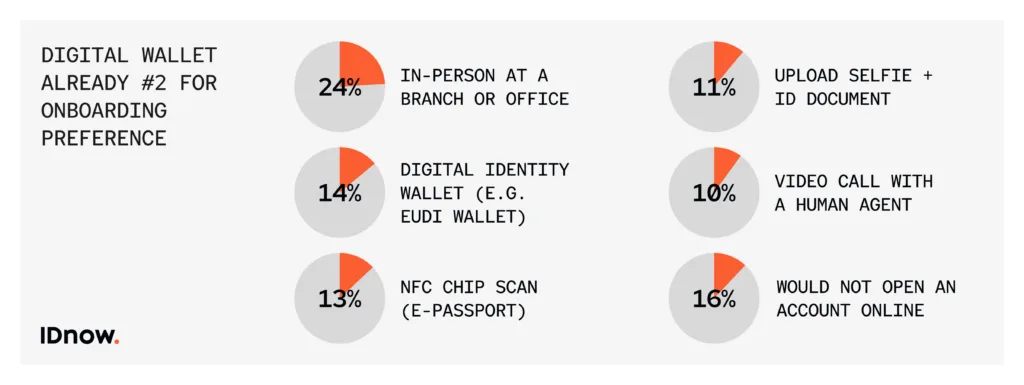
The way businesses verify who their customers are is about to fundamentally change. Here’s what that means, and why identity relationships are so important.

Key takeaways 

  • One-time KYC checks are a conceptual failure as they can’t detect fraud that happens after onboarding 
  • eIDAS 2.0, the EU AMLR, and PSD3 are converging on a single answer: continuous, event-driven identity assurance 
  • The 2027 deadline for EUDI Wallet acceptance and AMLA supervision is closer than it looks 
  • The fix is an identity relationship, not an identity check 

Picture the scene. A customer opens a bank account. They upload their ID document, take a selfie, blink on command. The automated check runs. Green light. Account created. Compliance box ticked. Job done.  

Right? 

Six months later, that same customer’s phone has been SIM-swapped. Their email is compromised. The device they used to open the account has been cloned and is now logging in from an IP address three countries away. The fraudster who carried out the attack knows all of this. They’re inside the account, moving funds, adding payees, working fast. 

The bank’s KYC check that was performed six months ago knows none of it. It never could. It was never designed to. 

The limits of the one-time KYC check is not a technology failure; it is a conceptual one and is what Europe’s incoming regulatory architecture is designed to fix.

AMLR, PSD3 and eIDAS 2.0: 3 regulations. 1 direction.

What is striking about the current regulatory moment in Europe is not the volume of change — it is the coherence of it. eIDAS 2.0, the Anti-Money Laundering Regulation (AMLR) and the second Payment Services Directive revision (PSD3) are being written and implemented simultaneously. 

“What we are seeing is not three separate regulatory updates. It is a single, coordinated rewriting of how trust is established and maintained in the European digital economy. The question regulators are asking, and that businesses now need to answer, is: ‘do you know, right now, that your customer is who they say they are?'”

Liudmyla Rabchynska, Director of Global Regulatory and Government Affairs at IDnow

The Compliance Clock is ticking. The European Anti-Money Laundering Authority (AMLA) is required to submit its draft regulatory technical standards on customer due diligence in July 2026. The EUDI Wallet, which every EU member state must issue by the end of 2026, must be accepted by regulated businesses under eIDAS 2.0 by 2027.  

PSD3 brings strong customer authentication requirements into alignment with both. 

For businesses that have built their compliance architecture on a one-time KYC check, this represents a major rebuild.

The Good News Nobody’s Saying Out Loud.

Financial services have a tangible deadline and there’s much to be done before the Compliance Clock strikes 12. However, it’s important to note that these changes are not being imposed on businesses despite their interests. It is being driven, in part, because the old model was already failing them. 

The scale of the problem is not abstract. According to the joint ECB/EBA report on payment fraud, fraudulent payment transactions across the EEA totalled €4.3 billion in 2022 — and that figure was already climbing, with €2 billion recorded in the first half of 2023 alone. By 2024, fraudulent credit transfers had risen a further 16% year-on-year, to €2.2 billion, with card fraud adding another €1.3 billion on top, according to the EBA-ECB’s 2025 payment fraud report. This is the cost of a model that was never built to keep pace with modern fraud. 

For example, synthetic identity fraud is among the fastest-growing threats, and according to Experian’s analysis of UK credit applications, now accounts for nearly a third of all identity fraud cases. TransUnion’s 2023 global fraud report named it the fastest-growing form of digital fraud worldwide. Account takeover attacks, which exploit the gap between a one-time KYC check and any subsequent authentication, sit alongside it as a rapidly escalating threat. 

“The businesses I speak to who are ahead of this aren’t thinking about eIDAS 2.0 as a compliance obligation. They’re thinking about it as the moment they finally get infrastructure that matches the sophistication of the threat they’re facing. The regulatory moment and the commercial moment are the same.” 

Jonas Mendes, Director of Product for the IDnow Trust Platform

The businesses that understand and see the regulatory shift as an opportunity to build a genuinely more resilient relationship with their customers will be compliant by 2027, and most importantly, be better businesses. 

With the IDnow Trust Platform users benefit from an ongoing relationship with their customers; one that can trigger re-verification when something changes. One that can apply different identity verification methods at different risk levels. One that can accommodate the EUDI Wallet when it arrives, without requiring a separate integration project. 

“The goal,” says Jonas, “is that when a regulation changes, or a new verification method becomes available, or a new fraud typology emerges, the IDnow Trust Platform accommodates that change. The customer doesn’t have to rebuild. They don’t even have to notice. That’s what infrastructure is supposed to do.”

Building the Identity Relationship… by 2027.

There is a version of this story that sounds frightening. Three converging regulations. A new digital wallet that must be accepted across 27 member states. Evolving fraud that defeats traditional checks. A 2027 deadline that is closer than it looks. 

That version is not wrong. But it is incomplete. 

The reason European regulators are moving in this direction simultaneously is because the old model was creating the very problems it claimed to prevent. A one-time check, bolted onto the front of a customer relationship and never revisited, was never real compliance. It was a ritual. The new model asks for something more demanding, and in doing so, makes the goal of long-lasting trust between businesses and their customers achievable. 

The identity check is dead. Long live the identity relationship. 

Find out more from Jonas Mendes on the thinking behind the IDnow Trust Platform’s Orchestrate, Observe and Decide capabilities in his blog ‘Lessons From… Building a Platform That Makes Compliance Simple Again.’

By

10 Steps that European Banks Must Take to Meet the EUDI Wallet Deadline. 5

Jody Houton
Senior PR & Content Manager at IDnow
Connect with Jody on LinkedIn

Ready to partner with IDnow?

Turn faces into trusted identities.

New IDnow consumer research reveals that French and German consumers who are aware of the EUDI Wallet are more than twice as confident in its successful roll-out. 

Munich, July 16, 2026 — IDnow, Europe’s leading identity verification platform provider, today published new consumer research revealing that half of French and German consumers have never heard of the European Digital Identity (EUDI) Wallet, despite its scheduled December 2026 launch date across all EU member states.

The research, conducted by Sapio Research, surveyed 2,000 respondents across France and Germany, and discovered that 51% of respondents have never heard of the EUDI Wallet. A further 28% have heard of it but are unsure what it does, leaving just 20% with any clear understanding of a system that will reshape how hundreds of millions of people prove who they are online.

However, the awareness gap only tells part of the story. Among consumers across both markets, knowing about the EUDI Wallet makes a significant difference to their trust in the system, with those who are familiar with it more than twice as likely to believe their government can roll it out securely and effectively. For example, 75% of informed consumers have confidence in a successful rollout — compared to just 33% of those who have never heard of it. The implication is significant: awareness is not just a communications challenge; it is a trust-building one. 

Findings suggest that awareness alone will not be enough. Even among those who know what the EUDI Wallet is, concerns about data protection, security and potential misuse remain high. Only 7% of respondents say they have no concerns about the wallet whatsoever. The question, then, is not whether people have concerns, it is whether there are currently any convincing answers to them. 

“A digital wallet can only build trust if people understand the benefits that it brings them. Information and communication will be crucial to the success of the EUDI Wallet in the coming months.”

Liudmyla Rabchynska, Director of Global Regulatory & Government Affairs, IDnow.

The Power of Selective Disclosure.

The research also reveals what could unlock adoption. When respondents were told that the EUDI Wallet would allow them to prove something, such as being over 18, without sharing their name, address, date of birth, or any other personal detail, 63% said they would be more likely to use it. Consumers already want exactly what the EUDI Wallet is designed to offer: greater control over personal data, and the ability to share only what is strictly necessary for a given transaction. 

Widespread acceptance, however, will depend not only on awareness but on whether the wallet works simply and reliably in everyday life. Seventy-three per cent of respondents fear that different systems and services will not work together seamlessly; 69% are concerned that the technology might be too complicated or unreliable. These are the practical tests the EUDI Wallet will need to pass to earn lasting trust. 

“Concerns about a new digital identity solution are entirely understandable. What matters is that people understand the safeguards behind the EUDI Wallet and the control they retain. That is precisely where the real communication challenge lies,” added Rabchynska.


About IDnow

IDnow is Europe’s leader in digital identity and fraud prevention with a mission to transform trust into the most powerful asset in the digital world, empowering enterprises with AI-driven, SaaS-based identity solutions that deliver scalable security, adaptive compliance, and real-time fraud prevention.   

Through its broad portfolio of digital identity and fraud prevention solutions, IDnow establishes, maintains and enriches trust throughout the customer journey, ensuring businesses can confidently and securely operate while leveraging digital identity to drive growth, security and scalability.    

The company has offices in Germany, United Kingdom, Romania, and France and is backed by renowned institutional investors, including Corsair Capital. Its portfolio of international clients spans a wide range of end markets including financial services, telecommunications, travel & mobility, gaming, and other industries.

We think we understand fraud. We study it, legislate against it, invest billions fighting it. And yet losses keep climbing, attacks keep evolving, and the criminals keep winning. In this part of our fraud series, we examine the structural reasons why the industry continues to fall behind and why catching up requires more than better tools.

Throughout the fraud series, we’ve exposed the scale of industrial fraud operations: billion-dollar compounds staffed by hundreds of thousands of trafficked workers, corporate-style hierarchies with R&D departments developing AI-powered attacks, and sophisticated Fraud-as-a-Service platforms democratizing cybercrime. We’ve shown you the machinery. Now comes the harder question: why hasn’t the society stopped it?

The honest answer is that fraud is faster, cheaper, more scalable and more collaborative than the industry’s response. Fraud syndicates don’t wait for the next regulatory cycle. They don’t operate in silos. They iterate in real time, share intelligence freely and exploit every gap (technical, institutional and human) the moment it opens. And while businesses scramble to respond to the last attack, fraudsters have already moved on to the next one.

One thing must be said clearly: fraud will never be eliminated. It has always existed long before the internet and long before digital identity. Bad actors will always seek to game the system for gain, but the goal here isn’t eradication. It’s making fraud harder, costlier and less scalable than the alternative. To do that, we need to understand exactly why the industry keeps losing.

The $1 trillion bill: A crisis of scale

The financial toll of fraud is immense. Global losses from fraud exceeded $1 trillion in 2024, with banks projected to lose more than $45 billion every year. Investigating a single fraud incident costs institutions an average of $4.3 million and includes investigation, recovery and regulatory fines. Worldwide, annual anti-fraud spending surpasses $12.6 billion.

But the cost goes far beyond institutional balance sheets. While many banks can absorb fraud losses, for victims, recovery is rare. Only 4% ever get their money back. In cryptocurrency fraud cases, the average loss per victim was $12,400 in 2024, often representing entire life savings that were wiped out in minutes.

By the time a victim reports a scam, funds have already moved through multiple jurisdictions, been converted to cryptocurrency, layered through shell companies and disappeared into wallets controlled by syndicates operating from compounds protected by corrupt officials. So how does a criminal operation of this scale continue to thrive, largely unchecked?

Cracks in the system: Why fraud thrives

1. The industrialisation of AI 

The most significant shift in the fraud landscape over the past two years isn’t regulatory or economic, it’s technological. Fraud syndicates have industrialised AI and the results are devastating.

Generative AI now enables the mass production of synthetic identities: realistic faces, fabricated documents, spoofed biometrics and deepfake videos that can fool verification systems trained on yesterday’s threat models. Voice cloning allows fraudsters to impersonate customers, executives and even family members in real time. Large language models power hyper-personalised phishing scripts at scale – gone are the days of broken English and obvious tells that gave scams away.

This is no longer the domain of sophisticated nation-state actors. AI tools are commercially available, cheap and increasingly accessible through Fraud-as-a-Service platforms. Recently we described how fraud syndicates operate like technology companies with R&D functions, product iteration cycles and quality assurance. Every time defenders update their models, attackers update theirs first.

The industry’s awareness of AI as a threat has not kept pace with the speed at which fraudsters are weaponizing it.

Before examining why defences are failing, it is worth distinguishing two distinct attack vectors that AI has turbocharged in very different ways. Technical fraud targets systems; synthetic identities, deepfakes, injection attacks and credential theft all attempt to defeat verification and authentication controls. Social engineering targets people; phishing, vishing, impersonation and authorised push payment fraud manipulate victims into authorising transactions themselves. AI has turbocharged both: it makes technical attacks harder to detect and social engineering attacks harder to recognise. Defences against each require fundamentally different approaches.

2. Fragmented, siloed defences

Fraud is a global, networked, collaborative criminal enterprise, but the defences built to stop it are not.

The core problem is structural: the typical anti-fraud stack is a collection of disconnected tools, each operating in its own data silo. IDV, fraud scoring, transaction monitoring, authentication, they each do their job in isolation, but they rarely talk to each other. A risk signal spotted at onboarding never reaches the transaction monitoring system. A suspicious login pattern never informs the next identity check. Fraudsters exploit these blind spots deliberately, behaving cleanly at one touchpoint while acting fraudulently at another.

The authentication gap is particularly dangerous. In a fragmented stack, the person authenticated at login has no verified connection to the identity established at onboarding. Authentication becomes a separate credential (a password, an OTP) that could belong to anyone. Account takeover exploits exactly this gap. The fraudster doesn’t need to defeat the original KYC check, they just need to defeat the much weaker authentication layer that has no memory of it.

Regulators across jurisdictions operate without standardised reporting frameworks. Law enforcement agencies lack real-time access to transaction data. Technology providers build fraud detection tools in isolation, often solving parts of the same problem without ever connecting the dots.

The result is a profound asymmetry: fraud syndicates share victim databases, coordinate attacks across regions, pool resources and learn from each other’s successes. Defenders, by contrast, operate without shared intelligence, and criminals exploit every gap between them.

3. Friction vs. security: The conversion trap

One of the most underappreciated reasons fraud is winning has nothing to do with criminals but has to do with the choices businesses make when designing their customer journeys.

Faced with a trade-off between conversion rates and security friction, too many businesses choose conversion – onboarding flows are deliberately kept short, verification steps are minimised to reduce drop-off, and risk signals are deprioritised when they threaten user experience metrics. The result is a set of defences calibrated not to stop fraud, but to be just good enough that fraud isn’t immediately obvious.

Fraudsters are rational actors. They target the path of least resistance. Businesses that optimise for speed and ease of onboarding become, by design, the easiest targets. The low-hanging fruit always gets picked first.

At its core, this is a strategic failure, not a technological one. Fraud prevention is often treated as a cost centre rather than a competitive advantage, funded reactively and resourced defensively. Until that calculus changes, fraudsters will continue to exploit the gap between what businesses say about security and what they actually invest in it.

4. Reactive systems in a proactive world

Fraud detection has historically been rule-based: define what a known attack looks like, write a rule to catch it, deploy the rule. The problem is that by the time a rule is written, tested and deployed, the attack it was designed to catch has already evolved.

Fraudsters are very fast and they don’t let you know their next move. They probe systems, identify weaknesses, execute attacks and iterate, often within hours. Fraud is usually detected only after the fact, once the damage has already been done, and by the time updated rules are implemented, the attack pattern has already changed again.

That is precisely why a reactive approach will never work. It is based on the assumption that the threat landscape is stable enough to be defined and codified, which is simply not true. The key difference lies in speed: fraud occurs in real time, while most systems designed to stop it react with a delay of several weeks or months. We need to shift from a reactive to a proactive approach: from systems that detect known fraud only after it has occurred to systems that detect anomalies, identify risk signals, and flag suspicious behaviour even before an attack takes place, even in the case of a previously unknown attack pattern.

5. Regulatory and cross-border complexity

Unlike regulation and law enforcement, fraud is borderless. A scammer in Myanmar targets a victim in Norway using infrastructure hosted in Eastern Europe, launders funds through cryptocurrency exchanges across multiple jurisdictions and cashes out through money mules in the UK, often belonging to unwitting victims recruited through their own social engineering campaigns. Each step crosses a legal boundary. Each boundary slows the response.

Fraud syndicates deliberately locate their operations in jurisdictions where regulation is fragmented, enforcement is underfunded and international cooperation is slow. Pursuing criminals across borders requires evidence-sharing protocols, extradition treaties and multilateral coordination that can take months to navigate. By the time international cooperation is secured, the trail has gone cold and the money has vanished.

Regulatory frameworks also vary significantly in their requirements for identity verification, transaction monitoring and fraud reporting, creating gaps that sophisticated criminal networks are expert at identifying and exploiting. Until regulation catches up with the borderless reality of fraud, jurisdictional complexity will remain one of the most reliable tools in the fraudster’s arsenal.

Fighting back: A coordinated response begins to emerge

Despite these obstacles, the tide is beginning to turn. Countries are harmonizing regulations through frameworks like the EU’s Anti-Money Laundering Regulation (AMLR). Multi-stakeholder ecosystems are forming to enable real-time intelligence sharing between banks, regulators and law enforcement. Advanced technologies – from AI-driven fraud detection to blockchain or behavioural analytics – are closing gaps that criminals have long exploited.

Perhaps the most important shift is conceptual: moving away from the idea that identity verification is a one-time event. Fraud doesn’t only happen at onboarding, so the checks shouldn’t stop there either. What’s needed instead is a unified view of the customer across the entire lifecycle, one that continuously updates, flags anomalies and treats trust not as a gate to pass through, but as a signal to be maintained.

IDnow’s Trust Platform is built precisely for this new reality. Where legacy systems relied on a single signal (a document check or a biometric scan), IDnow aggregates and cross-references multiple signals simultaneously: documents, biometrics, device data, behavioural patterns and contextual indicators. This includes 360 Signals capability, which detects repeat offenders by identifying suspicious reuse of faces, document templates and devices across sessions, even when individual signals appear legitimate on their own. Capabilities such as real-time risk scoring, block lists and identity graph visualisation give financial institutions not just a snapshot of who someone claims to be, but a continuously updated picture of whether they can be trusted – at onboarding and throughout the entire customer lifecycle. “That continuous picture is what changes the game because trust isn’t established once, it has to be maintained and verified at every step,” says Christophe Chaput, Principal Product Manager at IDnow.

Technology and regulation alone won’t win this war. Fraud is winning because it is faster, cheaper, more scalable and more collaborative than the industry’s response. The answer isn’t to do more of the same. It’s to fundamentally change the model: from reactive, siloed defences to proactive, AI-powered, joined-up protection, covering identity verification, authentication and continuous end-to-end trust monitoring across the entire customer lifecycle, built to move at the speed of the threat.

Discover how IDnow’s Trust Platform gives you a continuously updated picture of identity, from onboarding to the entire customer lifecycle.

Want to read more on this topic? Explore:

The True Face of Fraud #1: The masterminds behind the $1 trillion crime industry. Uncover who is behind the fastest-growing fraud schemes, where the main scam compound hubs are located, and what financial organisations need to understand about the threat actors they are up against.

The True Face of Fraud #2: The Industrialisation of Crime – How crime syndicates run $1 trillion scam empires. Discover how criminal networks are structuring themselves as fully-fledged enterprises, leveraging AI and the Fraud-as-a-Service (FaaS) model to industrialise fraud at scale.

The True Face of Fraud #3: The workforce behind fraud empires and how banks can fight back. Uncover the dark human reality behind industrialised fraud: hundreds of thousands of trafficked workers enslaved in scam compounds — and what banks can do to disrupt these criminal networks.

Author

Nikita Rybová
Customer & Product Marketing Manager at IDnow
Connect with Nikita on LinkedIn

The EU is replacing the Payment Services Directive 2 (PSD2) with a new two-part framework. Here’s what’s changing, why it matters, and what financial services firms need to do next.

Key Takeaways

  • The EU is replacing PSD2 with a dual package: the Payment Services Regulation (PSR) and the Payment Services Directive 3 (PSD3). 
  • Strong Customer Authentication must now only include biometric checks
  • Fraud prevention to become binding law 
  • Impersonation fraud liability to shift to Payment Service Providers (PSPs) 

Commonly known as the European Union’s payments rulebook, PSD2 introduced Strong Customer Authentication and laid the groundwork for open banking, but, as of June 2026, has ultimately served its purpose.

Unfortunately, much like with each iteration of the Anti-Money Laundering Directive, EU Member States invariably transposed PSD2 requirements differently, leading to a fragmented landscape of SCA interpretations, inconsistent consumer protections, and uneven enforcement, a fragmented landscape of SCA interpretations, inconsistent consumer protections, and uneven enforcement.

Thankfully, that era is ending.

The EU is replacing PSD2 with a dual package: the Payment Services Regulation (PSR) and PSD3. Publication in the Official Journal is expected by the end of Q2 2026. Member states will then have a maximum of 21 months to implement the changes into national laws.

With the Compliance Clock already ticking for all manner of regulatory reasons, including eIDAS 2.0 and the Anti-Money Laundering Regulation (AMLR), financial services need to start preparing now.

PSD3 News: What is the Difference Between PSR and PSD3?

The new package splits the framework into a regulation and a directive:

  • PSR (Regulation) covers the operational rules, including SCA, fraud prevention, IBAN/name verification, open banking and transparency. As a regulation, it will apply to every Member State the moment it enters into force. No interpretations ordivergence.
  • PSD3 (Directive) covers the institutional framework, which means the licensing, authorisation, supervision and access to payment systems. Here, Member States will have the flexibility to integrate these provisions into their existing supervisory structures.

PSD3’s Top 5 Changes for Financial Services.

1. SCA Gets Biometrics Exception

While the main SCA rule will remain unchanged (authentication must use two elements from different categories, such as something you know, something you possess, something you are), PSR introduces one new exception.

Now, payment service providers must satisfy SCA using two elements from the inherence category, in other words, biometrics alone.

In practice, this could mean facial recognition combined with voice recognition, or facial recognition combined with behavioural biometrics. What it does not mean is two passwords or two devices.

“The European Banking Authority (EBA) will develop guidelines within 18 months of the PSR entering into force to define the specifics, in particular what ‘independence of elements’ means in practice. But for financial services firms — and for their customers — the direction of travel is clear: biometric-only authentication is coming very soon.”

Liudmyla Rabchynska, Director of Global and Regulatory Affairs at IDnow

The EU Digital IdentityWallet also fits naturally within this framework. A wallet-held credential (possession) combined with a biometric unlock (inherence) satisfies the standard two-category requirement.

2. The EUDI Wallet Becomes Mandatory for Payment Services

Under eIDAS 2.0, payment service providers are obliged to accept the EU Digital Identity Wallet to support SCA for online account login and transaction initiation. The PSR operationalises this obligation through EBA technical standards (Article 89) and confirms the cross-regulatory link in Recital 111.

Sounds complicated, but what this means is simple: every payment services provider (PSP) in the EU must integrate EUDI Wallet acceptance into its authentication flows. Not as an option. Not as a nice-to-have but as a legal requirement.

For consumers, this is transformative. The EUDI Wallet will allow them to authenticate securely across any payment service — in any Member State — using a single, trusted digital identity. For PSPs, the integration deadline will be set by the EBA’s RTS, but the obligation itself is not in doubt.

Check out our blog, ‘The EUDI Wallet Explained: Everything Banks Need to Know Before 2027.’

3. IBAN Name Verification Extends to all Credit Transfers

Until now, the obligation to verify that a payee’s name matches their IBAN applied only to instant credit transfers in euros under the Instant Payments Regulation.

PSR Article 50 changes this fundamentally. The Verification of Payee obligation is extended to all credit transfers, including non-euro transfers and those falling outside the scope of the SEPA framework.

The mechanics are the same as under the Instant Payments Regulation: before executing a credit transfer, the sending PSP must check the payee’s name against the name registered to the destination account. If there is a mismatch, the payer must be notified before the transaction proceeds.

For consumers, this is straightforward and means fewer misdirected payments and fewer successful authorised push payment fraud attempts. For PSPs, however, it is a significant infrastructure project.

4. Fraud Prevention Becomes Binding Law

Under PSD2, fraud prevention obligations were largely ‘soft law’, comprising EBA guidelines and general SCA requirements. The PSR hardens these into explicit, binding obligations with explicit liability consequences.

For example, PSR Article 83 requires PSPs to implement transaction monitoring mechanisms before executing a payment and before making funds available to the payee. When a PSP does not carry out such monitoring and the payer incurs financial damage, the PSP shall bear liability.

“This closes a significant liability gap in the current framework. The receiving PSP is now squarely in scope not just the sender. The message is clear: fraud prevention is no longer a matter of industry best practice. It is a legal obligation with liability attached,” said Liudmyla.

PSR also introduces mandatory fraud information sharing between PSPs through structured arrangements.

5. Impersonation Fraud Liability Shifts to PSPs

Perhaps the most consumer-protective change in the entire package is PSR Article 59, which introduces a ‘refund right’ for impersonation fraud. Europe’s fastest-growing fraud type occurs when a consumer is manipulated by a third party pretending to be their own PSP. Here, fraudsters use communication channels attributed to that PSP (spoofed phone numbers, email domains, SMS sender IDs), to receive a fraudulent authorised payment transaction.

With PSR, PSPs must now refund the consumer in full, if:

  • The consumer was manipulated by someone impersonating their PSP
  • The manipulation used communication channels attributed to the PSP
  • The consumer notified their PSP without undue delay and reported the fraud to the police
  • Refund must be made within 15 business days

Crucially, the burden of proof now sits with the PSP, not the consumer, to demonstrate fraud or gross negligence if it wishes to withhold a refund.

PSPs must also ensure they have “adequate prevention and robust technical safeguards in place” to prevent fraudsters replicating their communication channels in the first place.

PSR and PSD3 Timeline.

The following timeline outlines the key regulatory milestones for the implementation of PSD3 and the Payment Services Regulation (PSR).

TimelineMilestoneDetails
End of Q2 2026Publication in the Official JournalExpected publication
Q4 2027 / Q1 2028PSR applies18 months after entry into force
Q2 / Q3 2028PSD3 transposition deadline24 months after entry into force
Q3 2028 / Q1 2029VoP provisions apply27 months after entry into force
TimelineEnd of Q2 2026
MilestonePublication in the Official Journal
DetailsExpected publication
TimelineQ4 2027 / Q1 2028
MilestonePSR applies
Details18 months after entry into force
TimelineQ2 / Q3 2028
MilestonePSD3 transposition deadline
Details24 months after entry into force
TimelineQ3 2028 / Q1 2029
MilestoneVoP provisions apply
Details27 months after entry into force

Eighteen months from publication to application is not a long runway for the scale of infrastructure changes required. Firms that wait for the EBA’s RTS before beginning preparation will find themselves severely behind.

What PSD3 and PSR Means for Financial Services.

For consumers, PSD3 and PSR will user in a wave of changes to the user experience. For example, biometric-only authentication promises a frictionless payment experience and EUDI Wallet integration means a single, secure digital identity can be used across every payment service in Europe. What’s more, mandatory payee verification reduces the risk of misdirected or fraudulent payments, and the new impersonation fraud refund right provides meaningful protection against the fastest-growing fraud type in Europe.

For banks, payment institutions, fintechs and neobanks, the Compliance Clock is ticking with each day that passes: SCA upgrades, EUDI Wallet integration, IBAN/name verification across all credit transfers, binding fraud monitoring with liability attached and mandatory fraud data sharing with GDPR-compliant governance.

PSR and PSD3 represent the most comprehensive reform of European payment services law since PSD2 was adopted in 2015.

Interested in how IDnow can support your PSR and PSD3 compliance journey?

Read more from IDnow: 

FAQs about PSD3

What is the difference between PSR and PSD3?

The EU’s new payments framework is split into two instruments. The Payment Services Regulation (PSR) is directly applicable across all EU Member States the moment it enters into force — covering operational rules such as Strong Customer Authentication, fraud prevention, IBAN/name verification, and open banking. PSD3 (the Directive) covers institutional matters — licensing, authorisation, and supervision — and gives Member States flexibility in how they transpose it into national law. Together, they replace PSD2.

When does PSD3 come into force?

Publication in the EU’s Official Journal is expected by the end of Q2 2026. From that point, PSR will apply approximately 18 months later (Q4 2027 / Q1 2028), PSD3 must be transposed by Member States within 24 months (Q2/Q3 2028), and Verification of Payee provisions will apply 27 months after entry into force (Q3 2028 / Q1 2029).

What are the main changes to Strong Customer Authentication (SCA) under PSR?

The core Strong Customer Authentication (SCA) rule — requiring two elements from different categories (something you know, something you have, something you are) — remains unchanged. However, PSR introduces one significant new exception: payment service providers can now satisfy SCA using two elements from the inherence category alone, meaning biometrics-only authentication (e.g. facial recognition combined with voice recognition or behavioural biometrics) will be permitted. The EBA will publish guidelines within 18 months of PSR entering into force to define the specifics.

Will payment service providers be required to accept the EU Digital Identity Wallet?

Yes. Under PSR (operationalising eIDAS 2.0), every payment service provider in the EU will be legally required to accept the EUDI Wallet for Strong Customer Authentication — covering both online account login and transaction initiation. This is a mandatory obligation, not an optional integration. The EBA will set the precise technical standards and integration deadline via Regulatory Technical Standards.

What is Verification of Payee (VoP) and who does it apply to under PSR?

 Verification of Payee (VoP) requires a sending payment service provider to check that a payee’s name matches the name registered to the destination IBAN before executing a credit transfer. If there is a mismatch, the payer must be notified before the transaction proceeds. Under PSR Article 50, this obligation — previously limited to instant euro credit transfers — is extended to all credit transfers, including non-euro and non-SEPA transactions.

Who is liable for impersonation fraud under the new rules?

Under PSR Article 59, if a consumer is manipulated by a fraudster impersonating their payment service provider — using spoofed phone numbers, email domains, or SMS sender IDs — the PSP must refund the consumer in full within 15 business days. The burden of proof shifts to the PSP: it must demonstrate fraud or gross negligence on the consumer’s part if it wishes to withhold a refund. PSPs must also have technical safeguards in place to prevent fraudsters replicating their communication channels.

What are PSPs’ fraud prevention obligations under PSR?

PSR hardens fraud prevention from soft-law guidelines into binding legal obligations. Under Article 83, PSPs are required to implement transaction monitoring mechanisms before executing a payment and before making funds available to the payee. Where a PSP fails to conduct such monitoring and a payer suffers financial loss, the PSP bears direct liability. PSR also mandates that PSPs share fraud data with one another through structured, GDPR-compliant arrangements.

How is PSD3 different from PSD2? 

PSD2 left significant room for inconsistent national transposition, creating a fragmented landscape of SCA interpretations and uneven consumer protections across the EU. PSD3 and PSR address this by: making key operational rules directly applicable (via the PSR regulation); introducing biometric-only SCA; mandating EUDI Wallet acceptance; extending Verification of Payee to all credit transfers; and creating binding fraud prevention obligations with explicit liability consequences — a significant upgrade on PSD2’s largely guidance-based approach.

Author

10 Steps that European Banks Must Take to Meet the EUDI Wallet Deadline. 5

Jody Houton
Senior PR & Content Manager at IDnow
Connect with Jody on LinkedIn

Jonas Mendes, Director of Product for the IDnow Trust Platform, explains the thinking behind the Platform’s Orchestrate, Observe, Decide capabilities, and why the order matters.

There is a question I often come back to when thinking about product: what is the actual problem? 

Not the stated problem. Not the problem as it appears in a requirements document or a sales call. The underlying problem that if you solve, makes everything else easier. 

In identity verification, the stated problem is usually something like “We need a better document check” or “our biometric matching isn’t accurate enough” or “we need to add eID support.” These are real problems. Solving them matters. But they are symptoms of something deeper. 

The actual problem, as I have come to understand it, is this: compliance teams are being asked to move at regulatory speed using infrastructure that moves at development speed. And those two speeds are not compatible. 

In a regulatory environment where new AMLA’s customer due diligence standards, eIDAS 2.0 assurance level requirements and evolving fraud typologies can change what “compliant” looks like at relatively short notice, the inability to adapt quickly is an operational inconvenience at best, and compliance risk at worst. 

That is the problem the IDnow Trust Platform is built to solve.

Fragmentation is the Real Identity Verification Problem. 

It is easy to think of the identity verification challenge as a technology problem — that if you just have the right document analysis, the right biometric check and the right AML screening tool, you are covered. And for a long time, that was roughly how the industry approached it. 

In reality, though, for most businesses operating at scale, identity verification is a patchwork. A document verification vendor integrated via one API. A biometric provider via another. An AML screening tool bolted on at a different point in the journey. A fraud detection layer sitting alongside but not quite connected to the onboarding flow. Each tool doing its job in isolation, with no shared data model, no unified audit trail and no single view of what is happening across the customer lifecycle. 

When something goes wrong, such as a fraud case slipping through or a compliance gap identified in audit, the work of diagnosing and fixing it is enormous. And when you want to optimise something like improving conversion at a particular stage or reducing false positives on a particular check, it’s often impossible, as you cannot see the journey clearly enough to know where the problem is. 

In this sense, fragmentation creates operational complexity, and most importantly, blindness. And, in compliance, blindness is expensive.

Orchestrate, Observe and Decide with the IDnow Trust Platform. 

The IDnow Trust Platform has been built around three principles: 

1. Orchestrate comes first because control should always come first. A compliance team should be able to design, modify and deploy an identity verification journey without needing to write code or open a development ticket. The IDnow Trust Platform gives compliance and product teams direct control over the customer journey so they can adjust which checks apply to which customer segment, at which risk level and in which market.  
 
The IDnow Orchestrate Workflow builder is a visual, logic-based tool that affords compliance teams the insight and ability to apply rules in hours, not sprint cycles. For example, they can apply certain identity verification methods for specificcustomer types. Then, depending on results, apply a risk score, which, if it exceeds the threshold, triggers an additional check. 
 
That adaptability is not only a feature of convenience. In a regulated environment soon to be reshaped by the Anti-Money Laundering Regulation, eIDAS 2.0 assurance level requirements and evolving national frameworks, the ability to update your verification journey quickly is a crucial compliance capability.

2. Observe comes second because you cannot improve what you cannot see. The Journey Explorer gives a real-time, end-to-end view of what is happening across your customer verification flows. This could be where customers are dropping off, where checks are generating unexpected results or where friction is being created that does not correspond to a genuine risk. For most businesses using point solutions, where each tool reports its own metrics in its own format, assembling a coherent picture of the full journey requires significant manual effort. 

The IDnow Journey Explorer changes that and does something much more important: it makes A/B compliance testing possible. If you want to know whether a different verification sequence reduces drop-off without increasing fraud, you can test it — with real traffic, in a controlled way, with results that are statistically meaningful. That’s the kind of optimisation capability that product teams have had for years. Now, with the IDnow Trust Platform, compliance teams have it too. 

3. Decide comes third because you can only make good decisions if you have access to good information. The rules engine sits at the heart of the decisioning layer, drawing on the signals collected across the entire customer journey, including document verification results, biometric match scores, device intelligence, location data, email risk and phone risk, before applying the workflow-defined logic to produce an outcome. Approve. Decline. Escalate for human review. Apply enhanced due diligence. 

The goal of the IDnow Trust Platform is not to remove human judgment from the process. It is to ensure that when human judgment is required, it is focused on the cases where it genuinely adds value, such as the ambiguous situations or the high-stakes decisions that warrant careful review. Routine decisions, made against well-defined criteria, should not require a human in the loop. This is not a compromise on quality but a better use of expert time.

The IDnow Trust Platform and the Art of the Possible.

There is a version of this story that is purely operational. Yes, the IDnow Trust Platform offers faster deployments, lower integration costs, better conversion metrics. Those things, of course, matter but the more important part of the story is strategic. 

When a new regulation comes into force, such as when AMLA’s RTS on customer due diligence defines new requirements or when a new fraud typology requires a new detection layer, a business operating on the IDnow Trust Platform does not need to rebuild. The compliance team simply adjusts the workflow and the customer never notices. 

That is what infrastructure is supposed to do. It is not supposed to be the thing that slows you down when the world changes. It is supposed to be the thing that lets you move quickly because the foundations are solid. 

The compliance teams I have most respect for no longer view identity verification as a set of tools to be managed, but as a capability to be deployed intelligently. The IDnow Trust Platform is built for that ambition. 

Discover more about the IDnow Trust Platform’s first customer, 0TO9 in our blog, ‘“Simple on the surface, powerful underneath,” 0TO9 on Going First with IDnow’s Trust Platform.’ 

Interested in more ‘Lessons From’ our subject matter experts? Click below! 

  • Senior Architect at IDnow, Sebastian Elfors explains how technical standards are moving from technical guidelines to legal foundations — and what that means for banks, fintechs, wallet providers, and every European citizen. 
  • Former INTERPOL Coordinator, and current Forensic Document Examiner at IDnow, Daniela Djidrovska explains why IDnow offers document fraud training to every customer, regardless of sector. 
  • Research Scientist in the Biometrics Team at IDnow, Elmokhtar Mohamed Moussa explores the dangers of face verification bias and what steps must be taken to eradicate it. 
  • Research Scientist at IDnow, Nathan Ramoly explores the dangers of deepfakes and explains how identity verification can help businesses stay one step ahead of fraudsters and build real trust in a digital world.

By

Jonas Mendes
Director of Product at IDnow
Connect with Jonas on LinkedIn

On July 10, 2026 the EU’s new Anti-Money Laundering Authority (AMLA) will submit the technical standards that will define compliant customer verification across Europe through 2027 and beyond. Here’s what’s at stake; where the draft standards fall short; and how IDnow formally responded to the consultation.

There is a date in July that most businesses haven’t put in their diaries but probably should. 

On July 10, 2026, the AMLA (the newly established EU body charged with unifying and directly supervising anti-money laundering enforcement across the bloc) will submit its draft Regulatory Technical Standards (RTS) on customer due diligence to the European Commission. Those standards will define, in precise and binding terms, what compliant customer identity verification looks like across the EU from 2027 onwards. 

Once adopted by the Commission, these standards will apply directly across all 27 member states — no national transposition, no room for interpretation, no grace period for businesses that weren’t paying attention. 

If you are a bank, a fintech, a telecoms operator, an insurance firm, a crypto asset service provider, or any other entity within the scope of EU anti-money laundering law, the July 10 deadline is the moment the rules of the game are written down. 

IDnow has spent months analysing those draft standards. What we found is a framework that gets much right — and contains several critical flaws that, if not corrected before adoption, will undermine the very objectives the AMLR was designed to achieve.

A Brief History of European Anti-Money Laundering Efforts.

Europe’s approach to anti-money laundering has historically been built on Anti-Money Laundering Directives. The Fourth AML Directive, the Fifth, and the Sixth each set minimum standards that member states were required to implement in national law.

“Unfortunately, how ‘minimum’ was defined was very much open to interpretation. Transposition was inconsistent. Enforcement was fragmented. A business operating across multiple EU markets faced the practical complexity of multiple national frameworks, each with its own interpretation of what customer due diligence required.”

Liudmyla Rabchynska, Director of Global and Regulatory Affairs at IDnow.

The EU AML Package, adopted in 2024, changed that architecture entirely. At its centre is the Anti-Money Laundering Regulation (AMLR), which, unlike a directive, applies directly and uniformly without national transposition or ‘interpretation’, from July 10, 2027. The AMLA is tasked with preparing regulatory technical standards across 23 mandates, most of them due by July 10, 2026. The customer due diligence RTS is the most consequential for any business that verifies customer identity. 

For the first time, a business operating in France, Germany and the Netherlands will face the same legal requirements in all three markets. The era of regulatory arbitrage within the EU’s AML framework is ending.

What the AMLA’s Customer Due Diligence RTS will cover.

Based on Article 28 of the AMLR and the draft standards published for consultation, the RTS will specify: 

  • The information to be collected during customer due diligence: What data must be gathered, verified and recorded for different customer types and risk profiles 
  • The methods by which identity verification may be conducted: Which electronic identification means, biometric processes and document verification methods satisfy the required assurance levels under the eIDAS 2.0 framework 
  • Simplified and enhanced due diligence triggers: When standard verification is sufficient, and when more is required 
  • Ongoing monitoring obligations: What continuous monitoring of customer relationships must look like in practice, including triggers for re-verification 
  • Third-party reliance: The conditions under which regulated entities may rely on verification conducted by another party 

AMLA’s public hearing on the draft standards in March 2026 was attended by over 1,600 stakeholders from across financial services, fintech and professional services — a signal of just how consequential these standards are across the industry.

What IDnow told AMLA — and Why it Matters.

In our formal response to the AMLA’s consultation, IDnow broadly support the framework’s objectives but identified several deficiencies that, if not corrected, will create exploitable gaps at the heart of the EU’s AML architecture.

The Fallback Problem.

The most significant concern centres on Article 7(2)-(4), which introduces a fallback verification pathway — essentially, remote document scanning with lower security guarantees — for situations where electronic identification means or qualified trust services are “unavailable.” The problem is that premise is factually incorrect.

“The AMLR is explicit and provides two — and only two — acceptable means of verifying identity for non-face-to-face customer due diligence: electronic identification means at assurance levels ‘substantial’ or ‘high’ (notified eID schemes, EUDI Wallets), and relevant qualified trust services under eIDAS. The regulation does not authorise a third pathway.”

Liudmyla Rabchynska, Director of Global and Regulatory Affairs at IDnow.

Also, the premise of the fallback — that qualified trust services might not be available in some member states — is simply wrong. The EU Trusted List, maintained by each member state and published by the European Commission, confirms that qualified trust service providers are operational in every EU member state. There is no member state in which these services are “not available.” 

A Security Gap that Fraudsters will Exploit.

The fallback isn’t just legally problematic. It is a security risk. 

The current draft’s Article 7(3)(a) requires only that “the natural person presenting the customer’s identity document is the person on the picture of the document.” However, as stated in our response, this can be “circumvented by overlaying a deepfake of the document holder’s face onto a live video stream,” and, at the moment, the draft RTS does not require injection attack detection (controls to ensure that a biometric feed originates from a device’s physical camera, rather than from software injecting pre-recorded or synthetic video). 

As AI-generated synthetic identity documents are now commercially available, the draft standards would not reliably detect them.

“Security is only as strong as its weakest link. The fallback in Article 7(2)-(4) risks introducing severe weaknesses into customer due diligence, creating low-assurance pathways vulnerable to deepfakes and social engineering,” adds Liudmyla.

The fixes IDnow has proposed are specific and technically grounded: mandatory presentation attack detection (PAD) and liveness checks compliant with ISO/IEC 30107-3, injection attack detection compliant with CEN/TS 18099, NFC chip verification where available, and explicit compliance with ETSI TS 119 461 v2.1.1 — the European standard for identity proofing. 

If the fallback is retained at all, it should be strictly time-limited, automatically expiring once the EUDI Wallet is operational in each member state.

QEAA Needs to be Named.

A third issue is less dramatic but equally important in practice. The draft RTS uses the generic phrase “relevant qualified trust services” without specifying which services qualify. This matters most for Qualified Electronic Attestations of Attributes (QEAA) — the credentials at the heart of the European Digital Identity Wallet — which is not explicitly named. 

QEAA is, by design, purpose-built for customer due diligence. A QEAA attesting a customer’s name, date of birth, nationality and address — issued by a supervised provider that has itself verified these attributes against authentic sources — provides a higher level of assurance than a document scan. It enjoys a presumption of accuracy under eIDAS 2.0. It must be recognised cross-border across the entire EU. 

As Liudmyla explains, the failure to name it explicitly creates legal uncertainty for both providers and obliged entities:  

“A QEAAP cannot determine with legal certainty whether its QEAA will be accepted as sufficient for standard CDD, or whether an obliged entity will reject it because it lacks certain attributes.” 

That is precisely the kind of fragmentation the AMLR was designed to eliminate.

2026 is the Action Year. Not 2027.

There is a tendency to treat July 10, 2027 — the date AMLR enters full force — as the deadline. It is not. It is the date by which compliance is required. The preparation deadline is now. The Compliance Countdown has started. Will you beat the clock? 

Businesses that wait for adoption before beginning their gap analysis, technology assessment and implementation planning will have, at best, months to close gaps that take years to address properly. 

Three gaps are likely to be the most common: 

Method assurance levels. The AMLR operates within the eIDAS 2.0 assurance level framework, with Low, Substantial and High levels. Many businesses don’t currently know which level their existing verification methods achieve, because previousframeworks didn’t require them to. If methods fall below that threshold, your current process will be non-compliant from July 2027. 

Ongoing monitoring capability. AMLR is explicit: customer due diligence is not a one-time exercise. Ongoing monitoring — flagging changes in customer risk profiles, triggering re-verification, maintaining up-to-date records — is a legal obligation. Businesses whose compliance architecture relies on periodic manual reviews rather than continuous, signal-based monitoring will need to close a significant gap. 

Audit trail coherence. The RTS will specify data retention and audit requirements. For businesses operating with fragmented technology stacks, including multiple vendors, separate audit logs and inconsistent data formats, demonstrating compliance to a regulator will be considerably harder than for those with a unified, auditable record of every customer interaction.

What Comes Next.

When AMLA submits its customer due diligence RTS to the European Commission in July 2026, it will prompt significant coverage across compliance and financial services media. The honest read is this: the framework is more demanding than most businesses currently appreciate, and less impossible than the most alarming headlines will suggest. 

The underlying goal to create a single, coherent European standard for knowing who your customers are, continuously, across borders is also a commercial one. The businesses that reach it first will onboard faster, monitor more effectively, and build more durable customer trust than those still operating on processes designed for a regulatory world that no longer exists. If you’re evaluating vendors now, see how to select the right AMLR provider.

The IDnow Trust Platform is AMLR-ready — covering identity verification, ongoing monitoring, risk intelligence and the full customer trust lifecycle through a single, auditable platform. 

By

The EUDI Wallet Explained: Everything Banks Need to Know Before 2027. 5

Jody Houton
Senior PR & Content Manager at IDnow
Connect with Jody on LinkedIn


AMLR lands in July 2027. Mandatory EUDI Wallet acceptance follows in November. Two deadlines. One fixed timetable. And an identity infrastructure landscape that most regulated businesses are not ready for.

Key Takeaways

  • AMLR enforcement begins July 2027: No transposition period, no grace period, one standard across all 27 EU Member States simultaneously
  • EUDI Wallet acceptance is mandatory from November 2027: A legal baseline, not a competitive differentiator
  • AMLR changes the architecture, not just the rules: Ongoing monitoring, tamper-evident audit trails, and Qualified Trust Services are now structural requirements
  • Fraud doesn’t just happen at onboarding: Synthetic identities, deepfakes, and account takeover exploit the gap between verification and the lifetime of the relationship
  • Fragmented identity stacks are a liability, not just an inefficiency: Broken audit trails, integration complexity, and re-engineering costs every time regulation moves
  • EUDI Wallets increase compliance complexity, not reduce it: More standards, more schemes, more edge cases, all evolving simultaneously
  • Enterprise institutions don’t need to rip and replace:The IDnow Trust Platform works as a full infrastructure or module by module, even one verification method at a time
  • KYC is a checkpoint. TYC is a relationship: Continuous, evidence-based trust across every interaction, not just the door
  • The time to act is now, not 2027: EUDI Wallet certificates, QTSP relationships, and infrastructure decisions all require significant lead time
  • Organisations that consolidate now enter 2027 with a structural advantage that latecomers will find very hard to close


There is a clock on the wall of every compliance team in Europe right now. Most people haven’t looked at it yet. Some have glanced at it and looked away. A few are already building.

The hands are moving regardless.

By July 2027, the Anti-Money Laundering Regulation (AMLR) replaces the patchwork of 27 national AML frameworks with a single, directly applicable EU standard. No transposition, no national interpretation, no grace period for the unprepared. Four months later, in November 2027, banks and regulated platforms across all 27 Member States must be capable of accepting EU Digital Identity Wallets. Not as an option. As a legal requirement.

That is 13 months from today.

This is not a compliance deadline in the ordinary sense, the kind that gets absorbed into an existing process with a policy update and a training module. This is a structural reset of how digital identity works across Europe. And for organisations still running fragmented, point-solution identity stacks, the clock is ticking on a problem that cannot be solved at the last minute.

Why This Time It’s Different with the EU AMLR 2027

European regulatory updates have a familiar rhythm. A directive is issued. Member States transpose it at varying speeds. Businesses adapt their processes. Compliance teams update their documentation and life goes on.

The AMLR regulations break that rhythm in three ways.

It is directly applicable. AMLR is a Regulation, not a Directive. It does not need to be transposed into national law. It applies directly, simultaneously, across all 27 Member States from the moment of enforcement. There is no Germany version and no France version, only one standard for all.

It changes the architecture, not just the rules. AMLR doesn’t just raise the bar on what counts as compliant customer due diligence, it changes how that due diligence must be structured, evidenced, and maintained over time. Ongoing monitoring is no longer optional and a complete, verifiable audit trail is not a nice-to-have. The one-time onboarding check that has anchored identity verification for a decade is no longer a sufficient operating model.

The EUDI Wallet deadline is mandatory, not voluntary. From November 2027, regulated businesses must accept EU Digital Identity Wallet presentations. Not if they want to and  not as a competitive differentiator. As a legal baseline. France and Germany already have active public wallet sandboxes. Nineteen further Member States are in active deployment. The infrastructure is being built. The question is whether your organisation will be ready to receive it.

The Three Forces Behind AMLR 2027 Converging at Once 

What makes the next 18 months genuinely unprecedented is not any single regulatory change. It is the convergence of three forces — simultaneously — on an identity landscape that was never designed to handle all three at once.

1. Regulation Is Resetting the Floor

AMLR and eIDAS 2.0 are not raising the compliance bar. They are moving the floor. The minimum viable compliance posture in 2028 will look fundamentally different from the minimum viable compliance posture today. Organisations that plan for incremental adaptation will find themselves structurally non-compliant — not through negligence, but because their operating model was built for a regulatory environment that no longer exists.

The specific implications are significant:

  • Ongoing due diligence must be embedded into the customer lifecycle, not bolted on as a periodic review
  • Qualified Trust Services — including Qualified Electronic Signatures and Qualified Electronic Attestations of Attributes — become the legal anchor for non-face-to-face verification under AMLR Art. 22(6)(b)
  • EUDI Wallet acceptance requires Relying Party Access Certificates that take time to obtain and infrastructure that takes time to build
  • Audit trails must be complete, tamper-evident, and long-lived — covering not just onboarding, but every subsequent identity-related decision

None of these can be implemented in a sprint. They require infrastructure decisions made now.

2. Fraud Has Industrialised

While regulators have been rewriting the rulebook, fraudsters have been rewriting theirs.

Generative AI has fundamentally changed the economics of identity fraud. Synthetic identities — combinations of real and fabricated attributes that defeat traditional document checks — can now be manufactured at scale. Deepfake attacks that would have required significant technical expertise two years ago are now available as a service on darknet forums. Injection attacks that insert fabricated video feeds into verification sessions are documented, prevalent, and evolving faster than static defences were designed to handle.

The more uncomfortable truth is where most fraud actually happens: not at onboarding, but after it. The identity check at the front door is passed. The account is opened. And then — days, weeks, or months later — the fraudulent activity begins. Account takeover. Authorised push payment fraud. Synthetic identity exploitation. None of these are caught by a one-time verification event.

The fraud problem of 2027 is a lifecycle problem. Solving it requires intelligence that travels with the customer across every interaction — not a check that stops at the door.

3. Customers Will Not Accept the Friction Tax

Here is the tension that every regulated business is navigating: the same period that demands the highest compliance standards in European history is also the period of the highest consumer expectations for digital experience.

Customers expect to be onboarded in seconds, not minutes. They expect to be recognised when they return without passwords or one-time codes. They expect verification to be invisible when they are legitimate and present only when something is actually wrong.

The assumption that compliance and experience are inherently in tension is wrong — but only if the underlying infrastructure is built to handle both simultaneously. A fragmented stack, with separate verification, fraud, authentication, and signing vendors that do not share signals or speak a common language, cannot deliver both. It can deliver compliance at the cost of experience, or experience at the cost of compliance. Rarely both.

The organisations that will win in the post-2027 environment are those that have stopped treating these as competing objectives.

Is your organisation ready for the AMLR deadline?

Complete our free AMLR Readiness Check to identify your biggest gaps.

How to select the right AMLR provider

The Uncomfortable Truth About Fragmented Stacks

Most regulated businesses today are running identity through a collection of point solutions. An IDV vendor for onboarding. A fraud platform for transaction monitoring. An authentication layer for returning users. A separate QTSP relationship for digital signatures. Sometimes a fourth or fifth vendor for specific regional requirements or document types.

Each of these was probably the right decision when it was made. Together, they have created something fragile.

Consider what happens when AMLR enforcement begins. Your compliance team needs to demonstrate a complete, connected audit trail – from the identity established at onboarding, through every authentication event, through every fraud signal detected, through every document signed. In a fragmented stack, that evidence lives in five different systems, maintained by five different vendors, in five different formats. Assembling it for an audit is a project, not a query.

Consider what happens when EUDI Wallets arrive at scale. Your onboarding flow receives a wallet presentation. Your IDV vendor may or may not support it. The wallet data needs to be validated for fraud. Some mandatory AMLR attributes – residential address, tax identification number – may not be in the wallet’s Personalisation Identity Data at all. You need a Qualified Electronic Attestation of Attributes to fill that gap. Do you have a QTSP relationship for that? Is that QTSP the same vendor as your IDV provider? If not, how do those systems connect?

Now consider what happens when AMLR changes something six months after enforcement begins. In a fragmented stack, a regulatory change becomes a re-integration project across every vendor in the chain. In a unified platform, it becomes a configuration update.

The organisations that are building on unified identity infrastructure now will absorb these changes as platform updates. Those that aren’t will face the most complex re-integration cycle in European identity history against live regulatory deadlines.


Not Every Bank Starts From Zero

Here is the reality that a purely “rip and replace” narrative misses: large regulated institutions. Tier-one banks, established insurance firms and pan-European financial groups rarely have the luxury of rebuilding their identity infrastructure from the ground up. They have existing vendor relationships, live integrations, regulatory approvals already in place, and internal systems that took years to build and cannot be switched off overnight.

The answer to fragmentation is not always consolidation in a single move. Sometimes it is consolidation by design – starting where the pain is greatest and building toward a unified architecture over time.

The Modular Path to a Unified Platform
The IDnow Trust Platform is built for both realities. For organisations ready to make a clean transition, it operates as a single, fully integrated infrastructure with one API, one audit trail, one vendor relationship covering the entire identity lifecycle. For enterprise institutions that need to move progressively, it works differently: each capability of the Trust Platform – identity verification, fraud prevention, biometric authentication, qualified trust services – can be deployed as a standalone module, integrating with existing systems and expanding over time.

But the modularity goes further than that.

Even within a single capability, organisations do not have to take everything at once. Take identity verification. Rather than adopting the full suite of verification methods — document checks, biometric verification, video identification, eID — an organisation can start with a single method that addresses their most pressing need right now. A bank preparing for the November 2027 EUDI Wallet mandate, for example, could deploy EUDI Wallet acceptance as a standalone method through the Trust Platform, plugging it into their existing onboarding flow without replacing a single other component. As wallet adoption grows and the regulatory requirement becomes operationally significant, they already have the infrastructure in place and adding further verification methods alongside it becomes a configuration decision, not an integration project.

An enterprise bank might start with IDnow’s fraud prevention layer, sitting on top of their existing IDV infrastructure. A fintech scaling across markets might begin with the verification orchestration engine, adding authentication and qualified signing as they grow. A regulated platform racing toward the AMLR deadline might prioritise qualified trust services first, adding EUDI Wallet acceptance alongside it.

The destination is the same in every case: a unified identity infrastructure where every component shares signals, speaks a common language, and produces a single, coherent audit trail. The path to that destination is entirely flexible.

This matters for enterprise banking specifically. The compliance clock does not care about internal transformation timelines or legacy integration constraints. But the right platform architecture means organisations do not have to choose between moving fast and moving carefully. They can do both, deploying the capabilities they need now, against the deadlines that are live now, while building toward the unified infrastructure that the post-2027 environment will demand.

Fragmentation is not solved in a single procurement decision. It is solved by choosing a platform that can meet you where you are and take you where you need to go.

From KYC to TYC: A Different Way of Thinking About Trust

The mental model that underpins most identity stacks – Know Your Customer – was designed for a specific moment: the onboarding event. Verify the customer, create a record, move on.

That model is reaching the end of its useful life.

The regulatory environment now requires something closer to what we call Trust Your Customer – continuous, evidence-based trust that is established at onboarding and maintained across every subsequent interaction. Not a check, a relationship. Not a record, a living audit trail.

This is not just a philosophical shift. It has direct operational implications:

  • Authentication must be tied back to the identity established at onboarding, not a separate credential that could belong to anyone
  • Fraud signals from the onboarding stage must inform risk assessment at authentication and beyond
  • Compliance decisions at one point in the lifecycle must be traceable to evidence gathered at every previous point
  • When regulations change, the trust established under the old framework must remain valid under the new one

Building for continuous trust requires infrastructure, not a collection of products. It requires components that share signals, speak a common language, and operate as a system – not as a sequence of independent handoffs.

What the Next 18 Months Require

The clock is not waiting for annual planning cycles or procurement timelines. Here is what the next 18 months actually demand from regulated businesses across Europe.

Now: Strategic decision: The organisations that will be ready by July 2027 are making infrastructure decisions today. The question is not “what do we need to do before the deadline?” but “what operating model do we want to be running in 2028 and what do we need to build now to get there?”

By end of 2026: Foundations: EUDI Wallet Relying Party Access Certificates, including the German Berechtigungszertifikat for organisations operating in Germany, take time to obtain. QTSP relationships, especially for Qualified Electronic Attestations of Attributes, require certified providers. These are not last-minute additions, but foundational dependencies.

Q1 2027: Readiness testing: AMLR enforcement begins in July. Organisations need to be in testing and validation well before that date – not still in procurement. The compliance clock does not offer a soft launch.

July 2027: AMLR enforcement: The new standard applies. The audit trail requirements are live. The qualified trust service route for non-face-to-face verification is mandatory. Fragmented stacks meet their first real test.

November 2027: EUDI Wallet acceptance mandatory: Banks and regulated platforms must accept wallet presentations. The infrastructure to receive them, validate them, enrich them, and deliver a compliance-ready result must be operational.

The Window Is Open. It Will Not Stay That Way.

There is an opportunity in the next 18 months that will not exist in the same form after 2027. The organisations that consolidate their identity infrastructure now – before the deadlines, not in response to them – will enter the new regulatory era with a structural advantage that is genuinely difficult for laggards to close.

They will onboard faster. They will detect more fraud, earlier, across more of the customer lifecycle. They will satisfy auditors with a single, coherent audit trail rather than a patchwork of vendor exports. They will absorb future regulatory changes as platform updates rather than re-integration projects. And they will do all of this while delivering the seamless digital experiences that their customers now expect as a baseline.

The countdown is the same for everyone.

The readiness isn’t.

Where IDnow Fits to Help You Meet AMLR 2027 Compliance Requirements

The IDnow Trust Platform is built precisely for this moment. It powers continuous identity orchestration across the full customer lifecycle and combines identity verification across every method and assurance level, real-time cross-step fraud prevention, biometric authentication tied to the original KYC identity, and in-house Qualified Trust Services through IDnow Trust Services AB, our own QTSP certified by PTS Sweden and listed on the EU Trusted List.

It accepts EUDI Wallets today in France and Germany, with 19 further Member States in active deployment. The Platform also enriches wallet presentations with fraud checks and attribute validation before delivering a compliance-ready result. For attributes not available in wallet Personalisation Identity Data, IDnow Trust Services AB issues Qualified Electronic Attestations of Attributes, completing the compliance picture that wallets alone cannot deliver.

One platform. One integration. One audit trail. Built for the regulatory environment Europe is entering – not the one it is leaving.

Ready to assess where your identity stack stands against the 2027 deadlines?

Schedule a readiness assessment with an IDnow expert


By

Andreas Bodczek head image with blue collared shirt

Andreas Bodczek
CEO, IDnow

EU AMLR FAQs

When does AMLR come into force?

AMLR enforcement begins 10 July 2027. There is no transposition period, no national interpretation, and no grace period. For regulated businesses, the deadline is fixed and applies equally across all 27 EU Member States on the same date.

Why is EU AMLR 2027 replacing the Money Laundering Directive?

The existing AML Directive framework produced 27 different national interpretations of the same rules — creating inconsistencies, regulatory arbitrage, and compliance gaps across the EU. AMLR replaces this fragmented approach with one directly applicable standard, closing the loopholes that financial criminals have historically exploited by operating across borders.

Who does AMLR 2027 apply to?

AMLR applies to obliged entities across the EU — including banks, fintechs, crypto asset service providers, insurance firms, payment institutions, and other regulated financial businesses. It also introduces new obligations for crypto asset service providers and strengthens requirements around beneficial ownership transparency.

How will onboarding and AML operations change with AMLR 2027?

Significantly. The one-time onboarding check is no longer a sufficient compliance model. AMLR mandates ongoing customer due diligence embedded throughout the customer lifecycle, tamper-evident audit trails covering every identity-related decision, and Qualified Trust Services as the legal anchor for non-face-to-face verification under Art. 22(6)(b). From November 2027, regulated businesses must also accept EU Digital Identity Wallet presentations as a legal baseline. The architecture of identity compliance changes — not just the rules.

How can compliance teams prepare for the EU AML Regulation?

The organisations that will be ready by July 2027 are making infrastructure decisions now — not in 2027. Specifically:

Now: Assess your identity stack against the new requirements — ongoing monitoring, audit trail completeness, QTSP relationships and consult our guide on choosing the right AMLR provider.

By end of 2026: Secure EUDI Wallet Relying Party Access Certificates and establish Qualified Trust Service provider relationships — both require significant lead time

Q1 2027: Be in testing and validation, not still in procurement

July 2027: AMLR enforcement is live — fragmented stacks meet their first real test

Organisations still running fragmented point solutions face the most complex re-integration cycle in European identity history against live regulatory deadlines. Those that consolidate onto a unified platform now will absorb these changes as configuration updates — and enter the post-2027 era with a structural advantage that latecomers will find very hard to close.

When IDnow launched the Trust Platform – a single-integration infrastructure for identity verification, fraud prevention, biometric authentication, and qualified digital trust – the very first customer to go live had every reason to go first. It was 0TO9, a credit institution and venture builder operating across multiple European markets, whose COO Germany and Partner Delia D. König had spent a decade working with IDnow across previous roles and had brought that relationship with her when she joined 0TO9. “Simple on the surface, powerful underneath.” 0TO9 on Going First with IDnow’s Trust Platform

Delia put it simply:  “I’ve been working with IDnow for about ten years, so honestly, going for the Trust Platform was a no-brainer.

You build that kind of trust over time, and it’s not just about the product, it’s also about the people.”

The use of the word ‘no-brainer’ is telling and is the kind of language you only use when the answer was obvious before the question was finished. It also tells you something important, not just about 0TO9’s relationship with IDnow, but about the moment European fintech finds itself in right now.

The Architecture Problem Nobody Talks About

0TO9 is not a simple business. It operates multiple financial products across several European countries, each with its own regulatory requirements, its own risk profile and its own verification logic. The identity infrastructure underneath that business has to be capable of handling all of it simultaneously, compliantly, and without becoming an engineering project every time something changes.

That is a harder problem than it sounds.

The default solution in European fintech has been fragmentation: an identity vendor here, a fraud tool there, a separate integration for each new market, a compliance layer bolted on when the regulator requires it. It works until the engineering overhead becomes its own constraint, or until a new market means a new integration and a regulatory change means a re-integration project. 

0TO9 knew this trajectory. They were living it.

“Without the Trust Platform, expanding would have meant more engineering work, higher costs, and longer timelines to go live,” Delia explains. “Now those barriers are just lower. It’s less about what’s possible and more about how quickly and efficiently we can actually do it.”

That shift – from possible to efficient – is the real value proposition of a unified identity platform. It doesn’t unlock markets that were previously unreachable, but it changes the cost and speed of reaching them. In a competitive European fintech landscape, that difference is everything.

One API. All the Use Cases.

The Trust Platform’s central promise is deceptively simple: one API integration that covers the full identity lifecycle – onboarding, authentication, fraud prevention, digital signing – across markets, regulations, and risk profiles. A visual workflow builder that lets compliance and product teams configure and adapt verification flows without pulling in engineering. Real-time decisioning built in. eIDAS 2.0, AMLR, and EUDI Wallet compliance built in.

For 0TO9, the proof was in the practice.

“What’s particularly valuable for us is the flexibility to not just configure but also customise and brand our flows,” says Delia. “We operate multiple products across several European countries, each with its own requirements. The fact that we can adapt those setups without pulling in engineering every time is genuinely significant. One API, all the use cases. That simplicity is what makes the platform work at our pace.“

She describes the platform’s appeal in a phrase that captures something the industry often misses: “Simple on the surface, powerful underneath.”

That combination of genuine simplicity at the interface layer and the genuine capability underneath is harder to achieve than it looks. Most platforms offer one or the other. The engineering complexity gets pushed somewhere: either into the platform’s own abstraction layer, making it inflexible, or into the customer’s integration, making it expensive. The Trust Platform’s architecture is built to absorb that complexity without passing it on.

For a business like 0TO9, operating at pace across multiple markets, that abstraction is not a nice-to-have. It is the infrastructure that makes growth possible without growth becoming a compliance liability.

The Regulatory Clock is Ticking. For Everyone.

The timing of the Trust Platform’s launch is not incidental. AMLR enforcement lands July 2027, with mandatory EUDI Wallet acceptance following in November. Every regulated business in Europe is on the same countdown, but not every business is equally prepared.

For 0TO9, the regulatory outlook isn’t an abstract future risk, but a present operational reality that shapes how they think about every infrastructure decision they make today.

“Europe’s regulatory environment is moving fast, and you need infrastructure that can move with it,” Delia says. “One of the things that gave us confidence in the Trust Platform is knowing we’re not navigating that alone. IDnow is deeply embedded in these developments, and we’re building our compliance posture alongside them.”

That last phrase, building our compliance posture alongside them, is worth pausing on.

The conventional model of vendor relationships in identity infrastructure is transactional: a vendor provides a service, a customer consumes it, and both parties manage their own regulatory exposure. What Delia is describing is a partnership where the vendor’s position in the regulatory landscape actively strengthens the customer’s compliance posture.

IDnow’s Trust Platform is built for exactly that dynamic with its in-house Qualified Trust Service Provider, IDnow Trust Services AB, certified with zero non-conformities and on track to be among the first listed on the EU Trust List for QEAA issuance. In addition, the platform has active EUDI Wallet Relying Party capability already operational in key markets, which means the platform isn’t just compliant with the regulations coming in 2027, but has been built around them.

For 0TO9, that means the compliance complexity of the next 18 months becomes a platform update rather than a re-integration project.

What Trust Actually Means

Compliance doesn’t have to be navigated alone. That sounds simple, but in practice, for most regulated businesses managing fragmented vendor relationships across shifting regulatory frameworks, it rarely works that way.

Delia puts it plainly. “I’m excited about growing into those new regulatory regimes together with IDnow rather than having to navigate them alone.”

Together rather than alone, and that distinction sits at the heart of what the shift from KYC to TYC actually means in practice. Know Your Customer was always a solitary exercise – verify, record, move on – but Trust Your Customer is something different. It’s continuous, it’s mutual, and it gets stronger the longer it runs. It is not a one-time check, but a relationship that compounds.

The best partnerships work the same way.

What Comes Next

As 0TO9 continues to expand with new subsidiaries, new products and new markets across Europe, the infrastructure question doesn’t go away, it just changes shape.

“As we launch more subsidiaries and products across the continent, having a platform that scales with us – without requiring a new integration every time – is exactly what we need,” Delia says. “The foundation is there. Now it’s about building on it.”

Building on it – not rebuilding, re-integrating, or re-procuring it.

That is the difference between a vendor and a platform, and it is the difference between compliance as a cost centre and compliance as a foundation for growth.

The countdown to 2027 is the same for everyone. The readiness isn’t.

0TO9 already knows which side of that line they’re on.

The IDnow Trust Platform is live now. One integration. Identity verification, fraud prevention, biometric authentication, and qualified digital trust – built for where European regulation is going.


By

Nikita Rybova
Customer & Product Marketing Manager

Ellie Burns
Marketing Director

Ready to partner with IDnow?

Turn faces into trusted identities.

The IDnow Trust Platform helps organisations orchestrate identity, fraud and compliance across the full customer lifecycle. It is built for where digital identity is going, not just where it is.

Munich, June 11, 2026 — Europe’s digital identity market is entering its most significant transformations in a decade. New regulations, digital identity wallets and increasingly sophisticated AI-driven fraud are challenging assumptions that have shaped the digital identity market for more than a decade.  

Reflecting this shift, IDnow today announces the launch of the IDnow Trust Platform, marking the company’s expansion beyond traditional identity verification. The platform is designed to help regulated organisations orchestrate verification, fraud prevention, biometric authentication and qualified digital trust services across the customer lifecycle.

“The identity industry is entering its biggest transformation since onboarding first went digital.”

 Andreas Bodczek, CEO of IDnow.

“For years, organisations treated identity verification as a one-time event at the start of a customer relationship. That model is no longer sufficient. We are moving from a world centred on one-time verification to one centred on continuous trust,” said Andreas Bodczek, CEO of IDnow.

Several developments are driving this shift. AMLR will introduce a harmonised anti-money laundering framework across the European Union from July 2027, while regulated businesses will be required to accept EU Digital Identity Wallets from November 2027. At the same time, advances in generative AI are making identity-related fraud more sophisticated and easier to scale. Consumers also increasingly expect digital onboarding and authentication processes to be fast, seamless and secure.  

Historically, identity verification focused primarily on onboarding. Today, organisations need to establish and maintain trust long after the initial verification has taken place.

From KYC to TYC

The IDnow Trust Platform is designed to move businesses beyond Know Your Customer (KYC) to Trust Your Customer (TYC). Through four modular services – Identify, Authenticate, Protect and Trust – the platform delivers continuous, evidence-based trust across the full customer lifecycle.  

Its Orchestrate, Observe and Decide capabilities enable organisations to configure workflows, monitor risk signals in real time and automate decisions without involving the engineering team when regulation shifts or fraud patterns change.

Complexity Is Coming. We Built the Answer.

IDnow is at the forefront of Europe’s EUDI Wallet rollout – already operational in key markets and ready to accept wallet presentations from citizens across all 27 Member States ahead of the November 2027 mandate. But while the arrival of EU Digital Identity Wallets marks a landmark moment for European digital identity, it is often misread as a simplification of compliance. It isn’t. Wallets represent one powerful new input into an increasingly complex compliance picture, not a replacement for everything that came before. 

Organisations will simultaneously need to accept and integrate multiple wallet standards and eID schemes, each evolving under a shifting regulatory framework, while continuing to strengthen classical document-based identity verification for the significant proportion of users and scenarios wallets do not yet cover. The result is not a simpler onboarding landscape. It is a considerably more complex one. 

This is precisely the problem the IDnow Trust Platform is built to solve. Rather than forcing organisations to manage this complexity themselves, across multiple vendors, integration layers and constantly changing regulatory requirements, the Trust Platform abstracts it into a single, orchestrated infrastructure. IDnow has secured the certificates required to accept wallet presentations across key markets, including the German Berechtigungszertifikat, and combines wallet capabilities with in-house Qualified Trust Services and Qualified Electronic Attestations of Attributes (QEAA) to address the gaps that wallet identity data alone cannot fill. Organisations using the IDnow Trust Platform can navigate this complexity without it becoming a barrier to growth – staying compliant, preventing fraud, and continuing to serve customers efficiently as the regulatory landscape evolves beneath them.

“The wallet gets you through the door, the IDnow Trust Platform gets you through compliance,” said Jonas Mendes, Director of Product at IDnow. “For years, organisations could build an onboarding process and leave it largely unchanged. That is no longer the world we live in. Fraud evolves faster, regulations evolve faster and new identity methods are emerging. The real challenge is being able to adapt without needing your development teams to adjust customer journeys every time something changes.”

The IDnow Trust Platform is available now. Regulated organisations across financial services, fintech, crypto, insurance, telecommunications and gaming can integrate via a single API and access the full capabilities of the platform today.  

Learn more about the IDnow Trust Platform here. 


About IDnow

IDnow is Europe’s leader in digital identity and fraud prevention with a mission to transform trust into the most powerful asset in the digital world, empowering enterprises with AI-driven, SaaS-based identity solutions that deliver scalable security, adaptive compliance, and real-time fraud prevention.   

Through its broad portfolio of digital identity and fraud prevention solutions, IDnow establishes, maintains and enriches trust throughout the customer journey, ensuring businesses can confidently and securely operate while leveraging digital identity to drive growth, security and scalability.    

The company has offices in Germany, United Kingdom, Romania, and France and is backed by renowned institutional investors, including Corsair Capital. Its portfolio of international clients spans a wide range of end markets including financial services, telecommunications, travel & mobility, gaming, and other industries. 

Ready to partner with IDnow?

Turn faces into trusted identities.

In the first instalment of IDnow’s ‘5 Questions For…’ interview series, we sit down with Marjolein Geus to discuss how the European Blockchain Sandbox has helped regulators and innovators turn Web3 ambition into compliance-by-design best practice, and ask what’s next… 

Running from early 2023 to February 2026, the European Blockchain Sandbox was created to establish a pan-European framework to increase legal certainty for innovative blockchain technology solutions. 

In just three years, the European Commission-funded initiative facilitated 60 cross-border regulatory dialogues across multiple sectors and regulatory topics. 

In 2024, IDnow joined the IOTA Foundation consortium — alongside walt.id, HAVN Network, and Bloom Labs— and was tasked with building a Web3-ready KYC and identity verification solution. The goal: to help Crypto Asset Service Providers (CASPs) and self-hosted wallets meet the requirements of the EU’s Transfer of Funds Regulation (TFR), which forms part of the wider EU Anti-Money Laundering measures, including the upcoming Anti-Money Laundering Regulation. 

In theory, the task appeared simple: as part of evolving anti-money laundering measures, crypto transactions should now include identifying information about the sender and receiver and follow AML standards similar to traditional financial services. In reality, however, there is considerable complexity and tension between AML data requirements and GDPR expectations, especially the principle that personally identifiable information (PII) shouldn’t be stored on-chain on blockchains or other DLT systems. 

Speaking on the success of the European Blockchain Sandbox, Sebastian Elfors, who represented IDnow in the project said, “The solution we developed has the potential to go beyond the realm of cryptocurrency transactions, which was the scope of the project. For example, the Soulbound Tokens (non-transferable digital asset) that are issued could also be used for digital identities in the Web3 metaverse.”

“Although there may not be a regulatory framework with set requirements for Web3 or Web4 applications, trust brings growth and the European Blockchain Sandbox proved a great opportunity for these environments to become – or at least discuss becoming – more mainstream.”

Sebastian Elfors, Senior Architect at IDnow.

Now that the European Blockchain Sandbox has ended, we sat down with Marjolein Geus, Partner at Bird & Bird and Lead for the European Blockchain Sandbox, to discuss what the Sandbox achieved, what some of the most commonly recurring challenges were, and what comes next. 

1. What gap did the European Blockchain Sandbox fill, and what outcomes did the project aim to deliver for the wider European ecosystem?

There is a perceived gap between innovation and regulation. On the one hand there is a need for innovators to better understand relevant regulations and how to comply and on the other hand there is a need for regulators to better understand innovative technologies and what it means from a regulatory perspective and their areas of competence. The European Blockchain Sandbox helped to bridge this gap. 

The European Blockchain Sandbox provided a framework for innovators and regulators to enter into informal, confidential and cross-border dialogues to enhance mutual understanding and to identify not only potential regulatory challenges but also solutions. Bird & Bird as lead contractor set up and moderated in total 60 cross border dialogues (20 per annum) covering a range of regulatory areas and many different industry sectors. These dialogues allowed us to identify, with the help of the participating regulators and innovators, best practices, lessons learned and areas for clarification. The final best practices report, 3rd Cohort Best Practices Report – EU Blockchain Observatory and Forum was published in February 2026.

2. Across the dialogues, what were the most repeated compliance friction points that you saw across sectors (data protection, cyber security, accountability, consumer protection, AML expectations, cross-border issues)?

In total 60 selected innovative use cases participated in the project from all EU regions and covered many different industry sectors. We therefore covered a range of regulatory areas and looked at the interplay between different regulatory areas (e.g. GDPR/eIDAS; eIDAS/AML; eIDAS/Cybersecurity). There were important topics for discussion in every use case dialogue, but a common denominator for each of the dialogues was that a productive and efficient dialogue required a detailed understanding about the use case. 

This would most of the time include information about categories of data that are being processed and for which purposes, the data flows, where the data is recorded/stored (on-chain/off-chain/in the cloud), who the stakeholders are; what their roles are; and who can access the data under what conditions. In crypto projects understanding the characteristics of the tokens is also key as well as understanding the role of the different stakeholders regarding these tokens and understanding the role and functionality of the smart contracts.  

With the valuable contributions and engagement of the participants (both innovators and regulators) we were able to discuss many relevant issues such as how to comply with the General Data Protection Regulation (GDPR), how to comply with and make use of the eIDAS regulatory framework, how to comply with AML/KYC legislation in an efficient manner and how to identify the relevant regulations for financial sector use cases.

3. What did you learn about making “privacy-by-design” real while still meeting regulated requirements?

It’s important to take regulatory compliance into account as early as possible when designing the use case. Compliance by design or by default will normally be easier to realise at the beginning of the project.  

The best practices reports provide helpful guidance and the fact that the European Blockchain Sandbox was a three-year project with three consecutive cohorts of selected use cases, made it possible to build on the previously identified lessons learned. And of course we also identified areas for clarification where further regulatory certainty on EU level, either in EU legislation or through guidance by EU regulators would be welcome.

4. Moving from pilots to production: what ‘trust layer’ still needs to exist off-chain, and why doesn’t blockchain remove the need for it? 

This is a highly relevant topic for the blockchain/DLT area because the data recorded on-chain can normally not be deleted/erased and processing of personal data is an important element for many use cases meaning that the right to erasure needs to be complied with.  

As a starting point it is important to limit the personal data (which could also be pseudonymised data) that is recorded on-chain as much as possible and to store data that allows for indirect identification of natural persons off-chain while the off-chain recorded data can be erased and the link to the data on chain can be permanently broken. But there may be other/better solutions, depending on the use case and the type of blockchain infrastructure that is being used.

5. Looking back now that the Sandbox has concluded: what’s one recommendation you’d give regulators, and one you’d give innovators, to speed up safe adoption?

A recommendation for regulators would be to continue to engage in an open, informal and constructive regulatory dialogue with innovators and other regulators at the national and EU level and to find the right framework to facilitate such dialogues. 

“The regulatory sandbox concept is a valuable approach for areas of new technology where there is a lack of legal certainty around evolving regulations. Interplay with new technologies and exposure to real life use cases can help to build regulatory capacity in digital domains.”

Marjolein Geus, European Blockchain Sandbox Lead.

A recommendation for innovators would be to include compliance with relevant regulations early in the development process. And to approach regulation not as something to shy away from, but to have confidence in compliance and look at regulation as a tool that can help the use case to mature and grow and to incur confidence with customers. Selecting business partners and service providers that provide compliant solutions is an important element.

Bonus: Many teams want to share less data but to have more trust. What does good look like for a ‘compliance-grade’ identity approach in Web3 (i.e., strong verification, fraud prevention, and audit evidence) while still respecting data minimisation, and where can identity providers like IDnow add the most value? 

EU regulation provides relevant guidance in terms of data that must be shared (e.g. in the context of AML or sector specific data sharing obligations) and may be shared or may not be shared (e.g. in the context of compliance with the GDPR and horizontal data regulation).  

Moreover, EU regulatory frameworks provide important tools that can be used by providers to help customers comply with relevant regulations. Although each use case will be responsible for its own compliance, it is not necessary for each use case to re-invent the compliance wheel on all fronts. Part of the compliance exercise is also to identify which elements can be outsourced and which elements are better developed in-house. External specialist identity providers like IDnow clearly can play an important role by helping customers and other stakeholders to develop compliant innovative solutions and business models.

Blockchain vs Regulation: A Mismatch not Worth Fighting?

If there’s one thing that’s clear from speaking with Marjolein and reflecting on the three years of the European Blockchain Sandbox, it’s that blockchain needn’t necessarily be seen in opposition to regulation. In fact, a more useful approach to blockchain and DLT is compliance-by-design; built to ensure transparent data flows, which makes it clear what sits on-chain vs off-chain, and how evidence decisions can be made without collecting more data than necessary. 

That’s also where identity becomes a practical enabler. Whether the use case is decentralised finance, tokenised assets, or blockchain-based data sharing, regulated adoption depends on being able to answer a familiar set of questions: Who is behind the action? What can we prove? What can we minimise? And how do we handle exceptions safely?

“As blockchain-enabled solutions move from pilots into regulated, real-world deployment, they will still need a trust layer for identity assurance that can handle exceptions (e.g. automated checks with expert (human) fallback) for compliant, high-quality identity decisions.”

Sebastian Elfors, Senior Architect at IDnow.

At IDnow, we’re continuing to focus on this bridge between innovation and regulated reality, helping organisations combine privacy-by-design verification, fraud prevention, and audit-ready evidence so that new digital ecosystems can scale with trust.

If you’re interested in more insights from industry insiders and thought leaders from the world of regulation, fraud and fraud prevention, check out one of our other interviews below.

By

The EUDI Wallet Explained: Everything Banks Need to Know Before 2027. 5

Jody Houton
Senior PR & Content Manager at IDnow
Connect with Jody on LinkedIn

From post-quantum cryptography to cross-continental Digital Product Passports, the infrastructure of global digital trust is being built right now. Here’s what the frontlines look like.

Despite significant strides being made in digital identity and trust services over the last decade or so, one uncomfortable truth remains: trust rarely extends beyond national borders. In Europe, of course, this is beginning to change. In fact, the European Union already has a wide range of regulations that aim to standardise digital identities (eIDAS), privacy (GDPR), and cybersecurity (e.g. the Cybersecurity Act and NIS2). 

Outside of Europe, however, the picture looks very different. Although a document or electronic transaction verified through an EU-accredited process is trusted within the bloc’s regulatory perimeter, it is largely invisible outside it. 

This is not a technical failure. Indeed, the building blocks of digital trust — certificates, signatures, trust lists — were designed to be interoperable. The ‘border barriers’ are legal, regulatory and political. And they are beginning, slowly, to come down… 

This was just one topic of discussion at the recent Cloud Signature Consortium Trust Without Borders Summit 2026 in Bogotá, Colombia. This year’s event was the largest gathering in history, drawing 150 regulators, trust service providers, technologists, and policymakers from 25 countries across four continents. IDnow was there, not as spectators, but as active participants: presenting, debating, and helping to shape the direction of the conversation, standards and frameworks that will define the infrastructure of digital trust for years to come. 

Sebastian Elfors, Chief Security Officer at IDnow Trust Services and an active contributor to ETSI, CEN and ENISA standardisation working groups, has been tracking these technical shifts closely. 

“The technical groundwork for EU-Mercosur (South American trade bloc) interoperability is further along than people might expect. The Mercosur List of Trusted Lists mirrors the EU’s own architecture in meaningful ways,” said Sebastian.

“The harder work now is on the legal, audit and supervision side — getting those frameworks to a place where the EU can formally recognise them. But the direction of travel is clear, and the appetite is genuinely strong.”

Sebastian Elfors, Chief Security Officer at IDnow Trust Services.

The Architecture of Cross-Border Trust.

The Mercosur trading bloc — comprising Argentina, Brazil, Paraguay, and Uruguay — offers one of the most instructive case studies in what cross-border digital trust can look like when the political will exists. 

Each Mercosur country has established a national trust list, and those lists are federated into a Mercosur List of Trusted Lists (LOTL). The structure deliberately mirrors the EU’s own trust list architecture, and eIDAS provides a legal pathway for the EU to formally recognise third-country trust lists. The technical foundation, in other words, is already in place. 

What remains is the harder layer: legal equivalence, audit alignment and supervisory recognition. For the EU to extend mutual recognition to Mercosur’s trust infrastructure, it must be satisfied that the governance frameworks underpinning those lists meet comparable standards. Although the work is underway, it will take time and sustained engagement from both sides.

Passports for Products?

The urgency of that engagement is about to become considerably more concrete — and it comes in a form that many outside the digital trust community will not have anticipated: product passports. 

The Digital Product Passport (DPP), mandated under the EU Ecodesign for Sustainable Products Regulation (ESPR), comes into force in 2027. Although the concept is straightforward in principle (think of it as an identity document for goods), the implications are considerable. DPPs provide a standardised digital record attached to a product and carry verified information about its origin, composition, repairability, and environmental footprint. 

What makes the DPP directly relevant to the cross-border trust discussion is the requirement that each passport be sealed by a qualified certificate issued by an EU-accredited Qualified Trust Service Provider (QTSP).  

Several Mercosur nations rank among the EU’s most significant trade partners in agri-food, chemicals, and manufactured goods — precisely the sectors the ESPR targets first. From 2027, a Brazilian soy exporter, an Argentine chemicals producer, or a Uruguayan agricultural supplier will need to be able to issue a DPP, and that DPP will need to carry a qualified electronic seal, applied by a qualified certificate issued by a QTSP in the EU. The question of how a company in Buenos Aires or São Paulo obtains that certificate from a European QTSP — and how that enrolment process can work at scale across multiple jurisdictions — is now a tangible problem with a hard deadline. 

This is where the interoperability work between the EU and Mercosur stops being an exercise in technical alignment and starts being a business imperative. The trust infrastructure being negotiated today will determine whether LatAm exporters can meet their obligations in 2027 or find themselves locked out of one of the world’s largest markets by a qualification they cannot yet obtain.

The Quantum Shadow Over Digital Signatures.

While the interoperability challenge is pressing, it shares the agenda with a threat that operates on a longer — but no less certain — timeline: the arrival of cryptographically relevant quantum computing. 

The risk is well understood among security specialists. Sufficiently powerful quantum computers will be capable of breaking the asymmetric encryption that underpins today’s digital signatures and secure communications. For data that is merely transmitted and consumed, this presents a future problem. For data that is being harvested and stored today with the intention of decrypting it once quantum capability matures — the so-called ‘Harvest Now, Decrypt Later’ attack — the problem already exists. 

The implications for long-term digital trust are significant. A contract signed today, a certificate issued this year, an identity assertion made in 2026 — all of these may carry cryptographic vulnerabilities that only become exploitable years from now. Industries that depend on the long-term validity of digital signatures — legal, financial, regulatory — need to be thinking about this now.

For digital signatures specifically, long-term Advanced Electronic Signatures (AdES/ AES) — properly time-stamped, preserved, and archived according to ETSI standards — offer a meaningful line of defence. “Long-term AdES offers protection against post-quantum attacks on digital signatures,” Sebastian explains. “The more difficult problem is encrypted data, which remains vulnerable to Harvest Now, Decrypt Later cybersecurity attacks. But the standards community is moving, and the The Internet Engineering Task Force (IETF) has proposed a new draft standard Merkle Tree Certificates that protect against the migration challenges of Post-Quantum Cryptography (PQC) by optimising certificate size and reducing signature overhead.” 

Sebastian also presented the ETSI standardisation work of selective disclosure and zero-knowledge proofs and how  Qualified Electronic Attestations of Attributes (QEAAs) can be embedded into AdESsignatures. Embedding QEAAs into AdES signatures will allow for role-based attributes (such as a doctor’s license) to be included in an AdES signature. This could result in an update to the CSC API, which in turn could be profiled by the ETSI standard.

Showing Up Where It Matters.

None of this progress happens by itself. Standards are written by people who show up to write them. Frameworks are negotiated by organisations that send representatives to the table and genuine interoperability is built through sustained technical engagement.

“Trust is perhaps the most crucial global infrastructure of our time.”

Johannes Leser, Managing Director of IDnow Trust Services.

“What struck me most was the sense of shared purpose at this event. Yes, we were discussing problems, but we were also shaping solutions. That’s why it matters for IDnow to be in these rooms. And with the next gathering set to expand to Asia, bringing in representatives from every continent, the ambition is only growing,” added Johannes.

The conversations happening in this space, especially around cross-border credential recognition and how digital trust can scale globally without sacrificing sovereignty or security are incredibly important. They will determine the shape of the infrastructure that businesses, governments and individuals rely on for decades to come. 

For IDnow, being part of those conversations is key to our mission of building identity and trust solutions that are technically rigorous, standards-compliant and ready for the world of tomorrow — not only today. 

The borders that digital trust cannot yet cross are real. But the people working to remove them are in rooms like we were in at the Trust Without Borders Summit 2026. And the timeline is moving faster than most realise. 

By

10 Steps that European Banks Must Take to Meet the EUDI Wallet Deadline. 5

Jody Houton
Senior PR & Content Manager at IDnow
Connect with Jody on LinkedIn

IDnow’s Director of Product, Jonas Mendes, has spent years watching how financial institutions approach digital identity – and in 2026, the shift is no longer on the horizon. It’s already here. These are the four trends actively redefining KYC this year, and why compliance teams that haven’t acted yet are running out of time.

The way financial institutions think about digital identity is fundamentally broken and 2026 is the year that can no longer be ignored, according to Jonas Mendes, Director of Product at IDnow. Originally, KYC was designed as a gate: users come, companies verify them once and move on. But the threats banks face today don’t stop at the gate. Additionally, with AMLR and eIDAS 2.0 coming into force in 2027, the regulatory window to get this right is closing fast. Here are the four trends Jonas believes will separate the regulation-ready from those scrambling.

1. Companies must get ready for AMLR and eIDAS 2.0

Regulatory deadlines are approaching fast. AMLR and eIDAS 2.0 both come into force in 2027, which means the decisions about technology partners, verification methods and compliance architecture need to be made now.

The KYC frameworks built until 2024 were not designed for what’s coming. Banks will be required to accept EUDI Wallets, and existing video verification flows, so typical in Germany for example, will need to be adjusted. Trust services will become much more important with QES and QEAAs at the core of many digital processes. Now, financial institutions are at a strategic crossroads: do they patch the existing stack or re-architect?

How we help: Patching buys time. Re-architecting buys optionality – and that’s what AMLR and eIDAS 2.0 actually demand. IDnow’s soon-to-be-launched Trust Platform is built for institutions that want to get ahead of it rather than catch up. It combines all identification methods, from automated and video-based verification to eID and EUDI Wallet support, with trust services like QES and QEAAs, all within a single integration. It ensures full compliance coverage now, with the flexibility to adapt as requirements evolve without managing multiple vendors or maintaining a fragmented tech stack.

2. AI fraud is taking over, whether we like it or not

AI is not just a tool for banks, fraudsters are using it too and they are great at it! So much so that deepfakes and synthetic identities are becoming indistinguishable from real photos and documents. In 2026, the sophistication of attacks is already outpacing the speed at which they can be detected with fraudsters constantly finding new ways to bypass the defence mechanisms of banks and other critical institutions. The real question financial services companies should no longer be “Can you detect fraud?” but “How quickly can you adapt when a new method of attack emerges?”

How we help: IDnow addresses this through an Injection Attack Detection feature that flags injected or manipulated videos, including deepfakes, during customer onboarding. Beyond this, the combination of Biometric Authentication paired with Device Intelligence via IDnow Trust Platform, you can effectively block account takeover attempts and synthetic identity fraud. Crucially, the platform’s modular design and no-code workflow builder will allow compliance and product teams to react to emerging fraud patterns quickly, without filing an engineering ticket.

Banks have spent years optimising KYC. But most fraud happens after onboarding, and it evolves fast. By the time you’ve updated your defences, fraudsters have moved on. That’s exactly what the Trust Platform is built to fix. – Jonas Mendes, Director of Product, IDnow

3. Know Your Customer (KYC) is no longer enough

For many companies, most investment has gone into onboarding, even though most fraud happens after onboarding. However, point-in-time verification creates a false sense of security because account takeovers, mule networks, Authorised Push Payment (APP) fraud – all these exploit the post-onboarding blind spots. KYC only tells you who someone was at the point of onboarding, but it doesn’t tell you who they are today.

Some organizations may rely on periodic re-verification cycles, but they just don’t work. They’re calendar-based, triggered on a fixed schedule depending on risk tier, regardless of whether anything suspicious has happened. Also, the process of asking an existing customer to re-submit their ID, selfie or a document is cumbersome and annoying. So much so, many customers simply don’t complete the re-KYC process. They ignore the request, abandon it halfway, or churn entirely, resulting in low conversion rates.

Our 2026 EUDI Wallet Consumer research adds further weight to this: nearly half (46%) of European consumers have abandoned a transaction entirely because identity verification felt too slow or difficult. When re-verification carries that same friction, the churn risk is real.

All in all, the answer isn’t a better KYC process, it’s a different relationship with identity altogether – one based on continuous trust, not periodic checks.

How we help: The Trust Platform makes TYC operational. It enables modular, risk-based processes that allow customers to trigger the right verification action at the right time – whether that’s biometric verification, device signals, or collecting a fresh ID copy from the customer. All of it is configurable and adjustable at any time, without development overhead.

4. Invisible, intelligent fraud prevention that scales without scaling costs

We already know that identity should be continuously validated, not periodically re-checked or worse – only checked at the point of onboarding. Smart, risk-signal-driven re-verification that engages the customer when it matters should be the norm with low-friction biometric authentication set as the new standard. The check should be so subtle that fraud prevention feels invisible to the customer but effective for the bank. But there’s one question companies need to keep in mind: how do they scale continuous monitoring without inflating operational costs?

How we help: The Trust Platform is designed to support exactly this kind of invisible, intelligent monitoring that doesn’t inflate the costs when scaled. By combining various signals like Device Intelligence, Behavioral and Contextual signals with biometric and document checks, it enables automated, risk-based decisions that reduce friction for legitimate customers while catching fraudsters before damage is done.
 
Interested in more insights from our subject matter experts?

  • Senior Architect at IDnow, Sebastian Elfors explains how technical standards are moving from guidelines to legal foundations and what that means for banks and every European citizen.
  • Former INTERPOL Coordinator and Forensic Document Examiner at IDnow, Daniela Djidrovska explains why IDnow offers document fraud training to every customer, regardless of sector.
  • Research Scientist at IDnow, Nathan Ramoly explores the dangers of deepfakes and explains how identity verification can help businesses stay one step ahead of fraudsters.
  • Research Scientist in the Biometrics Team at IDnow, Elmokhtar Mohamed Moussa explores the dangers of face verification bias and what steps must be taken to eradicate it.
Jonas Mendes Profile Picture

Written by

Jonas Mendes
Director of Product at IDnow

Connect with Jonas on LinkedIn

Nikita Rybova Profile Photo

Edited by

Nikita Rybová
Customer & Product Marketing Manager at IDnow

Connect with Nikita on LinkedIn

European banks have until December 2027 to accept EUDI Wallets. Here’s everything they need to do to ensure they’re ready for the deadline.

In the previous entry in our ‘Everything You Need to Know About EUDI Wallet’ series, ‘European Digital Identity Wallet Readiness: A Country-by-Country Assessment’, we explored how each EU member state was faring in its launch journey and discovered significant differences in how prepared they were.

Thankfully, though, the EUDI Wallet isn’t being rolled out cold and in fact, since 2023, a series of European Commission-funded Large-Scale Pilot (LSP) projects have been testing wallet technology in real-world conditions across member states, building the evidence necessary for successful deployment. IDnow is proud to be a member of many of these initiatives, including the three below.

The Large-Scale Pilots Shaping How EUDI Wallets Will Work in Practice.

APTITUDE

The Advanced Project for Trusted Identity Technologies and Unified Digital Ecosystem (APTITUDE), coordinated by France’s National Agency for Secure Documents (France Titres), launched in October 2025 with a kick-off event in Paris attended by over 300 representatives. Funded jointly by the EU’s Digital Europe Programme and national co-funding, APTITUDE brings together 117 public and private partners across 11 EU member states, and Ukraine.

We Build

The We Build Consortium is a large-scale pilot focused on building the technical and governance foundations for EUDI Wallet issuance and acceptance across member states. We Build focuses on digital government services and provides infrastructure insights on how Personal Identifiable Data should be issued and verified. Its outputs are feeding directly into the EU Digital Identity Wallet Architecture and Reference Framework (ARF), and the implementing acts that banks will need to comply with.

Wallet Forum 

The Wallet Forum serves as the cross-project collaboration and knowledge-sharing hub for all LSPs. It provides a structured environment for member states, pilot consortia, technical experts, and the European Commission to align on standards, share findings, and resolve implementation challenges. For any organisation tracking EUDI Wallet developments, the Wallet Forum is an essential reference point — and a signal of how seriously the Commission is treating coordination across this initiative.

Together, these projects represent Europe’s largest coordinated investment in digital identity infrastructure. The lessons learned from each pilot are directly informing the technical specifications, governance frameworks, and acceptance protocols that will govern EUDI Wallet use in financial services.

“From our direct involvement in the LSP pilots defining how wallets will work in practice, to our contributions to the ETSI and CEN standards that underpin them, IDnow brings everything a bank needs to bridge the gap between where identity verification is today and where it’s going tomorrow.”

Liudmyla Rabchynska, Director of Global Regulatory and Government Affairs at IDnow.

The 4 Operational Challenges Banks Cannot Ignore.

In theory, every EUDI Wallet follows the same ARF. In practice, however, 27 member states mean 27 variations — different trust registries, different PID schemas, and different attestation types. As such, banks will need to validate credentials from any EU Wallet, in real time, regardless of which country it was issued. That demands a relying party infrastructure built for flexibility, not just compliance. Other challenges include:

Trust Registry Navigation 

To verify a wallet credential, a bank must be able to check it against the issuing state’s trust registry (a national list of authorised wallet issuers and trust service providers). Although each member state maintains its own registry, the Commission has announced that it is developing a cross-European trust list. 

AML and CDD Calibration

The EUDI Wallet provides a high level of assurance about identity — but it does not perform Customer Due Diligence (CDD). Banks must still determine which level of assurance is required for different transaction types, calibrate their risk engines accordingly, and ensure that wallet-based onboarding flows satisfy their own internal AML policies — as well as the formal requirements of the Anti-Money Laundering Regulation. 

Legacy System Integration

Many European banks are running core banking systems that were not originally designed with digital wallet credentials in mind. Integrating EUDI Wallet acceptance into legacy onboarding flows, KYC databases, and CRM systems represents a significant IT investment. Banks that start this integration work late will face both compliance risk and competitive disadvantage.

Rollout Unevenness 

As the above readiness section makes clear, wallet maturity will not be uniform across the EU at launch. Therefore, a bank that builds its 2027 compliance plan around the assumption that all member states will have fully functional, broadly adopted wallets by December 2026 is likely to be disappointed. Realistic planning requires a phased acceptance model that can accommodate both wallet and non-wallet customers for a transition period.

The EUDI Wallet Deadline Readiness Checklist: 10 Steps Before December 2027.

Banks and financial institutions acting as relying parties need to complete the following ahead of the December 2027 mandatory acceptance deadline:

  1. Conduct a gap analysis: map existing identity verification and KYC flows against EUDI Wallet acceptance requirements.
  2. Appoint a cross-functional project team spanning compliance, technology, operations, and legal.
  3. Register as a relying party with relevant national competent authorities.
  4. Integrate ARF-compliant relying party software into onboarding and authentication flows.
  5. Connect to national trust registries — and monitor EU-level cross-border trust list development. 
  6. Partner with an identity verification provider that is capable of handling EUDI Wallets, eID systems, and Qualified Trust Services. 
  7. Update AML/CDD policies to reflect the assurance levels and data attributes available via EUDI Wallet credentials. 
  8. Train compliance and operations teams on wallet-based identity: what it contains, how it’s verified, and how it fits into risk frameworks. 
  9. Pilot wallet-based onboarding internally or with selected customer segments ahead of mandatory rollout. 
  10. Engage with a specialist identity verification provider like IDnow to ensure technical and regulatory readiness.
                    IDnow's 2026 EUDI Wallet Consumer Survey

                    EUDI Wallet Consumer Survey

                    Download ‘The Identity Gap’ to discover what 2,000 European consumers really think about the EUDI Wallet, and what it means for banks, telcos, governments, and every organisation building their identity verification stack.

                    Download the full report →

                    The Benefits of EUDI Wallets — For Banks and Their Customers.

                    It’s easy to see the EUDI Wallet as simply a series of compliance obligations, but the bigger picture is one of genuine opportunity. Banks that move early and build robust acceptance infrastructure stand to gain:

                    Faster, Lower-Cost Onboarding

                    Wallet-based PID can dramatically reduce the time and cost of customer onboarding. Eliminating manual document review, reducing re-verification touchpoints, and streamlining KYC processes translate directly into lower operational costs and faster customer acquisition.

                    The cost of friction is measurable: In our 2026 EUDI Wallet Consumer Survey, we found that nearly half (46%) of European consumers have abandoned a transaction because identity verification was too difficult or time-consuming. Wallet-based onboarding directly eliminates the friction points that drive that drop-off.

                    Fraud Reduction

                    Cryptographically authenticated government credentials are significantly harder to forge than physical documents or conventional digital credentials. Banks using wallet-based identity will benefit from a substantial reduction in identity fraud risk — one of the sector’s most costly challenges.

                    Cross-Border Customer Acquisition

                    The EUDI Wallet fundamentally lowers the barrier to serving customers from other EU member states. A harmonised, trusted identity standard means a bank in the Netherlands can onboard a Lithuanian customer with the same confidence as a domestic one — opening new markets with ease.

                    Enhanced Privacy and Customer Trust

                    Selective disclosure means customers share only what’s needed. This privacy-by-design approach is increasingly what consumers expect — and regulators demand. Banks that can offer wallet-based onboarding will be able to tell a compelling story to privacy-conscious customers.

                    Our 2026 EUDI Wallet survey data backs this up: 63% of European consumers say they are more likely to use the EUDI Wallet if it lets them share only what’s needed — rising to 74% among Gen Z and 70% among Millennials.

                    Future-proof Position Against Regulatory Change

                    Building EUDI Wallet acceptance now means building compliance infrastructure that is aligned with the direction of travel in EU regulation — AMLR, AML6D, PSD3, and beyond. Early movers won’t need to retrofit compliance into their systems under deadline pressure.

                    How IDnow Can Help

                    IDnow exists at the intersection of identity verification, regulatory compliance, and the European digital identity ecosystem. As both a technology provider and an active participant in shaping the frameworks that will govern the EUDI Wallet — through LSPS, through ETSI and CEN standardisation work, and through direct engagement with regulatory bodies across Europe — IDnow is uniquely positioned to help financial institutions enter the EUDI Wallet and AMLR era with ease.

                    The IDnow Trust Platform brings together market-leading fraud signals and the broadest set of identity verification methods on the market (including each of the three AMLR-recognised methods of identity verification), allowing organisations to meet eIDAS 2.0 and AMLR requirements out of the box, with a certified platform that regulators already trust. Plus, thanks to IDnow’s broad portfolio of verification methods, fallback flows ensure onboarding never stops, even when a wallet can’t be used.

                    Twenty-seven member states. Three accepted verification methods. One compliance deadline. And a financial services industry that needs to be ready for all of it. Don’t build from scratch. Partner with the team that’s already there. 

                    This is the final blog in our three -part EUDI Wallet series. Missed the earlier instalments? Start from the beginning with Blog 1: ‘The EUDI Wallet Explained: What Banks Need to Know Before 2027’ — or speak to one of our experts about your institution’s EUDI Wallet readiness today.

                    About the author

                    Jody Houton profile picture

                    Jody Houton
                    Senior PR & Content Manager at IDnow

                    Jody Houton is a B2B content marketer at IDnow, where he creates and edits engaging content about KYC, fraud and digital identity. He also oversees the company’s public relations.

                    Connect with Jody on LinkedIn

                    A deep dive into the most significant regulatory developments shaping identity verification, the EUDI Wallet rollout, AI Act compliance, and AML reform curated by Liudmyla (Mila) Rabchynska, Director of Global Regulatory & Government Affairs at IDnow.

                    April 2026 was not a quiet month in the European regulatory landscape. If you follow digital identity, compliance, or AI governance, the developments that landed this month deserve your full attention – not just the headlines, but the detail beneath them.

                    At IDnow, we track these changes closely because they directly shape the future of identity verification across Europe. This article breaks down the key developments, explains what they mean in practice, and highlights what compliance teams, product leaders, and business decision-makers need to do next.

                    Two themes dominated the month: first, the legal infrastructure of the EUDI Wallet is being assembled piece by piece, faster than many expected. Second, the political architecture around AI is fracturing in ways that create real, immediate compliance risks.

                    EUDI Wallet & eIDAS 2.0: The Infrastructure Becomes Real

                    After years of policy debate and pilot programmes, the European Digital Identity Wallet is now acquiring legal bones. April 2026 saw three landmark developments in rapid succession.

                    1. CIR (EU) 2026/798: Remote Onboarding Is Now Law

                    On 7 April 2026, the European Commission adopted CIR (EU) 2026/798 under Article 5a(24) of eIDAS 2.0 (Regulation (EU) 2024/1183). Published in the Official Journal on 8 April, this implementing regulation establishes the legally mandated standard for remote onboarding of EUDI Wallet users across all EU and EEA Member States.

                    The standard in question is ETSI TS 119 461 V2.1.1 (2025-02), the European technical standard for identity proofing policy and security requirements. Every national wallet issuance process must now conform to it.

                    💡Why it matters for identity verification providers: This is the moment identity proofing for EUDI Wallet issuance moves from expectation to legal obligation. ETSI TS 119 461 creates an immediate, procurement-level demand signal for compliant identity proofing solutions across all Member States. If you operate in this space as a provider or as a procurer, this standard is now your compliance floor.

                    2. TLv6 Migration: The Trusted List Gets Its eIDAS 2.0 Upgrade

                    On 29 April, the eIDAS Trusted List ecosystem completed its migration from TLv5 to TLv6 format. A new LOTL notice (C/2026/1944) was published in the Official Journal, formally retiring TLv5 from the ecosystem.

                    TLv6 enables Member States to officially list the new categories of qualified trust services introduced by eIDAS 2.0: Qualified Electronic Attestations of Attributes (QEAAs), qualified archiving, electronic ledgers, and remote management of qualified signing devices.

                    💡One to watch: This is infrastructure plumbing the kind of milestone that gets underreported because it is not a political moment. But without TLv6, the new trust services created by eIDAS 2.0 cannot be officially recognised across Member States. This migration is, quietly, one of the most significant technical milestones of 2026.

                    3. EHDS Draft CIRs: The First Mandate to Issue Wallet Attributes at Scale

                    The European Commission published two draft implementing regulations under the European Health Data Space (EHDS) Regulation (2025/327). The Identity Management CIR (Ares(2026)3673210) is particularly significant: it is the first EU instrument to mandate that Member States issue sector-specific Electronic Attestations of Attributes (EAAs) to citizens’ EUDI Wallets at scale.

                    Every Member State must issue healthcare professional attributes as EAAs, and healthcare providers must accept them. Identity assurance requirements will progressively rise to Level of Assurance High.

                    💡The distinction that matters: The AMLR already mandated acceptance of EUDI Wallets – that was eIDAS 2.0’s first sectoral application. The EHDS CIR goes further: it mandates issuance of wallet credentials at mass-market scale. This makes healthcare the most concrete, legally mandated EUDI Wallet use case in existence. The public feedback period is still open.

                    4. ENISA Certification Scheme: Public Review Closes, Working Group Launches

                    30 April was the deadline for feedback on ENISA’s Draft Candidate EUDIW Cybersecurity Certification Scheme (v0.4.614), which includes the first draft of security requirements for Wallet-Related Service Providers. ENISA also formally launched an ad-hoc working group on standardisation.

                    💡 IDnow perspective: The certification scheme will define the security baseline for every provider in the EUDI Wallet ecosystem, including identity proofing and trust service providers. Engaging now is how organisations shape requirements rather than simply receive them.

                    5. EUDI Wallet Launchpad Report: Interoperability Is Real, Scale Is Not

                    The report from the EUDI Wallets Launchpad Event confirmed genuine progress on interoperability, the technical foundations are holding. However, trust frameworks, cross-Member-State coordination, and real-world adoption remain the unsolved problems. For organisations building wallet-based onboarding roadmaps, this report is essential reading.

                    National Spotlight: Digital Identity Goes Live

                    🇪🇸 Spain: MiDNI – Your Phone Is Now Your ID

                    Since 2 April 2026, Spain’s digital ID is officially available via the MiDNI app. Banks, hotels, public administrations, and businesses must now accept it for in-person processes. Citizens verify instantly with a dynamic QR code, no physical card required.

                    Current limitations include no support for online procedures, e-signatures, or travel documents, and an internet connection is required. Spain has entered Phase 2, adding banking, travel, and age verification use cases.

                    💡Why this matters beyond Spain: Spain has made digital ID real for ordinary citizens overnight, with mandatory acceptance across key sectors. The MiDNI launch is a proof of concept for the entire European digital identity project. When politicians argue that EUDI Wallets are too complex or too distant, Spain’s 2 April moment is the counter-evidence.

                    🇩🇪 Germany: 70% of Citizens Have Never Heard of the EUDI Wallet

                    A Bitkom survey of 1,004 Germans found that 52% have never heard of the EUDI Wallet, and 18% more know the term but cannot explain it. Only 5% say they can explain it well yet the German EUDI Wallet is set to launch for all citizens in early 2027.

                    The German EUDI Wallet Hackathon takes place fully online on 4–5 June 2026, open to developers, designers, product managers, and public sector participants, with top teams presenting at the EUDI Wallet Community Event in Berlin on 25 June.

                    💡The adoption risk: Technology readiness and public readiness are not the same thing. The awareness gap is a real variable for businesses building wallet-based onboarding roadmaps. Factor it into your timeline projections for Germany.

                    🇨🇭Switzerland & Ireland: Momentum Across the Continent

                    The Swiss Supreme Court ruled that the referendum result endorsing a national digital ID cannot be overturned, removing the last legal obstacle to implementation. Public beta testing of the Swiyu digital wallet is already open. Switzerland is now moving faster than several EU Member States, offering a valuable comparative benchmark.

                    In Ireland, active transposition of the EU Digital Identity Regulation continues, with citizen registration open for future wallet testing. Ireland has confirmed preference for its own national solutions for specific use cases like age verification, a pragmatic approach that reflects the layered reality of EUDI Wallet implementation.

                    AI Act: A Deadline That Refuses to Move

                    AI Act Omnibus Negotiations Collapse: August 2026 Deadline Stands

                    After twelve hours of negotiations on 29 April, EU Member States and the European Parliament failed to reach agreement on proposed amendments to the AI Act under the Digital Omnibus package. The core sticking point: whether industries already subject to sectoral regulation should be exempt from AI Act obligations.

                    The Cyprus Presidency confirmed no deal was reached. Talks are expected to resume in mid-May. Until a new deal is struck, the original August 2026 compliance deadline for high-risk AI systems, including biometric identification systems, remains in force. If the Omnibus amendments are eventually adopted, this deadline would be extended by 16 months.

                    Biometrics note: The Council’s proposal would allow authorities to ban biometric use based on data minimisation grounds if a less intrusive alternative exists. This provision has significant implications for organisations offering biometric verification. Additionally, whether AI-powered facial recognition and liveness detection systems fall within the ‘high-risk’ category remains unresolved.

                    💡IDnow recommendation: Plan your compliance programme against August 2026. Hope for a May deal. Do not bet your roadmap on it.

                    EU Age Verification App: ‘Technically Ready’: Until It Wasn’t

                    The EU’s official age verification app had a difficult April. Security researcher Paul Moore publicly demonstrated he could bypass its PIN protection in under two minutes, with other experts confirming the findings. The Commission initially declared the app ‘technically ready’ before walking the claim back, clarifying it was ‘still a demo version.’

                    Eight Member States including Germany, France, Ireland, and Poland have expressed reluctance to adopt it, preferring national solutions. For identity solution providers, the fragmentation this creates is also a market opportunity: demand for interoperable, standards-based, security-audited alternatives does not disappear because a Commission app exists.

                    EDPS AI Regulatory Sandbox: A New Mode of Engagement

                    The European Data Protection Supervisor has launched a pilot project for an AI regulatory sandbox, a controlled environment where organisations can test AI systems under regulatory supervision, with data protection compliance assessed in real time rather than retrospectively.

                    For any organisation developing AI products that process personal data, including biometric and identity data, this is the kind of regulatory engagement that can significantly reduce downstream legal risk. Monitor eligibility criteria as the pilot develops.

                    AML & Payments: The Compliance Architecture Tightens

                    AMLA Opens Two New Consultations

                    The Anti-Money Laundering Authority (AMLA) opened two additional public consultations in April:

                    • A Draft RTS on group-wide AML/CFT requirements under Articles 16(4) and 17(3) of Regulation (EU) 2024/1624 – setting minimum standards for consolidated risk management across groups, including cross-border structures and third-country operations.
                    • Draft Guidelines on business-wide risk assessment under Article 10(4) – defining expectations for identifying and managing ML/TF risks at entity level.

                    Together with the CDD RTS already under consultation, these instruments are shaping the full compliance framework that banking and financial services customers will operate under. The group-wide RTS is particularly significant for international financial groups.

                    PSD3/PSR: Strong Anti-Fraud Framework Incoming

                    The EU is replacing PSD2 with a two-instrument package: a directly applicable Payment Services Regulation (PSR) and a complementary Payment Services Directive (PSD3). The final compromise texts (Council documents ST-8221/26 and ST-8222/26) have been confirmed with no delegation objections and are heading for formal second-reading agreement at ECOFIN.

                    The shift to a directly applicable regulation means no more transposition variability across Member States. For identity verification providers, the strengthened anti-fraud provisions create a clear regulatory basis for stronger identity assurance requirements in payment contexts.

                    Digital Sovereignty: From Political Rhetoric to Procurement Reality

                    EU Business Wallet: The Sovereignty Debate Gets Uncomfortable

                    The proposed EU Business Wallet regulation is generating significant pushback around Article 7(2), which could exclude European QTSPs from the EBW ecosystem based on shareholder structure, even where those providers are fully operationally European.

                    IDnow has formally submitted feedback arguing that the restriction should focus on operational control rather than capital origin. The current drafting risks unjustified exclusion of EU-supervised QTSPs, artificial market concentration, higher costs for SMEs, and a chilling effect on international investment in European deep tech. Applying ownership tests rather than operational control tests would exclude some of Europe’s most capable trust service providers from the very infrastructure the EU is trying to build.

                    France, Germany & the Commission: A Pattern of Digital Sovereignty

                    Three significant developments reinforced Europe’s sovereignty shift this month:

                    • France: Prime Minister Sébastien Lecornu signed the implementing decree for Article 31 of the SREN law, making ‘cloud de confiance’ a hard procurement filter for public administrations, not a soft preference.
                    • EU Commission: A €180 million cloud procurement contract was awarded to four European providers, signalling that European provenance is becoming a procurement criterion, not just a political aspiration.
                    • Germany: Digital Minister Karsten Wildberger announced plans to reduce dependence on US software, explicitly naming Microsoft, and shift towards open source solutions in public administration.

                    For European technology companies, including identity and trust service providers, this convergence is a structural tailwind worth taking seriously.

                    Netherlands: Data Sovereignty in Digital Identity Contracts

                    The Netherlands is examining data sovereignty implications in a digital identity contract with Solvinity, reflecting the broader EU trend of applying sovereignty criteria to identity and trust service procurement decisions. For European-headquartered, EU-supervised providers, this is an additional structural tailwind.

                    Data Protection: Rights, Tools & Tensions

                    Germany Proposes Police Facial Recognition on Public Social Media Images

                    German federal lawmakers are proposing an amendment to the Code of Criminal Procedure (Strafprozessordnung) that would allow law enforcement to run biometric searches against publicly accessible online images, including social media profiles.

                    This proposal sits at the intersection of the AI Act’s biometric identification provisions, GDPR’s restrictions on biometric data, and the EU’s Law Enforcement Directive. If adopted, it would almost certainly face immediate legal challenge. For identity and biometric technology providers, this is a reminder that the regulatory environment for facial recognition in law enforcement contexts remains deeply contested.

                    EDPB Publishes New DPIA Template: Immediately Useful

                    The European Data Protection Board has released a new standardised Data Protection Impact Assessment (DPIA) template. For organisations processing biometric and identity data, DPIAs are a legal requirement. A standardised template reduces compliance burden and improves consistency across jurisdictions.

                    Practical action: If your team has been working with a legacy internal DPIA template, now is a good moment to review it against the EDPB’s updated version, particularly if you operate in multiple Member States.

                    Key Takeaways for Identity & Compliance Teams

                    April 2026 demonstrated how rapidly the European regulatory landscape is moving. Here is what matters most:

                    • CIR (EU) 2026/798 is law. ETSI TS 119 461 is now the compliance floor for EUDI Wallet identity proofing. Act accordingly.
                    • The August 2026 AI Act deadline has not moved. Plan your biometric AI compliance against it – do not wait for the Omnibus outcome.
                    • The EHDS Identity Management CIR will make healthcare the most legally mandated EUDI Wallet use case when adopted. Track it through 2026.
                    • Digital sovereignty is becoming a procurement criterion across France, Germany, the Netherlands, and EU institutions. European identity providers have a structural advantage.
                    • PSD3/PSR and AMLA consultations are tightening the compliance architecture for banking and payments customers. Engage with the consultations now.

                    How IDnow Can Help

                    IDnow is a European identity verification leader headquartered in Munich, with deep expertise in eIDAS 2.0 compliance, ETSI TS 119 461 conformance, AML/KYC solutions, and AI-powered identity proofing. Our Trust Platform is built for the regulatory environment described in this article, today and for what comes next.

                    Whether you are navigating EUDI Wallet readiness, AI Act compliance, or AML reform obligations, our team is ready to help you turn regulatory complexity into competitive advantage.

                    By

                    Liudmyla (Mila) Rabchynska
                    Director of Global Regulatory & Government Affairs at IDnow
                    Connect with Mila on LinkedIn

                    Which EU member states are ready for European Digital Identity Wallets? Not all will make the December 2026 deadline. Find out how your country stacks up and how IDnow can help now.

                    In the first blog in our ‘Everything You Need to Know About EUDI Wallet’ series, we covered the fundamentals of the EUDI Wallet — what it is, what it contains, and why the 2027 deadline represents a pivotal moment for every bank in Europe.  

                    Now, with the framework explained, the next logical question is whether the infrastructure will be complete in time. So, with the December 2026 deadline fast approaching, let us look at how ready member states are, as of early 2026, starting with two of Europe’s most influential and economically powerful nations, France and Germany.

                    EUDI Wallet Consumer Survey

                    Download ‘The Identity Gap’ to discover what 2,000 European consumers really think about the EUDI Wallet, and what it means for banks, telcos, governments, and every organisation building their identity verification stack.

                    [Download the full report →]

                    Germany: Advanced Infrastructure, Complex Implementation.

                    Germany entered 2026 with one of the most sophisticated pre-existing digital identity infrastructures in Europe. The German eID system — embedded in all German national ID cards and passports since 2010 — has a ‘High’ assurance level, according to eIDAS. The German government has been an active participant in the ARF development process and has publicly committed to meeting the 2026 deadline. 

                    The German EUDI Wallet Hackathon takes place on 4–5 June 2026, open to developers, designers, product managers, and public sector participants, with top teams presenting at the EUDI Wallet Community Event in Berlin on 25 June.

                    For banks, due to its deeply federated governmental structure, Germany is a sophisticated but operationally complex market. Responsibility for digital identity implementation is distributed across federal and Länder (state) levels, and coordination between ministries and regional authorities has historically been a bottleneck. Banks operating across German states will need to monitor whether acceptance infrastructure is consistent across all 16 Länder.  

                    Right now, the technical infrastructure is advancing well, but the rollout will reward banks that engage early with the sandbox environment and build testing pipelines now.

                    “Germany’s Federal Agency for Disruptive Innovation (SPRIND) is responsible for developing the nation’s EUDI Wallet. In January 2026, a sandbox for testing the EUDI Wallet was launched to enable organizations to test key functions of the German national EUDI wallet and apply specific use cases in practice.”

                    Liudmyla Rabchynska, Director of Global Regulatory and Government Affairs at IDnow

                    France: A Government-Led, Coordinated Rollout.

                    France is leading from the front. As the coordinating authority for APTITUDE — through France Titres — France has positioned itself as the organisational hub of Europe’s most significant EUDI Wallet pilot. This isn’tjust administrative: France’s direct role in APTITUDE means its national identity infrastructure is being shaped hand-in-hand with the European pilot framework. 

                    France’s existing digital identity ecosystem — anchored by France Connect+ and the digital national identity card (CNIe) — provides a solid foundation. The CNIe, launched in 2021 and including an NFC chip, is already designed with future EUDI Wallet compatibility in mind. France’s national wallet prototype is in active development, with public testing expected to begin in the second half of 2026. 

                    France has also taken a notably coordinated approach to the private sector. Through the broader APTITUDE consortium, French banks, insurers, and technology providers have been engaged in the pilot from the outset. As a partner in APTITUDE, IDnow is directly embedded in this ecosystem. 

                    Like Germany, France is on track and well-organised. The APTITUDE connection means French financial institutions that engage with the pilot environment, or work with an identity verification provider who does, will have a significant head start on acceptance infrastructure.

                    A Tier-by-Tier Breakdown of EU Member States’ Level of EUDI Wallet Readiness.

                    EUDI Wallet map

                    Note: Norway, Iceland, and Liechtenstein — as EEA (but non-EU) members — are also bound by the eIDAS 2.0 framework, with Liechtenstein granted an additional year for compliance. Norway is currently conducting a concept study to determine its national wallet strategy.

                    “Tier 1 banks should be testing now. Tier 2 banks should be building now. Tier 3 and 4 banks should be choosing their partners now. The deadlines don’t move based on where a member state sits in its EUDI Wallet readiness journey — and neither does the competitive advantage of getting there first.”

                    Liudmyla Rabchynska, Director of Global Regulatory and Government Affairs at IDnow.

                    “The EUDI Wallet ecosystem is complex by design: 27 countries, 27 national implementations, one interoperability standard. The banks that will absorb that complexity most efficiently are the ones that have chosen an identity verification provider who is already living inside it,”  added Rabchynska.

                    How IDnow Can Help

                    As both a technology provider and an active participant in shaping the frameworks that will govern the EUDI Wallet — through LSPS, through ETSI and CEN standardisation work, and through direct engagement with regulatory bodies across Europe — IDnow can help financial institutions enter the EUDI Wallet and AMLR era with ease. 

                    The IDnow Trust Platform brings together market-leading fraud signals and the broadest set of identity verification methods on the market (including each of the three AMLR-recognised methods of identity verification), allowing organisations to meet eIDAS 2.0 and AMLR requirements out the box, with a certified platform that regulators already trust. Plus, thanks to IDnow’s broad portfolio of verification methods, fallback flows ensure onboarding never stops, even when a wallet can’t be used.

                    In the final blog in this series, ’10 Steps that European Banks Must Take to Meet the EUDI Wallet Deadline’, we walk through the operational challenges, the real benefits, and the practical checklist for getting EUDI Wallet-ready before the deadline hits. 

                    By

                    Jody Houton
                    Senior PR & Content Manager at IDnow
                    Connect with Jody on LinkedIn

                    In the first of our three-part ‘Everything You Need to Know About the EUDI Wallet’ blog series, we explain what the EUDI Wallet is, what data it contains, and why the 2027 deadline is one no bank can afford to miss.

                    Imagine being able to access your passport, driving licence, bank account credentials,  and proof of age and address – basically, your whole digital identity – from your smartphone. That’s the vision behind the European Union Digital Identity Wallet, or EUDI Wallet (pronounced You-dee Wallet, by the way…).

                    Proposed by the European Commission in 2021, the EUDI Wallet is perhaps Europe’s most ambitious digital infrastructure project. It is no exaggeration to say that it will completely change how Europeans use and think about their digital identity, and it’s happening very soon.

                    In our 2026 EUDI Wallet Consumer Survey, we found that digital identity wallets are already the second most preferred onboarding method among European consumers, even though 51% have never heard of the EUDI Wallet. The challenge isn’t demand; it’s awareness.

                    In fact, every EU member state must offer at least one government-issued, interoperable wallet to its citizens by December 2026. Specified private-sector relying parties — including banks, financial services providers, and payment institutions — must then be capable of accepting them by December 2027.

                    As identity verification is the bedrock of customer onboarding, anti-money laundering (AML) compliance, and Know Your Customer (KYC) processes, the question isn’t whether the EU Digital Identity Wallet will change how your bank verifies identity, it’s whether they will meet the fast-approaching deadline.

                    “The EUDI Wallet is not simply a new digital product — it’s a fundamental shift in the trust architecture that underpins identity verification across Europe. For banks, the institutions perhaps most reliant on robust identity verification, understanding and preparing for it is not optional.“

                    Liudmyla Rabchynska, Director of Global Regulatory and Government Affairs, IDnow

                    EUDI Wallet Consumer Survey

                    Download ‘The Identity Gap’ to discover what 2,000 European consumers really think about the EUDI Wallet, and what it means for banks, telcos, governments, and every organisation building their identity verification stack.

                    Download the full report →

                    What Does an EUDI Wallet Actually Contain?

                    The European Digital Identity Wallet is designed to be a secure digital container for multiple types of verified data. It contains:

                    Person Identification Data (PID)

                    The foundational layer — verified identity attributes such as name, date of birth, nationality, and address. PID is issued by government authorities and forms the basis upon which all other credentials are built. For banks, PID is the equivalent of seeing a verified, government-issued ID document — except it’s cryptographically authenticated and cannot be forged.

                    Electronic Attribute Attestations (EAAs and QEAAs)

                    Above the PID layer sit attestations — credentials issued by either public or private bodies that confirm specific attributes. A Qualified Electronic Attribute Attestation (QEAA) carries the highest level of trust, equivalent to a notarised document in the physical world. For banks, these attestations could confirm a customer’s tax identification number, proof of residence, or professional qualifications — all pre-verified and instantly readable.

                    NFC Chip Data

                    In 2025, under EU Regulation (EU) 2025/1208, private-sector organisations were, for the first time, able to access the data stored on NFC chips embedded in biometric passports and identity cards — specifically DG1 (biographical data) and DG2 (facial image). This is a significant development that bridges the physical and digital worlds of identity. IDnow already offers NFC-based identity verification, and the EUDI Wallet framework builds on this capability as a trust anchor for PID issuance.

                    For a deeper dive into NFC-enabled identity verification and what it means for compliance, see IDnow’s blog: ‘Chips in: Why it’s time to tap into NFC-enabled identity verification.’

                    How the EUDI Wallet Will Change Identity Verification for Banks

                    By the end of 2027, the European ID Wallet will be involved in virtually every part of the customer lifecycle in financial services, including, but not exclusively:

                    Customer Onboarding and KYC

                    Today, opening a bank account — especially online — typically requires a combination of document scanning, video identification, and manual review. With the EUDI Wallet, a verified PID can replace all these steps. A customer wanting to open an account presents their wallet credential, the bank’s system verifies its authenticity cryptographically in real time, and onboarding is complete. As there are no document uploads, no video calls, and no waiting for manual review, the EUDI Wallet has the potential to reduce onboarding times, and drop-off rates dramatically.

                    Ongoing Authentication

                    EUDI Wallets will also change how returning customers authenticate themselves. Instead of passwords, SMS codes, or proprietary banking apps, customers will authenticate using their wallet — a single, phishing-resistant, government-backed credential. For banks wrestling with fraud losses linked to credential theft and account takeover, the EUDI Wallet is a significant security upgrade.

                    Cross-Border Account Opening

                    Perhaps the most transformative use case for banking is cross-border onboarding. For example, right now, a Spanish national opening a bank account in Germany must navigate two different regulatory environments and present documents that may not be instantly recognisable to the German bank. As such, the customer must potentially go through enhanced due diligence. However, with an EUDI Wallet, as the PID is already verified to a harmonised European standard, the bank knows it can trust what it’s receiving, regardless of where the customer comes from.

                    Payments with Strong Customer Authentication (SCA)

                    The EUDI Wallet is designed to support Strong Customer Authentication, which is line with the core requirements of the PSD2 (Second Payment Services Directive) and the upcoming PSD3 and PSR (Payment Services Regulation). Wallet-based SCA is expected to be more secure and convenient than current authentication methods, which will theoretically create new payment flows that are frictionless for customers and audit-ready for regulators.

                    EUDI Wallets: One of Three Trusted AMLR Pathways.

                    As part of the EU’s broader Anti-Money Laundering Regulation (AMLR) — currently progressing through the legislative pipeline and expected to apply by July 10, 2027 — EUDI Wallets will be formally recognised as one of three accepted methods for remote customer identity verification, alongside eID Schemes and Qualified Trust Services.

                    It’s worth noting that as not every customer will have an EUDI Wallet at rollout, national eID systems will remain the primary channel for many users for years to come. As such, a truly AMLR-ready bank is one that can accept all three methods, seamlessly, for any customer, from any EU member state.

                    ^“The AMLR framework gives banks clarity, but it also raises the compliance bar considerably. Institutions that can only accept one type of digital identity by 2027 will face significant gaps in their customer coverage. The goal must be interoperability across all three accepted methods,” said Liudmyla Rabchynska, Director of Global Regulatory and Government Affairs at IDnow.

                    Is Your Bank EUDI Wallet-Ready? What to Do Before 2027

                    As both a technology provider and an active participant in shaping the frameworks that will govern the EUDI Wallet — through LSPS, through ETSI and CEN standardisation work, and through direct engagement with European regulatory bodies — IDnow can help financial institutions enter the EUDI Wallet and AMLR era with ease.

                    The IDnow Trust Platform brings together market-leading fraud signals and the broadest set of identity verification methods on the market (including each of the three AMLR-recognised methods of identity verification), allowing organisations to meet eIDAS 2.0 and AMLR requirements out of the box, with a certified platform that regulators already trust. Plus, thanks to IDnow’s broad portfolio of verification methods, fallback flows ensure onboarding never stops, even when a wallet cannot be used.

                    FAQ: Everything Else You Need to Know about EUDI Wallets

                    Is the EUDI Wallet mandatory for banks?

                    By December 2027, specified relying parties — which include banks and financial services firms that use strong customer authentication — will be required to accept EUDI Wallets. This is a hard deadline, not a soft target.

                    Will every EU citizen have an EUDI Wallet by 2026?

                    Every EU citizen must have access to at least one government-issued EUDI Wallet by December 2026 — but access doesn’t mean adoption. The Commission’s 2030 Digital Decade target is for 80% of EU citizens to use a digital ID solution; getting there will require sustained public awareness campaigns and a critical mass of use cases that make adoption worthwhile. Banks should plan for mixed populations of wallet and non-wallet customers for several years post-launch.

                    Can wallets from different countries be used interchangeably?

                    In principle, yes — interoperability is a core requirement of the EUDI Wallet framework. In practice, early-stage implementations may have gaps, and banks will need acceptance infrastructure that can handle the variation. This is exactly the problem that projects like Wallet Forum and APTITUDE are working to solve.

                    Is an EUDI Wallet credential as legally valid as a physical ID?

                    EUDI Wallet credentials issued by certified government authorities carry the same legal weight as their physical equivalents under EU law. For KYC and AML purposes, a verified PID from an EUDI Wallet meets the requirements for identity verification at the highest assurance level.

                    What happens if a customer doesn’t have an EUDI Wallet?

                    It’s likely that even after the EUDI Wallet deadline of 2027, some customers either won’t have an EUDI Wallet or will want to use an alternative identity verification method. It is therefore imperative that banks offer other options, including eID systems and, where appropriate, physical document-based processes.

                    How does the EUDI Wallet handle data privacy?

                    The EUDI Wallet is designed with GDPR compliance at its core. For example, selective disclosure means customers control exactly what data is shared with a relying party for each transaction. As transaction logs are stored in the user’s wallet, not on centrally held government servers, they do not enable tracking of user behaviour across relying parties. Consumer appetite for this feature is striking: Our EUDI Wallet Consumer Survey found that 63% of European consumers say they would be more likely to use the Wallet if it allows them to share only what’s needed. A figure that rises to 74% among Gen Z and 70% among Millennials.

                    What is the Architecture and Reference Framework (ARF)?

                    The ARF is the technical specification — developed jointly by the European Commission and member state experts — that defines how all EUDI Wallets must be built and how they must communicate with relying parties. Compliance with the ARF is a prerequisite for wallet certification. Banks implementing acceptance infrastructure need to build against the ARF specification.

                    How does this affect IDnow’s existing video identification processes?

                    Regulated video identification remains a valid and accepted form of identity verification. As EUDI Wallets roll out, video identification is likely to become more relevant as a fallback or supplementary method for cases where wallet credentials are insufficient (e.g., where liveness verification is required in addition to PID). IDnow supports both, ensuring continuity for clients and their customers.

                    Should we start our EUDI Wallet readiness programme now?

                    Yes. Even though the deadline is December 2027, for a major financial institution, building acceptance infrastructure, updating AML policies, training teams, and integrating with national trust registries takes time. Banks that begin now will be ready for the deadline. Banks that wait until 2027 will not.

                    Want to learn more?

                    The EUDI Wallet is the biggest shift in European identity verification in a generation. IDnow is here to make sure your institution doesn’t get left behind.

                    In the next blog in the ‘Everything You Need to Know About EUDI Wallet’ series, we assess how ready each of the 27 EU member states are and what that means for your 2027 compliance planning.

                    About the author

                    Jody Houton profile picture

                    Jody Houton
                    Senior PR & Content Manager at IDnow

                    Jody Houton is a B2B content marketer at IDnow, where he creates and edits engaging content about KYC, fraud and digital identity. He also oversees the company’s public relations.

                    Connect with Jody on LinkedIn

                    In the previous article ‘Why KYC Is No Longer Enough?’, we argued that traditional KYC, however well-executed, is structurally limited to a single moment in time. Although it answered the question “Who is this customer?” at onboarding, it cannot answer the question that matters most in today’s environment: “Can we still trust this customer, right now?”

                    The move from KYC (Know Your Customer) to TYC (Trust Your Customer) is the answer to that gap. But what does it actually change? And why does it matter in practice? This article sets both approaches side by side to make the distinction concrete. 

                    The Limits of KYC: Why Point-in-Time Verification Is No Longer Enough

                    To be clear: KYC is not broken. It serves a critical function. It establishes a verified identity at the point of entry. It screens against sanctions and PEP lists. It creates a documented record of who a customer claimed to be, and whether that claim held up at onboarding.

                    Think of KYC as a photograph. It captures a moment with precision. It is verifiable, reproducible, and legally meaningful.

                    But a photograph cannot tell you what happened after the shutter clicked. It cannot show you that the person in the image has since handed their phone to someone else. It cannot reveal the risks that emerged between the moment of capture and today.

                    That is the structural limitation KYC shares with any point-in-time control: it is accurate about the past, but blind to the present.

                    What Is Trust Your Customer (TYC)? A New Approach to Identity Assurance 

                    Trust Your Customer reframes identity not as a fixed attribute to be verified once, but as a dynamic relationship to be maintained continuously.

                    Where KYC treats the onboarding check as the conclusion of the identity process, TYC treats it as the beginning. The customer has been verified. Now the work of sustaining trust begins.

                    This means that identity assurance is no longer tied to a single event. It is recalibrated in response to signals, behaviours, and risk indicators that emerge across the full customer lifecycle: from onboarding, through every subsequent interaction, to offboarding.

                    The shift is not simply technological. It is a fundamental change in how trust is conceptualised, managed, and demonstrated to regulators.

                    KYC vs TYC: Key Differences Explained

                    The clearest way to understand the difference is to look at the questions each approach is designed to answer.

                    KYC asks: “Is this person who they claim to be right now, at the point of onboarding?“

                    TYC asks: “Do we still have enough evidence to trust this action, at this moment, on this channel, with this level of risk?“

                    That second question is richer, more contextual, and far better suited to the realities of modern digital interactions. It accounts for the fact that the same customer may present very different risk profiles depending on what they are doing, where they are doing it, and what signals surround that action.

                    Real-World Use Cases: How TYC Works Across the Customer Journey

                    The distinction between KYC and TYC becomes most visible at specific moments in the customer journey. Moments where a static model leaves organisations exposed, and a dynamic model provides genuine protection. 

                    Device change: A customer logs in from an unrecognised device in an unfamiliar location. Under a KYC model, this triggers no additional scrutiny, the account was verified at onboarding. Under TYC, this signal is detected, contextualised, and may trigger a targeted step-up verification. 

                    Unusual transaction: A transfer that is significantly larger than the customer’s historical pattern is initiated. KYC has no mechanism to flag this in real time. TYC treats it as a risk signal and routes it accordingly. 

                    Beneficiary update: A new payee is added, a common vector in authorised push payment (APP) fraud. TYC identifies this as a high-risk moment and applies appropriate assurance measures. KYC, by design, does not.

                    Account recovery: A customer requests a password reset and account access via a new channel. Under KYC, this is an administrative event. Under TYC, it is a potential identity risk moment requiring re-verification. 

                    In each of these cases, the difference is not about applying more friction universally. It is about applying the right level of assurance at the right moment and doing so in a way that is proportionate, explainable, and defensible. 

                    Continuous Identity Verification: The Foundation of Modern Digital Trust 

                    Moving from KYC to TYC is not a replacement: it is an evolution. KYC remains the essential foundation. But TYC extends that foundation into a continuous, adaptive layer of identity assurance that reflects the actual risk environment organisations operate in. 

                    The result is a model that is better for compliance, better for fraud prevention, and critically better for customers. Because when trust is maintained intelligently, the vast majority of customers experience seamless continuity. Friction is reserved for the moments when it genuinely matters.

                    In our article ‘What Is Trust Your Customer (TYC)?’, we go deeper: breaking down exactly how TYC is structured, what its pillars are, and what it looks like in practice. 

                    By

                    Mallaury Marie
                    Campaign Marketing Manager at IDnow
                    Connect with Mallaury on LinkedIn


                    For years, the identity verification playbook followed a reassuringly simple script. A customer applies for an account. Documents are checked. A face is matched. A sanctions list is screened. A Know Your Customer (KYC) process is completed. Done. 

                    In a more predictable era, this was enough. Identity was treated as a fixed attribute; something verified once, filed away, and assumed to remain true indefinitely. The onboarding check was both the starting gate and the finish line. 

                    But the finish line has moved. And most organisations have not moved with it. What comes after KYC, and what it takes to go beyond knowing is what this series is about.

                    Deepfakes, Synthetic Identities, Account Takeover: The New Fraud Reality 

                    The digital threat landscape of 2026 bears little resemblance to the one that shaped today’s KYC frameworks. Three forces in particular have fundamentally disrupted the logic of point-in-time verification.

                    First, AI-powered fraud has scaled at a pace few anticipated. Synthetic identities constructed by blending real and fabricated data can now pass document checks with alarming reliability. Deepfake technology has evolved to defeat facial recognition models trained on yesterday’s attack vectors. What once required a criminal network, and significant resources can now be executed by a single actor with a laptop and a free AI tool.

                    Second, account takeover (ATO) has become one of the fastest-growing fraud vectors. A customer who passed every onboarding check with flying colours can have their account compromised weeks later through phishing, credential stuffing, or SIM swapping. The verification was accurate. The threat came after it.

                    Third, the very nature of digital customer relationships has changed. Customers interact with their financial institutions across dozens of touchpoints: on mobile, on web, on third-party platforms. Each interaction is a potential risk moment. Verifying once at the start of that journey and then assuming permanence is not a security model. It is a vulnerability.

                    AMLR, PSD3, eIDAS 2.0: What New Regulations Demand from Identity Verification 

                    It is not only the threat landscape that has shifted. The regulatory environment is evolving in lockstep, and regulators are increasingly explicit about their expectations. 

                    The upcoming Anti-Money Laundering Regulation (AMLR), PSD3, and eIDAS 2.0 are raising the bar on assurance, oversight, and accountability across the board. These frameworks reflect a growing recognition that static, point-in-time controls are insufficient for the dynamic nature of modern financial crime. Regulators want evidence not just that a customer was verified, but that their risk profile is actively monitored and re-evaluated over time. 

                    For many institutions, this creates a compliance gap they may not yet fully appreciate. Passing a KYC audit today does not guarantee regulatory adequacy tomorrow. 

                    The Fundamental Limit of One-Time Identity Verification 

                    Strip away the complexity and the fundamental limitation of traditional KYC becomes clear: a one-time check can only ever prove one thing. That someone looked legitimate and genuine at a single point in time.

                    It cannot confirm that the same person is behind the screen today. It cannot detect risk that developed after onboarding. It cannot flag the low-risk account that quietly became high-risk as circumstances changed. And it cannot distinguish between a genuine customer and a fraudster who has since taken control of their identity.

                    This is not a flaw in implementation. It is a structural limitation of the model itself.

                    From “Know Your Customer” to “Trust Your Customer”: A Critical Shift

                    Financial institutions and digital businesses are beginning to confront an uncomfortable truth: the question they have been trained to ask: “Do we know this customer?” is no longer the right question. 

                    The question that matters in today’s environment is different: “Can we still trust this customer, right now?” 

                    That single shift in framing has profound implications. It means that identity verification cannot be a moment. It must be a posture, one maintained and re-evaluated continuously across the full customer lifecycle. 

                    Beyond KYC: Why Continuous Identity Verification Is the New Standard

                    KYC is not going away. Regulators require it, risk teams depend on it, and every serious digital business needs a reliable way to verify who is on the other side of the screen. It remains the essential starting point. 

                    But it is no longer the finish line. 

                    The organisations that will lead in the next era of digital identity are those that recognise this shift and act on it. The answer to the limitations of KYC is not more of the same. It is a fundamentally different approach to trust: one that is continuous, dynamic, and built for the world as it actually is. 

                    That approach has a name. We explore this in our article ‘From KYC to TYC: What Changes, and Why It Matters’. 

                    By

                    Mallaury Marie
                    Campaign Marketing Manager at IDnow
                    Connect with Mallaury on LinkedIn

                    In our previous article ‘From KYC to TYC: What Changes, and Why It Matters’ we established the problem: KYC alone is no longer sufficient and TYC represents a fundamentally different way of thinking about trust. Now it is time to go deeper.

                    Trust Your Customer (TYC) is not a single technology or a plug-in solution. It is a philosophy of continuous trust, operationalised through a set of interconnected capabilities that work together across the full customer lifecycle.

                    At its core, TYC rests on three pillars: compliance without compromise, real-time fraud defence, and UX without unnecessary friction. Each addresses a distinct dimension of the challenge. Together, they form a complete framework for identity assurance in the modern digital economy.

                    Continuous Compliance: How TYC Meets AMLR, PSD3, and eIDAS 2.0 Requirements

                    The dominant response to rising regulatory pressure has been to add controls. More manual reviews. Stricter rules. Heavier oversight. The logic is understandable: if regulators want more assurance, provide more checkpoints.

                    But this approach has a cost. Heavier controls mean slower journeys, higher operational overhead, and frustrated customers without necessarily delivering better regulatory outcomes. More friction does not automatically mean stronger compliance.

                    TYC offers a different model: compliance as a continuous state, not a series of checkpoints.

                    In practice, this means three things:

                    1. Compliance becomes proactive rather than reactive. Issues are detected and addressed as risk signals emerge, not during post-incident reviews or periodic audits.
                    2. Decisions become traceable rather than tribal. Every step-up, every flag, every intervention can be tied to specific signals, policies, and verification steps. The logic of the decision is documented and reproducible.
                    3. Compliance posture becomes defensible rather than debatable. When a regulator asks why a particular step-up happened or why it did not, the organisation can answer clearly, with evidence.

                    This is what “compliance without compromise” means in a TYC framework: stronger assurance, delivered with less blunt-force friction. The controls are more targeted. The documentation is more complete. And the regulatory posture is more robust, precisely because it is continuous, not periodic.

                    AI Fraud Prevention: How TYC Detects and Stops Evolving Threats

                    AI did not only accelerate productivity – it also accelerated crime. The economics of fraud have shifted dramatically. Synthetic identities, deepfakes, social engineering, and automation-driven account attacks are no longer the preserve of sophisticated criminal networks. They are increasingly accessible, scalable, and effective.

                    The old model of static rules applied at onboarding, supplemented by periodic reviews, creates blind spots that sophisticated attackers can probe systematically. If the rules are fixed, they can be reverse engineered, and if reviews are periodic, the window between them is an opportunity.

                    TYC closes those blind spots by treating fraud defence as a perpetual, adaptive process. Here, identity is not only verified at the door, but monitored and re-evaluated whenever risk indicators shift. Risk-based orchestration routes customers through different verification paths depending on context, behavioural signals, device signals, and transactional patterns. Step-up verification becomes a precision tool rather than a blanket policy: applied when the risk warrants it, invisible when it does not.

                    The goal is not to verify more but to verify smarter; to intervene at the moments that genuinely matter, with the level of assurance proportionate to the risk.

                    Because the costliest fraud attack is often the one that happens months after onboarding, when an already-verified account is hijacked, manipulated, or quietly repurposed.

                    Frictionless Identity Verification: Balancing Security and Customer Experience

                    Security teams have long operated under a perceived trade-off: reduce risk or reduce friction. Tighten controls, and customers complain. Smooth the journey, and you expose the business. In practice, both extremes are untenable and neither is necessary.

                    TYC breaks this trade-off by aligning verification intensity with real-time risk. The logic is straightforward.

                    When risk is low and the customer is behaving consistently, on a recognised device, in a familiar context, the experience is fast, minimal, and almost invisible. No unnecessary steps, no redundant checks.

                    When risk rises due to the emergence of an unusual pattern or new device, or a high-value transaction, then a targeted, explainable step-up is introduced. The intervention is proportionate to the signal. The customer understands why it is happening. And the business has a clear record of why it occurred.

                    When risk is high, perhaps from an account takeover attempt, a synthetic identity signal, or a suspicious beneficiary addition, then stronger measures are applied, with clear rationale and better evidence.

                    Customers accept friction when it is relevant and contextual. What they resent and what drives drop-off and churn is friction that feels random, excessive, or unexplained.

                    TYC eliminates the second kind without compromising protection against the first.

                    Why Continuous Identity Assurance Is a Business Growth Driver

                    It is tempting to frame TYC purely as a risk and compliance story. But its implications extend well beyond the risk team.

                    In the digital economy, trust is growth infrastructure. When customers feel safe and unblocked, they complete journeys. They adopt new features. They stay. Conversion rates improve. Lifetime value increases. Churn decreases.

                    At the same time, regulators gain confidence that controls are proportionate, monitored, and well-governed. The compliance conversation shifts from defensive justification to proactive demonstration.

                    And operationally, the move to continuous, risk-based assurance reduces the cost of manual reviews and the inefficiency of blunt-force controls. Fewer false positives. More targeted interventions. Better use of compliance resources.

                    Trust Your Customer, in this sense, is not just a better way to manage identity risk. It is a better way to run a digital business.

                    The Future of Identity Verification: Moving Beyond KYC

                    KYC will always matter. It is the starting gate, the essential first step in establishing who a customer is. But in a world where risk evolves between clicks, where fraud adapts faster than static rules can respond, and where regulators expect continuous assurance rather than periodic snapshots, it cannot be the finish line.

                    Trust Your Customer is how organisations move beyond knowing. It is how they maintain confidence in who is behind the screen, not just at onboarding, but across every interaction, every channel, and every moment of risk.

                    Know customers at onboarding, because you must. Trust customers over time, because you can.

                    The future belongs to the institutions that build the infrastructure to do both. Go beyond knowing and discover theIDnow Trust Platform.

                    By

                    Mallaury Marie
                    Campaign Marketing Manager at IDnow
                    Connect with Mallaury on LinkedIn


                    FIBE is one of those events where you arrive with a clear agenda and leave with twice as many things to think about. This year, at CityCube Berlin on April 15–16, the conversations on stage – and even more so the ones off it – made one thing clear: the financial industry is at a genuine inflection point.

                    We were there with our team, our customers and our infamous branded fanny pack. Watch the video from FIBE 2026 and read our summary of what we took away from it.

                    1. AI is reshaping the industry, and not just in the ways you’d expect 

                    Everyone at FIBE was talking about AI. From generative AI empowering fintechs to the very real threat of AI-driven fraud, it was the thread running through almost every session. And it’s a topic we feel acutely in the identity verification space. 

                    Our CEO Andreas Bodczek put it plainly: “AI is amplifying both sides. It’s helping us protect people faster and smarter, but it’s also arming fraudsters with tools that are more sophisticated than anything we’ve seen before. The answer isn’t to slow down on AI adoption. It’s to build identity infrastructure that keeps pace.” 

                    2. AMLR and eIDAS 2.0 are no longer “future problems” 

                    Regulation dominated the FIBE agenda this year and rightly so. AMLR is harmonising AML rules across Europe in a way that will fundamentally change how financial institutions verify and monitor their customers. eIDAS 2.0 is mandating EUDI wallets. Both are coming faster than most organisations are prepared for. 

                    What we heard repeatedly on the floor was a mixture of urgency and uncertainty. People know the regulation is coming. Many aren’t sure yet what it means for their specific setup. That’s exactly the gap we’re helping customers close. 

                    Curious where to start? We’ve put together everything you need to know about AMLR and what it means for your organisation.

                    3. One-time KYC is no longer enough – welcome to TYC 

                    This was one of the most energising conversations we had at FIBE, and it’s one we think the industry needs to have louder. 

                    Know Your Customer (KYC) has always been framed as an onboarding checkpoint. You verify someone once, they’re in. But that model doesn’t reflect reality anymore. A myriad of fraud typologies happen post-onboarding and regulatory obligations don’t end at sign-up neither, meaning customer risk profiles change over time. 

                    The shift we’re seeing and building for is towards Trust Your Customer (TYC). Ongoing, dynamic, continuous identity assurance across the entire user lifecycle. Our Sales Director Central Europe Sebastian Lehmer explains it simply: 

                    4. The biggest competitive differentiator is what happens after onboarding 

                    Ask most identity verification providers what they do, and they’ll talk about onboarding. And the most important topics? Smooth sign-up flows, fast document checks and conversion rates, of course. 

                    However, what we heard from prospects and customers at our booth (and what our VP Sales Central Europe Alex Maier articulates well) is that the organisations asking the right questions are no longer just asking “how do we verify customers at sign-up?” They’re asking, “how do we maintain trust across the entire relationship?” 

                    And this is what separates us from the competition. 

                    5. The best conversations happened away from the stage 

                    FIBE’s programme this year was genuinely strong, with panels on fraud prevention, AI in fintech, cyber threats, and the next generation of European fintech champions – all of which kept the main stage buzzing. But if we’re honest, the conversations that mattered most to us happened at our booth. 

                    Customers telling us what’s working and what their focus is on the next few quarters. Prospects asking hard questions, and yes, a surprising number of people asking about our fanny pack. That curious, direct, forward-looking energy is exactly why we keep coming back to FIBE. 

                    The bottom line 

                    The identity verification industry is at an inflection point. AI, regulation, and rising expectations from customers and regulators are converging at once. We think that’s an opportunity, with FIBE reminding us that a lot of people in this industry feel the same way. 

                    If any of these conversations resonated, we’d love to keep them going. 

                    See how IDnow is built for what’s coming → https://www.idnow.io/future-of-amlr-identification-2027/ 

                    Want to see more from FIBE 2026? Check out the stories from regular attendees and the team’s take on why we were there in the first place — all on our YouTube channel. 

                    By

                    Nikita Rybová
                    Customer & Product Marketing Manager at IDnow
                    Connect with Nikita on LinkedIn
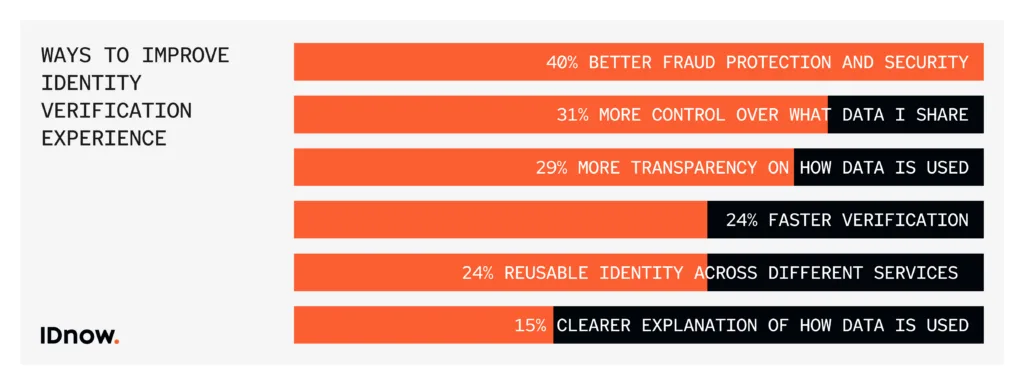
                     

                    Table of Contents

                    Ready to partner with IDnow?

                    Turn faces into trusted identities.

                    The partnership combines best-in-class identity verification, behavioural signals, and digital intelligence to move from one-time KYC to continuous risk assessment. 

                    Munich, March 31, 2026 – IDnow, Europe’s leading identity verification platform provider, and Trustfull, a leader in frictionless fraud prevention technology, today announced a strategic partnership to deliver a more adaptive and end-to-end approach to fraud prevention.

                    As fraud increases in speed, scale, and sophistication, point-in-time checks at onboarding are no longer sufficient. Businesses require continuous visibility into risk across onboarding, authentication, and every customer interaction.

                    By combining IDnow’s identity verification capabilities with Trustfull’s real-time digital and behavioural intelligence, organisations can build a richer, continuously evolving view of each user. This enables the detection of fraud across the full lifecycle, from synthetic identities at onboarding, to behavioural anomalies and account takeover attacks over time.

                    The threat landscape has never been more complex as fraud can occur at any stage of the customer journey. By bringing together high-quality signals from partners like Trustfull within a single platform, we give our customers a single source of truth for risk decisions, without the complexity of managing multiple vendor relationships.

                    Simon Peralta, VP of Global Partners & International Sales at IDnow.

                    Trustfull strengthens this approach with real-time verification of digital attributes, including email, phone, device, IP, and browser data, helping organisations detect risk signals such as disposable credentials, device spoofing, and proxy usage, often linked to sophisticated fraud schemes.

                    At the core of the partnership is the IDnow Trust Platform, providing unified access to a broad set of identity verification methods and market-leading fraud signals. Through real-time correlation of identity, behavioural, device, and digital data, the platform enables precise, risk-based decisioning at every stage of the journey.

                    This allows businesses to move beyond static KYC toward a dynamic and continuous risk management model, where customer profiles are constantly evaluated and updated. Built for a rapidly evolving regulatory landscape, the platform supports streamlined, ongoing compliance aligned with frameworks including eIDAS 2.0, AMLR, and PSD3.

                    “Our partnership with IDnow reflects a growing industry need for multi-layered fraud prevention, where identity verification is combined with broader digital intelligence to deliver stronger protection for businesses. We are pleased to join forces with such a leading player in the digital identity space and look forward to building powerful solutions together,” said Alex Tonello, SVP Global Partnerships of Trustfull.

                    About IDnow 

                    IDnow is Europe’s leader in digital identity and fraud prevention with a mission to transform trust into the most powerful asset in the digital world, empowering enterprises with AI-driven, SaaS-based identity solutions that deliver scalable security, adaptive compliance, and real-time fraud prevention.

                    Through its broad portfolio of digital identity and fraud prevention solutions, IDnow establishes, maintains and enriches trust throughout the customer journey, ensuring businesses can confidently and securely operate while leveraging digital identity to drive growth, security and scalability.

                    The company has offices in Germany, United Kingdom, Romania, and France and is backed by renowned institutional investors, including Corsair Capital. Its portfolio of international clients spans a wide range of end markets including financial services, telecommunications, travel & mobility, gaming, and other industries.

                    Your monthly guide to EU digital identity & compliance by Liudmyla (Mila) Rabchynska, Director of Global Regulatory & Government Affairs at IDnow.

                    March was anything but quiet. The month brought a landmark UK framework launch, a Dutch Supreme Court referral that could reshape how every organization handles GDPR and identity documents, a wave of EUDI Wallet technical publications showing the ecosystem is moving faster than the Member States implementing it. For those tracking rollouts in Czechia, Germany, France, the Netherlands, and Spain, the signals are now clear: December 2026 is looking less like a firm deadline and more like a shared aspiration. Two themes defined this month. First, national digital identity frameworks reaching genuine maturity – most notably in the UK, and progressively in Germany. Second, identity verification providers now must navigate a growing tangle of overlapping regulations all at once: the AI Act, GDPR, NIS2, and eIDAS 2.0. Something for everyone this month – whether you’re in AML compliance, building identity tech, or watching the EUDI Wallet timeline with cautious optimism. Come take a look.

                    Liudmyla (Mila) Rabchynska, Director of Global Regulatory & Government Affairs, IDnow

                    🇪🇺 EU: The Multi-Regulatory Complexity Is Now Unavoidable

                    EDPB and EDPS issue two joint opinions in March – both matter for identity verification

                    • What: AI Act / GDPR / Cybersecurity / Certification
                    • Who’s affected: Compliance, Legal / Product & Security
                    • Action: One to act on

                    What happened: The EDPB and EDPS published two joint opinions in March. The first (12 March) addresses AI and health data, focusing on controller accountability, legal basis for AI training, and the role of Data Protection Authorities in AI Act enforcement. The second (19 March) covers certification and cybersecurity, which is relevant to anyone at the intersection of NIS2, eIDAS 2.0, and GDPR, particularly digital identity providers and QTSPs.

                    My take: March 2026 sits in what I call the AI Act enforcement gap: the window between the prohibition phase (February 2026) and the high-risk system obligations phase (August 2026). These opinions make one thing clear: DPAs are not waiting for the AI Office to shape the enforcement landscape. They are stepping in early, especially where biometric or health data is involved which is precisely the category most relevant to identity verification. The 19 March opinion adds another layer: providers must now navigate three frameworks at once: AI Act, NIS2, and eIDAS 2.0. There is also ongoing debate about whether biometric AI used for remote identity verification qualifies as high-risk under Annex III. Most legal experts say yes, but the conformity assessment path remains partially unclear pending Q2 2026 AI Office guidance. My strong advice: do not wait for that guidance before beginning your compliance readiness assessment.


                    AMLA’s first public hearing: The EU AML architecture is finding its footing

                    • What: AML/CFT / AMLA / Regulatory Technical Standards
                    • Who’s affected: Compliance & Legal / Sales & CS
                    • Action: One to watch

                    What happened: On 24 March 2026, AMLA held its first public hearing on draft Regulatory Technical Standards (RTS) under Article 28(1) AMLR. Rather than splitting standards by sector, AMLA is adopting a horizontal approach – one RTS covering both financial and non-financial sectors, with sector-specific measures only where necessary. It builds on the EBA baseline with targeted amendments, ensuring continuity while reflecting AMLA’s broader mandate.

                    My take: This milestone deserves more attention than it has received. AMLA moving from institution-building to regulatory output marks a genuine transition in how EU AML supervision will function. The decision to go horizontal with one cross-sector RTS rather than separate ones is the right call, and not the obvious one given how differently risk profiles look across financial and non-financial obliged entities. The practical implication for identity verification providers is that AMLA standards will set a common floor, while flexibility provisions within the RTS will determine the operational latitude obliged entities retain in choosing their verification methods. That is exactly where implementation detail will be decisive – and where I will be watching the final RTS text very carefully.


                    Dutch Supreme Court asks CJEU whether an ID photo is special category data & the implications go far beyond AML

                    • What: GDPR / AML / Special Category Data
                    • Who’s affected: Compliance & Legal
                    • Action: One to watch

                    What happened: The Dutch Supreme Court has referred to the Court of Justice of the EU (CJEU) a set of questions arising from an AML identity verification case. A woman was asked by her credit card company to upload a copy of her ID document to re-verify her identity under Article 40(1) AML Directive. The core questions referred: Does AML law require retention of the full ID document? If so, does that require retaining the photo? And – most significantly – must an ID photo be treated as special category personal data revealing racial or ethnic origin under Article 9(1) GDPR? A further question asks whether the purpose of the processing affects that classification.

                    My take: This is one of the most consequential CJEU referrals in the digital identity space in years – not because it will resolve quickly (it won’t), but because the answer to the third question could reshape data protection compliance for virtually every organisation that stores identity document copies. The Dutch Supreme Court itself answered “yes” to the photo-as-special-category-data question back in 2010. If the CJEU concurs – and does so without the “discriminatory purpose” limitation that Dutch courts have since applied to narrow it – the impact would be significant. Banks, employers, customer portals, identity verification archives – anyone storing ID photos would need to revisit their legal basis. This case also highlights an unresolved tension between AML data retention obligations and the GDPR data minimisation principle – a tension that neither legislator has resolved, and which practitioners are left to navigate in the meantime.


                    The December 2026 EUDI Wallet deadline: Ambitious by design, slipping by reality

                    • What: EUDI Wallet / National Implementation
                    • Who’s affected: Everyone
                    • Action: One to watch

                    What happened: Multiple Member States have publicly signalled that their EUDI Wallet production environments will not be ready by December 2026. The picture as of March:

                    • 🇨🇿 Czechia – trial operation in 2026, full certified production planned for early 2027
                    • 🇩🇪 Germany – phased rollout, first real-state wallet stage expected early 2027
                    • 🇳🇱 Netherlands – first wallet release expected in 2027, not meeting all EUDI requirements on day one
                    • 🇫🇷 France – public-private MoU targeting a 2027 launch
                    • 🇪🇸 Spain – Cartera Digital in pilot today, early 2027 for broader rollout.
                    • Separately, Switzerland has postponed its national e-ID to December 2026 after a federal audit identified unfinished work on encryption design, identity issuance processes, and verifier oversight.

                    My take: The December 2026 deadline is working as a coordination mechanism more than a hard delivery date – which is probably the most honest way to put it. The regulation requires wallet availability, but it does not specify what availability looks like when five of the EU’s largest Member States are in pilot or transition mode. What this tells us: the market for EUDI Wallet-integrated services won’t be at scale in 2026, it will begin to emerge through 2027. For technology providers, that is a planning input, not a reason for wait. The infrastructure decisions being made now – architecture, certification pathways, integration standards – will determine who is positioned to win when scale arrives. The timeline has been described as “ambitious”, which, in regulatory parlance, is a polite way of saying “optimistic to the point of courageous.”


                    EUDI Wallet technical infrastructure taking shape: WE BUILD blueprint, ENISA scheme, ETSI standard

                    • What: EUDI Wallet / Standards / Certification
                    • Who’s affected: Product & Security / Compliance & Legal
                    • Action: One to watch

                    What happened: Three significant technical publications landed in March. The WE BUILD Large Scale Pilot published its Blueprint for the high-level architecture of the EUDI Wallet ecosystem. ENISA published the EUDIW certification candidate scheme, opening it for review by EU Member States and ENISA experts. ETSI published standard TS 119 472-3 — “Profiles for issuance of EAA or PID” — an EUDI Wallet profile of OpenID4VCI.

                    My take: Together, these three publications represent the technical backbone of the EUDI Wallet ecosystem taking shape – even as national deployment timelines slip. The ETSI TS 119 472-3 standard is particularly significant: it defines how Person Identification Data and Electronic Attestations of Attributes are issued using OpenID4VCI, which is the protocol the ecosystem is converging on. The ENISA certification candidate scheme, now open for expert review, is the precursor to the formal certification scheme that wallet providers will need to certify against.


                    AI omnibus enters trilogue; European business wallet still awaiting parliament’s position

                    • What: AI Act / European Business Wallet / EU Inc.
                    • Who’s affected: Compliance & Legal, Sales & CS
                    • Action: One to watch

                    What happened: On 26 March 2026, the European Parliament adopted its first-reading position on the AI Omnibus. Interinstitutional trilogue negotiations began the same day, with a target for final agreement at the second trilogue on 28 April. The European Business Wallet (EBW) – part of the broader Digital Omnibus – was not included in the voting package; Parliament’s internal handling is still being set up. The Commission’s EBW stakeholder consultation runs until 6 May 2026. On 18 March, the Commission also presented the EU Inc. proposal – an optional EU-wide corporate framework that relies on the EBW for digital-first interactions with public authorities across the Union.

                    My take: The AI Omnibus moving into trilogue is good news for legal certainty. The faster a final text is agreed, the sooner implementing guidance can follow and the enforcement gap can begin to close. The absence of the European Business Wallet from the Parliament’s voting package is the more notable gap: EBW is the enterprise counterpart to the consumer EUDI Wallet, and the EU Inc. proposal is already building on it as a foundational assumption. The Commission has set an ambitious legislative agenda; Parliament needs to catch up on the EBW file. For organisations that interact frequently with EU public authorities or plan to operate under the EU Inc. framework, getting your response into the stakeholder consultation before 6 May is worthwhile.


                    🇩🇪 Germany: Framework-Building Season

                    Germany’s TKG amendment formally recognises the EUDI Wallet for telco identification

                    • What: Telecommunications / eID / eIDAS 2.0
                    • Who’s affected: Sales & CS, Product & Security
                    • Action: One to watch

                    What happened: The Federal Ministry for Digital and Transport (BMDS) published the draft Telecommunications Act Amendment Bill 2026 (TKG-Änderungsgesetz 2026). The key change for our space is a complete rewrite of §172 Abs. 2, which now lists ten accepted identification methods, including, explicitly, other eIDAS-notified eIDs at Level of Assurance “high” and the EUDI Wallet under Article 3(42) eIDAS 2.0. A new §172 Abs. 2a consolidates provisions on alternative methods. Notably, BNetzA also receives a new general power to set detailed requirements for the standard verification methods, motivated by a documented increase in violations in in-store verification processes.

                    My take: This is, as far as I am aware, one of the first instances of a national legislator writing the EUDI Wallet into a sectoral compliance obligation by name. §172 TKG governs how telecoms operators must verify subscriber identities, a market where IDnow is an active provider, so the explicit statutory inclusion of the EUDI Wallet as an accepted method is a direct product-planning signal. The BNetzA power to set detailed requirements for standard methods is also worth watching: it responds to real-world enforcement problems and signals that the regulator intends to use its new toolbox actively. This draft will now go through consultation; I will be tracking its progress closely.


                    Germany’s DIdG: A national EUDI Wallet law with a provision on minors

                    • What: eIDAS 2.0 / EUDI Wallet / National Implementation
                    • Who’s affected: Product & Security, Compliance & Legal
                    • Action: One to watch

                    What happened: The German federal government published the draft Digital Identity Act (Digitales-Identitäten-Gesetz / DIdG), establishing the legal basis for Germany’s national EUDI Wallet implementation. Among its provisions, the draft expressly permits the experimental issuance of person identification data to natural people from age 12, but only where a prior risk assessment confirms that no overriding risks to the reliability and integrity of the identification infrastructure arise. This is a tightly conditioned testing power, not a decision to make the wallet routinely available to minors.

                    My take: The DIdG is the legislative foundation Germany needed to move from EUDI Wallet pilots toward a regulated production environment. The provision on minors is drafted with commendable caution – risk-assessment-gated experimental issuance is a far cry from a blanket policy to deploy digital identity to under-18s, and the distinction matters for how implementers should read it. More broadly, Germany is, characteristically, building the legislative framework before the wallet infrastructure is ready, which is the right sequencing but confirms that a production-grade German EUDI Wallet will not appear before early 2027, consistent with what we are hearing across major Member States.


                    Germany submits AI Act implementation law to Bundestag

                    • What: AI Act / Market Surveillance / Regulatory Sandboxes
                    • Who’s affected: Compliance & Legal, Product & Security
                    • Action: One to watch

                    What happened: The German Cabinet has submitted the AI Market Surveillance and Innovation Promotion Act (KI-Marktüberwachungs- und Innovationsförderungsgesetz) to the Bundestag. BNetzA is designated as the national AI Act market surveillance authority; BaFin covers the financial sector. BNetzA will also operate Germany’s AI regulatory sandbox (KI-Reallabor), building on a completed pilot project run jointly with the Hessian Ministry for Digitalisation and the Federal Data Protection Commissioner. The EU deadline for establishing at least one national AI sandbox is 2 August 2026.

                    My take: The designation of BNetzA as Germany’s primary AI Act authority, combined with its new powers under the TKG amendment, makes it an increasingly central counterpart for any organisation providing AI-assisted identity verification in Germany. The KI-Reallabor is genuinely interesting as a mechanism: a supervised environment where companies, particularly SMEs and start-ups, can develop and validate AI systems under regulatory oversight before market entry. For identity verification providers navigating the AI Act high-risk classification and conformity assessment requirements, this is a pathway worth understanding now rather than in August.


                    🇬🇧 UK: The moment DVS became real

                    The UK Digital Identity Trust Framework reaches v1.0

                    • What: Digital Identity / Trust Framework
                    • Who’s affected: Everyone
                    • Action: One to act on

                    What happened: On 3 March 2026, the UK’s Office for Digital Identities and Attributes (ODIA) published DIATF version 1.0 – the first release to carry a “1.0” designation and the first to introduce version-controlled supporting documents. Beta (0.3) certifications expired definitively on 31 March. Gamma-certified providers can undertake a step-up assessment rather than a full re-assessment. All new certifications from this point must be against v1.0. On 26 March 2026, the UK Government published a draft statutory instrument, together with an explanatory memorandum, proposing amendments to the Money Laundering, Terrorist Financing and Transfer of Funds (Information on the Payer) Regulations 2017 (MLRs). The draft has been submitted for parliamentary approval and formally enables DVS-certified providers to satisfy statutory identity checks under the MLRs, connecting the trust framework directly to a binding legal AML obligation.

                    My take: This is UK digital identity infrastructure moving from pilot plumbing into real regulatory architecture, and the significance is easy to understate if you have been tracking the framework since its beta drafts. What changed is not just a version number – it is that the framework is now statutory (post-Data (Use and Access) Act), version-controlled, and tied to a concrete compliance obligation in AML law. The DVS-to-AML confirmation is the commercial unlock the market has been waiting for: for the first time, a UK regulated business can satisfy an AML identity check requirement by pointing to a certified digital verification service. That is a structural shift. The 31 March Beta certification expiry was the hard stop that forced the market to decide, and that kind of deadline discipline is, frankly, something EU regulators could learn from.


                    Also worth your attention this month:

                    • 🇫🇷 France: French airports will accept the France Identité digital ID from Summer 2026 — a real-world deployment milestone that shows national eID working in high-friction physical use cases.
                    • 🇸🇪 Sweden: DIGG (Swedish Digitalisation Agency) has published the official timeline for the Swedish EUDI Wallet — one of the clearer, more detailed national roadmaps currently available publicly.
                    • 🇧🇬 Bulgaria: Bulgaria has published a draft digital ID law but is widely expected to miss the EUDI Wallet December 2026 deadline — adding to the growing list of Member States where implementation timelines are under pressure.
                    • 🌐 US-EU Biometrics: The United States and the European Union have entered formal negotiations over a biometric data-sharing arrangement that would grant DHS access to fingerprint and biometric records held by EU Member States. Given the current state of transatlantic data relations and the sensitivities around Article 9 GDPR data, this one deserves careful watching.

                    Looking ahead to April and May, there’s a lot to keep an eye one. The second AI Omnibus trilogue is targeted for 28 April and the European Business Wallet stakeholder consultation closes on 6 May. I will also be tracking how AMLA translates its public hearing feedback into the finalised RTS text, and whether any further Member States signal slippage on the December 2026 EUDI Wallet deadline. There is plenty keeping us all occupied. As always, if any of the topics covered this month intersect with decisions you are working through, I would genuinely love to hear your perspective. Drop a comment below or reach out directly. The most interesting conversations tend to start exactly here. Until next time!

                    Liudmyla (Mila) Rabchynska, Director of Global Regulatory & Government Affairs, IDnow

                    By

                    Liudmyla (Mila) Rabchynska
                    Director of Global Regulatory & Government Affairs at IDnow
                    Connect with Mila on LinkedIn

                    Table of Contents

                    Ready to partner with IDnow?

                    Turn faces into trusted identities.

                    Every fraudulent call, every romance scam message, every fake investment pitch – they’re not just crimes against banking customers. They’re also crimes committed by victims. Behind the industrialized fraud operations stealing billions annually stands an even darker reality: hundreds of thousands of people trafficked, enslaved and forced to execute scams under threat of torture and death. 

                    In our previous articles, we revealed the scale of modern fraud syndicates and how they operate like Fortune 500 companies, complete with HR departments, R&D units and AI-powered tools. But every corporate structure needs workers. And in the world of industrial fraud, that workforce is built on human trafficking. 

                    This is the story banks rarely see: the people on the other end of the phone line, typing those convincing messages, executing those sophisticated social engineering attacks. Understanding this human dimension isn’t just about empathy, it’s critical intelligence for institutions fighting fraud. Because when you understand how these operations recruit, train and control their workforce, you understand their vulnerabilities. 

                    From victims to recruits: How fraud gangs build their workforce 

                    Conservative estimates suggest over 300,000 people are trapped in scam operations across Southeast Asia alone. Fraud syndicates acquire their workforce through a pipeline of deception, trafficking and violence. This isn’t a side effect of the industry. It’s the foundation it’s built on. 

                    Deceived, trafficked and enslaved 

                    Most workers are trafficked via fake job ads promising well-paid remote work in hotel-like settings or lured through romance and travel promises. Targets are typically migrants, minorities or people from poorer regions seeking opportunity. Once they arrive, their passports are confiscated and they are surveilled constantly, denied movement and forced to work under threat of violence. In Southeast Asia, the amount of people enslaved is so high that the United Nations has called this a “human rights crisis”. Despite ongoing rescue efforts, INTERPOL estimates hundreds of thousands remain enslaved with victims trafficked from Vietnam, Bangladesh, Kenya, India and beyond. In 2025, a single compound in Myanmar held over 250 victims from 20 countries. 

                    Academies of deception 

                    When new recruits arrive, they are not thrown in blind. They undergo structured onboarding, much like legitimate employees. They are taught scripts for romance scams, fake investment pitches and impersonation scenarios. They are also trained to handle objections of their victims and how to successfully extract their money.  

                    In compounds, novices are approached as if in a training academy. This means that they are subjected to monitored practice or role-play exercises with their supervisors providing real-time feedback to help with speedy onboarding. Larger compounds even create promotion pathways: starting as trainees, moving on to “closers” and eventually to trainers or money-laundering coordinators – using, once again, the same techniques leveraged by legitimate (tele)sales operations. 

                    Motivation by fear and reward 

                    Performance is tracked with daily quotas and KPIs. Supervisors measure key performance metrics, such as number of successful conversions, total value extracted per operator, average call time and lead conversion rates. Workers who meet targets receive small bonuses. Those who fail face punishment, like severe violence. 

                    Breaking the cycle: Why banks must act 

                    The human trafficking pipeline fuelling fraud operations reveals a critical vulnerability: these syndicates depend on enslaved workers executing scams at scale. When law enforcement rescues victims, when borders tighten, when recruitment networks are disrupted, the fraud machine stalls. But banks don’t have to wait for that. They are on the front line – and they have the tools to fight back. 

                    Protecting customers from scam factory attacks 

                    The first line of defence is recognising that scam factory workers are highly trained. They follow scripts, handle objections and adapt in real time. Defeating them requires more than customer education. It requires banks to build friction into the moments that matter most. 

                    Transaction monitoring systems can flag the behavioural signatures of social engineering in progress: unusual payment destinations, out-of-pattern transfer amounts, customers acting with uncharacteristic urgency. Real-time intervention like a call, a pop-up prompt or a temporary hold can break the spell a scam operator has cast before funds leave the account. 

                    Identity verification as a fraud prevention layer 

                    Scam factories rely on impersonation. Operators pose as bank staff, government officials, investment advisors and romantic partners. Robust identity verification at key moments – account opening, beneficiary additions, large transfers – adds a layer of friction that scripted operators cannot easily overcome. 

                    Agent-led video identification is particularly powerful here. Trained specialists can engage customers in real conversation, detect signs of coercion or distress, and identify whether the person initiating a transaction is acting of their own free will. Combining these human insights with biometric authentication, document verification, liveness checks and cross-channel fraud signals creates a defence-in-depth approach that is far harder to script around. 

                    Intelligence sharing and systemic disruption 

                    No bank sees the full picture alone. Scam factories rotate their tactics, phone numbers, spoofed identities and impersonation targets across institutions. When banks actively share fraud intelligence with each other and with law enforcement, patterns emerge that no single institution could detect in isolation. 

                    Banks that report suspected scam activity – including specific scripts, spoofed numbers and behavioural indicators – contribute to the disruption of the trafficking networks fuelling billion-dollar fraud empires. Financial institutions are not passive targets. They are active nodes in a global counter-fraud network, and the intelligence they hold is invaluable. 

                    Want to read more on this topic? Explore:

                    The True Face of Fraud #1: The masterminds behind the $1 trillion crime industry. Uncover who is behind the fastest-growing fraud schemes, where the main scam compound hubs are located, and what financial organisations need to understand about the threat actors they are up against.

                    The True Face of Fraud #2: The Industrialisation of Crime – How crime syndicates run $1 trillion scam empires. Discover how criminal networks are structuring themselves as fully-fledged enterprises, leveraging AI and the Fraud-as-a-Service (FaaS) model to industrialise fraud at scale.

                    By

                    Nikita Rybová
                    Customer & Product Marketing Manager at IDnow
                    Connect with Nikita on LinkedIn

                    Ready to partner with IDnow?

                    Turn faces into trusted identities.

                    Understanding the New Anti-Money Laundering Regulation

                    Regulations can be complicated, especially when it comes to KYC and digital identity. That doesn’t mean explanations need to be. At IDnow, our experts believe even the most nuanced, indecipherable and complex of legislation can be broken down and explained, within 2 minutes or less. In this episode, Uwe Pfizenmaier, Product Director at IDnow explains all about the upcoming Anti-Money Laundering Regulation (AMLR).

                    Is your organisation ready for the AMLR deadline?

                    Complete our free AMLR Readiness Check to identify your biggest gaps.

                    AMLR Readiness Check Score

                    Table of Contents

                    Ready to partner with IDnow?

                    Turn faces into trusted identities.

                    Liudmyla Rabchynska brings essential expertise to help shape company strategy and navigate evolving compliance across EU’s legal and regulatory frameworks governing digital identity.

                    London, February 11, 2026 – IDnow, a leading European identity verification platform provider, has announced the appointment of Liudmyla Rabchynska as its new Director of Global Regulatory and Government Affairs.  

                    Based at the company’s Munich headquarters, Rabchynska will focus on European regulatory developments, particularly those connected to Electronic IDentification, Authentication and Trust Services (eIDAS) 2.0 and digital identity wallets, and on strengthening collaboration with governments and authorities.

                    In her former role as Ukraine’s Deputy Minister for Digital Transformation, Rabchynska was involved in the launch of Diia – the Ukrainian government’s digital platform (app and online portal) that enables citizens to use official digital IDs and access public services via mobile devices. Prior to this, she spent more than ten years in the private sector, where she led legal and regulatory functions at various organizations, including IT and business consulting services firm, CGI.

                    Liudmyla combines deep regulatory expertise with hands-on implementation experience – a combination that is crucial in Europe’s ever-changing identity verification market.

                    Armin Berghaus, Founder and Managing Director at IDnow

                    “She played a key role in the development of Diia, which is used by over 22 million users (half of Ukraine’s population), and considered one of the most successful digital wallets in Europe. This expertise is very important for us, especially with regard to interoperability and upcoming regulatory requirements,” said Berghaus.

                    In her new role, Rabchynska will drive the positioning of IDnow as a global partner for regulatory compliance and government cooperation. As an active member of regulatory panels, she brings hands-on experience in managing compliance with complex regulatory frameworks, including Anti Money Laundering Regulation (AMLR), eIDAS 2.0, and digital initiatives, such as the European Digital Identity (EUDI) Wallet. She will also support the implementation of new legal requirements in digital identity and maintain an ongoing dialogue with relevant institutions at European and global levels.

                    I’m thrilled to join IDnow at a time when Europe is redefining digital identity through eIDAS 2.0 and the EUDI Wallet.

                    Liudmyla Rabchynska, Director of Global Regulatory and Government Affairs at IDnow

                    “These changes bring both challenges and opportunities, and I am excited to contribute my experience to help IDnow stay ahead of regulatory developments, deepen cooperation with authorities, and ensure that innovation and compliance go hand in hand,” said Rabchynska.

                    The appointment of Rabchynska signifies the continued investment by IDnow to remain Europe’s most trusted identity verification provider with the deepest regulatory expertise.


                    About IDnow  

                    IDnow is a leader in digital identity and fraud prevention in Europe with a mission to transform trust into the most powerful asset in the digital world, empowering enterprises with AI-driven, SaaS-based identity solutions that deliver scalable security, adaptive compliance, and real-time fraud prevention. Through its broad portfolio of digital identity and fraud prevention solutions, IDnow establishes, maintains and enriches trust throughout the customer journey, ensuring businesses can confidently and securely operate while leveraging digital identity to drive growth, security and scalability.   

                    The company has offices in Germany, United Kingdom, France, and Romania and is backed by renowned institutional investors, including Corsair Capital. Its portfolio of international clients spans a wide range of end markets including financial services, telecommunications, travel & mobility, gaming, and other industries. 

                    Table of Contents

                    Ready to partner with IDnow?

                    Turn faces into trusted identities.

                    This on-demand webinar explores how interconnected KYC tools help organisations build onboarding journeys that are efficient today and resilient for the future. 

                    What if the secret to a faster, more compliant customer onboarding wasn’t hiring more manual reviewers, but a smarter ecosystem? 

                    This was the central theme of Smarter KYC with Finologee: IDnow x LSEG, a recent webinar exploring how financial services companies can move beyond rigid, manual KYC processes and adopt workflows actually designed for scale. 

                    Finologee, IDnow’s partner and a leading digital platform operator in Luxembourg, supports regulated industries with secure, compliant digital solutions. As Finologee’s identity verification partner, IDnow provides automated identity verification that is seamlessly integrated into Finologee’s ecosystem. This allows financial institutions to incorporate document verification, liveness detection and biometric identity checks into their onboarding journeys in a streamlined and compliant way, without adding operational complexity. 

                    The webinar featured perspectives from Jonathan Prince, Co-founder & CSO at Finologee, and Stefan Kirsch, Head of Business Development at Finologee, alongside Arnaud Gallut, Digital Identity Consultant at IDnow, and Piet Craenen from LSEG Risk Intelligence. Together, they shared how an integrated KYC ecosystem helps institutions accelerate onboarding, strengthen compliance and reduce operational pressure. 

                    What we discussed in the webinar 

                    Kicking off the session, Jonathan Prince from Finologee highlighted the move towards automation in KYC and AML processes, while noting integration and interoperability remain the biggest challenges. In a quick survey, attendees shared insights on identity verification, screening practices and digitising KYC. Results showed that although many institutions are adopting digital tools, 57% still struggle with connecting systems, underlining the need for further innovation. 

                    Afterwards, Arnaud Gallut from IDnow outlined how (automated) identity verification helps financial institutions comply, mitigate risk and scale efficiently. He emphasized the need for future-ready solutions capable of addressing all types of fraud, including emerging threats such as synthetic identities and deepfakes. Arnaud also shared real-world use cases from IDnow’s customers, illustrating the measurable impact such a solution can have on onboarding speed, operational efficiency and overall customer experience. 

                    Concluding the discussion, Piet from LSEG Risk Intelligence reminded the audience of a golden rule: working smarter, not harder. He explained how enriched, analyst-verified data and AI-driven monitoring can help institutions identify both obvious and hidden risks more effectively across onboarding and ongoing due diligence. Piet also noted that granularity can support with more precise and focused screening while reducing operational effort. 

                    After each section, Finologee included a demo of each solution within Finologee’s KYC Manager. 

                    The biggest takeaways from the webinar 

                    If you didn’t catch the live session but still want the insights that matter, here are the core takeaways from the discussion: 

                    1. The future of KYC is data-based and interoperable 

                    During the initial survey it became apparent that integration and interoperability remain major challenges for most financial institutions. The message was clear: automation alone isn’t enough, systems must connect to deliver real value. 

                    2. Identity verification must be future-proof 

                    As regulatory requirements and user expectations continue to evolve and fraud keeps finding new loopholes, it is clear that financial institutions need future-ready solutions that address onboarding challenges in real-time. 

                    3. Screening & monitoring need to be smart and detailed 

                    Only detailed, granular data can help compliance teams uncover subtle risk signals that might otherwise go unnoticed. By providing richer context and finer detail, institutions can identify both obvious and hidden risks more effectively across onboarding and ongoing monitoring. 

                    By

                    Nikita Rybová
                    Customer & Product Marketing Manager at IDnow
                    Connect with Nikita on LinkedIn
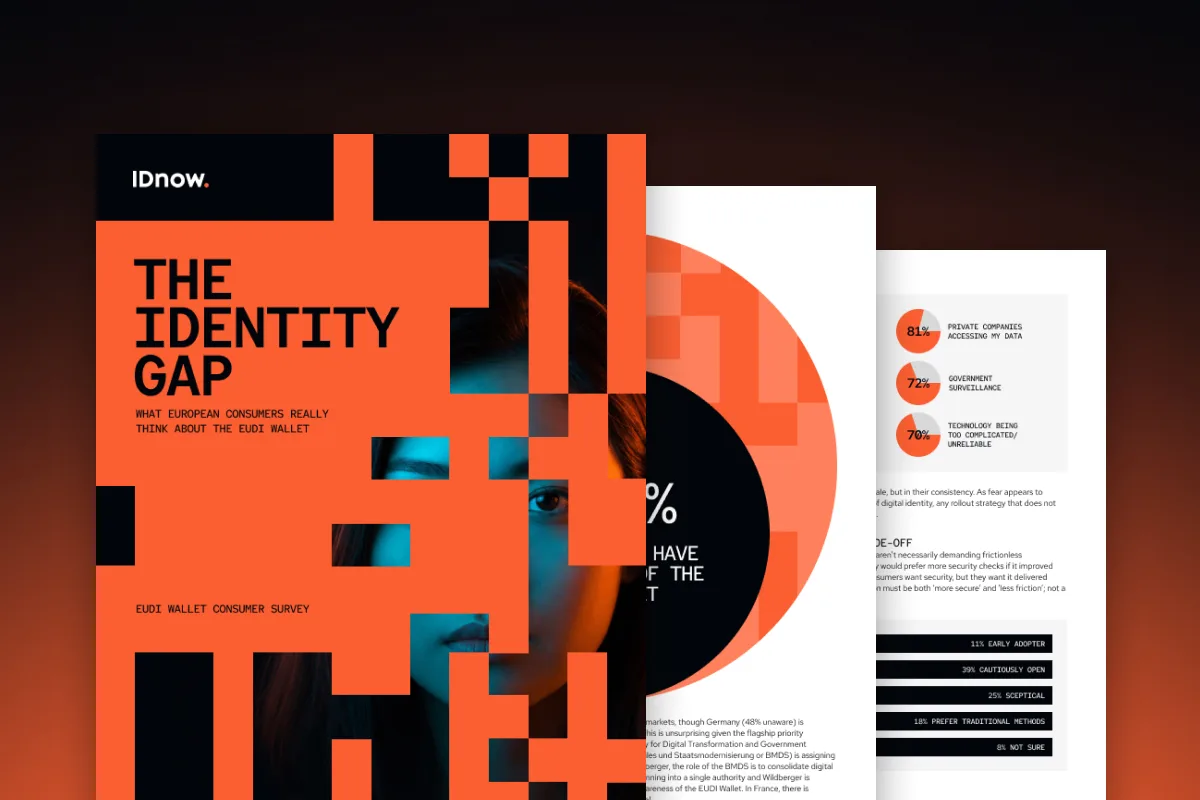
                    Patchwork of regulations are putting huge economic pressures on financial services. Will a more harmonized, pan-European approach to identity verification and AML make operations easier? Or will the associated costs of compliance make it worse?

                    As of June 2025, there were approximately 4,752 bank brands operating in the European Union; 10% fewer than in 2023 (5,304), which itself saw a 2.9% decline on the previous year.

                    The reduction in the number can be explained by several factors but is often linked to a bank’s resilience in remaining efficient and/ or profitable amid market shifts and technological changes, as well as being able to offer the services – and experiences – that consumers expect.

                    “The challenges associated with operating in Europe include the need to provide a wide range of identity verification methods, process hundreds of different identity document types, and comply with national interpretations of the most robust of regulatory frameworks.”

                    To remain profitable and efficient in 2026 and beyond is no easy feat, which is why many banks stay in an almost constant flux of structural or digital transformation or decide to consolidate with other brands.

                    Uwe Pfizenmaier, Director of Product at IDnow.

                    Under [regulatory] pressure.

                    While regulations are designed to perform several key functions, including protecting consumers, and maintaining the proper functioning of financial markets, they also cause major economic pressures for banks.

                    Compliance costs keep climbing: PwC’s 2026 EMEA AML Survey, found that around one-third expect their AML budgets to rise by 10 to 30 percent, with customer due diligence the single biggest operational bottleneck ahead of the EU’s July 2027 deadline.

                    Failure to comply with AML can be catastrophic, with minimum fines for serious breaches doubling from €5 million to €10 million. Some banks escape with fines; others aren’t as lucky and can even have their licences revoked.

                    Alongside long-established regulations like Anti-Money Laundering Directives (AMLD), there are also newly created ones, such as the Digital Operational Resilience Act (DORA) that aims to strengthen the IT security of financial entities such as banks, insurance companies and investment firms and making sure that the financial sector in Europe is able to stay resilient in the event of a severe operational disruption. While compliance with DORA can cost a bank up to €1 million, the cost of non-compliance far outweighs that, with financial sanctions varying from 2% of annual global turnover or 1% of average daily global turnover.

                    Considering the financial risk, compliance with new and existing regulations is understandably a chief focus for European banks right now. In fact, on average, many financial services allocate over 10% of their budgets to new compliance technologies and tools.

                    While for the consumer it has never been easier to register and start their customer journey, via a range of identity verification methods, for banks, the road to ensuring that experience remains compliant throughout Europe is far from straightforward, and one only likely to become bumpier and more expensive – for the next two years anyway. After 2027, however, operating in the EU will become decidedly easier and more efficient – in theory. But buckle up banks, it is likely to get worse before it gets better.

                    How did financial services become so fragmented?

                    Before we look ahead, let us first consider how Europe’s financial services became so fragmented. In 2014, in a bid to facilitate secure, cross-border online financial transactions, the European Union enacted the Electronic IDentification, Authentication and Trust Services (eIDAS) regulation.

                    However, despite the best of intentions, it was widely accepted that the first iteration of the regulation failed in its mission; by 2020, only 60% of EU citizens had access to a trusted identification system, while adoption and usage were even lower. It also became apparent that the interoperability of national services and infrastructures was not sufficient. As such, it proved difficult for banks to use it as an international Know Your Customer system.

                    In 2025, not only does each EU member state have their own national interpretation of AML rules and therefore enforcement standards, but they also invariably adhere to different regulatory requirements for remote identity verification processes. For example, while some European regulatory bodies accept fully automated identity verification, others such as the German BaFin have historically required all new financial services customers to undergo either in-person or video verification as part of the onboarding process. However, a 2024 draft bill has laid the way for more automation in the identity verification process, which would bring German identity verification processes more in line with other EU member states.

                    Clearly, consistency is key to any meaningful impact in the European fight against fraud and money laundering. However, the fact remains that in 2025, the EU is effectively stitched together with a patchwork of national regulations and processes that threaten the fabric of financial services.

                    Bringing the EU together in regulatory harmony by 2027.

                    The EU has devised three key regulations, bodies, and initiatives that it hopes will create a more harmonized approach to AML efforts and remote identity verification. Each promote cross-border digital identity verification and trust services, simplify customer onboarding and KYC,and boost secure digital transactions for banks and consumers. All will be effective across the EU by late 2027/ early 2028.

                    • eIDAS 2.0: The second iteration of eIDAS, eIDAS 2.0 establishes the European Digital Identity (EUDI) framework and mandates all member states to offer EUDI Wallets to citizens by November 2026. It also addresses weaknesses in the original regulation, such as data protection, and introduces new trust services, including data preservation/ archiving services, and Qualified Electronic Attestations of Attributes (QEAA), which will allow users to share verified credentials across a range of use cases. Banks will need to accept said Wallets for user onboarding and authentication by December 2027.
                    • Anti‑Money Laundering Authority (AMLA). By creating a coherent AML framework for member states to follow, the newly formed EU authority hopes to strengthen the fight against money laundering and terrorism financing. It also creates a common supervisory culture at EUlevel. The AMLA is fully operational (with a staff of 430) and begins direct supervision by 2028.
                    • The Anti-Money Laundering Regulation (AMLR): Perhaps the boldest of all upcoming regulations and initiatives, AMLR creates one set of rules across the EU and establishes stronger checks and rules for KYC, monitoring, and Customer Due Diligence. It also essentially standardizes and distils compliant identity verification into three methods:
                       
                      a) EUDI Wallet: Consumers can use their EUDI Wallet for authentication for KYC purposes and compliant AML onboarding.
                       
                      b) Notified eID Schemes: Consumers will be able to use their national electronic identification (eID) scheme (including smartcards, mobile and log-in) along with all other eID Schemes in Europe.
                       
                      c) Qualified Trust Services: Here, consumers use Qualified Electronic Signatures (QES) and Qualified Electronic Attestations of Attributes (QEAA) for compliant automated and hybrid identity verification.
                       
                      AMLR will replace the current national directive-based approach to AML efforts by July 2027.

                    Based on the European Commission’s impact assessment study, streamlined, consistent onboarding procedures for financial services could generate annual savings of between €860 million to €1.7 billion, while enhanced fraud prevention measures could yield additional savings ranging of €1.1 billion to €4.3 billion per year.

                    But wait, there’s a costly catch.

                    However, it’s worth noting that the same study also predicts significant implementation costs to ensure compliance with AMLR and eIDAS 2.0. While it’s difficult to know the exact amount that individual banks will need to outlay to become compliant (as it depends on size and scale), the EU Commission estimates eIDAS 2.0 implementation costs to be north of €3.2 billion.

                    Top 5 financial services compliance challenges.

                    To prepare for AMLR and eIDAS 2.0, European banks will encounter substantial costs for system upgrades, staff training, and compliance preparation. As such, banks must rethink their technology stacks and risk models, compliance procedures, and customer experience strategies.Here are the top costs that banks need to prepare for. 

                    1. Banks will need to integrate 27+ national identity wallets, each requiring separate registration.

                    2. Each Wallet will have its own diverse APIs and data formats, which will increase integration complexity and associated costs.

                    3. There will also be significant development and maintenance costs, regardless of whether systems are built in-house or supplied by multiple different vendors.

                    4. Although only the EUDI Wallet is mandatory, for banks that wish to provide each of the three compliant identification methods (Qualified Trust Services, eID Schemes, Wallets), they will face a considerable cost.

                    5. Ongoing data checks and controls.

                    “Whereas in the past, European banks faced challenges associated with fragmented regulations they now face significant technical and user experience challenges, which can be effectively addressed with the right solutions that needn’t cost the earth. As a Qualified Trust Service Provider, IDnow uniquely supports all three required identification methods through our AI-driven platform — enabling businesses to transform compliance from a challenge into a trust-building opportunity that drives sustainable growth,” said Uwe. 

                    To learn more about how IDnow can support your AMLR compliance journey, contact our team of experts today.

                    By

                    Jody Houton
                    Senior PR & Content Manager at IDnow
                    Connect with Jody on LinkedIn

                    Digital identity verification should be inclusive, intuitive, and accessible to all, regardless of disability. That’s why, in 2025, we set out to enhance our solutions to comply with the latest European accessibility standards.

                    Every year, we process over 100 million documents, which is approximately the same number of people that are registered as disabled in Europe. In fact, one in four European adults are registered as physically or cognitively disabled, with many unfortunately living without proper access to basic, essential services.

                    According to the European Council of the European Union, 29% of those with disabilities are at risk of poverty or social exclusion and are four times more likely to have unmet healthcare needs compared to the able-bodied. 

                    Technology can unlock a world of opportunity for those with disabilities, including enhancing independence, improving communication, and granting greater access to information.

                    For those with sight, hearing, mobility or cognition issues, being able to access online services provides an invaluable lifeline; an alternate entry point to essential services like banking and healthcare that are necessary to live a full and rich life that everyone is entitled to. 

                    Accessing online services also provides a much-needed window to the outside world, allowing people to feel part of a community and benefit from education and remote work opportunities.

                    Christophe Chaput, Senior Product Owner at IDnow

                    Unfortunately, however, not every website or app has been designed in a user-friendly way, especially for those with disabilities. The European Accessibility Act (EAA), which came into force in June 2025, set out to change all that. 

                    Discover how IDnow has helped address skin tone bias in global facial verification systems in our blog, ‘Breaking down biases in AI-powered facial verification.’ 

                    What is the European Accessibility Act?

                    The EAA is an EU directive aimed at improving technological inclusivity for a wide range of products and services, including information and communication technologies, financial services, transportation, emergency services, and e-commerce services. 

                    It mandates that all products and services are designed to be accessible to people with disabilities, particularly those related to sight, hearing, mobility, or cognition. Here are the EAA’s three key requirements:  

                    1. Accessibility of digital services and websites. 

                    Businesses must ensure their websites, mobile apps, and digital content are accessible. This includes screen reader compatibility, keyboard navigation, and text alternatives for non-text content, such as images and videos. 

                    1. Accessible design of products. 

                    Electronic devices such as smartphones, computers, ATMs, ticket machines, and e-readers must be designed to be usable by people with disabilities. This means including features like tactile buttons, audio output and adjustable font sizes or contrast settings. 

                    1. Accessibility of communication and customer support. 

                    Companies must provide accessible customer service channels (e.g., chat, phone, email) for people with disabilities. Information about products and services must also be available in accessible formats like large print, braille, or easy-to-read versions.

                    What this means for our customers.

                    In 2025, to ensure our products and services are inclusive, we invested in multiple initiatives — including our design system, ‘Sunflower’, which embeds accessibility at the very core of our solutions. Sunflower ensures: 

                    • Adaptability: Just as a sunflower adapts its position to face the sun, our design system seamlessly adjusts to the needs of the user, providing an interface that is intuitive, responsive, and customized.  
                    • Structured Core: Like the well-defined core of a sunflower, IDnow’s Sunflower design system has a solid foundation, ensuring consistency and cohesion in every aspect, from color schemes to typography.  
                    • Versatility: The design elements within Sunflower are versatile, capable of being arranged in various configurations to cater to a multitude of user interfaces and experiences. 

                    A question we often get asked is how can we be so sure that our solutions are able to be used by everyone? Indeed, there are many different types of disability and different types of hardware and online services. 

                    After all, a person with a specific disability may need specific tools, devices or software to use as standard interfaces may not accommodate their unique needs or challenges. They may need specific hardware like a screen reader, voice command, braille reader, or other types of hardware. To ensure compatibility with all manner of tools, we follow the Web Content Accessibility Guidelines (WCAG) 2.1, which are a set of recommendations for making web content more accessible.

                    Is there an accessibility app for that?

                    So, what does accessibility look like in practice? Well, it’s important to break accessibility down into two key levels: the visible and the invisible. 

                    The visible part: The user interface. 

                    Of course, the user interface (UI) and graphical layout of the application are all that users tend to see and interact with. So, when we talk about accessibility, we’re referring to elements like: 

                    • Contrast ratios between text and background colors 
                    • Font size and scalability, especially for users who increase text size on their devices 
                    • Clear icons and labels 
                    • Consistent layout and visual cues that help users navigate 

                    These design choices ensure that users with visual impairment, color blindness, or cognitive challenges can still perceive and interact with the interface effectively. It’s about making sure everyone can see and understand what’s happening on the screen. Our graphical interface has been completely overhauled to integrate accessibility requirements from the ground up. This includes improvements such as: 

                    • Optimized color contrasts for better visibility 
                    • Scalable typography for enhanced readability 
                    • Structured navigation and meaningful labels for screen readers 
                    • Improved keyboard navigation and focus management 

                    These changes not only help users with disabilities navigate and interact with the application more easily, but they also create a smoother, clearer experience for everyone.

                    The invisible part: The user experience behind the scenes. 

                    The invisible part is less obvious — but just as important. This is where screen readers and assistive technologies come into play. Here, accessibility is embedded directly into the code to support users who rely on auditory or tactile feedback to navigate. For example: 

                    • Reading order: Here, code defines the logical flow that elements are read aloud by screen readers. This order must match the order of the text and visuals to avoid confusion. 
                    • Accessible labels: Buttons and interactive elements need clear, meaningful descriptions. For example, instead of labeling a button simply as ‘Button,’ it might be described as ‘Stop onboarding’ to indicate its actual function. 
                    • Alt text and ARIA attributes: These provide additional context for non-visual users, such as describing an image or identifying the role of a UI element.

                    Here’s how accessible identity verification works.

                    Let’s imagine a visually impaired user wanting to register for a service. She would activate her phone’s native screen reader, and the onboarding steps would be read out. For most users, it’s obvious that the ‘X’ icon in the corner closes the screen. But a screen reader can’t interpret icons visually — it depends on textual information coded into the element. That’s why it’s critical to assign a proper accessible label like ‘Stop onboarding,’ so the user knows what will happen when that element is activated. 

                    Accessibility is about making sure that everyone — regardless of their abilities — can interact with your online service. That includes what they see and what they don’t see. Good accessibility bridges the gap between design and code, creating an inclusive experience from the top to the bottom.

                    Why accessibility benefits everyone.

                    Accessibility isn’t just about compliance — it’s about creating intuitive, efficient journeys for every user. By removing friction points and clarifying interface elements, accessibility boosts usability across the board. The result? Better customer experiences and a direct impact on conversion rates. 

                    We are also taking the opportunity to significantly enhance the customizability of the IDnow interface, meaning customers will have more flexibility than ever to tailor the SDK’s visual appearance to their own brand guidelines. 

                    This ensures a seamless integration into customers’ products and provides a consistent and polished experience for users from the start to the finish. 

                    With these updates, our customers can soon deliver a more inclusive and high-converting experience — while keeping their brand identity front and center. 

                    Read more about how video verification can help give your company a competitive edge, while providing a more inclusive experience, in our blog ‘Do verification services have an identity crisis?’

                    Interested in more insights from our subject matter experts? Click below! 

                    • Chief Security Officer at IDnow Trust Services, Sebastian Elfors explains how businesses can use ETSI, AMLR and eIDAS 2.0 standards as their competitive advantage.
                    • Former INTERPOL Coordinator, and current Forensic Document Examiner at IDnow, Daniela Djidrovska explains why IDnow offers document fraud training to every customer, regardless of sector. 
                    • Research Scientist in the Biometrics Team at IDnow, Elmokhtar Mohamed Moussa explores the dangers of face verification bias and what steps must be taken to eradicate it. 
                    • Research Scientist at IDnow, Nathan Ramoly explores the dangers of deepfakes and explains how identity verification can help businesses stay one step ahead of fraudsters and build real trust in a digital world.

                    By


                    Christophe Chaput
                    Senior Product Owner at IDnow
                    Connect with Christophe on LinkedIn


                    Table of Contents

                    Ready to partner with IDnow?

                    Turn faces into trusted identities.

                    The world’s most dangerous criminal organizations don’t look like what you’d expect – they resemble Fortune 500 companies. They are sophisticated, disciplined and scaled to the point of industrialization. In this part of our fraud series, we examine the inner workings of the world’s most pervasive crime: social engineering fraud. We go inside the compounds and their corporate-style departments to reveal the organized machinery that makes them so hard to dismantle. 

                    Romance scams. Spear phishing. Authorized Push Payment fraud (APP fraud). These social engineering atttacks are no longer marginal threats. For banks and financial institutions, they represent one of the fastest-growing forms of fraud – costing billions each year and eroding customer trust and institutional reputation. 

                    In our first article of our fraud series, we revealed who is behind this global enterprise worth over $1 trillion and looked inside their vast complexes around the world, housing hundreds to thousands of trafficked workers. Now, we turn our focus towards how scam compounds operate; how they replicate corporate structure, scale with technology, deploy Fraud-as-a-Service (FaaS) and drive threats that risk not just money, but reputation and trust. 

                    Fraud Inc.: Departments like real companies 

                    Step inside a scam compound and what you’ll find looks less like a criminal hideout and more like a corporate headquarters. Inside, these operations function as fully fledged business ecosystems.  

                    It all begins with procurement, the recruitment process that fuels the enterprise. Recruiters post fake job ads on social media and employment platforms, offering high salaries and promising conditions. Many who apply are students, retirees, or people in vulnerable economic situations. Few realize they’re being drawn into a human trafficking network. Once they arrive at what they believe is their new workplace, they find themselves trapped within guarded compounds and forced into labour – trained and deployed to defraud victims around the world. 

                    From there, new arrivals enter structured training academies that mirror legitimate corporate onboarding. They are given scripts, coached on tone and persuasion, and taught to impersonate trusted individuals or institutions. They learn how to overcome objections, create urgency, and craft convincing messages and emails – all the hallmarks of professional sales training, repurposed for deception. 

                    Once trained, recruits join the call centres, the heart of the operation. Floor after floor of desks are filled with “sales teams” executing scams around the clock. Performance is tracked obsessively: conversion rates, value per victim, number of successful interactions, and response times to leads. High performers are rewarded. Those who fall behind face severe punishment. 

                    Underpinning it all are the operations and IT teams, ensuring the smooth running of the criminal enterprise. Infrastructure is maintained, systems monitored, and data managed. Meanwhile, payroll and accounting functions handle the proceeds, laundering the fraudulently obtained funds and reinvesting them to expand and sustain the operation further. 

                    But perhaps most sophisticated is the R&D unit: its sole purpose is to stay one step ahead of banks’ fraud prevention measures. These teams constantly evolve and fine-tune new attack methods to bypass the latest defenses. They test social engineering workflows, refine bypasses for two-factor authentication and explore how to exploit gaps in identity verification. Increasingly, they use AI tools to deepen deception with deepfake voice impersonations, synthetic IDs or AI-generated phishing platforms. 

                    On paper, you would not be able to distinguish the internal structure from that of a legitimate company. 

                    Scaling fraud with AI & FaaS 

                    No single compound has to reinvent the wheel – and increasingly, these large criminal enterprises are even franchising out their operations. Through fraud-as-a-Service (FaaS) models, they sell or lease “pluggable fraud kits” on the dark web. Those contain identity-spoofing services, exploit packages, script libraries, all available with a few clicks, making it easier for individuals to deploy sophisticated APP scams or impersonation attacks without any previous technical or scam background. It’s a franchise model for cybercrime. 

                    Using software and AI to streamline scams 

                    Scammers must reach the high call volume KPIs required everyday and to do so, they must rely on Voice-over-IP (VoIP) services. VoIP allows them to make international calls cheaply via the internet while spoofing caller IDs with UK or EU country codes to appear more credible. These tools also provide a steady supply of fresh phone numbers when agents’ numbers get blacklisted as spam. 

                    Scammers also use software stacks that mirror legitimate corporate tools. CRM-style dashboards track leads and capture victim information like investment experience, call history and personal details. Stolen identity databases enable highly personalised attacks, and increasingly, AI chatbots automate message personalisation and generate deepfakes. Tools like ChatGPT are actively deployed inside compounds to craft convincing investor narratives and sustain prolonged, trust-building conversations with victims. 

                    Why banks must look beyond the transaction 

                    Fraud losses are exploding. In 2024, consumers in the U.S. lost over $12.5 billion to scams, with investment and imposter scams alone making up most of it. In Norway, losses from social engineering rose 21% between 2021 and 2022, reaching NOK 290.3 million ($25-30 million USD) as more users were manipulated into authorizing payments – a trend that has also been noted by European banks, which saw digital payment fraud rise by 43% in 2024 compared to 2023, with social engineering tactics increasing by 156% and phishing by 77%.  

                    These operations hurt banks in far more ways than immediate financial loss. Each successful scam erodes trust – from customers, regulators and the public. When customers believe their bank can’t protect them, they may flee to competitors or lose faith. Regulatory scrutiny and fines also increase, especially as social engineering becomes the fraud vector regulators are watching most closely. 

                    The human toll and what can be done 

                    It is apparent that fraud is shifting from solely technical compromises to manipulations of human trust, but not only of those deceived to send money. Many scammers are recruited under false pretenses, trafficked or working under duress – a grim reality upon which these industrial fraud machines are built.  

                    Tools to fight (social engineering) fraud 

                    Social engineering scams are among the most challenging threats banks face today. Unlike traditional fraud like forged documents, these scams manipulate genuine customers into authorizing payments or sharing sensitive information – often without realizing they’re being deceived. This is especially true in cases like APP fraud, where the victim is tricked into sending money themselves, and because the transaction appears legitimate and is initiated by the account holder, detecting these scams demands a new level of vigilance and smarter technology. 

                    To combat this, banks need tools that go beyond standard identity checks. Solutions must be able to spot subtle signs of coercion and manipulation in real time. Video-based verification solutions are purpose-built for this and are the only verification method capable of detecting social engineering attempts through dynamic, human-led interactions and social-engineering–style questioning that reveal behavioral inconsistencies or signs of distress that may indicate a customer is being manipulated by a scammer. 

                    With social engineering, the focus shifts from verifying identity to understanding intent. That’s where platforms like the IDnow Trust Platform comes in. By integrating behavioral biometrics, such as erratic transaction histories, geographical inconsistencies and device switching, it flags suspicious patterns and enables real-time risk assessment throughout the entire customer lifecycle, not just at onboarding. 

                    In addition, end‑user education is a critical pillar: in the UK, where APP fraud has been huge, banks are now required to reimburse victims up to £85,000. With prevention efforts now in place, case volumes have fallen by 15 %.  

                    Together, these capabilities transform fraud prevention from reactive patching to proactive defense. 

                    Social engineering has always existed but in today’s digital, hyperconnected world, it has evolved into a global trade. What once were isolated scams have become industrialized operations running 24/7, powered by automation and scale. Fraud factories exploit the weakest link in the chain – human vulnerability – making them harder to detect and the biggest threat to banks today. For financial institutions, the challenge is no longer about patching single points of failure, it’s about dismantling entire production lines of deception. Understanding what happens inside these operations is now the first line of defense in a war that criminals are currently winning. 

                    Interested in more stories like this one? Check out:

                    By

                    Nikita Rybová
                    Customer & Product Marketing Manager at IDnow
                    Connect with Nikita on LinkedIn
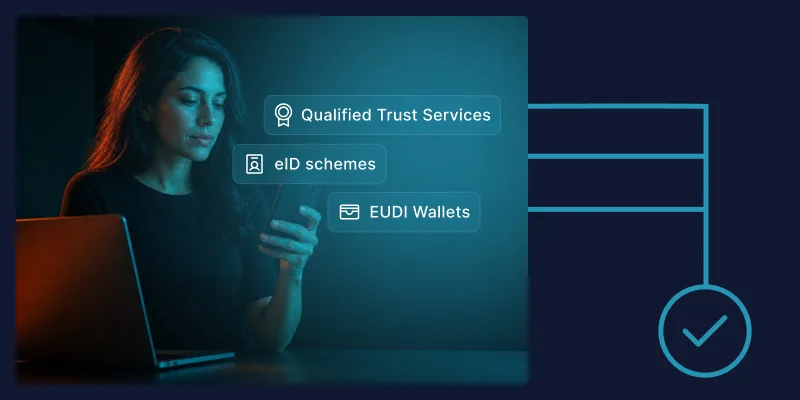
                    Table of Contents

                    Ready to partner with IDnow?

                    Turn faces into trusted identities.

                    In a competitive telecom market where customers expect instant onboarding, congstar must balance speed with security and compliance.

                    We sat down with Christopher Krause, Senior Manager Customer Finance at congstar, to discuss how the company’s partnership with IDnow enables seamless eSIM activations and postpaid sign-ups in seconds through AI-powered identity verification, why digital trust has become as important as price or network speed, and why telcos are uniquely positioned to become anchors of digital identity in the era of EU Digital Wallets and decentralized credentials.

                    congstar is known for fair, transparent tariffs and a simple, digital customer experience. What role does identity verification play in keeping the onboarding process both secure and smooth? 

                    We put convenience and security on an equal pedestal. When a customer signs up for a postpaid plan, we offer a range of identification options, especially automated identity verifications so that only real, eligible customers get through – this protects against fraud and satisfies legal requirements in Germany.  

                    When customers sign up for postpaid plans or activate eSIMs, how do you ensure the process feels instant and seamless, while still meeting all regulatory and fraud-prevention requirements? 

                    For postpaid or eSIM activation, speed is king, but we never cut corners on compliance. A perfect example is our sub-brand fraenk, our fully digital mobile phone app tariff. Here we rely on fully digital KYC tools, in our case IDnow’s automated identity verification solution, that scans a photo ID and do a quick selfie/liveness check. These AI-powered checks turn around in seconds, replacing old-school video calls or lengthy paperwork. As a result, signing up feels almost instant to the customer – yet it still meets all legal requirements.  

                    Another good example is our congstar website, where we have incorporated the verification step into the checkout process. By doing the identity check with a fast, in-browser process (no extra app needed) and clearly explaining each step, customers hardly feel any friction.  

                    In short, we assure our customers are safe, while keeping the process simple and transparent – a key part of our “fair and worry-free” brand promise. 

                    You’ve been working with IDnow for identity verification. How does this collaboration support congstar’s goals for digital efficiency, compliance and customer satisfaction? 

                    Our partnership with IDnow is a cornerstone of this approach. IDnow’s automated identity verification solution is AI-powered and designed exactly for telco onboarding. It lets us verify identities fully automatically using just a smartphone. The benefit is twofold: it accelerates the process for users, and it guarantees compliance with strict regulations. 

                    Thanks to that, we can scale up our digital sales without bottlenecks – maintaining our light, digital touch while staying on the right side of the law. In practice, this means high customer satisfaction because sign-ups are almost instant, and our operations save time – all contributing to our goal of a smooth, yet secure and digital experience. 

                    IDnow’s automated solution is AI-powered and designed exactly for telco onboarding. It lets us verify identities fully automatically using just a smartphone. The benefit is twofold: it accelerates the process for users, and it guarantees compliance with strict regulations.

                    Christopher Krause, Senior Manager Customer Finance at congstar

                    With growing eSIM adoption and automated onboarding, where do you see the biggest opportunities or challenges for congstar in the next few years? 

                    Looking ahead, the rise of eSIMs and automated onboarding is a big opportunity for us. Analysts expect eSIMs to boom soon. For us, this means we can offer even more flexible, instant activations. It also cuts costs – no more plastic SIM cards or waiting for mail delivery. The flip side: as onboarding goes 100% digital, we need to stay vigilant against evolving fraud, like SIM swap attacks or deepfakes. We’re preparing by continuously improving our automated checks and monitoring tools. Overall, the shift is positive – it lets us focus on the best customer experience and leaves us more bandwidth to innovate on products and services. The main challenge is simply staying one step ahead of bad actors as we grow digitally. 

                    Do you see digital trust as a new differentiator in the telecom market, similar to how speed or price once defined competition? 

                    Absolutely – we see digital trust becoming a real differentiator. In a mature market like ours, price and speed are table stakes. What sets a brand apart now is how much customers trust it with their heart, their data and security. Trust wins loyalty: research shows that trusted telcos gain more market share, foster long-term customers and are recommended more than others. Our brand is built on transparency and fairness, so emphasizing trust feels natural for us.  

                    When a customer goes through an identity check, what do you want them to feel –safety, simplicity, control?  

                    In the identity check itself, we want customers to feel a sense of calm and confidence. They should feel that the process is simple as we guide them clearly through each step and respectful as they decide what information to share. Altogether, we want people to walk away thinking: “That was easy, and I know my account is protected.” 

                    How does your verification journey contribute to that emotional experience? 

                    Our verification flow is designed to build those positive feelings. For example, we use the in-app browser for IDnow’s automated identity verification solution in our fraenk app, which keeps the process friendly and fast. The user sees clear instructions and immediate feedback, so they never feel lost. Every step is optimized for transparency: we show progress bars, explain why we need each check, and never ask for data twice. The result is a consistent, reassuring experience that strengthens the feeling of security and control. 

                    What sets a brand apart now is how much customers trust it with their heart, their data and security.

                    Christopher Krause, Senior Manager Customer Finance at congstar

                    How do you prepare for upcoming regulations like eIDAS 2.0 and the EUDI Wallet, and what opportunities do these create for telcos?  

                    We’re monitoring the developments around eIDAS 2.0 and the EU Digital Wallet and we are seeing them as enablers rather than headaches. As the regulations come into force, we review them with our identification partners and examine how we can further improve identification with the new options available. For telcos, the opportunity could be big: according to experts, eIDAS-compliant credentials mean we can verify any EU customer’s identity seamlessly and with reduced risk of fraud.  

                    In a world of digital wallets and decentralised identity, how do you see the telco’s role in verifying and protecting digital identity?  

                    Telcos have a vital role to play. We already have something others don’t have: a verified link between a real person and a SIM card. That makes us natural authorities for certain credentials – for instance, confirming that a person is a current mobile subscriber, or verifying age to enable services. Industry analysts note that telcos are well-positioned as “mobile-SIM-anchored” issuers of digital credentials.  

                    Telcos have something others don’t have: a verified link between a real person and a SIM card. That makes us natural authorities for verifying credentials.

                    Christopher Krause, Senior Manager Customer Finance at congstar

                    How important is orchestration, i.e connecting verification, fraud and user experience, to achieving a scalable, future-proof onboarding process?  

                    Orchestration is absolutely critical for scaling securely. We can’t treat identity checks, fraud detection and user experience as separate silos. Instead, we tie them together. For example, if our system flags an order as high-risk, it immediately triggers additional steps. Conversely, if everything looks legitimate, the user sails through. This end-to-end coordination (identification, device risk profiling and behavior analytics) is what lets us grow quickly without ballooning costs.  

                    How do data-sharing initiatives or consortium-based approaches help strengthen fraud prevention across the telecom sector?  

                    Industry-wide collaboration is a force-multiplier against fraud because fraudsters don’t respect company boundaries. For instance, telecoms worldwide have started exchanging through platforms like the Deutsche Fraud Forum. In addition, regular and transparent communication with government authorities such as the BNetzA and LKA is essential to set uniform industry standards and combat potential fraud equally. 

                    How do you see AI helping to detect fraud in real time without adding friction for genuine users?  

                    Finally, AI is becoming essential to catch clever fraud without inconveniencing users. We use AI and machine learning models that watch behind the scenes. The smart part is that genuine customers hardly notice: the system learns normal behavior and only steps in (with an extra check or block) when something truly stands out. This adaptive learning means false alarms drop over time, reducing friction for legitimate users. We also benefit by deploying solutions like IDnow’s automated identity verification solution, which already uses AI trained on millions of data points to verify identities. In network operations, we complement that with risk scores on each transaction. The net effect is real-time fraud defense that locks out attackers but lets loyal customers pass through hassle-free.  

                    About congstar: 

                    Founded in 2007 as a subsidiary of Telekom Deutschland GmbH, congstar offers flexible, transparent, and fair mobile and DSL products tailored for digital-savvy customers. Known for its customer-first approach and innovative app-based brand fraenk, congstar continues to redefine simplicity and security in Germany’s telecom market. 

                    Interested in more from our customer interviews? Check out:

                    By

                    Nikita Rybová
                    Customer and Product Marketing Manager at IDnow
                    Connect with Nikita on LinkedIn
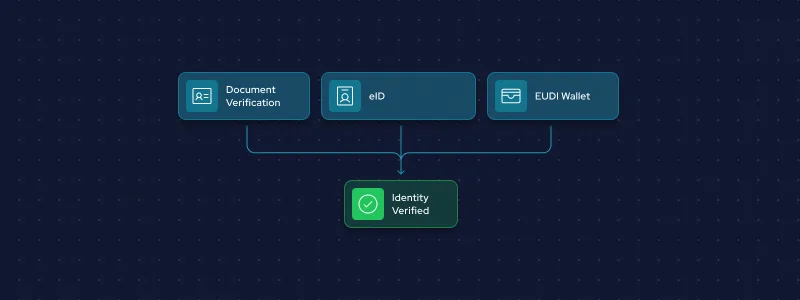
                    How IDnow’s latest collaborative research project, MAMMOth, will make the connected world fairer for all – regardless of skin tone.

                    While the ability of artificial intelligence (AI) to optimize certain processes is well documented, there are still genuine concerns regarding the link between unfair and unequal data processing and discriminatory practices and social inequality.    

                    In November 2022, IDnow, alongside 12 European partners, including academic institutions, associations and private companies, began the MAMMOth project, which set out to explore ways of addressing bias in face verification systems. 

                    Funded by the European Research Executive Agency, the goal of the three-year long project, which wrapped on October 30, 2025, was to study existing biases and create a toolkit for AI engineers, developers and data scientists so they may better identify and mitigate biases in datasets and algorithm outputs.   

                    Three use cases were identified:    

                    1. Face verification in identity verification processes. 
                    1. Evaluation of academic work. In the academic world, the reputation of a researcher is often tied to the visibility of their scientific papers, and how frequently they are cited. Studies have shown that on certain search engines, women and authors coming from less prestigious countries/universities tend to be less represented.   
                    1. Assessment of loan applications. 

                    IDnow predominantly focused on the face verification use case, with the aim of implementing methods to mitigate biases found in algorithms.   

                    Data diversity and face verification bias.

                    Even the most state-of-the-art face verification models are typically trained on conventional public datasets, which features an underrepresentation of minority demographics. A lack of diversity in data makes it difficult for models to perform well on underrepresented groups, leading to higher error rates for people with darker skin tones.  

                    To address this issue, IDnow proposed using a ‘style transfer’ method to generate new identity card photos that mimic the natural variation and inconsistencies found in real-world data. By augmenting the training dataset with synthetic images, it not only improves model robustness through exposure to a wider range of variations but also enables a further reduction of bias against darker skin faces, which significantly reduces error rates for darker-skinned users, and provides a better user experience for all.

                    The MAMMOth project has equipped us with the tools to retrain our face verification systems to ensure fairness and accuracy – regardless of a user’s skin tone or gender. Here’s how IDnow Face Verification works.

                    When registering for a service or onboarding, IDnow runs the Capture and Liveness step, which detects the face and assesses image quality. We also run a liveness/ anti‑spoofing check to check that photos, screen replays, or paper masks are not used. 

                    The image is then cross-checked against a reference source, such as a passport or ID card. During this stage, faces from the capture step and the reference face are converted into compact facial templates, capturing distinctive features for matching. 

                    Finally, the two templates are compared to determine a “match” vs. “non‑match”, i.e. do the two faces belong to the same person or not? 

                    Through hard work by IDnow and its partners, we developed the MAI-BIAS Toolkit to enable developers and researchers to detect, understand, and mitigate bias in datasets and AI models.

                    We are proud to have been a part of such an important collaborative research project. We have long recognized the need for trustworthy, unbiased facial verification algorithms. This is the challenge that IDnow and MAMMOth partners set out to overcome, and we are delighted to have succeeded.

                    Lara Younes, Engineering Team Lead and Biometrics Expert at IDnow.

                    What’s good for the user is good for the business.

                    While the MAI-BIAS Toolkit has demonstrated clear technical improvements in model fairness and performance, the ultimate validation, as is often the case, will lie in the ability to deliver tangible business benefits.  

                    IDnow has already began to retrain its systems with learnings from the project to ensure our solutions are enhanced not only in terms of technical performance but also in terms of ethical and social responsibility.

                    Top 5 business benefits of IDnow’s unbiased face verification.

                    1. Fairer decisions: The MAI-BIAS Toolkit ensures all users, regardless of skin color or gender, are given equal opportunities to pass face verification checks, ensuring that no group is unfairly disadvantaged.  
                    1. Reduced fraud risks: By addressing biases that may create security gaps for darker skinned users, the MAI-BIAS Toolkit strengthens overall fraud prevention by offering a more harmonized fraud detection rate across all demographics. 
                    1. Explainable AI: Knowledge is power, and the Toolkit provides actionable insights into the decision-making processes of AI-based identity verification systems. This enhances transparency and accountability by clarifying the reasons behind specific algorithmic determinations.  
                    1. Bias monitoring: Continuous assessment and mitigation of biases are supported throughout all stages of AI development, ensuring that databases and models remain fair with each update to our solutions.  
                    1. Reducing biases: By following the recommendations provided in the Toolkit, research methods developed within the MAMMOth project can be applied across industries and contribute to the delivery of more trustworthy AI solutions.  

                    As the global adoption of biometric face verification systems continues to increase across industries, it’s crucial that any new technology remains accurate and fair for all individuals, regardless of skin tone, gender or age.

                    Montaser Awal, Director of AI & ML at IDnow.

                    “The legacy of the MAMMOth project will continue through its open-source tools, academic resources, and policy frameworks,” added Montaser. 

                    For a more technical deep dive into the project from one of our research scientists, read our blog ‘A synthetic solution? Facing up to identity verification bias.’

                    By

                    Jody Houton
                    Senior Content Manager at IDnow
                    Connect with Jody on LinkedIn

                    Table of Contents

                    Ready to partner with IDnow?

                    Turn faces into trusted identities.

                    As part of the EU-funded MAMMOth project, IDnow shows how bias in AI systems can be detected and reduced – an important step toward trustworthy digital identity verification.

                    London, October 30, 2025 – After three years of intensive work, the EU-funded MAMMOth (Multi-Attribute, Multimodal Bias Mitigation in AI Systems) project has published key findings on reducing bias in artificial intelligence (AI) systems. Funded by the EU’s Horizon Europe program, the project brought together organizations from a consortium of leading universities, research centers, and private companies across Europe. 

                    IDnow, a leading identity verification platform provider in Europe, was directly involved in the implementation of the project as an industry partner. Through targeted research and testing, an optimized AI model was developed to significantly reduce bias in facial recognition, which is now integrated into IDnow’s solutions.

                    Combating algorithmic bias in practice

                    Facial recognition systems that leverage AI are increasingly used for digital identity verification, for example, when opening a bank account or registering for car sharing. Users take a digital image of their face, and AI compares it with their submitted ID photo. However, such systems can exhibit bias, leading to poorer results for certain demographic groups. This is due to the underrepresentation of minorities in public data sets, which can result in higher error rates for people with darker skin tones. 

                    A study by MIT Media Lab showed just how significant these discrepancies can be: while facial recognition systems had an error rate of only 0.8% for light-skinned men, the error rate for dark-skinned women was 34.7%. These figures clearly illustrate how unbalanced many AI systems are – and how urgent it is to rely on more diverse data. 

                    As part of MAMMOth, IDnow worked specifically to identify and minimize such biases in facial recognition – with the aim of increasing both fairness and reliability.

                    Research projects like MAMMOth are crucial for closing the gap between scientific innovation and practical application. By collaborating with leading experts, we were able to further develop our technology in a targeted manner and make it more equitable.

                    Montaser Awal, Director of AI & ML at IDnow.

                    Technological progress with measurable impact

                    As part of the project, IDnow investigated possible biases in its facial recognition algorithm, developed its own approaches to reduce these biases, and additionally tested bias mitigation methods proposed by other project partners.

                    For example, as ID photos often undergo color adjustments by issuing authorities, skin tone can play a challenging role, especially if the calibration is not optimized for darker skin tones. Such miscalibration can lead to inconsistencies between a selfie image and the person’s appearance in an ID photo.  

                    To solve this problem, IDnow used a style transfer method to expand the training data, which allowed the model to become more resilient to different conditions and significantly reduced the bias toward darker skin tones.

                    Tests on public and company-owned data sets showed that the new training method achieved an 8% increase in verification accuracy – while using only 25% of the original training data volume. Even more significantly, the accuracy difference between people with lighter and darker skin tones was reduced by over 50% – an important step toward fairer identity verification without compromising security or user-friendliness. 

                    The resulting improved AI model was integrated into IDnow’s identity verification solutions in March 2025 and has been in use ever since.

                    Setting the standard for responsible AI

                    In addition to specific product improvements, IDnow plans to use the open-source toolkit MAI-BIAS developed in the project in internal development and evaluation processes. This will allow fairness to be comprehensively tested and documented before new AI models are released in the future – an important contribution to responsible AI development. 

                    “Addressing bias not only strengthens fairness and trust, but also makes our systems more robust and adoptable,” adds Montaser Awal. “This will raise trust in our models and show that they work equally reliably for different user groups across different markets.”

                    Table of Contents

                    Ready to partner with IDnow?

                    Turn faces into trusted identities.

                    Fraud today is a work of gangs that operate across borders. Worth more than $1 trillion, this industry doesn’t just steal money – it destroys lives. In the first part of our fraud series, we explore who is behind the fastest-growing schemes today, where are the hubs of so-called scam compounds and what financial organizations must understand about their opponent. 

                    For decades, pop culture painted fraudsters as solitary figures hunched over laptops in darkened rooms. That stereotype is not only wrong, it is dangerously outdated. Today’s most damaging scams are orchestrated by global crime syndicates spanning every continent. These networks build tens of thousands-strong operations, traffic people, train their “staff” and basically operate like Fortune 100 companies, but their product is deception, and the victims pay the cost. 

                    Their scale is staggering: global fraud reached over $1 trillion in 2024. The numbers, however, tell only part of the story. The fastest-growing schemes today are app-based and social engineering scams, which are also the most common types of fraud affecting banks and financial institutions, causing record losses from reimbursements and compliance costs. 

                    These attacks not only target systems, but exploit people, undermining trust in financial institutions, regulators, and courts, while also supporting human trafficking and forced labor. Behind every fake investment ad or romance scam lies a darker reality: compounds where people are held captive and forced to defraud strangers across the world. 

                    Global scam centres: Where to find them 

                    When most people think of criminal gangs, they imagine shadowy figures operating from jungles or remote hideouts. But the criminals behind the world’s largest fraud rings work very differently. These aren’t small-time operations running in the dark, they’re industrial-scale enterprises operating in plain sight. 

                    Their structure closely mirrors those of legitimate businesses with executives overseeing operations, middle managers coaching employees and tracking KPIs and frontline workers executing scams via phone, social media or messaging apps.  

                    Their facilities are not hidden in basements. They are large, purpose-built sites, often converted from former hotels, casinos or business parks. Located primarily in Southeast Asia – in Cambodia, Myanmar, Vietnam, and the Philippines – but increasingly also in Africa and Eastern Europe, these complexes can be vast. Investigators have uncovered huge compounds where hundreds of people work in rotating shifts, day and night. Some sites are so large they have been described as “villages,” covering dozens of acres, with syndicates often running multiple locations across regions. At scale, this means a single network can control thousands of people. 

                    However, not all people who work for syndicates on site, are there voluntarily. In fact, most of the front-line workers and call centre agents are victims of human trafficking. Lured by the promise of big money and escape from poverty, they travel across borders, only to find themselves kidnapped, captured and coerced into deceiving others.  

                    Life inside scam compounds: A prison disguised as an office 

                    On-site structure is designed to sustain a captive workforce. They include dormitories, shops, entertainment rooms, kitchens and even small clinics. On the surface, these facilities might resemble employee perks, and for vulnerable recruits from poorer backgrounds, they can even sound appealing, but the reality is dark: rows of desks, bunkrooms stacked with beds, CCTV cameras monitoring every corner, kitchens feeding hundreds. With razor-wire fences and armed guards at the gates, these compounds look more like prisons rather than offices. And in many ways, that is exactly what they are. 

                    The “masterminds” of the crime ecosystem 

                    Behind the compounds lies a web of transnational operators and a shadow service economy. The organisers of these operations come in many forms – from criminal entrepreneurs diversifying from drugs to online scams, to networks linked with regional crime groups such as Southeast Asian gangs, Chinese or Eastern European syndicates, and illicit operators tied to South American cartels. In some places, politically connected actors or local elites profit from – and even protect – these operations, ensuring they continue with little interference. 

                    Another layer consists of companies that appear legitimate on paper but in reality, supply the infrastructure that keeps the fraud industry running: phone numbers, fake identity documents, shell firms and payment processors willing to handle high-risk transactions. Investigations have uncovered, how underground service providers and proxy accounts help scammers move victims’ money through banks and into crypto using fake invoices and front companies as cover.  

                    It’s an industrial-scale business model: acquisition channels built on fake ads, call centres with scripts and a laundering pipeline powered by mules, shell companies and crypto gateways. The setup is remarkably resilient – shut down one centre or payment route, and the network simply reroutes through another provider or jurisdiction. 

                    How fraud hurts banks and other financial companies  

                    For banks and financial firms, the impact is severe. Direct financial losses and costs to financial institutions are significant and rising. Banks, fintechs and credit unions report substantial direct fraud losses: nearly 60% reported losing over $500k in direct fraud in a 12-month period and a large share reported losses over $1m. These trends force firms to allocate budget away from growth into loss-prevention and remediation.  

                    Payment fraud at scale also increases operational and compliance costs. For example, in 2022, payment fraud was reported at €4.3 billion in European Economic Area and consumer-reported losses in other jurisdictions show multi-billion-dollar annual impacts that increase every year – all of which ripple into higher Suspicious Activity Report (SAR) volumes, Anti-Money Laundering (AML) investigations and strained dispute and reimbursement processes for banks. These costs are both direct (reimbursed losses) and indirect (investigation time, compliance staffing, fines, customer churn and reputational damage). 

                    Banks face a daily balancing act: tighten controls and risk frustrating customers or loosen them and risk becoming a target. Either way, regulators demand ever-stronger safeguards. And even though stronger authentication and checks can increase drop-offs during onboarding or transactions, failure to comply risks exposure to legal and regulatory trouble (recent cases tied to payment rails illustrate how banks can face large remediation obligations and lawsuits if controls are perceived as inadequate). 

                    The long-term consequences, however, go beyond operational complexity. Fraud undermines customer trust, which is the foundation of finance. It increases costs, slows innovation and forces financial institutions to redesign products with restrictions that customers feel but rarely understand. And this can lead to a long-term loss of market share. 

                    What financial institutions must understand about the opponent 

                    Banks are not fighting individual perpetrators. They are facing industrialized criminal organizations. To defeat them, defensive measures must also be organized accordingly. 

                    This means moving beyond isolated controls toward systemic resilience: robust fraud checks, stronger identity verification, continuous monitoring, transaction orchestration and faster coordination with law enforcement. But technology alone is not enough. Collaboration across institutions and industries is crucial to disrupt fraud networks that operate globally. 

                    How financial organizations can protect themselves against financial crime 

                    Financial firms should invest in multi-layered identity checks combining document, liveness and behavioral signals (like the ones offered by IDnow); integrate real-time AML orchestration to flag mule activity early (like the soon-to-be-launched IDnow Trust Platform); and participate in intelligence-sharing networks that connect patterns across borders.  

                    Fraud is no longer a fringe crime. It’s a billion-dollar corporate machine. To dismantle it, financial institutions must shift from investigating fraud after it happens to preventing it before it strikes, stopping both criminals and socially engineered victims before any loss occurs. 

                    By

                    Nikita Rybová
                    Customer & Product Marketing Manager at IDnow
                    Connect with Nikita on LinkedIn
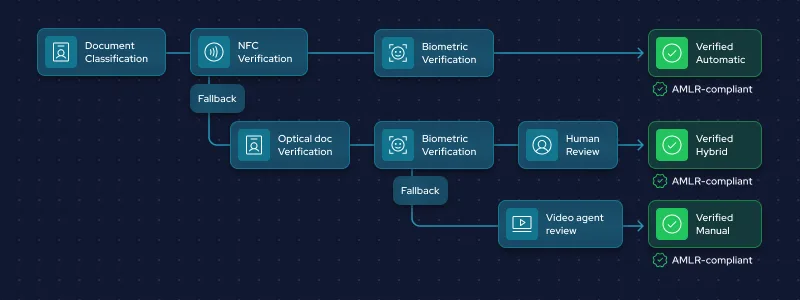
                    We sat down with Carlo Maragliano from digital platform Finologee to explore how financial institutions are getting ready for the evolving regulatory landscape and how they use technology to accelerate their go-to-market while staying audit-ready and resilient. 

                    As new regulations such as eIDAS 2.0, AMLR and DORA reshape the compliance landscape across Europe, financial institutions are under pressure to future-proof their onboarding and KYC processes.

                    Luxembourg-based Finologee, a leading digital platform operator for the financial industry, is helping banks and payment institutions meet regulatory challenges through its KYC Manager, an orchestration layer that combines flexibility with embedded regulatory readiness. By integrating IDnow’s automated identity verification technology, Finologee enables its clients to accelerate go-to-market, simplify compliance and tailor onboarding journeys across regions. With Carlo Maragliano, Head of Delivery and Customer Success at Finologee, we discussed how technology, automation and orchestration are transforming digital identity at scale.

                    Ensuring adaptability in a dynamic regulatory environment

                    How do you ensure that your solutions remain adaptable as regulations and customer expectations continue to evolve?

                    We’ve built everything on an API-first modular architecture that enables quick adaptation to regulatory shifts. On top of that, Finologee continuously engages with clients to align roadmap priorities with industry changes. The platform is also fully customisable and configurable, so institutions can tailor onboarding flows, verification steps and compliance logic to specific regulatory requirements, customer segments and regional markets without extensive development effort.


                    Did you know? Over 55% of consumers are more likely to apply for services if the onboarding process is entirely digital, including online identity verification.


                    The role of automation in scaling operations

                    What role does automation play in helping banks scale their operations without sacrificing security or compliance?

                    Automation is really important for all businesses. It reduces dependency on manual reviews, thus lowering both cost and error rates. Automated decisioning also helps apply consistent compliance logic. With real-time workflows, customers can be onboarded faster without sacrificing auditability, while compliance teams gain transparency and control through dashboards and exception handling flows. 

                    What challenges do financial institutions face when trying to scale their compliance and onboarding processes across multiple markets and how does KYC Manager help overcome these hurdles?

                    Scaling across markets brings several hurdles. Institutions face varying regulatory requirements across countries, different acceptable ID document types and verification standards, and operational silos that slow down onboarding harmonisation. With KYC Manager, we address these challenges through a centralised orchestration layer with localised compliance modules, document coverage across 157 countries enabled by IDnow and a flexible flow builder that allows journeys to be adapted by region or customer type.


                    Did you know? Banks that increased end-to-end KYC-process automation by 20% saw a triple benefit effect : increased quality-assurance scores by 13%;  improved customer experience by reducing the number of customer outreaches per case by 18% and enhanced productivity by increasing the number of cases processed per month by 48%.

                    In what ways does the integration between Finologee’s KYC Manager and IDnow’s automated identity verification technology enable faster go-to-market for banks and other financial institutions? Can you share a concrete example?

                    Because identity verification is pre-integrated, deployment timelines are shortened considerably. This means clients such as banks or other financial institutions can launch new services or expand to new markets faster thanks to embedded regulatory readiness.  

                    A concrete example: the IDnow verification flow is especially useful when identifying ultimate beneficial owners (UBOs) and persons with significant control (PSCs), so people who ultimately own or control their company and are legally required to identify during onboarding. If the person responsible for their dossier doesn’t have their IDs, they can trigger an SMS to the phone number of the UBO or PSC to complete the verification directly. 

                    Scaling across markets and customization

                    How do you support financial institutions in customizing onboarding journeys for different regions or customer segments?

                    The Finologee KYC platform enables journey segmentation by geography, product line or a risk profile. For instance, workflow logic can automatically route high-risk users to manual review or enhanced due diligence paths.

                    Looking ahead, what trends do you anticipate will most impact the way banks approach digital identity and compliance at scale?

                    We see AI and biometrics becoming standard components of fraud prevention. There will also be greater emphasis on accessibility, inclusivity and cross-device onboarding. And more broadly, banks and other financial institutions will be looking to reduce fragmentation through orchestration platforms.

                    On a personal level, what excites you most about working at the intersection of technology, compliance and financial services? Is there a particular moment or project that made you feel especially proud of the impact you’re making?

                    For me, it’s seeing how all the pieces come together in practice. One moment that really stood out was supporting a client launch in Luxembourg under tight regulatory deadlines they needed to comply with. It was a great example of how the platform can unlock speed, compliance, and user experience all at once – we successfully implemented KYC Manager within just three months, enabling a fully digital account opening process with no paper or printing requirements. On average, our clients see the submission process reduced to under 10 minutes and conversion rates doubled compared to traditional KYC remediation processes, while substantially lowering human error and workload.

                    Interested in more from our customer interviews? Check out:

                    By

                    Nikita Rybová
                    Customer and Product Marketing Manager at IDnow
                    Connect with Nikita on LinkedIn
                    Table of Contents

                    Ready to partner with IDnow?

                    Turn faces into trusted identities.

                    We spoke with Florian Werner, CEO of Deutsche Gesellschaft für Glücksspiel (DGGS), the operator behind the JackpotPiraten and BingBong brands, to understand how strict regulatory requirements under the Interstate Treaty on Gambling (GlüStV 2021) are shaping iGaming in Germany.

                    From the country’s strong focus on player protection to navigating compliance challenges Werner explains how DGGS balances regulation with player experience – and why trusted partners like IDnow are essential for building a sustainable, responsible iGaming market. 

                    As one of Germany’s earliest licensed iGaming operators, DGGS has taken on both the pride and responsibility of setting industry standards. With its JackpotPiraten and BingBong brands, the company is committed to combining entertainment with strong compliance and social responsibility. In this interview, CEO Florian Werner shares how DGGS works with regulators, leverages technology to protect players and adapts to the challenges of one of Europe’s most tightly regulated markets. 

                    Why being first in Germany came with pride – and responsibility 

                    In 2022, DGGS’ JackpotPiraten and BingBong became the first brands to receive a national slot licence from the German regulator, GGL. What did that milestone mean for you as an operator – especially in terms of your responsibility to lead in compliance and player protection?

                    We were delighted and proud to be the first operator to meet the necessary requirements for entering the German market. At the same time, we are fully aware of the responsibility this entails. That is why we are committed to acting responsibly and have deliberately chosen such an experienced partner as IDnow to stand by our side, supporting us actively in key areas such as player protection, account verification, and the safety of our players.

                    How does IDnow help you protect your players?

                    IDnow helps us reliably verify the identity of our players, making sure that no one can play under a false name. At the same time, the solution provides a secure and compliant identity check that effectively prevents underage gaming and fraud. This way, we create a trustworthy and protected environment for all our players.

                    Why regulation in Germany creates both challenges and opportunities 

                    What were the most significant regulatory and operational challenges you faced in those first months?  

                    The biggest challenges in the regulated German market have remained unchanged since legalization. These primarily include the high tax burdens in Germany, which have a negative impact on payout ratios and the overall gaming experience of virtual slot machines. In addition, requirements such as a €1 stake limit and the mandatory delay between game rounds (the ‘5-second rule’) pose significant challenges. Since many of these regulations were newly introduced under the 2021 Interstate Treaty on Gambling (GlüStV 2021), a meaningful exchange of experiences was initially difficult. However, we are in contact with various industry representatives and remain hopeful for a more attractive offering for German players in the future.

                    How does the DGGS work with GGL and other regulators to protect players and combat fraud and how does it stay up to date with any regulatory changes to ensure continuous compliance? 

                    We are engaged in regular dialogue on multiple levels, collaborating closely with both industry associations and regulatory representatives. In particular our compliance team maintains an ongoing exchange that we experience as collegial, constructive, and open.

                    Why technology and trusted partners are the backbone of compliance 

                    What role do trusted technology or identity verification partners play in maintaining your compliance and risk posture? 

                    Verification and identity-check technologies are of vital importance. In Germany, strict regulations rightly govern the handling of personal data. To meet these standards effectively, we rely on experienced external providers whose expertise ensures secure, efficient, and reliable processes at a scale that would not be possible manually.

                    Why responsible gambling is more than a legal requirement 

                    The German GGL regulation is centred on social responsibility and player protection. What specific measures do you have in place to identify and assist players at risk of gambling harm? 

                    At our online casinos JackpotPiraten and BingBong, we analyze player behavior and ensure a safe gaming experience. If signs of problematic gambling emerge, we are able to reach out directly to the player and if necessary, exclude them from play. As part of the regulated market, we see this consistent and responsible approach as one of our core duties in protecting players.

                    How do you ensure that your responsible gambling tools are actually effective? Do you measure outcomes or make improvements based on player feedback or behavioral data? 

                    We take responsible gambling very seriously and therefore conduct ongoing monitoring of player activity. If signs of problematic gambling behavior are detected and cannot be changed, we can take a range of measures, including the closure of the player’s account.

                    Can you describe how the OASIS self-exclusion system is integrated into your platform and how you handle self-excluded or returning players? 

                    Players can exclude themselves at any time directly on our platforms through the OASIS self-exclusion system. In addition, a ‘panic button’ is available, enabling an immediate 24-hour break from play. Once registered with OASIS, players are automatically blocked from accessing our platforms and are prevented from receiving any form of personalized advertising. These measures reflect our strong commitment to responsible gambling and player protection.

                    What trends are you seeing in player behavior since the introduction of the new regulatory framework? 

                    In international comparison, German legislation for virtual slot games is very strict. Tax rates are set at a high level, which negatively impacts the payout ratios of the games. In addition, there are stake restrictions and a requirement for a minimum game round duration of five seconds. Players view these measures very critically and often turn to the less restrictive and more attractive offerings of the black market. As a result, tax revenues in Germany from virtual slot games have been continuously declining, an unfortunate negative trend.

                    Transparency is key in regulated markets. How do you communicate responsible gambling features and policy updates to your players in a clear and proactive way? 

                    At Deutsche Gesellschaft für Glücksspiel, raising awareness among players about responsible gaming is a core priority. We follow a dual strategy that goes well beyond legal requirements. In line with regulations, we provide a dedicated information section on our platforms that explains how to use gambling products safely. Clear warnings about potential risks are displayed transparently, and players can access support organizations directly through the links we provide.

                    Going further, we actively engage our players through a regular newsletter and our innovative Slot Academy. Here, education takes place via live video sessions that continuously address the risks of virtual slot games and promote responsible, informed play.

                    Why entertainment and responsibility can go hand in hand 

                    Looking ahead, what’s next for DGGS? Are there upcoming developments, features, or goals you’re particularly excited about? 

                    This year we are celebrating the Jackpot Video Awards 2025. The idea for an event together with our players came directly from the community. The Jackpot Video Awards combine entertainment with player protection and are eagerly anticipated by both our team and the players.

                    Interested in more from our customer interviews? Check out:

                    By

                    Nikita Rybová
                    Customer and Product Marketing Manager at IDnow
                    Connect with Nikita on LinkedIn

                    Table of Contents

                    Ready to partner with IDnow?

                    Turn faces into trusted identities.

                    We spoke with Kai Stuebane, Managing Director for DACH at Docusign, to explore how secure digital identity verification is transforming digital signing amid Germany’s evolving regulatory landscape.

                    From navigating increasing compliance demands to delivering seamless user experiences, we discussed why eID (Electronic Identification) is becoming a strategic priority for faster, more secure, and legally compliant digital signatures – and how Docusign’s partnership with IDnow is empowering enterprises to stay ahead with secure, scalable and user-centric digital workflows.

                    Why now: Perfect conditions for eID to scale

                    In today’s rapidly evolving regulatory landscape, particularly in Germany but also across Europe, digital identity is becoming increasingly significant. From Docusign’s perspective, what factors are driving the growing importance of secure digital identity solutions in the enterprise environment? 

                    First, regulatory compliance is a major driver. Regional laws such as eIDAS, and the impending eIDAS 2.0 in the EU are enhancing the need for digital authentication solutions across the region by introducing initiatives such as European Digital Identity Wallets (EUDI). In Germany, the focus on digital trust services, enforced by institutions such as BaFin and regulations like GwG, demand robust, verifiable digital identity solutions. Enterprises must meet strict requirements for customer identification and authentication when signing or executing agreements electronically. 

                    Second, security concerns and fraud prevention are top priorities. According to a recent Docusign global survey into the identity verification landscape, 70% of organisations agree that identity fraud attempts are on the rise, as remote and hybrid work models become the norm and businesses continue digitising their operations. As a result, companies require robust authentication solutions that ensure document integrity and signer identity across borders and devices.

                    A third major driver is that user expectations have shifted. Both customers and employees now expect seamless, secure digital experiences, with 50% of organisations actually prioritising customer experience over fraud prevention, given its perceived importance. Organisations like Docusign enable enterprises to deliver this through a frictionless signing experience while maintaining high standards of security and trust. For example Grenke who, in addition to offering IDnow’s videoident process through Docusign, decided to also add the new eID capability in order to offer more convenience to their customers.  

                    Finally, digital transformation continues to accelerate. Enterprises are modernising legacy workflows at an exponential rate, and secure digital identity is foundational to automating agreement processes end-to-end. Digital-first solutions empower businesses to operate faster, more efficiently, and with greater legal certainty – particularly in highly regulated markets like Germany.

                    As Germany advances its digital transformation initiatives, how do you anticipate electronic identification (eID) solutions will reshape document signing processes for both enterprises and consumers in the German market?

                    There is an overall shift within the identity verification and authentication landscape  where organisations are actively seeking-out solutions that enable them to maintain security and compliance, without impacting the user experience.  

                    For enterprises, eID solutions will help streamline identity verification, enabling faster onboarding, contract execution, and compliance with stringent regulatory requirements such as eIDAS and Germany’s Trust Services Act. Again, take Grenke as an example, the ability to integrate German eID schemes into their existing signing workflow – especially for digital signatures – means they can ensure the highest level of legal validity while reducing manual processes and streamlining the customer experience.

                    For consumers, eID will offer a more seamless and familiar experience whilst maintaining security – something we pride ourselves on delivering here at Docusign. With familiar national identity methods integrated into digital transactions, users will be able to verify their identity and complete agreements with confidence and ease. This not only enhances trust but also accelerates adoption in regulated sectors like finance, insurance, and real estate.

                    Through our partnership with IDnow, Docusign is committed to supporting the German market by leaning into evolving regulations and integrating eID solutions into its portfolio, meeting local regulatory needs while delivering the trusted experience that users expect.

                    The eID advantage: Seamless UX meets compliance

                    How can Germany unlock and accelerate the full potential of eID?

                    Based on our experience, accelerating eID adoption in Germany hinges on three key factors: user experience, awareness, and interoperability. 

                    First, simplifying the user experience is critical. For individuals to embrace eID for digital agreement completion, the process must be intuitive, fast, and secure. Reducing friction, such as removing lengthy registration steps or complex verification methods, can significantly increase user adoption. By leveraging the familiar eID methods, this will streamline this experience while maintaining high levels of identity assurance.

                    Second, education and awareness are essential. Many individuals are unaware that their national eID can be used as part of the digital agreement process. Promoting the benefits (legal validity, security, and convenience, etc.) will help build trust and drive usage across different age and user groups.

                    Third, ensuring broad interoperability with public and private identity schemes is key. Businesses need confidence that the eID solutions they implement will work across sectors and meet local (GwG) and regional (eIDAS) regulatory standards.

                    In what ways has Docusign enhanced its signing workflows by incorporating eID with other IDnow-powered verification solutions?

                    Docusign has a long-standing partnership with IDnow. The evolution of this partnership to now include IDnow’s eID capabilities enhances the security and user experience of its joint offering in the following ways:

                    • Automation: Customers can make the most of an Identification method that simply relies on  the electronic identification (eID) function of the German national identity card. 
                    • Security: Two factors of authentication for additional security: 
                    • PIN entry 
                    • Scanning of the near field communication (NFC) chip contained within German eIDs 
                    • Familiarity and ease of use: not only are eIDs increasingly adopted across Germany, but the fact we leverage new technology such as NFC provides an additional element of ease of use.

                    Real-world application: GRENKE’s eID-first transformation

                    For businesses that already use Docusign but haven’t yet implemented eID-based signing, what are the key benefits they might be missing out on?

                    Ultimately, we can distill the key benefits to: 

                    • Increased completion rates, driven through familiarity: enable customers to use their German eID for straightforward, intuitive identity verification that supports compliance obligations. 
                    • Secure, simplified signing:  built-in security enhancements (i.e. use of PIN, scanning of NFC, etc.) mean that SMS re-authentication and live video interactions are no longer required, resulting in an even faster identification process for signers.
                    • Storage and centralisation of key identity information: continue to download or easily access required signer identity information through Docusign and IDnow, to demonstrate compliance with BaFin GwG requirements 

                    Can you share a real-world example of how a customer of Docusign is using eID to improve efficiency and achieve measurable business outcomes?

                    A strong example is our long-standing collaboration with Grenke, a leading provider of leasing and financing services. For several years, Grenke has enabled customers and dealers to digitally sign contracts using Docusign eSignature, with IDnow’s VideoIdent solution supporting identity verification.

                    Recently, Grenke enhanced this process by integrating IDnow’s eID solution as an alternative verification method. The impact has been clear: the introduction of eID has helped Grenke accelerate contract turnaround times, reduce reliance on physical materials, and improve the overall user experience. This has translated into greater operational efficiency, enhanced customer satisfaction, and measurable progress toward the company’s digital and sustainability goals.

                    What’s next: Looking beyond legal requirements

                    As we anticipate the implementation of eIDAS 2.0 and the European Digital Identity framework in the coming months, how do you envision these regulatory advancements shaping the evolution of electronic identification and digital signature solutions across Germany and the broader European market?

                    These regulatory advancements will establish a unified, interoperable framework for digital identity across EU member states, enabling individuals and businesses to authenticate and complete digital agreements securely and seamlessly across borders. For Germany, this means greater alignment with a pan-European standard that facilitates trust, legal certainty, and smoother cross-border transactions.

                    eIDAS 2.0 introduces the concept of the European Digital Identity Wallet (EUDI), which empowers citizens to manage, store and share verified identity attributes as they wish. This will significantly enhance user control, reduce onboarding friction, and boost adoption of high-assurance digital signatures, particularly Qualified Electronic Signatures (QES). At Docusign our stated ambition is to become an federator of identities, where all EUDI wallets are available through our platform . 

                    For businesses, these changes will reduce complexity in managing multiple identity systems while improving compliance and scalability. 

                    We’re excited for what’s to come. 

                    Interested in more from our customer conversations? Check out:

                    By

                    Nikita Rybová, IDnow

                    Nikita Rybová
                    Customer and Product Marketing Manager at IDnow
                    Connect with Nikita on LinkedIn

                    Table of Contents

                    Ready to partner with IDnow?

                    Turn faces into trusted identities.

                    Are you ready for the future of Gaming? Prepared for the industry’s upcoming fraud and compliance challenges? IDnow’s identity verification experts will be on hand to answer all your IDV-related questions at Booth E405. 

                    We will be attending SBC Summit in Lisbon from September 16-18 to share actionable insights on how to onboard players in seconds, remain compliant throughout Europe, and block fraud before it impacts the customer experience.  

                    As one of the first companies in Europe to receive certification under the latest ETSI standard for remote identity proofing (a key requirement for eIDAS 2.0 and EUDI Wallet compliance), IDnow is well equipped to assess how prepared and future-ready businesses are for upcoming regulatory challenges. The team can be found at Booth E405 in Hall 4 and will be demonstrating how its wide range of automated and expert-led identity verification solutions can unlock safer and more secure gaming experiences. 

                    Gaming operators are also invited to swing by to check out some of IDnow’s latest product developments, from its expanded fraud prevention technology to its NFC-enabled offering, which provides a seamless and streamlined experience, from document tap to trusted onboarding. 

                    At midday on September 18, don’t forget to head over to Stage 3 – Technology & Compliance to attend the ‘AML 2.0: Getting Serious about Fraud’ panel.

                    This will be a great opportunity to hear from Edouard Baussier, Solution Sales Director at IDnow, who, alongside other industry leaders and insiders, will explore how AI, real-time data, and regulations are transforming AML efforts. 

                    Traditional AML strategies are often too rule-based and reactive; focusing more on catching yesterday’s fraud than tomorrow’s. I look forward to joining my peers from the gaming and gambling space to explore how AI, data enrichment and behavioral analytics could be used to shape the future of AML.

                    Edouard Baussier, Solution Sales Director at IDnow

                    Hoping for the treble. 

                    IDnow will also be hoping history repeats itself at this year’s SBC Awards (taking place on the final day of SBC Summit Lisbon on September 18,) as it has once again been nominated for the ‘Fraud and Compliance Solution of the Year’ award. 

                    Having won the award in both 2023 and 2024, the Munich-headquartered identity verification platform provider will be hoping to win the prestigious award for three years in a row. 

                    Schedule a meeting with the IDnow team at SBC Summit by clicking below.

                    By

                    Jody Houton
                    Senior Content Manager at IDnow
                    Connect with Jody on LinkedIn

                    SBC Summit Lisbon

                    Schedule a meeting with the team to discover how IDnow’s range of automated and expert-led solutions can help you unlock safer and more secure gaming and gabling experiences.
                    Book a meeting

                    Table of Contents

                    Ready to partner with IDnow?

                    Turn faces into trusted identities.

                    Munich, September 9, 2025 – IDnow, a leading identity verification platform provider in Europe, and Docusign, the Intelligent Agreement Management company, today announced the launch of a joint solution enabling customers’ compliance with Germany’s Anti-Money Laundering (Geldwäschegesetz, or GwG) law through secure and automated identity verification and electronic signatures, powered by Germany’s electronic ID (eID).

                    A joint solution for trust, speed, and compliance

                    The new joint offering is designed to support customers’ obligations to meet GwG requirements and is aligned with evolving BaFin guidance and the EU eIDAS regulation, streamlining digital onboarding and agreement processes across regulated industries. This collaboration addresses the increasing demand for compliant, user-friendly digital identification services in the German market, particularly in sectors such as finance, insurance, and public administration.

                    In light of recent legislative discussions in Germany around enabling more automated identity solutions under GwG, and the growing expectation among users for faster and more intuitive experiences, this partnership broadens the available options for secure and compliant digital identification, reflecting the industry’s ongoing shift toward more flexible, future-ready technologies.

                    Leveraging combined expertise for enhanced solutions

                    This integrated solution leverages IDnow’s latest eID-based technology, fully integrated within the new AI-powered Docusign IAM platform. The process uses the Near Field Communication (NFC) chip and PIN functionality of German eID cards to enable automated, eIDAS-compliant, and binding e-signatures, allowing signers to verify their identity and complete agreements using just their smartphone, in under a minute. It delivers a seamless, secure and mobile-first experience, without video calls or manual checks, for both businesses and their customers.

                    Together, IDnow and Docusign now offer:

                    • Solution to enable customers’ compliance with GwG using digital identification with Qualified Electronic Signature (QES)
                    • A completely automated user experience, removing the need for video verification
                    • Integration with Docusign’s trusted eSignature and Maestro workflows
                    • Certification via IDnow Trust Services AB, an EU-accredited Qualified Trust Service Provider (QTSP)

                    We are thrilled that Docusign has extended its existing partnership with IDnow, adding IDnow Trust Services AB to its network of qualified trust service providers, and leveraging our eID solution.

                    Uwe Stelzig, Managing Director DACH at IDnow.

                    “This partnership will not only streamline and accelerate digital signing processes for holders of the German eID card and resident permits but also make identification more convenient. With the growing complexity of digital regulations across Europe, it is more important than ever to have a secure, compliant and seamless solution in place for electronic signatures and identity verification,” added Stelzig.

                    “Germany is a priority market for Docusign, where we’re seeing digital transformation accelerate and demand for compliant, seamless digital experiences rise rapidly across financial services, insurance, and beyond,” said Maxime Hambersin, Senior Director, Product Management International at Docusign. “By combining our trusted eSignature capabilities with IDnow’s advanced identity verification, we’re removing friction while increasing compliance.”

                    The certification reinforces IDnow’s role as a trusted, future-proof partner for regulated businesses and ensures that IDnow’s core solutions are fully aligned with current and upcoming EU compliance requirements, including EUDI Wallet readiness by 2027.

                    IDnow has become one of the first companies in Europe to receive certification under the latest ETSI standard for remote identity proofing, which is a key requirement for eIDAS 2.0 compliance and EUDI Wallet readiness by 2027. 

                    This milestone cements IDnow’s position as a trusted and future-proof partner for regulated industries and ensures its solutions are aligned with both current and upcoming EU compliance frameworks. 

                    Certified for the future of European Digital Identity 

                    The certification, developed by the European Telecommunications Standards Institute (ETSI) and officially endorsed by the European Commission, confirms that several of IDnow’s core products meet the strict biometric integrity, security, and assurance levels required for digital onboarding in highly regulated sectors. These solutions are now certified as compliant with eIDAS 2.0 at the Extended Level of Identity Proofing (LoIP) – the highest level defined under the revised regulation. 

                    The certified identity verification methods include: 

                    • Expert-led video verification 
                    • Automated identity verification 
                    • NFC-based ID verification 
                    • eID (electronic ID) verification 
                    • EU Digital Identity (EUDI) Wallet verification 

                    Why ETSI standards are so important for remote identity verification 

                    In achieving certification, IDnow demonstrated compliance with the following ETSI standards: 

                    • ETSI TS 119 461 V2.1.1 – Identity proofing component requirements 
                    • ETSI EN 319 401 V3.1.1 – General policy requirements for Trust Service Providers 
                    • ETSI EN 319 411-1 V1.5.0 – Requirements for TSPs issuing certificates 
                    • ETSI EN 319 411-2 V2.6.0 – Requirements for TSPs issuing qualified certificates 
                    • ETSI EN 319 412-2 V2.3.1 – Certificate profiles for legal persons 
                    • ETSI EN 319 412-5 V2.4.1 – Certificate profiles for identity proofing 

                    Addressing rising fraud with certified security 

                    With AI-powered fraud tactics like deepfakes and injection attacks growing rapidly in both sophistication and scale, IDnow’s certification arrives at a critical moment for digital security. According to a 2025 report by Pindrop, deepfake fraud attempts have surged urged by over 1300% in 2024, escalating from an average of one per month to seven per day. This alarming increase underscores the growing sophistication and frequency of AI-driven fraud, particularly targeting financial services and contact centers. The report also forecasts a 162% rise in deepfake-related fraud in 2025, highlighting the urgent need for robust verification solutions. 

                    The ETSI TS 119 461 standard provides essential safeguards through its strict requirements for features such as presentation attack detection (PAD), injection attack detection (IAD), biometric integrity assurance, and real-time fraud prevention – offering businesses and users protection at the highest level of assurance. 

                    Built for Europe’s regulatory future 

                    This certification reinforces IDnow’s commitment to providing secure, flexible and scalable identity verification solutions across Europe. The platform is uniquely positioned to support evolving compliance needs, including: 

                    • Sixth Anti-Money Laundering Directive (AMLD6) 

                    “This latest certification confirms IDnow’s position as a trusted and future-proof technology partner for regulated businesses across Europe,” says Armin Berghaus, founder and Managing Director at IDnow. “It represents our intention for IDnow to continue to provide the most flexible and future-proof identity verification and fraud prevention platform for businesses navigating complex European compliance and customer experience demands.”  

                    By 2027, all banks operating in the EU will be required to work with providers certified under ETSI TS 119 461. This gives IDnow customers the confidence that their identity verification processes are not only secure and compliant today, but also ready for what’s next. 

                    By

                    Nikita Rybová, IDnow

                    Nikita Rybová
                    Customer and Product Marketing Manager at IDnow
                    Connect with Nikita on LinkedIn
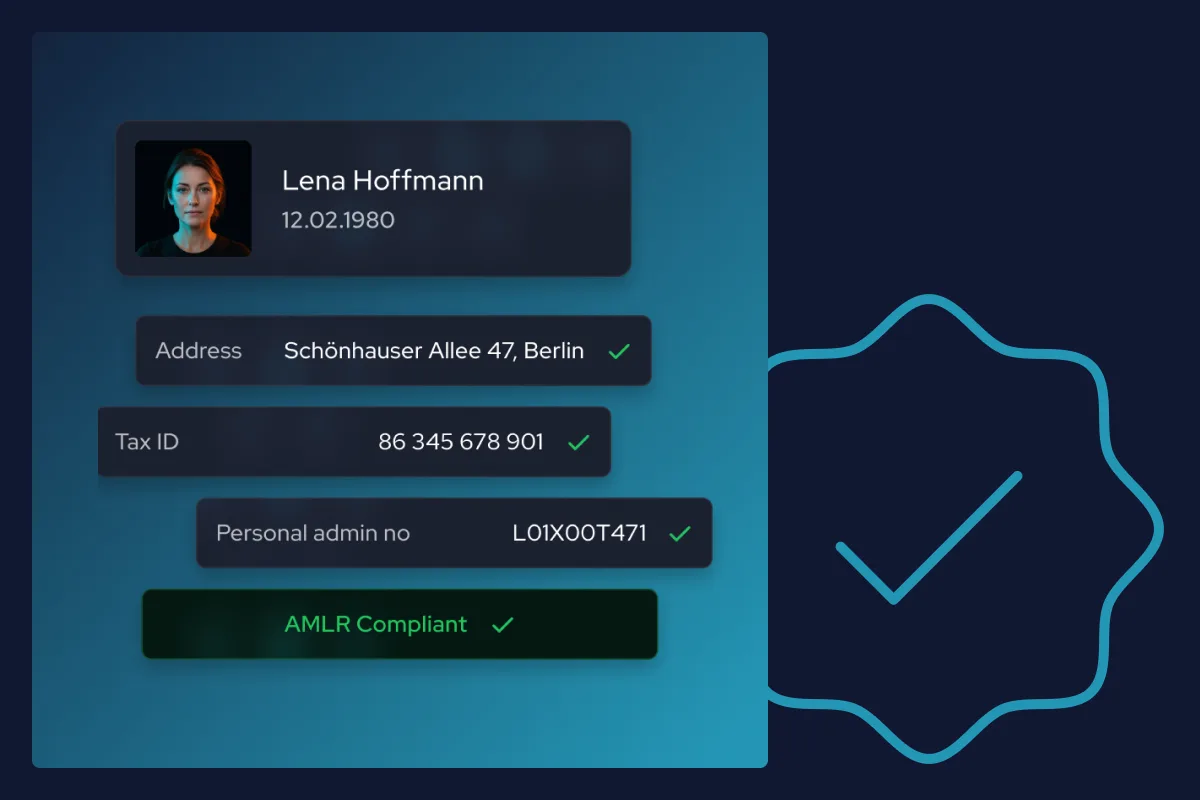
                    Ready to partner with IDnow?

                    Turn faces into trusted identities.

                    Behind every digital interaction is a technical standard working quietly in the background. Here, we explore some of the most important in the digital identity space and explain how they’ll affect how you verify customers very soon.

                    Over the past few years, the European Union (EU) has garnered much attention in its goal to transform how people interact with governments, businesses, and each other online.  

                    Central to its mission is the rollout of the European Digital Identity EUDI) Wallet, a secure, portable digital identity solution set to become the foundation for cross-border services, e-government, and AML-compliant onboarding.  

                    Two regulations in particular, eIDAS 2.0 and the Anti-Money Laundering Regulation (AMLR), are redefining how identity and trust are managed across the EU. 

                    At the core of the transformation lie technical standards developed by the European Telecommunications Standards Institute (ETSI), the European Committee for Standardization (CEN), and the International Organization for Standardization (ISO). These are legally binding through Commission Implementing Regulations (CIRs), which lay the groundwork for secure, interoperable, and compliant digital identity services.

                    For example, earlier this year, IDnow became one of the first companies in Europe to receive certification under the latest ETSI standard for remote identity proofing, signifying a crucial step toward meeting eIDAS 2.0 and AMLD 6 requirements. One of the most important technical standards we achieved was the ETSI 119 461 v2.1.1 certification, which is widely considered the ‘compliance benchmark’ for remote identity verification in Europe.

                    Technical standards ensure interoperability across borders, promote security by design, and create the certainty businesses need to scale.  

                    At IDnow, we’ve championed the EU’s vision for a more harmonized approach to digital identity from the start. Our priority has always been to promote open, secure standards that allow technical innovation to thrive. In a regulatory environment that began shifting from voluntary best practices to mandatory rules, we welcome the clarity and opportunity that harmonized standards bring to the market, to institutions, and above all, to users. 

                    For IDnow’s regulatory and standards department it is important to keep looking ahead to what comes next and how it will affect the everyday lives of people. Standards play a crucial role in ensuring that impact is not only manageable, but truly beneficial. This remains the bedrock of our mission.

                    The Trust Playbook.

                    Discover how top teams from your industry are turning digital identity and trust into growth strategies.​
                    Download now
                    featured image

                    Why standards matter.

                    Behind every digital interaction, such as verifying your identity for bank account opening or digitally signing a contract, there are technical standards working quietly in the background. These standards ensure that systems speak the same language, that data remains secure, and that services can be trusted no matter where in the EU (or beyond) they are used. 

                    Organizations like ETSI, CEN, and ISO play a critical role in setting these benchmarks. They bring together experts from governments, tech companies, and the public sector to define how trust services, digital identity, and secure onboarding should work. 

                    As the EUDI Wallet and new trust services move from concept to implementation, these standards are not just technical specifications or guidelines; they are becoming the legal foundation for the way digital identity is handled across Europe.

                    Laying the foundation for trust.

                    The shift toward standards-driven digital identity and trust services offers better technology and builds a harmonized, secure, and legally enforceable ecosystem across borders. With the EUDI Wallet and the upcoming AMLR, Europe is setting a global precedent in how identity, privacy, and trust should be handled in the digital age. 

                    Standards from ETSI and CEN are already embedded in the first wave of EU’s CIRs and will directly guide how identities are verified, wallets are certified, and trust services are recognized. These aren’t abstract technical documents anymore; they’re becoming the blueprint for how millions of people will access digital services, from banking to healthcare. 

                    What often goes unseen is the deep, ongoing work that makes this possible. At IDnow, our regulatory and standards team has been deeply engaged behind the scenes as we work alongside our colleagues at ETSI, CEN and ISO to shape these standards in a way that balances security, innovation, and practical deployment. It’s this kind of collaboration that enables digital services to scale with confidence and compliance. 

                    More specifically, IDnow has recently contributed to the following standards and technical reports:

                    • ETSI TR 119 476-1. A feasibility study of how selective disclosure and zero-knowledge proofs can be implemented in the EUDI Wallet. IDnow was one of the main contributors to this technical report. 
                       
                    • ETSI TS 119 461: Requirements that define how identity proofing must be performed when enrolling for a Qualified Certificate or a Qualified Electronic Attestation of Attributes. The standard can also be applied to Personal Identification Data (PID) enrollment to the EUDI Wallet and AMLR guidelines. IDnow has been co-editors and contributors to both versions of this standard. 
                       
                    • ETSI TS 119 431: Specifies how remote signing with Qualified Certificates should be deployed in a remote Qualified Signature Creation Device. IDnow designed the new approach to only rely upon identification for one-time Qualified Electronic Signatures, which streamlines the remote signing process. 
                       
                    • CEN TS 18098: Outlines how to onboard PID to EUDI Wallets. IDnow has been co-editors of the chapters related to identity proofing during the on-boarding process.

                    Regardless of whether you’re a wallet provider, financial institution, or public sector authority, now is the time to take a close look at how your internal systems align with these evolving standards. After all, these specifications are not optional; they are rapidly becoming the rulebook for trust in Europe.

                    Read more about the importance of standards and how we’re helping to shape the discussions around global digital trust in our blog, ‘The Borders That Digital Trust Still Can’t Cross… And What It Will Take to Change That.’

                    Want to stay ahead of the regulatory game? Read our recent press release to discover how ‘IDnow sets new standard as one of Europe’s first identity verification providers to meet latest eIDAS 2.0 regulations.’

                    Interested in more insights from our subject matter experts? Click below!

                    • Former INTERPOL Coordinator, and current Forensic Document Examiner at IDnow, Daniela Djidrovska explains why IDnow offers document fraud training to every customer, regardless of sector.
                    • Research Scientist in the Biometrics Team at IDnow, Elmokhtar Mohamed Moussa explores the dangers of face verification bias and what steps must be taken to eradicate it.
                    • Research Scientist at IDnow, Nathan Ramoly explores the dangers of deepfakes and explains how identity verification can help businesses stay one step ahead of the fraudsters and build real trust in a digital world.
                    • Senior Product Owner at IDnow, Christophe Chaput explains why the steps we took to comply with the European Accessibility Act made our solutions better – for all our customers.

                    By

                    Sebastian Elfors
                    Senior Architect
                    Connect with Sebastian on LinkedIn

                    Table of Contents

                    Ready to partner with IDnow?

                    Turn faces into trusted identities.

                    Munich, August 12, 2025 – IDnow, a leading identity verification platform provider in Europe, today announced that several of its flagship products had achieved ETSI 119 461 v2.1.1 certification, the technical standard widely considered the ‘compliance benchmark’ for remote identity verification in Europe. 

                    Developed by the European Telecommunications Standards Institute (ETSI), ETSI 119 461 v2.1.1 was selected by the European Commission as the standard for AML-compliant identity verification for qualified trust services and the upcoming Anti-Money Laundering Regulation (AMLR).

                    The certification was awarded following rigorous testing by the accredited conformity assessment body, QSCert.  

                    Obtaining certification in ETSI 119 461 v2.1.1 establishes IDnow as one of the first providers in Europe to fulfill the stringent biometric and security standards necessary for compliant identity verification in line with evolving European regulations, such as eIDAS 2.0 and AMLD6.  

                    Why this matters for European businesses 

                    With rising threats from deepfakes and increasingly sophisticated types of online fraud, especially in the finance, mobility, and telecom sectors, the ETSI 119 461 v2.1.1 standard outlines a comprehensive European framework for compliant identity verification services, including requirements for presentation attack detection, injection attack detection, and biometric-integrity assurance. 

                    This milestone is not only a technical and security achievement; it is a practical commitment to advancing digital onboarding in the most regulated industries. We’re proud to lead the way in enabling compliant, secure, and user-friendly identity verification across all major digital channels.

                    Armin Berghaus, Founder and Managing Director at IDnow. 

                    What comes next 

                    As one of the first identity verification providers to be certified under the latest eIDAS 2.0 requirements, and the Extended Level of Identity Proofing (LoIP) security standards, IDnow enables customers to adopt a variety of compliant identity verification solutions, each of which fulfill existing and upcoming European regulatory expectations and trust service requirements: 

                    1. Expert-led video identity verification 
                    1. Automated identity verification 
                    1. NFC (Near Field Communication) identity verification 
                    1. Electronic ID card (eID) verification  
                    1. EU Digital Identity (EUDI) Wallet verification (which all EU banks will need to accept by 2027)  

                    All above options are supported by IDnow’s identity verification and fraud prevention platform, which combines certified biometric checks, real-time fraud prevention, and seamless orchestration.  

                    By 2027, all banks that operate in Europe will be required to work with providers that are certified to the ETSI 119 461 v2.1.1 standard, allowing IDnow customers to have peace of mind today that its range of expert-led, automated and wallet-based identity verification solutions meet existing and upcoming EU regulatory requirements. 

                    “This latest certification confirms IDnow’s position as a trusted and future-proof technology partner for regulated businesses across Europe,” added Berghaus. “It represents our intention for IDnow to continue to provide the most flexible and future-proof identity verification and fraud prevention platform for businesses navigating complex European compliance and customer experience demands.”

                    The European Union passes major regulation to allow the private sector to read eIDs via Near Field Communication.

                    In a significant milestone in the evolution of Europe’s digital identity framework, the European Commission has adopted Regulation (EU) 2025/1208, which authorizes private sector companies to access key data stored in the chips of electronic identity documents (eIDs), most notably the bearer’s portrait (DG2) via Near Field Communication (NFC) technology.

                    The regulation, which amends the original Commission Decision 2025/1218, came into force on July 10, 2025. 

                    With NFC, identity verification moves from passive image capture to active chip-based validation, fundamentally transforming how businesses can confirm identities across onboarding journeys.

                    What’s changed and why it matters.

                    Until recently, access to the chip on EU member states’ national ID cards and biometric passports was largely restricted to border authorities. With Regulation 2025/1208 now adopted, private entities can legally read the facial image stored in DG2, provided the holder consents, using NFC technology. 

                    This opens the door to more accurate, secure, fast, and automated identity proofing across industries like financial services, insurance, gaming, telecom, and mobility, without compromising on privacy or regulatory integrity.

                    Let’s break it down: What’s in the chip?

                    eMRTDs (electronic Machine-Readable Travel Documents), such as biometric passports and eID cards, store personal data in a secure chip embedded in the document. This structure follows the globally recognized ICAO 9303 standard, developed by the International Civil Aviation Organization (ICAO), which ensures interoperability and security across international borders. 

                    The chip’s contents are organized into Data Groups (DGs), each designed to hold specific types of information:

                    DG1: Machine-readable zone (MRZ) data (e.g. name, date of birth, document number) 

                    Private sector access? Yes.
                    Use case: Retrieve electronic data from ID holder in secure way.

                    DG2: Biometric facial image (high-resolution portrait of the bearer)

                    Private sector access? Yes.
                    Use case: Biometric match to selfie.

                    DG3: Fingerprint data (accessible only to border and police authorities)

                    Private sector access? No.
                    Use case: Reserved for border and police use only.

                    By reading the encrypted data directly from the chip, IDnow’s NFC-enabled verification confirms the authenticity and integrity of the document and the portrait photo, ensuring the person presenting it is its rightful holder.

                    The Trust Playbook.

                    Discover how top teams from your industry are turning digital identity and trust into growth strategies.​
                    Download now
                    featured image

                    Meet strict regulatory frameworks with confidence.

                    With NFC-enabled verification, businesses can: 

                    • Validate ID authenticity through cryptographic signatures 
                    • Verify the portrait from the chip (DG2) against a selfie or video for liveness detection 
                    • Read DG1 and DG2 simultaneously for cross-checking document and biometric consistency 
                    • Reduce false positives and manual review, accelerating onboarding 

                    NFC-based identity verification isn’t just technically superior, it’s also compliant with both existing and emerging regulations: 

                    • eIDAS 2.0: The EU’s revised digital identity regulation, requiring high-assurance identity proofing methods for Qualified Trust Service Providers (QTSPs), banks, and government services 

                    So, whether you’re serving regulated industries or managing onboarding at scale, NFC verification gives you a future-proof foundation.

                    The IDnow NFC advantage.

                    IDnow’s NFC identity verification is already live and battle-tested across Europe, with tens of thousands of verifications processed every month. 

                    • Available globally: All new passports, residence permits, and national ID cards in the EU include NFC chips. Globally, most passports include this chip by default. In some regions, driving licences and other documents are also adopting chip-based formats. 
                    • Available for mobile app and mobile SDK integrations: Developer-friendly SDKs and APIs make it simple to integrate NFC into existing onboarding flows across platforms. 
                    • UX / speed: Onboarding can be completed in under one minute. Just tap the document. No manual data entry needed. 
                    • Conversion Rate: NFC onboarding shows higher success rates compared to optical scanning, thanks to improved read accuracy and fewer drop-offs. 
                    • Automation Rate: NFC verifications are fully automated, with no need for manual agent review. This accelerates onboarding and scales efficiently. 
                    • Security and data integrity: Cryptographic signature checks detect cloned or forged chips. Data is read with 100% accuracy, straight from the issuing authority.

                    NFC = No barriers to implementation.

                    IDnow’s NFC-enabled identity verification is available and fully compliant today. With Regulation (EU) 2025/1208 adopted, the private sector now has a clear legal foundation to access biometric data, such as the facial image stored on the chip of eID documents, with the user’s consent. This enables immediate integration of NFC verification into onboarding journeys.

                    Forward-thinking organizations that move early can gain a competitive edge by offering faster, more secure, and regulation-ready identity verification. Don’t wait for market-wide adoption, now is the time to optimize your onboarding flows and lead the way.

                    How it works: NFC-powered identity proofing, step by step.

                    So, what happens when a user taps their ID document with their phone? NFC-based identity verification transforms onboarding from a manual, error-prone process into a fast, secure, and fully automated journey. By reading encrypted data directly from the chip, rather than relying on photos or scans, IDnow ensures every verification is accurate, fraud-resistant, and compliant with the latest regulations. 

                    1. Static capture: Capture the document’s MRZ to generate the key and decrypt the chip. 
                    1. NFC readout: Instantly read secure data from the chip. 
                    1. Selfie check: Capture a selfie for biometric face comparison and liveness detection. 

                    Here’s how NFC-enabled verification with IDnow streamlines the entire process, from document tap to trusted onboarding. See just how seamless and user-friendly NFC onboarding can be.

                    Ready to activate NFC?

                    With NFC, identity verification becomes not only faster, but foundationally stronger. The future of onboarding is already in your customers’ pockets. Let IDnow help you unlock it securely, seamlessly, and in full compliance with Europe’s most advanced digital identity framework. 

                    Talk to your Account Manager, Customer Success Manager or contact us to learn how NFC-enabled identity verification can unlock valuable business opportunities.

                    By


                    Suzy Thomas
                    Customer and Product Marketing Lead
                    Connect with Suzy on LinkedIn

                    Table of Contents

                    Ready to partner with IDnow?

                    Turn faces into trusted identities.

                    New CFO, CPTO, CCO, and Board Advisor join to scale IDnow’s trust-driven ecosystem across global markets.

                    London, July 9, 2025 – IDnow, a leading identity verification platform provider in Europe, today announced the appointment of three senior executives and a new board advisor, marking a significant step forward in its global expansion. The new additions to its leadership team reaffirm IDnow’s mission to bring AI-powered identity verification technologies to market— establishing trust as the most valuable asset in the digital world. 

                    The appointments include Andreas Maueröder as Chief Financial Officer, Daniel Keller as Chief Product and Technology Officer, Phil Allen as Chief Commercial Officer, and Cassio Sampaio as Board Advisor. Together, they have a proven track record of driving growth, bringing decades of combined leadership across finance, cybersecurity, identity technology, and business transformation. These appointments reflect IDnow’s sharpened focus on building a scalable, intelligent trust ecosystem for businesses navigating an increasingly complex digital world.

                    Executive leaders to match bold ambitions

                    • Andreas Maueröder, CFO, brings over 20 years of international finance and leadership experience. After roles at EY, PwC, and Schörghuber Group, he joined zooplus in 2010, where he advanced to CFO and drove pan-European growth. Andreas brings a wealth of experience in operational excellence, sustainable value creation, and building high-performing teams in both private equity and public market environments. 
                    • Daniel Keller, CPTO, brings over two decades of experience at the intersection of product, technology, and business transformation. He has held senior leadership positions at Microsoft, Axel Springer, Scout24, Visable, and most recently, Onfido. A pioneer in applying AI and Machine Learning to build intelligent, scalable platforms, Daniel brings a bold vision for accelerating innovation and building future-ready organizations. 
                    • Phil Allen, CCO, brings more than 25 years’ experience in digital identity, cybersecurity, and fraud prevention, holding senior roles at Transmit Security, CA Technologies, and BMC Software, and having led EMEA growth as VP at Ping Identity. He brings a strong track record in scaling customer-centric, cloud-native solutions, and joins IDnow to transform trust into a core enabler of secure, scalable growth.

                    Our mission to build a future-proof digital identity ecosystem demands bold and accomplished leadership. As we evolve beyond identity verification into powering intelligent trust at every step of the customer journey, I’m excited to welcome Andreas, Daniel, Phil, and Cassio. Each of them brings unique strengths that will help IDnow shape the next chapter of digital identity — one grounded in trust, security, and continuous innovation.

                    Andreas Bodczek, CEO of IDnow

                    Former Auth0 (Okta) CPO joins as Board Advisor

                    In addition to strengthening its executive team, IDnow has appointed Cassio Sampaio as a Board Advisor. Cassio is the former Chief Product Officer at Auth0 (now part of Okta) and has held leadership roles at Apple and DigitalOcean, bringing deep expertise in identity, product innovation, and scaling SaaS platforms globally.  

                    “The world of identity and trust is developing very rapidly and IDnow is well positioned to take center stage in helping enterprises navigate these changes,” said Cassio Sampaio. “I look forward to working with the team and supporting the incredible opportunities that lie ahead.”

                    A new vision for identity in a digital-first world

                    Earlier this year, IDnow unveiled its revitalized vision to power a future where trust is seamlessly embedded into every digital interaction. Moving beyond one-time identity checks, the company now helps the world’s leading enterprises establish, maintain, and enrich trust across the entire customer lifecycle. 
                     
                    With fraud growing more sophisticated and compliance pressures intensifying, organizations need solutions that go beyond static KYC checks. IDnow delivers proactive, real-time risk detection across multiple touchpoints, making identity a strategic asset—not a regulatory checkbox. 
                     
                    Founded in 2014, IDnow has become a cornerstone of the digital identity landscape across Europe. Its technology simplifies risk management, cuts through regulatory complexity, and delivers seamless, user-focused experiences. Now, as the company brings its renewed vision to life, IDnow is shaping the next generation of identity verification — helping businesses navigate complex, evolving risks in today’s global digital economy.

                    From wax seals to biometrics, we explore the past, present and future of identity verification.

                    Verifying your identity used to be simple: you just had to sign your name and if you couldn’t write, mark an ‘X’. A simple and far from rigorous process – certainly one that wouldn’t pass today’s Know Your Customer rules or fly in today’s strictly controlled and regulated environments.  

                    It’s safe to say that we’ve come a long way since signatures and wax seals, but the purpose of identity verification has remained consistent throughout history: to distinguish between individuals, establish trust, and allocate rights or responsibilities. 

                    At IDnow, we’re obsessed with everything identity, and as one of the Heads of Product at IDnow, I’m particularly fascinated with the different ways in which we consciously and subconsciously identify ourselves. 

                    For example, did you know that modern security cameras are now able to identify someone based on how they move? Siri, Alexa and Google Assistant don’t just listen to words — they analyze the frequency and rhythm of a voice to decide if it’s really the user and whether to provide the user profile’s private data. 

                    Plus, fun fact: due to its unique shape, texture, and vein pattern, the human tongue could, theoretically, be used for personal identification. In fact, as a biometric identifier, a tongue can be as accurate as a fingerprint or iris. The main barriers to adoption include hygiene concerns, user discomfort, and technical challenges in consistent imaging. However, it’s perhaps only a matter of time until Apple devises a way to scan my tongue as I speak into my iPhone… 

                    There has also been research into the viability of using brain reactions to stimuli (e.g. flashing lights or sounds) as biometric identifiers as brain signal patterns are nearly impossible to fake. 

                    At IDnow, we’re also fascinated with the future of digital identity verification. But before we look ahead, let us first investigate the history of identity verification.

                    The Trust Playbook.

                    Discover how top teams from your industry are turning digital identity and trust into growth strategies.​
                    Download now
                    featured image

                    8 milestones in the history of identity verification.

                    1. Pre 3000 BC: It can be assumed that as people in small tribes and communities tended to all know each other, no formal documentation was ever needed. Recognition was based on appearance, voice, posture, or habits. Tattoos, scars, or tribal markings were, however, used to signify group identity or status. 
                    1. 3000BC to 300AD: Alongside the birth of larger civilizations like Mesopotamia, Egypt, and Rome came written records. Population registries (some found on stone tablets), often tied to occupation, parentage, or land ownership, date back to 3000BC. 

                      Ancient Rome used written census rolls to verify citizens for taxation and military service purposes. Local scribes with local knowledge would often be used as the first level of identity verification. It was also during this period when individuals started to use engraved rings or stamps to validate their identity or to press into wax seals to authenticate documents.  
                    1. 300 to 1500: References to letters permitting travel through Persian territories, (which many consider to be the first passport) were found from the 5th century. By the 15th century, official documents called “safe conducts” were used by the British Empire to allow subjects to travel abroad safely. Passports soon followed providing official identification for travel purposes. 
                    1. 1500 to 1800: In the early modern period, signatures started to become used as the legal mark of a personal identity, especially in the agreement of contracts. 
                    1. 1800 to 1900: By the industrial age, identity records were centralized and state-backed with various governments forming civil registries. Photos began appearing on official documents and fingerprints were being used to identify individuals. The first documented use of fingerprint analysis occurred in 1892 in Argentina to prove a murder case. 
                    1. 1900 to 1990: Birth certificates and Social Security Numbers started to become standard across most nations whilst driving licenses and passports became the most common identity documents. Other countries introduced national identity cards. Even, as I recently discovered whilst sorting through items at my mother’s house, my grandmother. Of course, the UK has always had a very different approach to identity verification.

                      By the late 20th century, we started to see a shift from recognition to authentication. Biometrics, including fingerprints, facial features, and retina scans were introduced to gain access to high-security environments. The first retina scan was used in 1984 to enter secure US government facilities.
                    1. 1990 to 2013: The digital age was the period when identity became portable. Usernames and passwords became the norm to access online services, and email and social media accounts became informal identity layers. This was also when digital signatures and encryption were first used in official documents.

                      In 2013 we saw the introduction of the iPhone Touch ID, which brought biometrics into mainstream consumer technology. (Face ID would follow in 2017.) Unfortunately, fraudsters were not far behind and shortly after the introduction of these innovative methods of identity verification came an increase in fraudsters using creative ways to hack digital services. 

                      In 2014, IDnow was founded in Munich, Germany and launched its flagship product, VideoIdent. Our expert-led video identity verification service was considered revolutionary at the time as it enabled organizations to offer the same legal equivalency as an in-person identity verification and had just been allowed by the German Federal Financial Supervisory Authority (BaFin). 
                    1. 2014 to 2024: During this decade, a variety of identity verification and digital signature solutions were added to the IDnow portfolio, including the AI-supported, fully automated AutoIdent identity verification solution. 

                      In 2021, IDnow acquired the French market leader for identity verification technology, ARIADNEXT, and the German provider identity Trust Management AG, establishing us as one of the largest European players in the identity industry. It was during this decade that industries at large adopted automated identity verification. From scanning passports at airports to unlocking phones and accessing apps, the public now uses sophisticated AI and biometrics to validate their identities daily. They use smart watches to track biometric signals, and have become used to increased security measures, such as multi-factor authentication.

                    What’s coming next? 2025 – 2035. 

                    Here are just a few trends that we’re likely to see soon in the identity space. Many organizations will start to focus on integrating self-sovereign identity into their platforms, where the individual owns their own data and identity is delivered through decentralized systems, such as blockchain. Here, data is shared only on a need-to-know basis. A great user experience if you want to prove your age without sharing your date of birth, for example. 

                    Regulation will continue to evolve around access to data stored on NFC (Near-Field Communication) chips, which are often embedded in ID cards and documents. In the past, access to this data tended to be restricted to government agencies. 

                    There is also an industry-wide drive toward improving customer experience, especially with regards to reducing authentication time. This will likely become easier and more widespread as individual governments and industries start to issue digital identity credentials that can be stored in a digital wallet. 

                    We are also seeing the growth of cross-border & global interoperability through emerging global standards like W3C Verifiable Credentials and ISO 18013-5 for mobile IDs. Projects including eIDAS 2.0 in the EU aim to make digital identities and digital wallets usable across multiple countries, while the upcoming Anti-Money Laundering Regulation will set out what methods of identity verification will become compliant in the near future.

                    The future of identity verification. 

                    As the market evolves at lightning speed, the businesses of tomorrow will need more than basic verification, they’ll need trust solutions that are continuous, intelligent, and built to scale. To succeed in the future, businesses will need to stay ahead of regulatory changes, outsmart new fraud threats, and deliver standout customer experiences. 

                    At IDnow, our mission is simple: we’re not just another service provider. We’re a trusted partner in identity orchestration. Powered by AI and delivered through our robust SaaS platform, we help businesses navigate the digital landscape with confidence. From seamless identity verification and real-time fraud prevention to adaptive compliance, we ensure trust is woven into every transaction and every interaction. 

                    Looking ahead, one thing is clear: trusted identity verification will drive every successful strategy, every smooth transaction, and every enduring customer relationship.  

                    At IDnow, we’re here to make sure you’re ready for that future.

                    Interested in more insights from our subject matter experts? Click below!

                    • Former INTERPOL Coordinator, and current Forensic Document Examiner at IDnow, Daniela Djidrovska explains why IDnow offers document fraud training to every customer, regardless of sector.
                    • Research Scientist in the Biometrics Team at IDnow, Elmokhtar Mohamed Moussa explores the dangers of face verification bias and what steps must be taken to eradicate it.
                    • Research Scientist at IDnow, Nathan Ramoly explores the dangers of deepfakes and explains how identity verification can help businesses stay one step ahead of the fraudsters and build real trust in a digital world.
                    • Senior Architect at IDnow, Sebastian Elfors explains how technical standards are moving from technical guidelines to legal foundations — and what that means for banks, fintechs, wallet providers, and every European citizen.

                    By


                    Jonathan Underwood
                    Head of Product at IDnow
                    Connect with Jonathan on LinkedIn

                    Table of Contents

                    Ready to partner with IDnow?

                    Turn faces into trusted identities.

                    London, July 3, 2025  – IDnow, a leading identity verification platform provider in Europe, today announces its strategic partnership with Keyless, a leader and pioneer in privacy-preserving biometric authentication, signifying a significant step in the future of digital identity security.

                    This collaboration integrates IDnow’s robust range of identity verification and digital signature solutions with Keyless’ biometric multi-factor authentication technology. Organizations can now enroll customers with IDnow and authenticate them with Keyless, introducing the concept of Continuous Trust. When a high-risk action occurs – like changing personal details or recovering an account – the biometric Keyless captures for authentication is matched against the biometric IDnow captured during signup.

                    In an era where digital interactions are increasingly susceptible to sophisticated threats, such as deepfakes and AI-driven fraud, the need for seamless and secure digital identity has never been more critical. IDnow’s commitment to embedding trust at every stage of the digital experience aligns seamlessly with Keyless’ innovative approach to biometric authentication, which ensures user privacy by eliminating the need to store biometric data.

                    Trust is no longer a one-time checkpoint but a continuous process. Our partnership with Keyless enhances our ability to fight emerging fraud typologies amid a rapidly evolving regulatory landscape, ensuring that digital identities remain secure and trustworthy throughout their lifecycle.

                    Andreas Bodczek, CEO of IDnow

                    Keyless delivers multi-factor authentication in under 300 milliseconds by checking both the user’s face and their device was the one used during enrollment. It combines this with a unique cryptographic approach that transforms all biometric data into a non-PII format, guaranteeing user privacy. By layering privacy-first authentication from Keyless with IDnow’s flexible verification capabilities, organizations gain a future-ready solution that evolves with new threats, user behaviors, and regulatory demands.

                    One of the biggest questions we get is whether users need to enroll twice – with the IDV and with Keyless. Until recently, the answer was yes. But what’s pivotal about the partnership with IDnow is that we can silently enroll users into Keyless during the IDnow verification flow. It’s a game changer for reducing friction.

                    Fabian Eberle, COO and Co-founder of Keyless

                    This partnership is particularly significant for industries where security and compliance are paramount, such as banking, fintech, and healthcare. By integrating technologies, IDnow and Keyless offer a scalable, intelligent trust framework that not only meets current regulatory standards but is also adaptable to future challenges.

                    So, you’ve decided to integrate digital signatures into your tech stack, but don’t know where to start. Here we help you understand the difference between an SES, AES and QES, and the importance of a QTSP.

                    There are many reasons why forward-thinking organizations are choosing to integrate digital signature solutions into their tech stack, but perhaps the most obvious is that digital signatures just work – incredibly well, for businesses and users, across most industries. 

                    In fact, usage is increasing by the day and will almost certainly continue to climb as per the collective driving forces – and adoption pushes – from eIDAS 2.0 and the upcoming Anti-Money Laundering Regulation. 

                    Not all signatures are created equally.

                    Although the purpose of a digital signature is relatively straightforward (linking a signer to a document), there are different types with different levels of security and legal assurance. Businesses tend to offer one of either Simple Electronic Signatures (SES), Advanced Electronic Signatures (AES) or Qualified Electronic Signatures (QES) depending on the particular use case required. 

                    But which solution is right for you and your customers? Here we explain everything you need to know about making the most out of digital signatures in 2025.

                    Digital certificates vs digital signatures. What’s the difference?

                    The relationship between a digital certificate and a digital signature is fundamental to how trust and authenticity are established in digital transactions. According to eIDAS, a digital signature is defined as “data in electronic form that is attached or logically associated with other data in electronic form, and which is used by the signatory to sign.” A digital signature performs three core functions:

                    • Authenticity: Confirming the identity of the signer. 
                    • Integrity: Ensuring the document has not been changed after signing. 
                    • Non-repudiation: Preventing the signer from denying they have signed the document.

                    A digital certificate is an electronic document that links a person’s or entity’s identity with a cryptographic key pair made up of a public key and a private key. It is issued by a trusted entity, such as a Qualified Trust Service Provider (QTSP). 

                    When someone signs a document digitally, they use their private key to create the signature, and the recipient uses the sender’s public key to verify it. As only the signer has access to their private key, it is almost impossible for someone else to forge the signature or for the signer to claim they did not sign. The digital certificate provides the assurance that the public key belongs to the sender.

                    Expert guide to digital signatures.

                    As the world shifts from physical to online, digital signatures will be essential in ensuring trust and authenticity in transactions. Check out this handy guide to discover the history of signatures and how digital signatures can be used to unlock valuable business opportunities.
                    Download now
                    Expert guide to digital signatures

                    5 considerations to help you select the right digital signature solution.

                    1. Regulatory requirements? What level of signature does your industry regulation require for your specific transaction type? 
                       
                    1. What is the transaction value? Higher-value transactions generally warrant stronger signature types (AES or QES). 
                       
                    1. Risk profile? Consider the potential for fraud or dispute in the specific transaction context. While QES comes with an inherent scheme of storing proofs of a transaction, AES and SES require companies to record an audit trail of their own. 
                       
                    1. User experience priorities? What experience do your customers expect? Speed, security or a balance of the two? 
                       
                    1. Budgets and deadlines? Although neither is likely to be the deciding factor as to why organizations would choose one solution over the other, SES and AES can typically be implemented quicker than QES solutions, while SES are considerably cheaper to implement.

                    Here’s how we integrate digital signature solutions.

                    So, now you have a good idea of which IDnow digital signature solution is right for you. Next let’s explore our different implementation options.  

                    We understand that implementation flexibility is critical for businesses at different digital maturity stages, which is why we offer multiple integration options. We also offer a hybrid approach, where organizations can embed different integration methods across channels based on specific needs and technical capabilities.

                    API integration.

                    For organizations seeking seamless integration with existing systems, IDnow provides comprehensive APIs and SDKs that enable: 

                    • Direct embedding within existing applications and workflows 
                    • Customization of the user interface to match brand identity 
                    • Real-time status updates and event notifications 
                    • Automated document processing and storage 

                    Web-based solution.

                    For rapid deployment without extensive development resources, IDnow offers web-based solutions that provide:

                    • Quick implementation with minimal IT involvement 
                    • Secure document transmission and storage 
                    • Branded customer experience 
                    • Detailed reporting and analytics 

                    Mobile SDK.

                    For businesses prioritizing mobile experiences, IDnow’s mobile SDK enables:

                    • Native integration within iOS and Android applications 
                    • Offline signing capabilities 
                    • Device-based biometric authentication 
                    • Optimized mobile user experience 

                    Our digital signature solutions also seamlessly integrate with your Customer Relationship Management, Enterprise Resource Planning, and document management systems to transform digital signing from a standalone feature into a core component of your business processes. This drives efficiency, accuracy and compliance, and provides a superior user experience.

                    Why IDnow? Trusted, accredited digital signature solutions for the future.

                    Customers that choose IDnow will benefit from streamlined procurement and contractual simplicity by receiving both identity verification (from automated to video verification and  eID) and trust services from a single, unified process with a trusted vendor. 

                    As the joint venture partner of IDnow Trust Services AB – a Qualified Trust Service Provider (QTSP), IDnow undergoes rigorous audits and assessments to prove we meet the highest standards for security, data protection, and operational reliability. We are also listed on official trust lists, such as the EU Trusted List, which is a clear commitment that we take our customers’ security and compliance seriously.  

                    Plus, as accredited vendors are required to stay up to date with the latest legal and technological requirements, IDnow customers can rest assured that their digital signature solution integration will remain compliant whenever laws change, which reduces the burden on their internal teams to constantly monitor and adapt to regulatory shifts. 

                    Digital signatures are no longer just nice-to-haves, they’re essential for modern business. In fact, recent analysis shows that adopting e-signatures helps businesses close deals 28% faster, cut costs by 26%, and boost revenue by 19%. The real question isn’t if you should integrate digital signatures, but when. 

                    Ready to take the next step and enable your customers to sign on the digital dotted line? Our team is here to help.

                    By

                    Jody Houton
                    Senior PR & Content Manager at IDnow
                    Connect with Jody on LinkedIn


                    The Trust Playbook.

                    Discover how top teams from your industry are turning digital identity and trust into growth strategies.​
                    Download now
                    featured image

                    Presentation attacks and deepfakes pose more than just technological threats — they challenge the very foundation of trust that powers every online interaction. Thankfully, IDnow remains dedicated to offering the industry’s most dynamic defense system against AI-generated attacks.

                    Although face verification has become an affordable and efficient way to authenticate user identities, it remains a vulnerable part of the identity verification process and highly susceptible to fraud attacks.  

                    Businesses that wish to protect themselves – and their customers – from the increasingly tech-savvy fraudster must ensure they leverage the latest technologies, including liveness detection, to stay one step ahead. If they don’t, they run the risk of joining the growing list of European companies that lose millions in attacks every year.  

                    IDnow continually enhances its face verification and liveness detection capabilities — not as isolated features, but as integral components of our comprehensive trust ecosystem.  

                    Interested in how IDnow has been working to mitigate skin tone bias in face verification systems? Read our blog, ‘A synthetic solution? Facing up to identity verification bias.’

                    Fraud Prevention & Security

                    Stop Fraud before it starts.
                    Protect every interaction with advanced biometrics, AI-driven detection, and real-time risk signals—so you stay one step ahead of fraudsters and build lasting trust.

                    Cut fraud losses, reduce manual reviews, and protect your brand reputation—at scale.

                    Regulatory Compliance

                    Turn compliance into confidence.
                    Navigate complex regulations with ease—from KYC and AML, to eIDAS 2.0, with certified solutions, built-in audit trails, and qualified trust services that scale with you.

                    Reduce regulatory risk, avoid costly penalties, and accelerate go-to-market in new regions.

                    Customer Experience & Conversions

                    Frictionless journeys that drive results.
                    Deliver intuitive, secure, and inclusive customer experiences—powered by advanced AI and tailored to real-world user expectations.

                    Boost conversion rates, build brand loyalty, and reduce abandonment.

                    Operational Efficiency & Digitization

                    Work smarter, not harder.
                    Streamline your processes with automation, intelligent document handling, and centralized identity management—all designed to reduce complexity and eliminate inefficiencies.

                    Save time, lower costs, and focus on driving innovation and growth.

                    Scalability & Flexibility

                    Built to grow with you.
                    Adapt seamlessly to changing demands with modular solutions, flexible integrations, and global scalability—designed to fit your business, no matter the size or market.

                    Handle peak volumes effortlessly, expand into new regions faster, and stay future-ready.

                    What is liveness detection?

                    Liveness detection leverages biometric characteristics, such as facial features or fingerprints, to detect whether the presented subject is a living person. In the case of remote face verification, it ensures the captured digital image features a real face.  

                    Liveness detection also flags so-called ‘unreal faces’, which fraudsters present during the selfie submission stage of face verification. In these presentation attacks, fraudsters present printed photos, videos on monitors, or even t-shirts or personalized hygienic masks in front of the recording device. 

                    Liveness detection should also protect against new attack vectors, including those that use invisible noise and patterns to camouflage the attack. The attacker may also choose to exploit capture conditions, such as backlighting, to make detection more difficult. 

                    While presentation attacks have been known to unlock mobile devices, they also pose significant risk during the face verification steps of identity verification and KYC processes. It is for this reason that businesses must ensure they have a robust identity verification process that includes liveness detection, presentation attack detection (PAD), injection detection, and deepfake detection.

                    How does presentation attack detection (PAD) work?

                    Thankfully, presentation attacks do leave clues that can be identified by liveness experts, such as moiré patterns (interference patterns that can be subtle and take many forms, such as color alteration, face deformation, or unnatural motion) that appear when recording a screen.  

                    Well-crafted attacks can be difficult to identify by the human eye, but thanks to the rise of deep learning-based AI, PAD is becoming more effective. Trained on massive volumes of data, those models can detect subtle clues and anomalies. Some can point out invisible patterns, while others can detect unusual textures in image patches. Researchers have also managed to detect infinitesimal face color variations due to blood pulsation.  

                    PAD has improved dramatically in both usage and accuracy over the years and remains an incredibly important area for online fraud prevention. To keep up to date with industry developments and reinforce our detection capabilities, IDnow regularly participates in initiatives like the SOTERIA project and research papers like the ‘A Novel and Responsible Dataset for Face Presentation Attack Detection on Mobile Devices,’ which was presented at the IJCB 2024 conference.

                    Nathan Ramoly uses deepfake technology.
                    Nathan Ramoly shows how easy it is to create a deepfake.

                    Deepfakes and the double edge sword of AI.

                    While artificial intelligence has enabled new fraud detection capabilities, it has also proven a powerful tool for attacking KYC systems using deepfakes (AI-generated or heavily modified faces).  

                    In the not-too-distant past, the creation of deepfakes was only able to be done by experts, but now, thanks to easy-to-use multiple websites and apps, even those with little technological expertise can generate deepfakes in just a few seconds. 

                    There are three main categories of deepfakes: 

                    • Generated faces: Using Generative AI, the attacker creates a face to resemble the target or creates a whole new fake identity.  
                    • Face reenactment: The attacker acquires a picture of a target’s face, typically from social media, and uses AI to animate the image; adding motion to a static picture to create a fake video from a single photo. 
                    • Face swap: Here, the attacker acquires a picture of the target’s face and performs a capture of themself. They then upload both images to a deepfake tool that will extract the biometric traits of the target and modify the attacker’s face in a new capture that resembles the target. 

                    Once generated, fraudsters inject deepfakes into the KYC process through ‘virtual cameras,’ where images are presented as regular selfies. Sophisticated deepfakes mimic actual capture sessions, with natural motion, lighting and texture that does not deform the face. As such, deepfakes can bypass both face verification and PAD, which makes the business case for implementing robust liveness detection even more compelling. 

                    To address the complexity of threats posed by deepfakes, we combine our proprietary AI-based detection technologies, including liveness detection, with solutions from our trusted partners. This hybrid approach enables us to offer a powerful and adaptive fraud prevention system that complies with European regulations, without compromising the user experience and appetite for smooth and secure onboarding experiences.

                    How IDnow’s liveness detection works.

                    Our liveness detection technology features three separate checks: 

                    • Presentation attack detection to flag when living faces are replaced by other media, such as pictures or masks. 
                    • Injection attack detection to prevent the injection of harmful code or commands into an application, database, or other system.  
                    • Deepfake detection to detect face alteration crafted by advanced AI.

                    Facing up to the future of liveness attacks.

                    As the ability to detect deepfakes improves, we can expect new types of attacks to emerge, especially adversarial attacks, which aim to exploit new-found weaknesses in AI models.  

                    By seamlessly integrating our proprietary AI-driven liveness detection with complementary technologies from our trusted partner network, we’ve created a dynamic defense system that anticipates and neutralizes emerging threats before they can compromise security. 

                    Plus, our commitment extends beyond our current capabilities. We’ve positioned our platform to evolve continuously, ensuring that as deepfake technologies advance, our detection and prevention mechanisms remain at the forefront of innovation. In doing so, we enable businesses to build lasting customer relationships founded on unshakeable trust, regardless of how the threat landscape transforms. 

                    In this new era where digital identity verification faces unprecedented challenges, IDnow stands as the trusted European leader in identity verification technology, empowering businesses to turn potential vulnerabilities into competitive advantages through intelligent, adaptive and continuous trust management.

                    Interested in more ‘Lessons From’ our subject matter experts? Click below!

                    • Research Scientist in the Biometrics Team at IDnow, Elmokhtar Mohamed Moussa explores the dangers of face verification bias and what steps must be taken to eradicate it.
                    • Research Scientist at IDnow, Nathan Ramoly explores the dangers of deepfakes and explains how identity verification can help businesses stay one step ahead of the fraudsters and build real trust in a digital world.
                    • Senior Product Owner at IDnow, Christophe Chaput explains why the steps we took to comply with the European Accessibility Act made our solutions better – for all our customers.
                    • Chief Security Officer at IDnow Trust Services, Sebastian Elfors explains how businesses can use ETSI, AMLR and eIDAS 2.0 standards as their competitive advantage.

                    By

                    Nathan Ramoly
                    Research Scientist, Biometrics Team
                    Connect with Nathan on LinkedIn

                    Table of Contents

                    Ready to partner with IDnow?

                    Turn faces into trusted identities.

                    We explore how leading companies from your industry are already using digital signatures to unlock valuable business opportunities, and how IDnow’s full suite of solutions can help you catch up.

                    Digital signatures have become an integral part of daily operations. 

                    Whether to execute simple service agreements or authenticate high-value transactions, increasing numbers of companies from every industry – from financial services to telecommunications – are now asking their customers to sign on the [digital] dotted line.  

                    Global e-signature transactions have actually soared from 198 million to over 4.7 billion in just five years, clearing showing how organizations are embracing more efficient, secure and compliant ways to manage documents. 

                    However, as regulations like eIDAS 2.0, Anti Money-Laundering Regulation and AMLD 6 come into force, choosing the right type of digital signature is becoming just as important as using one at all. While Simple Electronic Signatures (SES) provide a fast and frictionless option and are ideal for high-volume scenarios, Advanced Electronic Signatures (AES) and Qualified Electronic Signatures (QES) offer greater legal assurance, authentication or identification, and cross-border recognition, which are particularly critical for regulated sectors. 

                    Delaying the move to SES, AES or QES, or choosing the wrong digital signature solution, could expose your business to compliance risks and inefficiencies. Now is the time to act. 

                    IDnow is expanding its digital signature offering by adding SES and AES to our existing QES solution. Combined with built-in identity verification capabilities, our digital signature solutions help you not only establish the authenticity of a user’s identity but also confirm that the individual signing is the rightful owner.

                    To discover which digital signature solution is right for you, check out our blog, ‘From SES to QES: Everything your business needs to know about digital signatures in 2025’.

                    Top 10 reasons why digital signatures are critical for business success.

                    Digital signatures can massively improve business efficiency by reducing costs and improving conversions, but that’s not all. Here are the top 10 reasons why businesses like yours are integrating digital signatures into their tech stack.

                    1. Improved ROI: By eliminating the need for paper, digital signatures can slash operational costs and reduce administrative overhead, allowing staff to focus on the more important, higher-value tasks.
                    2. Every signature saves: Although there are considerable price differences between SES, AES and QES, digital signatures can reduce contract execution by 70-90%. For example, when factoring in the costs associated with printing and paper, mailing, archiving, labor time and error correction, a manual, wet ink signature could cost up to €30, whereas even the highest legal assurance QES is available at a mere fraction of that cost and the AES and SES options are even more affordable.
                    3. Faster sales cycles: Digital signatures enable contracts and agreements to be signed and returned within minutes, regardless of location. This streamlined approach shortens sales cycles and enables businesses to start generating revenue quicker.
                    4. Scale sustainably: Of course, accelerated deal closures also allow businesses to process a higher volume of documents and grow their customer base without needing to proportionally increase staff or administrative overhead.
                    5. Regulatory coverage: As AES and QES are legally recognized throughout the European Union under the eIDAS regulation, it allows organizations to conduct business seamlessly across borders, sign contracts with international partners, and comply with local laws. Plus, considering one of the main aims of new and emerging regulatory frameworks like eIDAS is to standardize digital signature usage across member states, it will also drive adoption and boost user confidence.
                    6. Security: Digital signatures ensure the authenticity and integrity of documents, so are a great way to secure sensitive information and protect against fraud attacks and data breaches.
                    7. Future-proof accreditation: If you choose an accredited vendor like IDnow, which is a joint venture partner of the Qualified Trust Service Provider (QTSP), IDnow Trust Services AB, then you can rest assured that your digital signature solution integration will remain compliant even as laws change. Plus, all relevant evidence data will remain archived.
                    8. Environmental benefits: As digital signatures eliminate paper wastage, organizations that integrate digital signature solutions can reduce their carbon footprint and significantly bolster corporate social responsibility efforts.
                    9. Cross-industry/ regional collaboration: Industries are now collaborating more than ever (e.g., healthcare and insurance, financial services and e-commerce), making the need for interoperable solutions like digital signatures essential for optimal business performance, not only in different countries, but in different industries.
                    10. Superior customer experience: Whatever’s good for the customer is ultimately good for the business, as happy customers are loyal customers that can help build brand reputation and drive word-of-mouth growth. Digital signatures offer unparalleled convenience and accessibility, enabling users to register, transact or authenticate within a matter of seconds.

                    In 2025 and beyond, digital signatures should be considered as much more than mere authentication tools. Digital signatures should be seen as sophisticated trust mechanisms that ensure document integrity, verify authenticity, and provide irrefutable proof of transaction legitimacy

                    Uwe Pfizenmaier, Product Director at IDnow and Registration Officer at IDnow Trust Services AB

                    How digital signatures can unlock opportunities in your industry.

                    Forward-thinking organizations from industries such as financial services, mobility, insurance, HR, telco, retail and e-commerce, real estate, and the public sector are all integrating digital signatures into their trust architecture to strengthen security postures, streamline customer experiences, and create resilient trust ecosystems capable of adapting to the digital challenges of tomorrow.  

                    Here’s how competitors from your industry are currently using digital signatures:

                    Financial services.

                    Financial institutions face a unique challenge: delivering seamless customer experiences while ensuring full compliance with regulations like Know Your Customer (KYC), eIDAS 2.0, GDPR, and the upcoming AMLR. Common digital signature use cases within the financial services industry include:

                    • High-value loans and mortgages.

                    IDnow’s QES provides the highest level of legal assurance for significant financial commitments, ensuring compliance with regulations.

                    How it works: Once both parties read the relevant documents and the signer’s identity is verified, the signer applies their digital signature, which is then cryptographically linked to the document and locked to prevent changes. A tamper-evident seal is then generated to create an audit trail that records every action and ensures transparency and legal admissibility.

                    • Account opening [AES] 
                    • Cross-border transactions [AES] 
                    • Credit card loan contract [QES]

                    Mobility.

                    Mobility services require flexible digital signature solutions that work seamlessly across devices and locations, and are crucial for contracts, rentals and compliance. Common digital signature use cases within the mobility industry include:

                    • Short-term rentals and car sharing.

                    IDnow’s AES balances security with convenience, allowing users to quickly complete transactions while providing operators with strong identity verification.

                    How it works: After the mobility provider verifies the identity of all signatories, the lease agreements and related documents are uploaded to a secure digital platform. Once ready to sign, each party is authenticated and signers apply their digital signature, which is securely linked to the document. A complete audit trail is then generated, and a tamper-evident seal is added to the document, ensuring it cannot be altered post-signature.

                    • Service updates and policy acceptances [SES] 
                    • Long-term lease agreements [QES] 
                    • Vehicle leasing and financing [AES] 
                    • Ride-sharing and rentals [AES]

                    Telecommunications.

                    Telecom providers offer digital signature solutions to streamline customer acquisition and policy changes, and as a method of fraud prevention. Common digital signature use cases within the telecommunications industry includes:

                    • Plan changes and upgrades.

                    IDnow’s SES offers a streamlined experience for existing customers making modifications to their services.

                    How it works: After the telecom provider generates a digital document outlining the new plan details, terms, and associated costs or commitments, the customer reviews the document and confirms the changes by applying a digital signature — typically by clicking to sign. The document is then locked, and a digital audit trail is created, recording the time, date, and method of signature.

                    • ‘High value’ service activation [AES] 
                    • New service contracts [AES] 
                    • Phone exchange [AES] 
                    • Mobile phone financing [QES]

                    Expert guide to digital signatures.

                    As the world shifts from physical to online, digital signatures will be essential in ensuring trust and authenticity in transactions. Check out this handy guide to discover the history of signatures and how digital signatures can be used to unlock valuable business opportunities.
                    Download now
                    Expert guide to digital signatures

                    Insurance.

                    The insurance sector relies heavily on digital signatures to streamline policy issuance and claims processing. Common digital signature use cases within the insurance industry includes:

                    • Customer consent forms [SES] 
                    • Renewals and endorsements [SES] 
                    • Policy issuance [AES] 
                    • Claims processing [AES] 
                    • Life insurance [QES]

                    Human Resources.

                    HR departments use digital signatures to streamline employee lifecycle management, from hiring to offboarding. Common digital signature use cases within the HR industry includes:

                    • Exit formalities [SES] 
                    • Electronic signatures for internal processes (vacation / travel approvals) [SES] 
                    • Employment contracts [AES] 
                    • Onboarding documents [AES] 
                    • Temporary employment contracts [QES]

                    Retail + e-commerce.

                    The retail and e-commerce sectors rely on digital signatures to streamline operations, enhance customer experiences, secure transactions, and ensure compliance with data and consumer protection laws. Common digital signature use cases within the retail + e-commerce industry includes:

                    • Purchase orders and invoices [SES] 
                    • Subscription services [SES] 
                    • Returns and refunds [SES] 
                    • Compliance with data privacy laws [SES]
                    • Vendor and supplier agreements [AES]

                    Public sector.

                    The public sector leverages digital signatures to modernize services, reduce bureaucracy, improve citizen access to services, and ensure transparency in government processes. Common digital signature use cases within the public sector includes:

                    • Permits and licenses [SES] 
                    • Procurement and tendering [AES] 
                    • Identity verification [AES] 
                    • Inter-agency collaboration [AES] 
                    • E-government services [QES]

                    Real estate.

                    The real estate industry uses digital signatures to simplify complex, document-heavy processes and enable remote transactions. Common digital signature use cases within the public sector includes:

                    • Lease and rental agreements [SES] 
                    • Agent and broker contracts [AES] 
                    • Property sale and purchase agreements [QES] 
                    • Mortgage documents [QES] 
                    • Title deeds and transfers [QES]

                    Understanding different digital signature solutions.

                    IDnow offers a comprehensive suite of digital signature solutions to satisfy whatever the required legal assurance or industry use case. What’s more, as IDnow offers trust services via IDnow Trust Services AB, customers benefit from streamlined procurement and contractual simplicity by receiving both identity verification and trust services from a single, unified process with a trusted vendor.

                    Simple Electronic Signature (SES) is the most basic form of digital signature, providing a straightforward way to indicate consent or approval in digital transactions.

                    SES solutions are ideal for low-risk scenarios where convenience and speed are priorities.

                    IDnow’s Advanced Electronic Signature (AES) solution provides a higher level of security and authentication than SES.

                    As AES links the signature to both the signer and the data in a way that alterations are detectable, it is suitable for transactions that require strong identity verification without the full regulatory weight of QES.

                    QES

                    IDnow’s Qualified Electronic Signature (QES) represents the highest security standard and is the legal equivalent of a handwritten signature across the EU under eIDAS regulation.

                    Created using a qualified digital certificate from a Qualified Trust Service Provider, QES provides maximum legal certainty for high-stake transactions.

                    5 considerations to help you select the right digital signature solution for your industry use case.

                    1. Regulatory requirements? What level of signature does your industry regulation require for your specific transaction type? 
                       
                    1. What is the transaction value? Higher-value transactions generally warrant stronger signature types (AES or QES). 
                       
                    1. Risk profile? Consider the potential for fraud or dispute in the specific transaction context. 
                       
                    1. User experience priorities? What experience do your customers expect? Speed, security or a balance of the two? 
                       
                    1. Budgets and deadlines? Although neither is likely to be the deciding factor as to why organizations would choose one solution over the other, SES and AES can typically be implemented quicker than QES solutions, while SES are considerably cheaper to implement.

                    Unlocking business benefits, one signature at a time.

                    Whether you’re in financial services managing high-risk transactions, a mobility provider streamlining vehicle agreements, or a telecommunications company optimizing service contracts, IDnow’s signature solutions provide the tools to transform your document workflows while enhancing security and compliance. 

                    Interested in more information on IDnow’s comprehensive signature portfolio? Check out our blog, ‘From SES to QES: Everything your business needs to know about digital signatures in 2025’.

                    By

                    Jody Houton
                    Senior Content Manager at IDnow
                    Connect with Jody on LinkedIn


                    Table of Contents

                    Ready to partner with IDnow?

                    Turn faces into trusted identities.

                    IDnow’s collaborative research project, MAMMOTH, which explores ways of addressing bias in face verification systems, comes to an end in Autumn 2025. Here, we share a summary of the findings so far, and what it could mean for a more inclusive future of identity verification.

                    Face verification has emerged as an indispensable way for businesses to quickly and securely prove the identity of their customers. There are multiple reasons for its widespread adoption, including enhanced security, reduced operational costs, and elevated user experiences.

                    Learn more about the steps we take to ensure our face verification and liveness detection capabilities are kept up to date and able to protect against deepfake attacks in our blog, ‘The liveness advantage: Transforming deepfake vulnerabilities into trust opportunities.’

                    What is face verification and when is it used? 

                    Face verification is a form of biometric technology that uses the unique features of a face to confirm an identity. In the context of remote identify verification, it involves capturing a digital image of a person’s face, often in real time, and comparing it to the identity photo extracted from a submitted identity document. 

                    The ‘one-to-one’ matching process of face verification differs from the ‘one-to-many’ matching technique of face recognition, which involves identifying an individual from images of other individuals. 

                    When combined with liveness detection, 3D depth analysis, and AI-powered pattern recognition, face verification can verify identity documents and the actual person behind them to dramatically reduce account takeovers, synthetic identity fraud, and impersonation attempts while creating a seamless customer experience. 

                    From banking onboarding to airport security, face verification can transform time-consuming identity checks into seamless moments of trust. Beyond its commercial benefits, face verification offers significant social and economic advantages. It is particularly transformative in regions where many lack traditional forms of ID, providing an accessible means to verify identity and unlock services. 

                    However, despite its widespread use, many face verification systems are still underperforming for specific demographics, such as darker skinned people. 

                    In fact, a 2019 study by MIT Media Lab discovered that while face verification error rates for white men were just 0.8%, they jumped to 34.7% for darker skinned women.  

                    This demographic bias isn’t just a technical flaw – it undermines the right to equal access to essential digital services, such as opening bank accounts or registering for welfare or health services.

                    Undertaking a MAMMOTH project.

                    In 2022, alongside 12 European partners, including academic institutions, associations and private companies, IDnow set out to break down these barriers of bias. 

                    Funded by the European Research Executive Agency of the European Commission, the goal was to study existing biases and offer a toolkit for AI engineers, developers and data scientists so they may better identify and mitigate biases in datasets and algorithm outputs. 

                    In April 2025, I attended the ‘Addressing visual bias in Biometric Identity Verification‘ webinar to share some of the findings from the project, discuss how face verification biases arise and what can be done to address them. I was excited to share a solution to this very real problem in the digital world.

                    What’s the problem? Skin tone bias in ID verification.

                    State-of-the-art face verification models trained on conventional datasets show a significant increase in error rates for individuals with darker skin tones. This is due to an underrepresentation of minority demographics in public datasets. This lack of diversity in the data makes it difficult for models to perform well on underrepresented groups, leading to higher error rates for people with darker skin tones. This reinforces the urgent need for targeted solutions that address demographic imbalance in training data.

                    What’s the solution? The power of representation.

                    Ensuring face verification models are trained on a balanced dataset of images featuring characteristics typically absent from public datasets significantly improves model performance overall. For instance, as identity card photos may undergo color transformations applied by issuing bodies (e.g., governments), skin tone plays an important role, particularly if the calibration is not optimized for darker skin tones.  

                    This miscalibration can create inconsistencies between the captured selfie image and the individual’s appearance in the ID card photo, especially for those with darker skin tones. 

                    This shows that training using a demographically balanced real-world dataset that mirrors the specific characteristics and variability of identity card images can ensure more accurate and fair recognition for individuals with darker skin tones. 

                    To address this issue, IDnow proposed using a ‘style transfer’ method to generate new identity card photos that mimic the natural variation and inconsistencies found in real-world data. By augmenting the training dataset with synthetic images, it not only improves model robustness through exposure to a wider range of variations but also enables a further reduction of bias against darker skin faces.  

                    Various experiments on public and proprietary real-world datasets reveal that fine-tuning state-of-the-art face verification models with the proposed methodology yields an 8% improvement in verification accuracy, while requiring only 25% of the original training data. In doing so, the accuracy gap between skin tone groups was reduced by more than 50%, ultimately leading to a fairer face verification system. 

                    Incorporating learnings from the MAMMOTH project has enabled us to improve the IDnow face verification system so that we may better address ethnically diverse markets in Europe and beyond.

                    1. Photo ID.  2. Photo meeting conformity standards. 3. Selfie found in reference database.

                    A synthetic solution to a real-world problem.

                    As the global adoption of biometric face verification systems continues to increase across industries, it’s crucial to ensure that these systems are accurate and fair for all individuals, regardless of skin tone, gender or age. By focusing on designing balanced, ID card-specific training datasets and leveraging synthetic data augmentation techniques, such as style transfer, we can significantly reduce bias and improve the robustness of these models. 

                    However, without a legal framework to ensure ethical standards are adhered to, even the greatest technological breakthrough will fall short of making a long-lasting social and economic impact. We are proud of the work we are doing to reduce bias in face verification systems and are hopeful that such guidance will become standard in global regulations, such as the EU AI Act. 

                    For a deeper dive into findings from the MAMMOTH project, watch the full webinar.


                    The MAMMOTH project ensured all security measures were followed to protect data and comply with internationally accepted standards and privacy regulations, including GDPR. 

                    The MAMMOTH project was funded by the European Union under Grant Agreement ID: 101070285. Views and opinions expressed are however those of the author(s) only and do not necessarily reflect those of the European Union or European Commission. Neither the European Union nor the granting authority can be held responsible for them.

                    By

                    Elmokhtar Mohamed Moussa
                    Research Scientist, Biometrics Team
                    Connect with Elmokhtar on LinkedIn

                    How you comply with anti-money laundering measures, and conduct identity verification is about to change forever. Are you ready for the Anti-Money Laundering Regulation?

                    The regulatory landscape for financial services will undergo the biggest change to date, when the Anti-Money Laundering Regulation (AMLR) replaces the current directive-based approach in 2027.

                    Unlike previous approaches, where Anti-Money Laundering Directives (the most recent being AMLD 6) required national implementation, the AMLR will apply directly across all EU member states, resulting in a more harmonized approach to combating financial crime.

                    For financial institutions, AMLR represents both a significant compliance challenge and a strategic opportunity to modernize, and perhaps more importantly, harmonize identity verification processes. With implementation less than two years away, understanding the key changes and beginning preparations now is essential for a smooth transition.

                    5 main changes under AMLR: What’s new?

                    The AMLR brings several fundamental shifts in how financial institutions must approach customer identification and verification:

                    TopicCurrent approachAMLR approach
                    1From directive to regulationThe AMLDs require implementation through national legislation, which leads to variations in interpretation and therefore different requirements across EU member states.AMLR will apply to all member states without national implementation, which, in theory, will create a single, consistent rulebook for AML compliance across the EU.
                    2Enhanced due diligence requirementsEuropean financial services adhere to a risk-based approach to enhanced due diligence (EDD), with some flexibility in implementation. In practice, this means that EDD is required for high-risk customers, such as politically exposed persons (PEPs) or those from high-risk jurisdictions.More prescriptive requirements for customer due diligence, with specific mandates for identification methods and verification processes.
                    3Stricter beneficial ownership rulesVaried thresholds and requirements for identifying beneficial owners.Standardized approach with clearer definitions and lower thresholds for beneficial ownership identification.
                    4Expanded scope to include cryptoAnti-money laundering directives focused primarily on traditional financial institutions.Broader coverage including crypto-asset service providers and other previously exempted entities.
                    5Stronger enforcement mechanismsVaried enforcement penalties, fines and punishments across member states.More consistent penalties and enforcement mechanisms, with greater coordination through the new Anti-Money Laundering Authority. Due to start operations from summer 2025, the AMLA will have a staff of 400 and will centralize AML efforts, coordinate national authorities and conduct cross-border investigations.
                    1
                    TopicFrom directive to regulation
                    Current approachThe AMLDs require implementation through national legislation, which leads to variations in interpretation and therefore different requirements across EU member states.
                    AMLR approachAMLR will apply to all member states without national implementation, which, in theory, will create a single, consistent rulebook for AML compliance across the EU.
                    2
                    TopicEnhanced due diligence requirements
                    Current approachEuropean financial services adhere to a risk-based approach to enhanced due diligence (EDD), with some flexibility in implementation. In practice, this means that EDD is required for high-risk customers, such as politically exposed persons (PEPs) or those from high-risk jurisdictions.
                    AMLR approachMore prescriptive requirements for customer due diligence, with specific mandates for identification methods and verification processes.
                    3
                    TopicStricter beneficial ownership rules
                    Current approachVaried thresholds and requirements for identifying beneficial owners.
                    AMLR approachStandardized approach with clearer definitions and lower thresholds for beneficial ownership identification.
                    4
                    TopicExpanded scope to include crypto
                    Current approachAnti-money laundering directives focused primarily on traditional financial institutions.
                    AMLR approachBroader coverage including crypto-asset service providers and other previously exempted entities.
                    5
                    TopicStronger enforcement mechanisms
                    Current approachVaried enforcement penalties, fines and punishments across member states.
                    AMLR approachMore consistent penalties and enforcement mechanisms, with greater coordination through the new Anti-Money Laundering Authority. Due to start operations from summer 2025, the AMLA will have a staff of 400 and will centralize AML efforts, coordinate national authorities and conduct cross-border investigations.

                    eIDAS 2.0 – A simple update or fundamental change?

                    The second iteration of the Electronic Identification, Authentication, and Trust Services (eIDAS) lays the groundwork and sets the technical standards of how a pan-European digital wallet ecosystem will work. Download to discover what changes businesses can expect from eIDAS 2.0.
                    Read now
                    eIDAS 2.0 ebook

                    The 3 pillars of AMLR-compliant identification.

                    At the heart of AMLR is a fundamental shift in how financial institutions verify customer identities. It’s worth noting that AMLR will not be regulating KYC methods per se but merely adhering to the eIDAS 2.0 identity framework. AMLR prescribes three compliant identification methods:

                    1. EUDI Wallet.

                    The European Digital Identity Wallet (EUDIW) represents a significant advancement in digital identity management. This user-controlled mobile application will allow EU citizens to store, and share verified identity credentials securely. The EUDI Wallet must meet either substantial or high assurance levels.

                    What it means for financial institutions:

                    • Customers will be able to prove their identity using government-issued digital credentials
                    • Verification can happen remotely in an instant
                    • Higher levels of assurance for digital onboarding
                    • Reduced manual verification processes

                    2. Notified eID systems.

                    Notified Electronic Identification (eID) systems provide secure digital identity verification through nationally recognized schemes. There are more than 27 eID systems across Europe, each with varying levels of assurance. Under the eIDAS 2.0 regulation and the upcoming AMLR, these systems are being brought under a single, interoperable EU framework to support cross-border KYC and customer onboarding.

                    To be accepted for KYC purposes, eID systems must meet at least a “substantial” or “high” level of assurance, as defined by EU technical standards. This ensures that financial institutions and other obliged entities can rely on trusted digital identity methods for remote onboarding and customer due diligence.

                    What it means for financial institutions:

                    • Recognition of national eID schemes across borders
                    • Standardized levels of assurance
                    • Simplified customer onboarding for customers with existing eIDs
                    • Reduced document verification requirements

                    3. Trust Services.

                    Trust Services, as defined under eIDAS, provide the foundation for secure and authentic digital transactions through Qualified Electronic Signatures (QES), electronic seals, timestamps, and other regulated services. These play a key role in enabling secure identification under AMLR, particularly via QES and Qualified Electronic Attestations of Attributes (QEAA), which allow trusted identity and attribute information to be shared digitally across the EU.

                    To enable these services, a Qualified Trust Service Provider (QTSP) is responsible for verifying the individual’s identity — whether through notified eID, an EUDI Wallet, or traditional documents such as a passport. This identity proofing must comply with high-assurance standards, which may involve video identification, automated verification, or in-person validation, as set out in eIDAS 2.0 implementing acts and ETSI technical standards.

                    In this way, QTSPs offer a legally recognized and privacy-preserving path to AML-compliant digital onboarding — even for users without a national eID or EUDI Wallet.

                    What it means for financial institutions:

                    • Enhanced security for digital transactions
                    • Legal recognition equivalent to handwritten signatures
                    • Improved document integrity and non-repudiation
                    • Streamlined digital processes with legal certainty

                    The significance of these three pillars cannot be overstated. Financial institutions that implement as many options as possible will provide customers with maximum flexibility while ensuring full compliance with AMLR requirements. As the majority joint venture partner of IDnow Trust Services AB – a Qualified Trust Service Provider (QTSP), IDnow is uniquely positioned to support all three identification methods as a single vendor, offering a comprehensive solution for full AMLR compliance.

                    Uwe Pfizenmaier, Product Director at IDnow and Registration Officer at IDnow Trust Services AB

                    By beginning preparations now, organizations can ensure a smooth transition to the new regulatory framework while minimizing disruption to operations and customer experiences. With the right partners and a proactive approach, AMLR compliance can become a catalyst for digital transformation rather than just another regulatory burden.

                    Uwe Pfizenmaier, Product Director at IDnow and Registration Officer at IDnow Trust Services AB

                    Discover more about IDnow Trust Services AB here.

                    How businesses can prepare today for a more compliant tomorrow.

                    Although there are still two years until the 2027 deadline, the complexity of AMLR implementation means preparation should begin now. Here are key steps financial institutions should take:

                    1. Conduct a gap analysis.

                    Assess your current AML processes against AMLR requirements to identify areas needing improvement. This includes:

                    • Reviewing existing customer identification methods
                    • Evaluating beneficial ownership identification processes
                    • Assessing risk assessment methodologies
                    • Examining transaction monitoring capabilities
                    • Reviewing staff training programs

                    2. Budget planning.

                    For many financial institutions, AMLR compliance will require investment in new technologies and processes. As such, they need to ensure they:

                    • Allocate resources for technology upgrades
                    • Budget for staff training and potential new hires
                    • Consider consulting services for specialized expertise
                    • Plan for ongoing compliance costs

                    3. Team training and awareness.

                    Begin building internal knowledge and expertise:

                    • Educate compliance teams on AMLR requirements
                    • Raise awareness among executive leadership
                    • Develop training programs for customer-facing staff
                    • Establish clear ownership of AMLR implementation

                    4. Technology assessment.

                    Evaluate your current technology stack against future requirements. Do you have one of three AMLR-compliant ways of verifying identities implemented in your technology stack? Sooner rather than later, businesses should:

                    • Assess identity verification systems for AMLR compatibility
                    • Review customer due diligence technologies
                    • Evaluate transaction monitoring capabilities
                    • Consider integration requirements for new identification methods

                    Is your organisation ready for the AMLR deadline?

                    Complete our free AMLR Readiness Check to identify your biggest gaps.

                    AMLR Readiness Check Score

                    IDnow’s unique position: Why being a QTSP matters.

                    A QTSP, such as IDnow Trust Services AB, is an organization that has been officially recognized by a national supervisory body to provide trust services that meet the strict requirements of the eIDAS regulation. This qualification involves rigorous assessment of security practices, technical capabilities and organizational reliability.

                    As a QTSP since 2024, IDnow Trust Services AB holds a privileged position in the AMLR compliance landscape.  For financial institutions preparing for AMLR, working with IDnow and its QTSP offers several competitive advantages:

                    • Comprehensive compliance coverage: IDnow can provide all three prescribed identification methods (EUDI Wallet, eID, and Trust Services)
                    • Legal certainty: Qualified trust services are considered critical infrastructure and have the highest level of legal recognition across the EU
                    • Reduced compliance risk: Working with a qualified provider reduces the risk of non-compliance
                    • Future-proof solutions: As regulations evolve, QTSPs tend to actively drive change and are the first to adapt and ensure continued compliance
                    • Simplified vendor management: One single provider for multiple compliance requirements

                    With a long history in enabling financial services customers to comply with AML regulations,  IDnow is actively preparing to support clients through the AMLR transition, with ongoing development of compliant solutions and close engagement with regulatory authorities.

                    Next steps: Your AMLR readiness checklist.

                    To begin your AMLR preparation journey, consider this initial checklist:

                    1. Assign responsibility: Designate an AMLR implementation team or leader
                       
                    1. Stay informed: Subscribe to regulatory updates and industry guidance
                       
                    1. Assess current state: Document existing identification processes and technologies
                       
                    1. Identify gaps: Compare current capabilities with AMLR requirements
                       
                    1. Develop a roadmap: Create a phased implementation plan through 2027
                       
                    1. Engage with partners: Begin discussions with technology providers about AMLR solutions. Our guide to selecting the right AMLR provider is a good starting point.
                       
                    1. Budget for change: Ensure financial planning includes AMLR implementation costs
                       
                    1. Monitor developments: Stay alert for regulatory guidance and industry best practices
                    Johannes Leser, Chief Executive Officer of IDnow Trust Services AB

                    In the not-too-distant future, only three methods of identity verification will be allowed. Orchestrating each method in order to offer fallbacks and different ways of issuing Trust Services will therefore become key for the future of AML onboarding in EU.

                    Johannes Leser, Chief Executive Officer of IDnow Trust Services AB

                    Prepare today to succeed tomorrow.

                    While for many, AMLR will pose a significant compliance challenge, it also offers an opportunity to modernize and future-proof identity verification processes, enhance security and improve customer experiences. Financial institutions that approach AMLR strategically, rather than as a compliance box to check, can gain competitive advantages while strengthening their defences against financial crime and fraud that is becoming more sophisticated by the day.

                    Learn how IDnow can support your AMLR compliance journey.

                    Author:

                    Jody Houton Profile Picture

                    Jody Houton
                    Senior Content Manager at IDnow
                    Connect with Jody on LinkedIn

                    Table of Contents

                    Ready to partner with IDnow?

                    Turn faces into trusted identities.

                    Early detection of document fraud is key to prevent serious and irreparable business damage. Thankfully, we run regular training sessions to ensure our customers are kept up to date with the latest fraud terms and techniques.

                    At IDnow, we take the risks posed by document fraud very seriously. The use of forged and fraudulent documents can massively disrupt operations, leading to reputational harm, loss of customer trust and ultimately cost a business millions in damages. 

                    This is why our Security Document Examination and Fraud Detection training program, developed in cooperation with multiple law enforcement agencies, from INTERPOL to the Macedonian police, equips our customers with the tools, knowledge, skills and confidence to detect and respond to document fraud effectively. 

                    After all, if there’s one thing that our diverse customer base shares it’s a common interest in enhancing their capabilities to examine and detect fraudulent documents.

                    How we help detect the most common forms of document fraud.  

                    Document verification and authentication are crucial to ensure that submitted documents are a) genuine and b) presented by the rightful holder. However, with thousands of different identity and travel documents in existence, it can be a significant challenge to differentiate between false and genuine documents. 

                    There are four commonly accepted forms of fraudulent documents: counterfeit, forgery, fraudulently used or obtained travel documents and fantasy or camouflage documents. Here, we share how we train our customers to detect each one. 

                    1. Counterfeit documents.

                    A counterfeit document is an illegally produced document, such as a passport, that is created to deceive or mislead. This type of document is neither legitimately manufactured nor legitimately issued by the recognized authority. Synthetic documents are also considered counterfeit documents. Counterfeiting is illegal and often associated with criminal activities, such as identity theft, fraud and illegal immigration.  

                    We train our customers to detect counterfeit documents by examining security features (watermarks, holograms and microprinting) under different light sources like UV lights and using specialized tools, such as magnifiers to check paper quality and texture for printing inconsistencies.

                    2. Forged documents.

                    Forgery is a fraudulent alteration of any part of a genuine document. Alterations are only made to certain elements, such as substituting photographs on the bio-page or altering variable data (e.g. name, date of birth, document number). Tampering may include the removal or addition of information.  

                    Forgeries can be detected by looking out for signs of tampering, including disturbed paper fibres or irregular lamination. Other tell-tale signs include inconsistent printing, such as mismatched fonts or disrupted patterns. Of course, the most obvious thing that we train our customers to be on the lookout for are data discrepancies, and photo signature irregularities. The use of UV lights and microscopes are essential, as these can reveal chemical treatments and differences in printing and personalization techniques that are otherwise invisible to the naked eye.

                    3. Fraudulently used or obtained genuine documents.

                    Of course, genuine documents can also be obtained fraudulently by using someone else’s personal information to apply for documents or providing false information on applications.  

                    The use of a genuine identity document by another person is identity theft. Here, an impostor uses the stolen, found or given identity document of another person without authorization pretending to be that person (also referred to similarity fraud) with the intent to commit crimes in that other person’s name. A person who uses a mask (synthetic mask attack) also falls under the category of identity theft.

                    Facial morphing refers to the synthesis of two facial images from different individuals. Morphing can fully transform one face into another but when the process is stopped midway, a morph image with a non-existent person, who resembles both people at the same time, will be created. As a result, multiple individuals can use the same document. There is a substantial risk of receiving a morph image when an individual’s photo is submitted to the issuance authority while applying for an ID document, instead of the photo being taken on-site. In this case, the obtained document itself is authentic and genuine, and it is extremely difficult to detect this kind of identity fraud. 

                    We train attendees to express caution when examining documents because even if secure identification documents are genuine, they might have been obtained illegally. For example, criminals often change their name through a legal process and then apply for a new secure identity document to evade detection by law enforcement to cross borders and open bank accounts.

                    4. Fantasy and camouflage documents.

                    A fantasy document refers to any security document, such as a passport, issued by a non-recognized state, whereas camouflage document can be a document issued in the name of a country that no longer exists. 

                    Fantasy documents mask the real identity or nationality of the holder and often bear the names of non-existent or historical nations, or fictitious issuing authorities. 

                    Detecting these documents involves searching for inconsistent components from different document sources. We train how to verify security features against genuine reference specimens and validate document numbers with issuing authorities.

                    Daniela delivers a training session on the use of fraudulent travel documents.

                    A collaborative approach.

                    Since 2023, IDnow has been delivering Security Document Examination and Fraud Detection training. Our sessions are interactive, practical and adaptable to different industries. They feature multiple modules and practical exercises to hone document examination and fraud detection skills. In doing so, we help strengthen the document verification capabilities of our customers, enabling them to examine and identify fraudulent documents and other types of fraud, including money laundering, deepfakes and money mules. 

                     Key components include: 

                    • Hands-on analysis of genuine documents
                    • Tools and technologies used in document production
                    • Security features verification
                    • Classification of fraudulent documents
                    • Scenario-based learning to reinforce decision-making skills and detect fraud
                    • Up-to-date forgery detection techniques

                    Whether delivered in-person or virtually, the training is led by experts with backgrounds in fraud investigation, forensic analysis and law enforcement.  

                    As counterfeit travel and ID documents are widely regarded as a major threat to public order, we recommend all our customers to have at least a minimum knowledge and skills for security document examination and fraud detection.

                    Beyond training: Building a culture of trust and vigilance.

                    While tools and technology help, it’s people who are always the first line of defence. Our goal is to help organizations build a culture of awareness and responsibility, where every employee understands their role in protecting against fraud. 

                    Document fraud isn’t going away anytime soon — but with the right training and support, organizations can stay a step ahead. We’re proud to work alongside law enforcement and international organizations to empower our clients with the knowledge and strategies they need to safeguard their operations. 

                    As fraudulent documents affect every industry, we deliver training sessions to a wide range of customers from financial services, telcos, gambling platforms and many other industries.

                    For more information on how we work with our customers to shape the future of identity verification, meet regulatory requirements, and anticipate upcoming technological and industry challenges, check out our blog, ‘A collaborative affair: How IDnow works with its customers to innovate and tackle industry challenges.’

                    By

                    Daniela Djidrovska,
                    Forensic Document Examiner at IDnow
                    Connect with Daniela on LinkedIn

                    MUNICH and LONDON – April 10, 2025 – IDnow, a leading identity verification platform provider in Europe, is evolving its role in the digital identity landscape, ushering in a new phase of growth centered around trust, security, and future-proofing.  

                    Where Trust Powers Identity – this phrase encapsulates IDnow’s evolution from a European leader in automated and expert-led identity verification to a forward-thinking, future-proof digital identity ecosystem. This ecosystem not only verifies identities but continuously enriches them, setting a new benchmark for trust and security in the digital world. 

                    IDnow’s transformation of its identity approach comes as a strategic response to the fragmented digital identity landscape and the rapidly evolving needs of companies. This evolution strengthens IDnow’s position as a trusted name in fraud prevention and digital identity. 

                    With the rising complexity of global fraud and compliance challenges, industries’ demands go beyond traditional Know-Your-Customer (KYC) services. Today, true trust requires real-time fraud prevention at multiple touchpoints and as a result, identity verification becomes a proactive defense mechanism rather than a one-time regulatory obligation.  

                    “Trust is more than just an element of customer onboarding. Digital identities must remain secure and compliant in a constantly evolving market environment. Only then can they meet the demands of today’s digital landscape,” explains Andreas Bodczek, CEO of IDnow.  

                    “Our new vision and strategic repositioning go far beyond traditional identity verification. We are creating an ecosystem where trust is embedded into every interaction, enabling businesses to gain a sustainable, competitive advantage in the global digital economy.” 

                    Trust as the Foundation of Digital Identity 

                    IDnow: Where Trust Powers Identity lays a strong foundation for the growth of the company. The key initiatives of this new mission include cementing business operations, streamlining processes, leveraging artificial intelligence (AI) for automation, and optimizing cost structures. 

                    Founded in 2014, IDnow has evolved from a startup offering a revolutionary alternative to the PostIdent procedure into a global company. Its continuous adaptability and commitment to raising trust standards provide IDnow’s customers with a clear competitive advantage in the global digital economy. 

                    A Central Platform for the Next Generation of Identity Verification 

                    With AMLR and eIDAS 2.0 on the horizon, the digital identity landscape is becoming increasingly complex. In this context, IDnow is a one-stop shop, providing seamless access to electronic identities (eID), digital wallets, trust services, and all existing verification solutions. 

                    IDnow plays a central role in the pan-European digital identity landscape. Its solutions simplify risk management, reduce regulatory complexity, and deliver customer-centric solutions. At the heart of this new vision, IDnow emerges as a key player in the next-generation identity verification ecosystem. 

                    Positioned for the future 

                    With this new strategic direction, IDnow specifically addresses the evolving risks that business operating in the global digital economy face today.  

                    As cyberattacks grow in both frequency and sophistication, traditional security measures are often reactive and fail to provide the proactive defense needed. By prioritizing real-time fraud prevention and scalable security, IDnow is taking a forward-thinking approach to safeguarding businesses, ensuring that trust is embedded at every stage of the customer journey. 

                    IDnow’s strategic shift allows companies to move from reactive to proactive security and implement a strong digital identity ecosystem. This approach, especially in highly regulated industries, creates crucial advantages while simultaneously optimizing the customer experience. 

                    “A paradigm shift is taking place in the digital identity landscape: moving away from one-time verification towards a continuous security process,” summarizes Bodczek.  

                    “IDnow is a leading expert in fraud prevention. With our new vision and strategic repositioning, we are redefining what it means to be a leader in digital identity. We are creating a scalable, intelligent trust framework that future-proofs businesses.  

                    He concludes: “We help businesses stay one step ahead of tomorrow’s threats. The comprehensive suite of products in our ecosystem means our customers will benefit from seamless identity verification, real-time fraud protection, and continuous compliance, all while enhancing user experiences and conversion rates.” 

                    Table of Contents

                    Ready to partner with IDnow?

                    Turn faces into trusted identities.

                    IDnow is evolving from a pioneering video identification provider into a leader in digital identity trust. Here, we explain why.

                    In today’s hyper-connected, digital-first world, trust is no longer a luxury – it’s a necessity. Identity is the cornerstone of all online interactions, transactions and relationships. But in an era where digital identities are fragmented, evolving and increasingly under threat, how can businesses create a trust ecosystem that is both secure and scalable? 

                    Our transformation into a leader in digital identity trust reflects our deep commitment to meeting the ever-growing demand for robust, adaptive and intelligent trust solutions in a rapidly changing landscape.

                    Why trust needs to power identity.

                    In the past, identity verification was often seen as a one-time check – a necessary but static process. Today, it’s no longer enough to simply verify someone’s identity at the point of entry. With evolving threats, increased regulatory pressures and the constant need for frictionless customer experiences, trust must be continuous, dynamic and scalable. This shift in perspective is not just a response to market demand; it’s a recognition that businesses that embrace trust as a cornerstone of their identity systems will not only survive — they will thrive. 

                    In 2023, the amount lost to fraud scams and brank fraud scams totalled $485 billion, highlighting the urgent need for real-time fraud prevention and continuous trust management. Fraud risks are not just threats to business revenue — they undermine consumer confidence, erode brand integrity and disrupt long-term relationships. This is why we believe that trust must power identity throughout the customer journey, from onboarding to every subsequent interaction.

                    A new approach: Continuous, scalable and intelligent trust.

                    As the market evolves, businesses today require more than just verification — they demand continuous, scalable and intelligent trust solutions that are agile enough to meet regulatory changes, combat emerging fraud risks and elevate customer experiences. 

                    Our mission at IDnow is clear: we are not just a service provider; we are a trusted orchestrator of identity solutions. Our AI-driven, SaaS-based platform enables businesses to confidently navigate the complexities of the digital world. Whether it’s seamless identity verification, real-time fraud prevention, or adaptive compliance, we ensure that trust is integrated into every transaction, every interaction, every moment.

                    Trust in action: A competitive advantage.

                    The demand for frictionless identity verification has never been higher. Customers expect fast, effortless experiences without compromising security. Yet, in today’s digital economy, businesses cannot afford to overlook security for the sake of convenience. 

                    This is where trust becomes a competitive advantage. Without it, customers will look elsewhere. In fact, according to Deloitte, 38% of new customers are prepared to abandon the account opening stage if the process takes too long.  

                    By embedding trust into every interaction, businesses not only improve conversions and enhance customer loyalty — they protect their operations from evolving threats, stay ahead of regulatory pressures and foster long-term relationships built on confidence. Trust is no longer a “nice-to-have”; it is a key differentiator in a crowded marketplace.

                    IDnow: The gateway to a secure digital trust ecosystem.

                    As EU’s new Anti-Money Laundering Regulation (AMLR) and eIDAS 2.0 continue to reshape the digital identity landscape, businesses face increasing complexity. The digital identity ecosystem is fragmented, with a myriad of platforms, devices and services that make it challenging for organizations to keep up. 

                    IDnow is the key to unlocking a secure digital trust ecosystem. Our platform provides seamless access to eIDs, digital wallets, Trust Services, and verification solutions — all backed by cutting-edge, real-time risk intelligence. With IDnow, businesses can simplify complex risk management, combat fraud with precision and stay ahead of regulatory complexity, all while delivering trusted, customer-centric experiences that are designed to scale. 

                    This holistic approach ensures that businesses are equipped not only to meet current demands but to adapt to the future of digital commerce — where security, compliance and customer trust are paramount.

                    The next level of KYC: Beyond verification.

                    Know Your Customer (KYC) used to be the standard for verifying identities. But in today’s fast-paced, digital-first environment, it is no longer enough. It’s not just about confirming a customer’s identity once — it’s about continuously validating trust throughout the customer journey. 

                    With IDnow, businesses gain real-time fraud prevention capabilities that go beyond traditional KYC processes. From detecting synthetic identities and deepfakes to monitoring behavior and transaction patterns in real time, our platform provides continuous trust monitoring that adapts to emerging fraud risks. 

                    Our AI-powered risk intelligence doesn’t just stop at onboarding — it continuously analyzes behavioral and transactional signals to identify potential fraud threats, such as APP scams and money mule activity. This ongoing vigilance ensures that trust is never static but rather needs to evolve to meet the changing landscape of digital threats.

                    Building a resilient future with trust.

                    In an increasingly fragmented digital identity landscape, businesses that prioritize trust will always have an edge. Trust is no longer just about preventing fraud; it’s about building resilient, long-term relationships that allow businesses to adapt and grow in the face of new challenges. 

                    IDnow equips businesses with the tools to not only mitigate risks but to thrive in a world where trust is the ultimate differentiator. As we look ahead to the future of digital identity, one thing is clear: trust will power every successful business strategy, every seamless transaction and every lasting customer relationship. 

                    At IDnow, we are proud to lead the way in shaping the future of digital identity. Together, we can build a world where trust isn’t just a goal — it’s the foundation of everything we do. 

                    By

                    Ellie Burns
                    Head of Product, Customer and Partner Marketing at IDnow
                    Connect with Ellie on LinkedIn

                    Table of Contents

                    Ready to partner with IDnow?

                    Turn faces into trusted identities.

                    IDnow Trust Services AB has become the first QTSP to implement SMS-free remote signing. Discover why that’s important and why IDnow is perfectly placed to deliver the most secure and agile digital signature solution in the market.

                    Is it any wonder the digital signature market was valued at $7.61 billion in 2024? 

                    Digital signatures offer a raft of business and customer benefits, across multiple industries. For example, in financial services, they’re used to facilitate compliant and legally binding cross-border digital transactions, while in telecommunications, digital signatures are used to agree terms and conditions and conclude contracts. 

                    Often completed in a matter of minutes, without needing to visit stores or schedule appointments, digital signatures couldn’t be simpler to use, or more effective or convenient, could they? 

                    Well, yes, they could, at least according to IDnow. To test our hypothesis, Senior Architect, Sebastian Elfors and other members of the team have been working hard behind the scenes to propose an update to the ‘Electronic Signatures and Trust Infrastructures (ESI); Policy and security requirements for trust service providers’ standard (ETSI TS 119 431) by the European Telecommunications Standards Institute (ETSI). 

                    “In the past, digital signature services would follow ETSI standards to ensure security and compliance. As these standards were typically designed for longevity, qualified certificates would be valid for 2-3 years. While these long-term qualified certificates were ideal for those who regularly need to sign contracts, such as CEOs, it wasn’t for individuals who only need to sign single agreements or contracts as the user had to be authenticated for every signature,” said Sebastian.

                    Problems with the way signatures were processed.

                    To align with the aforementioned ETSI standards, a Qualified Trust Service Provider (QTSP) is required to do the following two steps to issue a valid and legally binding signature: 

                    1. Identify the user before issuing a certificate 
                    1. Authenticate the user to create the signature. 

                    As mentioned, requiring a second authentication step for one-time certificates, such as signing a single agreement with a bank or telecom provider, is unnecessary, especially considering identification and signing invariably happens in the same session. 

                    One Time Passwords (OTPs) sent via SMS are a common method of conducting that second authentication step. However, although convenient, OTPs via SMS are also susceptible to fraud as they can be intercepted and spoofed.

                    3 most common SMS scams.

                    Smishing (SMS phishing): As the name suggests, smishing is a phishing attack conducted via SMS. Here, fraudsters will send fake messages pretending to be from banks or delivery companies and requesting recipients enter log-in details, which would then be used to gain access to victims’ accounts. 

                    SMS swap fraud: Here, attackers trick telecom providers to transfer a victim’s telephone number to a new SIM card that they already control. In doing so, they receive all OTPs sent to that number, thereby bypassing 2FA. 

                    MITM attacks: Man-in-the-middle attacks work when tech-savvy fraudsters infiltrate telecom systems and intercept messages, which they’re able to read, track locations and, of course, steal authentication codes! 

                    SIM swap fraud, SMS spoofing, MITM and other SMS OTP attacks increased by 12% in 2023 compared to 2021, equating to a staggering $38.95 billion lost globally in 2023.

                    Besides the risk of fraud, OTPs can also cause significant friction in the onboarding process and ultimately lead to user drop-offs. This tends to happen if OTPs aren’t delivered quickly enough. Of course, SMS OTP delivery delays or failures could also simply be a result of network issues.

                    Exploring the future of digital signatures.

                    Clearly, existing legacy digital signature processes for signing contracts or onboarding are cumbersome, involve unnecessary friction, cause delays, user drop-offs and can increase the risk of fraud. 

                    Recognizing these inefficiencies and dangers, IDnow has proposed a time-saving and cost-effective cut to the process, which was officially accepted by ETSI and reflected in the December 2024 update to ETSI’s standard on remote signing. 

                    “We are proud of our contribution in pushing for the standard change at CEN and ETSI. This brings us one step closer to offering a truly optimized remote signing workflow for one-time qualified certificates,” said Johannes Leser, Chief Executive Officer of IDnow Trust Services AB.

                    As IDnow Trust Services AB is the first QTSP to implement the SMS-free signing flow without OTP, our digital signature products like InstantSign are well placed to benefit from the upcoming digital signature revolution. This is great news for the industry as a whole and provides a significantly improved user experience for the end-user.

                    Johannes Leser, Chief Executive Officer of IDnow Trust Services AB.

                    Top 5 benefits of digital signatures.

                    A more streamlined remote one-time signing experience eliminates lengthy, complicated signing processes, helping businesses maximize conversions with faster process times and an enhanced user experience. Plus, by removing OTPs, businesses reduce the likelihood of fraud and operational risk associated with SMS-based authentication. An SMS-free signing process also significantly reduces friction by allowing users to stay within the signing flow without needing to switch between apps or devices to retrieve OTPs. 

                    What’s more, IDnow’s unique role as founding partner of a QTSP (IDnow Trust Services AB) reduces dependency on third-party providers, eliminating unnecessary steps and increasing operational freedom. Here are the top five benefits that companies can expect from integrating an OTP-less digital signature solution.

                    1. Efficiency: Digital signatures eliminate the need for physical documents and paperwork, significantly speeding up processes that would otherwise require mailing, printing and manual processing; enabling documents to be signed and exchanged in an instant. The quality of the data is also increased when transmitting electronic documents, as receivers no longer need to scan documents, which is error prone. 
                    1. Cost savings: Due to the reduced need for physical storage, postal services, and manual processing, digital signatures save on the costs associated with paper-based processes. 
                    1. Certified, seamless integration: By offering both identity verification services and secure Trust Services, IDnow’s digital signature solutions boost confidence and trust with every certified, trusted transaction.  
                    1. Regulatory compliance: As qualified digital signatures carry legal equivalency with wet signatures, they ensure businesses remain compliant with complex regulations like AMLD 6 and eIDAS 2.0 when transacting digitally in the EU. 
                    1. Scalability: Remove bottlenecks and ensure agreements and contracts are concluded in a timely manner, no matter the volume. 

                    Discover our range of digital solutions here.

                    By

                    Jody Houton
                    Senior Content Manager chez IDnow
                    Connect with Jody on LinkedIn

                    Expert guide to digital signatures.

                    Learn more about:

                    • grey square with four lines and checkThe different types of digital signatures
                    • sign logo with check in itBenefits of implementing a digital signature solution
                    • smartphone logo with two arrows insideHow IDnow can help unlock valuable business opportunities
                    Read now
                    Expert guide to digital signatures

                    Table of Contents

                    Ready to partner with IDnow?

                    Turn faces into trusted identities.

                    We sat down with the Chief Risk and Compliance Officer at Holvi, a leading digital banking service for freelancers and small businesses, to discuss fraud, compliance, and the strategies needed to stay ahead in an evolving financial landscape.

                    As an avid sailor, René knows that navigating risks is all about reading the conditions, adjusting course and staying prepared for unpredictable challenges.

                    “There’s no business without risk – it’s just part of the game,” says René. And in the financial industry, it’s a high-stakes game with ever-changing rules, where the cost of losing is staggering. In fact, $1.03 trillion was lost to scams globally in 2024 and between €715 billion and €1.87 trillion of global GDP is tainted by money laundering each year – an amount so massive it rivals the economy of entire countries like Italy or Switzerland.

                    The risk is not just a challenge, but an existential threat that can erode customer trust, destroy businesses and fuel further crime. Every laundered euro is not just a loss on a balance sheet, but also in human lives, as it funds human trafficking, terrorism, drug trade and more, devastating real lives of entire communities.

                    Plus, the opponents are relentless – always innovative, mastering the art of exploiting vulnerable individuals through psychological manipulation and constantly finding new attack techniques – even as regulations tighten. “In this era, new fraud patterns arise and disappear faster than static processes and systems can evolve,” René explain. Traditional fraud prevention simply can’t keep up. Especially now with the rise of AI-driven fraud and synthetic identities, it’s like racing against a fleet of expert sailors in ever-changing winds. The right strategy isn’t just about reacting to sudden gusts, but about reading the conditions, adjusting sails early, and maintaining an edge to stay ahead of the competition. For René, the only way forward is to fight fire with fire, with “detection and analysis capabilities needing to make use for the same technology” in order to keep pace and eventually overtake malicious actors.

                    For René, the key to success isn’t eliminating risk – it’s managing it. “You need to see the full picture, not just individual threats. Some risks are worth taking, while others need to be mitigated.”

                    Just as in a regatta, where a sailor may take a longer route to catch the best wind or make tactical manoeuvres to gain an advantage, navigating risk in finance means knowing when to hold steady and when to change course. So, there’s always a trade-off: security versus customer experience, compliance versus agility; “Balancing security with a smooth customer experience is always a challenge, especially in a regulated industry,” René acknowledges.

                    Some friction is unavoidable, but what matters is how we handle it – making sure it’s transparent and makes sense to the customer.

                    René Hofer, Chief Risk and Compliance Officer at Holvi.

                    In fact, friction can sometimes be positive, as it can reassure customers that the process is thorough. And research shows that when friction enables decisions, customer satisfaction can improve. Ultimately, this approach ensures that the balance between efficiency and trust is maintained. “At the end of the day, safety comes first. There’s no way around that,” says René.

                    This challenge is further complicated by a fragmented regulatory landscape. Even within the European Union there are countries like Germany enforcing strict regulatory measures under the GDPR and AML directives while other countries such as Ireland offer more flexible interpretations of these rules. “Honestly, it’s frustrating,” René admits. “Identity verification should be standardized, but it’s not – so we work with flexible solutions that adapt to local requirements without adding unnecessary complexity for customers.”

                    Staying ahead of evolving regulations is like sailing in unpredictable waters – you don’t always know when the wind will shift, but you must be ready to adjust your sails. Only those who anticipate changes and prepare accordingly will keep moving forward instead of being caught adrift. “It’s about being informed and ready to adapt,” says René. “You can’t predict every regulatory change, but you can build a system that adapts. That means staying ahead of trends, designing flexible processes, and making compliance part of everyday decision-making.”

                    Businesses must leverage technology and the expertise behind it, with software providers acting as key teammates in staying connected with regulatory bodies for timely product updates. “We rely on tech, strong data sources, and – most importantly – people who know how to interpret and act on that information. Regulations will always change, so the best approach is to embed flexibility into how we operate rather than treating compliance as something we “catch up on” later.”

                    Despite these challenges, René remains optimistic. The financial industry, regulators and businesses all share the same mission: securing a trustworthy financial ecosystem. The key is collaboration. “If you demand adaptability, show that you’re willing to adapt, too,” he advises. “Engage early, share insights and build relationships based on transparency.”

                    The challenge of risk and compliance is never over, and the conditions will always shift. But as René puts it, the real question isn’t whether businesses can avoid rough seas – it’s whether they’re charting a course for success or just trying to stay afloat.

                    By

                    Nikita Rybová, IDnow

                    Nikita Rybová
                    Customer Marketing Manager at IDnow
                    Connect with Nikita on LinkedIn
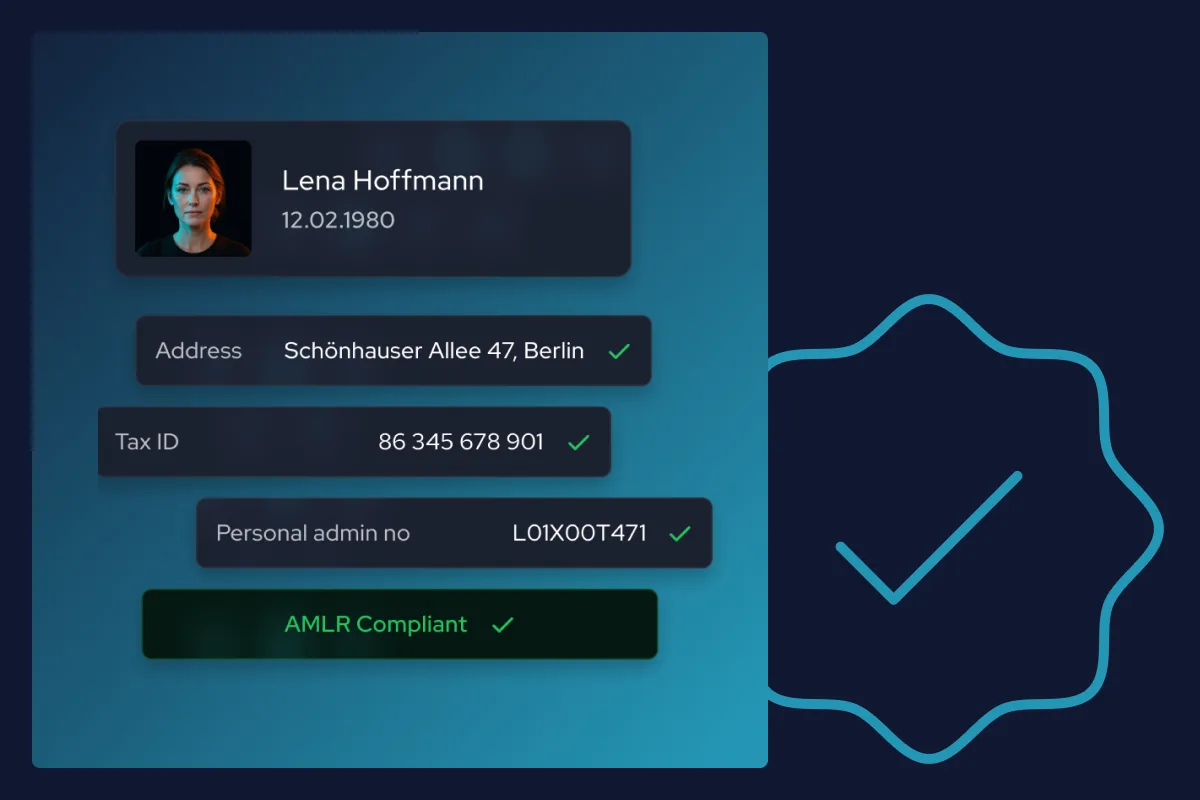
                    Table of Contents

                    Ready to partner with IDnow?

                    Turn faces into trusted identities.

                    Strict. Expensive. Complex. Is the German online gaming market even worth entering? IDnow’s VP of Global Gaming joins other industry experts to explore the state of play in what could be the European country with the most untapped potential.

                    When compared to other European countries, Germany’s online gambling market is in its infancy, still taking its first steps. In fact, it was just July 2021 when the Glücksspielstaatsvertrag  (German Interstate Treaty on Gambling) came into effect, which effectively legalized and regulated it across all 16 states. 

                    Four years later, the industry is worth about €3 billion per annum. Although certainly a decent amount, when compared to more mature markets like the UK, which generates around €8.3 billion of annual income, it is rather underwhelming, especially considering there are 15 million more people in Germany than the UK. 

                    Reasons for Germany’s sluggish growth in the online gaming market range from low deposit limits, heavy advertising restrictions, major compliance burdens, and, of course, the struggle to tempt players away from the black market, which still remains incredibly popular in the country. 

                    Interested in how Germany is attempting to tackle unregulated gambling, read our ‘Exploring black market gambling in Germany’ blog.

                    In February 2025, to explore the challenges facing operators, and share strategies on how to capitalize on the complex but lucrative market, Roger Redfearn-Tyrzyk, VP of Global Gaming at IDnow attended a webinar with Dimitry Voelkle, Managing Director at Zelda Consulting GmbH and Faruk Aydin, Chief Revenue Officer at the Revpanda Group. 

                    Missed it? Don’t worry – here are our top 3 takeaways:

                    1. Strict regulations can be both a blessing and a curse.

                    If you want to become a major player in Europe, it’s essential to have a presence in Germany. However, it’s safe to say that that won’t be easy. In fact, there are many German regulations and requirements that could put operators, especially international operators, off.

                    I always say that regulation is good if the regulation is good. The fact remains that in 2007, 55% of the German population gambled but that figure dropped to 30% in 2021 following the introduction of regulations. The German regulator must ask itself why this happened.

                    Roger Redfearn-Tyrzyk, VP of Global Gaming at IDnow

                    There is a long list of requirements that operators must follow to become a licensed gaming operator in Germany. For example, besides ensuring onboarding and registration processes comply with strict BaFin AML directives, operators must also obtain an annual ISO 27001 security audit certificate. Further requirements include needing to be headquartered in Germany and have German language proficiency to fill out license applications in the native language. Other potentially off-putting stipulations include:

                    Deposit limits: Players are only able to deposit a maximum of €1,000 per month across all licensed platforms. 

                    Stake limits: Players can bet a maximum of €1 per spin on slots and must wait 5 seconds between spins. 

                    Game restrictions: German players that have migrated from unlicensed platforms – of which there are still millions – may find their favorite game unavailable as live casino games, progressive jackpots and live bets are all prohibited on regulated platforms. Not being able to offer players their favorite game is, of course, an additional challenge for operators. 

                    Advertising: Operators are subject to very narrow windows within which to advertise. No ads can be broadcast between 6am-9pm on TV, radio or any other medium. Influencer marketing is also prohibited, as are ads that target minors or other vulnerable groups.

                    Discover more about German online gambling regulations in our blog, ‘Online gambling in Germany: Regulations, restrictions, and ramifications.’

                    Gambling regulations 101: Europe and the UK.

                    Discover how gaming operators can keep pace with the ever-growing multi-jurisdictional landscape in Europe and beyond.
                    Read now
                    Gambling regulations 101: Europe and the UK.

                    2. Money’s too vast to [not] mention.

                    There is one thing that prospective operators need in abundance before they begin their German gaming journey (besides patience!): money.  

                    After paying a non-refundable application fee of €185,000 to the Gemeinsame Glücksspielbehörde der Länder (GGL), operators can gain a license, which is typically valid for 5 years, but can be renewed for 7. However, the financial outlay doesn’t stop there. German gaming operators are also required to pay a so-called ‘security deposit,’ which acts as a bank guarantee to protect player funds. Based on the operator’s projected monthly turnover, this can range from the minimum of €5 million to €50 million. 

                    It doesn’t stop there. Alongside the tripling cost of player acquisition, there are annual supervisory fees, which operators must pay to cover GGL’s regulatory oversight and additional compliance costs like connecting to the ‘limit control database’ to enforce the €1,000 monthly deposit limit, among others. 

                    Lastly, operators are subject to quite high taxes, with a 5.3% stake tax applied to every single euro wagered. In a bid to offset these costs, many resort to lowering the ‘return-to-player’ percentage (the amount paid back to players). 

                    However, with a population of over 84 million and vast numbers of the public still using black market platforms, there is clearly opportunity for those that a) have the patience and money to enter and b) can tempt black market players to the regulated environment. But how exactly can operators do that?

                    3. Always room for something new and novel.

                    There are still opportunities in the German online gaming market, especially for those that can offer something different to underserved demographics, such as the younger (20-30 years of age), multicultural generation. 

                    This is because much of the current marketing – and available games – cater to an older audience. So, if operators can offer the games that people want to play (e.g. Book of Ra), and a simplified, compliant user experience then there are valuable opportunities to capture the attention of a new generation of Germans. 

                    “At IDnow, we see compliance as an enabler not a burden. One of the major reasons we offer player feedback surveys after every verification is to discover what players value, which then informs the tweaks we make to the user experience and subsequent player education. Through player feedback, we learn whether more instructions are required and gather opinions and issues with the design and UX etc,” said Roger. 

                    As Germany is such a comparatively young market, creating an environment that is attractive to the players, operators and the regulator requires open and transparent dialogue about how to take the market forward.

                    Click below to watch the full session:

                    For a deep dive into the compliance challenges facing global operators, including analysis of some interesting regional differences, read our ‘Exploring the gambling industry’s top compliance challenges in 2024 and beyond’ blog.

                    Learn more about how our identity verification solutions can help maximize conversions while fighting fraud in the Gaming industry.

                    By

                    Jody Houton
                    Senior Content Manager at IDnow
                    Connect with Jody on LinkedIn

                    Table of Contents

                    Ready to partner with IDnow?

                    Turn faces into trusted identities.

                    Investment unlocks the next stage of growth and innovation for digital identity leader in Europe 

                    MUNICH and LONDON – March 6, 2025 – IDnow (or “the Company”), a leading identity verification platform provider in Europe, today announced a new strategic investment from Corsair Capital (“Corsair”), a specialist investment firm targeting payments, software, and business services investments in the financial services market. With this transaction, Corsair will acquire a majority stake in the Company from existing shareholders, reinforcing its commitment to fueling IDnow’s continued growth and leadership position within the European identity market, and into other regions globally.

                    Founded in 2014, IDnow builds proprietary, AI-powered identity verification technologies that address the cybersecurity and digital verification needs of global enterprises and leading international brands across financial services, telecommunications, travel & mobility, gaming and other industries.

                    Corsair first invested to support the growth of IDnow in October 2019 when it acquired a minority stake in the business. Since Corsair’s initial investment, IDnow has strengthened its technical leadership position, grown its portfolio of differentiated identification solutions, and completed two strategic acquisitions which expanded the company into new geographies including establishing a leadership position in France. Through this transaction, Corsair aims to further accelerate IDnow’s growth and the Company’s position as a European leader with a comprehensive suite of solutions, strong positions in multiple geographies, and with additional acquisitions bringing added scale and reach.

                    “Since our founding a decade ago, IDnow has become a market leader in identity verification in Germany and France. During this time, we have achieved significant success in delivering strong results and growing our customer base, and with today’s announcement we aim to solidify our commitment to positioning the Company for future success,” said IDnow CEO Andreas Bodczek. “Corsair’s increased investment underscores their confidence in our vision and speaks to the synergies we have achieved through our collaborative relationship. With this deeper partnership, we can continue to transform and ensure our platform continues to evolve.” 

                    “We are thrilled to expand our partnership with IDnow,” said Raja Hadji-Touma and Edward Wertheim, Partners at Corsair. “Since our initial investment, we’ve witnessed IDnow build significant momentum and achieve impressive scale. We are excited by the opportunity to deepen our partnership with IDnow’s talented management team, and we look forward to supporting their next chapter of innovation and growth.”

                    “Building IDnow has been an incredible journey over the past 10 years together with Armin Berghaus, Dennis von Ferenczy and Sebastian Baerhold, and we believe today’s announcement enables us to strengthen our capabilities and capitalize on the vast market opportunity available to us,” said Felix Haas, Executive Chairman and Co-Founder of IDnow. “Corsair’s resources and expertise will help accelerate growth and unlock new opportunities for the Company and I’m confident this partnership will drive progress and expansion in ways that will benefit IDnow, its customers and the industry as a whole.”

                    About IDnow 

                    IDnow is a leading identity verification platform provider in Europe with a vision to make the connected world a safer place. The IDnow platform provides a broad portfolio of identity verification solutions, ranging from automated to human-assisted from purely online to point-of-sale, each of them optimized for user conversion rates and security. 

                    In 2021, IDnow acquired the French market leader for identity technology, ARIADNEXT, and the German identity Trust Management AG, enabling IDnow to offer its customers one of the broadest identification solutions through a single, integrated platform. 

                    The company has offices in Germany, United Kingdom, and France and is backed by renowned institutional investors, including Corsair Capital and Seventure Partners. Its portfolio of international clients spans a wide range of end markets including financial services, telecommunications, travel & mobility, gaming and other industries. 

                    About Corsair Capital

                    Corsair is a specialist investment firm offering opportunities for investors and solutions for companies across its private markets Buyouts and Infrastructure businesses. The firm’s buyouts business is a financial services investor focused on making control investments in three verticals: payments, software, and business services. The infrastructure business operates as a strategic partnership with Investcorp as of December 2023. Investcorp Corsair focuses primarily on value-add opportunities in transportation, logistics, and associated infrastructure subsectors, blending operating platforms and deep sectoral expertise with equity sponsorship. Corsair has invested $13.6 billion in capital across buyouts and infrastructure since inception. For more information, please visit www.corsair-capital.com and follow us on LinkedIn.


                    Table of Contents

                    Ready to partner with IDnow?

                    Turn faces into trusted identities.

                    We unpack the findings from IDnow’s recent UK and France Fraud Awareness Reports to explore the differences in perceptions of fraud, preferences of identity verification solutions and much more.

                    Separated by just 34km of the English Channel, there are many things that France and the United Kingdom have in common: size of populations, diversity of cultures, and, unfortunately, alarming rates of fraud.  

                    In France, victims of financial fraud and scams lose at least €500 million annually, while in the UK, the problem appears to be even more pronounced. In fact, in just the first half of 2024, over £570 million was stolen in payment fraud alone. 

                    In 2024, we published the IDnow UK Fraud Awareness Report, which surveyed members of the British public to explore the nation’s awareness of the latest fraud terms, the industries considered most susceptible to fraud, and how commonly Brits used risky channels like unencrypted messaging platforms to transfer copies or scans of ID documents. Last month, we published an edition focused on France, ‘Fraude bancaire : enquête sur la confiance des Français envers leur banque’ [Bank fraud: survey of French people’s confidence in their bank]. 

                    Referring to the recent French Report, Cyril Patou, Vice President of Sales (France) at IDnow said: “The results highlight the importance of increased awareness and having open dialogue between financial institutions and users to move forward together in the fight against fraud.” 

                    In this blog, we explore the differences in results between the two nations and consider why a tailored, culture-specific approach to fraud prevention – and identity verification – is required.

                    UK Fraud Awareness Report 2024

                    Learn more about the British public’s awareness of fraud and their attitudes toward fraud-prevention technology.
                    Read now
                    thumbnail fraud awarness report

                    Loyalty, trust and public awareness of fraud.

                    While 54% of UK respondents said they would consider switching banks if they were a victim of bank fraud, only 27% of French respondents agreed, indicating that either the French were more loyal to their banks or accepting of falling victim to fraud. Surprisingly, 11% of French respondents said they had been victims of bank fraud yet had still not changed banks.  

                    When it comes to fraud terms, the Brits tend to be more informed than their French counterparts. For example, over half of UK respondents said they had heard of ‘deepfakes’ (videos of digitally created people that are typically used to obfuscate the user’s identity), while 42% of French said they had not heard the term combined with a further 25% who said they had heard of deepfakes, but didn‘t know what it means.  

                    Both countries are currently experiencing a rise in sophisticated digital fraud techniques, including deepfakes. In a recent post on social media, French President Emmanuel Macron shared a montage of deepfake videos featuring himself in popular movies, commenting “nicely done.” In the UK, recent Ofcom data shows that 43% of individuals aged 16 and older have seen at least one deepfake online in the last six months. Deepfakes have clearly arrived and being used for both fun and fraudulent purposes. In fact, the UK government recently declared deepfakes as the “greatest challenge of the online era.”

                    Attitudes on whether banks are adequately protecting their customers against fraud like deepfakes are largely the same in France (72%) and the UK (73%), leaving more than a quarter of respondents in both countries that either disagree or just don’t know – suggesting better education on not only the latest fraud terms but banks’ methods of fraud prevention is needed.

                    Which industries cause the French and British public the most concern?

                    Both France and the UK agree that the riskiest industry when it comes to fraud is financial services (65% and 75% respectively) followed by online shopping. Clearly, these are both industries where it serves for customers to be as cautious as possible, as bank and e-commerce accounts store important personal identifiable information that can be misused for fraudulent purposes. 

                    Third on the ranking of riskiest industry is social media fraud, which is where a lot of fraud originates, especially social engineering. Discover all about the rise of social media fraud, and how one man almost lost a million euros to a pig butchering scam in our blog, ‘The rise of social media fraud: How one man almost lost it all.’ 

                    One of the major differences seen in the IDnow Reports is the perception of public services as a potential source of fraud. While in France, nearly a third of the French population (32%) are concerned, just 13% of the UK public appear worried about eGovernment fraud. Could it be that the French are just more critical of eGovernment services or perhaps it’s just that a higher percentage of the French population are using eGovernment services. 

                    It appears to be the former, as in 2023, just 34% of the French public reported high or moderately high trust in the national government, below the Organisation for Economic Co-operation and Development’s average of 39%.

                    Identity crisis? The future of digital identity in the UK.

                    Download to discover all about the UK’s past, present and likely future usage of digital IDs.
                    Read now

                    Government and public preferences in identity verification solutions.

                    Most industries are either required by regulation to implement identity verification checks or have chosen to do so to optimize processes or fight fraud. Such checks are required for account opening in Banking, compliance checks in Crypto, age verification in Mobility, streamlined check-in processes in Travel, financial risk checks in Gambling, and contract signing in Telecommunication.   

                    Identity verification requires users to provide and have information associated with their identity verified. This may be checking an identity document, such as a driver’s license, passport, or a nationally issued identity document or by biometric authentication of users’ attributes like fingerprints or facial features. 

                    Each country tends to have different approaches to fraud prevention and identity verification processes, which is often determined by regulatory requirements. In Germany, for example, video verification is required when opening bank accounts due to strict AML/GwG requirements, however this may all be set to change in the near future. 

                    In France, the government has a national digital identification program and provides citizens with electronic ID cards that facilitates secure access to various services. This centralized system enhances the efficiency of identity verification processes across both public and private sectors. France also has FranceConnect, the national digital identity federator, where users verify themselves for eGovernment and other regulated services. Our report found that the concept of digital identities was familiar to 72% of French respondents. Plus, a large majority of French (70%) said they would be prepared to use a digital identity to access bank accounts or carry out important transactions.

                    Learn more about our digital identity wallet product, YRIS, which features on FranceConnect here. 

                    In the UK, there is currently no one consistent and coherent ID system, with companies instead relying on database checks and document checks of different forms of ID, including driving licences and passports. However, the government is experimenting with various ways of modernizing its approach, including the 2023 release of a Digital Identity and Attributes Trust Framework (DIATF) – a set of rules and standards designed to establish trust in digital identity products. 

                    There was also a flurry of activity at the beginning of 2025 with the announcement that the government planned to launch the GOV.UK Wallet, which was very quickly followed up by panicked questions regarding its impact on the DIATF. 

                    Once launched, the holders of the GOV.UK Wallet will be able to: 

                    • Securely save government-issued digital documents  
                    • Present these documents to organizations, businesses and other parts of government to prove age, identity, or eligibility for services 

                    When asked which identity verification method they considered the most trustworthy for a secure, reliable and accurate process, 20% of French respondents said document capture and facial recognition, while 42% of UK respondents cited a combination of electronic identity data checks and document capture and facial verification. 

                    While 16% of French respondents would prefer an expert-led identification process like VideoIdent, just 9% of UK respondents felt the same way. Seemingly, the French are more open-minded toward expert-led solutions than the Brits. However, products like IDnow’s customizable VideoIdent Flex are now becoming increasingly popular in European countries outside Germany, where they have typically enjoyed much success due to national BaFin (Germany’s Federal Financial Supervisory Authority) online onboarding regulatory requirements. 

                    There are clearly differences between the two nations when it comes to awareness of fraud, the industries considered riskiest and their preferred methods of identity verification. However, what is consistent in both the UK and France is the ever-present risk of fraud and the need for a collaborative push by regulatory and government bodies and financial services to commit to fraud prevention. 

                    Thankfully, whether automated or expert-led, online or in-person, IDnow offers one of the widest ranges of identity verification and digital signature solutions in Europe and beyond. Learn more about how our solutions can be used to prevent fraud while maximizing conversions by clicking the relevant category above. 

                    Interested in what our customers said were their top identity verification challenges last year and how they planned to tackle fraud in 2024? Read our ‘Fraud in 2024: IDnow customers have their say.’ blog 

                    By

                    Jody Houton
                    Senior Content Manager at IDnow
                    Connect with Jody on LinkedIn

                    Table of Contents

                    Ready to partner with IDnow?

                    Turn faces into trusted identities.

                    So, you’ve decided to enter the Brazilian gaming market? Here’s everything you need to know to remain compliant, fight fraud and offer a frictionless customer experience.

                    So, it’s finally happened.  

                    After years of ‘Will they, won’t they?’, the Brazilian powers that be have finally managed to agree on how its sports betting and online gaming market should be regulated. 

                    This means that for the first time ever, Brazilian operators can serve Brazilian players, capitalizing on the country’s huge customer base and generating millions of tax revenue in the process. Brazilian players, meanwhile, can now use Brazilian platforms, benefiting from the local language and accessibility options that a local platform offers. 

                    This is great news as before January 1, 2025, players had to either use black market platforms or international ones; neither of which were ideal for providing sufficient consumer protections. 

                    Read more about the dangers of using black market gambling platforms in our blog, ‘Before Brazilian regulation: The dangers of gambling without KYC.’

                    Of course, as Brazil is such a new market, complete with new regulatory requirements, there are certain compliance challenges operators need to be aware of and important considerations to factor in before launching.

                    How to offer completely compliant gaming experiences in Brazil.

                    Being compliant and adhering to regulatory requirements not only protects a business from potential anti-money laundering (AML) and social responsibility fines but also from reputational harm. Each year, hundreds of millions in fines are levied against gaming operators and although there haven’t been any fines against a Brazilian operator yet, it is surely only a matter of time. 

                    In fact, according to Neil Montgomery, a lawyer that operates in Brazil, there is no doubt that Brazilian operators will soon find themselves on the receiving end of fines and even civil cases due to the country’s litigious culture. 

                    “Disgruntled consumers will now have a local door to knock on and use the Brazilian courts to obtain favourable awards. Brazilian courts will look at sports betting and iGaming operators as wealthy companies and an expectation for companies to compensate damages costs to consumers,” said Neil Montgomery, founder of Brazilian law firm, Montgomery & Associados.

                    Working with an identity verification provider with regulatory expertise and deep knowledge of the market ensures operators can navigate the complexities of Brazilian legislation and regulation with ease; safe in the knowledge they’re offering completely compliant player experiences.  

                    For more information on Brazil’s newly regulated sports betting and online gambling market, read our blog, ‘Everything you need to know about online gambling in Brazil’. 

                    As experienced providers of KYC and identity verification solutions for the gaming industry, IDnow has customers from around the world using IDnow to offer all manner of compliant use cases, from new account openings and age verifications to affordability checks and deposit withdrawals, and everything in-between.

                    Working with companies operating globally has equipped us with a deep knowledge of different regulatory environments, along with every nuance of their customer onboarding processes, every document or data point required to be processed and every product innovation and functionality that could make the customer experience more inclusive, intuitive and, of course, compliant.

                    How gambling operators should really be onboarding players.

                     
                    • Most common fraud attacks that gambling operators were subjected to in 2023.
                    • Size of some of the most popular global gambling markets.
                    • The steps required to legally onboard players in nine different countries
                    Download now
                    Why gambling operators should always do more than the bare minimum when onboarding players.

                    7 steps for compliant customer onboarding in Brazil.

                    A robust customer onboarding experience for a Brazilian gaming platform should restrict fraudsters and underage or ineligible users from opening accounts, while protecting genuine players from fraud and potentially saving the company millions in AML fines.  

                    Here’s how to offer an end-to-end compliant player registration and verification process in seven steps:

                    1. CPF Validation: In Brazil, every citizen is issued a unique Cadastro de Pessoas Físicas (CPF) number, which is used for tax purposes. When cross-checked against the national CPF database, the numbers can be used to verify the identity of players during onboarding.
                    1. Checking against restrictive lists: You know the saying: one rotten Brazilian apple spoils the whole Brazilian barrel (or something like that). Offering a safe and secure gaming experience requires operators to be assured that every single one of their players are entitled to be there, which is why the second important step in the player registration and verification process should be to check applicants’ identities against multiple official restrictive betting lists (lists containing those who could jeopardize results of sporting events, e.g.: athletes or managers). 
                    1. PEPs and Sanctions: Like the second step, checking against PEPs and Sanctions lists is essential to assess and effectively mitigate the associated risks of Politically Exposed Persons (PEPs) and sanctioned individuals. 
                    1. Document verification: When combined with CPF validation, document verification enables operators to cross-check and verify identity data with other forms. It’s also important to be able to process a variety of different document types, especially in Brazil, where different provinces often have different identity formats and types. The three most common documents that operators should be able to check and verify in Brazil as per the regulation are:

                      1. Brazilian passport 
                      2. Carteira de Identidade (RG) (National identity card) 
                      3. Carteira Nacional de Habilitacao (National driving license) 
                    1. Advanced fraud detection: Fraud detection technology can provide an additional barrier by protecting against various fraud attacks. For example, our seamless advanced fraud detection technology flags whenever a forged document is submitted and can verify whether prospective players are real through liveness checks – all without adversely impacting the user journey. Such checks can help prevent common and emerging fraud types like bonus abuse, identity theft and synthetic identity theft. 
                    1. Biometric enrolment: The penultimate step in our player registration and verification process records players’ biometric information, including facial images to facilitate future smoother player authentication. 
                    1. Optional manual review: At this stage, the player has registered and verified their identity and are able to start playing. However, for additional security, operators can also choose to perform a manual review of submitted documents and biometrics for additional peace of mind, especially for high-risk individuals.  

                    Customized consistency.

                    While knowing what needs to be done to create a compliant onboarding process is clearly important, perhaps what is even more important is how it is done and what the user experience of doing it is like. After all, if the customer experience is too complicated then customers will seek out a competitor that does offer an intuitive process or worse still, revert to the black market to platforms that are less concerned with KYC or robust identity verification processes. 

                    Of course, customer abandonment isn’t something specific to the gambling industry. In fact, 90% of companies said they lose customers during the digital onboarding process, with the top three reasons for drop-offs including: 

                    • Too long processes (29%)  
                    • Identity proofing and affirmation pain points (26%)  
                    • Too many manual steps (26%)

                    At IDnow, we are committed to delivering cutting-edge identity verification solutions that address the specific needs of our customers and their end users. 

                    For example, when we discovered that most Brazilians tended to keep their identity cards in plastic sleeves, we amended our onboarding instructions in the user interface. By including culturally tailored instructions, such as requesting the removal of IDs from plastic sleeves, we ensured users could complete document capture with ease.  

                    It’s important to bear in mind that while compliance and regulatory requirements may differ by country, operators must offer a consistently positive user experience, regardless of the market or the regulatory requirements.  

                    Simply put, the user experience needs to be as seamless as it is secure, which has benefits for both the operator and ultimately the customer.

                    Integrate seamlessly, with IDnow.

                    Managing multiple point solutions (e.g. biometrics or documents) across different service providers not only creates inefficiencies and complexities in identity verification processes, but it can also make integration difficult, especially if journeys need to be adapted to regulatory changes or to detect and mitigate new risks. 

                    Our modular and scalable orchestration hub has been designed to reduce technical complexity and enable global operators to balance strict KYC/AML requirements with seamless UX. What’s more, any third-party KYC and compliance service can be easily added to IDnow making it easy to manage in one integration. 

                    Tailored for Brazil’s regulations and localized needs, IDnow simplifies identity verification and compliance with a plug-and-play solution, allowing users to access data, document and biometric verification through a single, unified integration point.

                    As regulations, data and document types, and ultimately customer requirements differ per region, there is a huge advantage in choosing an identity verification provider that can be tailored to a specific country’s risk and KYC needs.

                    Roger Redfearn-Tyrzyk, VP of Global Gaming at IDnow.

                    “Being able to offer a holistic approach to identity verification that can combine compliance services, including IDV, biometric authentication and data verification to meet any country’s requirements will very quickly become a necessity,” Roger added.

                    Learn more about our Brazil-ready identity verification solutions here.

                    By

                    Jody Houton
                    Senior Content Manager at IDnow
                    Connect with Jody on LinkedIn


                    Table of Contents

                    Ready to partner with IDnow?

                    Turn faces into trusted identities.

                    We sit down with the founder of a ‘compliance community platform’ to explore how breaking down financial barriers and providing accessible training and mentorship can drive real global change.

                    Among the many milestones throughout Oonagh Van Den Berg’s 20+ year career, there is one that remains closest to her heart for sheer impact on the compliance community.  

                    For Oonagh, it’s not the multiple initiatives she’s spearheaded at top-tier financial institutions, nor the awards she’s won in the process, or her status as a Top AML Voice on LinkedIn. Oonagh is perhaps most proud of her work as an advocate for providing accessible and, most importantly, free compliance education. 

                    In 2020, Oonagh founded RAW Compliance, a compliance community platform built on the belief that knowledge should be shared freely, without barriers. 

                    “Compliance is not just about ticking boxes; it’s about making a tangible difference in the fight against financial crime, corruption and unethical behavior,” explains Oonagh. 

                    “Yet, so many professionals, particularly in underfunded regions, lack access to quality training and mentorship. I wanted to change that. By removing the financial barrier, we empower individuals at all levels, enabling them to build stronger frameworks and drive innovation in compliance.” 

                    The need for a more joined-up, connected approach to compliance and fraud prevention appears to be front of mind for many in the industry, both in the public and private sector, as evidenced by this year’s launch of the much-anticipated Anti-Money Laundering Authority (AMLA) – which aims to centralize anti-money laundering efforts throughout European Member States. Other initiatives like eIDAS 2.0 are further testament to the appetite for more connectivity among financial services and regulatory bodies. 

                    A recurring theme throughout this Spotlight interview is of the positive “ripple effect” of breaking down barriers, and how knowledge-sharing can help create a truly inclusive community. It is through equipping all with the necessary tools and knowledge that Oonagh believes collectively strengthens the global fight against financial crime.

                    Part of RAW Compliance’s mission statement is that ‘accessible expertise helps to shape a more ethical future.’ Could you expand on this correlation?

                    Accessibility is the cornerstone of progress. Expertise shouldn’t be reserved for a privileged few or for organizations with deep pockets. When knowledge is accessible to everyone—whether it’s regulators, financial institutions, or smaller firms—it levels the playing field. 
                     
                    A more ethical future comes from informed decision-making, robust accountability and greater collaboration. By sharing expertise, we break silos, foster innovation and enable individuals and organizations to identify and mitigate risks more effectively. It’s not just about compliance with regulations; it’s about instilling a culture of integrity across industries, which ultimately benefits society, as a whole.

                    To what do you attribute organizations’ most common compliance and fraud failings? What is one ‘surprisingly simple’ piece of advice you give to every organization?

                    The most common failing is complacency. Many organizations view compliance as a reactive function rather than a strategic enabler. This often results in underinvestment in training, outdated systems and a lack of alignment between compliance and business goals. 
                     
                    My advice? Start with the basics: empower your people. A well-trained team is your first line of defense. Equip them with the knowledge to identify risks and the confidence to challenge practices that feel wrong. Technology is an important tool, but it’s people who drive culture and accountability.

                    Building trust through KYC in banking.

                    How can you set up a KYC process that satisfies your customers and meets regulatory requirements? Download now to discover:
                    • grey square with four lines and checkWhat is KYC?
                    • sign logo with check in itThe importance of KYC in the banking sector
                    • justice logo with a paper logo at the back with white backgroundRegulatory impact on KYC processes
                    Read now
                    Thumbnail - KYC Banking 2024 EN

                    What role does technology like identity verification, KYC, and reusable identity technology play in financial risk mitigation?

                    Technology is a game-changer in financial risk mitigation. Identity verification and KYC processes have evolved to become faster, more accurate, and more secure, reducing the chances of human error and streamlining onboarding processes.
                     
                    Reusable identity technologies, such as digital IDs, are particularly promising because they reduce friction for customers while enhancing security. They also allow for stronger collaboration across institutions by providing verified, standardized identity records.
                     
                    The key is to leverage these technologies not just to comply with regulations but to actively identify and mitigate risks, improving efficiency while strengthening trust with clients.

                    Does increasing reliance on automation and artificial intelligence pose a risk to compliance and financial crime prevention? What safeguards are needed?

                    Automation and AI are double-edged swords. On one hand, they are invaluable for processing large volumes of data, identifying patterns, and detecting anomalies far faster than human capabilities. On the other hand, they can introduce risks if not implemented thoughtfully. 

                    Bias in AI models, over-reliance on algorithms without human oversight, and the risk of cyberattacks targeting automated systems are real concerns.

                    Oonagh Van Den Berg, founder of compliance community platform

                    To mitigate these risks, organizations must:

                    • Maintain human-in-the-loop processes to validate AI-driven decisions. 
                    • Regularly audit algorithms for fairness, transparency, and accuracy. 
                    • Implement robust cybersecurity measures to protect automated systems. 
                     
                    Ultimately, automation and AI should augment human expertise, not replace it. The future of compliance will rely on striking the right balance between technology and human judgment.

                    Oonagh joins other compliance professionals to discuss how to effectively prosecute online fraudsters.

                    How optimistic are you about the future of financial crime and fraud prevention?

                    I’m cautiously optimistic. Initiatives like eIDAS 2.0 and the establishment of Europe’s AMLA demonstrate a strong commitment to combating financial crime at a systemic level. These frameworks create opportunities for standardization, collaboration and more effective oversight. 

                    However, the success of these initiatives depends on implementation and adaptability. Regulators, industries and technology providers must work together to strike the right balance between enforcement, innovation and practicality.

                    The key is not just in creating regulations but in fostering a culture where compliance is seen as an enabler of trust and integrity.

                    What are the top AML and compliance challenges facing financial services in 2025?

                    In 2025, we face several critical challenges: 

                    • Evolving criminal tactics: Criminals are becoming increasingly sophisticated, exploiting emerging technologies like AI and cryptocurrencies. 
                    • Regulatory complexity: The rapid introduction of global regulatory frameworks like Europe’s AML Authority creates challenges in harmonizing compliance efforts across jurisdictions. 
                    • Data overload: Organizations are drowning in data but lack the tools to extract actionable insights for effective risk management. 
                    • Talent shortages: Compliance teams often struggle to keep pace due to a lack of skilled professionals, particularly in niche areas like counter-terrorism financing and proliferation risks. 

                    Addressing these challenges requires collaboration, innovation and a proactive mindset to keep pace with both regulations and criminal innovation.

                    If you’re interested in more insights from industry insiders and thought leaders from the world of fraud and fraud prevention, check out one of our interviews from our Spotlight Interview series below:

                    By

                    Jody Houton
                    Senior Content Manager at IDnow
                    Connect with Jody on LinkedIn


                    France has become the latest in a long line of countries that is doubling down on requiring pornographic sites to implement mandatory age verification for adult content. The aim is to protect minors, but will it work and at what cost to user privacy? 

                    In January 2025, a new regulation was passed requiring pornographic sites in France to verify the age of their users. This initiative aims to protect minors from exposure to inappropriate content online, which can cause long-term harm and affect their perception of gender and sexual relations as well as put younger people and women at greater risk of abuse.  

                    Platforms must now implement robust identity verification solutions to verify users’ ages either through the identification of documents or facial recognition.  

                    However, questions have been raised on the effectiveness of the proposed methods and the potential impact on user privacy. 

                    How France aims to crack down on underage users viewing pornography.  

                    Every month, 2.3 million minors in France access pornographic sites, representing a staggering 12% of the total visitors. To address the issue, the Regulatory Authority for Audiovisual and Digital Communication now requires adult sites to implement age verification services by April 11, 2025. After this period, sanctions, including site blocking, may be applied in the event of non-compliance. 

                    Accepted methods of identity verification include the use of video selfies for biometric recognition, or proof of identity via document verification. As a simple confirmation of age is no longer sufficient, compliance is reinforced by a double anonymity system, allowing age to be verified while guaranteeing anonymity.   

                    With double anonymity, the site you’re connecting to doesn’t know who you are, only that you’re over 18. Plus, the age verification service doesn’t know which site you’re connecting to.

                    Marc Norlain, Managing Director at IDnow

                    Global regulation and age verification practices for adult sites. 

                    France is not alone in its efforts to regulate access to adult content with age verification practices. Here are how some other countries are tackling the issue of minors viewing pornography. 

                    • United Kingdom: The Online Safety Act will require pornographic platforms to use age verification services by July. All websites on which pornographic material can be found, including social media platforms, must introduce ‘robust’ age-checking techniques, such as demanding photo ID or running credit card checks for UK users. Ofcom has published what it calls a “non-exhaustive” list of technologies that may be used to verify ages, which includes: 
                    • Open banking 
                    • Photo ID matching 
                    • Facial age estimation 
                    • Mobile network operator age checks 
                    • Credit card checks 
                    • Digital identity services 
                    • Email-based age estimation 
                       
                    • Germany: The country imposes strict regulations via the Commission for the Protection of Minors in the Media (KJM). Sites must ensure that users are of legal age by using verification solutions such as digital identity services or national identity cards. 
                       
                    • Italy: The government has recently tightened online controls. Pornographic platforms must verify age via state-issued digital identifiers, such as the SPID (Public Digital Identity System).  
                       
                    • Denmark: More lenient than some other European countries, Denmark simply encourages the use of age verification services to protect minors, notably via public-private partnerships. 
                       
                    • Nations such as China, Iran and Saudi Arabia completely block access to pornographic sites, using censorship technologies to prevent access. 
                       
                    • In Spain, Poland and the Czech Republic, there are no specific regulations imposing age verification services for pornographic sites, although discussions are underway.  

                    The Digital Services Act, which is in force in all European Union (EU) Member States, requires digital platforms, including adult content sites, to implement age verification mechanisms when their services are massively used (over 45 million users). This regulation aims to ensure a safer online environment for minors throughout the EU. 

                    Age verification solutions for accessing sensitive content.  

                    Faced with new and more prolific age verification requirements, a promising solution is emerging to combine efficiency, anonymity and privacy: the EUDI Wallet (European Digital Identity Wallet).  

                    Digital identity wallets offer two main benefits: 

                    1. Selective disclosure of information. 

                    This system allows users to prove their age without disclosing other personal data. For example, users can confirm that they are over 18 without revealing other personal information, such as their name or address. Only information strictly necessary for verification is shared. 

                    1. Non-traceability of users. 

                    A key feature of the digital identity portfolio will be its ability to guarantee the non-traceability of users’ interactions with sites. Thanks to advanced technologies such as zero-knowledge proof, it will be impossible to link a user’s actions to a specific site or to their other online activities.  

                    Digital wallets look set to usher in a major advancement in privacy protection, addressing some of the current concerns associated with using identity verification solutions to gain access to adult sites. 

                    Porn, privacy and data confidentiality.  

                    When it comes to viewing pornographic content, the topic of privacy is clearly an important and sensitive topic. To reassure adult users that they will be able to remain anonymous and their data kept confidential, all while complying with new and upcoming regulations, it will become essential to implement age verification solutions that comply with strict privacy protection principles. 

                    Implementing these new solutions is a challenge but represents a major opportunity to combine innovation with security and respect for individual freedoms.

                    By

                    Mallaury Marie
                    Content Manager at IDnow
                    Connect with Mallaury on LinkedIn

                    Table of Contents

                    Ready to partner with IDnow?

                    Turn faces into trusted identities.

                    New IDnow ebook highlights the most frequent types of fraud in the mobility sector and how best to prevent them. 

                    In recent years, the mobility and micromobility industry, which includes car-sharing and scooter, bicycle and vehicle rentals, have all become increasingly popular. This is largely due to the ease of convenience, but also to it being a more environmentally conscious way of travelling.  
                     
                    Little wonder then that the mobility industry is on the move, literally. In 2023, the global shared mobility market was worth U$258 billion and is expected to grow to $401 billion by 2030.   

                    Click below to check out our latest ebook, ‘How to put the brakes on mobility fraud.’ 

                    Putting the brakes on fraud in the mobility industry.

                    Learn about the most common types of fraud in the mobility industry and how best to stop them.
                    Get your free copy
                    Cover - IDnow Q Guide.

                    Are fraudsters winning the mobility race? 

                    Unfortunately, the introduction of these new mobility services has inadvertently led to new forms of illicit and fraudulent attacks. As the global mobility market continues to grow, it comes as no surprise that fraudsters are going where the money is.   

                    Plus, unlike the banking sector, where Know Your Customer (KYC) processes and rigorous identity verification checks are mandatory for onboarding, mobility is not as strict, and fraudsters know it. Fraud attempts are also becoming increasingly sophisticated and hard to detect due to the use of deepfake technology, where a person can digitally manipulate a video to appear as someone else.  
                     
                    This is why knowing the identity of the customer and proving the validity of a driver’s license, for example, is of extreme importance before providing access to the car or other vehicle type.   

                    The most dangerous stage of a customer journey is during account creation and customer onboarding. In 2023, 36% of suspected digital fraud globally in the travel industry came from digital account creation transactions. This is when users and mobility providers are most vulnerable to fraud attacks and when fraudsters attempt to steal users’ personal information to create new bogus accounts.   

                    Impacts of fraud on the mobility sector. 

                    Fraud is no joke. When fraud occurs no matter the industry, there are serious repercussions for everyone involved because not only does it affect the individual whose identity or documents were stolen but it also affects the company in the following ways:   

                    • Reputational damage: Despite it not necessarily being the company’s fault, any occurrence of fraud puts its reputation on the line. If fraud is rampant, then customers believe that company is not safe to do business with.  
                    • Monetary loss: Fraud can cause businesses to lose a huge chunk of their revenue due to fake accounts, stolen credit cards and fraudsters exploiting vulnerabilities in onboarding processes.  
                    • Damage/misuse of vehicles: When fraudsters, some of which will be underage, gain access to a vehicle, the chances of damaging, misusing or stealing vehicles increases. Not to mention the potential danger and loss of life of those involved and the public. 
                    • Loss of customers: Customers want to know the company they are doing business with is safe, otherwise they’ll hit the road and take their business elsewhere.  

                    Top 5 types of fraud in mobility. 

                    Fraud comes in many different forms and can be difficult to detect as fraudsters have a trunk full of increasingly sophisticated attacks at their disposal. Once a mobility provider discovers and identifies one form of fraud, fraudsters come up with an entirely different set ready to trick customers again.   
                     
                    Here are some of the most common types seen in the mobility sector:  

                    1. Identity fraud 

                    Identity fraud is the impersonation of another identity, with more than 9 million identities stolen annually.    
                     
                    One of the fastest growing types of identity fraud is known as deepfakes. In an attempt to fool an identity verification process, fraudsters impersonate someone else to gain access to a vehicle or other transport service. This is done through digitally altering IDs, other types of documents or the physical appearance of an actual person. .   

                    Synthetic fraud is an increasingly common form of fraud within mobility, specifically in auto lending when users apply for a loan. In fact,  2023 saw a 98% increase in synthetic fraud attempts causing $7.9 billion in losses. In a similar process to document fraud, synthetic fraud stitches together various parts of personal information from one or multiple people to create a new, fake identity. Also known as Frankenstein fraud, identity fraud is a mix of genuine and fake data.   

                    2. Document fraud 

                    One of the most common types of fraud in the mobility sector is document fraud which saw a global increase of 31% in 2023. This involves any form of tampering, alteration or creation of a completely new fake identity document. Document fraud makes use of fake IDs to access something a person might otherwise be unable to access, such as an underage person wanting to rent an e-scooter or car.  
                     
                    In such cases, legitimate documents are altered to change the holder’s identity. This could include replacing the image or adding or replacing specific data, most likely age, on the document.   
                     
                    As underage car and scooter rentals can have disastrous consequences for both the person and the vehicle, mobility operators have a responsibility to tackle document fraud and comply with minimum age requirements.   

                    3. Repeat fraud 

                    Once a fraudster is successful with a fraud attack, what is to stop them from trying again? Fraudsters will exploit every opportunity they can to abuse the system as many times as possible. And, once successful, they will keep coming back twice as hard. 
                     
                    Synthetic fraud is a popular way for fraudsters to commit recurring fraud. They simply create numerous fake identities with the information they obtain from different users and try to use those identities as many times as possible, across various services. Once verified, the fake identities can then be used to abuse company promotions again and again.    
                     
                    Putting a stop to repeat fraud cycles is of the utmost importance since fraudsters will never stop trying to exploit a company’s security system, especially if they’ve been successful the first time.   

                    4. Account takeover fraud 

                    Account takeover fraud is a growing problem for mobility services, specifically ride-hailing apps, car sharing and micromobility services. Over the past five years, account takeover fraud has increased 113% with 2023 seeing $13 billion in losses. When accounts are taken over, fraudsters can steal personal information to create a new account to either take money from someone who ordered a ride, leaving them with a no-show driver, or create completely fake profiles of users and drivers.  
                     
                    With a fake driver profile, fraudsters can trick the ride-hailing service into believing real journeys were made using spoofed GPS locations. Fraudsters can create a never-ending cycle where they continuously create fake cancellations and fake bookings to gain even more money.  

                    5. Account sharing fraud 

                    The newest fraud on the block is account sharing fraud. Although it sounds similar to account takeover fraud, account sharing fraud occurs after the KYC check has been performed, when fraudsters exploit a vulnerability in the onboarding process to gain access to the vehicle. They then can un-install and re-install the app to commit repeat fraud.   
                     
                    Fraudsters also sell the accounts/identities (real or fake) they have gained entry to through account sharing, helping them commit synthetic fraud.   

                    As some of our current customers have brought account sharing fraud to our attention, it has become evident that step-up authentication is the key to solving this next wave of fraud in mobility.

                    Edouard Baussier, Global Mobility & Travel Sales Director 

                    Drive trust with seamless, secure onboarding. 

                    Before allowing customers to get behind the wheel of any type of vehicle, a company needs to know that the person they are entering into business with is who they say they are. Not only will this prevent fraud, but it will also ensure the person taking control of the vehicle is legally entitled to and is safe on the road.   
                     
                    IDnow’s automated identity verification solutions work with all types of mobility providers to assist them in offering a safe and user-friendly way of checking the identities of potential users.   

                    Better yet, our solutions align with a mobility provider’s specific risk appetite and customer needs. From document verification and biometric verification to step-up authentication, IDnow’s automated identity verification solutions are convenient, secure and globally compliant. We can verify over 3,000 identity documents for 195 countries in over 30+ languages, 24/7.  

                    Find out more about preventing fraud in the mobility industry and creating a safer and more secure experience for all users in our blogs, ‘Age verification in transport: Moving towards a better service?‘, ‘Connected vehicles and driver identification: Fewer keys for greater safety?‘ and ‘Mobility as a Service and digital identity verification—a partnership.‘

                    By

                    Kristen Walter head shot

                    Kristen Walter
                    Jr. Content Marketing Manager
                    Connect with Kristen on LinkedIn

                    Learn more about IDnow’s latest collaborative project, ACHILLES, which sets out to revolutionize the development and use of AI throughout Europe.

                    In a world where artificial intelligence is becoming increasingly integrated into our daily lives, the importance of having access to transparent, robust and sustainable AI increases.

                    Inspired by the legend of the mythological warrior, the ACHILLES project aims to tackle the traditional limitations and weaknesses of AI, which are typically considered to be efficiency and trust.

                    With funding of over €8 million from Horizon Europe, and collaboration between 16 partners including IDnow, ACHILLES will run for a four year period (2024-2028) and focus on four areas:

                    • People: Promoting ethical, transparent and explainable AI.
                    • Data: Reducing the use of real data through the use of synthetic alternatives.
                    • AI models: Optimizing efficiency and guaranteeing fairness.
                    • Deployment: Ensuring sustainable, regulatory-compliant implementation.

                    With ACHILLES, we want to put people at the heart of AI innovation. Our aim is to ensure that every technology not only performs well, but is also transparent and ethical, to inspire trust in the long term.

                    André Carreiro, Project Coordinator and Researcher at Fraunhofer AICOS (Portugal).

                    The 6 objectives of the ACHILLES project.

                    1. Identify ethical and legal frameworks in order to design AI systems that are based on human values.
                    1. Create frameworks to guarantee high quality, diverse and representative data for AI use.
                    1. Protect consumer privacy when using data and models in machine learning.
                    1. Optimize AI model training and deployment processes to reduce energy and IT costs.
                    1. Enable the development of robust and transparent algorithms.
                    1. Offer researchers and developers an integrated development environment based on machine learning to facilitate efficient, regulatory-compliant and trustworthy AI.

                    What sectors is ACHILLES focused on?

                    The ACHILLES project will focus on creating multiple use cases across various industries, including healthcare by optimizing models to provide faster and more reliable diagnostics, and identity verification by developing more secure, privacy-friendly solutions. By ensuring compliance with regulations, ACHILLES will also offer use cases as far and wide as content creation and pharmaceutical development.

                    Plus, by aligning with the ethical standards of the European Union, ACHILLES demonstrates that innovation and responsibility can, in fact, coexist to create trusted AI. The ACHILLES project is split into three major milestones.

                    Year 1 (2024-2025): Define use cases and specifications, start of technical developments.

                    Year 2 (2025-2026): Continue technical developments, assessment of project use cases.

                    Years 3 and 4 (2026-2028): Implement and evaluate the efficacy of ACHILLES solutions on project use cases.

                    IDnow’s role in the ACHILLES project.

                    As a leader in the European identity verification market, IDnow’s chief role in the project is to provide identity verification expertise and work to maximize the efficiency of datasets that comply with privacy standards, including GDPR. This includes:  

                    • Creating synthetic data that is representative of real data.  
                    • Optimizing data annotation to minimize human resources and guarantee reliable results.  
                    • Renewing datasets without affecting model performance.  

                    Throughout the project IDnow will be evaluating ACHILLES innovations on real-life use cases linked to identity verification. These tests will enable us to improve the robustness of our algorithms and propose more reliable, secure and privacy-friendly solutions.

                    Thanks to the ACHILLES project, we hope not only to improve the quality and robustness of our algorithms, but also to reduce dependence on real data. This represents a major step toward more sustainable and regulatory-compliant AI.

                    Montaser Awal, Director of Research at IDnow.

                    The ACHILLES project marks a decisive step in the development of sustainable, human-centered AI. With its multidisciplinary approach and rigorous framework, it promises to lay the foundations for a more transparent and safer artificial intelligence that meets the needs of tomorrow. Stay tuned: the first results will be available in 2026!  

                    Find out more about our other research projects, including Soteria, which investigated the feasibility of balancing digital security with user privacy.

                    By

                    Mallaury Marie
                    Content Manager at IDnow
                    Connect with Mallaury on LinkedIn

                    Table of Contents

                    Ready to partner with IDnow?

                    Turn faces into trusted identities.

                    We sit down with an Indian pioneer of forensic analysis to discuss the country’s most common scams, the successes and limitations of the world’s largest biometric ID system, and why it’s unfair to refer to Kolkata as the call center scam capital of the world.

                    Back in 2005, when Mayur Joshi founded Indiaforensic – India’s first training and educational hub focused on financial crime investigation – the concept of forensic accounting was relatively unknown in the country. 

                    Despite this, Mayur knew that due to increasing rates of financial fraud and India’s lack of domestic fraud prevention specialists, the launch was essential. 

                    “The initial reaction to the launch was mixed and met with both curiosity and skepticism due to the novelty of the concept. However, as financial fraud became increasingly sophisticated and prevalent in India, the need for specialized education became clear,” said Mayur. 

                    Twenty years later, Indiaforensic has over 5,000 members from a range of industries, including the public sector, non-banking financial companies, payment aggregators, cooperative banks, multinational banks operating in India, fintech companies, fraud control teams, chartered accountancy firms, telecom companies and retail organizations. 

                    In this interview, we discuss India’s most common compliance mistakes, the role that technology plays in the proliferation and prevention of new fraud attacks, the importance of enabling organizations to combat financial crime and maintain robust compliance standards, and much more.

                    The time is ticking until the Anti-Money Laundering Regulation is integrated in 2027. Find out how to prepare for AMLR and the changes it will bring in our blog ‘AMLR explained: What financial services need to know now to stay ahead of the game.’

                    Or would you like to know how to detect document fraud? Learn more about our customer training in our blog, ‘Forewarned is forearmed: Why IDnow offers document fraud training to every customer.’

                    What would you say are the 3 most common compliance mistakes that organizations make in India?

                    The three most common compliance mistakes made by organizations in India, particularly within the financial services, are: 

                    1. Inadequate training: One of the most significant gaps in India’s compliance sector is the lack of advanced training for employees. Many compliance professionals are trained primarily in basic Know Your Customer (KYC) regulations, but advanced topics like sanctions compliance and Trade-Based Money Laundering (TBML) often remain underexplored. This results in a narrow understanding of the broader compliance landscape, making it difficult for employees to effectively handle more complex issues like international sanctions or intricate financial crime patterns. Without comprehensive training, compliance teams are not equipped to address the evolving and multifaceted challenges of global financial crime. 
                    2. Inadequate testing: A major issue in the Indian compliance sector is the proliferation of certification courses that fail to adequately test the knowledge and skills of participants. While these certifications may appear beneficial, the lack of rigorous testing means that compliance professionals may not be fully prepared to handle real-world scenarios. This becomes particularly problematic in high-stake situations, such as when an organization is under regulatory scrutiny or when dealing with complex fraud cases. The absence of practical assessments during training means that employees may struggle to apply their knowledge effectively in critical situations, leading to costly errors or regulatory breaches. 
                    3. Inadequate due diligence: A common mistake in compliance practices is an over-reliance on databases to conduct due diligence, often at the expense of more in-depth investigative skills. While database searches are essential, they don’t always provide the full picture. Compliance teams may fail to connect the dots or identify red flags that are not present in the databases but can be uncovered through a more thorough investigation. This could include deeper inquiries into the business relationships, transaction histories, or risk profiles of clients or partners. 

                    Failing to conduct comprehensive due diligence can leave organizations exposed to financial crimes like money laundering, fraud or terrorist financing.

                    How about financial crime, what trends are you seeing right now?

                    In India, digital fraud has rapidly emerged as one of the most common forms of financial crime, driven by the increasing use of digital payments and online platforms. United Payments Interface (UPI) fraud is a major concern, where fraudsters trick victims into sharing their UPI credentials or One Time Passwords (OTPs) through fake links or impersonation. 

                    Similarly, OTP fraud, often enabled by SIM card swapping or phishing attacks, allows criminals to intercept OTPs and complete unauthorized transactions. Fraudsters also exploit digital payment systems by manipulating payment gateways or using fake payment links to steal users’ financial details. Phishing attacks, where fraudsters impersonate legitimate organizations to steal sensitive information, have also seen significant growth. 

                    Another concerning trend is the rise of SIM card swapping, where criminals gain control of a victim’s mobile number to intercept OTPs and access bank accounts or payment platforms. Digital blackmail or fake arrests are also becoming common, with fraudsters using threats to extort money or personal details from victims. Fake job offers and investment scams, especially involving cryptocurrency or high-return schemes, have targeted individuals looking for employment or investment opportunities.  

                    These forms of digital fraud highlight the need for stronger cybersecurity, increased public awareness and more robust regulations to protect against emerging financial crimes.

                    In September 2024, the global anti-money laundering watchdog, Financial Action Task Force (FATF) urged India to speed up its prosecutions in financial fraud cases. To what do you attribute the delay in prosecutions and what do you think would speed up the process?

                    The delay in prosecuting financial fraud cases in India can be attributed to several factors, including the overburdened judicial system, complex legal procedures and resource constraints. The Indian legal system is often slow due to the sheer volume of pending cases, which leads to prolonged trial timelines. Additionally, financial fraud cases are inherently complex, involving intricate details that require meticulous investigation, expert testimony and specialized knowledge, all of which can delay the process. Moreover, a lack of adequate resources and skilled personnel in investigative agencies can contribute to the inefficiency in handling cases. 

                    To speed up the prosecution process, India could benefit from establishing specialized courts focused on financial crime, allowing for more efficient and faster trials. Capacity building for law enforcement agencies, including providing training on financial fraud detection and investigation, would also help improve case resolution. Legal reforms that streamline procedures and introduce stricter timelines for trial completion could further expedite the judicial process. Enhanced coordination between financial institutions, law enforcement and regulatory bodies would also ensure quicker identification and prosecution of fraudsters. These measures would significantly reduce delays and improve the overall effectiveness of the judicial system in tackling financial fraud.

                    Building trust through KYC in banking.

                    How can you set up a KYC process that satisfies your customers, fights fraud and meets regulatory requirements? Download now to discover:
                    • grey square with four lines and checkWhat is KYC?
                    • sign logo with check in itThe importance of KYC in the banking sector
                    • justice logo with a paper logo at the back with white backgroundRegulatory impact on KYC processes
                    Read now
                    Thumbnail - KYC Banking 2024 EN

                    What do you say to those who claim that India, and Kolkata specifically, is the call center scam capital of the world. Is this fair? If so, why do you think this is? What steps can be taken to tackle it?

                    Labeling Kolkata as the ‘call center scam capital’ is an unfair generalization. While some fraudulent call center operations have been uncovered in India, it overlooks the vast number of legitimate call centers that operate ethically and serve various industries globally.  

                    Kolkata, being a significant hub for business process outsourcing and call centers, does have a higher concentration of such operations, but I guess it’s not alone. These operations are spread throughout all major metro cities, including Ahmedabad, Bengaluru, Chennai, Mumbai, Noida, Gurugram and Pune. Fraudulent operations are conducted by a small minority of unscrupulous individuals, and they do not represent the entirety of the industry.

                    What are some of the main 2025 financial crime trends in India? What part does technology play in both the proliferation and prevention of new fraud attacks?

                    In 2025, digital fraud is expected to see significant growth in India, largely driven by the increasing reliance on digital platforms and online transactions. Traditional fraud is being rapidly replaced by tech-enabled scams, with fraudsters leveraging advancements in technology to exploit vulnerabilities in digital payment systems, mobile apps and social media platforms. This shift is particularly evident in areas such as UPI fraud, OTP phishing and identity theft, which have become increasingly sophisticated with the use of tools like malware and social engineering techniques. 

                    The rise of cryptocurrency also opens new avenues for fraudsters to manipulate digital assets and launder illicit funds, posing a significant challenge to regulatory bodies. 

                    Social media platforms and the rise of ‘finfluencers’ — social media influencers focusing on financial advice — are expected to play a larger role in perpetrating fraudulent activities. With their widespread influence, finfluencers could be used to promote fraudulent schemes or investment opportunities, often without proper scrutiny or regulation. These influencers, who have large followings, may inadvertently or intentionally contribute to scams such as Ponzi schemes, fake investment platforms, or high-risk financial products that target unsuspecting investors.

                    India lays claim to the world’s largest biometric ID system. What would you say are some of Aadhaar’s greatest successes and conversely weaknesses/ limitations since launch?

                    One of its greatest accomplishments is its role in financial inclusion, enabling millions of people in rural and remote areas to access banking services. It is also one of the best tools in performing e-KYC. With Aadhaar, users can be onboarded in minutes. Plus, by linking Aadhaar to various government welfare schemes, subsidies and services, it has helped reduce corruption and leakages, ensuring that benefits reach the intended beneficiaries directly. The system has also facilitated the streamlining of processes, such as tax filings and identity verification, making them faster and more efficient. 

                    However, one of the major concerns is its privacy implications. The vast amount of sensitive personal data collected for Aadhaar, including fingerprints, iris scans, and demographic information, has raised questions about the potential security and misuse of such data.

                    By extension, what role does identity verification and KYC technology play in the fight against fraud? What do you see as the limitations/ threats to their efficacy?

                    Identity verification and KYC technology plays a crucial role in the fight against fraud, acting as the first line of defense for financial institutions and businesses.  

                    By accurately confirming the identity of individuals or entities before they can access services, identity verification and KYC technologies help prevent fraudsters from exploiting financial systems. For example, biometric systems, such as facial recognition or fingerprint scans, along with document verification tools, make it harder for fraudsters to impersonate others and gain unauthorized access to bank accounts, loans, or other services. KYC technologies also help institutions assess the risk associated with a customer, ensuring they are not unknowingly facilitating money laundering or financing illegal activities. Indiaforensic offers the certification program in KYC, which is one of the most exhaustive programs guiding the students about the use of regtech in KYC. 

                    However, while these technologies have certainly strengthened fraud prevention, they are not without their limitations. One major challenge is the growing sophistication of fraud techniques. Fraudsters are increasingly using advanced methods like deepfakes or synthetic identities, which can bypass even the most robust identity verification systems. Another limitation is the reliance on databases and digital records, which may not be completely accurate or up-to-date, allowing some fraudulent identities to slip through the cracks. 

                    Additionally, the increasing use of digital platforms has led to concerns about data security and privacy. If the data used for KYC processes is not securely stored or transmitted, it could be vulnerable to breaches, exposing customers’ sensitive information to cybercriminals. To maintain the efficacy of identity verification and KYC technologies, ongoing advancements in security measures, continuous updates to databases, and proactive monitoring for new fraud tactics are essential.

                    If you’re interested in more insights from industry insiders and thought leaders from the world of fraud and fraud prevention, check out one of our interviews from our Spotlight Interview series below.

                    By

                    Jody Houton
                    Senior Content Manager at IDnow
                    Connect with Jody on LinkedIn

                    Table of Contents

                    Ready to partner with IDnow?

                    Turn faces into trusted identities.

                    In 2024, we launched our much-anticipated Customer Advisory Board (CAB). Here, we reflect on the top 5 learnings and what we hope to take into 2025. 

                    At IDnow, the CAB is more than just a platform to communicate with our customers. IDnow CABs are valuable opportunities to collaborate toward the shared goals of shaping the future of identity verification, meeting regulatory requirements, and anticipating upcoming technological and industry challenges. 

                    We organized two CABs in 2024 – one in Munich in June and the other in Paris in October. Both featured strategic discussions, where we covered topics as wide-ranging as eIDAS compliance to fraud prevention and optimal user experience (UX). We also showcased demos of some of our newly launched products like YRIS, Videoident Flex and InstantSign.  

                    As forums for gathering customer feedback, we also utilize CABs to align our solutions with real market needs and share our strategic vision for the future.  

                    “Our CABs serve two primary functions,” said Ellie Burns, Head of Product, Customer and Partner Marketing at IDnow.

                    For our customers, they get to play an active advisory role to influence IDnow’s innovation priorities and product roadmap. While for IDnow, it is an invaluable opportunity to tailor our solutions to specific customer challenges.

                    Ellie Burns, Head of Product, Customer and Partner Marketing at IDnow.

                    IDnow’s top 5 key takeaways from 2024 CABs. 

                    1. Client collaboration is essential for innovation. 

                    The success of our solutions relies on a deep understanding of client needs. IDnow’s CABs provide a collaborative framework where participants get to share their experiences and directly influence innovation priorities. This process ensures our solutions address tangible challenges across various industries while paving the way for new use cases. 

                    CABs help us stay aligned with real market needs while giving our clients the opportunity to co-create tomorrow’s solutions.

                    Élodie Poulain, Marketing Director at IDnow. 

                    2. Regulatory compliance is a shared priority. 

                    In the face of increasingly complex regulations, such as eIDAS 2.0 and upcoming Anti Money Laundering Authority requirements, CABs can help raise awareness of industry warning signs and important milestones so customers can prepare. Plus, by integrating customer feedback, we can develop solutions that comply with the highest standards while meeting expectations for speed, security and efficiency. 

                    eIDAS 2.0 – A simple update or fundamental change?

                    Download to discover:
                    • sign logo with check in itWhat is eIDAS?
                    • Idea Icon with checkmarkThe birth of eIDAS 2.0
                    • gray and white flagThe countries and industries affected by eIDAS 2.0
                    Read now
                    eIDAS 2.0 ebook

                    3. Fraud prevention requires a collaborative approach. 

                    With threats like deepfakes and synthetic identity fraud on the rise, CABs can be vital forums for discussing best practices of dealing with fraud. It is these insights that allow us to co-create solutions capable of detecting emerging fraud that also enhance overall security. Innovations such as photoswap detection and video injection prevention are direct outcomes of these strategic discussions. 

                    4. User experience (UX) is a key differentiator. 

                    Feedback gathered from CAB participants allows us to regularly refine and optimize our products. For example, customer feedback on InstantSign enabled us to add additional features and advanced functionality and a flawless user experience. 

                    5. CABs act as accelerators for cross-sector synergies. 

                    By bringing customers together from a range of industries, including financial services, telecoms, gaming and mobility, the IDnow CABs foster unique synergies. Exchanging opinions on diverse topics leads to unique perspectives and innovative approaches that have applications across multiple sectors. They are valuable opportunities to explore new horizons while strengthening our industry expertise. 

                    IDnow’s product roadmap for 2025: Solutions for a changing market. 

                    IDnow is committed to becoming Europe’s leading KYC provider with a comprehensive and innovative product offering. Here are just some of the major milestones we have achieved in the last five years: 

                    • AI QES (2021): Launch of qualified electronic signature solution. 
                    • ETSI Certification (2022): Compliance with European security standards for QTSPs. 
                    • ISO 27001 (2023): Certification ensuring the security of sensitive data. 
                    • PVID Certification (2023): ANSSI approval for identity verification solutions. 
                    • InstantSign (2024): Launch of fast, fully compliant electronic signature product. 
                    • YRIS Certification (2024): Substantial assurance level for digital identity. 

                    In 2025, IDnow will focus on: 

                    • Fraud prevention: Introduction of new fraud prevention technology, including Photoswap detection, deepfake identification and IBAN verification. 
                    • eIDAS 2.0: Implementing product changes to ensure our products comply with this European regulation. 
                    • European connectivity: IDnow is developing a platform that can connect to all European digital wallets and is also creating its own Wallet. The goal: to deliver an optimal UX while adhering to growing regulatory demands. 

                    With over 900 customers around the globe, we have a busy 2025 coming up with CABs planned in major cities throughout Europe and beyond. 

                    Read our ‘Fraud in 2024: IDnow customers have their say.’ blog to discover the most common fraud challenges that our customers have been facing in 2024 and how they plan to address them in 2025. 

                    Interested in how to detect document fraud? Learn more about our customer training in our blog, ‘Forewarned is forearmed: Why IDnow offers document fraud training to every customer.’

                    By

                    Mallaury Marie
                    Content Manager at IDnow
                    Connect with Mallaury on LinkedIn

                    Table of Contents

                    Ready to partner with IDnow?

                    Turn faces into trusted identities.

                    After three years, IDnow’s research project, Soteria has come to an end. Here, we share the findings and what it could mean for the future of personal data management.

                    Soteria, named after the goddess of safety and harm prevention, was a joint research project funded by the Horizon 2020 research and innovation program. Carried out in collaboration with 12 other European partners, the main aim of the project was to explore digital security and user privacy.  

                    Where does our personal data go? 

                    Nowadays, many carry out the majority of their daily tasks online; managing bank accounts, accessing insurance details and even attending medical consultations to name but a few. Accessing these services requires the authentication of the user, which is facilitated by the transfer of personal data. 

                    As personal data invariably needs to be entered to access personal online services, this can be a frustrating experience for the user. How this personal data is collected, stored and used is often not clear to the user, nor the organization that requests the data. 

                    According to the Fundamental Rights Survey, which asked people about their views on sharing personal data, 55% said they feared that criminals or fraudsters could access their personal data, while 30% said they worried that advertisers, businesses and governments could access their information without them knowing. Unfortunately, there are currently no solutions on the market to enable users to take control and manage their data. 

                    These personal data have to be repeatedly completed to access to each service, which can be time-consuming for the citizens. In addition, the use of the personal data collected is most of the time not transparent for the citizen, as well as the organisations which have access to them.

                    For these reasons, more than 70% of the EU citizens have concerns about the online use of their personal data. Currently, there is no solution to allow users to take control and manage their data as they see fit.

                    Enter SOTERIA: a secure, privacy-friendly digital wallet.

                    In an attempt to address this issue, the SOTERIA project proposed the creation of a digital wallet that combined a digital identity, secured by high-level remote identity verification, with a data storage platform.   

                    Over the course of three years, IDnow and its partners carried out the following:

                    1. Extensive consultation: 3,600 members of the public were surveyed to understand their expectations of data protection and digital wallets. 
                    1. Development of a digital wallet prototype: The SOTERIA wallet includes advanced identity verification at account creation, limiting potential fraud and enabling users to authenticate themselves to access various online services and store certified information in the form of ‘verifiable credentials.’ Users can easily share this information with online service providers while retaining full control over the shared data, with the option of revoking access at any time. 
                    1. Experimental security solutions: Several new tools to guarantee data security and protect users’ privacy were explored. 
                    1. Integration with online voting and examination platforms: The wallet was integrated with online voting and examination platforms, demonstrating its effectiveness in connecting to services and storing documents like examination certificates, online voting receipts and health documents. 
                    1. Large-scale pilots: We conducted tests with 1,200 members of the public in Austria, Romania and Spain, using the wallet for online exams and e-health services. 
                    1. Feedback analysis: Feedback from users has shown that using the digital wallet enhances their sense of security and privacy when transacting online. 

                    The SOTERIA wallet is user-centric, accessible to all, and requires no specific IT skills. It protects the privacy of European citizens and gives them full control over their data, ensuring that only the data needed to access a service is shared with the service provider.

                    The results of this project will enable IDnow to adapt its solutions to offer an eIDAS 2.0 compliant digital wallet.

                    Noémi Thomazo, Research Project Manager at IDnow.

                    eIDAS 2.0 – A simple update or fundamental change?

                    Download to discover:
                    • sign logo with check in itWhat is eIDAS?
                    • Idea Icon with checkmarkThe birth of eIDAS 2.0
                    • gray and white flagThe countries and industries affected by eIDAS 2.0
                    Download now
                    eIDAS 2.0 ebook

                    Innovation and research have been at the heart of IDnow’s activities since the company was founded. Our team of experts are constantly seeking to push the boundaries of identity verification and fraud detection to offer even more effective solutions.

                    Interested in IDnow’s other research projects? 

                    In a bid to break down the barriers of AI bias, IDnow participated in the MAMMOth project. Funded by the European Research Executive Agency, the goal of the project was to study existing biases and offer a toolkit for AI engineers, developers and data scientists so that they may better identify and mitigate skin tone biases in datasets and algorithm outputs.

                    Or, to discover how we’re attempting to address AI’s Achilles heel, read our blog ‘Is efficiency and trust AI’s Achilles heel?’

                    Our Senior Architect, Sebastian Elfors recently participated in a panel discussion on the challenges of balancing privacy with usability when developing the EUDI Wallet. Check out our ‘EUDI Wallets: Balancing privacy with usability’ blog to discover his thoughts and concerns.

                    By

                    Jody Houton
                    Senior Content Manager at IDnow
                    Connect with Jody on LinkedIn

                    Table of Contents

                    Ready to partner with IDnow?

                    Turn faces into trusted identities.

                    A simple compliance requirement that needs to be completed asap or the most important part of the customer journey? Industry experts have their say.

                    The customer onboarding stage is arguably the most important touch point between a bank and its customer. Unfortunately, it’s also the part that a lot of banks are doing wrong, which can lead to compliance fines, fraud attacks and loss of reputation and revenue. 

                    To discuss how to create an optimal onboarding experience that can both fight fraud and improve user experience, we partnered with Transform Finance to organize the ‘Why you’re doing remote onboarding wrong’ webinar. 

                    Moderated by our very own Head of Product Marketing and Customer Communications, Ellie Burns, the webinar featured insights from Anna Stylianou, Founder of AML Cube and Bertram Storr-Paulsen, Head of KYC Services LC&I Denmark, Nordea. 

                    Now available on-demand, the hour-long webinar covers a variety of topics, from how to meet regulatory compliance requirements and secure your onboarding process to how to build a trustworthy and convenient user experience. 

                    Missed the webinar? Here’s our five key takeaways!

                    Why you’re doing remote onboarding wrong

                    Are you doing onboarding wrong? Our eclectic mixture of panelists challenge conventional methods and reveal innovative ways to balance fraud prevention with user convenience.
                    Watch now
                    featured image

                    1. Relationships with regulators need to improve.

                    “We’re not even halfway there,” appeared to be the general feeling during the webinar. However, according to participants, there are signs that the relationship between banks and regulators is trending in the right direction.  

                    For example, the Anti-Money Laundering Authority in Frankfurt (AMLA) is likely to make a significant impact, offering a more unilateral and consistent regulatory perspective. Having an open environment where banks can discuss what is failing; what is working well; and how learnings can be exchanged will only improve the relationship between banks and regulators regarding anti-money laundering and other fraud risks.

                    2. Change is inevitable. Is your culture ready to adapt accordingly?

                    As one of the biggest challenges of entering new markets is complying with different regulations and requirements, banks need to have a culture that is willing to innovate quickly and adapt accordingly. 

                    Onboarding customers the old way – via traditional Know Your Customer (KYC) processes like photocopying and stamping documents – is no longer acceptable; banks need to embrace new identity verification methods and onboarding procedures to fight fraud and cut costs in the modern age. 

                    For some reason, in financial services, compliance and fraud are always treated separately, with separate teams etc, but they’re actually inextricably linked, especially during the onboarding stage.  

                    Head of Product Marketing and Customer Communications, Ellie Burns

                    “So, how can banks ensure compliance teams and fraud teams are collaborating to make processes and onboarding flows as secure, trusted and seamless as possible for the customer?” asked Ellie.

                    3. The importance of balancing fraud and compliance.

                    Balancing effective fraud prevention with an onboarding process that works for all, regardless of risk level, is no easy task. The reality is that some customers are just not tech savvy or literate enough to use certain solutions, so banks need to be prepared to still ‘handhold’ the more vulnerable customers and offer more traditional onboarding options too. 

                    However, it’s also important to remember that when doing so, banks need to be prepared for the repercussions of these ‘old-fashioned’ approaches, such as increased fraud. 

                     Communication is key, especially between different departments with different goals. However, despite appearances, there are many common goals that should demand alignment between compliance teams and fraud teams. As such, these departments need to work together to find solutions that are both compliant and prevent fraud. It should never be an either/ or.

                    4. Technology has a major part to play. But so too do humans!

                    There is no such thing as the ‘perfect onboarding solution’, not only due to different regulatory requirements but also customer preferences. Even across the European region there are different approaches to customer onboarding. For example, in the UK there are data checks and document checks, while in Germany, there is video verification and of course eID.  It’s also worth bearing in mind that as people tend to be multi-bankers, they’re often faced with multiple ‘perfect solutions’ following different standards and steps. Plus, of course, what is perfect for one person may not be for another. 

                    While a lot of solutions focus on things like multi-factor authentication to make onboarding smoother, faster and more automated, there are other solutions that use live facial detection, which requires in-person assistance and face-to-face interaction.  

                    Webinar participants agreed that there is still a danger in relying too heavily on fully automated processes as artificial intelligence is still not to be 100% trusted yet, especially with social engineering like APP scams. The value that video verification can provide should not be underestimated.

                    5. Is fraud prevention just a game of Whac-A-Mole?

                    Of course, the aim of banks is to stop fraud dead in its tracks – but the reality is that fraud is a constant, never-ending game of cat and mouse, with fraudsters evolving and developing ever-sophisticated attacks to penetrate defenses and vulnerabilities. So, if the banks can’t stop 100% of fraud, then the aim of the game is to make it as difficult as possible 

                    So, how exactly can banks make it difficult for fraudsters? As bad actors often work around the clock using increasingly sophisticated fraud attacks, it can be difficult for banks to fight back. As such, there needs to be a more connected approach where banks are incentivized and feel willing to share information and learnings with one another. A multi-layered approach to fraud prevention is necessary as fraudsters work in a similar way!

                    Check out other webinar wrap-ups, like ‘5 takeaways from the ‘Sign of the times: The digital signature revolution’ webinar.’

                    By

                    Jody Houton
                    Senior Content Manager at IDnow
                    Connect with Jody on LinkedIn

                    Table of Contents

                    Ready to partner with IDnow?

                    Turn faces into trusted identities.

                    We explore some of the challenges our customers faced in 2024 and how they plan to tackle fraud in 2025.

                    By the end of 2024, more than 70 billion identity verification checks will have been made. In a world of just 8 billion, these numbers appear absolutely staggering.  

                    However, when you consider how frequently people have their identity verified in this ‘always on, always connected’ world, the number is perhaps not as high as it would originally seem. 

                    Nowadays, people have their identity verified and reverified without giving it much thought, undergoing data and document checks and age verification to use most digital services. In the not-too distant past, if you wanted to open a bank account, rent a vehicle or use a particular service, you would invariably be required to visit a brick-and-mortar store, clutching at least two forms of paper identification. Even then, the process was unlikely to conclude on the same day, with prospective customers often needing to wait a further series of days until their identity could be verified and they could access said service.  

                    Nowadays, thanks to a range of automated and in-person identity verification services, this can be done in a matter of minutes, affording unrivalled convenience that many would have thought impossible just a decade ago. Striking a balance between offering an identity verification process that is secure for the business but convenient for the customer is essential. Without it, the business runs the risk of fraud attacks, which can impact its reputation and bottom line and ultimately lead to customer abandonment. 

                    To discover the challenges that our customers have been facing in 2024 and what next year may look like, we conducted the inaugural IDnow Customer Survey 2024, featuring a number of clients across the UK, France and Germany. Respondents held a variety of positions from Product Managers to Head of Compliance.

                    Top 3 identity verification challenges in 2024.

                    1. Increasing operational efficiencies and cutting costs (53%). 
                       
                    1. Keeping conversion rates high (47%). 
                       
                    1. Managing the volume and wide range of different types of fraud attacks / Keeping up with technological developments in fraud and identity verification (both 41%).

                    How our customers tackled fraud in 2024.

                    The costs of a business falling victim to fraud go way beyond financial. Yes, fraud impacts the bottom line, but it can also have a disastrous effect on company reputation and lead to customers losing trust in the brand.    

                    To safeguard against this and prevent fraud, six out of 10 of our customers said they had conducted training sessions to enable staff to better identify internal and external fraud risks, while 53% said they had invested in new fraud prevention technologies. Just over a third (35%) said they had deployed multi-layered identity verification procedures, including data, biometric and database checks, such as for PEPs and Sanctions.

                    UK Fraud Awareness Report 2024

                    Learn more about the British public’s awareness of fraud and their attitudes toward fraud-prevention technology.
                    Read now
                    thumbnail fraud awarness report

                    Preparing for fraud challenges in 2025.

                    When asked what the biggest fraud challenge for the year ahead was, an equal number of respondents (59%) cited reputational damage from fraud attacks and the financial cost of tackling and managing fraud. This was followed very closely by just over half (53%) who said they were concerned about how a lack of consumer awareness could lead to increased fraud risks.  

                    Regarding the types of fraud that customers were most concerned about, 24% of businesses seemed to be most worried about social engineering, such as phishing, while around the same number cited ID document forgery and manipulation. To a lesser extent, customers said that money mules and identity theft (both 18% each) were the primary fraud challenges in 2025. Interestingly, just 12% cited deepfake attacks (despite it becoming an increasingly commonplace method), while just 6% of respondents cited insider threats as the top fraud challenge for 2025. 

                    When asked how they planned to fight fraud in 2025, the majority of respondents ranked effective training and upskilling staff as the most important action to be taken, followed by access to AI technologies. Internal appointment of new people responsible for fraud fighting and risk mitigation was considered the least important action to take. 

                    Interestingly, while some businesses have already deployed multi-layered anti-fraud solutions this year, a large majority of businesses expect it to be very important (70%) and somewhat important (12%) going forward. Only 6% claimed that it was not important to them at all. 

                    At IDnow, we recognize the importance of keeping up to date with the latest developments and techniques in fraud and run regular training sessions and courses for our clients. 

                    To learn more about how our industry-leading fraud prevention technology can help you fight fraud to safeguard against fake IDs, synthetic identities, deepfakes, social engineering, money mules and more, check out our blog on the role of identity verification in the fight against fraud.

                    Interested in how to detect document fraud? Learn more about our customer training in our blog, ‘Forewarned is forearmed: Why IDnow offers document fraud training to every customer.’

                    Or for more insights from industry insiders and thought leaders from the world of fraud and fraud prevention, check out one of our interviews from our Spotlight Interview series below.

                    By

                    Jody Houton
                    Senior Content Manager at IDnow
                    Connect with Jody on LinkedIn

                    Table of Contents

                    Ready to partner with IDnow?

                    Turn faces into trusted identities.

                    Are you ready to play? We explain why gambling operators should always do more than the bare minimum when onboarding players.

                    The gambling industry has never been more lucrative.  

                    Bolstered in large part by the proliferation of easily accessible online gambling platforms, the industry was worth over $85 billion dollars last year. By 2029, that figure is expected to leap to $133 billion. There are multiple reasons for the industry’s projected rapid growth, including improved access to high-speed internet and reliable payment systems. Another is the opening of numerous currently unregulated markets around the world, especially in Latin America. 

                    While for the consumer, playing online casinos, online lotteries or online sports betting may be a similar experience across countries, there are certain differences in onboarding dictated by specific regional regulatory environments. 

                    Of course, for the customer, this all happens in the background so is rarely a consideration. Gambling operators, however, especially those that are keen to expand into new territories should be aware of every nuance of the customer onboarding process, every regulatory environment, every document or data point required to be compliant and every product functionality that could make the customer experience more inclusive, intuitive and secure. 

                    In the ‘Worth the risk: Why gambling operators should always do more than the bare minimum when onboarding players’ ebook available below, we explore the different customer onboarding journeys from some of the world’s most popular gambling markets, including the United Kingdom, Brazil, Ontario and many more.

                    How gambling operators should really be onboarding players.

                    Download to discover:
                    • Most common fraud attacks that gambling operators were subjected to in 2023.
                    • Size of some of the most popular global gambling markets.
                    • The steps required to legally onboard players in nine different countries
                    Download now
                    Why gambling operators should always do more than the bare minimum when onboarding players.

                    While onboarding requirements differ across regions, at IDnow, we believe it is crucial to protect vulnerable individuals and verify that customers are who they claim to be, regardless of the market.

                    Roger Redfearn-Tyrzyk, VP of Global Gaming.

                    Know Your Player?

                    Although the gambling industry has never offered more opportunity, it has also never been under greater regulatory scrutiny, or at greater risk of fraud attacks or bonus abuse. 

                    Other challenges facing operators include the ever-increasing cost of player acquisition, and the need to comply with AML, data privacy and responsible gambling requirements. Not to mention that, like most industries nowadays, there is a user expectation for seamless, secure and frictionless 24/7 online experiences. The optimal time to address these challenges is at the beginning, during the identity verification and customer onboarding process.

                    The role of the gambling regulator.

                    The regulator’s role is to protect players. They do this by devising and regularly revising regulations and issuing fines for operators that do not comply.

                    As new jurisdictions open and regulators implement tighter control mechanisms, the number of gambling fines are only set to increase. In fact, in 2023, the global industry saw a record number of fines ($402 million), with UK operators subjected to the most fines, followed by Australia, Ontario, the Netherlands and the US. 

                    Creating regulations that work for the player, the opertaor and the national. market is no easy feat. For example, if taxes are too high or player limitations too strict, then this could push players to the black market. When this happens, governments do not benefit from additional tax and players are not protected. Striking a balance is essential.

                    Do more than the bare minimum when onboarding players.

                    At IDnow, we value our trusted relationships with regulatory bodies from around the world. It is these connections and this multi-jurisdictional expertise that allow us to empower operators to confidently navigate onboarding challenges, wherever they are based. 

                    “To enhance security and minimize risk, we recommend going beyond the basic identity checks by integrating additional screening measures early in the customer journey. Implementing these checks early, ideally before withdrawal, provides better protection and reduces the risk of fraud, safeguarding both customers and businesses from unnecessary exposure to financial harm,” added Roger.

                    Our layered, holistic approach to identity verification enables operators to add additional layers of assurance by offering a flexible solution tailored to risk appetite and regulatory needs. These layers include a range of verification checks, from data checks and financial risk assessments to biometric and video verification. 

                    With the ability to scale up or down in line with a country’s specific regulatory needs, IDnow ensures operators maintain robust protection against fraud and other risks, while delivering a seamless and compliant customer journey.

                    Discover ‘How to onboard players in Brazil without compromising on compliance or CX’ here.

                    By

                    Jody Houton
                    Senior Content Manager at IDnow
                    Connect with Jody on LinkedIn

                    Table of Contents

                    Ready to partner with IDnow?

                    Turn faces into trusted identities.

                    Our Senior Architect, Sebastian Elfors recently participated in a panel discussion on the challenges of balancing privacy with usability when developing the EUDI Wallet. Here he shares his thoughts and concerns.

                    As the co-author of the ETSI TR 119 476 ‘Analysis of selective disclosure and zero-knowledge proofs applied to Electronic Attestation of Attributes,’ I was recently invited to attend the ‘How far should privacy go? Privacy versus Usability’ panel discussion during October’s EU Digital Identity Wallets Forum in Spielfeld’s Digital Hub in the heart of Berlin. 

                    At the panel I was joined by panelists Steffen Schwalm, Principal Consultant at MSG, Mirko Mollik, Identity Architect at SPRIN-D, and Philippe Rixhon, Chair of the Management Board at Valunode OU; the hour-long panel was moderated by Michal Tabor, partner at Obserwatorium.biz. 

                    Throughout the lively and robust discussion, the panel debated and exchanged opinions on various matters, but there was one topic that panelists were in complete consensus early on: that user privacy would be essential when EUDI Wallets are rolled out across Europe in the coming years.  

                    The panel also agreed that the eIDAS 2.0 regulation contains the relevant articles and recitals that cater for mandatory selective disclosure and unlinkability when the EUDI Wallets are used to present electronic attributes. Simply put, the concept of selective disclosure allows a user to present a minimum of personal information to a verifier. The classic example is to prove that you are of legal drinking age when entering a bar, without revealing any more personal information than just your age. The principle of verifier unlinkability means that one or more verifiers cannot collude to determine if the selectively disclosed attributes describe the same identity subject. 

                    Assessing what has come before.

                    Earlier this year, I was appointed to co-author the European Telecommunications Standards Institute (ETSI) report ETSI TR 119 476, which provided a comprehensive overview of existing cryptographic schemes for selective disclosure, unlinkability and zero-knowledge proofs (ZKP). It also gives recommendations of data formats and protocols that are suitable for selective disclosure with the EUDI Wallet. 

                     Similarly, the Architecture Reference and Framework (ARF) specifies the ISO mobile driving license (mDL) MSO and IETF SD-JWT VC as credential formats for selective disclosure, which are the same formats as proposed in the ETSI report. The ISO mDL MSO is a selective disclosure standard based on ‘salted hashes’ of attributes, which are CBOR encoded and signed by the issuer. Likewise, the SD-JWT also contains salted hashes of attributes, which are JSON encoded and signed by the issuer. As such, I believe the ETSI report and ARF are aligned with respect to credential formats. 

                    As the ISO mDL MSO and SD-JWT are digitally signed with cryptographic algorithms approved by SOG-IS (Senior Officials Group Information Systems Security), they can therefore be used by the EU public sector. The drawback is that ISO mDL MSOs and SD-JWTs must be issued batchwise to the EUDI Wallets to cater for verifier unlinkability, which adds an operational cost for the Qualified Trust Service Providers (QTSPs) and the PID Providers. 

                    There is, however, also an eIDAS 2.0 article that allows EU Member States to implement more innovative ZKPs on a voluntary basis. By using a ZKP scheme, the user can prove that a given statement is true, while not providing any additional information apart from the fact that the statement is true. 

                     The more advanced ZKP schemes, such as BBS+ (named after its creators Boneh, Boyen, and Shacham) and zk-SNARKs (Zero-Knowledge Succinct Non-Interactive Argument of Knowledge), have the advantages of providing full unlinkability and dynamic predicates, without the additional cost of issuing batches of credentials. There are academic research projects, such as the Cinderella project, which have implemented zk-SNARKs to “pick out” certain elements of a classic X.509 certificate or an ICAO eMRTD (electronic Machine Readable Travel Document according to the International Civil Aviation Organization standard, such as electronic passports), and shared those attributes with a verifier. This approach is also getting some interest from ISO/IEC, which may apply it on a standard for selective disclosure of the ISO mDL attributes. 

                    Certainly, these ZKP schemes need to be standardized before being considered for the EUDI Wallet. The IETF (Internet Engineering Task Force) CFRG (Crypto Forum Research Group) and ISO/IEC (PWI 24843 and CD 27565) are in the process of standardizing BBS+, which may result in BBS+ being referenced by a future version of the ARF.

                    The challenges of building an EUDI Wallet ecosystem. 

                    Privacy is clearly a complex topic when it comes to the ZKP protocols and related standards that need to be considered for the EUDI Wallet. When it comes to building a complete EUDI Wallet ecosystem, there are even further complexities: 

                    • The eIDAS2 Relying Parties will be registered for specific use cases. 
                    • The QTSPs can issue Qualified Electronic Attestations of Attributes (Q)EAAs) with embedded disclosure policies, which restricts the use of how the EUDI Wallets can share the (Q)EAAs with Relying Parties. 
                    • The EUDI Wallets will implement access control rights, according to a new CEN TC224 draft standard. 
                    • Last but not least, the users must give their consent to share the (Q)EAAs or PIDs with Relying Parties. 

                    All of this creates a significant user experience challenge for the EUDI Wallet ecosystem, which will require it to be designed and tested thoroughly. 

                    Of course, an important topic when it comes to the EUDI Wallet is transactions. The panelists exchanged ideas on how QTSPs will be able to invoice the Relying Parties for (Q)EAA transactions, in case the QTSP is not notified about how the EUDI Wallet is sharing the (Q)EAAs. In other words, how can a QTSP invoice the Relying Parties without knowing who they are? 

                    There are a few potential solutions to this problem. The first is to count and share each EUDI Wallet Provider’s aggregated and anonymized statistics with the QTSPs. A second option could be to insert payment terms in the (Q)EAAs with embedded disclosure policies, which the Relying Parties must accept before processing the (Q)EAAs. A third option could be to extend the OpenID for Verifiable Presentations (OID4VP) with parameters to check for agreements between the QTSPs and Relying Parties. The OID4VP protocol will be used by the EUDI Wallets for presenting PIDs and (Q)EAAs to the Relying Parties, so it could make sense to extend this protocol to make an a-priori “check” with the Relying Party that there is an agreement in place, prior to sharing the (Q)EAAs. 

                    Given the complexity of the EUDI Wallet ZKP protocols, the challenges in creating an ecosystem of QTSPs and Relying Parties that is also a viable business model, we agreed that discussions need to be ongoing. These topics should preferably be considered by the policy makers in the EU Commission DG-CNCT. The EUDI Large Scale Pilots, which are currently underway, should also be encouraged to test the complex scenarios described above. 

                    Considering how important the EUDI Wallet will be to identity management in Europe, it is fundamental for the entire eIDAS 2.0 community to resolve these issues prior to the EUDI Wallets being rolled out at scale in Europe the coming years.

                    By

                    Sebastian Elfors
                    Senior Architect
                    Connect with Sebastian on LinkedIn

                    Table of Contents

                    Ready to partner with IDnow?

                    Turn faces into trusted identities.

                    It’s official: IDnow Trust Services AB is now certified as a Qualified Trust Service Provider (QTSP) in the EU. We sat down with the Chief Executive Officer of IDnow Trust Services AB, Johannes Leser and Registration Officer of IDnow Trust Services AB, Uwe Pfizenmaier to learn more.

                    In early 2024, IDnow began a joint venture with system integrator and technology provider, ESYSCO to establish the newly formed QTSP, IDnow Trust Services AB. In October it was officially approved by PTS, the Swedish supervisory body, and is now listed as a QTSP on the eIDAS Dashboard by the European Commission.  

                    This significant milestone allows IDnow to offer a wide range of eIDAS-compliant digital signing solutions and ultimately offer trust services to our customers. For more information, check out our interview with Uwe and Johannes below.

                    The time is ticking until the Anti-Money Laundering Regulation (AMLR) is integrated in 2027. Find out how to prepare for AMLR and the changes it will bring in our blog ‘AMLR explained: What financial services need to know now to stay ahead of the game.’

                    For those who may not be familiar with the term, what exactly is a QTSP?  

                    Johannes: A Qualified Trust Service Provider, or QTSP for short, is an entity that can create one or more trust services, such as electronic signatures, electronic time stamps, electronic seals or certificates in a qualified manner. What differentiates a QTSP from a Trust Service Provider is that it operates under stricter measurements and requirements as defined by the Electronic Identification and Trust Services (eIDAS), is independently assessed in regular audits by a conformity assessment body (CAB) and is required to have insurance due to reversed burden of proof in case of any disputes.  

                    Uwe: By using a QTSP, businesses benefit from an extra layer of security knowing that the products they choose are officially certified and audited by a higher authority. Although qualified trust services may or may not be required depending on the type of security an organization needs and the requirements of the country in which it operates, by choosing to do business with a QTSP, a higher level of confidence in security is achieved.  

                    What services will IDnow Trust Services AB offer? 

                    Johannes: As a QTSP, IDnow Trust Services AB can provide the following for now: 

                    • Issue, validate and manage qualified electronic certificates for signatures and seals. 
                    • Deliver additional services such as qualified time stamps.
                    • Execute certificate revocation.

                    Why will QTSPs be so important in the future of the digital signature market? 

                    Uwe: 72% of organizations in Europe still use a mix of paper and electronic documents. Despite this, the trend toward a fully digital signing process is just around the corner. In fact, the European digital signature market is predicted to be 7x times larger by 2030.  

                    As QTSPs are verified services under strict eIDAS regulations and requirements, they guarantee their customers a significant level of trust and security to adopt new solutions like digital signatures. Before becoming a QTSP, the entity is required to undergo rigorous and independent assessment as well as regular audits to ensure they remain compliant. As such, QTSPs offer greater legal certainty and higher security for electronic transactions and meet the same level of trust as paper documents. 

                    Expert guide to digital signatures.

                    Download to discover:
                    • grey square with four lines and checkThe different types of digital signatures
                    • sign logo with check in itBenefits of implementing a digital signature solution
                    • smartphone logo with two arrows insideHow IDnow can help unlock valuable business opportunities
                    Read now
                    Expert guide to digital signatures

                    What did the process of becoming a QTSP entail, specifically in relation to regulatory requirements? 

                    Johannes: To become a QTSP, a full understanding of the eIDAS regulation is crucial. eIDAS offers a uniform framework of guidelines to allow completely digital and legally secure cross-border contracts within the EU. It also defines the process and technology behind different types of services such as signatures, seals, time stamps, etc.  

                    Uwe: In order to qualify as a QTSP, the entity must ensure all legal and regulatory obligations are met, such as data protection and privacy requirements. Once established, the eIDAS assessment process is initiated with a CAB and an audit is carried out. After successfully passing the audit, a QTSP application is submitted with a supervisory body. Upon acceptance, the QTSP is published on the EU Trust List. 

                    What sets IDnow Trust Services AB apart from other QTSPs?  

                    Johannes: IDnow Trust Services AB is the first QTSP to offer SMS-free signing for digital contract signing. During the average digital signing process, users receive a One-Time Password (OTP) code that must be entered to authenticate the transaction. This step usually causes friction for users and companies, leading to 22% of drop offs coming from the OTP identification.  

                    SMS-free signing dramatically simplifies the signing process, eliminating the heavy-friction requirement of OTP codes and driving higher conversion rates. Plus, by eliminating the SMS step, fraud and operational risk is significantly reduced. 

                    What advantages does the creation of IDnow Trust Services AB offer to IDnow customers?  

                    Uwe: The combination of IDnow’s leading identity verification expertise and IDnow Trust Services AB’s advanced trust services will deliver unmatched value and secure, yet agile, solutions, including Qualified Electronic Signatures to future-proof businesses in a rapidly changing regulatory landscape. 

                    Key benefits include being able to easily navigate complex regulations like AMLD 6 and eIDAS. As electronic certificates are legally binding and dispute-protected, it can also help to reduce the risks of digital transactions in the EU. Plus, due to the Europe-wide validity of trust services, customers can now leverage IDnow’s pan-European approach to provide seamless, consistent services for cross-border growth.  

                    Johannes: By combining identity verification services with secure trust services, IDnow not only creates optimized processes, but offers unparalleled reliability and boosts confidence and trust in every transaction. 

                    As customers can perform identity verification and trust services from a single, unified and simplified process, they can benefit from streamlined procurement and contractual simplicity. 

                    What does the future look like for IDnow Trust Services AB? 

                    Uwe: As an eIDAS-certified QTSP, the outlook is very bright. The sky is the limit, especially regarding innovation. In the future, we hope to expand our product offerings and features as well as certifications.  

                    Johannes: In 2025, our plan is to equip more products with our QTSP features and explore new business use cases. Additionally, we plan on achieving another certification based on an audit that will support the forthcoming EUDI Wallet. Lastly, we plan to offer future-proof services such as QEAA (Qualified Electronic Attestation of Attributes) and advanced preservation solutions, all without sacrificing regulatory compliance. We are looking forward to the upcoming year and the many innovations we plan for our customers! 

                    Learn more about our range of digital signature solutions here. 

                    By

                    Kristen Walter head shot

                    Kristen Walter
                    Jr. Content Marketing Manager
                    Connect with Kristen on LinkedIn

                    IDnow Trust Services AB certified as a Qualified Trust Service Provider in the European Union

                    Munich, November 5, 2024 – IDnow, a leading identity verification platform provider in Europe, announces its partnership with newly founded IDnow Trust Services AB, a certified Qualified Trust Service Provider (QTSP) under EU Regulation 910/2014 (eIDAS).[1] Founded as a joint venture in Stockholm in early 2024 between IDnow and ESYSCO, a system integrator and technology provider, the company offers qualified trust services, such as electronic signatures, time stamps, and seals, that combine security, compliance, and user convenience.

                    Innovation and leadership in the digital signature market

                    As a recognized QTSP in the EU by the Swedish supervisory body Post-och telestyrelsen (PTS), IDnow Trust Services AB will issue, validate, and manage electronic certificates and time stamps; capture additional information, such as qualified time; hold identification evidence data, and perform certificate revocation, while complying as a Certificate Authority (CA). The QTSP provides assurance of the existence of specific electronic data at a specific time, such as proof that documents have been submitted for processing.

                    One of the features that IDnow Trust Services AB will immediately enable for IDnow’s customers is SMS-free signing. This certified capability simplifies the signing process, eliminating the requirement of One-Time Password (OTP) codes and driving higher conversion rates. IDnow Trust Services AB is the first QTSP that will allow this new user authentication process, which is already acknowledged by different CEN and ETSI standards and which will revolutionize the user experience in the digital signature market.  

                    New joint venture secures trust and simplifies compliance

                    “We are incredibly pleased that our joint venture, IDnow Trust Services AB, is already bearing the fruits of our labor. At IDnow, we have long made it our mission to actively shape and lead the Know Your Customer and digital identity industry; we are now once again showing this leadership role by doubling down on trust services, as they are an essential part of the transformation of the digital identity market heralded by eIDAS 2.0”, says Andreas Bodczek, CEO of IDnow.

                    He continues: “In the coming years, our customers will benefit from the synergy of identity verification and qualified trust services, ensuring a compliant and efficient experience for all business-critical operations across the EU. This collaboration sets a new standard for trust and operational efficiency, positioning businesses for long-term success in the fast-evolving digital landscape”.  

                    Johannes Leser, CEO of IDnow Trust Services AB, adds: “Trust and liability is the backbone of all business, and it will be the driving force behind the global digital economy. IDnow Trust Services AB is committed to delivering innovative and highly dependable solutions to IDnow, its customers, and partners. With trust as our mutual foundation, we’re poised to revolutionize the European digital signature market, which is expected to be seven times larger by 2030 than it is today.”


                    [1] The electronic Identification and Signature (eIDAS) regulation defines a QTSP as a natural or a legal person who provides one or more qualified trust services.

                    Industry experts gathered to discuss the past, present and future of digital signatures and their ever-increasing role in financial services.  

                    From Sumerian tablets to digital documents, signatures have been used for thousands of years as symbols of trust, proof of identity and indicators of agreement.  

                    Nowadays, digital signatures do all the above and offer enhanced security and efficiency. Little wonder then that the European digital signature market is predicted to be 7x times larger by 2030.  

                    To explore how digital signature solutions are changing the way we do business, we organized the ‘Sign of the times: The digital signature revolution’ webinar. 

                    Moderated by Ellie Burns, Head of Product & Customer Marketing at IDnow, participants included Uwe Pfizenmaier, Director Product Management VideoIdent/eSign at IDnow, Magali Biron, VP Business Development eSign at Nitro and Julian Groetzbach, NPL & Business Development Manager at TF Bank.  

                    Now available on-demand, the hour-long webinar covers a variety of topics, from the legal and regulatory landscape of digital signatures to how they can be used to boost conversions. 

                    Missed the webinar? Here’s our five key takeaways! 

                    1. Fraud is propelling the adoption of digital signatures.  

                    There are three different types of digital signatures: Simple Electronic Signatures (SES), Advanced Electronic Signatures (AES) and Qualified Electronic Signatures (QES). As the least regulated, SES is mostly used for internal purposes, while AES and QES are regulated by the European-wide eIDAS standard.  

                    Almost three quarters of European organizations still use a mixture of paper and electronic documents but increasing numbers of companies are making the digital switch. Up until last year, TF Bank was still using wet signatures to conclude contracts. 

                    Recent increases in the adoption of digital signatures have been largely driven by the need to onboard more customers, increase conversions and reduce fraud. However, Uwe warned that: 

                    The benefits of digital signatures, including enhanced trust, speed and security, alongside cost savings and a more sustainable method of concluding contracts, are only made possible through a robust identity verification process.

                    Uwe Pfizenmaier, Director Product Management VideoIdent/eSign at IDnow

                    Despite the obvious benefits, some customers are still hesitant to use digital signatures, which is why it’s important for businesses to reassure users that they’re safe and secure and offer improved convenience. IDnow’s InstantSign, for example, only requires users to onboard once. 

                    Acceptance of new products and technologies can also depend on the maturity of the market, with countries including Germany still hesitant about adopting certain technology. 

                    2. Regulation acting as major accelerator of usage. 

                    Regulations can act as a major accelerator for digital signature adoption. Despite different national laws dictating specific requirements, which can make it difficult to scale and expand, regulations like Electronic Identification, Authentication and Trust Services (eIDAS) can serve to simplify the process.  

                    Indeed, although compliance requirements may vary across countries, along with accepted types of identification documents, being able to offer as consistent a user experience is vital.  

                    Contrary to popular belief, the goals of regulators, compliance bodies and businesses are more aligned than people may think. As such, it’s important to embrace solutions that address the needs and challenges of both sides. Integrating a digital signature QES solution can be a great example of this as it not only complies with regulations but also leads to better conversions.  

                    3. Importance of trust in the digital economy. 

                    In the ‘offline’ world, customs like shaking hands and looking one another in the eye go some way to establishing trust. 

                    In financial services, trust is essential, regardless of whether online or off. If a financial institution loses the trust of its customers, it will have a knock-on effect on its reputation and bottom line. Companies must also trust their solution providers so they, in turn, can trust their customers and vice versa. 

                    Trust is built by being open and offering a good user experience and accessibility, so people want to adopt the solution. That is the foundation of a successful trust process.

                    Uwe Pfizenmaier, Director Product Management VideoIdent/eSign at IDnow

                    As digital signatures deal with the exchange of personal data between businesses and users, companies need to treat the data with utmost care, while providing customers with the support they need. 

                    Expert guide to digital signatures.

                    Learn more about:
                    • grey square with four lines and checkThe different types of digital signatures
                    • sign logo with check in itBenefits of implementing a digital signature solution
                    • smartphone logo with two arrows insideHow IDnow can help unlock valuable business opportunities
                    Download now
                    Expert guide to digital signatures

                    4. Impact of eIDAS 2.0 regulations in ushering in safer and more secure digital signatures.  

                    eIDAS 2.0 will address weaknesses in the first iteration of eIDAS, offering better data protection and a more harmonized proof of identity. It will also likely usher in a new era of safer and more secure digital signatures. 

                    The more forward-thinking financial services players should see new regulations, technology (e.g. artificial intelligence) and solutions (digital wallets) as opportunities to future-proof processes and ultimately increase conversions.  

                    5. Future of digital signatures will be integration. 

                    To thrive in an ever-changing market, businesses must be quick to adapt to new developments and integrate new technologies to optimize products and processes. 

                    Implementing technologies like biometrics, machine learning, artificial intelligence and predictive analytics will improve trust and bolster security. 

                    In markets such as Germany,  eID will play a major role in the future of identification and digital signing, which will assist in the advancement of digital fingerprints. A huge shift is expected for digital identity as more countries prepare for the delivery of a digital ID. Therefore, it is important for companies to partner with solution providers like IDnow to onboard users and facilitate the conclusion of contracts in a user-friendly way.  

                    However, as always, as companies experiment with technology and launch new processes like biometric checks and AI, they need to be mindful of new and even more inventive fraud attacks. 

                    Learn more about digital identities in our blog “5 reasons why digital identities will revolutionize business in 2025 and beyond.” 

                    To learn more about IDnow Trust Services AB and how it will revolutionize the digital signature market by offering greater legal certainty and higher security for electronic transactions, read our interview with Chief Executive Officer of IDnow Trust Services AB, Johannes Leser and Registration Officer of IDnow Trust Services AB, Uwe Pfizenmaier.

                    Check out other webinar wrap-ups, like ‘5 takeaways from the ‘Why you’re doing remote onboarding wrong’ webinar.

                    Sign of the times: The digital signature revolution

                    Watch the one-hour webinar now to learn more about the legal and regulatory landscape of digital signatures and how they can be used to boost conversions.
                    Watch now on-demand
                    featured image

                    By

                    Kristen Walter head shot

                    Kristen Walter
                    Jr. Content Marketing Manager
                    Connect with Kristen on LinkedIn

                    Table of Contents

                    Ready to partner with IDnow?

                    Turn faces into trusted identities.

                    Companies are transforming the way their customers access and reuse their services. Is it time you explored reusable identities? 

                    Managing customer accounts and customers’ online identities has become a major challenge for businesses and customers alike.  

                    While there have been significant strides over the last decade regarding remote identity verification, with a variety of automated and expert-led identity verification solutions now available, most options still require repeat verification. For example, each time a customer wishes to open an account or register for a highly regulated service, they need to complete an identification process, which is far from ideal from a business or customer experience standpoint. 

                    However, with digital identity solutions like IDnow’s YRIS, customers can verify and reuse their identity instantly and effortlessly across a multitude of industries and regulated services. 

                    Plus, with YRIS’s recent Substantial Level of Assurance (LoA) certification, it is now recognized as providing a level of identity assurance equivalent to face-to-face verification.

                    It is highly likely that digital identity will rapidly become the norm for accessing a multitude of online services, for citizens and businesses alike.

                    Marie Duval, Product Manager for YRIS at IDnow.

                    Government green light. Which countries have digital identities? 

                    There are currently 2.5 billion people around the world with digital identities, but that figure is expected to reach 4 billion by 2026. India lays claim to the world’s largest biometric ID system. Aadhaar is used by 99% of Indian adults (1.3 billion people) for tasks like opening bank accounts and obtaining SIM cards.  

                    In Europe, one of the first nations to fully embrace digital identity verification was Estonia. In fact, E-ID and its digital signature service was launched over 20 years ago, in 2002. Use cases include e-prescriptions, and i-voting, which is used by approximately 33% of Estonians, wherever they are, to cast votes. 

                    The success of a nation’s digital identity strategy comes largely down to how strongly the private and public sector pushes for its adoption. For example, in France, digital identity is driven by a combination of ambitious public initiatives and innovative private solutions like YRIS.

                    Identity crisis? The future of digital identity in the UK.

                    Download to discover what the the Digital Identity and Attributes Trust Framework means for the future of identity verification in the UK.
                    Get your free copy

                    The UK’s digital identity approach has been more hesitant and nuanced. In 2022, it released its Digital Identity and Attributes Trust Framework – a set of rules and standards designed to establish trust in digital identity products. 

                    There are hundreds of use cases across the public and private sectors where digital identities could be used to optimize the user experience. For example, account opening in Banking, compliance checks in Crypto, age verification in Mobility, streamlined check-in processes in Travel, financial risk checks in Gambling, and contract signing in Telecommunication. The UK government has decided to start off with just a few use cases: Right to Work, Right to Rent, and DBS Checks. 

                    As these solutions improve and their adoption grows, it is highly likely that digital identity will soon become the standard for accessing a multitude of online services, both in the public and the private sector. 

                    The world of economic, societal and political possibilities opened by digital identities is vast and varied. According to research from the McKinsey Global Institute, countries that implement digital identities could unlock between 3-13% of GDP by 2030. Broad adoption of an interoperable digital ID system will increase inclusion, and provide greater access to finance, health and other essential services. 

                    Check out below for the top five benefits of digital identity usage for businesses and users. 

                    1. Enhanced security and protection against identity theft. 

                    One of the main advantages of digital identity lies in the enhanced security it provides. With advanced methods like multi-factor authentication and the use of biometrics, the risks of fraud and identity theft are significantly reduced. These technologies ensure that the user is who they claim to be, thus limiting the chances of identity theft. 

                    In addition, digital identity helps to better protect users’ sensitive personal data. By centralizing the management of this data and relying on strict security standards, companies can ensure better protection of personal information, which is crucial in a world increasingly exposed to cyber threats. 

                    2. Improved operational efficiency.   

                    Along with strengthening security, digital identity also improves operational efficiency within organizations by automating processes and reducing processing times, such as during new client onboarding. 

                    By using centralized platforms for identity management, businesses can reduce costs associated with manual management. These gains in efficiency improve productivity and tracking and reduce human errors. 

                    3. Optimized user experience.   

                    One of the most appealing aspects of digital identity is the improved user experience. With solutions such as Single Sign-On, users can access various services without having to juggle multiple usernames and passwords. This simplifies their access to platforms while minimizing friction during online transactions. 

                    Digital identity also allows for greater personalization of services and interactivity. By better understanding the user, businesses can offer tailored services that meet their specific needs. This enhances customer loyalty while providing a seamless and intuitive experience, resulting in overall higher conversion rates. 

                    4. Adhere to regulatory compliance. 

                    Certifications such as the LoA guarantee an equivalent to face-to-face identity verification, while compliance with the eIDAS regulation (electronic IDentification, Authentication and trust Services) and certification by ANSSI (French Cybersecurity Agency) ensure digital identity solutions follow the highest European standards in terms of security and personal data protection. 

                    Businesses that comply with rules, regulations and laws reassure their clients that they’re taking the confidentiality of their personal information seriously. Compliance with European regulations is a strong testament to the rapid adoption of digital identity in sectors such as finance, healthcare and public administration. 

                    5. Undeniable competitive advantage.  

                    Digital identity offers a significant competitive advantage. By using a solution like YRIS, it allows access to new technologies and innovative solutions, while providing the flexibility needed to quickly adapt to market changes. 

                    By offering a smooth and secure user experience, businesses can more easily retain customers, who are more likely to return to services where they feel confident, where their identity is protected and where the experience is simple and intuitive. 

                    YRIS: Transforming the digital future of France.  

                    Digital identity, powered by solutions like YRIS, is profoundly transforming the management of online identity in France and beyond. With enhanced security, compliance with European regulations and advanced fraud protection, YRIS stands out as a simple and trusted solution. Available 24/7, it optimizes operational efficiency through automated processes, unlimited reuse of identity and a simplified user experience. 

                    By easily integrating with existing systems and addressing an inclusive customer base, YRIS offers a comprehensive response to modern digital identity management challenges. 

                    Discover more about the benefits of digital identities in our blog, ‘Why the UK is banking on digital identity in 2023’. 

                    By

                    Mallaury Marie
                    Content Manager at IDnow
                    Connect with Mallaury on LinkedIn

                    Table of Contents

                    Ready to partner with IDnow?

                    Turn faces into trusted identities.

                    The Brazilian Finance Ministry has set a new deadline for operators to apply for a license. Will you be ready for January 1?

                    Discussions regarding Brazil’s online gambling market have been ongoing since 2018, when the National Congress tasked the federal government with regulating the industry.

                    Back then, it was hoped that new regulations would create a safer and more transparent gambling environment, which would increase government revenue through taxation, protect players from fraud and promote responsible gambling practices. Many believed that such changes would also attract both local and international operators and transform Brazil into a major hub for the gambling industry in Latin America.

                    There have been numerous twists and turns since then, but in July 2024, Brazil’s regulatory process for online gambling, which included 10 detailed ordinances, was finally completed.

                    The new rules impose strict requirements on both local and international operators, including financial thresholds and rigorous background checks to ensure transparency and prevent money laundering. A mandatory fee structure for license applications was also established, ensuring that only financially stable and well-regulated companies could enter the market.

                    Read more about the other regulatory requirements, along with the multitude of challenges and opportunities facing gambling operators in Brazil in an interview with Ronaldo Kos, LATAM Gaming here.

                    Initially, companies had until August 2024 to apply for a license; those that were successful would be able to operate under the new bet.br domain from January 1, 2025; other gambling domains, including .com, would be blocked. It was announced that other licensing application windows would be announced in due time.

                    However, in mid-September, Brazil’s Finance Ministry announced that operators that had not applied for a license by midnight on September 30 would have to cease operations from October 1 until they had applied and received their permits. Any that continued to operate would be subject to having their websites blocked and fines of up to R$2 billion (US$354 million).

                    The two-week notice period was certainly a surprise for the industry. As gambling operators rush to get their applications submitted in time, it’s important they do things correctly and ensure they have the right technological stack in place, especially to comply with identity verification requirements.

                    Ronaldo Kos, LATAM Gaming at IDnow

                    All bets are off. Why the rush?

                    Ensuring all operators meet strict legal and ethical standards will strengthen the integrity of the sector and so is an admirable, yet sudden, step for the Ministry to take. Many, however, are left wondering the same thing: Why the change of dates? The cynical may think it is just to gather additional revenue as soon as possible, but according to Finance Minister, Fernando Haddad, this has nothing to do with it.

                    Many, including Fernando, believe Brazil is suffering from a ‘gambling epidemic,’ citing the nearly 25 million people who placed sports bets in the first seven months of 2024, averaging around 3.5 million new users per month.

                    Read more about the dangers of using grey market platforms in our blog, ‘Before Brazilian regulation: The dangers of gambling without KYC.’

                    Gambling has become a serious social problem and one the Finance Minister has vowed to crack down on.

                    It is for this reason, among many others, that underscore the importance, and appetite, of the Brazilian sports betting market becoming regulated as soon as possible. Further checks, linked to spending limits, are likely to be mandated in the coming months to protect the most vulnerable groups, including the elderly and those receiving state benefits.

                    How many Brazilian operators have applied for a license?

                    So far, 132 companies have submitted their applications to continue operations, and that number is constantly increasing as the deadline approaches.

                    All active operators who submit an application before the October 1 deadline will be allowed to continue operating, providing they are granted a license. Companies that applied before August 20 have been assured that they will receive a decision from the government regarding the status of their license application in time to be able to start operating from January 1. Those that applied after this date can continue to operate as usual until the end of the year but may not be able to continue ‘business as usual’ once regulated betting begins from January 1. Those that operate without a license run the risk of a fine and being banned for up to 10 years.

                    After the October 1 deadline, the government will process the pool of applicants and issue licenses. The government has until November 17 to give companies an answer and as of right now there has been no mention of a limit on the number of licenses being given. Once an operator has been approved, they then have 15 days to pay the fee of 30 million reais ($5.45 million) in order to continue doing business.

                    Playing by the rules: What are the guidelines going forward?

                    Once the official ordinances go into effect at the beginning of January, all authorized gambling operators must use the bet.br domain in order to be distinguished from unauthorized platforms, including .com.

                    Credit cards will no longer be a valid form of payment and instead only debit cards or Pix (the Brazilian instant payment system ecosystem) will be accepted.

                    Operators will also be required to perform a robust identification process during onboarding. It is therefore of utmost importance to choose an identity verification provider that can meet the very specific challenges of the Brazil market:

                    • Be able to process a wide range of different Brazilian identity documents.
                    • Perform KYC and gather customer information, such as full name, date of birth and valid identification documents.
                    • Verify citizens’ CPF numbers and ensure that they do not appear on any of the various government-mandated restriction lists.
                    • Facial biometric verification is now mandatory for registration, with regular facial re-verifications a requirement.

                    Operators must also monitor transactions for suspicious activity to prevent money laundering, fraud and underage gambling. The goal of these KYC measures is to enhance consumer protection, promote responsible gambling and ensure compliance with Brazil’s broader efforts to create a transparent and secure gambling environment. Non-compliance with these requirements can result in severe penalties, including the loss of the operator’s license.

                    Operators will therefore need to ensure their platform can onboard customers quickly, safely and securely. A robust KYC process guarantees that customers are who they say they are, while preventing fraud and protecting the business and the customer at the same time.

                    Ronaldo Kos, LATAM Gaming at IDnow

                    To discover the onboarding journeys of some of the world’s most popular gambling markets, read ‘Exploring the customer onboarding differences in global gambling markets.’

                    Play on with IDnow.

                    At IDnow, we offer advanced Know Your Customer (KYC) services to assist with existing and upcoming regulations, in Brazil and beyond.

                    Our automated and secure identity verification solutions enable operators to quickly and accurately verify player identities, ensuring compliance with Brazil’s stringent KYC requirements.

                    We support real-time document verification, biometric checks and fraud detection, which helps operators prevent money laundering and underage gambling while maintaining a seamless user experience.

                    Read more about our Brazil-ready identity verification services.

                    By

                    Kristen Walter head shot

                    Kristen Walter
                    Jr. Content Marketing Manager
                    Connect with Kristen on LinkedIn

                    IDnow ebook reveals how the latest digital signature solutions can help unlock valuable business opportunities.

                    From symbols and pictographs, to ink and pen, signatures have been around for thousands of years, dating all the way back to 3000 B.C. Interestingly, the idea of digital signatures can be traced to the Wild West era when businesses used the dotted communications of Morse code and telegrams to sign contracts.

                    Fast forward to the 20th century, when in 1976 the first concept of a digital signature was introduced by cryptographers, Whitfield Diffie and Martin Hellman. Today, compliant and fully digital signatures are integral to everyday business operations, securely facilitating contract signings worldwide, instantly accessible from any location, at any time.

                    As the world shifts from physical to electronic, digital signatures will be essential in ensuring trust and authenticity in transactions. Digital signatures can streamline the process of signing contracts and enhance a company’s ability to verify, comply and protect digital identities, fortifying the trust needed to thrive in an increasingly digital world.

                    Click below to check out our latest ebook, ‘Expert guide to digital signatures.’

                    Expert guide to digital signatures.

                    Download to discover:
                    • grey square with four lines and checkThe different types of digital signatures
                    • sign logo with check in itBenefits of implementing a digital signature solution
                    • smartphone logo with two arrows insideHow IDnow can help unlock valuable business opportunities
                    Read now
                    Expert guide to digital signatures

                    Embracing digital signatures.

                    The use of digital signatures has risen by 50% since the COVID pandemic, according to airSlate, with 69% of respondents continuing to use digital signatures due to their increased convenience and security.

                    This digital signing boom shows no signs of slowing, as the global digital economy continues to expand, with people increasingly living, working and transacting across borders, industries and use cases in this remote, digital landscape. Digital signatures, which combine remote, 24/7 convenience without compromising on security, are purpose-built for the digital world.

                    The increasing importance of digital signatures was put into the spotlight in July 2016, when the European Union (EU) issued the eIDAS regulation (electronic Identification, Authentication, and Trust Services), which increased the significance of electronic signatures drastically. Digital signatures are therefore widely used in the EU for various purposes, primarily to ensure the authenticity, integrity and non-repudiation of electronic documents and transactions.

                    For example, digital signatures are necessary and extremely important in the following situations:

                    • Legal contracts and agreements: Digital signatures are used to sign legally binding contracts and agreements, including sales contracts, employment agreements and service contracts. They provide assurance that the signer has accepted the terms of the document.
                    • Financial transactions: In the EU, digital signatures play a crucial role in financial transactions, including online banking, electronic fund transfers and digital payments. They help verify the identity of the parties involved and ensure the security of the transaction.
                    • Regulatory compliance: Digital signatures are often required to comply with various EU regulations and directives, such as the eIDAS regulation which establishes a legal framework for electronic signatures, seals and time stamps.

                    The importance of the eIDAS Regulation.

                    The eIDAS Regulation (EU No 910/2014) stands as a cornerstone in Europe’s digital landscape, harmonizing rules for electronic identification and trust services across the European Single Market. It sets stringent standards for electronic signatures, notably QES, ensuring they carry equivalent legal weight to traditional handwritten signatures.

                    Crucially, eIDAS mandates mutual recognition of electronic identification methods between Member States, facilitating seamless cross-border transactions. This regulatory framework not only enhances security and trust in electronic communications but also promotes the digital economy’s growth by enabling secure and legally binding electronic transactions throughout the EU. This includes when an individual wants to sign a document with a QES and needs to be identified and verified for security purposes such as the following:

                    • Identity verification: The identity of individuals must be verified before issuing a qualified certificate for electronic signatures. This can be done using automated methods but must meet high security and reliability standards. By putting these applications together, this guarantees that a high level of security and reliability is met when undergoing all types of document signing.
                    • Remote identification: Automated processes for remote identity verification are permissible under eIDAS, but they must ensure the same level of assurance as physical presence verification. Techniques may include video identification, use of eID cards or other secure methods depending on the specific EU country and industry.

                    Unlocking the benefits of digital signatures – from security to sustainability.

                    From removing the friction and cost associated with manual processes, to preventing fraud and fueling growth, implementing digital signatures deliver a myriad of benefits, enabling businesses to:

                    Why sign with IDnow?

                    At IDnow, we provide comprehensive signing solutions tailored to meet the diverse needs of any business operating in today’s global digital economy. Whether you need fully automated, video, eID, or in-person, IDnow delivers a versatile, secure and enhanced user experience, ensuring that your customers sign on the dotted line, every time.

                    This even includes our newest signing solution InstantSign which issues a QES using any previous AML-compliant identity verification in seconds.

                    If reverification is needed due to an expired user’s identity document, then InstantSign works seamlessly with IDnow’s full range of identity verification solutions, keeping ident data up-to-date, and providing the perfect, compliant solution for financial services organizations.

                    Any ident, from any vendor, anytime—truly one of a kind.

                    By

                    Kristen Walter head shot

                    Kristen Walter
                    Jr. Content Marketing Manager
                    Connect with Kristen on LinkedIn

                    Table of Contents

                    Ready to partner with IDnow?

                    Turn faces into trusted identities.

                    With the latest certification of French Cybersecurity Agency (ANSSI), YRIS is now eligible to be featured on FranceConnect+

                    Munich/Rennes, September 10, 2024 – IDnow, a leading identity verification platform provider in Europe, has received the security Visa from French Cybersecurity Agency (ANSSI) recognizing the Substantial Level of Assurance (LoA) certification for digital identities for its YRIS digital identity wallet. The LoA is defined by the European eIDAS regulation (electronic Identification, Authentication and Trust Services) and was certified by the Agence nationale de sécurité des systèmes d’information (ANSSI).

                    Seamless reuse of verified digital identity credentials

                    YRIS was first launched in June 2022 and allows the seamless reuse of verified digital identity credentials. It enables users to easily and securely prove their identity without having to scan a physical ID document and their face each and every time access to a service is needed. The strength of YRIS also lies in the fact that it allows all French citizens to create this digital identity based on the old French national ID card, the new national ID card, and the residence permit.

                    Today, more than 450,000 users in France are using YRIS in their day-to-day lives via FranceConnect, the national digital identity federator, where users authenticate or identify themselves for eGovernment and other regulated services in France. The new certification also qualifies YRIS to be featured on FranceConnect+, and would thus make another digital identity provider available on the platform.

                    FranceConnect+ is similar to FranceConnect but its Substantial LoA provides an eIDAS node that will permit mutual recognition of French citizens on services in other European Union member states with their French digital identity. It can be used to carry out administrative procedures with more stringent user identification requirements, such as using training credits, obtaining subsidies, etc. It can also be used to generate qualified electronic signatures, to send or receive electronic registered mail, and to meet identification requirements for financial transactions subject to AML-CTF regulations.

                    Authentication and verification in financial services, insurance, HR sectors and electronic registered mail

                    Besides possible integration on FranceConnect+, YRIS can also be used for proof of identity and as a secured method of strong authentication in the financial or insurance industries, and in human resources. Several use cases, such as financial account opening, insurance contracts, loans or rental agreements, can now be processed via YRIS thanks to the new Substantial LoA. Based on the eIDAS regulation, YRIS can also be used by providers of electronic registered mail services as a compliant method for identifying the recipient, a promising market for mail replacement.

                    “This certification is the latest company milestone for IDnow, which remains committed to playing a key role in Europe’s ambition to create and offer a single, reliable and secure digital identity to its citizens and residents,” says Marc Norlain, Managing Director and Head of the Reusable Identities Unit at IDnow.

                    “With their reusable digital identities, end users in France will be able to open a bank account or carry out any banking operation, perform a qualified electronic signature, open an online gaming account, or send or receive an electronic registered letter. We are at a pivotal moment in the digital identity ecosystem in France and Europe overall and IDnow is proud to lead the way with our expertise and our proven solutions.”

                    We explore the EU’s new AML package of rules and consider how it will affect the future of compliance in Europe. 

                    Ever since the first directive to combat money laundering and the financing of terrorism was issued in 1991, the European Union has continued to improve and harmonize the legislative arsenal of its member states. 

                    In the space of 30 years, six dedicated Anti-Money Laundering Directives (AMLD) have been issued. The first was mainly aimed at combating drug-related offences and introduced the first KYC provisions. The 4th and 5th Directives (AMLD4 & AMLD5) brought in increased transparency obligations, including access to beneficial ownership registers and strengthening controls on virtual currency transactions. With each new iteration, the scope of protection has expanded significantly and now covers many areas, ranging from art dealing to cryptocurrency trading.

                    The time is ticking until the 2027 Anti-Money Laundering Regulation deadline. Find out how to prepare for AMLR and the changes it will bring in our blog ‘AMLR explained: What financial services need to know now to stay ahead of the game.’

                    A major development to AML controls came in May 2024 with the release of the AML package, a set of legislative proposals aimed at strengthening the EU’s AML/CFT rules. The AML package aims to close regulatory gaps, strengthen cooperation between member states and ensure uniform application of the rules across the EU.

                    The AML package is well on its way to become a comprehensive model for the banking industry. It offers uniformity and efficient applications of AML requirements, and the combined rule sets cover top-level economic decision making all the way to daily life for individuals. However, the legislation and regulations are often tinged with a somewhat negative reputation as their final form can stifle innovation, rather than protecting the people they claim to serve. 

                    Analysts and pundits commend the EU for its outreach to seek input and collaboration for new legislation, but final forms of initiatives rarely resemble the spirit in which they began. This is exemplified in the Draghi Report of September 2024 that discusses European competitiveness.

                    As the AML package is being finalized, there is still the opportunity for strong private sector collaboration. If done right, this brings Europe close to ‘digital first’ solutions that are standardized, scalable and competitive on a global scale.

                    Rayissa Armata, Director of Global Regulatory and Government Affairs at IDnow.

                    “This would better ensure a more level playing field for both traditional services alongside rapidly growing industries such as crypto, blockchain, and digital identity verification processes based on more secure frameworks. If such points are harmonized and implemented properly, Europe has a strong chance to be a leader in the next phase of development in the digital economy,” adds Rayissa.

                    Here, we explore some of the new rules and consider the effect it may have on AMLD6 and the future of compliance in Europe. 

                    5 new changes to AML rules and regulations in 2024. 

                    1. The European Anti-Money Laundering Authority (AMLA) was established and has been operational in Frankfurt from 2025. With a staff of 430, it centralizes anti-money laundering efforts, coordinate national authorities and conduct cross-border investigations. 
                    1. A directive which will further tighten criminal provisions and procedures that need to be adopted by member states to improve the AML/CFT regime.
                    1. A regulation that will introduce harmonised rules that will be directly applicable as a regulation to combat money laundering and terrorist financing across all EU member states.
                    1. Crypto-asset service providers will now be required to collect and store information on the source and beneficiary of the funds for each transaction. This rule, known as the “travel rule”, already exists in traditional finance and requires that information on the source of the asset and its beneficiary travels with the transaction and is stored on both sides of the transfer. CASPs will be obliged to provide this information to competent authorities if an investigation is conducted into money laundering and terrorist financing. This means that businesses operating in these spaces must adopt harmonized verification standards, aligning with those used by traditional financial institutions.
                    1. A directive on Access to Centralized Bank Account Registers: This directive makes information from centralized bank registers available to member states. This contains data relating to the identity and location of bank account holders – through a single access point. 

                    Regulations, directives and AMLD6 changes.

                    It’s important to note that there is an Anti-Money Laundering Regulation (AMLR) and Anti-Money Laundering Directives.

                    AMLR focuses more on regulatory and supervisory mechanisms, while directives, such as AMLD6 enhances the criminal law framework for tackling money laundering. Together, these laws are designed to increase financial transparency, make it harder to use the financial system for illicit purposes, and ensure that there is greater accountability for both individuals and legal entities involved in money laundering.

                    The AMLR provides a uniform set of standards directly applicable across the EU, ensuring consistency in financial and compliance procedures. AMLD6, however, allows member states some flexibility in how they apply criminal sanctions and enforcement measures, provided they align with the directive’s goals. Together, AMLR and AMLD6 form a cohesive framework within the AML Package.

                    AMLD6, which came into force in December 2020, has introduced several new legal provisions and expanded the list of criminal offences related to money laundering. Faced with the diversification of money laundering schemes, it now includes offences that go beyond simple financial crime. There are now 22 additional offences, including environmental crimes, tax crimes and cybercrime.  

                    AMLD6 also encourages member states to prosecute “facilitators” who help to carry out illegal activities. How member states should prosecute is also being revised and AMLD6 seeks to improve the deterrent effect of existing legislation by imposing tougher penalties. EU member states are now required to impose prison sentences of at least four years for serious money laundering offences, with heavier penalties for repeat offenders. Significant financial penalties are also issued (up to €5 million for individuals), to deprive the culprits of any profit derived from illicit activities. 

                    Another major development is the expansion of who should be held responsible for money laundering. From now on, legal entities could be liable for money laundering offences committed by their employees. Companies may also be subject to severe penalties, which could result in the company’s closure. Executives may also be held liable for money laundering offences committed within their organization as part of the EU’s plan to adopt “effective, proportionate and dissuasive criminal sanctions“.  

                    Recognizing the transnational challenges posed by organized crime and money laundering, AMLD6 promotes a rapid and effective exchange of information on suspicious transactions and ongoing investigations, as well as enhanced legal assistance in the collection of evidence and freezing of assets. It also promotes cooperation with specialized European agencies, such as Europol and Eurojust to facilitate the coordination of cross-border investigations. 

                    Finally, the legislation contains enhanced due diligence provisions for wealthy individuals with assets of more than €50 million, excluding their main residence, as well as an EU-wide limit of €10,000 for cash payments. 

                    The future of AML compliance. 

                    The implementation of AMLD6 has significant implications for businesses and financial institutions. Companies will now be required to protect themselves against compliance risks and adopt appropriate control mechanisms and systems, conduct regular audits, and raise awareness among their employees. This includes investing in advanced transaction monitoring and analysis technologies to proactively detect suspicious financial activity. These actions are necessary to protect the integrity of the company, avoid severe penalties, and maintain stakeholder trust. 

                    In addition, many industries that were not previously required to comply with certain AML regulations will now need to be more transparent with their transactions. For example, from 2029, top-tier professional football clubs involved in large-scale financial transactions, whether with sponsors, advertisers or in the context of player transfers, will have to comply with certain KYC rules. Like the financial sector, football clubs will have to verify the identity of their customers, monitor transactions and report any suspicious transactions to the FIUs. 

                    As money laundering and terrorist financing is a global problem, measures adopted at EU level must be coordinated with international measures otherwise they will have a very limited effect. The European Union must therefore continue to consider the recommendations of the Financial Action Task Force (FATF) and other international bodies active in AML/CFT. 

                    The EU’s new package of AML rules (AMLR) was published in the Official Journal on 19 June 2024 and has been in force since 9 July 2024, with most obligations applying from 10 July 2027.

                    The time is ticking until the Anti-Money Laundering Regulation is integrated in 2027. Find out how to prepare for AMLR and the changes it will bring in our blog ‘AMLR explained: What financial services need to know now to stay ahead of the game.’

                    Read our interview with René Hofer, Chief Risk and Compliance Officer at Holvi to discover the strategies needed to stay ahead in an evolving financial landscape.

                    Building trust through KYC in banking.

                    How can you set up a KYC process that satisfies your customers and meets regulatory requirements? Download now to discover:
                    • grey square with four lines and checkWhat is KYC?
                    • sign logo with check in itThe importance of KYC in the banking sector
                    • justice logo with a paper logo at the back with white backgroundRegulatory impact on KYC processes
                    Read now
                    Thumbnail - KYC Banking 2024 EN

                    By

                    Mallaury Marie
                    Content Manager at IDnow
                    Connect with Mallaury on LinkedIn

                    New IDnow ebook unpacks the importance of KYC and how it can be used as a competitive differentiator.

                    In today’s online world, it’s hard to know who to trust. Digitalization and globalization have resulted in significant business challenges, such as increasing risks of fraud and identity theft, especially in the banking sector. Verifying prospective customers before they become users has therefore never been more important. 

                    For this reason, the Know Your Customer (KYC) process has become an integral step in securing financial transactions. Although a common compliance ‘tick-box’ requirement, some KYC processes can be overly complicated and lack transparency, which can lead to customer abandonment during onboarding. To set up a KYC customer journey that works for the business and the customer, it’s important to understand the role of KYC, how it works and how it can be used as a competitive differentiator. 

                    Click below to check out our latest ebook, ‘Building trust through KYC in banking’.

                    Building trust through KYC in banking.

                    How can you set up a KYC process that satisfies your customers and meets regulatory requirements? Download now to discover:
                    • grey square with four lines and checkWhat is KYC?
                    • sign logo with check in itThe importance of KYC in the banking sector
                    • justice logo with a paper logo at the back with white backgroundRegulatory impact on KYC processes
                    Read now
                    Thumbnail - KYC Banking 2024 EN

                    The importance of KYC in banking.

                    The KYC process is crucial in all situations where customers are involved in financial activities. Verifying a new customer’s identity and assessing potential risks helps banks establish trust in a customer profile, allows the bank to understand the nature of customer activities and provides protection from losses and fraud. Money laundering, in particular, remains a global problem that requires rigorous measures to combat effectively. 

                    According to the United Nations, money laundering accounts for 2-5% of global GDP (about US$800 billion to US$2 trillion) and banks have a major role in protecting against it. Criminal activity in this sector can affect the financial institution involved, customers, and wider markets and economies.Identity fraud can also cause serious financial harm. For example, in the United States, $16.1 billion in losses was attributed to identity theft in 2021. 

                    The days of visiting a bank to inquire about services or make a transaction are quickly coming to an end. Customers are now unwilling to visit brick-and-mortar bank branches, even if they could. In the UK, almost three-fifths of its bank network have closed since 2015. Numbers that are reflected elsewhere in the world.

                    • UK: 86% of adults use online banking or remote banking. 
                    • Germany: 84% use online or mobile banking to carry out essential bank transactions. 
                    • France: 96% of people actively use their online banking services.

                    “KYC needn’t be seen as a tick-box exercise that must be performed. The banking sector should see KYC as a valuable competitive differentiator; to not only reassure new customers that you take their business seriously, but existing customers that your bank is a safe and secure place to transact,” said Rayissa Armata, Director of Global Regulatory Affairs at IDnow.

                    Offering a safe and secure KYC process doesn’t mean it needs to be slow and cumbersome, it can be intuitive and be customized according to customer preference. In 2024 and beyond, as industries undergo their digital transformation, KYC will continue to become even more important.

                    Rayissa Armata, Director of Global Regulatory Affairs at IDnow.

                    The regulatory impact on KYC processes.

                    KYC processes have evolved significantly over the last decade thanks largely to a dynamic regulatory framework. These developments were mainly initiated at the European level and then transposed to the national level. AML laws have also gradually imposed standards applicable to KYC. There are six versions of the Anti-Money Laundering Directive as well as the new Anti-Money Laundering Regulation (AMLR) coming into force from July 2027. Each of them was developed and released in response to political and societal issues surrounding money laundering and the latest fraud techniques.

                    While the banking sector and insurance companies are the main industries that are required to perform KYC, so-called non-financial companies are also included. For example, gambling platforms, real estate agents, art dealers, cryptocurrency platforms and sellers of luxury jewelry and precious metals.

                    Although not specifically designed for KYC, it is also important to consider the General Data Protection Regulation (GDPR) restrictions and requirements. This directly influences the way customer data is managed and requires companies to ensure that personal information collected for KYC is handled in accordance with the principles of privacy and data security.

                    Companies that do not comply with a country’s KYC obligations not only risk reputational harm and the potential loss of licenses but are also subject to heavy penalties from their national supervisory authority.

                    The importance of customer engagement, experience and expectations.

                    While it is mandatory to comply with regulations, the customer experience should never be taken for granted. The old saying “the customer is king” remains true, especially when banks move services online.  

                    Organizations with effective customer experience see an increase of 92% in customer loyalty. In this regard, customers can be a major driving force behind a bank’s success or failure. There are various things to consider when designing the ideal KYC customer journey. 

                    Firstly, are customer expectations. Proficiency and experience with different identification methods varies by country. French residents are more accustomed to online identification than Italian residents, for example. It is also important to consider customer service availability. In some southern European countries, users may be active at night and want to sign up and transact at that time, while further north, it’s more likely to be earlier in the day. This is why it is necessary to provide a real-time 24/7 service, accessible at any time and from any location.  

                    Customer engagement is also very important. As the public are already used to fast and frictionless buying processes and hyper-personalized interactions in other areas of their digital daily life, they expect the same from their bank. 

                    Users expect to be able to sign up for a product or service quickly, and delays in this area may make them lose interest. As there is now a wealth of choice for customers and bank loyalty may no longer be rewarded, the onboarding and verification process is a vital opportunity that can lead to higher conversion rates.

                    The benefits of KYC in banking.

                    The main goal of the KYC process is to prevent criminal activity. This helps to protect the bank, its customers and the wider financial markets from fraud and other financial crime. This goes some way to explaining why regulations are so strict.  

                    However, there are other reasons to invest and comply with KYC, including: 

                    • Cost efficient: Good KYC processes can help businesses increase their conversion rates and reduce the costs of manual processing. 
                    • Improve the customer experience: When properly implemented, the KYC process helps avoid friction between the company and the user by granting instant access after verification. 
                    • Build trust in the organization: While the checks and requirements can be onerous, customers want to see that their bank is taking the issue seriously. Compliance establishes credibility. 
                    • Meet legal requirements: As complying with regulations is a legal responsibility, non-compliance can result in hefty fines and lawsuits. Apart from the monetary impact, non-compliance can also damage the company’s reputation.

                    How IDnow helps banks comply with KYC.

                    From ID document scans to full identity checks, IDnow offers a range of automated services, including AutoIdent and IDCheck.io, to ensure a smooth and instant customer experience. User onboarding is automated, fraud is detected, and services are fully compliant with KYC and AML/CFT standards. 

                    1. Document capture: Our web or mobile SDK enables high-quality dynamic scanning for ID document capture, while providing excellent user experience. 
                    1. Biometric capture: Our biometric tools enable users to take a selfie or facial recognition video to verify the identity of document holders. 
                    1. Automated and/or manual data verification: Our fully automated document verification API extracts and verifies data in less than 12 seconds. In addition, a team of fraud experts can check documents manually.

                    In light of increasingly stringent regulations, it’s more important than ever to ensure banks are doing all they can do protect their customers from fraud. Read ‘AMLR explained: What financial services need to know now to stay ahead of the game.’

                    By

                    Jody Houton
                    Senior Content Manager at IDnow
                    Connect with Jody on LinkedIn

                    Table of Contents

                    Ready to partner with IDnow?

                    Turn faces into trusted identities.

                    We sit down with the Director of Strategic Solutions at Cifas – the UK’s largest not-for-profit fraud prevention service – to discuss what changes the company would make to the UK’s fraud strategy, the importance of a whole-of-system solution to a whole-of-system problem and much more.

                    Beginning on a personal note, you seemed to have spent most of your career in fraud prevention in some capacity. What was it that first attracted you to the industry? 

                    What attracted me to the fraud prevention community initially was the rewarding nature of keeping people safe and, more importantly, trying to stay one step ahead of an adversary that has no moral boundaries. Feeling like you have really made a difference to people’s lives at the end of each working day is what gets me out of bed in the mornings too. 

                    Perhaps a good place to get into this is with the UK’s fraud strategy, released in 2023. Do you think the earmarked £100 million and 400 new specialist fraud officers is enough to help reduce fraud by 10% by 2025? How likely do you think it will be to achieve? 

                    Fraud represents almost 40% of all crime in England and Wales and has more than doubled in Scotland over the past nine years. It’s the most prevalent crime in the UK that devastates individuals financially and emotionally, damages business reputations, and targets the public purse meaning wider communities miss out on critical resources and support. 

                    While the publication of the government’s Fraud Strategy in 2023 was a positive first step, we must do more to turn the tide on the fraud epidemic sweeping the UK. 

                    We want a future without fraud so welcome the additional investment and extra resources. However, we also recognize we can’t arrest our way out of the problem. The focus needs to be on prevention – that means clear focus on intelligence-led responses that go beyond traditional policing and builds on the premise of organizations working together. 

                    What would you say are the most common forms of fraud (e.g. money mules, social engineering fraud) in the UK? 

                    The latest data recorded by our 750-plus membership to the Cifas National Fraud Database (NFD) revealed that account takeover – where a criminal utilizes compromised personal data to hijack an existing account or product – rose by 13% in 2023 compared to 2022. Additionally, we saw a 5% increase in account abuse (often referred to as ‘misuse of facility’). Identity fraud also remained our most dominant case type, accounting for 64% of all 374,000-plus NFD cases. 

                    Filings to the Cifas Insider Threat Database continued to increase and was up 14% in 2023 compared to the year before. Just under half of these (49%) related to dishonest action by employees.

                    UK Fraud Awareness Report 2024

                    Learn more about the British public’s awareness of fraud and their attitudes toward fraud-prevention technology.
                    Get your free copy
                    thumbnail fraud awarness report

                    On May 15, Cifas delivered its ‘Fraud Pledges 2024’ to Number 10 Downing Street. What areas of the government’s approach to tackling fraud do you think need to be improved? What was the reaction and have any next steps been agreed? 

                    As our Cifas Fraud Pledges make clear, there is no silver bullet for tackling fraud. It is a whole-of-system problem requiring a whole-of-system solution. However, we think a good starting point for the next government would be to appoint a Minister for Economic Crime to drive proper cross-system leadership on this issue. 

                    Beyond this, it is essential we invest properly in fraud policing and the criminal justice response as well as harness the capabilities of the private sector, through enhanced data-sharing, to disrupt fraud and financial crime and act as the first line of defense. 

                    Cifas is advocating for social media companies to collaborate more to combat fraud. As social media fraud is such a huge arena, spanning almost every platform, from job search platforms to dating platforms, which parties do you think should be collaborating? And, as many platforms offer a very light-touch identity verification process, how important is it to ensure all users are required to undergo a thorough customer onboarding process? 

                    No one sector can single-handedly tackle fraud. It is an issue which cuts through industries and across the public and private sectors. The only way we can tackle the problem is by breaking down cross-sector barriers, finding meaningful ways to collaborate, and sharing data and intelligence to ensure there is no weak link in the chain. 

                    Additionally, it is essential that the biggest online platforms and services most abused by criminals join the counter-fraud community and multi-sector data-sharing initiatives, and including where appropriate, to ensure robust customer screening. 

                    With most fraud in the UK happening online, across every medium and industry, how can people and companies best protect themselves? 

                    At Cifas, our whole purpose is to eradicate fraud in the UK. To do so, we must build products and services that help organizations, and their customers fight economic crime and protect themselves against fraud. 

                    We’re rolling out several preventative solutions to help businesses scale their counter-fraud efforts and keep people safe. One currently being developed is a consumer-based app that proactively protects consumers from identity fraud and puts them in complete control of their personal information, effectively making stolen data worthless. It’s in beta testing and on track to launch in 2025. 

                    More generally, people and companies must work collaboratively to gain maximum protection against the threats of fraud because criminals will always find new ways to exploit weaknesses, particularly when they’re able to hide in relative anonymity online. We would always urge individuals and companies to stay vigilant and think if something seems too good to be true, it probably is.

                    What dangers does AI pose to UK’s fraud landscape? What steps can business, government and the local public take to weather the storm? 

                    Technology and AI are going to be critical in how we deal with the threat posed by criminals’ use of AI and other technologies – it presents both opportunities and challenges to the UK’s fraud landscape. 

                    Typically, criminals exploit weaknesses and rely on panic and urgency to get personal information and/or financial details. Both businesses and consumers should take a moment and challenge where a piece of communication has come from. Where possible, getting a second opinion is incredibly important and if something doesn’t look right, report it at the earliest opportunity. 

                    Overall, eradicating fraud is not down to one individual, industry, the government or law enforcement – it’s a collective effort. Our mission at Cifas is to create the largest counter-fraud community that shares data, intelligence and knowledge – all of which can be used to create products and services that protect everyone. To do so, we want to be a central component of a new and more effective UK-wide, data-sharing architecture that unlocks cross-sector collaboration across the public, private and law enforcement domains. 

                    How have fraud attacks changed over the last 20 years and how do you envision it changing in the next 20? 

                    Today, you no longer need a complex piece of malware to trick a consumer into handing over key personal data. All that’s required is a mobile phone, a few vague details about an individual and some social engineering for an attack to be successful time and time again. 

                    I feel that fraud will evolve with AI over the next 20 years in such that the AI component, whatever that may be, will automate a lot of the attack vectors we see today and make them even more scalable and lucrative for criminals to execute. 

                    Again, it comes back to cross-sector collaboration – if we create the right data flows, safeguards, and frameworks to share real-time risk data, we can defeat fraud.

                    Discover the differences in public perception of fraud and identity verification in France and the UK in our blog, ‘France vs UK. Which country knows more about fraud?’

                    If you’re interested in more insights from industry insiders and thought leaders from the world of fraud and fraud prevention, check out one of our interviews from our Spotlight Interview series below.

                    By

                    Jody Houton
                    Senior Content Manager at IDnow
                    Connect with Jody on LinkedIn

                    IDnow InstantSign and eID eSign reduce the cost and complexity of contract signing

                    Munich, July 9, 2024 – IDnow, a leading identity verification platform provider in Europe, has launched two new e-signature solutions to the market. InstantSign empowers financial businesses to innovate friction-heavy and lengthy signing processes, such as loan contracts, by way of a reusable identity, while eID eSign enables users to verify their identity and digitally sign contracts with the help of Near Field Communication (NFC) technology.

                    AML compliance redefined: QES without reverification

                    Existing solutions traditionally either require a new identity verification before a Qualified Electronic Signature (QES) can be issued or the identification needs to be handled by the financial institution. IDnow’s latest signing solution InstantSign removes these obligations, allowing users who have already performed Anti-Money-Laundering (AML)-compliant identity verification at onboarding to digitally sign contracts at a qualified level, with no additional integrations required and in accordance with European eIDAS regulations.

                    “Eliminating the requirement for reverification by reusing an existing identification significantly streamlines the process of issuing a QES in an AML-compliant e-signing journey. InstantSign has been proven to reduce drop-offs and accelerate contract completion. With physical signing processes sometimes taking days, our customers can now cut this to mere seconds with InstantSign, by foregoing the printing, signing and return process of a hard copy contract”, explains Vikas Seth, Chief Product Officer at IDnow.  

                    “Additionally, if reverification is needed due to an expired identity document, InstantSign works seamlessly with IDnow’s entire range of identity verification solutions from automated and hybrid, to video, thus keeping identity data up-to-date, and providing a compliant solution for financial services organizations.”

                    eID eSign – Fast verification and secure signing thanks to NFC technology  

                    eID eSign allows end customers to quickly verify their identity and digitally sign contracts remotely. In less than a minute, users can verify themselves by utilizing compliant and secure NFC technology, for a QES that is the legal equivalent to a wet-ink signature on the Level of Assurance (LoA) High. IDnow’s eID eSign solution currently works with the German ID card, residence permit or EU citizen card, using a secure, compliant NFC chip readout of these documents. It expands IDnow’s existing signing solution portfolio and complements the available identity verification methods for various types of signatures with solutions like VideoIdent, AutoIdent and IDCheck.io.

                    “With eID eSign, our customers can future-proof their offering according to the German AML laws (GwG) and the European eIDAS regulations. The use of the NFC chip reduces the risk of identity theft and unauthorized access while cutting costs associated with printing, storage and manual handling of documents. Both solutions propel us and our customers into the next stage of compliance digitalization,” concludes Seth.  

                    Urban mobility has undergone considerable expansion thanks to the digitalization of its services, made more accessible through a simple application. A societal topic thanks to its public service quality, urban mobility contributes not only to the inclusiveness of certain populations, but also to the reduction of carbon-based transport. Urban mobility plays a key role in our strategy to combat global warming, by encouraging the use of public transport through the connection of different transport offers, including micromobility and car-sharing.

                    To encourage the use of public transport, various pricing initiatives have been put in place. For example, reduced-price season tickets have been introduced for certain categories of the population, such as students. These age-based fares are offered by many transport networks in Germany as well as in France, such as Île de France Mobilités or SNCF, with offers reserved for those under 26 or senior citizens.

                    While such measures encourage the adoption of these services, they also open the door to fraudulent practices, with harmful consequences. It therefore seems necessary to provide solutions in terms of age verification of users, to guarantee a fair and efficient service and avoid attempts at fraud and identity theft.

                    The importance of discounted fares in urban mobility.

                    Discounted tickets exist on many types of platforms and services. From telecom operators to streaming or cultural services, there is a plethora of places offering this type of service. In the field of transport, it is a social policy tool, where the existence of specific offers according to age and income categories promotes access to transport for different categories of the population.

                    The introduction of reduced fares for young people is justified by a number of social and equity considerations: young people are often dependent on public transport (lack of driver’s license and/or vehicle).

                    Île de France Mobilités

                    These special fares are also used by transport companies as a means of building customer loyalty. However, in a tense economic climate, it is sometimes tempting for users who are not entitled to special fares to abuse the loopholes in a subscription system in order to benefit from them. As a result, mobility providers are increasingly detecting fraud in this area. This may involve the use of false identity documents to take advantage of discounts, or the theft of another person’s identity.

                    The impact of such fraud is twofold: not only does it adversely affect the revenues of transport operators, it also limits the scope of these offers and the fairness between users. However, it is possible to curb this damaging occurence with online identity verification solutions, which are transparent and easy for the user.

                    Combating fraud through identity verification.

                    Traditionally, age verification on public transport has been carried out by means of identity documents presented when purchasing season tickets. The possibility of subscribing to these services online has made it easier to commit fraud and obtain discounted fares. It is now easy for anyone to forge an identity document, thanks to editing software that has become readily available.

                    At the same time, anti-fraud and identity verification technologies have also become more sophisticated, providing even more secure and appropriate responses.

                    For a transport operator, using these solutions means effectively guarding against identity fraud during the subscription process. They also ensure that users benefiting from an offer are indeed who they say they are.

                    IDnow’s automated identity verification is a solution that has been used for many years in banking and financial services, but is now proving its worth in the mobility and transport sector. By verifying a user’s identity document and photo, IDnow ensures that users are thoroughly screened and their age confirmed in just a few steps:

                    1. The user submits an identity document when subscribing to the offer;
                    2. A biometric capture (facial recognition or live detection) is then performed to obtain a correlation with the user making the subscription;
                    3. The document is then analyzed by our APIs to verify its authenticity, and cross-referenced with the biometric capture for comparison. This ensures that it is the same person;
                    4. The account is validated in a matter of seconds, based on the results.

                    Transparent to the user, the identity verification solution is easily integrated into a mobile or web application via our SDK.

                    Using this solution limits the risk of identity theft, as the user cannot use someone else’s document to subscribe to an offer. Any alteration is identified and forces the user to terminate the subscription process.

                    Safer access to offers for both operators and users.

                    The constantly evolving mobility sector has undergone digital transformations that have revolutionized our habits. At the same time, fraudsters have adapted to these new operating modes, impacting the economic efficiency of various players. Age and identity verification provides transport operators with the guarantee that their users have access to the offers they are entitled to.

                    Identity verification solutions can be seamlessly integrated into the user journey, simplifying the user experience. In addition to contributing to the fight against fraud, identity verification solutions help improve operators’ economic efficiency. As a result, they are able to enhance their transport offering, as well as the quality of their services. In the end, all users benefit from these measures.

                    Want to know more about the future of mobility?

                    Discover the major trends in the mobility industry, the innovative models and solutions available to you to design a seamless user experience.
                    Get your free copy
                    IDnow trend report mobility EN FINAL

                    By

                    Mallaury Marie
                    Content Manager at IDnow
                    Connect with Mallaury on LinkedIn

                    Munich-based identity pioneer looks back on ten years of revolutionizing the KYC space and doubles down on reusable identities and trust services

                    Munich, June 27, 2024 – IDnow, a leading platform provider for identity verification in Europe, is looking back on ten successful years of revolutionizing the German and European Know-Your-Customer (KYC) market and is now doubling down on reusable identities and trust services. Founded in 2014 by Armin Bauer, Sebastian Bärhold, Felix Haas and Dennis von Ferenczy, the Munich-based company’s flagship product at the time was the revolutionary VideoIdent, which had just been allowed by the German Federal Financial Supervisory Authority (BaFin).

                    A platform with automated and expert-led solutions that serves all needs

                    Since then, a variety of solutions have been added to the portfolio, following market needs and technological trends: the AI-supported, fully automated AutoIdent solution was introduced in 2018, followed by the electronic function of the German ID card (eID) in 2019. Just last year, IDnow introduced ShopIdent, the onsite solution for identification in German petrol stations and stores. The transaction figures prove the success of these solutions: Over 13.2 million transactions have been processed via IDnow AutoIdent, while the scale-up looks back on another 13 million successfully identified users with VideoIdent to date.

                    In 2019, Andreas Bodczek was appointed as CEO at IDnow: “We have made it our mission over the past five years to actively shape and lead our industry and show our customers why digital identities are essential to their business. In the last decade, we have grown into a platform provider that serves all market needs with the help of the latest technology. We have earned the trust of our customers because we focus on our core business every day without losing sight of the secular trends that are shaping the market.”

                    Munich-based scale-up has long been one of the largest European players

                    In 2021, increased expansion opportunities led IDnow to acquire the French market leader for identity verification technology, ARIADNEXT, and the German provider identity Trust Management AG, establishing IDnow as one of the largest European players in the identity industry.

                    In addition to its traditional financial and telecommunications applications, new growth areas for IDnow have opened up in the mobility and travel industry, online dating, gaming, human resources and social media. Although user needs and regulatory requirements differ greatly from traditional industries, the desire for increased trust in digital transactions has grown across territories, regardless of the use case.

                    Reusable identities and trust services determine the future

                    The digital identity industry is facing a paradigm shift due to regulations, such as eIDAS 2.0 at the European level or announced changes to the Videoident regulation in Germany. With its more than 900 trusted customers, the company aims to leverage these relationships and take them to the next level by building up its own trust service and a digital identity pool of several million users in the next few years. In doing so, the scale-up intends to lead the way in the transformation of the digital identity market heralded by eIDAS 2.0: European trust services, reusable identities and a fully integrated, broad product portfolio form the basis of the company’s long-term product strategy.

                    “Today, we are facing a fundamental transformation of our industry – away from the one-time verification process and towards reusable identities – and we will once again lead this revolution,” Bodczek says. “Since its founding, IDnow, with its broad and continually evolving portfolio, has shown a great deal of foresight, resiliency, and adaptability to market developments. With a team of over 450 highly skilled colleagues across ten offices in Europe, we are already one of the largest players in the identity industry. The experience, expertise, and innovation drive that we have assembled in-house make us extremely optimistic about the next ten years of our company and the industry at large,” he concludes.

                    Table of Contents

                    Ready to partner with IDnow?

                    Turn faces into trusted identities.

                    In the age of the Internet of Things, autonomous and connected cars are revolutionizing the way we drive. As these vehicles become increasingly sophisticated, verifying user identity is becoming a crucial issue in ensuring safety and preventing fraud. Let’s explore the challenges and solutions associated with this mobility revolution.

                    By 2025, it is estimated that 50 billion objects will be connected worldwide, covering everything from household appliances to urban infrastructure. Among these objects, cars occupy a prominent place, with functionalities multiplying at an impressive rate. According to Geotab, the smart device is what has changed the game the most in recent years. As technology advances, connected vehicles become more sophisticated, offering advanced functionality that goes far beyond simple driving. These advances are not just limited to improving mechanical and safety aspects, but also extend to features that enhance the overall experience for drivers and passengers.

                    As the Belgian Automobile Federation (FEBIAC) explains: “There are two types of connected cars. The first category has a 4G/5G card that vehicles use to be constantly connected to the Internet, and more specifically to the manufacturer’s online services. The second category connects via your smartphone, whose screen will be replicated on that of the vehicle.”

                    Connected cars are increasingly integrating smartphones into their ecosystems, thanks in particular to the democratization of Apple CarPlay and Android Auto. As Apple points out, it’s now possible to integrate your iPhone with your car’s digital keys, to open and start your vehicle. Users are now able to link their phone to their vehicle, enabling them to benefit from functions such as remote opening and starting, or purchasing options directly from their phone.

                    However, such functionalities require a high level of user verification. With the risk of hacking on the rise, it is essential to protect against fraud and identity theft by adopting appropriate solutions.

                    Connectivity: the new spearhead of the automotive sector.

                    Connected cars have opened up a whole new world of opportunities for automakers and end-users alike. Connectivity has made a major contribution to enhancing the driving experience, through the deployment of new functionalities. These include:

                    • Predictive maintenance, thanks to remote diagnostic modules, or maintenance notifications based on real-time analysis of vehicle data;
                    • Personalized services, such as notification of available parking spaces nearby, or suggestions for restaurants and services based on location;
                    • Entertainment and connectivity, including smartphones accessing streaming services, or compatible applications from stores;
                    • Remote control and command, enabling the vehicle to be locked, unlocked or started remotely, or the vehicle temperature to be preset.

                    Some of these advantages require a connection with a smartphone to operate. More and more cars no longer need a key to start, for example. Cards are gradually replacing ignition keys. They can also be dematerialized on a smartphone, for even greater convenience. This is one of the reasons behind the success of car-sharing services such as Getaround or Zity, which rely on remote unlocking of vehicles, thanks to strong user identification.

                    As Thales points out, another crucial point in terms of security for connected vehicles lies in web applications. These enable “the exchange of information between the vehicle and/or driver and the manufacturer’s IT system. If the authentication process is not secure enough, an attacker can enter a user’s account and take control of the vehicle.”

                    For all these reasons, strong identification measures are essential to anticipate these new uses.

                    Securing new uses through identification.

                    While car-sharing is one of the benchmark use cases, there are other situations in which it may be useful to identify the driver of a vehicle. Lending a vehicle to an employee, rental between private individuals or even self-service cars are all examples of uses that justify better identification of the driver.

                    These new uses require strong authentication of users using their smartphone, as well as identification of the smartphone by the vehicle. This begins as soon as the vehicle is delivered, where an automated identity verification check and biometric verification can be carried out, in order to associate a user with his or her account.

                    When a key is exchanged digitally with another user, it is necessary for the user to prove his or her identity. By going through the same identification and authentication process as the owner, both parties can optimize the security of vehicle access.

                    It is also possible to request an additional biometric element to reinforce authentication. For example, the use of biometric features such as facial recognition can add an extra layer of security, allowing the user to access their account in complete safety. Many modern smartphones are equipped with biometric sensors that can be used to authenticate the user before allowing them to unlock the vehicle. Even if an ill-intentioned person has the smartphone of the vehicle’s rightful owner, it will not be possible for him or her to gain access, or even worse, to start it.

                    At IDnow, we’re helping to enhance the security of connected vehicles by offering ID document verification via our APIs, capable of handling over 3,000 ID documents from 195 countries. By leveraging the latest technologies in facial recognition and life detection, we are able to confirm the physical presence of the person during the verification process. By integrating these technologies and strategies, manufacturers and users of connected vehicles can ensure secure identification of users via their smartphones, minimizing the risk of fraud.

                    Anticipating future uses.

                    As vehicles become increasingly autonomous and integrated into our daily lives, reliable and secure identification systems are essential to protect drivers and their vehicles. Faced with these new uses, we need to think about security and identification, both on the user side and on the component side. Proactive measures will have a positive impact on users’ peace of mind and their confidence in connected cars.

                    Want to know more about the future of mobility?

                    Discover the major trends in the mobility industry, the innovative models and solutions available to you to design a seamless user experience.
                    Get your free copy
                    IDnow trend report mobility EN FINAL

                    By

                    Mallaury Marie
                    Content Manager at IDnow
                    Connect with Mallaury on LinkedIn

                    Table of Contents

                    Ready to partner with IDnow?

                    Turn faces into trusted identities.

                    We sit down with our Director of Global Regulatory and Government Affairs, Rayissa Armata and our Senior Architect, Sebastian Elfors to discuss collaboration, consortiums and the honor of being invited to join the European Blockchain Sandbox.

                    Earlier this year, we revealed that we had joined the IOTA Foundation consortium, alongside walt.id, HAVN Network and Bloom Labs with the aim of creating a Web3-ready KYC and identity verification solution.  

                    This initiative will enable Crypto Asset Service Providers (CASPs) and self-hosted wallets to become compliant with the Transfer in Funds Regulation (TFR), which is part of the greater EU Anti Money Laundering Package. 

                    Sounds relatively straight forward, right? Well, yes and no. New regulations mandate all crypto transactions to a) carry identifying data of the sender and the receiver and b) comply with similar AML rules as other financial institutions. The issue lies with CASPs also being required to comply with new rules regarding GDPR compliance, which stipulate that personal identifiable information (PII) should not be stored on blockchains or Distributed Ledger Technologies (DLT). 

                    Enter the consortium; each partner bringing its own strengths and areas of expertise. 

                    Here, Rayissa and Sebastian fill us in on how the project has been going since it was announced in February 2024.

                    As Web3 is still just an idea for a ‘new internet’, why did we decide to join the consortium to try and solve this ‘theoretical problem?’ Will this project be important for the future of payments, in particular in the crypto space?

                    Rayissa: Great question. Yes, there were several reasons why IDnow joined the consortium. For one, it is important to collaborate and to be able to adapt to new environments be it from a regulatory or technological perspective. Although concepts can be developed quickly, building the frameworks and ultimately achieving a usable product or service does not happen in a vacuum.

                    As you know, Europe established the crypto regulatory framework and licensing regime, Markets in Crypto Assets Regulation (MiCA) and the companion rule known as TFR, which applies to transactions between cryptocurrency businesses and personal wallets. Due to be applied by the end of the year, TFR applies to transactions between cryptocurrency businesses and personal wallets. For example, with transactions, TFR requires CASPs to store certain PII so it can be cross matched to verify information on the originator of the transferred funds and the beneficiary of the transfer. The consortium took on the challenge of how this information can be transferred on and off chain. These solutions not only address privacy concerns, KYC and interoperability but will enhance trust in a relatively new technology ecosystem.

                    Sebastian: One key objective with this project is to design and implement a KYC solution that can be used when issuing credentials that are stored as SoulBound Tokens (SBTs) on a blockchain. Technically speaking, the consortium is using Ethereum Virtual Machine-compatible IOTA Smart Contract Chain. Having said that, the SBTs must also be compliant with GDPR regulations, so the SBTs contain anonymous identifiers instead of PII in clear text. If there is a need for an authority to verify the user’s identity, this can be done by requesting the initial KYC user information from walt.id in conjunction with IDnow.

                    What has the consortium been working on since February? Do you have any updates?

                    Sebastian: The consortium has spent the past four months testing the solution and refining the implementation with scalability for production purposes in mind. Long term archiving and retrieval of identity documents is one such topic. We have also presented and demonstrated the solution to several stakeholders, with very positive feedback.

                    Preparing for the known: Operating in a world of crypto regulation.

                    Download to discover how crypto exchanges can prepare for the brave new world of crypto regulation. 
                    Read now
                    Operating_world_crypto_regulation

                    Now onto the good news. The consortium’s Web3 Identification Solution (which will enable KYC and identity verification in the Web3 environment), has been selected to take part in the European Blockchain Sandbox. What is it and why is it important?

                    Rayissa: Let me share a little about the European Blockchain Sandbox initiative since we have already covered a little about the consortium’s aims and activities above. The European Commission provides various opportunities to introduce new solutions that meet European regulatory requirements, such as data sharing in the TFR. This European Blockchain Sandbox initiative is geared so that new use cases that involve DLT can be developed and tested. This Blockchain initiative began in 2023 and will continue until 2026.

                    Sebastian: We are proud and happy that our consortium has been selected to participate in the Sandbox. This is a way for IDnow to demonstrate blockchain-based solutions to EU legislators, and pinpoint how they can meet the relevant EU regulations for cryptocurrencies. In particular, the IOTA solution is targeted to comply with the upcoming TFR regulation and we are keen on proving how the product can meet those requirements.

                    Why is cross-collaboration so important for such a project?

                    Rayissa: The European Commission recognizes the need for collaboration and cooperation between public and private sectors. Part of the regulatory framework is to set requirements that address interoperability, innovation, security and user accessibility. Collaboration is key to enabling this set of requirements and we have many legal experts and technology-savvy developers guiding our project to build something new. IDnow has been at the forefront of good management, regulatory compliance and smart growth since we began and collaboration is a big part of our success.

                    Sebastian: In addition to the cross-collaboration with the EU Commission, we are also very proud of working with the IOTA-founded consortium. All parties contribute with cutting edge technologies:

                    • IOTA provides the underlying network based on the IOTA Smart Contract Chain
                    • HAVN Network integrates hybrid blockchain technologies
                    • IDnow delivers the ID verification, prior to the tokenization into a SBT
                    • walt.id has developed the trusted witness service for creating and verifying SBTs
                    • Bloom provides the digital wallet for storing and presenting the SBTs

                    How will our existing and future crypto clients, who use our solutions to onboard customers and process transactions, be able to benefit from the research and development that is going into the Web3 Identification Solution?

                    Rayissa: From a compliance perspective, CASPs will be able to use this solution to comply with national and European KYC and TFR requirements to share personal data between the originator and beneficiary of a specific transaction. This will enable trust in the crypto ecosystem and beyond in Web3 and use cases. There may not be a regulatory framework with set requirements for Web3 or Web4 applications, but trust brings growth and what a great opportunity for these environments to become more mainstream.

                    Sebastian: The solution developed by the IOTA solution has the potential to go beyond the realm of cryptocurrency transactions, which is the current scope of the project. The SBTs that are issued could also be used for digital identities in the Web3 metaverse, for example for identifying avatars purchasing NFTs such as digital paintings.

                    Will the Web3 Identification Solution be commercially available in the future? If so, which companies and industries will the product appeal to?

                    Rayissa: Yes, certainly that is a goal. We are already in discussions with our consortium members and external CASPs and companies specialized in IOT services.

                    Sebastian: The term Web3 was initially coined in 2014 by the Ethereum co-founder Gavin Wood when he created the vision of a “decentralized online ecosystem based on blockchain.” So yes, the Web3 Identification Solution can be used by all industries that have a need for digital identification. In addition to authentication for CASPs, totally different verticals such as the gaming industry could benefit from Web3 identification. Only the imagination sets the limits.

                    By

                    Jody Houton
                    Senior Content Manager at IDnow
                    Connect with Jody on LinkedIn

                    Table of Contents

                    Ready to partner with IDnow?

                    Turn faces into trusted identities.

                    We unpack our ‘Challenges in Compliance Survey’ and reveal the different priorities of global and Latin American operators.

                    The gross gaming revenue (GGR) of the Latin American (LATAM) gambling market is projected to exceed $3.4 billion by the end of 2025. Considering the GGR in 2020 was just $1.3 billion, this is a huge leap. 

                    There are many reasons for LATAM’s projected rapid growth, including the opening of multiple lucrative markets and simply the sheer number of potential players. 

                    Besides Colombia, which has had relatively clear regulation since 2016, many Latin American countries are either in their infancy or gestation phases, meaning they have a valuable opportunity to learn from the mistakes and successes that established markets have already made. 

                    To understand the challenges facing gambling operators, new and old, we commissioned the ‘Challenges in Compliance Survey’, featuring insights and opinions from 104 global compliance professionals from the gambling industry. Respondents were a mixture of the old guard, including the UK, Malta and Germany to the new like Brazil, Peru and Chile. In this blog we explore the differences in responses between global players and LATAM operators and consider the reasons.

                    Top compliance concerns for LATAM operators.

                    In answer to the question, ‘How challenging for your business are the following compliance issues’, there did appear to be consensus on the most difficult issue, with 30% of LATAM operators and 22.73% of global respondents choosing the ‘Source of funds check’ option. 

                    One of the most interesting, but perhaps unsurprising compliance challenges for LATAM (considering its ever-changing regulatory landscape) was ‘Staying up to date with regulatory changes’, with more than one in five (22.2%) saying it was the most difficult challenge, compared to just 6% of global respondents.

                    [Read more about the regulatory status of some of the biggest LATAM markets later in the blog.] 

                    The other stark difference in responses was the 22.2% of LATAM respondents that cited ‘Licensing and permissions’ as the most difficult compliance challenge, compared to just 7.58% of global respondents. 

                    “With the LATAM gambling market so early in its journey toward regulation, it’s understandable that almost half of LATAM respondents list regulatory concerns and licensing and permission as their most difficult compliance challenges. From rates of taxation and anti-money laundering policies to licensing requirements and responsible gambling measures, each country is approaching issues slightly differently. 

                    As many LATAM countries are at a similar stage, there is also a very real game of ‘let’s wait to see what our neighbors are doing’ being played out. A game of chicken, if you will, of who’ll move first and what path will they take.

                    Ronaldo Kos, Head of LATAM Gaming at IDnow.

                    The global impact of fraud.

                    When asked which types of fraud they had been subjected to in the last 12 months, there were negligible differences between responses, with bonus abuse (Global: 65.57% LATAM: 70%) and document fraud (Global: 57.38% LATAM: 50%) the two most common fraud attacks. 

                    Interestingly, operators based in LATAM said that they had not been subjected to any money laundering in the last 12 months, whereas almost one in five global operators (19.67%) said they had. Whether this is indicative of fewer Latin American money launderers or less robust AML controls in LATAM gambling platforms is up for debate. 

                    Regarding the next 12 months, respondents cited both ‘Bonus abuse’ (Global: 54.10%, LATAM: 80%) and ‘Social engineering’ (Global: 54.10%, LATAM: 60%) as the top areas for concern.

                    AI and the different approaches in fighting fraud and optimizing onboarding.

                    As gambling operators scale and look for ways to expand their business, especially during periods of increased activity, many have implemented AI-based tools to help in their fight against fraud, but perhaps not as many as you think.  

                    In fact, despite AI’s ability to increase automation, reduce costs and act as an effective fraud prevention tool, just over a third of global respondents (36%), and under a third of LATAM respondents (30%) said they were currently using AI to fight fraud. Interestingly, however, LATAM operators appear to be more forward-thinking regarding the implementation of AI-based tools in the next 12 months, with 50% saying they have plans to implement vs just 37.70% of global respondents.  

                    The extensive consultation periods on Brazil’s gambling regulations, and on the technical, payment and security requirements operators must follow (including geolocation requirements) clearly shows that LATAM operators are taking the threat of fraud very seriously.

                    Operators be warned: if you’re not taking advantage of the benefits of AI-based tools to enhance your identity verification efforts, or bolster your fraud-prevention arsenal, then know that fraudsters are probably using them to attack you.

                    “While in the past, cybercriminals needed a certain base level of technical skills to produce fake documents or websites, AI-augmented fraudsters can utilize generative AI to create authentic-looking documents, videos, images and audio,” said Lovro Persen, Director of Document and Fraud at IDnow.

                    Of course, the other major use case for implementing AI tools is to aid with huge volumes of new customers.

                    “Onboarding is the most crucial stage of the customer journey, so it should be as seamless as possible. While the above data speaks to the myriads of different components that operators deem as ‘very important,’ it also reveals some interesting difference between the priorities of global and LATAM operators.

                    “For example, almost 7 out of 10 global respondents agreed that ‘Security and data privacy’ was very important, but only 37.5% of LATAM respondents agreed. A similar disparity was also seen for ‘Cost’, with almost double the number of global respondents (25.49%) citing it as a very important factor compared to LATAM respondents (12.5%),” said Ronaldo.

                    Clearly, LATAM operators are prepared to make the necessary financial investment and although concerned about security and data privacy, remain less so than their global counterparts, suggesting they are eager to enter the market and participate by any means necessary.

                    Get onboard. Pick-ups and drop-offs.

                    While global operators believed there were a variety of reasons that customers abandoned onboarding, including Registration; Document Verification; Selfie Checks and Document Submission, the only area that appears to be a cause for concern for LATAM operators is ‘Document submission.’ In the ‘Challenges in Compliance Survey,’ we separated Document submission into two categories: a) including personal information; bank statements; utility bills (Global: 50.98% LATAM: 62.5%) and ‘b: ID documents (Global: 13.73% LATAM: 37.5%).  

                    The two most common other factors that deter players from completing onboarding were an ‘Extensive KYC process’ (Global: 60.78% LATAM: 100%) and a ‘Complex and lengthy registration’ (Global: 54.90% LATAM: 75%).

                    How gambling operators should really be onboarding players.

                    Download to discover:
                    • Most common fraud attacks that gambling operators were subjected to in 2023.
                    • Size of some of the most popular global gambling markets.
                    • The steps required to legally onboard players in nine different countries
                    Download now
                    Why gambling operators should always do more than the bare minimum when onboarding players.

                    All onboard: All eyes on Brazil.

                    The grey areas in which many LATAM countries’ gambling communities exist has meant that onboarding processes have historically either been non-existent or light touch; perhaps requiring players to just submit a name and address. As KYC and identity verification is the cornerstone of any trustworthy customer-business relationship within a regulated market, this will change dramatically. In the highly anticipated market of Brazil, for example, onboarding will become more complex than it’s ever been. From January 1, 2025 operators will be required to perform a three-step identification process, each of which carries a unique challenge.

                    • Due to each Brazilian region having its own form of identity document, operators will need the capability to process a wide range of different documents
                    • Another requirement for operators is the ability to verify citizens’ Cadastro de Pessoas Físicas (Natural Persons Register) number
                    • Biometric verification will also be mandated, with weekly facial reverifications to become a requirement

                    “Although such measures have long been in place for financial services, for many Brazilian gambling operators and players, these onboarding requirements will be completely new, so it’s important that operators are able to comply with regulations while still offering an attractive-enough user experience to ensure players migrate over from the grey market to the regulated market,” said Rayissa Armata, Director of Global Regulatory & Government Affairs at IDnow.

                    Discover ‘How to onboard players in Brazil without compromising on compliance or CX’ here.

                    4 LATAM countries to place your bets on in 2025.

                    Peru 

                    Peru has a long-standing relationship with gambling and is one of a few South American countries to have allowed local and international companies to operate online casinos and betting sites. In October 2023, Peru decided to introduce new gambling rules and licenses for local and international operators. Testament to the size of the market is the fact that Peru’s Ministry of Foreign Trade and Tourism received 145 requests for operator licences within the first 30 days. Read more about the gambling market in Peru in our blog, ‘Open for business: Understanding gambling regulation in Peru.’

                    Argentina 

                    The LATAM country with perhaps the most confusing regulatory environment (and that’s saying something) is without doubt Argentina. The main cause of the confusion is the fact that Argentina does not have one national regulatory body, and instead cedes control to each of its 24 autonomous jurisdictions. As two thirds of jurisdictions have legalized gambling, it makes for 16 different regulatory regimes throughout the country. Although differences between regimes are negligible, operators need to ensure they comply with each and every requirement to serve different region’s customers. 

                    It’s worth noting that Germany used to have a similar arrangement, with 16 different states offering unharmonized gaming requirements. Now that Germany has a central Gaming Authority operating under one gaming regime, the expectations are high that operators and gamers are moving away from the black market. Of course, it may take time to reap the benefits of a harmonized regime but considering stricter global requirements on Anti-Money Laundering and the roll out of digital identities, new regulations and digital services are here to stay. 

                    [Read more about Germany’s challenge with the black market in our blog, ‘Exploring black market gambling in Germany’.]

                    Chile

                    In Chile, it’s not a question of ‘Will they?’ but more a case of ‘When will they?’ finally pass gambling regulation. Like many LATAM countries, until that happens, offshore operators have stepped into the void, circumnavigating domestic regulatory restrictions to offer gambling services to Chilean players. This will all be set to change when the Senate finally gives the green light to regulations. As said, when that will be is anyone’s guess (it was supposed to be finalized by 2023), but it is likely to be later this year or early 2025. For now, and for Chile’s Senate and National Congress, it’s back to the drawing board to find a resolution, in particular, regarding the legal status of operators currently offering services.

                    Colombia 

                    In Colombia, the GGR generated from online gambling exceeded $56 million in 2022. The industry is regulated as part of the Columbian Gambling Act 2002, which organizes the administration and control of the industry at both national and regional level. In this regard, the gaming industry in Colombia is considered a monopoly.

                    Play on with IDnow.

                    Discover how seamless player verification enhances online gaming security, fostering trust and helping you meet the compliance challenge in any region. With IDnow, you can fight bonus abuse, safeguard against underage gambling and comply with local and global gambling regulations – without adding friction or impacting user experience. 

                    By

                    Jody Houton
                    Senior Content Manager at IDnow
                    Connect with Jody on LinkedIn

                    Challenges in Compliance Survey

                    Download to discover the top concerns for gambling operators, what causes players to abandon onboarding, and the likely effect of UK’s upcoming financial risk checks.
                    Download now
                    Screenshot 2024-03-11 at 16.03.57

                    We spoke with Sébastien Marteau, Chief Commercial Officer at Fluctuo, about the latest trends in carsharing, decarbonization in the transport sector, the future of the industry and the challenges it faces.

                    Are carsharing services becoming increasingly popular? If so, what factors are contributing to their success?

                    Yes, certainly. Carsharing is a cost-effective way of ensuring that you only pay for a car when you really need one. The economic benefits are real when you factor in all the costs associated with a car (purchase, maintenance, fuel, insurance, etc.).

                    In times of inflation, carsharing services represent a real gain for the consumer. They make it possible to share a vehicle. What’s more, carsharing is seen as an inclusive mode of transport, facilitating access to cars for people who don’t always have the means to own one.

                    Last but not least, carsharing services respond to ecological imperatives that are increasingly resonant in today’s society.

                    On a European scale, carsharing services saw strong growth in 2023. Data from our latest European Shared Mobility Index 2023 on free-floating services, which covers 115 cities in Europe, shows an increase in the size of shared car fleets of 25%, while the number of journeys has risen by 39%, especially with very dynamic countries such as Germany, Belgium, the Netherlands and Scandinavian countries such as Denmark and Norway.

                    European Shared Mobility Index 2023 – by Fluctuo.

                    Learn more about the future of shared mobility, including a country-specific break-down of mobility trends and the increasing importance of identity verification technology.
                    Get your copy

                    How is the carsharing economy shaping up today?

                    The carsharing market is a mix of two types of players: private players, often linked to carmakers and positioned on free-floating services; and associations or user groups covering station-based services. The latter are sometimes partly financed by public authorities to enable them to develop.

                    Nevertheless, costs remain one of the major issues in the carsharing economy, such as those inherent in parking or vandalism.

                    To develop this economy, there is a real need for operators to collaborate and share data, so as to develop the use of carsharing. The aim is to unite in order to give visibility to this emerging industry and contribute to the sector’s economic growth.

                    What do you see as the future of green mobility?

                    The future of green mobility is linked to the reduction in the number of private cars and the development of a modal shift toward active, low-carbon modes such as walking, cycling and public transport. According to the French National Institute for Statistics and Economic Studies (INSEE), the car still accounts for the majority of home-to-work journeys of less than 2km (52.9%), so we absolutely must accelerate the modal shift to low-carbon modes.

                    If Europe is to achieve its objectives of climate neutrality by 2050 and a net reduction in greenhouse gas emissions of 90% by 2040 compared to 1990 levels, emissions from the transport sector will have to fall by almost 80% by 2040.

                    Decarbonizing road transport, switching to zero-emission vehicles and improving public transport and shared mobility will also have a direct impact on air quality and, consequently, on the health of all Europeans. The transition to climate neutrality implies the promotion of sustainable and affordable mobility, thanks to appropriate urban planning, which will be important in enabling more public transport, carsharing, car-pooling and active mobility such as walking and cycling for short-distance journeys. Ensuring access for all to affordable and accessible net-zero energy and mobility solutions will be an essential part of the transition. Carsharing will also need to be integrated into public transport plans and develop multimodality if it is to be democratized.

                    As more and more cities realize the importance of zero-emission mobility and take steps in this direction, how can carsharing services contribute to green mobility?

                    Carsharing is a gas pedal of de-motorization: By offering a simple, accessible solution for journeys requiring a car, carsharing enables its users to replace their personal vehicle. In the case of an individual vehicle, it is estimated that it remains stationary 95% of the time. Taking France as an example, we estimate that a “loop” carsharing vehicle replaces between 5 and 8 private vehicles. In some countries, it can even replace 12-15 cars. So there’s a real need to reduce the number of private vehicles to cut carbon emissions.

                    Carsharing also accelerates multimodality: carsharing users make greater use of public transport (+18%), trains (+29%), bicycles (+22%) and walking (+38%). The integration of carsharing services in rail and bus stations is very important.

                    Do carsharing operators have to comply with any specific regulations today?

                    A carsharing operator is often required to obtain a license to operate in a given territory, as well as to pay for the parking of its fleet. From the user’s point of view, the operator is also obliged to check that the user has a valid license, and ultimately to verify the user’s identity.

                    Cities and transport authorities have found it difficult to regulate carsharing. Regulations have often been too restrictive, limiting the operational capabilities of these services and affecting their business model. They have tended to focus on limiting the impact of the system, rather than working with operators to maximize the overall benefits of the mobility system. In some cases, the limits imposed on zone access and parking have led operators to withdraw.

                    What are the main challenges facing carsharing operators today?

                    Carsharing operators face a number of challenges:

                    • Vandalism is having a real impact on the profitability of some operators, resulting in very expensive insurance policies. In the UK, for example, it seems that no private insurers are entering this market any more. Detecting incidents is therefore essential, so that the user is reimbursed for any damage caused;
                    • Migration to electric vehicles. Only 11% of cars in stations in France are electric, compared with 79% for free-floating. This migration will involve educating users about their mode of operation;
                    • Profitability. Many have struggled to become profitable due to high operating costs, poor coordination with competitors, narrow scope of action and unfavorable sharing models with municipalities (inadequate parking agreements).

                    What solutions are carsharing operators looking for to facilitate and secure the use of their services?

                    With the explosion in generative AI, driver’s license fraud and document forgery are on the rise. Given their strong growth, there is a major challenge around the identification and authentication of users in vehicles. It is vital for operators to integrate very strict identity verification solutions, at the risk of undermining the profitability of their business model.

                    Want to know more about the future of micromobility? Read our interview with François Hoehlinger.

                    By

                    Mallaury Marie
                    Content Manager at IDnow
                    Connect with Mallaury on LinkedIn

                    Want to know more about the mobility industry?

                    Discover the major trends in the mobility industry and the innovative models and solutions available to design a seamless user experience.
                    Get your free copy now
                    IDnow trend report mobility EN FINAL

                    Table of Contents

                    Ready to partner with IDnow?

                    Turn faces into trusted identities.

                    Armin Bauer, Co-Founder & Chief Technology and Security Officer at IDnow, explains all about the German Federal Ministry of Finance’s new draft bill on the Money Laundering Video Identification Ordinance (GwVideoIdentV), what the amendments would mean for banks and financial service providers, and why IDnow has been driving these developments for years and welcomes the revisions.

                    Germany is lagging behind in its digital transformation efforts compared to the rest of Europe, despite its technological expertise. For example, as the first country to accept video identification procedures, Germany took on a pioneering role, but has subsequently lost this position due to  its inactivity and inability to approve successor solutions at national level.

                    The current basis for video identification in the banking sector continues to be rules contained in the Circular (“Rundschreiben”), which was issued by the German Federal Financial Supervisory Authority (Bundesanstalt für Finanzdienstleistungsaufsicht, BaFin) in 2017.

                    There have been few updates to video identification procedures in the German financial sector in recent years, with automation, modernization and user-friendliness all seemingly often in competition with security concerns. There were also inklings from Berlin that coordination on the GwVideoIdent regulation was tough.

                    However, an exciting breakthrough came in mid-April 2024: the Federal Ministry of Finance published the draft bill for the ordinance on money laundering identification by video identification.

                    What changes does the draft envisage?

                    • Classic VideoIdent procedures are now to be regulated by ordinance, and no longer just by the BaFin Circular from 2017.
                    • Companies whose services and products fall under the Money Laundering Act (GWG) and which use the existing VideoIdent procedure must offer mandatory identification using the German online ID function (German ID card with activated online function and NFC-enabled smartphone, eID for short) in addition to other solutions. According to the draft, this must be equivalent to other procedures: “In particular, providers must not deliberately mislead the person to be identified into preferring the video identification procedure via the user interface design”. The draft will create more use cases for the electronic ID card (eID) in the financial sector. The spread of the online ID function among the population is expected to increase. According to a PwC study, only seven percent of Germans would decide against using eID, while 70 percent are prepared to use the online ID card for transactions with banks and in legal matters.
                    • Partially automated procedures for identity verification are to be permitted. Partially automated means that parts of the identification process can in the future be automated, but there are still parts that may not. In addition, a direct (not downstream) check by a human must be part of the verification process. IDnow’s  “VideoIdent Flex” solution offers a clever combination of AI-supported, expert-led identity verification.
                    • Fully automated solutions for identity verification could also be approved for up to two years, subject to certain requirements (equivalence to a human check) – after a maximum six-month registration phase for testing under the supervision of the BSI (Bundesamt für Sicherheit in der Informationstechnik, Federal Office for Information Security). The BSI retains the final decision power regarding approval.

                    How IDnow became a pioneer for secure and intuitive identification processes in the financial sector.

                    IDnow presented the idea of partially and fully automated video identification to the Ministry of Finance back in 2020. We therefore welcome the fact that legislation is now to follow the existing technical possibilities and that further identification procedures are to be approved. IDnow’s fully automated process has been setting industry standards for a long time, is certified in accordance with various industry standards (e.g. ETSI TS 119 461) and is already used for money laundering-compliant identification in other European countries.

                    Since IDnow was founded, the Munich-based IT company has worked closely with regulatory authorities and other market participants to drive progress and always ensure the highest level of security for identity verification. We believe that security does not have to come at the expense of intuitive design and user-friendliness. Our solutions provide customers with secure, reliable and straightforward identity verification processes.

                    Security, innovation and trust in digital identity management.

                    IDnow is a leading platform provider for identity verification and a German pioneer in digital applications and innovations – both in sensitive parts of the administration and in highly regulated areas, such as the financial sector.

                    We offer users a reliable, secure and seamless solution from a single source that meets the relevant regulatory requirements and security levels and protects against misuse, such as fraud, identity theft or forged signatures.

                    Creating a high level of security and sovereignty in the digital space.

                    In our view, clear rules and standards for digital identification procedures are the basis for ensuring trust, security and privacy. In fact, secure forms of digital identification can strengthen the sovereignty of citizens in the digital space and in the financial sector.

                    We have the expertise to meet the diverse range of security requirements, which vary depending on the industry and sensitivity of the use case. Germany must always strive to provide its citizens with the most secure, innovative and usable solutions and play a pioneering role in digitalization – this is what IDnow stands for with its broad portfolio of solutions.

                    We offer secure and powerful identity verification and fraud prevention solutions, including:

                    • Automated identity verification (AutoIdent, AI-supported and GwG-compliant),
                    • Video verification solutions (VideoIdent, a GwG-compliant verification with high security requirements via video chat, supported by AI technology; and VideoIdent Flex, a customizable version),
                    • Chip-based identity verification, utilizing the German electronic ID card (eID) and NFC-enabled smartphones.

                    By

                    Armin Bauer
                    Chief Technology and Security Officer at IDnow
                    Connect with Armin on LinkedIn

                    Table of Contents

                    Ready to partner with IDnow?

                    Turn faces into trusted identities.

                    We sit down with the owner of a UK fraud consultancy firm to discuss how fraud has changed over the years, why fraud has become so pervasive in the UK, and the role of organizations in protecting their customers from fraud attacks.

                    Despite very quickly reaching the rank of CID officer, you were with the police for a comparatively short time – just shy of eight years; what were the main reasons for you moving to the private sector? 

                    My police career was short but busy. I became a CID officer within about three years, which is unusual, and worked in a very dynamic and young CID office. Fraud had always been my passion and the police were increasingly turning their back on it to focus on other priorities.  

                    It was apparent at that time that people were disposing of their own cars and then making fraudulent insurance claims, and unfortunately, in many cases, it didn’t lead to prosecution, as the insurance companies were unable to detect it. I decided to take a risk and set up my own specialist fraud investigation business Taylor & Moore Investigations. At the time it was the first of its kind and within 18 months we had 22 people working for us and half the top 10 UK insurance companies as clients.  

                    What specific experience from your years in the police best prepared you for the transition to work as a fraud investigator for insurance companies? 

                    The business I set up was based on a good CID office. I began by intelligence gathering to understand how insurance fraud worked. I then produced a cost-effective system to detect and investigate insurance fraud. I built a whole training system based around what was needed, including criminal and insurance law. I also made great use of the intelligence we uncovered about those frauds. So, even back then we took a strategic approach of prevention, detection, containment, and analysis that is still used today by most of the industry.  

                    Obviously, fraud investigation techniques have changed dramatically since you started in the ‘80s, but what were some of the major differences in how you approached fraud investigation in the police and in the private sector? 

                    There are of course advantages in having a warrant card, a power of arrest, and the huge resources police have available.

                    However, there are also advantages to not being a police officer. I have never seen this mentioned by anyone else, but people were more willing to speak and tell me things than they had been when I was a police officer.

                    Peter Taylor, owner of fraud consultancy firm.

                    As my specialism was interviewing that made my life much easier. I am not sure folks realise the extent to which suspects and witnesses clam up when talking to figures of authority like the police.

                    What about fraud investigation techniques in general, how have they changed over the years? 

                    Interviews, data, and forensics in that order were the core of investigations at the time I left the police. Our business model was based on the same principles. The evolution of fraud and counter fraud has seen development in all three areas but particularly in data and forensics. A simple view is that the order in which they are relied upon has changed now to be data, forensics, and then interviews last.  

                    Gathering intelligence is much easier nowadays because of the widespread use of the internet and the volume of data now routinely available to investigators. In some cases, the interview is still very much part of gathering evidence but can often just be there to make sure we are not making a mistake by giving the people involved the opportunity to explain things that look suspicious.

                    Fraud and fraud prevention has always been a hotly contested game of cat and mouse. Was there any period of history where the ‘game’ was more one-sided? 

                    The numbers tell the story. When I started out, fraud was around 1% of all crime and we were definitely the cats and the criminals, the mice. That slowly changed around the year 2000. I believe the web enabling criminals to easily communicate with each other and reach targets within a much wider circle has been the main catalyst.  

                    Another factor that fuelled the fire was policing in the UK and other countries had massive funding cuts whilst having to focus on other especially important stuff like terrorism, domestic violence, and grooming. Fraud is now running at 40% of all crime, much of it does not get reported so it is hard to claim anything other than that the criminals now have the upper hand. That will change but not any time soon.

                    The future of fraud and digital identity verification in the UK.

                    Our experts explore the current situation around fraud in the UK, how fraudsters are carrying out their nefarious activities at scale, and how technology can both help and hinder the fight against fraud.
                    Watch now
                    The Future of Digital Identity Verification and KYC in the UK (1)

                    Technology is often regarded as a double-edged sword when it comes to fraud. What impact has the proliferation of technology had on the fraud landscape in the UK, and wider market? Is there a danger of ceding too much control, and outsourcing too much of the process to artificial intelligence? 

                    When we introduce new technology, there tends to be three stages of adoption: 

                    • Stage one: What can we do with this?
                    • Stage two: Can we make it safe?
                    • Stage three: Can we make sure it is legal? 

                    Then it becomes a cycle of constant development and fixing things that we never quite catch up on. 

                    You cannot efficiently deal with any volume of crime without technology. For example, you would not try to run a bank or any other business without it, and countering fraud is no exception. AI in some ways is just the latest standard, albeit like adding a turbo charger to an already fast car.  

                    Routine process should go through automation wherever practical, and we should use all the tools available. The dangers come from ignoring people who can see it is not working properly, and we have to be objective enough to actually listen to accused people who say it was not working properly too. Hence the Post Office Scandal.  

                    The biggest worry I have right now though is complacency around data accuracy. If the data is inaccurate or the AI poorly trained, then it will get things wrong. For me technology must be supervised rather than supervise important decisions.  

                    The UK is often referred to as the fraud capital of Europe, why do you think this is? What changes do you think need to be implemented to address this? 

                    In many ways illicit trade follows the same paths as legitimate trade. Although we are no longer part of the EU, the UK has for many decades been a hub and gateway to the EU for the US and other countries and vice versa. As the English language is also used across so many nations as a primary or secondary language, it is therefore familiar and a sort of lingua franca to many of those who commit crime.  

                    It’s also important to recognize that as the UK was present in many other nations through trading, colonialism, and military conflict for hundreds of years, there is also a perception abroad that we are all wealthy as individuals and businesses. 

                    This all makes the UK a target for overseas fraudsters, but we cannot ignore the reality that many fraudsters are based in the UK too. I often hear of us referred to as the butler to the world because of our involvement in laundering foreign wealth. 

                    Organized fraud sits within three areas: white collar crime, organized cybercrime, and organized crime. The UK criminals are prolific in all three areas. 

                    The changes needed are wholesale and we do at last seem to be making progress, but it will take time. What we need are: 

                    • Consequences for committing fraud i.e. arrests and convictions.
                    • A long-term strategy ideally within education that encourages young people to stay away from cybercrime, and to know how to protect themselves from financial crime and risk.
                    • A focus on ethics and not just profit across government, public services, education, and the private sector. 
                    • A way of confirming who people are and what age they are without having to submit documents like passports and driving licences. 

                    What part does consumer awareness play in the fight against fraud? 

                    Educating consumers as to the risks they face and how to protect themselves from fraud is a vital element of fraud prevention. Making people aware of what may happen and giving them clear advice helps. I am not convinced we do enough across the board to provide a remedy for them when an attempt is made, or a successful fraud occurs. However, this is only one side of the coin, organizations must also use technology to protect the consumer too.  

                    Many attacks can be stopped through good anti-virus software, as well as good standards of multi-factor authentication. I foresee the day when all this functionality will automatically be included on every device sold. Look at cars for example. They all now have transponders, dead locks, and alarms built in. Car thefts are rising again right now but until recently they were reducing year on year having hit around a million thefts per annum in the 1990s. 

                    How can organizations educate their customers on the dangers of fraud more effectively? 

                    I would like to see some sort of reward system for those who thwart serious fraud attempts, such as authorised push payment. It could be monetary, or it could be some other benefit but to acknowledge that the consumer has done the right thing could go a long way to prevent fraud. With the banks being expected to compensate customers who lose money to fraud then the banks benefit from fraudsters not getting away with it rather than the consumer. No good deed, however, goes unpunished and there would inevitably be attempts to cheat any such system. 

                    You deliver training in fraud prevention across a wide range of verticals, including insurance, banking, lending, online retail, workplace fraud, and organised cyber fraud, are there any similarities in fraud attacks across the industries, and conversely, what are the main differences? 

                    The UK Fraud Act 2006 clearly sets out the main fraud offences and the way frauds can be committed happen across all industries. People like to give names to different types of fraud based on the method and the target. I understand that and do it too and it can help with statistics, data, and analysis. Despite there being hundred of categories of fraud, the reality is there are a only handful of ways that fraud is committed e.g. false representation, not disclosing information, obtaining services by deception, abuse of position, and making or supplying articles for use in fraud. 

                    There are other financial crimes that come into play, such as bribery and corruption, money laundering, and theft, but most, if not all, frauds involve the above. The similarities far outweigh any specifics for different industries, which is why around 80% of the training I deliver is generic with the remainder being specific to the delegates taking part. 

                    From my experience of working with prolific career fraudsters they commit fraud across the board. One person I interviewed about his life of crime committed card fraud, insurance fraud, bank fraud, benefits fraud, and tax fraud. That surely shows that the same methods are adapted across different sectors and that it is the same fraudsters targeting different sectors too.  

                    How can organizations better protect themselves and their customers from the threat of fraud?

                    I have found that much like charity, protection from fraud and cybercrime starts at home. I have just worked with a client who has allowed me to train and educate all their staff on how fraud and cybercrime works, how they are at risk, and how to protect themselves from it. Get that done first and then they will automatically protect their organization and their customers in the same way. Feedback and engagement with the delegates has been tremendous. They were not just trained they changed what they do.

                    Discover the differences in public perception of fraud and identity verification in France and the UK in our blog, ‘France vs UK. Which country knows more about fraud?’

                    If you’re interested in more insights from industry insiders and thought leaders from the world of fraud and fraud prevention, check out one of our interviews from our Spotlight Interview series below.

                    By

                    Jody Houton
                    Senior Content Manager at IDnow
                    Connect with Jody on LinkedIn

                    In Fluctuo’s recent European Shared Mobility Annual Review, in which IDnow sponsored and contributed, three significant trends are revealed as to what is driving mobility as seen through city and operator movements based on data collected from 115 European cities.

                    One could say 2023 was the year of unexpected surprise within the mobility industry after the Paris e-scooter ban turned many heads and required not only cities across Europe but operators as well to re-consider their services and plans. The Paris ban kicked off a tightening of regulations across Europe within the mobility sector causing cities such as Rome, Berlin and Brussels to significantly reduce the number of operators and e-scooters.

                    However, before these changes started taking effect, e-scooters were the favorite among shared mobility services. Between 2019-2022, Fluctuo reported that e-scooters lead the market during this time, overshadowing the use of bikes. But now, the tables, or should we say direction, has turned.

                    Seeing the need to change direction, within shared and micromobility services, both users and operators headed toward the next-best, and perhaps healthier, mode of transport—bicycles.

                    European Shared Mobility Index 2023 – by Fluctuo.

                    Download to discover insights into the future of shared mobility, including a country-specific break-down of mobility trends and the increasing importance of identity verification technology.
                    Get your copy

                    Are bikes the new e-scooters?

                    With the need to enter new markets, operators spun their wheels and put more time and effort into new offers, specifically dockless bikes. And their efforts were not in vain. 2023 saw dockless bike fleets up 50% and ridership up 54% compared to previous yeas in which e-scooters dominated the market. And it wasn’t only dockless bikes which saw an increase in usage but station-based bikes as well.

                    The after-effects from Paris made scooter operators realize that city authorities prefer shared bikes rather than e-scooters. This was clearly seen as the city of Paris topped the list at 45 million for station-based bike ridership and came in second after London for dockless bikes. Though it may seem that the two services should complement one another rather than compete, it would appear that dockless bikes are the preferred choice. Despite this, both bike services are expected to grow in 2024, with station-based bikes growing more steadily perhaps due to more affordable end-user pricing.

                    Even though bike sharing is picking up in Northern Europe, that does not mean scooters have been kicked to the curb. On the contrary, the popularity of scooters remains and grows in Eastern Europe.

                    I feel the need, the need for… reduction.

                    Okay, it may not have been what you were thinking but unfortunately speed is not the answer here. After Paris decided to go forward with banning e-scooters, many did not know how it would affect other major cities. Most probably thought that it would create a domino effect and other cities would follow suit, banning e-scooters left and right. But this did not come to pass.

                    Instead, other cities decided to cut scooter fleet sizes rather than banning them completely. This however, was felt on the operator side who went into survival mode. Seeing the need to make smart economic decisions in order to stay in the game, mobility operators had to reduce costs, exit markets (i.e. scooters) and in some cases merge with another operator as seen with Tier and Dott. Consolidation became the name of the game.

                    Now, with the limited number of spots available in cities for scooter operators, companies must appeal in order to stay active or risk the chance of not being able to operate in that location any longer.

                    But despite what sounds like grim news, the scooter fleets that have been reduced in major cities due to these new regulations are being moved to smaller cities and other cities without a number cap, resulting in fleet sizes remaining stable. Even better is the fact that fleets have grown 33% in Eastern Europe with Poland being an exceptionally large market for scooters.

                    Sharing is caring.

                    Bikes and scooters were not the only shared services that saw changes last year. Mopeds, for example, faced challenges due to cases of vandalism and theft in Eastern Europe. Safety concerns also arose in which the Netherlands now requires users to wear a helmet on mopeds capped at 25km/h. Nevertheless, the moped market remained stable.

                    One sharing service which did perform well last year and seems to continue to do so is free-floating carsharing. After a 39% increase in rentals last year, car-sharing is seeing a growing popularity in short-term rentals (2-3 hours) compared to an entire day. Cities leading the way are mostly German to include Berlin, Hamburg and Munich.

                    As cities and remaining operators start accepting regulations and gaining financial stability within the market, shared mobility services will continue to develop providing cities and their inhabitants with greater benefits than before.

                    Going green.

                    As carsharing services gain greater popularity after continual success, this mobility option is one that breathes life into the growing e-mobility movement. With some carsharing operators already providing e-cars, these services not only decrease the volume of vehicles on the road since there is less need for personal vehicles, but also allows for reallocating space in urban areas for public benefit.

                    Benefitting further from this movement is the integration of carsharing services with other sustainable transport options such as public transport, walking, biking, etc. By combining all options, this creates a more ecological way of living and a more convenient and flexible way for people to travel. But in order for this initiative to be successful, operators and cities must work together and invest in the necessary infrastructure.

                    IDV—the key to your transport services.

                    IDnow jumps on the train here as an important key in this necessary infrastructure. As regulations increase within major cities, safety requirements are implemented and theft rises, operators realize the importance of identifying their customers before allowing them to use their services. From age verification and driver’s license verification to digital signatures, our automated identity verification solution allow operators to verify their users within seconds.

                    We drive trust, not frustration, with our services, providing a safe and secure experience for mobility operators and their customers. With fast, 24/7 remote onboarding, transport services can offer their users a frictionless and convenient way to travel while operators can rest-assured that they are meeting regulatory needs and fighting fraud upfront with our use of biometrics.

                    Thanks to our wide range of document coverage (types of documents and origin) with up to 99% acceptance rate globally as well as a choice of automated or even expert-led verification services, operators can scale with confidence.

                    Tap into document and biometric verification for seamless mobility experiences.

                    Want to know more about the future of mobility?

                    Discover the major trends in the mobility industry, the innovative models and solutions available to you to design a seamless user experience.
                    Get your free copy now
                    IDnow trend report mobility EN FINAL

                    By

                    Kristen Walter head shot

                    Kristen Walter
                    Jr. Content Marketing Manager
                    Connect with Kristen on LinkedIn

                    Table of Contents

                    Ready to partner with IDnow?

                    Turn faces into trusted identities.

                    A date has finally been set for the implementation of UK’s financial risk checks. We explore how they could help protect vulnerable players, and prevent problem gambling.

                    Almost half (44%) of UK adults have gambled at least once this year, and there are approximately 14 million active players gambling online. This is a 78.4% increase on the number of active online gamblers (10 million) in April 2020.  

                    While the vast majority of those who gamble do so recreationally, spending an average of just £2.70 per week, there are 300,000 people estimated to be engaged in problem gambling. In the recent UK gambling white paper, the UK government defined ‘problem gambling’ as “gambling to a degree which compromises, disrupts, or damages family, personal or recreational pursuits.” A further 1.8 million were considered gamblers at “elevated levels of risk.”

                    What is problem gambling?

                    When does gambling become a problem? What may be too much for one person may not be for the other. In this sense, isn’t problem gambling subjective?  

                    According to the UKGC, here are some examples of “clearly unaffordable gambling” from 2020.

                    “A customer lost £54,000 within a month of signup despite the operator not having established affordability for the customer. Shortly after joining, the customer’s account was suspended due to Safer Gambling concerns. When a successful call was made, the customer said they had “had a shocker over the weekend’ but were happy to lose £20K a month. The customer said they would be happy for the operator to set a deposit limit for them, but this was not done.”

                    UKGC case study. 

                    “A customer lost £24,800 within three days. The operator had not carried out any affordability assessment for the customer.”

                    UKGC case study.

                    New approach to a growing problem.

                    Considering the dramatic increase in active online gamblers, and the startling numbers of problem gamblers, the UK government will, for the first time, mandate operators to conduct financial risk checks (formerly known as affordability checks) on customers. 

                    As such, operators who fail to protect their customers run the risk of not only being complicit in the devastation to customers’ lives, but also liable to fines and irreparable brand damage. In fact, there was a total of £44.6 million of fines issued by the UKGC in 2022, which was a 76% rise from 2021. For example, in March 2022, online operator 888 was fined £9.4 million following social responsibility (also known as responsible gambling) and money laundering failings.

                    Failings included:

                    • Not effectively identifying players at risk of harm because their policies determined financial checks should only be carried out after a customer had deposited £40,000.
                    • Not carrying out a customer interaction with a customer who had lost £37,000 in a six-week period during the pandemic.
                    • Giving an NHS worker earning £1,400 a month a monthly deposit cap of £1,300.
                    • And much more… 

                    Responsibility vs risk. Is it worth it? 

                    The UK Gambling Commission (UKGC), which is largely responsible for organizing consultations and then implementing regulatory changes in the UK’s gambling market, is currently investigating four areas:

                    1. Remote game design; 
                    1. Strengthening age verification; 
                    1. Improving customer control over advertising; 
                    1. Financial risk and financial vulnerability.

                    For more information on the UKGC’s plans, read ‘From policy to paper: What’s next for the UK’s gambling sector.’

                    What is an affordability check in gambling?

                    With the UKGC’s proposed changes, operators are now required to conduct financial risk checks (formerly known as affordability checks) to assess whether a customer’s gambling activity may be harmful to their financial circumstances. 

                    While the benefit of mandating financial risk checks is certainly plain to see, what constitutes risk; what the check involves; and who would be subjected to checks was not immediately clear from the UK government’s early materials and messaging. Similar criticisms of lack of clarity were levelled against its stats on problem gambling, which resulted in many media think pieces and articles with somewhat colourful interpretations of numbers.  

                    In August 2023, the UKGC condemned what it saw as the misuse of statistics to push agendas and further arguments. Just one month later, in September 2023, Andrew Rhodes, Chief Executive of the UKGC felt compelled to release a video and in-depth blog to clear up confusion and provide further clarity on the topic of financial risk checks.

                    Gambling regulations 101: EU and the UK.

                    Learn how gaming operators can keep pace with the ever-growing multi-jurisdictional landscape in Europe and beyond.
                    Get your free copy
                    Gambling regulations 101: Europe and the UK.

                    What is a financial risk check?

                    In February, 2024 the UKGC consultation sought industry feedback on two proposed forms of financial risk checks. The first was described as “light touch financial vulnerability checks using publicly available data,” which the UKGC consideres unintrusive checks. 

                    The second financial risk check was referred to as an enhanced financial risk assessment, which is considered a more detailed financial risk check.

                    In May, 2024 after months of operators pondering what this would actually mean for the user experience and when might it happen, the UKGC released another statement, detailing its rollout.

                    How will financial vulnerability checks impact the player experience?

                    One of the major concerns for operators and players alike was how these checks would impact upon the player experience, and who exactly would be subjected to checks. 

                    Seemingly in response to these fears, the Commission confirmed it would be introducing financial vulnerability checks. According to the UKGC, a financial vulnerability check is a basic check using publicly available data to identify red flags of financial vulnerability (for example, bankruptcy).

                    These checks would be conducted when a customer’s net loss is more than: 

                    • £125 in a rolling 30-day period 
                    • £500 in a rolling 365-day period.

                    If this is the case, players will be informed but not required to provide additional information to the operator. Once the check is completed, it will be valid for 12 months, unless the above threshold is passed again.

                    If players are identified as vulnerable, then operators “might” contact them to encourage them to set a limit. In cases of serious red flags, they “might” set a deposit limit.

                    • Light touch financial vulnerability checks to be carried out on 20% of accounts.
                    • Only 3% of accounts would undergo the more in-depth financial risk assessments.
                    • Just a tenth of that 3% (0.3% of account holders) would ever be asked to provide additional financial information.
                    • The rest (99.7%) would therefore be frictionless data checks.

                    How will financial risk checks impact the player experience?

                    The UKGC also announced that from August 2024, it would be conducting a 6 month pilot of financial risk assessments aimed at “preventing cases where customers were able to spend large amounts in short spaces of time without any checks resulting in significant harm.”

                    The so-called ‘frictionless, light touch checks’ will focus solely on publicly available data, and not, as originally suggested, require gambling operators to factor in an individual’s personal details, such as postcode and job title. 

                    To help ease players into the concept of financial risk checks, they will initially (August 30 onwards) only be triggered for players with a net deposit of more than £500, before being reduced to £150 per month from February 28, 2025 onwards.

                    “At the Commission we completely understand why there has been such interest in financial risk checks. But it should be remembered that protecting people who are vulnerable, while still affording the freedom of others to gamble safely, is complex and there is no single solution,” said Executive Director of Research and Policy at Gambling Commission, Tim Miller.

                    It’s worth noting that the pilot will not be rolled out in a live environment, as one of the chief aims is to asses the effects of the risk checks, both on the industry and the player.

                    Challenges in Compliance Survey

                    Download to discover the top concerns for gambling operators, what causes players to abandon onboarding, and the likely effect of UK’s upcoming financial risk checks.
                    Download now
                    Screenshot 2024-03-11 at 16.03.57

                    Will financial risk checks become a major compliance challenge?

                    In late 2023, to understand the challenges facing gambling operators, new and old, we commissioned the ‘Challenges in Compliance Survey’, featuring insights and opinions from 104 global compliance professionals from the gambling industry. Questions ranged from compliance and fraud to onboarding and financial risk checks.

                    We asked operators what effect did they think the mandated financial risk checks will have on the market. Two-thirds of global operators revealed they feared affordability checks would reduce customer sign-ups, compared with just a quarter predicting they would have no effect on the market.

                    Interestingly, UK-based compliance specialists were slightly more optimistic, with 38% saying they expect checks to have no effect on the market. This was in part because some respondents felt that the work many UK-licensed operators have already undertaken on affordability meant they were prepared for the change.

                    When asked to assess the impact of UK’s financial risk checks on the wider international industry, more than half of respondents expressed concerns.

                    Chief among them was the idea that such affordability checks would lead to an outflow of players to the offshore market, which would in turn result in lower sign-ups for licensed operators and reduced gaming tax receipts for governments.

                    One operator had this to say, “In general, people are lazy and/or don’t want to reveal their financial information if there is an alternative operator without these requirements.” 

                    Why must gambling operators conduct a financial risk check?

                    Arguments against mandatory financial risk checks include the fact that customers aren’t subjected to similar checks when buying cars or clothes, so why should there be one for gambling. Addressing these comments, Andrew said: 

                    While most people enjoy gambling and don’t experience harm, the Government has determined that gambling should be a regulated industry partly because of the harm that gambling products can cause.

                    Andrew Rhodes, Chief Executive at the UKGC.

                    Will financial risk checks force players to black market gambling platforms?

                    As mentioned by our Roger Redfearn-Tyrzrk, our Director of Global Gambling and Sales at IDnow in a recent interview, the dangers of using an unregulated, black-market platform far outweigh the positives. 

                    If you’re using a black-market operator, your winnings are totally in their hands. For example, if you hit a jackpot of €1 million, they don’t have to pay you out, because there is no consumer protection.

                    Roger Redfearn-Tyrzrk, Director of Global Gambling and Sales at IDnow

                    Other concerns regarding black-market gambling platforms revolve around a higher propensity for fraud and other illegal activity. In addressing concerns that customers would simply just gamble elsewhere, thereby circumnavigating any checks or regulation, the UKGC said: “We will never accept the argument that because an illegal online option exists, this should mean that the regulated gambling sector should have lower, less fair or less safe standards. Britain is, and must continue to be, a world leader in providing consumers with a fair and safe gambling market.”

                    Check out our blog on the arguments against financial risk checks.

                    Why 6 financial risk check indicators are better than 2.

                    IDnow offers the most comprehensive financial risk check in the industry. Historically, identity verification providers have relied on just two indicators for affordability checks: geo-affordability and postcode data, but we utilize six distinct data checks to offer the most accurate and holistic assessment of a player’s affordability. 

                    Here’s how IDnow’s financial risk check solution works:

                    1. Geo-affordability.

                    The most commonly-used data set to conduct affordability checks, geo-affordability data enables you to understand regional spending patterns and potential financial risks associated with specific areas and players. 

                    2. Application data.

                    According to the Financial Conduct Authority’s (FCA) Financial Lives 2022 Survey, 24% of UK adults have low ‘financial resilience,’ potentially making them unable to absorb financial shocks, such as losing their main source of household income for a week.  

                    Application data aggregates information from 2.5 million of the most financially vulnerable consumers in the UK, approximately 750,000 financially stressed individuals reapplying for short-term high-cost loans every month, and 90,000 new loan enquires made each month. This data will help you identify financially stressed individuals by, for example, leveraging data from high-cost, short-term loan enquiries (payday loans).

                    3. Vulnerability data.

                    The FCA’s survey also found that 47% of adults display one or more characteristics of vulnerability. These data checks allow you to protect your players and understand their ability to gamble responsibly by leveraging the Vulnerability Registration Service.

                    4. Mortality data.

                    In modern-day parlance, ‘ghosting’ refers to the disappearance of a suitor, who may not return texts, phone calls, or dating app messages. Rather less known is the ghosting that refers to stealing a person’s identity after they have passed away, and then using the data for financial gain, or, for example, signing up for a gambling platform. By plugging into mortality data, you can leverage data from 12 million deceased individuals (85% of all UK deaths), with 40,000 new records added each month to ensure your players are not using details from a deceased person. Discover all about the darkest form of identity theft, ghosting fraud, in our blog ‘Ghosting fraud: Are you doing business with the dead?’.

                    5. Property data.

                    Although property data tends to be used predominantly by real estate agencies and real estate investors to predict trends, and monitor the market, it can also be used to gain insights into a player’s residential circumstances, from council tax band and housing type to property values, to better assess the affordability risk associated with a player.

                    6. Derogatory financial score.

                    With access to the derogatory financial score data, you can identify which players are likely to enter arrears and default credit agreements with a dynamic score that assesses the financial quality of a player.

                    Reduce risk. Prevent problem gambling. Play on.

                    Reduce friction and strengthen customer relationships by offering a fully automated financial risk check that promptly demonstrates concern and offers help to potentially vulnerable players – increasing customer satisfaction and customer loyalty.  

                    IDnow combines a powerful, holistic affordability check with multi-dimensional identity verification and fraud prevention, enabling seamless gambling experiences anytime, anywhere. All from one platform, all in real time. 

                    For more information, visit: https://www.idnow.io/gaming/

                    Check out our recent blog to discover the ‘Top 8 findings from UKGC’s Gambling Survey for Great Britain.’

                    By

                    Jody Houton
                    Senior Content Manager at IDnow
                    Connect with Jody on LinkedIn

                    Table of Contents

                    Ready to partner with IDnow?

                    Turn faces into trusted identities.

                    In an increasingly branchless, AI-automated world, offer your customers the face-to-face experience they deserve.

                    Technology – it gives with one hand and takes with the other.  

                    Technology, and the internet in particular, has afforded consumers incredible convenience, providing 24/7 access to services, across every industry imaginable. Unfortunately, technology has also empowered criminals to commit fraud with an effortless ease and at an unprecedented level.
                     
                    Discover more about the scourge of fraud in the UK, in our blog, ‘UK fraud strategy declares war on fraud, calls on tech giants to join the fight.’ 

                    On average, multinational banks are subjected to tens of thousands of fraud attacks every single month, ranging from account takeover fraud all the way to money laundering. It is this reason, among many others, that it’s paramount to verify the identity of customers as a preventative measure against fraud.  

                    As businesses scale and the need to onboard customers increases, many banks have implemented AI-assisted automated identity verification solutions. In certain high-risk circumstances, however, the importance of human oversight cannot be overstated. 

                    As bank branches continue to close (almost three-fifths of the UK’s bank network closing since 2015), many UK banks are beginning to look for alternatives to data checks and automatic checks and are turning to expert-led video verification solutions.

                    Plus, in light of increasingly stringent regulations, it’s more important than ever to ensure banks are doing all they can do protect their customers from fraud.

                    UK Fraud Awareness Report

                    Learn more about the British public’s awareness of fraud and their attitudes toward fraud-prevention technology.
                    Get your free copy
                    thumbnail fraud awarness report

                    Our recently launched VideoIdent Flex, specially designed for the UK market, works in two ways: full service or self-service, meaning banks can choose to either use our extensive team of multilingual identity experts, or have their bank staff trained to the highest standard of fraud prevention experts. Here’s how VideoIdent Flex can help.

                    Tackling fraud, in all 4 forms.

                    At IDnow, we categorize fraud into four different buckets. Here’s how VideoIdent Flex can help tackle fraud, in all its forms.

                    1. Fake ID fraud.

                    We classify fake ID fraud as the use of forged documents or fraudulent manipulations of documents. Common types of document fraud – the act of creating, altering or using false or genuine documents, with the intent to deceive or pass specific controls – include:  

                    • Counterfeit documents: reproduction of an official document without the proper authorization from the relevant authority.
                    • Forged documents: deliberate alteration of a genuine document in order to add, delete or modify information, while passing it off as genuine. Forged documents can include photo substitution, page substitution, data alteration, attack on the visas or entry/exit stamp.
                    • Fantasy or camouflage documents: replicates codes from official documents, such as passports, driver’s licenses or national identity cards.

                    How VideoIdent Flex identifies and stops fake ID fraud.

                    As a first step, IDnow’s powerful automated checks can detect damaged documents, invalid/cut corners, photocopies and much more. As a second step and additional layer of assurance, identity experts, specially trained in fraud prevention request document owners to cover or bend certain parts of documents as a way of detecting fake IDs and document deepfakes.

                    2. Identity theft fraud.

                    Identity theft fraud is when individuals, without permission, use stolen, found or given identity documents, or when another person pretends to be another person. Although popular among teenagers to buy age-restricted goods like alcohol and tobacco, fake IDs are also used for more serious crime like human trafficking and identity theft. There are numerous forms of identity theft, with perhaps the darkest being ‘ghosting fraud’.  

                    Discover more about the fraudulent use of a deceased person’s personal information in our blog, ‘Ghosting fraud: Are you doing business with the dead?’ 

                    How VideoIdent Flex identifies and stops identity theft fraud. 

                    IDnow’s identity verification always begins with powerful automated identity checks of document data. Our identity specialists will then perform interactive motion detection tests like a hand movement challenge to detect deepfakes. To prevent cases of account takeover, VideoIdent Flex can be used to help customers reverify their identity when any changes to accounts (address, email etc) are made.

                    3. Social engineering fraud.

                    Worryingly, according to our recently published UK Fraud Awareness Report, more than half of Brits (54%) do not know what social engineering is. Social engineering fraud refers to the use of deception to manipulate individuals into divulging personal information, money or property and is an incredibly prevalent problem. Common examples of social engineering fraud include social media fraud and romance scams.

                    How VideoIdent Flex identifies and stops identity theft fraud.

                    To help prevent social engineering, in all its forms, our identity experts ask a series of questions specifically designed to identify whether someone has fallen victim to a social engineering scam. There are three different levels of questions: Basic; Advanced; and Premium, with questions ranging from “Has anyone promised you anything in return (money, loan etc) in return for this identification?” to “Has anyone prepared you for this identification?”

                    4. Money mules. 

                    Although many may initially envisage somebody being stopped at the airport with a suitcase full of cash, money mules, like every fraudulent activity, has gone digital, and has now been extended to persons who receive money from a third party in order to transfer it to someone else. It is important to distinguish between “money mules” and “social engineering“. Money mules are involved in fraud scenarios (i.e. bank drops) and cooperate as part of the criminal scheme. 

                    In a social engineering scenario, a person is seen as a victim of fraud and are usually unaware that they are breaking the law with their behaviour. They are tricked into opening accounts, e.g. through job advertisements. 

                    How VideoIdent Flex identifies and stops money mule fraud. 

                    Our fraud prevention tools like IP address collection and red flag alerts of suspicious combinations of data, such as email domains, phone numbers and submitted documents, can go some way to help prevent money mule fraud. However, as an additional safeguard, when combined with VideoIdent Flex, agents can be trained to pick up on suspicious social cues and pose certain questions.

                    The benefits of expert-assisted onboarding.

                    The onboarding stage is arguably the most important touch point that a bank has with its customers. It’s also the touchpoint that many businesses rush through.  

                    Of course, speed of onboarding, which tends to be achieved via automated identity verification, is of paramount in most cases and for many users, however, in cases where customers face accessibility challenges, prefer a personal service, or are dealing with high-risk or high-value transactions, expert-led verification can offer an additional layer of protection and a VIP experience.

                    Expert-led video verification can build trust during onboarding and across the customer journey. It begins by providing a personalized and exclusive expert-led verification during onboarding, which can set brands apart and act as a powerful competitive differentiator. As a personalized face-to-face interaction helps guide customers through the process, it can prevent dropouts and maximize acceptance rates and conversions for high-value transactions. 

                    The final and perhaps more important benefit that expert-led identity verification can provide is enhancing accessibility and inclusivity.  For vulnerable and less tech-savvy members of society, such as the elderly, or vision or hearing impaired, expert-led identity verification provides a great way to onboard.  

                    Learn more about the role of technology in providing an inclusive and accessible world, especially for identity verification, in our blog, ‘Do identification services have an identity crisis?’ 

                    Expert-led video verification helps organizations improve inclusivity, accessibility, safety, and convenience for all. Our specially trained agents can help your most vulnerable customers and ensure they don’t miss out on the services they deserve. 

                    Why video identity verification is an indispensable fraud-prevention tool.

                    Learn more about Brits’ awareness of the latest fraud terms, the industries most susceptible to fraud and usage of risky channels, by reading our  ‘What the UK really knows about fraud’ blog and ‘The role of identity verification in the UK’s fight against fraud’

                    Or, interested in how fraud trends and fraud prevention has changed over the years, read our interview with ex CID officer, Paul Taylor.

                    Discover the benefits of KYC in the banking sector. Learn more about the steps we take to ensure our face verification and liveness detection capabilities are kept up to date and able to protect against deepfake attacks in our blog, ‘The liveness advantage: Transforming deepfake vulnerabilities into trust opportunities.’

                    Video identity verification

                    By

                    Jody Houton
                    Senior Content Manager at IDnow
                    Connect with Jody on LinkedIn


                    Although Peru has a long-standing relationship with gambling and is one of a few South American countries to have allowed local and international companies to operate online casinos and betting sites, recent regulations have changed the game. Here’s what domestic and international operators need to know.

                    Hot on the heels of Colombia, Argentina (Buenos Aires, Mendoza and Córdoba), and, most recently, Brazil, Peru has decided to introduce new regulations and gaming licenses for local and international operators. 

                    Prior to October 2023, although online gambling in Peru was permitted by the constitution, it operated within a rather relaxed regulatory framework. 

                    “The Peruvian market has grown exponentially in the last few years and from the point of view of the customers, the operators and the government, it was mandatory to be on the regulated side of the industry. Recent changes will attract investors, generate an increase in government collection, protect players from responsible gaming and reduce illegal operators,” said Nicholas Osterling, Founder of Peru gaming platform, Playzonbet.

                    Brief history of gambling in Peru.

                    Peru’s gambling industry has undergone significant changes since it legalized land-based casinos in 1979. Key milestones over the past four decades have included tax regulations and ethical guidelines for casinos.  

                    Online gambling regulations emerged later, with the first online casino license issued in 2008. Unlike other South American countries, Peru has never explicitly banned offshore or local online casinos, as long as they met the established domestic standards for any company. This relatively open market approach has attracted numerous international and local brands.

                    Clearing the regulatory path for operators.

                    MINCETUR is the national administrative authority in charge of regulating, implementing, and overseeing all aspects of online gaming and sports betting in Peru. 

                    Responsibilities include:  

                    • Issuing licenses to qualified operators.
                    • Monitoring operator activities for compliance with regulations.
                    • Enforcing fines, sanctions, or criminal proceedings for non-compliance.
                    • Fostering a safe gambling environment especially for players. 

                    Within MINCETUR, the Directorate General of Casino Games and Gaming Machines (DGJCMT) is an important executive body that is particularly instrumental in ensuring player protection, improving game quality, and enforcing regulations. 

                    In August 2022, Peru passed Law No. 31557 and its amendment, Law No. 31806, which established a comprehensive legal framework for most gambling activities. These laws were further clarified in 2023 by Supreme Decree No. 005-2023, which provided detailed regulations for online sports betting and other real-money gaming services. 

                    Under these new regulations, international online casino operators must obtain a license from the DGJCMT to operate legally. The decree also outlines the process for obtaining and maintaining a license. Penalties for non-compliance include hefty fines and possible exclusion from the market. 

                    MINCETUR set a pre-registration phase from February 13 – March 13 for domestic and international gambling operators already active in the market. During this phase, remote gaming and sports betting operators, certification laboratories, and service providers could register their interest for preliminary consideration of their applications. Juan Carlos Mathews, Peru’s Minister of Foreign Trade and Tourism, confirmed that 145 requests had been received from both national and international companies and for both casino and sports betting business units. Although this stage is now closed, newcomers to the Peru market can continue to apply.

                    Challenges in Compliance Survey

                    Download to discover the top concerns for gambling operators from around the world, what causes players to abandon onboarding, and the likely effect of UK’s upcoming financial risk checks.
                    Read now
                    Screenshot 2024-03-11 at 16.03.57

                    Objectives of the new Peru gaming license.

                    The new Peru gambling license places safety and consumer protection at the forefront of its objectives. With a focus on ensuring a secure environment for players, promoting responsible gambling practices, and formalizing online gaming and sports betting activities, these regulations aim to create a robust and transparent framework for the Peruvian gambling industry. 

                    Overall, the Peruvian government is opting for a more simplified approach compared to the complex structure of the Brazilian gambling license.

                    Secure gaming environment for consumers.

                    The regulations prioritize security by implementing measures to protect consumers. Age verification requirements and participation restrictions ensure that only adults engage in gambling activities, while strict measures will be in place to prevent money laundering and fraud, fostering a safe and secure environment for players. A Know Your Customer (KYC) process must also be in place to verify the age, identity, and nationality of players.

                    Registration and verification.

                    To create an account on a gaming platform, players must register with the following data: 

                    i. Full name(s) and surname(s);

                    ii. Type of identification document;

                    iii. Identification document number;

                    iv. Date of birth;

                    v. Nationality;

                    vi. Address (address, district, province, and department); and

                    vii.Statement regarding their status as a Politically Exposed Person (PEP).

                    Promotion of responsible gaming. 

                    The new Peruvian regulations promote responsible gaming practices by encouraging operators to implement self-exclusion tools and support programs for players struggling with problem gambling. By raising awareness of the potential risks, the regulations aim to mitigate harm and promote responsible behavior within the industry. Only individuals of legal age (18 years) can register and access a user and gaming account. Gaming accounts will be blocked when the verification of the person’s identity is unsuccessful or is determined the player is registered on any exclusion list.

                    Preparing for compliance. 

                    During the application process, certification laboratories, remote sports betting and gaming operators, and service providers will be asked to enter their details on the MINCETUR website.  

                    Although the website is only available in Spanish, international operators are advised to devote the necessary resources to enter information correctly. Accurate information provided during pre-registration is critical to avoid delays and ensure the smooth processing of license applications. 

                    Operators must also ensure they have the necessary technical infrastructure in place, such as robust KYC checks. 

                    Operators who do not have a license or fail to comply will face:

                    • Significant fines.
                    • Revocation of licenses.
                    • Potential criminal charges.

                    Fines for non-compliance in the Peru gambling market.

                    Operators who fail to obtain a license while continuing to offer remote gaming could face fines of up to 990,000 Sol, which amounts to approximately £207,000.  

                    If a licensee fails to verify the identity, age, and nationality of players as required by MINCETUR regulations, a fine of between 50-150 Peru tax units will be imposed, which amounts to between £53,500-160,600. It is therefore crucial for operators to implement solid KYC procedures.  

                    Article 243-C of the new law also imposes prison sentences of up to four years for those found to be operating online casino games or sports betting without a proper license. 

                    Operating in the Peruvian market without a license may result in exclusion from the market and possible prosecution. 

                    Peru aims to generate more revenue from the new Peruvian gaming license by introducing a special gaming tax. The tax rate is set at 12% of the net profits from online gambling activities, to be paid by licensed operators, both domestic and foreign alike. 

                    The government estimates that the new regulations will generate tax revenues of approximately 162 million Sol (£33.9 million) per year, putting the total size of the Peru gambling market at around £1 billion. 

                    Full enforcement of the new regulations, including licensing requirements and potential penalties for non-compliance, began on April 1, 2024. 

                    All companies, both domestic and foreign, operating in the Peruvian online gaming market must comply with the new regulations. Failure to obtain a license while continuing operations will result in fines, exclusions, and criminal charges. 

                    To be eligible for a Peruvian gambling license, operators must adhere to security protocols, implement KYC processes to verify player identity and age, and have sound responsible gaming policies in place. Provisions of around £1.2 million must also be in place to prevent money laundering and financial fraud.

                    The future of gambling in Peru.

                    Implementing a licensing regime will obviously have an impact on the profitability of gaming operators in the market. However, the online gaming market in Peru is also expected to grow at a minimum rate of 6.4% per annum.  

                    A regulated online gambling market ensures a clear legal framework for operators to conduct their business and reduces potential legal risks. Increased consumer confidence also leads to higher revenues. 

                    “Peru is a very traditional market when it comes to sports betting. We Peruvians love soccer, and we are very passionate about betting. The industry here has had several years of growth and now that it will become a regulated market it will be even more attractive for vendors and operators that are only interested in these types of jurisdictions,” added Nicholas. 

                    With a stable economy and a growing middle class among its 33 million inhabitants, Peru is considered one of the most attractive markets for international gaming operators. 

                    As Peru emerges as a key player in the Latin American gaming market, operators must quickly adapt to the new regulatory landscape to ensure sustainable growth and success in this dynamic industry.

                    By

                    Ronaldo Kos,
                    Head of Latam Gaming at IDnow
                    Connect with Ronaldo on LinkedIn

                    Table of Contents

                    Ready to partner with IDnow?

                    Turn faces into trusted identities.

                    Now that the white paper has been released and the UKGC has outlined its plans, what do players and operators need to know?

                    After much frustration and numerous delays, the UK’s Gambling Act White Paper was finally released in April 2023. The white paper, which contains proposed changes to the UK’s Gambling Act 2005, aims to more accurately reflect gambling in the digital age, by addressing issues related to VIP customers, slot limits, financial risk checks (formerly known as affordability checks), and other facets of the UK’s gambling sector. 

                    According to the policy paper, many of the main measures will be effective by the summer of 2024. So, as the government initiates a series of consultations to convert policy into practical measures, what challenges lie ahead for the UK gambling sector, and how should UK gambling operators be prepared for the new era?

                    Numerous conferences and webinars featuring high-profile personnel with close connections to the gambling industry have also been held since April to discuss the white paper’s proposals. The much-anticipated document has certainly given the gambling industry plenty to think about, with many gambling operators pondering how best to react. 

                    The UK Gambling Commission’s 3-year plan.

                    The UK Gambling Commission (UKGC), which will work toward implementing the proposals in the coming years, has recently disclosed its Evidence Gaps and Priorities program, set to run from 2023 to 2026, mapping out areas in the UK gambling sector requiring further data collection and research.

                    In reference to its plan, the UKGC states: “The document outlines a cohesive and consistent framework for improving the evidence base, in line with our regulatory duties.”

                    The UKGC also plans to enhance its research and evidence-based principles over the next three years, highlighting collaboration and transparency with the Lived Experience Forum, which brings together a group of people that have lived experience of gambling related harms, either from their own gambling or from someone else’s. One of their chief aims is to share stories and insights to help influence wider developments in the prevention, support, and treatment of gambling harms.

                    The UKGC has designated six key themes of research that will function as the primary focus of its investigations:

                    • The impact of operator practices
                    • Early gambling-related experiences and gateway products
                    • The variability and range of gambling experiences
                    • Harms and vulnerability related to gambling
                    • Gambling product characteristics and their risks
                    • Illegal gambling, fraud, and crime

                    Ultimately, the research process is set to examine how players respond to different gambling-related activities and the associated potential hazards. The Commission looks to understand the variability and range of different gambling experiences. For example, how betting on slots and sports betting can produce dramatically different behavior.

                    The UKGC also seeks to further its knowledge of the adverse impacts of gambling and the elements contributing to player vulnerability. By determining such potential hazards, they hope to create effective strategies that will potentially protect vulnerable individuals and safeguard them from harm.

                    With the UK’s gambling white paper now released, the Commission believes the coming years will provide more opportunities to make genuine progress toward making gambling in the UK fairer, safer, and free from crime.

                    Worth the risk: Why gambling operators should always do more than the bare minimum when onboarding players

                    Download to discover:
                    • Most common fraud attacks that gambling operators were subjected to in 2023.
                    • Size of some of the most popular global gambling markets.
                    • The steps required to legally onboard players in nine different countries
                    Download now
                    Why gambling operators should always do more than the bare minimum when onboarding players.

                    Consultations begin: Feedback on UKGC’s proposed changes.

                    In July 2023, the UKGC announced the first four areas of the UK’s gambling regulatory framework to undergo changes, and invited feedback from all stakeholders, consumers, gambling operators, and members of the public. 

                    Participants have until October 18, 2023 to fill out an online survey and have their say.

                    1. Online gambling: Financial risk and financial vulnerability. 

                    With the UKGC’s proposed changes, operators are now required to conduct financial risk checks (formerly known as affordability checks) to assess whether a customer’s gambling activity may be harmful to their financial circumstances. For more information about financial risk checks, and how our 6-pronged approach is the most comprehensive in the market, read our ‘Reimagining affordability: Why 6 financial risk check indicators are better than 2.’ blog.

                    Participants can have their say as to where these measures should be implemented, for example in the Customer Interaction section of the Licence Conditions and Codes of Practice (LCCP), and how operators should use the obtained information. 

                    2. Remote game design. 

                    The UKGC is proposing a 5 second minimum game speed (per spin), targeting the fastest version of non-slots products. It also proposes removing features that can speed up play. Another proposal seeks to remove features that may mislead consumers or create dissociation from awareness of play.

                    3. In premises: Strengthen age verification. 

                    Proposed changes include betting shop staff being required to check the age of any customer who appears to be under 25, rather than 21. 

                    4. Improve customer control over marketing, advertising. 

                    Especially important for problem or vulnerable gamblers, the UKGC is proposing to give customers more control over the direct gambling marketing they wish to receive. The Summer 2023 consultation package invites participants to have their say on the introduction of a new LCCP requirement that would enable customers to opt-in and select the product type and channel they wish to receive marketing.

                    Gambling regulations 101: Europe and the UK.

                    Interested in expansion? Discover how gaming operators can keep pace with the ever-growing multi-jurisdictional landscape in Europe and beyond.
                    Get your free copy
                    Gambling regulations 101: Europe and the UK.

                    Summer consultation ends. Now what?

                    In February, 2024 the UKGC consultation sought industry feedback on two proposed forms of financial risk checks. The first was described as “light touch financial vulnerability checks using publicly available data,” which the UKGC consideres unintrusive checks. 

                    The second financial risk check was referred to as an enhanced financial risk assessment, which is considered a more detailed financial risk check.

                    In May, 2024 after months of operators pondering what this would actually mean for the user experience and when might it happen, the UKGC released another statement, detailing its rollout. Read our blog, ‘Reimagining affordability: Why 6 financial risk check indicators are better than 2.‘ for the latest on financial risk checks in the UK.

                    What is the UK’s new ‘Customer Interaction Guidance for Remote Gambling Licensees’? 

                    In August 2023, following a year-long consultation period, the UKGC issued a revised version of its Customer Interaction Guidance for Remote Gambling Licensees. 

                    Remote gambling operators in the UK have until October 31 to implement measures. The chief aim of the new guidance is to minimize the risk of customers experiencing harms associated with gambling through the implementation of “effective customer interaction systems and processes.” It suggests doing so through the use of a three-step system: 

                    Identify.
                    Through an ongoing process of monitoring, licensees should utilize indicators of harm to flag signs that a customer may be at risk. 

                    Act.
                    Review indicators to tailor the action to the type of harm. This may require automated action, or manual intervention. Activities and interactions should be recorded. Ongoing monitoring may be required, alongside further, more intensive intervention. 

                    Evaluate.
                    Consider actions taken, and whether further intervention is required. These evaluation processes and systems should be baked in from the beginning of the customer experience, and “not an afterthought.” 

                    The new guidance is incredibly important for any operator that wishes to hold a gambling license in the UK. From October 31, all licensees are required to build processes that can identify risk, take appropriate action, and evaluate the effectiveness of said action. This three-step approach is now considered essential throughout the customer’s relationship with the operator.

                    Read more about how to obtain a UK gambling license here.

                    What are the new UK gambling laws?

                    Operators can prepare for the UK’s new gambling environment by reviewing their ongoing policies and practices. This includes ensuring they comply with all relevant laws and regulations and identifying areas that might benefit from change. For instance, increasing the use of KYC checks. It is also crucial for operators to stay updated on any developments in the white paper, including any new proposals or updates to existing regulations.

                    According to panelist Chris Elliot, partner at law firm Wiggin, in a recent webinar held by iGB in partnership with the Department of Trust, operators will face an imminent demand to figure out which consultations are most impactful for their business. As a short-term response, operators can focus, in the next few months or years, on which consultations matter. Overall, Elliot noted that the white paper presents operators with a clear and coherent policy direction. 

                    The financial risk checks are perhaps the major cause of anxiety, with many licensees rowing back from offering VIP or loyalty clubs at online casinos. Check out our blog on the arguments for and against financial risk checks. VIP services are designed to reward customers who spend large sums of money. However, after a report in 2020 that narrowed in on the industry’s reliance on problem gamblers, some operators decided to remove VIP schemes altogether.

                    The now obligated financial risk checks are likely to significantly impact the quality of the gaming experience. Operators must now carry out financial checks if players incur a £125 net loss within a month or a £500 net loss in a year, with the most rigorous checks effective at a £1000 net loss in one day or £2000 net loss in 90 days.

                    Bodies such as the British Horseracing Authority questioned how intrusive these checks might be. However, ministers were quick to emphasize their desire for the checks to be as frictionless as possible. Consequently, operators must conduct these checks with the least friction possible or risk losing customers to other brands where checks feel less intrusive. Operators failing to comply with the new financial risk checks and keeping up to date with new requirements could risk fines. 

                    The UKGC will also undertake consultation on design rules for online gaming products, to take into account the impact of features such as the speed of play, the illusion of player control, and other features prone to heighten risk.

                    Considered a high-risk product, online slots are typically associated with long, binge sessions, large losses, and no statutory stake limits. 

                    From September 2024 onwards, there will be a new £5 online slot stake limit per spin, which is reduced to £2 per spin for 18 to 24-year-olds.

                    Perhaps the strangest new initiative that the UKGC will introduce is the “Tell us something in confidence” service. This “anonymous reporting mechanism for players or bettors who think they have spotted dodgy or illegal activity” is due to be rolled out in December 2023.

                    Who wants to be a VIP anyway?

                    There are two parts of the white paper that, either intentionally or not, will heavily impact the online gaming experience of VIPs or high-spending customers: slot limits and financial risk checks. It is highly likely, therefore, that the operators that are currently offering services to VIPS may decide to change tact, and refocus on the mass market.

                    However, although the now compulsory slot limits will make the process of attracting high rollers more challenging, gambling platforms shouldn’t necessarily neglect this player base. After all, the problem doesn’t lie with high rollers, who can afford to gamble significant amounts, but the one-size fits all approach. Operators must therefore look for innovative ways of offering VIP services, rather than just avoiding offering them altogether. It is therefore crucial for such consultations to find a voice for all customers. Operators need to put customers at the forefront.

                    3 further steps toward the new UK gambling laws. 

                    To prepare for the new, updated and more accountable UK gambling landscape, operators should focus on three specific areas to ensure they meet new and upcoming compliance requirements:

                    Evidence

                    Evidence will remain a keyword for the next five years for the UKGC, and should be for operators too, who must now provide evidence of the decisions they make and the programs they implement.

                    Innovation

                    Innovation will become the answer to many of the challenges posed by the white paper, particularly open banking: one of the key drivers for innovation, alongside artificial intelligence.

                    Collaboration

                    Collaboration will be essential across different business units and operations to effectively utilize innovative technologies. The goal is to protect consumers and enhance operations by automating processes, all while ensuring consistency and coherence in a thorough and comprehensive manner.

                    How can operators prepare for the future?

                    As further regulatory changes come into play, and new global markets continue to slowly but surely open up, such as Brazil and Canada, one key way that operators can prepare for the future is by incorporating robust identity verification technology that enables operators to conduct thorough Know Your Customer checks. Many current IDV platforms utilize the latest data analytics tools to ensure their players are who they say they are, the age they claim to be, and with the financial means they claim to have. 

                    Another crucial consideration for operators is the need to focus on and further enhance responsible gambling practices. The key to preparing for the future of the UK’s gambling industry is to be agile, innovative, collaborative, and focused on offering the best possible customer experience.

                    Our highly configurable platform for identity proofing in the gaming market allows operators to keep abreast of constantly changing regulations, and new fraud schemes and scams, while ensuring a safe, secure and seamless gaming experience. With our latest round of platform enhancements, we now offer UK-specific data checks, and financial risk checks, which provide operators with insights into a player’s affordability indicators to comply with the latest updates to the UK Gambling Act.

                    This not only helps businesses avoid potential fines and reputational damage, but also allows for ongoing monitoring of changes in player circumstances and verification of reported income without the need for additional documentation.

                    For a deep dive into the compliance challenges facing global operators, including analysis of some interesting regional differences, read our ‘Exploring the gambling industry’s top compliance challenges in 2024 and beyond’ blog.

                    If you would like more information on obtaining a UK gambling license, read our ‘Everything you need to know to get a UK gambling license.’ blog.

                    Check out our recent blog to discover the ‘Top 8 findings from UKGC’s Gambling Survey for Great Britain.’

                    By

                    Roger Redfearn-Tyrzyk
                    VP Global Gaming at IDnow
                    Connect with Roger on LinkedIn

                    Table of Contents

                    Ready to partner with IDnow?

                    Turn faces into trusted identities.

                    IDnow explores the UK’s attitudes toward fraud prevention technology and the steps they’re taking to protect themselves.

                    Our recently released UK Fraud Awareness Report revealed worrying behavioral trends, such as a third of the public sharing ID documents via unencrypted channels and almost half of respondents not knowing what deepfakes were.

                    For an overview of the UK’s education gap when it comes to fraud, read our blog, ‘What does the UK really know about fraud?’

                    In the second of a three-part series, we explore the nation’s attitudes toward fraud-prevention technology and the steps Brits are willing to take to protect themselves.

                    Fight fraud with biometrics.

                    Biometric identification, such as automated facial recognition, is an optimal way of identifying business partners and customers, achieving security goals and complying with regulatory requirements. Our survey discovered that almost two-thirds of Brits (63%) were already using biometric technology, like fingerprint scans or FaceID, to access their online bank accounts, or approve bank transfers, with another 10% planning on using it in the future.

                    Less than a quarter of the population (24%) do not use biometric technology and do not plan on using it in the future.

                    UK Fraud Awareness Report 2024

                    Learn more about the British public’s awareness of fraud and their attitudes toward fraud-prevention technology.
                    Get your free copy
                    thumbnail fraud awarness report

                    Customer journeys: Start as you mean to go on.

                    The odd adage ‘start as you mean to go on’ rings true in every walk of life, especially in business, and especially at the beginning of a customer journey. Onboarding, the point at which the identity of the user is established and verified, is one of the most vulnerable stages for fraud. This is why service providers, especially banks or insurance companies, often establish more secure, but lengthier onboarding processes.

                    While speedy, seamless customer journeys are incredibly important, especially in the digital world, 75% of the UK population said they would be willing to go through lengthier online onboarding processes for accounts connected to larger sums or investments, if it made it safer.

                    In the UK, over £3 billion is lost to fraud every single year. According to our survey, while over half of Brits (54%) would move banks, if they were to become a victim of banking fraud, almost a quarter (24%) would remain loyal and stay with their bank, while another 21% were unsure what they would do in the event of banking fraud.

                    Lovro Persen, Director Document Management & Fraud at IDnow said that this should act as a wake-up call for traditional banks and fintechs that want to protect their customers, and in turn their business. ““Between deepfake videos and spoof texts that pretend to be from banks, it’s becoming harder for consumers to know what’s genuine and what is fraud. Meanwhile, huge amounts of data are stored online, making everyone ever-more vulnerable to data breaches.”

                    While technology can be a curse when it comes to tackling fraud, it also has the potential to be a solution to the problem.

                    Lovro Persen, Director Document Management & Fraud at IDnow.

                    Preferred identity verification methods.

                    The digital identity verification market has never been healthier. Most industries are either required by regulation to implement identity verification checks or have chosen to do to optimize processes or fight fraud. Such checks are required for account opening in Banking, compliance checks in Crypto, age verification in Mobility, streamlined check-in processes in Travel, financial risk checks in Gambling, and contract signing in Telecommunication.

                    Indeed, there were 100.4 billion digital identity verification checks conducted worldwide in 2026, a figure that Juniper Research expects to exceed 175 billion by 2030. In a world of just 8 billion people, these numbers are simply staggering.

                    Identity verification requires users to provide and have information associated with their identity verified. This may be a physical identity document, such as a driver’s license, passport, or a nationally issued identity document. Identity verification services can range from automated, expert-led to in-person. Each method fulfils different security, regulatory and convenience requirements.

                    There are numerous different methods of identity verification.

                    • Automated identity verification provides seamless 24/7 online experiences, enabling businesses to grow and scale with confidence, without compromising on security or data privacy. We offer extensive data checks from diverse and trusted sources, including official databases and credible records to confirm the existence of a legitimate identity in an intuitive and frictionless way. We also can validate more than 3,000 identity documents from 195 countries and growing. Our automated identity verification solutions leverage the latest in facial recognition and liveness technologies for seamless biometric verification, utilizing liveness, selfies and video to confirm the existence of an identity and that the person is physically present during the verification process.
                    • Expert-led video verification ensures optimal KYC customization while maintaining a balance between security and accessibility. Our face-to-face video verification with expert assistance allows businesses to compare photo taken during account creation process with photo from identity document. And, with liveness detection, you can add an additional layer of assurance to detect and protect against a variety of presentation attacks. Our specially-trained experts ask specific questions to identify social engineering. Expert-led identity verification can also help organizations improve inclusivity, accessibility, safety and convenience. Protect your most vulnerable customers and ensure they don’t miss out on the services they deserve.
                    • In-person identity verification enables your customers to have their identities verified at a public location, such as a gas station, near them. It also allows businesses to perform Point of Sale (POS) identification processes on-site. In-person verification ensures compliance with the German Money Laundering Act (GwG) and the Telecommunications Act (TKG) and a premium high-touch experience that doesn’t compromise on the speed and convenience of a digital solution.

                    Know Your Customer (KYC) processes are an integral part of identity verification and are crucial for businesses to protect their customers – and themselves – from fraudsters. KYC can ensure the power of identity is put back in the hands of the people it belongs to and the businesses they are trying to interact with.

                    According to the UK’s Fraud Awareness Report, the most popular method of identity verification in the UK is a combination of data checks and document / facial recognition. Although not particularly commonplace in the UK, 9% of Brits said they would trust a human agent conducting a live video verification call. In Germany, this is considered the most secure and accurate method of identity check, as the fraud expert can pick up emotional signs of distress or suspicious behavior. 

                    Lastly, around a fifth (19%) of respondents do not know what method to trust the most, which reveals a deeper lack of understanding of the different verification methods, their benefits and their drawbacks. This is something that should be addressed as part of ongoing fraud education efforts.

                    Read all about the UK government’s Digital Identity and Attributes Trust Framework – a set of rules and standards designed to establish trust in digital identity products, in our blog, Why the UK is banking on digital IDs in 2023.

                    Discover the differences in public perception of fraud and identity verification in France and the UK in our blog, ‘France vs UK. Which country knows more about fraud?’

                    Or, interested in how fraud trends and fraud prevention has changed over the years, read our interview with ex CID officer, Paul Taylor.

                    Author

                    Jody Houton
                    Senior Content Manager at IDnow
                    Connect with Jody on LinkedIn

                    Table of Contents

                    Ready to partner with IDnow?

                    Turn faces into trusted identities.

                    As the Brazilian igaming market prepares for lift off, we discuss regulatory surprises, the challenges of encouraging players to leave the black market, and the feasibility of Brazil becoming the largest gambling market in the world.

                    Although at first glance, there may not appear to be a huge amount in common between the Brazilian aviation industry and the Brazilian gambling industry, for lawyer Neil Montgomery, there are parallels that gambling operators would be well served to follow. 

                    Late last year, the Brazilian online gambling industry took significant steps toward regulation, when Law No. 14,790/2023 was enacted further addressing fixed odds sports betting and igaming. While last month’s departure of government chief advisor, Jose Francisco Mansur, is likely to result in considerable delays to the licensing process, it will not dampen the appetite for the official launch of a fully regulated gambling market in Brazil at federal level.  

                    The excitement and anticipation for a regulated market at federal level (since some Brazilian states – like Paraná and Rio de Janeiro – have already made state licenses available) is borne largely from two things: the federal government realizing it is missing out on significant tax revenue, and Brazilian players being able to benefit from a safer and more secure player experience that only a regulated platform can offer. However, Neil does warn that unless gambling operators take the necessary steps to become ‘regulation-ready,’ including adherence to KYC, identity verification, and responsible gambling measure requirements, there is likely to be trouble ahead. 

                    “Consumer legislation is strict and strictly enforced in Brazil so foreign operators are going to have to confront the nightmare of doing business when it comes to consumer claims.” 

                    Neil explains that Brazil is infamously ranked number one in the world in terms of airline passenger claims. The reason, he suggests, is that although Brazil complies with international conventions on the limitation of carrier liability, said conventions do not apply to so-called ‘moral damages,’ or the pain and suffering inflicted on the passenger.  

                    “I believe a similar situation will repeat itself in the gaming industry because disgruntled consumers will now have a local door to knock on and use the Brazilian courts to obtain favourable awards. Brazilian courts will look at sports betting and igaming operators as wealthy companies and an expectation for companies to compensate damages cost to consumers.” 

                    In this interview, Neil explains all about consumer legislation, tax, KYC, and why Brazilian gambling operators may have the upper hand on their stronger foreign counterparts.

                    Now that Brazilian regulations for sports betting and online casinos have passed, was there anything in the final draft that surprised you, positively or negatively? Is there anything you would like to see revised in future iterations?

                    Well, I think that in general terms, it was very positive. We had to wait until the very last minute in 2023 to see the law passed because there was a lot of discussion as to whether this was coming out this year or not. The federal government, of course, was focused on getting it passed since it has an objective of reaching zero tax deficit in 2024. 

                    Any additional revenue is welcome and of course the sports, betting and gaming markets are seen as a very good source of additional revenues. For this revenue to be included in the 2024 budget, everything had to be passed in 2023. A positive surprise was the inclusion of igaming in the law because it was originally only supposed to govern fixed odd sports betting. 

                    Under Brazilian law, we still need to wait and see what the Ministry of Finance will do with its many ordinances. There are 12 expected to be released, and we’ll see what the definition of igaming is. Another surprise was the fact that operators will need to have 20% Brazilian ownership. However, the way it is worded was a bit ambiguous because it doesn’t explicitly refer to a Brazilian individual and so adopting a two-tier corporate structure in Brazil (where the foreign operator would first incorporate a local holding company and have that company incorporate the local operator applying for the license – the latter thereby having a 100% Brazilian shareholder). The other positive was player tax being reduced from the initially proposed 30% to 15%.  
                     
                    There were certain paragraphs vetoed by President Lula, such as the player having to calculate income tax on net winnings on an annual basis. All vetoes are still to be heard at Congress, and there’s a lot of uncertainty as to how the income tax is going to be calculated and collected.

                    Have you noticed a surge in interest or activity among Brazilian gaming operators since it passed?

                    Well, there are very few Brazilian operators because most of them are all foreign operators that will now have to set up shop in Brazil to obtain a federal licence. For many years, players have been used to playing on offshore platforms. Upcoming law changes will make the experience of using an unlicensed platform much harder. For example, there will be restrictions on advertising and on payment methods. 

                    Foreign operators will therefore have to obtain a licence from the Ministry of Finance and players will have to play only on licenced operators in Brazil. Right now, we’re in a grey market until the full legal framework is laid out, but from the moment licences are made available at federal level, it will officially become a black market, and will be considered significantly riskier. 

                    There will always be ways of circumventing the regulated market, but I think it’s going to be more cumbersome for them to be able to play in the black market. So, hopefully the ordinances will allow a balance between what operators need to do, what the players need to do, and what the government needs to do so that the new regulated market will be sufficiently attractive to encourage players to bet in a licenced environment.

                    Challenges in Compliance Survey

                    Download to discover the top concerns for gambling operators, what causes players to abandon onboarding, and the likely effect of UK’s upcoming financial risk checks.
                    Read now
                    Screenshot 2024-03-11 at 16.03.57

                    With many Brazilian players already familiar with gambling on the grey market, how ready and willing do you think players will be to switch to regulated, domestic platforms, where they will be required to complete a KYC process and follow tax payments?

                    It all depends on how easy it is to operate in the regulated market. I think there’s still some uncertainties regarding how the tax will be calculated and collected. I think if they had published the methodology of how the player’s income tax will be calculated then that would have been very positive in terms of encouraging players to place their bets in the domestic market. We just need to wait and see what happens. However, if the legal framework is more time and cost consuming than continuing to place bets on the black market, then of course we’re going to have channelization issues, which of course the federal government would like to avoid. Also, will the regulations leave enough room to guarantee the return on investment, because the licence fee is going to be quite high: 30 million Brazilian Reals, which is about $6 million for a 5-year licence. That puts Brazil as one of the most expensive places in the world to obtain a licence. 
                     
                    Also, of course, let’s not forget the real reason for regulating the market, which is player protection and investment protection, so hopefully the balance will be found to avoid players continuing to place their bets on the black market.

                    Brazil is forecast to become the largest gambling market in the world. Do you see any obstacles in its way to achieving that?

                    Well, I’m an eternal optimist, so if a good balance can be found, which will require all stakeholders to make concessions, then I think so. In Brazil, professional football depends massively on sponsorship provided by operators, and there has been an increase in the value of sponsorship over the years and now that the law has passed, I have seen the amounts go up quite significantly. It’s likely to lower again at some point in the future, but right now sponsorship amounts are record-breaking, and every week we receive news that a football club is receiving twice, three times the amount of sponsorship of previous deals.  

                    So, there’s a lot of appetite for Brazil to become the largest gambling market in the world, and I think it will generate a lot of jobs, a lot of investment, but we need to find the balance. This is the key issue; we are in a newly regulated market and everything’s new for everyone. This is the big opportunity we have been waiting decades for, and now is the time to get it right.

                    As a lawyer, what is your opinion of the Brazil licensing requirements? Too arduous, too many loopholes, or to be expected?

                    Well, the law has been framed in a way that if an operator doesn’t obtain a licence, they’re going to be subject to many restrictions to access the Brazilian market.  

                    The Brazilian federal government has always said that once licences are made available then they are going to enforce legislation. We have seen at state level many enforcement actions by certain states, especially Rio Janeiro and Paraná, because not only do we have the federal licence regime, but we also have state licences because federal legislation has taken so long to be enacted. 

                    Since 2020, states have enacted their own legislation to grant state licences for traditional lottery and for fixed odd sports betting, as fixed odd sports betting was legalized in Brazil as a form of lottery, and we have seen many clients of ours receive notices and subpoenas as they have not obtained a state licence. One of the main problems we have is of the legal problems caused by the dichotomy between federal and state licences. 

                    We’re awaiting the official licencing requirements. We only have the main points in the law. So, we know it’s an open licencing model with no limit on the number of licences issued, which is good, that’s the model I have been advocating for many years. We know it’s going to cost 30 million Brazilian Reals for a five-year licence, and each operator can promote up to three brands, and not necessarily the operator’s own brand, so there could be licencing arrangements with other brand holders. 

                    The plan is to have two windows per year during which the applications can be filled. 134 companies submitted applications last year, well, submitted an expression of interest and the federal government has promised priority in the process. 

                    Hopefully the Ministry of Finance will have sufficient human resources to process all these applications, because they are going to be flooded with a lot of paperwork. Everything is going to be done electronically, which should be more efficient, but there’s going to be a lot of documents that need to be provided. We still do not know whether documents coming from overseas will have to satisfy the formalities of notarization. It’s going to be the first experience in Brazil in terms of licencing at federal level, but hopefully we’ll get there!

                    With other countries in the Americas opening, such as Peru, how important do you think the region will become in the global gambling market in the next 5 to 10 years? Is the future bright?

                    I think Latin America is the new frontier of the gaming industry.

                    [Discover the different priorities and compliance challenges facing global and LATAM gambling operators in our blog, ‘Learning from the old guard. How LATAM gambling operators plan to meet age-old compliance challenges.’]

                    So, most of it is still uncharted territory, especially Brazil, but I think things will become clearer with time. But, yes, Latin America is the place to be at the moment and I think we’ll be in the spotlight for many years to come. 

                    We have seen other surprise advancements, even in the Muslim world, with land-based casinos being floated in the UAE for example, and even places like Saudi Arabia are now considering casinos. So, I think igaming is seen as something that needs to be focused on and Latin America, Mexico, all the way down to Argentina and Chile are going to be in the spotlight with Brazil likely to become the main player in that regional market.

                    Discover ‘How to onboard players in Brazil without compromising on compliance or CX’ here.

                    If you’re interested in more insights from industry insiders and thought leaders, check out one of our interviews from our Fintech Spotlight Interview series below.

                    By

                    Jody Houton
                    Senior Content Manager at IDnow
                    Connect with Jody on LinkedIn

                    Table of Contents

                    Ready to partner with IDnow?

                    Turn faces into trusted identities.

                    Recently released compliance survey reveals operators’ most common concerns, why players abandon onboarding and the likely effect of UK’s upcoming financial risk checks.

                    The online gambling market shows no signs of slowing. In fact, by the end of 2024 the revenue generated from the sector is projected to exceed $107 billion. 

                    As new markets like Peru and Brazil open, and established markets like the UK and Canada revise their regulatory frameworks, the challenges faced by betting and gambing operators’ compliance teams are becoming increasingly complicated.  

                    With this in mind, IDnow commissioned SBC Media to investigate the compliance challenges most likely to affect operators in 2024 and beyond. 

                    The ‘Challenges in Compliance Survey’ features insights and opinions from 104 global compliance professionals from the gambling industry, and looked at four areas: compliance, fraud, onboarding and financial risk checks.

                    In understanding the compliance challenges that betting and gaming operators face, we believe we can better address our clients’ pain points and empower them to provide the journey that their customers deserve.

                    Roger Redfearn-Tyrzyk, Vice President Global Gaming at IDnow.

                    Biggest compliance pain points for gambling operators.

                    According to the survey, the most common compliance challenge was source of funds checks, which was cited as one of the most difficult issues by more than a fifth of global respondents, rising to nearly 30% of European-based compliance professionals. 

                    At the other end of the spectrum, respondents found age verification the least difficult to deal with, followed by identity verification, reflecting the availability of robust third-party solutions to handle that crucial part of onboarding. 

                    Another question posed in the survey was related to speed of implementation, and how long it took operators to fulfil certain compliance requirements, such as obtaining a licence, undergoing an audit and complying with regulatory requirements in a new market. While being first to market is obviously an important factor, and can be a significant competitive advantage, results from the survey suggest that becoming compliant is not something that should be rushed. 

                    Two-fifths of operators said they typically take 6-12 months to fulfil the compliance requirements ahead of entering a new territory, while around 30% suggested the process took 3-6 months. 

                    So, what is the most important thing to factor in when entering new markets. At around 60% each, respondents were split between the ability to utilize existing compliance software (identity verification and AML solutions) and speed of implementation as the most important factors.

                    Biggest fraud concerns in the gambling industry.

                    The second section of the survey was designed to identify the prevalence and trends of different types of fraud and the prevention of fraud attacks. 

                    It revealed that bonus abuse and attempts at document fraud remain most commonplace (65% and 57% respectively), despite improvements to identification and prevention tools. 

                    Looking to the future, there is also concern about social engineering attacks (54%) and the growing threat of facial recognition spoofing attacks (33%). 

                    [Read about the growing threat of social media fraud, which leverages social engineering, in our blog, ‘The rise of social media fraud: How one man almost lost it all.’ 

                    There was also broad consensus on whether AI-powered anti-fraud tools were the way forward. More than 70% of respondents either already have such tools or plan to implement them in the next 12 months. 

                    “The results of this survey should act as a wake-up call for gambling operators in the UK and elsewhere to prepare themselves for the emerging fraud and compliance challenges. To address these challenges, operators will need a multi-dimensional approach to identity verification and fraud prevention, that enables seamless gambling experiences anytime, anywhere,” said Roger.

                    Challenges in Compliance Survey

                    Download to discover the top concerns for gambling operators, what causes players to abandon onboarding, and the likely effect of UK’s upcoming financial risk checks.
                    Read now
                    Screenshot 2024-03-11 at 16.03.57

                    The importance and dangers of onboarding.

                    Onboarding is a pivotal stage in the customer journey and can make or break your business. In a regulated industry, like financial services or gambling, the balance between offering a seamless yet safe and secure onboarding experience has never been more important. 

                    The importance of speed and simplicity in the onboarding process was emphasised by the survey responses, with regulatory requirements seen as less of a barrier (31%) to completion than a complex and lengthy registration experience (55%). 

                    Document submission proved to be the biggest challenge for global players (51%), with both ID document submission and personal financial information submission (51%) proving to be an obstacle to the completion of onboarding.

                    What do operators really think about financial risk checks?

                    No topic has been more polarizing to the UK’s gambling industry than the proposed financial risk checks. 

                    As no operator yet has experience of working within the scope of these checks, the survey posed two questions: what they expected the impact of such checks would be on the UK market and what effect they would have on the wider international industry. Most compliance professionals (66%) expressed concerns that the move would lead to lower sign-ups for licensed operators, but would, in turn, strengthen the black market. 

                    It is worth noting that some of the answers were nuanced and several respondents were open to the idea that an affordability check could have some positives for the industry such as improving trust levels among players, reducing fraud and helping to create a level playing field for smaller operators. 

                    Play on with IDnow.

                    Discover how seamless player verification enhances online gaming security, fostering trust and compliance. With IDnow, you can fight bonus abuse, safeguard against underage gambling and comply with local and global gambling regulations – without adding friction or impacting user experience.

                    By

                    Jody Houton
                    Senior Content Manager at IDnow
                    Connect with Jody on LinkedIn

                    Table of Contents

                    Ready to partner with IDnow?

                    Turn faces into trusted identities.

                    Digital identity pilot implementation to start in Q1 2024: Kick-off with 2,700 citizens from Austria, Romania and Spain to test wallet solution

                    Rennes/Munich, March 12, 2024 – IDnow, a leading identity verification platform provider in Europe, is pleased to announce the start of the pilot implementation phase for the EU-wide SOTERIA research project which aims to develop a user-centric, citizen-driven tool to help European citizens manage their personal data.

                    The ultimate goal of the project is to combine the creation of a digital identity to access online services with a user-friendly platform that allows for secure and easy data management, while increasing citizens’ awareness of their personal data. “SOTERIA is a large scale demonstrator that shows how a digital identity wallet can enable citizens to protect and control their personal data while making access to online services easier than ever before,” says Montaser Awal, Director of Research at IDnow and coordinator of the SOTERIA project.

                    E-voting, e-exam, and e-health field tests in three EU countries

                    Launched in October 2021, the SOTERIA project is nearing the final pilot implementation and testing phase of the identity wallet solution, which was developed by IDnow and the other SOTERIA partners as part of the project. The wallet will be integrated into the platforms of SCYTL, IPCenter and Biobizkaia Health Research Institute (with the support of INFOCONS association) in Romania, Austria and Spain, respectively, for use cases in e-voting, e-exam, and e-health.

                    This month, the three pilot use cases will kick off with field tests consisting of 900 citizens each from Austria, Romania and Spain. For the e-voting and e-exam use cases, participants will authenticate themselves through the SOTERIA app and test the onboarding, which IDnow provides via proven identity verification methods. These include several new security checks developed within the project, reinforcing the fraud detection capability of the solution further. Then the citizens will go through the voting or exam process, and at the end, have the choice to add their voting receipt or their exam results to their wallet. For the e-health trial, citizens will have the possibility to add their health data to their wallet, while choosing the type of data and documents they want to store. This will allow them to have all important health information about themselves in their pockets.

                    The benefits of this testing phase are twofold: The 2,700 citizens will test the authentication process and the access to an online service with the help of a stored digital identity; while the wallet’s capability to store documents and attributes (e.g., e-voting receipt, e-exam results, e-health data) in the form of verifiable credentials will also be tested. Afterwards, the citizens’ feedback will be analyzed and evaluated by AUDENCIA and will be used to improve the platform. These findings can then inform the further development of digital identity wallets under the upcoming eIDAS2 (electronic Identification, Authentication and Trust Services) regulation.

                    Awal adds: “Thanks to the findings in the use cases with citizens, SOTERIA will help strengthen security, privacy, and personal data protection across all layers of the digital economy, and will help pave the way for a trustworthy EU digital environment. We are very proud that the R&D team at IDnow gets to lead this ambitious consortium of 13 European partners. It is testament to our innovative spirit and curiosity that forms part of our DNA at IDnow.”

                    About SOTERIA

                    The SOTERIA consortium consists of 13 partners from eight EU countries, composed of small medium enterprises (ERDYN), large enterprises (IDnow, SCYTL, IPCenter.at), universities and research centers (Audencia, KU Leuven, CVC, IDIAP, Inria, Biocruces Bizkaia) and non-for-profit organizations (INFOCONS, STELAR, NORIA Onlus). The project was written and submitted to the European Union in August 2020, following a call for projects by the European Commission on the topics of digital security and privacy for citizens. The SOTERIA project has received funding from the European Union’s Horizon 2020 research and innovation program under grant agreement No 101018342. More information on the project can be found at https://www.soteria-h2020.eu/.[1]


                    [1] This content reflects only the author’s view. The European Agency is not responsible for any use that may be made of the information it contains.

                    Table of Contents

                    Ready to partner with IDnow?

                    Turn faces into trusted identities.

                    IDnow’s recently released UK Fraud Awareness Report explores the nation’s awareness of the latest fraud terms, the industries most susceptible to fraud, and how commonly Brits use risky channels.

                    2023 proved to be a monumental year for fraud in the UK. In fact, by the middle of the year, the losses attributed to fraud were already £580 million.  

                    The year was also important for the steps that the UK government pledged to take to address fraud. Chief among these was the release of its fraud strategy, which, the government hopes, will reduce fraud by 10% by 2025. The Online Fraud Charter was also launched in 2023, which is a voluntary agreement between the government and technology sector to reduce fraud on their platforms and services. 

                    While these initiatives will hopefully go some way to encourage the public and private sector to tackle the scourge of fraud in the UK, they will not necessarily address perhaps the most important challenge: educating the public in a tangible, meaningful way. 

                    With the aim of investigating the British public’s awareness of fraud and its attitudes toward fraud prevention technology, we created the inaugural IDnow UK Fraud Awareness Report.

                    Discover the differences in public perception of fraud and identity verification in France and the UK in our blog, ‘France vs UK. Which country knows more about fraud?’

                    UK Fraud Awareness Report 2024

                    Learn more about the British public’s awareness of fraud and their attitudes toward fraud-prevention technology.
                    Read now
                    thumbnail fraud awarness report

                    In the first of a three-part blog series, we explore the fraud education levels of the British population, the areas of life most susceptible to fraud, and users’ behavior around insecure digital communication channels.  

                    Assessing the awareness of fraud.

                    If there was one term that appeared to be on everybody’s lips (from the fraud prevention community) last year, it was ‘deepfakes.’ However, despite some widely circulated deepfake videos of famous politicians making headlines in 2023, we discovered that almost half (47%) of Brits said that they do not know what deepfakes are. 

                    We define deepfakes as deceptively lifelike, manipulated images, audio or video recordings. The quality of deepfakes is constantly improving as computing power increases and AI advances, making it increasingly difficult to distinguish between authentic and artificially created or altered material. 

                    Social engineering, unlike other forms of cyberattacks, appeals to human vulnerabilities and emotions. For example, in romance fraud, the fraudster uses social engineering to build up a rapport with the victim with the intention of tricking them into registering for a service or transferring funds. Worryingly, we discovered that more than half of Brits (54%) do not know what social engineering is.  

                    However, we did discover some positives regarding the British public’s awareness of fraud terms. A vast majority (83%) of respondents say they know what ‘phishing’ is (gathering a victim’s personal information, such as credentials or payment information, by getting them to click on a malicious link or attachment).  

                    Although many respondents were not aware of the definitions of the latest forms of fraud, an overwhelming number (93%) say they are concerned about fraud in one way or another.  

                    Which industry is most susceptible to fraud?

                    Despite a majority (73%) of Brits believing their bank is effective in safeguarding their financial assets, three quarters (75%) of respondents said banking was the industry they were most concerned about when it comes to fraud. More than half (55%) of UK adults say they are also concerned about online shopping fraud, followed by a third of the population (37%) citing social media fraud as a worry. 

                    Respondents were also asked to assess the risk levels of different crimes: 32% think they are most at risk of someone having access to their bank account through identity fraud; another 21% of Brits think they are most at risk of someone hacking their social media profile. 

                    Discover more about the different types of social media fraud, and how one man almost lost a million euros to a pig butchering scam in our blog, ‘The rise of social media fraud: How one man almost lost it all.’ 

                    Other industries are also perceived as rife with fraud. Around 2 in 10 Brits are concerned about insurance fraud (19%); 14% worry about fraud in cryptocurrency, eGovernment (13%), online dating (13%), travel (12%) and telecoms (11%).  

                    [Discover the steps that one woman is taking to expose romance scams in our blog, ‘What’s love got to do with it? Exposing the romance scammers, with Becky Holmes.’] 

                    Which channel is considered the riskiest?

                    Despite 97% of respondents knowing what identity theft means, and widespread concern about fraud in various areas of life, a third of Brits (33%) have admitted to sharing scans or photos of ID cards, driving licenses or passports via insecure and largely unencrypted channels, such as social media, email or messenger apps. Of these people, almost half (45%) said they were aware that these document scans or photos could land in the hands of fraudsters but proceeded to share these scans or photos anyway. This is a clear indicator that consumers are either unaware of an alternative way of verification (for example, via an identity verification solution) or the service they were trying to access did not offer a secure channel. It also highlights the importance for businesses to provide secure digital channels for customers to share personal information. 

                    How IDnow helps prevent fraud.

                    IDnow offers comprehensive fraud prevention solutions to safeguard against various types of fraud, including social engineering, fake IDs, identity fraud, and much more. Our automated document verification and biometric checks, including selfie and face match, verify users’ identities with precision, while our passive liveness detection feature adds an extra layer of security, ensuring that genuine customers are verified seamlessly.  

                    We also offer an expert-assisted video verification process, where trained professionals who verify users’ documents and ask security and fraud related questions looking for any signs of suspicious behavior or social engineering attempts. Through real-time intervention and questioning, our experts can detect and prevent fraudulent activities effectively. 

                    IDnow also regularly runs education and awareness sessions to help clients and their customers recognize and respond to social engineering threats. By combining advanced technology, expert insights, and proactive strategies, IDnow is committed to helping businesses mitigate the risks associated with rising fraud attempts and protect both their reputation and their customers’ trust.

                    By

                    Jody Houton
                    Senior Content Manager at IDnow
                    Connect with Jody on LinkedIn

                    Table of Contents

                    Ready to partner with IDnow?

                    Turn faces into trusted identities.

                    From romance fraud to investment scams, there are a multitude of ways that fraudsters use social media to target victims. Here, we explore some of the most common and speak to one man who almost lost it all.

                    In 2024, it’s safe to say that if you use the internet, you’re more than likely to also use social media. In fact, of the 5.35 billion active global internet users, 5 billion are regular social media users. 

                    Whether you want to look at photos of somebody you haven’t spoken to in 15 years, swipe on photos of somebody you’d like to speak to for the next 15 years, read about the latest conspiracy theory, or apply for a job, there’s a specific social media platform to connect with old and new friends alike. 

                    The beauty of social media is how easily you can connect with people. Unfortunately, the danger of social media is also how easily you can, without any substantial identity verification check, create an account and claim to be whoever you want to be. Simply choose a name, select a photo and hey presto – you have an account. With just a few clicks, you’re free to contact with anyone on the internet. Free to share cat photos, argue why the moon is made of cheese, send your CV, or steal money from a complete stranger.  

                    It starts with a click.

                    In the first six months of 2023, $2.7 billion was lost through social media fraud. Massive numbers compared to the next most common fraud channel: website and apps, which claimed $2 billion, or emails, which were responsible for the comparatively low figure of just $900 million. Little wonder, then, that for one in four people who’ve been defrauded since 2021, the initial communication began on social media.  

                    As such, it’s likely that you have already been contacted via a scammer, and you may not even know it. Here are the top three types of social media fraud. 

                    Romance scam.

                    Romance fraud is a type of scam initiated through social engineering, where emotional relationships are created to obtain financial gain or services. Romance scammers often use dating apps, but reports show that social media platforms are becoming even more common. While some dating apps, such as Tinder are beginning to introduce identity verification steps into onboarding, many do not. 

                    [Discover how one woman is exposing romance scams in our blog, ‘What’s love got to do with it? Exposing the romance scammers, with Becky Holmes.’] 

                    Social media account takeover fraud. 

                    37% of UK adults worry about social media fraud, according to our recently released UK Fraud Awareness Report 2024. This fear is well founded, as someone who has access to your social media account can gather valuable information and photos about you and your family and friends for future fraud attacks. They can also post phishing attacks and links to investment scams from your account, lending the scam a convincing air of credibility and authenticity. 

                    Investment scam / pig butchering scam. 

                    One of the most common forms of social media fraud. Investment scams are typically ‘long con’ techniques that take place over a series of weeks or months, with the fraudster slowly establishing trust before presenting the victim with an investment opportunity. Although the website and payment portals shared may look genuine, any money that the victim sends is being transferred directly to the scammer. A variation of the investment scam is the pig butchering scam, which combines elements from romance scams, investment schemes, and crypto fraud. 

                    “We just clicked.” 

                    Anyone can be targeted by social media fraud. Young or old. Blue or white collar. After reading our blog, ‘Welcome to the fraud factory: Home of the pig butchering scam.’ IDnow was contacted by a German entrepreneur who realized that he had been defrauded. Below, we share his story: 

                    Background.

                    I am an executive of a tech startup based in Europe, and 2023 marked a significant turning point for our company as it transitioned into a stock corporation. As the CEO, my primary responsibilities included securing financing, managing investor relationships, and selling shares to fuel the growth of the company. The second quarter of 2023 was particularly challenging, filled with numerous investor meetings and a determined push to promote our investment opportunities through Google Ads. It was during this period that I was contacted by a seemingly enthusiastic investor over LinkedIn, setting off a chain of events that would ultimately lead to the downfall of the company and my personal life. 

                    The encounter. 

                    In early May 2023, I received a message on LinkedIn from a young lady expressing her interest in investing in our stock corporation. Intrigued by her enthusiasm and apparent financial success, I engaged in a conversation with her. We quickly transitioned from LinkedIn to Telegram, and eventually she asked to switch to WhatsApp, and we exchanged phone numbers. She presented herself as a 37-year-old, successful investor in the art industry, with numerous investments in art galleries, including one in Hamburg.  

                    As our conversations continued, she began sharing details about her immense wealth and philanthropic endeavors, especially her interest in Non-Fungible Tokens (NFTs). She frequently flaunted her account balance, boasting of having millions of USDT (cryptocurrency with a value that mirrors the US dollar) at her disposal. She assured me that investing in digital artwork would be a profitable venture for our struggling company.  

                    Under her influence, I started investing in digital artwork on a platform called [removed], which frequently changed its domain. As she gained my trust, she probed for information about my net worth and assets, believing she was dealing with a financially stable partner. In reality, though, our company was facing dire financial straits, and I was desperate to secure the necessary financing to prevent bankruptcy.  

                    The ‘golden opportunity.’

                    Then came the golden opportunity. She suggested purchasing a highly valuable piece of digital artwork, similar to the popular ‘bored ape’ NFTs, with the intention of putting it up for auction. I agreed to the purchase, spending $850,000, with the expectation that it would be sold for a substantial profit. A week later, it was indeed sold for $8,129,000, bringing immense relief as it seemed like a way to recover our company’s financial troubles and my personal investments.  

                    However, the moment I attempted to withdraw the funds, my joy turned to despair. I was asked to transfer 20% of the auction price, amounting to over $1.6 million, to a different wallet. Subsequently, they demanded an “advanced certification audit,” requiring me to provide extensive personal information, including bank statements, the source of my funds (my house and other assets), and a copy of my passport. A few days later, I received the shocking news that my account had been frozen due to suspicion of money laundering. To regain access, I was told to pay an additional $547,000 fee with a promise of a refund upon a positive outcome of the audit. Late September marked the realization that I had fallen victim to a complex and devastating scam known as pig butchering.  

                    The aftermath.

                    Despair took hold, and I sought help from white hat hackers in a desperate attempt to uncover the truth and recover my investments. Unfortunately, I encountered fraudulent individuals who claimed to be white hat hackers and extorted thousands of dollars from me under the pretence of uncovering the fraud. Today, the company faces imminent administrative shutdown, forcing the dismissal of all employees, and I am left with no choice but to file for insolvency. 

                    What happened next?

                    The anonymous reader lost €900,000 in total. In the months since discovering the deception, he has contacted lawyers, forensic hackers and the police, all to no avail.  

                    “The lawyer offered to trace and try to find the responsible company, but as you know, they are typically not registered and change their domains every three months.”

                    Although the forensic hackers did manage to locate the Wallet that contained the funds, they were unable to crack it, due to its Advanced Information Management Security Computer System (AIM), which was installed by a cyber security group. 

                    It is therefore looking unlikely that he will ever be able to recover the funds, so for the time being, he is focusing on recovering and staying positive.

                    UK Fraud Awareness Report 2024

                    Learn more about the British public’s awareness of fraud based on age and gender, what they think about fraud in the UK, and what types of fraud they believe pose the biggest threat.
                    Read now
                    thumbnail fraud awarness report

                    What’s so social about social media fraud? 

                    With recent steps by LinkedIn to introduce an identity verification step, could the era of social media anonymity, which inarguably leads to the proliferation of social media fraud, be coming to an end? Considering LinkedIn’s step is only encouraged and not mandatory, the answer is probably “no, not yet…”  

                    Flaws and loopholes also exist in X (formally Twitter) and Meta’s verification strategies, with only paid subscribers able to become verified. Identity verification only works if everybody participates; if it is not mandatory then it’s largely pointless. In fact, according to Becky Holmes, the ‘romance fraud vigilante-turned-author’, the decision to offer verification for a fee is a fraudster’s dream. “Suddenly you have an influx of people pretending to be celebrities who don’t need a blue tick anymore.”  

                    Also, what’s stopping a fraudster just paying for the premium service and benefiting from the associated prestige? 

                    How to protect yourself against social media fraud. 

                    It’s safe to say that the digital identity verification market has never been healthier. Indeed, there were 61 billion digital identity verification checks conducted in 2023, a number that is predicted to grow by 16% to 71 billion by the end of this year. In a world of just 8 billion people, these numbers are staggering.  

                    Most industries, including financial services, gambling, mobility, travel, and telecommunications have all embraced the potential of digital identity verification. Some industries, like financial services remain at the forefront of digital identity verification adoption, as they are required by regulations to have certain Know Your Customer and identity checks in place. While identity verification can help businesses meet compliance challenges and protect their business and customers from fraud, other industries are motivated more by its ability to optimize processes and scale their business. 

                    So, until social media platforms adopt meaningful and comprehensive identity verification, users should connect with caution. Here are three top tips to protect yourself against social media fraud. 

                    • Stay aware.

                    From the latest terms, like social engineering or deepfakes, it’s important to have a rudimentary understanding of what they include, so that you can remain vigilant, and know what steps to take if you are suspicious of a new contact.

                    • Don’t just click.

                    Never click on links from your social media contacts, especially if they are new ‘friends.’ Only move to encrypted channels when you are totally sure that they are who they say there are, and of their intentions. If you suspect that your friend’s account has been hacked, contact them via a secure platform to make sure it’s them. 

                    • Don’t send.

                    Never send money to a social media contact. Regardless of how many times you’ve messaged, how well they know you, or how good the opportunity is. Beware of investment platforms, and crypto payment portals, as criminals are incredibly skilled in creating fake websites.

                    How IDnow helps prevent fraud. 

                    IDnow offers comprehensive fraud prevention solutions to safeguard against various types of fraud, including social engineering, fake IDs, identity fraud, and more. Our automated document verification and biometric checks, including selfie and face match, verifies users’ identities with precision, while our passive liveness detection feature adds an extra layer of security, ensuring that genuine customers are verified seamlessly.  

                    IDnow also regularly runs education and awareness sessions to help clients and their customers recognize and respond to social engineering threats. By combining advanced technology, expert insights, and proactive strategies, IDnow is committed to helping businesses mitigate the risks associated with rising fraud attempts and protect both their reputation and their customers’ trust.

                    Discover the benefits of KYC in the banking sector.

                    By

                    Jody Houton
                    Senior Content Manager at IDnow
                    Connect with Jody on LinkedIn

                    Table of Contents

                    Ready to partner with IDnow?

                    Turn faces into trusted identities.

                    IDnow fraud survey reveals: 33% of Brits share sensitive ID documents unprotected online, with youth most at risk.

                    • 33% of Brits have shared scans or photos of an ID card, driving licence or passport via digital channels, such as social media or email, despite knowing that these ID documents could land in the wrong hands
                    • The survey also revealed that three-quarters of Brits are most concerned about banking fraud
                    • Over half of Brits (54%) do not know what social engineering is, or the role it plays in fraud, with almost half not knowing what deepfakes are

                    London, February 20, 2024 – A major survey into attitudes and knowledge around fraud in the UK has been unveiled, with findings indicating a lack of knowledge around key tactics used by fraudsters, leaving Brits vulnerable to this crime, which is seeing exponential growth.

                    Commissioned by IDnow, a leading identity verification platform provider, the YouGov survey of 2,264 people has uncovered that almost half (45%) of UK adults were aware that scans or photos of their ID documents could be obtained by criminals to be used to commit fraud – yet sent the documents via digital channels, such as email, social media and messenger apps anyway.

                    Such activity could lead to identity theft, which IDnow believes should be a concern to the UK public, especially given the rise in deepfake technology. Developments in generative artificial intelligence (AI) mean deepfake technology can now be used to create hyper-realistic fake documents, as well as videos. However, the survey found that less than a third (31%) of Britons know what deepfake documents are and are aware of the potential risks posed by digitally generated images of physical documents.

                    Lovro Persen, Director Document and Fraud at IDnow, commented: “Many of us have seen the uncanny deepfake videos of celebrities that spread like wildfire across the internet, showing how easy it is to emulate the likeness of someone using AI. But worryingly, this research suggests that the UK public is not as concerned, or aware as they should be, of the risks associated with such digitally generated images or videos.

                    “The extraordinary leaps in AI technology mean it’s now almost too easy for a fraudster to carry out financial crimes. Consumers shouldn’t make it even easier for fraudsters though. Our advice is always to think twice before sending a scan or photo of your driving licence or passport into the digital ether via unencrypted channels, such as social media or email.”

                    Interestingly, 48% of 18- to 24-year-olds surveyed have shared ID documents via such risky channels, compared with just 21% of over-55s, highlighting the potential need to better educate the younger generation on digital fraud threats.

                    Is fraud front of mind?

                    The survey also revealed that three-quarters of Brits are most concerned about banking fraud, when asked about the different areas of life where fraud could occur. An additional 37% of Brits are most concerned about fraud via social media channels.

                    With 54% of Brits unfamiliar with social engineering, encompassing deceptive tactics such as phishing or smishing, the majority of the population remains vulnerable to potential fraud attempts. Social engineering, one of the most prevalent and hard to catch fraud typologies, sees fraudsters manipulating trust or fear, putting consumers at risk of divulging sensitive information or falling prey to malicious links disguised as trustworthy messages.

                    In terms of the likelihood of being a victim of crime, a fifth (21%) of Brits believe they are most at risk of someone hacking their social media profile. In fact, social media was the primary security concern for those aged 18- to 24-years-old, with each remaining age group citing their main worry as someone accessing their bank account through identity fraud.

                    Hence, for accounts connected to larger sums or investments, three quarters of Brits (75%) would be willing to go through a lengthier online onboarding process, if this made it safer. Doug Pollock, Vice President Customer Success at IDnow, explained: “Our findings show that banks in the UK do not always go far enough to make their customers feel safe and secure. They need to go further in terms of fraud prevention technology to meet their customers’ risk appetite, especially when their money is at stake. Because, and our research confirms this, if banks get it wrong, the majority of people (54%) would consider moving banks were they to become a victim of fraud.

                    “We hope these findings highlight the massive impact online fraud continues to have on British people. Because fraudsters work across industries, regions and use cases, it’s vital we all work together – financial services, technology providers, government, law enforcement and the public – to identify and stop fraudsters before it’s too late.”

                    About this study

                    This release is based on data from an online survey conducted by YouGov Germany, in which 2,264 people in the UK took part between 6 and 7 December 2023. The results were weighted and are representative of the UK population aged 18 and over.

                    UK Fraud Awareness Report 2024

                    Learn more about the British public’s awareness of fraud based on age and gender, what they think about fraud in the UK, and what types of fraud they believe pose the biggest threat.
                    Read more
                    thumbnail fraud awarness report

                    Table of Contents

                    Ready to partner with IDnow?

                    Turn faces into trusted identities.

                    System to achieve full compliance of Crypto Asset Service Providers and self-hosted wallets with AML regulations and the Transfer of Funds Regulation  

                    Munich, February 13, 2024 – IDnow, a leading identity verification platform provider in Europe, joins a consortium of five partners including the IOTA Foundation, walt.id, SPYCE.5, and Bloom Labs with the goal of making Crypto Asset Service Providers (CASPs) and self-hosted wallets compliant with the European Anti-Money-Laundering Regulation and the Transfer of Funds Regulation (TFR). 

                    The new TFR regulation in the EU mandates that all cryptocurrency transactions will need to carry identifying data of the sender and the receiver. According to the new rule, compliance with TFR is mandatory for all CASPs. Additionally, the new AML Regulation will require all CASPs to comply with similar AML rules as other financial institutions. For example, when a user opens an account and registers a wallet with a CASP, an identification process is required to comply with the new AML Regulation and TFR.

                    One challenge for CASPs to adhere to the new rules lies in GDPR compliance, as personal identifiable information (PII) should not be stored on blockchains or Distributed Ledger Technologies (DLT). However, to comply with the new regulations, CASPs need to know with whom they are doing business and continuously verify this information.

                    Raising trust and transparency in crypto asset transactions

                    To address this challenge, the partners have formed a consortium to propose a system where a trusted party tokenizes an identification process it has witnessed, allowing CASPs to have confidence in this process, without revealing any PII. The resulting soul-bound token (SBT) can be used for blockchain processes, enabling web3 native interactions. Furthermore, the trusted party can reveal the identity information, if requested by an authorized party, such as law enforcement, as well as revoke the SBT, if needed.

                    Within the consortium, the IOTA Foundation, a non-profit foundation supporting the development of the IOTA protocol, will provide the underlying network as the proposed solution will be implemented on an Ethereum Virtual Machine (EVM)-compatible IOTA Smart Contract Chain. walt.id, a leading open source vendor of decentralized identity and wallet infrastructure, will develop, provide, and maintain the trusted witness service for creating and verifying SBTs like identity proofs, while IDnow will deliver the identity verification solution to onboard users into the wallet solution. Bloom, an all-in-one wallet for the IOTA, Shimmer and EVM ecosystem, will provide the capabilities for users to store, present and prove ownership of the SBT. SPYCE.5, specializing in the integration of hybrid blockchain technologies, will provide the essential infrastructure for seamless interchain communication and transaction validation, ensuring the system’s overall efficiency and regulatory compliance.

                    Statements

                    “We are excited to be part of this forward-thinking consortium alongside highly esteemed crypto asset industry players to address a pressing need for crypto wallet solutions that comply with the latest EU regulations. Crypto companies are facing a race against the clock to implement new requirements, which is why we wish to submit this proposed solution to the EU for consideration to address the technological and regulatory challenges around AML, KYC and TFR in crypto,” says Rayissa Armata, Director Global Regulatory and Government Affairs at IDnow.

                    “We are thrilled to be working with such incredible partners to create a truly seamless user experience and to provide the underlying distributed ledger technology. Identity verification in Web3 environments should be simple and straightforward, without sacrificing privacy or security. As regulatory requirements grow, we need innovative solutions that are easy to use for both businesses and everyday users,” says Dominik Schiener, Chairman of the Board of the IOTA Foundation.

                    “We have been building decentralized identity and wallet solutions for many clients across various industries, but this project is particularly interesting as it shows new ways of onboarding and verifying users for crypto and DeFi use cases that have traditionally been struggling with regulatory compliance,” says Dominik Beron, Founder of walt.id.

                    “Bloom is excited to be collaborating with the partners in this consortium. This project will ensure our users and the crypto ecosystem can benefit from a self-hosted wallet that complies with EU regulations,” says Nicole O’Brien, Co-founder of Bloom Labs.

                    “We’re proud to be part of this groundbreaking consortium, leveraging SPYCE.5’s hybrid chain architecture to navigate the complex landscape of EU regulations. Our innovative approach ensures not only compliance but also maintains the integrity and efficiency vital in the crypto space,” says Holger Köther, Managing Director of SPYCE.5.

                    Learn more about the project in the video “KYC Done Right with IOTA”. Source: IOTA Foundation

                    Table of Contents

                    Ready to partner with IDnow?

                    Turn faces into trusted identities.

                    We sit down with the romance fraud vigilante-turned-author to discuss the responsibility she feels for victims, why social media platforms need to be held more accountable, and why she put a photo of Keanu Reeves on the cover of her book.

                    Despite having a popular Twitter account (114,000 followers and growing), with the sole purpose of exposing romance scammers, Becky Holmes says she still gets contacted by hopeful, hapless fraudsters. In fact, she was contacted just 15 minutes before our interview. 

                    “Fortunately, a lot of them are not very observant, so I get to do what I do without too much recourse,” said Becky. 

                    What Becky does is two-fold: She exposes the often-hilarious exchanges with romance scammers, some of whom claim to be celebrities, and, more recently, provides a forum in which people can share their experiences and learn more about this increasingly common form of fraud.  

                    The conversation is clearly needed. Romance scams rose by 19% globally in 2023. Considering only 58% of victims ever report the crime to law enforcement, that figure is likely to be much higher. 

                    Becky has just released her debut book, ‘Keanu Reeves is Not in Love with You’, featuring first-hand accounts of victims, examples of scripts used by fraudsters, and a look into the psychology of fraud. 

                    Although the book itself only took nine months to write, the aim of helping people and raising awareness of the dangers of social media fraud began when Becky first joined Twitter (now X) in 2020. 

                    “Almost immediately I got a flurry of messages from all these fabulously handsome men, and they were all immediately in love with me. They all said the same thing and were all from very similar looking men. Some were in the army, and some were in pilots’ uniforms, and it was very clear that there was a pattern.  

                    “At first, I was blocking and deleting them and having a bit of fun by seeing how nonsensical I could be before they picked up on what I was saying. I began posting the exchanges on Twitter a few months later, and people found them funny and were laughing and we were all having a good time. Then, in 2021, quite a few victims of romance fraud got in touch with me and said that they’d been a victim and had lost a large amount of money. That’s when it all changed.” 

                    In this interview, we discuss the different ways in which romance scammers tend to target men and women, the delicate balance in presenting information in a relatable, digestible format that does not undermine the danger and impact, and much more.

                    What were the main reasons behind becoming a ‘romance scam vigilante’? Did you ever become a victim yourself [i.e. transfer funds, or ‘fall in love’]?

                    So, I’m fortunate enough to have never been the victim of romance fraud. However, I was in a very coercively controlled relationship at one point, and the parallels between what victims of romance fraud go through and victims of coercive control are very similar. 

                    I ended up speaking on the phone with many victims and they said they hadn’t told anybody, and they didn’t know what to do. I hated the idea of people feeling lonely because I’ve been in that situation myself. So, I became kind of a sounding board for a few people and felt a responsibility.

                    Most had reported to Action Fraud but not heard anything back, so were in a very isolated place. I started realizing what a huge subject it was and how underreported it was, and it became like a passion project.

                    [Read more about the steps that the UK government is taking to address fraud, in our blog ‘UK declares war on fraud, calls on tech giants to join the fight.’]

                    I see that many of the messages you share on Twitter are actual Twitter exchanges, in your personal experience, is this where romance fraud is most common?

                    No, I get messages on Instagram, on Twitter, and dating sites are, of course, rife with them. I’ve also heard about people receiving messages on TikTok, and bizarrely, if you play online games, romance fraudsters are lurking there too. Whatever platform it is, the one thing they immediately want to do is to take you to WhatsApp or Google Chat. I have a separate Google Chat account where I have these exchanges.

                    Romance scams target both men and women. Are there any differences in approaches?

                    Although I never view stats as wholly reliable, statistically, romance fraud targets men and women equally. I want to stress that not all women are approached with the promise of romance and men with the promise of sex, but more men do tend to be victims of sextortion. Sextortion is when you have exchanged intimate images with somebody, and that person then blackmails you. For example, a married man with kids or a high position at work will send images to someone [who is almost certainly not a Russian model], and the recipient will then reply and say that they’ve hacked into your Facebook and can now see your children’s Facebook accounts, and your colleagues’ accounts, and that’s when the requests for money start.

                    It’s the old adage, isn’t it, and, of course, there’s a danger of generalizing, but men are more led by what they see, and women by what they hear.

                    That’s right, although the example that I use in the book is of a lady who believed she was in a relationship with somebody, but very quickly realized it was a scam. When she ended the relationship, he said, “Yes, you’ve caught me. I’m not this person, but I’ve got your images. I know who your children are on Facebook.” He extorted about £14,000 from her. With that case, she never tried to get the money back, or go to the police as she had grown up children and grandchildren, and even though I assured her that the police would keep such investigations confidential, she was terrified her family would find out.

                    I once interviewed an ex-police officer who believed the danger of romance scams/ pig butchering is how it often leads to more serious forms of deception, and often spoke about the biggest hurdle being the perception of fraud, with many people not taking it as serious as, say, burglary. What is your opinion on how fraud is perceived in the UK?

                    So, as you’ll know, pig butchering scams originate from Southeast Asia and this is an area where human trafficking is rife, because during COVID people with good computer skills were offered jobs and taken to scam compounds. 

                    So, in some cases, it’s very cruel for both sides – even the name, ‘pig butchering’ and likening it to fattening up a pig for slaughter is just so repulsive.

                    However, it’s hard for me to think of the majority of romance fraudsters as victims. I’ve spoken to a couple of scammers and most of them are definitely not being trafficked. Sometimes it even becomes a racial issue. One scammer from Ghana told me it’s a way of getting back at the West for everything that’s happened to them over the centuries, which is a ridiculous excuse because he’s not putting the money into rebuilding parts of his home, he’s spending it on trainers and luxury goods.

                    Are there any anecdotes that have stuck with you and that you would like to share?

                    I’ve heard of people taking their own life, which you can understand if they’ve lost absolutely everything and are in the depths of depression. Some of the pig butchering scams, which leverage fake investment platforms are technologically very impressive. Regarding stories that have stuck with me, there was a lady who contacted me after seeing my Twitter and we spoke on the phone quickly after. She told me she had stage 4 cancer and had lost a fortune to this one guy. She knew that he was a fraudster; he’d admitted it, but she was still sending him money because she felt this bond with him.

                    I remember her telling me that the only time her son will know what’s happened is when she dies, and he sees that he’s got no inheritance.

                    Becky Holmes, author of ‘Keanu Reeves is Not in Love with You’

                    I interviewed her, and then a few months later, as I was getting closer to submitting the book to the editors, I messaged her and asked if we could meet up.  

                    She replied and told me she was in a hospice, but that she really wanted to stay strong for the book launch, and I told her don’t worry, we can talk about this another time. 

                    A few days later, I received a message from her Twitter account, and it was from her son saying his mum had passed away, but that he had seen our exchanges, and knew she had lost money. He wanted to know what on Earth had happened. I remember calling him at about 9pm one Friday night and explaining what had happened to his mum and where this money had gone. The saddest thing for me was how lovely her son was. He said how he wasn’t angry with his mum; he was just devastated that she hadn’t confided in him. It’s heartbreaking to think how many people don’t confide in family and friends when they will probably get the same understanding reaction. There is nothing to be ashamed or embarrassed about.

                    It’s a delicate balance to strike, between presenting this information in a relatable, digestible format, and in a way that undermines the danger and impact of romance fraud.

                    How did you decide the best way to set the tone in raising awareness of the scourge of romance fraud?

                    So, the feedback to the book has been exactly what I’d hoped it would be. People have said they’ve been able to digest it because it’s readable and funny, but I’ve also shared the victim stories, and explained what happens in some of the countries.

                    Humor to me is a really good way of bringing to life what can be quite a dry subject. Often when people talk about fraud, everyone in the room switches off, and so I think as long as it’s never seen as humor at the expense of the victims [which I’ve never been accused of], then it’s fine.

                    One thing that surprised me from researching for this interview was the sheer number of ‘celebrity’ scams. This has never happened to me [yet!]. How common is it?

                    Well, I never received a message from a celebrity on a dating site, but Twitter and Instagram are crammed full of them. My book is called ‘Keanu Reeves is Not in Love with You’ because Keanu Reeves is not on any form of social media, and yet he is the most impersonated celebrity. Particularly on Twitter. 

                    Something I always get asked is why anybody would send money to an apparent multi-millionaire. The fraudsters have come up with new ways of getting money from people under the guise of being a celebrity. One of the most common is that they will say they really want to meet the person, but their manager is a bit of a tyrant, and when the celebrity next comes to the UK, the manager wants to set up a series of meet and greets, all, of course, at a cost. Another effective approach is when they say that they are raising money for a charity. Then, even if you just send £10, you’re considered a viable target.

                    People exposing scams sometimes face repercussions. Do you ever fear for your safety?

                    I’ve had some death threats. Once, when a scammer asked me for money, I agreed and asked for him to send me his bank account details. Noticing it was registered in the United States, and obviously not his account, I contacted the bank and told them what it was being used for, and it was shut down. Obviously, as only a day had passed between him sharing his details with me and the account being closed, he knew it was my doing. So I received some horrific abuse and threats then.  

                    However, as I’ve spent so long researching this topic, I’m aware that a lot of these fraudsters are outside of the UK so have never been too concerned. Having said that, a lot of people will have links to the UK, so I never take my safety for granted.

                    How much do you hold these platforms accountable? Do you pass on the scammers’ details to relevant authorities, and how involved are you in the prosecution etc.? Do you think enough is being done to crack down on this type of fraud?

                    Well, I mean certainly more could be done. It’s difficult, Jody, because a lot of the fraudsters are very technologically advanced and always seem to be one step ahead. I also hold the social media platforms accountable. In Nigeria, romance scammers are called the Yahoo Boys, and they even have their own Facebook group with almost 13,000 active members. Now I’ve reported the page, as have many other people, to Facebook, but it’s never been taken down. When the key word of the group is categorically associated with fraud, how is that allowed to stay up? 

                    Facebook should be 100% be held accountable. I think it’s outrageous. Twitter and Instagram are slightly better because they’re quite good at taking accounts down when they’re reported. However, all you need is for somebody to set up a new email address, and they’re straight back on. 

                    Elon Musk removing the blue tick from Twitter is a fraudster’s dream. Suddenly you have an influx of people pretending to be celebrities who don’t need a blue tick anymore. I obviously hold the fraudsters most accountable, but I do think the platforms have a duty to be looking at this more carefully.  

                    It’s pointless me pointing out Twitter profiles of people because they’ve been kicked off the platform before, and they don’t use their real names either. I’ve also been told by UK police that if a WhatsApp number, for example, is out of UK jurisdiction, there is pretty much nothing they can do.  

                    40% of all crime in this country is fraud, and yet police dedicate just 1% of resources to combat it, so, they’re not going to use that 1% trying to find somebody overseas.

                    Certain platforms, such as LinkedIn are experimenting with an identity verification step, although it is not yet a mandatory requirement. Perhaps because they do not want to alienate their customer base?

                    Yes, some dating platforms also require an identity verification step, where you have to wave your hand to show you’re a living person; however, what’s to stop a fraudster just doing that? So, more can be done, absolutely. I know the CEO of the Online Dating & Discovery Association, and I do know that they take it very seriously, and steps are being taken. For example, if a fraudster is swiping right on every single woman’s profile in the hope that somebody connects, the ODDA will pick that up.

                    How much do you keep in contact with victims after they’ve messaged you?

                    I count three or four of them as friends now. A lot of these women that I speak to are people that I would naturally gravitate to. They are intelligent, interesting women, and people that I would like to be friends with, and they’re kind as well, and we could all do with some kind friends, couldn’t we?

                    Technology offers great opportunities to flag problematic behavior and identity users, thereby creating safer online environments, but it is also a double-edged sword. With the advent of AI-generated content like deepfakes, how optimistic are you regarding the future of romance fraud?

                    I fear for the future. A lot of romance fraudsters will pretend to be in the army or on an oil rig or a doctor or a surgeon working abroad, which they’ll use as an excuse for not being able to speak to somebody. This reluctance to video call can be a major red flag. But now, fraudsters will be able to transpose someone’s face over their own face and talk naturally. It’s terrifying.

                    If you’re interested in more insights from industry insiders and thought leaders from the world of fraud and fraud prevention, check out one of our interviews from our Spotlight Interview series below.

                    By

                    Jody Houton
                    Senior Content Manager at IDnow
                    Connect with Jody on LinkedIn


                    Table of Contents

                    Ready to partner with IDnow?

                    Turn faces into trusted identities.

                    IDnow to become an active part of the European netID Foundation’s ecosystem

                    Munich, January 30, 2024 – IDnow, a leading identity verification platform provider in Europe, announces its cooperation with the European netID Foundation. The goal: The introduction of an identity wallet for netID users in Germany as an alternative to the offerings of US platforms.

                    Developed by IDnow, the netID Wallet app will be available for users to download later this year and will allow them to reuse and share stored digital identities.

                    Self-determined and even simpler reuse of identities

                    netID is an open standard that enables users to access online services of netID partners (among others Süddeutsche Zeitung, Mediengruppe RTL Deutschland, ProSiebenSat.1 and United Internet with the WEB.DE and GMX brands) via the same login details, all in compliance with data protection regulations. The introduction of the identity wallet will make storing and retrieving identities even easier for around 40 million potential users.

                    Bundled in one digital location, users can access and verify proof of identity such as ID cards, driving licenses, social security data and much more on their smartphone at any time – making everyday processes more efficient. netID partners, in turn, can significantly simplify their processes for verifying customer data, for example for invoice purchases, and thus make them more cost-effective.

                    Wallet can be used by the partners of the netID ecosystem

                    The initial verification of the user’s identity to create the wallet is carried out using the proven IDnow solutions. Once the identity has been confirmed and the digital wallet has been successfully created, the user decides with whom they want to share what data. Anyone who uses the wallet once to register with a mobile phone provider, for example, can use it again at any time with one of the partners in the netID ecosystem for verified identification.

                    The wallet is another step toward the future: the European Commission is about to publish a new version of the eIDAS regulation (electronic IDentification, Authentication and trust Services), which is expected to come into force in 2024. All EU citizens should have a digital identity by 2030. The launch of the netID Wallet supports this goal.

                    “netID has been simplifying digital life in Germany since it was founded. Transparency and data protection have always been at the heart of what we do. We see the netID Wallet as the logical next step in the further development of the netID offering. Thanks to the cooperation with IDnow, we can offer our users secure and user-friendly identity verification that will even be able to serve regulated use cases in compliance with eIDAS in the future,” explains Uli Hegge, CEO of the European netID Foundation.

                    “We are delighted to have gained a trustworthy partner for our identity wallet in Germany in the form of the European netID Foundation and to be an active part of the netID ecosystem in the future,” says Uwe Stelzig, Managing Director DACH at IDnow.

                    “IDnow and netID pursue similar goals in terms of data security and user-friendliness, which we are now also pursuing together in identity verification. With the introduction of the wallet, users no longer have to identify themselves again and again, but can save their verified identities and simply reuse them the next time. In this way, netID partners can offer their users even faster and secure access to their services,” continues Stelzig.

                    Over the years, the ways in which we get from A to B have changed based on how the mobility industry has developed as well as major world events impacting travel choices and decisions. However, finding the fastest and easiest way to get to our final destinations still remains the major priority. But not only do we want fast and easy travel but also convenience paired with cost savings, and we want to be able to know all our options.

                    Shared mobility such as car sharing and micromobility will continue to see growth over the next 10 years due to increasing environmental regulations, there are plenty of choices for consumers, but how can they find the best based on their immediate needs?

                    Enter Mobility as a Service (MaaS)—a one-stop traveling shop, which takes every type of transportation into account and provides its users the best optimized route to their destination. A concept focusing on a “bundled service model,” consumers are in a sense buying into mobility, instead of investing in transport equipment such as personal vehicles.

                    With the global Mobility as a Service market projected to grow from $236.42 billion in 2022 to $774.93 billion by 2029, companies need to bear in mind where MaaS is headed and how they can become part of this growing movement.

                    What is Mobility as a Service (MaaS)?

                    Mobility as a Service (MaaS) is an emerging trend that is transforming the way we use and access transportation. The overarching idea of MaaS is that it is an integration of various forms of transport and transport-related services into a single, comprehensive and on-demand mobility service. Basically, everything at the touch of a button. This in effect allows users to access all types of transportation (walking, car sharing, public transportation, micromobility, etc.) in one application with a single payment channel. Say goodbye to the multiple ticket purchasing stress.

                    Instead, services are becoming consolidated by having one application for all their travel needs.

                    Why is MaaS important?

                    The importance of MaaS lies in the concept itself. By reducing the inconveniences associated with accessing individual transportation services, MaaS provides a one travel service from planning to booking to paying, creating a more fluid and integrated experience of transportation. This results in less congestion, fewer emissions and lower operating costs all while providing a more accessible and inclusive journey for those individuals with limited mobility. Plus, MaaS allows for the integration of smart city data to create efficient and cost-effective traffic management systems. In the long run, MaaS holds great promise for improving accessibility, affordability, sustainability and efficiency in our transportation networks.

                    Additionally, every person has their own unique needs based on their job, interests, financial profile, physical capabilities, behaviors, relationships, personal preferences and more. Putting these all together creates a specific identity that can be tailored to when it comes to transportation and exactly what MaaS will provide since alternative transport options will be available in a one-stop shop.

                    In short, MaaS could be the final puzzle piece needed to make urban life smoother, faster and cheaper for everyone. 

                    What are Mobility as a Service examples?

                    Mobility as a Service can sometimes be confusing when wondering which apps and operators fall under which category. Some MaaS providers, such as ride hailing apps (Uber) and peer-to-peer rental services (GoGet & FlexiCar) are currently good examples of MaaS that focus on one or two areas. However, with the expected CAGR around 7.43% over the next five years and Asia-Pacific the fastest growing market, major players in the MaaS industry include Enterprise, Hertz and Moovit.

                    However, the future of MaaS looks toward apps that can provide all services in one place such as Whim based in Helsinki, but also available in the UK, Belgium, Austria, Japan, etc. Whim combines over 2,500+ taxis, car rentals and public transport options, helping users plan and book better journeys through smartphone technology. This can also be seen from the business side as well. UK-based company Mobilleo is a Mobility as a Service app specifically for businesses. Whether a self-employed business or a fleet manager, Mobilleo combines thousands of travel providers into one app to help businesses find, book and pay for their journey in one solution.

                    Digital identity: the building block of MaaS.

                    But what does this mean exactly for users and operators? Well, for one it means the importance of data. In order to provide what consumers are looking for data must be shared. However, security concerns arise from both the consumer and operator when it comes to data collection and could keep MaaS from growing. Consumers fear the attractiveness this service would be for fraudsters, while also doubting the legitimacy of ID verification platforms. On the other hand, operators worry about the challenge of proper driver’s license verification and preventing minors/fraudsters from using their services.

                    In a way, the root of the problem is the lack of security on both ends and the possibility of the mishandling of data, which would put the fate of MaaS in jeopardy. A strong framework for data sharing and identity verification therefore needs to be put in place in order for MaaS ro be successful. But there’s really no need to worry because there is a solution.

                    Putting the brakes on fraud in the mobility industry.

                    Learn about the most common types of fraud in the mobility industry and how best to stop them.
                    Get your free copy
                    Cover - IDnow Q Guide.

                    The missing link: security through identification.

                    The key to this new service is what connects the various modes of transportation and their service operators in order to support MaaS and provide a smooth multi-leg and multi-modal journey for customers. But what exactly is the key? Simple. Digital identity verification.

                    With all transportation options listed in one area, having digital identity verification is crucial so providers know who is using their services. Plus, providers want to offer the best service to their customers (in hopes that you will use them again) and can do that by way of having the digital identities of its users. But consumers also benefit by seeing what the mobility providers can offer them. Basically, it’s a two-way street where both parties can be satisfied.

                    But why exactly is digital identification necessary? Not only does it provide consumers and companies the benefits of this two-way street, but it offers trust, which is the foundation of any relationship.

                    Because MaaS is a platform displaying various modes of transport, there are some services that will need to know if a customer possesses a valid driver’s license or is the appropriate age to use their application. Additionally, any leasing contracts for car-sharing also can require a qualified electronic signature or proof of bank account. But no matter what they may require, a one-time, fast, seamless and automated identity verification is all that is needed.

                    Plus, as more and more services become digitalized, companies will offer the opportunity for users to store their digital identities in a digital wallet so verification can become even more simplified and efficient while traveling. Since MaaS is housed all in one application, all needed documents, tickets, etc. will be in one place while on-the-go. Travel will be like it never has before.  

                    Convenience is the goal.

                    Though still a new concept, MaaS will become more popular in the future due to its main function. It provides convenience for all its users. Mobility doesn’t need to be a hassle or stressful and people don’t want it to be. Instead, it should be easy and smooth. MaaS provides exactly that with the assistance from digital identity verification.

                    Not only is MaaS convenient, but so is proving your identity. IDnow offers automated solutions which require only a quick photo snap of your ID or driver’s license. Even a qualified electronic signature can be added when necessary. With a process that only requires a few minutes, users can do so from on-the-go, wherever they may be. IDnow is the solution for knowing customers’ true identities so they can carry on with their journey.

                    Read on: Fueling the demand of convenient mobility

                    A partnership leading us into tomorrow.

                    In today’s growing mobility sector, having a digital identity is essential for both consumers and businesses. Both want to authenticate the other and feel secure in their relationship. Thus, these digital identities are at the core of MaaS since it is a one-stop shop. It truly is a digital identity solution partnership that will lead us into the world of tomorrow’s transportation.

                    Interested in finding out more about the future of mobility and how to become part of this transition into the future? Check out our guide on Mobility: The New Driver Experience.

                    By

                    Kristen Walter head shot

                    Kristen Walter
                    Junior Content Marketing Manager
                    Connect with Kristen on LinkedIn

                    Mobility Guide

                    Identity verification for the new driver experience.

                    Get an overview of where the mobility industry is headed and the ID verification products that will assist in this new transition.
                    Get your free copy
                    IDnow trend report mobility EN FINAL

                    In 2023, new entrants to the financial system reached a monumental milestone, for all the wrong reasons.

                    Last year, for the first time ever, crypto firms and fintechs received more fines than traditional financial services. 

                    According to data analysed by the Financial Times, crypto and digital payment companies paid an eye-watering $5.8 billion in fines due to a multitude of reasons, including non-compliance in anti-money laundering checks and failing to uphold sanctions and other financial crime issues.

                    Check out our blog to discover the benefits of KYC in the banking sector.

                    Findings and failings.

                    In total, crypto firms recorded 11 separate fines in 2023 compared to an annual average of just two over the last five years. Meanwhile, payments firms recorded 27 fines, which was a huge increase on their annual average of five per year from 2018 to 2022. 

                    Most fines levied against payments groups were to fintech groups that were less than 20 years old.

                    This is a surprising shift in the global payments space, and just goes to show that such punishments can be levied out to even the most digital-savvy sectors.

                    Rayissa Armata, Director, Global Regulatory & Government Affairs at IDnow

                    “Gone are the days where bad behavior will be tolerated by newcomers to the financial industry. With major players like Blackrock recently launching its bitcoin ETF, which boasts huge compliance operations as well as general risk aversion, the industry is likely, and will need to, grow up quickly in 2024 and beyond,” added Rayissa.

                    The main contributor to the astronomical amount of 5.8 billion in fines was the $4.3 billion penalty levied against crypto exchange Binance, which was set “purposefully high.”  

                    Reasons for the mammoth fine were attributed to violations of: 

                    • The Bank Secrecy Act (BSA)
                    • Failure to register as a money transmitting business
                    • Violations to the International Emergency Economic Powers Act (IEEPA). 

                    “Binance became the world’s largest cryptocurrency exchange in part because of the crimes it committed – now it is paying one of the largest corporate penalties in US history. The message here should be clear: using new technology to break the law does not make you a disruptor, it makes you a criminal,” said Attorney General Merrick B. Garland. 

                    Secretary of the Treasury Janet L. Yellen was even clearer in her damnation of the crypto platform, stating how Binance’s “wilful” failures to adhere to AML and sanctions compliance allowed money to flow to terrorists, cybercriminals, and child abusers through its platform. 

                    Of course, this was not the only wake-up call that should have set off alarm bells in the crypto community in 2023.  

                    The much-publicized decision to convict the founder of FTX of money laundering and fraud sent further shockwaves through the industry. Despite such turbulence, there were also significant steps taken to stabilize crypto in 2023, such as the Market in Crypto Assets regulatory framework (MiCA), the Transfer of Funds regulation (TFR), and the UK’s proposed regulatory regime, which neared ever closer to completion. As the regulations are finally likely to be enforced in 2024, this could not happen at a more crucial time.

                    2024 may very well prove to be a watershed year for the crypto industry. It’s likely that the upcoming crypto regulations will have a positive impact and act as a stabilizing force, while the fines should serve as a deterrent and remind crypto firms that AML laws and regulations apply to them too.

                    Rayissa Armata, Director, Global Regulatory & Government Affairs at IDnow 

                    “However, there’s also a very real chance that firms, especially new entrants to the crypto and fintech market that are in a rush to establish themselves and onboard as many customers as possible, may bypass certain steps in customer controls. This is not advisable. KYC processes, and rigorous identity checks are in place for a reason – to protect the business and the customer.”

                    Light at the end of the tunnel?

                    Besides the aforementioned regulatory frameworks due to be enforced later this year, 2024 has already started with some reassuring developments regarding crypto regulation. Chief among these was guidance issued by the European Banking Authority (EBA), which extended its guidelines on money laundering and terrorist financing to crypto asset service providers.  

                    The European Council and European Parliament also recently announced that it had reached a provisional agreement on the decision to create the brand-new Anti-Money Laundering Authority (AMLA) – a European authority with the expressed purpose of countering money laundering and financing of terrorism. Technical negotiations are expected to be ongoing for months, with a tentative aim of formally adopting final agreement by 2024. 

                    Proposals put forward include: 

                    • Requirements for financial institutions to conduct enhanced due diligence on wealthy individuals, or on transactions involving high amounts.
                    • Enhanced due diligence for cross-border crypto transactions. 

                    While obliged entities, including financial institutions, banks, real estate agencies, asset management services, casinos, and merchants traditionally enforce AML requirements like KYC, the new rules now cover most of the crypto ecosystem. All crypto-asset service providers will now be required to conduct due diligence on customers, including verifying personal KYC data, with such data required to accompany transfers under the Travel Rule when transactions exceed €1000 or more.

                    Stronger together.

                    In February, 2024, we joined a consortium of five partners, including the IOTA Foundation, walt.id, SPYCE.5, and Bloom Labs, with the aim of making Crypto Asset Service Providers (CASPs) and self-hosted wallets compliant with the European Anti-Money-Laundering Regulation and the Transfer of Funds Regulation (TFR). [Read more about TFR in our blog, ‘EU extends TFR to crypto, requiring KYC for all crypto transactions.’]

                    A major challenge for CASPs will be to adhere to the new rules lies in GDPR compliance, as personal identifiable information (PII) should not be stored on blockchains or Distributed Ledger Technologies (DLT). However, to comply with the new regulations, CASPs need to know with whom they are doing business and continuously verify this information.

                    To address this challenge, the consortium has proposed a system where a trusted party tokenizes an identification process, allowing CASPs to have confidence in this process, without revealing any PII.

                    Discover more about the consortium by reading the press release and watching the explainer video below.

                    Putting the KYC into crypto and fintech.

                    While KYC processes are an integral part in ensuring crypto exchanges can protect themselves and their customers from fraud and money laundering, they are also an important requirement to comply with AML, MiCA and other crypto-related regulation. Having these controls in place will protect investors from financial losses and add stability to a notoriously volatile market. 

                    “The bottom line is that KYC and Know Your Business is at the nexus of this world and people are catching up to this reality – you have to know who is out there – as people go on or off chain or in and out of the traditional banking world,” warned Rayissa. 

                    IDnow’s highly configurable identity verification solutions work across multiple regulations, industries and use cases, including crypto and fintech. Whether automated or expert-assisted, our online identity verification methods have been optimized to meet the strictest security standards and regulatory requirements without compromising on customer conversion or consumer experience.

                    Discover how a IOTA Foundation-led consortium, featuring IDnow could change the future of identity in Web3 and the crypto space, in our blog, ‘IDnow team explains why invitation to European Blockchain Sandbox will take Web3 identity verification to the next level.’

                    Author

                    Jody Houton
                    Senior Content Manager at IDnow
                    Connect with Jody on LinkedIn


                    Table of Contents

                    Ready to partner with IDnow?

                    Turn faces into trusted identities.

                    How inclusive are your services? We explore how video verification can help give your company a competitive edge.

                    Inclusiveness escaped mere buzzword status and took some significant steps into the mainstream in 2023. This year, it’s sure to become an even more important competitive differentiator. 

                    Being able to offer a truly inclusive workplace; one that is respectful of a team’s differences, whether that be gender, race, sexuality, or disability is a non-negotiable for the modern workforce. 

                    Indeed, a more diverse and inclusive corporate culture has been shown to create multiple benefits, including:

                    • Bigger talent pools
                    • More ‘heard’ and satisfied staff
                    • Better reputation among peers
                    • Optimal business performance
                    • Improved understanding of customers

                    But, what about a company’s actual customers? Besides the carefully crafted core values, and specific selection of stock photographs on a company’s website, how accessible are their products? How easy do organizations make it for customers to register, to use, and to integrate their services into their daily lives?

                    Accessibility for all.

                    With over 80 different cultural descriptions of gender, amid growing sentiment that people should be able to self-identify, the challenge to offer fully inclusive identity verification has become increasingly complicated. Nobody should be denied access to online products; whether that’s opening bank accounts, renting scooters, or any other service that requires users to verify their identity.

                    There are many factors that can lead to inequality and a lack of inclusiveness in identity verification. For example, deeply entrenched racial bias has been discovered in many AI-based identity verification systems. Facial recognition software, in particular, has a long history of failing to recognize certain ethnicities. Other incidents of racial bias include black applicants receiving a disproportionate percentage of rejections via an AI-based applicant screening process. In 2022, the UK data watchdog, the Information Commissioner’s Office (ICO) began a three-year study into ‘AI-driven discrimination’ by analyzing the effects of using algorithms to sift through job applications. 

                    The use of AI has also revealed a worrying trend to discriminate against women by, for example, continuing to use gendered terms like policeman or fireman in text creation. In AI-prompt video generation, traditionally female roles, like carers, are still depicted by females. 

                    There has also been evidence of higher gender identification error rates among female subjects by AI-enabled computer vision systems.

                    Fighting bias, one face at a time.

                    In a bid to break down the barriers of face verification bias, especially for darker skinned people, IDnow is collaborating with 12 European partners, including academic institutions, associations and private companies, as part of the MAMMOth project. 

                    Funded by the European Research Executive Agency, the goal of the project is to study existing biases and offer a toolkit for AI engineers, developers and data scientists so that they may better identify and mitigate biases in datasets and algorithm outputs.

                    Great UX for all users.

                    Additional factors such as age, disability, and neurodiversity are other areas that pose usability and inclusivity challenges, as is low proficiency in technology, or poor internet infrastructure. 

                    There is also the issue of those who do not have identity documents. Populations without paper or photo ID face an uphill struggle to verify themselves digitally.  

                    A lack of identification has always been a barrier to economic and social inclusion, and in the digital age, without access to digital IDs and digital verification solutions, this is still the case. 

                    Approximately one in four people in the UK do not have traditional identity verification, yet smartphone ownership is on a steady march to capacity.

                    Identity crisis? The future of digital identity in the UK.

                    Download to discover all about the UK’s past, present and likely future usage of digital IDs.
                    Get your free copy

                    Inclusivity starts and ends with identity verification.

                    Bridging the inclusivity gaps requires inclusive design, technological adaptation, and policies that directly address accessibility and inclusivity needs. 

                    IDnow’s video verification can help organizations improve inclusivity, accessibility, safety, and convenience for all. Our specially trained agents can help your most vulnerable customers and ensure they don’t miss out on the services they deserve.

                    By

                    Jody Houton
                    Senior Content Manager at IDnow
                    Connect with Jody on LinkedIn

                    Table of Contents

                    Ready to partner with IDnow?

                    Turn faces into trusted identities.

                    The market for mobility, and micromobility in particular, saw big changes in 2023. François Hoehlinger, former CEO of Troopy and co-founder of TOLV, talks to us about the obstacles facing the micromobility sector and explains how to enter an industry facing many challenges.

                    What new mobility trends did you see emerge in 2023?

                    In 2023, we saw some strong counter-trends in mobility, starting with the micromobility market, which suffered from the market downturn and the drying-up of financing.

                    Inflation has clashed with micromobility’s recent business model, but there are still some positives: last-mile delivery and cargo bikes. Trends are turning toward green mobility, and battery repair services have also made their mark on the market.

                    On the software side, companies are increasingly innovating to optimize existing and future mobility business models. In particular, we have seen fund-raising for solutions to optimize journey times and carbon reporting.

                    We can also mention the regulations governing electric scooters, which have become stricter in Paris and have led to the extinction of many players. Cities that have kept fleets of electric scooters have tended to reduce the size of these fleets to optimize their use, and other cities like Paris have cut off these types of services altogether, which is not necessarily the solution to adopt. If we want to make it work for everyone, we sometimes need to give ourselves the means to do so, notably by putting in place the right infrastructure and educating users. Unfortunately, we’re not there yet.

                    It took public transport 40 to 50 years to carve out a solid place for itself in the mobility landscape. Emerging services in the micromobility market, based on ultra-fast models, will also take some time to find their rightful place.

                    What can we expect in 2024? Where is mobility headed?

                    For some years now, mobility has not been at the forefront of investors’ minds, as it’s a complicated model to finance, and not always profitable. We’re also seeing a contraction in the market, with fewer startups being financed than in the pre-COVID era. 2024 will be the year of consolidation, as demonstrated by TIER’s partnership with Dott in early January.

                    On the investor side, more flexibility is needed. Mobility business models take time. Look at Uber, which took a long time to stabilize and is now a key player in the market. It’s essential to give mobility players more time to make their way toward the “network effect” and profitability.

                    Today, governments need to agree on a common policy to enable regions and cities to roll out mobility solutions for their citizens, and mobility players to continue to exist. And this is undoubtedly what will take shape in 2024.

                    François Hoehlinger, co-founder of TOLV

                    Is there a particular micromobility service (e.g. electric bikes) that is most popular with users?

                    The e-scooter is a relatively attractive means of travel for users. Even if, from an ecological point of view, you’ll never do better than walking or cycling, in some big cities it’s simply not possible, or it would take too much time. The scooter is a good way to get around quickly, without too much effort, and at an affordable price.

                    As for the motorized scooter, it’s the best modal alternative to the car: not only can you cover long distances, but in cities like Paris, it’s much easier to get around than a car, especially during rush hour.

                    In Paris, the panorama of different means of transportation is vast, and to know what works best with users, we’ll have to wait for a little more insight, in order to better understand modes of transport and the actual modal shift away from individual car use.

                    Is collaboration between cities and micromobility operators growing as Mobility as a Service (MaaS) and multimodal travel becomes more popular? What impact is this having on the industry?

                    Micromobility players have built their businesses around their ability to get along with municipalities. Some cities, such as Munich and Stockholm, are pioneers in micromobility, while others find it more difficult to establish efficient collaboration with public authorities.

                    To overcome these inequalities between cities, we should now be able to offer them a catalog of solutions tailored to their specific mobility needs.

                    Mobility as a Service (MaaS), which enables users to plan, book and pay for an intermodal journey on a single digital platform, will bridge these inequalities or, conversely, sometimes complicate them by adding an additional technical layer to existing systems.

                    MaaS is a formidable tool, provided it is properly implemented in existing IT systems, but it is costly and complex to set up.

                    In France, regulations have become stricter, particularly for the rental of electric scooters. Do you think this will help improve safety on the roads? Or, on the contrary, will it slow the sector’s growth by discouraging users and players?

                    The situation in Paris has not been favorable to electric scooter services. We could have tried setting up test zones to make their use safer and encourage people to work with one another. We are now aware that this sets a precedent that will necessarily be negative for European cities.

                    The safety issue raised by the use of scooters is an important point; but what is the modal shift to buses or cars following the withdrawal of electric scooters? The aim of micromobility is to help open up cities; removing one of these new means of travel undoubtedly has an impact on citizens’ mobility.

                    If these micromobility systems exist and are to continue to exist, it is imperative that they be integrated into a single, comprehensive approach.

                    François Hoehlinger, co-founder of TOLV

                    A number of measures can be taken to provide a better framework for micromobility services.

                    With Troopy, scooter rental was only available to people over 21 years of age, who had to have a driver’s license and to pass certain additional tests, particularly relating to the vehicle’s motorization. Users who speeded repeatedly were excluded from the service.

                    Strict rules of use and prevention messages are essential. Let’s not forget that everyone is concerned by the use of the road and urban space, and so everyone needs to be educated, not just users of micromobility services.

                    In your opinion, is France a pioneer in micromobility compared to other countries?

                    France is a pioneer in the transport sector. Above all, we’re pioneers in terms of transport authorities such as Transdev and RATP.

                    The emergence of micromobility services was first seen in Northern European countries such as Norway, Sweden and Germany.

                    Take Stockholm, for example: the city’s bicycle lanes are protected and pedestrianized, and their bike-sharing system is one of the oldest in Europe. They also offer a Voi electric scooter service, a major player in the world of micromobility. Public space is very well shared, and this is what makes the difference between Stockholm and the way we operate in France today, where the approach is much more individualistic.

                    France has yet to find its own operating model for micromobility. This will require collaboration between transport authorities and mobility players. We need to make the most of our know-how, which has proved its worth to date, in the service of tomorrow’s mobility.

                    What are the major challenges facing micromobility players today? Particularly in terms of inclusivity and equality.

                    Today, mobility players are fighting to make inclusivity one of the spearheads of mobility in general. The various mobility services were created precisely to open up the countryside and the outskirts of cities.

                    The aim of micromobility is to enable citizens to move around freely, between metro lines for example, at a relatively accessible cost.

                    To convince the most reluctant on the topic, micromobility players will be relying on various aspects such as the safety of the vehicles made available, their availability at any time of the day or night and the speed of these means of transport.

                    What kind of solutions are micromobility players looking for to ease the use of their services?

                    A KYC solution like the one proposed by IDnow is extremely important in my opinion: it saves time and increases efficiency on the service side. Millions of micromobility journeys are recorded every year, which corresponds to thousands of accounts created that need to be verified to ensure the security of the services.

                    Eventually, the creation of unique identifiers to access different mobility services in the same city, as with MaaS, will be the order of the day.

                    François Hoehlinger, co-founder of TOLV

                    According to you and your market expertise, what makes the difference between a good KYC tool and a bad one?

                    Having compared several KYC solutions myself, the differentiating factors are time savings and the ability to deliver a high-performance tool. A good KYC tool should prevent fraud attempts and automate the identity verification process when an account is created on a platform.

                    How can someone enter into the mobility market?

                    As a company director, you can negotiate with the municipalities and work with the regulators present on the market to make your way, but it doesn’t work every time.

                    To offer a better structure to all European players, I have created, with the help of five expert co-founders, a free European network called “Intermobility” bringing together over 800 decision-makers in mobility, transport, logistics and energy.

                    But we’re not stopping there: in February 2024, we’re launching a French “think tank” specialized in these sectors. This think tank will bring together all the decision-makers in the ecosystem, from politicians to financiers, with the aim of restoring the image of the world of transport and making France an economic engine for mobility.

                    The aim is to bring together the different points of view and visions of mobility players. In the future, this will enable us to make appropriate proposals to move the mobility market toward greater social inclusion, as well as greater ecological and profitable, sustainable business models.

                    By

                    Mallaury Marie
                    Content Manager at IDnow
                    Connect with Mallaury on LinkedIn

                    Table of Contents

                    Ready to partner with IDnow?

                    Turn faces into trusted identities.

                    In IDnow’s latest webinar, experts gathered to discuss the challenges of preventing fraud, and the crucial role of identity verification services in the fraud capital of Europe.

                    If we are ever to tackle the scourge of fraud in the UK (which currently claims the dubious honor of being fraud capital of Europe), then more must be done to educate the public of the real harm, according to participants of IDnow’s recent webinar, ‘The future of fraud and identity verification in the UK.’

                    The panel discussion, which is available now on-demand, gathered an eclectic bunch of experts, including Philipp Mind, Director Digital Technology and Innovation at UK Finance, Francisco Martins, Regional Senior Sales Manager at IDnow, Tony Sales, ex-fraudster and current Chief Product Officer at We Fight Fraud, and Paul Stratton, ex-police officer and current Founder and Lead Trainer at The Fraud Nerd.

                    Philipp, who was the moderator for the session, started by setting the scene, which included sharing some startling statistics of just how dire the problem of fraud is in the UK. (Read more about the UK’s problem with fraud here.)

                    It then seemed only fitting to begin by speaking with the once dubbed “Britain’s greatest fraud star” to give his opinion on the state of fraud.

                    “Criminals have now got more tools and data streams available to them than ever before. When I was a criminal, getting someone’s information was quite difficult, it wasn’t the process that it is now with Telegram, and the dark web, and all these places where criminals can harvest information, so it’s a lot easier to commit than it ever was before.”

                    Tony added that the cost-of-living crisis has a part to play in people committing fraud, as does the role of social media in creating unobtainable lifestyles that persuade people to “get involved in deetsing [acquiring funds from account details].

                    They don’t even realize the consequences of their actions. They just want to get that item that they see others have. I think that’s a massive part of why we see the numbers [of fraud] we do nowadays.

                    Tony Sales, ex-fraudster and current Chief Product Officer at We Fight Fraud

                    Paul, who has been historically at the opposite end of the interview table throughout his career, agreed with Tony, but also added that it was the ‘white collar’ perception of fraud that had a damaging impact on its prevalence, and often had the police deprioritize investigations.

                    “Fraud is still seen as just a business crime by a lot of senior officers, but fraud is also about the emotional harm as well as the financial crime. However, some police divisions like Merseyside Police [where Paul worked] are moving away from solely focusing on the financial harm.”

                    Paul believes that it is this perception, or misperception, that is key, citing how police divisions will invariably prioritize more ‘serious’ crimes like burglaries or murders, for example, as the harm is clear, and the public outrage if such crimes weren’t investigated, would be massive. Paul did say that times were slowly changing, though, and that the days of police fraud teams only taking on fraud cases if over a million pounds had been lost, are (in most areas) coming to an end…

                    As a police force, and a society, if we can move toward acknowledging the actual harm that fraud causes, and not just see the financial element, then I think that will make a big difference.

                    Paul Stratton, ex-police officer and current Founder and Lead Trainer at The Fraud Nerd

                    For insights into what steps the UK government and technology companies should be taking to stop fraud, read my interview ‘Mind the education gap? Investigating the limitations of the UK’s fraud strategy, with ex-police officer, Paul Stratton.’

                    The effect of KYC: A blessing and a curse.

                    It’s clear that technology and especially AI has facilitated an increase in new types of fraud (eg: deepfakes) in the UK. Thankfully, other types of technology like digital identity verification and eKYC were helping massively in the fight against fraud. However, while it’s important to be aware of new fraud trends, it’s also important to not forget the basics. For many organizations that means ensuring they have a robust and comprehensive KYC (Know Your Customer) process. For Tony, however, that acronym means something completely different.

                    “We do it differently at We Fight Fraud; we call it Know Your Criminal. From a criminal’s perspective, if an organization does have a thorough KYC process in place, then they will often abandon the onboarding, and just go to a company that doesn’t have such a robust KYC process.”

                    However, companies that comply with the bare minimum of KYC and AML requirements (in order to onboard customers quicker or offer a more attractive customer experience) are not only putting their business at risk, but also their customers.

                    “There’s some great technology out there, especially in some of the banking apps, such as liveness scan functionality. When it’s configured correctly and working as part of comprehensive process, it’s great, but sometimes the drive to onboard customers means some businesses skip steps,” explains Tony.

                    “A few years ago, we (We Fight Fraud) tested some organizations’ onboarding processes, and I was able to onboard my face with my colleague’s ID, and then we reversed it and used my ID document with her face. We even tried and succeeded wearing a bright yellow balaclava and were able to onboard with all three accounts, and deposit and withdraw money. It was a really easy process because the process hadn’t been configured properly or the liveness check wasn’t working in the way it should have been, and everyone’s worried about deepfakes! Let me make it clear, this was not IDnow!”

                    Biometrics, as Tony said, is very important. Identity verification vendors need to ensure the same face cannot be onboarded twice and the same document cannot be onboarded with another face, and most identity verification vendors cannot do that. You need risk analysis. You need heavy checks, what we call document and selfie checks, but it needs to be a holistic approach.

                    Francisco Martins, Regional Senior Sales Manager at IDnow

                    Other topics discussed during the hour-long webinar include:

                    The future of fraud and digital identity verification in the UK [Webinar]

                    Watch the full webinar on-demand now.
                    Watch now
                    The Future of Digital Identity Verification and KYC in the UK (1)

                    By

                    Jody Houton
                    Senior Content Manager at IDnow
                    Connect with Jody on LinkedIn


                    Table of Contents

                    Ready to partner with IDnow?

                    Turn faces into trusted identities.

                    The Commission for the Protection of Minors in the Media (KJM) confirms that IDCheck.io, the AI-based identity verification solution, is suitable for age verification in accordance with the youth protection treaty in Germany

                    Munich, January 9, 2024 – IDnow, a leading identity verification platform provider in Europe, today announces that its fully automated, AI-based solution IDCheck.io has been positively assessed by the German Commission for the Protection of Minors in the Media (Kommission für Jugendmedienschutz, KJM) for the use of age verification. With this latest confirmation, IDcheck.io joins the extensive list of IDnow solutions already rated as positive by the KJM for age verification. Previously, the videochat-based VideoIdent, AutoIdent, IDnow eID and the IDnow Wallet were among the solutions approved for age verification by the Commission.

                    Protection of minors via age verification systems

                    The German Interstate Treaty on the Protection of Minors in the Media (Jugendmedienschutz-Staatsvertrag, JMStV) stipulates that certain unsuitable content, such as AO-rated video and browser games, gambling offers or pornography, may only be distributed online if the provider ensures that it is only available for adult user groups. In order to ensure such closed, adult-only user groups, age verification systems (AV systems) are used. The KJM publishes a list of evaluated age verification systems which fulfil the legal requirements to provide legal and planning security for providers and operators of such content.

                    “There are corners of the internet that contain content best unseen by child or adolescent eyes. However, curious young minds will often go searching for these, so there needs to be a method of gatekeeping on these websites that goes beyond asking a user to simply click a button to confirm or deny their adult status, which is what the KJM stands for in Germany. With IDCheck.io, IDnow is pleased to offer yet another solution for online age verification, which has been rated positively by the KJM. With our broad range of identity verification methods, IDnow remains a strong partner for the protection of minors, especially in the gaming and gambling space,“ says Rayissa Armata, Director Global Regulatory & Government Affairs at IDnow.

                    Table of Contents

                    Ready to partner with IDnow?

                    Turn faces into trusted identities.

                    An increase in candidate fraud is presenting a real risk for the HR industry, especially for remote recruiters. We delve into the history of document fraud, and explain how businesses can protect themselves from the different types of recruitment fraud.

                    In 1934, Albert Einstein wrote: “Concern for man and his fate must always form the chief interest of all technical endeavors.” Although he was likely referring to his discoveries of the atom, and what, just a few years later, was to become the atomic bomb, Einstein’s quote also sums up the responsibility of those who create and rely on the latest technological advances. Thanks to the rapid pace at which the world has gone digital, technological innovation has produced risks that must be navigated in every industry, even in the recruitment sector.

                    Document fraud has always existed, from the earliest days of identity documents. For example, in 16th century France during the reign of François I the emergence of the first attempts to curb this already widespread scourge started occurring when people falsified their identity papers to avoid paying taxes. According to Christophe Naudin in his publication Document fraud: the explosion of a cross-disciplinary crime at the crossroads of all forms of trafficking he states, “To avoid paying tithes and gabelles (taxes for the church and for common goods), Jean du Moulin, who generally signed his name with a simple anonymous cross, claimed to be called Jean Meunier or Jean Blanc or Leblanc, or even Moulinier, swearing before God and all his saints that he had fulfilled his duties.” 

                    Document fraud is one of those reprehensible acts that persist and mutate constantly, despite the inventiveness and ongoing technological advances developed to curb it. Thanks to the democratization of digital tools, the explosion in mobility and widespread access to the Internet, this type of crime is becoming increasingly popular among unscrupulous individuals who are prepared to falsify documents and information to achieve their ends. And the HR industry is no exception…

                    Understanding the different types of hiring fraud. 

                    To grasp the impact of document fraud on recruiters and companies likely to hire a fraudster, it is necessary to understand the risks, and therefore the types of fraud.

                    Application fraud.

                    Application fraud refers to any information provided by the candidate that is invented or altered by him or her. Examples include, falsifying the ability to speak a foreign language, lying about experience abroad or exaggerating involvement in a project. 

                    Difficult to identify when reading a CV or application file, application fraud is nevertheless easily detectable when the candidate is confronted with his or her lie during an interview or the first few days on the job. For example, a simple foreign-language proficiency test during the interview will suffice to reveal the fraud.  

                    Often of low intensity, application fraud is extremely widespread: in 2022, 62% of recruiters in France admitted to having already observed falsified CVs during recruitment. However, application fraud often only materializes through slight alterations, with the “enormities” rarely going unnoticed. The final risk for the recruiter is therefore relatively low.

                    Document fraud. 

                    Document fraud involves the creation or use of falsified documents by the candidate. This may include forging identity documents, falsifying diplomas or forging credentials. It differs from application fraud in that the fraudulent candidate will attempt to “justify” the invented information by producing documents attesting to the accuracy of the lie in question. In some cases, it may also involve identity theft. According to the Association of Certified Fraud Examiners, a fraud scheme can last 12 months before detection and costs companies a loss of $8,300 a month.

                    This method of fraud is becoming increasingly widespread, facilitated by the use of technological tools (not to mention the use of Artificial Intelligence). Today, easy access to DarkWeb platforms, for example, enables anyone to obtain false papers for just a few hundred euros. Such is the democratization that it is now possible to find resellers of false identity papers on mainstream applications, such as SnapChat.  

                    Document fraud, unlike application fraud, is a major challenge for a growing number of institutional and private players. Mainly centered around the falsification and creation of false identity documents (CNI, passport, etc.) or proof of identity (invoices, transport tickets, etc.), it presents a significant multi-factorial risk for end employers:

                    Legal: the irregularity of certain documents, particularly identity documents, can lead to severe legal consequences for the final employer: closure of the company, criminal liability of the director or even substantial fines. In France, regulations place the responsibility for verifying identity and professional documents on the employer, particularly in the event of an incident involving the fraudulent employee.

                    Reputational: The reputational stakes for companies that fall victim to fraud can be substantial. Organizations that are perceived as exploiting vulnerable, irregular or law-breaking workers risk damage to their brand image, which is sometimes more damaging than a simple fine.

                    Regulatory: In some sectors, companies require licenses or authorizations to operate. The employment of illegal workers can lead to the revocation of these licenses or authorizations, and seriously hinder company operations. 

                    Due to document fraud having been identified as a critical issue by a growing number of players, there has been an increase in the number of training courses and job openings aimed at combating it, both within institutions and private companies.  

                    Because it is the main threat facing recruiters today, document fraud and its implications for recruitment processes will be the main focus.

                    Identifying the right solution: what are the key criteria?  

                    Numerous solutions, such as those from IDnow, have appeared over the last 10 years to enable recruiters to work while protecting their companies from fraud. But are all solutions the same?  

                    Finding the right solution involves more than a simple economic calculation. It must offer a number of advantages, which can be prioritized as follows:

                    1. Reliability: The reliability of the tests carried out by the identity verification solution is the main criterion recruiters should aim for. The solution must provide its user with guarantees as to the results provided. 
                    2. Transversality: The solution should incorporate the latest technologies for advanced fraud detection, with the option of live detection, face-matching or state-of-the-art occlusion techniques. It should also include the option of additional expert checks. 
                    3. Flexibility: The solution should offer a wide range of options in terms of the type and range of documents covered, enabling checks to be customized according to the candidate’s profile, the documents provided, the employer’s expectations and the relevant regulatory framework. 
                    4. Speed: It’s important that the solution delivers fast, near-instantaneous results, so as not to overburden the recruitment process and congest the recruitment department. 
                    5. Rationality: The solution should meet the economic constraints of the recruiter and its organization, and be adapted to its needs: volume of candidates, frequency of recruitment, type of checks required, etc.

                    To meet these challenges, IDnow has developed a range of solutions and tools tailored to the risks identified. Using the established typology, here’s how IDnow addresses the issues identified:

                    1. Reliability: With 99.9% document fraud detection reliability, IDnow’s remote identity verification solution brings peace of mind to its users. In case of doubt, fraud experts can intervene to verify or complete the analysis made by the automatic solution. 
                    2. Transversality: Based on the latest technologies in terms of occlusion, live detection and face matching, IDnow’s solutions are constantly updated by teams of dedicated document fraud experts to identify the latest fraud trends. 
                    3. Flexibility: The IDnow solution can be customized, enabling recruiters to adjust their checks intuitively and efficiently. 
                    4. Speed: with an average processing time of 12 seconds, the speed of verification brings unrivaled fluidity to recruitment, particularly in the case of high volumes. 
                    5. Rationality: Available in several formats and options, the IDnow sales team is committed to offering its customers and partners solutions tailored to their needs and budgets. Choose our turnkey solution, or integrate it into your own applications using our APIs and development kits.

                    Find out more about how identity verification can help the HR industry.

                    By

                    Mallaury Marie
                    Content Manager at IDnow
                    Connect with Mallaury on LinkedIn

                    Table of Contents

                    Ready to partner with IDnow?

                    Turn faces into trusted identities.

                    Despite recently introduced regulations, gambling on the black market in Germany is still alive and well. We gathered experts from the industry to discuss why that is and what can be done to curb the worrying trend of illegal gambling.

                    The drop in tax revenue from €55 million to €10 million per month is due to an inhospitable regulatory environment in Germany, according to Nico Jansen, CEO at Bet IT Best GmbH, who was speaking at our recent webinar on black market gambling in Germany. 

                    Since the introduction of the State Treaty on Gambling in 2021, German players have been flocking to either offshore operators, or unregulated black market operators. Why is this happening, and what can be done to stop it?  

                    In the recent IDnow webinar, ‘Germany’s problem with the black market’, we gathered experts from the field, including Ted Menmuir, Content Director at the Sports Betting Community, Jochen Biewer, Managing Director at Chevron Consultants, Bernd Henning at IGamingConsult.com, Laszlo Pados, Brand Manager at Greentube GmbH, Nico Jansen, CEO at Bet IT Best GmbH, and our own Roger Redfearn-Tyrzyk, Vice President of Global Gaming to delve deeper into the subject and explore what operators across the board need to know.

                    Interested in how the German iGaming market is likely to change in 2025, check out our ‘Top 3 takeaways from the ‘State of German iGaming Market in 2025’ blog.

                    Germany’s problem with the black market.

                    Watch a panel of experts debate why Germany has witnessed a sudden increase in black market gambling, upcoming regulatory challenges, and what the future of gambling in the German market may look like.
                    Watch now
                    Germany's Problem with the Black Market

                    The current state of gambling regulation in Germany.

                    Historically, Germany has had a rather complex and fragmented approach to gambling legislation, with individual states retaining considerable autonomy. Recognizing that an outright ban on online gambling was unsuccessful and had allowed offshore operators to flourish, a new State Treaty on Gambling was enacted in 2021 to regulate the market and offer licenses to German operators.  

                    When the Glücksspielstaatsvertrag (GlüStV) was first launched, it introduced a centralized licensing system for online sports betting and casino games and aimed to unify and modernize the regulation of gambling across the country. A noble cause indeed. 

                    However, while the requirement of operators to have a license opened the market and allowed private operators to break the state monopoly on certain forms of gambling, it also introduced several restrictions and player protection measures, that, some argue, have largely driven players to the black market.  

                    These include: 

                    • Deposit and stake limits
                    • Identity verification
                    • Strict advertising guidelines
                    • Centralized database for monitoring activities

                    Read more in our blog post, ‘Online Gambling in Germany: regulations, restrictions and ramifications‘. 

                    Online casinos licensed by the national gambling authority (Glücksspielbehörde der Länder, GGL) must enforce a deposit limit of €1,000 per player per month across all operators. This is monitored through a centralized database to check player behavior. To prevent excessive gambling, players are subjected to a €1 stake limit on casino games and a 5-second delay on slot machines. Operators must also pay a 5.3% turnover tax on each bet. 

                    Sportsbook operators face similar restrictions regarding deposit limits. Taxes are even higher, with a whopping 8% tax levied on sports betting. Certain types of betting, such as live betting and fantasy sports, are prohibited. 

                    As pointed out in our webinar, the DSWV report shows that between 2021 and 2022, total sports betting stakes fell from €9.4 billion to €8.2 billion, and as a result, taxes collected fell from €470 million to €433 million, a drop of 13%.

                    What are the risks of black market gambling?

                    Perhaps because of the above, the German Betting Trade Association (DSWV) has reported a 65% increase in illicit gambling activities and sports betting activities and is calling for more action against black market activity. 

                    Gambling sites that operate without the necessary licenses from the GGL or use alternate licenses from international authorities such as the Malta Gaming Authority MGA or Curaçao are operating in defiance of the legal frameworks established by the government, and are therefore considered black market.  

                    Consumers who use illegal or unregulated online platforms are doing so at their own risk, as consumer protection standards may not necessarily be enforced, which increases the risk of fraud, a lack of fair play, or responsible gambling mechanisms for players. Illegal gambling operations can also be used for money laundering and other illicit activities. 

                    A lack of accountability and transparency can also contribute to difficulties in tracking financial transactions and investigating illegal activities.

                    [Are you ready for Euro 2023? Read our blog, ‘5 things gambling operators need to know before Euro 2024.’]

                    Betting bad: What factors contribute to the growth of illegal gambling?

                    A lively discussion point from the webinar was what forced law-abiding German citizens to the black market. Participants suggested several reasons. 

                    1. Better entertainment: Players are attracted to offshore gambling sites because they offer more games, betting options and bonus offers.  
                    1. No limits: There is no pre-set deposit limit, but players are often encouraged to set a daily, weekly, or monthly deposit limit as part of the operator’s responsible gambling strategy. Similarly, there is no €1 stake limit. Players can choose stake size according to preferences and financial capabilities.  
                    1. More features: Black market online casinos also offer features such as automatic betting, which spins the slot machine reels a pre-defined number of times without the need to manually click after each spin. There is also no 5-second delay on virtual slots.  
                    1. Higher RTP: Due to the high tax rates for German operators, RTPs (return-to-player) on games are much lower, leading to smaller pay-outs on regulated platforms. As players often opt for games with the highest RTPs, they are invariably drawn to the black market.  
                    1. Better experience: No deposit and stake limits, no predefined spin duration, more features, and more games can lead to an overall better user experience.  

                    While there are a multitude of reasons for consumers to opt for black market gambling sites, a long and expensive licensing process also means many operators may find it more attractive to be licensed elsewhere.  

                    Although being a licensed operator has its advantages, not least of which is being able to show you are compliant and adhere to fair play and responsible gaming measures, it does not necessarily make financial sense. Revenue is capped due to deposit limits, taxes are high, and the offering is limited as every game needs to be tested and approved by GGL (even if another operator already offers the exact same game).

                    The challenges, loopholes and regulatory hurdles of the German market.

                    Since coming into effect, the German State Treaty has proven to be largely ineffective in preventing access to the black market. Attempts at geo-blocking websites are often ineffective, as a recent example from Turkey showed, where one unregulated site was blocked but within minutes had sent a new URL to players via an SMS. 

                    The main tool German authorities have in the fight against the black market is the ability to pressure payment providers to not process payments for illegal operators. However, when one payment method fails, players invariably just switch methods.  

                    Another important factor driving players to the black market is the KYC check. As per KYC requirements, German operators are required to verify players at the registration stage or within 72 hours to weed out fraudsters and prevent underage users from accessing games. 

                    However, the user experience, especially for privacy-conscious Germans can be seen as a hurdle many are simply unwilling to surmount. Few people want to hand over personal details to use a product or service they don’t know much about. Many offshore operators don’t require immediate identity verification, and usually only do so when players withdraw (a lot of) money from the site. In the case of the Malta Gaming market, this is usually north of €2,000.

                    Challenges faced by regulators.

                    With a steady decline in tax revenues from legal gambling activities, regulators need to create a more supportive and inclusive environment for players and operators alike. 

                    While the German Betting Association (DSWV) has pledged to work closer with operators to crack down on illegal operators. Industry experts don’t necessarily see this as the right approach, as more bans won’t solve the problem of players being drawn to more attractive offers.  

                    Prohibition and restrictions can drive consumers directly to the black market. As covered in the webinar, high barriers to entry for operators, such as a lengthy licensing process and high taxes on stakes, can be a significant barrier to entry for many operators, while players are often deterred from regulated operators by the monthly deposit and wagering limits, as well as the need to verify their identity before placing a bet. 

                    During the webinar, Bernd Henning of IGamingConsult.com agreed that while steps must be taken to prevent players from using the black market, the main conundrum facing operators is “How can we operate within the confines of the law and still make a profit?”

                    Does LUGAS help or hinder?

                    LUGAS, which is Germany’s Interstate Gambling Evaluation System, is used to evaluate the data submitted by operators and ensure deposit limits and other regulations are met. It is mandatory for all online gambling operators to connect to LUGAS.  

                    As a cross-operator database, it includes deposit limits and regulates access to the regulator’s platform. The system enforces a rule that restricts a player to accessing only one platform at a time, coupled with a specific deposit limit. However, the system is not without its detractors, with even the DSWV raising concerns about data protection. A common criticism is that operators themselves have no way of auditing LUGAS, which raises serious concerns about transparency and accountability. 

                    LUGAS appears to be contributing to the growing trend of players turning to the black market. In Denmark, for example, the imposition of a deposit limit led to a significant shift of players to unregulated casinos. However, as soon as this restriction was lifted, players returned to the regulated market. This underlines the importance for regulators to monitor developments in other regulated markets and learn from their experiences with different regulations to effectively navigate the dynamic landscape of online gambling.

                    The way forward for regulators, operators, and players.

                    The current landscape of gambling regulation in Germany is a valiant, but perhaps misguided attempt to modernize the industry and strike a balance between consumer protection and market openness. However, ironically, it also appears to be driving users and operators to the black market, which suggests a misalignment with the original goal of player protection. A comprehensive re-evaluation of the entire regulatory process may be necessary to achieve the desired results. 

                    To keep players within the regulated sphere, cooperation with established international regulators like the MGA is essential. Working together to simplify processes and gain a deeper understanding of the market will benefit German regulators, operators, and players alike. For example, the removal of deposit and wagering limits could help to retain players, while the introduction of a game whitelist could streamline the licensing process for operators. 

                    The ongoing discussions within the German regulatory landscape underline the importance of adapting strategies to adjust to shifting trends and market development. Whether this is done by launching a series of consultations with invested stakeholders like what is currently happening in the UK will ultimately be the decision of German regulators and policymakers. What is clear though is that a collaborative and adaptive approach will be key in creating a thriving, regulated gambling industry that addresses the challenges of an attractive black market.

                    By

                    Roger Redfearn-Tyrzyk
                    VP Global Gaming at IDnow
                    Connect with Roger on LinkedIn

                    Germany’s problem with the black market.

                    Watch a panel of experts debate why Germany has witnessed a sudden increase in black market gambling, upcoming regulatory challenges, and what the future of gambling in the German market may look like.
                    Watch now
                    Germany's Problem with the Black Market

                    In November 2022, the European Banking Authority issued its guidelines for the use of remote entry solutions in the banking and financial sector. High-level or substantial identification schemes and qualified electronic signature solutions took the spotlight. So what’s the difference between these two solutions? How do you choose? PVID vs QES: Which solutions are best for banking and financial relationships?

                    A changing regulatory environment: an overview.

                    The six requirements of the Monetary and Financial Code.

                    Article L.561-2 of the French Monetary and Financial Code (Code monétaire et financier) sets out six means of customer identification, to ensure that the customer enters into a remote relationship in complete confidence. The banking establishment must apply at least two of these measures (generally number 1 plus another complementary measure) in order to comply with local anti-money laundering directives.

                    six requirements of the French monetary and financial code

                    European Banking Association recommendations.  

                    Since October 2, 2023, the European Banking Association (EBA) has been recommending the use of solutions such as qualified electronic signatures and substantial or high-level identification schemes, such as PVID, in order to strengthen the fight against fraud when entering into a relationship.

                    The position of the AMF and ACPR in France.  

                    In line with the EBA’s recommendations, the authorities that regulate the French financial market, Autorité des marchés financiers (AMF) and L’Autorité de contrôle prudentiel et de (ACPR), point out the vulnerabilities notably linked to the first installment in the fight against fraud. However, this third measure remains compliant, and is often perceived as less burdensome in terms of user experience, and simpler for regulated institutions to implement, than the measures outlined by the EBA.

                    Focus on complementary entry methods.

                    Following the EBA’s recommendations, solutions such as qualified electronic signatures and substantial or high-level identification schemes like PVID are favored by regulators when it comes to guaranteeing a more secure entry into the relationship. But what exactly does this mean? Let’s take a closer look.

                    Qualified electronic signature.  

                    The Qualified Electronic Signature (QES) offers the highest level of security and guarantee of all electronic signatures. It reliably identifies the signatory and protects it against falsification or alteration. It uses a qualified certificate issued by a certified supplier and it is a particularly robust solution from an anti-fraud point-of-view, and inclusive from a user experience point-of-view.

                    How does the solution work?  

                    1. The user takes a picture of his or her identity document 
                    2. The user’s face is then captured on video  
                    3. Finally, the user signs his or her contract electronically
                    list of advantages of qualified electronic signatures

                    PVID certified by ANSSI.  

                    In March 2021, ANSSI issued a set of requirements for Remote Identity Verification Service Providers (PVID). The aim of this certification is to create a uniform, trusted service offering for identity verification providers. This solution is built for security, and is designed to limit identity fraud and advanced forgery. 

                    How does the solution work?  

                    1. The user takes a video capture of his or her document and face. 
                    2. These captures are then automatically and manually verified by an agent specialized in document and identity fraud. 
                    3. A file of evidence is built up, and a verdict is reached on the authenticity of these captures and on the identity of the person concerned.
                    list of advantages of PVID

                    Financial operators need to strike the right balance between having a system that filters out as many fraud attempts as possible, while letting legitimate customers through.

                    Baptiste Forestier – Head of Compliance & DPO at Hero

                    The choice of solution: PVID vs QES.

                    To strike the right balance, both PVID and Qualified Electronic Signature (QES) offer substantial advantages, as mentioned above.  

                    IDnow is one of the few certified providers of both electronic signature and identity verification solutions who can help you achieve compliance.  

                    Our qualified e-signature solution boasts broad geographical coverage and an easy-to-use workflow, while meeting the main needs of today’s financial players: compliance, fraud prevention and an optimized customer experience.

                    list of benefits for qualified electronic signatures

                    To learn more about PVID check out our additional blogs: Why you should choose a PVID-certified identity verification provider as well as Unpacking PVID and the double-edged sword of technology, with Baptiste Forestier.

                    By

                    Mallaury Marie
                    Content Manager at IDnow
                    Connect with Mallaury on LinkedIn

                    Table of Contents

                    Ready to partner with IDnow?

                    Turn faces into trusted identities.

                    We sit down with Ronaldo Kos to discuss what’s next for the Brazilian gambling market, and how gambling platforms can prepare for the new era of gambling regulation.

                    In December 2023, the Brazilian Senate finally passed its gambling regulations for sports betting and online casinos. What took so long? 

                    Until this week, there had been no enforceable or documented Brazilian gambling regulations due to a blanket ban on gambling in the country since the 1940s.  

                    Before the ban, however, gambling was a prevalent pastime, and casinos were big businesses that pulled in celebrities worldwide. The ban, introduced in 1946, came from President Eurico Gaspar Dutra; a man heavily influenced by his wife, who was a devout Catholic, and thought poorly of games of chance. 

                    Continued pressure from the general populace saw some restrictions lifted in intervening years, such as: 

                    • Legalization of a non-commercial bingo in 1971.
                    • Legalization of horse racing and the betting associated with it in 1984.
                    • Creation of a state-owned lottery system in 1996. 

                    Poker was exempt from the 1946 ban as it was deemed a game of skill. Alongside the above, social betting and fantasy betting are legal under Brazilian gambling laws; however, they are entirely unregulated.  

                    The ban was met with strong resistance, and underground gambling soon became a thing. The game of choice to this day is Jogo do Bicho, a simple lottery-style game that began in 1892. Jogo do Bicho began as a fun game played outside a zoo but is now an unofficial yet popular numbers game. 

                    As Brazilian gambling restrictions only ever applied to gambling operators headquartered in Brazil, the domestic ban essentially provided a window of opportunity operators headquartered abroad to target Brazilian customers.  

                    Introducing this new regulatory framework has therefore been fraught with difficulties for new and existing operators across the globe. To help meet some of these challenges, a nonprofit organization called ABRADIE was created to ensure the Brazilian gambling and iGaming landscape remained safe and free from corruption.

                    https://www.youtube.com/watch?v=wczDkY7eDNA

                    What would you say was the main catalyst for change?

                    I think there were two main reasons for change: public opinion, and the realization that the Brazilian economy was missing out on major tax revenue. 

                    Regarding the first, as online gambling and iGaming grew in popularity, so too did public sentiment toward regulation revision. People began to regard the regulations as archaic, and openly challenged that online gambling should be exempt. In a way, it was, as online gambling and iGaming have been allowed in Brazil, provided the operators were headquartered outside the country. In 2018, the winds of change began to blow in Brazil’s way, and a plan was proposed to introduce new gaming legislation in Brazil. The proposed project allowed basic fixed odds sports betting, but with the caveat that actual legislation was a work in progress.   

                    The income generated from online gambling in Brazil is predicted to be more than $1.5 billion in 2023 – an increase of over 200% from 2022. Understandably, that’s a lot of tax revenue that the Brazilian authorities are missing out on. Predictions now point toward a sustained period of rapid growth. The Brazilian economy is struggling (having dropped from the world’s 7th largest to 13th in just over a decade), and the revenue boost from opening the country up to the iGaming sector is too good to not take advantage of. 

                    It’s also worth mentioning that besides the economic boost, the regulation will also have a positive effect on: 

                    1. Safer gambling: Invariably, when regulations are deemed necessary, it is an indication of inherent risk in the industry, for example fraud and other criminal activities. Enforcing strict and well-documented regulations will make the Brazilian gaming space safer and more secure.
                    1. Attract investors: Establishing online gambling and sports betting regulations opens the Brazil market to new and diverse investors. Setting a framework for gambling regulations ensures a competitive and fair landscape, for new and old entrants, while preventing companies from running unethical practices and promotions to build their iGaming brands.

                    What are your thoughts on the new regulations? Do you think they are clear enough?

                    The regulations for sports betting and online casinos are a significant step toward Brazil’s modern online gambling landscape. Casinos will also remain illegal for the time being, but further changes are expected in the coming years.  

                    I think the ban on bonus bets is an interesting decision. Sign-up bonuses are often used by operators to entice customers to register for their platform, however they are also exploited by criminals. [Read more about bonus abuse in our blog here]. 

                    The new rules also prohibit companies without a license from advertising. The content of advertisements must follow new guidelines, and any company found to be in breach of guidelines will have it removed from the internet. 

                    What I do think is smart are the new payment rules that have been designed to try and dismantle Brazil’s huge illegal gambling market. Only operators authorized by the Central Bank can offer payment services, and players are only able to send money to a bank account that is headquartered in Brazil.

                    Challenges in Compliance Survey

                    Download to discover the top concerns for gambling operators, what causes players to abandon onboarding, and the likely effect of UK’s upcoming financial risk checks.
                    Read now
                    Screenshot 2024-03-11 at 16.03.57

                    So, what’s new? How can operators comply with the new Brazilian gambling regulations?

                    The first requirement is for an operator to be based in Brazil. Foreign operators will be barred from offering regulated gambling. This will ensure the Brazilian government is able to collect the taxable revenue (operators will be liable to pay 12% revenue tax.) Operators are also mandated to meet a range of integrity, responsibility and honesty requirements as proposed by the ABRADIE and IBJR and are therefore required to be a member of a sports integrity body. 

                    Other requirements operators will be forced to comply with include having a minimum value of share capital and being able to pass several technical requirements.

                    Players will also be pleased to learn that there will be 15% tax on the amount that bettors win, which is a major reduction on the 30% tax that Brazilian Minister of Finance Fernando Haddad originally said he wanted.

                    Operators that wish to comply with the new sports betting regulations can do so by getting a Brazilian gambling license, which will set them back BR$30 million (US$6.1 million) for five years of validity. Learn more about the complexities of the Brazilian gambling license structure in our blog, here.

                    What challenges do you foresee regarding the opening of the Brazilian market?

                    Introducing sports betting regulations in Brazil will not be without its challenges and risks. As the illegal and unregulated gambling industry is already thoroughly established, one of the primary issues that must be confronted is underground gambling and removing the risk of fraud or match-fixing. Brazilian sports have seen their share of scandals and controversies that would make anybody nervous about entering this newly opened market without a rigid and protective framework. 

                    The world of iGaming is driven by the financial aspect. The challenge will be to balance the economic benefits of online betting legislation with the social responsibility to keep everybody safe. Safety relates to being safe from fraud and other financial crime, but also to ensure they engage in responsible gambling.

                    How does Brazil’s gambling regulations compare to other markets?

                    The best way to understand how to thrive in a new market is to study the landscape of existing markets. The UK Gambling Commission has created an established model that makes an excellent study for the Brazilian authorities. Malta is another location that has created a great regulatory model to tackle the challenges of being a smaller location with a heavy reliance on international business.  

                    Each country in LATAM is adopting and updating its regulations at a different place. Argentina, Bolivia, and Nicaragua are three countries with various existing regulations and are actively working to expand them. Mexico is another that has the framework in place for rapid iGaming growth and would present good case studies, offering realistic region-proof market entry strategies that can be easily customized for the Brazilian landscape.

                    What role will technology play in the new era of online gambling in Brazil?

                    As further regulatory changes come into play, and new global markets continue to slowly but surely open, one key way that operators can prepare for the future is by incorporating robust identity verification technology. This enables operators to conduct thorough Know Your Customer checks and process international and local documents and data, such as the Cadastro de Pessoa Física (Brazilian tax number). 

                    In Brazil, gaming operators in Brazil must now adopt identification procedures that verify players’ identity. As such, the use of facial recognition technology in identifying the identities of bettors and the amount of taxation to be paid will become standard practice. Operators must also be able to verify and validate the authenticity of ID, by comparing with available data from public and private databases.

                    Navigating the online world and covering the range of potential issues is mission-critical for anybody looking to create a new set of iGaming regulations. An online business is present in many countries and, therefore, must be aware of and compliant with the relevant regulations and legislations. 

                    Working with a solid system that can accommodate the different requirements of different regulatory bodies is essential. Anti-money-laundering compliant identity verification and fraud prevention are hot topics and even more prevalent when entering a new market that has been active but unregulated for several years. IDnow has the tools that help make the transition into the Brazilian iGaming space as seamless as possible.

                    Worth the risk: Why gambling operators should always do more than the bare minimum when onboarding players

                    Download to discover:
                    • Most common fraud attacks that gambling operators were subjected to in 2023.
                    • Size of some of the most popular global gambling markets.
                    • The steps required to legally onboard players in nine different countries
                    Download now
                    Why gambling operators should always do more than the bare minimum when onboarding players.

                    What’s next for Brazil’s gambling regime?

                    Revenue is already up by 200% from 2022 and is expected to double again by 2027. As the industry expands and technology advances, regulations must adapt to remain ahead of the curve, where possible, to maintain player and operator safety. As these laws change and people’s views toward online gambling evolve, so will the different definitions of what is covered. Many Brazilians would love to see casinos return. 

                    By implementing a Brazilian gambling regulation process, the initial upturn for the economy will be immediate.  

                    The road ahead of the iGaming culture in Brazil is not without its challenges. Initiating change takes time and knowledge. The online gaming sphere is fraught with complexities, such as ensuring that a solid multi-jurisdictional identity verification platform is in place to protect anything entering the space. Solid identity-proofing systems are imperative for anybody looking to enter the emerging LATAM market, as each new jurisdiction will bring its own requirements. Having a dependable system programmed to deal with a region’s requirements means setting a solid foundation for safe and stable growth in that market.

                    If you’re interested in more insights from industry insiders and thought leaders, check out one of our interviews from our Fintech Spotlight Interview series below.

                    Or, discover the different priorities and compliance challenges facing global and LATAM gambling operators in our blog, ‘Learning from the old guard. How LATAM gambling operators plan to meet age-old compliance challenges.’

                    Discover ‘How to onboard players in Brazil without compromising on compliance or CX’ here.

                    By

                    Jody Houton
                    Senior Content Manager at IDnow
                    Connect with Jody on LinkedIn

                    Table of Contents

                    Ready to partner with IDnow?

                    Turn faces into trusted identities.

                    Sébastien Marcel, Professor and Researcher in the field of biometric security and privacy, talks to us about the rise of generative AI and the opportunities and threats it presents.

                    We’re hearing terms like “deepfakes” and “generative AI” everywhere at the moment, without necessarily knowing what these notions encompass. Can you explain them to us?

                    The notion of deepfakes can take a number of different forms:

                    1. Face swaps: this technique allows you to take over or falsify a person’s identity by mapping two faces and inverting them. The example of Tom Cruise’s videos on TikTok speaks for itself. The impersonator uses Face swap to impersonate the actor for entertainment purposes, but unfortunately this is not always the case.
                    2. Full image synthesis: the aim of this technique is to generate an entire image artificially. It is often used for deception, spam, phishing or to create material used to incriminate someone.

                    Although these two forms of deepfakes are different, they can be used as attack vectors.

                    Generative artificial intelligence, such as ChatGPT, can be used to generate text, images and videos. It can also be used to generate deepfakes.

                    Learn more about the steps we take to ensure our face verification and liveness detection capabilities are kept up to date and able to protect against deepfake attacks in our blog, ‘The liveness advantage: Transforming deepfake vulnerabilities into trust opportunities.’

                    What new deepfakes “trends” have you seen?

                    Deepfakes are becoming audiovisual. As well as constantly increasing visual quality, it is now possible to convert audio from a video. Thanks to deep learning and the creation of specific models, it’s possible to reproduce someone else’s voice. On the one hand, the video can be face-swapped, for example, and on the other, the audio can be processed separately using a similar technique, enabling us to make someone say what they didn’t say. This technique can represent a real risk in terms of fraud, especially if the fraudster manages to do it in real time.

                    What detection methods can be used to more easily spot these audiovisual deepfakes?

                    There are as yet no methods that can do this directly. For the moment, the video and audio parts can be processed separately and then combined to detect audiovisual deepfakes.

                    On the audio side, we’ll be looking for acoustic artifacts that might have come from a generator, such as a voice that’s a little too metallic or lacking in rhythm. These elements can sometimes fool an automatic system, but they won’t fool a human. In the future, we could also envisage exploiting multi-detection, i.e. setting up several specific detectors and making them work simultaneously to obtain the best results – this is known as ensemble learning.

                    On the video side, if we take the example of Face swap, we’ll also be looking for artifacts. Most of the time, videos using this technique are imperfect, and the generators leave traces, notably in the pixels of the image. Indeed, the frequency of these generated pixels is not exactly the same as in natural images. These images are too “clean” to be real, and that’s how they can also be detected.

                    However, with new diffusion image technologies, it is becoming increasingly difficult to detect complete image synthesis.

                    UK Fraud Awareness Report 2024

                    Learn more about the British public’s awareness of fraud and their attitudes toward fraud-prevention technology.
                    Read now
                    thumbnail fraud awarness report

                    What threats do you see posed by the meteoric growth of generative AIs like ChatGPT, particularly in terms of fraud?

                    Generative AI is a very handy tool for fraudsters to create phishing attempts or other types of scams. On the one hand, with systems like ChatGPT we can generate well-written, realistic content that can easily fool individuals. In the long term, we can also imagine bots interacting directly with Internet users to request money or confidential data, for example.

                    Document fraud is another example. When entering into a remote relationship, to open an account for example, the user must submit an identity document, and, with the new tools available to us, we can now use AI generative models to create false documents with the aim of pretending to be someone else. Among the various techniques used to achieve this, morphing attacks can be used to modify a person’s identity document by affixing another photo to it, in order to bypass controls.

                    Conversely, what opportunities have generative AIs brought since their introduction?

                    These language models will become an invaluable time-saving aid for many people, particularly in the workplace. I’m thinking of people who work in the service industry. Using these models can help them optimize their time by eliminating time-consuming drafting tasks, for example.

                    Generative image models, such as StyleGAN, have great potential for creating synthetic data. For companies working in image or face recognition in particular, this will enable them to create realistic images to train their database, without the need to use real images, which, what’s more, are subject to a number of restrictions on the use and collection of personal data.

                    We mentioned earlier the risks generated by generative AI, particularly in terms of fraud. What tools or control methods do you think should be put in place?

                    If we take the example of misinformation in journalistic circles or on the Internet, it would almost be necessary for all images disseminated to have a label attesting to their nature, i.e. whether they have been retouched or generated entirely. This label would serve as a guarantee for the public.

                    Fraud attempts are more complicated, as they can come from anywhere. However, companies can protect themselves against fraud by deploying detection technologies in their customer journey. Using a service provider like IDnow to verify documents and user identities will make it easier to spot identity fraud and avoid its consequences.

                    OpenAI has announced the creation of a tool for the detection of AI-generated images. Do you think this will eventually make deepfakes disappear?

                    No, there will always be deepfakes. All we can do is try to contain, prevent and educate citizens as best we can.

                    How are you involved in the fight against all these types of fraud at the Idiap research institute?

                    At Idiap, we’ve been working on identity theft in biometrics since 2008, and we were among the first to work on the detection of presentation attacks. Then deepfakes emerged as a new technology for creating presentation attacks, for example, and we are currently working on their detection.

                    To fully understand how an attack works, we reproduce it ourselves, so that we can first see how it was created. We then create several attacks of the same type, in order to assess systemically and objectively whether the attack presents a vulnerability.

                    Finally, we create specific methods to detect attacks. The aim of these detection methods is, of course, to discourage fraudsters.

                    In addition to being a research institute, Idiap is also a certification laboratory. We test companies’ verification services and provide them with certificates or evaluation reports to ensure that these solutions meet a certain number of standards.

                    Did you enjoy this format? Discover our series of expert interviews:

                    By

                    Mallaury Marie
                    Content Manager at IDnow
                    Connect with Mallaury on LinkedIn

                    Table of Contents

                    Ready to partner with IDnow?

                    Turn faces into trusted identities.

                    How IDnow’s latest collaborative research project, MAMMOth, is making the connected world a safer and fairer place for everyone.

                    While the ability of AI to optimize efficiencies and improve processes is well documented, there are also genuine concerns regarding its susceptibility to human bias and how unfair data processing can lead to the perpetuation of discriminatory practices and social inequality.  

                    IDnow leverages AI in its proprietary algorithms to automate three critical tasks:

                    1. Capturing and parsing identity documents.

                    2. Ensuring document compliance and authenticity.

                    3. Verifying the document holder’s identity, including a facial verification step.

                    Research conducted by IDnow has revealed demographic biases in facial verification algorithms, primarily linked to underrepresentation of certain ethnic groups.  

                    Although a manual analysis performed after an automated check can rectify erroneous verdicts, addressing bias in AI-powered services is a priority for IDnow as we want to ensure our clients and their customers have access to reliable and fair tools.

                    Lara Younes, Engineering Team Lead at IDnow.

                    In a bid to break down the barriers of bias, IDnow has been collaborating with 12 European partners, including academic institutions, associations and private companies, as part of the MAMMOth project, for about a year.  

                    Funded by the European Research Executive Agency, the goal of the three-year long project is to study existing biases and offer a toolkit for AI engineers, developers and data scientists so that they may better identify and mitigate biases in datasets and algorithm outputs. 

                    Three use cases have been identified:  

                    1. Assessment of loan applications. 
                    1. Academic evaluation and visibility of academic work. In the academic world, the reputation of a researcher is often tied to the visibility of their scientific papers, and how frequently they are cited. Studies have shown that on certain search engines, women and authors coming from less prestigious countries/universities tend to be less represented. 
                    1. Face verification applied to identity verification. 

                    IDnow will predominantly be focusing on the face verification use case, with the aim of implementing methods to mitigate biases found in algorithms. 

                    Hearing the voice of the under-represented. 

                    In an effort to provide a tool that meets the needs of those affected by bias, the project has the support of social science researchers at UNIBO, and three associations working to promote the voice of under-represented groups: IASIS, DAF, and DDG. Their involvement in MAMMOth enables IDnow to understand the needs and expectations of under-represented groups.  

                    Through a series of questionnaires and workshops, the above partners have collected input from underrepresented groups, especially women and ethnic minorities. Gathered information has revealed apprehensions about being discriminated against by identity verification algorithms, emphasizing the necessity of ensuring algorithm reliability before use. These groups also advocated for human oversight of algorithm decisions.  

                    Other concerns included possible data leakage, highlighting the need to address privacy-and-security-related issues when systems are developed. It’s also worth noting that some participants highlighted that human input could also be biased and that responsible AI use could reduce this risk. 

                    AI for a responsible future. 

                    At IDnow, we believe the importance of innovation lies in finding solutions to problems that do not yet exist but are sure to impact the future. That is why we have invested heavily in research and AI technologies. 

                    “We are proud to be a part of such an important collaborative research project. These studies underscore the need for trustworthy, unbiased facial verification algorithms. This is the challenge that IDnow and MAMMOth partners aim to overcome during the remaining two years of the project,” said Lara.

                    To discover a summary of the findings so far, read our blog ‘A synthetic solution? Facing up to identity verification bias.’

                    By

                    Jody Houton
                    Senior Content Manager at IDnow
                    Connect with Jody on LinkedIn

                    Table of Contents

                    Ready to partner with IDnow?

                    Turn faces into trusted identities.

                    The Brazilian gambling industry is about to become regulated. IDnow investigates how the grey market currently works, and some of the dangers of using unregulated gambling platforms.

                    Brazil effectively banned gambling in 1946; a more-or-less all-encompassing restriction that remained largely in place until 2018, when sports betting was legalized. However, as virtually no regulation was ever implemented, Brazilian players and international gambling platforms have been operating in a somewhat grey area ever since. This is all due to change once Brazilian online gambling regulation is formally approved in the coming weeks. 

                    The limbo appears to work, at least on the face of it. And at least for international operators. Surprisingly, despite the lack of clear regulation, Brazil still manages to generate over 20% of all global online gambling traffic. 

                    It is for this reason that the Brazilian authorities have introduced new regulations to help the Brazilian gambling market capture what is viewed as lost revenue (a projected $1.5 billion in 2023) and bring it back within the fold of the Brazilian economy. 

                    In fact, the projected numbers are likely to be even larger when regulation finally passes, as there are vast swathes of the Brazilian would-be gambling community that are not currently gambling, despite wanting to.

                    To gamble or not to gamble? That is the Brazilian question.

                    In 2021, a survey on Brazilian attitudes toward gambling discovered that 39% of Brazilian participants said they didn’t gamble because they felt uncertain of the safety. 

                    Just over half of all potential players said they would feel more confident playing online if they had more information about the companies. This is understandable as many gambling operators are not very clear about who their owners are, or even the location of their headquarters. 

                    In the same survey, 51% of participants said they would like to see more player protection mechanisms put in place. Read more opinions from the Brazilian betting community in our blog, ‘How does the Brazilian betting community really feel about upcoming regulations.’ 

                    Despite operating in the grey, international gambling operators have achieved considerable visibility through advertising on television and the internet, and through sponsorship of Brazilian football clubs. 

                    However, the wave of publicity and ensuing popularity has raised concerns about the impact of gambling addiction, the growth of scams, and the threat of money laundering.

                    What do Brazilian players think about using unregulated gambling platforms?

                    The Brazilian gaming community is waking up to the realities of dealing with unregulated gambling operators. Common complaints made on social media and forums include users making deposits but being unable to withdraw them, and even stories of players who have had their accounts blocked following a good streak in sports betting or on online casinos. However, there is a growing awareness among the Brazilian betting community that these kinds of scams are not representative of the entire gambling industry, but rather just unreliable websites.  

                    An upside to the online proliferation of so many negative stories has led to increasing numbers of Brazilian gamblers actively seeking information about the risk of less reliable, unregulated online gambling sites. Discover more about the battle currently being waged on black market gambling in Germany in our blog, ‘Exploring black market gambling in Germany.’

                    Arguments for and against KYC processes in Brazil.

                    While the vast majority of the Brazilian betting community seem to accept the value of undergoing a KYC process, there are some who have expressed privacy concerns over some operators’ requirements for players to take and send photographs of themselves holding identity documents. Many also fear that when dealing with an international operator, if there was a problem associated with sending documents, for example a data breach, then they would not be able to rely on national legal protection measures. 

                    A common complaint among international gambling operators is on the difficulty of performing the Brazilian KYC process due to the wide variety and disparity of identity documents in Brazil. For example, each state in Brazil offers slightly different ID cards, which have dates and document numbers in different places, for example. Difficulties surrounding the KYC process have affected some players’ ability to transact and make withdrawals.  

                    This makes the integration with the Cadastro de Pessoas Fiscias (CPF), a tax number that every Brazilian is issued with, all the more important for identity verification and KYC. 

                    Brazilian industry insiders say that the implementation of KYC measures to obtain a licence (Read more about ‘Unpacking the complexities of the Brazilian gambling license structure’ here) means more than just following a legal requirement, it will also help operators prevent fraud.

                    Brazil is almost ready. Are you?

                    Are you ready to enter the new era of online gambling in Brazil? 

                    IDnow is unique in its ability to combine geo-specific capabilities like Brazil’s CPF integration, with AML-compliant, multi-dimensional identity verification and fraud prevention solutions – enabling trusted, seamless customer experiences anytime, anywhere. All from one place, all in real time. 

                    Read more about our Brazil-ready identity verification services.

                    By

                    Jody Houton
                    Senior Content Manager at IDnow
                    Connect with Jody on LinkedIn

                    Table of Contents

                    Ready to partner with IDnow?

                    Turn faces into trusted identities.

                    An economic stroke of genius or a death knell to a thriving community? IDnow investigates how the Brazilian gambling community feels about the upcoming regulations.

                    While Brazilian gambling operators eagerly await the approval of online gambling regulations, and the resulting new revenue streams, Brazilian players have rather mixed feelings. 

                    In July 2023, an opinion poll on upcoming Brazilian gambling regulation revealed that only 64% of Brazilians thought that regulating sports betting in Brazil would have a positive impact on the country.  

                    The top benefit of the regulation, according to 45% of respondents, was that the regulation would help reduce fraud. Other benefits mentioned were more security for bettors, and transparency of information offered by bookmakers, at 40% and 39% respectively. Around half of respondents said they would continue to bet with the same regularity as before, but 31% believed that they would bet less because of the regulation.

                    What effect will Brazilian gambling regulation have on players?

                    While there are clear economic opportunities for Brazilian operators and the government, there are also concerns in the betting community that the new rules, which would require operators to have an office in Brazil, could drive international operators away, which in turn would affect sponsorship opportunities in, for example, the Brazilian football league. An incredible 39 out of 40 football teams in the nation’s top two leagues are sponsored by international betting sites. One of the possible consequences of the regulation is a withdrawal of sponsorship, which would negatively affect the competitiveness of Brazilian clubs. 

                    Some players are also showing their opposition to the way in which they will be taxed. As the proposals aim to only tax profits, and not factor in a player’s history of losses, players are pointing out that as most gamblers lose money most of the time, the few times they will win, they will be taxed, which they believe is unfair. The rate payable is 30% (withheld by operators), and players must declare winnings when filing income tax. 

                    As such, some Brazilian players believe that some of the higher spending and professional bettors will simply utilize VPN services to continue playing on international sites.

                    What effect will Brazilian gambling regulation have on operators?

                    One of Brazilian operator’s chief objections to the new regulation is the cost (BR$30 million) of a Brazilian gambling license (read more about the Brazliian gambling license structure here), which they say is too much, especially when compared to other markets, such as Malta (5%), Greece (5%) and the United Kingdom (15%), which all arguably offer more attractive regulatory environments. However, the UK is itself going through considerable changes to its regulatory environment. 

                    Read more about the plans being undertaken by the United Kingdom Gambling Commission in our blog, ‘From government paper to UKGC Plans: What’s next for the UK’s gambling sector.’ 

                    Many operators and players are also understandably wary as to where exactly the 18% of Gross Gaming Revenue tax will be generated. Many players have expressed concerns that operators may opt for extra fees, such as account maintenance fees and withdrawal fees.

                    A nation ready to risk it all.

                    It’s clear to see that while the general population, and of course, the Brazilian gambling industry is in favor of regulating sports betting, due to the anticipated positive impact on the country’s economy, the view from the Brazilian betting community is mostly negative. 

                    There is widespread fear that new restrictions could affect the competitiveness of the sector, resulting in fewer active operators, a deterioration in odds, the appearance of additional fees on platforms and even a decline in the quality of national football. Of course, it could also result in players simply deciding to flee to foreign platforms. 

                    However, as the Brazilian government expects to receive between BR$6 billion to BR$12 billion per year when the regulated market is operational, it appears to be a risk it’s prepared to take.

                    Play on.

                    Identity verification and fraud protection are two areas that will become paramount in the new era of Brazilian gambling.

                    With IDnow, you can rest assured that our highly configurable platform works across multiple regulations, industries and use cases, including gambling. Our advanced identity verification features like Proof of Address, Cadastro de Pessoa Física (CPF) validation, and Anti-Money Laundering checks ensures Brazilian gambling operators can offer a safer and more secure gaming experience. Read more about our Brazil-ready identity verification services.

                    By

                    Jody Houton
                    Senior Content Manager at IDnow
                    Connect with Jody on LinkedIn

                    Table of Contents

                    Ready to partner with IDnow?

                    Turn faces into trusted identities.

                    We sit down with the Head of Compliance at Hero to discuss money laundering trends, Russians and real estate, and how companies can protect their business and customers from fraud.

                    What are some of the new trends you have seen in money laundering in 2023?

                    In 2023, the landscape of money laundering has shifted significantly, with the emergence of new methods and the adaptation of old ones. One of the most striking trends is the increasing use of cryptocurrencies. The anonymity provided by these currencies allows scammers to transfer significant funds without detection. In 2022, hackers stole $4.3 billion worth of cryptocurrency, marking a 37% increase from 2021. Most of these scams were carried out through social media, highlighting the need for stricter regulation in this area.

                    Furthermore, real estate remains a favored sector for money laundering. The high value of properties and the ability to transact in cash make it an attractive tool. For instance, in February 2022, Transparency International revealed that Russians linked to corruption charges had invested £1.5 billion in the UK real estate market. This trend underscores the importance of implementing stricter regulations to monitor and regulate real estate transactions.

                    (To learn more about the coming trends in 2024 in the financial services, crypto and gambling sectors read our Unlocking the benefits of an identity-first 2024 blog.)

                    Is there a noticeable difference in the money laundering techniques deployed in different countries, for example in France, compared to the UK?

                    While the basic techniques of money laundering are universal, each country has its nuances based on its regulation, economy, and culture. In France, for instance, the regulation is quite stringent, with bodies like Autorité de contrôle prudentiel et de résolution (ACPR) closely monitoring financial activities. This might push criminals to adopt more sophisticated methods or use intermediaries to launder money. 

                    In the UK, with a broader financial market and a significant presence of international finance, techniques might be more varied, ranging from shell companies to complex real estate transactions. Moreover, Brexit might have created new opportunities for money launderers due to changes in information-sharing and oversight agreements.

                    In France, the regulatory landscape for identity verification has changed dramatically with the introduction of PVID. Do you think PVID, and other government-approved Trust frameworks make a difference in rates of fraud and money laundering? How do you see PVID changing in the coming years?

                    The PVID is a tangible example of how regulation can adapt to the modern challenges of identity verification. By combining document verification with facial recognition, it provides an added layer of security, thereby reducing the risk of identity theft. This has a direct impact on fraud and money laundering rates, as it’s more challenging for criminals to deceive this system. 

                    However, as with any technology, it’s crucial to remain vigilant and adapt to new methods that criminals might develop to bypass these measures. In the future, I anticipate PVID to incorporate newer technologies and verification methods as they become available, while strengthening existing protocols.

                    What role does technology play in the proliferation of fraud and money laundering? Are there any new uses that are particular causes for concern for you?

                    Technology has always been a double-edged sword when it comes to fraud and money laundering. On one hand, it provides innovative tools to enhance fraud detection and prevention like advanced data analytics and artificial intelligence, which can help pinpoint suspicious transaction patterns that might have otherwise gone unnoticed. 

                    On the other hand, technology also gives fraudsters new means to impersonate or deceive individuals. Deepfakes, for instance, can be used to fraudulently open accounts or extort money. Moreover, with the rise of cryptocurrencies, criminals have found new ways to launder money outside of traditional financial systems.

                    Besides adhering to regulation, what else can companies do to protect their business and customers from fraud?

                    Beyond mere regulatory compliance, businesses must adopt a proactive approach to protect their operations and clients. This involves investing in cutting-edge technologies, such as artificial intelligence and data analytics, to detect and prevent fraud in real-time. Utilizing public and private databases can also assist in verifying the authenticity of clients and transactions. 

                    Moreover, data pooling among financial institutions can provide a holistic view of suspicious activities. Lastly, continuous training of employees on the latest fraud techniques and prevention best practices is paramount. Companies must also foster a culture of compliance, where every employee understands their role in fraud prevention.

                    What regulations/obligations should different sectors, including the crypto, gambling and financial sectors, expect in the coming years? What changes would you like to see implemented?

                    The rapid evolution of technology and financial markets means that regulation must adapt accordingly. In the cryptocurrency sector, we can expect increased regulation, especially in countries that have yet to adopt robust regulatory frameworks for digital assets. This might include stricter KYC (Know Your Customer) and AML (Anti-Money Laundering) requirements. 

                    For the gambling sector, regulation might focus more on preventing gambling addiction and ensuring operators aren’t taking advantage of vulnerable individuals. 

                    Lastly, for the traditional financial sector, data pooling and increased use of artificial intelligence might be encouraged to detect and prevent fraud and money laundering.

                    Are there different types of fraud risks that a traditional financial service needs to be aware of compared to a fintech?

                    Fintechs and traditional financial institutions face unique challenges when it comes to fraud. Fintechs, especially in their early stages, might have limited resources and feel pressure to quickly onboard clients, potentially making them less vigilant. It’s a delicate balance between risk exposure and the need for growth. However, fintechs also have the advantage of being agile and can quickly adopt new technologies to combat fraud. 

                    On the other hand, large financial institutions, while having significant resources for staffing, tools, and training, have to deal with massive transaction and onboarding volumes. This can make detecting individual fraudulent transactions more challenging. However, the future looks promising with the prospect of data pooling among financial institutions and increased use of AI for real-time fraud detection.

                    If you’re interested in more insights from industry insiders and thought leaders, check out one of our interviews from our Fintech Spotlight Interview series below.

                    By

                    Jody Houton
                    Senior Content Manager at IDnow
                    Connect with Jody on LinkedIn

                    Confused over which crypto regulations are applicable in the UK? Read on to discover all about the Travel Rule, MiCA, and the UK’s proposed regulatory regime.

                    The release of the UK government’s ‘Future financial services regulatory regime for crypto assets: Response to the consultation and call for evidence’ signifies yet another significant step on the UK’s road toward crypto regulation.

                    In February 2023, in perhaps the clearest sign to date that the UK government was finally taking the challenges and opportunities of the crypto industry seriously, HM Treasury released a consultation paper on the proposed regulatory regime, which is billed by many as the UK’s answer to MiCA.

                    The 77-page document featured information on the current regulatory landscape for cryptoassets, definitions of different types of cryptoassets, and geographic scope of cryptoasset activities.  

                    As well as more general guidelines regarding cryptoasset investment advice and portfolio management, the paper set out a proposed policy approach to bringing cryptoasset activities into the UK regulatory perimeter.

                    Call for evidence on UK’s proposed crypto regulatory regime.

                    From February to the end of April 2023, the public and private sector, and those inside and outside Parliament were invited to provide feedback on the proposed policies and legislations. IDnow’s crypto regulatory experts, Rayissa Armata and Jason Tucker-Feltham pored over the consultation paper, and along with 130 other respondents and institutions, provided detailed feedback and analysis. 

                    In October 2023 HM Treasury published its response to the consultation. In the foreword, Andrew Griffith MP, Economic Secretary to the Treasury said: 

                    The learnings gathered from our engagement have been invaluable for further informing our approach. With the future regulatory framework now taking clear shape and the Financial Services and Markets Act now passed, the UK is the obvious choice for starting and scaling a crypto asset business.

                    Andrew Griffith MP, Economic Secretary to the Treasury. 

                    While the vast majority (80%) of respondents were positive about the proposals, 10% had mixed feedback, and 10% were “largely critical” about the proposals. The main objections were from those who fundamentally disagreed with bringing cryptoassets within the financial services’ regulatory perimeter. Objections fell into three camps: crypto should be banned; crypto should treated in line with gambling regulation; crypto should be regulated on assets, not activities.

                    Feedback on UK’s proposed crypto regulations.

                    Feedback was collected from a mixture of industry associations, crypto native firms and FinTechs, legal and consulting firms, traditional financial services, and members of public and academia. Twenty themes and topics were identified that need to be addressed:

                    1. Non-Fungible Tokens (NFT) & utility tokens

                    Clarify proposed treatment of NFTs and utility tokens – especially on what constitutes a financial services use case.

                    2. Geographic scope

                    Give further consideration to the treatment of overseas firms, including making clear the applicability (or not) of the Overseas Persons Exclusion (OPE), reverse solicitation, and intra-group exemptions.

                    3. Phase 1 vs phase 2

                    Delineate phase 1 and phase 2 activities in more detail, and give further consideration to potential challenges for firms and consumers.

                    4. Wholesale vs retail

                    Make stronger distinctions between services provided to professional / sophisticated investors versus retail consumers (e.g. lending, venue disclosures).

                    5. Timelines

                    Provide more clarity on timelines for phase 1 and phase 2, and seek to accelerate the overall implementation programme.

                    6. Security tokens

                    Make clear the proposed treatment of security tokens, and ensure overlapping regimes are avoided (e.g. through an explicit carve-out).

                    7. Token scope

                    Ensure cryptoasset definition used in secondary legislation is not too broad (e.g. make sure it excludes e-money, loyalty schemes, in-game money),

                    8. Staking

                    Provide clarity on the definition and future treatment of staking and consider accelerating legislation process. Consider carve-out from the scope of the collective investment scheme (CIS) regime.

                    9. Disclosures liability

                    Ensure liability framework for disclosures is proportionate –especially for tokens without an identifiable issuer.

                    10. Market abuse (cross-venue)

                    Consider a phased implementation approach toward market abuse surveillance obligations, recognizing issues associated with cross-venue information sharing.

                    11. FSMA authorization process

                    Streamline authorization process – in particular, consider appropriate transition pathways for firms registered with the FCA under its AML regime and/or already authorised under Part 4A of the Financial Services and Markets Act 2000 (FSMA).

                    12. Custody scope

                    Clarify definition and scope for future regulated cryptoasset custody activities, especially with regards to self-hosted wallets and third-party arrangements.

                    13. Investment advice

                    Reconsider sequencing of cryptoasset investment advice and portfolio management activities, and ensure these are included in the perimeter.

                    14. SMEs

                    Take steps to minimize barriers to entry for smaller firms – e.g. through careful design of prudential requirements and issuance requirements.

                    15. Cross-border enforcement

                    Clarify how cross-border enforcement can work in practice to ensure fair and level playing field for UK-regulated firms.

                    16. Permissionless blockchains

                    Ensure the regulatory framework appropriately reflects the risks associated with permissionless (public) vs permissioned (private) blockchains.

                    17. Trading platform scope

                    Clarify definition and scope for future regulated trading platform activities, e.g. with regards to airdrops and decentralized exchanges.

                    18. Banning crypto

                    Ban certain cryptoassets from retail consumer use – or treat them akin to gambling rather than bringing them into the financial services regulatory perimeter.

                    19. Transitional disclosure arrangements

                    Consider transitional disclosure arrangements for well-established tokens (e.g. Bitcoin) to differentiate them from recently issued tokens.

                    20. International coordination on DeFi

                    Avoid front-running international work on DeFi by imposing a prescriptive domestic framework.

                    In light of the above, HM Treasury has pledged it will be setting out ‘modifications’ to the original proposals to provide further clarity on key areas of interest. The government’s aim is for secondary legislation to be laid in 2024, subject to Parliamentary time.

                    “It is important that the regime’s credibility be seen as robust rather than light touch, so I welcome the decision by the UK government to take the feedback from invested parties very seriously,” said Jason Tucker-Feltham, Head of FinTech and Crypto at IDnow.

                    A balanced and well thought out regulatory framework will likely lay the foundations in support of the UK becoming a major global crypto hub. The latest developments are music to the ears of traditional financial institutions, as clear rules for conducting crypto business in and out of the UK provides a level of certainty not yet demonstrated by the jurisdiction.

                    Jason Tucker-Feltham, Head of FinTech and Crypto at IDnow.

                    What should crypto firms do while they await crypto regulations? 

                    While firms await rules outlined in the UK’s proposed crypto regulatory regime, crypto firms that wish to operate in the UK must register with the Financial Conduct Authority (FCA), and therefore comply with the Money Laundering, Terrorist Financing, and Transfer of Funds Regulations 2017 (including the FATF guideline amendments). Only firms with appropriate Know Your Customer (KYC) processes, source of funds checks, and proof of funds checks, can be registered to ensure no illicit money is coming through the system.

                    At the beginning of 2023, out of 300 applications to the FCA, only 41 had become registered. FCA spokesperson, Charles Randell, Chair of the FCA and PSR said that more than 80% of crypto firms that had begun the process to become registered had either withdrawn their applications or been rejected. The most common reasons for not passing were that they did not meet the required AML standards. 

                    Despite the UK no longer being legally required to follow the rules outlined in the EU’s Fifth Anti-Money Laundering Directive (5AMLD), the UK did decide to transpose the cryptocurrency regulation criteria from 5AMLD and 6AMLD into domestic legislation. Other relevant rules include the Financial Promotions Regime, which is currently under consultation, and the Financial Services and Markets Bill, which includes stablecoin regulation.

                    In October 2023, the FCA officially launched its financial promotions restrictions for the UK’s crypto industry.

                    What is the UK’s ‘Travel Rule’? 

                    From September 1, 2023, crypto firms operating in the UK will be required to store, verify, and share all information regarding crypto transfers, as per the ‘Travel Rule’. 

                    Although well established among traditional financial service providers, the Travel Rule was extended to incorporate crypto activities in the revised Transfer of Funds regulation, which alongside MiCA, was officially officially published in the European Official Journal on June 9, 2023. 

                    The Financial Action Task Force (FATF), regarded as the global money laundering and terrorist financing watchdog, recently acknowledged the challenges associated with setting adoption and enforcement timelines across different juristictions and regions. Each FATF member state is currently madating travel rule compliance.

                    In the UK, the Financial Conduct Authority (FCA) has outlined what it expects from firms: 

                    • Take all reasonable steps and exercise all due diligence to comply with the Travel Rule. 
                    • Assume responsiblity for complying with the Travel Rule, even when using third-party suppliers. 
                    • Comply with the Travel Rule when sending or receiving a crypto to a firm in any jurisdiction that has implemented the Travel Rule. 
                    • Regularly review the implementation status of the Travel Rule in other jurisdictions and adapt business processes as appropriate. 

                    Read more about the year that crypto would rather forget (2023) in our ‘Time to grow up? Crypto and fintechs rack up more AML fines than traditional financial services.’ blog.

                    Putting the KYC into crypto.  

                    KYC processes are an integral part in ensuring crypto exchanges can protect themselves and their customers from fraud and money laundering, even amid an evolving crypto regulatory landscape. Having these controls in place will protect investors from financial losses and add stability to a notoriously volatile market.  

                    IDnow’s highly configurable identity verification services work across multiple regulations, industries and use cases, including crypto. Whether automated or expert-assisted, its online identity-verification methods have been optimized to meet the strictest security standards and regulatory requirements without compromising on customer conversion or consumer experience.

                    For more information on what UK’s proposed crypto regulatory regime would look like, watch Jason Tucker-Feltham, Head of Crypto Sales at IDnow attempt to explain it – in 90 seconds or less.

                    By

                    Jody Houton
                    Senior Content Manager at IDnow
                    Connect with Jody on LinkedIn

                    Preparing for the known: Operating in a world of crypto regulation.

                    Download to discover how UK crypto firms can prepare for the brave new world of crypto regulation. 
                    Get your free copy
                    Operating_world_crypto_regulation

                    Table of Contents

                    Ready to partner with IDnow?

                    Turn faces into trusted identities.

                    Discover all about the darkest form of identity theft, and how to protect your company from the threat of ghosting fraudsters.

                    Have you ever been ghosted or a victim of ‘ghosting fraud’? 

                    While ‘ghosting’ is widely known as the sudden and random disappearance of a potential suitor, the term ‘ghosting fraud’ refers to something far darker. Ghosting fraud describes the theft and fraudulent use of a deceased person’s personal information.

                    One of the most notorious cases of ghosting fraud happened in 2016 in Florida, US. Two fraudsters managed to hack into a computer system, and access the records of the deceased to collect names, addresses, birth dates, and social security numbers, which they used to commit tax fraud. 

                    By filing multiple fake tax returns, the two scammers received fraudulent refund checks worth millions. This was all at the expense of the IRS, which had no idea that these identities were fraudulent, or even that these people were deceased.  

                    While it’s unknown how many identities the fraudsters stole, they were ordered to pay back over $1.26 million, and sentenced to 11 and 12 years respectively. 

                    Although it’s shocking, this isn’t the only story of its kind. In fact, as the cost of living rises, ghosting fraud is becoming increasingly common.

                    What is ghosting fraud?

                    Ghosting fraud is the term used to describe a form of identity theft, where perpetrators impersonate a deceased person for financial gain.  

                    Fraudsters will use a deceased individual’s name, address, and other confidential information to open up new lines of credit, take out loans, or, as the example above, request tax refunds. 

                    Ghosting fraud is made possible thanks to vulnerabilities and failures in internal controls, record keeping and monitoring systems, as well as lags in system updates. In the UK, for example, relatives have up to twelve months to register a death. 

                    What’s worse though, is that in some regions, credit unions and lenders won’t know of a customer’s death unless they receive a dedicated phone call from a relative. Of course, this is not often a priority for grieving family members. Lenders have been known to keep lines of credit open – and charge interest – for years without an official death notification. 

                    However, it’s not necessarily the individuals of the deceased that should be most concerned, but businesses. Unlike romance scams, ghosting fraud doesn’t hinge on social engineering, but rather knowledge of the customer.

                    More on that later. 

                    What are the different types of ghosting fraud? 

                    Within the realm of ghosting fraud, there are three common scams to be aware of:

                    Credit fraud.

                    Credit fraud in this context can work in two separate ways. The first involves someone close to the deceased, who has physical access to their credit accounts. Here, the perpetrator simply starts using the credit cards of the deceased without notifying the provider of their death. 

                    Secondly, credit fraud can happen when external scammers get hold of the details of the deceased. By accessing information such as their name, date of birth and social security number, the fraudster has all the information they need to apply for new accounts.  

                    In the US, approximately 800,000 cases of ghosting fraud happen every year for the purposes of opening new lines of credit. 

                    Companies that should be most concerned about credit fraud are credit providers, such as credit card companies or lenders. Without specific identity checks in place or a tool to flag suspicious signals, these financial institutions stand to lose the most from ghosting fraudsters. 

                    Tax fraud.

                    Ghosting fraud can also affect tax authorities on a global scale. Here, criminals get hold of deceased individuals’ details, and file false tax statements in order to generate refund checks.

                    Tax fraud with ‘ghost details’ primarily affects the tax authority in the country it is happening. This year, the IRS identified approximately 12,617 cases of identity theft tax fraud in the US, leading to refunds of over $6.3 billion. And unfortunately, it’s highly likely that this is only the tip of the iceberg, with a high proportion of cases still undiscovered.  

                    Workplace data breach.

                    It might not be your first thought when someone says ghosting fraud, but workplace data breaches are also high risk when an employee dies. 

                    One famous data breach at Twitter in 2020, for example, led to over $800,000 in losses and a drop in the share price. It happened because fraudsters convinced employees that they were part of the security team, and needed to verify the identity of the workers by getting their passwords when the company moved to remote work. The fraudsters then began tweeting links to cryptocurrency scams from high-profile and celebrity accounts, generating hundreds of thousands in profit. 

                    In the same vein, scammers can use the log-in details of deceased employees if their accounts have not been shut down by their employers.

                    Alongside the threat of huge financial consequences, falling victim to ghosting fraud might also result in reputational damage, and make it hard for businesses to attract new customers.

                    Large corporations can’t rely on death notifications from family members or on third party log-in software. Instead, continuous monitoring is key in preventing fraudulent access.  

                    What are the key fraud challenges for companies?

                    While the vast majority of ghosting fraudsters are seasoned scammers, others might be family members looking to exploit their relative’s death. This makes the fraud even harder to fight against.

                    A major challenge for some businesses is that sophisticated fraudsters can easily bypass outdated identification methods, such as only requiring details like date of birth and social security numbers. 

                    This should be a key concern for organizations, and they should prioritize updating their identity verification services to reflect the threat of ghosting fraud, among other types of scams, such as money laundering. 

                    How to detect and prevent ghosting fraud.

                    While death registers may be still stuck in the stone ages, that does not mean your organization needs to be. 

                    Entrust the detection and prevention of ghosting fraud to a dedicated fraud prevention and identity verification platform like IDnow.

                    Our six-pronged approach to data checks involves:

                    • A derogatory financial score
                    • Property data
                    • Vulnerability data
                    • Application data
                    • Geo-affordability 
                    • And all-important mortality data: to ensure that the applicant is not deceased, and is therefore who they say they are

                    Alongside mortality data, IDnow conducts Know Your Customer checks for a comprehensive overview of who your customers are. 

                    Ongoing monitoring, through Strong Customer Authentication, allows our clients to comply with regulatory requirements. Our identity verification services combine biometric information (such as face ID or a fingerprint) and possessions (such as a code sent to their mobile phone) alongside knowledge, for better validity in customer identity checks. 

                    By

                    Ellie Burns
                    Team Lead of Product Marketing at IDnow
                    Connect with Ellie on LinkedIn

                    Table of Contents

                    Ready to partner with IDnow?

                    Turn faces into trusted identities.

                    Whether rightly or wrongly, crypto mixers have become synonymous with money laundering. What can crypto firms do to protect themselves, their customers, and the crypto community from the growing threat of fraud?

                    The term “cryptocurrency tumbler” (also known as crypto mixer) has seen a 5000% increase in Google searches over the past five years. If search queries are anything to go by, it’s easy to see why: there appears to be confusion over how they work, if they are truly private, and whether they’re even legal. 

                    Interest in crypto mixers has also appeared to have spread from industry insiders to the wider crypto community, including those looking for ways to hide their blockchain transactions.

                    No longer a niche subsection of an obscure industry, crypto tumblers pose a legitimate concern for the crypto community, because they are now, rightly or wrongly, heavily associated with money laundering.  

                    We investigate the dangers associated with crypto tumblers and how crypto firms can reduce the risks of money laundering, meet regulatory challenges, and prevent fraud.

                    What are the threats associated with crypto mixers?

                    Far from how they’re currently perceived, crypto tumblers were originally created to offer heightened privacy for legitimate blockchain transactions. 

                    They work by gathering coins from different users, tumbling them all together, and then spitting them out. The recipient receives the same amount of bitcoins they put in, but not the original coins they originally held. The benefit for users is that mixing obscures these transactions, providing anonymity on the blockchain. Naturally, this privacy tool is also exploited by money launderers.

                    Jason Tucker-Feltham, Global Head of Crypto & Fintech at IDnow.

                    There are two main types of crypto mixers:

                    1. Centralized mixers – rely on a third party to complete the mixing
                    2. Decentralized mixers – rely on protocols like smart contracts  

                    Without coin mixing, the transparent nature of the blockchain makes it hard for firms to make truly secure investments, or for high-profile individuals to keep their wealth private. However, with coin mixing, users can operate in a completely confidential nature. 

                    These features are also the main reasons why crypto mixers have become synonymous with money laundering. Several fraud cases and cyberattacks over the past few years have shown the part that tumbling plays, and the very real threat it poses to the integrity of a cryptocurrency exchange.

                    The 3 main problems with crypto mixers.

                    The most dangerous threats associated with crypto mixers include money laundering, regulatory risks and fraud.

                    Money laundering.

                    The largest risk associated with crypto mixers is money laundering, and it’s only growing bigger. In fact, data shows that between 2021 and 2022, crypto laundering grew by approximately 70%. There are typically two ways that crypto mixers are used to launder money. The first is through “cleaning” coins gained from illegitimate sources, such as pharming or ransomware attacks. The second is by funding criminal activity with clean coins, as the mixer can obscure and anonymise the transaction end point.

                    The dangers to crypto firms are clear.

                    “Firms must be able to verify whether their users and coins have been involved in suspicious transactions or sanctioned mixers. Without this information, exchanges could unknowingly be funding criminal activity, such as online cyberattacks or real-world terrorist financing,” said Jason.  

                    ChipMixer, a type of crypto mixer that exchanged old coins for new coins, was responsible for laundering over $850 million, which could be directly linked to illicit activities.  International authorities from Europe and the US were concerned over the mixer for flouting regulations and facilitating money laundering. The founder of the platform even wrote, “Money laundering’ is a crime made-up by governments that spy on their citizens”. ChipMixer was officially seized and stopped trading in March 2023.

                    Regulatory risks.

                    One of the major problems of crypto mixers is the blurred lines in which the crypto community operates – exasperated by the relatively infant stage of crypto regulation compared to traditional financial services. 

                    While firms await rules outlined in MiCA and the UK’s proposed crypto regulatory regime to come into force (expected in 2024), crypto firms that wish to operate in the UK, for example, must register with the Financial Conduct Authority, and therefore comply with Anti-Money Laundering Directives that capture rules to combat money laundering and terrorist financing. Only firms with appropriate Know Your Customer (KYC) processes, source of funds checks, and proof of funds checks, can be registered to ensure no illicit money is coming through the system. 

                    Forward-thinking risk managers should ensure their organization meets compliance measures if it is serious about preventing money laundering. 

                    This is particularly important for attracting high-value customers as exchanges that can demonstrate they follow regulatory guidelines, and are able to plug operational vulnerabilities, provide reassurance to third parties and customers.  

                    Compliance with regulations not only protects firms from sanctions, but can also attract new customers if they feel satisfied that due diligence has been carried out. 

                    In August 2022, the Office of Foreign Assets Control (OFAC) sanctioned TornadoCash, a popular coin mixer.  

                    The crime? Facilitating suspicious transactions, involving stolen funds.  

                    But the real kicker is that some TornadoCash transactions could be traced and linked to groups in North Korea, a country with international sanctions including: 

                    • Freezing of financial assets
                    • Travel bans
                    • Trading restrictions

                    As such, users of this mixer put TornadoCash in direct breach of global regulations, and OFAC deemed it the responsibility of the service provider to maintain compliance.  

                    Although industry leaders weren’t in agreement (remember that Coinbase lawsuit?) regulators have made it clear that persecuting the service providers, rather than the individuals, is preferential. Plus, due to the incredibly private nature of mixers, it’s virtually impossible to go after the users themselves. Still, someone must be held accountable.

                    Fraud.

                    The opaque nature of crypto tumblers facilitate a perfectly murky breeding ground for fraudsters to operate. And as the industry continues to grow at breakneck speed, fraudsters are evolving at a similar rate. 

                    Crypto mixers lack the common identity verification tools that financial institutions are required to perform, including: 

                    In fact, many crypto mixers operate without any kind of user monitoring, which means even users who rely on the services for legitimate reasons could be subject to cyberattacks, as there’s no authentication for the user when they make a transaction.  

                    Imagine a crypto mixer user receives a phishing email and clicks on a malicious link. It’s likely they will be redirected to a fake website and be asked to input their credentials. In a matter of seconds, the fraudster has successfully captured the user’s log-in information. From there, all it takes is for the fraudster to re-type the credentials they’ve just gathered into the real site, launder the user’s coins and disappear with the funds. 

                    Although 60% of business leaders consider fraud awareness training the best approach for minimizing fraud, it should be paired with other tools in order to create a robust shield. Crypto fraud prevention requires both initial customer identity verification, and ongoing transaction monitoring. The doubled-down effort approach not only ensures that the account holder is who they claim to be, but that if any bad actors get into the account during the meantime, they will be blocked from making transactions.

                    How to manage risks in crypto?

                    Risk assessments should be the first point of call for any business operating in a highly-regulated industry. To help combat the threat of money laundering, crypto firms can implement:

                    Wallet screening tools.

                    Wallet screening tools are an integral part of maintaining wallet hygiene. They allow exchanges to identify the owners of wallets, as well as the source and destination of funds.  

                    However, where crypto mixers are involved, transactions can be obscured and it’s harder to trace the entire transaction history.  

                    Therefore, it’s important to ensure that any wallet screening tool can identify tainted coins, and that this data is used to inform on the risk factors of wallet owners. By leveraging enhanced wallet screening, exchanges can benefit from full transparency over customer wallets, and reduce their risk of enabling money laundering.

                    KYC and identity checks.

                    By implementing a robust KYC and identity verification process for your crypto firm, you can rest assured that you know who your customers are, while complying with regulations like AML, MiCA and PVID.   

                    Some KYC and identity verification platforms, however, are simply not fit for purpose. 

                    The wrong KYC platform can really affect user experience and therefore conversion rates

                    Jason Tucker-Feltham, Global Head of Crypto & Fintech at IDnow.

                    “When crypto mixers are involved, digital verification becomes more difficult. This is why IDnow’s identity verification services combine video verification with external database checks, risk factor analysis and behavioral analysis. With global ID specialists on-hand for clarification, our clients benefit from AI models and real human verification,” added Jason.

                    Putting the KYC into crypto.

                    KYC processes are an integral part in ensuring crypto exchanges can protect themselves and their customers from fraud and money laundering, even amid an evolving crypto regulatory landscape. Having these controls in place will protect investors from financial losses and add stability to a notoriously volatile market.  

                    IDnow’s highly configurable identity verification solutions work across multiple regulations, industries and use cases, including crypto. Whether automated or expert-assisted, our online identity-proofing methods have been optimized to meet the strictest security standards and regulatory requirements without compromising on customer conversion or consumer experience.

                    By

                    Jody Houton
                    Senior Content Manager at IDnow
                    Connect with Jody on LinkedIn

                    Table of Contents

                    Ready to partner with IDnow?

                    Turn faces into trusted identities.

                    The anonymity of online casinos makes them a fertile ground for money laundering, and a significant threat to the stability and integrity of the global gambling industry. But there are things that operators can do to protect their business and customers.

                    There was a reason why Marty Byrde from Ozark chose casinos as the perfect front for his money laundering activities. Criminals can convert dirty money into physical or digital chips relatively easily with little to no checks, gamble for a short time, and then cash out, with fresh, laundered money. The same is true for online casinos. In fact, the anonymity afforded by online casinos rivals that of even the darkest, dingiest, most back door brick and mortar casino.

                    The global revenue of the online casino market is projected to reach $32.69 billion by the end of this year, with an estimated 124 million active users by 2027. No longer considered a niche offshoot, online casinos are a sector in their own right, and welcome increasing numbers of players every single day. However, where there are online users, there are weaknesses in online platforms that criminals can exploit.

                    Global relationship between casinos and money laundering.

                    The impact of money laundering on the gambling industry can be felt around the world, offline and online. In July 2023, Australian-headquartered Crown Resorts found itself at the center of a major legal battle. In a landmark decision, the Federal Court ordered Crown Resorts to pay a staggering $450 million (the country’s third largest corporate fine ever) for breaches to money laundering laws.

                    During the trial, Crown Resorts openly acknowledged that its casinos had failed to implement adequate systems for monitoring “high-risk” gamblers and the operations of junket tours. The investigation uncovered a total of 546 violations of the Anti-Money Laundering and Counter-Terrorism Financing Act, spanning 2016 and 2022.

                    Despite having a population of just over half a million, money laundering in Malta’s iGaming industry is also a significant issue. The island country is home to over 500 iGaming operators, employs more than 10,000 people and generates over $1.5 billion in revenue each year. As a major industry and significant contributor to the economy, it is important that Malta is able to offer a gambling environment that is safe and secure.

                    In 2022, the Malta Gaming Authority (MGA) carried out 28 compliance audits, 228 desktop reviews, and additional AML/CFT compliance examinations, which resulted in the cancellation of licenses and the imposition of administrative penalties totaling €179,150. The MGA also took remediation measures against 25 license holders, amounting to over €738,000. The Fit & Proper Committee found six individuals and companies to have fallen short of its probity standards due to various factors, including the potential risks associated with money laundering.

                    Operators failing to comply with AML practices can face serious legal and financial consequences. AML failures include not properly assessing the risk factors associated with players, not having appropriate policies in place, failing to comply with regulatory guidance, and not implementing policies effectively.

                    In 2022, the UKGC imposed a £2.87 million fine on operator Petfre Ltd. for failing to comply with AML and social responsibility regulations. At the time, Leanne Oxley, Director of Enforcement and Intelligence at the UKGC, stated that other licensees should take note of the case and assess it to improve their compliance measures.

                    One click away: Why money launderers target online casinos.

                    There are numerous reasons why money launderers will target online casinos, and online gambling platforms, in general, including:

                    Anonymity and privacy.

                    Online casinos offer unrivalled anonymity and privacy for customers, which unfortunately makes for very attractive conditions for money laundering and other types of fraud. Since online casinos do not require in-person interaction, criminals can create fake identities or steal others’, making it extremely challenging for authorities to trace the source of funds. 

                    High transaction volumes.

                    As many online gambling platforms process thousands of transactions every day, this makes it harder for payment providers and operators to monitor for fraud, and for law enforcement agencies to detect suspicious activities. Criminals will also often use multiple accounts to transfer money between different platforms, making the tracking of funds even more challenging.

                    International reach. 

                    As gambling platforms often operate in multiple jurisdictions, money launderers often transfer money across different countries to further obfuscate funds and avoid detection.

                    Cryptocurrency in online casinos.

                    Crypto money launderers on online gambling platforms use a combination of anonymous and identifiable accounts to deposit funds, which are then withdrawn or transferred to other players. 

                    As cryptocurrencies are decentralized, this offers a further level of anonymity, making it even more challenging to trace transaction source and destination, particularly on platforms with subpar KYC and AML measures.

                    What methods do criminals use to launder money in online casinos?

                    As online gambling platforms provide so many opportunities to launder money, fraudsters have various options to obscure the origin of dirty money and channel it through their gambling platforms of choice. For example, criminals may look to use stolen identities to open accounts and carry out money laundering schemes, and use stolen credit cards for deposits and withdrawals.

                    Another common method for money laundering in online casinos involves the fraudster depositing money into their account through either prepaid cards, cheques, credit and debit cards, or cryptocurrencies. The money deposited to the gambling account is then withdrawn and ultimately achieves legal status. With this method, the player does not tend to use the funds for actual betting.

                    If a particularly large amount of money needs to be made clean, the fraudster is likely to be concerned about amy red flags they might set off. Structuring, smurfing, or layering involves fragmenting large sums of illegally sourced funds into smaller transactions to escape detection. Money launderers do this by depositing small amounts at a time, thus eluding possible detection from regulatory authorities.

                    Another scenario involves the player using deposited funds to bet. The player will place their funds in games, collude with other players, and place coordinated bets. Although this method involves losing some money, fraudsters are willing to make such an investment to launder money. Chip dumping, a technique in which a player intentionally loses chips to another player at an online poker table, is one of the greatest examples of collusion in online gambling. The individual receives chips and then cashes out, effectively laundering money.

                    The third most common way to launder money through online casinos involves using the gambling account as a makeshift bank account to make illegal transactions. Both parties (buyer and seller) would utilize a gambling account to transfer funds through P2P (player-to-player) transfers. The seller can then cash out illicit funds stored on their gambling account to their payment account. If asked about the source of funds, sellers often claim the money is generated from gambling profits.

                    Those who use gambling platforms for the purpose of money laundering often use multiple accounts to transact money between different platforms. Gnoming refers to the act of using multiple accounts to help one player win. The other accounts are created to deliberately lose in head-to-head games like poker.

                    The final method involves using a gambling account to store and conceal illicit funds from authorities. This approach differs from previous methods as funds are not withdrawn but concealed and retrieved from the gambling account using the same (anonymous) banking method.

                    Learn more about the three stages of money laundering (Collection; Placement; and Integration) here.

                    Red flags: How to detect money laundering in online casinos.

                    Below are the most common money laundering-related red flags operators should watch out for:

                    • Unusual betting patterns with players placing large bets on low-risk games or frequently changing betting patterns.
                    • Frequent large transactions.
                    • Rapid deposit and withdrawal cycles with criminals depositing large sums to their accounts and withdrawing them quickly.
                    • Multiple accounts and IP addresses for conducting transactions.

                    How are regulatory bodies addressing money laundering in online casinos?

                    Regulatory bodies worldwide have taken several initiatives to address money laundering in online casinos. These include the requirement to adhere to strict measures as part of AML and terrorist financing regulations.

                    For instance, the UK has one of the most regulated gambling industries in the world. The UK Gambling Commission, which is currently running a series of consultations to bring the gambling environment into the digital age, has recently made customer onboarding and verification processes much stricter. Without complete verification, operators can neither let customers deposit funds nor give them access to bonuses, free bets, or even free-to-play games.

                    Most regulatory bodies also require online casinos to conduct Customer Due Diligence checks, also known as Know Your Customer (KYC) requirements. This process involves gathering and verifying basic information about the customer via a reliable source. Discover more about the dangers of online casinos, and the importance of KYC in ensuring a safe and secure gambling experience in our blog, ‘The importance of KYC in online casinos.’

                    How can online casinos prevent money laundering?

                    Online casinos must embrace the benefits of technology to combat money laundering. Technology can help detect money laundering by analyzing large amounts of data and identifying suspicious transactions and gambling patterns. This is done by utilizing automated systems that flag transactions that meet specific criteria, e.g., large or unusual transactions.

                    Below are some ways operators can prevent money laundering with the help of technological advances:

                    Machine learning and AI solutions.

                    AI-enabled identity verification solutions can identify player identities and behavior patterns indicative of money laundering. Such systems learn from past transactions to identify unusual patterns. These solutions are also able to verify huge amounts of information by comparing customer data with identity documents, biometric data, or external databases.

                    Blockchain technology.

                    Blockchain technology can be utilized to create a transparent and immutable ledger of transactions. All transactions on the blockchain create a permanent trail of unalterable records. Consequently, authorities can more conveniently trace the source of money.

                    Reporting suspicious activities.

                    Operators must report any suspicious activities or transactions to the relevant authorities. This includes any unusual transaction that does not meet specific financial thresholds or other standards set by local regulations. Here, automated systems that flag suspicious transactions can be used.

                    Risk assessments.

                    Risk assessments include closely examining transaction patterns, geographic locations, and user profiles to ascertain the likelihood and potential risk of money laundering activities. After risks are detected, operators can take the appropriate measures to mitigate them, e.g., the implementation of advanced due diligence protocols on high-risk users. Adopting an effective risk-based approach by identifying high-risk users and transactions can also lighten the overall burden of regulation on operators.

                    Transaction monitoring.

                    Lastly, operators can use technology to monitor transactions via SoF (Source of Funds) and SoW (Source of Wealth) checks. This helps ensure transactions are legitimate and funds are not the proceeds of criminal activity.

                    How does money laundering impact online casino users?

                    The impact of online casinos falling victim to money laundering can be disastrous. Firstly, there is the obvious reputational damage, as existing and future customers will ask questions about the legitimacy and security of the platform, resulting in a loss of player trust. 

                    Players who do stay on the platform and are concerned about money laundering will potentially change their deposit habits. Another likely impact could be players no longer trusting KYC processes for fear their information may be misused.

                    Operators can allay player fears by remaining proactive and vigilant in their efforts to prevent money laundering, which could involve implementing more advanced anti-fraud technologies and joining forces with regulatory bodies to ensure compliance with relevant laws.

                    Protect your business and your players.

                    Cut through the noise of the ever-evolving regulatory landscape with an automated fully compliant identity verification solution that can help online casinos tackle underage gambling, fight bonus abuse, and prevent money laundering,

                    IDnow collaborates with governments, regulators and industry bodies to ensure our solution provides scalable identity assurance to multi-jurisdictional gaming and gambling operators.

                    IDnow is unique in its ability to combine geo-specific capabilities, like our integration with the Brazilian CPF database, with AML-compliant, multi-dimensional identity proofing and fraud prevention solutions – enabling trusted, seamless customer experiences anytime, anywhere. All from one platform, all in real-time.

                    By

                    blog footer sample with a photo of a man
                    Max Irwin, Sales Manager, Gambling at IDnow
                    Connect with Max on LinkedIn

                    Table of Contents

                    Ready to partner with IDnow?

                    Turn faces into trusted identities.

                    No topic has been more polarizing to the gambling industry than the proposed financial risk checks. Now that dates have been set for roll-out, we examine all the fuss is about.

                    Financial risk checks, formerly known as affordability checks in the UK, were essentially designed to protect players from gambling online with money they cannot afford to lose. Operators conduct them to ensure they are not encouraging problem gambling, and that their products and services are being used responsibly. 

                    Similar in concept to the ability-to-pay checks conducted by financial service providers of credit cards and loans, financial risk checks run in the background, ultimately satisfying the operator that the gambler has sufficient funds to continue placing bets safely.  

                    The release of the UK Gambling White Paper in April 2023, which aimed to bring the regulatory environment into the digital age, caused uproar among gambling operators and players alike. Its proposal on affordability checks, in particular, led to collective apprehension that they would be intrusive and impact the enjoyment of gamblers who were not experiencing gambling-related issues. 

                    The UK Gambling Commission (UKGC), which is currently running a series of consultations on proposed changes, has identified three key risks it wishes to address via financial risk checks: binge gambling, financially vulnerable customers, and sustained significant losses over time (from gambling). To assuage operator and player fear, the UKGC has stated that “frictionless” player protection checks will only ever be conducted, starting with background checks at a £125 net loss per month or £500 within a year.  

                    Read more about the UKGC’s plans to execute the UK government’s gambling strategy here.

                    Summer consultation ends. Now what?

                    In February 2024, in a blog published on its site, the Commission shared info on the next steps for financial risk checks, including some of the changes it would implement, following the consultation.  

                    The so-called ‘frictionless, light touch checks’ will focus solely on publicly available data, and not, as originally suggested, require gambling operators to factor in an individual’s personal details, such as postcode and job title. 

                    Enhanced financial risk assessment, which are triggered by unusually high loss levels, will be reliant on credit reference data. Following consultation feedback, enhanced financial risk assessments will be rolled out on a trial basis with a selection of operators to test how data-sharing would work in practice. The pilot will run for 4-6 months.  

                    “At the Commission we completely understand why there has been such interest in financial risk checks. But it should be remembered that protecting people who are vulnerable, while still affording the freedom of others to gamble safely, is complex and there is no single solution,” said Executive Director of Research and Policy at Gambling Commission, Tim Miller.

                    Privacy concerns and data protection objections.

                    The topic of responsible gambling and safer gambling has been on the UKGC’s agenda since as far back as 2018, when it launched a proposal for operators to establish limits on online consumer expenditures until affordability checks were carried out. 

                    In November 2020, a month before the government announced it would be carrying out a gambling review, the UKGC launched a consultation that included a call for evidence on the thresholds for affordability checks. During that period, a net monthly loss of £100 was proposed as the lowest possible threshold to prompt an affordability check, after which a gambler would be required to prove they had sufficient funds and could afford to continue gambling on the platform. 

                    The consultation caused alarm throughout various gambling sectors, especially the racing administration. The fear is that thousands of gamblers would be uncomfortable divulging such private information and choose to bet via black-market routes or give up. 

                    The debate surrounding affordability checks highlighted the tension between safeguarding vulnerable gamblers and preserving individual freedom and privacy.  

                    Towards the end of 2022, reports suggested that the government favored “non-intrustive” procedures similar to a credit check in financial services, although the matter was likely to be subject to further consultation.

                    Ready, set, stop: Impact of affordability checks.

                    The proposal of affordability checks was and is still by far the most controversial of gambling reforms under discussion. Critics argue that affordability checks come with notable drawbacks. For instance, the British Horseracing Authority warned Members of Parliament that introducing affordability checks at low levels of spending may prove financially devastating for the British horse racing industry. 

                    Establishing appropriate spending limits has long been considered a challenging aspect when it comes to conducting affordability checks. Many factors need to be considered, including customer income, expenses, and overall financial situation.  

                    In early 2021, Several high-profile names working within the racing industry sent letters to Members of Parliament, underscoring that racecourse revenues had suffered a £250 million loss due to the pandemic. Their argument was that if affordability checks as low as £100 were established, it would result in a potential further impact of £60 million per year on profits from lost levy, as well as media rights payments. 

                    Other evaluations proposed that the potential damage would be as high as £100 million per year, with roughly 60% of gamblers likely to reject such requests for information.

                    Most recent criticisms of financial risk checks.

                    Although the UK gambling white paper appears more balanced than many in the industry feared, there are criticisms from the industry based on allegations of intrusiveness and paternalism.  

                    “The invasion of privacy is staggering,” opined Regulus Partners regulatory analyst Dan Waugh in 2020 regarding the concept of financial risks and would just lead to individuals looking for ways to avoid the level of intrusion needed to enforce the rules. 

                    With financial risk checks, the UK’s government proposes “frictionless” and “unintrusive” checks when a player passes a net loss of £125 per month or £500 in a year. As per the proposal, such affordability checks would become more detailed yet “still frictionless” at more substantial loss levels, i.e., £1000 in a day or £2000 within 90 days. Such levels would be halved for gamblers under 25. 

                    As per the UKGC’s consultations on four initial topics (financial risk checks; remote game design; in-person age verification; customer control over marketing), numerous operators have completed compliance assessments on how the proposed standards on affordability and financial risk checks has been met.  

                    According to a survey conducted by YouGov on behalf of the Online Betting Guide, 65% of players showed a lack of willingness to comply with affordability checks. Another study led by the EY for the Betting and Gaming Council towards the end of 2022 showed that nearly 70% of people who gamble would resist allowing regulated companies to conduct affordability checks to determine whether they could afford to bet.

                    An industry “simply unprepared.”

                    A 2020 blog from Wiggin, a law firm based in London, also noted how unprepared the industry and consumers were to adapt to the requirements of financial risk checks. The main crux of the issue for the Wiggin team was proportionality.  

                    A question posed in the blog was: “How far does the Commission expect operators and regular customers, which constitute the vast majority of British gamblers, to change their behavior to mitigate the risk that only a small yet vulnerable proportion of customers face?”

                    What consequences do critics most fear?

                    According to Waugh, the likely outcome of extending “official oversight,” via financial risk checks, would be “threefold.” 

                    • Rather than use one operator, players would just allocate funds throughout multiple accounts, until the UKGC’s aspirations toward a single customer view are fully realized
                    • Gamblers may use proxy accounts owned by family and friends
                    • Players may resort to offshore gambling or black-market gambling platforms 

                    As mentioned earlier, the final outcome would be players to simply reduce expenditures or stopping gambling altogether.  

                    A study led by EY for the Betting and Gaming Council highlighted the decline of online gross gambling yield since mid-2021, owing to several possible factors, including the introduction of affordability checks.

                    For a deep dive into the compliance challenges facing global operators, including analysis of some interesting regional differences, read our ‘Exploring the gambling industry’s top compliance challenges in 2024 and beyond’ blog.

                    Challenges in Compliance Survey

                    Download to discover the top concerns for gambling operators, what causes players to abandon onboarding, and the likely effect of UK’s upcoming financial risk checks.
                    Download now
                    Screenshot 2024-03-11 at 16.03.57

                    6 financial risk check indicators, 1 frictionless check.

                    IDnow combines a robust, holistic affordability check with multi-dimensional ID verification and fraud prevention, facilitating seamless gambling experiences anytime, anywhere, all from one platform, all in real-time. 

                    We offer the industry’s most comprehensive affordability check (read more: Why 6 financial risk check indicators are better than 2.’) to enable seamless gameplay by offering a fully automated journey and enhanced speed and accuracy at the affordability checkpoint. Checks can be added at any point in the journey. For example, while the more cautious operators may wish to implement the full suite of checks at the point of onboarding, some may wish to implement them at the point of withdrawal or deposit or once thresholds are met. Checks from our suite of financial risk indicators can also be done at different points – e.g. Geo, mortality and property at account sign up and application, and vulnerability and derogatory checks once the whitepaper limits have been reached for example. 

                    IDnow values the importance of non-intrusive affordability checks as they indicate that operators take player protection, privacy, and responsible gambling seriously.

                    By

                    Roger Redfearn-Tyrzyk
                    VP Global Gaming at IDnow
                    Connect with Roger on LinkedIn

                    CNP fraud is projected to account for 73% of all payment fraud in 2023; a whopping 57% increase on 2019. But, what’s the reason for the increase, and what can businesses do about it?

                    In recent years, card not present (CNP) fraud has become one of the most common types of payment fraud, especially in the online gambling sector. In fact, overall losses are expected to reach $9.49 billion by the end of the year, marking an 8.5% increase on 2022.

                    The reason why CNP fraud is so common is because CNP transactions don’t require a physical card, just the details from it. Fraudsters can therefore steal and use the cardholder’s name, billing address, account number, CVV security code, and expiration date without needing to obtain the actual card. But online casinos are fighting back.

                    What is CNP fraud?

                    Put simply, CNP fraud occurs when a fraudster steals someone’s credit card information for transactions that do not involve a physical card, such as over the phone or on the internet. It usually constitutes a criminal using someone else’s credit card information and is also seen as a form of identity theft. Discover about the darkest form of identity theft, ghosting fraud, in our blog ‘Ghosting fraud: Are you doing business with the dead?’.

                    Understanding CNP fraud.

                    CNP fraud can be detrimental to businesses and users in numerous ways. The most obvious is that the victim of CNP fraud may be unable to reclaim their lost money. If a cardholder is unable to file a chargeback successfully, then the responsibility for the fraudulent transaction passes to the gambling platform. What can make this scenario even worse is that if a gambling platform receives excessive chargebacks within a specific timeframe, its payment service provider may impose penalties on the operator or even terminate their contract.

                    How does CNP fraud occur?

                    CNP fraud occurs when a criminal acquires payment information from a cardholder without their permission and uses it to buy products or services.

                    Nowadays, criminals can easily buy ‘fullz’ (packages of individuals’ identifying information) through the dark web or obtain via phishing attacks or data breaches.

                    Online casinos and CNP fraud.

                    Online casinos rely solely on digital payments, so are considered prime targets for CNP fraud. As cardholders are not present during CNP transactions, it makes it all the more convenient for criminals to use stolen card details.

                    Online casinos often deal with high transaction volumes, making identifying fraudulent transactions difficult. That alone gives rise to payment fraud in online gambling. A few signs that an online casino may be vulnerable to CNP fraud include a lack of proper security measures like SSL encryption and 2FA and a considerable number of chargebacks.

                    It is worth mentioning that not all casino platforms are equally vulnerable to CNP fraud since some have better payment fraud prevention measures in place than others.

                    What are CNP red flags to look out for?

                    Red flags for potential CNP fraud in online casinos include the following:

                    • Frequent chargebacks: Many chargebacks can be considered a clear sign of CNP fraud since players may be using stolen cards and later reporting unauthorized transactions.
                    • Large numbers of small transactions: Fraudsters may make several small transactions to test the validity of stolen card information.
                    • Failed transactions: Repeated failed attempts to verify payment information usually indicates fraudulent activity.
                    • Multiple accounts from a single IP address: Multiple accounts originating from the same IP address usually implies fraudulent activities, e.g., one individual using multiple stolen cards.
                    • Rapid deposits and withdrawals: Fraudsters often try to deposit funds, play a few rounds, and quickly withdraw their funds before their activity is detected.

                    How does CNP fraud impact online casinos?

                    CNP fraud can have a significant impact on online casinos in numerous ways:

                    Financial losses.

                    CNP fraud can result in significant financial losses for casino platforms. Chargebacks are a common phenomenon in this type of fraud. If a platform receives significant chargebacks within a specific period, its payment provider may impose penalties or even end its contract.

                    Reputational damage.

                    CNP fraud, once discovered, can severely damage the reputation of online casinos. Negative reviews and publicity discourage new users from joining, resulting in a decrease in revenue.

                    Legal and regulatory consequences.

                    CNP fraud can lead to severe legal and regulatory consequences for online casinos. Operators may face hefty fines or even criminal charges if they are found to be negligent in preventing CNP fraud. The costs related to legal proceedings can be considerable, which further adds to the financial impact of CNP fraud.

                    Can online casinos recover from the damage caused by CNP fraud?

                    While online casinos can recover from the reputational and financial damage caused by CNP fraud, it requires time and effort. For financial recovery, casino platforms need to implement strict CNP fraud preventionmeasures, such as anti-fraud software and multi-factor authentication. Operators can also work with payment service providers to reduce charges and potentially recover lost funds.

                    In terms of dealing with reputational damage, casino operators can be transparent with their users regarding the steps they need to take to prevent fraud and offer compensation to those affected.

                    Preventing CNP fraud in online casinos.

                    Operators can implement various CNP fraud prevention strategies:

                    Robust identity verification.

                    Implementing robust identity verification processes like Know Your Customer (KYC), is effective in fraud prevention and can combat crimes like money laundering. KYC processes typically include document verification, which involves submitting government-issued identification documents that the online casino verifies. Biometric authentication, such as fingerprint scanning and facial recognition, is also effective in verifying the identity of users. Read more about the importance of KYC in online casinos in our blog.

                    Multi-factor authentication.

                    Multi-factor authentication (MFA) requires users to provide multiple forms of authentication, such as a one-time password sent to their mobile phone, before accessing their account. MFA enhances security by requiring users to provide multiple forms of authentication. There are three main categories. Something you know, such as a password; Something you have, like a phone with an authentication app or one time passcode; and Something you are, such as a biometric feature like a fingerprint, face, voice, or other biometric piece of information. With MFA, users must present more than one of these factors, before gaining access to their account. This adds an extra layer of security to the conventional login process.

                    AI and machine learning solutions.

                    Emerging technologies like AI and ML can help operators combat CNP fraud. For example, AI-powered identity verification services can validate player identities by comparing submitted information with external databases, identity documents, and biometric data. This helps ensure players are who they claim to be.

                    Regular security updates.

                    Online casinos should regularly update their security measures for protection against CNP fraud. How often they should update their online casino security measuresdepends on factors including the size of the casino, the existing security measures, and the risk associated with fraud. However, operators must review their security protocols at least once a year. It is also important to note that operators must comply with anti-fraud laws like KYC and AML.

                    How can players protect themselves against CNP fraud in online casinos?

                    Players can protect themselves and prevent CNP fraud by the following:

                    • Only signing up with licensed casinos
                    • Verifying their identity through the online casino’s KYC process
                    • Keeping their login information secure
                    • Following the casino’s fraud prevention policies and procedures
                    • Using security features such as multiple-factor authentication
                    • Frequently checking their accounts for suspicious activity or transactions
                    • Informing the online casino of any suspicious transactions or activity on their account 

                    How online casinos can prevent CNP fraud while ensuring seamless gaming experiences.

                    As CNP fraud remains a serious threat to online casinos, operators must implement robust safety measures to prevent it. Online casinos can achieve this through the use of MFA processes, state-of-the-art fraud detection technologies such as anti-spoofing facial recognition, and secure payment gateways.

                    That said, it is equally crucial to maintain a healthy balance between security and a seamless gaming experience for users.

                    Preventing CNP fraud should be a top priority for operators to maintain their integrity and protect their bottom line.

                    Card not present? Well, identity verification should be.

                    Our highly configurable platform for identity proofing in the gaming market allows operators to keep abreast of constantly changing regulations, and new fraud schemes and scams, while ensuring a safe, secure and seamless gaming experience. With our latest round of platform enhancements, we now offer UK-specific data checks, and financial risk checks, which provide operators with insights into a player’s affordability indicators to comply with the latest updates to the UK Gambling Act.

                    If you would like more information on obtaining a UK gambling license, read our ‘Everything you need to know to get a UK gambling license.’ blog.

                    By

                    Ellie Burns
                    Team Lead of Product Marketing at IDnow
                    Connect with Ellie on LinkedIn

                    Although they may not be as glitzy or glamorous as their Las Vegas counterparts, online casinos can be just as dangerous and rife with fraud and deception.

                    Key takeaways

                    • The global online gambling market reached US$120.35 billion in 2026 and is projected to hit US$212 billion by 2031.
                    • Online casinos are growing at 11.99% a year, with at least 934 online casinos in the UK alone.
                    • Account-takeover fraud keeps climbing: Cifas recorded more than 78,000 facility (account) takeover cases in 2025, up 6% on 2024, while the UK Gambling Commission still rates remote casino, betting and bingo operators as high-risk for money laundering.
                    • UK online casino gross gambling yield reached £5.7 billion in the year to 31 March 2026, up 14.8% year-on-year, with £4.8 billion of that from slots.
                    • Manual KYC can’t keep pace. Automated biometric and AI-based checks verify age and identity, confirm document authenticity and flag problem gambling risk faster than a compliance team can.

                    The global online gambling market was valued at US$107.36 billion in 2025 and US$120.35 billion in 2026, and is projected to reach US$212 billion by 2031.

                    One of the main reasons for online gambling’s steady expansion is the proliferation of smartphones, which has enabled casual and active players alike to gamble from the comfort of their home. Each of the four main types of gambling – poker, casino, lotteries and sports betting – have now firmly made the transition from brick and mortar to the digital world.

                    Online casino operators have certainly embraced innovative uses of technology to offer increasingly dynamic and action-filled player experiences. Little wonder, then, that the segment predicts an annual growth rate of 11.99%. In the UK alone, there are at least 934 online casinos, with that figure growing every year.

                    Unfortunately, much like with other forms of online gambling, as online casinos handle substantial financial transactions, they tend to attract money launderers and financial criminals who attempt to compromise user accounts to harvest personal data.

                    Check out our blog to discover the benefits of KYC in the banking sector.

                    Risks vs rewards of KYC processes for gambling and gaming operators.

                    In 2025, Cifas recorded more than 78,000 facility (account) takeover cases — a 6% rise on 2024 and 18% of all fraud-risk filings to the National Fraud Database — with identity fraud and account takeover together behind 72% of its cases. In gambling, the UK Gambling Commission’s 2026 money-laundering and terrorist-financing risk assessment again rates remote casino, betting and bingo operators as high risk. For operators, both signals point the same way: knowing that a customer is genuinely who they claim to be, and that they still control their account, is the foundation of a safe gambling platform.

                    Discover more about the steps that online casinos are taking to safeguard themselves against CNP fraud here.

                    Like many industries, COVID proved to be a main driver for the gambling industry’s rapid digital transformation. For example, online casino usage increased by 22.5% in 2021, and that trajectory has only continued upward. UK online casino gross gambling yield reached £5.7 billion in the year to 31 March 2026, up 14.8% year-on-year, of which £4.8 billion came from slots (up 15%).

                    So, as online casinos are one of the biggest and fastest growing segments of the online gaming industry, let’s take a moment to understand why and how KYC processes can enable gambling and gaming operators to safeguard their online casinos against fraudulent activities.

                    Building trust through KYC in banking.

                    How can you set up a KYC process that satisfies your customers and meets regulatory requirements? Download now to discover:
                    • grey square with four lines and checkWhat is KYC?
                    • sign logo with check in itThe importance of KYC in the banking sector
                    • justice logo with a paper logo at the back with white backgroundRegulatory impact on KYC processes
                    Read now
                    Thumbnail - KYC Banking 2024 EN

                    What is KYC in online casinos, and why do gambling operators need it?

                    Know Your Customer (KYC) is a process used by online casinos and other online gambling platforms to: 

                    • Verify the age and identities of customers
                    • Ascertain whether identity documents are legit
                    • Detect risk factors, such as problem gambling (gambling addiction, affordability issues).

                    KYC is an essential part of Anti-Money Laundering (AML) and Counter-Terrorism Financing (CTF) regulations in many countries. Adhering to these regulations protects operators from reputational or monetary risks, and safeguards customers and national economies.

                    Besides preventing fraud and guaranteeing compliance with age restrictions, KYC helps operators ensure responsible gambling measures and filter out problem gamblers. By monitoring customers’ gambling activity and evaluating their spending patterns, operators can identify those at risk of developing gambling problems, such as gambling addiction.

                    Balancing security and user experience.

                    Due to the surge in demand for online casinos, many operators are implementing increased identity and KYC checks to enhance security while maintaining player satisfaction. In this dynamic and competitive environment, a sluggish or outdated onboarding process can lead users to abandon registration, decide not to play, or worse, head over to a rival online casino. Neglecting the KYC process, however, may expose online casinos to security threats and significant regulatory penalties.

                    KYC processes in online casinos should be executed in a manner that helps gambling operators verify players’ identities without compromising on compliance, convenience, or security.

                    Are online casinos without KYC worth the gamble?

                    Despite the obvious benefits to KYC processes, many players seek the allure of a “no KYC online casino,” driven by a desire for a frictionless gaming experience. They are drawn to the prospect of playing without KYC interruptions because they believe it will expedite their access to games and withdrawals. This demand has also given rise to the popularity of search engine queries such as “online casino without ID” and “UK casino no verification”.

                    Players argue that stringent KYC processes can be time-consuming and invasive. They also express concerns about privacy, fearing that the extensive collection of personal information could potentially lead to data breaches or misuse of their details. This unease may prompt players to actively seek out operators that offer an “online casino without KYC” to protect their privacy.

                    However, it’s crucial for online casino operators to strike a balance between meeting regulatory requirements and addressing player objections. While players seek a streamlined, less intrusive experience, operators must ensure their platforms remain compliant with legal and security standards.

                    Balancing this challenge requires careful navigation, yet discovering inventive methods to simplify KYC procedures while upholding the gaming environment’s integrity can ultimately result in a more gratifying experience for both players and operators.

                    After all, players are more likely to trust casinos with transparent verification processes. This is likely to result in increased customer loyalty, improved revenue, and long-term success for the operator.

                    The pursuit of ‘no KYC onboarding’ is also prevalent in the crypto industry. Read more about the dangers of forgoing KYC checks in our ‘Buying crypto without a KYC check? Here’s why it’s risky for users and platform operators.’ blog.

                    Explaining the KYC process in online casinos.

                    At its core, the KYC process in online casinos involves a series of identity checks that players must complete before they can engage in money wagering on online casino platforms.

                    To comply with KYC requirements for online casinos, players are typically asked to provide a range of personal information (location, age), including government-issued identification documents like driver’s licenses, ID cards or passports, and proof of address such as utility bills, bank statements and paychecks. This way, apart from checking the legitimacy of the funds, i.e., the source, the casino can verify whether the user can afford to play.

                    Read more about the steps the UK is taking to combat problem gambling by reimagining affordability checks and launching new financial risk check requirements.

                    In some cases, a photograph or video selfie is also needed to confirm a player’s identity.

                    These documents and identity data are thoroughly reviewed by the casino’s compliance team, who cross-reference them to validate the player’s age, identity, and residence.

                    Personal data protection and privacy.

                    Similar to how reputable firms value trust in terms of providing customers with fair and safe environment, customers must also be able to trust that the data collected is properly safeguarded and handled carefully. Operators are therefore required to keep the personal data they collect completely secure during the process and handle it appropriately.

                    Gambling operators must prioritize both ethical practices and data security through encryption and secure storage. By implementing robust data encryption protocols as well as secure storage practices, operators can effectively reduce the risk of unauthorized access and data breaches. This is particularly true regarding KYC procedures, which involve handling sensitive personal information.

                    Moreover, data protection laws such as GDPR also exist to secure data from bad actors and cybercriminals. Once again, since operators deal with sensitive information like bank account details, adhering to data protection laws is essential.

                    The technology behind KYC processes in online casinos.

                    As the demand for online gambling services increases, so does the stringency of regulatory compliance. Not only does this mean hiring a large compliance team to deal with the backlog, but online casinos are also now subject to higher costs and wait times for identity verification procedures. In this sense, manual KYC processing for casinos is a little outdated, offering a clunky solution that wastes time, squanders budgets, and is littered with errors.

                    Many online casino operators now make use of various technological and automated tools and services to streamline KYC processes.

                    Some of the most effective technologies include automated identity verification systems, which involves biometric authentication, AI and machine learning for fraud detection. By leveraging such tools, operators can verify the identity of their customers and protect the business at the same time.

                    In terms of the positives, technology-driven KYC provides a more efficient and accurate way to authorize user identities and detect fraudulent behavior, along with other signs of problem gambling.

                    As for the limitations, implementing such tools will likely involve staff training and require constant updating and maintenance. However, considering the eventual convenience and security technology-driven KYC offers, such limitations are largey outweighed by the positives.

                    The future of KYC verification in gambling and online casinos.

                    As the popularity of online gambling is unlikely to slow down anytime soon, fraudsters will continue to pose both reputational and business risks. Online casinos that wish to thrive in the new era of gambling must ensure they have a robust KYC verification process. As threats increase, regulations are only going to get more strict.

                    The future of KYC in gambling is likely to involve more advanced technology, such as integrating biometrics for enhanced security and additional data checks in the background, i.e., financial risk checks, as seen by a series of proposed changes in the UK Gambling White Paper. For more information about financial risk checks, and how our 6-pronged approach is the most comprehensive in the market, read our ‘Reimagining affordability: Why 6 financial risk check indicators are better than 2.’ blog.

                    IDnow is unique in its ability to combine geo-specific capabilities, like integrating the CPF database with AML-compliant, multi-dimensional identity proofing and fraud prevention solutions – enabling trusted, seamless customer experiences anytime, anywhere. All from one platform, all in real-time.

                    Discover the benefits of KYC in the banking sector.

                    Author

                    Jonathan Bluemel
                    Team Lead Content, SEO, Website at IDnow
                    Connect with Jonathan on LinkedIn

                    On January 1, 2025, Brazil finally launched its regulated betting and online gambling market. Here, we explain everything operators need to know to expand into perhaps the world’s most lucrative market.

                    Despite the absence of a regulatory environment, online gambling has always been big business in Brazil. In fact, in 2022, Brazil still managed to generate over 20% of all global online gambling traffic.

                    It is no overstatement to say that online gambling is huge in Brazil, with 86,43% of sports fans admitting to using online betting services. Until now the lack of legislation and licensing for gambling meant other countries benefitted from Brazil’s keen interest in the iGaming market. In the past, these lack of regulations forced many players to either use foreign gambling platforms or Brazilian-owned platforms headquartered abroad. In a bid to capture what is viewed as lost revenue (a projected $1.5 billion in 2023), Brazilian authorities have finally introduced new regulations to bring billions back into the Brazilian economy.

                    2024 was characterised by the release of ordinances, detailing regulatory specifics, alongside a last minute warning for all aspiring regulators to apply for a license or face the consequences. Read all about it in our blog, ‘Time’s up: Urgent warning issued to all unlicensed gambling operators in Brazil.’

                    Discover ‘How to onboard players in Brazil without compromising on compliance or CX’ here.

                    Before we look at the new regulations and share everything operators need to know to take advantage of the burgeoning market, let us begin by looking into the history of Brazilian gambling.

                    SBC Summit Rio

                    Will you be at SBC Summit Rio and want to discuss how we can help you fight fraud and maximise conversions in the Brazil gaming sector?
                    Book a meeting

                    Brief timeline of Brazilian gambling regulation.

                    Gambling has enjoyed a long-standing place in the heart of Brazilian culture. Until the early 1940s, games of chance, like rolling dice, were a popular activity until the then President introduced a blanket ban. The belief is that this was driven by his and his wife’s devout religious views. 

                    The ban remained in place until the 1970s, when state-owned lotteries were permitted. Then, in the mid-1980s, betting on horse racing was allowed, followed in 1993 by the Zico Act, which legalized commercial bingo and slot machines. However, the 1998 Pele Act revoked commercialized bingo, leaving only non-commercial games permissible. 

                    The only game that has remained legal in the Brazilian gambling market is poker (besides state-sponsored lotteries) as this has always been regarded as a game of skill rather than chance. Even now, poker remains completely unregulated, however this may change with upcoming regulations.

                    Discussions regarding the regulation of Brazilian betting and online gambling regulations have been ongoing since 2018, when Congress authorized the federal government to regulate online sports betting. A four-year timeframe was set for the government to implement a licensing regime, which expired in 2022. It was then decided that the regulatory regime should go through Parliament as a legislative bill, not as an emergency measure by the Ministry of Finance.

                    Further steps toward legalizing and maintaining a safe regulation of gambling in Brazil began in March 2023, with the formation of Associação Brasileira de Defesa da Integridade do Esporte (ABRADIE). ABRADIE is a not-for-profit company founded and run by a wide range of sports and gambling legislation experts to provide a safe and secure environment for those partaking in online gambling in Brazil. The organization’s mission is to ensure the new Brazilian gambling licensing structure protects all relevant parties from fraud and other nefarious practices that can run rampant through the industry.

                    In July 2024, Brazil’s regulatory process for online gambling, which included detailed ordinances, was finally completed and published. These included a detailed AML and responsible gambling ordinances, which listed the end-to-end KYC requirements that operators must comply with to ensure player protection and prevent financial crime. 

                    The new rules impose strict requirements on both local and international operators, including financial thresholds and rigorous background checks to ensure transparency and prevent money laundering. A mandatory fee structure for license applications was also established, ensuring that only financially stable and well-regulated companies could enter the market. 

                    132 operators applied for a gambling license before the initial October 1, 2025 deadline, with many approved by the Secretariat of Awards and Betting under the Ministry of Finance. From January 1, 2025, they have been able to operate under the new bet.br domain; other gambling domains, including .com, will be blocked. Blocking these illegal sites will be no easy task, however, with a purported 2,000 illegal sites still operational in Brazil at the turn of 2024. Operators can apply for licenses at any time.

                    Any that continued to operate would be subject to having their websites blocked and fines of up to R$2 billion (US$354 million).

                    The road to Brazilian gambling regulation.

                    Brazilian gambling regulations will add security and governance, and also, of course, permit the formation of new domestic-based companies. In fact, one of the core factors driving the need for licensing is monetary. It is worth noting that Brazil’s surge in online gambling has coincided with the decline of the Brazilian economy, which has dropped from being the world’s 7th largest economy to the 13th in just over a decade. 

                    By introducing gambling permits and online betting licenses in Brazil, the authorities aim to cash in on the immense tax revenue potential.

                    Online gambling in Brazil is expected to grow by around 20% by 2027. These optimistic projections reinforce the importance and need for online gambling regulations and licensing practices in Brazil.

                    Challenges in Compliance Survey

                    Download to discover the top concerns for gambling operators, what causes players to abandon onboarding, and the likely effect of UK’s upcoming financial risk checks.
                    Download now
                    Screenshot 2024-03-11 at 16.03.57

                    10 most important rules in Brazil’s new gambling regime.

                    1. Foreign operators are now barred from offering services and all operators must be based in Brazil. 
                    1. Operators are liable to pay 12% revenue tax in addition to federal and state taxes.
                    1. All authorized gambling operators must use the bet.br domain to be distinguished from unauthorized platforms. 
                    1. Credit cards are no longer a valid form of payment. Only debit cards or Pix (the Brazilian instant payment system ecosystem) will be accepted. 
                    1. Operators are mandated to meet a range of integrity, responsibility and honesty requirements as proposed by the ABRADIE and IBJR. 
                    1. Players are subject to a 15% tax on winnings, which is a significant reduction on the initially proposed 30% tax. 
                    1. A Brazilian gambling license will cost R$ 30 million (US$ 6.1 million) and last for five years. 
                    1. Companies that operate without a license face having their websites blocks and fines of up to R$2 billion (US$354 million).
                    2. Operators must perform rigorous age and identity verification before registration to ensure players are over 18 and do not feature on any government restriction lists, PEPs and Sanctions.
                    3. Operators are required to follow strict advertisement rules, including not advertising to those under 18 or using under 18 models in advertisements and promotional materials.

                    Licenses, compliance and regulatory bodies.

                    Operators that wish to obtain a gambling license are required to apply to the Secretariat of Awards and Betting under the Ministry of Finance. A major challenge in opening up the Brazilian market to legalized gambling is to ensure the correct levels of compliance and protection are in place. As such, operators will be required to adhere to consumer protection standards in order to protect users’ personal data, uphold AML measures and promote responsible gambling.

                    To help address potential gambling-related harm and addiction, a working group has been formed to develop an action plan, comprised of representatives from the Ministries of Finance, Health, Sports, and the Secretariat of Social Communication.

                    “The focus is on developing strategies to prevent, mitigate harm, and offer support to individuals and communities affected by compulsive gambling practices or in vulnerable situations, considering the context of fixed-odds betting,” said the group in a press release.

                    The key to establishing satisfactory regulatory compliance for Brazilian gambling will be to ensure that stringent fraud and anti-money laundering measures are in place. A vital part of this will be to establish strict and well-monitored checks for fraud protection and identity proofing.

                    Challenges and controversies.

                    Changing a country’s gambling laws and introducing new regulations for an already multi-billion dollar industry is understandably not without challenges or controversies. 

                    One of the core concerns is the social impact of introducing a regulated Brazilian gambling licensing structure. The safety of players, many who may be gambling for the first time, should be paramount to the Brazilian authorities. While legalizing gambling has opened up the sector to increased numbers of operators and customers, it has also resulted in increased risk of fraud, match-fixing, and other fraudulent activities that could cause irreparable harm. Ensuring due attention is paid to creating and enforcing safety rules, and responsible gambling measures must come first and foremost in operators’ plans. 

                    The economic boost created by gambling legislation in Brazil is understandably appealing for new and old operators alike. However, in the race to become licensed, it is important to strike a balance between maximizing profitability and ensuring the safety of all parties.

                    Ronaldo Kos, LATAM Gaming, IDnow

                    Non-negotiables when choosing an identity verification provider.

                    It is of utmost importance to choose an identity verification provider that can meet the KYC requirements of the Brazil market and be able to perform the following: 

                    • Process a wide range of different Brazilian identity documents. 
                    • Gather customer information, such as full name, date of birth and valid identification documents. 
                    • Verify citizens’ CPF numbers and ensure they do not appear on any of the various government-mandated restriction lists. 
                    • Perform mandatory facial biometric verification for registration, with regular facial re-verifications a requirement. 
                    • Screen for player affordability 

                    Operators must also monitor transactions for suspicious activity to prevent money laundering, fraud and underage gambling. The goal of these KYC measures is to enhance consumer protection, promote responsible gambling and ensure compliance with Brazil’s broader efforts to create a transparent and secure gambling environment. Non-compliance with these requirements can result in severe penalties, including the loss of the operator’s license. 

                    Successful gambling licensing models.

                    To introduce a successful gambling licensing model, new markets like Brazil and Peru have the benefit of being able to learn from the experiences of other markets, such as Ontario or Malta, as well as the International Association of Gaming Regulators (IAGR). The IAGR consists of representatives from gaming regulatory organizations throughout the world, including ABRADIE, which meet and exchange knowledge on best regulatory gaming practices. 

                    The UKGC gambling licensing structure  [which also went through major revisions in 2024 to bring it up-to-date with the online gambling era] provides a fantastic framework for successful licensing regulation and is a good case study for new entrants to the online gambling market. Read more about the process for obtaining a UK gambling license here.

                    Technological advancements and future legislation.

                    The introduction of a Brazilian gambling licensing structure has seen gambling legalized for the first time since the 1940s, opening up a world of possibilities for new and existing Brazilian-based gambling companies.

                    Creating a safe and secure regulated environment for the Brazilian gambling market has been no small task and is likely to be ongoing for many years to come.

                    Rigorous identity verification processes and fraud protection measures will become pivotal in ensuring the brave new regulated world of sports betting and online gambling thrives in 2025 and beyond. With IDnow’s Brazil-ready identity verification services, you can rest assured that our highly configurable platform works across multiple regulations, industries and use cases. Our advanced identity proofing features like document authentication, selfie liveness features, Cadastro de Pessoa Física (CPF) validation, and Anti-Money Laundering (AML) checks ensures Brazilian gambling operators can offer a safer and more secure gaming experience.

                    Read more about our Brazil-ready identity verification services.

                    Discover ‘How to onboard players in Brazil without compromising on compliance or CX’ here.

                    Brazilian gambling FAQs.

                    What types of gambling activities are allowed under the Brazilian licensing structure?

                    Historically, the only forms of permitted gambling were state-owned, such as lotteries and horse racing. However, from January 1, 2025, sports betting and online gambling will be allowed to be offered by those who have received state-issued gambling licenses.

                    How does Brazil’s taxation system for gambling operators work

                    The Brazilian taxation system for gambling operators works by taxing operators 12% of their GGR. This taxation will be spread across several government funds, primarily the Social Security budget, with an additional portion being appropriated to help track and prevent fraud and other illegal activities within the newly regulated space.

                    What responsible gambling measures are in place to address gambling addiction in Brazil?

                    Under the final gambling regulation drafts, all gambling or iGaming operators in Brazil must point out the dangers of gambling addiction.

                    Are foreign entities eligible to apply for gambling licenses in Brazil?

                    Foreign entities are eligible to apply for gambling licenses in Brazil, as long as the applicant company has at least 20% of its share capital held by a Brazilian shareholder (individual or company).

                    Does Brazil allow gambling?

                    For more than seven decades, Brazil has maintained a strict prohibition on the vast majority of gambling pursuits. Since the sweeping decree of 1941 that outlawed games of chance, the nation has permitted only two legal forms of gambling: state-controlled lotteries and wagering on horse racing events. Up until 2025, games of chance were entirely illegal.

                    What is the legal gambling age in Brazil?

                    The Brazilian Civil Code classifies bets as contractual agreements, hence permitting only individuals aged 18 and older to engage in legal gambling activities.

                    Roger Redfearn-Tyrzyk
                    VP Global Gaming at IDnow
                    Connect with Roger on LinkedIn

                    How gambling operators should really be onboarding players.

                      Download to discover:
                    • Most common fraud attacks that gambling operators were subjected to in 2023.
                    • Size of some of the most popular global gambling markets.
                    • The steps required to legally onboard players in nine different countries
                    Download now
                    Why gambling operators should always do more than the bare minimum when onboarding players.

                    Table of Contents

                    Ready to partner with IDnow?

                    Turn faces into trusted identities.

                    Platform solution fights underage gambling and bonus abuse, while preventing money laundering

                    Munich, September 5, 2023 – IDnow, a leading identity proofing platform provider, announces the integration of the Brazilian CPF database check (Cadastro de Pessoas Físicas, Register of Natural Persons) into its multi-dimensional identity proofing and fraud prevention solution.

                    IDnow’s platform solution combines the new CPF database checks with automated document liveness capabilities, fully automated Know Your Customer (KYC) and Anti-Money-Laundering (AML) services, the latter of which screen against multiple global Politically Exposed Persons (PEP) and Sanction lists. To detect single and serial fraud attempts, IDnow’s platform uses proprietary fraud prevention technology that collects risk signals from biometrics, documents, devices and other data sources.

                    Issued by the Brazilian Federal Revenue Department, the CPF document provides name, date of birth, and situation of CPF, among others, and is needed to vote, enter university, or go into politics in Brazil. The newly added CPF checks provide an additional layer of identity assurance from a trusted, federal source within the IDnow onboarding process.

                    In addition to the CPF, Brazilian citizens carry numerous kinds of paper-based documents with no standardized or centralized ID scheme from the federal government. Historically, this has made the automation of document proofing challenging. IDnow’s new solution addresses this problem head-on.

                    “We have collaborated with government and industry experts to ensure our solution delivers high automation for Brazil’s paper-based documents, in addition to an integration with the CPF database. This provides holistic, scalable identity assurance to Brazilian gaming and gambling operators. When designing our solution for the Brazilian market, we quickly realized that without the additional security step of the CPF checks, it would be easy for fraudsters to forge documents. Out of all document proofing solutions, IDnow’s is one of the only ones to implement this check into its document verification process without any extra costs to the operator. KYC should never be a burden, but an enabler and we will continue to focus on that for our customers and players”, explains Roger Redfearn-Tyrzyk, Vice President Global Gaming at IDnow.

                    Seamlessly verify age and protect players, platform, brand and reputation

                    In light of the recent move of the Brazilian government to regulate sports betting, the market is expected to grow further while operators will be looking for fully compliant solutions that stop money laundering and other financial crime in its tracks.

                    Redfearn-Tyrzyk explains: “One of the goals of the new regulation is to make sports betting safer for players and platforms by preventing fraud and underage gambling. IDnow’s automated solution with the integrated CPF checks can stop and protect underage individuals from engaging in gambling while still enabling a seamless and efficient onboarding that balances consumer demands for security and privacy without adding friction to their journey. Thanks to our high level of automation and orchestration, gambling providers can drive conversions and increase operational efficiencies while adhering to the new gambling regulations.”

                    An operator in the online gaming industry, Eyas Gaming, is already partnering with IDnow in the Brazilian market. Andrejs Cuzans, Head of Fraud, Risk and Payments of Eyas Gaming, says: “Some new players who wish to sign up will go through an automated, AI-based document verification process. After having successfully partnered with IDnow in New Zealand, Eyas is expanding the collaboration to Latin America, by relying on the wide document coverage that IDnow provides.”

                    Should you allow mixed coins on your crypto platform? Here, we examine the impact of crypto mixers on revenue, reputation and compliance.

                    For crypto firms, fighting against crypto mixer money laundering might feel like a never-ending battle. 

                    On one hand, crypto mixers allow for increased security and privacy in blockchain transactions. But on the other hand, mixed bitcoin transactions have been linked to crypto money laundering, fraud and significant regulatory challenges. 

                    In this piece, you’ll learn more about what crypto mixers are and exactly how they operate. By running through the advantages and disadvantages, we’re hoping to empower exchanges to make up their own mind on dealing with mixers.

                    What are crypto mixers?

                    Individuals and businesses use crypto mixers to hide the origin and destination of their cryptocurrency coins. These services provide significantly more privacy than standard blockchain transactions, which are built upon the idea of transparency.  

                    Until recently, crypto companies were able to run without being bound by typical financial services regulations. Know Your Customer (KYC) was one such regulation, which meant that users who were using crypto platforms without KYC processes were doing so at immense risk. 

                    Currency mixers lean into the idea of anonymity on the blockchain as it allows users to swap and “clean” coins without leaving traces on the blockchain, and without transaction history.  

                    Due to the private nature of crypto mixers, they have been embraced by criminals as a new and secure way to turn ill-gotten gains into fresh coins.

                    And although crypto mixers weren’t directly created for criminal purposes, they are now predominantly used for this.

                    How do crypto mixers work?

                    Before diving into how crypto mixers work, it’s important to understand the basic steps of money laundering. That’s because mixers directly mirror what happens in cash money laundering, except coins are located on the blockchain instead.  

                    For cash money laundering, there are three stages. Read more about the three steps of money laundering here: 

                    1. Placement: Hide the funds in real-world businesses
                    2. Layering: Bounce the transactions from one account to another, making the original hard to trace
                    3. Integration: Re-introduce funds into the everyday world for spending, saving or investing 

                     Crypto money laundering follows a similar process:

                    1. Users place their coins into the mixer alongside many other coins in what is essentially a communal washing machine of aggregated funds.
                    2. The mixer uses an algorithmic technique to disguise who each of the coins belong to, where they came from and who they’ll be withdrawn by.
                    3. The correct coins are redistributed back to each participant in a random manner and appear legitimate because they are not tainted by suspicious records.

                    Mixer platforms charge a small fee for their services, typically 1-3% of transactions, keeping the service sustainable to operate.

                    What are the two types of crypto mixers?

                    Centralized mixers.

                    Users give their bitcoins to a centralized crypto mixer, which directly mixes the coins in one pot and spits back different bitcoins of the same value.  

                    For account holders, this means placing a high level of trust in the crypto mixer (it is a third party after all). The centralized mixer still holds a record of the origin and recipient’s coins, which if exposed, defeats the privacy that mixing offers.  

                    Moreover, if the mixer was subject to a hack or data breach, for example, all of the currency could be lost. 

                    Decentralized mixers.

                    Decentralized mixers offer an alternative, taking advantage of the concept of a ‘zero knowledge proof’, which allows a statement to be proven without revealing its contents.  

                    Users pool together in a coordinated effort and use smart contracts to secure their transactions. For example, imagine 100 users wanting to each mix one bitcoin – each user puts one in and the same user gets a different bitcoin back.  

                    Because protocols are used to obscure the transactions in decentralized mixers, nobody knows who their original bitcoin now belongs to. These decentralized protocols are considered more secure than centralized mixers, as there are no possible records to expose.

                    What are privacy coins?

                    Although they are not a type of mixing platform, privacy coins have been specifically developed for the same purposes as mixers – increased security.  

                    Monero and ZCash are two examples of privacy coins that can be bought directly and are very hard to trace. Therefore, they provide similar privileges as coin mixers.

                    Preparing for the known: Operating in a world of crypto regulation.

                    Download to discover how UK crypto exchanges can prepare for the brave new world of crypto regulation. 
                    Get your free copy
                    Operating_world_crypto_regulation

                    What are the benefits of crypto mixers?

                    While crypto mixers don’t have the best reputation, they weren’t created with money laundering in mind. Primarily, mixers offer anonymity for financial transactions.  

                    Consider the decentralized nature of the blockchain: placing investments here leaves a public record and transactions are transparent. High-profile individuals in particular, along with those that are security-conscious are likely to prefer the anonymous nature of crypto mixers. 

                    The service can offer a huge advantage to users that wish to hide their identity, or reduce their risk of becoming politically exposed, for example.

                    One key use case for crypto mixers is that they can facilitate fast cross-border transactions.  

                    Microsoft and Tesla are two well-known examples of companies based in the United States that accept crypto payments for products.  

                    And some corporations are now paying their staff in crypto too. But without using a mixer, companies are subject to hacking and phishing, since the blockchain’s ledger is publicly available.  

                    Instead, crypto mixers can be beneficial for concealing the recipients by using anonymous addresses, and protecting payments. What’s more, these payments can be settled in as little as an hour, leading to fast international transactions with high security. 

                    At a time where many international payments take days to settle, this could be an advantageous way to secure much-needed income quickly.

                    What are the risks of crypto mixers?

                    Unfortunately, many who seek to abuse cryptocurrency use mixers to do so. 

                    As mentioned, crypto mixers work because of the afforded anonymity, meaning users could be unknowingly pooling their coins with money launderers, terrorist financiers or cybercriminals.  

                    If crypto firms are revealed to be accepting these coins, it places them at risk of: 

                    • Reputational damage
                    • Loss of funds
                    • Regulatory sanctions

                    Reputational damage.

                    Users of centralized cryptocurrency mixers are putting a whole lot of trust into a third party. This is where things can go wrong.  

                    The service provider could be hacked, and be exposed to a data breach. Alternatively, if the regulators find evidence of money laundering within the mixer, it could freeze services and expose user identities.  

                    When Europol seized ChipMixer earlier this year, the enforcement agency reported, “a large share of this is connected to darkweb markets, ransomware groups, illicit goods trafficking, procurement of child sexual exploitation material, and stolen crypto assets”. 

                    Legitimate users were grouped with criminals,which would obviously tarnish their reputation. Likewise, it has shattered the trust for any exchange that was accepting ChipMixer coins, leading to inevitable customer churn. 

                    Loss of funds

                    FTX is a well-known example of a crypto exchange that has recently collapsed. But, less known is the fact that $10 billion worth of customer coins were transferred through a ‘backdoor’, and approximately $1.7 billion of this still can’t be accounted for.  

                    It’s unclear whether executives at FTX intended to hide these funds or whether they were simply lost. Either way, since the blockchain is typically so traceable, it’s likely a crypto mixer was used to offer privacy during their transactions.  

                    A loss of funds can also happen accidentally through crypto mixers. As the second phase of mixing –  to make coins untraceable – is incredibly complicated, the algorithmic process can go wrong, resulting in either: 

                    1. The wrong amount of coins making it to the recipient wallet
                    2. No coins making it to the recipient wallets 

                    Since users can often set the amount of time they allow coins to be mixed, this is more likely to happen as mixing time increases. 

                    Regulatory sanctions

                    Regulatory compliance is likely to be one of the biggest concerns for cryptocurrency exchanges and ICOs, and while mixers aren’t inherently illegal in the UK and Europe, there’s enough noise around them to create a compliance headache.  

                    For example, the 5th Anti-Money Laundering Directive recently included virtual currency in its regulatory scope. Obligations include: 

                    • Institutions, such as wallets and exchanges, registering with the FCA
                    • Institutions practising customer due diligence and sending suspicious activity reports
                    • Sharing information with Financial Intelligence Agencies since they have the authority to obtain an owner’s address 

                    Ensuring that an exchange follows 5AMLD might therefore be difficult if mixed coins are allowed.

                    There is also the consideration of future growth. If your exchange is hoping to operate in the US any time soon, it’s important to be aware that the US Deputy Assistant Attorney General recently stated that “seeking to obscure virtual currency transactions is a crime.”

                    Read more about the year that crypto would rather forget (2023) in our ‘Time to grow up? Crypto and fintechs rack up more AML fines than traditional financial services.’ blog.

                    Should your crypto firm allow mixed coins?

                    Despite less than 1% of crypto users relying on mixers to make their transactions more private, the total value of coins passing through mixers in 2023 was approximately $67 million. 

                    As such, for many crypto firms, the risks may just not be worth it. However, at the end of the day, it depends on your organization’s jurisdiction, company values, and risk-aversiveness.

                    Performing due diligence.

                    KYC processes are an integral part in ensuring crypto exchanges can protect themselves and their customers from fraud and money laundering, even amid an evolving crypto regulatory landscape. Having these controls in place will protect investors from financial losses and add stability to a notoriously volatile market.  

                    IDnow’s highly configurableidentity verification solutions work across multiple regulations, industries and use cases, including crypto. Whether automated or expert-assisted, its online identity-proofing methods have been optimized to meet the strictest security standards and regulatory requirements without compromising on customer conversion or consumer experience.

                    Discover how a IOTA Foundation-led consortium, featuring IDnow could change the future of identity in Web3 and the crypto space, in our blog, ‘IDnow team explains why invitation to European Blockchain Sandbox will take Web3 identity verification to the next level.’

                    By

                    Jody Houton
                    Senior Content Manager at IDnow
                    Connect with Jody on LinkedIn

                    Table of Contents

                    Ready to partner with IDnow?

                    Turn faces into trusted identities.

                    We sit down with the financial crime trainer and apprenticeship coach to discuss why he left the police force, how criminal investigations have changed over time, the importance of education and accountability in an anti-fraud strategy, and why he would never become a KYC specialist.

                    Paul Stratton has always wanted to be a police officer. In fact, during a recent house clean-up, his wife discovered a childhood picture of Paul and his brother dressed up as characters from ‘Chips’ (an 80’s TV show about two motorcycle officers from the California Highway Patrol).  

                    However, after 22 years of working for Merseyside Police, including almost four years in the Fraud Unit, Paul knew he had to leave. 

                    “It got to the point where I was struggling with the lack of team ethos and internal politics. Before moving to the Fraud Unit, I was investigating domestic abuse, violent crimes, and sexual offences, and was starting to feel like an Uber driver, where the next job would just pop up in my inbox. I just didn’t have time to follow up as much as I wanted to with the people I had helped and that always bothered me. 

                    “Victim care is something that the police talk a lot about and I think it’s just become a soundbite. I don’t think we are doing as well as we could with victim care in certain areas of policing, and it frustrated me to just follow up with phone calls.” 

                    Little wonder then, that Paul left the police to pursue a career in fraud and financial crime training and raising awareness of the harm of fraud.  

                    The importance of education, accountability, and tangible messaging in the battle against fraud was a recurring theme in our discussion, as Paul believes a lack of consistent education – to the public, to the police, and the wider public sector – is a significant issue in the UK’s fight against fraud attacks. These rates, Paul believes, will not go down until that education gap is filled. 

                    Referring to the UK’s recently-released fraud strategy, Paul said: 

                    You can create the best strategy in the world, but it’ll just collect cyber dust unless there’s tangible messaging that is shared with the public. There’s no real messaging, and that’s where I fear it’ll fail.

                    Paul Stratton, financial crime trainer and apprenticeship coach.

                    “We can’t hold departments accountable because, besides the general aim to reduce fraud by 10% by 2025, there are no specific figures [that they wish to hit] or how they’re going to do it, and no one knows what they’re tangibly supposed to be doing. British Prime Minister Rishi Sunak set out his five priorities for 2023, and, like them or not, they are clear, so why aren’t we doing something similar with the UK’s fraud strategy?” 

                    In this interview, we discuss everything from Paul’s skepticism regarding the strategy’s 400 promised new fraud officers, why he hates words like ‘scams’, ‘white collar crime’, and ‘money mules’, and why we’re still probably one or two generations away from fully recognizing the impact of social media and acting upon the dangers of online crime.

                    [Discover all about the rise of social media fraud, and how one man almost lost a million euros to a pig butchering scam in our blog, ‘The rise of social media fraud: How one man almost lost it all.’]

                    From detective at Merseyside Police to fraud specialist at Liverpool City Council, and currently, a full-time fraud apprenticeship coach and fraud and financial crime trainer, why the career change, and what are the main differences and similarities in roles, if any?

                    I spent 22 years with Merseyside Police, and never wanted to leave, in fact I still consider myself police, but I had to leave as I knew there had to be something better out there. Somewhere where a work/life balance is achievable.   

                    I brought the same principles and work ethic into my role at Liverpool City Council. In fact, it was working at the Council where I learned the most about fraud, corruption, bribery, conflicts of interest, gifts and hospitality, social media, KYC, and all the other typical red flags you look out for in police investigations. 

                    What did a typical day look like at Liverpool County Council?

                    I oversaw the Whistle Blowing process, reviewing, and allocating cases, and I was the lead investigator for all allegations of internal fraud and potential criminal activity. I was also part of the council’s effective Due Diligence Group and developed the council’s new Fighting Fraud & Corruption Together strategy. 

                    In 2020-2021, Liverpool City Council received a lot of bad press due to claims of widespread corruption, which led to numerous police investigations and government intervention.

                    I started my role just after the controversy started, so a lot of my work was focused on trying to bring Liverpool City Council to a point where there was that awareness of fraud and best practices. So, I would work virtually every day on building and delivering educational and engaging training sessions.  

                    We talk a lot about anti-fraud culture, and counter-fraud culture – that’s a phrase that’s bandied around. But anti-fraud culture is a difficult thing to achieve, as that would mean everybody knows about fraud, and how to prevent it and protect themselves from it.

                    What led you to leave the Council and launch your fraud and financial crime training and consultancy business?

                    It’s something I’ve always wanted to do. I am committed to providing quality training to delegates. Long gone are the days when trainers could just sit in front of a PowerPoint and talk for an hour. It must be immersive, with tasks, real-life examples, and problem-solving sessions. People want, need, and deserve more. This is especially true in the public sector, where there’s very little money to train people, so when a trainer does come in, it’s vital they deliver the best learning they can.

                    How have criminal investigations and intelligence operations changed in the two-plus decades since you began?

                    Since I started, back in 1998, it’s changed dramatically. For example, when I joined there was very little education on evidence-gathering at a scene, but now, with technology, recruits are even receiving Open-Source Intelligence (OSINT) and social media training. 

                    Whether it’s over Facebook (which it inevitably is), or Instagram or Twitter, investigators need to know and understand how to secure digital evidence. That’s where a lot of the crime exists now. It’s not in person anymore – it’s online.

                    Would you say the perception of fraud has changed over the years?

                    Yes and no. When I started in the police, the Fraud Unit, which was called the Cheque and Fraud Wing, would only deal with cases of a certain amount; it had to be of high value for them to even become involved. 

                    Some police forces, like Merseyside Police, have now shifted to harm-based assessments, where they look at the harm caused by fraud. Yes, the monetary amount is important, but it’s not everything.

                    Paul Stratton, financial crime trainer and apprenticeship coach.

                    For example, £1 million in losses to a huge organization is a speed bump in relation to a single parent losing £500 in a month and being unable to pay the rent. You see this with romance frauds, where people lose everything.  

                    I think the perception of fraud can be too rarefied; we think ‘fraud’, we think “white collar crime,” and it’s a phrase I can’t stand, because many equate “white collar crime” with a business crime. 

                    The last suspect I ever interviewed before I left the police was a young lad involved in a gang that were dealing drugs and other types of criminal activities like selling fake Liverpool and Everton tickets. And they were doing all that through a bank account they’d created with the name of a vulnerable neighbor, and had done it horrifically easily at the time. There are increasing numbers of gangs moving into fraud and money laundering now.

                    What are your thoughts on the UK’s recently-released fraud strategy? Do you think it goes far enough, and is dedicating resources in the right place?

                    I think anything that looks at reducing fraud is a good thing. However, [in the strategy] there are a lot of new names for old teams, and reinventing the wheel somewhat, but that’s often law enforcement’s way. We go from priority to priority. You won’t have a burglary team for two years, but then you have a huge burglary problem, so you assemble a burglary squad and solve that problem, then move onto something else. Such is the lack of resources to specialize in everything at once. 

                    One of the things that I’m skeptical about is the government’s pledge to get 400 new specialist investigators. I don’t think these can be existing police officers, as no police force has enough staff to do what they need to do right now. So, I’m not sure where any new fraud specialists are going to come from, and whether they’re going to be trained or not. 

                    I also don’t think the fraud strategy factors in the educational component. The strategy may be on gov.uk, but are people seeing it in any kind of usable format? 

                    Are we doing enough education-wise with the public? I can’t ever remember seeing an advert on fraud prevention from the government. I see adverts about giving to charity and how people can spend money, but I don’t see adverts on how people can protect their money.

                    In the Foreword to the strategy, Home Secretary, Suella Braverman spoke of the need for coordinated collaboration between the police, the public and private sectors, as well as allies abroad. In your opinion, what is the most important component of a successful fraud strategy? Conversely, what hinders or can negatively impact the strategy, or a fraud investigation?

                    Intelligence sharing between the public and private sector and international arena is nothing new. The fact that, in 2023, we’re still talking about better intelligence sharing shows how far behind we are. From an investigator’s point of view, the mechanisms already exist for effective intel sharing. We have the National Crime Agency, which does a lot for police forces when they’re investigating abroad. 

                    For example, if I was investigating bank accounts or looking to get an IP address, we have Financial Intelligence Units that can act in the international arena. We have the Financial Action Task Force for money laundering.  

                    We need to look at how this affects investigators, and how we can make their jobs easier.  

                    I know they’ve assigned an MP (Member of Parliament) with the role of Anti-Fraud Champion [Anthony Browne, MP], which is fantastic, but I think it needs to be more effective than just naming someone a champion. Is giving this role to one MP enough? How is he going to do that amongst his constituency work, and other responsibilities? (Read more about the UK’s Anti-Fraud Champion, Anthony Browne here). 

                    Fraud accounts for 40% of all crime, 80% of that fraud is cyber. If this was burglary (or firearms), I can guarantee there’d be more press, and people would understand what steps the government is taking, and people would be more educated.

                    Paul Stratton, financial crime trainer and apprenticeship coach.

                    But, for some reason, fraud is just not considered as severe. It’s almost perceived as a sort of invisible crime, where a lot of victims may report it but be too embarrassed to tell people about it.

                    For example, with romance fraud, many people may think the victim has brought it on themselves and should have been wiser. 

                    [Discover how one woman is exposing romance scams in our blog, ‘What’s love got to do with it? Exposing the romance scammers, with Becky Holmes.’]

                    I don’t like the term ‘money mules’; I call them money movers. I also don’t like the word ‘scam,’ people do not ‘fall for scams.’ They are defrauded by criminals. 

                    People may have a lack of empathy when they hear “falling for a scam,” and think how could they send £500 pounds to someone they’ve never met? Well, that’s the way of the world now – that’s how we meet people in 2023. We’ve moved on; we’re probably one or two generations away from a full understanding of the impact of social media. 

                    People now spend their lives online; on LinkedIn, on Instagram, everything’s done over email, if someone even rings you now, you think there’s a problem.   

                    I think it’s the same with fraud and understanding the full effects of it. I don’t think we’re going to get over the “How could they fall for that scam” for a couple of generations because people just think, “Well, I met my partner in person or I still bank in branch,” and it doesn’t work like that. Those days are gone. 

                    It’s for the same reason that people don’t like to be called “victims.” In the police, we call them complainants because they are complaining about a crime. 

                    Words matter.  

                    Apparently, just 1% of police resources are dedicated to tackling fraud, despite fraud accounting for 40% of all crime in the UK.  Why do you think fraud is such a neglected area?

                    Action Fraud has had a lot of bad press, and I don’t think people actually understand what they do. Not to diminish their work at all, but Action Fraud is like a call center and data warehouse. People call up and make a complaint; they’re not staffed by experts, or detectives or fraud experts.  

                    What hinders the effectiveness of Action Fraud is that we don’t tell people what Action Fraud is or manage people’s expectations enough to say that the complaint may not be investigated. So, when they get a letter a few weeks later, saying that the complaint is not being investigated, with no explanation, it’s tough.

                    Whether it’s £50 or £5 million, you deserve a reason why the suspected crime isn’t being investigated, and you would get that if you were assaulted, for example. [Action Fraud will be replaced in Q2, 2024 with a new division. Read more about how it fits into the UK’s wider fraud revamp here.]

                    Paul Stratton and his little brother dressed up as characters from the hit 80’s TV show, Chips.

                    And that understandably has an impact on future reporting habits?

                    Of course, people just won’t bother reporting fraud. For years, victim support has been around the physical: assaults, sexual offenses, murders. But what do we do for people suffering financial and emotional loss because of romance fraud? Not enough. 

                    What most hinders an investigation, however, are the low numbers of staff, and inadequate training. Officers, detectives, and investigators all need to be trained, whether that’s in document fraud, cybercrime, or how to find an IP address from an email. Unfortunately, this is not always the case in the public sector, with local authorities. Although this is being changed with the recent Counter Fraud Investigator Apprenticeship.

                    I suppose if complainants believe they are unlikely to receive any of the stolen funds back, then this would also have a knock-on effect in reporting rates?

                    Yes, you’re right, the ease with which Proceeds of Crime (stolen funds) can be moved around into multiple bank accounts is scary.  A lot of people may think that if it’s only £100, they won’t report it, because they’re not going to get their money back, and it’s more effort than it’s worth.  

                    Once that money is spent, even if the perpetrator is caught, it’s very difficult to get it back. 

                    Let’s say the perpetrator resides in the UK, and you get them, the likelihood is they’re doing it for a reason: because they have no money or they’re greedy, so they’ll just spend it. It may not bother them if they get convicted, because they’re not going to get a job where they need a DBS check anyway. 

                    Regardless of how much money has been lost, that shouldn’t necessarily factor into the decision to a) report it, and b) investigate it. We must look at harm. Unfortunately, currently, Action Fraud just does not do that.

                    The fraud strategy has earmarked £100 million for additional police resources. Is that enough?

                    No, it’s not; we lose millions of pounds every day to fraud. Again, it’s not the amount, it’s where it’s going.  

                    Putting maybe one more detective into a fraud squad will take the pressure off, and really help get more positive outcomes, but I think there needs to be real education, and refresher courses on, for example, the blockchain. Can some of the money be used to procure external services, and bring someone in to talk about it? We just don’t know. Can we bring experts in to help the police with investigations, because we don’t know everything.  

                    Of course, there’s a balance to strike, and you don’t want to saturate people with information on fraud and get people scared. Perhaps the best approach would be to properly publicize new fraud initiatives that show how the money is being used. Help teachers get training on fraud prevention, train doctors in how to deal with the mental health ramifications of fraud.

                    Education is a recurring theme, as is responsibility. Responsibility of the government to educate people, responsibility of victims to report complaints. What about companies and service providers, where does the responsibility lie there? What role will technology, and in particular KYC and identity verification services, play in the future of fraud prevention?

                    They bear a huge responsibility, don’t they? Having recently been onboarded by a company, it’s all completely digital now, isn’t it? One of the cases I dealt with before I left the police was with a new online bank, where a lot of criminals were using their friends’ photographs, passports and licenses to open bank accounts. 

                    Knowing Your Customer (KYC) is everything really. And, it’s not just knowing your customer, it’s knowing your applicants, and knowing your staff. It’s having all these things in place, especially in recruitment, as document fraud is rampant, so it’s a huge responsibility. 

                    You’ll have KYC specialists in banks, but what about the public sector and other private companies? In recruitment, for example, you’re relying on recruitment staff – are they getting the training they need? Are they all aware of the threats of fraud? Do they understand what KYC is?  

                    I can only speak from the public sector, but the public sector and local authorities can learn a huge amount from banks and a huge amount from the private sector. 

                    From a fraud investigator’s point of view, I think it’s going to get harder and harder, because long gone are the days where an applicant or consumer must come to a business, and if you’re opening a bank account nowadays, it’ll be online, and you don’t have to see anyone. 

                    I don’t envy KYC staff – let’s put it that way. It’s not a job I’d like to do; there’s a lot of risk on their shoulders to develop, keep themselves regularly updated.  

                    In this technological age, it’s also important to remember that fraud is about people as much as it’s about AI and machine learning. Someone must press that button at the start, and someone must be a victim at the end.

                    In light of increasingly stringent regulations, it’s more important than ever to ensure banks are doing all they can do protect their customers from fraud. Read ‘Banks urged to step up anti-fraud controls as APP scam compensation becomes compulsory.’

                    Read more about the UK’s awareness of the latest fraud terms, the industries most susceptible to fraud, and how commonly Brits use risky channels in our blog, ‘Mind the education gap? What do the British really know about fraud?’

                    Or, if you’re interested in insights from other industry insiders and thought leaders, check out one of our interviews from our Fintech Spotlight Interview series below.

                    By

                    Jody Houton
                    Content Manager at IDnow
                    Connect with Jody on LinkedIn

                    Table of Contents

                    Ready to partner with IDnow?

                    Turn faces into trusted identities.

                    Interested in entering one of the largest and most lucrative gambling markets in the world? You’ll first need a UK gambling license. Here’s everything you need to know about the application process, compliance requirements, UK gambling regulations and much more.

                    The UK Gambling Commission (UKGC) operates as the UK’s gambling regulator, and is an independent regulatory body established under the UK Gambling Act of 2005. To operate legally in the UK, all gambling platforms are required to hold a license issued by the UKGC. 

                    The UKGC is also responsible for implementing changes to national gambling regulations, such as the recent proposals contained in the UK’s gambling white paper. Proposals target various aspects of the gambling industry, such as VIP customers, slot limits, and financial risk checks (formerly known as affordability checks). Check out our blog on the arguments for and against financial risk checks.

                    Understanding UK gambling regulations.

                    The UKGC takes failure to comply with licensing requirements and social responsibility codes very seriously. Operators, therefore, must have robust systems and controls in place to prevent money laundering as well as a whole host of other nefarious crimes. They must also safeguard customers, take measures to prevent underage gambling, ensure fair play, and encourage responsible gambling to guarantee gambling compliance.

                    There are essentially three main types of operating licenses: 

                    • Remote: This license allows licensees to provide casino games and gambling products to customers through an online site, TV, mobile phone, or any other type of online service.
                    • Non-remote: A non-remote gambling license allows the licensee to facilitate betting activities at betting shops, tracks, and/or courses.
                    • Ancillary: Ancillary licenses are for operators offering email and telephone betting. 

                    Operators may need one or a combination of these licenses.

                    Licensing is mandatory, even if an operator’s online gambling platform is located in another region of the world. Essentially, if the services are being offered in the UK, operators must hold a license. (If you are interested in learning about the need for an online gaming license in general, click on the underlined copy).

                    Eligibility criteria for a UK gambling license.

                    The Commission evaluates applicants based on the following criteria: 

                    • The identity of the applicant and people associated with them. For example, if the applicant’s gambling platform is part of a bigger corporation, then the owner of that corporation also needs to be evaluated.
                    • The applicant’s honesty, integrity, and trustworthiness
                    • Financial statements that display the business is financially capable of operating successfully after obtaining a license
                    • The applicant’s expertise, experience, qualifications, history, and those of the people relevant to the application
                    • The applicant’s criminal record and those relevant to the application. 

                    The Commission also looks at the applicants’ policies to ensure that: 

                    • They incorporate and understand the legislation
                    • They follow the established licensing objectives
                    • They hold evidence that their arrangements will adhere to social responsibility requirements

                    Worth the risk: Why gambling operators should always do more than the bare minimum when onboarding players.

                    Download to discover:
                    • Most common fraud attacks that gambling operators were subjected to in 2023.
                    • Size of some of the most popular global gambling markets.
                    • The steps required to legally onboard players in nine different countries
                    Download now
                    Why gambling operators should always do more than the bare minimum when onboarding players.

                    Application process for a UK gambling license.

                    Applicants apply for an operating license from the UKGC via the “Apply for an operating license” service. It takes around 16 weeks for the Commission to process a license application, considering all the required information is submitted at the point of application. Applying for a UKGC license costs £370, which must be paid via credit or debit card.  

                    Operators are required to provide an extensive array of documents, some of which depend on the type of business applying for the license. For instance, a sole trader may only be required to submit identity documents, whereas a limited company would be required to submit the following:

                    • Ownership structure diagram
                    • Articles of association
                    • Management structures
                    • Certificate of incorporation
                    • Memorandum of association 

                    Overseas entities must submit a credit report and, if they have licenses elsewhere, copies of licenses issued by the other jurisdictions. 

                    For a remote license, an operator must provide the following: 

                    • Documents regarding remote policies and procedures
                    • Operational model map
                    • Gambling software supply method and details
                    • System diagram displaying the end-to-end process 

                    Some requirements are considered core documentation and are mandatory in all cases. Such requirements include the following: 

                    • General policies and procedures–these must adhere to the standards outlined in the LCCP (Licence Conditions and Codes of Practice)
                    • Rules of play
                    • Customer terms and conditions
                    • Bank statements for the past six months for all accounts
                    • Business plan
                    • Proof of funding
                    • Profit and loss projections for the next three years 

                    Those responsible for managing the business must also submit a PML (Personal Management Licence) or an Annex A personal declaration form based on the circumstances.

                    Key considerations for license applicants.

                    Those applying for a license from the UKGC must have a comprehensive business plan for their application to be approved. A sound business plan shows that the operator understands their objectives and the steps required to achieve them.  

                    Operators must also focus on responsible gambling and protection practices. This includes offering tools like deposit limits, self-exclusion, and helpful resources for customers who may struggle with or be on the verge of developing a gambling addiction. Moreover, the operator’s platform must also be secure, employing technologies such as SSL encryption to secure their customers’ personal and financial information. 

                    Implementing robust anti-money laundering and fraud protection strategies, such as KYC and AML solutions, is also essential. Operators can help identify and mitigate gambling fraud and crime by conducting due diligence and transaction monitoring. Keeping updated with industry regulations and best practices is also among the key considerations for license applicants.

                    Gambling regulations 101: EU and the UK.

                    Learn how gaming operators can keep pace with the ever-growing multi-jurisdictional landscape in Europe and beyond.
                    Get your free copy
                    Gambling regulations 101: Europe and the UK.

                    Compliance and reporting obligations.

                    All UKGC license holders must adhere to regulatory obligations that must be observed at all times. Such obligations include upholding integrity in all aspects of their operations, maintaining accurate records, reporting crucial information promptly, and ensuring they offer fair, safe, and transparent services to customers while taking active measures to prevent problem gambling.  

                    Failure to comply with such obligations can lead to dire consequences, including heavy fines, license revocation, and strict legal action.

                    Licensing fees and taxation.

                    For licensing purposes, operators are divided into a total of nine categories according to their GGY (Gross Gambling Yield). For example, a gambling operator with a GGY under £550k will be required to pay an application fee of £4,224 and an annual fee of £4,199. On the other hand, operators with a GGY worth £1 billion must pay an application fee of £91,686 and a yearly fee worth £793,729.  

                    As per the Point of Consumption Tax (POCT) introduced in 2014, the Commission requires all licensees to adhere to tax requirements to operate legally. This includes taxes on all profits from gambling activities, regardless of where the operator is based, and abiding by regulations regarding the collection and reporting of taxes. The POCT has profoundly impacted the UK’s gambling industry, urging operators to adapt and comply with the evolving tax requirements to remain compliant.

                    License renewal and revocation.

                    The procedure for license renewal is like applying for an initial application. You need to submit a renewal application within six months before the license expires but no later than two months prior to its expiration. The Commission may refuse to renew a permit on the following grounds:

                    • If the renewal is inconsistent with the licensing requirements. In this instance, the authority may consult the chief officer of the police. The authority will, therefore, be wary of any concerns regarding the use of the premises during the life of the license.
                    • If an authorized local government officer has been denied access to the premises without a reasonable excuse. 

                    The Commission may also revoke a license holder’s permit under the following circumstances: 

                    • The license holder is unable to carry out licensed activities consistent with the licensing requirements.
                    • The Commission is dissatisfied with the licensee’s financial standing.
                    • The Commission is dissatisfied with the licensee’s competence.
                    • The Commission believes that one or more license terms have been breached 

                    The Commission usually informs the license holder if it reaches a decision about their permit. The licensee is allowed to appeal against a decision if: 

                    • They receive a fine or warning.
                    • Their license application has been turned down.
                    • Their license has been revoked or suspended.
                    • There are changes in their license terms

                    What is the UK’s new Customer Interaction Guidance for Remote Gambling Licensees?

                    In August, following a year-long consultation period, the UKGC issued a revised version of its Customer Interaction Guidance for Remote Gambling Licensees. 

                    Remote gambling operators in the UK have until October 31 to implement measures contained in the guidance. The chief aim of the new guidance is to minimize the risk of customers experiencing harms associated with gambling through the implementation of “effective customer interaction systems and processes”. It suggests doing so through the use of a three-step system: 

                    1. Identify 
                      Through an ongoing process of monitoring, licensees should utilize indicators of harm to flag signs that a customer may be at risk. 
                       
                    1. Act 
                      Review indicators to tailor the action to the type of harm. This may require automated action, or manual intervention. Activities and interactions should be recorded. Ongoing monitoring may be required, alongside further, more intensive intervention. 
                       
                    1. Evaluate 
                      Consider actions taken, and whether further intervention is required. These evaluation processes and systems should be baked in from the beginning, and “not an afterthought.” 

                    The new guidance is incredibly important for any operator that wishes to hold a gambling license in the UK. From October 31, all licensees are required to build processes that can identify risk, take appropriate action, and evaluate the effectiveness of said action. This three-step approach is now considered essential throughout the customer’s relationship with the operator.

                    Marketing and advertising guidelines.

                    Licensed operators must be wary of the advertising standards and restrictions established by the Commission. Such standards exist to protect minors and the vulnerable from being unfairly targeted by gambling ads and ensure that all advertising is fair and transparent.  

                    Regarding responsible marketing practices, operators must be mindful of the guidelines and undertake advertising in a socially responsible manner, including the stipulations on the use of certain messaging and imagery. This is to say that all licensees’ marketing communications must not mislead customers. Operators must adhere to the UK Advertising codes published by CAP (the Committees of Advertising Practice) and governed by the ASA (Advertising Standards Authority). 

                    International expansion and cross-border licensing.

                    Many operators explore other markets to increase their customer base and diversify their revenue streams. However, various legal stipulations are linked with cross-border licensing, including ones based on licensing, taxation, and regulation.   

                    As previously noted, operators based abroad must provide a credit report. If they carry a license from other jurisdictions, they must provide a copy of the licenses issued by other jurisdictions.

                    Interested in entering the emerging market of Brazil? Check out our blog ‘Unpacking the complexities of the Brazilian gambling license structure.’

                    https://www.youtube.com/watch?v=H6iGBuCgZQw

                    UK gambling license FAQs.

                    What is a UK gambling license?

                    Operators must acquire a UK gambling license to provide gambling services in the UK. The license includes facilitating remote gambling, online or through different means, and advertising (responsible) gambling to UK-based consumers.  

                    Who needs a UK gambling license?

                    Operators looking to offer gambling services and advertise gambling to consumers in the UK are required to hold a UK gambling license. 

                    How long does it take to obtain a license?

                    It can take up to 16 weeks to obtain a UK gambling license. The timescale can depend on several factors, with the most important being the strength of the application.

                    What are the costs involved in obtaining a license?

                    The costs for obtaining a license depend on the operator’s GGY. For instance, an operator with a GGY below £550k must pay an application fee of £4,224. This increases significantly for the highest earners in the industry. 

                    How can I ensure compliance with UK gambling regulations? 

                    To ensure compliance with UK gambling regulations, the operator must ensure that their business is fully licensed by the UKGC. They must also have robust policies and procedures in place to address problem gambling and crime. It is also crucial to stay updated with any UK gambling laws and regulations changes. 

                    Can a license be transferred to another operator?

                    No, operating licenses are essentially non-transferable. Meaning that every gambling platform is required to go through the same process in the UK. 

                    Game on.

                    Like other industries, gambling has seen significant digital transformation in recent years. Adhering to recently updated and upcoming gambling laws and regulations is essential to launching a gambling platform in the UK.  

                    Effective procedures such as KYC and AML solutions can also help operators guarantee compliance with international regulatory requirements.  

                    Our highly configurable platform for identity proofing in the gaming market allows operators to keep abreast of constantly changing regulations, and new fraud schemes and scams, while ensuring a safe, secure and seamless gaming experience. With our latest round of platform enhancements, we now offer UK-specific data checks, and financial risk checks, which provide operators with insights into a player’s affordability indicators to comply with the latest updates to the UK Gambling Act.

                    By

                    blog footer sample with a photo of a man
                    Max Irwin, Sales Manager, Gambling at IDnow
                    Connect with Max on LinkedIn

                    Check out our comprehensive guide to gambling compliance, covering everything from the relevant regulations, cross-border operations, AML compliance, KYC requirements, data protection, responsible advertising, and employee training.

                    In a bid to reduce the risks associated with gambling activities, each national government and regulatory body establishes rules to govern different aspects of the sector.

                    Complying with gambling regulation is a never-ending challenge, especially for multi-jurisdictional operators, as they need to keep abreast of developments in the industry, and the launch of new markets and ‘games of chance’.

                    For a deep dive into the compliance challenges facing global gambling operators, including analysis of some interesting regional differences, read our ‘Exploring the gambling industry’s top compliance challenges in 2024 and beyond’ blog.

                    What is gambling compliance?

                    Gambling compliance refers to the adherence of gambling operators and gambling-related entities to the laws, regulations, and guidelines set forth by relevant authorities and governments.  

                    It ensures all aspects of gambling activities, such as financial transactions, advertising practices, and player protection measures, conform to the legal requirements of a particular country to promote fair and responsible gambling practices. 

                    Overall, gambling compliance requires ongoing due diligence, collaboration with regulatory bodies, and investment in resources to navigate the complexities of the regulatory landscape while upholding the highest standards of legality and player protection. Unsurprisingly, gambling compliance has become a significant risk management area and a necessary challenge for the gambling industry to meet. 

                    Why is gambling compliance important? 

                    Gambling compliance is important because it enables gambling operators to: 

                    • Maintain legal standing
                    • Protect players and prevent problem gambling
                    • Build a strong reputation, prevent financial and legal risks, and contribute to the responsible growth and integrity of the gambling industry.

                    Challenges in Compliance Survey

                    Download to discover the top concerns for gambling operators, what causes players to abandon onboarding, and the likely effect of UK’s upcoming financial risk checks.
                    Download now
                    Screenshot 2024-03-11 at 16.03.57

                    Gambling regulations and licensing.

                    The goal of gambling regulation is simple: to create a sustainable industry. In essence, sustainability is at the heart of gambling regulation. 

                    The main goal of regulatory bodies is to ensure all gambling operations are conducted fairly and safely. They should prevent consumers from engaging in fraudulent activities like bonus abuse, impede problem gambling, and encourage responsible gambling.  

                    Gambling operators are required to follow the regulations and rules as laid out by regulatory bodies, such as licensing requirements, age restrictions, and affordability checks. Through such efforts, regulatory bodies maintain integrity in the industry, protecting operators and consumers.  

                    Regulatory bodies issue (and revoke) licenses to operators that comply (or fail to comply) with the stipulated requirements and rules. Below are some general licensing requirements for gambling operators: 

                    • A copy of the operator’s passport, proof of address, a criminal history check, and a reference from their bank
                    • Ensuring that their software is in line with jurisdiction requirements. Preparing a list including details of software functionality and games, agreements with software developers, and certification of the Random Number Generator (RNG) employed
                    • Determining whether their platform carries the information required by their regulator. Many jurisdictions seek information regarding responsible gambling, terms, and conditions, withdrawal policy, self-exclusion, etc 

                    Every country has varying rules as far as gambling regulation is concerned. For instance, in regions such as the UK, gambling is heavily regulated by the government and non-governmental organizations, like the United Kingdom Gambling Commision (UKGC), to ensure safety and fairness.

                    Gambling regulations are constantly being updated to reflect changes in the industry. For example, in April 2023, after much frustration and numerous delays, the UK’s Gambling Act White Paper was finally released. The white paper, which contains proposed changes to the UK’s Gambling Act 2005, aims to more accurately reflect gambling in the digital age, by addressing issues related to VIP customers, slot limits, financial risk checks (formerly known as affordability checks), and other facets of the UK’s gambling sector.

                    Read more about the UKGC’s three-year plan to implement changes to the UK’s gambling regulations here.

                    Each country has their own approach to gambling compliance. In cases like Canada, even some cities have their own approach. Read more about ‘How to become compliant in Ontario’s iGaming market.’ Meanwhile, in Brazil, regulators are taking gradual steps toward implementing a regulatory regime, making sophisticated KYC checks in South America a necessity moving forward.

                    Click below to watch Francisco Martins, Regional Senior Sales Manager at IDnow to learn more about what Brazil’s proposed gambling regime could look like, in 90 seconds or less.

                    The importance of AML compliance. 

                    AML compliance is crucial in the iGaming industry as it helps prevent money laundering and ensures that the industry operates fairly. Adhering to AML regulations, operators can safeguard their reputations and avoid legal consequences. AML compliance for operators also helps maintain a safe environment for players, which is essential for users to build loyalty and trust in the platform.  

                    Money laundering is often used to conceal illegally sourced funds. Without proper regulations in place, criminals could take advantage of various loopholes and exploit online gambling platforms for their own benefit. AML compliance helps protect operators from money laundering by ensuring they adhere to all necessary laws, regulations, and policies. Below are some of common stipulations seen across different regions: 

                    • Conduct continual risk assessments and customer due diligence measures
                    • Train staff and employees on AML regulations and best practices
                    • Carry out regular independent tests to ensure the effectiveness of the operator’s programs
                    • Ensure all the necessary compliance resources are present
                    • Put systems in place to detect unusual activity and track transactions
                    • Implement new technologies for security enhancement, e.g machine learning and artificial intelligence 
                    • Keep up to date with the latest AML laws and regulations 

                    How KYC requirements ensure gambling compliance. 

                    Know Your Customer (KYC) procedures are crucial to gambling compliance when acquiring a license as an operator. 

                    Such requirements usually include verifying a customer’s name, place of residence, and date of birth, generally verified via the submission of an official document (passport or driving license) and proof of address (bank statement or utility bill). Such documents must be authorized during onboarding or before customers can deposit any funds. 

                    In most jurisdictions, operators must carry out KYC procedures as part of their local AML regulations. The requirements for operators vary depending on the jurisdiction but usually signify the following: 

                    • Authorizing the source of funds
                    • Authorizing customer identities
                    • Understanding customer relationships
                    • Tracking transactions
                    • Developing risk profiles
                    • Identifying and reporting unusual transactions when applicable
                    • Developing solid AML programs

                    Sustainability, player protection, and the vital role of KYC. 

                    Responsible gambling is crucial to the long-term sustainability of the iGaming industry. Consequently, gambling operators are required to verify the identity and activities of their customers to prevent fraud, problem gambling, underage gambling, and other negative gambling-related consequences. 

                    As such, procedures like KYC are crucial as far as responsible gambling is concerned, as they protect vulnerable players and minors, as well as the operator, from fraud. 

                    Gambling operators can also offer customers tools to practice responsible gambling, such as self-exclusion programs. 

                    Gambling regulations 101: EU and the UK.

                    Learn how gaming operators can keep pace with the ever-growing multi-jurisdictional landscape in Europe and beyond.
                    Get your free copy
                    Gambling regulations 101: Europe and the UK.

                    How data protection compliance shields player data. 

                    The iGaming industry handles large quantities of private user data, making it a primary target for identity theft and data breaches. Keeping customer safety and privacy at the forefront, operators are required by regulatory bodies to comply with data protection laws. Compliance regulations ensure that customer privacy requests are entertained by operators, who are also responsible for taking measures to safeguard private user data. 

                    Encryption, multi-factor authentication, and robust access controls to protect user data and guarantee its integrity is crucial for operators. 

                    Responsible advertising and gambling compliance.  

                    According to regulatory bodies such as the UK Gambling Commission, the advertising of gambling products must be undertaken responsibly and comply with the relevant advertising codes. The Codes ensure that gambling advertisements do not encourage gambling behavior deemed socially irresponsible that could result in social, financial, or emotional harm. Advertising gambling to minors is also strictly prohibited and has serious repercussions. 

                    Operators must comply with relevant laws to promote responsible gambling and safeguard vulnerable individuals. Preventing harmful gambling ads, especially to minors and vulnerable individuals, is essential for operators regarding gambling compliance. 

                    The importance of regular audits in ethical iGaming operations. 

                    Frequent compliance audits are crucial for operators to run operations within ethical and legal boundaries. Such audits help determine potential risks and prevent violations, meanwhile avoiding legal disputes and maintaining reputation. Prioritizing compliance and conducting regular audits must be a standard procedure for operators. 

                    Independent audits must audit operators’ compliance programs to determine their efficiency and avoid regulatory fines. These help operators and businesses determine their AML failures and deal with them before formal regulatory inspections get underway. This way, operators can avoid high regulatory fines as well as other serious consequences. 

                    Creating a culture of responsible gambling.

                    To comply with regulatory requirements and satisfy customers, operators must offer quality customer service and always facilitate a safe environment for customers. In this case, compliance training is crucial as it ensures all employees know how to act when dealing with customers with gambling addiction or other gambling-related issues. 

                    Building a strong culture of compliance is crucial for numerous reasons, including avoiding potential regulatory violations, criminal charges, increasing investor/public confidence, and averting the loss of a gambling license. 

                    To ensure legal gambling practices, operators must monitor employee activities and conduct regular audits. Properly introducing compliance policies via employee training and written materials is vital, and enforcement must be fair and consistent to facilitate a culture of compliance and protect against reputational and legal risks.

                    The technological revolution in gambling compliance. 

                    Technology plays a vital role in gambling compliance. It has become crucial for operators to implement technological solutions to guarantee compliance with regulations and mitigate fraudulent activities. Such tools include age ID verification and age verification systems. 

                    The application of artificial intelligence has revolutionized KYC compliance within the gambling industry, ensuring more effective processes. AI-powered verification ensures accurate yet efficient verification, and advanced facial recognition offers reliable ID verification. AI applications not only enhance compliance with KYC regulations but also enhance user experience, operational efficiency, and the overall integrity of the operator and industry. 

                    The gambling industry’s regulatory landscape presents various challenges for operators, such as complying with regulations in different jurisdictions, staying updated with constantly evolving laws, and ensuring customers a safe and fair gambling experience. Operators must address such challenges head-on by staying informed and embracing new technological advancements. 

                    The increasing use of artificial intelligence and data analytics and the growing vitality of responsible gambling measures are all new trends constantly shaping the future of gambling compliance. 

                    Betting on gambling compliance. 

                    Gambling compliance is essential, as it not only ensures the protection of customers, while offering them fair chances of winning, but it also helps maintain the integrity and sustainability of the industry. 

                    The proposals set forth by the newly released UK Gambling White Paper signify that the importance of gambling compliance has only gained more importance, especially concerning new regulatory frameworks.

                    FAQs on gambling compliance.

                    At IDnow, our regulatory experts regularly receive questions regarding gambling compliance. Below are the answers to some of the most commonly asked questions. 

                    What is gambling compliance?

                    In short, gambling compliance for operators refers to conformity to laws, industry standards, and regulations related to gambling activities.

                    Why is gambling compliance important?

                    Gambling compliance is crucial for transparency, fairness, and preventing illegal activities. Compliance also mitigates problem gambling and maintains reputations while avoiding financial and legal problems. 

                    Which are the main regulatory bodies overseeing the gambling industry? 

                    Each region has its own regulatory body overseeing gambling operations, for instance, the UK Gambling Commission for the UK and the Alderney Gambling Control Commission for the States of Alderney.

                    How operators can achieve full gambling compliance. 

                    Our highly configurable platform for identity proofing in the gaming market allows operators to keep abreast of constantly changing regulations, and new fraud schemes and scams, while ensuring a safe and secure gaming experience.

                    If you would like more information on obtaining a UK gambling license, read our ‘Everything you need to know to get a UK gambling license.’ blog. Or, are you unterested in entering the emerging market of Brazil? Check out our blog ‘Unpacking the complexities of the Brazilian gambling license structure.’

                    By

                    blog footer sample with a photo of a man
                    Max Irwin, Sales Manager, Gambling at IDnow
                    Connect with Max on LinkedIn

                    Table of Contents

                    Ready to partner with IDnow?

                    Turn faces into trusted identities.

                    The notion of identity – and how to balance online anonymity with accountability – has been a conundrum since the internet was invented. Indeed, the concept of digital identity is one that continually evolves alongside various regulatory and technological developments. But what exactly is digital identity?

                    Since 2015, France has had an identity federator called FranceConnect, and more than 40 million users have already used it. However, the digital identity offered remains a low-level identity. In 2021, FranceConnect+ was deployed to remedy this problem and offer the possibility of accessing more secure digital identities (substantial and high levels). France is one of the first countries to have introduced substantial-level identity into its national regulations, acting as a forerunner in this area.

                    What is digital identity?

                    Digital identity is the digital counterpart to the evidence we can provide in the physical world. As the digital counterpart of the identity document, it can provide the same level of confidence in online and sensitive use cases as an identity document can in physical use cases.

                    It is therefore a means of proving identity, but not only that. It is also a means of secure authentication, and can be used to prove certain attributes of identity such as age or nationality. CNIL (Commission Nationale de l’Informatique et des Libertés or French Data Protection Authority) points out how, “identity is more than just civil status”.

                    Identification and authentication using a digital identity is a three-way game. The user, having created his digital identity with the help of an identity provider, will use it to authenticate himself with a public or private operator, more commonly known as a service provider.

                    The best-known use case is when entering into a remote relationship. Here, digital identity makes it possible to retrieve reliable identity data, rather than an identity document. It is also a means of accessing the different accounts we use every day. In this way, it makes our everyday lives easier, while improving the level of security of the services we access.

                    What are the different levels of digital identity?

                    Digital identity has been regulated at European level, enabling it to be transposed into national law. The eIDAS regulation sets three levels for digital identity:

                    1. Low level: Most of the time, this is a username and password. However, this identity is subject to various risks, including phishing. Nevertheless, it is still interesting for uses that do not require a very high level of trust (checking the number of points on your driving license, for example);
                    2. Substantial level: This is the level of identity most expected for sensitive transactions in the world of payment and finance, but can also be useful for other uses. Substantial level identity is created face-to-face or equivalent, using a piece of identification and involving strong two-factor authentication (2FA). The first factor is the telephone used to prove ownership. The second factor involves proving what you know, such as a personal code determined when the identity was created;
                    3. High-level: Although there are still few cases of this being used, most Member States have adopted a high-level identity. Despite the fact that it is created on the same basis as a substantial-level identity, the identity card used must be fitted with a chip, which acts as a cryptographic element at the time of creation. When used, the cryptographic element must be used for verification as a strong authentication vector.

                    How does digital identity work in practice?

                    Digital identity can be created in one of two ways: face-to-face or face-to-face equivalent, i.e. remotely. In the second case, which represents the majority of use cases, the process only takes a few minutes to complete. To do this, you need to take a photo of your identity document and a video of yourself to determine whether the person creating the account is really the same person as the one on the document submitted. At this stage, a number of automated checks come into play to verify the veracity of the information submitted. Finally, when a substantial or high-level identity is created, a human operator checks these elements.

                    Once the identity has been created, it can be reused in a matter of seconds on different services using two-factor authentication. For the user, the digital identity eliminates the need to use multiple IDs/passwords, thanks to a single gateway to a wide range of uses. They will also not have to scan or provide their ID every time they enter into a new relationship.

                    Finally, it gives them greater control over their personal data. The advantage of digital identity is that it provides only the identity data needed for the service, rather than all of it. This represents a step forward in data control. In terms of privacy protection, the CNIL recommends “identifying the need for trust in the service and using the lowest level of identification and authentication that meets this need”.

                    What are the benefits for service providers?

                    Digital identity offers a number of advantages not only for users, but also for service providers. Without competing with current identity verification solutions, digital identity logically coexists with existing solutions.

                    Thanks to digital identity, the level of confidence in authentication procedures is strengthened, particularly for those who do not yet have strong authentication. By eliminating the need for back-office document verification, digital identity reduces costs and eliminates a tedious and time-consuming task. It is also a major commercial advantage, since it reduces friction during the initial contact, thereby improving the conversion rate.

                    In all areas subject to Anti-Money Laundering & Combating the Financing of Terrorism (AML/CFT) regulations, digital identity makes it easier to meet Know Your Customer (KYC) obligations, by correlating numerous identity elements.

                    Last but not least, digital identity has a direct impact on the fight against fraud. By being verified by identification specialists, the data submitted is more reliable and less likely to have been stolen or falsified. Digital identity thus guarantees the reliability of identity data. In addition, digital identity providers are regularly audited and must comply with strict obligations, ensuring the security of the entire value chain.

                    What is the outlook for digital identity?

                    Although there are many use cases, digital identity is still in its infancy. It is set to become the standard for authentication and identification in the next few years, and we need to be prepared for this. By offering numerous advantages for both users and service providers, digital identity will revolutionize, simplify and secure our identification habits for the long term.

                    At European level, the prospects offered by the European Digital Identity Portfolio are also opening up new horizons. In addition to making it easier to identify oneself within services in other countries thanks to the interoperability of identities, it will be able to contain additional attributes, such as driving licenses or diplomas. The arrival of such solutions will have a direct impact on the user experience and on the way we interact with all our day-to-day services.

                    By

                    Mallaury Marie
                    Content Manager at IDnow
                    Connect with Mallaury on LinkedIn

                    Table of Contents

                    Ready to partner with IDnow?

                    Turn faces into trusted identities.

                    We sat down with our Sales Director, Olivier Artus, to discuss the PVID framework, its impact on the financial market, its evolution over time and its implementation at IDnow.

                    What will the PVID certification mean for the financial market in practice?

                    The PVID certification offers a clear and precise reference for all remote identity verification players on the French market. It allows financial market players to integrate a certified solution of substantial level into their process, which will make the entry into a relationship consistent with a face-to-face equivalent. This is the first time that the French authorities that regulate the financial services market have proposed a solution, integrating biometrics, that is 100% compliant with the Monetary and Financial Code (CMF), without having to add any additional measures other than ID and biometrics.

                    What will the PVID standard add to the remote identity verification process?

                    The real difference is the instant compliance of the entry into the relationship. Until now, the use of biometrics in a transaction, although secure, had no substantial value, i.e. was not recognized or certified by an authority. Thanks to PVID, we finally have a solution that offers a face-to-face equivalent, in line with the requirements of the regulators.

                    In addition, the PVID standard makes it possible to offer online access to unbanked populations. Thanks to the certification, it is no longer necessary to add additional measures such as the first payment by bank transfer, for example, which is less inclusive and often a source of failure or even cost. The use of biometrics is now recognized as a full complementary measure.

                    The rules imposed by traditional financial institutions for opening an account have made the entry into a relationship a real challenge. If we had had a PVID standard at the time of the health crisis, for example, traditional banks would have been able to do even more business securely and therefore more transactions.

                    Will all players in the financial sector be affected by this certification? In particular the crypto players, the fintech world… will everyone be on the same page?

                    All players subject to ACPR and AMF regulations will now be able to include a biometric entry path in their solution: credit institutions, personal and capital insurance, fintech, payment institutions, etc. Some other sectors will not be immediately affected by PVID, such as property and casualty insurance, which does not have a KYC obligation as it is not considered a risk area.

                    Other sectors of the financial sphere such as issuers of prepaid products and so-called credit FinTechs will obviously be interested in the development of such solutions to enhance trust when entering into a remote relationship.

                    As far as crypto is concerned, the AMF in France has defined the PSAN status (Service Provider on Digital Assets) in order to better supervise the market players and requires for this the implementation of a complete KYC path, including identity verification. This is equivalent to the PVID process for banks. More globally and in order to harmonize the European crypto regulatory landscape, it is the MiCA (Markets in Crypto Assets) regulation that will enter soon, still with the objective of protecting investors and preserving financial stability.

                    The first beneficiaries of the PVID standard will therefore be banks, neo-banks, payment institutions and credit players. What is important to remember is that players who are not directly concerned by PVID will be able to accelerate their insertion into the market and strengthen confidence in the construction of a customer relationship, thanks to this type of standard.

                    What will be the benefits of a PVID certification for financial market participants?

                    The last two years have seen a significant increase in cases of online identity fraud. In our latest Identity Fraud Trend Report we found a 144% increase in the use of fake identity documents between November and December 2021. PVID certification strengthens traditional remote identity verification solutions, and improves the fight against identity theft through the use of biometrics.

                    Beyond the fight against fraud, the challenge of the PVID standard is to fight against financial crime during remote identification, and therefore money laundering. This involves identifying the origin of funds and the destination of funds. The PVID process completes the financial institution’s AML/CFT system.

                    Olivier Artus, Senior Sales Director Global Financial Services

                    Do you think that the arrival of PVID will increase confidence in the market?

                    Of course. The primary objective of PVID is to strengthen the trust between the financial institution and the customer when subscribing to a service or opening an account.

                    The end customer will go through a process that is based on a public repository published by a recognized government agency, which represents an additional element of trust for him. For its part, the financial institution will rely on an expert company that provides it with a solution certified by the ANSSI to a substantial level with regard to the European eIDAS regulation, in order to verify the authenticity of the identity of the customers it deals with.

                    In addition, the PVID standard adds control points to identity documents. The dynamic capture of the document allows the detection of security features that cannot be verified in static mode. Then, a manual analysis completes the automated verification of the captures. It is carried out by operators trained in fraud who check, correct and give a final verdict on the user data in less than 5 minutes.

                    What, in your opinion, are the challenges to encourage the adoption of this new type of standard?

                    The first challenge is the user experience, which must be simple, intuitive, fast and perfectly integrated into our customers’ acquisition flow. The use of a mobile phone in the context of a long-distance relationship can be a barrier for less technophile users. For this reason, we offer an omnichannel pathway (on smartphones, tablets and computers). Our PVID certified pathway offers an intuitive, step-by-step guided experience to simplify the identity verification process for the user, for high conversion rates.

                    Furthermore, citizens are becoming increasingly vigilant about the handling of their personal data. Here again, our solutions are compliant with the GDPR (General Data Protection Regulation). Our solutions and all processed data are securely hosted in Europe and we have our own infrastructure. Thus, we guarantee the complete confidentiality and protection of all shared data and analyses performed.

                    In addition to the user aspect, we also have a duty to support financial institutions in learning how to use the solutions and optimize their processes.

                    In terms of geography, who will be affected by PVID? And in your opinion, will this certification evolve?

                    From a technical point of view, the solution will initially apply to the entire French market under the aegis of the ACPR. As France is a recognized financial center, it is likely that the PVID process could also be recognized as compliant in other EU countries in the context of remote entry.

                    It can be assumed that this regulation will continue to exist and that it may evolve from a functional point of view. Optional modules may be added to the solution to suit different countries and local regulators.

                    Olivier Artus, Senior Sales Director Global Financial Services

                    In the context of the emergence of digital identity and identity wallets, our near future will be to rely on a PVID certified solution for the creation of a recognized digital identity of substantial level.

                    What is the status of certification at IDnow?

                    IDnow has obtained the ANSSI Security Visa for PVID certification of its identity verification services! Symbolizing the culmination of months of collaboration and involvement by all our teams, this certification demonstrates our determination to offer our customers secure solutions that comply with current French regulations.

                    KYC in banking

                    Find out more about the challenges facing the banking sector and the resulting regulations in our ebook.
                    Download your free copy.
                    Thumbnail - KYC Banking 2024 EN

                    By

                    Mallaury Marie
                    Content Manager at IDnow
                    Connect with Mallaury on LinkedIn

                    Table of Contents

                    Ready to partner with IDnow?

                    Turn faces into trusted identities.

                    Everything you need to know about PVID. Discover why you need a PVID-certified identity verification provider to unlock the potential of remote identity proofing today.

                    One in four companies in France are affected by fraud. Identity theft, which is often the preferred technique of fraudsters, affects companies disproportionately, with 14% of French companies attacked revealing they suffered a loss of more than €100,000. In an attempt to protect companies and customers from the threat of online fraud, ANSSI (National Safety and Security Agency) rolled out a framework in 2021: the (prestataire de verification d’identité à distance) Remote Identity Verification Providers (PVID) standard.

                    The ACPR (Autorité de contrôle prudentiel et de résolution) quickly mandated that financial and banking institutions should use this standard.

                    (We are now PVID-certified! Read more about our PVID-standard identity verification services in our recent press release.)

                    All service providers that wish to comply with the Financial Markets Code (FMC) in France for remote onboarding are also required to meet the same requirements. So how do you select the right PVID-certified provider for you?

                    What is the PVID standard?

                    To reduce identity theft, the PVID standard requires providers to offer a certified service that is equivalent to face-to-face.

                    The PVID-standard goal was developed to add due diligence measures to the remote identity verification process to ensure financial and banking institutions comply with the 5th AML Directive by using robust and effective ANSSI-certified solutions. Key to becoming certified as a PVID-standard provider is being able to offer reliable identity verification that is equivalent to face-to-face experience, or a high level of assurance of identity theft prevention.

                    How can you become PVID certified?

                    Nowadays, all remote ID verification providers that wish to comply with the FMC’s requirements regarding remote onboarding must be ANSSI certified.

                    Service providers must prove that their services comply with all technical and organizational requirements as dictated by the March 2021 ANSSI standard.

                    What steps are involved in the PVID certification process?

                    • The service provider submits its application to ANSSI, which delegates a certification agent to the applicant.
                    • Evaluation tasks are carried out to ensure the remote service is equivalent to the face-to-face experience, and that biometrics, ID document verification, micro payments and other aspects of the technology (including its Qualified Electronic Signature functionality) are safe and secure.

                      As part of the certification process, ANSSI collaborates with the Bureau of Document Fraud of the Central Directorate of Border Police, and the Documents Department of the Criminal Research Institute of the National Gendarmerie.
                    • If the applicant meets the requirements, the ANSSI will issue a certification, and the remote identity verification provider will then be able to meet the banks’ requirements.

                    3 steps to the PVID standard.

                    1. Video capture of document data and user’s face: Our identity verification services enable the dynamic capture of an ID document and ID holder’s face, which is cross-referenced during analysis.
                    2. Automated and manual data verification: Completed in two steps, identity verification is first conducted through automated document analysis (via optical character recognition and deep learning algorithms.) The second step is manual analysis, which is completed by trained fraud operators.
                    3. Creation of evidence file and result submission: Containing the identification data as well as submission results, evidence files are kept for the duration required, and available in case of disputes. Results are also submitted to the company and includes the identity of the user, the dynamic captures of the document and ID holder’s face, and, in case of failure, the reason for the analysis failure.

                    What to consider when choosing a PVID provider.

                    All PVID certified providers are compliant with LCB-FT 5 (The French equivalent of 5AMLD). So what should you consider when choosing a provider? What sets apart a good PVID provider from a bad one?

                    • User experience: Which provider offers the most intuitive experience?
                    • Processing time: Which provider completes the verification process the fastest?
                    • Document processing capability: The ability to process a variety of documents
                    • Geographic coverage: Does the provider have multi-geographical coverage?
                    • Size of product portfolio: What other solutions are offered by the provider?
                    • Offering Qualified Electronic Signature functionality.
                    • Capturing documents in real time, web and mobile SDKs enable the capture process to be integrated through different channels: directly from the service provider’s website, or application, in an email path or via SMS.

                    One identity verification provider for many regulations.

                    Ensuring you meet the myriad of different regulatory requirements across regions, countries and jurisdictions can take significant time and effort, and stifle and inhibit growth and innovation. However, not offering a PVID-standard identity verification service could result in substantial fines, penalties, and reputational damage.

                    At IDnow, we are committed to helping global businesses navigate the complex regulatory landscape in order to drive growth and scale with ease. Adding to our expansive regulatory certification and expertise across Europe, our latest PVID certification for VideoIdent and IDCheck.io demonstrates once again the integrity, security and strength of our remote identity proofing services – a certified service that you can trust anytime, anywhere.

                    Learn more about the challenges and opportunities of becoming PVID certified, in our ‘How to comply with the PVID standard’ blog.

                    By

                    Rayissa Armata is Head Of Regulatory Affairs at IDnow

                    Rayissa Armata
                    Senior Head of Regulatory Affairs at IDnow
                    Connect with Rayissa on LinkedIn
                    Table of Contents

                    Ready to partner with IDnow?

                    Turn faces into trusted identities.

                    The PVID certifications issued by ANSSI for the automated IDCheck.io identity proofing service and the videochat-based VideoIdent mark a new milestone in the identity proofing service provider’s desire to become the leading European player on the digital identity market.

                    Munich, August 1, 2023 – IDnow, a leading identity proofing platform provider in Europe, has obtained the remote identity verification certification known as PVID (prestataire de verification d’identité à distance) on the level “substantial” for its IDCheck.io Identity Proofing Service and VideoIdent Qualified Electronic Signature. A symbol of the culmination of months of collaboration and involvement of all teams, this certification demonstrates the company’s desire to offer its customers solutions that are safe, compliant, and fully in line with the regulations in France.

                    PVID – European leadership in digital and financial security

                    In a society where transactions have become considerably digitized and are now mostly done remotely, the risk of identity theft has increased, particularly in the banking and financial sector. This is why the National Agency for the Security of Information Systems (Agence nationale de la sécurité des systèmes d’information, the ANSSI) established a new framework defining stricter requirements of identity verification providers. The new standard leads the way for select identity providers to effectively fight against fraud – a singular goal across rigorous Anti Money Laundering (AML) laws in France and throughout Europe. PVID raises cybersecurity standards for traditional finance, digital finance, trust services, and beyond.

                    Introduced in March 2021, PVID certifies providers the ability to offer identity verification as defined by Europe’s Regulation on Electronic Identification and Trust Services, eIDAS Regulation. Where eIDAS establishes European levels of security to meet the equivalence of a face-to-face verification for various use cases, PVID implements these levels of security to enable compliant digital onboarding for banking and other financial services in France. The certification, issued for two years, allows highly regulated banking or FinServ players to access a robust, secure service offering, thus enabling remote identification while reducing the risk of identity fraud.

                    France is the first country in the European Union to have established an effective policy for remote identity verification, and was followed by the work of the European Telecommunications Standards Institute (ETSI) on the ETSI TS 119 461 standard, which pursues a similar purpose.

                    An undeniable competitive advantage in the digital identity proofing market

                    As only the second private player to obtain the coveted certification, IDnow has a major advantage in the digital identity proofing market. The certified IDCheck.io Identity Proofing Service and VideoIdent Qualified Electronic Signature offer customers a trusted onboarding process that meets the security requirements of the ACPR (Autorité de contrôle prudentiel et de resolution) and supports the fight against money laundering and fraud. The solutions allow banks to offer flexible, simple, and fast digital paths to improve conversion rates through 100% remote identification, equivalent to a face-to-face process.

                    “Obtaining PVID certification is a source of great pride and validation for IDnow and a real recognition of our expertise in the digital identity market in France,” comments Rayissa Armata, Senior Head of Regulatory Affairs at IDnow.

                    “As the regulatory landscape aims to extend its reach to additional digital services across Europe, PVID offers national regulators an example of a consistent framework that places privacy and security at its forefront. Beyond France, PVID represents one more step for IDnow in its ambition to offer its customers the most secure solutions certified by reference organizations, such as ANSSI. Standards like PVID or TS 119 461 have the potential to be building blocks for future onboarding regulations across geographies and applications, like digital identity wallets. The experience gained from PVID or our contribution to writing TS 119 461 will prove invaluable, and few companies will be able to advise customers as well as IDnow on navigating in this sphere,” adds Rayissa.

                    Arriving 2 or 3 hours before take-off for flights that are sometimes shorter is a frustrating experience for passengers who are often exhausted or in a hurry. What if there was a way of considerably reducing this wait and improving the travel experience?

                    What is biometric verification?

                    What if travelers could verify their identity and passport directly from home? Well, it’s possible. Using a smartphone, passengers can capture their identity document (ID card or passport) before they even get to the airport by doing so during the booking process. The passenger is then invited to carry out a biometric capture of their face (also known as an identity check by liveness detection). The physical attributes resulting from the biometric capture are then compared with those on the identity document. This method of identification using biometrics is highly effective. Facial recognition or liveness detection have unique characteristics that enable us to ensure that a person is who they claim to be, and therefore that there is no attempt at identity theft.

                    Once verified, the passenger’s biometric data is stored in the airport’s or airline’s application for a specific period, enabling the traveler to pass through checkpoints without difficulty.

                    The advantages of biometric checks at the airport.

                    Biometric checks at airports offer a number of advantages that are revolutionizing the travel experience for passengers. Here are some of the main benefits of this innovative technology:

                    advantages of biometric checks at the airport infographic with outline of phone and a picture of a man in the center with five advantages around him

                    Biometric checks at airports: which countries are pioneers?

                    Due to the rapid development of technology and airport security policies, several countries have already introduced biometric control systems at their airports. Here are a few examples:

                    1. United States: The United States has deployed biometric screening programs at some major airports, such as Orlando International Airport, Los Angeles International Airport and Miami International Airport, as part of the US Customs and Border Protection (CBP) ‘Biometric Exit‘ program.
                    2. United Kingdom: Biometric screening is being trialed at a number of UK airports, including London’s Heathrow airport, as part of the Heathrow Biometrics project to facilitate the passenger screening process.
                    3. Singapore: Singapore’s Changi airport is known for its early and extensive use of biometrics for immigration and boarding controls, offering a smoother and more efficient travel experience.
                    4. United Arab Emirates: Dubai International Airport is one of the first large-scale airports to deploy biometric screening for check-in, security screening and boarding.
                    5. Netherlands: Amsterdam-Schiphol airport has also implemented biometric control systems to simplify the travel process.

                    Many countries around the world have adopted or are considering adopting biometric screening at airports to improve the passenger experience and enhance airport security. Implementation varies according to the specific policies and regulations of each country and airport, but there is a global drive.

                    In France, what are the challenges inherent in introducing biometric checks at airports?

                    For several years, Lyon Saint-Exupéry airport has been running a free “Biometric Experience” service for passengers travelling to Portugal, Ajaccio and Bastia. Passengers download the Lyon airport application and select their eligible flight. They then create their biometric profile by capturing their identity document and taking a selfie. The final step is to capture the boarding pass and link it to the biometric profile. This option allows access to a fast lane dedicated to biometric checks, eliminating frustrating delays before departure.

                    In Paris, other similar systems have been in place since March 2021, notably with the airlines Air Caraïbes and French Bee. Passengers can carry out biometric verification directly at the airport on dedicated kiosks. However, there are a number of obstacles to the smooth running of the project.

                    Older passports without the NFC chip required for biometric services are excluded from trials on certain routes. In addition, the verification of biometric data carried out at home differs from that carried out at a kiosk at the airport. Although the latter has the advantage of offering the possibility of local assistance in the event of a problem, passengers do not seem to be rushing to use this latest technology, because of its similarity to a traditional check-in kiosk.

                    However, the results of these remote check-in pilot projects will not hinder their development. As further trials are implemented, the benefits of biometric boarding will become increasingly clear to all parties involved, and at every stage of the passenger journey through an airport.

                    Staff shortages at check-in counters and baggage depots will be alleviated, and passengers will no longer be forced to queue.

                    Biometric control and digital identity: What are the prospects for travelers?

                    In the future, frequent travelers will be able to take advantage of a European Digital Identity Wallet (EUDIW) containing all their personal data, including biometric data, which they will be able to use on every flight, eliminating the need to manually enter their personal details every time they fly. This wallet will enable everyone to store and manage their electronic credentials in one place (directly on their smartphone), all securely and transparently.

                    The use of biometric technology in the aviation sector has considerable potential, and airlines and airports are undoubtedly open to it as they see the results. Commercial aviation, like the mobility and tourism sectors in general, is undoubtedly undergoing a revolution that should not be missed.

                    By

                    Edouard Baussier

                    Edouard Baussier
                    Global Mobility and Travel Sales Director at IDnow  
                    Connect with Edouard on LinkedIn
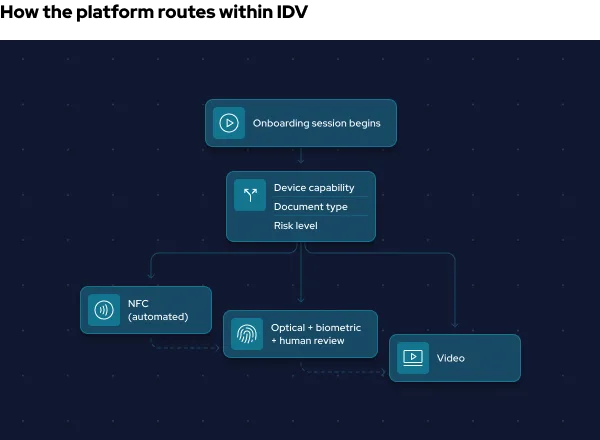
                    When it comes to travel, most people are aware how stressful it can be getting to a destination. With digital identity verification at the forefront, waiting times are over allowing travelers to enjoy that cocktail on the beach sooner than expected.

                    With the travel industry booming once more, many people are booking their long-awaited vacation to far-off destinations around the globe. However, a majority of customers have directed their focus to booking their travels online with around 82% of travelers booking through a website or mobile app. Technology has taken the front seat when it comes to travel, and not only through booking, but the entire journey of the traveler.

                    It is estimated that around 700 million people will make a booking online in 2023, as people around the world click, book and leave on a jet plane to their dream destinations. Thus, it’s no surprise that the online travel market has been valued at $2.3 trillion in 2023 and will only go up from there with an estimated compound annual growth rate of 10.3%. But despite this surge in travel, with it comes the insecurities of fraud as well as the long waiting times throughout the journey from booking to arrival.

                    Online travel fraud awareness.

                    Travel fraud is a growing problem in the industry, with many different types facing travelers and booking platforms. Specifically in air travel, airlines account for 46% of all online fraudulent transactions, so it’s no surprise that airlines lost over 6.5 billion to fraud in 2021. Even the International Air Transport Association (IATA) estimates that the airline industry suffers about $858 million a year, coming out to $639 million just for the airlines in payment fraud.

                    But what are the most common types of online travel fraud? Perhaps the most obvious, and what’s costing airlines millions of dollars, is stealing payment and personal information such as credit card fraud and using stolen payment information for last-minute bookings or hotel price spikes.

                    While credit card fraud and identity theft are two of the more widely known types of travel fraud, there are many other forms that can be just as damaging. Such instances include:

                    • Travelers finding themselves victims of scams such as fake bookings or hidden fees on hotel rooms or airline tickets
                    • Phishing attacks, where criminals attempt to gain access to sensitive personal information by pretending to represent legitimate companies
                    • Ticketing frauds like double booking flights
                    • Cyberattacks targeting airline loyalty programs

                    Additionally, data breaches on online booking platforms have become increasingly common. A data breach is when sensitive information, such as credit card details, passport or address information, is accessed without authorization. In the context of travel bookings, this information is often collected by third-party booking platforms, making it vulnerable to travel fraud. Hackers can use compromised data to book unauthorized trips or even sell that information on the dark web for monetary gain.

                    As technology continues to advance, so do the methods used by criminals to take advantage of unsuspecting travelers – making it essential for everyone involved in the travel industry to stay vigilant against these kinds of threats.

                    Hotel fraud in the hospitality industry.

                    Learn more about the different types of fraud in the hospitality industry and how to secure your booking platform.
                    Get your free copy
                    first cover page hotel_lead

                    Planning ahead for a seamless journey.

                    But despite the threats and negative consequences that fraud causes in the travel industry, digital identity is there to step in not only to prevent fraud from occurring but to make travel seamless for both travelers and booking platforms.

                    When it comes to digital identity verification, verifying travelers before they even check-in to a hotel, vacation rental or flight can provide security for both guest and host. By asking for a form of identity verification in advance, this allows hosts to know they are doing business with honest and responsible individuals and the guests in turn can rest assured they are using a verified site to book their travel needs. Even world-renowned rental platform Airbnb expanded their ID verification earlier this year to require all rental customers and hosts to verify themselves through an ID check with biometrics and in some cases selfie, to help better manage fraud and hold guests and hosts accountable for their actions. But it doesn’t end there.

                    Along with upfront security, by asking for verification in advance, hosts and travelers can save time later when they are checking in to their rooms, homes or flights making the journey less stressful just like a vacation should be. By optimizing booking, the time that verifying identity would take up later during check-in can be spent instead already getting settled into a seat on a plane or unpacking in that nice hotel that was booked. All that is needed later is a smartphone for a quick digital check-in.

                    Furthermore, by preparing all verifications in advance, there will be fewer documentation requirements later and no need to continually have to search for them in bags at the airport or at the accommodation. Eurostar has already begun using such systems at London’s St Pancras International Station where travelers have the ability to go contactless when verifying their identity at pre-departure gates. Paperless verification is just over the horizon as digitalization becomes the norm.

                    Digital Identity Verification—the best travel buddy.

                    With the many benefits that digital identity verification has to offer, travelers and hosts can truly be at ease when booking and accessing their trips. Efficiency is reached along with improving the customer experience.

                    Hosts need only implement ID verification when booking in order to receive the peace of mind that guests are who they say they are. Once that has been approved, which only takes a couple of minutes, hosts can focus more on the customer experience which in reality they already did. By providing an easy-to-use verification system when booking, guests will know they are not only using a safe site, but also are saving time later when traveling.

                    IDnow’s verification services provide travel businesses with the assistance they need in order to implement a seamless experience for them and their guests. With fraud on the rise in the travel industry, especially data breaches and stolen payment and personal information, our fully automated identity proofing solutions provide the ease needed to verify customers’ IDs along with age and address verification. Our solutions protect your business in real-time and offer worldwide document coverage.

                    Waiting times are over with digital identity verification.

                    By

                    Edouard Baussier

                    Edouard Baussier
                    Global Mobility and Travel Sales Director at IDnow  
                    Connect with Edouard on LinkedIn

                    Table of Contents

                    Ready to partner with IDnow?

                    Turn faces into trusted identities.

                    We sit down with financial crime investigator, Jinisha Bhatt, to discuss the link between money laundering and human trafficking, the role of technology, and the importance of collaborative relationships.

                    When people talk about the ramifications of financial crime like money laundering, they often mention the impact to the financial system, or to a business, but you also talk about the ‘very human cost of financial crime’. Could you expound?

                    When I first began to investigate financial crime, what struck me most about incidents of money laundering, corruption, and human trafficking was how they serve to undermine legitimate businesses and governments, and in turn, society.  

                    You see the starkest impact of a corrupt, fincrime-ridden society on the most marginalized of groups. Indeed, there’s a direct correlation between the rate of fincrime and violent crime.

                    What is the link between money laundering, and, for example, human trafficking or exploitation? What non-financial impact would the eradication of financial crime have on society and humanity?

                    As financial inclusion is the means to a more peaceful, equitable and just society, the eradication of fincrime would enable an equal distribution of public and private wealth – away from the underbellies of the launderers and corrupt officials to the public.  

                    In turn, this would mean better social services, safer cities, better education, and a higher rate of social and economic mobilisation. 

                    The biggest driver of a prosperous nation is not only wealth, but equal and fair wealth distribution.

                    It is estimated that less than 1% of criminal proceeds from human trafficking and exploitation flowing through the banking system ever gets detected, and of that only 0.8% of traffickers are prosecuted – while a mere 0.2% of victims are rescued annually. What are the reasons for these weak numbers, especially the 1% detection rate?

                    Trafficking is a transient crime. If institutions fail to detect trafficking activity while it’s happening in a specific location, it is too late to pass on any intelligence to regulators and law enforcement. To improve detection measures, financial institutions could be more focused on creating non-transactional detection rules, such as frequent changes to device metadata and device language, frequent credit card cancellations, and frequent use of certain keywords in transaction memos. To strengthen intel-gathering measures, financial institutions could also:

                    • Geomap frequently-used ATMIDs and/or branch locations
                    • Run adverse media searches on client usernames/aliases
                    • Conduct regular Open-Source Intelligence (OSINT) investigations on suspicious users and their associations.  

                    From first-hand experience, I am convinced that the biggest reason we fail at prosecuting criminals and rescuing victims is a lack of collaboration between, and within, the public and private sectors. One of the major explanations for a lack of collaboration are some very stringent and outdated privacy regulations. For example, many large institutions with substantial data sets work with legacy systems. There are many sophisticated AI and DLT-based tools that enable safe data-sharing in an encrypted manner.  

                    Another reason we struggle to rescue victims is a lack of victim-centered services. Many survivors struggle to find safe and prolonged housing, especially when they struggle with addiction. The lack of readily available and survivor-centered services contributes to a high revictimization rate. It is said that an average survivor is revictimized between 5-13 times before they are emancipated. And in this process, victims are financially excluded by institutions, especially when their credit rating and identity has been compromised by their perpetrators.

                    Could you talk a little more about your work in locating traffickers, in particular through the use of technology?

                    As a financial crime investigator, I came to realize that the industry’s approach to anti-trafficking investigations is fragmented. Data suggests that many countries have identified less than 1% of human trafficking victims in their jurisdiction. The rate of prosecution in many jurisdictions is also about 1%. My goal is to leverage technology and data to bridge the intelligence gap, and take in as many survivors as possible, while supporting law enforcement investigations. My team of volunteers and I implement various data, geomapping, and OSINT tools.  

                    For example, in partnership with data and machine learning engineers, we scrape escort ads on active escort forums in individual cities, then process the data, and deploy machine learning tools to predict where the most egregious of trafficking activity might be occurring.  

                    We then partner with Anti Money Laundering and OSINT investigators to create intel files on trafficking entities with a high-risk score.  

                    We then use geomapping tools to cluster and map the most illicit trafficking networks so that our field intelligence volunteers can approach victims and extract them in a safe manner. We also send our intelligence files to law enforcement organizations, financial regulators and non-profit partners.  

                    Our success is contingent upon true interdisciplinary action and many technological solutions.

                    Jinisha Bhatt, financial crime investigator.

                    Would you say this unique approach to financial crime investigations helps or hinders your work at times? What more can be done to educate institutions on the link between financial crime and human trafficking and terrorist financing?

                    I would say that this approach is a timely reminder that we need to look beyond a series of transactions and financial patterns when investigating financial crime. Often, the most profitable crimes are also the most egregious and vile, and financial institutions simply cannot combat them single-handedly. It’s not just a matter of getting ‘more education’; it’s about nuanced and scenario-based education from lived-experience experts. It is high time that institutions worked in tandem with survivors, governments, victim services, forensic services, law enforcement, and of course, each other.

                    You have recently shifted into the crypto sphere, is there a difference in the types of financial crime, or ease of financial crime execution, between crypto and tradfi?

                    My primary motivation to transition into crypto investigations was traceability and speed of transactions. Before I made the transition, I invested in a blockchain forensics designation and found myself beguiled by the infrastructure and the crypto compliance community at large. While many financial crime typologies are the same in defi and tradfi, as an investigator, I may have more transactional data at my disposal in the crypto space by virtue of distributed ledgers and block explorers. I also find myself conducting faster and proactive investigations while collaborating with other compliant crypto platforms.

                    What part does technology play in the detection of financial crime? As criminals continue to use increasingly advanced techniques, how can organizations stay one step ahead of the international networks to combat financial crime?

                    I believe our biggest challenge is the lack of effective and responsible info-sharing among organizations.

                    While individual organizations may have the best tools and talent at their disposal, their vantage allows them a narrow view of the juggernauts of financial crime operations.

                    Jinisha Bhatt, financial crime investigator.

                    If we aim to be proactive, we must work together and deploy the best technology that is interoperable and collaborative. Some of the best use cases of predictive AI I have seen have been deployed in the anti-financial crime sector. They were largely successful when multiple financial institutions forged collaborative partnerships to combat crimes like human trafficking.

                    If you’re interested in more insights from industry insiders and thought leaders, check out one of our interviews from our Fintech Spotlight Interview series below.

                    By

                    Jody Houton
                    Content Manager at IDnow
                    Connect with Jody on LinkedIn
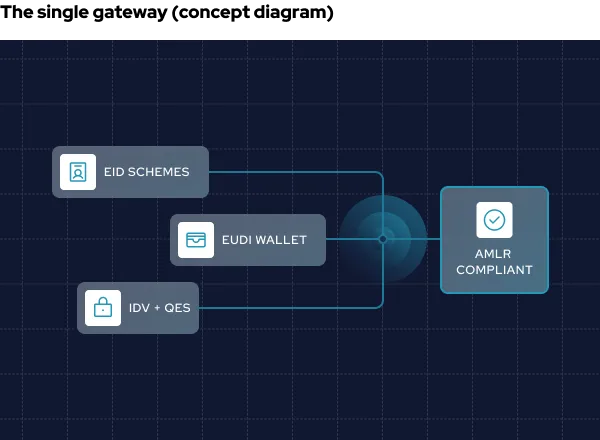
                    Does the release of the UK government’s fraud strategy signal the start of a new era of fraud prevention?

                    Fraud appears to be high on the UK’s political agenda at the moment, and with good reason. Consistently ranked as the fraud capital of Europe, the UK loses almost £3 billion a year to it. In fact, Britons are almost 9x as likely to be victims of scams than their German counterparts, with 134 cases of card fraud per 1,000 people in the UK.  

                    So, in May 2023, when the UK government published its new fraud strategy, which it claims will reduce fraud by 10% by 2025, there was a collective sense of relief from the government, private sector and most resoundingly from law enforcement. Despite fraud amounting to 40% of all crime in the UK, the UK’s law enforcement services dedicate less than 1% of their resources to investigate and tackle the fraud epidemic in the UK. The new fraud strategy aims to rectify that and has earmarked £100 million of additional funds to bolster law enforcement efforts. 

                    In the Foreword to ‘Fraud Strategy: Stopping Scams and Protecting the Public,’ Home Secretary, Suella Braverman spoke of the need for coordinated collaboration between the police, the public and private sectors, as well as “allies abroad.” 

                    Industry can do more to protect its customers, our citizens, and businesses. The financial sector has worked with us for a long time on fraud. Whilst I welcome their continued efforts, I challenge them to go further. But it is other industries, especially online technology giants, who should do more to stop criminals exploiting their services and should never profit from online crime.

                    Home Secretary, Suella Braverman.

                    What is the definition of fraud in the UK?

                    The definition of fraud is the attempt to gain or cause a loss of money or other owned goods through an act of dishonesty, deception, or breach of trust.

                    Fraud is quite a broad and umbrella term for crimes that vary widely in nature. The most common type of fraud in the UK is card fraud, affecting almost one in five Brits. The average UK card fraud incident costs £8,833.20, nearly £3,000 more than its closest rival, France. Discover more about the steps that online casinos are taking to safeguard themselves against card-not-present fraud here.

                    “Fraud has been a serious threat in the UK for many years. This is partly as a response to the English language not only being the lingua franca for business, but also for crime. Other explanations for the comparatively high rate of fraud are the kingdom’s comparative wealth, and fast and frictionless payment systems,” said Lovro Persen, Director Document and Fraud at IDnow.

                    What is the difference between authorized fraud and unauthorized fraud?

                    Fraud falls into two distinct categories: authorized fraud (tricking the victim into willingly transferring funds) like romance fraud, and unauthorized fraud (stealing details from the victim to make unauthorized transactions), like account takeover fraud, and identity fraud.

                    [Discover how one woman is exposing romance scams in our blog, ‘What’s love got to do with it? Exposing the romance scammers, with Becky Holmes.’]

                    Partly due to banks stepping up controls, and implementing better and more secure KYC processes, there was an 8% reduction in the total amount stolen in 2022 (£1.2 billion) compared to 2021 (£1.3 billion). This was due to a significant decrease in unauthorized fraud.  

                    However, unauthorized fraud losses across payment cards, remote banking and cheques still totalled a whopping £726.9 million in 2022. Remote purchase fraud was the biggest category of losses at £395.7 million. Fraud on lost and stolen cards increased by 30% (to £100.2 million), and identity theft almost doubled to £51.7 million.

                    Discover about perhaps the darkest form of identity theft, ghosting fraud, in our blog ‘Ghosting fraud: Are you doing business with the dead?’.

                    What is the UK’s new fraud strategy?

                    The UK’s fraud strategy is supported by three key pillars:

                    Pursue fraudsters 

                    • Establish a National Fraud Squad with 400 new specialist investigators 
                    • Deploy new UK Intelligence Community 
                    • Replace Action Fraud with a state-of-the-art reporting system 
                    • Imprison more fraudsters 
                    • Lead a global partnership to pursue fraudsters worldwide
                       

                    Block fraudsters 

                    • Ban cold calls on all financial products 
                    • Ban SIM farms 
                    • Review use of mass text aggregators 
                    • Stop more spoof calls 

                      The UK government is also calling on the tech community to do their part in blocking fraud at an industrial scale. Some of the steps include: 
                    • Make the tech sector commit to protect their customers through legislation and voluntary commitments 
                    • Make it easier to report fraud on social media and the internet 
                    • Create new powers to take down fraudulent websites 
                    • Publish information about fraud levels on different platforms 

                    Empower the public 

                    • Support more victims 
                    • Reimburse more victims 
                    • Better communications about how to protect yourself from fraud, how to report fraud, and what to do if you become a victim of fraud 

                    The 66-page document also goes into detail as to the financial and emotional harm that fraud causes to businesses and victims.

                    Who is responsible for enacting the UK’s fraud strategy? 

                    Collaboration between the below agencies and departments will be integral for enacting the UK’s fraud strategy.

                    National Fraud Squad

                    Perhaps the most important: the UK’s brand new National Fraud Squad is made up of 400 specialist investigators and replaces the Action Fraud division.

                    Economic Crime Plan

                    A set of public-private sector actions to strengthen response to economic crime. Last updated in 2023.

                    National Cyber Strategy

                    Aims to improve resilience to cyber threats by pooling capabilities inside and outside government. Published in 2021.

                    Beating Crime Plan

                    Outlines the government’s general approach to tackle crime and protect the people, including “building capability and capacity to deal with fraud and online crime.” Published in 2021.

                    Intergrated Review

                    Features the government’s security, defence, development, and foreign policy priorities to tackle the threats to the UK’s sovereignty, security, and prosperity. Updated in 2023.

                    Serious and Organised Crime Strategy

                    Sets out the government’s approach to tackling serious and organized crime, of which fraud is identified as a priority. Published in 2018.

                    Digital Strategy 2022

                    Aims to strengthen the foundations of the digital economy and includes polices to enable the verification of trusted and secure digital identities. Published in 2022.

                    Tackling Public Sector Fraud

                    Outlines the strategy to tackle fraud against the Exchequer. Published in 2022.

                    Anti-Corruption

                    Will set out UK’s response to corruption and illicit finance in the UK and internationally. Publication expected 2023.

                    Lastly, of course, as per the UK’s new fraud strategy, the responsibility of preventing fraud and protecting customers should lie fairly and squarely with organizations that are handling customers’ data, and the big technology giants, to ensure they have robust enough controls in place to protect its users.

                    Customer attitudes to digital banking in the UK.

                    Discover what the UK public consider important, and unacceptable, in banking in 2022 and beyond.
                    Get your free copy
                    UK_bank_cover-2

                    Who is the UK’s Anti-Fraud Champion? 

                    Anthony Browne, MP for South Cambridgeshire, was recently appointed Anti-Fraud Champion – the first time such a role has ever existed in the UK. 

                    The tactic of creating new roles, and new divisions (National Fraud Squad; the Crypto Cell – designed to tackle crypto crime), and new names for old divisions (Action Fraud will soon be replaced by a new department] appears to be a popular approach for the current UK government.  

                    In a press release to announce the new fraud strategy, Browne was quoted as saying: 

                    The tech sector, phone companies and financial services firms must take responsibility for protecting their users by stopping fraud happening in the first place, and work together to design out fraud. We can use the technologies fraudsters are exploiting against them to stop them in their tracks, and I will work with industry to make sure that happens.

                    Anthony Browne, UK’s ‘Anti-Fraud Champion.’

                    How this will work, what activities will be involved, and how Browne will find the time to do so, considering the Anti-Fraud Champion is a voluntary and unpaid role, is still to be determined. It’s certainly a cause for concern for ex-police officer, Paul Stratton, for example. 

                    “Is giving this role to one MP enough? How is he going to do that amongst the constituency work, and other responsibilities?”  

                    Will the creation of these shiny new roles, alongside the other measures, make a marked difference to one of the world’s most lucrative fraud markets? 

                    The answers to these questions and Browne’s key priorities for his new role remain unclear for the time being, as no further details on his appointment have been made public. We contacted the Office of Anti-Fraud Champion Anthony Browne MP to ask for further information, but our interview was declined “due to diary constraints.” 

                    Read the rest of the interview with Paul Stratton, where we discuss the UK’s fraud strategy and why he thinks it misses the mark regarding education and awareness.

                    Too much fraud, not enough action.  

                    Action Fraud is the UK’s national reporting center for fraud and cybercrime. Victims of fraud and cybercrime can either report their crime to Action Fraud via a number [0300 123 2040], live chat, or by registering for an account and submitting details of the incident. Victims can also, of course, dial 999. On its website, it states: 

                    “When you report to us you will receive a police crime reference number. Reports taken are passed to the National Fraud Intelligence Bureau. Action Fraud does not investigate the cases and cannot advise you on the progress of a case.” 

                    Sounds confusing? Ex-police officer, Paul Stratton certainly thinks so. 

                    “Action Fraud is rebranding, and it needs to…. I don’t think people actually understand what they do. I think people see Action Fraud as this sort of police force, and they’re not. Not to diminish their work at all, but it’s very much like a call center and a data warehouse. It’s also not particularly easy to report [to them]. I’ve reported to Action Fraud before, and it’s not the easiest thing in the world to do. For example, a lot of people don’t know how to upload [documents]. If they get a suspicious email, do they know how to upload that email and put it into a PDF?” 

                    Action Fraud has received £152 million in funding to undergo a complete overhaul and update of its crime and intelligence management systems. The funding will also be used to “amplify, protect and prevent policing efforts” (providing the public with information on how to protect themselves against fraud), increase skills and resources to deliver an improved service, and “enhance the use of data and intelligence across law enforcement.” 

                    Angela McLaren, Commissioner of the City of London Police, said “The transformation of the current Action Fraud and National Fraud Intelligence Bureau is a much needed and critical component of the national fraud strategy.” 

                    New, ‘improved’ Action Fraud will: 

                    • Make it easier for everyone to report fraud and cybercrime. 
                       
                    • Protect more targeted and timely advice on how to avoid the latest fraud threats. 
                       
                    • Improve the speed and quality of information provided to law enforcement partners. 
                       
                    • Provide real-time information to institutions and organizations who can take down fraudulent websites, activities, and bank accounts. 

                    Response to the UK’s fraud strategy.

                    Lovro Persen, Director of Document and Fraud at IDnow believes the UK’s fraud strategy is a step in the right direction, but reiterates the need for collaboration between invested parties, and for companies to accept the responsibility they bear as part of concerted efforts to reduce and eliminate fraud in the UK. 

                    Fraud manifests at every step of the online customer journey – there is no one single silver bullet or catch-all. As fraudsters continue to innovate and collaborate, so must we across industry and government – the UK’s fraud strategy is the first step in the right direction.

                    Lovro Persen, Director of Document and Fraud at IDnow

                    Organizations need to go beyond what is required of them, from a regulatory and legal perspective, and ensure their product offering is safe and secure. In the past, organizations would often be faced with a tough reality: A fully protected and compliant platform would require extra checks and balances, thereby impacting the overall customer experience. 

                    Now, technology offers companies the ability to provide slick, streamlined and fully compliant customer journeys.

                    Technology: A gift and a curse.

                    The proliferation of online services, such as banking and shopping, has made UK citizens and businesses a prime target for fraudsters. According to the fraud strategy paper, the “adoption of new technologies by consumers, businesses and fraudsters is almost certainly the main driver of recent increases.” 

                    As explored in our recent blog, ‘Learning to live (and work) with ChatGPT and other AI forms,’ technology and the online world offers incredible opportunities to supercharge and optimize services and operations, but these same tools are also available to criminals who are exploiting them for illicit activities.  

                    Most fraud nowadays at least starts online. As huge amounts of data are now stored online, any data breach provides fraudsters with all the information they need to steal personal information and commit all manner of fraud.  

                    Spoofing via bulk text messaging services, enables fraudsters to target thousands of people at once, from seemingly genuine, local numbers. Technological advances like deep fakes have also ushered in a new playground for fraudsters to operate. 

                    Fraudster tactics are becoming increasingly complex and sophisticated. In fact, according to the UK’s Financial Ombudsman Service, which is often asked to assist in cases where an agreement between a consumer and financial firm cannot be reached, complaints are up, and are becoming increasingly complicated. 

                    Indeed, the UK’s Financial Ombudsman Service received 21,918 fraud and scam complaints in 2022-23 compared to 18,450 complaints in 2021-2022. Some of the most common scams include romance scams and pig butchering scams, and scams involving investments and cryptocurrency.

                    Fraudsters have become smart. It’s time to get smarter.

                    KYC processes are an integral part in ensuring businesses can protect themselves and their customers from fraud. At IDnow, we help put the power of identity back into the hands of businesses; helping to reduce friction for trusted users, preventing fraud, and detecting high-risk or anomalous behaviour. 

                    IDnow’s highly configurable identity verification services work across multiple regulations, industries and use cases, and our industry-leading fraud prevention technology ensures your business remains safe from increasingly complex attacks. With our latest round of platform enhancements, our identity-proofing methods, including document verification, biometric selfie and video liveness have been optimized to meet the strictest security standards and regulatory requirements without compromising on customer conversion or consumer experience.

                    In ‘The future of fraud and identity verification in the UK’ webinar, we gathered an eclectic mixture of experts, including an ex-fraudster and ex-police officer, read the summary blog here.

                    By

                    Jody Houton
                    Content Manager at IDnow
                    Connect with Jody on LinkedIn
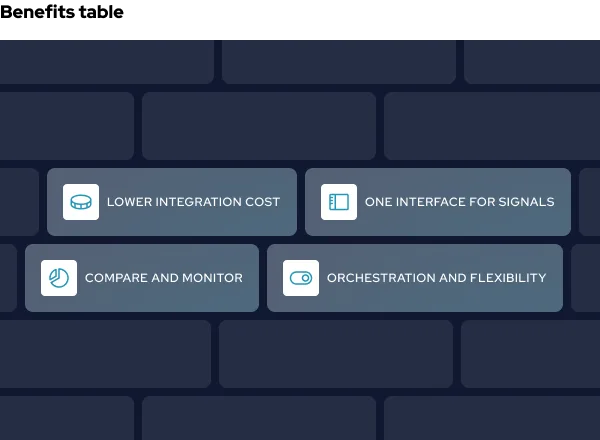


                    While the ethos of cryptocurrency may be partly rooted in anonymity, mass adoption and the subsequent increase in fraudulent activities, such as money laundering and terrorism financing, has forced legislators to step in and fill the regulatory void.

                    Binance and Coinbase, both leaders in crypto trading worldwide, are just two major players that have decided to enforce strong KYC policies, in order to comply with AML and KYC regulations, along with regulatory framework, MiCA. When registering on one of those platforms, users will invariably need to provide a government-issued ID, take a photo identification selfie, as well as provide additional personal data.

                    This KYC step will be, for many crypto users a relatively new experience. They will surely have undergone KYC in their traditional banking experience, but in the crypto realm, this will be an alien concept, or even the anthithesis of what they expect from a crypto platform experience. Many may look for platforms that have not implemented KYC. But in doing so, they are facing major risk. Let’s first start by looking at what exactly is KYC, and KYC verification.

                    What is KYC verification?

                    KYC verification refers to the mandatory step that companies take to ensure their customers are who they say they are. While KYC verification has been a legal requirement for industries like financial services for decades, increasing numbers of other sectors, such as gambling and crypto are beginning to adhere to the same stipulations and regulations.

                    Discover more about KYC verification on our comprehensive ‘What is KYC’ overview page.

                    What is KYC in crypto?

                    A KYC process for a crypto platform is, for all intents and purposes, very similar to a KYC process for a traditional banking service. This is because the goal is the same: to identify and verify customers, and carry out periodic monitoring of account transactions. There are, however, some key differences, that are mainly based on the type of customers using the platform, and their expectations for more streamlined and technologically-enhanced processes. 

                    As traditional banks still tend to rely on in-person interactions, the expectation of a traditional banking experience is for bank staff to check documents, and cross reference photo identity with the applicant onsite. This is especially the case with high value products like iSAs. 

                    As crypto platforms, however, are all exclusively online, firms must onboard customers and complete the KYC process completely digitally. Customers therefore assume and expect a faster, sleeker and more secure cutomer experience of KYC, especially for a community where KYC requirements are only a relatively recently development. To offer a superior online experience, while proactively preventing increased risk of online fraud, crypto firms must therefore employ specific verification tools, such as AI-enabled document verification, advanced biometric selfies and video liveness checks. 

                    One of the major differences between KYC for crypto and KYC for traditional banking is how each does transaction monitoring, and ongoing Customer Due Diligence. When dealing with suspicions of fraudulent activity, like fraud or money laundering, banks can stop or reverese transactions and easily block accounts, but due to the decentralized nature of crypto, transaction monitoring is more complex, by design. Crypto firms must therefore rely on blockchain analytic tools to trace origin and movement of funds. 

                    Why do some crypto users avoid KYC?

                    People bypass KYC requirements on crypto platforms for multiple reasons. Sometimes, they’re specific to a country or region. For example, in 2018 in India, a 30% crypto tax was imposed, leading many Indian crypto users to exchange crypto and rupee themselves.

                    Other times, they’re more general. These reasons include: 

                    • Some users believe identity verification goes against the ethos of cryptocurrency; 
                    • Some users fear that submitted documents could be sold to a third party;
                    • General concerns over data privacy
                    • Others may want to avoid sanctions, embargoes, or PEP screening lists; 
                    • Illicit organizations looking to access crypto exchanges to launder money; 
                    • Other users may want to evade tax; 
                    • Underage users looking to trade cryptocurrencies. 

                    For these reasons and more, some users may resort to dubious methods to avoid KYC checks. 

                    However, bypassing KYC and identity verification is likely to have not only serious consequences for crypto users, but also cause regulatory difficulties for crypto operators.

                    Upcoming regulatory regimes.

                    The Markets in Crypto Assets (MiCA) regulation, which received a majority 517 votes from European Parliament lawmakers in favor of the crypto licensing regime in April 2023, aims to protect investors and preserve financial stability, while allowing for greater innovation in the crypto asset sector. 

                    MiCA will not apply to non-European crypto service providers unless they target EU investors or offer their services in the EU. However, national competent authorities in the EU may require non-European crypto service providers to obtain a MiCA authorization if they provide cross-border services into the EU. 

                    Countries, such as the UK are devising their own national regulatory framework for the crypto market. Read more on UK’s proposed crypto regulations in our blog.

                    Regulations that apply to crypto companies in Europe.

                    Fifth Anti-Money Laundering Directive (5AMLD)

                    The 5AMLD, issued in January 2020, requires crypto asset service providers (CASPs) to comply with anti-money laundering (AML) and counter-terrorist financing (CTF) regulations. CASPs must conduct customer due diligence (CDD), implement risk-based AML programs, and report suspicious transactions to the relevant authorities.

                    Markets in Crypto-assets Regulation (MiCA)

                    MiCA is a regulation aimed at creating a comprehensive regulatory framework for crypto assets in the EU. It introduces requirements for issuers of crypto assets, crypto asset service providers, and digital asset custody providers. It aims to establish a consistent and harmonized approach to regulation across EU member states.

                    General Data Protection Regulation (GDPR)

                    GDPR, in effect since May 2018, applies to crypto companies that handle personal data of individuals within the EU. It imposes obligations on data controllers and processors, including obtaining consent, implementing data protection measures, and ensuring the rights of data subjects are respected.

                    Payment Services Directive 2 (PSD2)

                    PSD2, implemented in January 2018, regulates payment services within the EU. It affects crypto companies that provide payment services or interact with traditional payment systems. PSD2 establishes requirements for strong customer authentication (SCA) and imposes obligations on payment service providers.

                    Capital Markets and Securities Directive (MiFID II)

                    MiFID II, in effect since January 2018, applies to crypto companies that provide investment services, such as crypto exchanges or platforms offering crypto derivatives. It introduces requirements for authorization, investor protection, transparency, and reporting.

                    Various Tax Regulations

                    Crypto companies operating in Europe must comply with tax regulations applicable to cryptocurrencies. Tax treatment can vary across countries, but typically involves reporting crypto transactions, capital gains taxation, and potential value-added tax (VAT) obligations.

                    Electronic Money Directive (EMD) and Payment Services Directive (PSD)

                    The EMD and PSD provide a regulatory framework for electronic money institutions (EMIs) and payment service providers (PSPs). Crypto companies offering services such as crypto wallets, prepaid cards, or remittance services may fall under these directives and must comply with their provisions.

                    It is important to note that regulations and their application can vary across EU member states. Companies should closely monitor updates from regulatory authorities, seek legal advice, and ensure compliance with the relevant regulations in the jurisdictions where they operate. 

                    Common crypto compliance mistakes.

                    There are several compliance mistakes that many new crypto companies make when they first launch. These mistakes can lead to legal and financial difficulties, damage to reputation, and hinder long-term growth. Some of the most common mistakes that new crypto firms make with their compliance programs include:  

                    Lack of regulatory compliance.

                    Ignoring or underestimating the importance of regulatory compliance is a common mistake. Crypto companies need to understand and adhere to the legal and regulatory requirements of the jurisdictions in which they operate.  

                    Failure to comply with Anti-Money Laundering (AML) and Know Your Customer (KYC) regulations, securities laws, tax obligations, and other relevant regulations can result in hefty fines, legal actions, or even shutdowns. Read more about how the dangers of money laundering in the crypto sector in our latest blog, ‘How criminals leverage non-compliant crypto exchanges for money laundering.’

                    Inadequate security measures.

                    Crypto companies must prioritize security due to the highly sensitive nature of the data they exchange. Failing to implement robust security measures, such as strong encryption, secure key storage, and comprehensive cybersecurity protocols, can leave them vulnerable to hacking, theft, and fraud. Breaches can result in significant financial losses, legal liabilities, and erosion of user trust. 

                    Poor risk management.

                    Effective risk management is crucial in the volatile world of cryptocurrencies. Companies need to identify and assess risks related to market fluctuations, operational vulnerabilities, technological risks, and regulatory changes. Failing to implement risk management strategies, such as diversifying investments, establishing contingency plans, and conducting regular risk assessments, can leave companies exposed to unexpected losses and instability. 

                    Poor governance and internal controls.

                    Establishing strong corporate governance practices and internal controls is essential for the long-term success of crypto companies. Inadequate governance structures, such as a lack of independent board members or conflicts of interest, can create reputational risks and regulatory scrutiny. Weak internal controls, including inadequate financial reporting or weak auditing practices, can lead to financial mismanagement, fraud, or non-compliance with regulatory requirements. 

                    To avoid these mistakes, crypto companies should invest in robust compliance programs and a dedicated compliance officer, prioritize security measures, and implement effective risk management practices. A KYC program is integral in offering a safe and secure crypto platform.

                    Regulatory risks of missing KYC.

                    While KYC processes prevent most users from signing in without proper screening, these restrictions have created a business opportunity on the black market. Indeed, for a small amount of money, marketplaces on different dark webs now offer vetted accounts on crypto exchanges and other payments services. 

                    For prices ranging from $150-$500, you can now buy an approved account on peer-to-peer trading platforms, professional crypto exchanges, or mainstream payment services. These accounts are either created with a fake name, address, and identification documents, or with genuine data obtained by illicit means. 

                    In an investigation from specialized news outlet, CoinDesk, fake accounts on the exchanges Binance US, Coinbase Pro, and payment services Cash App and Wirexwere were reviewed by a reporter. Analysis revealed that most accounts belonged to genuine United States and European citizens, and came with instructions on how to use VPN networks. Most importantly, it was also found that credentials for email addresses were linked to Google Voice numbers, which is sometimes used as a tool by fraudsters to create fake accounts. 

                    Some users went to extraordinary lengths to adopt specific behavioral patterns, for example matching the geolocation of victims, or keeping to transaction limits. It is therefore likely that some users were able to access crypto wallets by using other individual’s accounts, thus evading KYC checks. Fake crypto exchange accounts are just a small subset of the global black ID market; an industry boasting more than 15 billion different types of credentials, as reported by cyber consultancy firm Digital Shadows. 

                    Fraudsters leveraging data for illicit purposes represent a major risk for cryptocurrency platforms and service providers. Regulators including the U.S. Office of Foreign Assets Control (OFAC) have already fined cryptocurrency exchanges like BitGo for violations of U.S. sanctions programs, alleging the platform had allowed – even unknowingly – individuals from Syria, Iran, Sudan, and Cuba to access and use its trading services.

                    Read more about the the novel, and potentially problematic approach by new crypto platform, Worldcoin to eschew traditional customer onbroading in favour of iris scans.

                    KYC as a support for crypto market development.

                    Despite the popularity of the black market trade in verified accounts, it is still possible to mitigate those risks by leveraging robust KYC processes. However, to increase the likelihood of customer adoption, onboarding processes must remain as simple, safe and secure as any other financial service. The robustness of KYC processes must be analyzed and put to the test. 

                    Although crypto enthusiasts might see KYC processes as a diminishing factor for adoption, Binance’s CEO Changpeng Zhao told Bloomberg that implementing such rules had had only little impact on business; just 3% of customers were lost after implementing a robust KYC process.

                    We have chosen to go with full compliance, full mandatory KYC for global users, for every feature. We feel that being compliant will allow more users to use us. Most people do feel more comfortable using a licensed exchange. Most people – 97% of users – go through KYC. We lose only 3% of users.

                    Changpeng Zhao, CEO at Binance

                    By using a layered approach and combining different identification methods, crypto platforms can rest assured that their customers are who they say they are. While a selfie in isolation may not keep the fraudsters at bay, when combined with video identification, in addition to collecting official documents, it forms part of a solid and robust KYC process.  

                    KYC processes must be painless for the user, and take place in a user-friendly environment to keep the onboarding experience as seamless and intuitive as possible. Automated identity verification, powered by artificial intelligence and combined with screening mechanisms and geolocation checks, provide an unparalleled solution to mitigate risks brought by fraudsters trying to circumvent KYC processes.  

                    Respecting these conventions will allow exchanges to participate in the democratization and mass adoption of cryptocurrencies, while deterring fraudsters. 

                    Cryptocurrency platforms & KYC mechanisms.

                    Although it is still possible to buy crypto without completing a KYC check, it is a more complicated and risky thing to do (as such platforms offer no protection if something was to go wrong), when compared with an exchange that complies with KYC requirements.

                    Crypto firms expanding into the European market now have to comply with the European Union’s Fifth Anti-Money Laundering Directive (AMLD5). As such, platforms should take steps to enhance their KYC and AML procedures (see our Crypto KYC Page), which will ultimately benefit both the users, and the platform itself. 

                    What can traditional banking learn from crypto exchanges? Check out our Fintech Spotlight Interview with crypto and compliance consultant, Brandi Reynolds.

                    Crypto in KYC — Growth through trust.

                    Learn what exactly are the new crypto industry trends everyone is talking about and the regulations that are following.
                    Get your free copy
                    Crypto_EN-cover

                    By

                    Jody Houton
                    Senior Content Manager at IDnow
                    Connect with Jody on LinkedIn

                     

                    Table of Contents

                    Ready to partner with IDnow?

                    Turn faces into trusted identities.

                    Munich, July 4, 2023 – IDnow, a leading identity proofing platform provider in Europe, has achieved the ISO 27001 certification for IDnow GmbH. With this latest certification, all of the group’s entities that build and operate its solutions are fully certified against this scheme.

                    ISO/IEC 27001 is an internationally recognized security standard for certifying an information security management system (ISMS). With ISO/IEC 27001, IDnow implements requirements and processes to manage, control and continuously improve the information security of the company.

                    Following the ISO/IEC 30107 certificate for its VideoIdent solution and the ETSI TS 119 461 certification, this latest certification further underlines IDnow’s efforts in maintaining the highest level of data security and privacy for its customers and partners in the financial services, crypto, mobility, telecommunications or gaming industries.

                    Secure and compliant digital identity platform

                    As the identity verification industry is maturing, certifications such as the ISO/IEC 27001 are becoming necessary to assure customers and partners of the quality of IDnow’s platform for identity proofing. The certification encompasses the development, maintenance and operation of secure and compliant identity verification solutions, and signature and complementary services for a digital identity platform.

                    “As one of the key players in the European digital identity market, security is at the heart of what we do, particularly with regard to sensitive internal and customer data. This certification thus marks a significant milestone in our commitment to delivering the most secure identity verification solutions to our customers and partners. We are all incredibly proud of this achievement, which would not have been possible without the hard work and dedication of our security and audit teams”, says Armin Bauer, Chief Technology and Security Officer and Co-Founder at IDnow.

                    Categorized as a major threat to the stability of the financial system since the late ‘80s, what more can be done to tackle the global trade in dirty money? 

                    In 1989, the Financial Action Task Force (FATF) was created to address the emerging threat posed by money laundering and terrorism financing, and provide some much-needed stability to the financial system. 

                    However, more than 30 years later, the dangers of the trade in dirty money still looms large. In fact, according to the United Nations Office on Drugs and Crime, up to $2 trillion is laundered every single year.  

                    In a June 2023 report, the European Banking Authority announced that money laundering and terrorist financing risks were still not being managed effectively by EU payment institutions, citing insufficient AML/CFT internal controls. Findings from the report indicated that as some authorities were not supervising their sector effectively, payment institutions with weak AML/CFT controls were still managing to operate in the EU by establishing an entity in a member state where authorization and AML/CFT supervision processes were less stringent. 

                    Money laundering leads to unreliable changes in money demand, major risks to a bank’s soundness, affects the legality of financial transactions, and wreaks havoc on exchange rates due to unanticipated cross-border asset transfers. 

                    So, what more can be done, and how can you better protect your business and your customers from the scourge of money laundering? Below, we share some of the most common red flag indicators associated with money laundering.

                    Check out our blog to discover the benefits of KYC in the banking sector.

                    What is money laundering?

                    In short, money laundering refers to the act of obscuring the source of ill-gained funds, and injecting them into the legitimate financial system. In 1988, the United Nations Vienna Convention Article 3.1 defined money laundering as:

                    The conversion or transfer of property, knowing that such property is derived from any offense(s), for the purpose of concealing or disguising the illicit origin of the property or of assisting any person who is involved in such offense(s) to evade the legal consequences of his actions.

                    The United Nations Vienna Convention Article 3.1 (1988)

                    For a more detailed explanation of how money laundering works, read our ‘Explaining the 3 stages of money laundering’ blog. Or, if you’re interested in how money laundering is threatening the stability and integrity of online casinos, read our blog.

                    Organizations fighting back.

                    As money laundering is transnational by nature, many international coalitions have been developed in a bid to tackle the issue. Some of the major groups focused on combating money laundering and adjacent offenses include the FATF, the Egmont group (composed of 166 Financial Intelligence Units [FIU]), Interpol, Europol and UNODC. 

                    Different legal frameworks and regulations have also been created to support anti-money laundering efforts. For example, in the European Union (EU), there have been multiple AML directives (the latest being AMLD 6) featuring requirements, tools and processes for EU countries, their respective authorities, and “selected obliged entities”. 

                    A proposal part of a legislative package to strengthen European AML/CFT rules also laid ground for the creation of a supranational body – the Anti-Money Laundering Authority (AMLA), which should be created this year and become fully operational by 2026.

                    6 money laundering red flag indicators.

                    1. Unusual transaction patterns: Different transactional patterns can indicate when money laundering is taking place. Fast-paced transactions coming and going, significant increases in frequency or value, structuring schemes to break down deposits as well as inconsistent transactions regarding the client’s activities should all raise eyebrows and hint at suspicious activities. 
                    2. Cash-intensive activities: As cash is the major facilitator of money laundering, cash-related businesses are prime targets for money launderers. They offer an unparalleled opportunity to move funds with extremely limited monitoring, and relatively easy ways to escape controls. Businesses with a high volume of cash transactions (casinos, restaurants, grocery stores) or with no apparent justification for cash transactions (construction companies, service providers) may contribute to money laundering schemes. Important controls have been implemented in regulatory frameworks to hinder money laundering, such as reporting thresholds for cash transactions, deposits, or withdrawals.
                    3. Third party relationships: Finding the beneficial ownership of companies in tax havens is an uphill battle, and will remain so, especially in countries with less clear regulations. Money launderers may use third parties to create complex transaction chains, involving multiple accounts or intermediaries, to obscure the trail and source of illicit funds. Some laundering schemes will also appeal to complex international ownership structures, and leverage shell or offshore companies with nominees to hide beneficial ownership. Transactions from Politically Exposed Persons must also be considered when looking for signs of money laundering.
                    4. Specific geographical areas: Some countries are more exposed to corruption, organized crime, and money laundering than others, due to weak regulatory systems and poor governmental oversight. When monitoring transactions, geolocation data might be an indicator of suspicious activities. To support transactional analysis, the Basel AML index and Corruption Perception Index are always helpful to put into perspective global money laundering risks per country.
                    5. Deficient financial systems: “Finding the weakness” could be the motto for money launderers. Whether it is corruption-enabled, lack of proper KYC/AML program implementation, or simply weak regulatory framework, some financial systems are easier than others to launder money. In particular, inadequate due diligence processes or weak internal controls within a financial institution are especially interesting for people looking to hide the source of their funds.
                    6. Technology-enabled money laundering: Digitalization and technological developments have been powerful enablers of money laundering, and opportunities are countless. The emergence of cryptocurrencies and virtual assets provides an additional layer of anonymity to be exploited, on top of decentralized or peer-to-peer exchanges. For example, funds going through an account and instantly converted into crypto might be flagged as suspicious. Read more about the need for cryptocurrency compliance and regulation in our ‘How criminals leverage non-compliant crypto exchanges for money laundering’ blog.
                       
                      Darknet marketplaces also facilitate illicit transactions and provide means to acquire fictitious identities. Darknet visitors are able conceal their identity or location thanks to specific protocols, VPNs, or proxy servers.  

                    AML measures and deterrence mechanisms.

                    Having a robust AML program is essential to effectively deter money laundering. Countries with strong AML regulatory frameworks now enforce fines and administrative sanctions on actors who fail to demonstrate effective AML programs. For example, the French institution Autorité de Contrôle Prudentiel et de Résolution in charge of monitoring the activity of banks and insurances can impose fines up to€100 million or 10% of a company’s annual turnover. In 2020, the UK’s Financial Conduct Authority fined the London branch of the German Commerzbank £37 million, “for failing to put adequate anti-money laundering (AML) systems and controls in place between October 2012 and September 2017.”  

                    To remain compliant and avoid being sanctioned by authorities, having your reputation damaged, and incurring fines, improving these three pillars can drastically help:

                    1. KYC processes: Implementing thorough KYC procedures is crucial for financial institutions. This involves verifying the identity of customers, understanding their business activities, and assessing the legitimacy of the funds involved in transactions. Enhanced due diligence measures may be applied for higher-risk customers, such as PEPs or high net worth individuals. KYC obligations are now largely informed by national or supranational regulations, such as AML directives in Europe.
                    1. Transaction monitoring and reporting: Transaction monitoring plays a vital role in tackling money laundering by identifying and flagging suspicious financial transactions for further investigation. Rule-based and behavior-based analytics, detection of unusual activity and real-time monitoring are all actions that can help detect suspicious patterns and support further investigations.
                    2. Collaboration and information sharing: Financial institutions are required to file suspicious activity reports (SAR) through dedicated channels with their respective authorities, whenever there are reasonable grounds to suspect money laundering. Enhancing public-private partnerships is therefore one of the main ways to successfully tackle money laundering. As a global issue, money laundering also requires international cooperation and information sharing among different countries and regulatory bodies. Collaboration facilitates the exchange of intelligence, supports investigations, and assists in tracing and recovering illicit assets across borders.

                    Combating money laundering for the better good.

                    Money laundering poses a significant threat to the integrity of financial systems and can have severe consequences for global security. According to the International Monetary Fund, “Countries with weak AML/CFT regimes are subject to the negative effects that large international criminal organizations can have on their economic growth and financial stability.”  

                    With IDnow’s proprietary fraud prevention technology, you can conduct identity verification checks to prevent fraudulent activity such as account takeover, identity theft, and money laundering.

                    Frequently Asked Questions (FAQs)

                    What are the main AML red flags? 

                    Common red flags include large cash transactions, structuring transactions to avoid reporting thresholds, rapid movement of funds, unusual customer activity, lack of business justification, dealing with non-resident customers or Politically Exposed Persons, offshore transactions, unregistered or unlicensed entities, and lack of proper documentation.  

                    What is an example of a red flag in AML? 

                    One example of a red flag in AML is a sudden and unexplained increase in cash deposits or withdrawals in a customer’s account. For example, if a customer who typically makes small transactions suddenly starts depositing or withdrawing substantial amounts of cash without an apparent reason, it could indicate potential money laundering activity.  

                    What are some red flags in banking? 

                    In banking, unusual cash deposits or withdrawals, rapid movement of funds, multiple accounts with similar names or unusual customer behavior could indicate money laundering activities, prompting the need for further investigation or the need to submit a SAR to the national FIU. 

                    By

                    Jody Houton
                    Senior Content Manager at IDnow
                    Connect with Jody on LinkedIn
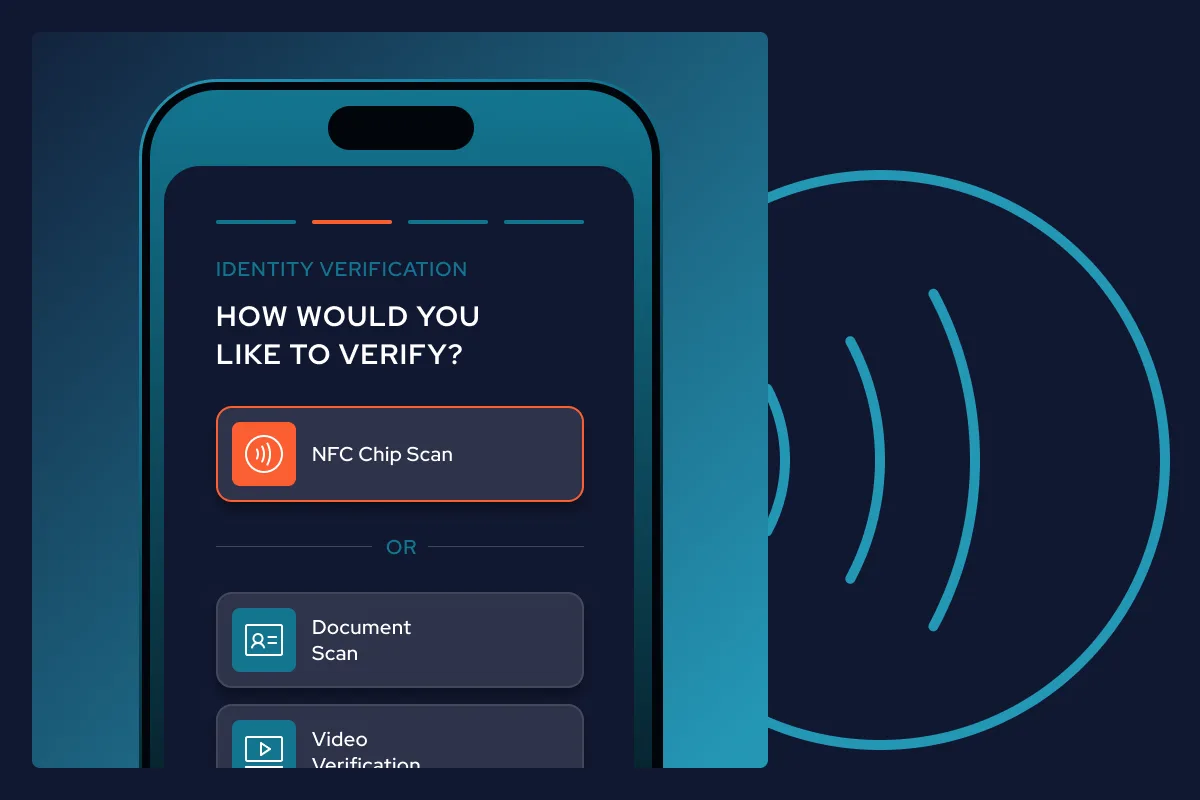
                    Table of Contents

                    Ready to partner with IDnow?

                    Turn faces into trusted identities.

                    Exploring the challenges, opportunities, and necessity for cross-functional collaboration.

                    Attempting to draw similarities between two different industries may not seem the most productive use of one’s time, but there are valuable insights to be gained, if you look hard enough. Let us take the financial services and gambling industries, for example.  

                    Besides the obvious risks in the financial market and the speculative nature of trading, the banking and gambling industry have more in common than one might expect.  

                    Both face similar risks, including operational risk, regulatory compliance, money laundering, liquidity, solvency risk, IT and cyber risks, and reputational risk.  

                    Both invariably have an Enterprise Risk Management function, which, as the name suggests, carries out risk management. 

                    As financial services and the gambling industry are both prime targets for fraud and money laundering, there is value in organizations from both sectors implementing a dedicated KYC program to help them comply with Anti-Money Laundering Terrorist Financing, and GDPR regulations.

                    Blocking new illegal, intertwined paths.

                    In April 2023, a first of a kind trial took place in Basildon Crown Court in the UK. Jon Howard was found guilty of defrauding Bet365, after the Essex Serious Crime Directorate confirmed he had used more 1,000 identities to abuse bonuses, which, had he been successful, would have netted him £236,000. (Read more about some of the ways that criminals abuse sign-up bonuses in our blog, ‘Exploring bonus abuse in gambling’.) 

                    Howard tried to legitimatize these funds via a mortgage application where he added details of a fake job. He was recently sentenced to a five-year jail sentence. In both gambling and financial services, fraudsters continue to find more creative ways in exposing weaknesses in controls. And, as the latest tricks tend to appear in one sector before the other, there is significant incentive for collaboration between the two industries.

                    Desperately seeking a global gambling regulatory framework.

                    The gambling industry has encountered fast-paced growth in recent years. Indeed, the proliferation of high-speed internet and mobile devices have made it even easier for individuals to access online gambling platforms from the comfort of their own homes or on the go.  

                    This convenience factor has attracted a larger number of people to engage in online gambling activities. COVID-19 and multiple quarantine periods further cemented the expansion of online gambling. Despite the rapid growth, many national authorities and regulatory bodies have been slow off the mark in updating regulations or providing the industry with some much-needed clarity.  

                    Read more about the UK’s much delayed revision of the Gambling Act 2005 in our blog, ‘Preparing for the UK gambling white paper’ here. 

                    The gambling industry is categorized as a Designated Non-Financial Business and Profession (DNFBP), providing gambling services for entertainment purposes. The gambling industry also engages in similar activities to financial institutions, such as accepting and withdrawing funds. As such, players in both the gambling industry and financial services industry are required to hold a license to operate in most European Union (EU) countries. Traditionally, if you wanted to operate in multiple EU countries, then you would need multiple licenses. 

                    Recently, however, there have been substantial efforts to ease the headache of operating throughout Europe. In fact, multi-licensing has been adopted in 25 out of 29 European countries,  introducing full multi-licensing for all regulated online gambling products, according to the European Gaming & Betting Association. In 2018, the EGBA published a manifesto to appeal for a globalized regulatory framework for online gambling operators. 

                    Recommending a deepened standardization in the business, the Association is pushing for a more comprehensive regulatory framework to avoid “unnecessary compliance and supervision costs” and limit the risks of non-compliance. This would also have a direct impact on the risk exposure to fraud and money laundering. In fact, during its periodic supra-national risk assessments in 2022, the European Commission said it considered online gambling “to be especially vulnerable to money laundering and terrorist financing, with this risk categorized as  the highest possible risk level.” 

                    As such, gambling operators would be wise to take a few lessons from the financial services industry to better understand its regulations, and the processes they use to protect themselves against fraud, money laundering, and other types of financial crime. As KYC programs are slowly becoming the norm within multiple industries – from crypto to mobility – gambling operators should follow suit. 

                    Step one should be for all gambling operators to familiarize themselves with Anti-Money Laundering (AML) and Terrorist Financing regulations. Step two is to implement stronger KYC mechanisms. With a robust KYC program in place, gambling operators can anticipate potential regulatory developments and be ready with top notch compliance programs.

                    Gambling regulations 101: EU and the UK

                    Learn how gaming operators can keep pace with the ever-growing multi-jurisdictional landscape in Europe and beyond.
                    Get your free copy
                    Gambling regulations 101: Europe and the UK.

                    The opportunities that lie ahead.

                    Banks encounter significant challenges when collaborating with gambling operators due to the elevated levels of risk and potential for fraud. One of the key challenges is to navigate complex regulatory requirements and AML laws that apply to gambling activities. The cash-intensive nature of the gambling industry further exacerbates the risk, as large financial transactions only increase the potential for illicit funds to be circulated. Understandably, therefore, banks are far more reticent to work with gambling operators, as they represent a higher risk. But there is still value in collaboration, or as mentioned, at least being aware of what is happening in the other  industry.  

                    Between credit card fraud, bonus abuse, price scraping or account takeover, gambling platforms are often at the forefront of fraud trends, and how best to counter them. Additionally, the gambling industry’s ability to deal with multiple means of payments (33 different types in 2018 alone for EGBA members) just goes to show how expansive their experience is in tackling online payment fraud. 

                    Finally, it is no secret that gambling operators are leaders in cultivating customer engagement. Many utilize the latest technology and data analytics to provide seamless, personalized customer journeys, enhance the user experience and retain players. Both fintechs and traditional banks should learn from gambling operators and take similar steps to improve the customer experience by meeting and even exceeding customer expectations.

                    United we stand.

                    While the regulatory framework may bear a heavier weight on financial services than gambling operators, the latter can certainly learn from the best controls and monitoring practices of the former. 

                    To protect against fraud and money laundering, collaboration is a must. As most fraudsters tend to work across multiple industries and targets at any one time, banking and gambling operators can benefit greatly from exchanging information and best practices. For example, by providing feedback on fraud detection systems, secure payment processing or even staff training. 

                    Professional associations, such as EGBA or Association of Certified Examiner, are two legitimate places to collaborate and exchange. More informal channels like forums or event panels are other valuable channels to gain intelligence on the latest fraud techniques and money laundering trends, and the best ways of identifying criminal and suspicious activities.

                    One platform for multiple industries.

                    IDnow provides the most powerful, configurable, and secure platform for identity proofing. IDnow’s highly configurable platform for identity proofing works across multiple regulations, use cases, and industries, including financial services, and gambling.  

                    Whether automated or expert-assisted, online or point-of-sale, our identity-proofing methods have been optimized to meet the strictest security standards and regulatory requirements without compromising on customer conversions or the consumer experience.

                    By

                    Roger Redfearn-Tyrzyk
                    VP Global Gaming at IDnow
                    Connect with Roger on LinkedIn
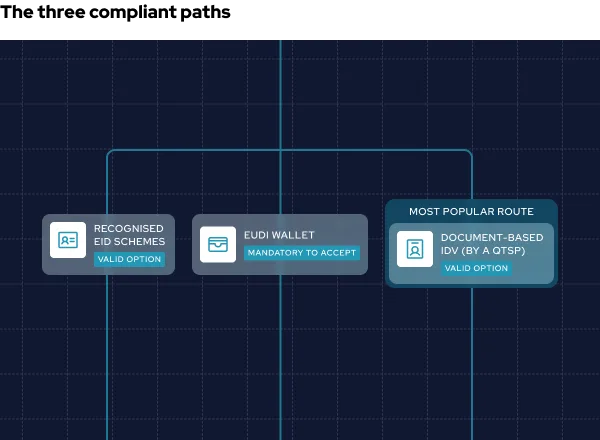
                    Table of Contents

                    Ready to partner with IDnow?

                    Turn faces into trusted identities.

                    With the increasing popularity of cryptocurrencies in Germany, what regulations and safeguards are in place to protect consumers and operators?

                    Cryptocurrencies, such as Bitcoin and Ethereum, have become very popular in recent years, as increasing numbers of German people invest in digital assets. The rapid expansion of the crypto industry has created an urgent need for regulation to protect the stability of the German financial system and its consumers. 

                    In this article, we will explore the growth of cryptocurrencies in Germany, and the need for a regulatory landscape to govern the use of digital assets. We will examine what the current state of regulation in Germany is, and what challenges regulators, consumers and cryptocurrency exchanges are facing.

                    Is crypto regulated in Germany?

                    In April 2023, the Markets in Crypto Assets (MiCA) regulatory framework was passed by European Parliament lawmakers. It aims to protect investors and preserve financial stability, while allowing for greater innovation in the crypto asset sector. It is expected to come into force by the summer of 2024. 

                    On a national level, although cryptocurrencies are legal in Germany, they are not considered legal tender or currency. Instead, regulators classify cryptocurrencies as a financial instrument or asset, which makes them subject to regulations and laws related to securities and investments. 

                    Compared with other European countries, Germany has taken a decidedly proactive approach to regulating cryptocurrencies, passing a law in 2020 that requires all cryptocurrency exchanges operating in Germany to obtain a license from the Federal Financial Supervisory Authority (BaFin). This law also established rules for crypto custodians, including the requirement to hold a minimum amount of capital and ensure compliance with Anti-Money Laundering (AML) regulations. 

                    In Germany, BaFin is the primary regulator for digital assets and is responsible for the regulation of financial markets and institutions. This includes cryptocurrency exchanges, crypto wallets, and custodians.  

                    When it comes to the taxation of cryptocurrencies, things get complicated, as they usually do with German tax laws. Cryptocurrency is subject to capital gains tax if it is held for less than a year before being sold or traded. However, if the digital asset is held for longer, it is exempt. Profits from cryptocurrency mining are subject to income tax. If the cryptocurrency is used to purchase services or goods, it may be subject to VAT. Profits from cryptocurrencies of less than €600 per year are tax-free. There is also an exemption limit of €256 per year for income from staking or lending. 

                    Cryptocurrencies and AML regulations. 

                    It should come as no surprise that there are strict and rigorous AML regulations that apply to cryptocurrency exchanges and other service providers in Germany. Providers must therefore implement measures including KYC procedures and transaction monitoring to prevent money laundering and terrorist financing. An additional measure is to ensure they report suspicious transactions and activities to the relevant authorities. 

                    Providers must also comply with the European Union’s Fifth Anti-Money Laundering Directive (5AMLD), which sets specific rules for virtual currency exchanges and custodian wallet providers. It requires providers and exchanges to register and conduct due diligence on their customers.  

                    German tax residents are required to report their cryptocurrency transactions, including purchases, sales and exchanges, for tax purposes. Failure to do so may result in fines. Cryptocurrency exchanges and service providers must also report any suspicious activity to the Financial Intelligence Unit (FIU).

                    Discover more about the battle currently being waged on black market gambling in Germany in our blog, ‘Exploring black market gambling in Germany.’

                    Regulation of cryptocurrency trading in Germany.

                    Cryptocurrency exchanges in Germany offer a range of trading options, including spot trading, futures trading, and options trading. 

                    Some of the most popular cryptocurrency exchanges in Germany are eToro, Bitpanda, Kraken, Binance, Justtrade and Coinbase. These exchanges offer a variety of trading pairs, low fees, and user-friendly interfaces. 

                    To buy and sell cryptocurrency in Germany, consumers can use a cryptocurrency exchange or a peer-to-peer trading platform. Cryptocurrency exchanges allow the purchase or sale of the cryptocurrency of choice, which is then stored in a digital wallet. 

                    Cryptocurrency trading and exchanges are regulated by BaFin, which requires all cryptocurrency exchanges operating in Germany to be licensed to comply with KYC and AML regulations. Cryptocurrency traders are subject to capital gains tax and must report their transactions in their annual tax returns.

                    https://www.youtube.com/watch?v=aHXdX0FCiX0

                    With great opportunity comes great risk.

                    Success stories of Bitcoin millionaires, the decoupling of Bitcoin from the stock markets, and the unstable traditional economy have also contributed to considerable crypto hype in Germany in recent years. Unfortunately, this has also resulted in incidents of fraud rising sharply.  

                    The problem is compounded when first-time investors encounter suspicious crypto firms, that, to the uninitiated, look legitimate. It is only months or years later, after profits have been made in the deposit phase, that the investor realizes he has been taken in by a scam.  

                    The BaFin publishes weekly warnings on its website about crypto companies that must cease operations due to legal violations. 

                    What are the security concerns associated with cryptocurrencies?

                    While the underlying technology behind cryptocurrency offers many benefits, including decentralization and transparency, it is also vulnerable to security threats, especially in the German market, where lawmakers and law enforcement agencies are still trying to address the variety of nefarious activities surrounding crypto.  

                    Some of the security concerns associated with cryptocurrency in Germany include: 

                    • Hacking of cryptocurrency exchanges and wallets
                    • Identity fraud
                    • Phishing scams or other types of scams, e.g. financial scammers create genuine-looking documents via email featuring a fake balance on the blockchain
                    • Computer infection
                    • Fake deposits of ICOs, tokens or coins on fraudulent crypto or wallet exchanges
                    • Ponzi schemes that use fraudulent technology and deception. 

                    How to keep cryptocurrency safe in Germany.

                    One of the most effective ways to ensure that crypto platforms are protected from fraudulent activities is by implementing a robust KYC process to verify customer identity and prevent customers from bypassing KYC requirements.  

                    IDnow’s proprietary AI-powered fraud detection technology can help detect user behavior that indicates potential risk, allowing for real time monitoring and prevention of account takeovers, identity theft, money laundering, and other types of fraudulent activity.  
                     
                    As the leading European identity verification provider, IDnow’s services have a proven track record of success, providing conversion rates of up to 90%, and are not only compliant within the DACH and UK markets, but assist rapid scalability with compliance in 195 countries and support in over 30 languages  

                    Learn more on our crypto overview page 

                    What is the future of cryptocurrencies in Germany?

                    The German government has been working on regulating cryptocurrencies for some time, and in 2019 passed a law allowing banks to hold and sell cryptocurrencies.  

                    There have also been discussions about new regulations for cryptocurrency exchanges and initial coin offerings (ICOs), to protect investors and ensure the stability of the financial system. However, the regulatory landscape is still evolving. As the cryptocurrency market changes, regulation may change as well. 

                    The future of cryptocurrency in Germany looks promising, thanks to increasing adoption and potential regulatory changes that could further boost the industry. The German regulatory framework for cryptocurrency is evolving, with key regulators such as BaFin and the Federal Ministry of Finance overseeing compliance and reporting requirements. Strict KYC and AML regulations are in place to reduce fraud on cryptocurrency exchanges. 

                    While Germany is sometimes known for unnecessary red tape, the country is trying to provide a regulatory framework that creates a supportive environment for the cryptocurrency market while protecting consumers. Nevertheless, individuals and businesses should always remain vigilant and aware of the risks and challenges associated with cryptocurrency and its regulatory requirements in Germany. 

                    FAQs

                    Are cryptocurrencies legal in Germany? 

                    Yes, it is regulated but classified as a financial instrument or digital asset. BaFin is the regulatory body overseeing cryptocurrency exchanges.

                    What are the regulatory bodies involved in cryptocurrency regulation in Germany? 

                    The main regulatory body for cryptocurrency regulation is BaFin. The Federal Ministry of Finance as well as the Federal Ministry of Justice and Consumer Protection are involved, too. On a regional level, the European Union released its MiCA regulatory framework in early 2023.

                    What are the reporting requirements for cryptocurrency transactions in Germany? 

                    Individuals must declare cryptocurrency holding on their annual tax filing and report buying and selling activities. Cryptocurrency exchanges must report suspicious activities on their platforms to the Financial Intelligence Unit to be compliant with AML regulations.  

                    Are cryptocurrency profits tax exempt? 

                    Only profits under €600 per annum are tax exempt. Any individual must declare crypto assets on their tax filings and pay taxes on profits exceeding €600 a year.  

                    By

                    Rayissa Armata is Head Of Regulatory Affairs at IDnow

                    Rayissa Armata
                    Senior Head of Regulatory Affairs at IDnow
                    Connect with Rayissa on LinkedIn
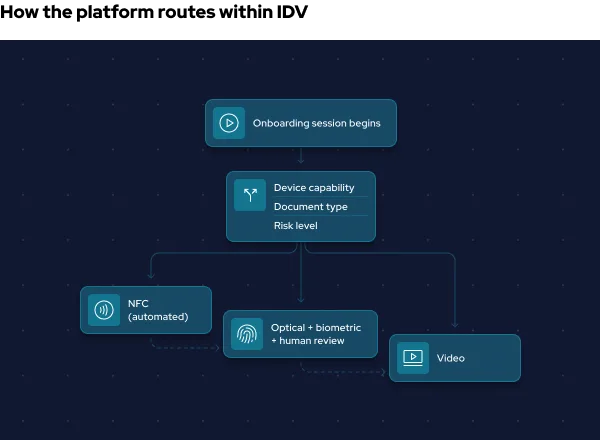


                    Offering a sign-up bonus is a popular technique by many iGaming operators to attract new players. But is it worth the risk?

                    In the online gambling world, you would be hard pushed to find a mainstream online casino that doesn’t attempt to entice new customers through bonuses. Offering bonuses to attract and retain bettors has become a staple for new and old brands in the industry, and there is no reason to believe this will not be the case for the near future. 

                    Attracting bettors and players is the main reason why sportsbooks and other operators provide bonuses. Players appreciate the chance to play with bonus funds, so seeing appealing offers from sportsbooks makes them more inclined to register. 

                    Unfortunately, while iGaming businesses work toward developing strategies to attract and retain bettors’ interest, gambling fraud proves to be a particularly tricky and dangerous obstacle to overcome. Bonuses themselves are often abused, in fact, it’s quite common.

                    Understanding bonuses in gambling.

                    Bonuses offered by gambling operators can vary, but typical promotions grant players bonus funds or free spins to encourage them to use their platform. 

                    Bonuses are also designed to encourage players to continue betting using their own money when the bonus funds run out. Both parties should gain from a good betting bonus. For example, customers may receive bonus funds to bet with, while operators get to acquire paying customers. Challenges emerge when certain users start using bonuses for malicious activities like money laundering. 

                    Even though conversion rates differ depending on the operator, the most popular types of bonuses include the following:

                    • Sign-up bonus (often with free spins)
                    • Deposit match bonus
                    • No deposit bonus
                    • Reload bonus
                    • Cashback
                    • Free bets
                    • Reward program
                    • Refer-a-friend bonus

                    What is bonus abuse in gambling?

                    Bonus abuse involves players signing up to a gambling platform to manipulate the promotion to their favor, unfairly manipulating the promotion incentives aimed at casino players who have yet to sign up. 

                    There are betting communities that look to exploit such bonuses. This activity goes by numerous names, including bonus hunting and promo abuse. 

                    Considering most bonuses can only be used once, this often leads to fraudsters setting up multiple accounts to take advantage of repeated bonuses. 

                    In fraud terminology, this process is known as multi-accounting. Bettors typically target free bet promotions and bonuses with no deposit requirements, i.e., no deposit bonuses, such as free cash or spins. 

                    It is worth mentioning that only some people who partake in bonus cheating are seasoned fraudsters. Most bonus abusers are regular gamblers who believe they are only ‘cheating the system’, and not venturing into illegal territory. However, there is a sizeable community of tech-savvy criminals who have the resources to utilize betting bots, virtual machines, emulators, and (simulated) residential IPs, such as mobile networks or Socks5 proxies, to leverage new IP addresses. 

                    Some of the different types of bonus abuse fraud include: 

                    Whatever the type, the process of bonus abuse invariably starts at sign-up. One fraudster (or a group of them) will create as many accounts as possible, a process called ‘gnoming’. 

                    They use disposable emails, fake aliases, and fake or stolen credit card information to bypass KYC checks. Once they have created multiple accounts, they then take advantage of the promotion in question. 

                    Engaging in casino bonus is not illegal per se, but breaking terms and conditions is. For example, all bonuses will typically include terms detailing that they have the right to confiscate any winnings if they suspect the account player to be involved in some form of bonus abuse. These terms can be murky but are typically referring to players who manipulate bonuses to their advantage. 

                    The same would apply for any suspicions that the account is being used in a fraudulent manner, such as the account being used by someone else other than the official holder. Fraudsters would be breaking many of these terms if they were to create multiple accounts under other people’s names. 

                    If caught, the user’s bonus money and winnings will be confiscated, and the user’s deposit may also be frozen in their account.

                    Gambling regulations 101: Europe and the UK.

                    Interested in expansion? Discover how gaming operators can keep pace with the ever-growing multi-jurisdictional landscape in Europe and beyond.
                    Get your free copy
                    Gambling regulations 101: Europe and the UK.

                    Recognizing the warning signs.

                    To prevent bonus abuse in online gaming, operators must first be able to spot them. There are numerous signs and behavioral patterns to watch out for: 

                    • When the account is fake, there is typically a much shorter period between sign-up and withdrawal or chip dumping. For example, if a newly assigned bonus is instantly lost to a third person at a poker table. 
                    • Certain games usually attract more fraudsters than others. Games like poker, where players can play against each other and more easily manipulate the outcome, are most at risk of bonus abuse.
                    • Fraudsters use VPNs, TOR browsers, or blacklisted residential-like proxies.  

                    Understandably, KYC and ID verification platforms have become crucial in helping gambling operators identify potentially nefarious or fraudulent practices.

                    Techniques used in bonus abuse.

                    Exploiting loopholes in terms and conditions.

                    One of the most common restrictions in T&Cs involves preventing players from playing specific games with bonus funds. Blackjack and poker games are usually excluded from bonuses due to their lower house edge. This is because matched bettors could complete their wagering requirements on an outcome close to 50/50, meaning they were almost guaranteed to make money. 

                    While most gambling sites use technology to detect and prevent players from claiming bonus funds on forbidden games, bonus abuse invariably involves avoiding promotional restrictions to play games with bonus money.

                    Multiple account creation.

                    Most casino platforms allow users to create one account per user, a restriction monitored by the IP address of the device or household used to register and redeem the bonus. Fraudsters trick casinos by signing up for multiple accounts via IP addresses, VPNs, TOR browsers, etc.  

                    Identity theft and manipulation. 

                    Sophisticated criminals often buy real ID documents on the dark web for use in defrauding gambling platforms. As these documents are not falsified, systems may fail to detect the abuse. Indeed, synthetic identity fraud, which uses a combination of real-person and fake data to form a new identity can bypass some weak KYC checks.

                    The impact of bonus abuse on sports betting sites. 

                    Bonus abuse is becoming increasingly widespread and costs the iGaming sector approximately 15% of its annual gross revenue. 

                    Jon Howard, an Essex-based fraudster, was recently imprisoned for five years for his part in various frauds, which resulted in the bookmaker losing over £236,000. This was the first bonus abuse fraud penalty ever seen in the UK.

                    Howard played a leading part in a syndicate that created over 1,000 bet365 accounts using different aliases to use welcome bonuses and evade deposit limits.

                    Responsible gambling measures.

                    To mitigate fraudulent gaming activity, operators must deter online bonus abuse. Some operators opt for the removal of deposit bonuses altogether, which is far from ideal, considering gambling bonuses are a sure-fire way of bringing people to a gambling platform. 

                    In other cases, some operators provide loyalty bonuses, rather than sign-up bonuses to discourage bonus abuse. This approach risks alienating the casual, everyday gambler, though.  

                    Many operators also use profiling tools to detect and restrict accounts that are engaging in unwitting cheating or fraud. 

                    Operators must also work toward spreading awareness about the consequences of online gaming bonus abuse. This involves starting initiatives and collaborations among other operators and sharing best practices and helpful information to safeguard the industry. 

                    The recently published UK Gambling White Paper, which details the new approach to the UK’s iGaming regulation, also sets out new proposals to tackle bonus abuse fraud and other fraudulent activities by curbing “bonus” and “free spins” offers. Read more about the steps that the United Kingdom Gambling Commission is taking to bring the UK gambling industry into the 21st century in our blog, ‘From paper to policy: What’s next for the UK’s gambling sector?’.

                    Bonus abuse has also been a recurring problem in Europe, with most countries taking strict measures to put an end to such activity. 

                    For example, in 2019, Malta-based companies Genesis Global and AG Communications were fined by gambling regulator Spelinspektionen for allegedly offering recurring bonuses to their Swedish player base.  

                    Operators in other regions of the world have also adopted ways to reduce gambling fraud. With the Brazilian gambling market on the verge of widespread regulation, operators should be concerned about fraudsters looking to take advantage of an immature market.

                    Battling bonus abuse fraud. 

                    As the iGaming industry flourishes, so does the number of fraudsters looking to exploit the system for their illicit interests. As bonus abuse is among the industry’s most significant challenges, operators must seek proactive measures to tackle cybercriminals and their methods. 

                    Besides stricter protocols and spreading awareness, KYC and AML checks can reduce bonus abuse in iGaming, combat money laundering, and minimize financial losses. 
                     
                    IDnow’s user-friendly, efficient, and secure AML and KYC solutions can help with player onboarding, financial risk checks, age verification checks, and more. With IDnow, operators can guarantee compliance with international regulatory standards and curb fraud, such as bonus abuse fraud, without compromising the player experience.

                    What is bonus abuse? 

                    Bonus abuse occurs when people sign up for multiple accounts to abuse promotions offered by online gambling operators. 
                     

                    Are there any legal consequences for engaging in bonus abuse? 

                    If caught partaking in bonus abuse, the user’s bonus funds and winnings are confiscated. They might also have their deposited funds frozen. For punishments more severe, it depends on the technique of bonus abuse. For example, receiving permission from a friend to use their details will be viewed very differently than stealing personal information.

                    What steps can online casinos take to prevent bonus abuse? 

                    The steps to prevent bonus abuse include setting more complex bonus terms, lowering bonus payouts, and ensuring the casino’s KYC process is as rigorous as possible. 

                    Is bonus abuse worth the risk?

                    IDnow’s user-friendly, efficient, and secure AML and KYC solutions can help with player onboarding, financial risk checks, age verification checks, and more. 

                    Onboarding players is a critical part of the iGaming experience. With IDnow, operators can guarantee compliance with international regulatory standards and curb fraud without compromising the player experience.

                    Our highly configurable platform for identity proofing in the gaming market allows operators to keep abreast of constantly changing regulations, and new fraud schemes and scams, while ensuring a safe, secure and seamless gaming experience. With our latest round of platform enhancements, we now offer UK-specific data checks, and financial risk checks, which provide operators with insights into a player’s affordability indicators to comply with the latest updates to the UK Gambling Act.

                    Interested in learning more about how to achieve full gambling compliance? Check out our blog.

                    By

                    blog footer sample with a photo of a man
                    Max Irwin, Sales Manager, Gambling at IDnow
                    Connect with Max on LinkedIn

                    Table of Contents

                    Ready to partner with IDnow?

                    Turn faces into trusted identities.

                    As the rise of crypto continues, so does the risk of criminal activity. What can crypto firms do to protect their business and customers from fraud?

                    Could Satoshi Nakamoto have predicted how profoundly Bitcoin would change the landscape of the traditional financial system when he released his Bitcoin White Paper on October 31, 2008? 

                    In that whitepaper, Nakamoto wrote of virtual currencies that use cryptography to secure and verify transactions. He explained that bitcoin miners (or nodes) support the network and provide a way to initially distribute coins into circulation. Since there is no central authority to issue coins the nature of the Bitcoin blockchain lends itself to decentralization. 

                    Within just a few years of the white paper, so-called cryptocurrencies had blossomed all over the internet. However, because there is no central authority, cryptocurrencies are operated independently and exchanged with a much more limited supervision, mostly through crypto exchange platforms. Since cryptocurrencies provide a high degree of anonymity that is often unattainable in the traditional financial system, it has attracted criminals looking to launder money from their illicit activities.  

                    From the 2010s to modern day, the steady increase in use of cryptocurrencies forced the hand of European lawmakers to devise a European legal framework. With the creation of countless crypto-related businesses and exchange companies, European institutions had to implement proper legislations for crypto activities.  

                    There are two important legislations that are relevant in the fight against money laundering in the crypto industry. The first is the Anti Money-Laundering Directive 5. Read our glossary entry on ‘What is money laundering’ for more information on the different stages of money laundering, how it works, and some of the latest techniques fraudsters are using to defraud victims.

                    The second legislation that will help regulate the crypto industry, thereby preventing money laundering, is the Markets in Crypto-Assets (MICA) Note: As the UK is no longer part of the European Union, UK lawmakers have started work on their own proposed crypto regime. In addition to defining clear rules for designated actors conducting crypto transactions, the EU and the UK has also established a set of rules and principles to safeguard against the misuse of crypto assets. Each country will however be required to enforce said requirements on a national level. Read more about one country’s journey toward compliance in our ‘Cryptocurrency in Germany: Is it regulated and safe?’ blog.

                    Newly adopted regulations now require crypto exchanges and custodian wallet providers to implement KYC/AML regulations to better deter money laundering. However, non-compliant crypto platforms are still out there, posing numerous risks to their businesses, and their customers.

                    Check out our blog to discover the benefits of KYC in the banking sector.

                    The long and bumpy road toward compliance. 

                    It’s safe to say that in the early days of crypto, crypto firms were perhaps not as ‘keen’ on transparency as they are now. These days, KYC and compliance measures are top of mind for crypto firms, as operations are now under heavy scrutiny by national and international authorities. Crypto firms must therefore enforce strict screening processes, by ensuring there is a robust KYC process in place to verify customers’ identities, addresses, and source of funds. Monitoring transactions and assessing risks are also part of their requirements. Implementing such measures means processes invariably need to be revamped, or new programs developed. 

                    Because of the arduous road to becoming regulation-ready, many exchanges decide to forgo improvements, and are still operating non-compliantly and without KYC measures in place. 

                    Criminal actors, whether traditional finance or crypto, are always on the look-out for platforms without proper KYC mechanisms, to gain access and engage in fraudulent activity. Even when crypto platforms comply to the highest KYC standards, some users are still able to circumvent those controls (see our previous article: ‘Buying crypto without a KYC check? Here’s why it’s risky for both users and platform operators.’). Using non-compliant crypto exchanges can be risky for customers, as they may lose their funds following a mandatory shutdown. On top of that, non-compliant exchanges may not have adequate security measures to protect user funds and personal information. This makes them vulnerable to a whole host of different attacks. 

                    History has shown that authorities have little patience with non-compliant crypto platforms. In 2017, BTC-e was shut down by law enforcement in the United States after it was accused of facilitating money laundering and other illegal activities.  

                    Alexander Vinnik, one of BTC-e’s founders, was alleged to have stolen identities, facilitated drug trafficking, and helped to launder criminal proceeds from syndicates around the world. He was later sentenced in France to a five-year jail sentence, after a long and complex legal battle with U.S. and Russian authorities amid an intelligence imbroglio.  

                    In 2020, crypto exchange platform BitMEX was charged with violating AML/KYC regulations by the U.S.  In October 2021, the Seychelles-based company agreed to pay as much as $100 million to resolve charges with CFTC and the Financial Crimes and Enforcement Network. 

                    Laundering crypto money 101. 

                    Thanks to weak AML and KYC policies, non-compliant crypto exchanges provide an accessible avenue to launder money, particularly when they offer on- and off-ramp facilities, which facilitate cryptocurrency being exchanged for fiat (government-issued currency). 

                    According to Chainalysis, illicit addresses sent nearly $23.8 billion’s worth of cryptocurrency in 2022, which was an increase of 68% compared to 2021.  

                    Dark net marketplaces offer money laundering services, but they are not the only means used by bad actors for laundering crypto. On-chain money laundering mixers help criminals convert crypto from illicit origins, by obfuscating blockchain transactions with a view to masking the proceeds of crime. More traditional intermediaries can also be used to hide the origin of funds for crypto trading, such as offshore accounts and shell companies. Click here to discover how money laundering is threatening the stability and integrity of online casinos.

                    Building trust through KYC in banking.

                    How can you set up a KYC process that satisfies your customers and meets regulatory requirements? Download now to discover:
                    • grey square with four lines and checkWhat is KYC?
                    • sign logo with check in itThe importance of KYC in the banking sector
                    • justice logo with a paper logo at the back with white backgroundRegulatory impact on KYC processes
                    Read now
                    Thumbnail - KYC Banking 2024 EN

                    How money laundering in crypto works.

                    Criminals employ various techniques and services to channel funds through multiple addresses or businesses, concealing their origins. Subsequently, these assets are transferred from an ostensibly legitimate source to a destination address or exchange for conversion into cash. This intricate process greatly hinders efforts to trace laundered funds back to illicit activities.

                    Below are popular crypto scams and common methods criminals use to launder blockchain funds:

                    • Smurfing: Large sums of money are split into smaller amounts that are sent through via multiple transactions.  
                       
                    • Mixing: These services are used to obscure the transaction history of a cryptocurrency by blending cryptos of multiple users. 
                    • Offshore Transactions: Offshore accounts are used by criminals to obscure the origin of funds. 
                    • Services based in high-risk jurisdictions: Those services are located in areas flagged for deficiencies in their Anti-Money Laundering (AML) or Combating the Financing of Terrorism (CFT) systems.
                    • Fiat exchanges: Fiat exchanges convert crypto to cash, varying from mainstream to peer-to-peer (P2P) or non-compliant platforms, and after cash conversion, traditional financial investigation methods are necessary.
                    • Nested Services: Nested services within exchanges leverage hosted addresses to access liquidity, enabling potential misuse by bad actors for money laundering in exchanges with lax compliance standards.
                    • Exchange Hopping: Criminals also use multiple crypto exchanges to transfer funds across different platforms, making tracing the money trail difficult. 
                    • Privacy-Oriented Cryptocurrencies: Some blockchains employ advanced cryptographic techniques to hide transaction amounts, addresses, and other information. 
                    • Gambling Platforms: Cryptocurrency money launderers favor gambling platforms, using a mix of identifiable and anonymous accounts to deposit funds, which are then either cashed out or used in coordinated bets with affiliates.

                    Preventing money laundering through dedicated regulations and mechanisms. 

                    In recent years, regulators have stepped up to enforce sanctions toward non-compliant operators in the crypto industry. Between criminal charges and sanctions lists, crypto entities operating either knowingly or unknowingly for illegal actors are now facing increased regulatory pressure and scrutiny. In fact, in 2023 and beyond, taking steps to become compliant with AML regulations should be the top priority for all crypto exchanges. 

                    Crypto operators must implement strong KYC/AML mechanisms to ensure they are in full compliance with local legislation. This can also help regulators by identifying any red flags associated with certain transactions. For example, by adopting a layered approach through geofencing, account profiling and identity screening, crypto exchanges can drastically improve their AML/KYC programs. Recent developments in artificial intelligence mean the implementation of such detection tools can help to significantly deter criminals looking to launder money, whilst improving compliance levels.  

                    The implementation of these robust controls will enable exchanges to participate in the fight against money laundering and contribute to the democratization of crypto currencies, which will ultimately lead to further mass adoption.

                    Read our latest blog to discover money laundering red flag indicators.

                    KYC to power crypto adoption. 

                    Although enforcing KYC measures was a controversial decision for some crypto purists as it appears to go against many of the principles outlined by Nakamoto, they are an important tool for cryptocurrency platforms to prevent money laundering. As cryptocurrency adoption continues to increase, KYC processes have become an essential step in safeguarding the community.  

                    Non-compliant exchanges will remain a target for money laundering specialists as they offer an opportunity to exploit gaps in controls. Non-compliant exchanges are also at risk from the authorities, which could not only impose major financial sanctions and business closures, but also criminal charges for mismanagement. In short, the existence of non-compliant exchanges poses a threat to crypto firms, crypto customers and the crypto industry itself.

                    Read more about the the novel, and potentially problematic approach by new crypto platform, Worldcoin to eschew traditional customer onbroading in favour of iris scans.

                    Putting the KYC into crypto. 

                    KYC processes are an integral part in ensuring crypto exchanges can protect themselves and their customers from fraud and money laundering, even amid an evolving crypto regulatory landscape. Having these controls in place will protect investors from financial losses and add stability to a notoriously volatile market.  

                    For more information on why using crypto platforms without KYC processes is a risk, check out our ‘Buying crypto without a KYC check? Here’s why it’s risky for both users and platform operators.’ blog. 

                    IDnow’s highly configurable identity verification solutions work across multiple regulations, industries and use cases, including crypto. Whether automated or expert-assisted, its online identity-proofing methods have been optimized to meet the strictest security standards and regulatory requirements without compromising on customer conversion or consumer experience.


                    By

                    Jody Houton
                    Senior Content Manager at IDnow
                    Connect with Jody on LinkedIn

                    In recent years, soft mobility has seen explosive growth, particularly in major cities as a means of urban transport. Whether it’s electric bikes, scooters or self-service electric scooters, micromobility is seen as an environmentally-friendly and practical alternative to traditional modes of transport. However, the way it is regulated is being called into question. Some countries now require age verification of users for greater safety.
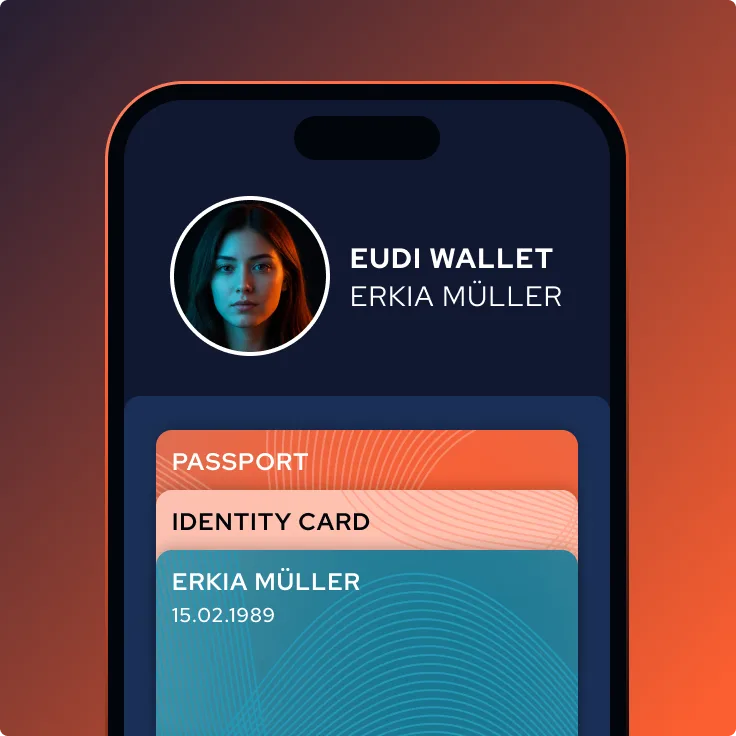
                    The future belongs to soft mobility.

                    Walking, cycling and even electric scooters are increasingly popular means of transport in major cities, and are referred to as “soft mobility” or “active mobility.” Why is this so? Soft mobility is seen as a solution for reducing greenhouse gas emissions, improving air quality, reducing traffic congestion and promoting health and well-being.

                    Many cities around the world are turning to soft mobility or shared mobility to meet these challenges. Dedicated self-service vehicles have appeared in urban centers in recent years. Governments and companies are also encouraging this transition to more sustainable modes of transport by offering tax incentives, subsidies and user benefits.

                    Although people are increasingly turning to these modes of transport and services are improving all the time, there are still challenges to be overcome if soft mobility is to become widespread.

                    What are the challenges for soft mobility? The example of electric scooters in Paris.

                    One of the main challenges facing shared mobility is safety. Users of these modes of transport are more vulnerable to road accidents, particularly in urban areas with heavy traffic. Cyclists and users of electric scooters are often confronted with obstacles, so it is crucial to regulate the use of these services. For example, by ensuring that a user is not too young to hire an electric mode of transport, or that they actually have a driver’s license to use a scooter.

                    The laws and regulations governing the use of micromobility services vary considerably from one country to another, and even from one town to another. Scooter use in Paris is a concrete example of how the lack of clear regulation can undermine the future of micromobility. Since the arrival of self-service electric scooter operators in the city, streets have become more congested, raising safety concerns for pedestrians and other road users. In response to these challenges, municipalities have introduced stricter rules for operators, including limits on the number of scooters available and parking requirements. However, it is not certain that this will be enough.

                    The state of micromobility regulations in 2023

                    Industry leaders debate the current regulatory framework for micromobility and the best ways of balancing safety with innovation and accessibility.
                    Watch now
                    Micro mobility and digital Identity

                    Age verification: what do European regulations say about the use of electric scooters and bicycles?

                    There are currently no specific EU regulations for micromobility. However, the European Commission is encouraging coordination between Member States to develop harmonized rules and ensure responsible use of these modes of transport. Some countries have already adopted specific national regulations for micromobility, while others have incorporated these modes of transport into their existing legislation on motor vehicles.

                    France and Belgium adopted specific regulations in 2019 to govern the use of self-service electric scooters. These include speed and age limits for users, as well as insurance and parking requirements. It stipulates that users must be at least 14 years old to use a service. Spain subsequently applied the same framework in 2020.

                    Although electric scooters are considered to be motorized vehicles in many European countries, in the same way as cars and motorbikes, it is not currently necessary to have a driver’s license. Only an identity document may be required to ensure that the user is of legal age to use the service. However, with the ever-increasing number of accidents and non-compliance with parking regulations, it is conceivable that the rules will eventually be tightened.

                    What resources should be put in place to provide a better framework for soft mobility services?

                    To rent a scooter or electric bike in Marseille, you will now need to scan your identity card and perform facial recognition. The ID card will be linked to the credit card used on the user’s account, thereby helping to combat credit card fraud and provide a better framework for the use of these services. If users are easily identifiable, they will be less inclined to break the parking rules (e.g. don’t use sidewalks, don’t leave your scooter in a red zone, etc.).

                    Remote identity verification is increasingly seen as an effective solution for supervising micromobility services, but also for ensuring the safety of users by reducing dangerous behavior such as drinking and driving or speeding. By having information on users, operators can inform the authorities in the event of an offense.

                    In the long term, it is conceivable that a driver’s license could be required as a supporting document when subscribing to a micromobility service, as is currently the case for car-sharing or car-pooling services. Operators need to be on the lookout for new regulations and ensure that their services are compliant and safe for their users.

                    Trend Report: Mobility

                    Discover the major trends in the mobility industry, the innovative models and the solutions available to you to design a seamless user experience.
                    Get your free copy
                    IDnow trend report mobility EN FINAL

                    By

                    Edouard Baussier

                    Edouard Baussier
                    Global Mobility and Travel Sales Director at IDnow  
                    Connect with Edouard on LinkedIn

                    Table of Contents

                    Ready to partner with IDnow?

                    Turn faces into trusted identities.

                    Collaboration increases IDnow’s document checking capabilities in the air travel industry

                    Munich, May 31, 2023 – IDnow, a leading identity proofing platform provider in Europe, announces its participation in the International Civil Aviation Organization (ICAO) Public Key Directory (PKD) pilot program to further enhance its document checking capabilities in commercial air travel. First established in 2007, the ICAO PKD is a central repository for exchanging the information required to authenticate electronic Machine Readable Travel Documents (eMRTDs), such as ePassports and electronic ID cards.

                    Today covering 90 issuing authorities worldwide, the ICAO PKD offers an effective means for countries to upload their own technical data related to ePassports and electronic ID cards and download that of other issuing authorities, thus eliminating the need for bilateral exchange of this data. Essentially, the ICAO PKD takes on the role of a central broker for this technical information while also helping to ensure that the information adheres to the necessary technical standards (i.e., ICAO 9303 specifications) to maintain interoperability.

                    Security is a top priority in air travel

                    By joining the time-limited ICAO PKD pilot, IDnow has received temporary permission to read out the data stored in the NFC (Near-field communication) chip of ePassports and electronic ID cards and to use this data in their commercial solutions in the air travel domain.

                    “Security and facilitation are a top priority in air travel, and identity verification plays a crucial role in any travel security equation nowadays,” says Lovro Persen, Director Document and Fraud at IDnow. “We are therefore very pleased to participate in the ICAO PKD pilot. Being part of this program allows us to verify the authenticity of an electronic ID document and its rightful origin. In addition to our advanced in-house fraud fighting measures, we are thus able to verify that the data on the document’s chip is authentic and that the issuing authority is the one it claims to be. Furthermore, we can extract the embedded portrait photo of the document holder from the NFC chip and use it for biometric verification, knowing that it has not been tampered with,” he adds.  

                    Table of Contents

                    Ready to partner with IDnow?

                    Turn faces into trusted identities.

                    We sit down with the SVP for American Regulatory Affairs and Responsible Gambling at Entain to discuss Brazil’s upcoming gaming regulations, advice for operators, and the importance of integrity in the emerging LATAM market. 

                    There is a great disparity in global gambling regulations, in terms of scope and severity, how do you compare the European regulatory landscape with emerging markets like LATAM? 

                    Europe, at the risk of stating the obvious, is way ahead Latin America (LATAM) in terms of gambling regulation. However, despite a few false dawns, Brazil is firmly on the path to regulating sports betting in a near future.  

                    Columbia is a great example of a very successful LATAM regulatory regime, which has drawn a lot of inspiration from gaming regulation in Spain. I think this is partly because of similarities in language and culture. It’s also worth bearing in mind that although individual jurisdictions are different and follow different kinds of sports and markets, we are talking about sports betting, so basic product mechanics will always be the same to reflect requirements in regulation. 

                    Which other LATAM countries are currently in the process of regulating the industry? 

                    Most Latin American countries have already regulated the land-based sector in one way or another, so it really comes down to regulating their online space. Some Argentinian provinces have regulated online gambling, and, like Canada, appear to be taking it province by province. Peru and Chile are also looking into potentially regulating online gambling and I’m hopeful it will happen in the foreseeable future, but as they’re both facing a political crisis, this is unlikely to happen any time soon. 

                    Although Peru passed legislation that would permit the regulation of the online gambling sector last year, recent riots have again stalled any developments. In Chile, President Gabriel Boric has stated that he’s keen on revamping the Chilean constitution, but that process failed, and as a result, he’s in the process of picking up the pieces and pondering what to do next.

                    Brazil is on the cusp of regulation – when is Brazil’s gaming regulation likely to be passed?  

                    The regulation will go to the Congress as a legislative bill, with constitutional urgency. This means that the Congress will have to debate and vote on it in the next 3-6 months. So, if the bill is approved, it’s likely the regulated market will launch in early 2024. As the bill is at an extremely high level, it authorizes the authorities to kick off the licensing process. There will be an uncapped number of licenses, an open licensing system, which provides for additional taxation measures. Regulation is likely to cover the process of instituting licensing, payment processing, and the requirement for internet service providers to block the internet connection for operators who choose not to become regulated. 

                    What is your advice to operators based in, or targeting the Brazilian market? How should they prepare for upcoming regulation?

                    It should by no means come as a surprise. Brazilian sports betting regulations have been debated since 2018, when the government was authorized by Congress to regulate sports betting. My advice to operators is to keep a close eye on proceedings and start getting themselves ready. In the absence of the final iterations of regulations, however, it’s still advisable to exercise caution until regulations are passed. 

                    It’s very likely that the regulation will require operators to incorporate an entity in Brazil. I would not expect an obligation to locate the actual premises on the ground, as that could effectively kill the industry, but operators should be prepared to provide the Brazilian authorities with access to the data of Brazilian customers in one way or another. This could be remote, or by means of having a data server on the ground. Regarding customer verification, I believe this will be linked to their CPF identification number (a tax number attributed by the Brazilian Federal Revenue to Brazilians and foreigners who pay taxes in Brazil). There is also likely to be a focus on sports integrity, and on responsible gambling, not only because of recent match-fixing scandals that have marred Brazilian football 

                    The government and regulator have reviewed existing regulations in other countries, so it’s also likely to take inspiration from those.

                    https://www.youtube.com/watch?v=iWIzqbkGRTs

                    There’s a lot of talk about Responsible Gambling in the UK government’s gambling white paper, and it’s likely to feature heavily in Brazilian regulations. What does Responsible Gambling mean to you? How do you interpret it? 

                    Responsible gambling is critical to the long-term sustainability of this industry. I’ve been personally working very closely with the regulator on responsible gambling standards and fully in intend to continue to do so. When the Brazilian market is finally regulated, that will provide both the operators and authorities with tools to more efficiently address the kinds of match-fixing scandals that we have seen recently.  

                    The onus is on us as an industry to protect our customers, and, of course, help our customers to help themselves. That still gets sort of underestimated. If customers are beyond the point of being able to do that, that’s where we need to step up even more. The more individual care we can provide problem gamblers the better. Because what works for one person may not work for the other. Just like on the consumer side or promotional side of things: what may not be of interest to you, may be of interest to someone else, and vice-versa. This underscores the need to individualize and personalize care. That’s what I would love to see in the years to come throughout Latin America. 

                    In a tangible sense, what would these kinds of measures look like?

                    In my view, it’s a combination of three critical pillars.  

                    Education. We need to find even more efficient ways of educating everyone involved, which goes well beyond our customers. It’s the public at large, including key decision makers, which is why Entain has launched programs here in the States (and in other countries), with the likes of the NFL, MLS, and most recently with the NHL alumni. I’ve also worked with retired athletes such as Charles Oakley and Jayson Williams to serve as responsible gambling ambassadors to convey even more efficient messages about responsible gambling. 

                    Prevention. We need to provide our customers with tools to help themselves, and if they cannot do that anymore, we need to step in, take over control of the gambling platform – we call them interceptors. Or even just by giving customers a ring. 

                    The third pillar is to put customers on a firm path toward healing; a firm treatment path. Again, the onus is on us, the industry. 

                    Why Ontario’s iGaming model will be an industry game changer.

                    Discover how IDnow can help you tackle Ontario’s complex iGaming market.
                    Get your free copy
                    Canada Ontario Gambling platform

                    Regarding the Canadian gaming sector, do you think it’s only a matter of time before other provinces follow Ontario and open the market to private operators? 

                    Yes, it is the short answer to that, I expect Alberta to follow suit very soon, and then British Columbia, but I’m not going to speculate as to the timetable. I think if other provinces choose to go down the Ontario route, it would be the most sensible thing to do.  

                    Why do you think some countries, for example Canada and Argentina, favor such a province-by-province approach to implementing nationwide regulations? 

                    It’s a constitutional and legacy issue in both instances. In Canada, for example, back in 85 or 86, the federal government devolved competencies to regulate all forms of gambling, not just online gambling, to individual provinces. That is the setup, which is like the US. New Jersey, where I am based, recently won a very hard-fought for victory to regulate sports betting and online gaming, and it’s the same in Canada.

                    If you’re interested in more insights from industry insiders and thought leaders, check out one of our interviews from our Fintech Spotlight Interview series below.

                    Are you a gambling operator that is interested in entering the emerging market of Brazil? Check out our blog ‘Unpacking the complexities of the Brazilian gambling license structure.’ Alternatively check out our overview page on the South American online gambling market or regulations on the iGaming market in Ontario, Canada.

                    By

                    Jody Houton
                    Content Manager at IDnow
                    Connect with Jody on LinkedIn


                    Our highly configurable platform for identity proofing in the gaming market allows operators to keep abreast of constantly changing regulations, and new fraud schemes and scams, while ensuring a safe and secure gaming experience.

                    Table of Contents

                    Ready to partner with IDnow?

                    Turn faces into trusted identities.

                    Saint Malo/La Ciotat/Munich, May 24, 2023 – CLR Labs, a European laboratory dedicated to the evaluation of biometric and security technologies, and LSTI, a conformity assessment body (CAB) specializing in cybersecurity and data protection, are pleased to officially launch their ISO/IEC 30107 conformity assessment scheme, which enables them to evaluate any product or service using biometric technologies. IDnow, one of the leading European identity proofing platform providers, obtains the first LSTI ISO/IEC 30107 certificate for its VideoIdent solution.

                    The first European certification scheme for biometric technologies

                    Published in 2017, the ISO/IEC 30107 standard defines safety measures and presentation attack tests on remote identity proofing systems, in order to protect them and prevent these attacks. The conformity certificate is issued by LSTI, based on CLR Labs’ evaluation work –  which involves both presentation attacks and biometric data injection tests, such as facial recognition attacks based on deep-fake technology. Until now, the only certification scheme available was from the United States. In Europe, only compliance projects have been carried out so far.

                    Therefore, this collaborative initiative is unique in Europe, as it defines a guaranteed level of performance assessment of presentation attack detection given by biometric technologies, acknowledged by the cyber industry.

                    A partnership between two major names from the cyber assessment and evaluation industry

                    Together, LSTI and CLR Labs designed a common assessment scheme which can be applied to multiple products and services, such as enrolment stations or kits, border automatic doors, biometric readers, entry-exit systems, digital wallets, Trust Service Providers, and any other biometric tech products.

                    This conformity assessment scheme allows the European cyber ecosystem to acquire the necessary capabilities to evaluate and certify biometric products including presentation attack detection, with a made in Europe label, thus ensuring the promotion of European excellence in cybersecurity.

                    The first product certified ISO/IEC 30107 according to this scheme

                    In this European framework, it is the leading identity proofing platform provider IDnow, who becomes the first company to obtain an ISO/IEC 30107 certificate for its VideoIdent product. IDnow VideoIdent is an expert-assisted video identity verification product that is facilitated by trained agents in conjunction with backend AI controls.

                    The VideoIdent process validates the user’s face biometrics and performs liveness checks to detect and prevent presentation attacks. The ISO 30107 evaluation certifies that IDnow VideoIdent meets such strict requirements on biometric identification. LSTI has assessed the level of VideoIdent as “substantial”.

                    Statements from the companies’ representatives

                    “This certificate is the result of the successful partnership between CLR Labs and LSTI, but also of the amazing conformity upgrade work done by IDnow on their product VideoIdent”, says Armelle Trotin, CEO of LSTI group.

                    “We were thrilled when we saw the first certificate emitted by LSTI, as building an ISO/IEC 30107 conformity certification scheme in Europe was one of our goals since the creation of our lab”, declares Stéfane Mouille, CLR Labs Director.

                    “We are excited to have received the certification for the international ISO/IEC 30107 standard. With the support of LSTI and CLR, we were able to successfully test the strength of our VideoIdent presentation attack detection during the biometric capture step of the remote identity verification process. This certification raises the bar for our fraud prevention measures even further and marks an important step for our company in becoming the leading digital identity provider in Europe,” says Armin Bauer, Co-Founder and Managing Director Technology at IDnow.

                    About CLR Labs, Cabinet Louis Reynaud group

                    CLR Labs is the European laboratory dedicated to the evaluation of biometric and security technologies founded by multidisciplinary industry experts with a century of experience in biometrics and security based at La Ciotat (France). Many manufacturers, implementers of complex systems and French and European Trust Service Providers trust them to assess their products and solutions using biometric technologies in the context of border crossing, secure payment, physical access control for companies, online electronic authentication and more generally in the field of digital identity management and verification. CLR Labs is supported by TEAM @ Mines Saint-Étienne, the technological maturator of the Ecole des Mines of Saint-Étienne, France.

                    Press contact CLR Labs:

                    Stéfane Mouille, Lab Director

                    stefane.mouille@cabinet-louis-reynaud.fr

                    +33 (0)6 81 82 35 92

                    About LSTI

                    LSTI is a conformity assessment body (CAB) specializing in cybersecurity and data protection. Created in 2004, LSTI has developed a real expertise in information security assessment, and is recognized as one of the major CABs in Europe for the assessment of Trust Service Providers regarding the eIDAS regulation, the ISO/IEC 27001 standard and the French ANSSI standards. Assessing remote ID proofing service providers is rightfully part of their activities, particularly as part of their eIDAS assessment offer. LSTI is a member of Apave Digital since September 2021, and has an European franchise – LSTI Worldwide – based in Ireland.

                    Press contact LSTI:

                    Manon Mix, Communications Officer

                    manon.mix@lsti.fr

                    +33 (0)6 66 96 35 5

                    With a gaming regulatory framework that has more similarities with Europe than other Canadian provinces, is the Ontario market the natural step for European operators to expand to?

                    Ever since April 2022, when Ontario opened the iGaming market to private gaming operators, the province’s regulatory framework has been highly lauded and well-regarded in the international gaming community.

                    Managed by iGaming Ontario (iGO) and the Alcohol and Gaming Commission of Ontario (AGCO), there is no limit to the number of private gaming operators that can compete in the province.

                    There are currently 50 regulated operators in Ontario that comply with Ontario’s high standards of game integrity and player protections. The AGCO has approved over 5,000 certified games for use in the province in the last year alone.

                    Since its launch in April 2022, Ontario’s igaming market has displaced the existing unregulated market and made Ontario an internationally recognized leader in this industry. We are truly proud of this strong, responsible, competitive online gaming model.

                    Doug Downey, Attorney General of Ontario.

                    One of the most pivotal steps in Ontario’s journey toward being a profitable and attractive gaming market came when the pivotal C-218 bill was passed by Ontario lawmakers in 2021. C-218 allows players to make single bets, rather than the previously allowed combination-only betting, this adds increased flexibility and opportunity for both operators and bettors, as single bets make up a sizeable portion of gambling activity and are some of the simplest to both place and offer.

                    Ontario was quick to act following the passing of C-218, putting out detailed guidelines for operators interested in entering the market, while also working alongside a range of industry leaders to establish responsible regulations.

                    For more information, read our ‘How to become compliant in Ontario’s iGaming market’ blog.

                    Advantages for gambling operators doing business in Ontario:

                    • Relatively unrestricted marketing opportunities
                    • Young untapped market
                    • Gateway to the rest of Canada
                    • Only province in Canada to have legalized both sports betting and online casinos, which is rare in North America
                    • No cap on the number of licences given to operators, allowing for healthy competition
                    • iGaming sites are not tethered to land based sites
                    • Tax rate is very competitive (around 20%)
                    • Operators can operate out of Malta, UK and other countries

                    Outlook on Ontario’s online gambling market.

                    VIXIO Gambling Compliance forecasts have predicted that Ontario’s gambling market will see rapid growth in the short term, with a forecasted revenue of $1.5 billion by 2026. These numbers put the province as one of the largest online gambling markets in North America.  

                    While impressive growth is forecast, that’s not the only benefit for operators. Ontario’s market also features a very competitive annual tax rate of just 20% – one of the lowest in the world.  

                    Another key positives to Ontario gaming sector, is its European-like approach to gambling regulations. Unlike some other markets, operators will not be required to cease offshore activities in other Canadian provinces, once registered in Ontario.  

                    How Ontario’s standards are raising the regulatory bar.

                    Ontario’s iGaming market is also raising the bar when it comes to regulatory standards. Due to an extensive list of rules and regulations, it is considered a complex market to enter, and features a core focus on customer protection.  

                    iGaming Ontario and the AGCO have set out a wide range of rules and regulations that need to be followed to enter the market. This goes way beyond standard Know Your Customer (KYC), and Anti-Money Laundering (AML) standards. All users and operators also required to adhere to the Proceeds of Crime and Terrorist Financing Act (PCMLTFA), which is regulated by the Financial Transactions and Reports Analysis Centre (FINTRAC). 

                    Guidelines include requiring operators to report suspicious transactions, prohibited players, and provide a robust KYC process with an onboarding stage that includes checking official documents, recent photos, as well as liveness. Read the full details of AGCO’s Registrar’s Standards for Gaming for more information.

                    The future of Ontario’s iGaming market looks very promising. Not only from a revenue standpoint, but also with regard to its high level of customer protection and regulations. If the market proves to succeed as it is forecast, it shows that stepping up security and customer protection efforts in order to become regulated, is definitely worth the effort. This is especially important in modern times, with regulators all over the globe pushing for stricter gambling rules and regulations.  
                     

                    Why Ontario’s iGaming model will be an industry game changer.

                    Discover how IDnow can help you tackle Ontario’s complex iGaming market.
                    Download now
                    Canada Ontario Gambling platform

                    What’s next for the Canadian iGaming market?

                    Due to the success of the Ontario model, it’s highly likely the future of Canada’s iGaming market will see more provinces open up their market to private gaming operators. In fact, it’s probable that finance ministers are already looking at Ontario, and its increased revenue streams from the regulated gaming sector, and considering how it could launch its own regulatory regime for the iGaming market. The good news for operators that are registered and regulated in Ontario is that when other provinces finally open up their market, regulations are likely to be quite similar, which will give them a headstart on regulation processes.

                    How European gaming operators can enter Ontario’s iGaming market.

                    All operators are required to register directly through the AGCO, which will provide their services through a commercial partnership with iGO. This means gaming companies work as private operators on behalf of Ontario’s governing body.  

                    In order to enter the market, operators must go through an official registration process, which begins with submitting an application through the iAGCO portal. Operators must submit gaming-related goods and services, gaming website information, and branding details.  

                    There are also comprehensive entity and personal disclosure stages, where the registrant, as well as associated individuals like parent companies and individuals holding key management or operational roles, need to submit details.  

                    There is, however, more to it than just going through that initial application process. In the long run, operators will need to be fully compliant with Ontario’s evolving rules and regulations.
                     

                    IDnow’s role in easing entry into Ontario’s iGaming market.

                    Entering Ontario’s iGaming market will prove a challenge for any operator. The range and complexity of iGaming requirements mean operators must navigate a regulatory maze to reach compliance. (Read on: Becoming Compliant in Ontario’s iGaming Market)

                    Player onboarding requirements include:

                    • Players must be 19+, physically based in Ontario
                    • Politically Exposed Person (PEP) checks need to be passed
                    • Personal information, including occupation must be collected
                    • Third-party providers are needed for onboarding for initial checks

                    One key issue operators may face is a substandard non-compliant onboarding process. iGO’s clear AML and KYC requirements, which even exceed FINTRAC standards, and require detailed verification, tracking, and data storage systems.

                    This is where IDnow steps in with our verification solutions.

                    IDnow’s highly configurable identity verification services for gaming work across multiple regulations, industries and use cases, including gaming. Whether automated or expert-assisted, our online identity-proofing methods have been optimized to meet the strictest security standards and regulatory requirements without compromising on customer conversion or consumer experience.

                    Our proprietary AI-powered fraud technology can verify users’ identities in minutes, while remaining fully AML-compliant. All users need is a mobile phone, and we guide them through the rest, including Ontario’s and FINTRAC standards, with official document, selfie, and liveness verification.  

                    With years of experience and compliance support for over 195 countries, our automated identity verification service is not only a great tool for making entry into Ontario simpler, but also further expansion in the ever-growing iGaming industry.

                    Read our ‘How online operators can achieve full gambling compliance’ blog for more information.

                    By

                    Roger Redfearn-Tyrzyk is Director Global Gambling & Sales UK at IDnow.

                    Roger Redfearn-Tyrzyk
                    Director Global Gambling & Sales UK at IDnow
                    Connect with Roger on LinkedIn

                    Table of Contents

                    Ready to partner with IDnow?

                    Turn faces into trusted identities.

                    Recap of recent IDnow ‘The State of Micromobility Regulations 2023’ webinar.

                    Our April webinar, which explored the current state of micromobility regulations, could not have happened at a more interesting time for the industry, following the recent Paris escooter ban.

                    Moderated by Oliver Bruce, Co-Host of The Micromobility Conference & Podcast, the hour-long session welcomed industry insiders and experts Usman Abid, Senior Product Manager at Tier, Martin Lefrancq, New Mobility Policy Advisor at Brussels Mobility, Felix Aumair, Head of Customer Success at GoUrban, along with our very own Michael Holland-Nell, Senior Sales Manager Mobility at IDnow.

                    Micromobility, no matter the type, can significantly reduce carbon emissions and create a less congested mobility system. Despite it being the key to many transportation problems, it is still a controversial topic.

                    What happens in Paris, stays in Paris?

                    With the escooter ban fresh in people’s minds, it was natural for the group to start by sharing their opinions on how it would likely impact not only electric scooters in major cities but the wider micromobility landscape in the rest of Europe.

                    Surprisingly, it was a mixed bag of opinions, with some participants pointing out that it would likely heap additional pressure on mobility operators, who would be forced to play the waiting game while other cities decide whether to follow suit with a ban or not.

                    Despite the recent happenings in Paris, Michael said that there was no time to waste, and operators should seize the opportunity to enter the growing micromobility industry, “Now is a good chance to invest more and have a bigger focus on these kinds of topics to improve and develop micromobility services in the future.’’

                    The state of micromobility regulations in 2023

                    Watch now to explore the challenges and opportunities of the current regulatory framework for micromobility.
                    Watch now
                    featured image

                    The relationship between technology and regulations.

                    Later in the webinar, Felix and Michael discussed what measures and technology micromobility providers could implement to improve user compliance with regulations and ensure responsible use of their services.

                    This is where IDnow supports many companies – not only in mobility – to give more responsibility to the user because there needs to be rules in place, certain behaviors, certain qualifications to make use of certain services, especially in the mobility sector. But since regulations develop and change, it’s important that providers have flexible solutions.

                    Michael Holland-Nell, Senior Sales Manager Mobility at IDnow

                    Shaping the future of a safer, more sustainable mobility future.

                    Later in the webinar, discussions shifted from regulations to the role that micromobility could play in addressing urban congestion, and how this can be better communicated to policymakers and the public.

                    Martin mentioned how there have been huge changes over the years regarding sustainable urban mobility in Brussels.

                    “Micromobility is forecasted to help reduce carbon emissions in our cities by 30-50% by 2030,’’ said Usman.

                    Before the webinar ended with a Q+A session with the audience, the panel covered the key trends and developments that will shape the regulatory landscape in the coming years.

                    Predictions ranged from the importance of free-floating, dedicated parking zones to why micromobility needs to have a consistent regulatory framework that is only part of a broader ecosystem. Michael said that the very future of cities was dependent on the success of micromobility, citing the need for collaboration between key stakeholders (users, city governance, operators and regulators) to ensure regulations offer a safer and balanced mobility experience for everyone.

                    To watch the full-length webinar on-demand, click ‘The State of Micromobility Regulations in 2023’ webinar.

                    By

                    Kristen Walter head photo

                    Kristen Walter
                    Junior Content Marketing Manager
                    Connect with Kristen on LinkedIn

                    Trend Report: Mobility

                    Download our ebook to find out more about where micromobility is headed.
                    Get your free copy
                    IDnow trend report mobility EN FINAL

                    Ontario’s iGaming market has witnessed rapid growth since opening to private gaming operators in 2022. With an industry-envied regulatory framework, now is the time to enter the lucrative market.

                    It’s been a little over a year since Ontario decided to permit private gaming operators the chance to offer online gaming services in April 2022.

                    Sports betting regulation in Canada differs depending on local governments, with each province having authority over the regulations in their jurisdiction; Ontario is no different in that regard. Where Ontario does differ from other Canadian provinces is that they are the only province that doesn’t require residents to use government-owned lottery and gaming corporations’ platforms.

                    Since opening the market to private gaming operators, 50 Ontario operators have taken steps to comply with Ontario’s high standards of game integrity and player protections. The AGCO has also approved over 5,000 certified games for use in the province in the last year alone.

                    According to an AGCO study conducted in March 2023, over 85% of participants had gambled via regulated Ontario gambling platforms. This is an impressive majority, especially considering that around 70% of all online gambling was done so via unregulated sites before the launch of the open market.

                    For more information on why Ontario is a natural market for European operators to expand in, read our ‘iGaming Ontario – a promising market for European operators?’ blog.

                    A key objective in this first year has been to move Ontario players from playing on unregulated sites to the regulated market, so that they would benefit from high standards of operator and game integrity, fairness and player protections including responsible gambling safeguards.

                    Tom Mungham, Registrar and CEO of the AGCO

                    Key iGaming regulations in Ontario.

                    One of the most pivotal steps in Ontario’s journey toward becoming a profitable and desirable gaming market came in 2021, when the C-218 bill was passed by Ontario lawmakers.

                    C-218 allows players to make single bets, rather than the previously allowed combination-only betting, this adds increased flexibility and opportunity for both operators and bettors, as single bets make up a sizeable portion of gambling activity and are some of the simplest to both place and offer. 

                    In July 2021, shortly after the passing of C-218, iGaming Ontario (iGO) was created – a body to conduct and manage iGaming in Ontario, serving directly as a subsidiary of the pre-existingAlcohol and Gaming Commission of Ontario (AGCO). Applications with iGaming Ontario and AGCO can run concurrently.

                    The aim of iGaming Ontario is to enter into agreements with operators, allowing them to offer online gaming experiences to residents of Ontario, as long as they are compliant with the new legal code and provincial law. One of the four iGO and AGCO’s market objectives is consumer protection, which is defined on iGO’s website as the following: 

                    • Ensure safe and responsible play, and game integrity
                    • Prevent underage access
                    • Ensure private operators comply with applicable laws, including compliance with Anti-Money Laundering (AML) rules and regulations, and compliance with relevant privacy and information security laws 

                    The Registrar’s Standards for Gaming contains information on Ontario’s different iGaming rules and regulations. These are largely based on existing standards of Ontario’s regulatory body, AGCO.

                    Canada’s iGaming sector is also subject to the Proceeds of Crime and Terrorist Financing Act (PCMLTFA), which is regulated by the Financial Transactions and Reports Analysis Centre (FINTRAC).   

                    Most importantly, there are a strict set of Know Your Customer (KYC) requirements. Operators are required to maintain internal AML operating procedures that comply with Canadian federal regulatory requirements, which include a wide range of rules and regulations, such as reporting suspicious transactions, prohibited players, and much more.

                    Additionally, there are detailed KYC requirements in place, such as in-depth identity verification standards. This means players will have to provide official government documents, recent photo or selfies, and liveness to verify their identity during the registration process.  

                    Why Ontario’s iGaming model will be an industry game changer.

                    Download to discover how IDnow can help you tackle Ontario’s complex iGaming market.
                    Get your free copy
                    Canada Ontario Gambling platform

                    5 steps to becoming a regulated gaming operator in Ontario.

                    1. Apply for registration with the AGCO (Execute letter of agreement with iGaming Ontario)

                    2. Set up regulatory reporting with AGCO. Provide Technology Complicance Confirmation to AGCO (AML & FInancial Information Submissions)

                    3. Obtain registration from AGCO

                    4. Application processes can be completed within a few weeks, if applications are well prepared, then iGO and AGCO are very responsive 

                    5. The most difficult part of the application process is the risk assessment stage

                    Becoming compliant with Ontario’s iGaming regulations 

                    Considering the depth and complexity of iGaming requirements in Ontario, entering the region as an operator may prove to be difficult. Operators will have to meet strict PCMLTFA and FINTRAC standards, as well as go above and beyond those to meet iGaming Ontario-specific regulations.  

                    Key barriers will also include meeting iGO’s AML and KYC program requirements, which could require operators to do complete overhauls of data storage, tracking, and verification systems. This is something that has already been a hot topic around the world, with more and more regulators calling for stricter iGaming systems and regulations. A good example of this were the changes for operators in Germany which was challenging to say the least. Having experienced partners in a situation like this will be key to success.

                    Player onboarding requirements include:

                    • Players must be 19+, physically based in Ontario
                    • Politically Exposed Person (PEP) checks need to be passed
                    • Personal information, including occupation must be collected
                    • Third-party providers are needed for onboarding for initial checks

                    One solution to meeting compliance and regulatory challenges is by working with an identity verification partner like IDnow. As an identity verification specialist, IDnow has the experience and tools to aid operators in entering new markets. This is done with the help of our automated identity verification service that quickly and securely verifies users identities, while being completely AML compliant.

                    IDnow’s highly configurable identity verification services for gaming work across multiple regulations, industries and use cases, including gaming. Whether automated or expert-assisted, our online identity-proofing methods have been optimized to meet the strictest security standards and regulatory requirements without compromising on customer conversion or consumer experience.

                    Our proprietary AI-powered fraud technology can verify users’ identities in minutes, while remaining fully AML-compliant. All users need is a mobile phone, and we guide them through the rest, including Ontario’s and FINTRAC standards, with official document, selfie, and liveness verification.  

                    With years of experience and compliance support for over 195 countries, our automated identity verification service is not only a great tool for making entry into Ontario simpler, but also further expansion in the ever-growing iGaming industry.

                    By

                    Roger Redfearn-Tyrzyk is Director Global Gambling & Sales UK at IDnow.

                    Roger Redfearn-Tyrzyk
                    Director Global Gambling & Sales UK at IDnow
                    Connect with Roger on LinkedIn

                    Table of Contents

                    Ready to partner with IDnow?

                    Turn faces into trusted identities.

                    Recap of IDnow’s recent ‘Meeting KYC and AML requirements in the DACH region’ webinar.

                    To coincide with crypto’s busy few days in April, when the Markets in Crypto Assets (MiCA) regulation was finally given the green light by the European Parliament, we hosted a ‘Meeting KYC and AML requirements in the DACH region’ webinar, exploring the likely ramifications of the regulatory framework.  

                    Moderated by Jennifer Hanley Giersch at ALL AML GmbH, the hour-long session welcomed industry insiders and experts Nico Di Gabriele, the Director General Horizontal Supervision at European Central Bank, and Peter Müller, Financial Crime Officer at UBS, along with our very own Rayissa Armata, Senior Head of Regulatory Affairs and Jason Tucker-Feltham, Head of Crypto Sales at IDnow.

                    Watch highlights below:

                    MiCA: KYC and AML’s most important development for 2023?

                    The session strarted with predictions from the group as to what is likely to be the main driving force for developments in the KYC and AML space. Unsurprisingly, considering it was finally ratified by the EU in April, Rayissa touched upon the potential of MiCA.

                    “To harmonize regulations across an ecosystem is an ambitious project. The unification and transparency that is supposed to come out of MiCA is really important. One of those crucial steps is to enable KYC to do its job and foster trust in this ecosystem,” said Rayissa Armata, Senior Head of Regulatory Affairs at IDnow.

                    Jason agreed, explaining how MiCA would provide important guidelines that crypto exchanges and crypto entities would need to follow to ensure they do not run afoul of money laundering risks. 

                    “This is a great development for the industry because with clarity brings the ability for obliged entities to do the right thing, and implement the right technologies, controls, and internal processes to meet MiCA’s requirements,” said Jason. 

                    Much was discussed during the session, including the larger upcoming European Commission’s legislative proposal known as the AML/CFT package.

                    When together is not always better.

                    While there was a general consensus that the combined EU approach to regulatory requirements and policy was a positive thing, Nico did warn that this is not always the case. He said that while a common financial market policy in the banking sector exists in the European Union, there is no common policy that translates into a common implementation of AML/ CFT rules.  

                    This means that practices are divergent across countries, and this is to the benefit of those that don’t want to comply with the legislation, because the system from a European perspective is only as strong as the weakest link.

                    Nico Di Gabriele, the Director General Horizontal Supervision at European Central Bank

                    Nico went on to use the Know Your Customer (KYC) process as an example, and said that although there are common rules for the onboarding of clients, when it comes to effective controls, each member state does it differently.  

                    Much was discussed in the lively session, from the impact of regulations on unhosted wallets and decentralized ecosystems, to ways of changing the perception of crypto as an increasing risk for sources of wealth, the topic of KYC and MiCA was never far away. 

                    “If we are going to have a successful crypto hub – wherever that is, then we need to instil certain rules and regulations that enable a functioning and healthy ecosystem, and KYC will be integral part in facilitating this,” added Rayissa.

                    To watch the full-length webinar on-demand, click ‘Meeting KYC and AML requirements in the DACH region‘.

                    By

                    Jody Houton
                    Content Manager at IDnow
                    Connect with Jody on LinkedIn

                    Preparing for the known: Operating in a world of crypto regulation.oper

                    Download to discover how UK crypto exchanges can prepare for the brave new world of crypto regulation. 
                    Get your free copy
                    Operating_world_crypto_regulation

                    Table of Contents

                    Ready to partner with IDnow?

                    Turn faces into trusted identities.

                    A time for celebration and global unity, but also record-breaking levels of gaming fraud. 

                    The World Cup is the most popular sports event in the world, enjoyed by billions of fans. The event has been held every four years since its inception in 1930, bringing together the world’s most prominent national teams for a competition that typically lasts a month.  

                    Naturally, the major sporting event is always accompanied by a rising interest in sports betting. 

                    In 2022, the event ran from late November to December due to the severe summer heat in host nation, Qatar. Despite its rather critical timing, the event still attracted enormous audiences, and interest from avid sports bettors. In fact, the 2022 World Cup led to even more gambling activity than the 2018 World Cup, with a recorded 13% increase in betting during that period.  

                    Despite several measures and security protocols, betting fraud was, like the 2018 edition, still a concern. Fraud protection service Cifas predicted an increase in fraudulent claims submitted in the months following the 2022 World Cup. Its fears were not groundless, as it found that fraudulent chargeback claims had risen by 172% in the first nine months of 2022. 

                    In other words, gambling operators deal with many challenges, including onboarding users during traffic surges, underage gambling, risks of fraud, and more. 

                    The risks of online sports betting during the World Cup. 

                    Perhaps because of its popularity, the World Cup is essentially a petri dish for betting fraud. After all, major sporting events have always drawn in criminals. For example, hackers launched around 450 million cyberattacks against organizers at the 2021 Tokyo Olympics.  

                    During competition times, when operators introduce special offers such as free bets and bonuses to attract new customers, cases of bonus abuse, multi-accounting/gnoming, underage gambling, money laundering, fake documentation during sign-up, and other nefarious activities see a significant rise. 

                    As if the above ‘everyday’ fraud was not bad enough, operators invariably have to deal with very specific incidents during major sporting events like the World Cup. For example, during the 2022 Word Cup, bookmakers were forced to stop accepting bets on the World Cup Man of the Match award amid concerns of a fixing scam threatening to cost them millions. Since the said award is determined via a public vote on FIFA’s site, it is exposed to manipulation. It was later revealed that tipsters had been encouraging their followers (typically thousands) to vote for sportspeople they had placed bets on. 

                    Apart from World Cup betting fraud and scams, gaming operators also endure challenges such as  

                    • Onboarding a huge amount of new players
                    • Verifying accounts in a thorough and effective manner
                    • Offering a smooth and safe onboarding process
                    • Competing with other operators, media, and marketing campaigns. For instance, the 2022 World Cup, partly due to being held during a critical time, i.e., close to Christmas, there was increased competition for cash-strapped users’ funds.
                    • Ensuring regulatory compliance is another challenge that operators must meet, not only during major sporting events like the World Cup. 
                       

                    Further problems arise when bettors opt for black-market betting sites, mainly due to bigger bonus benefits and vague rules concerning deposit limits. Such black-market sites also lack the requirement of KYC processes, which presents its own unique problems. 

                    What we can learn from the Qatar 2022 World Cup in terms of betting fraud. 

                    An estimated £1.5 billion was wagered on the Qatar 2022 World Cup in the UK alone. As predicted by experts prior to the event, many bettors appeared to prefer to view and bet on the major tournament indoors, resulting in an increased demand for online betting platforms. 

                    To capitalize on the rising popularity of football, operators took the opportunity to provide odds on everything from which team would be sent off first, to the number of yellow cards England would receive in one game. 

                    Now that the World Cup is over and will only reappear in 2026, operators should know that customer acquisition and retention after major tournaments are vital to a successful sports betting business. However, in the case of the 2022 World Cup, its timing allowed for an ample acquisition opportunity for bookmakers as the Premier League resumed only a week after the event ended. That allowed for a shorter retention and loss window than Euro 2020, which had a month-long gap. 

                    Betting fraud should still be a concern. 

                    It is worth noting that today’s fraudsters have evolved into multinational business organizations. Falling victim to them does not just mean financial losses and operational disruptions for betting platforms. Fraudulent activity can contribute to funding larger, more heinous operations, e.g., human trafficking, money laundering, and funding terrorist operations, among others. (Read our interview with Jinisha Bhatt, financial crime investigator to discover the hidden human cost of financial crime). More is at stake than just money, and fraud cannot be considered a mere “cost of conducting business.”  

                    How to prepare for World Cup 2026 as a gaming operator. 

                    Although by the time the 2026 World Cup rolls around, the iGaming market will undoubtedly be more regulated, it will still be susceptible to betting fraud.  

                    It will also likely be a suitable opportunity to draw in new customers (considering it will be held in the blossoming US and Canada football market). For these reasons and more, consumers will be seeking a safe and secure platform that complies with international FIFA World Cup betting regulations, alongside national and international iGaming regulations. 

                    Employing identity verification solutions. 

                    Our fully automated identity verification solutions helps gaming operators offer seamless player onboarding, deposit and withdrawal and AML checks as well as age verification, while adhering to not only European and UK regulations, but also to new requirements in emerging markets like Canada or Brazil. This, undoubtedly, is a win-win situation for both the business and the consumer.

                    For more information, read our blog, ‘5 things gambling operators need to know before Euro 2024.’

                    By

                    Jonathan Bluemel
                    Senior Content & SEO Manager at IDnow
                    Connect with Jonathan on LinkedIn

                    Table of Contents

                    Ready to partner with IDnow?

                    Turn faces into trusted identities.

                    Here’s what crypto asset service providers need to know about the newly ratified MICA crypto regulatory framework.

                    The Markets in Crypto Assets (MiCA) regulation, which received a majority 517 votes from European Parliament lawmakers in favor of the crypto licensing regime in April 2023, aims to protect investors and preserve financial stability, while allowing for greater innovation in the crypto asset sector. MiCA is also likely to attract operators and users to the market, as it is the first regulatory framework for crypto asset service providers (CASPs) at EU level.  

                    What is the meaning of MiCA?  

                    MiCA is a regulatory framework for crypto assets traded on digital platforms. It covers three types of crypto assets: Utility tokens, which provide access to goods or services;- payment tokens, which are used as a means of payment or can be traded for other MiCA-regulated tokens; and e-money tokens, which are backed by fiat currencies and used to make electronic payments. 

                    What are the main objectives of MiCA? 

                    MiCA has established rules for the issuance, admission to trading, and operation of crypto assets, as well as requirements for the providers of crypto asset services. The European Blockchain Partnership (EBP) has been set up to specifically promote cooperation between member states on blockchain technology.

                    • Provide legal certainty for crypto assets that are not covered by current European financial regulation;
                    • Bring all crypto-asset issuers and crypto-asset service providers (CASPs) under one regulatory licensing framework;
                    • Replace current national regulation for crypto-assets that are not covered by European regulation;
                    • Create a specific regulatory framework for stable coins.

                    Regulations will still need to be enforced by competent authorities designated by each member state, which will be overseen by both the European Securities and Markets Authority and the European Banking Authority. MiCA and TFR add greater transparency to the crypto space, and reduce risks to the market, the overall economy, and future investments.

                    Rayissa Armata, Senior Head of Regulatory Affairs at IDnow

                    What are the benefits of MiCA? 

                    MiCA has a number of benefits, including better regulatory clarity for CASPs in the EU, improved investor protection, enhanced financial stability, and the promotion of innovation. MiCA will also make it easier for member states to cooperate on blockchain technology, as the EBP will provide a forum for discussion and exchange of best practices. 

                    MiCA will impact all CASPs offering services to clients in the EU. This includes exchanges, custodian wallet providers, issuers of initial coin offerings (ICOs) and other CASPs. MiCA will not apply to persons who buy or sell crypto assets for their own account.

                    In our recent webinar, ‘How MiCA will affect DeFI and crypto opportunities in the EU and UK’ participant, Manoj Peiris, Legal Counsel at FS Regulations, said: “MiCA is groundbreaking because it’s effectively the first piece of uniformed regulation that gives a element of clarity on what you need to do in order to get a license to provide your service.”

                    Theoretically, if you get your license from a regulator in the EU, you have that element of credibility to hold up to traditional players in the ecosystem or to banks, who you might still need for certain services, and also, of course, the consumer.

                    Manoj Peiris, Legal Counsel at FS Regulations

                    What does this mean for non-European crypto service providers? 

                    MiCA will not apply to non-European crypto service providers unless they target EU investors or offer their services in the EU. However, national competent authorities in the EU may require non-European crypto service providers to obtain a MiCA authorization if they provide cross-border services into the EU. 

                    Countries, such as the UK are devising their own national regulatory framework for the crypto market. Read more on UK’s proposed crypto regulations in our blog.

                    The MiCA regulation is a welcome development for the crypto industry as it brings more clarity to the regulatory landscape and protects investors from financial losses.

                    https://www.youtube.com/watch?v=aHXdX0FCiX0

                    How will MiCA play into AML regulation? 

                    MiCA will complement the EU’s existing Anti-Money Laundering Directive (AMLD) by providing a specific regulatory framework for crypto-assets. MiCA will require CASPs to put in place AML measures, such as Customer Due Diligence and reporting of suspicious transactions. MiCA will also allow national competent authorities to exchange information on suspected money laundering or terrorist financing activities involving crypto assets. 

                    The European Commission needs to implement further acts to specify certain technical requirements for MiCA-regulated activities. It was ratified by the European Parliament in April 2023, and is expected to come into effect by 2024. 

                    CASPs are recommended to stay up to date with MiCA, and consult with a legal advisor to ensure they remain compliant.

                    Other interesting crypto reads  

                    Want to learn more about the regulation of crypto assets, then check out our following articles: 

                    Or visit our crypto industry page to learn more about KYC solutions for crypto service providers 

                    By

                    Jody Houton
                    Senior Content Manager at IDnow
                    Connect with Jody on LinkedIn


                    Table of Contents

                    Ready to partner with IDnow?

                    Turn faces into trusted identities.

                    After numerous delays, the much-anticipated government review and update of the Gambling Act 2005 has finally arrived.

                    It’s safe to say that the UK’s gambling industry has been in a state of turmoil for a few years now. In 2020, Boris Johnson launched a review of the Gambling Act 2005, raising concerns that the document might need to be updated to apply to the digital age. Indeed, it absolutely did, as at the time the 2005 Act was created, almost all gambling took place in brick and mortar betting shops, casinos and racetracks. Now, the industry makes more than 40% of its £14 billion annual revenue from online gambling.

                    The review was expected to lead to a white paper outlining modifications to the act. Three years later, and the UK gambling white paper (High Stakes: Gambling Reform for the Digital Age) is finally here.

                    Now that the white paper has been released, it will likely have long-term implications for the sector. Therefore, it is crucial to understand the potential consequences for players and operators.

                    What is the UK gambling white paper?

                    The Gambling Act Review White Paper is an official publication that sets forth its approach to regulating the online gaming industry in the UK. 

                    The document covers current policies, regulations, and changes for gambling services in the UK. Such gambling regulations and policies include ensuring the protection of consumers, mitigating problem gambling, preventing money laundering, and making the enforcement of payment regulations easier.

                    The official document aims to provide an environment where players can safely partake in various forms of mainstream gambling, such as casino games, slots, lotteries, and sports betting. Gambling operators can continue providing the same products, but all games have to be within the regulatory limits.

                    Overall, the ultimate goal of this white paper is to promote transparency, fairness, and safety within all aspects of UK-based gambling activities.

                    [We’re] bringing our pre-smartphone regulations into the present day with a gambling white paper for the digital age.

                    Culture Secretary Lucy Frazer at the House of Commons

                    Why was the white paper delayed?

                    Speculated by industry insiders to be the greatest reform in nearly two decades, the UK’s new gambling framework has introduced proposals for various significant changes. However, the nearly three-year delay in reform has resulted in frustration and even inactivity in the gambling sector.

                    Initiated in December 2020, the review was supervised by no less than four culture secretaries, six gambling ministers, and three prime ministers. Little wonder, then that its official release was stalled four times throughout government turmoil and the pandemic.

                    In February, Prime Minister Rishi Sunak revealed plans for a newly-formed DSIT (Department for Science, Innovation, and Technology) and a new “refocused” Digital, Culture, Media, and Sport (DCMS). 

                    Sunak’s recent cabinet shuffle has caused further frustration, especially since Paul Scully, who received praise from those within the gambling industry for listening to both sides of the argument as demonstrated by his views on affordability checks, was then appointed to another post. On February 7th, Scully took up his new position as Minister for Tech and the Digital Economy.

                    It is important to remember that in the last few years, a cost of living crisis, the war in Ukraine, and rising energy prices have also been pressing concerns for the current government, which perhaps explains why the review into the Gambling Act being was so low down on the priority list.

                    The amount of negotiation that goes into such a paper must also be considered. Stakeholders within the gambling industry realize the devastating consequences these reported new initiatives could have, so they are still fighting for the best potential outcome for the health of the gambling industry.

                    Gambling regulations 101. Europe and the UK.

                    Discover how gaming operators can keep pace with the ever-growing multi-jurisdictional landscape in Europe and beyond.
                    Get your free copy
                    Gambling regulations 101: Europe and the UK.

                    Why is the UK gambling white paper important?

                    Overall, the UK gambling white paper is important in terms of providing much-needed regulatory clarity, and helping establish the social and legal framework of the gambling sector in the UK. By suggesting various measures to ensure consumer protection standards and mitigate underage gambling and cybercrime, the document offers guidance and direction on how operators should facilitate fair, transparent, and safe services. According to Frazer, the white paper also aims to protect individuals that are vulnerable to addiction and harm without affecting the overall experience of the majority. As other regulators often look to the United Kingdom Gambling Commission to see where gambling regulation is headed, the UK gambling white paper is likely to affect many global markets, such as the Netherlands and Ontario.

                    In establishing a transparent legal framework and providing support services wherever necessary, the white paper will have a sweeping impact on operators and gamblers alike. Now that the document has been released, operators are advised to implement the necessary changes to their services and operations, from more active measures in managing problem gambling behavior, to increased minimum standards for protection and safety for players. 

                    Implications for gamblers include more comprehensive access to information regarding their gambling activities, improved customer support processes, new limits on stake levels, more straightforward registration processes, and more robust consumer protection standards.

                    However, despite the apparent need to help tackle issues surrounding problem gambling, people within the industry argue that some of the UK gambling white paper’s proposals, including intrusive affordability checks and betting limits, could unfairly impact the enjoyment of your everyday punter.

                    What are the UK gambing white paper’s main proposals for change?

                    The UK gambling white paper sets out a series of changes to the Gambling Act 2005, which featured rules for the industry before the proliferation of smartphones and online gambling. The UK government has pledged to work with the Gambling Commission to implement changes as soon as possible. Consultations and trials for some of the changes will be carried out, but all measures are expected to be in force by summer 2024. Some of the most significant proposals include:

                    Promotion of responsible gambling

                    • More prescriptive rules on when operators must check for ‘harmful’ customer losses.
                    • Stake limit for online slots games, bringing them in line with land-based sector. (e.g. between £2-15 per spin.)
                    • Greater protection for 18-24 year olds, which could be a £2 limit per stake or an approach based on individual risk.

                    Gaming experience

                    • Making the ‘design’ of online games safer, by reviewing game speeds and features that exacerbate risks.
                    • Ensuring incentives like bonuses and free bets are constructed in a ‘social responsible manner’.
                    • Subject to trials, data sharing between online operators and high risk customers mandatory for ‘collaborative harm prevention’.
                    • Consultation on whether to make player-centric tools like ‘online deposit limits’ mandatory or opt-out rater than opt-in.

                    Support services

                    • Strengthen informational messaging including on the risks associated with gambling.
                    • Premier League to end ‘front-of-shirt’ sponsorships by gambling firms.
                    • Review Gaming Commission fees to ensure enough resources are available to implement changes.
                    • Introduce a statutory levy paid by operators to Gambling Commission to fund research, education, and treatment of gambling harms.
                    • Creation of new ombudsman role to deal with disputes and provide appropriate redress when a customer suffers losses due to a failure in an operator’s social responsibility policy.

                    What is the UK Gambling Commission’s role?

                    In May, the UK Gambling Commission released its own detailed three-year plan outlining its priorities, and six themes where there are gaps and questions that need to be answered for it to regulate effectively:

                    1. Early gambling experiences and gateway products
                    2. Range and variability of gambling experiences
                    3. Gambling-related harms and vulnerability
                    4. Impact of operator practices
                    5. Product characteristics and risk
                    6. Illegal gambling and crime

                    The gambling industry has changed significantly since 2005 and our advice sets out changes that will ensure Britain is the safest and fairest place to gamble in the world.

                    Andrew Rhodes, Gambling Commission CEO

                    The demand for more UK regulations and gambling laws.

                    Britain has the world’s largest iGaming market, not to mention one of the most liberal. In the past, UK-based regulatory authorities primarily outsourced consumer protection to problem gamblers, who were expected to “self-exclude” from gambling platforms should they suspect problem gambling patterns in their own behavior. They can do so through a platform established and funded by the gambling industry in 2018: Gamstop. That said, anti-gambling lobbyists argue that it is unreasonable to expect addicts to make sound decisions for themselves, and it should be accepted that they require guidance. Many addiction clinics in the UK have reported an upsurge in gamblers seeking treatment for deterioration in mental health.

                    The horse racing industry in the UK has also suffered partly due to the delay in the white paper’s release. In December 2022, representatives of the British racing industry met with gambling officials outlining their concerns affordability checks will have on the industry. While the sport has always been popular in the country, it has lost at least £40 million in revenue. The UK Gambling Commission has also increased restrictions, causing shifts in betting sentiment. 

                    Similarly, prominent operator Entain reported a loss of £100 million due to a significant drop in gambling activity led on by the UK Gambling Commission’s restrictions and the rumor of affordability checks in the white paper. According to the operator, the drop is because more players are headed toward platforms that do not enforce as much oversight.

                    According to the Betting and Gaming Council, 250,000 bettors visited black market betting sites in December (during the World Cup 2022), up from 80,000 during the same month in 2021. Betting fraud affects all countries regardless of their legal stance on gambling.

                    https://www.youtube.com/watch?v=H6iGBuCgZQw

                    How to prepare for the white paper.

                    The UK has become the world’s most prominent regulated iGaming market. Despite its impact on society – both positives and negatives – it is still held back by restrictions that the white paper’s release could correct. Online gambling regulations in the UK have up until recently been relatively liberal compared to other jurisdictions.

                    Now that the white paper has released, one thing’s for sure – gambling platforms have a duty to ensure they’re protecting their users, especially those problem gamblers. Having a KYC process in place to verify who they are, and the age they are, has never been more important.

                    Our highly configurable platform for identity proofing in the gaming market allows operators to keep abreast of constantly changing regulations, and new fraud schemes and scams, while ensuring a safe and secure gaming experience. With our latest round of platform enhancements, we now offer UK-specific data checks, and financial risk checks, which provide operators with insights into affordability indicators to online gamblers and comply with the latest updates to the UK Gambling Act. For more information about financial risk checks, and how our 6-pronged approach is the most comprehensive in the market, read our ‘Reimagining affordability: Why 6 financial risk check indicators are better than 2.’ blog.

                    Our financial risk check not only helps businesses avoid potential fines and reputational damage, but also allows for ongoing monitoring of changes in player circumstances and verification of reported income without the need for additional documentation.

                    Read more about the UKGC’s plans for the UK’s gambling sector in our, ‘From paper to policy: What’s next for the UK’s gambling sector?’ blog.

                    By

                    Roger Redfearn-Tyrzyk
                    VP Global Gaming at IDnow
                    Connect with Roger on LinkedIn

                    With online gambling the preferred method for gaming in today’s society, both operators and players want to feel safe as the popularity of online betting continues to increase. However, with that comes certain responsibilities from both the operator and the player.

                    With 2022’s global online gambling market valued at $63.53 billion, online casinos want to guarantee that their players are practicing responsible gaming through developing information solutions that support and assist gamblers, safeguard the authenticity of gambling activities, and prevent fraudulent activities, thus giving players the assurance of using a safe online gambling site. 

                    However, there might come reservations from both parties that their time and efforts must be sacrificed in order to practice safe gaming, but that’s quite the contrary.  

                    What is responsible gaming and why is it important? 

                    Responsible gaming is all about prevention. Players want to enjoy themselves, but sometimes things can go too far, or individuals might take advantage of the system. Instead, responsible gaming is a concept that encompasses several policies and requirements which apply to gambling stakeholders. These policies and requirements make sure operators adhere to the highest standards of quality, while offering a safe user experience that protects people from the potential negative consequences of online gambling.

                    The creation and maintenance of a socially responsible gambling environment and the provision of tools to support gamblers with their gambling behavior lies at the core of the European Commision’s Recommendation principles. Although it is up to the individual players to take advantage of the tools being offered, it is up to the Member States to ensure that appropriate tools that facilitate safer gambling practices are available.  

                    As such, ”the Recommendation specifies that online gambling operators should be required to allow players to set their own financial and temporal limits, to offer time-outs, temporary breaks and long-term self-exclusion schemes, to provide gamblers with information regarding their playing and expenditure patterns, and to initiate engagement with any customers whose playing patterns give indication of the potential development of gambling problems.”  

                    Additionally, it is suggested that gambling websites should display links to relevant support helplines and other details of support organizations in order to ensure responsible gambling. Furthermore, Member States are urged to create national self-exclusion registers that would enable players to exclude themselves from all online gambling operators licensed in that jurisdiction and to ensure that all operators have access to such registers. Through this encouragement, the number of Member States that offer national self-exclusion registers has actually increased over the past three years to a total number of 16.  

                    Thus, gambling operators have the opportunity to give their customers all the tools they need to practice responsible gambling. However, it isn’t only through self-exclusion and monitoring gambling behavior that this will be achieved. It also entails a few more aspects on the side of the stakeholder. Here is a list that operators should be aware of and implement in order to establish responsible gaming: 

                    • Protecting vulnerable gamblers with responsible gaming tools and self-exclusion lists 
                    • Preventing underage gambling 
                    • Incorporating safety measures to fight criminal activities such as i.e. chip dumping as part of money laundering schemes
                    • Providing an information policy 
                    • Having an online payment protection 
                    • Maintaining a secure online environment 
                    • Complying with ethical and responsible marketing 

                    The importance is therefore driven home through the above practices. Thus, companies in the online gambling sector who implement the above measures act as role models when it comes to the importance of responsible gaming.  

                    online gambling statistics infographic. online gambling on the rise

                    Underage gambling and fraud prevention.

                    Not only are vulnerable gamblers protected, as well as underage gamblers, but by having a safe online gambling site it allows the operator to fight criminal activities, which put not only the company in jeopardy, but also its players. With underage gambling becoming more popular, with nearly 40% of 11-16 year-olds wagering their own money in the UK, this is one of the many reasons why countries such as the UK and Germany place heavy restrictions on online gambling. 

                    Furthermore, in the case of criminal activities, fraud is a serious problem in many aspects of the online world, not excluding online gaming. This is particularly the case when big sports events occur and operators see an increase in user activity. Just in the first quarter of 2022, the global online gambling fraud rate grew to 50%. 

                    In consequence, safe online gambling sites are required to verify the identity of their players in order to prevent such cases, both fraud and underage gambling alike, from happening.  

                    What does responsible gaming or safe gambling mean for gambling operators?

                    No matter the jurisdiction, responsible gaming is at the core of all regulated operators. This means that operators must ensure that their customers gamble in a safe and controlled environment by implementing practices to prevent and combat gambling addiction.

                    Thus, when looking at responsible gaming from an operator’s perspective, KYC is an important part of the matrix due to getting an overall picture of the players on their sites. Without identifying a player, monitoring that individual’s gambling behavior would not be possible. As such, KYC is crucial when it comes to responsible gaming because it helps prevent addiction, protects vulnerable players, as well as reduces fraud all by identifying players before they start gambling. In short, responsible gaming with the help of KYC is a crucial aspect of gambling operations that emphasizes the need for safe and sustainable gambling practices and will help secure a company’s reputation.

                    Securing players & platforms.

                    With KYC a major part of responsible gaming, gambling operators need to secure not only their players but also their platform. Many operators face the challenge of performing the regulatory requirements correctly due to lack of knowledge or solutions. With jurisdictions having varied regulations such as those across the EU, it can be quite overwhelming to know what needs to be included. However, what responsible gaming comes down to is securing players and the platforms they use.

                    Thus, each market has different levels of importance for what triggers responsible gaming. Some may set more importance on Loss Limits, Deposit Limits or Time Limits with imposed monetary or time values. Some may focus on affordability of an individual player, multiple accounts, or regular changes in payment options. All of these data points tie into an overall player profile and from that an operator can assess if any interactions are required to either prevent a player from increasing their risk levels, a time-out (cool down period) is required, or changes in marketing towards a player (no bonus marketing, and more of a safe gambling marketing approach is required) or in some extreme circumstances closure of accounts.

                    How ID verification can assist in responsible gaming.

                    When it comes to online gambling and identity verification, many companies and players are turned off by the requirements. However, this need not be the case. Businesses can incorporate responsible gaming while keeping player conversions.  

                    The key to such success is through a user-friendly verification process that also prohibits fraud. By providing such an experience, huge sporting events such as the FIFA World Cup or any gaming event can become perfect examples and opportunities for operators to showcase what they are able to do for their players.   

                    By giving players options on how to identify themselves, like with automated identity verification options provided by IDnow, it takes into consideration background checks that take place before the ID verification, and what browsers and devices might be used by the players to meet customer demand. 

                    Additionally, through the use of NFC, operators are able to quickly scan an NFC document which requires less human intervention, thus improving gross margins for the company and more convenience for the end-users. And not only that, it provides a higher level of security for the company through the reading of the chip, with more regulators accepting it.  

                    This in turn uncovers a new wave of sophisticated crime that is only detected through ID verification. Because when visual security features on an ID document, like holograms and watermarks, are forged to perfection it requires verification solutions that look beyond visual security features, like with NFC.

                    In the end, ID verification is a win-win for both the gaming operators and sports fans alike by providing high levels of security for the company and a fast and convenient onboarding process for customers. In fact, 83% of operators believe smooth digital transactions have become essential to business survival. Trust is consequently forged between the operator and its players. 

                    Leveraging IDV and KYC.

                    By partnering with a RegTech provider and leveraging such automated identity verification solutions from IDnow, which use artificial intelligence to check security features on ID documents and have the potential to cover more than 7 billion customers from 195 different countries, you can be sure that the identity and age of your customers is verified.    

                    Our solutions are focused around security and uncomplicated application for the customer, making the process as simple as following on-screen prompts and completing verification within minutes, boasting a conversion rate of 90%.   

                    The IDnow platform covers a wide range of use cases both in regulated sectors in Europe, as well as for entirely new digital business models worldwide and allows the identity flow to adapt to different, regional, legal, and business requirements on a per use case basis. 

                    Through leveraging such robust KYC processes, like those at IDnow, online gaming operators can rest assured that responsible gaming is taken seriously at IDnow through the use of our identity verification solutions. You can trust the IDnow team and their experience to fulfill all of the key factors and excel as a gaming identity verification partner. 

                    By

                    Roger Redfearn-Tyrzyk
                    VP Global Gaming at IDnow
                    Connect with Roger on LinkedIn

                    Table of Contents

                    Ready to partner with IDnow?

                    Turn faces into trusted identities.

                    Munich, April 12, 2023 – IDnow, a leading European platform provider for identity proofing, has recorded an increase in transactions with the German online ID function (eID) by more than a factor of four for the year 2022. This means that eID usage at the Munich-based identity expert is growing much faster than the nationwide eID transaction figures, which increased by around 19% from 2021 to 2022, according to the OZGDB.

                    When reading out sensitive eID data, IDnow can rely on its own eID authorization certificate, issued by the Federal Office of Administration (Bundesverwaltungsamt). The certificate allows IDnow, in cooperation with the Federal Printing Office (Bundesdruckerei), to read out the eID online ID card function in accordance with the Identity Card Act (Personalausweisgesetz, PAuswG) for identity verification.

                    Electronic ID card: Advantages of NFC technology

                    At IDnow, growth has been driven primarily by the more highly regulated industries such as the financial and eGovernment sectors. It is in these sectors, in particular, that the electronic ID card with its NFC-based (near field communication) online ID function can show its strengths. Fraud prevention with this method is particularly high because the chip integrated in the ID card is extremely forgery-proof. Thanks to the high level of security, the solution is compliant with both the German Money Laundering Act (Geldwäschegesetz, GWG) and the Telecommunications Act (Telekommunikationsgesetz, TKG).

                    As a sovereign-notified procedure, the eID online ID function offers the highest level of security among identification procedures. In addition, the identity check with the eID takes only a few minutes and is fully automated, i.e., it can be processed without service employees.

                    Only 8% of the population have used the eID

                    Despite the recent positive developments, the penetration rate of this identification method among the German population remains at a low level. IDnow’s Digital Identity Index 2023 recently showed that even more than 10 years after its introduction, the eID function is hardly used on a broad scale. According to the YouGov survey, only 8% of the population has ever used it.

                    Private identification solutions such as video identification procedures in a video chat (38%) or on-site identification in a post office branch (40%) continue to dominate the German market.

                    One reason for this is the unfamiliarity of the eID solution – according to the Index, only 7% of the German population has any idea what the term “eID” means. The lack of use cases in everyday life, as well as the comparatively poor user-friendliness of the solution, also contribute to the fact that the method is used so little. Both a 6-digit PIN and an NFC-enabled smartphone are required. Data transmission via the NFC interface often causes users problems when reading it out.

                    “To counteract the low level of awareness of the solution, Germany needs extensive marketing and awareness campaigns by politicians and the private sector on the one hand. On the other hand, financial service providers, mobility providers, and telecommunications companies must dare to implement the solution in their onboarding processes. An increased range of use cases will automatically have a positive effect on awareness of the eID. All players, politics as well as businesses, must work closely together to make the eID a success after all,” explains Armin Bauer, co-founder and Managing Director Technology at IDnow.

                    Platform approach allows integration of different identification solutions

                    In the future, IDnow expects a further increase in the number of eID users due to various political decisions such as the Online Access Act (Onlinezugangsgesetz, OZG), the introduction of the BundID in additional federal states and the flat-rate energy fee for students. The higher penetration rate of NFC-enabled smartphones and onboarding in the digital wallet planned by the EU will also have a positive impact on penetration in the future.

                    “We see ourselves very well equipped for these developments with our platform approach. After all, there will never be one, dominant solution in identity verification, as the needs of younger, older, tech-savvy or less-savvy people differ greatly. Instead, we rely on a wide range of different identification solutions to address all citizens’ needs,” Bauer continued. “If the user has misplaced their PIN or the smartphone’s NFC interface doesn’t work, for example, they can seamlessly switch to an alternative identification solution like VideoIdent on our platform and reliably complete the onboarding process.”

                    Table of Contents

                    Ready to partner with IDnow?

                    Turn faces into trusted identities.

                    How artificial intelligence is likely to affect the online world of crime and why we must act now.

                    If history has taught us anything, it is that with every innovation and development, whether technological or otherwise, there comes a new criminal endeavour to exploit suddenly created regulatory gaps and legal loopholes. 

                    ChatGPT, which seemed to appear out of nowhere from the Tech Gods at the latter end of 2022, has been met with unbridled excitement, cautious trepidation, and most recently in Italy, outright ban.  

                    In the weeks since the launch of ChatGPT 4.0, LinkedIn was quickly awash with ways that artificial intelligence could be used to supercharge operations; taking creativity to the next level by outsourcing the grunt work of actually doing it to AI, leaving humans with the important stuff like… erm… strategy, budget, and making a perfectly crafted coffee every time (although there are tools for those too).  

                    Social media users on less business-focused platforms saw things less optimistically and stopped just short of predicting the imminent End of Days. Many argued that if we rely too heavily on artificial intelligence for creating content and take our hands off the wheel for too long, then this would weaken the argument for wrestling power back. Some even questioned whether we would even be capable after ceding generational creative control. 

                    The next step in AI?

                    Despite such emotional public reactions, huge corporations including Apple, Microsoft, Google and HubSpot have all jumped on the ‘AI bandwagon’, or at least planning to embark very soon, and have announced that they will implement AI technology into its products in the near future. 

                    According to some tech titans and academics, however, humanity itself could be at risk if AI continues to advance too rapidly without proper and adequate guardrails. This could explain why many experts, including Elon Musk and Steve Wozniak, are calling for a six-month ‘time out’ on the AI arms race.  

                    AI labs [are] locked in an out-of-control race to develop and deploy ever more powerful digital minds that no one – not even their creators – can understand, predict, or reliably control.

                    Pause Giant AI Experiments: An Open Letter

                    They argue that rather than continue to build even more powerful AI systems, all parties should pause work on development, and instead shift focus to making systems more accurate, safe, trustworthy and loyal, while ensuring problematic forms of bias are eradicated. It would also, of course, allow time for policymakers and regulators to roll out governance.

                    What is the AI Act?

                    The European Commision is the first major governing body to formally attempt to regulate AI. In its proposed Artificial Intelligence Act, it warns of the need to monitor and “curtail’ AI use in social scouting, manipulation, and some uses of facial recognition (referred to as ‘high-risk’ AI). It also mentions General Purpose AI (GPAI) large language models like ChatGPT, which have applications in a wide variety of use cases. EU lawmakers have thus proposed an amendment to the Act, which would require GPAI providers to comply with the same standards and restrictions as “high risk” AI.  

                    March 2023 also saw the release of Europol’s ‘ChatGPT: The impact of Large Language Models on Law Enforcement’ report, which detailed how artificial intelligence systems were currently being used by criminals and highlighted potential future misuse. 

                    But what exactly have regulators got to fear?

                    The corruption of innovation.

                    While there is clearly excitement regarding how ChatGPT can boost productivity and supercharge operations, it is only a matter of time before criminals start using AI for nefarious activities, such as fraud, impersonation and social engineering. In fact, scammers are already utilizing the powerful technology on romance scams and phishing to churn out avalanches of fake documents (invoices, financial statements, contracts, transaction records) that are often more personalized and accurate than man-made documents (which often contain grammatical and other semantical errors). GPAI models can also be used to reproduce realistic language patterns to replicate the idiosyncrasies of individuals. 

                    According to Europol, one of the other major misuses of ChatGPT, and other artificial intelligence systems, is the potential for criminals with little technical knowledge to engage in cybercrime. This is because as well as being able to draft human-like language, AI can quickly produce (and correct) code in different programming languages. With relatively little effort, bad actors can easily create malware, malicious VBA scripts, and realistic AI chatbots that can assist in priming victims for the scammer.  

                    Over the last decade, AI-powered software has achieved significant progress, taking the technology to the next level and offering increasingly robust solutions in many aspects of our daily lives. However, these advancements have also created opportunities for malicious use.

                    Montaser Awal, Director of Research and Development at IDnow. 

                    With the rapid improvements in generative AI (a type of artificial intelligence that can create a wide variety of data, such as images, videos, audio, text, and 3D models), it is not inconceivable that we are only a few months away from scammers using AI to create realistic looking passports and official sophisticated documents in any language, with correct letterheads and security features, such as holograms at scale, within a matter of seconds. 

                    Verifying which documents are authentic, and in the case of deepfake technology, which people are real, are likely to cause problems for companies without the most rigorous of Liveness checks and facial recognition technology. 

                    ChatGPT also poses clear concerns over data and privacy, as evidenced in March 2023, when Italian Data Protection Authority provisionally took the platform offline until it “respected privacy” and fixed a bug where other users’ chat history, and personal identifiable information (PII) was visible. Some major banks, including Goldman Sachs and Deutsche Bank, have also broken ranks and taken steps to limit staff utilizing ChatGPT and similar platforms until research can be carried out on ways of ensuring “safe and effective usage.” 

                    Controlling who has access to information, and whether that information is a) accurate and b) unbiased will be a top priority. Of course, this has always been a concern when using the internet, but the danger of unsubstantiated “fake news” is likely to grow exponentially alongside the increasing volume of content. For example, according to a recent ChatGPT enquiry, Aung San Suu Kyi was sanctioned by the European Union. Companies are therefore advised to not soley rely on ChatGPT for Sanctions and Politically Exposed Persons (PEP) checks.

                    Knowledge is power: Fighting fire with fire.

                    There are clearly dangers when ChatGPT is in the wrong hands. However, in the right hands, AI can also be used for good, and to battle digital fraud, and other types of financial crime.  

                    Increasing numbers of organizations, including IDnow are utilizing artificial intelligence to help digitize their Know Your Customer (KYC) processes and help to prevent fraud. Whether your business is in the Mobility, Financial Services, Gaming, or Crypto sector, if you need to onboard customers and need verify their identity, then there are major benefits of implementing an AI-enabled identity proofing service: 

                    • The most important step for any organization that wishes to protect its business from monetary and reputational harm is its KYC process. AI can help automate much of the analysis, including the processing of customer data, personal information, and transaction history.  
                    • AI can process huge swathes of information and verify customer identities, quickly, effectively, and securely. By automating tasks, bottlenecks in customer onboarding can be removed, allowing the company to scale at an unprecedented rate.
                    • Check customers against sanctions and PEP lists (using a dedicated sanctions or PEP platform).
                    • Using natural language processing and machine learning algorithms, AI can flag potential fraud in real-time. For example, AI can detect suspicious user behavior and alert the a platform’s security team, such as someone with the same identity using different gambling platform accounts to place bets at the same time.
                    • Multinational organizations can focus on servings its international audience, safe in the knowledge that they re compliant with complex and disparate regulatory requirements.
                    • By combining AI with anti-fraud technology, organizations can analyze vast volumes of data, including transactions, locations and times to identify suspicious patterns and activity. 

                    The coming years will be crucial regarding the development, use and regulation of artificial intelligence. 

                    Concerning KYC, the primary danger is identity theft and obfuscation. Specifically, generative models have enabled the creation of relatively user-friendly tools for generating more and more realistic attacks on both identity documents and biometric characteristics. This same technology is an important asset that we consider fighting efficiently against different kinds of fraud.

                    Montaser Awal, Director of Research and Development at IDnow.

                    Dystopian days. Utopian bytes.

                    The threat posed by artificial intelligence is likely to be less Terminator, more Wall-E, so we shouldn’t necessarily be worrying about losing our clothes, boots and motorcycles, but more our creativity, autonomy and will to work.  

                    Clearly, there is no putting the ChatGPT genie back in the bottle now, even if we wanted to. We must learn to live with it, and learn from it, like it learns from us. Only then will we realize its [and our] true potential.

                    By

                    Jody Houton
                    Senior Content Manager at IDnow
                    Connect with Jody on LinkedIn

                    Table of Contents

                    Ready to partner with IDnow?

                    Turn faces into trusted identities.

                    We sit down with the eIDAS, digital identity, digital signatures and PKI expert to discuss digital wallets, eIDAS 2.0, and why Italy’s Public Digital Identity System (SPID) is such a success.

                    One of the chief aims of eIDAS 2.0 is for all EU member states to make a Digital Identity Wallet available to every citizen who wants one. Are there any countries that you would consider further ahead, or behind, in achieving this than others?

                    eIDAS 2.0 is setting a completely new framework for the European digital identities and digital trust services. This is one of the more ambitious projects of the European Union, with different streams going parallel – the legislative process, standardization, EUDI Wallet Reference development, Large-Scale Pilots, Architecture and Reference Framework specifications. Many actors from public and private sectors have the same goal – doing digital identity right and within a very challenging timeframe. 

                    It is hard to make predictions on which countries will be ahead and which ones behind, and I don’t believe we should look at eIDAS 2.0 as a race.  

                    All EU member states will deliver an EUDI Wallet to their citizens, which will happen in due time, as requested by the Regulation. The EUDI Wallet will have applications in the following main use cases: Payments, Driving Licenses, Educational Titles, Travel Credentials, and Organizational Identity.  

                    There are some countries with an electronic identification scheme already in place, and others in the early stages of defining and framing one. And, while some countries have been offering digital services for many years, others are in the middle of their digital transformation. In the end, however, we will all reach the same point.

                    What role will standardization and open-source technology play in the future of digital identities?

                    Both play a fundamental role in the development and interoperability of digital identities and trust services around the EUDI Wallet ecosystem. There are several initiatives, led by European standardization bodies, that are focused on drafting standards in support of eIDAS 2.0 or updating existing ones where applicable.  

                    The EUDI Wallet reference will be developed with an open-source licence. In this way it can be customized by each Member State to meet specific needs. An open-source code is accessible and transparent, enabling greater trust.

                    What are some of the major societal, cultural and economic benefits that digital identities can offer? Which industries will benefit most from eIDAS 2.0?

                    The most important parts of our social interactions are carried out on digital platforms today. Technology has enabled billions of people to tell their stories to a potentially unlimited audience. At the same time, technology increasingly defines who we are in the digital world, what we can do, and what information we can access, ultimately influencing how we think. As such, digital identities and personal information are defining our digital twin. It is therefore of paramount importance that we make sure we properly define the technology and governance that regulates our digital persona. 

                    eIDAS 2.0 is an integral part of the Digital Decade, which aims to provide at least 80% of EU citizens with a digital ID by 2030. This will enable holders to prove who they are cross-border, to give explicit consent to share pieces of personal information, to know exactly with whom they’ve shared personal information, and for what purpose. This technology will allow us to control our own data and how data is used. Reaching this point will be a quantum leap for the digital world, and all industries and the public sector will benefit.

                    Identity crisis? The future of digital IDs in the UK.

                    Download to discover all about the UK’s past, present and likely future usage of digital IDs.
                    Get your free copy

                    The Italian eID scheme SPID is regarded as one of the world’s eID success stories. To what do you attribute its success?

                    SPID is a real success story, embraced by 34 million citizens who made over 1 billion transactions last year. There are several reasons for its success: it is provided and promoted by the private sector with a special attention to user friendliness and mobile capabilities; has been integrated in more than 16,000 public services and integrated for the provisioning of private services. There are many use cases, for example: with SPID you can request a change of residence, book a health service, consult your health records, send your tax applications, and digitally sign documents. Thanks to this widespread diffusion, SPID offers a multitude of services to its citizens and residents at a click of a button.

                    We are only scraping the surface of potential for digital identities and digital wallets. How do you foresee the future of eIDs?

                    Well, the future holds unlimited possibilities. We do everything online today – booking a flight, signing legal documents, opening bank accounts, asking for loans. All these use cases require different accounts, passwords and applications, and at some point, applicants will need to prove who they are. Identity proofing is the most painful, costly and frustrating experience of modern times. This will come to an end with the EUDI Wallet. In addition to be able to prove who we are, the EUDI Wallet will enable us to know with whom we are sharing our personal data.  

                    However, to have eIDAS 2.0 delivering its full potential, it is important to educate the market, to explain the benefits to citizens, where the Wallet can be used, how it will allow them to control their data, and how to give or withdraw consent.

                    For more information on how IDnow’s Identity Wallet is helping to shape the future of digital identity verification, visit the IDnow Identity Wallet page.

                    If you’re interested in more insights from industry insiders and thought leaders, check out one of our interviews from our Fintech Spotlight Interview series below.

                    By

                    Jody Houton
                    Content Manager at IDnow
                    Connect with Jody on LinkedIn


                    So, you want to enter the online world of gaming? Here’s everything you need to know about online gambling licenses, their relevance and importance, who needs them, and much more. 

                    The gaming industry is booming and shows no signs of slowing anytime soon. In fact, while numerous sectors, including financial services, are struggling, the global gaming industry is looking for new approaches to meet consumers’ needs.  

                    The gaming market was worth $63.53 billion in 2022 and is projected to grow by 11.7% between 2023 and 2030. The most popular gambling markets in Europe, the United Kingdom is the largest online gambling market, with its GGR worth $12.5 billion in 2021. Others include France with 3.8 billion and Germany with $3.6 billion that same year. 

                    However, where there are opportunities there are always criminals looking for ways to exploit the system for their own benefit. Players who use underground gambling platforms and rogue casinos, which often do not have the most rigorous of KYC checks, run the risk of having their personal data and funds stolen. Players should avoid these rogue casinos at all costs. 

                    To offer gambling services legally, every operator must hold a license and comply with specific regulations and standards set by one or more regulatory authorities.  

                    For an online gaming business to be licensed means they are committed to a fair gambling policy and care about their reputation, among other factors. Holding an online gambling license is crucial for the operator and the consumer. 

                    What is an online gaming license? 

                    An online gaming license is a legal document issued by a regulatory authority that allows gambling operators to run online casinos and sportsbook platforms in certain regions or territories. 

                    For an operator to legally provide gambling and betting services, they must hold a license covering the regions in which they want to operate. Obtaining a license typically involves a lengthy process that includes extensive paperwork and various fees.  

                    Licenses cost money (the costs may act as a significant barrier to access a market) and oblige the operator to adhere to set regulations. The operator also needs a license to open merchant accounts, obtain AML compliance, buy and offer legal gaming software, and work with payment providers. 

                    The specifics of regulations usually vary from one jurisdiction to another. Some regions have stricter prerequisites regarding online gambling than others. For instance, the UK Gambling Commission is among the most stringent regulatory bodies for gambling worldwide.

                    For more information about how to get a UK gambling license, read our blog.

                    Many countries want online gambling to enter the legal mainstream and have started cracking down on illegal gambling businesses. Those caught offering illegal gambling or betting services risk hefty fines and potential jail time. In 2022, there were record financial penalties ($269,532,490) and warnings – and even gambling-license suspension. 

                    In essence, a licensing body’s main roles include (but are not limited to) the following: 

                    • Eliminating crime from gambling. 
                    • Guaranteeing that all licensed gambling is fair and transparent. 
                    • Safeguarding minors and vulnerable individuals from potential harm and exploitation of gambling. 

                    Who needs a gaming license? 

                    Any business that offers facilities for gambling, betting, or participating in lotteries requires licenses to operate legally. Obtaining an online gambling license should be considered a priority since it is non-negotiable if you want to enter the world of legal gambling. 

                    A license is needed when registering a company, opening merchant accounts, proving credibility, and establishing the reputation of a fair gambling business in the eyes of B2B providers and players. It also allows licensees to operate in regulated markets and protects them from legal problems, fines, and imprisonment. Licensees can also enter new markets and work with renowned software developers. 

                    Online gaming licenses and remote gambling licenses are sometimes used interchangeably and refer to all gambling activities involving players participating via different forms of remote communication.  

                    What are the different types of online gaming licenses? 

                    Types of online gambling licenses vary depending on the jurisdiction. Each licensing jurisdiction has its system. It can be uniform, including a single permit, comprising a variety of games. It can also be split across categories, depending on the kind of gambling or betting activity the licensee intends to offer. The cost of obtaining a permit typically comprises a one-time fixed fee, business registration and bank account fees, and regular renewal fees. 

                    The type of gambling licenses needed by a business depends on various factors:  

                    • Category of gambling and betting, i.e., online slots, poker, sportsbook, etc 
                    • Jurisdiction of the operator and prospective customers 
                    • Operating currencies 
                       

                    How to get an online gaming license. 

                    As previously stated, regulations vary depending on the jurisdiction. The most common licensing requirements for licensing authorities include the following: 

                    • Business registration, including trademarks and design, and having servers within the jurisdiction 
                    • Readying detailed information about the business’ main employees, origin and proof of funds, and onsite gambling operations  
                    • Enforcing AML policies on the online platform, and carrying out independent audits 
                    • Providing clear information regarding problem gambling and the prohibition of underage gamblers 
                    • Compiling all required documentation 
                    • Paying the necessary fees 

                    Much like the licensing conditions, the required documents for obtaining a license vary from one region to another. The most common requirements include the following: 

                    • Provide evidence of no criminal history 
                    • Passport copies of the business owners and main employees  
                    • Utility bill copies and bank statements 
                    • Description of the games and software to be offered 
                    • Sound business plan 

                    Before issuing a license, regulatory bodies usually conduct background checks to ensure the operator is transparent and will not affect the reputation of the jurisdiction.  

                    The benefits of having an online gaming license.

                    Obtaining an online gambling license – especially from a respected authority and jurisdiction – has numerous benefits: 

                    • Reach global markets: Obtaining a license from a reputable regulator can allow businesses to gain exposure to global markets. For example, a Malta Gaming Authority license can be used internationally and help the licensee target global markets; specifically, those where gambling is legalized and no regulator is governing activity, like in Canada. 
                    • Legal business in prime jurisdictions: The UK is Europe’s most prominent gambling market, accounting for most of the continent’s market revenue. To offer gambling services legally in the UK, an operator must hold a local license from the UK Gambling Commission. 
                    • Financial benefits: Some licensing jurisdictions impose low to zero tax rates, allowing licensees to take advantage of fiscal benefits. Operators can also open settlement accounts in various jurisdictions. 
                    • Partnerships with top software developers: Through proper licensing, operators can partner with award-winning developers in the industry, such as Microgaming, NetEnt, Pragmatic Play, Playtech, IGT, and more. Licensees can also benefit from ad campaigns created by such software providers, which often prove to be an asset for player retention business strategies. 
                    • Working with trusted financial institutions: Licensees can negotiate terms and establish strong relationships with renowned payment service providers, such as regional and global financial institutions, e.g., Neteller, PayPal, Trustly, Skrill, etc. 
                    • Credibility and authenticity: Players and businesses are significantly more likely to trust licensed online gambling operations. Licensed operators also enjoy numerous opportunities, as associations with well-known hardware, software, and other providers are easier to achieve. 

                    The risks of not having an online gaming license. 

                    Online gambling regulation ensures authorities and governments receive revenue and can protect operators and players from all types of crime and gambling-related harm, e.g., fraud, money laundering, problem gambling, and the exposure of underage individuals to gambling. 

                    Operating without a license can damage the reputation of a company and may even negatively impact the entire industry. Below are the disadvantages associated with not having an online gaming license: 

                    • Player distrust: Players trust licensed companies. This is for many reasons: a license from a respected regulator means the operator follows stringent rules regarding fair gaming, data security, and responsible gambling. Operators cannot guarantee safety and fairness without a proper license. 
                    • No cooperation from financial institutions: Financial institutions regard licenses as an agreement and pledge that the operator will not engage in criminal activity such as money laundering or terrorist financing. That is because regulatory bodies conduct thorough background checks to ensure the operator has no criminal record. 
                    • Little to no partnerships from software companies: Respected software developers and game providers avoid offering their services and products to unlicensed gambling providers. They do not want to risk associating their brand with companies that have the potential to engage in unethical practices. 
                    • Being blocklisted: Unlicensed gaming businesses face the imminent risk of being blocklisted by distinguished review platforms, regulators, and other organizations. A poor reputation may keep the operator from acquiring an online gambling license or having their current one revoked. 
                    • Risk of penalties and eventual shutdown: Operating in a certain region and not complying with the jurisdiction’s licensing laws can have dire consequences, including being blocklisted, hefty fines, legal problems (potentially leading to imprisonment), and eventual shutdown. 

                    A legitimate gaming license is vital in a booming gaming industry. 

                    With the ever-expanding gaming industry, having a valid gaming license is becoming increasingly important. Not only must businesses comply with their nation’s laws and regulations in order to protect consumers from harm, but they also need to demonstrate their commitment to responsible gaming practices to avoid any potential reputational damage or legal repercussions.  

                    Having a gaming license gives companies legitimacy, as well as acting as a financial buffer for losses incurred through fraudulent activity or cheating. Furthermore, it allows customers to assess a business’ reliability and trustworthiness when taking part in online gambling activities – ticking all of these boxes is essential for creating an attractive platform for gamers. 

                    Gambling regulations 101: EU and the UK.

                    Learn how gaming operators can keep pace with the ever-growing multi-jurisdictional landscape in Europe and beyond.
                    Read now
                    Gambling regulations 101: Europe and the UK.

                    Frequently asked questions about online gaming licenses.

                    Here are some of the most frequently asked questions regarding online gaming licenses. 

                    What is a gaming permit? 

                    A gambling license, or gaming permit is a certification that a regulatory authority grants gaming businesses to run online casinos and sportsbooks legally. 

                    How do I apply for a gaming license? 

                    Applying for a gaming license involves various steps, including gathering the required documents, paying the fees involved, enforcing AML protocols, and creating a sound business plan, etc. 

                    What are the benefits of having a gaming license? 

                    A gaming license has various benefits, such as contributing to a solid reputation in the industry, partnerships with top software developers and payment providers, fiscal advantages, and more. 

                    How much does it cost to get a gaming license? 

                    The costs of obtaining a gaming license vary from one jurisdiction to another. Some may be more expensive than others, e.g., a fixed annual £100,000 for a Gibraltar license. 

                    Can I operate a gaming business without a license? 

                    While it is possible to operate a gaming business without a license, it is not ideal. Unlicensed providers are considered untrustworthy and hotspots for criminal activity.  

                    What are the legal consequences of operating without a gaming license? 

                    Operating without a gaming license can lead to heavy fines, legal issues, possible imprisonment, and the shutdown of the operator in question. 

                    What types of businesses need a gaming license? 

                    Businesses offering gambling and betting services via online casino platforms and sportsbooks require gaming licenses. 

                    How long does it take to get an online gaming license? 

                    The time it takes to acquire a gaming license varies from one authority to another. Generally, it can take up to 16 weeks. 

                    How hard is it to get a gaming license? 

                    Some authorities, such as the UK Gambling Authority and Gibraltar, are strict, while it is relatively easier to obtain a Curacao license. Running an online gambling and/or betting operation requires a license from a reputable regulatory authority. While the process may seem tedious, licensing guarantees a good reputation and ensures safety for both the provider and the customer.  

                    Author

                    Jonathan Bluemel
                    Senior Content & SEO Manager bei IDnow
                    Connect with Jonathan on LinkedIn

                    Staying compliant in an ever-changing industry requires the right partner by your side.

                    Compliance in the gaming industry is no easy feat, especially with an increasing and competitive illegal market. It is therefore undoubtedly one of the most crucial aspects driving the industry as a whole. With regulatory changes in many European countries tightening and requiring companies to address this issue, along with differing requirements across the EU and UK – finding the right RegTech partner is crucial in overcoming those challenges whilst remaining commercially competitive.

                    First off, what is RegTech in gaming?

                    Regulatory technology, or RegTech, is a rapidly emerging technology that works to streamline the process of meeting regulatory requirements. Playing a heavy hand in financial services, it has become an important component of the gaming industry.

                    Here are just some of the many ways in which RegTech assists businesses in gaming:

                    • Helps operators to automate and monitor compliance with regulatory policies more quickly and effectively than ever before
                    • Makes it possible for operators to easily identify irregularities in licenses, as well as in countries where compliance may be difficult
                    • Provides gambling authorities with clear information regarding auditing activities
                    • Allows operators to keep track of changes in regulations without manual updates, giving them the ability to stay compliant and make sure their games are accessible everywhere
                    • Increases efficiency for gaming companies
                    • Protects gaming customers by improving security and mitigating risks associated with fraudulent activities

                    By ensuring that operators are following rules and regulations and customers are gambling legally, RegTech promises a more secure gaming experience for customers worldwide all while providing a pleasing user experience.

                    Regulatory needs of gaming companies.

                    When it comes to the needs of gaming companies a few priorities top the list and therefore aim to be achieved. Some of these needs are major concerns as well.

                    Reducing fraud:

                    Fraud tops the list for one of the most important priorities of gaming operators. With the global online gambling industry already valued at US$63.5 billion in 2022, and an expected annual growth rate of 11.7% from 2023 to 2030, it’s safe to say that the popularity of online gambling is very much present. As more players use their mobile phones to play, gambling is here to stay. But with that comes fraudsters waiting to play their hand. Specifically, many operators are facing challenges with regards to bonus fraud and synthetic fraud.

                    Bonus fraud, also known as bonus abuse, is fraud that involves signing up to a service multiple times with different identities in order to receive the customer bonus or marketing offer that is advertised. This abuse is costing the online gaming industry around 15% of its total gross revenue. Along with that comes in synthetic identity fraud with 23% of businesses seeing this type of fraud as the most prevalent fraud scheme in their industry. This is where fraudsters harvest different kinds of information in order to create a brand new fake identity that appears legitimate. As a result, synthetic fraud can therefore be used in combination with bonus fraud.

                    With such looming threats facing many gambling operators, reducing fraud is one of their top priorities in order to safeguard their company as well as their players.

                    Balancing compliance with user experience:

                    As gambling companies continue to expand and grow, finding the right balance between staying compliant in a growing and competitive industry and offering a seamless user experience can be challenging. In order to stay compliant with the ever-increasing laws in jurisdictions, companies need to make sure they cover all requirements without sacrificing on customer onboarding.

                    Therefore, meeting such needs as verifying players’ age and identities efficiently and as frictionless as possible is a must have. Furthermore, as more and more states across the board promote responsible gambling, it is imperative that gambling operators implement such measurements in order to create a safer gambling environment for their players. By so doing, gambling companies can rest-assured that black markets will not prevail, but staying compliant will allow them to scale their market without sacrificing overall player experience and commercial profitability.

                    Importance of finding the right RegTech partner.

                    With the needs of gambling operators clearly defined, it’s important to find a partner who understands those needs and can assist in solving the issues at hand. Therein lies the importance of finding the right partner to help.

                    Gambling companies need a partner that listens to these needs and offers solutions that work. With many operators trying to cope with the growth and attempt at scaling all while being compliant with regulators’ ever-changing demands and reducing fraud, it is not a one-man show, but can only be accomplished with the help of a RegTech partner.

                    IDnow gambling sales team smiling

                    Features of a reliable RegTech partner.

                    As Gambling sales managers at IDnow, we work directly with gambling operators. As a result, we have come up with a list of features that current gambling companies are looking for when it comes to finding the right fit for a RegTech partner in the industry:

                    Accuracy & Reliability: The number one priority for gambling operators is that the solutions RegTech providers are offering do what they are advertised to do. But not only that, it is imperative that the solutions are accurate and reliable by guaranteeing that identity documents will be screened correctly, so fraud will not pass through. Based on our LinkedIn poll, 81% saw reliability as the top priority for gambling operators.  

                    Honesty & Trust: Honesty and trust are essential when dealing with service providers. Companies want a partner who will inform them openly and honestly about the strengths and weaknesses of the solutions presented. A RegTech partner should show how to minimize risks and describe where you can work with them. Not only will you meet the requirements, but you will also raise the bar for your compliance responsibilities with their help.

                    Expertise: Experience and professionalism is key when it comes to identity verification, at least according to 19% of participants in our recently-conducted LinkedIn poll. Operators want to know that who they are working with have the expert knowledge on the many regulatory markets and can provide them with the information they need to stay compliant, while still scaling globally.

                    Speed: As more and more users partake in online gambling, making sure a solution quickly verifies potential players in a fast manner is truly essential, especially when wanting to increase conversion rates.

                    Simplicity: Along with speed, simplicity is also high on the wish list of gaming operators. Since all players must go through screening before being allowed to play, a solution that offers a minimal frictionless process towards the player onboarding experience is key.

                    Support: In the end, what will ultimately lead the RegTech solution to success is the implementation. Operators need to know that the company they partner with will provide support in relation to the product along with the resources, timeline and costs required. Support appears to be a given, as nobody in our LinkedIn poll selected Security as the top priority for gambling operators.

                    A perfect partnership, a balance of benefits.

                    If taking the above desires into consideration, RegTech providers can listen to their potential partners in order to better understand their needs and provide them with the best possible service. But despite the list of features they hope to see in their provider, there are also concerns that come with it. Such concerns include product unreliability, blockage of vast amounts of internal resources, aftersales care and support not met, and the cost of implementation from price, time and resources too high.

                    Thus, RegTech providers need to provide businesses with what they need in order to alleviate those fears. It’s always a balancing act when it comes to partnerships, and solution providers need to listen and assess the situation in order to showcase the benefits that the operators will receive by partnering with them.

                    Instead of focusing on the problem it’s better to look at the solution. When operators link up with a RegTech provider the benefits far outweigh the concerns. Such benefits businesses can expect include the scalability they desire paired with high conversion rates, excellent document coverage, faster verification, fraud detection and the support and care they hope for.

                    IDnow and our solutions.

                    IDnow is passionate about the gaming industry, our products and our customers. We listen to and consult operators about solutions, considering their situation in order to find something that works for them.

                    But not only that, we deliver on our promise and have the knowledge and experience of the gaming and RegTech market along with fraud specialists. We provide document and jurisdictional coverage and the ability to scale with an operator’s business strategies.

                    Current companies in the gaming industry that already trust and use our platform and services include Entain and Admiral. And the services they choose include automated document verification, proof of address and biometric liveness, along with multiple jurisdiction coverage, including Brazil and Latin America. For more enhanced jurisdictions, video liveness is also chosen by our existing customers.

                    No matter if it’s IDcheck.io or VideoIdent for identity verification, our solutions provide the necessary and desired security with a high level of compliance in multiple jurisdictions. Customers need only to complete three easy steps. Simply take a photo of their ID document, take a selfie and submit. It’s quick, painless and allows customers to easily verify themselves and start playing.

                    Gambling regulations 101: Europe and the UK.

                    Learn more about the online gambling landscape and how partnering with a RegTech provider like IDnow can alleviate the growing challenges in the industry.
                    Get your free copy
                    Gambling regulations 101: Europe and the UK.

                    By

                    Mark Knighton head shot

                    Mark Knighton
                    Senior Enterprise Manager Gaming/Gambling at IDnow
                    Connect with Mark on LinkedIn

                    Learn more about the latest scam to hit the crypto industry, how it works, how to spot it, and which KYC measures can help prevent it.

                    Despite the nightmare-inducing name, a “pig butchering scam” (or “pork butcher scam”) is a type of fraud that tends to take place over a long period of time, and combines elements from romance scams, crypto fraud, and investment schemes.

                    The name derives from the Chinese expression “Sha Zhu Pan,” which translates as “butchering a pig.”

                    [Discover how one woman is exposing romance scams in our blog,‘What’s love got to do with it? Exposing the romance scammers, with Becky Holmes.’]

                    The analogy refers to the process of gaining the victim’s trust or “fattening up” a pig before stealing crypto or funds, i.e., the butchering. The scam often involves a ring of scammers scouring social media and dating platforms for potential victims.

                    The large-scale and long-game scamming technique became widely reported in 2019, and initially targeted men in China. However, scammers quickly broadened their horizons.

                    While there is no specific data on pig butchering scams in the UK, crypto fraud is becoming more common. According to ActionFraud, reported losses in all cryptocurrency frauds surged 72% to above £329 million in 2022.

                    “These scams are carried out on a large scale, on an industrial scale — like they’re doing fraud in a factory,” said Jan Santiago, the deputy director of the Global Anti-Scam Organization.

                    Pig butchering scams have been identified around the world, from the US to Germany. An investigation led by the Bureau of Investigative Journalism discovered that organized crime syndicates use the UK as a virtual ground for their activities, capitalizing on the lax Companies House registration system to execute fraud on a commercial scale.

                    Approximately 168 UK-based corporations have been arraigned for operating crypto or Forex trading scams, with half of the scams likely associated with pig butchering fraud.

                    How do pig butchering scams in crypto work?

                    Pig butchering scams involve scammers contacting prospective victims and gaining their trust by befriending or flirting with them. Earning the victim’s trust can often take several months, depending on the commitment of the criminal.

                    The pig butchering scammer usually creates a fake social media account on platforms to reach out to prospective victims. Their goal is to find a victim and become their “friend” or “lover” via cordial discussions or through the act of “love-bombing.”

                    Such a scam may begin with something as simple as a text from an unknown number or a DM on a social media platform or dating site. Scammers also often pose as long-lost contacts to the victim they target. Typically, the scammer (or scammers) poses as an attractive, wealthy, and young individual.

                    After exchanging various messages, voice notes, and selfies, among other things, the topic of finance will be brought up. If often appears as natural as having a conversation with friends about current affairs. The scammer may also talk about friends she knows who have earned significantly via crypto or currency trading.

                    Ultimately, the victim is coerced into converting their funds into crypto, transferring them to a digital wallet or trading platform under the scammer’s control. The scammer may give the victim the impression that they are earning money or even allow them to withdraw some of their initial “profits” to earn their trust.

                    Later, when the victim tries to withdraw funds, the account imposes fees or taxes on them. Once the victim realizes the platform is not legitimate, their transactions have already disappeared on the blockchain.

                    ForJinisha Bhatt, AML and crypto fraud investigator, who also dedicates a lot of her time researching and helping to prevent human trafficking, it’s important to note the link between pig butchering, and human trafficking violations.

                    “Pig butchering is not just a modern-day romance scam with a crypto twist. It is an imminent threat to human rights abuses of so-called fraudsters who are forced to fatten the victims of fraud before metaphorically butchering them. In the wake of Covid-19 pandemic and Cambodia’s ban on gambling, Sihanoukville, Cambodia (a product of China’s Belt & Road Initiative), became a largely vacant zone, giving criminals an opportunity to repurpose abandoned hotels and resorts into glorified ‘scam compounds’. Soon, the compounds were filled with tens of thousands of desperate job-seekers ensnared from several East Asian countries.”

                    Today, highly organized scam compounds run rampant in countries like Cambodia, Laos and Myanmar and force ‘workers’ to groom, manipulate and defraud victims of romance and investment scams worldwide.

                    Jinisha Bhatt, AML and crypto fraud investigator.

                    How to spot a pig butchering scam. 

                    All pig butchering scammers run on a similar pattern. Similar to other scams, it helps to avoid transactions requesting upfront payment in crypto. Avoid taking financial advice from someone you have never met.

                    To avoid being a victim of such a crime, take note of these points:

                    • Scammers usually contact victims via social media or dating apps. They also send text messages “accidentally” to start conversations with victims. Avoid responding to unsolicited texts and block or report the person sending them.
                    • Fraudsters gradually instill trust in their victims before bringing up the topic of investment. Be wary of any investment advice promising significant profits. Avoid sharing personal and financial information with an online contact.
                    • Since scammers want their victims to trust them, some promise extravagant gifts and exorbitant trips abroad. If the so-called scammer’s promises seem unrealistic, it is best to block them.
                    • The scammer will convince the victim to download an investment app and trade with them to demonstrate how it works. The platform will first allow small withdrawals. Later, upon more significant cash withdrawal requests, the platform may impose taxes or fees and inform the victim that their account has been frozen and that paying the fees is the only solution.
                    • The scammer’s recommended site may have a misspelled URL of an often poorly designed website/application from-third party services for virtual currency transactions. Always make 100% sure you are using a legitimate website/application.

                    As more people become aware of scams, they become less successful. Therefore, the nature of scamming is constantly evolving. Keeping up to date on the latest scam trends will help keep you up to date.

                    Besides these aforementioned indicators, the U.S. Dept of the Treasury/Financial Crimes Enforcement Network (Fincen) has identified a couple of behavioral, financial and technical red flags that help to unmask this malicious scheme and prompt further investigation:

                    Behavioral warning flags:

                    1. An individual with no prior history of virtual currency usage suddenly engages in high-value virtual currency transactions.
                    2. Mention of a high-profit investment opportunity through an unsolicited online or text message contact.
                    3. Directions to convert fiat currency into virtual currency at a virtual currency kiosk, followed by a deposit into a provided address.
                    4. Displaying signs of financial distress or an urgent need associated with a virtual currency investment opportunity.

                    Financial warning flags:

                    1. Premature liquidation of savings accounts to finance virtual currency purchases or transfers.
                    2. Obtaining loans or mortgages to invest in virtual currency.
                    3. Receiving virtual currency deposits followed by significant outgoing transfers.
                    4. Unusual withdrawals from accounts with substantial balances.

                    Technical warning flags:

                    1. Regular account access from distinct IP addresses, device IDs, or geographical locations that do not align with previous usage patterns.
                    2. Indications of utilizing an inadequately designed website or application for virtual currency transactions.
                    3. Navigating to a website or app linked with a reputable virtual currency service but displaying suspicious characteristics.
                    4. Acquiring applications from non-reputable sources instead of trusted platforms.
                    5. Swift conversion and movement of virtual currency across various cryptocurrencies.

                    Preparing for the known: Operating in a world of crypto regulation.

                    Download to discover how UK crypto exchanges can prepare for the brave new world of crypto regulation. 
                    Get your free copy
                    Operating_world_crypto_regulation

                    Tightening security measures against pig butchering scams and fraud in crypto.

                    The FBI and Interpol have issued warnings, PSAs, and guidelines on how to avoid pig butchering scams.

                    In September 2020, the European Union agreed to create a MiCA (Markets in Crypto-Assets) regulatory framework to reduce the imminent risks for consumers investing in cryptocurrencies. The established rules mean crypto providers would be liable for investors’ cryptocurrency asset losses. The regulation is expected to enter into force in early 2024.

                    On 10 January 2020, the FCA implemented new crypto-focused regulations to oversee companies operating in the sector and to ensure they follow the same AML and CFT regulations as the ones in conventional financial markets. Presently, all cryptocurrency firms based in the UK must adhere to money laundering regulations.

                    In January 2023, the UK’s National Crime Agency announced plans for a new division to tackle crypto crime called “Crypto Cell.” Just a month later, UK’s HM Treasury also recently proposed a crypto-regulatory regime in its consultation paper.

                    How KYC can fight crypto fraud and pig butchering scams.

                    Through rigorous KYC measures, such as document validation and biometric authentication, crypto platforms can verify the identity of genuine users to prevent pig butchering scams. Crypto platforms can also integrate systems that are able to conduct detailed pool monitoring of activity associated with each user transaction and set up alerts for suspicious activities to strengthen their fraud prevention techniques overall.

                    A robust KYC process can help crypto platforms determine the possible risk linked to a customer, strengthening user trust, reputation, and customer satisfaction. By verifying users’ identities, exchanges can prevent criminal activity like money laundering and terrorist financing, and other fraudulent operations like pig butchering scams.

                    “Crypto transactions generally cannot be reversed, making them rather appealing to bad actors in their fraudulent pursuits. Pig butchering scams can also be difficult to track and prosecute, as the scammers often operate anonymously and from offshore locations,” said Jason Tucker-Feltham, Head of Crypto Sales at IDnow.

                    When operating online, individuals should be vigilant and avoid sending crypto to anyone they have not met in person, no matter how convincing their story. When it comes to crypto, it is always better to be safe than sorry.

                    Jason Tucker-Feltham, Head of Crypto Sales at IDnow

                    Better KYC processes to the rescue. 

                    Scammers involved in pig butchering scams exploit dating, social media platforms, and messaging applications to draw victims into scams and steal their assets. This has led to warnings from authorities in the US, UK, and other affected countries and regions.

                    Crypto exchange platforms must use the KYC process to confirm their customers’ personal data and better understand their activities, verifying their identity, and thus mitigating crypto scams like pig butchering schemes.

                    KYC processes are an integral part in ensuring crypto exchanges can protect themselves and their customers from fraud and money laundering, even amid an evolving crypto regulatory landscape. Having these controls in place will protect investors from financial losses and add stability to a notoriously volatile market.

                    IDnow’s highly configurable identity verification solutions work across multiple regulations, industries and use cases, including crypto. Whether automated or expert-assisted, its online identity-proofing methods have been optimized to meet the strictest security standards and regulatory requirements without compromising on customer conversion or consumer experience.

                    By

                    Jody Houton
                    Senior Content Manager at IDnow
                    Connect with Jody on LinkedIn

                    Learn more about the dirty money trade (for educational purposes, of course), and the part you can play to prevent it. 

                    Between US$800 million and $2 trillion is laundered every single year, according to the United Nations – Office on Drugs and Crime. At 2-5% of the global GDP, money laundering continues to pose a significant threat to businesses and economies, as well as consumers, who either intentionally or unintentionally become part of the trade in “dirty money.”  

                    Often when describing money laundering, many may mention complex shareholding structures and offshore accounts led by international criminal groups. However, in reality, money laundering practices are far more pervasive, and may be happening much closer to home than you think. Money laundering takes advantage of any vulnerability (e.g., lack of or inadequate KYC measures) that companies and portals offer, especially in the gaming and financial services industry.  

                    What is the definition of money laundering? 

                    Money laundering can be defined as the process of hiding the source of illegally obtained funds, by moving it through a system of banking transfers or transactions. The final objective is to transfer the funds into a legitimate financial system. The source of funds could derive from arms sales, drug or human trafficking, bribery, or even insider trading.

                    What are the 3 stages of money laundering?

                    Although complex in nature, the process of money laundering can usually be broken up into three simple steps:  

                    Placement.

                    In the first phase, the “dirty money” collected through illegitimate activities needs to be reinjected into the financial system. Whether cash, crypto/virtual currencies, or money orders, there are many ways a launderer can break large amounts into less conspicuous sums to fly under the radar. Gambling or currency exchanges are often used as tools to deposit money back into the financial system in a less suspicious way. By depositing money in this manner, money launderers avoid being above the thresholds set by Financial Intelligence Units (FIUs) or being the subject of a Suspicious Activity Report (SAR). 

                    Layering.

                    In the layering phase, the launderer will try to place as much distance between the funds and their source. One common method of layering is to channel funds through the purchase and sales of financial instruments like real estate or wiring money to multiple accounts around the globe to evade being subject to a specific jurisdiction. Layering operations requires specific skill sets, from corporate law to bookkeeping. Money laundering professionals offer services to criminal organizations to facilitate their financial operations.

                    Cryptocurrencies, exchanges and peer-to-peer platforms are now commonly used for layering.  Even though the crypto industry is becoming increasingly regulated (Markets in Crypto-Assets in Europe, Securities Law and State laws in the US), the regulations are still in their infancy, with many crypto exchanges still to implement KYC mechanisms that would help screen and monitor. To complexify monitoring, layering is sometimes carried out through shell companies, intermediaries or nominees in fiscal-friendly countries that protect the ultimate beneficiaries’ identity. It can also be done by moving funds between several banks and/or accounts. As fees are required to move money around or pay intermediaries, layering can be costly. 

                    Integration.

                    Integration aims to legitimize the money cleaned in the layering phase. If the layering process has been conducted properly, the source of funds will be untraceable. The money can then be used to acquire real estate, luxury goods like art, or business ventures. It can also be used to pursue other criminal activities, such as terrorism financing.

                    London financial district.

                    Real life use cases. 

                    There are as many methods to launder money as there are money launderers. Ranging from simple to complex, modus operandi may vary, and investigative units must be on their A-game to track them down.  

                    One of the most common techniques to launder money is through a legitimate business that handles cash, such as bars or restaurants. In these types of business, it is easy to inflate the number of daily receipts to inject illicit cash into turnover. 

                    Tracfin in France publishes annual reports on the latest trends in money laundering. In its 2021 report, the French intelligence service describes a form of money laundering called “president fraud” or “president scam”. In this type of fraud, a person takes the identity of the president (CEO) of a company and orders his accountant to execute three successive transfers to the bank account of a company registered in Eastern Europe and owned by the perpetrator of the scam. The existence of this account is not legitimate because the false company has no commercial activity in this country. These accounts are used as intermediaries to transfer the fraudulent funds to another account held by the fraudster, in order to remove the trace. The money obtained illegally in the first stage is then laundered.

                    The anonymity of online casinos makes them a fertile ground for money laundering, and a significant threat to the stability and integrity of the global gambling industry. But there are things that operators can do to protect their business and customers. Read more about the unhealthy relationship between money laundering and online casinos.

                    The hidden cost of money laundering. 

                    While the financial cost associated with money laundering is ample cause for alarm, perhaps the most harmful consequence of money laundering is the reputational damage to a banking system. A banking system that is not perceived as legitimate or working within a high legal framework and complying with ethical standards is not trustworthy, and therefore unlikely to be used. On a macroeconomic scale, the Financial Action Task Force (FATF) explains how money laundering tends to create “inexplicable changes in money demand, prudential risks to bank soundness, contamination effects on legal financial transactions, and increased volatility of international capital flows and exchange rates due to unanticipated cross-border asset transfers.” 

                    Entities that are either knowingly or unknowingly participating in money laundering schemes are complicit in an incredibly dangerous criminal network. If organizations are found to have such links, they are likely to draw unwanted attention from the authorities as well as administrative and financial sanctions. Worst case scenario? Failure to prevent money laundering can even involve jail time for the top management. 

                    Money laundering has a direct impact on a country’s economic development. Left unchecked, it can be an invitation to criminal organizations to infiltrate financial institutions or take control of vast sectors of a national economy. It can also help finance other criminal activities or terrorist financing. 

                    Preventing money laundering. 

                    Multiple prevention mechanisms can be implemented to deter money laundering activities. The anti-money laundering (AML) ecosystem is composed of multiple actors that work intricately. Whether state-level regulations such as EU AML directives, FATF recommendations, FIU investigations or financial actors reporting, everyone has a role in AML.  

                    To stay compliant and avoid being sanctioned by national authorities, organizations must implement rigorous AML frameworks, routinely review the effectiveness of their programs, and monitor their activities on a daily basis. Navigating such a complex environment involves multiple challenges, especially when it comes to KYC obligations and transaction monitoring.  

                    Operationally speaking, there are certain red flags that can help identify money laundering, such as high-frequency transactions and high-speed turnover of deposits.  

                    Stakes for governments, businesses and society are high. Tackling money laundering needs to be given the utmost attention and requires a high degree of coordination between different parties, and constant monitoring of the latest trends and techniques used in the placement, layering and integration stages of money laundering.

                    With IDnow’s proprietary fraud prevention technology, you can conduct identity verification checks to prevent fraudulent activity such as account takeover, identity theft, and money laundering.

                    Read our ‘Red flags unraveled: How to detect money laundering’ blog to discover six money laundering red flags to watch out for.

                    Money laundering FAQs.

                    What are the penalties for money laundering?

                    In most countries, money laundering is considered a serious criminal offence. While penalties may vary, it mostly involves imprisonment, financial and/or administrative fines, and confiscation of assets acquired through illegal funds.

                    How do law enforcement agencies investigate money laundering cases?

                    FIUs have developed their own methods to track money laundering, depending on the specific techniques used. The analyzing of financial records is a key element when it comes to money laundering. International cooperation between FIUs, as well as collaboration with financial actors, is also a strong means to support investigations.

                    What is the difference between money laundering and tax evasion?

                    Tax evasion aims to hide funds from fiscal authorities, in order to avoid paying taxes. Contrary to money laundering, it does not mean the funds were illegally acquired, and most often does not go through multiple transactions. However, they can be interconnected as criminals may use money laundering techniques to hide their taxable income.

                    What industries are most susceptible to money laundering?

                    The financial services industry is most susceptible to money laundering, given their ability to move large sums of money across borders. Other popular sectors are gaming and gambling, cryptocurrencies or real estate. 

                    What are the most common methods used to launder money?

                    There are different methods commonly used to launder money, such as smurfing, structuring (splitting a large financial transaction into smaller ones) and moving funds through shell companies or cash-related businesses like restaurants, bars and night clubs. 

                    By

                    Jody Houton
                    Content Manager at IDnow
                    Connect with Jody on LinkedIn

                    Table of Contents

                    Ready to partner with IDnow?

                    Turn faces into trusted identities.

                    The FIFRAUD project, which was launched in March 2021 to find more effective ways of detecting identity fraud through cross-referencing existing databases rather than relying on single use submitted customer data, has been declared an overwhelming success. 

                    Co-funded by the Brittany region and in collaboration with the b<>com research institute, the project saw the implementation of groundbreaking anti-fraud functionality into our identity verification solutions after a research period of 16 months. 

                    Thinking outside the data.

                    Traditionally, the identity verification process would only be carried out on information submitted by the user during the onboarding stage. The process did not include any cross-referencing with older data. 

                    However, some types of fraud are not easily identifiable, and only become evident when compared to previously submitted identity documents, as fraudsters sometimes reuse identity elements from one attempt to the next. In isolation, these incidents can evade detection, and it is only when compared with previously used identity documents that they are flagged as fraudulent.  

                    The aim of the FIFRAUD project was to find an efficient solution to this challenge.

                    Ambitious research integrated into production.

                    One of the main aims of the project was to minimize false rejections (documents wrongly considered fraudulent), while maximizing true rejections (documents rightly considered fraudulent). Given the newly introduced functionality, one of the main challenges of the FIFRAUD project was to ensure that the identity verification process with IDCheck.io was still able to be completed in under 10 seconds. 

                    An important step in achieving the goals and overcoming the challenges was to design a machine learning algorithm that enabled fast and precise comparison between certain identity elements of the submitted document with the same elements of identity documents in the client’s database, after the client’s approval. IDnow’s biometrics research team was able to propose an innovative and extremely fast comparison method (1 millisecond per comparison) for the detection of fraudulent identity elements between new and existing documents. 

                    In the course of the project, an in-depth analysis of the database over a 14-day period detected five repeat fraudsters, each of whom submitted multiple documents containing common elements. Thanks to the cross-referencing document analysis, the detection of fraudulent documents increased to above market standards, while the false rejection rate (i.e, documents that are considered fraudulent when they are not), was able to be kept well below the target rate. 

                    Since the FIFRAUD research project concluded in late 2022, several of our customers have implemented the tried and tested improved anti-fraud functionality to detect fraud and enhance their identity verification process further. 

                    Due to the success of the FIFRAUD project, research has been extended to add additional identity elements to the comparison step of the process. 

                    Learn more about our highly configurable identity proofing platform.

                    Trend Report: Identity Fraud 2022.

                    Download the Trend Report: Identity Fraud 2022 to discover the latest fraud and identity theft trends, and how assurance verification solutions can enable organizations to protect the identity of their customers.
                    Get your free copy
                    V5_trend_fraud_2022_EN_MS_JB_Page_01-2

                    Table of Contents

                    Ready to partner with IDnow?

                    Turn faces into trusted identities.

                    Germans want more digital services but ignorance and security concerns remain. 

                    Digital services were already gradually growing in popularity and usage before the COVID-19 pandemic. But since then, the demand for more digital processes has rapidly increased across the board – in finance and banking, in the travel and hospitality sectors, and in healthcare and insurance, to name just a few. In Germany, the private sector as well as the government – at local and national level – have therefore been working on the digitization of everyday processes for years.

                    The same development can be observed at the EU level. In March 2021, the European Commission presented a vision for the digital transformation in Europe by 2030. A core element of this so-called “Digital Decade” is the creation of digital identities for EU citizens. To make this happen, the EU Commission is working on legislation, the Electronic IDentification, Authentication and Trust Services (eIDAS) which is intended to enable a simple and uniform identification framework for all EU citizens via an identity wallet.  

                    Even though the demand for digital services in Germany is growing, security concerns about the storage of personal data remain high and often hinder further digitization efforts. To find out more about the future of digital identity in Germany, we created the Digital Identity Index 2023, which examines: 

                    • Areas in which Germans already rely on digital identification processes 
                    • Sectors in which they would like to employ digital services in the future 
                    • Views on the EU’s plans for the identity wallet 
                    • Important factors on the use and adoption of identity wallets 

                    For the Index, 2,040 adults were surveyed as part of a representative poll with market research company YouGov.* 

                    Digital services: Reality or wishful thinking? 

                    According to the survey, the vast majority of Germans are annoyed by the long waiting times associated with manual, in-person processes and applications (59%). Inflexible appointments and limited opening hours (58%) are also perceived as sources of frustration. However, despite these opinions, the adoption of digital methods is still not as high as one would expect. 

                    For example, although two-thirds of Germans would like to use more e-Government services, only 9% actually do so. Half of the population would also like to view their health records digitally or submit their sick notes online. Although both services are available, only 16% of the population make use of them. 

                    As there seems to be a general preference for digitized processes in most areas of everyday life, it is surprising that so many Germans continue to prefer paper-based employment and rental contracts. In fact, 40% of respondents said that they would not digitally sign such contracts. Little wonder then that qualified electronic signatures (QES) have only been used by 6% of Germans. 

                    Popularity of different remote identity verification methods. 

                    While QES is still considered niche, many Germans (63%) have already used a digital or remote identity verification solution at least once. The most common identification methods are in-person identification in post offices (40%), the VideoIdent method via a video chat with an agent (38%), and fully automated identification solutions with a photo/selfie (14%). The latter, although quicker and more convenient, is likely less widespread because of regulatory restrictions, as automated identification processes are not approved for all use cases in Germany. For example, it can be used for car rentals to verify driver’s licenses, but not for AML use cases, such as opening a bank account. 

                    Interestingly, German users seem to prefer private-sector solutions, such as VideoIdent to the state-issued eID, with only 8% having ever used the eID function of the German ID card.  

                    The 2023 Index also shows that many citizens have already used remote identity verification processes several times, e.g., 16% have utilized a VideoIdent process multiple times, 18% have gone through the identification in a post office branch more than once. The usage indicates that there is a clear need in the German market for digital identity solutions that can be reused for verification and authentication. Yet only 1% of the population have ever used a digital identity wallet which enables you to reuse your digital identity. 

                    Identity Wallets: Germans prefer to trust national providers with their data. 

                    From the German population’s point of view, the main arguments against the EU’s plan for identity wallets, itself a core element of the eIDAS 2.0 regulation, is the lack of data security against identity misuse or forgery (44%), targeted hacker attacks (43%), and the possible loss or defect of the smartphone (41%). Around one in three Germans is also concerned about surveillance, either from companies or the state. These concerns are then reflected in the selection criteria for an identity wallet: Security (55%), data protection (46%), and user-friendliness (36%) are most important to Germans, when choosing an identity wallet.  

                    According to the survey, respondents are also skeptical of companies outside the EU. Only 4% of respondents trust non-German companies to process their data securely and provide a user-friendly experience, compared to 28% who trust companies based in Germany to be able to strike that balance. Another 26% believe only German government institutions or agencies could fulfill these criteria in an identity wallet. 

                    The future of digital identity in Germany. 

                    Our Digital Identity Index 2023 shows that there is still room for improvement in the use of digital services in Germany. Users still often opt for analog processes rather than digital due to security and safety concerns, or often because they’re unaware of the existence of digital services. The Index also shows that the population is open to non-governmental remote identification solutions, such as VideoIdent, as enablers for digital services. In fact, they often prefer these solutions to the state-provided online ID card function (eID) – even ten years after its introduction. 

                    In view of the upcoming changes and opportunities that identity wallets will bring throughout the EU, it is incredibly important to listen to the requirements and preferences of users. In Germany, policymakers and industry leaders will need to balance security with user experience to create a future-proof digital identity ecosystem that can be reused for verification and authentication in everyday digital services.  

                    The Index has demonstrated that the desire for German, or at least European identity wallets remains. After all, the more solutions are considered secure in the eyes of the German population, the more likely they are to be used in a wide variety of use cases throughout different sectors. 

                    By

                    Dr. Heinrich Grave

                    Dr. Heinrich Grave
                    Senior Vice President Digital Identity
                    Connect with Heinrich on LinkedIn


                    *Methodology 

                    The survey is based on online interviews with members of the YouGov Panel Germany. A total of 2,040 people were surveyed in the period from December 6 to 8, 2022. The results were weighted and are representative of the population aged 18 and over in Germany. 

                    Table of Contents

                    Ready to partner with IDnow?

                    Turn faces into trusted identities.

                    We sit down with Vivek Mishra, Senior Manager at Hana Bank to talk about the banking services most susceptible to financial crime, the increasing role of machine learning, and the impact of ‘the world’s largest biometric ID system’, Aadhaar on AML/KYC procedures in India.

                    What are some of the most common areas of weakness, or common failings, in a financial institution’s financial crime prevention strategy?

                    It is mandatory for financial institutions to implement an Anti-Money Laundering / Counter Terrorism Financing program to detect and deter financial crime. However, many struggle to keep AML programs updated and fail to review them on a regular basis. I believe there are five major or critical common areas of weakness:

                    1. Regular review of regulatory changes: Financial crime regulation is very dynamic and keeps on changing as per the latest trends and scenarios. Many institutions fail to keep up with the latest regulatory changes, which can result in non-compliance and legal and reputational risks. It’s important for financial institutions to have a robust compliance management system in place that allows them to stay informed about the latest regulatory changes and ensure that their AML and CFT programs are up to date.
                       
                    1. Inadequate Customer Due Diligence: CDD is one of the most important tasks for financial institutions to undertake to identify and verify customers and understand the nature of the relationship. However, many institutions do not have adequate CDD procedures in place or conduct CDD on a regular basis.

                    Financial institutions must have adequate technology to detect and prevent financial crime. This includes transaction monitoring systems, customer data management systems, and sanctions screening systems. Without appropriate technology, institutions will be unable to detect suspicious activity, which can be a significant compliance risk. 

                    Vivek Mishra, Senior Manager at Hana Bank.
                    1. Improper risk assessment: Risk assessment is one of the most critical tasks of every financial institution’s AML/CTF program. Although financial institutions must conduct a risk assessment of the money laundering and terrorist financing risks they face, many institutions do not have a proper understanding of the risks. This can lead to a failure to identify and mitigate risks, and to implement appropriate controls.
                       
                    1. Shortage or lack of training: Financial institutions are required to provide AML and CFT training for their employees, but many institutions fail to do so, or the training is inadequate. This can lead to employees not understanding their responsibilities and being unable to identify and report suspicious activity. Training is important and must be provided to every employee of a financial institution.

                    Are there any banking use cases that are considered more perilous, or susceptible to financial crime than others? 

                    The below are banking use cases considered more susceptible to financial crime: 

                    • Cryptocurrency/NFTs: Cryptocurrencies are decentralized digital assets that can be used to facilitate financial transactions, so are particularly susceptible to financial crime because of their anonymity and lack of regulation, which makes it easier for criminals to launder money and finance terrorism. Of course, there have been many recent cases where regulators have cracked down on cryptocurrency organizations with inadequate controls.
                       
                    • Private banking: Private banking is an extremely lucrative and competitive global industry. Private banking provides highly personalized and confidential products and services to wealthy clients. They are susceptible to financial crime because of the availability of limited customer information compared to retail banking clients.  Private banking services may also be subject to less regulatory oversight than retail banking services, which can make it easier for criminals to launder money through these services.  
                       
                    • Remittance and money transfer services: As remittance and money transfer services are often used by criminals to move money across borders, they can be particularly susceptible to money laundering and terrorist financing because of the lack of transparency in transactions. 
                       
                    • Correspondent/Nested Banking: This type of banking can be particularly susceptible to financial crime because the correspondent bank may not have the same level of information about the respondent bank’s customers as it would for its own customers. 

                    Preparing for the known: Operating in a world of crypto regulation.

                    Download to discover how crypto exchanges can prepare for the brave new world of crypto regulation.
                    Get your free copy
                    Operating_world_crypto_regulation

                    What role does technology (and especially machine learning) play in combatting financial crime? Are there any innovative uses of technology that Hana Bank is using/ looking to use in the coming years?  

                    In my opinion, machine learning can be used in various ways to combat financial crime like: 

                    • Transaction monitoring: Technology plays a critical role in analyzing the amounts of transaction data to detect suspicious activity and identify potential money laundering or terrorist financing. Almost every financial institution and nonbanking financial institution is using some kind of technology to analyze transactions, such as unusual transaction amounts, frequency, and location, to identify potentially suspicious activity. 
                    • Fraud detection: Machine learning can be used to detect fraudulent activity by analyzing transaction data and identifying patterns or anomalies that indicate fraud. 
                    • CDD & Risk Assessment: Machine learning can be used to assess the risk of money laundering and terrorist financing by analyzing large amounts of data, such as customer demographics and transaction history to identify patterns and anomalies that indicate high-risk activity. Machine learning can also assist in compliance and risk management by identifying potential compliance breaches and helping to prioritize risk management activities. 
                    • Sanctions screening: Before a financial organization starts doing business with a new customer or engages in certain transactions (e.g., international wire payments), it should review the various country sanctions program requirements, as well as published lists of known or suspected terrorists, narcotics traffickers, and other criminals, for potential matches. Machine learning can be used to screen customers and transactions against sanctions lists to identify individuals or entities that are prohibited from conducting financial transactions.  

                    It’s important to note that machine learning is not a silver bullet; the quality of the model and the data from which it learns is crucial for its performance. Additionally, machine learning models must be tested, monitored and maintained to ensure they are functioning as intended and are not producing biased or inaccurate results. 

                    Are there any new or different fraud signals that you would like to see incorporated in the future of traditional identity verification providers’ tools? 

                    I’d like to see organizations use artificial intelligence and machine learning algorithms to detect and prevent fraud signals in real time. A more advanced system should be capable of continuously updating and adapting to new fraud patterns, as well as cross-referencing multiple sources of data to verify a user’s identity. In addition, I would like to see the integration of biometric authentication methods, such as facial recognition or fingerprint scanning, to provide a more secure and efficient verification process.  

                    Location-based verification could also be used to identify fraud by analysing an individual’s location, such as their IP address, GPS coordinates, and Wi-Fi signal, to confirm their identity.

                    Vivek Mishra, Senior Manager at Hana Bank

                    These are just some examples of new or different fraud signals that could be incorporated into identity verification providers’ tools in the future. It’s important to note that new or different fraud signals should be carefully evaluated for their effectiveness and compliance with regulations before being incorporated and implemented into existing technology. 

                    Do you think a one stop shop platform-based approach is of importance to financial institutions when choosing AML/KYC or identity verification providers?  

                    A one stop shop platform-based approach can be important for financial institutions when choosing AML/KYC or identity verification providers because it allows them to access multiple services through a single interface, which can simplify the process of onboarding new customers and monitoring existing ones.  

                    Additionally, a one stop shop platform can also offer a more comprehensive solution that integrates various compliance checks, such as identity verification, fraud detection, and sanctions screening, which can help financial institutions more effectively mitigate risks and comply with regulations. There are several advantages of choosing a one stop shop platform-based approach, such as improved data quality, cost effectiveness, and enhanced risk management etc.  

                    However, it’s important to note that a one stop shop platform approach should not be the only criteria to consider when choosing providers. Financial institutions should also evaluate the provider’s reputation, reliability, and compliance with regulations, as well as their ability to meet the specific needs of the financial institution. Additionally, a one-stop shop platform should be regularly monitored and updated to ensure it remains compliant with regulations and the latest best practices in AML/KYC and identity verification. 

                    The KYC stage is often seen as the box-ticking part of the onboarding process. For organizations that have this opinion, what are they missing out on? 

                    Organizations that think the KYC stage is a box-ticking part of the onboarding process are likely missing out on several key benefits like: 

                    • Risk management: By only completing the minimum requirements for KYC, organizations may miss important information that could help to identify and manage these risks. 
                    • Fraud prevention: Organizations may miss important information that could help prevent fraud. 
                    • Reputation: The KYC stage is an opportunity for organizations to build trust and establish a positive reputation with their customers. By only completing the minimum requirements for KYC, organizations may miss the opportunity to build a stronger relationship with their customers. 
                    • Data quality: A thorough KYC process can provide a more efficient onboarding process and improve the customer experience by reducing the number of times a customer is required to provide the same information. 

                    The KYC stage is not just a box-ticking exercise, but a critical part of the onboarding process that can help to prevent financial crime, improve compliance, and establish a positive reputation with customers. Organizations should implement a robust and thorough KYC process that meets the regulatory requirements and is tailored to the specific risks and needs of the organization. 

                    Terrorist financing appears to be becoming an increasingly prevalent problem in financial services. Are there any specific signals, or behaviors that an organization should be mindful of? Are there certain preventative steps they can take to better protect themselves against instances of terrorist financing? 

                    Terrorist financing is a serious problem in financial services and organizations should be mindful of specific signals or behaviors that may indicate terrorist financing. These can include transactions to-from high-risk jurisdiction, charitable donations, using front companies for cash transactions, transactions through virtual-currencies or prepaid cards etc.  

                    Preventive steps include: 

                    • Developing a robust compliance program 
                    • Enhanced transaction monitoring 
                    • Conduct Enhanced Due Diligence on high-risk customers 
                    • Conduct risk-based monitoring 
                    • Implement Know Your Customer policies 
                    • Information sharing 

                    As the prevention of terrorist financing is a continuous process, organizations should regularly review and update their AML/CFT compliance programs to ensure they remain effective and compliant with regulations. 
                     

                    What impact has the recent Dewan Housing Finance Corporation Limited (DHFL) scam had on the reputation of the Indian banking system? How do regulations regarding KYC and AML in India fare against other nations?  

                    The recent DHFL scam has raised concerns about the overall integrity of the Indian banking system and the effectiveness of regulations in preventing financial crimes. 

                    Regulations regarding KYC and AML in India are governed by the Reserve Bank of India (RBI) and the Financial Intelligence Unit (FIU).  

                    KYC and AML regulations in India are considered to be comprehensive and in line with international standards. The Indian government has also taken steps to strengthen regulations in recent years, such as the implementation of the Prevention of Money Laundering Act (PMLA) in 2002 and the introduction of the Financial Action Task Force (FATF) recommendations in 2012. 

                    However, the effectiveness of the regulations in preventing financial crimes has been called into question by the DHFL scam, and other recent fraud cases. It has been reported that the regulators failed to detect and prevent the fraud and money laundering activities in DHFL and several other scams. This has led to calls for stricter enforcement of regulations and greater oversight of the financial sector. 

                    Has the world’s largest biometric ID system, Aadhaar, had a positive or negative impact on AML/KYC procedures; improved effectiveness of KYC processes and decreased financial fraud? 

                    It has had a great impact on AML/KYC procedures in India. The Aadhaar card, which is issued by the Unique Identification Authority of India, serves as a government-validated proof of identity and address for individuals in India. This has made the KYC process more efficient and effective as it eliminates the need for multiple forms of identification and allows for the easy verification of customer information. It also helps in reducing financial fraud by providing a secure and tamper-proof way to store and transmit identification information.  

                    The use of biometric authentication in Aadhaar has also made it more difficult for criminals to impersonate others. However, as it is not mandatory for financial institutions to use Aadhaar-based eKYC, this can lead to variation in the quality and effectiveness of the process. 

                    Identity crisis? The future of digital IDs in the UK.

                    Download to discover all about the UK’s past, present and likely future usage of digital IDs.
                    Get your free copy

                    If you’re interested in more insights from industry insiders and thought leaders, check out one of our interviews from our Fintech Spotlight Interview series below.

                    By

                    Jody Houton
                    Content Manager at IDnow
                    Connect with Jody on LinkedIn

                    Ready to partner with IDnow?

                    Turn faces into trusted identities.

                    The last few years have seen significant moves by the EU, and other global governments to mandate the widespread implementation of digital identity wallets. 

                    As this process has increased its momentum, IDnow is proud to have been invited to become a founding member of the OpenWallet Foundation (OWF). OWF, which is a section of the Linux Foundation, the global authority on open-source software, has been tasked to create the baseline features and underlying philosophy of digital identity systems.  

                    The OWF’s mission is to develop an open-source engine, which enables secure, privacy-protecting and interoperable multi-purpose wallets that anyone can use to build digital identity solutions. This collaboration between global technology, finance and university leaders will serve a wide range of wallet use cases (making payments, proving identity, and storing validated credentials), which in turn will enable a trusted digital future for all. 

                    Pursuing open-source and transparent solutions. 

                    Many governments favor open-source and transparent solutions because in this setup all software code is made public and is considered more secure due to constant public review, without potential proprietary back doors that could erode trust amongst users. In addition, open-source technology fosters interoperability between services, which is more important than ever in a connected global economy and especially in the context of digital identity. Open-source projects, such as the OpenWallet Foundation, hence, serve as a great model for infrastructure that is vital for digital societies and benefits all parties.  

                    For a decade, IDnow has been committed to making the connected world a safer place. Joining the OWF as one of its founding members upholds that pledge by supporting an initiative with a shared dedication to open-source technology. As a European leader in identity proofing technology that serves customers in highly regulated spheres, we have also taken steps to become a leader in regulation and standards advocacy, for example, as active members in the IDunion, members of organizations like TrustoverIP (hosted by the Linux Foundation), FIDO Alliance and W3C, and heading up task forces at the European Telecommunications Standards Institute (ETSI).  

                    “Digital identity knows no borders”. 

                    Armin Bauer, Co-Founder and Managing Director Technology at IDnow, comments on IDnow joining the OWF: “It is a pleasure for IDnow to be a founding member of the OpenWallet Foundation. In our opinion, digital identity knows no borders, and therefore requires interoperability in the form of international open-source standards to reach mass adoption. Together with the OpenWallet Foundation and many great peer organizations, we will create a system that best serves and protects society on a path to true digital identity. We are looking forward to contributing our technological and practical experience that we have gained from more than 30 million verified identities per year.”

                    Identity crisis? The future of digital IDs in the UK.

                    Download to discover all about the UK’s past, present and likely future usage of digital IDs.
                    Get your free copy

                    It comes as no surprise that digital transformation had a significant impact on the hospitality industry worldwide. Multiple aspects of the industry were transformed forever, from business models to user experience. Indeed, traditional business models evolved, as alternative accommodation rentals and home-sharing platforms entered the arena.

                    The overall customer experience also acknowledged tremendous changes. Whether booking accommodations, researching a holiday trip, or using a smartphone as a boarding pass, the travel journey has been drastically redefined. And the demand for an even more digitalized experience is growing stronger by the day. According to a report from Condor Ferries in 2021, 66% of millennials booked their travel using a smartphone, and 75% had already installed travel apps. Nonetheless, 86% of them were still disappointed by the experience online provided by travel agents on mobile devices.

                    Airlines and businesses from the transportation industry rapidly adapted to this new paradigm by offering easy check-in processes, enabling travelers to avoid long airport queues and go through a fast-paced travel experience. However, the hospitality industry was a bit late to implement such features.

                    Digital transformation has altered the way we perform check-ins and check-outs at hotels or airlines. It even guides us in unfamiliar places, by offering alternative services along the customer journey, such as dining establishments and activities. Digitalizing check-in processes is a great way to reshape the user experience and can have numerous advantages.

                    The benefits of digital guest check-ins.

                    Experiencing a seamless user journey is now required more than ever. Whether traveling, shopping or subscribing to a service, customers are now accustomed to going through multiple digital hoops and have rapidly developed an appetite for them. Therefore, providing a secure and contactless guest check-in experience can provide the following positive impacts on hotel businesses:

                    woman holding her passport and looking at her smartphone to check in for her travels

                    To guarantee that the check-in experience is complete, the guest’s identity needs to be verified in order to prevent the risk of fraudulent behavior. To do so, a robust identity verification solution must be accounted for in the digital check-in experience.

                    What technology is needed for automated guest verification?

                    An automated guest-verification workflow can be easily integrated into any contactless check-in solution. Any device can be used by guests to verify their identity seamlessly and on their own.

                    AI or human assisted identity verification systems are now offered by identity verification solution providers like IDnow. Thanks to its SDK, AutoIdent can be easily integrated into an app, a web flow or as a standalone app. It is also highly customizable as it defines patterns to better detect fraud or suspicious behaviors. By verifying one or two governmental issued documents, AutoIdent guarantees that users are thoroughly screened and their identity confirmed. Liveness checks can also be conducted via video calls to avoid identity spoofing.

                    Combined to a keyless system or coding station, the experience remains transparent and painless for the customer, whether he’s checking-in from a smartphone, a tablet, a desktop, or from the kiosk.

                    woman sitting in a lobby looking at her phone with her suitcase next to her

                    The three stages of identity verification in guest check-in.

                    A guest can digitally check-in on his own easily thanks to the latest solutions. Only three stages are usually required between the arrival at the hotel and the moment a guest crosses the door of his hotel room.

                    1. Fill-out registration form: There are different ways for a guest to start a digital check-in. Either through his smartphone, desktop, a tablet available at hotel reception or at check-in kiosks. They allow several guests to check-in at the same time, even while enjoying a welcome drink. Check-in processes are also interconnected, as the guest can start checking-in on his smartphone and finishing paying at the kiosk for example;
                    2. Biometric and document verification: After filling-out the personal information, the guest has to scan his governmental-issued document on both sides so that information registered is automatically verified. To confirm the person holding the document is the person making the registration, a selfie is required. This can be completed by liveness checks to ensure that no spoofing mechanism is used and fraudulent tactics are deterred;
                    3. Data transfer and system verification: As data is registered and confirmed through the back-end information system, the check-in is confirmed and enables the guest to save his booking on a Wallet Pass, have keyless access to his room, which 26% of customers say they prefer, or go to the coding station to grab his key.

                    Taking into account privacy and security concerns.

                    While some security and privacy concerns may arise, a 2019 report from the WTTC suggested that a majority of travelers were more likely to share their data if it meant a more seamless experience. The perceived benefit in addition to a relieved pressure on their journey also meant “improving safety and security through a better authentication and a reduction of fraud”. Thus, providing a transparent process to collect customer information, while accelerating the booking process is one of the keys to a successful user experience.

                    Moreover, IDnow identity verification solutions and data storage are thoroughly vetted and tested against GDPR rules. Finally, the highest IT security standards are enforced on our information systems to guarantee security at all cost, because data privacy is a non-negotiable priority.

                    Digital check-in for successful hotel operations.

                    The adoption of digital check-in in the hospitality industry is becoming widely accepted by hotel operators, who recognize the benefits of freeing up front desk staff to focus on personal interactions with guests. Despite initial concerns about the loss of human interactions, the experience of digitalizing the check-in process has shown that it not only increases efficiency, but also improves the overall guest experience and brand relationship. Secured and transparent, digital check-in offers benefits for both the hotelier and the guest, while reducing friction points.

                    Hotel fraud in the hospitality industry.

                    Learn how to reduce fraud and secure your hotel in our ebook on hotel fraud in the hospitality industry.
                    Get your free copy
                    first cover page hotel_lead

                    FAQs for digital check-ins.

                    How can I create a seamless digital check-in experience for my guests?

                    Traveling guests want to access their accommodation quickly after a long journey. By leveraging ID verification providers such as IDnow, hotels can implement a digital check-in experience on mobile, on-site, self-service tablets or at the reception, easily improving the guest journey and increasing customer satisfaction.

                    Are there any risks associated with using automated guest verification systems?

                    On the contrary. Implemented efficiently, automated guest verification systems can reduce fraud and impersonation by requiring one or two governmental issued identity documents, comparing them to the user by requesting a selfie, and determining suspicious patterns.

                    Can I customize my digital check-in experience to suit my business needs?

                    It is more than encouraged to tailor digital experiences to suit business model specifications. Customized digital experiences can drive revenues up by providing alternative services. They can be integrated seamlessly into specific guest journey workflows and IDnow is there to assist with every user-case scenario.

                    By

                    Kristen Walter head photo

                    Kristen Walter
                    Junior Content Marketing Manager
                    Connect with Kristen on LinkedIn

                    Table of Contents

                    Ready to partner with IDnow?

                    Turn faces into trusted identities.

                    Although regarded as a “single state” in relation to its economy, each of the 27 members of the European Union is responsible for passing its own laws. Because of this, online gaming regulations can be quite complex, but certainly worth understanding and complying with.

                    The global gambling market is estimated to reach roughly $876 billion by 2026, evolving at a CAGR of 3.6% over the assessment period. The European online gambling market is expected to grow by 9.20% by 2025, fueled mainly by software and hardware innovations and the rising popularity of gambling. As such, the gambling industry in Europe shows no sign of slowing down. Still, with scams, gambling addiction, money laundering cases, underage gambling, and other pressing issues, how is gambling regulated across the European Union? What do online gaming companies need to be aware of?

                    Regarding compliance and regulations, it is crucial to note that they vary throughout Europe. That said, KYC (Know Your Customer) requirements are standard regardless.

                    A well-regulated market.

                    The European Gaming and Betting Association (EGBA) was formed to keep the casino industry under control. Their main objective was to promote a sustainable iGaming sector in Europe to help players enjoy a safe and fun experience inside a well-regulated market.

                    Based in Brussels, the association has worked to shape gambling regulations in the region. Online gaming companies associated with EGBA abide by a large set of industry standards designed to complement the numerous licensing guidelines they already adhere to in European nations.

                    Such European industry standards incorporate Responsible Remote Gambling Measures introduced by the European Committee for standardization and are executed to achieve the below objectives:

                    • Ensuring the safety of vulnerable gamers
                    • The prevention of underage gambling via age verification
                    • Countering criminal and fraudulent behavior such as i.e. chip dumping
                    • Safeguarding customer privacy and the protection of private information
                    • Accurate and prompt payments for customers
                    • Responsible and truthful marketing through advertising regulations
                    • Fair and responsible gaming
                    • The prevention of money laundering
                    • Ensuring a safe, secure, and reliable operating environment
                    • Dedication to customer support and satisfaction

                    A growing number of European Union countries have established licensing systems allowing more than one operator to provide services on the market. Under EU law, no system is favored over another.

                    Gambling regulation in European Union countries involves diverse regulatory frameworks. In several judgments, the Court of Justice of the European Union has legitimized the compliance of national regulatory systems with European Union Law.

                    The Commission promotes the efforts of EU nations to upgrade their national online gambling legal systems, particularly in administrative cooperation among gambling regulatory authorities. It also offers support to protect gamblers and vulnerable individuals, including minors.

                    line of flag poles with flags from different countries

                    Regulations by EU country.

                    Each European country essentially shapes its gambling regulations. Below are the regulations in some of the most prominent countries in that region.

                    France

                    Numerous forms of gambling are legal in France, and three central bodies regulate them. The Francaise de Jeux handles betting games and lotteries, the Pari Mutuel Urbain deals with horse racing, and ARJEL is associated with online gambling.

                    ARJEL also issues licenses for horse racing betting and forms of gambling that use decks of cards, i.e., poker. It also enforces online gambling regulations. The regulation makes it mandatory for licensees to verify players’ identity, address, age, bank information, and other data.

                    Technological solutions to verify players’ identities, such as AI applications like VideoIdent, are permitted within the requirements. The adoption of PACTE in April 2019 safeguards minors by fining online gambling companies offering free gambling.

                    United Kingdom

                    Though no longer part of the EU, the UK Gambling market is still very much connected to the rest of Europe. Read on to learn more about Online Gambling regulations in the UK – an overview.

                    The UK Gambling Commission regulates gambling activity in the region, offering some of Europe’s most stringent gambling regulations. Gamblers in the UK spend £14.5 billion annually, and this number is expected to grow. Based on such findings, the body added a limit to the amount gamblers can place on fixed bets in betting shops. Betting shops in the UK can typically be found in high streets up and down the country, and before these limits were introduced, players could place up to £100 per bet. Currently, players can only wager up to £2. This resulted in great losses for betting shops, and William Hill had to close over 100 of its betting shops showing how much this decision has changed the betting landscape.

                    Operators must also verify a customer’s age before allowing them to deposit funds into a gambling account. Regulators encourage operators to use artificially intelligent applications such as AutoIdent to identify gamblers. Non-compliant behavior, such as illegal advertisements, failure to identify age, etc., can lead to severe financial consequences for online gaming companies.

                    The UKGC may also revoke gambling licenses if the Commission feels that the online gaming company is not abiding by the rules or mistreating customers.

                    Originally set to release in 2019, the UK Gambling Act white paper is a set of rules put forward by the UK government for the protection of online gamblers. Delayed for the fourth time, the white paper also aims to put the UK Gambling Commission under scrutiny to ensure it has sufficient investigation sanctioning powers, and whatnot.

                    Read more about the UKGC’s plans for the UK’s gambling sector in our blog, ‘From paper to policy: What’s next for the UK’s gambling sector?’.

                    Germany

                    The legal framework governing online gaming is referred to as the Interstate Treaty for Gambling (ISTG) or Glücksspielstaatsvertrag, GlüStV, introduced in 2012. Germany is known to have some of the most complex gambling regulations in Europe. The nation has also made numerous changes in the last few years. Recently, the country banned all online gaming platforms save for those offering horse racing betting. EGBA attempted to dispute this decision since it was not adhering to EU rules.

                    In 2010, the European Court of Justice ruled that the country’s industry was monopolized and had to be made liberal. When the ISTG was introduced, it allowed private companies to offer gambling services.

                    The new Interstate Treaty on Gambling 2021 came into force in July 2021. It distinguished between online casino games and virtual slots. It offers each state the choice to impose a state monopoly or issue a limited number of licenses to private gambling companies.

                    Sports betting operators must demonstrate that they are willing to offer safe services in line with the AML measures. Operators are required to authorize all players and ensure all minors are excluded. Video verification lets online gaming companies enter the market in line with online gaming regulations.

                    Switzerland

                    Switzerland has two levels of gambling laws, i.e., federal and cantonal. The country offers casino licenses via the Swiss Federal Casino Commission (ESBK). The Swiss Lottery and Betting Board handles sports betting, lotteries, and fixed odds.

                    To urge operators to pay their fair share of taxes, the Money Gaming Act was passed in 2018 to block the IP addresses of offshore gambling sites. The law became effective in January 2019, and all unlicensed gambling was banned by the end of June.

                    Austria

                    Licenses for online gaming companies are issued by individual states in Austria, with no regulations at a federal level. Regulations only cover sports events in most states, but some jurisdictions also allow bets on other types of events. Live betting is prohibited in some states.

                    Technically speaking, state laws specifically regulate land-based betting. That said, licensed operators can also provide their services online.

                    The Austrian Ministry of Finance recently announced plans to reform the gambling regulatory framework. The proposal also suggests raising taxes on gambling-based revenues and establishing an authority tasked explicitly with enforcing regulations and providing licenses.

                    Learn more in our Online Gambling regulation in DACH – an overview

                    Malta

                    Malta became the first European Union Member State to offer services to gaming companies and is now the most prominent remote gambling jurisdiction internationally. Based on that, a broad range of online gaming services and facilities are available in the industry.

                    Founded in 2001, the Malta Gaming Authority was set up to regulate various forms of gambling in the nation. This includes land-based activities like casinos and their online counterparts, including B2B and B2C services.

                    Isle of Man

                    The Isle of Man Government thoroughly promotes the development of gambling on the island, whether land-based or online. The region is committed to offering a robust regulatory environment backed by a stable government and various attractive business advantages.

                    In terms of regulation, the island’s Gambling Supervision Commission (GSC) is an independent gambling operation regulator established in 1962. Aside from licensing and regulating land-based gambling operations, the Commission also regulates all iGambling activities.

                    Gibraltar

                    Gibraltar is among the world’s leading jurisdictions in the iGaming industry and an internationally recognized innovator in the field. Gibraltar offers all kinds of casino games, slots, poker, machine games, and most other number games without limits. That said, online operators require separate licenses for betting activity.

                    Two entities, i.e., GRA (Gibraltar Regulatory Authority) and the GBGA (Gibraltar Betting and Gaming Association), work collaboratively to ensure the region’s gaming laws.

                    The GRA issues licenses, ensuring operators comply with established regulations and monitoring possible risks threatening Gibraltar’s iGaming industry. On the other hand, GBGA assumes the role of an advisory body, supporting the region’s licensed gaming companies while certifying they operate responsibly.

                    Spain

                    Gambling has been legal in Spain since 1276. That said, gambling has been banned and re-legalized numerous times since 1276. It has only been continuously legal since 1977, with the exception of the lottery, which has been continuously legal since 1763.

                    Currently, the definitive piece of gambling legislation is the Spanish Gaming Act 2011 (i.e., Ley 13/2011, de 27 de mayo, de regulación del Juego) and its amendments.

                    Gambling in Spain is regulated at the national level and by the 17 self-governing regions, wrestling in a complex legal landscape. However, certain forms of gambling, such as American and French roulette, blackjack, craps, etc., are legal in all 17 regions.

                    Cyprus

                    Most forms of gambling in Cyprus were illegal until 2012. However, in 2012, the Republic made online and land-based sports betting legal. The NBA (National Betting Authority), established under Betting Law 2012, examines applications, and licenses, audits and supervises betting shops and online gambling operators.

                    The Cyprus Gaming and Casino Supervision Commission, also known as the Cyprus Gaming Commission, was set up in 2015 under the Cyprus Casino Control Law.

                    As a result, the 2015 Cyprus Casino Control Law allowed a license to be offered to a sole operator to establish an Integrated Casino Resort along with four “satellite” casinos. The Integrated Resort is Cyprus’ most prominent tourism development.

                    Alderney

                    Part of the British Channel Islands, but a self-governing dependency of the British Crown, the States of Alderney have their own separate commission that oversees gambling on the island. The Alderney Gambling Control Commission (AGCC) is the official regulatory authority for gambling in Alderney. It reviews gaming licenses and certification applications and ensures all laws are observed.

                    Learn more about how to get an online gaming license.

                    Become compliant in the EU & UK with IDnow.

                    IDnow can assist online gaming companies via its EU-compliant automated IDV solutions to make onboarding quicker and more convenient. Gaming companies must comply with regulations, and our fully automated identity verification solutions for gaming help make this process easier by streamlining the onboarding process.

                    Current companies in the gaming industry that trust and use our services include Etain, bet3000 and Admiral.

                    By

                    Roger Redfearn-Tyrzyk
                    Director Global Gambling & Sales UK at IDnow
                    Connect with Roger on LinkedIn

                    Gaming regulations 101: Europe and the UK.

                    Download our ebook to gain insight into becoming compliant with European regulations as a gaming platform and learn about the most important regulations for operators in the EU & UK.
                    Get your free copy
                    Gambling regulations 101: Europe and the UK.

                    Table of Contents

                    Ready to partner with IDnow?

                    Turn faces into trusted identities.

                    Like with many industries, digitalization has a big influence on the mobility sector. The demand for digital services has grown rapidly in the last years.

                    Modern digital solutions grant users a great deal of flexibility and comfort. The primary focus is usually on time-saving and user experience. Plus, as lives get back to normal with people now working either fully from home or in a hybrid model, mobility trends and the types of mobility transportation have become versatile.

                    Traveling for instance has become much easier for people who don’t own a car – which is a significant trend in urban areas. Services like Car Sharing, Ride-Hailing, or Car Subscriptions have become more and more popular in the last years. A study from McKinsey expects the annual growth rate for shared-mobility solutions to exceed 20 percent through 2030. With this prediction, the way in which mobility is seen, used, and offered will change and requirements will need to be met. Aspects such as flexibility, price, convenience, and sustainability must be incorporated in order to stay relevant and competitive, especially the convenient part. But what options are out there?

                    What are the types of mobility transportation?

                    Micromobility: Increasing in popularity over the years, micromobility includes all small vehicles used by an individual such as a bike, e-bike, e-scooter, moped, etc. It is a very practical solution for those that don’t have a far commute or reside in large cities where smaller modes of transportation are easier and more convenient.

                    Car-sharing/car-hailing: A somewhat newer phenomena for getting around is a concept known as car-sharing/car-hailing. Easily book a car for a short period of time or order a ride to take you where you need to go. This type of traveling is better when the distances are greater between destinations and is just as accessible as micro-mobility.

                    MaaS:
                    When it comes to MaaS, one has to think bigger in terms of transportation, but in a way that makes life more convenient. MaaS combines all types of transportation, including the two listed above, and provides users the ability of seeing and choosing the best mode of transport for them without having to visit multiple apps. Look at it as a one-stop traveling shop.

                    Learn more in our Mobility as a Service and Digital Identity—a partnership blog.

                    Shared mobility and how it drives convenient mobility.

                    The above types of mobility transportation are changing the way of how we get from A to B, due to the fact that there isn’t a need to personally own a vehicle. Shared mobility instead takes the wheel. But how does shared mobility drive convenient mobility?

                    1. Home Office. With the majority of people having switched to home office or a hybrid working model, there is no longer the necessity to own a personal vehicle. Why waste time and money on something that you don’t need every day? Car-sharing or car-hailing becomes more practical and is as simple as a click on your smartphone.
                    2. Time. As people’s schedules and timetables have changed the past couple of years, there’s less of a demand for constant or immediate transportation. Instead, multiple transportation options with regards to shared mobility, which can be seen in MaaS, are available anytime and anywhere.
                    3. Sustainable. When comparing micro-mobility and car-sharing/hailing to other forms of transportation, these two modes of transport are far more eco-friendly. Many of the smaller vehicles are sustainable and there are even options for electric vehicles. The future of mobility is greener by reducing emissions with the help of these rising trends.
                    4. Cheaper. Car ownership is not to be taken lightly, as unexpected costs can arise. Both car-sharing/hailing and micro-mobility offer a less expensive option based on traveling needs.
                    5. Flexible. When owning your own vehicle, there aren’t many options for switching to a different model and trying something new. However, with micro-mobility and car-sharing, the choice is yours whenever you want. The options are there to fit your lifestyle and not the other way around.

                    But as mobility becomes more convenient for people, what exactly are the rising trends in convenient mobility?

                    Up-and-coming trends.

                    Autonomous driving:
                    With more and more companies and individuals talking about self-driving cars, it’s only a matter of time before we start seeing autonomous vehicles become the norm. Possibly even as a taxi service. Optimists in the industry even think that by 2030 autonomous vehicles will be sufficiently reliable, affordable and common to displace most human driving.

                    But perhaps first teledriving is the next step in that direction. A Germany-based company is testing out teledriving where people can order a vehicle and it will come to you without a driver in the car, but instead a teledriver that is in command of the vehicle in a remote location. However, once it arrives, the customer can then take over driving until they get to their desired location. The teledriver would then take back command instead of the customer having to look for a parking spot.

                    Autonomous driving, therefore, is not to be overlooked when it comes to mobility of the future and convenient mobility. Similar to ride-hailing, customers could tentatively order teledriving vehicles or autonomous vehicles in the future.

                    Electric vehicles:
                    Along with autonomous driving comes the increasing importance and interest in achieving a more sustainable environment and lifestyle. As such, electric vehicles are seeing an increase in demand with almost half of European new-car sales expected to be battery electric vehicles by 2030. Even the teledriving cars are electric and environmentally friendly.

                    As a result, mobility will be geared towards sustainability while also being convenient since operating costs are lowered, emissions are reduced and maintenance needs are lowered.

                    Mobility on Demand (MOD):
                    Transportation over the years has become more about how fast and easy a person can get to where they need to be. In consequence, the term Mobility on Demand was developed. Mobility on Demand basically encompasses the movement of people, and also goods, on demand. What people want is delivered to them simply by hailing a vehicle or grabbing an escooter. Therefore, with trends such as autonomous driving and electric vehicles becoming more common, they will assist in making Mobility on Demand safer, convenient and more efficient.

                    Plus, when paired with MaaS, convenient mobility reigns supreme. But keep in mind that MaaS is not to be confused with MOD as MaaS clusters all mobility services together and provides subscriptions so people can have their mobility on demand.

                    However, all those mobility transportation services as well as up and coming trends require a secure and fast identity verification process to guarantee the user is of legal age and allowed to drive while guaranteeing a perfect user experience.

                    Young man in a jean shirt holding his smartphone in one hand and a to-go cup in the other, while standing on the street next to a car

                    Convenience through security.

                    As mobility becomes more flexible and diverse, security plays a major role in leading the future of mobility. Companies and consumers want to know they can trust one another because safety is everyone’s concern. End users of these services are not only looking for convenience, but also secure mobility options. They need to trust that they are getting exactly what they are looking for in a transportation service.

                    In return, mobility providers want to deliver on that because they know that the more convenient and secure their service is the higher the conversion rate. Therefore, security is a two-way street for both the consumers and the companies because when convenience is met by providing a secure and reliable service, conversion rates rise.

                    How ID Verification can assist in convenient mobility.

                    When automated ID verification is integrated into the onboarding process it increases the confidence of users in using a certain mobility provider. Onboarding feels safe, robust, straightforward, and convenient for consumers while also being flexible to the services through easy integration into a mobility app with different languages in the interface. To start the onboarding process, users need only to identify themselves, verify their driving license and age.

                    IDnow is there to assist in this endeavor with products such as AutoIdent or AutoIdent with e-sign add-on all while leveraging technologies such as NFC. With an onboarding process of only a couple of minutes, consumers have the convenience they are searching for, while companies meet KYC needs. Trust is our top priority and we wouldn’t have it any other way.

                    Why convenience and security should be at the top of your priority list.

                    Not only have we mentioned that the right balance of convenience and security will increase your conversion rates, but it will give you a step-up from your competitors. Because users are looking for these two main aspects in a mobility service, if you don’t provide it, or aren’t fast enough, they will easily find the next scooter or car that does provide what they are looking for. Looking ahead gives you the benefit of knowing what consumers want and need, and they will thank you for it by choosing you every time.

                    By

                    Kristen Walter head photo

                    Kristen Walter
                    Junior Content Marketing Manager
                    Connect with Kristen on LinkedIn

                    Mobility Guide

                    Identity verification for the new driver experience.

                    Learn how AI-based ID verification contributes to a perfect user experience and helps drives convenient mobility into the future.
                    Read now
                    IDnow trend report mobility EN FINAL

                    Table of Contents

                    Ready to partner with IDnow?

                    Turn faces into trusted identities.

                    Cooperation enables identity verification of users and signing of documents directly in Microsoft Teams

                    Warsaw and Munich, 12 January, 2023 – Billennium, a global IT solutions provider for businesses, has announced that it is partnering with IDnow, a leading identity proofing platform provider in Europe. Thanks to the cooperation, Billennium’s Inperly app allows Microsoft Teams users to check identities and sign documents with qualified electronic signatures, using ID documents from 200+ countries.

                    Inperly, an application developed by Billennium, supports remote customer service, consulting, and sales processes on Microsoft Teams. Billennium has recently implemented automated identity proofing and e-signatures services from IDnow into its app. The new feature allows the issuing of a one-time qualified signature (QES), equivalent to a handwritten signature within the European Union. The feature can be used in most EU countries.

                    “By integrating Inperly with IDnow solutions, companies and institutions can conveniently, quickly, and securely verify a user’s identity and sign documents with qualified signatures within Microsoft Teams. Our solution helps companies in the digitalization of documentation workflow and prevents fraud attempts. It can be successfully used in government institutions, banks, insurance companies, universities, HR firms and other organizations offering their services remotely,” commented Tomasz Goźliński, Head of Products at Billennium.

                    “Helping build trust in the digital world is one of our main goals and enabling our partners to create secure and trustworthy relationships is part of our mission. Our all-in-one solution with a qualified electronic signature is paired with remote identity proofing and is compliant with Anti-Money Laundering European Regulation, which ensures secure conversations with Inperly on Microsoft Teams for all parties. Checking or proving who you are is fast and easy, thanks to automated verifications based on AI. This cooperation thus helps to prevent identity theft by biometric checks and electronic signature,” said Bertrand Bouteloup, Vice President of Sales at IDnow.

                    More information about the application can be found at Inperly.com.

                    Gambling has been a hotly contested topic for many years in Germany, which begs the question: Is online gambling regulated in Germany? Yes, it is indeed as of July 2021.

                    That year saw the new German Interstate Treaty on Gambling (ISTG) or Glücksspielstaatsvertrag (GlüStV 2021) come into effect, which legalizes and regulates online gambling in Germany across all 16 states.

                    The ISTG was originally established in 2012 in response to the growing popularity of online gambling, but failed to get all states on board and thus neither banned nor legalized it. That left the German market in limbo, attracted international operators, and drew consumers to a black market. The new treaty of 2021, however, legalized various forms of gambling online in Germany and set out strict regulations for gambling operators, including a ban on certain games, deposit limits, an advertising ban as well as mandatory ID-checks.

                    A newly established authority – Gemeinsame Glücksspielbehörde der Länder (GGL) – oversees the market and issues licenses to operators which are valid for five years. This regulatory body is based in Halle (Saale) in the state of Saxony-Anhalt.

                    Interested in how the German iGaming market is likely to change in 2025, check out our ‘Top 3 takeaways from the ‘State of German iGaming Market in 2025’ blog.

                    Controversy surrounding gambling restrictions.

                    While the treaty has been controversial amongst operators and players, with some critics arguing that it unfairly restricts the rights of German citizens to gamble online, its main objective is to protect players, promote responsible gaming and prevent problem gambling.

                    These are the restrictions applicable to players while gambling in Germany:

                    • €1,000 monthly deposit limit
                    • €1 stake limit on online casino slots
                    • No Live Casino Games or progressive Jackpot-Slots are permitted
                    • Reduced sports betting opportunities as live betting is not allowed

                    Different types of gambling and their regulation.

                    Online gambling can be categorized in online casino games, sportsbooks and sports betting as well as lottery games. Each has its own legislation that operators need to be aware of, and each requires a separate license.

                    Online Casinos in Germany

                    In 2021 regulated online casinos yielded returns of €6.4 billion in Germany. Combine this with the revenue of the still thriving yet unregulated black market, and the significance of the online gambling market cannot go unnoticed.

                    The Interstate Treaty distinguishes between online casino games such as roulette, blackjack, baccarat, and virtual slot games. Each federal state can decide whether to issue limited licenses to operators or impose a state monopoly to offer casino games. This means certain states could restrict providers from offering roulette, blackjack or baccarat.

                    Gambling operators wishing to offer online poker games can apply for a separate license through the GGL. The process to obtain a sports betting, virtual slot game or poker license is very similar and has only minor differences.

                    Sportsbooks & Sports betting

                    Sports betting continues to grow in Germany. For example, 2016 saw €6.14 billion in revenue, which grew to €9.28 Billion in 2019. The drop to €7.79 billion in the following year was due to reduced sporting activity in the midst of the Covid-19 -pandemic. Yet, the numbers remain high and are growing year after year thanks to easier access to sports betting, for example through mobile betting sites and a versatile offering that also includes esports and virtual sports.

                    Sportsbooks are by no means a new feature in cities all around the country, though. Tipico opened over 1,300 franchises in Germany and Austria since its formation in 2004 and was able to move parts of its business online after obtaining a sports betting license in 2020. Other big players have long been established through extensive sponsorships of professional football clubs and other sports teams.

                    Lottery

                    Lotteries have a long history in Germany, as the state lottery is very popular. States also have their own local lotteries. Private operators can act as brokers for state lottery products. Should they operate in multiple states, the gambling regulator of Rhineland-Palatine is responsible for licensing until January 2023, when the newly established GGL takes over. Bingo products fall under lotteries, too, and can be offered online.

                    New German gambling regulation

                    Download our ebook to get an overview of the various gambling regulations in Germany.
                    Get your free copy
                    IDnow german gambling 2022_Page_01-2

                    How does the online gambling regulation affect players?

                    The German government has put a number of measures in place to ensure that online gambling is safe and fair for all involved. Protection of players is most important, including the prevention of underage gambling. Therefore, consumers can feel safe and secure when playing.

                    Thanks to the new gambling treaty, all online casinos operating in the country are required to obtain a license which ensures that the internet gambling site meets certain security standards and implements the many restrictions that other international licensors don’t require. The Malta Gaming Authority (MGA) – the most popular licensor within the EU – requires no deposit or stake limits but has strict Anti-money-laundering regulations and prohibits minors from accessing real-money gambling products. This is just one example of how gambling regulations differ from country to country.

                    Players must be aware, that they cannot deposit more than €1,000 per month and that stakes on slots are limited to € per spin. A centralized database will collect player information such as name, date of birth, address and the amount deposited. There is also an option to pause or block access to online gambling sites, should one wish to. Measures such as these are meant to promote responsible gaming and avoid gambling addiction.

                    Online gambling regulations – Europe

                    Learn more about the varying online gambling regulations in our Online gambling regulations – Europe ebook.
                    Get your free copy
                    Gambling regulations 101: Europe and the UK.

                    How are operators affected by the ISTG?

                    Looking at the various restrictions of the gambling treaty, operators must be aware of the impact the Glücksspielstaatsvertrag (ISTG) may have on their business. The following should be taken into consideration:

                    Deposit limits

                    Players are not allowed to deposit more than 1,000 Euros each month across all licensed operators. This means there is a relatively low cap on potential earnings. Operators must stand out and be attractive to numerous players to be profitable.

                    Stake limits

                    Stakes are limited to €1 per spin on slots. In addition to a 5-second wait for each spin, another revenue stream for operators is restricted. Offering the best user experience is therefore key.

                    Games restrictions

                    What players may find at unlicensed casinos and sports betting sites is not necessarily available in Germany. Namely, live casino games, progressive jackpots and live bets are all prohibited according to the new treaty.

                    Taxes

                    In addition to revenue caps, there are also taxes to be paid. 5.3% stake tax applies to every euro wagered. In order to remain competitive and profitable, many operators chose to lower the return-to-player on certain games.

                    Advertising

                    Advertising is restricted. Influencer marketing for virtual slots is prohibited. Furthermore, it is not allowed to broadcast any ads promoting virtual slots, online poker and casino games between 6:00 and 21:00 on TV, radio and other medium. Most importantly, ads must not be targeted at minors or other vulnerable groups and cannot feature them in any form.

                    ID verification

                    One of the most consequential new regulations is player verification. Upon registration, players must verify their identity which seeks to prevent underage and fraudulent gambling. Operators must choose an approved ID-verification service provider and implement a seamless and simple process to keep players engaged. A tedious process leads to users abandoning the verification step and moving to another provider. IDnow is one such approved service provider that assists operators with a world-class player verification experience powered by AI.

                    Check out our webinar: Online gambling in an ever-changing regulatory world

                    Preventing underage gambling.

                    The protection of minors in a landscape such as the online gambling world is a vital task that the new Interstate treaty is addressing head-on. Whereas players at MGA-licensed sites only need to verify their identity when withdrawing winnings, German online casinos require this KYC verification upfront to prevent underage gambling.

                    In order to obtain a license from the GGL, online casinos must meet a number of requirements. These include ensuring that they have appropriate security measures in place to protect player data, having their games independently tested for fairness, and complying with strict anti-money laundering regulations. They must prove that no minors have access to real-money casino games.

                    Learn more: Online gambling regulation in DACH – an overview

                    Remaining EU-compliant with AutoIdent from IDnow.

                    Having to verify players’ details upon registration in the online gambling sector before any deposit has been made can make or break an operator. If you fail to keep players engaged and struggle to provide a seamless, compliant and easy-to-use verification process, you lose revenue.

                    IDnow tackles this issue with AutoIdent. Thanks to the power of AI, our tool can accommodate a large number of verifications simultaneously while checking users biometric data and adhering to the strictest regulatory requirements. This remote KYC method has been approved by the Commission for Youth Media Protection (Kommission für Jugendmedienschutz – KJM) and is available in over 30 languages and compliant with 195 jurisdictions globally.

                    Are you a gambling operator that’s interested in entering the emerging market of Brazil? Check out our blog ‘Unpacking the complexities of the Brazilian gambling license structure.’ Or discover more about Online gambling regulations in EU & UK.

                    By

                    blog footer sample with a photo of a man
                    Max Irwin, Sales Manager, Gambling at IDnow
                    Connect with Max on LinkedIn

                    Table of Contents

                    Ready to partner with IDnow?

                    Turn faces into trusted identities.

                    With crypto fraud at an all-time high, the UK’s National Crime Agency announces a brand-new dedicated unit, the Crypto Cell.

                    The UK’s National Crime Agency (NCA) will form a brand-new division specifically designed to tackle crypto crime, in the latest sign of crypto making inroads into the mainstream, with both good and bad results. 

                    The NCA’s ‘Crypto Cell’ will initially contain just five officers who will be solely responsible for providing support on new and existing crypto-related investigations. 

                    The UK’s decision to create a dedicated unit for the crypto sector, rather than merely having a national crime agency that also investigates crypto, is a forward-thinking move, especially considering its April 2022 pledge to make the UK a global hub for crypto asset technology and investment. In May 2022, the U.S. Securities and Exchange Commission (SEC) announced it would add 20 new positions to its renamed Crypto Assets and Cyber Unit (formerly the Cyber Unit). 

                    The announcement of the new UK initiative comes at just the right time, following recent reports that from 2021-2022 cryptocurrency fraud in the UK rose by 32%, from £171 million to £226 million. The stark rise has been attributed to the cost-of-living crisis, with people more desperate and therefore susceptible to crypto scams, such as Phishing Scams, Romance Scams, Investment Scams, and some even being duped into using fake crypto exchanges.

                    Against the backdrop of 2022 being a turbulent year for crypto, 2023 promises to be an interesting time for crypto, not least for the UK with its aspirations in becoming a global crypto hub. Such aspirations can only be achieved through robust, well-defined regulatory frameworks. UK crypto firms can expect to need to register with the FCA under its crypto AML / CTF regime.

                    Jason Tucker-Feltham, Head of Crypto Sales at IDnow

                    In fact, in 2022, the global crypto asset market spent so long underneath the spotlight that it almost caught a suntan, with crises including Bitcoin falling below $29,000 in May; its lowest valuation in 16 months, and Three Arrows Capital earning the dubious award of becoming the year’s first (but not last) cryptocurrency company to go bankrupt in July. The year ended much like it began with a crypto catastrophe. In November, cryptocurrency company FTX collapsed during a liquidity crisis, triggering widespread anxiety and igniting calls for stricter regulatory supervision of the sector. 

                    Fear, Fines and Fraud: The great British hope. 

                    When the UK government announced plans to become a pioneer for crypto asset technology and investment, at-the-time Chancellor of the Exchequer, Rishi Sunak said: 

                    “It’s my ambition to make the UK a global hub for crypto asset technology, and the measures we’ve outlined today will help to ensure firms can invest, innovate and scale up in this country.”  

                    While creating an environment that attracts exchanges to the UK is important, having clear regulations, along with swift punishment for institutions that do not comply is equally as integral in ensuring users feel safe and secure when using UK-based crypto exchanges. To become a global hub for crypto is a bold aim, especially considering how painfully prohibitive the UK crypto money laundering registration can be, and how difficult competing on the global stage will soon become as UK crypto exchanges juggle both domestic and European regulations. The NCA’s new unit is only likely to make the UK’s crypto landscape more perilous to traverse and may result in exchanges and users going elsewhere. 

                    Since January 2021, crypto firms that wish to operate in the UK must register with the FCA, and therefore comply with the Money Laundering, Terrorist Financing, and Transfer of Funds Regulations 2017 (including the FATF guideline amendments). Only firms with appropriate Know Your Customer (KYC) processes, source of funds checks, and proof of funds checks, can be registered to ensure no illicit money is coming through the system.  

                    According to the Financial Conduct Authority, more than 80% of crypto firms that had begun the process to become registered had either withdrawn their applications or been rejected. The most common reasons for not passing were that they did not meet the required AML standards.  

                    The creation of the Crypto Cell sends a clear message to crypto exchanges and users alike that the days of lax controls are over. The implementation and maintenance of robust KYC controls and technologies are imperative for the long-term viability of any crypto business. 

                    Jason Tucker-Feltham, Head of Crypto Sales at IDnow

                    Crypto exchanges without these measures in place can expect to encounter increases in both fraud and fines in 2023. Fines that are only getting bigger, with no sign of slowing down. For example, in October 2022 Bitrex was fined $53 million by the SEC (the more trigger-happy cousin of the FCA) over violations of sanctions and anti-money laundering laws. 

                    With great crypto opportunity comes great crypto responsibility.   

                    The year of 2022 wasn’t all doom and gloom for the UK and European market, however, with American crypto exchange giant Coinbase announcing plans to appoint new executives to its “top team” to boost European expansion efforts. 

                    Investment, upcoming crypto regulations, and dedicated crypto crime divisions are all strong signs that there is a consensus to create a strong and stable environment where crypto exchanges can thrive. 

                    Despite the UK no longer being legally required to follow the rules outlined in the EU’s 5th Anti-Money Laundering Directive (5AMLD), it decided to transpose the cryptocurrency regulation criteria from 5AMLD and 6AMLD into domestic legislation. It is also expected to do the same when the two major pieces of European crypto regulation, MiCA and TFR, come into play in 2024.

                    Check out our blog on HM Treasury’s proposal for a UK-specific regulatory framework.

                    In September, the UK Parliament passed the Economic Crime and Corporate Transparency Bill, which “will make it easier quicker for law enforcement agencies such as the National Crime Agency to seize, freeze and recover crypto assets – the digital currency increasingly used by organized criminals to launder profits from fraud, drugs and cybercrime.” 

                    The National Crime Agency seized almost £27 million worth of crypto assets in 2021-2022 from zero in previous years. What it will seize in 2023, especially with its new crypto-dedicated crime division, remains to be seen. 

                    There is clearly a balance to be struck between offering a comparatively lighter crypto-friendly environment to attract crypto companies and users away from the US and the EU, and a robust-enough regulatory regime that offers sufficient consumer protection to placate the FCA and the newly empowered NCA. 

                    What part the Crypto Cell will play, alongside the notoriously cautious FCA, in the balancing act will become clear very soon.

                    Read more about the year that crypto would rather forget (2023) in our ‘Time to grow up? Crypto and fintechs rack up more AML fines than traditional financial services.’ blog.

                    https://www.youtube.com/watch?v=sxWVpHJNiZc

                    Putting the KYC into crypto. 

                    KYC processes are an integral part in ensuring crypto exchanges can protect themselves and their customers from fraud and money laundering, even amid an evolving crypto regulatory landscape. Having these controls in place will protect investors from financial losses and add stability to a notoriously volatile market. For more information on why using crypto platforms without KYC processes is a risk, check out our ‘Buying crypto without a KYC check? Here’s why it’s risky for both users and platform operators.’ blog.

                    IDnow’s highly configurable identity verification solutions work across multiple regulations, industries and use cases, including crypto. Whether automated or expert-assisted, its online identity-proofing methods have been optimized to meet the strictest security standards and regulatory requirements without compromising on customer conversion or consumer experience. 

                    By

                    Jody Houton
                    Content Manager at IDnow
                    Connect with Jody on LinkedIn


                    Preparing for the known: Operating in a world of crypto regulation.

                    Download to discover how crypto exchanges can prepare for the new world of crypto regulation.
                    Get your free copy
                    Operating_world_crypto_regulation

                    In an industry rife with grooming, racism and even money laundering, isn’t it time the video games industry fixed its KYG (Know Your Gamer) problem?

                    It’s safe to say that many of us have played at least one video game in their life. Today, over 3 billion people in the world play video games in their spare time, whether that’s on a console, a computer, or a smartphone. Little wonder then that the market is estimated to be worth approximately $300 billion.  

                    The industry has changed considerably since Pong (a table tennis-themed video game released by Atari) launched in 1972. Long gone are the days of gamers queuing up outside video games shops to get their favorite release. Now, 83% of video games sales are made online.  

                    There’s also been a huge rise in online gaming, thanks in part to the introduction of lightning-fast internet speeds and other technological developments that can facilitate battle royales, and other mass group games. Nowadays, huge communities of gamers can be found in gaming companies’ online multiplayer gaming and digital media delivery services, such as Xbox Live, PlayStation Network (PSN), Steam or Ubisoft Connect. According to a study from Accenture, 84% of gamers believe video games allow them to meet people who share common interests. In an increasingly insular world, the social aspect of video games has never been more important. 

                    Community-centric experiences. 

                    Although video games offer the gamer exciting and rewarding adventures, and the opportunity to meet people from around the world, the industry has never been far from controversy. Much like horror films in the 80s, video games are often used as the scapegoat for real life violent events. They are also criticized for their addictive nature, with children racking up thousands of dollars in microtransactions, and with increasing incidents of online grooming, harassment and racism, certain online gaming platforms have been accused of being toxic cesspools, and certainly no place for children to be spending their spare time. 

                    As such, online gaming platforms are feeling a growing pressure from their communities to provide a safe and respectful environment. If they don’t, there can be serious repercussions for revenue and reputation, and for the gaming experience and community at large. For example, the notorious French gamer Yannox was fined €2,600 in January 2020 after creating a toxic environment for the Rainbow Six (tactical First Person Shooter) community. The gamer was found to have cheated regularly, and was banned 80 times by developer Ubisoft, which of course affected other players’ gaming experiences. It was also alleged that Yannox caused the swatting (phoning a false emergency to cause disruption) of Ubisoft offices in November 2020, after getting banned.  

                    Unfortunately, such misconduct is not an isolated incident. In fact, the bigger the online community, the more toxic behavior. Perhaps emboldened by the anonymity that online gaming platforms provide, misbehavior like bullying or verbal abuse is now an almost inescapable part of the gaming community.  

                    In its third annual report, conducted in 2021, the Anti-Defamation League surveyed a representative sample of US players regarding the prevalence of toxic behavior. It found that 71% of adult online gamers experienced severe abuse, including physical threats, stalking, and sustained harassment, while 60% of responders aged 13-17 experienced harassment in online multiplayer games. On top of that, 42% of women and 41% of African Americans reported to have been harassed because of their gender or race.  

                    But how can video game companies provide a safe environment for their players, free from verbal abuse, harassment, or cheating?

                    The actions currently taken by gaming platforms like banning or freezing accounts do not seem to act as a big-enough deterrent. Players can simply just create a new account and rejoin the community and continue to engage in misconduct. How? Well, one of the main reasons is because there are currently either very limited, or no identity verification checks when registering for online gaming.  

                    Why KYC in video games should be a priority. 

                    While KYC requirements have been in place for online gambling for several years, the video games industry has enjoyed a comparatively hands-off regulatory oversight. However, with increasing pressure from campaigners, the general public, and the gaming communities, gaming platforms now face a conundrum: Should they implement rigorous customer onboarding to verify players’ identities, and run the risk of losing customers who don’t want to prove who they are? The more pressing question, however, should be: with the potential impact to reputation, business disruption, and a negative experience for gamers, can they really afford not to?  

                    In the future, is it foreseeable that regulators could turn their attention to gaming platforms, making it a requirement to verify the identities of all players? This level of accountability would not only act as a deterrent from gamers engaging in nefarious activities, but it would also, of course, prevent underage gamers from playing certain games, or purchasing microtransactions online. Such restrictions could be based on PEGI standards. KYC checks could also be used to prevent anti money laundering.   

                    Not all fun and games. 

                    A recent study from the Radicalization Awareness Network from the European Commission highlighted that Steam and PSN (among others) could be considered “hotbeds for radicalization”. Indeed, as it has become increasingly difficult to launder money through financial services providers, criminal organizations have begun to look out for new avenues, like holiday home rental scams, for illicit activities.  

                    Combine the rise in popularity of microtransactions, with the potential for money laundering, and you have a deadly cocktail that may very well push authorities to start asking for KYC requirements in the industry in the very near future.  

                    With criminal organizations constantly on the lookout for new streams of revenue, payment systems in video games have become a target of choice. The use of convertible and non-convertible virtual currencies for in-game purchases, in particular, has proved to be an efficient way to launder money, as identity verification is yet to be enforced. 

                    A report from Sixgill highlighted how Fortnite is often used for carding (a form of credit card fraud, in which a stolen credit card is used to charge prepaid cards or purchase gift cards) and as a haven for money-laundering.  Bad actors will use illicitly gained funds to purchase in-game currency, then use the virtual currency to buy in-game goods. Finally, they will sell the goods in exchange for “clean” money.  

                    In 2019, Valve reported that “nearly all” microtransactions in Counter Strike: Global Offensive were being used for money laundering, and was forced to stop specific trading between accounts. Perhaps the question should therefore be not if regulators will consider KYC requirements for the video games industry, but rather when. 

                    Painful account opening processes.

                    From a gamer’s perspective, registering and opening accounts is often seen as a pain point that gets in the way of the fun, but automated identity verification solutions can be integrated seamlessly into a player’s onboarding journey without impacting on the gaming experience. From the business side, not only does KYC help gaming companies gain a better understanding of their players, but it also enables them to weed out the toxic gamers wreaking havoc on their communities. Having these processes in place now will enable video game companies to stay ahead of the pack if AML regulations were ever introduced in the future.  

                    KYC should be considered the next step in building better and safer online gaming communities. Gaming accounts that have been correctly vetted and verified will allow for easier and more accurate identification of bad actors, and eliminate verbal abuse, cheating, bullying, and fraud. It can also help players retrieve their account after a takeover, as they will be able to easily verify their identity and prove they are the rightful owner.  

                    Although digital identity verification solutions are typically adopted by banking and financial services as regulated entities, such technology and processes have a wide application of use cases in different industries, including gaming companies. Transparent, efficient and painless for the user, our automated identity proofing solutions for the gaming industry can be integrated easily into a mobile app through SDK, a web flow or directly through the IDnow AutoIdent application.

                    By

                    Jody Houton
                    Content Manager at IDnow
                    Connect with Jody on LinkedIn

                    Online gambling regulations – Europe.

                    Download to discover the most important European and UK regulations for gambling operators.
                    Get your free copy.
                    Gambling regulations 101: Europe and the UK.

                    Table of Contents

                    Ready to partner with IDnow?

                    Turn faces into trusted identities.

                    2022 has witnessed record growth for fintechs, but wherever there are opportunities, there is increased competition, and greater scrutiny from regulators.

                    There has never been a time of greater opportunity for financial technology businesses. 

                    Continual advances in artificial intelligence, machine learning, and data analytics are delivering digital-first solutions to meet ravenous consumer demand for instant, mobile-led products and services.

                    A glance at Forbes’ fintech rich list reveals half of the top 50 are new entrants, with cryptcompanies and start-ups vying to make banking services cheaper, more accessible, and more convenient for the public. As more fintechs launch, venture capitalists continue to pump money in; a total of $133 billion globally was invested last year, almost three times the amount of the previous year.

                    “New” newcomers are jostling with the “old” newcomers; digital banks such as Starling, Monzo, money transfer service Wise, and retail investing apps Robinhood, Freetrade and 2-1-2 have already carved out revenue streams from services that were formerly the preserve of traditional institutions. 

                    Risky business.

                    However, the knock-on impact of having a packed field of fintechs, and such huge sums of money swirling around is that the risks have also exacerbated. Competition is more intense than ever, with major names in technology entering the market to compete with the stalwarts and app-based digital banks.

                    Regulatory pressure is also at a level unseen, with penalties for poor anti money-laundering controls spiking to record levels in recent years. The $10 billion in fines collected by regulators last year puts into sharp focus the $26 billion total for the entire post-financial crisis decade of 2008-2018, with no sign of a slowdown in enforcement.

                    Multi-million-dollar fines have long been commonplace for banks that step out of line, but now fintech firms are finding themselves on the receiving end of increasingly hefty sanctions. 

                    Mobile trading app Robinhood landed a record $70 million fine by FINRA for multiple failings of systems and policies, while in the UK, audit watchdogs have shown concern over the lack of understanding around systems and controls inside some major digital banks such as Revolut. According to comments by a company insider to the Financial Times, Europe’s second most valuable fintech “needs to have a back office like a bank and it’s got the culture of a tech firm,” which is sure to sound familiar to many within the sector. 

                    Fintechs are not exempt from fines.

                    The number of firms hit by AML fines more than doubled in 2021. The largest sanctions were still reserved for banks, with Malaysian lender AmBank stung for $700 million for its role in the 1MDB financial scandal, however, the wider spread of offences embroiled several fintech firms. Although the official figures of 2022 fines are unlikely to be revealed until early 2023, all signs are that they are likely to follow a similar pattern to 2021. 

                    Over the last 12 months, the cryptocurrency sector has increasingly found itself in the crosshairs of enforcement agencies. In February, BlockFi agreed to pay $100 million, the largest-ever enforcement penalty for a crypto firm, for systems and control failures. A few months earlier, Helix, a large cryptocurrency-centric organisation, was fined $60 million for darknet money laundering offences, and the chief operator of the organisation, Larry Harmon, faces 20 years in prison. 

                    In October, another crypto trading platform was fined $29.3 million for violating multiple sanctions, including those outlawing US companies from doing business with individuals operating in Iran, Sudan, Syria, Cuba and the Crimea region of Ukraine. Regulators discovered that the Washington-based Bittrex failed to maintain an effective anti-money-laundering program from February 2014 through December 2018. As few as two employees were responsible for reviewing over 20,000 daily transactions for suspicious activity during that period.

                    Other notable penalties over the last year include a $360,000 fine for Wise, formerly known as TransferWise, by the regulator of Abu Dhabi’s free zone financial centre. Indeed, the UAE is a perfect example of a region experiencing unprecedented regulatory scrutiny following its banking sector’s recent growth. The local subsidiary of Wise paid $360,000 for breaching anti-money laundering requirements and failing to identify and verify the source of funds or wealth held by high-risk customers carrying out transactions on their behalf.

                    Wise did not “consider customer nationality as part of its risk-based assessment of its customers,” along with other breaches, the regulator said, indicating a serious escalation of financial regulatory enforcement in the Middle East.

                    With added scrutiny from regulators, exposure to geopolitical shocks, economic uncertainty, and the prospect of a long period of cheap money and leverage winding down, an entirely new set of risk management tests has materialized for fintechs to pass.

                    Speed to market times are decreasing alongside these pressures, but firms that streak forward without a solid foundation of compliance risk losing it all. 

                    “While growth is the top priority, the need to manage risk, optimize costs and increase efficiency also requires new technology innovations,” said Gartner analyst Moutusi Sau. The research consultancy is predicting a $63 billion outlay on new technology by financial services firms in 2023. 

                    Looking forward.

                    As fintech challenger banks are now invariably competing for customers based on the customer experience, rather than, for example, account opening bonuses, they must ensure their customer onboarding experience is as safe and secure as it is intuitive and convenient. 

                    Through every technological advancement that fintechs implement, the KYC and AML process needs to remain front and center, and at the very cornerstone of any customer onboarding experience. It needn’t necessarily be an either (security) / or (consumer experience) situation. Read more about the steps that the UK banking sector can take in our ‘How UK’s banking sector can meet its AML challenges’ blog.

                    IDnow provides the most powerful, configurable, and secure platform for identity proofing. Whether automated or expert-assisted, IDnow’s identity-proofing methods have been optimized to meet the strictest security standards and regulatory requirements without compromising on customer conversions or the consumer experience.

                    Any fintech company or traditional bank that wants to avoid falling victim to fraud or fines in 2023, needs to invest in the right KYC technology and risk management platform. Smart thinking and better technology can provide fintechs with the necessary stability and assurance the market needs as they navigate obstacles in a febrile trading environment.

                    Learn more about the challenges facing new entrants to the financial services space by reading our ‘The growing pains of fintech start-ups’ blog.

                    By

                    Jody Houton
                    Content Manager at IDnow
                    Connect with Jody on LinkedIn

                    Customer attitudes to banking in the UK.

                    Download to discover the survey results from a 2022 study into British people’s opinions on the relative benefits of traditional banking vs fintechs.
                    Get your free copy
                    UK_bank_cover-2

                    Table of Contents

                    Ready to partner with IDnow?

                    Turn faces into trusted identities.

                    Regulation is finally here, and uptake is increasing, are you ready to join Europe’s most lucrative gambling industry? 

                    It’s been more than a decade since the Dutch government took the first step toward regulating its online gambling market. Back in 2012, it was believed the Dutch online gambling market had the potential to become one of Europe’s most lucrative gambling industries. Logically, the legalization and subsequent capitalization of online gambling, which would also put safeguards in place to protect gamers from fraud and underage gambling, seemed like an easy decision for the Dutch government to make.

                    However, the Netherlands’ journey toward a fully regulated online gambling market was peppered with multiple delays, regime revisions, and millions of euros in fines levied against illegal operators along the way. 

                    The Dutch Remote Gambling Act (KOA) was finally passed in April 2021. In October of the same year, a month before the official launch of the licensed market, the Dutch national regulator De Kansspelautoriteit (KSA) outlined a new series of penalties and tighter rules against unlicensed operators. 

                    Although only a year has passed since the introduction of the fully regulated market, the uptake has been quite impressive. In fact, according to a recent survey by the KSA, eight out of 10 players now bet with legal operators. The goal of the KSA was to attain an 80% channelization rate within three years, but it has exceeded that (85%) within just 12 months.

                    Playing by the rules. Or else.

                    With the online Dutch gambling market amassing about €81.4 million per month, the industry is clearly worth protecting. Rewarding those who play by the rules will only allow for further growth. Operators can apply for a gambling permit for €48,000, but those who don’t will face the full wrath of regulators and law enforcement.

                    KSA has stated that unlicensed operators that attract the most players will be subject to higher fines. For example, illegal providers with a turnover of more than €15 million will be fined 4% of their annual turnover. Operators whose turnover is less than €15 million will be fined €600,00, which is a substantial increase from the €200,000 basic fine introduced in 2019.

                    Additional fines are levied if operators target minors, or if no information is made available on how to prevent addiction to gambling.

                    The message from the KSA to unlicensed gambling operators is clear: register to comply with local regulations and requirements – or face the consequences. The longer time goes on, penalties will only become more severe

                    So, who needs a licence for the Dutch online gambling market?

                    Any operator, whether domestic or international, that operates in the Netherlands and offers any of the following online games of chance needs to apply for a permit:

                    • Casino games in which the players play against the license holder (roulette and blackjack, for example).
                    • Casino games in which the players play against each other (poker, for example).
                    • Bets on events occurring during a sporting contest or on the outcome of a sporting contest.
                    • Bets on the outcome of horse racing and harness racing.

                    Currently, almost three quarters of all gross gaming return is generated through casino games, while 25% comes from sports betting such as the World Cup.

                    Licence to gamble.

                    One of the key requirements for gambling operators to earn a permit and adhere to Netherland’s rigorous gaming regulations is the ability to prove they know who their customers are and perform a valid Know Your Customer (KYC) check. 

                    The KSA requires player verification to take place before participation in games. The following information is required: name, date and place of birth, gender, address, and contact details, including at least one email address and phone number.

                    Before a player can gamble, the gambling provider must also check the Central Register of Exclusion of Games of Chance (Cruks) to see whether the player is registered. 

                    Is it worth it?

                    Gambling operators, whether from the Netherlands or elsewhere, endure many challenges, such as risks of fraud, underage gambling, regulatory compliance, and increasing competition to offer safer and smoother onboarding processes.

                    Although the Netherland’s zero-tolerance policy toward illegal gambling has pushed operators to attain a permit, the competition for players is still incredibly fierce. 

                    The customer experience, especially during the sign-up process, is paramount. Operators must make the onboarding experience as intuitive, streamlined, and safe as possible. 

                    IDnow’s experience in offering automated identity proofing experiences for gaming companies, like Eyas Gaming, allows operators to stay compliant and ahead of the game.

                    IDnow’s AI-powered identity verification tool, AutoIdent streamlines the onboarding process of gambling platforms by scanning players’ identity documents, processing the data and verifying identities within a matter of minutes. It is also compliant with regulations across 195 countries and offers coverage in over 30 languages.

                    By

                    Rayissa Armata is Head Of Regulatory Affairs at IDnow

                    Rayissa Armata
                    Senior Head of Regulatory Affairs at IDnow
                    Connect with Rayissa on LinkedIn
                    Online gambling regulations – Europe.

                    Download to discover the most important European and UK regulations for gambling operators.
                    Get your free copy
                    Gambling regulations 101: Europe and the UK.

                    Table of Contents

                    Ready to partner with IDnow?

                    Turn faces into trusted identities.

                    IDnow sits down with global advisor and investor in digital financial services, David Birch to discuss the Digital Identity and Attributes Trust Framework, whether KYC is just a box-ticking exercise, and why regtech may become even more important than fintech in 2023.

                    Do you think the Digital Identity and Attributes Trust Framework does enough to reassure British people of the benefits of digital identities?

                    Well, I’m sure the British people have never heard of the Framework and probably never will. If the government proposes a national digital identity, then there many well be considerable resistance, especially if it is made mandatory. However, the idea of a bank identity, a social security identity, a health identity and so on is a different story. If these are interoperable with the framework, I am sure that they will be accepted.

                    Speaking of which, what do you foresee as some of the main benefits and advantages in the use of digital identities in the UK?

                    A smoother, simpler online life with considerable cost-savings and an actual improvement in security. Remember that fraud is the number 1 crime in the UK today. I read recently of the case of an airline pilot caught using forged documents. He was flying for two years for two major airlines before this was discovered. A working digital identity infrastructure would stop this, and a thousand similar frauds going on every day.

                    With the creation of a solution comes the inadvertent creation of a new problem, so conversely what are some of the major risks associated with a digital identity future in the UK?

                    As always: confidentiality, integrity and availability. That last point needs particular focus: If you need a digital identity to open a bank account, open your office door or open a bottle of wine, then the infrastructure better be there! It would become an obvious target for agents of foreign powers. I wouldn’t want to find that I can’t start my car in the middle of Wales because I can’t get online to a blockchain or because my mobile phone has run out of battery!

                    Identity crisis? The future of digital IDs in the UK.

                    Discover how digital identity verification solutions can unlock valuable economic and societal opportunities, tackle fraud, and improve customer conversions and the consumer experience.
                    Get your free copy

                    What are some of the important things that service providers should look out for when choosing a digital identity solution provider?

                    At a high level, I would strongly distinguish between the provision of identification, authentication and authorization services. If you mean identification services, I would say the key requirement is for fully automated processing.

                    With Sanctions, AML/CTF, Fraud, and KYC departments often working in silos, how important is it for cross collaboration, especially in highly regulated markets?

                    I’m not an expert on the internal structure of financial organizations but to be honest I do see compliance and fraud as separate functions that respond to separate drivers. Organizations implement compliance because they are made to, whereas they implement anti-fraud measures because they want to.

                    KYC has traditionally been seen as a mere box-ticking measure, but considering how intertwined eKYC is with customer onboarding digital solutions, is that opinion set to change for both businesses and consumers?

                    KYC is a box ticking measure, that’s the point of it.

                    Will there ever come a time when a person’s digital identity becomes more valid, more secure, and more trustworthy than in-person validation?

                    We have already reached that point. You think the guy that asked to see my vaccine certificate at the airport today is an Israeli airport security-trained counterfeit documentation spotting genius? There is ample evidence that digital identity is more secure than analog identity. I saw a story in the newspapers recently about a guy who had taken his wife’s passport by mistake. It didn’t stop him from getting on the plane.

                    What are your predictions for the fintech and regtech space for 2023?

                    My top three would be: Firstly, for most of the companies I deal with, regtech has much more of an impact on the bottom line than fintech so with the economy going through difficult times, their focus will shift to cost-cutting via the former than new products or services via the latter; Secondly, that we will see the impact of open banking really begin to be felt as more and more embedded finance services (not all of them to do with money or payments) are launched; Thirdly, that the digital assets business (the tokenization of everything) will become mainstream and separate further from the “crypto” business.

                    Many predict that with the upcoming crypto regulations, including MiCA and TFR, 2023 will be the “coming out” year for crypto assets. How do you think the industry will react? Will regulation have a positive impact on crypto businesses and consumers?

                    I agree with this view, but as I noted above, I distinguish between the digital asset business and the crypto asset business. They may well be built of the same technology, but they are not the same thing.

                    As the UK will not have to comply with EU crypto regulations, will that place UK cryptos at an advantage in the marketplace?

                    You need to ask a lawyer! I have no real idea what either the EU or UK’s crypto regulations will look like. I will, however, point toward the law society of England and Wales recent work on “digital objects”: this seems to me to be a good foundation.

                    For more insights into the world of crypto, including 2023 trends, check out our Fintech Spotlight Interview with Jason Tucker-Feltham.

                    By

                    Jody Houton
                    Content Manager at IDnow
                    Connect with Jody on LinkedIn

                    Table of Contents

                    Ready to partner with IDnow?

                    Turn faces into trusted identities.

                    What the burgeoning sector could learn from the grown-up incumbent banks.

                    Day-to-day operations for fintechs may vary, but the ethos is often the same: disrupt, break things, and seek forgiveness instead of permission. 

                    But there comes a point where a small business, if it wants to become a big business, must mature. The price of entry to the blue-chip club is cast iron systems and controls, and with billions of dollars in revenue and reputational value at stake there can be no margin for error. 

                    Technology will always outstrip the pace of regulation, and so every company in a heavily supervised industry such as financial services will eventually face questions of how to proceed through uncertainty.  

                    Unfortunately, we see time and time again how compliance is an afterthought, particularly for start-ups who can grow at an incredible pace. Putting systems in after-the-fact rarely ends well, as regulators increasingly take a dim view of any business that ignores risk or puts customers in jeopardy for any period.

                    Having cast iron KYC controls baked in from the outset is the only way to prevent problems and massive fines occurring.

                    Mike Kiely, Sales Director, Financial Services at IDnow.

                    The new breed of challenger and digital banks has experienced both the good and bad rub of incredible growth. The speed at which they can onboard customers and provide access to services, often in minutes despite having no physical branches, has left the incumbent high street stalwarts in the dust.  

                    It has also changed customer expectations. Mobile channels, chatbots, instant help, instant access 24/7/365 are all a far cry from the days of business banking, where entrepreneurs would have to work around bank opening hours, and often wait weeks for accounts to be opened. 

                    Under pressure.

                    “Money laundering enforcement and regulation have been in the spotlight in many regions around the world,” said Abi Hollinger, AML and due diligence expert at law firm Miller & Chevalier. “Signs point to this trend continuing and we are likely to see money laundering prosecutions employed for specific US policy aims as well, including in the context of efforts against Russia and Belarus in the wake of Russia’s invasion of Ukraine.” 

                    The US Financial Crimes Enforcement Network (FinCEN) continues to be an active global regulator, most notably regarding the implementation of the Corporate Transparency Act and Anti-Money Laundering Act of 2020 (AMLA). Cryptocurrency businesses are also likely to face extended pressure and an increased focus from enforcement officials on their KYC processes, Hollinger said. 

                    It’s the same story across Europe, where the most recent updates to the 5th Anti-Money Laundering Directive added a renewed focus on sources of finance, including pre-paid cards and cryptocurrencies. Prior regulations introduced the concept of beneficial ownership, where the ultimate owners of legal entities are recorded centrally.  

                    A global leader in financial regulation, Britain recently enacted tougher economic crime laws that will force companies to improve their identity verification processes or risk criminal prosecution for failure.

                    Identity crisis? The future of digital IDs in the UK.

                    Download to discover how digital identity verification solutions can unlock valuable economic and societal opportunities, tackle fraud, and improve customer conversions and the consumer experience.
                    Get your free copy

                    Blurred lines and flashing red lights.

                    However, the incredible speed at which fintechs are growing, with valuations to match, has already caught the eye of enforcement teams. In April, the UK’s Financial Conduct Authority (FCA) warned of inadequate due diligence procedures evident in the customer acquisition and identity screening departments of digital banks. 

                    “Where these challenger banks promote the ability to open accounts very quickly to attract customers, there is a risk that information gathered at the account opening stage is insufficient to identify higher risk customers,” the FCA said in a note to money-laundering officers.  

                    After conducting a sweep of the sector, the regulator found most of the firms hadn’t obtained customer income and occupation details, “resulting in an incomplete assessment of the purpose and intended nature of a customer’s relationship with the bank.” 

                    The regulator warned digital bank CEOs that there were too many examples of lines becoming blurred across compliance departments, as individuals took on too many jobs, or tasks that could be executed faster and more accurately with technology.  

                    “The implications of this are that first line employees often do not own or fully understand the financial crime risk faced by the firm, impacting their ability to identify and tackle potentially suspicious activity,” the FCA said.  

                    The reliance on manual processes also restricts the ability of compliance personnel to independently monitor and test the control framework, which can lead to gaps in the understanding of risk exposure. 

                    Beyond the smaller, more nimble digital challengers, many of these deficiencies have plagued the systemically important global banking sector for many years. NatWest and HSBC have both endured heavy enforcement action from the FCA, while Credit Suisse was found guilty in a Swiss court of laundering a Bulgarian drug dealers’ cash.  

                    UK regulators handed down a record level of AML penalties to banks in 2021, and experts expect this trend to continue as the FCA increasingly pursues criminal prosecutions. Cases inflated UK anti-money laundering fines to $672 million in 2021, more than tripling from $206 million in 2020, according to research. 

                    The times of quiet warnings or small penalties are well and truly over. It is simply not worth the risk to have inadequate KYC controls in place. Firms may be unaware of the actual risk they’re managing, but without that understanding they cannot apply appropriate controls. Forewarned is forearmed, if you’re a fintech and want to protect your business and customers, read our ‘3 regulatory risks every fintech should have on their radar’ blog.

                    Next generation financial crime controls. 

                    KYC is one of the most important regulatory and compliance obligations a fintech must meet. Key steps in the process involve establishing and validating customer identity, understanding the nature of customers’ activities, and where funds originated. With this information, a firm can assess potential money laundering and terrorist financing risks. 

                    For traditional banks, this process would have been undertaken by accounts managers, and would involve the customer handing over various forms of ID and other bits of proof, usually in person. 

                    Many of the weaknesses in the financial crime controls identified by regulators begin with KYC data failures, and how high-risk customer due diligence is managed manually. These slow, error-strewn processes are hindering efforts to protect data and keep customers safe. 

                    Regulators have been keen to stress that weaknesses in the onboarding stage will undermine everything else that follows. Some firms previously relied on their transaction monitoring capabilities to spot red flags and high-risk customers, until enforcement officials stepped in. 

                    “No matter how good a transaction monitoring system is, firms must still comply with the relevant customer due diligence [CDD] requirements,” the FCA said. “Moreover, inadequate CDD will mean a less effective transaction monitoring system.”  

                    Another industry problem is the reliance on siloed data and other manual processes, which is a hangover from the pre-cloud computing days of legacy technology.  

                    “We often identify instances where CDD measures are not adequately performed or recorded. This includes seeking information on the purpose and intended nature of a customer relationship (where appropriate) and assessments of that information,” the FCA said in 2021. 

                    As remote verification processes have historically been easier to bypass with fake documents, a business must tackle the problem by implementing technology that uses additional layers of authentication like NFC chip authentication and/or hologram detection and biometric verification, such as facial recognition or video verification to their onboarding process. 

                    The future of KYC. 

                    A reliance on spreadsheets to track clients for AML and KYC purposes is setting the business, whether fintech or incumbent, up to fail.  

                    Over the last decade, financial technology has turned this process on its head. Identify verification has become a digitized process that can be executed in minutes, via a smartphone, using artificial intelligence and machine learning tools. 

                    “Automated, intelligent and API-based solutions are creating new opportunities to dramatically streamline and enhance KYC monitoring and compliance.

                    As technology and analytics capabilities grow, regulators are challenging the traditional cyclical periodic-based view of the frequency of KYC updates.

                    Scott Mandell, EY Financial Crime Compliance Leader.

                    Regulated firms that are serious about compliance need to be aware of the risk certain customers may carry, and many financial institutions have been fined for not completing periodic high-risk customer (or politically exposed person) reviews. High-risk customers are typically reviewed every year, compared to medium-risk customers reviewed every three years, and low-risk customers every five years. 

                    With such pressure on financial institutions to do more, the traditional periodic reviews process is making way for a more dynamic, continuous KYC approach.   

                    Automating aspects of the process, such as around customer profiles or risk ratings, reduce the burden on legacy systems and can pinpoint problems faster, thereby reducing the window for criminals to attempt to launder funds.  

                    “We expect to see more firms adopt continuous KYC and move away from static one, three, and five-year review cycles,” said Mandell. 

                    Fintech firms looking to streamline their identity verification process can now implement fully digitized and AML-compliant software underpinned by a global network of identity and fraud specialists to identify users. This digital onboarding process can be used across a variety of formats, from opening a bank account to mortgage loan agreements or onboarding gamers. 

                    When combined with AML screening and monitoring, it can slash implementation time alongside efficiency gains in the onboarding process. 

                    Intelligent solutions such as AutoIdent meet these KYC and data collection requirements head on, without risk of human error creeping into the process. AI-powered solutions also offer multijurisdictional coverage, which will crucially enable UK-based companies to continue operating in the EU without concern. 

                    IDnow provides the most powerful, configurable, and secure platform for identity proofing. Whether automated or expert-assisted, our identity-proofing methods have been optimized to meet the strictest security standards and regulatory requirements without compromising on customer conversions or the consumer experience. 

                    “It is vital for UK fintech firms to invest in the right AML/ KYC technology in order to protect themselves and their customers from fraud, thereby saving potentially billions in fines and reputational damage,” added Kiely.

                    2022 has witnessed record growth for fintechs, but wherever there are opportunities, there is increased competition, and greater scrutiny from regulators. Read more in our blog, Fintechs, fraud, fines.

                    Interested in what fintech trends are likely to shape 2023? Check out our interview with David Gyori, CEO of Banking Reports.

                    By

                    Jody Houton
                    Content Manager at IDnow
                    Connect with Jody on LinkedIn

                    Ready to partner with IDnow?

                    Turn faces into trusted identities.

                    London, November 9, 2022 – Eyas Gaming, an operator in the online gaming industry, has selected IDnow, a leading European identity proofing platform provider, to deploy automated identity verification for the onboarding of their customers in an ever-growing UK gaming market. Based in Malta and Gibraltar, Eyas initially launched in the UK market, offering market leading slots-led sites with content from renowned providers. The operator currently holds a gaming license in Malta and the UK and is in the process of securing a license in Germany.

                    Even safer and more convenient verification for players.

                    “We are passionate about what we do, and we work with others collaboratively to achieve our business goals,” says Rory Howard, Managing Director at Eyas Gaming. “We were looking for a solution that is scalable to allow us to expand into different markets, while providing a secure and fast verification process for our players. Together with IDnow, we are now ready to provide an even safer and more convenient verification for our players. Thanks to this collaboration, we are fully ready to take on the UK gaming market, while already looking towards Germany and building an industry-leading team to roll out our services there.”

                    Roger Redfearn-Tyrzyk, Director Global Gaming & UK/I at IDnow, comments: “We are excited to be working with Eyas Gaming and look forward to enhancing their player onboarding and identity verification process in the UK, Germany and beyond. With our AutoIdent solution, we are making sure that Know Your Customer (KYC) is an enabler for Eyas, not a burden. 

                    “At IDnow, we always make sure that a business relationship is mutually beneficial and that we really listen to what our customers have to say. Our product is developed by and for the iGaming industry, ensuring we don’t cut corners and provide a solution that is tailor-made to every operator’s needs whether the solution is fully automated or hybrid.”  

                    Both current players and new ones who wish to sign up for Eyas Gaming brands will go through an automated document verification process with IDnow AutoIdent. The AI-based identity verification solution helps businesses proof the authenticity of their customers through their identity documents in just a few minutes, making the digital onboarding process scalable, secure and highly assured.

                    Table of Contents

                    Ready to partner with IDnow?

                    Turn faces into trusted identities.

                    New IDnow whitepaper, ‘Preparing for the known: Operating in a world of crypto regulation’, explores the challenges facing UK crypto exchanges in 2023 and beyond.

                    In April 2022, the UK government announced plans to make the UK a global hub for crypto asset technology and investment. This was a bold proclamation, especially considering how painfully prohibitive the UK crypto money laundering registration can be, and how difficult competing on the global stage will soon become as UK crypto exchanges juggle European regulations, such as MiCA or Transfer of Funds Regulation (TFR), and its domestic equivalent.

                    With upcoming crypto-specific regulations from the EU and the UK in 2023, the crypto asset market is about to receive a level of protection and accountability that it has never experienced. 

                    But, will bringing cryptocurrency into the mainstream and adding stability and accountability have a positive effect on crypto exchanges, or will organizations simply decide to trade elsewhere?

                    Is crypto regulated in the UK?

                    While firms await rules outlined in MiCA and the UK’s proposed crypto regulatory regime to come into force (expected in 2024), crypto firms that wish to operate in the UK must register with the Financial Conduct Authority (FCA), and therefore comply with the Money Laundering, Terrorist Financing, and Transfer of Funds Regulations 2017 (including the FATF guideline amendments). Only firms with appropriate Know Your Customer (KYC) processes, source of funds checks, and proof of funds checks, can be registered to ensure no illicit money is coming through the system. 

                    How many UK crypto firms are currently registered?

                    At the beginning of 2023, out of 300 applications to the FCA, only 41 had become registered. FCA spokesperson, Charles Randell, Chair of the FCA and PSR said that more than 80% of crypto firms that had begun the process to become registered had either withdrawn their applications or been rejected. The most common reasons for not passing were that they did not meet the required AML standards. 

                    “While some of the businesses which have applied to us have shown evidence of adequate systems and controls, many others fell well short of acceptable standards, and many have withdrawn their applications as we have scrutinized them. The state of those firms ignoring the requirement to register with us, or which have moved offshore to avoid registration could be even worse.

                    How important will MiCA be for UK crypto companies?

                    MiCA will establish rules for the issuance, admission to trading, and operation of crypto assets. It will also set requirements for providers of crypto asset services to clients in the EU.

                    This regulatory framework will require exchanges to implement AML measures, such as Customer Due Diligence and the reporting of suspicious transactions. 

                    Does the UK have a MiCA-equivalent regulatory framework?

                    In February 2023, HM Treasury released a new consultation paper, ‘Future financial services regulatory regime for crypto assets.’ Cryptoasset firms, technology companies, and financial institutions were invited to provide feedback on the UK’s answer to MiCA. Here’s what we had to say on the UK’s proposed regulatory regime. How closely the final version will resemble the EU’s crypto regulatory framework, MiCA, remains to be seen. What is very unlikely, though, is it coming into force before MiCA does, in 2024.

                    Brexit and UK crypto regulations.  

                    Despite the UK no longer being legally required to follow the rules outlined in the EU’s Fifth Anti-Money Laundering Directive (5AMLD), the UK did decide to transpose the cryptocurrency regulation criteria from 5AMLD and 6AMLD into domestic legislation. Other relevant rules include the Financial Promotions Regime, which is currently under consultation, and the Financial Services and Markets Bill, which includes stablecoin regulation. Crypto businesses that are required to be registered are crypto asset exchange providers, which exchange crypto assets for money or vice-versa, or swap crypto assets, and custodian wallet providers, which safeguard or administer crypto assets on behalf of their customers. 

                    As the UK’s laws regarding cryptocurrency are a) not particularly clear, and b) do not offer any protection or authority outside of the UK, it is very likely that UK consumers may instead go to offshore providers, which UK regulators have no authority over. In the internet era, where consumers can access services of international platforms as easily as domestic, the FCA, alongside other financial regulators from around the world, face an uphill battle to ensure its citizens are not being targeted by foreign crypto exchanges.

                    Watch our Global Head of Crypto and Fintech, Jason Tucker-Feltham attempt to explain the UK’s proposed crypto regime, in 90 seconds or less.


                    European crypto regulations to steady crypto ship. 

                    There were two major developments in EU crypto regulation in 2022. The first was an extension of the European Transfer of Funds Regulation to include crypto assets, meaning the sender and beneficiary of all applicable or centralized crypto transactions will need to be identified. 

                    While those in the crypto community that relished the anonymity of decentralized transactions are likely to be unhappy with the development, others see it as a sign that regulation is finally catching up with the industry and bringing some much-needed clarity for crypto asset service providers.  

                    Updates to the TRF regulation are expected to come into effect as part of a greater package of updates to AMLD5 in 2023. TRF updates are also expected to be aligned to the second major development in the EU crypto space, the Markets in Crytpo-Assets (MiCA) regulation, which was given the green light by the European Parliament in April 2023, and is expected to be in force by 2024. 

                    MiCA is regarded as the first ever regulatory framework for crypto assets, and covers three different types: 

                    • Utility tokens, which provide access to goods or services; 
                    • Payment tokens, which are used as a means of payment or can be traded for other MiCA-regulated token;
                    • E-money tokens, which are backed by fiat currencies and used to make electronic payments. 

                    MiCA has established rules for the issuance, admission to trading, and operation of crypto assets, as well as requirements for the providers of crypto asset services. It has several benefits, including better regulatory clarity for CASPs in the EU, improved investor protection, enhanced financial stability, and the promotion of innovation. MiCA will impact all CASPs offering services to clients in the EU, including crypto asset exchange providers, custodian wallet providers, issuers of initial coin offerings (ICOs) and other CASPs.  

                    Although MiCA will not apply to UK crypto service providers (or any non-European provider), if UK providers plan on targeting EU investors or offer their services in the EU, then they will need to obtain a MiCA authorization and follow TRF requirements, to ensure they are compliant with both UK and EU regulations.  

                    As MiCA will require CASPs to put in place AML measures, such as Customer Due Diligence and reporting of suspicious transactions, it will complement the EU’s existing Anti-Money Laundering Directive (AMLD) by providing a specific regulatory framework for crypto assets. The crypto asset regulatory framework will also enable national authorities to exchange information on suspected money laundering or terrorist financing activities. 

                    In February 2023, HM Treasury released a paper, detailing its proposed crypto regime for the UK, inviting cryptoasset firms, technology companies, and financial institutions to provide feedback. Read our ‘Consultation period ends on UK’s proposed crypto regulatory regime.’ blog for more information.

                    In October 2023, the FCA officially launched its financial promotions restrictions for the UK’s crypto industry. 

                    Riding the crypto waves and crashes. 

                    In their short existence, cryptocurrencies have experienced an extremely high level of volatility. The price of Bitcoin broke $1,000 for the first time in 2017, and rose to nearly $20,000 in the same year, only for the price to dip to nearly $3,000 within the space of a few months. In 2022, the crypto market is at the mercy of considerable bull and bear markets, although many crypto users are predicting that this will change as the crypto market matures. 

                    A considerable volume of crypto assets is used by bad actors for money laundering, fraud and payment for other nefarious activities because it can be transferred quickly and with a high degree of privacy. Indeed, in the early days, cryptocurrency platforms did not require customers to undergo ID verification or background/credit card checks. In fact, some still don’t. Read more about the the novel, and potentially problematic approach by new crypto platform, Worldcoin to eschew traditional customer onbroading in favour of iris scans.

                    Putting the KYC into crypto. 

                    So, how feasible is the task of not only taming UK’s crypto Wild West, but building a world-leading crypto hub?

                    The UK has certainly started 2023 in earnest, with the UK’s National Crime Agency (NCA) announcement that it will form a brand-new division specifically designed to tackle crypto crime. The NCA’s ‘Crypto Cell’ will initially contain just five officers who will be solely responsible for providing support on new and existing crypto-related investigations. A little over a month later, HM Treasury released a new consultation paper, ‘Future financial services regulatory regime for cryptoassets.’ 

                    Underpinning many of the debates regarding regulations is the need for crypto exchanges to be able to identify who their customers are. In an industry where anonymity is often touted as one of its biggest selling points, this will be no easy feat. Therefore, it’s important to not only offer secure customer onboarding, but for the process to remain as convenient as possible. 

                    Interested in learning more about crypto? Check out our Fintech Spotlight Interview with Alex Pillow, Director, Market Strategy at Moody’s Analytics KYC.

                    By

                    Jody Houton
                    Content Manager at IDnow
                    Connect with Jody on LinkedIn
                    Preparing for the known: Operating in a world of crypto regulation.

                    Download to discover how UK crypto exchanges can prepare for the brave new world of crypto regulation. 
                    Get your free copy
                    Operating_world_crypto_regulation


                    Table of Contents

                    Ready to partner with IDnow?

                    Turn faces into trusted identities.

                    Looking after a fleet of vehicles is already a big undertaking and that’s not even including the drivers. With automated driver’s license checks, fleet management drivers can head out on the highway without any unexpected adventures.

                    Taking care of an entire fleet of vehicles is no easy task as there are many important aspects to the job. So when it comes to fleet management, anything that makes processes smoother, safer and helps the company improve its safety and liability is worth investing in. Such an investment can be achieved through driver’s license checks with all employees within the fleet.

                    Responsibility as Fleet Manager.

                    As an employer of thousands of vehicles and drivers, responsibilities can pile up quickly. However, one of the main responsibilities as fleet manager includes taking the proper care to ensure that all employees, including professional drivers, company drivers, pool car users, etc. are appropriately licensed and insured to drive. This is especially the case considering that employers have a duty of care when it comes to their drivers to make sure they are operating in a safe and healthy way.

                    By conducting driver’s license checks for all employees within the fleet, in order to verify the validity of their licenses, both the company, the driver and the manager are covered in the case of an accident. This is especially important considering that Fleet World reports that road accidents are the biggest cause of accidental death in the workplace, and around 73,000 business drivers are injured each year in accidents. Thus, along with the moral and legal obligations to look after employees, it makes economic sense for firms to protect the wellbeing of staff.

                    But driver license checks don’t stop the moment the driver has been recruited. It is also crucial to do at least six-month checks in order to make sure the driver has not accrued any points on their license as well as other possible accumulations that could negatively impact everyone in the company such as specific mileage, accidents and endorsements. According to a survey conducted by RAC Insurance in the UK, almost a fifth of drivers (18%) would not inform their insurer if they picked up penalty points.

                    Additionally, when conducting the first driver’s license check upon recruitment, employers should be aware of the date of birth so underage driving can be prevented and fake licenses can be detected.

                    Driver’s license checking is one of the top responsibilities as a fleet manager, if not the most important. Keep your fleet safe by checking every driver’s license before the driver hops into the seat of the company’s vehicles.

                    Why driver’s license checking matters.

                    The importance of driver’s license checking cannot be stressed enough within fleet management. With common EU laws, such as the Road Traffic Act § 21 StVG in Germany, stipulating the employer’s obligation to ensure that its employees have a valid driver’s license, safety becomes paramount for those owning the vehicles as well those driving them.

                    As such, employers have a legal obligation to perform regular driver’s licence checks for all employees driving within the fleet, no matter the type of vehicle.

                    According to the Automobile Association (AA) in the UK, one in 650 fleet drivers are driving while disqualified and one in 300 have a revoked or expiring driver’s license. Since it can be a criminal offense for a person to be driving without a valid license, this puts both the driver and employer at risk.

                    Furthermore, when driver’s license checks are not performed, employers can be liable for drivers within their fleet that do not possess a valid driver’s license. This also includes temporary revoked licenses, foreign driver’s licenses that have not yet been reissued, as well as the owner who is aware of the driver’s lack of valid license. If caught, both the employer and driver face the risk of a restriction or loss of insurance coverage.

                    Management can also be held liable if driver’s license checks are not performed on a safe system. The system should be able to detect all crucial information since one in 16 drivers have issues with their photocard. Thus, it is imperative to use a driver’s license verification system that is reliable, safe and compliant.

                    Benefits of automated driver’s license checks in the fleet.

                    Although implementing an automated driver’s license check can sound burdensome and intimidating, the benefits far outweigh the disadvantages.

                    When comparing an automated driver’s license check to a manual or electronic system with reading station, an automated system saves time and money while also being more flexible. With a fully automated driver’s license check, the driver himself can perform the driver’s license check anytime and anywhere with a mobile application. In the end, this reduces the workload of the fleet manager while still getting immediate access to verified data so deadlines can still be met without losing any time.

                    Furthermore, by implementing such a system, it reduces the risks of potential fraud as well as misinterpretation of information. When an automated driver’s license check is performed, safety data is extracted and the authenticity of the license is verified by matching the security and personal information with the relevant government database.

                    In the end, fleet operations can feel confident in their drivers as well as avoid any unnecessary fines.

                    Implementing a robust driver’s license check solution.

                    Making sure your fleet has a robust driver’s license solution set up should be a main priority in order to protect the company and the drivers. IDnow is here to assist in implementing such a solution.

                    As an important safety concern, IDnow can help improve the effectiveness and efficiency of your fleet through its automated solution called AutoIdent. It is easily installed on a mobile device and can be used by all drivers of a fleet.

                    AutoIdent can be integrated into an existing fleet solution as a web and mobile solution using the SDK as a white-label solution or as a native app from IDnow. Intuitive and robust, it reliably detects incorrect entries and quickly guides the user to successful completion of the driver’s license check.

                    Data extraction of the driver’s license can be conducted either through hologram verification or NFC verification technology. Additionally, verification is possible with RFID if the driver has an ID document with an RFID chip as well as an NFC-enabled smartphone. The IDnow app will recognize the chip and perform the necessary checks.

                    Add-ons such as a QES for additional security and regulatory compliance can be included. Plus, IDnow’s solutions are GDPR-compliant, but each company must take into account data protection requirements before introducing a new system.

                    Once a driver’s license check solution has been implemented into your fleet, the investment will pay off in the end. Make it part of the routine in order to keep the company, the drivers and everyone on the road safer.

                    By

                    Kristen Walter head photo

                    Kristen Walter
                    Junior Content Marketing Manager
                    Connect with Kristen on LinkedIn

                    IDnow sits down with Alex Pillow, Director, Market Strategy at Moody’s Analytics KYC to discuss the merits of risk-based vs one-size KYC approaches; the impact of upcoming regulatory changes on outdated processes; and the importance of matching the right people with the right technology.

                    What are some of the major issues/ challenges with the current KYC process for UK financial services?

                    The major challenge this year has been sanctions compliance. Russia’s invasion of Ukraine under Putin’s leadership has become the topic. I’ve been at conferences where practitioners and leaders of Sanctions departments, AML departments, and KYC departments are saying they’ve had staff in tears because of the workload, and the pressure and responsibility they feel to get this right.

                    When you look at how sanctioned oligarchs and sanctioned entities operate and get around regulations, it’s invariably through networks, and control of other entities and people. So, you’ve got to have the data, the technology and the expertise in place that can ensure your sanctions screening and sanctions programs go beyond the lists to truly understand your sanctions exposure.

                    Another challenge is that many organizations are still very siloed; one team may be responsible for screening the list, another team is looking at ownership, another looking at payments, and another group is looking at identity verification. How do you ensure all the risk signals are combined into a coherent profile and narrative so you can understand the risk of a customer, a third party or a supplier? Systems must be synthesized, and with the current stressors, my sense is that compliance and operations professionals are realizing this more than ever.

                    How does the UK’s risk-based approach to managing AML and KYC risk compare with countries like Germany that have more stringent, comprehensive ‘one size’ checks in place? 

                    There are advantages and disadvantages to both approaches. If you think about risk-based strategies and the problems with those, it really relies on the judgment of individuals and their respective firms. Sometimes, it’s a committee of people, and sometimes it’s just one person; it depends on the company and their governance structures. Again, if you think about risk-based strategies, regardless of the size of your compliance team, having the right risk assessment strategy and tool of solutions are critical to getting compliance right. That’s where my colleagues and I at Moody’s spend all of our time as I’m sure many of IDnow’s team do as well.

                    It’s important to remember if you are relying on judgment, you must also rely on effective enforcement when that judgment is wrong. So, this often leaves room for doubt, which can be a problem because what one person calls satisfactory, another will call inadequate. Where you draw that line is naturally subjective despite the best efforts to be objective.

                    One problem with a one-size approach is, benchmarks are visible to the regulators and practitioners, and ultimately to the criminals. For example, the $10,000 rule in the US means payments above that amount go through a certain level of scrutiny. Criminals are smart, so many payments go under that threshold.

                    Alex Pillow, Director, Market Strategy at Moody’s Analytics KYC

                    When you go to one size on anything, you are giving information to the opposition. 

                    A risk-based approach allows for some intelligent risk taking or calculated risk taking, which can lead to benefits for the vast majority of legitimate customers, third parties, and business people.

                    Customer onboarding processes remain a much fought-over area of a service provider’s customer’s experience. How can a financial institution balance its customers’ desire to be onboarded in the automated and digital-only manner that they have become accustomed, while complying with local regulatory and KYC and AML requirements?

                    People and technology. If you don’t have the right experts, then you’re not going to understand the regulations and requirements very well. You need people who understand the risk, know what they need to do and need to ask. They also need to be able to work with your technologists, product managers, and commercial people, so they can understand the implications. For instance, can they work with your marketers so they understand what claims they can and can’t make, and be accurate in what they say to their customers? 

                    Then there are always new risks, regulations, target demographics, risk typologies, and criminal typologies to which they’ve got to react. So, can you move to an agile development process? Can you make iterative changes? Can you have a perpetual KYC process so that you are staying current when analyzing your risks?

                    You’ve got to have people that can understand it, know how to measure it, and how to assess its performance. 

                    Also, I think there’s a lot of available technology that’s not being used well nor enough. This is partly due to KYC vendors and customers who are typically not skilled at presenting the benefits to CFOs or COOs, arguing the need to increase budgets to achieve measurable return on investments. That ROI may well come from better mitigation of risk, or perhaps from improving customer experience via reduced onboarding times, more conversion and ultimately more revenue. More often than not, the business case should be a combination of these.

                    People may believe the technology isn’t good enough yet, but I tend to think there’s more that could be done with greater ambition and better business case building. Practitioners and vendors need to work together on this to enhance KYC’s profile within business in general.

                    Alex Pillow, Director, Market Strategy at Moody’s Analytics KYC

                    How important are identity verification and customer onboarding solutions in contributing to safer and more secure crypto exchanges?

                    In a word, very. I don’t see how they’re going to be able to do it without these sorts of technologies. Many of the “cypherpunks” from the whitepaper days and crypto originals might not like to hear it, but you must balance the rights of privacy with the right of society to protect itself. 

                    If a crime has occurred, investigators need to be able to go to the entity that has, perhaps unwittingly, facilitated this and gather information to find out the identity of the customer. 

                    To be a relevant crypto firm or crypto exchange for the long term, businesses are going to need to be able to demonstrate that they can meet standards and earn trust from third parties and the mainstream. 

                    Alex Pillow, Director, Market Strategy at Moody’s Analytics KYC

                    Preparing for the known: Operating in a world of crypto regulation.

                    Download to discover how UK crypto exchanges can prepare for the brave new world of crypto regulation.   
                    Get your free copy
                    Operating_world_crypto_regulation

                    With increasing focus from the FCA and UK government on regulating the crypto industry, how do you foresee the near future of crypto in the UK? What challenges and obstacles do you envisage? 

                    People often talk about London being the one place where the lawmakers, financiers and technologists all exist in the same place, often within a 20-minute walk of each other.

                    We saw it with the fintech boom and how that mix basically made London the centre of gravity for fintech. We are seeing a similar development with the crypto community; having companies here in the UK means there will generally be ways to collaborate, or when a new regulation comes in, there’ll be very smart people working on it.

                    I expect the industry will evolve with regulations. There are several large crypto companies that have been pushing for tighter regulation, as they believe it will help contribute to the classic adoption curve. When people know things are regulated and the authorities are involved, they will likely feel far more comfortable participating. I also think there’ll be a period of evolution and adaptation. There may be those that decide not to operate here [in the UK], and go elsewhere, potentially somewhere perceived to have more lax regulations and enforcement. However, that may indicate to third parties and customers the priorities of that business.

                    If you are going to adapt and evolve, you’ve got to retain the right people with the right expertise, who can communicate effectively with regulators, and who can understand what the vendors are offering. Technology is how you’re ultimately going to comply with regulations. You’ve got to have the right systems, processes and controls that match your policies. 

                    Of all the recent, and upcoming regulatory changes (MiCa etc), which do you think poses the highest potential for disruption to outdated KYC processes and systems?

                    In this case, I don’t think it’s necessarily about crypto. I go back to the broader fintech market, in which I’ve often categorized crypto. I think traditional banking learns from the fintech market. If you consider the changes they’ve made in their onboarding process, the investments they’ve made in their apps, and their decreasing investment in bricks and mortar, I think it can at least partially be credited to the growth of fintech and other types of financial services (including crypto).

                    A lot of fintechs market their onboarding, which is effectively their KYC process – “Get onboarded in five minutes, rather than hours or days.”. They are marketing onboarding, and banks never did that before. Now, UK banks talk about customer service and experience, and I wonder if some of that is driven by trying to prioritize that over benefits like sign-up bonuses. They say, convenience is king and that certainly applies to this market. 

                    What are some of the major UK and European fintech trends that we can expect in the coming years?

                    I’ve read a lot about the fintech market being like the “dotcom” bubble. The signs look similar. If that is the case, then I think we should embrace it; you can’t change macroeconomics on your own, but you can learn from what’s gone before and embrace the challenge. 

                    We’ve certainly had easier times of on-tap venture capital money; now it’s more difficult. Business models are going to be vetted, profitability is going to be key. So, it can’t just be, “We’ll do everything,” anymore. It’s, “What do we do well? What are people willing to pay for? How can I finance my own growth rather than just raise another round?”

                    The fintech bubble bursting may be a good thing for the long-term health of the industry, because just like the dotcom bubble, only the “good” viable companies will survive. The ones that will remain will be good for consumers, third parties and the ecosystem at large.

                    With increasing importance placed on fintech [partly due to pandemic-induced acceleration], what are some of the dangers and challenges associated with banks and financial institutions rapidly implementing fintech and regtech solutions?

                    The major challenge is whether you can change your mindset. Are you committed to working fast? To experimenting? Are you willing for something to fail, iterate on it, and then go again, rather than say “the project didn’t work, kill it, let’s go back to what we know”? 

                    There’s a saying that perfection is the enemy of excellence. I think a lot of traditional organizations are so focused on doing things correctly that they’re prepared to move slowly. Some call it “analysis paralysis.” But you can work more efficiently, if after you’ve failed at something, you take what you’ve learned, and just go again. With that mindset, you can be on your second, third or fourth attempt while a more conservative team or company is still doing research.

                    That also goes for implementing initiatives, partnerships, producing your own products and innovating. That’s the big lesson and it’s a challenge. If you can’t move quickly, then those third party fintechs and regtechs who don’t have the same time horizon as a larger, more established player will. 

                    There must be a happy medium between breakneck speed and 15+ committees to make a decision. People have to be willing to make mistakes, accept those challenges as part of the process and fail fast, and ultimately move on.

                    Interested in more Fintech Spotlight Interviews, and more insights in how to operate in a crypto world? Check out our interview with Brandi Reynolds, CAMS-Audit, CCI, CCCE at Bates Group.

                    About the author

                    Jody Houton profile picture

                    Jody Houton
                    Senior PR & Content Manager at IDnow

                    Jody Houton is a B2B content marketer at IDnow, where he creates and edits engaging content about KYC, fraud and digital identity. He also oversees the company’s public relations.

                    Connect with Jody on LinkedIn
                    Table of Contents

                    Ready to partner with IDnow?

                    Turn faces into trusted identities.

                    Holiday rental scams are on the rise, isn’t it time the hospitality industry took some KYC lessons from financial services?

                    Renting apartments in the city, cottages in the country and boutique properties off the beaten track has never been easier, thanks to the increasing popularity of online marketplaces for holiday home rentals like VRBO or Airbnb.

                    Platforms like Airbnb offer a great way to discover communities and live among the locals, while enjoying the comfort and utilities of a house or apartment. With millions of properties available at the click of a button, booking a holiday home is simple, straightforward and incredibly convenient. The COVID-19 pandemic boosted the popularity of the holiday home rental market, as travelers opted for the privacy of vacation homes over heavily populated hotels.

                    For property owners, holiday rentals offer a high reward for a relatively low effort.

                    Little wonder then that the holiday home rental industry is projected to be worth US$82.78 billion by the end of 2022.

                    However, as is often the case, popularity comes with a price, and fraudsters have now turned to holiday rental companies as a new illicit business opportunity (see our overview page on vacation rental scam).

                    “Scammers don’t take the summer off” said New York Attorney General Letitia James earlier this year in a warning to property owners who rent out their holiday homes.

                    Scams continue to rise, due to lack of preventive measures.

                    The surge of holiday rental scams is not a surprise. In fact, the number of articles on how to avoid scams on Airbnb (among other platforms) have increased lately, indicating just how common those scams have become. Since this type of fraud can take many forms – from fake accommodation listings to fake websites – it is difficult to implement a completely foolproof set of actions to tackle holiday rental scams. However, a comprehensive KYC framework and user identification system is a great place to start. In fact, one of the simplest and most effective measures in tackling holiday rental scams are KYC checks.

                    While the larger online marketplaces may go that extra mile to try and guarantee the safety of its users, smaller platforms that focus on specific regions, or niche target markets, tend to have fewer screening and KYC mechanisms in place, which makes them prime targets for holiday rental scams. Other more general marketplaces and social media platforms that also feature home rental adverts and the ability to connect property owners with prospective holidaymakers rarely have adequate security measures, thereby putting the guests at risk.

                    On most platforms, it is currently quite easy to register under a false identity and pretend to be someone else. Also, as no document is required to verify ownership of a property, scammers will often take the details and images from legitimate adverts on one platform and replicate it on another.

                    Identify rental scams on the spot.

                    Holiday rental scams can be difficult to spot, and some travelers have learned this the hard way. In fact, scammers are only getting better and now know how to fly under the radar. From fake ads to dubious listings that give an inaccurate portrayal of the property and features, fraudsters now excel in crafting ingenious and elaborate scams. Nonetheless, property owners and consumers can protect themselves by following three warning signs to detect holiday rental scammers:

                    1. Wiring money outside of the listing platform transaction process: To remain undetected, fake property owners will often encourage you to wire money outside official channels, under false pretenses. You should always stick to the platforms’ dedicated payment solutions, as they guarantee secure payments and sometimes money-back guarantees. Paying with credit cards is often the best approach, because they allow the user to dispute unauthorized charges. No customer should ever pay in cash or make a wire transfer. For platforms, being able to deter these attacks by monitoring conversations and flagging specific keywords between realtors and customers may offer a certain form of protection. In addition, acting quickly whenever there’s a report of suspicious activity could benefit the customer, and avoid uncomfortable situations like being left stranded in a foreign country without accommodation, or even robbed.
                    2. Verifying the listed property exists: In some cases, the listing is well crafted and difficult to pinpoint as a fake. When in doubt, the user should always conduct his own due diligence. Conducting a reverse search on property images or cross-checking against available information (name of the listing, name of the realtor, location, pictures, description, price compared to market price) to confirm the authenticity of the advert can save the prospective holidaymaker from having their holiday ruined by discovering their dream rental is not what they expected, or losing money to a fake listing, or even getting their personal data stolen.
                      Property listing platforms can conduct various property and identity checks to confirm the rental home is indeed owned by the person posting the advertisement.
                    3. Reading reviews: It might seem silly, but customers do not always read reviews. In addition to them being an important source of information regarding the quality of a property and its hosts, reviews can also help to determine whether a listing is genuine or not. Properties with no reviews, or reviews that repeat similar phrases with poor grammatical syntax, are warning signs that should be taken into account. Vetting property owners through robust KYC checks can be instrumental in the fight against fake listings, as creating several accounts (once an account or listing is revealed to be fake) takes considerable time, effort and expenditure, thus making holiday rental scams less desirable and profitable.

                    Deterrence is key.

                    Identifying fraudsters in a reactive fashion is one thing but being able to deter them from conducting fraudulent activity in the first place is another. If common fraud patterns could be automatically flagged by listing platforms, this could actually help prevent holiday rental scams.

                    As an example, most banks now automatically alert their clients when a connection from an unknown IP address occurs in order to prevent fraud and theft. Although this could also prevent account takeovers and subsequent fraud in the holiday home rental industry, most platforms have not implemented this safeguard. Other technical indicators that could identify fraudulent activity include the use of a non-domestic phone number to register an account. A better screening and vetting process for both customers and realtors is much needed to efficiently combat fraudulent activities on rental services platforms.

                    Digital identity verification has been widely adopted by the regulated markets of banking and financial services, but it can also be used by online marketplaces for holiday home rentals.

                    Automated IDV via AutoIdent enables travel portals to verify new users on their platform to prevent holiday rental scams.

                    This makes the onboarding process for online rental portals quick and easy almost anywhere your clients go. The user captures his ID document with the camera of his mobile phone and then performs a short video selfie. The AutoIdent solution automatically proofs the document genuineness and compares the user’s biometrics from the selfie taken with the picture from the ID document. AutoIdent then automatically processes the data and confirms its authenticity, completely streamlining the onboarding process.

                    Transparent, efficient and painless for the user, AutoIdent is an ID verification solution that can be integrated easily into a mobile app through SDK, a web flow or directly through the IDnow AutoIdent application. As AutoIdent is highly customizable, it allows property listing platforms to define the rules and patterns for alerts. Using state-of-the-art artificial intelligence, IDnow guarantees users’ identities are thoroughly screened before using a service. Document verification of government-issued ID documents, biometric verification and liveness detection all ensure that holidaymakers and property owners can transact in confidence.

                    IDnow’s identity proofing methods have been optimized to meet the strictest security standards and regulatory requirements without compromising on customer conversions or the consumer experience. KYC has already tackled numerous issues in the banking industry, so why not in the accommodation and travel industry?

                    By

                    Michael Holland-Nell is Senior Sales Manager at IDnow and focuses on the verticals of Mobility and Marketplaces.

                    Michael Holland-Nell
                    Senior Sales Manager at IDnow
                    Connect with Michael on LinkedIn

                    Hotel fraud in the hospitality industry.

                    Learn how to reduce fraud in the hospitality industry by implementing automated identity verification.
                    Get your free copy
                    first cover page hotel_lead

                    New IDnow whitepaper, ‘Identity crisis: The future of digital IDs in the UK’ explores how a historical hesitancy to adopt identity cards has informed the UK government’s unique approach to digital identities.

                    The British public’s relationship with identity cards is complicated, to say the least… 

                    Although there are no plans to launch a digital ID card system per se, the UK government has released a Digital Identity and Attributes Trust Framework – a set of rules and standards designed to establish trust in digital identity products.

                    There are hundreds of use cases across the public and private sectors where digital identities could be used to optimize the user experience. For example, account opening in Banking, compliance checks in Crypto, age verification in Mobility, streamlined check-in processes in Travel, financial risk checks in Gambling, and contract signing in Telecommunication. Perhaps understandably, though, the UK government has decided to start off with just a few use cases: Right to Work, Right to Rent, and DBS Checks. 

                    If, as it is hoped, the Framework can go some way to encourage UK businesses to implement digital ID solutions, and more consumers to use them, it will boost the country’s £149 billion digital economy by enabling smoother, cheaper and more secure online transactions, and save businesses considerable time and money.  

                    But will the British public change the habits of a lifetime, and embrace digital identities and digital identity verification? The government and the Financial Conduct Authority are banking on it. Indeed, the very future of the UK economy depends on it. 

                    The UK decided to go down a different route than much of Europe when it came to identity verification. An unfortunate consequence of this was that the means of identity verification, such as a driving license document, was simply not as secure or robust as national ID cards, especially biometric ‘smart cards’ that feature secure, contactless chips.

                    Lovro Persen, Director of Document Management and Fraud at IDnow

                    “The Framework will go some way to resolve some of the online fraud issues in the UK, but not totally. With more digital identity verification, the focus will then naturally shift to who exactly are the identity verification solution providers, and can they be trusted,” Persen added.

                    How UK ID verification currently works.

                    Although each country has their own processes, rules, requirements and regulations, the UK government suggests five steps to check identities:

                    • Gather evidence of claimed identity
                      This can be digital evidence, such as information from a personal data store, or physical evidence like a passport, or driving license.
                    • Check evidence is genuine or valid
                      If digital, check cryptographic security features. If physical, check the physical features of a PASS card (a cheaper form of ID used predominantly by teenagers to prove name and age).
                    • Check claimed identity has existed over time
                      Also known as an ‘active history check’ to ensure the identity is not synthetic or belongs to someone who’s died. This can be credit card transactions or gas or electricity account payments.
                    • Check if claimed identity is at high risk of identity fraud
                      Check details with authoritative, or national counter-fraud data sources.
                    • Check that the identity belongs to the person who’s claiming it
                      Like with the other four steps, there are different strengths (or scores) of verification checks. The weakest is knowledge-based verification, where applicants are, for example, asked to submit a free text response and enter a previously agreed-upon answer. The strongest identity verification check is biometric-based authentication of documents that feature electronic chips. This may involve cross-referencing an authorized and approved form of ID with a selfie, or live video recording.

                    Benefits and challenges of a digital ID future in the UK.

                    Approximately one in four people in the UK do not have traditional identity verification, yet smartphone ownership is on a steady march to capacity. Technology offers a fast and low-cost route in helping countries provide IDs to the 1.5 billion adults that do not have any form of legal identity yet will likely have some sort of digital mobile device. A lack of identification has always been a barrier to economic and social inclusion, and in the digital age, without access to digital IDs and digital verification solutions, this is still the case.

                    What is a digital identity?

                    A digital identity or digital ID is a digital representation of your identity information, like your name and age. A digital identity can also contain other information about the holder, such as address, or biometric information, like a fingerprint or face scan. Simply put, a digital identity can be regarded as the specific information and data that identifies an individual in the digital (online) world. 

                    6 potential benefits of digital identities in the UK.

                    Access to government benefits – With government-issued or sanctioned digital IDs, users can access government services and benefits, reassured of the security and safety of the process.

                    Multipurpose – Digital IDs can serve multiple functions. In Singapore, the national ID replaces 33 other identification cards, and can be used as a valid proof of identity for public and private transactions, including the application for social and welfare benefits; admission to any government hospital; and for bank transactions, and opening of bank accounts.

                    Verification for all – Improvements to technology, combined with increasing access to smartphones and the internet, and decreasing implementation costs mean that emerging economies have a unique opportunity to leapfrog paper-based approaches to identification, and go straight to digital IDs, leading to a more inclusive society. 

                    Reduce risks – By removing, or reducing manual processes, digital IDs significantly reduce the risk of manual errors or breaches of conduct.

                    Safer, less fraud – Unlike conventional paper-based IDs, such as driver’s licenses or passports, digital IDs are much harder to forge or use in unauthorized cases.

                    Greener paperless process – No more photocopies of bank statements and utility bills, or printing out of application forms, digital IDs enable a quick, secure, and paperless identity verification process. As digital IDs can be easily transferred to new devices, this also means less waiting times for new identity documents.

                    6 potential challenges of digital identities in the UK.

                    Low adoption rate – Every new system or product takes quite a while to build up a new user base. Many digital ID programs, including Nigeria’s eID, have floundered with adoption rates due to lack of public-private partnerships, and the associated integration difficulties with different government department identification systems.

                    Small set of government-related uses – Without full buy-in from all government departments, digital ID systems are bound to fail. For example, UK’s GOV.UK Verify failed dramatically due to government agencies simply refusing to use it.

                    Security issues – Like any digital system that contains sensitive personal identification information, digital IDs can be susceptible to data breaches and cybersecurity issues, or misuse of personal data.

                    Technological failure – Again, any failures in functionality hardware and software could result in digital IDs ceasing to work.

                    Comparatively poor UI – Consumers have become accustomed to a certain customer experience when using digital solutions; both in the onboarding process and in daily use. If digital identity solutions do not offer a seamless and sleek user experience, then users may not migrate.

                    Lack of awareness, trust – As identity cards – and in particular, digital identity cards – are a relatively new concept in the UK, there is a general lack of awareness in their benefits, and therefore trust in how they work.

                    For more information on the impact of ‘the world’s largest biometric ID system’, Aadhaar on AML/KYC procedures in India, read our Fintech Spotlight Interview with Vivek Mishra, Senior Manager at Hana Bank.

                    The Digital Identity and Attributes Trust Framework: What’s in a name? 

                    The pandemic, and especially the NHS COVID-19 app, which made it easier to verify a user’s vaccination status and identity, has appeared to have radically changed the British public’s opinion on digital identities and digital verification solutions. They are now more receptive, more familiar, and more curious about how such technology could work in other arenas. It has also made them more discerning. Indeed, as the British public increased their digital footprint and reliance on online services, so too did their expectation for quick, safe and secure onboarding processes. What was acceptable before the pandemic is now no longer. 

                    There is, however, one thing that has remained unchanged in recent years – a lack of trust in how users’ data is being used, and a lack of trust in the privacy and security of the system.  

                    By including “Trust” in the name of the Framework, it appears the UK government has finally recognized that trust (or rather a lack of it) has been a major and constant obstacle in the adoption of identity systems in the UK.  

                    The obvious question, therefore, is how does the UK government plan on gaining it? 

                    It also explains how digital identity verification solutions can unlock valuable economic and societal opportunities, and help organizations meet strict security standards and regulatory requirements without compromising on customer conversions or the consumer experience.

                    We are now certified by the Digital Identity and Attributes Trust Framework! 

                    By

                    Jody Houton
                    Senior Content Manager at IDnow
                    Connect with Jody on LinkedIn


                    Identity crisis? The future of digital IDs in the UK.

                    Download to discover all about the UK’s past, present and likely future usage of digital IDs.
                    Get your free copy
                    featured image

                    Research from IDnow reveals customers’ disgruntlement with time heavy procedures in traditional banking

                    Manchester and London, October 13 2022: New research from IDnow, a leading identity proofing platform provider, has revealed that 64% of Britons believe digital processes such as remote account opening, online banking options or an easy-to-use app were either extremely important or important when deciding who to bank with. This highlights an obvious demand for easy and more efficient banking processes. 

                    On the flipside, almost half (47%) of the 2,001 UK adult respondents were most annoyed by the time constraints involved with banking, including limited opening hours of local branches (22%), lengthy processes (16%) and having to visit a branch to open an account (9%). 

                    This presents a significant opportunity for both traditional and challenger banks to harness the current appetite in the UK for digital-led processes. 

                    Online safety concerns and ease of use remain in the minds of customers 

                    The research also revealed that more than half of those surveyed had opened a bank account online (53%) with the same percentage also stating they felt safe and secure to do so. However, that did leave 47% of respondents feeling it was unsafe, with more than a third (37%) citing digital bank fraud and cybercrime as the main reasons for this.

                    This highlights the need for banks, both traditional and challenger, to address the concerns of consumers when it comes to fraud, and ensure they have stringent onboarding processes that meet the highest security standards. 

                    Fintech versus traditional banking 

                    Despite continued growth in the fintech sector, only a quarter (24%) of respondents banked with a challenger bank, though in the London city region this figure rose to 32%. Meanwhile, 15% admitted to being concerned about making mistakes in the onboarding process and 13% had either cancelled or abandoned the process of opening a digital bank account, suggesting that banks need to make their onboarding process as smooth and frictionless as possible for their users. 

                    “The past two years have acted as a major catalyst in digital adoption across every sector, and this research illustrates how important digital processes continue to be for consumers,” said Mike Kiely, Sales Director for Financial Services from IDnow.

                    “It’s interesting to see that the majority of respondents still bank with a traditional bank. The demand for more digital processes remains high though, which presents a huge opportunity for those institutions equipped and prepared to embrace technologies that will enable them to provide the online services that many have come to expect,” he added. 

                    Adoption of digital varies by age

                    When delving deeper, those aged 55 or over are least likely to have opened a bank account digitally (37%) compared to nearly two thirds (63%) of 18-24-year-olds and 35-44-year-olds and 62% of 25-34-year-olds, showing a clear age gap in the adoption of digital services. Therefore, banks should provide freedom of choice for their customers, offering them the processes that fit them best. And while digital bank accounts are most popular with 18-24-year-olds, this age group is also the most likely to abandon or cancel opening a remote bank account (24%), suggesting higher expectations for the onboarding process from those most digitally savvy. 

                    Similarly, this young age group also feel the most unsafe when it comes to opening a bank account digitally, with only 41% saying ‘yes’ to feeling safe and secure compared to 60% of 35-44-year-olds. 

                    “The threat for young adults looks set to continue, unless businesses up their game and also educate people on the need to protect their own information,” explained Mike Kiely. 

                    “With young people spending so much of their time online, there are naturally more potential touchpoints for fraudsters to target. Meanwhile, older generations tend to be naturally less trusting of digital, so some fraudsters may see young adults as an easier target.

                    “Many young adults have a heightened awareness of the potential risks associated with digital activity. This is supported by the statistic which showed that cybercrime is their biggest worry (20%). 

                    “To overcome these concerns and capitalise on this growing market, it’s vital for banks to invest in the right technologies that will deliver the highest levels of security at every stage of the digital banking process while also addressing the demand of a smooth and simple user experience,” he concluded.  

                    Notes to editors

                    Survey commissioned by IDnow to establish current views on banking in the UK. The research was carried out online by Research Without Barriers (RWB). All surveys were conducted between 8th August – 11th August 2022. The sample size comprised 2,001 UK adults. 

                    Customer attitudes to digital banking in the UK

                    Learn to better understand customer feeling towards identity proofing and digital banking services in the UK.
                    Get your free copy now
                    UK_bank_cover-2

                    Table of Contents

                    Ready to partner with IDnow?

                    Turn faces into trusted identities.

                    Transportation has evolved over the years in a variety of ways. But one key factor hasn’t changed — the need for safety.

                    Shared mobility is at the forefront of transportation today. With many people having switched to splitting their time between the office and home these days, traveling has become less about individuals and their personal vehicles and more about the most convenient, flexible, cost-efficient and eco-friendly daily transport options for everyone.

                    This is especially the case when it comes to modern cities and their residents. With a majority of individuals living in larger cities such as London, Berlin, New York City and Dubai, the demand and need for a more convenient, cheap, flexible and environmentally friendly means of transportation is present.

                    Major cities face obstacles such as population density, high living costs, and just an overall lack of space, especially for personally owned vehicles. In effect, this creates a desire for changing the transportation landscape by having fewer cars, making traveling more efficient, cleaner and more on demand.

                    With 72 percent of emissions coming from road transport and 44 percent of that coming from passenger vehicles, shared mobility provides society a more economical, eco-friendly and safer way to travel since more and more people opt out of using personal vehicles and switch to a shared mobility option. This is especially true since car sharing companies are reported to be 10-20 percent more fuel efficient than the average vehicles.

                    Additionally, costs are lowered for both operators and passengers due to a lower demand for personal vehicles, gas emissions are lowered, and fatalities and injuries are consequently also lowered through the reduced usage of motor vehicles. Plus, an extra security and safety layer is added for both operators and drivers due to the requirement of driver’s license verification.

                    And with people being the second principle in the shared mobility principles for livable cities, it is important to remember that humans are the ones needing to be transported and vehicles are just the machines that get us there. This means that society—we—are at the front lines of transit where we belong, knowing that by placing mankind at the starting line, safety becomes the number one priority when it comes to the movement of people.

                    Ultimately, when planning for the transportation of the public, safety becomes the leader directing us into supporting and transforming what we know about mobility.

                    Transforming transportation.

                    With carsharing and bike sharing originating in 1960s Europe, shared mobility is no new concept and continues to see an upward increase. The reason that the future of shared mobility is headed in an upward direction is because it combines all the different possibilities of traveling from A to B, especially in cities.

                    Such options include ride sharing, ride hailing, car rentals, car financing and the ever-growing micro-mobility sector which includes escooters, bikes and mopeds. The real beauty is that people can use these services at any time and from anywhere. One of the actions that is asked of them is to verify their identity and/or driver’s license (depending on the operator, use case, or regulatory requirements) through a driver’s license verification before using the service. This allows everyone on the roads, whether walking, biking, driving or riding, the safety they deserve.

                    Prioritizing people over vehicles.

                    As services and operators shift their sights to people, the needs and desires of those people must be taken into consideration. This includes offering a variety of choices for individuals from every walk of life and ability, along with giving both the operator and user peace of mind by verifying that those who use such services are legally allowed to do so. This can be achieved through a simple driver license verification where users simply snap a photo of their driver’s license along with a selfie and the authenticity will be cross-referenced in a matter of minutes.

                    Through such verification, people become the priority by guaranteeing the safety of all those commuting and travelling to their desired destinations by verifying the driver’s identity, screening out underage drivers and false licenses, and validating special requirements.

                    Benefits of automated identity verification in shared mobility.

                    Not only is shared mobility providing millions of people with the transportation they need in a safe way, but it also allows them the convenience, flexibility and affordability they are looking for all due to automated identity verification.

                    Before automated ID verification became prominent, people had to physically go to a car rental facility and confirm their identity and driver’s license by filling out forms and presenting their physical driver’s license all before even getting into a vehicle. Being a major hassle, this took time away from getting on the road. Now, thanks to automated driver license verification, there’s no need to waste precious time when renting a vehicle. Drivers need only to install the car sharing app and verify their driver’s license and/or identity by taking a quick photo of themselves and their ID document. Customers are on the road in minutes traveling to their destinations while mobility operators steer clear of any potential fraud.

                    Thus, it comes as no surprise that convenience is the number one reason people are using shared mobility services according to McKinsey. This includes the smooth and quick onboarding when verifying their identities, along with the availability of services and the flexible travel that personal vehicles do not offer. Operators can therefore expect high conversion rates when such characteristics are met and provided to users.

                    However, the features customers desire, and in turn benefit from, include safety, coming in as number one, followed by price and availability or reliability. When companies can offer the convenience users are looking for paired with the safety both parties deserve, then everyone will benefit in the end.

                    How DL Verification provides the safety everyone needs.

                    As the fields of shared mobility increase in size to include more and more options, the need for identity verification, specifically driver license verification, becomes a bigger priority.

                    IDnow and its products such as IDCheck.io, provide the security, conveniency and flexibility that operators need and customers want.

                    A state-of-the-art driver license verification system should be able to run identity verification checks accurately and in real time. Plus, it should be fully complaint with EU regulations. By fulfilling these requirements, users know they can trust the mobility service they are using while getting on the roads faster, and operators have the peace of mind through the validation of their clients’ identities all while being compliant. When both parties are satisfied, conversion rates rise.

                    With IDnow’s service, mobility businesses can easily integrate their MaaS platform with IDCheck.io and customers simply need only to sign up, take a selfie and picture of their driver’s license or ID document and IDCheck.io will verify it in seconds so they can be on their way.

                    Driver license verification comes in handy for all types of shared mobility by providing age verification, special license verification, driver identification while also screening out fraudulent licenses. And not only that, but it can validate driver’s licenses from 43 countries around the globe.

                    With IDnow and IDCheck.io, operators and users receive the safety that is needed through identity verification. In the end, no one is left stranded because people and their identities come first.

                    By

                    Kristen Walter head photo

                    Kristen Walter
                    Junior Content Marketing Manager
                    Connect with Kristen on LinkedIn
                    Trend Report: Mobility

                    Learn more about the future of shared mobility and the safety that driver’s license verification offers.
                    Get your free copy
                    IDnow trend report mobility EN FINAL

                    The new European standard for identity proofing, electronic signatures and trust services, developed in collaboration with regulatory expertise from the private sector 

                    Munich, October 6, 2022 – IDnow, a leading European provider for identity proofing, is one of the first companies to receive the ETSI TS 119 461 certification, a new European technical standard for identity proofing for trust services, and especially qualified electronic signatures (QES). This certification enables IDnow to continue to provide compliant identity proofing solutions for trust services and act as Identity Proofing Service Provider (IPSP) for Trust Service Providers (TSP).

                    Technical standard raises the security level across the industry

                    The standard was first released in July 2021 by the European Telecommunications Standards Institute (ETSI) and defines security best practices for different ident methods, including on-site, video, automated hybrid, and NFC-based solutions. With one of the broadest platforms of identity verification solutions, IDnow offers a fitting solution for all these categories.

                    The new technical specification revamps the policy and security requirements for identity proofing and trust services by introducing a new minimum Level of Identity Proofing (LoIP) which is aligned with the requirements of eIDAS.

                    Therefore, the standard raises the security level across the identity proofing industry and provides the foundation for issuing qualified electronic signatures and other trust services in the future. Furthermore, ETSI TS 119 461 is expected to influence and be a foundation to further industry regulations, such as the upcoming update to the 6th European Anti-Money-Laundering Act (AMLD6) and the new eIDAS 2.0 framework.

                    “We welcome ETSI TS 119 461 as the new industry benchmark and especially the introduction of the new minimum Level of Identity Proofing (LoIP), something IDnow has been demanding for years. This will contribute to harmonizing minimum requirements in identity proofing and raises the level of security requirements and quality expectations across the industry,” says Armin Bauer, Managing Director Technology & Co-Founder of IDnow.

                    The importance of collaboration between lawmakers and private industry experts

                    The creation of this new industry benchmark demonstrates the importance of involving the private sector in the development of industry-wide standards. 

                    “We are proud to have obtained the ETSI TS 119 461 certification because it clearly demonstrates that our IDnow platform fulfills the latest requirements in identity proofing for trust services. At the same time, we are quite pleased to have been selected as one of the private industry experts that contributed to the creation of this industry standard through the ETSI Special Task Force 588. As innovations in digital identity evolve both nationally and at the EU level, collaboration between technology leaders and policy makers is as relevant as ever,” says Rayissa Armata, Head of Regulatory Affairs at IDnow.

                    How digital identity can improve the passenger journey.

                    Summer is over and so is the annual travel rush. Every summer, millions of people worldwide hit the airport in search for sunny beaches and vacation fun. However, travelling during peak season can often be frustrating for passengers. The aftermath of the Covid-19 pandemic is still present and impacts the passenger experience from curb to gate, as long lines, missed flights, and lost luggage remain too common. This brings the question: how can we make the travel experience a little less painful?

                    Well, imagine a world where you can simply breeze through security checkpoints and skip the long and tiresome lines at the airport. Through digital identity wallets, this future is about to become a reality. Whether you are a frequent passenger travelling for business, or a tourist seeking a leisurely holiday, this revolutionizing technology can smoothen your travel journey and your passenger experience.

                    What is the concept of digital identity, and why is it important?

                    Until now, we relied on physical id document such as ID cards driving licenses to identify ourselves in the real world as well as online. Digital attributes and credentials were solely used online. Digital identity wallets, like the IDnow Wallet, are about to change that, as they are simultaneously addressing our digital and real-world requirements by bringing physical and digital credentials together.

                    Digital identity wallets enable you to verify, store, and most importantly reuse verified identity information from your smartphone, in a convenient, secure and legally recognized way. Your sensitive personal information is securely stored and encrypted on your phone and can only be accessed by yourself. Keep control of your data by choosing which information you want to share, with whom and when.

                    eiDAS 2.0. and the European digital identity framework.

                    With eIDAS 2.0, the second version of the central European regulation for electronic Identification, authentication and trust Services, the European Commission has introduced a new European digital identity framework. The objective is to create an interoperable ecosystem of digital identity wallets and enable EU citizens to use their digital identity to access public and private services across the EU. eIDAS 2.0 and the underlying trust framework is the foundation for the legal recognition of digital identity wallets, such as the IDnow Wallet, in the EU and beyond.

                    What information can you store in your digital identity wallet?

                    Digital identity wallets allow you to store anything from your government issued ID card and driver’s license, over biometric information as well as additional attributes, such as a frequent flyer membership card.

                    After a document or other credential has been verified and stored, the wallet empowers you to reuse the verified identity and share only the necessary information with the relying parties. The IDnow Wallet allows you to reuse the personal data of your identity in multiple scenarios. Use your verified identity to rent a car today or for your hotel check-in tomorrow.

                    The potential of digital identity wallets in the air travel industry.

                    Think about your own travel journey and the number of times you have to identify yourself: from booking flights, dropping off luggage at the airport, passing security, a small stop at the duty-free store, boarding the plane, to finally sitting at your seat and enjoying some in-flight services, and the list goes on when you land at your destination. Therefore, the air travel industry in particular offers a great potential for leveraging digital identity wallets.

                    Air travel use cases for digital identity to improve the passenger experience.

                    As digital identity wallets become more prevalent, the air travel industry has the opportunity to leverage this technology to improve the passenger journey. Below, we outline use cases for digital ID within the travel experience.

                    The use cases for digital ID within the travel experience.
                    1. Online Flight Booking
                      When booking a flight online, identify yourself in one click using your identity wallet to automatically fill out required forms and anticipate the joy of a laid-back holiday.
                    2. Airport Check-In
                      Using your digital identity wallet will keep your check-in process short and sweet. Save yourself some time by avoiding coming hours prior to departure, or equally enjoy that time at your favorite airport lounge.
                    3. Baggage Drop-Off
                      Experience a fast and contactless luggage drop off, as a simple biometric facial recognition can link your baggage receipt to the personal data on your ID and your boarding pass, all of which will be safely stored in your digital identity wallet.
                    4. Security Checkpoints & Border Gates
                      Skip the queue and avoid clogged border gates, as the digital identity wallets allows you to breeze through security checkpoints. No more rummaging through your luggage for your passport, just look into the camera to verify your identity and smile as you pass through.
                    5. Boarding
                      Once checked in, your digital identity wallet stores your boarding pass as well as your ID credentials. After a simple biometric check, you can cross the gate and reach your seat in all serenity.
                    6. In-Flight Services
                      Customize your in-cabin experience during long-haul flights, by indicating your entertainment and dietary preferences to start your holiday relaxation a little earlier than expected.

                    How digital ID can benefit businesses in the travel industry.

                    Consequently, there is no doubt that digital ID enhances the passenger’s journey by making it faster and more convenient. Furthermore, digital identity wallets represent a win-win situation for both passengers and carriers. In fact, they enable a higher efficiency though their seamless touchpoints, which not only increases customer satisfaction but also benefiting airlines and airports as less ground personnel are required to process travelers.

                    Learn more about digital identity in the air travel industry.

                    Read how IDnow is supporting the International Air Transport Association (IATA) or visit our Travel industry page or IDnow Wallet page.

                    Let’s talk air travel!

                    By

                    Edouard Baussier

                    Edouard Baussier
                    Global Mobility and Travel Sales Director at IDnow  
                    Connect with Edouard on LinkedIn
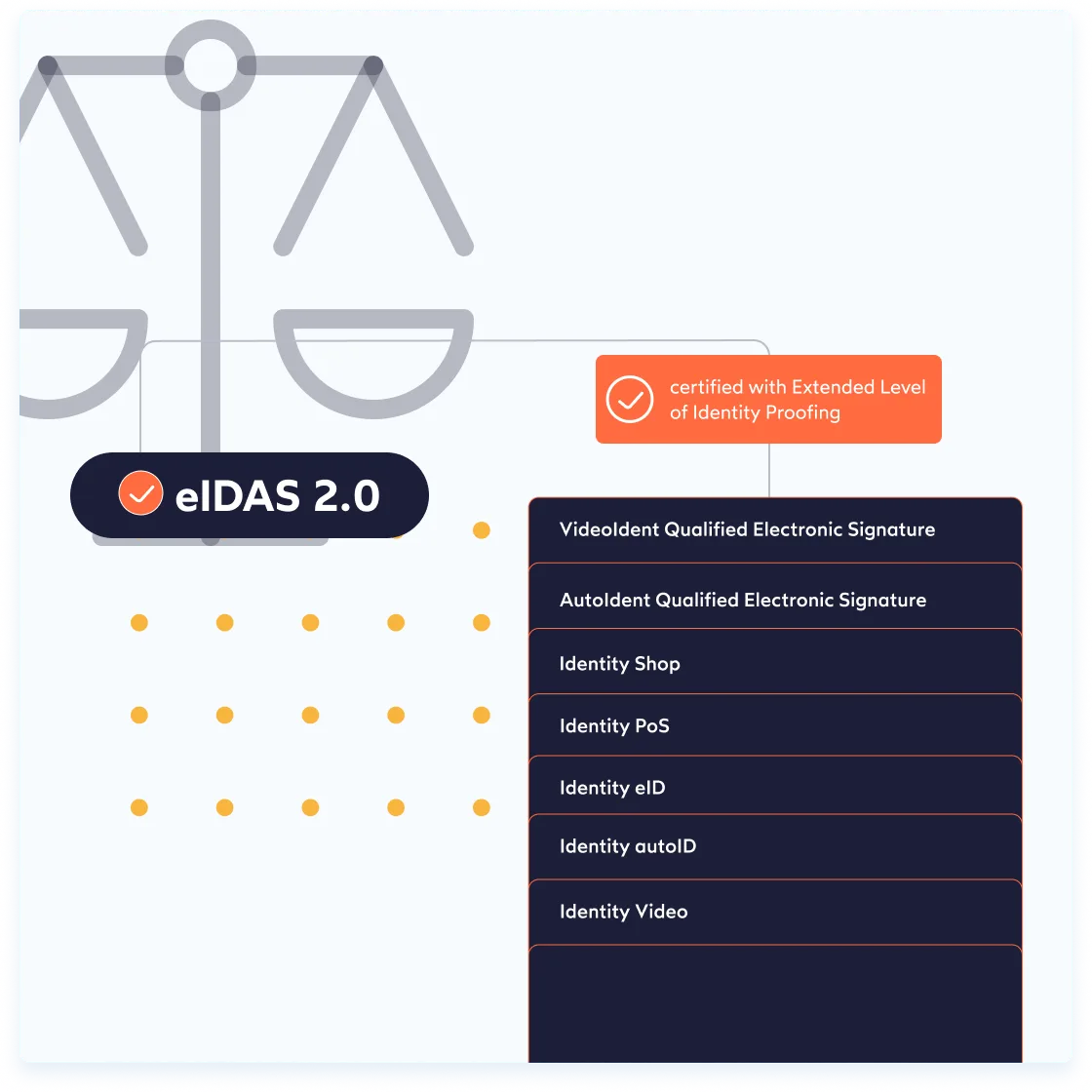
                    Ready to partner with IDnow?

                    Turn faces into trusted identities.

                    IDnow delivers identity verification and authentication for Adobe Acrobat Sign Digital Identity Gateway 

                    Munich, September 29, 2022 – IDnow, a leading identity proofing platform provider in Europe, announces a global collaboration with Adobe Document Cloud, the world’s leading PDF and e-signature tools solution, to make identify verification for validated signatures simpler and more secure.  

                    Legally compliant signing with a qualified electronic signature (QES) requires users to identify themselves before signing a document. But even for an advanced electronic signature (AES), it can be beneficial to have upstream identification and authentication of the signing party. Adobe Acrobat Sign Digital Identity Gateway allows organizations to select from a wide variety of pre-configured third-party digital identity providers (IDP) and leverage the type of identity verification that best suits their functional, security, or compliance needs. IDP services for user authentication, signer identity verification, and identity federation solutions utilize the standard OpenID Connect (OIDC) authentication protocol to integrate with Acrobat Sign. IDnow is now an Adobe Acrobat Sign Digital Identity Gateway provider. 

                    Identity verification via IDnow AutoIdent or VideoIdent for electronic signatures  

                    With Digital Identity gateway, Acrobat Sign users automatically receive notification when a particular type of identity verification is required to access and sign the document. After the user consents, the identification process is passed on to the IdP service. Once the identity check has been successfully completed, the user can access the document and then sign it electronically with their verified identity in a secure and legally compliant manner.

                    The IDnow integration will enable Adobe Acrobat Sign users to verify their identity using either IDnow AutoIdent or VideoIdent to create legally binding e-signatures as soon as the solution launches. The new authentication capabilities will also be available to customers using Acrobat Sign through native integrations on platforms such as Workday, Salesforce, Microsoft, or Google.  

                    In addition to IDnow VideoIdent and AutoIdent, Adobe Acrobat Sign users can authenticate via the IDnow Wallet in the future. Users who already have a verified identity stored in their IDnow Wallet will thus be able to skip the identity verification process.

                    “We are pleased to support Adobe with their new Digital Identity Gateway and to be part of a solution that provides users with a secure and straightforward signature process. In the future, not only Adobe customers will benefit from the cooperation between the two companies – our customers will also be able to use their familiar IDnow solutions via the Acrobat Sign platform. In the future, we plan to intensify the cooperation and expand it in further use cases,” says Johannes Leser, Vice President Trust Services at IDnow.  

                    “Secure and user-friendly electronic signatures, and thus secure authentication and identity verification of the signing party, are becoming increasingly important in the digital world. This is true worldwide and for all industries. We are therefore pleased to have IDnow as a reliable partner for identity verification through our Digital Identity Gateway,” adds Andrea Valle, Product Management Lead Adobe Acrobat Sign.

                    Table of Contents

                    Ready to partner with IDnow?

                    Turn faces into trusted identities.

                    Dubai, United Arab Emirates, 28 September, 2022 – Leading digital identity proofing platform provider, IDnow, has announced a UAE collaboration with UBIRCH, a leading German trust platform provider with regional headquarters in Dubai. For the launch of one of the world’s first KYCT (know-your-customer token) solutions, UBIRCH partners with IDnow. The solution proves the identity and ownership of crypto wallet holders and origin of minted assets, such as NFTs (non-fungible tokens). 

                    The UAE has one of the highest rates of NFT ownership in the world, with 23 percent of the population owning at least one, which is around double the global average*. Many of the early crypto exchanges did not require a KYC check, which has led to a lack of trust in NFTs and a gap between the creator (maker) of an NFT and the buyer. Combined with identity theft, challenges with proving ownership and origins of an asset in a legally binding contract and ensuring digital art can be protected are current market barriers that must be overcome. At the same time, the cryptocurrency industry is rapidly changing and so are the regulation requirements. Therefore, the leading companies in crypto trading worldwide now enforce strong KYC policies, in order to comply with AML and KYC regulations.

                    Karim Attia, CEO of UBIRCH said, “The UAE is one of the leading countries for adoption of cryptocurrencies and NFTs. To support the popularity and growth of digital assets, our partnership with IDnow will enable us to create the most secure and trusted process for verifying identity and proof of origin, yet. Ultimately, this technology is essential to protect individuals, businesses, brands, creators and the entire financial ecosystem in a decentralized environment.”

                    Benjamin Haas, Senior Director EMEA of IDnow group said, “Bringing an additional identity layer to digital assets adds trust and credibility to the entire Web3 including crypto exchanges, NFTs and other financial offerings. Secure verification proves the identity of the creator and provides authenticity to the ownership of NFTs. It helps to close the gap between the NFT creator and the buyer, while reassuring the buyer that what they are purchasing is genuine.”

                    The KYCT technology (kyct.xyz) addresses some of the challenges of the crypto and NFT community in ensuring that identity – both digital and legal – and proof of origin are accurate. The two companies join forces through UBIRCH’s trusted backend for proving that an asset belongs to a creator and was anchored at a specific time, and IDnow’s leading identity proofing platform that confirms the customer’s legal identity with the help of an official identification document. 

                    While NFTs have been popularized through digital art, the technology can also be applied across a range of sectors, such as the tokenization of digital health records, as digital access-passes and tickets for events, or any occurrence where a tokenized model can be applied to acting parties and digital assets.

                    UBIRCH was founded in Germany in 2014 and has since expanded its global presence to the UAE, with offices in Dubai and Tel Aviv, Israel. As cybersecurity expert, UBIRCH brings advanced technology that propels digital transformation. UBIRCH is driven by a team of professionals who believe data-driven processes will provide many cross-industry exciting businesses, such as in the manufacturing industry, smart cities, insurance, healthcare, energy supply or logistics segments. UBIRCH is renowned through the contract awarded by the German Ministry of Health to develop, together with a consortium, the digital COVID certificate for the EU for Germany, based on UBIRCH technology.

                    *UAE NFT ownership figure from finder.com survey of 1,004 people in the UAE and 28,000 people globally.

                    Table of Contents

                    Ready to partner with IDnow?

                    Turn faces into trusted identities.

                    IDnow sits down with Brandi Reynolds, CAMS-Audit, CCI, CCCE at Bates Group to discuss what traditional banks can learn from crypto asset providers, and the unlikely role of blockchain technology.

                    What are some of the unique challenges that financial institutions must face in developing an effective compliance program for cryptocurrency? 

                    Financial institutions must take steps to understand the unique AML and compliance risks associated with cryptocurrency, especially around transaction monitoring rulesets and the fragmented regulatory landscape. 

                    Would you advise financial institutions tackle cryptocurrency separately, or attempt to bring crypto into the fold of an existing compliance program? 

                    Crypto will require unique policies and procedures, especially around transaction monitoring, but it can be incorporated into an existing compliance program. However, this is contingent on the types of products and services being offered – for instance, a crypto product which includes both traditional (fiat) as well as digital assets may be able to draw on elements of an existing compliance program, but a product that is purely digital will likely require, at minimum, an expansion of policies and procedures to address its specific risks. 

                    What is your opinion on the pace of the global development of regulations and compliance best practices, as they relate to cryptocurrency? 

                    The pace of regulations and best practices is irregular and fragmented, since the development of regulations is proceeding at radically different pace across the globe, and even within individual countries (such as the varying levels of state-specific regulations in the US) 

                    Is there a particular region, or country that you would consider further along in its journey toward offering a safe and compliant regulatory framework for cryptocurrency? 

                    Singapore and Estonia represent the most developed and stable regulatory frameworks globally. Within the US, while the regime is strict, the New York BitLicense represents the most well-developed regulatory framework for cryptocurrency, to the point where other states such as California are using it as the basis for their own comprehensive regulations. 

                    If a financial institution was deliberating as to whether to either accept, or launch a crypto trading platform, what would you say are three major advantages (rewards) and three challenges (risks) of doing so? 

                    The three main advantages would be: large amount of available potential investor capital, expanding use cases and user base for crypto products and services, and the diversification of investments and revenue streams.  

                    For disadvantages, I would say: increased regulatory scrutiny, highly volatile markets with a high risk of business failure, and increased exposure to AML and fraud risks. 

                    How important is the role of technology, and in particular KYC onboarding platforms, in enabling crypto firms to offer a safe and secure crypto customer experience? 

                    Technology is critical for operating a risk-based crypto compliance program. In particular, blockchain monitoring software, which allows firms to risk rank wallet addresses and analyze their transaction activity, is becoming de facto required by regulators.

                    Blockchain monitoring should be incorporated into the KYC process and should be seen as essential as practices such as collecting and verifying a photo ID. 

                    Brandi Reynolds, CAMS-Audit, CCI, CCCE at Bates Group

                    Are there any things you think the traditional banking sector could learn from the crypto space regarding best compliance and anti-money laundering practices? 

                    The use of the blockchain as a recordkeeping system is revolutionary from a compliance standpoint, in that it allows a firm to instantly trace the movement of cryptocurrency through every wallet address it has ever interacted with. This makes identifying exposure to sanctioned, criminal, or high-risk entities much easier than in the traditional financial system, where a similar investigation could take months if not years. Thus, while crypto may have a higher inherent risk of being exploited by bad actors, this is offset by the ability to more easily identify suspicious activity on the blockchain. 

                    With so many different rules and regulations pertaining to cryptocurrency across the world, how can financial institutions ensure they continue to operate compliantly and adhere to KYC best practices? 

                    Financial institutions should carefully consider the types of crypto products they would like to offer and assess their inherent risk, including their customer bases’. This should include an assessment of the jurisdictions where the products would be offered and associated regulatory risks and requirements. 

                    How would you assess the MiCA regulatory framework? Does it go far enough? Are there any glaring loopholes, or omissions? 

                    It’s still too early in the development process to assess its impact.

                    While MiCA will apply to all member states of the EU, there is no requirement that it be implemented at the level of national law, which presents potential restrictions on the passporting of licensing through the EU.

                    Brandi Reynolds, CAMS-Audit, CCI, CCCE at Bates Group

                    It may also present additional regulatory burdens on firms due to its emphasis on consumer protection. However, MiCA will present a unified framework which will greatly simplify other aspects of regulatory compliance. 

                    As the UK is no longer part of the EU, and therefore subject to its AML and crypto regulatory requirements [especially MiCA], would you say this puts UK crypto shops, and UK crypto consumers at an advantage or disadvantage?   

                    There is a disadvantage in that UK crypto firms must pursue two tracks of regulatory registration and approval, one in the UK and one in an EU country. This increases the regulatory burdens on firms as they must comply with two distinct sets of regulations and increases the possibility of conflict between regulations, especially given that the UK is currently considering regulatory changes. 

                    Interested in more Fintech Spotlight Interviews? Check out our interview with David Gyori, CEO of Banking Reports.

                    By

                    Jody Houton
                    Content Manager at IDnow
                    Connect with Jody on LinkedIn

                    Preparing for the known: Operating in a world of crypto regulation.

                    Download to discover how UK crypto exchanges can prepare for the brave new world of crypto regulation. 
                    Get your free copy
                    Operating_world_crypto_regulation

                    Table of Contents

                    Ready to partner with IDnow?

                    Turn faces into trusted identities.

                    It’s time we had a serious discussion about the risk-based system… 

                    A fraud epidemic is sweeping the UK. 

                    Criminals bilked UK victims of a record £1.3 billion in 2021, according to new figures by top industry lobby group UK Finance. The numbers were so bad that publication of the report was delayed for banks to consider their response. 

                    Approximately 91% of identity fraud cases reported to UK authorities in 2021 were carried out online. Although anyone can fall victim to online fraud, tackling it is not a priority for law enforcement, according to the government. Instead, firms are being asked to do more to protect their customers and themselves or run the risk of heavy fines or even criminal sanctions for non-compliance. 

                    The year of 2020 saw a record-breaking £9.2 billion in penalties for KYC and customer identification failures, which triggered a demand for outsourced services and better technology, with automation of key onboarding processes deemed as particularly vital.   

                    Digitization has revolutionized the finance landscape and left manual ID verification processes firmly in the past; customers no longer want to wait days or weeks for their accounts to be approved, and they want to be able to do all this through their phones. 

                    Speaking to IDnow on condition of anonymity, the Head of Operational Risk at a mid-tier UK investment bank said: “I believe, and I am not alone, there are significant problems, weaknesses with how external auditors check over all applications manually. It’s just too time-consuming, expensive and prone to errors. We are looking at how we can automate more and it’s the same issue whoever you ask up and down the street.” 

                    Lost in the wash.

                    The advanced payments infrastructure, almost zero policing of fraud-related crime, and use of the world’s most widely used business language, has made Britain the global incubator for scams. 

                    Money launderers exploit the poor standard of identification checks, the weaknesses in manual processes and physical documentation requirements to slip through the net. Read more about money laundering red flags to be on the look out for in our blog.

                    Just two years ago, Commerzbank’s London branch was fined more than £37 million for a series of compliance failings, including outdated customer onboarding processes. The bank allowed a queue of 2,350 accounts awaiting background checks to build up, but some were able to trade freely, in clear contravention of the Financial Conduct Authority (FCA) rules.  

                    Despite the near-constant updates to anti-money laundering and counter-terrorist financing (AML/CTF) laws, knowing exactly who their clients are appears a problem for many UK financial services firms. 

                    The risk-based approach to Know Your Customer (KYC) processes favored by the UK, but eschewed in most other developed nations, is gatekeeper to an environment where fraud continues to run rampant.  

                    ” In the Western world, it is almost impossible to find a major, global bank that has not been sanctioned for AML or other financial crime failings in recent years.

                    Now that AML-related concerns and failings have resulted in many large banks being sanctioned, regulators are beginning to pay increased attention to other areas of financial services.

                    Malin Nilsson, Managing Director, Financial Services Compliance and Regulation at Kroll

                    For example, regulators have started to implement guidance for digital identity verification, such as in the EU’s 5th Anti-Money Laundering Directive released in 2020. In it, it states that an obliged entity must identify the customer, either through traditional documentary evidence or information obtained from a reliable and independent source, including electronic identification means. Those electronic identification methods must comply with Regulation (EU) No. 910/2014, which sets out criteria for identity verification services. 

                    Outdated processes.

                    Before assessing the risks associated with a customer in relation to money laundering or financing of terrorism, financial institutions must first verify the individual’s identity. This is done via the KYC process, which involves scrutiny of government-issued identification documents, such as a passport or driver’s licence, or other means, such as utility bills or bank statements to ensure the customer or client is who they say they are, and to prevent illicit activities.

                    Check out our ‘3 KYC components every financial institution must follow’ blog to learn more.

                    What that process looks like differs around the world (which creates complications of its own), but there are a set of general guidelines overseen by a global group of regulators from various jurisdictions sitting as the Financial Action Task Force (FATF).  

                    The UK’s interpretation of these rules requires firms to take a risk-based approach, which means assessing the specific threats the business is exposed to, such as banking vulnerable or politically exposed individuals.  

                    The current rules and regulations were originally created to address the risks and controls associated with retail banking, which has unintentionally created regulatory barriers and AML complications for non-banks like PayPal, alongside other fintechs, and sectors like online gambling and crypto trading companies. A “low risk” for a bank may be a “high risk” for another sector. 

                    As legislation around anti-money laundering and risk-based-approaches was largely written in the pre-digital era, access to the data that helps firms calculate risk was limited. Ironically, there is now almost too much data to handle, with many organizations struggling to take advantage of the insights and technology available to them. 

                    A Thomson Reuters investigation into KYC challenges impacting financial institutions and their corporate clients found rising onboarding costs, lengthy onboarding times and sub-par ongoing maintenance of client records.  

                    Costs are spiralling, with resourcing and the need to hire more staff a major concern. It still takes too long to onboard customers, and the time taken to refresh client data is torturous.  

                    Multinationals face further complications dealing with the UK’s risk-based approach, which allows more time to make decisions on threats and has no international standards to follow. As regulations can be interpreted differently, banks also often request inconsistent things from their clients, which results in inefficient operations of their own.  

                    One of the most common issues that IDnow hears from financial leaders responsible for supervising KYC and AML compliance within their organizations is the disconnect between their work and the business functions of the institution.  

                    Making sense of the exponential amount of data and documentation required for KYC and AML checking can be tough and, due to complicated and inefficient processes, can halt processes such as onboarding. 

                    Watchdogs like the FCA say cryptocurrencies and crypto assets are only magnifying the fraud problem, despite the growing sector working hard to shake off its reputation as a haven for bad actors.

                    Read more about the UK government’s recent fraud strategy, and the responsibility that operators bear in our ‘UK declares war on fraud, calls on technology giants to join the fight.’ blog.

                    New school thinking 

                    Ironically, the answer to avoiding ever-tougher controls, circumventing inflexible processes, and improving both standards and efficiencies in the KYC process may come from an unlikely source: the world of crypto.  

                    Virtual asset service providers (VASPs) must also keep detailed records of beneficiaries, complete further enhanced due diligence of politically exposed persons (PEPs) and appoint an individual to oversee compliance and regulatory issues in the wider financial space. 

                    KYC is one of the biggest roadblocks that cryptocurrency firms face, especially given the nature of digital tokens to protect or shield the identity of the owner.  

                    Cryptocurrency firms have an opportunity to give regulators and customers confidence, outshine competition and demonstrate credibility by implementing industry-leading compliance practices.

                    Ben Luddington, Director at PwC UK. 

                    Unburdened by years of legacy system upgrades, bolt-ons and software changes, alternative finance companies have automated large swathes of the KYC process and built systems that can process a much wider source of data. This has created faster, safer and more robust paths to verification than in place at traditional banks and financial institutions.  

                    Configurability is essential to addressing the challenges faced by firms operating in multiple jurisdictions, but rigid technology stacks at many financial organizations jam up KYC compliance workflows. Indeed, every bank, insurance, accounting and law firms will likely have dusty rooms full of photocopied identity documents clogging up the filing archives of the business. 

                    Challenger finance apps and crypto exchanges have also advanced the integration of Multi-Factor Authentication systems based on SCA (Strong Customer Authentication), Liveness checks, and other forms of biometric-based authentication. These types of identity verification processes, which sometimes require little more than a selfie and a PDF of a household bill, dramatically improve the customer’s onboarding experience.

                    How intelligent technology enhances the KYC process 

                    Document verification determines if something is genuine or fake through a series of checks, but the quality of the process varies wildly. Field-to-field consistency, data validations and font anomaly detection, among others, are popular, but where smaller, nimbler services beat the larger incumbents is by combining the identity verification document check with biometrics.  

                    These platforms have also made good use of electronic signatures to communicate with their customers, further allowing them to promote additional financial products and services. 

                    The smartest solutions have AI-based face and emotion recognition capabilities, or the ability to scan the internet for negative sentiment, making KYC procedures more cost-effective, accurate and customer-friendly. 

                    All firms must turn to technology to bolster KYC frameworks and accelerate the detection and mitigation of financial crime, Luddington said. This may be a build vs buy decision. 

                    “Deciding which processes will benefit from what technology requires considerable and careful thinking, but this will bear fruit in the long run,” he said. “We’re already seeing the FCA using analytics to innovate its regulatory approach and recognizing the importance of technology in driving financial crime compliance.” 

                    Risk management has become more challenging over time as regulations tighten, and financial institutions have faced larger fines where compliance programs have failed. 

                    Banks have long struggled to balance fraud prevention and customer service, and existing paper-based and risk-based processes are simply ill-suited to the demands of modern finance, while advanced, intelligent identity proofing developments are proving critical. 

                    “It’s more important than ever for financial services firms, particularly those in the UK, to understand the benefits of automation and apply them to the KYC process in order to truly manage fraud.

                    Regulators should do more to create robust identity verification guidelines and set expectations that firms leverage better technology in order to stop the unwanted headlines about bank fraud. 

                    Rayissa Armata, Head of Regulatory Affairs at IDnow

                    For more information about how automated KYC solutions can enable organizations to offer a safer, more secure, and more efficient verification process, check out our ‘What is KYC’ page.

                    Check out our Fintech Spotlight Interview with ex-police officer Paul Stratton, on the limitations of the UK’s fraud strategy.

                    By

                    Jody Houton
                    Senior Content Manager at IDnow
                    Connect with Jody on LinkedIn

                    Identity crisis? The future of digital IDs in the UK.

                    Download to discover how digital identity verification solutions can unlock valuable economic and societal opportunities, tackle fraud, and improve customer conversions and the consumer experience.

                    Get your free copy

                    Table of Contents

                    Ready to partner with IDnow?

                    Turn faces into trusted identities.

                    IDnow is supporting IATA to simplify the passenger journey through digital identity

                    Munich, September 13, 2022 – IDnow, a leading European identity proofing platform provider, is pleased to announce its participation in the International Air Transport Association’s (IATA) Accelerate@IATA 2022 accelerator program. IDnow is working with IATA and its members, providing expertise and regulatory know-how in the field of identity proofing and digital identity. Together, IATA and IDnow are working on the shared goal of making flying more seamless and low-touch for passengers, while lowering fraud risks for airlines. 

                    IATA is the trade association for the world’s airlines, representing some 290 airlines or 83% of total air traffic. As a leading industry association, IATA is shaping industry standards and the future of aviation.

                    Through the Accelerate@IATA program, IDnow is contributing to the IATA One ID working group. The goal of IATA One ID is to set industry standards that further streamline the passenger journey with digitalization of admissibility and a contactless process through secure biometric enabled identification. Under the One ID vision, upon completing document checks remotely, passengers will be able to arrive at the airport ready to fly and proceed through each airport touchpoint via simple biometric recognition. The objective is to achieve a truly interoperable global system across airports, airlines and governments.

                    IDnow is collaborating with airlines and other technology providers members of the IATA Think Tank on a white paper about the application of digital identity in the air travel industry. In parallel, a proof of concept is being developed to show how digital identity can support people with reduced mobility with traveling, and airlines and airports to prioritize the required staff for the necessary support.

                    “We are very pleased to have IDnow participation in the heart of industry innovation conversations. IDnow brings their expertise on the secure decentralized digital identity to support the airline industry for the journey to customer-centricity.” – Kat R. Morse, Senior Manager Innovation, Partnerships and Events at IATA.

                    “We understand that in the modern air travel industry, digital identities have a huge potential to shape a whole new traveler experience. From lowering the fraud risk for airlines, to creating a more seamless and low-touch experience for passengers and offering a GDPR compliant solution for storing and sharing of biometric pictures for airports and other players – Digital identity is the key. We are excited and proud to have been selected by IATA to work together and to partner with some of the most prestigious airlines of the world to shape the future of air travel”, says Michael A. Binner, Director Digital Identity at IDnow.

                    Table of Contents

                    Ready to partner with IDnow?

                    Turn faces into trusted identities.

                    – ADR approval confirms the group’s leading position in the European digital identity market

                    – The company is the first to offer two ADR compliant identity verification solutions in Romania

                    – ARIADNEXT merged with IDnow in June 2021, integrating the IDcheck.io solution into the IDnow group portfolio

                    Bucharest, September 7th, 2022 – IDnow, a European leader in identity proofing and digital identity, announced today that it has obtained the approval of the Authority for the Digitalization of Romania (ADR) for its second identity verification solution in a row. The group’s IDcheck.io KYC (Know Your Customer) solution has been approved as compliant with Article 4 of the ADR Remote Identification Standard that came into force on July 22, 2022. The decision comes just weeks after the ADR conformity for IDnow group’s AutoIdent+QES solution. 

                    Two compliant identity verification solutions for different customer needs 

                    The IDnow group solution AutoIdent+QES, already eIDAS certified by TÜV Austria in Italy, was approved by the ADR in May 2022. The 100% automated solution IDCheck.io had already been certified under ETSI TS 119 461, the European Standard for remote identity proofing services. IDCheck.io has successfully finished the audit for the ADR and given its existing certification, has been declared compliant with Article 4 of ADR law, thus enabling IDnow group to position this identification method on the regulated market. 

                    These two ADR approved services, a first for any identity proofing provider in Europe, allow the company to address different customer needs – both for full customer journeys that include identification and digital signatures, and identification-only requirements. With these two solutions, financial institutions and banks in Romania can fulfill all their KYC requirements by offering their customers a fully secure digital onboarding experience that is AML-compliant.  

                    Broad portfolio via a single platform   

                    The acceleration of advanced digital business models across Romania and Europe has led to a shift in demand, from single-product identity verification towards more comprehensive identity proofing and document signing platforms. By offering one of the broadest portfolios in Europe via a single platform, IDnow group is at the forefront of these market trends and can offer reliable, secure and convenient KYC processes for its customers. 

                    Oliver Obitayo, Chief Commercial Officer at IDnow, says: “By combining IDnow, ARIADNEXT and IdentityTM, IDnow group has emerged as one of the strongest identity verification players in Europe as we offer customers a range of solutions for various use cases and jurisdictions – all from a single source. As a group, we believe in a strategy that moves far beyond offering a single identity verification method. The second ADR approval for our products within a few weeks is proof of this. We are proud to be able to address the entire range of customer needs in Romania when it comes to a fully digital and secure onboarding.”

                    Table of Contents

                    Ready to partner with IDnow?

                    Turn faces into trusted identities.

                    Established in Luxembourg in 2004, Syncordis SA provides business and IT consultancy services to the Financial Sector exclusively and is supported by Temenos Banking Software Suites.

                    Syncordis helps reduce risks, increase efficiency and enhance quality of its clients’ banking system, allowing them to meet business needs on very cost-effective terms.

                    Syncordis brings rich international execution experience to its clients in over 15 countries across Europe (including Germany, Switzerland, UK, France, Belgium & Luxembourg), Asia, Americas, Middle East & Africa.

                    In 2019, the company launched a new “banking as a service” (BAAS) offer, based on Temenos solutions, and within which ARIADNEXT by IDnow KYC and electronic signature solutions are integrated.

                    Thanks to ARIADNEXT’s automatic and instant ID documents verification IDCheck.io API solution and its secure electronic signature with Check’nSign.io product, Syncordis can now offer a simple and secure onboarding for banks.

                    Table of Contents

                    Ready to partner with IDnow?

                    Turn faces into trusted identities.

                    IDnow sits down with David Gyori, CEO of Banking Reports to discuss upcoming trends in fintech, the importance of multi-jurisdictional solutions, and why the current state of crypto reminds him of the 17th century tulip mania crisis.

                    As a fintech consultant and thought leader, what first attracted you to the industry, and how have you seen the world of fintech change since you first became involved? 

                    So, the most beautiful thing about financial technology is that bankers and experts around the world underestimate the complexity of it. Fintech is about payments technology; new channels like augmented reality, virtual reality; all the regulatory issues, including eKYC, AML, onboarding; wealth tech, wealth management, including open banking, access to account, asset tokenization, decentralized currencies, roboadvisors, personal financial dashboards, data tech, big data, AI, machine learning, neo banks, core banking technology, and even quantum finance, which is an upcoming new arena within financial technology. So, from POS innovation to central bank digital currencies (CBDC) from video banking to virtual reality, and metaverse, it’s more diverse, more complex [than people think]. 

                    And this complexity attracted me.

                    You are the CEO of Banking Reports London, which provides fintech training for retail and investment banks; what types of subjects and themes are covered in the course?  

                    My training programs deal with strategy and tactics of digital transformation, financial technology, and emerging innovation in banking all around the world. I provide training programs to bankers in well over 50 countries face to face and online. I am always learning things myself. 

                    What are some of the major UK and European fintech trends that we can expect in the coming few years? 

                    So, the major trends will revolve around two things: one, Profitability, two, Regulatory environment. These two components will determine the next five years of financial technology. Following the 2008 crisis, there was abundant funding, there was a lot of liquidity, interest rates were low, and investors were in a growth mindset as opposed to a value-investing mindset and investors wanted companies with great growth potential. Now, with a higher interest rate and more inflationary environment, investors want prompt profit.  

                    So, profit is king. Looking at the 50,000 small, nimble, flexible creative, intellectually inspiring fintech startups, we will have to be selective to find the ones that can become profitable or at least offer a potential roadmap to profitability in the short run or maximum midterm. Probably, of the 50,000 candidates, there will be around 5,000 – 15,000, the rest will go down or be acquired, or merge into potentially profitable ones.  

                    On the other hand, the second trend, Regulation will be equally as important. Regulators are waking up, incumbent credit institutions (ie banks) are waking up and learning the name of the game. As they want to go ahead in a fully compliant, well organized, regulated, supervised way, regulators will have to up their game and create a safe and crystal-clear environment for emerging digital innovations, and this is very exciting.  

                    Good regulators now have a chance to create a global best practice environment. Some of the emerging countries now have the chance to jump ahead; to leapfrog, and to produce an environment that attracts the best companies. Others will fall behind or fall further behind. So, this is a regulatory point of division, and more than ever in the past 30 years, we need smart and visionary regulators.

                    Preparing for the known: Operating in a world of crypto regulation.

                    Download to discover how UK crypto exchanges can prepare for the brave new world of crypto regulation. 
                    Get your free copy
                    Operating_world_crypto_regulation

                    How about challenges? With increasing importance placed on fintech [partly due to pandemic-induced acceleration], what are some of the dangers and challenges associated with banks and financial institutions rapidly implementing fintech and regtech solutions? 

                    Regulators should focus on the areas that are valuable, that have real potential, such as CBDC, Fiat currency, as well as blockchain. Blockchain as a technology, as a distributed ledger technology is making banking safer, if applied well. So, blockchain technology has great potential for trade finance, through securities clearing, to interbank clearing, from smart contracts to registering derivatives, and even KYC-related activities. Blockchain has great potential if it is compliant and applied well, and can make banking better, more transparent, more professional, more trustworthy, safer, and more compliant, and that’s good. 

                    Learning from some of the key innovations in the crypto world is also a great opportunity. But, cryptocurrencies, as decentralized, haphazard, no intrinsic value, no Fiat, no sovereign-appointed value in the background are dangerous, and probably the greatest bubble ever in history. I like to compare it to the tulip seed crisis in 17th century Amsterdam, when the price of tulip seeds went up to the price of residential real estate, and then it all crashed. A reason why cryptocurrencies in their current format are non-viable is a lack of material compliance; a lack of nominal price stability by design, which is a core characteristic of money as per money in terms of payments; a lack of sovereign control over monetary supply, which is very important in certain points in history. 

                    Now we are battling inflation, but there is only one thing worse than inflation – deflation. Look at the energy crisis and look at how Bitcoin is eating up countries’ energy. Look at environmental considerations and try to put it together with servers running to the fullest across the world. Material costs, real cost of transactions, not illusory, imaginary costs, but real-life costs.  

                    Look at all the fraud cases intended, unintended, deeply criminal, somewhat criminal, gray area, black area, full of fraud, and there is something very important, which is hidden and very important – a lack of interest rate content and lack of intrinsic value. An asset lacking interest rate content can be valuable, for example, gold is an asset lacking intrinsic value that can be valuable. Think about modern currency, it has very fractional reserves in the background, basically it lacks classic intrinsic value, but throughout history, throughout monetary history, assets without any of these two – interest rate content as well as intrinsic value – have been doomed to fail.

                    Current decentralized cryptocurrencies can be characterized by a dual lack of characteristics: interest rate content and intrinsic value. Warren Buffet and Charlie Munger are perfectly right about cryptocurrencies.

                    David Gyori, CEO at Banking Reports

                    However, regulators still have a great chance to focus on the good areas from blockchain to CBDC, from meaningful asset tokenization to certain synthetic units of corporate settlement. So, there are still great opportunities, but in this arena, regulators themselves must be selective, and selective in a conscious, premeditated yet strategic, tactical, and programmatic way. 

                    Are there any countries that could be considered more advanced in the regulation of cryptocurrency? 

                    This is a difficult question because we are in the process, and regulators are now trying to work out their positions. What we do see is that in terms of certain sub areas like CBDCs, certain countries are one or two steps ahead. For example, China has done some amazing research on CBDCs, the Bank of England is doing amazing research, also the Federal Reserve, some of the South Asian countries, such as Singapore. So, in terms of CBDCs, we are already seeing some interesting and meaningful attempts, but these are baby steps. We are in the nascent stage.  

                    In terms of judging regulators, we must be very careful. In fact, one of the regulatory environments I’m expecting a bright future from is the UK regulatory environment, but I am also expecting some good things to come from Brussels, from the European union. PSD 3 (Payments Services Directive) is already in the making, and the UK is going ahead on its own path. I see some very good and smart signs that they’re supporting a vivid and valuable market structure in the future.

                    Customer onboarding processes remain a much fought-over area of a service provider’s customer experience. How can banks balance their customers’ desire to be onboarded in the automated and digital-only manner that they have become accustomed to, with local regulatory and KYC + AML requirements? 

                    So, digital onboarding is paramount. Young people want simple, straightforward, easy to understand fun, one click, instant, digital, global best practice-level onboarding experience, and when they get it, they extend this experience to the product or service. So, they will think your product and service is amazing if your onboarding process is amazing. However, when your onboarding process has friction, when your onboarding process is slow, when your onboarding process is not digital, when your onboarding process is complex, when your onboarding process is nerve-breaking, when your onboarding process is not intuitive, you know what happens? According to research, millennials extend this to your product or service, in terms of perceived quality and content.

                    We call it the digital halo effect: extending one characteristic of a person, product or service to the entire entity.

                    David Gyori, CEO at Banking Reports

                    If the onboarding experience is positive your clients will become active users of your products and services and produce a positive lifetime value – they will be your profit drivers. If your onboarding experience is negative, clients, especially the young ones under the age of 35, will turn away from your products and services no matter what the quality is. Their lifetime value will be negative, and they will drive losses. So, [digital customer onboarding] is a tactical element of excellence with a strategic importance. 

                    How important is it for banks to invest in multi-jurisdictional fintech and regtech solutions? 

                    So, this is a unique time in terms of the relationship between regulators and regulated entities in the arena of financial services. Why? Because things are changing in such a complex, such a dynamic way. Can you remember what I said about the complexity of fintech? It’s so complex and so dynamic that regulators are actually open to discussion with mature, trustworthy, wise market players. 

                    You can engage with the regulators now, and hand-in-hand, the market and regulators can forge safely ahead. For this reason, we are always searching for solutions that have been proven to be safe, trustworthy, compliant, and customer and regulator-friendly in other jurisdictions, [in order] to implement them in our jurisdictions.

                    David Gyori, CEO at Banking Reports

                    Multi-jurisdictional solutions are more important than ever. Regulators are learning from each other. Market players are learning from each other. We need solutions that can be used in different countries at the same time. So, there are vertical and there are horizontal arguments for multi-jurisdictional, trustworthy, stable, safe, and customer friendly, intuitive, seamless, and well-designed solutions. 

                    What are some of the major issues with current KYC processes? 

                    This question is very important and it’s a very smart question, because there is a shift in the paradigm of KYC processes. There is the old school, and there is the new school. The old school was face to face physical processes are safe, and digital processes are dangerous. Be very careful with digital onboarding, put additional guards there. Regulators would try to slow it down, try to tame it, try to moderate it, but there is a change in guard. There is a change in paradigm, and there is the new paradigm: eKYC (Electronic Know Your Customer) digital-only onboarding. The more people you include in an end-to-end digital financial services onboarding, the more transparent and safer your entire financial ecosystem will become. 

                    So, onboard, onboard, onboard, onboard, of course do it as well, and as professionally as you can. Document everything, keep GDPR, be privacy compliant, but store everything that is legal and ethical to store, make it as safe as possible, and do it 24/7/365.  

                    Do it as much as you can because the more people, the more young people, the more unbanked people, the more underbanked merchants involved in the end-to-end digital financial services, the more transparent, safer, more compliant, more professional your entire financial ecosystem will become. 

                    This 180-degree shift in the paradigm of KYC, particularly eKYC, is very important.

                    What have you heard of IDnow? 

                    IDnow is put together in a very smart way, and designed in a very safe, business-friendly, yet compliant and secure way.  

                    We must recognize that a well-designed eKYC digital onboarding solution provides a safer identity environment than traditional channels; this is a 180-degree paradigm shift from digital being dangerous, to digital being best practice when done well. But, to do it well, you need a world class partner, and in my opinion, IDnow is one of those world class players and partners.

                    Interested in more Fintech Spotlight Interviews? Check out our interview with global advisor and investor in digital financial services, David Birch.

                    Read our ‘The growing pains of fintechs’ blog to discover what the burgeoning sector could learn from the grown-up incumbent banks.

                    By

                    Jody Houton
                    Content Manager at IDnow
                    Connect with Jody on LinkedIn

                    Keeping abreast of the different EU online gambling rules and requirements can be confusing, time-consuming, and incredibly expensive. Here’s how IDV solutions can help organizations easily follow multiple countries’ compliance regulations.

                    The popularity of online gambling continues to rise, despite the introduction of diverse and increasingly complicated regulations, and severe risks surrounding identity fraud.

                    In the UK, it comprises nearly 40% of the overall gambling market, while in Europe online gambling is growing at around 10% per year. According to the European Betting & Gaming Association (EBGA), the market value of online gambling is expected to reach more than €29.3 billion by the end of 2022.

                    The recent increase in online gambling can be explained by a) Increasing the time people spend online and especially on their mobile phones, and b) technological advancements that enable gamblers to bet anytime, anywhere.

                    With new gaming markets like Ontario or Brazil getting ready for mass adoption and hundreds of new online casinos opening every single day, the rapid increase in online gambling shows no signs of slowing.

                    However, gambling operators have a balancing act to handle when it comes to offering frictionless onboarding processes, maintaining high conversion rates, and meeting all licensing requirements.

                    Regulations, risks, and rewards

                    As there is no uniform legislation in the EU that governs gambling services, each member state is autonomous and free to regulate how they see fit. For example, some countries allow all types of gambling, while others restrict certain forms such as only permitting poker or casino games, for example.

                    Keeping abreast of regulatory differences can be confusing, time-consuming, and expensive. Some of the most common gambling regulations concern age limits, which means verifying the age of players is essential in preventing underage gambling. There are also specific national and regional laws that gaming operators must follow.

                    The rewards for capitalizing on this growing market are extraordinary (an industry expected to be worth over US$172 billion by 2030), however, the risks are high as well.

                    As with many online platforms, online gambling poses an increased risk of fraud and security breaches than traditional gambling as criminals have set their sights on this industry. They have been known to set up fake online casinos or hack the mainline casinos to steal sensitive information.

                    There are also additional social responsibility concerns with online gambling, as it is considered to be a much more addictive form of gambling, due to the increased likelihood of it turning into a habitual part of a consumer’s everyday life, like watching television.

                    Online gambling can also be used to launder money, with criminal gangs choosing online platforms to transfer money anonymously.

                    Operators must therefore adhere to online gambling regulations to not only protect their customers, but their organization from being exploited for criminal purposes. If they do not, they run the very real risk of fines, or even being banned from the marketplace.

                    Commenting on the recent £1.32 million fine of gambling operator, LeoVegas, Leanne Oxley, Gambling Commission Director of Enforcement and Intelligence, said, “We identified this through focused compliance activity, and we will continue to take action against other operators if they do not learn the lessons our enforcement work is providing.

                    “This case is a further example of operators failing to protect customers and failing to be alive to money laundering risks within their business.”

                    LeoVegas was found to have exhibited social responsibility failures, including not setting an enforced 45-minute break following six hours of use, and anti-money laundering failures, such as financial triggers for anti-money laundering reviews being too high.

                    two people holding smartphones in front of a tv with a sports game on

                    Need for speed

                    With so many regulatory risks associated with online gambling, it is understandable if gambling operators decide to cash in their chips and focus on a different line of business.

                    Businesses that do enter the online gambling market, and comply with regulations, are also often plagued by sluggish UI, and poor customer experience. In fact, research shows that 30% of online gamblers have abandoned the onboarding process when registering a new account with a gambling website due to its complicated sign-up processes.

                    The importance of offering a fast and smooth, multi-jurisdictional, and KYC-compliant onboarding experience cannot be overstated. As every potential customer needs to be verified before being allowed to gamble, players will no doubt flock to the website or gambling platform that can verify their information the quickest. This need for speed is becoming increasingly important in both the KYC, and online gambling arenas. If player onboarding is too complicated, or has too many hurdles, organizations run a real risk of significant drop-off.

                    How to leverage IDV and KYC for a better and safer online gambling experience

                    Although it may seem overwhelming, implementing a robust KYC procedure should be seen as an opportunity to offer a better and safer customer experience, and the first step in a productive working relationship between an ID verification company and online gambling operator.

                    This partnership can help operators meet the many challenges associated with verifying customers’ identities, while ensuring their users practice responsible gaming. It can also help in perhaps one of the most crucial aims of IDV: fraud prevention.

                    In 2021, the UK saw an increase of 43% in online gambling fraud, and, since fraudulent gambling activity spikes during major sporting events, resulting in so-called World Cup betting fraud.

                    IDnow offers a seamless onboarding process, reducing verification times and increasing compliance with all major European regulations.

                    As the leading European identity verification provider, IDnow’s solutions have a proven track record of success, providing conversion rates of up to 90%, and are not only compliant within the DACH and UK markets, but assist rapid scalability with compliance in 195 countries and support in over 30 languages. IDnow can be trusted to deliver security, support, engagement with regulators, and the prospect of global scalability.

                    Leveraging IDV and KYC will allow gambling operators to offer a safe, secure and friction-less experience, which is a win-win, for the business and the consumer.

                    Interested in the intricacies of different regulations? Read our blog, ‘Regulations for online gaming companies in Europe – an overview.’ Or, if you’re interested a little further afield, in the emerging market of Brazil, check out our blog ‘Unpacking the complexities of the Brazilian gambling license structure.’

                    By

                    Rayissa Armata is Head Of Regulatory Affairs at IDnow

                    Rayissa Armata
                    Senior Head of Regulatory Affairs at IDnow
                    Connect with Rayissa on LinkedIn

                    Everything you need to know about gambling regulations in Europe and the UK.

                    Download to discover more about the online gambling landscape, the most important regulations for gaming operators, and how to be compliant within Europe as a gambling platform.  
                    Get your free copy
                    Gambling regulations 101: Europe and the UK.

                    Here’s what crypto asset service providers need to know about the proposed Transfer of Funds Regulation (TFR) in 2023.

                    On June 29, 2022, the European Union published a provisional agreement on the transparency of crypto asset transfers. The agreement will extend the European Transfer of Funds Regulation (TFR) to include crypto assets, meaning that the sender and beneficiary of all applicable or centralized crypto transactions need to be identified. 

                    Opponents to the new regulation argue that TFR violates EU charters on privacy, and that the collection of Personal Identification Data will not necessarily help in the fight against money laundering. While those in the crypto community that relished the anonymity of decentralized transactions are likely to be unhappy with this development, others see it as a sign that regulation is finally catching up with the industry and bringing much-needed clarity for crypto asset service providers (CASPs). 

                    Perhaps most importantly, though, is that the greater safeguards are sure to go some way to tackling fraudsters and scammers in the area of digital – fiat currency conversion. 

                    Tighter regulations mean that not only will regulators track crypto to fiat exchanges, but they will also be monitoring decentralized transactions where a transfer is made between a centralized service provider and an unhosted wallet. This looks set to change the anonymity of operating in a decentralized self-sovereign environment. 

                    Why was TFR extended to crypto assets?  

                    The regulation is a response to the growing use of crypto assets for money laundering and terrorist financing. Crypto assets are often used for these purposes because they can be transferred quickly and anonymously. By requiring information on the source and beneficiary of the funds, authorities will be able to track these transactions and investigate any suspicious activity. 

                    With the latest TFR update, the European Union is catching up, and beginning to implement some of the recommendations from the Financial Action Task Force (FATF), the global money laundering and terrorist financing organization. 

                    At this time, Non fungible tokens (NFTs), which represent ownership in digital art or other collectibles, are currently excluded from the scope of these rules. Within the next 18 months, the European Commission will evaluate whether certain NFTs should fall into this scope or require their own regulatory regime. 

                    What are the new rules for crypto transactions?  

                    CASPs will now be required to collect and store information on the source and beneficiary of the funds for each transaction. 

                    This rule, known as the “travel rule”, already exists in traditional finance and requires that information on the source of the asset and its beneficiary travels with the transaction and is stored on both sides of the transfer. CASPs will be obliged to provide this information to competent authorities if an investigation is conducted into money laundering and terrorist financing.  

                    Does this include transactions to and from unhosted wallets? 

                    In contrast to the original proposals, the current agreement now excludes private unhosted wallets that are not operated by regulated CASPs. In practice, this means that private wallets and person-to-person transfers conducted without a provider do not fall under the requirements of the “travel rule”. 

                    What does this mean for CASPs?  

                    The new rules will require CASPs to perform a KYC-check on the source and beneficiary of the funds for crypto transactions. This information must be made available to competent authorities if an investigation is conducted. In addition, crypto transfers above €1000 between exchanges and unhosted wallets owned by an individual will need to be reported to the national authorities. Crypto peer-to-peer wallets that are not hosted by a provider will not be subject to these rules. 

                    When will the Travel Rule come into effect? 

                    The Travel Rule was extended to incorporate crypto activities in the revised Transfer of Funds regulation, which alongside MiCA, was officially published in the European Official Journal on June 9, 2023. 

                    The Financial Action Task Force (FATF), regarded as the global money laundering and terrorist financing watchdog, recently aknoweldged the challenges associated with setting adoption and enforcement timelines across different juristictions and regions. Each FATF member state is currently madating travel rule compliance.

                    In the UK, the Financial Conduct Authority (FCA) has outlined what it expects from firms: 

                    • Take all reasonable steps and exercise all due diligence to comply with the Travel Rule. 
                    • Assume responsiblity for complying with the Travel Rule, even when using third-party suppliers. 
                    • Comply with the Travel Rule when sending or receiving a crypto to a firm in any jurisdiction that has implemented the Travel Rule. 
                    • Regularly review the implementation status of the Travel Rule in other jurisdictions and adapt business processes as appropriate. 


                    As one of the largest KYC providers in Europe, serving clients globally and locally, we have a clear view of this industry from a unique perspective. First, we support ‘smart regulation’ which, above all, is aimed at building trust in this digital ecosystem. The crypto space, which has grown at unprecedented speed, offers investors big and small a new and creative way to invest. The fragmented regulatory landscape has produced opportunities for significant gain and loss.  

                    Rayissa Armata, Head of Regulatory Affairs at IDnow  

                    “For adoption to grow into mainstream and to curtail scams and fraud, harmonized standards and accountability are essential to continue growth. The EU’s new rules offer a path forward that will allow Europe to become a mature crypto hub. KYC will play a central role and IDnow is here to support issuers and providers with meeting their compliance requirements,” added Armata.  

                    Preparing for the known: Operating in a world of crypto regulation.

                    Download to discover how UK crypto exchanges can prepare for the brave new world of crypto regulation. 
                    Get your free copy
                    Operating_world_crypto_regulation

                    Other interesting crypto reads

                    Want to learn more about the regulation of crypto assets, then check out our article and ebook: 

                    Or visit our crypto industry page to learn more about KYC solutions for crypto service providers: 

                    By

                    Jody Houton
                    Senior Content Manager at IDnow
                    Connect with Jody on LinkedIn


                    Table of Contents

                    Ready to partner with IDnow?

                    Turn faces into trusted identities.

                    European identity proofing and digital identity provider IDnow announces the successful arrangement of a new debt facility from funds and accounts managed by BlackRock providing access to €60 million for growth.

                    Munich, Germany, August 3, 2022 – IDnow, a leading European identity proofing and digital identity provider, has successfully arranged a new debt facility from funds and accounts managed by BlackRock that provides up to €60 million in financing. The debt facility will enable IDnow to leverage its existing market-leading identity platform. The company intends to use the capital to scale investments across a range of strategic initiatives including the introduction of new identity proofing solutions, continued geographic expansion, and potential acquisitions. 

                    IDnow was founded in 2014 in Munich and offers a comprehensive suite of identity proofing solutions addressing a wide range of mission-critical use cases from low to high assurance levels. IDnow serves over 900 sector-leading enterprise customers across multiple verticals with coverage of 195 countries. The company is a demonstrated technology leader, with advanced AI-driven capabilities and a vertical orchestration platform maximising conversion and accuracy.

                    Andreas Bodczek, CEO of IDnow states: “We are proud to have been able to raise financing to support IDnow’s business objectives to further grow the company. Securing this debt facility from BlackRock reflects their high confidence in the strength of our business. The funding comes at the perfect time for IDnow to continue driving our ambitious growth strategy and we look forward to working with BlackRock.”

                    Joe Lichtenberger, CFO of IDnow added: “This financing facility caps a string of commercial successes that continue to propel IDnow’s strong growth. The facility will allow us to continue investments in our growth areas. BlackRock is a great partner for IDnow going forward.”

                    Table of Contents

                    Ready to partner with IDnow?

                    Turn faces into trusted identities.

                    IDnow’s recently-released ‘Crypto in KYC – Growth through trust’ ebook helps organizations to better understand the unstable market, and drive customer adoption while complying with regulations.

                    The unruly world of cryptocurrency could very well rewrite the future of global payments as we know it. As a still largely untapped market, it offers organizations an almost limitless number of opportunities to increase revenue.  

                    Unfortunately, as an unpredictable frontier, cryptocurrency also has its fair share of dangers and hurdles to overcome.   

                    Even though there is no shortage of brands that are accepting payments in cryptocurrency (Think the biggest: from Gucci to KFC), there are many more that are hesitant to enter the market. 

                    But organizations that do not leave any room in their business strategies for launching a crypto KYC solution are probably missing out on millions in revenue.  

                    Despite the uncertainty of 2022, the global cryptocurrency market is still worth around €2 trillion.  

                    Although still in its infancy, the cryptocurrency market is already showing signs of rapid maturity. Download the ‘Crypto in KYC – Growth through trust’ ebook to learn what the emergence of new services like Staking (letting users earn rewards for verifying transactions) and Lending (collecting interest from borrowers) means for the future of cryptocurrency.  

                    Regulating Opportunities 

                    With mature markets comes regulations and laws to govern use. There are also significant differences in regulation across regions and countries, according to a country’s rate and approach to regulatory adoption. Some countries like USA, Canada, and Germany have already started to integrate cryptocurrencies, stablecoins, and virtual assets into their financial and anti-money laundering regulations. There are many, such as Malta, which have neither regulations nor restrictions regarding crypto trading. Two major cryptocurrency regulations set to come into play in 2023 and 2024 that are sure to bring some stability to the European crypto market include MiCA and TFR.

                    Why is KYC in crypto important?

                    A Know Your Customer (KYC) process is undertaken to verify the identity of a prospective customer or applicant. Check out our ‘3 KYC components every financial institution must follow’ blog to learn more. These steps are typically taken to prove the user is who they say they are, and also as a fraud-prevention measure. For many years, KYC, as part of Anti-Money Laundering measures, has been a legally required step of traditional financial services’ customer onboarding.

                    Although KYC is not required to use every crypto platform, upcoming regulations like MiCA and TFR is set to bring more accountability and transparency to the crypto space, and crypto exchanges that want to future-proof their operations should adopt KYC procedures before it’s too late. KYC is important in crypto for the same reason it is in traditional financial services. It is integral for identity verification through the obtaining of names, addresses, birth dates, and other pertinent information.

                    KYC solutions also helps crypto platforms conduct customer monitoring, and perform screening to ensure their customers are not subject to international sanctions or considered a politically exposed person.

                    Crypto in KYC – Growth through trust

                    Download the ‘Crypto in KYC – Growth through trust’ ebook to discover the latest industry trends and how upcoming regulatory changes are likely to affect the market, for good and bad.   
                    Get your free copy
                    Crypto_EN-cover

                    Crypto business should see KYC as an opportunity to stand out from the competition, rather than a compliance burden. Utilize KYC to differentiate yourself from unsafe players without KYC, and stand out from the competition by establishing the better KYC and onboarding process.

                    Francisco Martins, Senior Executive of Financial Services & Crypto/ DeFi at IDnow

                    “Take the opportunity to proactively implement KYC measures because it is only a question of time until the regulation will enforce it,” added Francisco.

                    Keen to get started on your crypto journey? There are some essential things you need to know. Our ‘Crypto in KYC – Growth through trust’ will help you get up to speed with what you need to do, the KYC requirements, and how the right KYC solution can benefit your operations.

                    What can traditional banking learn from crypto exchanges? Check out our Fintech Spotlight Interview with crypto and compliance consultant, Brandi Reynolds, CAMS-Audit, CCI, CCCE at Bates Group.

                    By

                    Jody Houton
                    Content Manager at IDnow
                    Connect with Jody on LinkedIn

                    As long as identity verification mechanisms exist, fraudsters will always find ways to circumvent these barriers.

                    Among those techniques is facial spoofing (also known as face spoofing attacks), in which a fraudster tries to bypass a facial recognition system into misidentifying him by presenting a fake face (e.g. photograph, 3D-rendered models, 3D-printed mask) to the camera. Scammers can also use AI-assisted methods like deepfakes, presenting the biggest challenges for face recognition solution providers.

                    To protect against such threats, face spoofing detection systems such as liveness checks have evolved to mitigate emerging risks. For example, looking at the texture of the face, the density of features, and the relationship between features can all help to determine whether a face is real or not. Such technologies allow operators to gain time during the onboarding process by having a higher confidence in the true identity of their users.

                    Learn more about the steps we take to ensure our face verification and liveness detection capabilities are kept up to date and able to protect against deepfake attacks in our blog, ‘The liveness advantage: Transforming deepfake vulnerabilities into trust opportunities.’

                    As businesses in the EU and beyond continue to digitize and shift their customer identification methods towards remote KYC processes, anti-spoofing as part of facial recognition plays a crucial part in the KYC mix.

                    Let’s take two graphic examples to illustrate how big facial recognition is going to be:

                    • More and more services involved in customer-facing activities such as finance operators, iGaming websites or public entities, have started using facial recognition systems to verify their users’ identities.
                    • By 2023, 97% of airports plan to roll out facial recognition technology. In the U.S., 100% of the top 20 airports use facial recognition to identify international passengers, including U.S. citizens;
                    • And by 2025, 72% of hotel operators may use facial recognition systems to interact with their guests.

                    Unfortunately, the widespread use of facial recognition and the fact that sensitive businesses rely more and more on face biometrics for customer authentication led to a further increase in facial fraud attacks involving sophisticated techniques.

                    It is therefore even more important to understand how fraudsters operate, what methods they use, and how sophisticated and multi-layered KYC processes can minimize facial fraud.

                    IDnow’s collaborative research project, MAMMOTH, which explores ways of addressing bias in face verification systems, comes to an end in Autumn 2025. Read our ‘A synthetic solution? Facing up to identity verification bias’ blog for a summary of the findings so far, and what it could mean for a more inclusive future of identity verification.

                    Facial Verification methods under heavy fraud attacks

                    As a human paradigm, protection mechanisms are always meant to be broken.

                    As such, fraudsters are now looking at ways to walk-through facial identification systems by spoofing other people’s faces. For the time being, one must admit that they are talented and creative. Between static 2D or 3D attacks, deepfakes or AI-aided attacks, facial verification mechanisms are under heavy fire.

                    However, identification service operators also started to develop counter-measures. This cat-and-mouse game led to growing research work on machine learning techniques to solve anti-spoofing and liveness checks.

                    What are the most common facial recognition spoofing methods?

                    There can be various approaches for fraudsters looking to trick identity verification systems such as:

                    1. Accessing buildings equipped with facial identification systems, hence potentially stealing sensitive corporate information located in those premises;
                    2. Creating synthetic identities to register onto a service and commit other frauds (insurance scams, iGaming fraud, etc…);
                    3. Impersonating someone’s identity (impersonation attacks);
                    4. Avoiding screening and KYC checks or more generally, avoid being recognized by the system (obfuscation attacks)

                    In some cases, we observed some sort of collaboration between the “victim” and the “attacker”. Thus, while being live checked, the owner of the account who did not originate the face recognition sequence let the person through.

                    In order to get past facial recognition mechanisms, scammers will use face spoofing, also called presentation attacks, which can be conducted in two ways:

                    • Static 2D: Attackers will use any two-dimensional objects with a flat surface, like a photo or a mask, to try to impersonate a genuine user. Although the static 2D method is the most commonly used, it is also the less sophisticated, even if it is proving on a daily basis its efficiency against low-grade systems. Moreover, some found a way to mimic live movements through a sequence of pictures displayed through smartphones or tablets, and added another layer of sophistication to this attack;
                    • Static 3D: Attacks using 3D props such as 3D-printed masks, facial reproduction, or sculptures also found out how to tackle anti-spoofing mechanisms appealing to liveness detection of data points. Yet, there are simpler methods than others. For example, the simplest method would be to print a photograph of someone, then apply it to a deformable structure. On the other hand, the most sophisticated way would be to conduct a 3D capture of someone’s face to guarantee the highest level of details and 3D acquisition. However, rest assured that such methods request specific equipment and are very hard to setup on the fly.

                    In both cases, fraudsters conducting these attacks will most often use biometric publicly available data such as pictures from social networks. As people now share their pictures online more easily, fraudsters can now easily collect samples to initiate presentation attacks. In some cases, biometric data is illegally acquired on specific marketplaces.

                    Nevertheless, anti-spoofing mechanisms exist and can deter most of these attacks.

                    What mechanisms exist to tackle facial spoofing?

                    While spoofers deploy massive efforts to get past facial identification systems, service providers also developed an array of methods to identify presentation attacks.

                    The basic solution to detect these attacks is to compare the face of the user against the identity document he’s submitting. However, this mechanism can be easily spoofed and more sophisticated solutions are needed.

                    Thus, liveness detection provides better results to detect fraudsters. Liveness detection is the computer’s ability to determine if he is interacting with a physical person, or any other prop/video or photo presentation.

                    Two main domains can be drawn from liveness detection:

                    1. Motion: motion-based methods are traditional ways to easily detect static face presentation attacks, and one of the most common methods to deter dynamic attacks.

                    They are divided into two sub-categories:

                    a. Non-intrusive: One efficient anti-spoofing technique is to detect any specific physiological sign of life from the person submitting his identity. Whether it is eye-blinking detection, facial expression changes or mouth movements, those elements provide good results, especially against static attacks;

                    b. Intrusive-interactive: A simple liveness detection method is to also ask the user to perform an action and to verify if it has been done in a natural way that resembles a human pattern. This method is based on the challenge-response mechanism, and is efficient against both static and dynamic attacks.

                    2. RPPg(PhotoPlethysmoGraphy): This methodology differs from motion-based methods, as it will not look for facial movement or expression but intensity changes in the facial skin, characteristic of pulsation in blood vessels. This method can determine blood flow only using RGB images from a distance. It can deter most attacks, although one reported weakness would be high-quality video replay attacks, because of their ability to capture periodic variation of a face’s skin light absorption.

                    Nonetheless, some of the liveness checks are not bulletproof, as security researchers depicted. Weaknesses have been observed during liveness detection checks, while fraudsters used high resolution monitors to present videos to low resolution cameras and fooled the identification mechanism. Therefore, it is important to carefully select a vendor complying to the highest security standards in the market.

                    With that in mind, more complex and robust methods reinforce the anti-spoofing toolbox.

                    LBP-GPM (Local Binary Pattern-Gradient Boosting Machine) and LBP-SVM (Support Vector Machine) methods can work through complex algorithms, luminance and chrominance information in order to compare two inputs. The LBP visual descriptor can also used with SVM as a classifier for quality measurement to discern between live and spoof.

                    Other mechanisms based on Deep Neural Network (DNN) models, involve neural networks and several neural layers to process an image, and determine if it’s real or fake.

                    In recent studies, researchers started exploring video-based transformers (type of DNN) for face presentation attack detection, and showed promising results. Although most approaches are binary, recent research tends to look for spoof traces by quantitatively evaluating them and reconstructing live faces. Moreover, newest trends are not focused towards presentation attacks, but are now leaning towards machine learning technologies such as Neural Architecture Search, few/zero-shot learning or domain adaptation.

                    Keen on learning more about Identity Fraud?

                    Take a look at our new Identity report and learn more about the latest patterns and trends on Identity Fraud in Europe.
                    Get your free copy
                    V5_trend_fraud_2022_EN_MS_JB_Page_01-2

                    How do fraudsters try to fool the most robust recognition technologies?

                    If you have not heard about deepfakes, now is as good a time as any. Deepfakes have become increasingly publicized as concerns have conversely grown over their usage to create fake news. Deepfakes often refer to videos where a celebrity’s face is swapped onto someone else’s body.

                    They are now making their way into the identification game thanks to the progress of machine learning and availability of large-scale face databases. Identification service providers are having a hard time developing countermeasures against deepfakes, given their fast-paced evolution and sophistication level growing each day.

                    However, most actors from the identification services ecosystem are working and developing solutions to better detect deepfakes. Whether it is through ground-breaking methods like the one from the Facebook-Michigan State team, or through comprehensive frameworks composed of different security layers, technologies and modules, it’s always possible to prevent  deepfakes.

                    Why biometrics solutions should be certified via FIDO

                    When testing against facial recognition systems, two main protocols are commonly selected: ISO 30107 or FIDO.

                    While both are international recognized security standards, they do not conduct security testing in the same fashion. While ISO compliance testing follows a liveness-only and a full-system mode aiming at evaluating the biometric system in different settings and against different presentation attack instruments, FIDO testing aims to test systems in laboratory settings, but also against mass population in real world conditions.

                    In addition, testing through ISO standards do not offer a set of metrics that would allow to obtain a “certification”, in contrast to the FIDO Alliance Biometric Component Certification. The latter presents 15 subjects to the system tested, 14 types of attack, and a total of 2100 presentations.

                    As a member of the FIDO Alliance, IDnow offers certified biometric checks, that complies with the highest biometric standards on the market.

                    Lovro Persen
                    Director Document & Fraud
                    Connect with Lovro on LinkedIn

                    Table of Contents

                    Ready to partner with IDnow?

                    Turn faces into trusted identities.

                    The KJM confirms that IDnow’s solutions IDnow Wallet and IDnow eID are officially suitable for age verification in accordance with the youth protection treaty (JMStV) in Germany.  

                    Munich, July 21, 2022, IDnow, a leading European provider in the field of identity proofing and digital identities, is pleased to announce that two further solutions, specifically the IDnow Wallet and IDnow eID, have been positively assessed by the German Commission for the Protection of Minors in the Media (KJM) for the use of age verification. This means that there are now five solutions from IDnow group among the age verification systems rated as positive by the KJM.  

                    The IDnow Wallet, in particular, will allow users to confirm their age faster than ever before. With its Digital Identity Wallet, IDnow offers an innovative way to safely and securely store a person’s digital identity on their own smartphone to reuse it later. 

                    The identity is verified once – in just a few steps – using one of the IDnow identification methods. The data is saved exclusively on the user’s smartphone and encrypted with the help of the Secure Element. The data is not stored centrally. Once verified, users can then reuse their stored identity within the IDnow ecosystem for many different use cases. This saves users of the IDnow Wallet from having to repeatedly verify their identity. 

                    With its IDnow Wallet and IDnow eID, the company is pleased to offer two more solutions for online age verification, which have been rated positively by the KJM. With its broad range of identification methods, IDnow becomes a significantly stronger partner for the protection of minors in Germany.  

                    Background: Protection of minors from harmful media  

                    According to the German Interstate Treaty on the Protection of Minors in the Media (JMStV), certain content harmful to minors, such as gambling or pornography, may only be distributed online if the provider ensures access through closed, adults-only user groups. So-called age verification systems (AV systems) are used to ensure such closed, adults-only user groups. In order to provide legal and planning security, the KJM publishes a list of evaluated age verification systems that meet the legal requirements.  

                    For further information please see the official press releases of the KJM:  

                    1. Positive evaluation of IDnow Wallet (June 2022)  
                    1. Positive evaluation of IDnow eID (June 2022)  
                    1. Positive evaluation of IDnow AutoIdent (March 2020)  
                    1. Positive evaluation of IDnow VideoIdent (June 2015 & October 2020)    
                    1. Positive evaluation of IdentityTM (now IDnow) Identity Age Check (April 2015)  

                    Ready to partner with IDnow?

                    Turn faces into trusted identities.

                    Ankaa partners with identity proofing platform to offer digital verification for seafaring roles 

                    Manchester and London, July 21, 2022: Leading European provider for identity proofing, IDnow, has announced Ankaa as its latest UK channel partner. As one of the first fully automated solution in the maritime sector, the partnership will enable Ankaa to quickly and efficiently confirm the identities of candidates applying for jobs at sea providing comfort to operators, owners and financial compliance.  

                    The entirely automated processes offered by Ankaa, now including identity proofing, have significantly reduced the amount of time it takes to onboard a candidate by 60%. For example, onboarding a new candidate used to take 45-50 minutes per crew member, using Ankaa this has been reduced to just 11 minutes.  

                    Working with IDnow, Ankaa can now offer a holistic, end-to-end digital onboarding solution to its maritime customers, enabling them to meet the various legislative requirements and streamline typically complex processes including job advertising, documentation collation and now identity proofing.  

                    Ian Livingstone, Founder and Managing Director at Ankaa, comments: “Ankaa has offered significant savings in manual administration and vastly improved data flows between clients, recruitment team and the employer. In recent years, the regulatory focus has widened and all entities across the maritime sector and the related supply chains, including crew providers, have been advised by regulators across the world to significantly improve their due diligence and compliance programmes to avoid breaching global sanctions. 

                    “The new feature ensures maritime employers can further enhance their substantive employment decision, whilst ensuring fiscal compliance with banks and fiduciary authorities is maintained. The feature incorporates compliance with Know Your Customer (KYC), Anti-Money Laundering (AML), Counter Terrorist Financing (CTF), as well as Anti-Bribery and Corruption legislation of the various jurisdictions in which our clients operate. 

                    “When searching for a company to partner with, we looked across the market and found that IDnow had a superior interface. The ease of use was a high priority for us to ensure a smooth user experience, and IDnow’s AutoIdent system delivered,” he adds. 

                    Via Ankaa’s platform, candidates are directed to a portal which streamlines the entire recruitment and onboarding processes; from there, they upload their locational documents, certificates and information about previous assignments needed to successfully apply for a role, which often involves more than 30 pieces of documentation. Using IDnow’s AutoIdent with an AML screening solution, Ankaa can then verify the candidate is who they say they are. These checks are also vital in order to confirm the identity of any beneficiaries of a seafarer’s pay, which can often be a spouse or family member. Via IDnow’s AML and KYC technology, Ankaa is now able to show who is on-board a vessel and where their payment is sent to. 

                    James Hudson-Dale, Partnerships Manager at IDnow, adds: “We’re delighted to be partnering with Ankaa at such a pivotal time for the maritime industry as it looks to set the benchmark for digital recruitment and onboarding. Previously, recruiters would engage in complex and lengthy processes including scanning, email exchanges and paper documentation; however, Ankaa is disrupting this standard by delivering all aspects via a simple tech platform.”  

                    KYC and AML solutions are playing an increasing part in tackling money laundering in Germany. But are Germany’s strict regulatory requirements holding its financial services back? IDnow investigates.

                    Every year around €100 billion of laundered money circulates throughout the German economy.

                    Money laundering and other types of financial crime are rapidly growing problems that threaten the stability of the global economy. In fact, according to the United Nations, money laundering accounts for 2-5% of global GDP (around US$800 billion to US$2 trillion).

                    Regulations have long been in place to help prevent money laundering activities. These began with rules from the Financial Action Task Force (FATF) in the 1990s and have evolved and been adopted by many countries since then. As an EU member, Germany follows the European Parliament’s Anti-Money Laundering Directives (AMLD), which are implemented in German law through the German Anti-Money Laundering Act, known as Geldwäschegesetz (GWG). 

                    Does Germany require KYC?

                    Oversight and regulation in Europe are handled at a country level, but there does tend to be a standard KYC practice. Check out our ‘3 KYC components every financial institution must follow’ blog to learn more. Read our blog to discover more about how KYC technology is being used to clean up the UK’s financial services sector. In Germany, BaFin is the regulatory body overseeing and enforcing financial institutions’ compliance with AML and KYC regulations.  

                    Although AML and KYC compliance is a legal obligation, there are other important reasons why banks should adhere to compliance rules. Adhering to regulations helps protect banks and fintechs, and their customers from harm, and is likely to enhance the reputation and trustworthiness of the company in the process. 

                    Logo for BaFin - the financial regulatory authority for Germany.

                    What is BaFin and the Geldwäschegesetz? 

                    AMLD regulations were first introduced in 1991 and have passed through several iterations, each of which has offered improved regulation and coverage, alongside changes in criminal behavior and improvements in technology. The latest 5AMLD regulations and 6AMLD regulations were introduced in 2020 and 2021, and like the upgrades before them, made significant improvements, including a greater focus on Politically Exposed Person (PEP) screening, and sources of finance, while creating consistency and understanding across the EU. 

                    In Germany, the GWG Act has been updated several times to reflect changes in AMLD regulations – most recently to reflect the new requirements for enforcement and punishment under 6AMLD. 

                    The Germany regulatory body known as BaFin, (Bundesanstalt für Finanzdienstleistungsaufsicht), or the Federal Financial Services Authority, reports to the Ministry of Finance, and the Federal Government appoints its president. 

                    BaFin’s responsibilities include AML and KYC but is also responsible for issuing licenses for financial institutions, controlling audits and financial statements, enforcing penalties for financial institutions, and protecting consumers. 

                    What are the German KYC and AML requirements?  

                    AML law in Germany is implemented through GWG, which covers all aspects of AML and KYC legal compliance, including: 

                    • Definitions and scope of money laundering and AML activities, and obliged entities.
                    • Requirements for customer due diligence, risk assessment, and monitoring.
                    • Escalation and reporting of suspicious activity requirements.
                    • The involvement of the German Financial Intelligence Unit (FIU), responsible for analyzing and recording suspicious transactions. It also maintains a centralized database.
                    • Enforcement and criminal liability.

                    One area where country-specific regulations can differ significantly is the technical implementation of AML and KYC procedures. AMLD guides the required procedures and scope of AML and KYC, but does not specify the technologies to be implemented, or permitted levels of automation. This is left to the discretion of the national regulator.  

                    BaFin takes a more conservative approach than other regulators, such as UK’s Financial Conduct Authority, by only allowing automated verification via video review, which requires a Qualified Electronic Signature (QES) and a small bank transfer as part of onboarding.


                    How to comply with KYC and AML regulations in Germany.

                    The GWG Act specifies a risk-based approach to AML. It requires the development of a risk management system and process.  

                    Such processes must be embedded in the organizational infrastructure and followed by all relevant employees. BaFin gives instructions and requirements for staff training in AML, but it is left to organizations to decide on the best training format and timing.  

                    Processes must also be in place for the escalation and reporting of suspicious customers and transactions – both internal and to authorities. In Germany, such cases must be reported to the Financial Intelligence Unit (FIU).  

                    In terms of the KYC process, three main stages, or components, must be set up, which are standard in regulations across Europe: 

                    • Identity Verification, or the Customer Identification Program (CIP). The first step in the KYC process is to prove that the customer is who they claim to be. This includes both individual and corporate customers.  
                    • Customer Due Diligence (CDD). This takes verification one step further and aims to prove whether the financial institution can trust the customer. CDD is about defining a customer’s risk level, and to what extent they can be trusted.  
                    • Ongoing Monitoring. AML and KYC compliance is not just about checking new customers during onboarding. Financial institutions must have a program in place for ongoing KYC checks and monitoring. This can include further sanction and PEP checking and regular monitoring of transactions. 

                    How to perform KYC and AML checks as a financial institution or fintech in Germany.

                    As most new banking customers in Germany are onboarded and verified digitally, the eKYC processes must follow regulatory guidance and feature the three main components described above.  

                    Customer onboarding and identity verification involves collecting identity documents and checking their authenticity by ensuring the customer and document identity match. In processes that are fully or partially automated, this is increasingly taking place online. 

                    CDD must be carried out for all new business relationships (whether this is a person or business). It must also be undertaken in several situations defined by BaFin, including for suspicious or large transactions (over €15,000) or with changes in customer circumstances. 

                    Risk assessment procedures must be in place, and further EDD carried out, when the risk is determined to be high. Guidance from BaFin for factors triggering EDD includes: 

                    • Identification of customer or company beneficial owner as a PEP
                    • Complex or suspicious transactions – including those that are unusual or have no apparent economic purpose. 
                    • Links or partnerships with a business identified as high risk or located in high-risk countries.  

                    BaFin sets several requirements for conducting EDD when necessary. These include involvement from senior management in approvals, enhanced monitoring, and further checks on sources of funds and company relationships. 

                    There are some notable differences in KYC/AML checks under German regulations compared to other jurisdictions. Rules that financial institutions in Germany need to be aware of include: 

                    Video-based verification. In 2014, Germany was one of the first jurisdictions to permit video onboarding. It is still considered the standard in Germany, as BaFin does not permit the use of artificial intelligence and biometric-based verification that other regulators (including the UK) do, but this is likely to change soon. 

                    BaFin sets strict standards for video identification procedures, including the stipulation that video identification must take place in real-time, with no interruptions, using end-to-end encrypted channels. Other requirements include standards for video quality, lighting levels, and training of employees to conduct identification.  

                    Use of QES and bank transfer. GWG regulations add an extra layer of protection to AML and KYC. When onboarding and verifying a new customer, a small bank transfer from a named German account must be used as verification support. This simplifies the process of opening additional accounts in Germany, while maintaining a high level of security.  

                    Reading of ID cards using NFC. Although commonly used throughout the Nordics, the use of identity cards is almost nonexistent in the UK. In Germany, however, identity cards are rolled out to all German citizens, and can be used as a means of verification.  

                    Using IDnow for automated identity verification in Germany.

                    As a global leader in the identity verification industry, IDnow has been focused on improving KYC processes since 2014. To meet the recent shift to eKYC, IDnow has created a comprehensive suite of identity verification and document signing solutions to enable organizations to comply with the latest regulatory requirements, in Germany and elsewhere.  

                    IDnow’s solutions have been designed to offer fully compliant identity verification in many jurisdictions – including Germany. VideoIdent was developed to be compliant with Germany’s early video-based verification regulations, while IDnow’s main product for customer onboarding and verification, AutoIdent offers full automated onboarding and verification solutions, with modular add-ons for increased functionality. 

                    AutoIdent is available with several highly regulated use cases, such as in German financial services, and with functionality including supervised video verification, use of QES, and verification of existing bank accounts, it fully meets German GWG requirements.  

                    While IDnow’s solutions have already received positive feedback from the German regulators that do allow more automation, they are also, of course, in full use in other jurisdictions. IDnow remains committed to make the connected world a safer place and is excited and optimistic about future enhancements in German financial markets.  

                    Still want to learn more about AML and KYC? Have a look at our overview page on AML & KYC.

                    By

                    Jody Houton
                    Senior Content Manager at IDnow
                    Connect with Jody on LinkedIn


                    New German gambling regulation.

                    Download to discover what Glücksspielstaatsvertrag 2021 (State Treaty on Gambling 2021), which legalises online gambling in Germany, means for gambling providers and players alike.
                    Get your free copy
                    IDnow german gambling 2022_Page_01-2


                    Could KYC technology finally clean up the ‘dirty money capital of the world’? IDnow investigates.

                    As London is one of the largest financial centers in the world, it is no surprise that the UK continues to be a progressive adopter of new innovations in AML checks and KYC checks, and a global leader in promoting corporate transparency.  

                    Unfortunately, London is also known as the “dirty money capital of the world,” with good reason as the National Crime Agency believes money laundering costs the UK over £100 billion every single year.

                    Money laundering, identity fraud, and other types of financial crime pose a significant threat to the stability of not only the UK’s, but the global economy. In fact, the United Nations reports that financial crime accounts for 2-5% of the global GDP (around US$800 billion to US$2 trillion).

                    In a bid to prevent financial crime, regulations and AML programs are regularly updated to reflect new techniques and changes in criminal behavior. However, AML and KYC compliance is not just a legal obligation. Adhering to regulations helps protect banks and fintechs, and their customers from harm. It can even enhance the reputation and trustworthiness of an organization.

                    AML and KYC requirements for a financial institution or fintech in the UK. 

                    AML is enacted in UK law through several legal acts, principally: 

                    • The Proceeds of Crime Act 2002. 
                    • The Electronic Identification and Trust Services for Electronic Transactions Regulations (2019).  
                    • The Money Laundering, Terrorist Financing and Transfer of Funds (Information on the Payer) Regulations 2017. 

                    Compliance is monitored by the government regulator, the Financial Conduct Authority (FCA), which regulates both financial institutions and fintechs.  

                    In general, the FCA is regarded as one of the most open and forward-thinking regulatory bodies in the world. It adopts standard global AML procedures, regulations and coverage (largely in line with guidance from the Financial Act Task Force [FATF]). It has also introduced several new concepts, such as RegTech, launched a separate regulatory sandbox environment, extended regulatory coverage to cryptocurrencies, and introduced or approved several automated verification techniques.

                    What changes were made to the AML framework after Brexit? 

                    The UK left the European Union on 31st January 2020, and the transition period ended on 31st December 2020.  

                    Since then, there have been no major changes to UK AML law, as it was mostly introduced before Brexit. Regulations from the European Parliament’s Anti-Money Laundering Directives, 5AMLD (introduced in Europe in 2020) are fully covered by UK law, while the relevant parts of 6AMLD (introduced in Europe in 2021) were already covered by UK law. 

                    There have been some small post-Brexit changes to UK AML law though, including: 

                    • EU countries are now classified as “third countries”, so are treated with different risk factors. 
                    • The list of high-risk third countries is managed by the UK, while previously it was managed by the EU. The only EU country currently included on the EU list is Malta.  
                    • The Trade and Cooperation Agreement (TCA) regulates the EU-UK relationship and has several provisions for information sharing and common AML standards. This includes maintaining central registers of beneficial ownership.

                    Customer attitudes to digital banking in the UK.

                    Download to discover the survey results from a 2022 study into British people’s opinions on the benefits and drawbacks of traditional financial services and fintechs.
                    Get your free copy
                    UK_bank_cover-2

                    How to perform KYC, AML checks in the UK.

                    While UK laws and regulations do not prescribe the exact technologies or method of implementation, they do define the essential parts of a KYC process. In general, there are three main stages, or components: 

                    Identity Verification, or the Customer Identification Program (CIP). The first step in the KYC process is to prove that the customer is who they claim to be. This includes both individual and corporate customers.  

                    Identity verification involves collecting identity documents and checking their authenticity by ensuring the customer and document identity match. In processes that are fully or partially automated, this is increasingly taking place online. 

                    Customer Due Diligence (CDD). This takes verification one step further and aims to prove whether the financial institution can trust the customer. CDD is about defining a customer’s risk level, and to what extent they can be trusted.  

                    CDD includes AML screening to check that the potential client isn’t on any sanctions or Politically Exposed Persons (PEP) lists. Customer addresses can also be checked. Customers deemed to be of higher risk will undergo further checks under Enhanced Due Diligence, which can include PEP screening, checking sanctions and watchlists, and monitoring adverse media.  

                    Ongoing Monitoring. AML and KYC compliance is not just about checking new customers during onboarding. Financial institutions must have a program in place for ongoing KYC checks and monitoring. This can include further sanction and PEP checking, and regular monitoring of transactions.  

                    Woman uploads identity documents online.

                    The rising use of automated technology in verification.

                    Increasing numbers of services have become automated in recent years, especially in the financial services sector. In fact, global consultancy firm, McKinsey & Company believes that companies are now seven years ahead in digital transformation efforts, with the acceleration partly explained by the sudden demand caused by the pandemic. 

                    AML and KYC are areas that are also rapidly changing. Although eKYC, which refers to the digitalization and automation of KYC processing, began by simply moving documentation collection and verification online, it now involves many automated processes and technologies, including video-based verification, followed by artificial intelligence-based techniques. 

                    Advanced KYC technologies include: 

                    • Automated validation of identity documents, including checking built-in security features 
                    • Biometric and liveness checks to match the user with the identity document 
                    • Reading and processing NFC data from cards 
                    • Automated AML screening checks, including PEP, sanction list checks and watchlists 

                    The use of automated techniques in verification varies around the world, with regulators taking different views on whether it is acceptable. As one of the most forward-looking regulators, the FCA generally permits fully automated verification, but this view is not necessarily shared throughout Europe, where only some countries (including Belgium, France, Netherlands, and Spain) allow full automation.  

                    Automation has many benefits. As it is primarily faster and more secure, it can lead to lower costs, improved customer experience, and increased conversion rates (vital for any bank or fintech). The recognition of improved security is a leading reason for its growing acceptance by the FATF and national regulators.  

                    Use IDnow for fully automated KYC and enhanced AML checks.

                    As a market leader in the identity verification industry, IDnow offers a range of innovative solutions that have evolved alongside the development of eKYC and automated verification techniques.  

                    IDnow’s main product for customer onboarding and verification, AutoIdent has been designed to meet regulatory requirements in the UK and throughout Europe. It offers fully automated verification of identity documents, and biometric verification and video liveness checks to confirm user identity. AutoIdent also supports hybrid verification, or manual review, when required. 

                    Additional functionality, including proof of address capture and verification, PEP screening, and checking of sanction lists, watchlists, and adverse media, can also be added for AML screening. 

                    For now, and the future, IDnow offers a feature-rich and future-proof solution for all your onboarding and verification needs — in the UK and elsewhere.

                    2022 has witnessed record growth for fintechs, but wherever there are opportunities, there is increased competition, and greater scrutiny from regulators. The need for through AML checks has never been more important. Read more in our blog, Fintechs, fraud, fines.

                    Still want to learn more about AML and KYC? Have a look at our overview page on regulatory compliance.

                    By

                    Jody Houton
                    Content Manager at IDnow
                    Connect with Jody on LinkedIn

                    Identity crisis? The future of digital IDs in the UK.

                    Download to discover how digital identity verification solutions can unlock valuable economic and societal opportunities, tackle fraud, and improve customer conversions and the consumer experience.
                    Get your free copy

                    Table of Contents

                    Ready to partner with IDnow?

                    Turn faces into trusted identities.

                    The German and overall DACH (Germany, Austria, and Switzerland) Online Gambling market is an emerging one, but it is also one of the largest in Europe. Recognizing this, new regulations legalizing Online Gambling in Germany added to an already existing and sizable legal gambling market.

                    Overall, Germany’s gambling market is forecast to grow from €2.2bn in 2019 to €3.3bn in 2024, with the legalization of Online Gambling no doubt playing a key role. Meanwhile, Austria’s online gaming market was the fastest-growing gambling sector in the country in 2017, growing by 11% Switzerland is also expanding its Online Gambling market share since it became legal in 2019.

                    Currently, all DACH countries have legalized online betting markets, with lottery, casinos, and sports betting being the most popular. The regulatory and KYC compliance requirements are strict and, each of these countries feature different requirements. For example, Germany requires a deposit limit of €1000 for all players, stake limits, and a range of other player-protection requirements.

                    On the whole, regulations are a mixed bag for the DACH market. The gambling markets are forecast to grow, with legalization allowing players to move away from black market gambling and into a safer, regulated environment. However, there are limitations, such as the aforementioned regulations in Germany, as well as a myriad of different rules in different countries. In particular, limits to advertising and promotions can have an impact on operators’ growth.

                    Why Online Gambling needs to be regulated in DACH

                    Regulation is crucial for the Online Gambling market in the DACH region. It’s beneficial to both operators and players, with the core focus of regulations being the safety of all parties. This is done through regulations that promote fraud prevention, anti-underaged gambling processes, and Money Muling.

                    With Online Gambling being easily accessible, each of these things and more have become vital. It’s easy for underaged users to claim to be of any age, thus regulations such as ID verification and other anti-underaged gambling tools were introduced. In the same light, using Online Gambling to ‘clean’ money is a common criminal practice, and many regulations focus on Anti-Money Laundering processes.

                    It’s also important to consider how sports events affect Online Gambling and why regulation is vital in that aspect. Euro 2020 saw an incredible increase in player verification, with millions being waged throughout the tournament. It’s easy for fraudsters to attempt to slip through the cracks in such a busy period, where operators may be overwhelmed with player signups – so it is vital for emerging markets like Germany to be ready.

                    Online Gambling in the DACH market

                    Online Gambling in the DACH market varies from country to country. In Germany, individual states act as regulators, with the Glücksspielstaatsvertrag (or the State Treaty on Gambling in Germany) providing many of the current rules and regulations in the country.

                    Meanwhile, Austria and Switzerland follow a more traditional regulatory format, key regulatory bodies being set up to overview the gambling sector. In Austria, the Ministry of Finance is mostly responsible for regulating the sector, following the Law on Games of Chance. However, the country is making plans to create a new regulatory body.

                    Switzerland currently has two regulatory bodies, the Eidgenössische Spielbankenkommission (or Swiss Federal Gaming Board) which handles casino gaming and the Interkantonale Geldspielaufsicht (or Swiss Gambling Supervisory Authority) which regulates lottery, sports betting, and skill games (such as poker). These regulators follow the Federal Gaming Act.

                    When it comes to Online Gambling regulations in Germany, few are more important than the identity verification rules. These state that robust age verification solutions need to be implemented by operators, using an approved age verification system that checks players’ names, addresses, date and place of birth, as well as nationality.

                    The goal of this is to combat illicit actions, such as Underage Gambling and fraud. These KYC checks have a big impact on both players and operators, forcing players to submit documents and wait for verification before gambling. Meanwhile, operators not only have to invest time and money to put these systems into place, but also overcome customer issues like users not understanding the verification process, or simply getting bored while waiting for verification.

                    Changes by the Glücksspielvertrag in Germany

                    The Glücksspielvertrag brings many changes to Online Gambling in Germany. Most importantly, it is now legalized in all of the country’s states, and operators need to obtain a permit to offer Online Gambling services.

                    There are many limitations, however, including enforced deposit limits, extra player protection, limitations to advertising and promotions, as well as robust verification requirements. Overall, these regulations seem to bring a promising future for Germany’s Online Gambling market – players can now safely seek regulated Online Gambling services, rather than having to resort to black market or offshore sites.

                    Of course, there is a lot for operators to do to keep, especially in terms of KYC requirements, however, players and operators alike are set to reap the benefits of an open and regulated market.

                    Why does Germany place so many restrictions on Online Gambling?

                    Read our new guide about the German Glücksspielsvertrag to learn all you need to know at a glance.
                    Download now
                    IDnow german gambling 2022_Page_01-2

                    How to get a license as a gambling operator in DACH

                    Receiving a license as a gambling operator in DACH can be challenging contrary to getting a gaming license in Malta, Gibraltar and other markets. There are many requirements, and each country has its own specific rules which must be followed. In Germany, this includes following new Glücksspielvertrag regulations, which includes things like limiting monthly deposits of players, limiting activity on virtual slot machines, following KYC requirements, and more.

                    Things are a bit more complex in Switzerland. In order to receive a license for a casino, operators must follow regulations set out by the Swiss Federal Gaming Board. Additionally, an active land-based casino license is required to open an online casino. When it comes to betting, operators need to follow regulations set out by the Swiss Gambling Supervisory Authority, however, only two companies currently have a license.

                    Meanwhile, in Austria, operators must be compliant with laws set out by the Law on Games of Chance, as well as regulations put in place by the Ministry of Finance and potentially local governments.

                    Check also our overview page: Online Gambling regulations in EU & UK

                    Overall, there are many rules and regulations for operators to overcome to attain compliance and it can be a real challenge, especially when it comes to stringent technical aspects like KYC processes. This is where IDnow comes in with our AutoIdent solution.

                    AutoIdent is an AI-Powered identity proofing solution that is fully-compliant, fast, and highly customizable. It is a fully-automated application for ID verification issues, allowing players to quickly and easily complete the onboarding process.

                    It simply requires is a mobile phone or computer with a camera and a few minutes of the user’s time. AutoIdent provides a simple step-by-step guide to users, aiding them in providing the correct documents, then automatically verifies the data in just a few minutes.

                    The solution has a proven track record of success, provides conversion rates of up to 90%, and is not only compliant with the DACH market, but supports rapid scalability with compliance in 195 countries while supporting over 30 languages.

                    If you want to enhance your onboarding process and reach compliance in a range of markets, AutoIdent will get you there in next no time.

                    By

                    Rayissa Armata is Head Of Regulatory Affairs at IDnow

                    Rayissa Armata
                    Senior Head of Regulatory Affairs at IDnow
                    Connect with Rayissa on LinkedIn

                    The regulatory landscape in the EU & UK

                    As the industry grows, so do the regulations that govern it. Learn in our ebook how to be compliant with European regulations as a gambling platform.
                    Get your free copy
                    Gambling regulations 101: Europe and the UK.

                    Table of Contents

                    Ready to partner with IDnow?

                    Turn faces into trusted identities.

                    The international standard ISO 27001 defines the characteristics of an information security management system (ISMS) implementation. Through this certification, the IDnow group, newly formed with ARIADNEXT, offers the security to its customers that all its processes are in compliance with legal and regulatory requirements.

                    ISO 27001 is one of many international standards adopted by groups of experts at the International Organization for Standardization. Certifying the implementation of management systems, ISO 27001 is not an obligation, each company being free to apply for it or not. As a key player in digital identity in France and Europe, ARIADNEXT by IDnow has chosen to certify its headquarters’ ISMS based in Rennes, and therefore all its activities surrounding the production of its solutions: remote ID proofing, digital ID creation, electronic signature, document security.

                    Security and quality


                    ARIADNEXT has always placed security in its center, since its founding, with daily good practices in various areas such as:

                    • Cryptography
                    • Security incident management
                    • Communication security
                    • Management business continuity assurance

                    Being certified today is therefore a logical step to validate all these procedures and to provide proof on two levels:

                    • Externally: ISO 27001 certification provides confirmation to ARIADNEXT’s existing and potential customers that the environment in which the solutions are produced is compliant and secure.
                    • Internally: good practices validated by ISO 27001 enable to better supervise and improve security on a daily basis with precise guidelines.


                    “As one of the key players in the European digital identity market, security is at the heart of our concerns, particularly with regard to sensitive internal and customer data. Obtaining ISO 27001 certification is therefore a recognition of our historical and ongoing commitment to ever more qualitative and secure practices. And that’s what our customers look for today,” says Guillaume Despagne, President and Co-founder of ARIADNEXT.

                    A new certification among other recognitions


                    ISO 27001 is added to certifications, labels and qualifications already obtained by ARIADNEXT, thus reinforcing its status as a trusted service provider. The goal is to continue this certification process for the group’s solutions over the long term.

                    Among the certifications and qualifications already obtained:

                    • Electronic Certification Service Provider (ECSP): ARIADNEXT has obtained the status of certification authority, eIDAS certified and LCP (lightweight certificate policy) level. This certification attests to ARIADNEXT’s compliance with quality and security requirements in the production of its electronic certification services, SmartStamp and Check’nSign.
                    • FIDO accreditation: based on ISO 19795 and ISO 30107 standards, it guarantees the reliability of the facial biometric authentication solution developed by ARIADNEXT.
                    • “Cybersecurity Made In Europe” label: issued by the European Cyber Security Organization (ECSO), this label allows buyers to clearly identify European cybersecurity companies with confidence and helps defend European sovereignty.

                    Table of Contents

                    Ready to partner with IDnow?

                    Turn faces into trusted identities.

                    BNP Paribas Leasing Solutions Polska introduces a comprehensive solution which enables online verification of its customers. Customers will be able to confirm their identity remotely, without the need to meet in person or leave home. The onboarding process based on state-of-the-art digital tools, provided by Autenti and IDnow, will contribute to enhanced security and positively impact the user experience.

                    The company decided to implement a digital customer service system in order to execute internal processes effectively, stay in compliance with internal procedures and at the same time ensure security and improve efficiency in the online channel. As pointed out by Michał Porycki, Managing Director of TS at BNP Paribas Leasing Solutions: “digitalization of business processes has become a priority and is an important element in many organizations. An appropriate verification process is crucial for the security of our customers’ operations in the virtual world. Moreover, automated solutions for identity verification significantly speed up the process and increase our customers’ satisfaction.”

                    The introduced solution uses IDCheck.io by IDnow, available within Broker.ID service on Autenti platform. IDCheck.io, based on artificial intelligence, combines optical character recognition (OCR) and machine learning, giving the possibility of fully remote and automatic verification. The entire process is intuitive and takes a couple of seconds, the customer only needing an ID and a webcam.

                    When logging into the service, the system first reads information from the ID document and analyzes its authenticity in real time – the verdict comes in less than 12 seconds. It also allows cross-checks and checks that, for example, the name of the identity document is the same as that of other proof documents. The user then goes through a liveness session also known as a liveness test, where they are asked to move their head as indicated. The tool compares the biometric data, a video recording, with a photograph from the ID card. Already at the initial stage, the IDCheck.io system verifies whether the person in front of the computer or phone screen is really who he or she claims to be. It is able to detect possible irregularities, such as a face mask, an avatar or a third party in the process. This is fundamental in the context of combating identity theft and countering fraud. T

                    “he solution is implemented by companies for which security and user comfort is a priority, hence the increasing popularity of remote identity verification also in industries not covered by AML/CFT and KYC regulations and requirements” explains Anna Worwa, Sales Director for Central and Eastern Europe at ARIADNEXT, the solution provider.

                    “Undoubtedly, cooperation in the use of digital tools and automation of subsequent stages of the leasing transaction service will increase the competitiveness of BNP Paribas Leasing and allow the company to ensure a smooth, seamless user experience, given the changing expectations and behavior of customers, especially in the context of pandemonium and related remote working. The launched Broker.ID remote identity verification service accelerates the signing of lease agreements and loans. Verification using facial biometrics and electronic ID verification is available 24/7, reducing the time spent by a dealer representative traveling to a customer to sign a contract. Customers can complete the formalities from any place and at any time – adds Anna Krasuska, Head of Sales at Autenti.

                    About Autenti

                    Autenti offers a platform for authorizing documents and concluding agreements via the Internet. Thanks to Autenti signing documents is possible on a computer, tablet or smartphone in any place and at any time: in the office, at home or on the go. The platform is a unique combination of electronic signature, innovative technology and legal environment based on European and national regulations. The service can be used in relations with business partners (B2B), but also with consumers (B2C) and employees (B2E). This is the first solution of its kind in Poland and one of very few in Europe. Autenti e-signature solutions are already commercially used by over 3,500 customers.

                    Table of Contents

                    Ready to partner with IDnow?

                    Turn faces into trusted identities.

                    Following the merger with ARIADNEXT, the joint group reports a successful first quarter

                    Munich, May 31th, 2022, IDnow group, a leading European provider of identity proofing and document signing, reports a rising demand for the joint portfolio in the first quarter of 2022. The company has confirmed an increase in order intake by 95%. 

                    By offering the broadest portfolio in Europe via a single platform, the IDnow group is at the forefront of current market trends: the acceleration of advanced digital business models has led to a shift in demand, from single-product identity verification towards more comprehensive identity proofing and document signing platforms such as IDnow’s.

                    Andreas Bodczek, CEO at IDnow, comments: “By combining IDnow, ARIADNEXT and IdentityTM, the IDnow group has emerged as one of the strongest players in Europe as we offer business customers a range of solutions for various use cases and jurisdictions, all from a single source. This is reflected in both our financial performance as well as in our order book. Following a string of M&A transactions over the last 18 months, I am excited to see the company off to a flying start into its first year as a consolidated group and am looking forward to continued joint success.”

                    The group’s automated identity verification solution has also had a strong first quarter, with an increase in revenue of 134%. Automated identity verification has been a key trend in Europe for some time and it is receiving regulatory approval for Anti-Money Laundering (AML) use cases in an increasing number of European countries. The revenue growth for IDnow’s automated solution is expected to continue, as the group forecasts an 80% increase of order intake.

                    IDnow group has made a series of senior hires across Europe to support the company’s rapid growth. Mario Fassbender has joined as Vice President Marketing while Stefan Kauhaus has been recruited as Director Product Management Digital Identity. Mike Kiely has also joined IDnow’s UK team as Head of Financial Services. 

                    For the second half of 2022, IDnow is looking to expand the platform for identity proofing with additional services. The group is anticipating further certifications to be granted in its role as a remote identification service provider. The group’s automated and expert-assisted solution in the French market are ready to receive a ‘prestataire de vérification d’identité à distance’ (PVID) certificate. 

                    Similarly, the group anticipates entry into the Romanian market with the Authority of Digitization of Romania (ADR) certification. 

                    IDnow group’s automated solution, coupled with a Qualified Electronic Signature (QES), already offers a global solution for remote onboarding for industries under AML regulation. 

                    Table of Contents

                    Ready to partner with IDnow?

                    Turn faces into trusted identities.

                    The UK’s online gambling market dominates the European market, accounting for over 30% of total online gaming revenue. What impact will upcoming regulations have on its success?

                    From April 2020 to March 2021, the UK’s online gambling market saw a gross gambling yield of £6.9 billion – an increase of 18.4% from the previous year, a figure that grows by year. Of this, online casinos made up the vast majority, generating £4.0bn in GGY. This is followed by sports betting and bingo, according to the Gambling Commission.

                    Since becoming fully regulated following the enactment of the Gambling Act 2005, online gambling has steadily grown in the UK, with sports betting, online casinos, and bingo each being widely available. As of 2021, it’s reported that there are over 2,439 gambling operators in the UK market, the vast majority of which offer iGaming services.

                    Like all other regulated markets, the UK experiences its share of friction between operators and regulators. Online Gambling regulations in the UK have been present for quite some time and are somewhat of a double-edged sword for operators – some regulations provide benefits, but others limit operator freedoms.

                    For example, strict anti-underaged gambling and security regulations mean operators have to invest in strong processes. However, this benefits them in the longer term, as these processes aid in deterring underaged gambling and fraud. In parallel, there are also some regulations that don’t favor operators, such as a range of limits on advertising. This is the give and take inside a highly-regulated environment.

                    The UK Gambling White paper — A balancing act.

                    In April 2023, three years after prime minister-at-the-time, Boris Johnson launched a review of the UK’s gambling landscape, a UK gambling white paper was released. The paper sets out a series of changes to the Gambling Act 2005, which featured rules for the industry before the proliferation of smartphones and online gambling. 

                    The UK government has pledged to work with the Gambling Commission to implement changes as soon as possible. Consultations and trials for some of the changes will be carried out, but all measures are expected to be in force by summer 2024.

                    Read more about the UKGC’s plans for the UK’s gambling sector in our blog, ‘From paper to policy: What’s next for the UK’s gambling sector?’.

                    Why online gambling needs to be regulated in the UK.

                    Regulation is crucial for the online gambling market in the UK. It’s beneficial to both operators and players, with the core focus of regulations being the safety of all parties. This is done through regulations that promote important points such as fraud prevention, anti-underaged gambling processes, and money muling.

                    With online gambling being easily accessible, each of these things – and more – are vital. The ease for underaged users to claim to be adults is quite high, so it is clear as to why we witnessed the introduction of regulations bringing in ID verification and other anti-underaged gambling tools. In the same light, using Online Gambling to ‘clean’ money is a common criminal practice, so this is why many regulations focus on anti-money laundering processes.

                    It’s also important to consider how sports events impact online gambling and why regulation is vital in this segment. Euro 2020 saw a huge increase in player verification, with millions of pounds being waged throughout the tournament. It’s easy for fraudsters to attempt to slip through the cracks in such a busy period, where operators may be overwhelmed with player signups.

                    Online gambling regulations and laws in the United Kingdom.

                    The Gambling Commission is the key regulator of gambling in the United Kingdom, both traditional brick and mortar and online. It was created when the Gambling Act 2005 became law, and updated gambling laws and regulations to keep up with technology, particularly Online Gambling.

                    There are many different laws and regulations covering gambling in the UK. They include focus points such as fraud prevention, anti-underage gambling, know your customer requirements, anti-money laundering checks, operator advertisement limitations, and much more. Key regulations are outlined on the Gambling Commission’s website, as well as the Gambling Act 2005.

                    Some of the most noticeable regulations include an increased barrier to entry for potential customers due to customer identity verification requirements. They ensure that a thorough onboarding process checks customer identities before allowing them to gamble, which includes age verification checks, verification of names, addresses, and date of birth during the onboarding process.

                    The identity verification requirements come as both positive and negative for players and operators. On one hand, both are more protected, with underaged or at-risk users having a more difficult time being able to gamble. However, these requirements also lengthen the onboarding process, which is negative for both parties. Players may get bored while waiting, they may be missing required documents, or struggle with the process, thus potentially turning them away from the gambling website and a loss of customers for the operator.

                    Furthermore, with these customer identity verification requirements in place, higher operating costs are expected. Players will no doubt flock to websites that can verify their information the quickest, meaning speed will be key to attracting new customers.

                    With every customer having to be verified upon signup before they can place a deposit, it will be in every operator’s best interest to make the process as quick and painless as possible.

                    Whether this means hiring staff to manually validate data or investing in a verification platform, costs will rise.

                    The UK Gambling Commission’s added rules as of September 2022

                    Changes have been implemented to the UK gambling market, with the Gambling Commission outlining new rules that went into effect on 12 September 2022.

                    These rules aim to protect at-risk customers and require operators to:

                    • Monitor a specific range of risk indicators, as a minimum, that identifies gambling harm
                    • Flag risk indicators and place a requirement to take action in a timely manner
                    • Implement automated processes for strong indicators of harm
                    • Prevent marketing and the take-up of new bonuses for at-risk customers
                    • Evaluate interactions and ensure the operator interacts with consumers at least at the level of problem gambling for the relevant activity
                    • Provide evidence of customer interaction for high risk to the Gambling Commission
                    • Comply with these requirements at all times, this includes ensuring the compliance of third-party providers

                    These changes only affect at-risk customers, so it is unlikely they will have a significant impact on the UK’s Online Gambling market. Operators will have to limit marketing and bonuses for at-risk customers, but the majority of changes will be on a technical side that won’t impact most players. All the details can be found on the official Gambling Commission update.

                    Playing by the online gambling rules and laws.

                    In order to get a license as a gambling operator in the UK, operators must apply via the Gambling Commission website. This includes filling in a range of information, as well as paying a fee.

                    Of course, the most important part of this is being compliant with the rules and regulations, which are required to receive a license. There are many regulations and relevant information is provided when applying for a license, however, one of the most important things are no doubt the KYC requirements.

                    The requirements include verification of a customer’s name, address, and date of birth, which are generally verified through the submission of an official government document (such as a passport or driving license) and proof of address (such as a bank statement or utility bill). These documents must be verified during the onboarding process or before a customer is allowed to deposit funds and start gambling.

                    Verification methods such as these can cause issues for customers, as mentioned previously, and its possible users will not want to wait to be verified or simply struggle with the process. This risk of operators losing potential customers is a concern, but solid industry figures such as IDnow go through remarkable efforts to address such matters.

                    Our automated identity verification solution for the gambling market can easily address the customer experience and be quite secure. It is a solution to ID verification issues, allowing users to quickly and easily complete the onboarding process. This would both greatly reduce the barrier to entry, as well as overall costs.

                    From the user’s perspective, it only requires a mobile phone or computer with a camera and a few minutes of the user’s time. Our automated KYC solutions provide a simple step-by-step guide to users, aiding them in providing the correct documents, then automatically verifying the data in just a few minutes. There would also be no need to use staff to manually check documents, as the AI-Powered ID verification tool would do just that, and IDnow specialists are always available for a manual review in the unlikely case it is needed.

                    Our automated IDV solutions have a proven track record of success, provides conversion rates of up to 90%, and is not only compliant with the DACH market (Read more: Online Gambling regulation in DACH – an overview), but supports rapid scalability with compliance in 195 countries while supporting over 30 languages. If you want to enhance your onboarding process and reach compliance in a range of markets, AutoIdent will get you there in no time.

                    If you would like more information on how to obtain a UK gambling license, read our ‘Everything you need to know to get a UK gambling license.’ blog.

                    By

                    Rayissa Armata is Head Of Regulatory Affairs at IDnow

                    Rayissa Armata
                    Senior Head of Regulatory Affairs at IDnow
                    Connect with Rayissa on LinkedIn

                    The regulatory landscape in the EU & UK

                    As the industry grows, so do the regulations that govern it. Learn in our ebook how to be compliant with European regulations as a gambling platform.
                    Get your free copy
                    Gambling regulations 101: Europe and the UK.

                    Automation of KYC is not only making processes faster and safer, it is also improving the customer experience. Is it finally safe to say the future of KYC will be digital?

                    As increasing numbers of tasks and services migrate online, automation continues to replace manual processes. As more and more regulators begin to permit the use of eKYC methods, its potential, especially in financial services, continues to grow.

                    What is KYC?

                    A quick recap on KYC is helpful before we look at eKYC. “Know your Customer,“ or KYC, is the process of verifying the identity of customers. It is about knowing and trusting the identity of a customer and their financial transactions. KYC protects the financial institution, its customers and wider markets from fraud, money laundering and other types of financial crime.

                    KYC takes place whilst onboarding a new customer, but it should also remain an important ongoing element throughout the customer relationship.

                    What is eKYC?

                    There has been a rapid increase in digitalization in most industries over recent years. Banking and financial services have been at the forefront of this, with more customer interaction and other processes moving online.

                    In general, eKYC refers to the digitalization and automation of KYC processes. It is the digital and remote transposition of traditional KYC processes – automated, online and paperless.

                    Transitioning to a fully digital KYC process.

                    Nowadays, as customers open accounts online and tend to access services digitally, there is much less need than to visit physical bank branches. In fact, the number of bank branches in the UK has fallen by more than half in seven years. The COVID pandemic has only fast-tracked a transformation that was already well underway, with a recent study by McKinsey suggesting companies are now seven years ahead in digital transformation than post-pandemic.

                    The digitization of financial services applies to different areas, many of which were deemed difficult to digitize not that long ago. Improvements in technology and artificial intelligence, combined with an urgent need for remote connection, have made so much more possible in the online world.

                    In the not-too-distant past, to onboard a new customer through the KYC process, the customer would need to present physical identity documents and other evidence in person, at a branch location. Thanks to eKYC, however, onboarding can now be performed online.

                    However, that’s not all, eKYC is not only paperless customer onboarding and checking of identity documents, but ongoing KYC and AML monitoring, and the facilitation of digital signatures.

                    As KYC is a highly regulated area, and financial institutions are mandated by law as to which processes they can use, regulation has been key to the expansion and development of eKYC. Techniques like video and biometric verification, and the use of electronic signatures, are increasingly being accepted by regulators, which further showcases increased trust placed in eKYC and its ability to deliver more secure KYC processes.

                    The benefits of eKYC.

                    Faster processes.

                    Anything that becomes automated and digital usually becomes faster. This is a key benefit of KYC – onboarding and verification of customers with eKYC can take just minutes rather than days or even weeks when handled manually.

                    Improved customer experience.

                    Verifying customers in real-time is great for the customer experience. Financial institutions want customers to be able to access products and services as quickly as possible, and the customer wants an easy and friction-free experience, while still being robust and secure. In fact, a Thomas Reuters survey found that 89% of corporate customers had a bad experience with KYC processes – to the point that 13% changed banks.

                    Improved conversion rates.

                    Ultimately, faster and improved experiences lead to an increase in the conversion rate of customers – a vital measure for any financial institution.

                    More secure KYC.

                    As well as being fast, eKYC is also secure, as it meets, or in some cases exceeds, the security of traditional manual processes by following all relevant regulations, including AMLD and eIDAS.

                    Flexible and adaptable processes.

                    As regulations change and technology improves, eKYC processes and workflows can be easily adapted. Many eKYC platforms are modular, allowing the simple integration of additional functionality.

                    What does an eKYC process look like?

                    The eKYC process is the digital transposition of the traditional manual KYC process. It is fast – with verification taking minutes rather than days or weeks. It is also seamless for the customer, with verification taking place in real-time. This keeps customers engaged and leads to a much-improved conversion rate.

                    Processes make use of several different technologies and verification methods. These will appear seamless to the customer, but be automated and well-built into the process. Techniques used include video-based identification, biometrics, and the reading of NFC cards.

                    What are the use cases of eKYC?

                    eKYC replaces standard KYC and can be used throughout the KYC process and the customer relationship. It is used to onboard customers, conduct due diligence, and carry out continued monitoring. This includes the following use cases:

                    Video KYC.

                    This was one of the first eKYC methods to be developed. Customers can be verified by comparing live video with identity documents, with automatic verification now possible. When likeness is unclear or regulators require it, manual video-based verification can be used.

                    Document verification.

                    Capturing and verifying images of identity documents is another use case of eKYC. AI techniques are used to verify the authenticity of several different types of documents.

                    Digital due diligence.

                    KYC procedures require a risk assessment to be carried out to determine the likelihood of a customer (both individual and corporate) being involved in financial crime or money laundering. While such checks would require lengthy manual searches and document checking in the past, much of this can now be automated through eKYC.

                    Fraud detection and ongoing monitoring.

                    A final consideration for eKYC is its ongoing involvement in customer monitoring. Effective KYC requires not just an initial assessment of a customer, but ongoing monitoring (against watchlists, PEP and sanction lists) throughout the relationship. With eKYC much of this can be automated.

                    smartphone in a person's hand with a video check of a woman on the screen

                    IDnow and eKYC.

                    IDnow offers a leading eKYC solution that fully meets KYC and AML requirements in the UK, Europe and beyond.

                    AutoIdent has evolved as technology has advanced, and regulation has expanded. Video-based identity verification has been supplemented by fully automated biometric identity verification. AutoIdent also offers automated or hybrid verification as required by regulations in different jurisdictions.

                    Further solutions have been added to offer increased functionality – all within the single platform. This includes KYC and AML screening required under AML regulations, the use of NFC technology, and electronic signatures.

                    By

                    Jonathan Bluemel
                    Senior Content & SEO Manager at IDnow
                    Connect with Jonathan on LinkedIn

                    We explore how the Digital Markets Act (DMA) is likely to impact eIDAS and digital identity in Europe.

                    On November 1, 2022, the Digital Markets Act (DMA) entered into force, less than two years since the first draft was submitted, underscoring just how important the regulation is for the European Union and its member states.

                    What is the DMA?

                    The DMA aims to control dominant online platforms and ensure that they behave fairly. Together with the Digital Services Act (DSA), the DMA is one of the centerpieces of the European digital strategy. The objective of the DMA is to foster innovation, growth, fair competition, and facilitate the scaling up of smaller platforms, SMEs and start-ups. Furthermore, the DMA aims to rebalance and protect the European users, companies, and public authorities according to European values, which place citizens at the center.

                    What is the Digital Services Act?

                    The Digital Services Act (DSA), in addition to the DMA, introduces a new set of rules to control intermediary services. These services include internet infrastructure, hosting services as well as online platforms. While the DMA is focused on regulating market dominance to ensure fair competition, the DSA is focused on the operational obligations, which focus on data handling, data privacy, filtering fake news, and illegal content. The DSA was developed in parallel to the DMA, and the final version is expected to be agreed to shortly.

                    Who are the gatekeepers?

                    The DMA establishes a set of narrowly defined objective criteria for qualifying a large online platform as a so-called “gatekeeper”.

                    The European Commission uses the following high-level criteria to define a gatekeeper company:

                    1. Has a strong economic position, significant impact on the internal market and is active in multiple EU countries
                    2. Has a strong intermediation position, meaning that it links a large user base to a large number of businesses
                    3. Has (or is about to have) an entrenched and durable position in the market, meaning that it is stable over time

                    In practice, the DMA classifies companies with a market capitalization of at least 75 billion euros or a turnover in the European economic area of at least 7.5 billion euros is a gatekeeper. The platforms concerned further must have 45 million monthly users in the EU and 10,000 active business users per year. Given the high requirements, mostly the largest tech giants, such as Alphabet (Google), Meta (Facebook), Amazon, Apple, or the travel platform Booking.com, among others, fall under the scrutiny of the DMA. The high bars were chosen to not put any burden on the smaller platforms but target the characteristics of dominant tech giants that tip the market.

                    What makes the DMA different from existing antitrust laws?

                    What makes the DMA special compared to existing antitrust laws is its proactive approach. While existing antitrust laws have been designed to maintain healthy markets, their countermeasures came under criticism as being too slow and reactive to cope with monopolistic markets driven by certain digital tech giants, specifically the gatekeepers. The DMA is looking to change that by proactively approaching unfair competition and market practices to prevent such platform providers in the future.

                    Further, the DMA includes the right to carry out investigations and sanction non-compliant behavior. The sanctions introduce a new level of penalties, such as periodic penalty payments of up to 5% of the average daily turnover and fines of up to 10% of the company’s total worldwide annual turnover. In the event of a repeat offense, the European Commission can impose a fine of up to 20% of its total worldwide turnover. In the past, penalties often have been too low to hurt the tech giants, given their enormous size and billions in revenues. The new penalties are meant to make a relevant impact that enable the European Union to enforce their market regulations.

                    What are the implications for eIDAS and digital identity in Europe?

                    The eIDAS regulation is one of the key pillars of digitalization of the European Union. Therefore, the DMA and DSA coming into force will also influence the realization of digital identity in Europe.

                    In practice, the DMA will further emphasize and enforce “interoperability,” a key theme of the eIDAS regulation including the proposal for a European digital identity framework (EUID). The DMA will function as a means to not only keep the gatekeepers in check, but also foster competition and innovation. This will allow smaller providers the ability to access and offer new ancillary services.

                    Such services now focus on the EUID and forthcoming e-Wallet proposal. After the success of mobile payment wallets, the tech giants, Apple and Google, are now expanding wallet’s functionality into the digital identity space. Apple recently introduced support for ISO 13018-5 mobile driver’s licenses in the USA, with the states Arizona and Georgia to first implement it and further states to follow. eIDAS and the DMA, on the other hand, go beyond collaborations with individual platform providers. The EUID Wallet initiative will support interactions with European Qualified Trust Service Providers (QTSPs), access to public administration, and enable the remote/local creation of Qualified Electronic Signatures (QES).

                    IDnow welcomes the objectives of the DMA as it will strengthen choice and offer better quality service through a competitive playing field not only for the European economy, but also the digital identity ecosystem.

                    Armin Bauer, CTO & Founder at IDnow

                    “We believe that digital identity and the related personal information is highly sensitive and therefore needs to stay within control of the European community, both on the oversight and the operational level. Further, we believe that the DMA in hand with eIDAS will foster the digital identity market and support us with building European market leaders that will serve the European citizens in their best interest,” added Mr Bauer.

                    While the exact implications of the DMA and DSA on eIDAS 2.0, the next version of eIDAS, are yet to be defined, both regulations will support the general objective of eIDAS to protect European users, their identities, and data sovereignty. Further, they will protect and strengthen the European trust service and digital identity ecosystem.

                    By

                    Rayissa Armata is Head Of Regulatory Affairs at IDnow

                    Rayissa Armata
                    Senior Head of Regulatory Affairs at IDnow
                    Connect with Rayissa on LinkedIn

                    Building trust through KYC in banking.

                    Download to discover how to set up a KYC process that satisfies customers and improves conversion rates.
                    Get your free copy
                    Thumbnail - KYC Banking 2024 EN

                    With recent increases in fraud and other types of digital crime, regulations are stronger than ever. As such, it has never been more important for financial institutions to ensure compliance with regulatory requirements – to protect themselves and their consumers, and avoid regulatory penalties.

                    Know Your Customer (KYC) is the process of verifying a customer. This takes place throughout the customer relationship and is vital to help prevent fraud, money laundering and other financial crime. Fortunately, regulation for KYC is in place in most countries, but what’s the best way to get KYC processes in place? Financial institutions often follow a three-step approach.

                    Click here for an overview of the benefits that KYC can bring to financial institutions.

                    Purpose of KYC for financial institutions.

                    As a quick recap – why do you need KYC as a financial institution? Simply put: being aware of customers’ identities and what they are doing is important in many industries – especially for financial institutions.

                    Criminal activity in this sector can affect not just the financial institution, but other customers, the general public and even the wider economy. Learn more in our ‘How KYC technology helps Germany comply with AML regulations’ blog. Financial institutions are therefore tightly regulated, with strict KYC and AML requirements they must adhere to. There are stiff penalties and likely reputational damage if they do not.

                    Regulations are in place in many countries to enforce and regulate KYC processes. These were first introduced by the Financial Action Task Force (FATF) in the 1990s, and the most recent implementations began in the US with the Patriot Act in 2001. In total, over 190 countries follow FATF guidance for KYC.

                    What are the three 3 components of KYC?

                    The 3 components of KYC.

                    While the exact implementation process is left to the financial institution, a three-step approach for KYC is standard and specified in many countries’ regulations. This is often referred to as the three components or pillars of KYC, and involves:

                    • Customer Identification Program (CIP)
                    • Customer Due Diligence (CDD)
                    • Ongoing Monitoring

                    Customer Identification Program (CIP)

                    The first step in KYC processes is to establish that the customer is who they claim to be. This requires any customer – both individual and corporate – to have their identity verified.

                    For all individuals involved (including the identified beneficial owners for corporate customers), identity details must be obtained and verified. Documents usually include those that contain the following:

                    • Name
                    • Address
                    • Date of birth
                    • Government-issued identity number
                    • Other government-issued identities (such as passport or driving license)

                    For corporate customers, verification documents may also include a business license, articles of incorporation, partnership agreements or financial statements. Financial institutions also need to establish the company’s ownership structure and identify the Ultimate Beneficial Owners (UBOs).

                    Proper collection and use of this data is also part of CIP requirements. Institutions should be able to verify it – and do so in a timely manner. Procedures for doing so should be well documented and followed by all staff involved.

                    Customer Due Diligence (CDD)

                    Customer Due Diligence (CDD) takes verification further and asks whether financial institutions trust the customer. CDD is about establishing a customer’s risk level and to what extent they can be trusted.

                    There are three levels of CDD. Basic due diligence is carried out for all customers to establish their level of risk. This can involve collecting additional information, establishing the location of the customer, and types or patterns of transactions. For corporate customers, due diligence needs to be carried out for all individuals that are identified as UBOs.

                    Simplified Due Diligence (SDD). For customers and accounts deemed to be at very low risk, SDD can be used. With this, the full checks of CDD are not needed.

                    Enhanced Due Diligence (EDD). On the other hand, much more analysis is done under the EDD approach for a customer thought to be at higher risk. This could include obtaining more information from customers, additional checks with agencies or public sources, or further investigation into accounts and transactions.

                    Regulators specify the need to carry out EDD, but will not detail the exact steps to be taken. Thus, it is up to individual financial institutions to establish the appropriate level of risk.

                    CDD is an ongoing process, not just carried out when onboarding a new customer. A customer’s activity and risk profile can change over time, and periodic CDD monitoring should be conducted. Full CDD and EDD records need to be kept for internal or regulatory audit purposes.

                    Building trust through KYC in banking.

                    How can you set up a KYC process that satisfies your customers and meets regulatory requirements? Download now to discover:
                    • grey square with four lines and checkWhat is KYC?
                    • sign logo with check in itThe importance of KYC in the banking sector
                    • justice logo with a paper logo at the back with white backgroundRegulatory impact on KYC processes
                    Read now
                    Thumbnail - KYC Banking 2024 EN

                    Ongoing Monitoring.

                    KYC is not just about checking new customers during onboarding. This is important, of course, and will establish the identity and initial risk level of the customer, but financial institutions must also have a program in place for ongoing KYC checks and monitoring.

                    Ongoing monitoring will identify changes in customer activity that may warrant an adjustment in risk profile or further investigation. The level and frequency of monitoring will depend on the customer’s perceived risk and the institution’s strategy.

                    Monitoring should look at factors including:

                    As with the previous two KYC components, CIP and CDD, financial institutions should have well-established processes in place to handle ongoing monitoring. This should include the raising of concerns relating to suspicious activity.

                    KYC means “Know Your Customer.” It describes the process of verifying the identity of (new) customers.

                    Connect with a KYC service provider.

                    KYC regulations, alongside the standard three-step approach, provide a good foundation for a KYC process. However, there are many more detailed KYC requirements and technical steps needed for full implementation. A KYC service provider can help establish best practices and the right technology for this. They will also ensure you stay up to date with changing regulations and meet the latest regulations in different countries.

                    As a global leader in the identity verification industry, IDnow has developed solutions for KYC and AML. These offer a full range of features and meet the regulations in a growing list of countries.

                    Specifically, AutoIdent offers fully compliant automated onboarding using video, biometrics and identity verification. Regulations differ between countries regarding whether verification should have manual involvement or be fully automated. However, AutoIdent allows both and is fully compliant in several jurisdictions, including the UK, Europe, and the UAE.

                    KYC and AML are not just about meeting requirements, though. Financial institutions want to ensure that solutions provide a reliable and positive user experience. Customers want to see that banks take security seriously and carry out appropriate checks, but they do not want to be held back or inconvenienced by this.

                    Onboarding and KYC provide the first customer experience with a financial institution – so you should make sure you should leave a good impression. Thankfully, IDnow solutions are designed with this in mind.

                    KYC for financial institutions FAQs.

                    What is KYC in banking?

                    The KYC process in banking usually involves collecting customer information such as name, address, date of birth, and government-issued ID number. KYC helps banks to comply with Anti-Money Laundering regulations and prevent fraud.

                    The aim of KYC is to protect both the bank and the wider financial markets from illegal activity. This includes involvement in fraud, money laundering, corruption or bribery.

                    Where is KYC for financial institutions used?

                    Account opening
                    Identification of ultimate beneficial owners
                    Loan or credit application
                    KYC refresh dependent upon risk level
                    Ongoing sanction and PEP alerting

                    By

                    Jody Houton
                    Senior Content Manager at IDnow
                    Connect with Jody on LinkedIn

                    Customer attitudes to digital banking in the UK.

                    Download to discover the survey results from a 2022 study into British people’s opinions on the benefits and drawbacks of traditional financial services and fintechs.
                    Get your free copy
                    UK_bank_cover-2

                    Table of Contents

                    Ready to partner with IDnow?

                    Turn faces into trusted identities.

                    Identity platform IDnow expands Digital Identities and Trust Services division

                    Munich, March 22nd 2022: IDnow, one of the leading European providers in the field of digital identities and identity verification, has appointed Johannes Leser as the new VP Trust Services.

                    Leser’s primary responsibilities at IDnow will be the expansion of the Trust Services unit as well as the management of a new German trust service.

                    The company, headquartered in Munich and with five additional European locations, is announcing plans to build a Qualified Trust Service Provider (QTSP) as part of the appointment of Johannes Leser. In the area of digital wallets to prove identity, QTSPs play a central role. Within these digital wallets, users and citizens can link their national digital identity (which is also known as their ‘basic identity’) with digital proofs of other personal attributes such as their driver’s license, degree certificates or bank account. The authenticity of these attributes must be confirmed by a specially certified provider of qualified trust services. With the appointment of Johannes Leser and the plans to build a QTSP, IDnow will further expand its service offering around digital identities and wallets.

                    In his new role, Johannes Leser will bring extensive experience in qualified trust services and digital transaction management to the organisation. Four years ago, he founded Namirial Germany, the German subsidiary of one of the largest providers of trust services on the European market. For more than a decade, he has been involved with the trustworthy integration of electronic signatures into digital processes.

                    Johannes Leser commented: “I am looking forward to building a provider for qualified trust services with IDnow. Among other challenges, we will solve the issues of how qualified attributes interact with wallets in proving digital identities.”

                    Armin Bauer, CTO and Managing Director at IDnow, added: “This is an important step in the digital identities space for IDnow. By building our own QTSP, we can not only verify and store digital identities, but also attest additional electronic attributes. Johannes Leser brings the ideal experience to make this initiative a success and I look forward to working with him.”

                    Table of Contents

                    Ready to partner with IDnow?

                    Turn faces into trusted identities.

                    Identity proofing experts to share expertise via global training programmes

                    Munich, Dubai and London, March 16, 2022: IDnow, a leading European provider for identity proofing, has announced a partnership with the International Criminal Police Organisation – Interpol.

                    The 12 month collaboration will see IDnow experts deliver a series of training programmes to local law enforcement and immigration departments, starting in Abu Dhabi later this month.

                    Lovro Persen, Director Document Management & Fraud at IDnow, commented: “We are thrilled to be working with Interpol to share our knowledge and expertise on the subject of fraud prevention.

                    “Sophisticated fraud is becoming increasingly prolific, with recent statistics from PricewaterhouseCoopers (PwC) revealing that 47 percent of companies had suffered at least one form of fraud in the prior 24 months, at a cost of $42 billion.”*

                    “Our partnership will help ensure relevant officials and departments have access to IDnow’s team of experts, who will be sharing important knowledge in the global fight against fraud.”

                    Headed up by Lovro Persen, who has more than 24 years’ experience in identity and fraud management at national and international levels across both the public and private sector, the partnership will provide Interpol with insights into the very latest trends and case studies in the world of fraud prevention.

                    Based in Munich and with offices around the world, including UAE, France and the UK, IDnow provides businesses with a unified set of methods to meet every identity verification and document signing need, along with identity management services to effectively orchestrate, customize and configure the proofing process.

                    The company recently announced a consolidation of a comprehensive set of identification verification methods and document signing services into a single platform.

                    *https://www.asisonline.org/security-management-magazine/articles/2021/05/the-global-fraud-landscape/

                    Table of Contents

                    Ready to partner with IDnow?

                    Turn faces into trusted identities.

                    STAFFELIO is an e-health start-up that develops a replacement workers and reinforcement management solution. Institutions can find substitutes or additional staff by calling on their networks of internal and external replacements as well as additional external pools – and manage and automate the administrative procedures of their integration (contract, electronic signature, etc.)

                    In 2021, STAFFELIO joined the Octime group (French planning and time management leader), thus creating STAFFELIO by Octime solution. Facilitites that are equipped with Octime can benefit from a native and unique integration to their planning solution. Navigation in a single environment offers increased serenity and time saving with all the information “planning and replacement management”.

                    STAFFELIO solution connects candidates with companies that need replacements or urgent reinforcements in the health and medical-social sector. Via a mobile application, candidates receive replacement offers that match their profile type and their wishes. They then have the opportunity to apply directly and sign their fixed-term contract online if necessary.

                    In 2018, STAFFELIO (formerly LibMed) called on IDnow to implement its automated identity verification solution IDCheck.io. The goal? Securely verify candidates’ profiles online.

                    To do this, the HR administrative management platform uses our identity document verification API. When registering on the application, the candidate captures his or her document which is automatically verified in less than 12 seconds thanks to deep learning technologies. This step, necessary in the Know Your Candidate process, ensures that the person behind the screen is who they say they are, and therefore avoids cases of identity fraud that could occur without a solid verification process.

                    This automatic tool also allows companies like STAFFELIO to avoid checking by hand all the ID documents submitted on the platform which can generate a long and tedious process as well as exorbitant costs.

                    Result? Security provided by IDnow for all STAFFELIO customers

                    Table of Contents

                    Ready to partner with IDnow?

                    Turn faces into trusted identities.

                    The relationship between art and business – both legal and illegal – has transferred to the digital world. 

                    In March 2021, artist Mike Winkelmann, better known as Beeple, sold one of his artworks as a Non-Fungible Token (NFT) at auction house Christies for US$69 million. The sale made him one of the top three most valuable living artists. Less than a year later, the leading NFT marketplace OpenSea kicked off the year with a NFT trading volume of more than $5 billion in January 2022 alone; equalling the total of the whole of 2021. It’s safe to say that NFTs have emerged from the niche. And if that is the case, then now is the time to bring them in the regulatory fold, and implement KYC measures to protect NFT providers and customers from fraud and other types of financial crime.

                    What are Non-Fungible Tokens (NFTs)? 

                    NFTs or Non-Fungible Tokens are non-interchangeable tokens stored on a blockchain or other form of distributed ledger. The tokens can represent any form or data, from a picture or video to a digital asset in a video game. Due to their unique non-interchangeable traits, NFTs are often compared to traditional collectibles, like playing cards or pieces of artwork – the only difference being that they’re fully digital. 

                    How are NFTs different from cryptocurrencies? 

                    Unlike NFTs, cryptocurrencies are fungible, meaning that every unit is the same. Like with traditional FIAT currencies like EUR, USD and GBP, every monetary unit is equal and interchangeable. In practice, NFTs are usually purchased with cryptocurrencies. In other words, NFTs is the product you are buying, while crypto is the means by which you pay for it. 

                    Where can I buy NFTs, and how are they stored? 

                    There are many dedicated NFT marketplaces, such as OpenSea, Rarible or Nifty Gateway. In addition, many of the established crypto exchanges like Coinbase or Binance are expanding into NFT trading. While some marketplaces also allow you to store NFTs, they are typically stored in a personal wallet. The most popular wallet for storing NFTs is MetaMask. After purchasing an NFT on a marketplace, the token can be transferred to your personal wallet for storage. 

                    Notable NFT projects. 

                    Even though the NFT trend is still fairly new, there are already thousands of ‘projects’, including the below: 

                    Project nameDescription
                    Crypto Kitties 
                    Collect and breed unique kittens. One of the first NFT projects with significant traction.
                    Crypto Punks 
                    Collect unique punk-themed avatars. Popular as a Twitter profile picture.
                    Bored Ape Yacht Club
                    Collect unique and evolve ape-themed avatars. Popular as a Twitter profile picture. 
                    Axie Infinity 
                    Collect and battle.  
                    Sorare 
                    Collect digital cards of football players. Over 200 officially licensed clubs. 
                    NBA Top Shot 
                    Collectible short video clips from the NBA basketball league. 

                    Fine art – a long history of money laundering. 

                    Long before NFTs existed, fine art has been used as a store of value, and with that comes a long history of money laundering. Unlike with other assets, like stocks or gold, the value of an artwork is highly subjective to the viewer or owner. Popular paintings are often valued in the double-digit millions with the most famous artworks, like the Salvator Mundi by Leonardo da Vinci, being last sold for more than $450 million. Therefore, artworks, mostly paintings, are perfect for storing, moving and exchanging large amounts of value in a very compact form. Because of this, paintings and other pieces of artwork have long been associated with smuggling and money laundering. 

                    In February 2022, the United States Treasury Department’s Financial Crimes Enforcement Network (FinCEN) published a ‘Study of the Facilitation of Money Laundering and Terror Finance Through the Trade in Works of Art‘ revealing the unwavering risk of money laundering in the industry. (See also: Terrorist Financing)

                    Why NFTs are attractive for money laundering.

                    As NFTs are essentially digital artworks, they therefore have the same traits as conventional art. In addition, NFTs come with the benefit of being fully digital, making them much easier to trade and move, compared to physical art. Like with cryptocurrencies, a NFT can be transferred from one wallet or owner to another within seconds.  

                    However, the trait that makes NFTs particularly attractive for money laundering purposes are the volatile prices. While the exchange rate of Bitcoin to EUR follows the market principles of supply and demand, the prices of NFTs are highly speculative. In practice, a NFT that was just bought for €1 can be sold for €1 million the next day. This makes NFTs attractive for laundering money through legitimate transactions.

                    While blockchains allow the ability to trace these transactions between wallets, without a KYC check, it’s easier than ever to anonymously transfer funds. According to FinCEN, it is for these reasons that the “emerging digital art market” presents an immense threat for potential money laundering and financial crime. 

                    KYC in a decentralized world. 

                    Like with crypto exchanges a few years ago, most NFT marketplaces do not require a KYC process from their users. However, much like with crypto, buying and trading NFTs on platforms without a KYC process can be an immense risk for both users and platform operators alike. Other industries that could benefit from KYC being an essential part of customer onboarding are gaming and holiday rentals. Read more in our ‘Know Your Gamer? It’s time for companies to implement tighter KYC controls.’ blog, and ‘How to protect property owners and guests from holiday rental scams.’ blog.

                    Which regulations cover NFTs?

                    Most national regulators are only just catching up regarding the regulation of cryptocurrencies. For example, the EU with the implementation of the 5AMLD extended the coverage of their AML regulations to include cryptocurrencies, and EU’s upcoming crypto regulatory framework, MiCA. However, due to NFTs’ non-fungible traits, they are not necessarily covered in existing laws, and therefore fall into legal and regulatory grey zones.  

                    Why NFT marketplaces should implement KYC & AML procedures.

                    With rising popularity and especially exploding trading volumes, it’s only a question of time before regulators extend their AML coverage to NFTs. In parallel, the same discussion is happening around decentralized finance (DeFi).

                    NFT marketplaces and platforms should act sooner rather than later, and proactively add KYC procedures, so they’re ready before AML regulations are adopted. 

                    Discover all about the rise of social media fraud, and how one man almost lost a million euros to a pig butchering scam, involving NFTS and crypto in our blog, ‘The rise of social media fraud: How one man almost lost it all.’

                    To learn more about how IDnow can fulfill your KYC needs in a decentralized world, visit our crypto industry page or read more about the DeFI world in our ‘Can DeFi and KYC ever peacefully coexist?’ blog. 

                    Jonathan Bluemel
                    Senior Content & SEO Manager at IDnow
                    Connect with Jonathan on LinkedIn

                    Preparing for the known: Operating in a world of crypto regulation.

                    Download to discover how crypto exchanges can prepare for the brave new world of crypto regulation.
                    Get your free copy
                    Operating_world_crypto_regulation

                    Table of Contents

                    Ready to partner with IDnow?

                    Turn faces into trusted identities.

                    Learn more about the role of KYC in a decentralized world.

                    DeFi or decentralized finance is one of the hottest buzzwords in fintech and crypto right now. Together with NFTs (Non-Fungible Tokens) DeFi has been dominating the news since 2021. But what is the noise all about, and why is the criticism from the regulators so loud? 

                    What is DeFi? 

                    Decentralized finance means financial services or instruments that are not managed by a central company or authority, but rather operated on a form of blockchain or DLT. Essentially, DeFi allows users to directly interact with a product or service without any intermediaries. By being open, borderless and permissionless, DeFi wants to democratize financial services and make them accessible for everybody in this world. 

                    The risk: When AML meets anonymity. 

                    In the early days of crypto, many crypto exchanges did not require a KYC check. It is for this reason, among others, that crypto still has a rather negative stigma around money laundering and fraud. What’s more convenient than an anonymized and fully digital cryptocurrency with little to no AML monitoring? However, ‘Buying crypto without KYC check is an immense risk for both users and platform operators’.

                    Is DeFi the new wild west? 

                    The unregulated times of crypto are long gone, at least for central providers. Following the rising popularity and increasing mass adoption, the financial authorities have caught up and have started to include crypto usage into existing laws. Some countries have even created new rules, such as a crypto custody license in Germany. However, through the rise of DeFi, is the industry is on the way of turning back into the wild west?

                    Preparing for the known: Operating in a world of crypto regulation.

                    Download to discover how UK crypto exchanges can prepare for the brave new world of crypto regulation. 
                    Get your free copy
                    Operating_world_crypto_regulation

                    How is DeFi different from other crypto services? 

                    The straight answer is: control. While the offered services might be the same at first sight, there is a huge difference in governance. While a crypto exchange like Coinbase or Bitpanda is operated by a company with a legal entity, decentralized exchanges, like Uniswap, are not. As such, if something went wrong, there is no single entity to be governed or sued. 

                    How unregulated DeFi affects the image of crypto. 

                    Open, borderless, permissionless – for the same reasons DeFi offers limitless opportunities, it brings with it the same abundance of risk of money laundering and fraud. In traditional financial systems, central institutions and governing authorities were created to prevent fraud and ultimately build trust. 

                    Regulators are struggling to comprehend and process DeFi applications without institutions or intermediaries. As a result, the international Financial Action Task Force (FATF) published a new guidance for virtual asset service providers (VASP) with a new focus on DeFi. In their guidance, the FATF is essentially recommending its members to crack down on DeFi without a KYC check and proper AML monitoring. 

                    KYC does not mean centralization. 

                    Critics say that any form of KYC would transform a DeFi application into a centralized service, but that is not necessarily true, as the KYC check does not need to be performed by a central entity. Instead, DeFi protocols could create the mechanisms to allow trusted third parties, like identity providers, to perform the KYC and verify the holder of a crypto wallet. Based on a successful identity verification and AML screening, a wallet address could then be whitelisted. In this way a DeFi protocol could remain decentralized, but the trust and security would increase tremendously. 

                    The introduction of KYC technologies to DeFi platforms will ultimately pave the way for institutional adoption. Transacting with anonymous parties on-chain is inherently risky, and allows bad actors to thrive. In DeFi, KYC could mean owning your own data, and only having to divulge that which is necessary using zero-knowledge proofs.

                    Jason Tucker-Feltham, Head of Crypto Sales at IDnow

                    DeFi is global, but regulation is local. 

                    One of the key benefits of DeFi is being borderless and accessible to everybody on the internet, as opposed to traditional finance, which is centralized with local financial and AML regulations. To onboard and service customers from all around the world, you not only need partners that can handle a large variety of identity documents, but also comply with the respective country-specific AML regulations. 

                    How KYC could boost DeFi mass adoption. 

                    Corporate users and institutional investors require compliant solutions in order to comply with multi-regional regulation. For example, big players like PayPal and Robinhood are asking Uniswap, the largest decentralized exchange, as well as OpenSea, the leading NFT marketplace, to implement mandatory KYC checks before they can integrate the services. Complying with KYC and AML regulation, therefore, opens DeFi up to new user groups, which could boost mass adoption. 

                    The light side: DeFi plus KYC & AML. 

                    Ultimately, the decision whether to comply with KYC or not, will split the world of DeFi into a light and a dark side. It’s up to developers of DeFi protocols to decide on which side they want to play. Those who intend to join the light side should look into implementing KYC checks before the regulators begin to crack down on DeFi. 

                    To learn more about how IDnow can fulfill your KYC needs in a decentralized world, visit our Crypto industry page. Make sure to read our blog post on ‘Gaining trust during uncertain times – How KYC crypto solutions can lead the way’ for further information on crypto.

                    By

                    Jonathan Bluemel
                    Senior Content & SEO Manager at IDnow
                    Connect with Jonathan on LinkedIn


                    Crypto in KYC – Trends & Regulations.

                    Learn how regulatory compliance in the crypto space can put you ahead of the game while offering a seamless onboarding experience to crypto users.
                    Get your free copy now
                    Crypto_EN-cover

                    Table of Contents

                    Ready to partner with IDnow?

                    Turn faces into trusted identities.

                    Munich, 08 February 2022, IDnow, a leading German provider for identity verification, will in future, enable every user to store their verified ID data locally on their smartphone in addition to their digital proof of vaccination in the luca app. This makes it possible to visit a restaurant, café or bar just by the luca app and without a manual ID check.

                    “Everyone knows the situation: you enter a restaurant and are asked for proof of vaccination. You pull out your mobile phone and have the QR code quickly at hand. Then the search for the wallet begins, as you must show your ID card. This annoying everyday problem will soon be a thing of the past. We are giving restaurants and other locations digital tools to work more efficiently and cost-effectively and to get back to pre-Corona levels more easily. In addition to the integration of payment services, this includes the uncomplicated ID solution that we are now providing with IDnow,” says Patrick Hennig, Managing Director of culture4life GmbH, operator of the luca app.

                    The reason for the ID check is the fact that the vaccination certificate, with whose QR code the digital proof of vaccination is generated, can also be scanned by other people. To avoid fraud, most state governments require the person to be matched by an ID document in addition to the vaccination certificate.

                    In the future, the luca app will digitize and simplify this process together with IDnow. luca users will soon be able to identify themselves once via the IDnow app and their digital identity will be stored locally on the smartphone. Within the luca app, the identity will be linked to the vaccination certificate. Only the identified person can check in at the restaurant using fingerprint or FaceID. This eliminates the need to show the ID card.

                    Technically, the identity is transmitted back to luca as so-called verifiable credentials from IDnow. The data is saved exclusively on the smartphone and encrypted with the help of the Secure Element. There is no central storage of the data. By storing the data locally, the user retains full control over his or her digital identity. From a data protection point of view, this approach is optimal because neither luca nor IDnow can access the data stored on the smartphone.

                    “With this use case, luca and IDnow are setting a positive example for the use of digital identities in everyday life. While the use of digital identities is already enjoying great popularity in other European countries, such as Belgium and Sweden, Germany is lagging behind. IDnow wants to change that and is already working with other partners on relevant use cases that use digital identity to simplify everyday situations.” Armin Bauer, Co-Founder and CTO of IDnow.

                    Table of Contents

                    Ready to partner with IDnow?

                    Turn faces into trusted identities.

                    The use of electronic signatures has dramatically increased in recent years, attributed in part by new technologies and the pandemic, which rapidly accelerated the need for remote solutions. In a digital world where identity theft considerably impacts remote transactions, the need for secure electronic signatures as part of a robust and rigorous Know Your Customer (KYC) process has never been more important.

                    Electronic signatures are used in various sectors such as real estate, banking, insurance, or public services.

                    Are electronic signatures legally valid?

                    According to Article 1367 of the French Civil Code, electronic signatures have the same legal value as a handwritten signature. It is therefore admissible as evidence in court if it meets the conditions of the European Regulation, Electronic Identification and Trust Service (EIDAS) regulation, which aims to increase trust in digital transactions.

                    According to EIDAS, there are three different security levels of electronic signatures (eSignatures).

                    eSignature security levels.

                    Simple signature

                    Simple signatures are used for a small (or low risk) transaction since it does not require identity verification. Documents that require this level of signature include invoices, membership contracts or quotations. However, in some cases, these documents could also be reinforced by an authentication step, such as a OTP (One Time Password), which is sent by SMS to the signatory to verify his/her identity.

                    Advanced signature

                    For higher levels of security, eIDAS requires identity verification. “Advanced” signatures integrate a KYC step into the process, allowing the user to verify that they are who they say they are. An advanced electronic signature is a digital signature based on an advanced certificate uniquely identifying the signer. The signature keys are used with a high level of confidence by the signatory (who has sole control of the signing key)

                    Qualified signature

                    The qualified electronic signature (QES) has the highest security level of all e-signatures. In addition to the requirements for an advanced electronic signature, a QES is created by a qualified signature creation device, and it is based on a qualified certificate for electronic signatures. These higher levels of security apply to certain financial transactions or any documents with significant legal standing, such as life insurance, real estate sales agreements or bank account opening contracts.

                    KYC for electronic signatures.

                    The KYC process is essential for electronic signatures to meet eIDAS requirements. The overall goal of KYC – to define and verify the identity of the customer – can occur at different stages in the customer journey: either when entering into a relationship or when electronically signing the contract. In the case of a signature, the authenticity and integrity of the signed document are guaranteed for both parties, and the identity of the signatory is secured. The identity verification step for electronic signatures can be achieved in two ways: face to face or remotely. NOTE: in the event of a legal dispute over an advanced signature, for example, the party requesting the signature must prove its authenticity. In the case of a qualified signature, the signatory person must prove his identity was defrauded.

                    As mentioned before, eIDAS provides a framework for electronic signatures by imposing different levels of security depending on the nature of the transactions.

                    Fight identity theft with KYC.

                    In financial services, in order to open an online bank account, the user must provide personal information by having their ID verified. Only when their identity has been validated can they open a bank account. In this regard, KYC can help in the fight against identity fraud and money laundering, and service to establish a level of trust within the service.

                    Integrating a KYC step into an electronic signature process ensures the integrity of the signatory, creates a trusting environment and reinforces security, depending on the required level of trust. As such, it is beneficial both to the company and the user.

                    In addition to increased trust and security, electronic signatures can also contribute to a superior customer experience, and even improve conversion rates.

                    Provide an optimal customer experience thanks to KYC.

                    Customer experience is a competitive differentiator. Onboarding, in particular is a pivotal stage of the journey. Approximately 40% of customers abandon onboarding if it takes too long or requires too much personal information.

                    Electronic signature functionality is seen as one of the easiest and most valuable services to overhaul as part of a company’s digital transformation efforts. Benefits are numerous, including cost savings, task automation, and user experience improvement.

                    The process needs to be as fluid, simple and fast as possible.

                    Electronic signatures and the pandemic

                    The pandemic accelerated the need for digitized processes. This was especially the case in the human resources sector, which had to adapt and quickly implement remote employment contract signatures for new hires. KYC also played a major role in verifying the identity of the people that companies hire.

                    Paperless. Seamless. Limitless.

                    Download to discover the hard and soft benefits of implementing electronic signatures.
                    Get your free copy
                    Expert guide to digital signatures

                    By

                    Rayissa Armata is Head Of Regulatory Affairs at IDnow

                    Rayissa Armata
                    Senior Head of Regulatory Affairs at IDnow
                    Connect with Rayissa on LinkedIn

                    Table of Contents

                    Ready to partner with IDnow?

                    Turn faces into trusted identities.

                    Munich, January 19th 2022, IDnow, a leading provider of Identity Verification-as-a-Service solutions, is pleased to welcome Johannes Meerloo to the management team as Chief Operations Officer (COO). In this role, he will be responsible for the group-wide Operations division.

                    Johannes Meerloo is a co-founder of identity Trust Management AG, which was acquired by IDnow in 2021. He has spent the last eleven years as Managing Director, Board Member and Chief Operating Officer (COO) there, overseeing the company’s entry into international markets following a comprehensive rebranding. Prior to that, he was a member of the management board of ID 8 GmbH, the predecessor of identity Trust Management AG. He thus has more than 15 years of experience in the identity management sector.

                    IDnow acquired identity.TM as well as the French market leader ARIADNEXT last year. One of Johannes Meerloo’s first tasks will be to merge the operational areas as a result of these M&A activities. In combination, IDnow will be able to offer customers of the combined companies an optimized service from a single source and across a broad product portfolio, setting new standards in the European market.

                    “I look forward to continuing to work with Johannes Meerloo in his new role. We have known each other for a long time and I greatly appreciate his extensive and long-standing experience in the identity sector. The restructuring and optimization of our operations area will require exactly this experience and I am glad that we could win Johannes for this task,” says Andreas Bodczek, CEO of IDnow.

                    More than 7 billion people walk the face of the earth, and more than half (4.66 billion, to be specific) of us have access to the internet.  

                    People love the internet because it makes everything easier. We buy and sell, we communicate with people from anywhere, and for most of us, our source of livelihood is heavily connected to the connected world. 

                    But (and there’s always a but), nothing’s perfect, not even the revolutionary “interconnected network.” The internet’s problems are underneath one overarching concern —security and fraud. 

                    But what does this all have to do with online marketplaces? Easy—they are big and just getting bigger. Thus, they are like the pot of gold at the end of the rainbow, especially for fraudsters. 

                    What is an online marketplace and what is online marketplace fraud? 

                    Online marketplaces can be described as “advanced department stores.” They are digital points (websites or apps) that facilitate shopping for several buyers and sellers, with Amazon being the best example and Facebook Marketplace a popular and well-known choice too. Not actually owning any inventory, its essence is to create a platform for numerous sellers to display their merchandise to attract and make transactions with all the buyers who use that platform.  

                    Basically, online marketplaces are the new way to shop. Everything from housing, consumer goods, automobiles, and digital services are accessible through online marketplaces. Plus, they are super convenient, especially from a buyer’s perspective, and that’s why they’ve been so successful. 

                    In the United Kingdom alone, Amazon, eBay, and Etsy get around 700 million visits per month to their websites. Furthermore, several of the world’s fastest-growing online marketplaces are from Europe, which are included in our detailed ebook. 

                    The prevalence of online marketplaces in Europe is the secret behind the geometrically progressive growth of e-commerce in Europe. Europe’s e-commerce sector is expected to be worth $570 billion by 2025, and you can bet your bottom dollar (or your choice currency) that online marketplaces will be at the center of that boom. 

                    That’s what makes them a big deal. 

                    Online Marketplace Fraud: the spoilsport 

                    Online marketplaces are a treasure trove for fraudulent activities, and there are very few issues that keep the marketplace operator awake at night, like online marketplace fraud.  

                    It’s not just the United Kingdom that’s getting torn apart by fraudsters, Poland, Hungary, and Malta all have a higher fraud rate than the UK. Rather, it’s the whole of Europe. But that should come as no surprise since e-commerce sales in Europe were worth 718 billion euros in 2021.  

                    Two things which make Online Marketplace Fraud very dangerous: 

                    The first is obvious. The simple fact that marketplace operators, buyers, and suppliers suffer enormous financial loss makes incidences of fraud undesirable. No one likes to lose money. 

                    The second is less obvious to everyone else except marketplace operators. Marketplace fraud is the easiest way to create a horrible user experience, lose customers, and ultimately go out of business. A pest infestation of a field of corn offers a near-perfect analogy. 

                    Unless the right fraudulent strategies are implemented, a single fraudulent event is always a harbinger of more fraudulent events. 

                    What makes Online Marketplaces attracted to fraudsters? 

                    In one word: 

                    Money. 

                    The more successful your marketplace becomes, the more attractive it looks to fraudsters.  

                    Most online marketplaces don’t just connect buyers with sellers; they also facilitate transactions. Online marketplace operators receive, pay, and hold money for their platform users. 

                    This ability to receive, pay, and hold money is like a clarion call to unwanted third parties. They want to get in on the act and divert money for themselves. 

                    Granted, the desire to divert may not be enough until you add that these parties to the transaction are strangers to each other. They are transacting on faith and trust that both the operator and the person on the other side is who they say they are. 

                    Combine sufficient liquidity with invisibility, and you’ll quickly discover that someone somewhere ends up with something that isn’t theirs. No one knows this better than fraudsters. 

                    What are some examples of online marketplace fraud? 

                    Since online marketplaces are dealing with personal information both from the buyer and seller, fraudsters tend to target marketplaces with social engineering schemes as well as phishing for identity theft in order to commit synthetic identity fraud. Online marketplaces are a treasure trove of personal information ripe for the taking and identity theft has never been so prevalent. Here are a few examples of the types of fraud that occur on online marketplaces:

                    • Fake money, real goods:  

                    Online Marketplace purchasers posing as fraudsters will acquire real goods and services without paying for them. 

                    • Real money, fake goods and services: 

                    This is also known as marketplace supplier fraud. What typically happens here is that a supplier takes a confirmed order for goods or services and does not actually provide anything in return.  

                    In addition to the above, fraud occurs on both sides of a transaction. Here are some examples from both the seller-side, buyer-side and both sides:

                    • Seller-side marketplace fraud

                    This side of the transaction is conducted by the seller and negatively impacts the buyer and/or platform. Examples include:
                    Listing fraud/product fraud, fake profiles, false advertising, Buyer/Seller closed-loop account fraud, promotion schemes

                    • Buyer-side marketplace fraud

                    This side is conducted by the buyer and can negatively impact the seller and/or platform. Examples include:
                    Fake accounts, duplicate accounts, transaction fraud/payment fraud, chargeback fraud/friendly fraud

                    • Both sides:

                    Other forms of fraud can occur from both the buyer- and seller-side. These include:
                    Onboarding inaccuracies, Account Takeover fraud, Account-as-a-product fraud

                    What are the most common types of fraud for online businesses?

                    Fraud is everywhere online, especially on marketplaces where buying and selling takes place and personal information is exchanged. Thus, fraud is present on both the buyer’s side as well as the seller’s side. Here are some of the most common types of marketplace fraud:

                    • Fake accounts/profiles
                    • False advertising
                    • Listing fraud
                    • Account takeover (ATO)
                    • Payment fraud
                    • Friendly fraud/chargeback fraud

                    How do you know if someone is scamming you on marketplace?

                    The most obvious signs of marketplace fraud include accounts with no history, generic names, and stock profile pictures. Additionally, if someone tries to try to get you out of the marketplace to continue an exchange elsewhere, asks to pay extra for your item, or asks for a phone number, these are also red flags.

                    What to do if scammed on marketplace?

                    If you have been the victim of a scam on marketplace immediately stop all communication with the buyer or seller and report them to the corresponding marketplace.

                    Where do fraudsters make their first move? 

                    The typical gateway for fraudsters is at the initial entry point into the online marketplace.  

                    Anonymity is a necessary tool for fraudsters, and the best time to create that anonymity is during customer onboarding. Fraudsters typically choose false profiles rather than create accounts with real identities behind them. These fraudulent profiles appear legitimate to the unsuspecting eye, so business carries on.  

                    But if you look closely, you may discover a few things. For example, a purchaser account might contain the exact same details as a supplier account, with the profile name being the only difference. 

                    This is precisely why the best fraud prevention strategy is to leverage a system that validly identifies new customers. Therefore, the ultimate goal is to disable systems in the marketplace software that allow people to sign up without connecting their true identities.  

                    Thankfully, marketplace operators don’t have to start from scratch with identity verification because most citizens already have a recognized identity document. All that is left is to choose a service that can verify a person’s ID document and biometrics to check whether a person behind the transaction is who they say they are. 

                    Marketplaces ebook

                    Fighting Online Marketplace Fraud with ID Verification

                    Online Marketplaces are the new rave, and nearly everyone provides or enjoys at least one product or service via this medium. The ability to receive, hold, and pay money makes online marketplaces a treasure trove for identity theft and, ultimately, financial fraud. Learn what to do in our latest ebook.
                    Read now
                    marketplace EN v2.0

                    Online Marketplace Fraud Prevention 

                    When it comes to preventing online marketplace fraud, it is important for marketplace operators to stay alert of the latest scams, cross-reference data to make sure data isn’t being recycled by fraudsters, monitor the behavior of both buyers and sellers, and of course have a secure, compliant KYC solution that runs identity checks to stop all types of fraud on the marketplace.

                    IDnow is an identity-verification-as-a-service platform that relies on cutting-edge ID technology to help online marketplace operators stop fraudsters at the gate.  

                    IDnow solutions can verify the identity of a marketplace user within a very short time. Customers are simply required to provide an identity document and take a selfie with their phone while IDnow handles everything else. 

                    Online marketplaces in Europe don’t have to bother about regulatory compliance with IDnow, since IDnow solutions are compatible with the legal requirements of every country in Europe.  

                    As an online marketplace operator, your users are far more at ease when they realize that you have admitted only those with valid and traceable identities.  

                    You also get the added benefit of fraudsters running away from your marketplace to choose other less secure marketplaces.  

                    With this in mind, here are a couple IDnow solutions you can try for your online marketplace: 

                    IDnow AutoIdent — Automated, AI-powered identity verification for smooth, easy, and secure customer onboarding. Applicable for many use cases, even highly regulated cases. 

                    IDnow eID — Simple, compliant, NFC-based identity verification using the new German identity card.

                    Read on for more insights and practical advice in our ebook on fighting fraud as a marketplace operator. We are there for your online marketplace needs, so you and your consumers can carry on transacting securely.  

                    By

                    Michael Holland-Nell is Senior Sales Manager at IDnow and focuses on the verticals of Mobility and Marketplaces.

                    Michael Holland-Nell
                    Senior Sales Manager at IDnow
                    Connect with Michael on LinkedIn

                    Table of Contents

                    Ready to partner with IDnow?

                    Turn faces into trusted identities.

                    Actual group, a leading player in the employment and temporary work agency sector, has a motto: “Let’s build your job together”. And it reflects their vision: the value of work is inseparable from a humanist commitment. For the past 30 years, the group has provided solutions for access to work and skills development: temporary work, recruitment, counselling and training.

                    Actual group has nearly 1,600 permanent employees in 300 agencies in France and supports 11,500 companies and 60,000 temporary employees.

                    The company must verify the identity of the candidates in order to draw up employment contracts. To automate this procedure and to digitize the temporary worker’s job search, the company called on our services.

                    Actual group chooses IDCheck.io to automate and digitize its onboarding procedures


                    Before integrating our IDCheck.io solution, ID verification was done manually: Documents (ID cards, passports, residence permit or proof of address) were checked face to face by recruitment consultants, who checked the legitimacy of the information and integrated it into their system.

                    The integration of our automated solution allowed Actual Group to relieve the agents of this time-consuming task and to support them in their digitalization.

                    Thanks to our IDCheck.io API, Actual Group can now automatically and and instantly verify identity documents, IBANs and proof of address before a temporary worker is hired.

                    Table of Contents

                    Ready to partner with IDnow?

                    Turn faces into trusted identities.

                    In Europe, the rapid trend toward digitalization in daily life and banking has maintained pace with the rest of the world. Remote verification services such as IDnow provide a primary entry point to remote account opening, online banking, robo-advising, InsurTechs, and other products and services. Such digital trends represent a natural and organic disruption of traditional market offerings and services.

                    Fintech research revealed that nearly 71% of users prefer digital financial products over traditional banking. Such trends show no sign of slowing. McKinsey consultancy suggests that the COVID-19 pandemic pushed us seven years ahead in digital transformation.

                    The European verification ecosystem has developed a distinct flavor that favors customer privacy, security/trust, and convenience. It is clear to all parties that new identification methods have the potential to increase risks of fraud as traditional processes are expanded. Knowing this, regulators mandate that electronic verification processes must be “at least or more secure than a traditional face-to-face procedure.”

                    This mandate has been the bedrock of IDnow’s work and actions.

                    As a top-tier software solution provider, IDnow offers identification products that surpass the highest levels of security and fraud detection requirements within strictly regulated digital markets in finance and banking, insurance, telecoms, mobility, and other sectors.

                    As such, we feel that we have set a benchmark for security and accuracy standards.

                    Through this benchmark in our industry, we feel that we have a unique ability to support new legislation. This includes our participation in setting new technical specifications such as our work on ETSI TS 119-461 and continual work on identity verification standards with ETSI, FIDO Alliance, the W3C and other global organizations. Our collaboration and exchanges further support robust regulations and smart growth, which leads us to say:

                    Innovative technologies must not offer a false sense of assurance when it comes to pushing for greater cross-border interoperability.

                    Rayissa Armata,Head of Regulatory Affairs at IDnow

                    Blocking the Identity Fraud gates with state-of-the-art verification technologies

                    We have witnessed relentless growth in fraudulent activity and increasing sophistication around it. Our AI-powered ID verification solution AutoIdent is based on optical technology, using Artificial Intelligence (AI) and Machine Learning (ML) technology to ensure secure identity verification.

                    AutoIdent provides access to the person who was identified in a seamless process, and there is no separate “Issuance, delivery, and activation” process necessary.

                    The system verifies that the video stream of the ID document has not been manipulated and captures a photographic record of the user with a “selfie.” The biometric verification confirms the document’s rightful owner, comparing the user to the ID document picture, enabling subsequent face comparison and checking that a natural person is in front of the camera through a “liveness detection.” The option exists to include an identification specialist to verify and review the data and results gathered from the AutoIdent solution.

                    Evolution of Identity Verification and regulation

                    Identity verification techniques and regulatory requirements for the application of remote proofing have evolved a great deal over the past 6 to 7 years.

                    More automated solutions gradually replace or support traditional manual onboarding and verification processes. Generally, video-based solutions, which came first, are now shifting to more automated biometric-based solutions.

                    Take, for instance, France, Switzerland, and Austria. These countries have introduced new legislation this past year, permitting more automated processes using AI and ML to support digital Know Your Customer (KYC) applications for their Anti-Money Laundering (AML) laws.

                    Harmonizing regulations in the EU while closing technical and regulatory gaps

                    While the rapid evolution of digital applications in both the public and private sectors has taken off, the need for regulatory harmonization within this changing landscape is essential across the EU and the Member States.

                    The EU issued recent regulations that address digitization, including the EU Cybersecurity Act (EU 2019/881) and the EU NIS directive (EU 2016/1148), amongst other regulations.

                    The EU released two new draft proposals that further take these rules into account. These include the latest draft proposal for the EU regulation 910/2014 on electronic identification and trust services (eIDAS) and the draft proposal for a new European AML Regulation presented earlier this year.

                    While the existing eIDAS regulation provides groundbreaking rules on electronic identification and trust services, technical and regulatory gaps result in fewer notified electronic ID schemes and fragmented cross-border interoperability across Europe.

                    The new proposal (EU regulation 910/2014 +new European AML Regulation) aims to address these gaps:

                    • The regulation offers EU citizens the choice of a digital identity that can be stored in a digital wallet.
                    • A user will be able to select which attributes they want to present for access to a specific product or service with the ability to store new attested attributes like a university degree.
                    • The Commission is preparing the technical and regulatory framework so users are able to access online and offline services with the wallet option.

                    Additionally, AML Regulations are foreseen at the EU level in the future. The Commission aims to harmonize better national AML regulations and better address fraud and enforcement criteria. It is expected that there will be a European AML Authority, new EU regulations on customer due diligence and beneficial ownership, and new rules concerning national supervisors and Financial Intelligence Units. These regulations will go into effect in the next few years.

                    Looking ahead toward aEuropean digital ecosystem

                    Many of these regulations are part of a longer-term goal, the evolution and implementation of a European digital ecosystem. They are elaborate and set several ambitious objectives in the realm of digital services, markets, and application.

                    At the same time, digital identity proofing for Know Your Customer (KYC) and AML onboarding, or account processes, is still a relatively new practice. Though so much seems to have happened in this sphere, we must remind ourselves that it was only 2014 when Germany’s Federal Financial Supervisory Authority (BaFin) permitted VideoIdent for KYC use.

                    As such, this industry hasn’t yet achieved the collective presence in our minds as it will in the coming years. Identity proofing remains a fragmented concept operating under different definitions of digital identity, variations to national regulations, and competing technologies.


                    Developing AutoIdent to meet changing regulations

                    Using a solution that meets and keeps up to date with changing regulations is vital.

                    IDnow has moved to develop and expand its platform, offering a wide range of products. The experience and expertise we gained from VideoIdent has allowed us to develop new solutions with increased functionality. This includes products that offer fully automated biometric identity verification, the use of NFC technology and electronic signatures, and in development of a digital wallet for KYC screening for AML and non-AML requirements.

                    Let’s look at the Financial Services Industry. We can confidently claim that our KYC platform offering with AutoIdent in its core can serve even the most highly regulated markets and industries.

                    IDnow’s AutoIdent solution offers a range of use cases within the financial services industry – including customer onboarding, opening an account, or signing a loan agreement.

                    Rayissa Armata,Head of Regulatory Affairs at IDnow

                    AutoIdent meets EU regulations for these use cases in many ways. The key areas include:

                    • Fully automated onboarding, with video backup. AutoIdent offers fully automated biometric identification of users, but also offers a hybrid (manual) alternative. This can be handled by internal or third-party staff. Regulations differ between countries regarding whether they allow verification to be fully automated or to have manual involvement. AutoIdent allows both – and its solution meets regulations in many countries, including Germany, Austria, Spain, the UK, and the UAE.
                    • Meeting 5AMLD and 6AMLD regulations for Anti-Money Laundering. Improving AML regulations have brought many new requirements. 5AMLD added a new focus on sources of finance, including pre-paid cards and cryptocurrencies. Earlier regulations introduced the concept of beneficial ownership, where the ultimate owners of legal entities are recorded centrally. AutoIdent fully meets the KYC and data collection requirements for this.
                    • AML screening functionality. Many financial services use cases also require AML screening. AutoIdent can be expanded to add fully compliant AML Screening & Monitoring. This includes checking Politically Exposed Person (PEP) and Sanction Lists. The identification of PEPs and carrying out enhanced due diligence and monitoring was a feature of 5AMLD.
                    • Issuing QES (Qualified Electronic Signature) as part of document signing. AutoIdent is certified by a conformity assessment body and is approved by an EU Member State National Regulator for issuing QES according to eIDAS Regulation Article 24 (1)d. This is standard across Europe and regulations are similar in the UK.
                    • Use of NFC technology. AutoIdent has the functionality to read biometric data from NFC chips. This is currently used to read German identity cards, but the solution can be easily expanded as it fully meets the global ICAO 9303 standard.

                    Differing regulations across Europe

                    The use of a fully automated verification solution differs considerably across jurisdictions.

                    To meet this, AutoIdent provides various modules to the product. At IDnow, we are fully aware of different regulations in use across the EU and the UK. While some areas are set at the EU level, there are many country-specific differences.

                    As just one example, to meet German AML laws to verify the identity of customers, an automated solution must include a Qualified Electronic Signature (QES) and a one-cent-bank transfer for remote onboarding.

                    European regulators’ adoption of automated or hybrid identity verification has expanded significantly in past years.

                    There is growing evidence that automatic techniques are more secure than manual ones in some areas (especially facial recognition, for example). The Financial Action Task Force (FATF) recently issued digital identity guidelines that support the use of automated identity verification.

                    Some of the leading countries allowing automated solutions include the Netherlands, Austria, Spain (with an element of video review), and Sweden (with manual review).

                    Germany has long been the most regulated market and it has now accepted an element of automation combined with a manual review (and the use of qualified electronic signatures). France allows the use of QES for bank account opening and stand-alone use of AutoIdent for verification – IDnow is currently undergoing approval.

                    IDnow believes that such a trend will be for more countries to permit automated biometric verification and AutoIdent is ready to handle this.

                    Meeting UK regulations

                    Since the UK is no longer part of the EU, it has different regulations. AutoIdent maintains compliance with each set of regulations. The UK has always taken a more deregulated approach and generally supports automated solutions. It is also one of the only countries that allows the use of biometric processes without the end user’s consent.

                    After withdrawal from the EU, the EU eIDAS Regulation was adopted into UK law, with a few differences. The UK introduced The Electronic Identification and Trust Services for Electronic Transactions Regulations in 2019.

                    One significant difference in the UK is the lack of a national identity card. If any solution is offered in the future, private providers will be more likely to be used. The UK regulations guide states that these should follow ICAO 9303 NFC standards, which will allow adoption into the AutoIdent solution.

                    Moving to a digital future

                    As mentioned earlier, trends are moving to portable identity to be reused in other domains and even into a form of self-sovereign identity. Technology companies will seize these opportunities to develop sector-specific solutions, products, and relationships with customers that allow for greater ownership of a user’s identity and its reuse.

                    New amendments in regulation, such as eIDAS, present game-changing possibilities and lay the foundation for a truly portable identity.

                    It is now incumbent upon businesses to work more actively with the EU, its member states, and regulators to bring the advantages of eIDAS into the private sector. Our understanding of this can be summarized as follows:

                    IDnow fully supports the call for building an EU framework that considers identification for its reuse across borders and sectors with appropriate levels of assurance and reliance on open standards.

                    Rayissa Armata,Head of Regulatory Affairs at IDnow

                    The future of digital identity is based on trust, reliability, and security

                    As we move closer to a person-centric digital identity, safety and accessibility will require initial identity verification grounded in trust, reliability and the ability to meet a minimum level of security.

                    The Commission recognizes the complexities around one aspect of the digital identity, namely digital onboarding. Part of producing the regulatory and technical framework ahead addresses interoperability, security, and innovation. Rapidly, digital identity is evolving beyond digital national identity schemes and best practices in customer KYC regulations.

                    IDnow supports and prepares for future evolutions in digital identities stored in wallets and their verification and authentication. It is equally essential to IDnow that we best serve the market’s current requirements and user expectations.

                    AutoIdent has been developed alongside these regulation changes and remains ready to support all current and future shifts. IDnow strives to be the best, offering innovative, competitive, and secure platforms.

                    Ultimately, digital identities and automated verification make things safer for verifying institutions and individuals.

                    Alongside offering security, creating a user experience with less friction and challenges is very important for financial institutions to increase conversion rates and maintain their brand. IDnow is at the forefront of development.

                    For a more in-depth look at AutoIdent, how it has evolved, and how it offers a well-thought-out balance between security and user experience, take a look at IDnow’s recent webinar.

                    Additionally, we can help in discussions addressing interoperability, innovation, and, most importantly – security frameworks.

                    Employing the most robust practical security measures is a strategy through which we believe the growth of our market segment will be achieved. The achievement will be based on trust.

                    By

                    Rayissa Armata is Head Of Regulatory Affairs at IDnow

                    Rayissa Armata
                    Head of Regulatory Affairs at IDnow
                    Connect with Rayissa on LinkedIn

                    Table of Contents

                    Ready to partner with IDnow?

                    Turn faces into trusted identities.

                    Rennes and Munich, Dec. 7, 2021, AutoIdent+QES is an all-in-one solution with qualified electronic signature (according to eIDAS v1) paired with remote identity verification, compliant with the AML-CFT Directive, available on the French market and a real alternative to a PVID service.

                    IDnow and ARIADNEXT, who recently joined forces (June 2021) with the purpose of becoming the KYC leader in Europe, introduce a qualified electronic signature solution paired with automatic and manual identity verification: AutoIdent+QES complies with KYC requirements of French companies under the European AML/CFT Directive.

                    As a reminder, many sectors are subject to the AML/CFT Directive: banks, insurance companies, fintech and neobanks, online gambling, etc. As part of their onboarding process (KYC), they are required to implement measures such as verification of the person’s identity document, micro-payment, identity verification by a Remote Identity Verification Provider (PVID) or qualified electronic signature. These measures can be considered as constraining, in the integration of the solution but especially in their impact on the onboarding process for end users, looking for smooth experiences.

                    The AutoIdent+QES solution, certified by an accredited body, effortlessly orchestrates a hybrid identity verification completed by a qualified electronic signature according to eIDAS. Easily integrated, it enables regulated companies to address their services in full compliance to all types of audiences (even non-banked) and delivers a complete, fluid and fast user experience, with a less than 10 minute onboarding process during which the user proves their identity.

                    A significant advantage of the AutoIdent+QES onboarding process is its total flexibility: depending on the customer’s needs, the eSign module for digital contract signing can complete the journey by enabling the signing of a contract, paving the way for other use cases, such as taking out a consumer loan in a fully digital process.

                    “With AutoIdent+QES, our customers, who operate in an ever-changing environment, have the peace of mind and flexibility to choose the solution that best meets their needs,” says Andreas Bodczek, CEO of IDnow.

                    Marc Norlain, co-founder of ARIADNEXT and IDnow Board Member adds “this certified solution, already available on the European market, offers a real alternative to the upcoming PVID certification in the French landscape. The AutoIdent+QES solution completes our product offering for companies required to comply with AML-CFT regulations and anticipates the upcoming certification of our PVID solution by offering a service that can be deployed by financial institutions”.

                    Why offering multiple identity verification options can become a competitive advantage.

                    Like everything in life, there is rarely ever one solution that fits all. The same applies to identity verification. Even though automated solutions might offer your customers a fast and convenient way to get verified, some still prefer – or need – human guidance. This gap can be fulfilled with semi-automated processes such as video-based solutions.

                    Video-based solutions have been used for almost a decade in countries such as Germany, Austria, and Luxembourg. Until very recently, this solution was the only accepted way to perform electronic identity verification for customer onboarding as it provides a higher level of assurance; according to some regulators, it is equivalent to face-to-face verification. Even though automated solutions are becoming available in some of these countries with strict regulations, video-based solutions are still widely used because of their ease of use as well as its efficiency to combat different types of fraud.

                    Providing options to customers not only protects the financial institution from fraud, but it can also improve customer engagement and conversion rates. It will ensure that the customer does not step away if they cannot go through the process with the primary method of verification, which converts into conversion rates. It will save time from customer success teams having to go into eternal email chains with customers. Most importantly, this will help businesses to demonstrate their efforts to become more inclusive.  

                    IDnow recognizes the challenges of having only one method of identity verification. For this reason, IDnow has built a nimble identity verification platform that enables its customers to fulfill their regulatory requirements, combat fraud effectively, and increase its conversion rates. All of the verification solutions are available in one joined platform, with one single API integration.

                    Want to learn more? Listen and watch (Webinar: The evolution of ID Verification) our IDnow experts discussing IDnow’s journey from a pure Video-based ID Verification player toward a multi-solution platform provider.

                    The right method for each customer and for your business.

                    Offering multiple identity verification options provides benefits to both customers and businesses.

                    On one hand, there might be some customers that for any reason cannot get approved. They might not be tech-savvy or perhaps have other learning disabilities which impedes them to complete the automated verification process. By providing alternative ways to verify themselves makes the process more inclusive and enables more customers to successfully complete the process. Customers feel more comfortable and in control and will also build trust in the institution.

                    Alternative methods of verification can also be valuable for businesses as the level of assurance can be increased and can help to prevent fraud. For example, a video-based verification can provide a more robust verification compared to an automated solution, as it can prevent more sophisticated fraudulent attacks like money muling or social engineering attacks. IDnow’s identity platform offers multiple solutions to verify the identity of individuals. Below we present two of these main solutions, VideoIdent and AutoIdent, which can help to start providing the benefits to organizations and we dig into how each of them can serve different customer segments.

                    AutoIdent for a fast and reliable onboarding process.

                    IDnow AutoIdent offers a state-of-the-art automated identity verification leveraging modern AI and machine learning technology. Automated identity verification allows customers to identify themselves on their own, anywhere, anytime, and within just a few minutes.

                    Because of the automated and self-service onboarding approach, AutoIdent offers high convenience and conversion rates. The convenient user experience and ease of use, makes it popular with young and tech-savvy customers. Especially, customers who have used digital identity verification solutions before are looking for the fastest way to identify themselves.

                    AutoIdent supports identity documents from 195 countries and is available in over 30 languages. Additionally, more and more regulators are approving automated identity verification methods for due diligence purposes. This enables businesses to onboard customers in a variety of markets.

                    Building a more exclusive and inclusive process with VideoIdent.

                    Even though today we live in a digital-first world, some individuals are still seeking personal customer service. That’s where VideoIdent shines. IDnow VideoIdent offers customers a video-chat-based process, that is guided by one of our many Ident Specialists. VideoIdent not only provides a very tailored experience to customers, but also allows to better serve the elderly and less technology, affine individuals, making the process more inclusive.

                    With IDnow, you benefit from 15 Ident Centers with hundreds of identity verification and fraud prevention specialists. All of IDnow’s Ident and data centers are located within the European Union to ensure a high level of data protection. Let your customers enjoy multi-language support and 24/7 service availability.

                    Optimize your conversion rates and save money with a fallback option.

                    Offering a selection of identity verification methods especially comes in handy when a customer is having issues with one of them. In these scenarios, it’s good to have an alternative solution as a fallback option.

                    For example, a customer might go through the onboarding journey with an automated identity verification method. However, the customer might struggle to navigate the process, and after a few attempts, they are not able to complete it. This can bring two consequences to the organization: (1) the customer decides to contact the customer service team and ask for their assistance (2) lose the customer as they’ve given up completely.

                    None of the above consequences are ideal. The first one can represent a huge effort and cost for the organization as they would require a dedicated team to solve these issues for customers. This can also be a lengthy process as instead of only taking a few minutes to get verified, it might now take days or weeks to be solved – another frustrating point for customers which might lead them to abandon the process.

                    Having a fallback option like VideoIdent provides instant guidance to customers and can save the organization’s customer service team valuable time which could be used for other activities. Most importantly, providing options will ensure that customers go through one way of verification or another in only minutes, maximizing the overall conversion rate and minimizing the cost of verification.

                    About IDnow’s identity platform.

                    With IDnow, you can meet all your KYC identity verification requirements with one single platform.

                    IDnow’s platform is fully flexible and can be customized to your risk appetite and use cases. All IDnow solutions can be used via IDnow’s mobile app or be seamlessly integrated within your mobile application, or website with our SDK and API. Furthermore, organizations can save resources for additional third-party integrations by leveraging our selection of add-on solutions, such as address validation, AML screening and qualified electronic signatures. Each of the add-ons can be mixed and matched across the identity verification platform tailored to each organization’s needs.

                    For more information visit IDnow’s product page to learn more about our highly flexible identity verification solutions or contact us directly to discuss how we can optimize your onboarding journey!

                    Let’s talk!

                    By

                    Francisco Martins
                    Senior Identity Consultant, Financial Sector UK/I at IDnow
                    Connect with Francisco on LinkedIn

                    Table of Contents

                    Ready to partner with IDnow?

                    Turn faces into trusted identities.

                    Sphonic partners with identity verification platform to offer complete suite of regulatory technology for multi-jurisdicational compliance

                    London and Manchester, November 23, 2021: Leading Platform-as-a-Service provider for identity verification, IDnow, has announced its first UK channel partner, Sphonic. The partnership will enable Sphonic to offer a suite of RegTech that meets different global compliance standards via a single API.

                    The partnership comes at a pivotal time for the industry; according to Gartner’s Market Guide for Identity Proofing and Affirmation, by 2023, 75% of organisations will be using a single vendor with strong identity orchestration capabilities and connections to many other third parties for identity proofing and affirmation, an increase from fewer than 15% currently.

                    “Given the importance placed on orchestration technology in the overall area of compliance, and the regulatory requirements that continue to drive the agenda when it comes to identity and fraud, it was vital we partnered with an identity verification provider that could vigorously meet the varying obligations that exist right across Europe,” explains Andy Lee, Founder of Sphonic.

                    “By partnering with IDnow, we are able to offer an ever-more integrated solution that brings all identity profiles into one place for more intelligent identity scoring. And when combined with its enviable relationships with European regulators, IDnow was the ideal choice as we continue to deliver great customer experiences to the highest standards of regulatory compliance.”

                    Known for its pioneering Know Your Customer (KYC) / Know Your Business (KYB) orchestration technology, Sphonic recently launched its real-time Transactional Monitoring System, which allows fintechs, banks and gaming operators to monitor fraud, Anti-Money Laundering (AML) and affordability data in a single integrated platform. Its suite of RegTech, including KYC, KYB and Fraud and Risk Management also helps compliance teams to build a complete digital picture of each customer in order to fast-track customer onboarding.

                    James Hudson-Dale, Partnerships Manager at IDnow, adds: “Anti-impersonation and identity fraud is on a worrying upward trend, making it more important than ever for businesses to ensure they are compliant beyond simply box ticking. Our leading identity verification technology will provide Sphonic customers with the option of imposing additional verification methods to ensure the threshold is high quality and the person is who they say they are.

                    “As our first channel partner, we’re excited to be working with Sphonic to build a truly unique suite of products, that will bring together multiple data sources to ensure clients can accurately verify identities, combat fraud and meet European-wide regulatory requirements while maintaining flexibility of choice.”

                    IDnow launched into the UK in 2019 and recently announced eightfold year-on-year growth in the region, with demand for its services rising significantly as industries accelerated digitisation in response to the Covid pandemic. This growth is aligned with the global demand the firm is experiencing, with more and more companies around the world deciding to switch to fully digital application processes.

                    As part of its high-growth strategy, IDnow has expanded its role far beyond offering specific identity verification products and has become recognised as an overarching platform for digital identities with several million transactions per year, used by over 900 customers worldwide, including Canopy, MYCDD, Entain and ICICI.

                    Key Takeaways

                    • Digital payments are now part of everyday finance, with 79% of adults worldwide holding a financial account, up from 74% in 2021, according to the World Bank’s Global Findex 2025.
                    • Customers expect fast, streamlined onboarding, but updated regulations and rising fraud make security and identity checks increasingly necessary.
                    • Many financial institutions in Europe and the UK struggle with onboarding and KYC processes that are often old and inefficient, though a refresh can improve security and customer experience.
                    • AutoIdent pairs AI checks with a manual fallback, where an agent decides when the AI is unsure or users wait too long.
                    • IDnow’s Trust Platform support the current EU anti-money laundering framework and are prepared for the AMLR, which applies from 10 July 2027.

                    Conversion rates are crucial for financial institutions. Having an onboarding process that maximises this is increasingly important in a digitised world. Getting the balance right between security and customer experience, however, is essential.

                    A webinar from IDnow looked at this concept. Having the right level of friction in your solutions is vital in achieving the best possible conversion rates while also keeping fraudsters at bay and avoiding fines from regulators.

                    IDnow’s products are designed with this in mind. The company offers a full set of solutions to efficiently onboard users and to combat fraud. These are delivered through a common platform, with a well-developed focus on the user experience.

                    The digital onboarding process in banking

                    Digital payments are now part of everyday finance. According to the World Bank’s Global Findex 2025, 79% of adults worldwide now have a financial account, up from 74% in 2021. The pandemic accelerated this shift. A McKinsey survey of executives from July 2020 found that companies had accelerated the digitisation of their customer and supply-chain interactions and internal operations by three to four years, and the share of digital products in their portfolios by seven years.

                    This increase brings challenges with it. Customers expect to be verified and accepted quickly, with a streamlined and bug-free onboarding process. At the same time, it is increasingly important to carry out security and identity checks to meet updated regulations and protect against rising levels of fraud and financial crime.

                    Many financial institutions in Europe and the UK are struggling with this. Onboarding and KYC processes are often old and inefficient, perhaps having evolved from previous manual processes. A refresh of these can offer better security as well as an improved customer experience.

                    IDnow’s identity verification solution is designed to prevent fraud

                    A well-designed and feature-rich solution is needed to meet this balance between security and user friction. IDnow’s AI-powered solution AutoIdent aims to offer just this.

                    AutoIdent developed from earlier methods of video-based identification (see IDnow VideoIdent) to offer an automated AI-based verification solution. This will carry out a series of automated checks on users’ identity documents and appearance via a biometric selfie. Differently from other vendors, our platform is a natively video-based solution and never relies on a static picture alone. We extract hundreds of frames on both document and biometric verification.

                    It also offers a hybrid approach with the backup of manual verification. If the AI is not confident on a particular case, or the user is waiting too long for results, it can fall back to a manual verification where an agent will decide if it’s a pass or fraud. The same checks can then be carried out this way, without further inconvenience to the user. These can be handled by IDnow specialists or routed to our clients’ internal staff.

                    A combined approach like this ensures the highest security for identity verification and causes the least hassle for the user.

                    Identity verification is not enough on its own in many cases – including areas of financial services. IDnow’s single platform also has other anti-fraud solutions built in. This includes document hologram checking capabilities, NFC verification and video liveness detection.

                    Solutions comply with the latest regulations

                    KYC and AML are highly regulated areas. Such regulation has increased over the past decades to keep pace with the changes in financial crime and terrorism.

                    IDnow’s solutions are fully compliant with European and UK regulations. One single platform that complies with regulations in the UK and across Europe is increasingly valuable since Brexit. Our Trust Platform support the requirements of the current EU anti-money laundering framework and are prepared for the EU Anti-Money Laundering Regulation (AMLR), which applies from 10 July 2027. IDnow is also fully conform with European eIDAS 2.0 standards for Qualified Electronic Signatures and offers full AML screening (PEPs, Sanctions, Adverse Media checking, Watch-list, etc.) together with on-going monitoring for a compliant KYC process in multiple jurisdictions.

                    Read on: ID Verification with AutoIdent – meeting European regulations

                    Verification with the most advanced technologies – and this continues to develop

                    AI-based verification makes the process straightforward and seamless for the user, but with plenty of advanced methods in use.

                    IDnow’s AI and machine learning-based system runs various text and visual checks on documents. This includes automated hologram protection by checking reflections at different angles of the identity document, and video and biometric check ownership of identities. These are well-developed solutions able to combat known fraud techniques, such as look-alike images or the use of silicone masks.

                    NFC functionality has been added recently. This is currently used to read German identity cards, but the solution can be easily expanded as it fully meets the global ICAO 9303 standard.

                    These technologies meet top security regulations. Image and video likeness technologies, for example, meet the highest NIST standards for anti-spoofing.

                    Ensuring the best user experience

                    Security is vital, but to get top conversion rates, you need to focus as well on the customer experience. If onboarding takes too long or the experience is not a good one, you risk losing customers.

                    Reducing friction points and understanding exactly what users are prepared to deal with is a key part of this. Onboarding is possibly the users’ first experience of your brand, and it should feel seamless and straightforward.

                    There is more to the user experience than just speed and branding, though. Customers want to feel safe and have a verification process that completes accurately and automatically. IDnow’s products have been developed with extensive feedback collected from end-users incorporated into the processes to make them as intuitive as possible.

                    AutoIdent provides users with real-time feedback during the verification process. Users are guided through overcoming issues that are impacting verification. This could be things such as document position or lighting conditions.

                    Fallback methods also help the user experience and conversion rates. If the AI does not succeed, users can be verified via an agent. Companies that only offer an AI-based solution will struggle to retain customers when verification fails, or users need more support. Bear in mind that not all users are fully tech-savvy!

                    Read more on: Why offering multiple identity verification options can become a competitive advantage

                    In Conclusion – get the balance between security and user experience right

                    Advanced security features and methods, regulation compliance, and a seamless customer experience come together in creating a great onboarding and identity verification solution. Getting the balance right is essential in achieving the best possible customer conversion rates.

                    I believe that IDnow has developed a solution that gets this balance between security and user friction right. In doing so, it helps businesses boost their conversion rates while also meeting regulations and protecting them from financial crime.

                    You can find out more by viewing our full webinar. This looks in more detail at the journey of identity verification to today’s solutions and the important balance achieved. It also shows the AutoIdent platform in action and discusses some examples of its implementation.

                    Author

                    Francisco Martins
                    Senior Identity Consultant, Financial Sector UK/I at IDnow
                    Connect with Francisco on LinkedIn

                    Table of Contents

                    Ready to partner with IDnow?

                    Turn faces into trusted identities.

                    Federal Network Agency confirms IDnow AutoIdent as official identification method

                    Munich, October 14th 2021, the AutoIdent solution from IDnow, a leading platform-as-a-service specialist for identity verification, is listed with the German Federal Network Agency as an officially confirmed identification method. Following VideoIdent, the AI-supported, automated method for identity verification, has thus now also received official proof that it meets the applicable requirements of eIDAS, the VGV and the VDV.

                    Following the upcoming amendments to the German Telecommunications Act (TKG), this means that IDnow can then also provide telecommunications service providers with an automated identification process.

                    The official confirmation means that AutoIdent (as defined in Article 24 (1) litera d) of the eIDAS) brings with it the determination of equivalent security, in terms of reliability compared to personal presence. Thus, the IDnow Group is the only German provider with a total of six identification procedures confirmed by the Federal Network Agency.

                    “The confirmation by the Federal Network Agency that our AI-based solution, AutoIdent, complies with the applicable regulations can be a breakthrough for many companies, especially for the future of digitalization in Germany,” says Armin Bauer, Managing Director Technology and Co-Founder at IDnow. “Automated identification procedures ensure seamless processes without media disruption and increase cost efficiency. By modernizing laws that allow these procedures, many cases can be simplified and modernized in the future.”

                    This is an important step especially in view of the amendment to the Telecommunications Act (TKG) in December. The modernization of the TKG to implement the European Electronic Communications Code (EU Directive 2018/1972) implements adjustments in the areas of digital infrastructure expansion, consumer protection and public safety.

                    Furthermore, there is an innovation for identity verification. Until now, only methods involving human interaction, such as postal or video ID procedures, were permitted. The new TKG amendment, §171 (2), now also includes procedures that have been accredited by the Federal Network Agency through a conformity assessment body. A draft of a new order of the Federal Network Agency on identification procedures pursuant to §172 (2) sentence 3 TKG published on October 13, 2021, supplements this innovation by clearly including automatic video identification as a possible identification procedure within the scope of the requirements regulated in the order. For telecommunications providers, this brings great advantages, as they can also use confirmed AI-based solutions. These enable a seamless on-boarding process, which can be done without disruption. This not only leads to a significantly higher conversion rate but also reduces costs through the automated process.

                    Table of Contents

                    Ready to partner with IDnow?

                    Turn faces into trusted identities.

                    During the EURO 2020 tournament, our ID verification platform picked up a higher number of fraudulent activities across several clients. In the investigation, our fraud agents found patterns of what could be organized crime attacking specific organizations such as ‘Money Mules’.

                    By leveraging both machine learning and AI solutions as part of our IDnow platform as well as fraud specialists, fraudulent processed ID’s and activities could be successfully identified, and countermeasures initiated.

                    Incidents like big sports tournaments where the numbers of ‘Money Mules’ drastically spike are where our IDnow QM Manager such as Philomena and Michał come into play. In our interview today we will get to the bottom of ‘Money Mules’ and discuss recruiting tactics and patterns of fraudsters as well as overall consequences for detected ‘Money Mules’.

                    Philomena, Michał, let us start with the question of what your responsibilities are at IDnow as a QM Manager?

                    Philomena: Our team covers two essential parts to ensure that the quality expectations are met for both customers and users. Firstly, we ensure that our agents are aware and follow the high verification standards, which we have to fulfill from a regulatory point of view. Also, we want to ensure that our users have a pleasant experience going through the verification process.

                    Michał: The second part is to ensure that fraud attempts are prevented. We feel responsible for assisting our users and customers to not fall for fraud patterns.

                    Therefore, we analyze detected fraud cases, inform agents what to watch out for, and proactively reach out to our customers when we suspect patterns to find a solution immediately, such as when “Money Mules” are active.

                    ‘Money Mules’ is a term that often appears in the financial crime world, but also generally in the business world. Probably everyone has a rough idea about it, but in your experience within the identity industry, how would you define ‘Money Mules’?

                    Michał: A ‘Money Mule’ is a person who voluntarily provides their data, motivated by the desire to make easy money as criminals offer fast cash for participation in the fraud procedure. They are often fully aware of breaking the law. But there is no proof that they are fully conscious of all the consequences.

                    The overall process of “Money Mules” looks like that they either open a bank account themselves, and thereafter give access and total control to criminals, or alternatively, the fraudsters open the accounts with their data. Both ways enable later to perform various financial embezzlement, e.g., money laundering, modern slavery, or terrorist finance.

                    Philomena: It is also very important to differentiate between ‘Money Mule’ and ‘Social Engineering’ scenarios. ‘Money Mules’ are participating in the fraud scenarios, cooperating as part of the criminal schemes.

                    In a social engineering scenario, a person is considered a victim of a scam. Their collaboration with the fraudster is not as apparent as they get involved through psychological manipulation. These victims are usually unaware that their actions are breaking the law. They are being tricked into opening accounts, for example, through job advertisements.

                    Can you give us an example of a Money Mule case that you encountered? What was your learning?

                    Philomena: We recently detected a ‘Money Mule’ pattern originating from the Philippines. At first glance, it looked like an organized criminal activity where users were intentionally cooperating with the fraudsters. By coincidence, we had this rare opportunity to correspond with some people taking part in the scam. After analyzing the situation and with the cooperation of the individuals involved, we concluded with high confidence that the users were, in fact, victims of a ‘social engineering’ attack.

                    Each of the victims was forced to take a loan and got tricked by a shady credit advertisement posted on Facebook. These users were entirely unaware that their actions may bring any penalties to them. We have learned that each case can have a “hidden agenda” that is usually not visible to fraud analysts.

                    What are the motives of those involved?

                    Michał: Again, we have to distinguish. With what we identify as ‘Money Mules’, we assume a criminal background and an eagerness to make easy money.

                    Poverty plays a huge role as well, as it can lead to criminal activities. If individuals are desperate or hopeless, they may feel they have no other choice.

                    How are ‘Money Mules’ recruited?

                    Philomena: Quite often, ‘Money Mules’ are recruited through social media channels. Even if these posts are discovered and taken down by regulatory authorities, it is easy for criminals to re-post scam advertisements. We regularly reach out to hosts (website providers) and make them aware of who is using their services.

                    Michał: We also see a combination of data leaks and fraudsters. Victims are contacted by a scammer via WhatsApp and get trapped in a social engineering scenario. The approached person might not actively look for any source of income/cooperation, but when they receive a random message from an unknown person, somehow it opens an unexpected opportunity to them.

                    Philomena: From our experience we can, unfortunately, say that it is typically shady trading and investment companies that are constantly looking for victims who would like to taste a “businessman” life.

                    What are the consequences for ‘Money Mules’ who have been identified?

                    Philomena: Firstly, often all their bank accounts (both accounts with fraudulent and non-fraudulent purposes) get closed or the money is frozen. After getting caught doing these criminal activities, individuals also find it difficult to get credit for things like phone contracts, student loans, and applying for credit in the future. Furthermore, it is also not uncommon to be condemned – individuals can be imprisoned for up to 14 years.

                    Such activity leaves a mark on the person’s criminal record which brings other consequences – it may also make it challenging to find a job, especially if it is one involving data protection. It is important to highlight this, especially as nowadays, almost every position has something to do with data protection, for example, payments.

                    Now that we discussed the subject of ‘Money Mules’, let’s drill further into the phenomenon of ‘Social Engineering’. You already mentioned it, but could you repeat to us, how is this different to ‘Money Mules’?

                    Michał: Internally we differentiate them as follows, nevertheless most institutions do not separate between ‘Money Mules’ and ‘Social Engineering’.

                    Victims of social engineering are not aware that their actions may have legal consequences. The scammer uses psychological manipulation to lure an innocent person into the trap. Usually, they are strongly convinced that they are working as an app tester or a financial clerk.

                    Furthermore, the tasks given to the victims are designed and described in a way not to draw victims’ attention. The criminal often provides a fancy job contract, which looks like the actual work arrangement at first glance. Other examples involve applying for a loan. The users are then convinced that the credit can be only issued under specific conditions, which usually contains opening an account with a financial institution and later passing the credentials to the fraudsters.

                    As a result, the criminal gains access to the freshly created bank account, which may result in further financial malversations in the victim’s name. The scammer will therefore remain undetected, and the whole liability will be passed to the unaware person.

                    In the case of ‘Money Mules’, the person is willingly cooperating with the criminal. In most scenarios, they are involved in money laundering processes as well and can gain credits for fulfilling different tasks.

                    How do victims get involved with ‘Social Engineering’?

                    Philomena: Usually, victims fall easily for fake jobs and loan advertisements on social media. In addition, most persons involved in ‘Social Engineering” are very eager to invest their money and are okay with working with a trading company which doesn’t’ necessarily have a good reputation. This is another version of the “boiler room”: The victim receives an “excellent investment offer” that they cannot reject.

                    Michał: More recently, we came across the so-called ‘Corona Fraud”. Users received a message stating that due to the corona regulation, they are required to register their profile on the specific portal. Naturally, the person then follows these instructions and provides all sensitive data and most likely identifies himself/herself for a financial service.

                    The ‘Corona Fraud’ also occurs on Dating apps when a newly contacted person all of a sudden needs financial help. Also, there is what we call the ‘Inheritance Fraud’. To receive a very attractive sum of money, the victim must open a bank account and perform a few money transfers or even provide the scammer with the credentials.

                    What are the consequences for the victims?

                    Philomena:  Fraudsters usually take over the victims’ account and sell the details online, rather on the dark web. Furthermore, usually at this point the victim appears as an easily accessible person (since their data was misused) and attracts other fraudsters. In the following, the victim’s documents/identity are often used for further manipulation and money laundering.

                    Michał: As for the legal side, there are no legal penalties for being a victim of social engineering. However, the person involved in the fraud might be prevented from leaving their country until the case has been solved. There is also the risk of the person getting a criminal record if the case is not handled correctly and the victim may have to take full liability for the financial losses. It can be a highly time-consuming process to accomplish all the bureaucracy formalities before being actually “free.” Ultimately, the victim might also end up with a huge debt and bad credit with credit card institutions.

                    Final question: What is – so to speak – the breeding ground for criminal activities such as ‘Money Mules’ or ‘Social Engineering’? What can users on the internet, but also companies, do to put a stop to this?

                    Michał: The fundamental problem is that the fraudsters often exploit the victims’ human vulnerabilities. This involves, for example, the financial hardship or interpersonal relationships (for example love relationships) of the victims. The fraudsters often know very well what their victims desire and act accordingly. The scammers work with the victims’ fears and weaknesses.

                    In situations of need, many people are often more susceptible, so the scammers have an easy target. Also, fake websites, for example, are becoming better and harder for an untrained eye to spot.

                    Philomena:  At this point, I would also like to refer you to the information provided by Europol, which summarizes very effective preventive measures. To put it in my own words, Europol recommends the following actions to users on the Internet:

                    • Never give your bank account or any other personal details to anyone unless you know and trust them.
                    • Secure your bank cards. Do not disclose your online banking login details, PIN, CVV number, etc.
                    • Be very cautious of unsolicited emails or offers made over social media or in person, promising easy money.
                    • Ignore any job offer involving money transfers through your bank account, regardless of how authentic they may seem. If an opportunity sounds too good to be true, it probably is.
                    • If you have received emails of this type, do not respond to them, and do not click on any links they contain. Inform the police instead.
                    • Stay alert for job ads and social media posts that promise easy money. Always report the account to the platform provider in order to be taken down and prevent other people from falling for the scam.
                    • If you happen to receive an offer in person, decline it and report it to the police.
                    • If you suspect that you are caught up in a ‘Money Mule’ or money laundering scheme, stop transferring money immediately, notify your bank or payment provider, and report it to your national police. You could help prevent other people from becoming money mules and even help catch the criminals.

                    Michał: I’d like to stress the fact that IDnow takes criminal activity/fraud very seriously and this is the reason why we have a dedicated team who is constantly working to prevent these types of frauds. As a trusted partner with very strong security standards, IDnow is constantly working to prevent fraudsters to enter our business customers systems, and of course for IDnow it is also very important to help individuals from being scammed, so our work is ultimately also protecting our end users from it.

                    Many thanks Philomena and Michał for the insights.

                    Interview by

                    Jonathan Bluemel
                    Senior Content & SEO Manager at IDnow
                    Connect with Jonathan on LinkedIn

                    Identity Fraud Report 2022

                    Identities in a digital-first world

                    Get an overview on the newest fraud and identity theft trends in our fraud report.
                    Download now
                    V5_trend_fraud_2022_EN_MS_JB_Page_01-2

                    Table of Contents

                    Ready to partner with IDnow?

                    Turn faces into trusted identities.

                    With increasing numbers of regulatory risks for fintechs that operate internationally, it has become essential to know the differences in legislation and legal requirements.

                    The fintech revolution has led to significant disruption in the financial services and banking sector. Through lower cost, fast development, use of better technology, and superior customer experiences, fintechs have impacted the way banks innovate and customers bank. For more information on what incumbent institutions can learn from fintechs, read our ‘The growing pains of fintech start-ups’ blog.

                    As fintechs consider how to expand internationally, there are some incredibly important decisions to make, such as which additional licenses need to be obtained, whether to expand their product suite, and how to make better informed decisions regarding the latest innovative technologies. Associated with these decisions are increasingly complex regulatory requirements and more regulatory risk, specifically in the area of KYC and AML. At the very heart of these decisions is to how to balance sustainable growth with regulatory risk.

                    3 regulatory risks every fintech should know.

                    Different KYC processes

                    eKYC processes tend to vary by country (check out our ‘eKYC: Balancing regulation and customer experience in Europe’ blog to learn more. There are exceptions, though; similar national identity systems in Scandinavia, such as BankID, would make for a relatively easy international expansion for a Danish fintech to expand into Sweden or Norway, for example. However, most countries do have differences in their national KYC regulations, and in how their customers approach data privacy. For example, a UK fintech looking to expand in Germany will need to consider different KYC regulations as stipulated by BaFin (German Federal Financial Supervisory Authority), alongside a higher proportion of customers who value digital privacy and may not have experience in undertaking digital KYC.

                    Licence to operate

                    The second risk that every fintech should be aware of involves acquiring new licenses to operate. Fintechs tend to start with either an e-money license (EMI) or using a BaaS provider, as the time, resources, and capital requirements for a banking license are arduous. However, when fintechs begin to scale, most take steps to gain the coveted banking license, either by application or by acquiring an existing bank. When a fintech becomes a licensed bank, there is greater regulatory scrutiny and requirements. Although the door is opened to offer a broader range of products and services, such as loans and investments, new products are inherently subjected to greater risk. 

                    Technology first, risk second

                    A third risk applicable to fintechs is how to implement and experiment with new technologies that could be subject to regulation. Fintechs pride themselves on their “digital-first” mentality, especially those operating in the crypto space. However, with such reliance on AI and machine learning, fintechs face a constant risk of whether such applications of technology will be subject to further regulatory scrutiny.

                    Although fintechs face a range of regulatory risks as they scale, maintaining an effective risk management strategy and implementing future-proof KYC solutions is key to successful growth.

                    Preparing for the known: Operating in a world of crypto regulation.

                    Download to discover how crypto exchanges can prepare for the brave new world of crypto regulation.
                    Get your free copy
                    Operating_world_crypto_regulation

                    Finding a future-proof solution to mitigate regulatory risk.

                    An AI-enabled eKYC solution for fintechs, is one way fintechs can ensure they are mitigating regulatory risks at almost any stage of their growth plans. As the automated KYC solutions by IDnow are customizable, they can also be used to complete AML screening and monitoring to create a quicker, more user-friendly and memorable onboarding experience, ensuring fintechs keep ahead in the battle for superior user experience. 

                    For Buy-Now-Pay-Later companies, early and late-stage crypto exchanges, and fintechs with an EMI looking to broaden their product offering with a full-banking license, regulatory risk should be top of mind. Mitigating the above risks through a future-proof KYC strategy is crucial to growth plans. A future-proof eKYC solution can ensure your fintech can seamlessly launch in new markets, mitigate significant changes in maintaining compliance with new licenses, and mitigate risks when using new and unchartered technologies.

                    By

                    Meaghan Johnson

                    Meaghan Johnson
                    CX & UX Consultant for fintech and Digital Banking
                    Connect with Meaghan on LinkedIn

                    Handbook Fintech Regulations

                    Discover the regulatory questions (and answers) you should be asking yourself as a fintech?
                    Get your free copy

                    We examine France’s new electronic national identity card (carte nationale d’identité) and why it will be integral in the country’s future KYC efforts.

                    Most countries around the world issue compulsory identity cards (whether paper or digital) and require them to be carried when in public; to not do so could result in fines, or other forms of punishment. In Sweden, for example, if a suspect is unable to produce their ID card, they could be arrested for identity fraud. 

                    Other countries have a more laissez faire attitude to identity cards, and only issue them when requested. Countries like Demark, Austria, Barbados, and Mexico have adopted this system. 

                    Countries without a national identity card system include Canada, Australia, Samoa, Libya, and, of course, the UK. Citizens of these countries will tend to use either driving licenses or passports to verify their identity. 

                    Going digital. Which countries have digital IDs? 

                    There are currently 2.5 billion people around the world with digital IDs, but that figure is expected to reach 4 billion by 2026. India lays claim to the world’s largest biometric ID system, Aadhaar, which is used by 99% of Indian adults (1.3 billion people) for tasks like opening bank accounts and obtaining SIM cards.  

                    One of the first European countries to fully embrace digital identity verification was Estonia. In fact, E-ID and its digital signature service was launched over 20 years ago, in 2002. Use cases include e-prescriptions, and i-voting, which is used by approximately 32% of Estonians, wherever they are, to cast votes. 

                    In Italy, traditional methods of identity verification are gradually being phased out and replaced with the Public Digital Identity System (SPID). If an Italian citizen wants to access a range of public services, including registering their child for school, then they now need to do so digitally, via SPID. 

                    In 2021, France revamped its national identity card (carte nationale d’identité), and released an electronic ID-1 card bearing a photograph, name and address, with the hopes that the new card will help in the fight against fraud and identity theft.

                    Why is the fight against document fraud a necessity?

                    In the banking and government sectors, there is a very high risk of document fraud, especially when opening accounts remotely. According to France’s Minister Delegate to the Minister of the Interior, in charge of Citizenship, Marlene Schiappa, more than 33,000 French people fall victim to identity theft every year.

                    In 2019, identity fraud accounted for nearly 45,000 complaints made to police, representing 1.19% of the total number of offenses recorded over the year. The proliferation of online services has created a new market for fraudsters whose techniques are constantly evolving, and include Fake Identity Fraud, Romance Fraud, and Similarity Fraud.

                    In addition to being distressful for individuals, the damage caused by document fraud in France is now estimated at over €20 billion. Such financial crime can have catastrophic repercussions on businesses, customers, and, of course, the country.

                    It is the role of the company to protect its customers against document fraud, and protect itself against financial loss and reputational damage. This requires a reliable and secure identity verification solution that is integrated into the customer onboarding process.

                    France’s new national identity card is a huge step when compared to its predecessor, which was susceptible to forgery. The new document has certain specifications and components that make it much more difficult to forge, but which ones?

                    New French identity card: what’s new?

                    The new French national identity card is the size of a credit card, and features many advances in terms of fraud protection.

                    For example, the card features two fingerprints and a photograph of its holder in a secure chip, which will effectively combat identity theft.

                    It also includes a cryptogram and a 2D-Doc (Visible digital seal), which is a two-dimensional barcode containing key information (name, gender, identity number, nationality).

                    This information is secured by an electronic signature, which guarantees the identification of the holder and the integrity of the data. Our digital signature solution, invented in 2011 by ARIADNEXT, IDnow , and the ANTS (Agence Nationale des Titres Sécurisés), effectively combats document fraud by securing sensitive data and key information on the document at the source.

                    Nouvelle Cnie

                    How will the electronic ID card contribute to a more reliable KYC process?

                    In addition to the usual checks performed via OCR (optical character recognition), the new electronic ID card is able to be securely scanned by all solutions that offer remote Near Field Communication (NFC) reading. NFC is a contactless technology that enables data exchange between two compatible devices. Providers equipped with a 2D barcode reader will also be able to verify identity documents remotely to ensure information is intact and the document has not been altered.

                    Read more about the UK government’s recent fraud strategy, and the responsibility that operators bear in our ‘UK declares war on fraud, calls on technology giants to join the fight.’ blog.

                    Identity crisis? The future of digital IDs in the UK.

                    Download to discover all about the past, present and likely future usage of digital IDs.
                    Get your free copy

                    By

                    Rayissa Armata is Head Of Regulatory Affairs at IDnow

                    Rayissa Armata
                    Senior Head of Regulatory Affairs at IDnow
                    Connect with Rayissa on LinkedIn

                    Table of Contents

                    Ready to partner with IDnow?

                    Turn faces into trusted identities.

                    IDnow enables an automated identity verification solution for highly regulated use cases, complying with Anti-Money-Laundering-Law in Europe, including Germany.


                    Munich, August 12th, 2021, IDnow, a leading European Platform-as-a-Service provider for identity verification, is expanding its automated solution AutoIdent for additional highly regulated use cases, including areas regulated by the Anti Money Laundering Act (AML/GwG), such as banks and financial service providers.

                    IDnow AutoIdent is an AML Act compliant identity verification solution that operates as an automated process and meets the high-security requirement. It serves a wide range of industries and use cases, such as opening a bank account, signing a loan agreement, or onboarding a player for online gaming. Taking advantage of a Qualified Electronic Signature (QES) and existing online bank accounts of the user, it seamlessly blends state-of-the-art technologies with existing identity and banking data into an easy, secure and fully compliant identity verification process.

                    IDnow AutoIdent including QES, is certified by a conformity assessment body and is approved by an EU Member State National Regulator for issuing QES (Qualified Electronic Signature) according to eIDAS Regulation Article 24 (1) d). The process can include a one-cent-bank transfer, turning it into a fully compliant remote onboarding solution in accordance with the German AML Act – Geldwäschegesetz (GwG), under Section §12 sentence 1 Nr 3. According to the AML law, automated identity proofing in connection with a reference transaction is permitted, pursuant to Article 32 eIDAS.

                    “Our belief in providing an advanced identity verification platform which increases security improves conversion and streamlines our customers’ onboarding process across geographical borders drives us forward. By making our automated solution AML-compliant with additional regulations, our customers can offer a faster process and therefore a better user experience while ensuring high security and regulatory standards. This gives our customers, who operate in a constantly evolving environment, the peace of mind and the flexibility to choose the solution that meets their needs best,” says Andreas Bodczek, CEO at IDnow.

                    The IDnow platform, which includes AutoIdent as a building block, effortlessly orchestrates all necessary components into a seamless, secure and AML-compliant identity verification.

                    Depending on the customer’s needs, the onboarding process offers total flexibility. Further components of the IDnow platform can added, e.g., eSign, the add-on for the digital contract signing opening up additional use cases such as taking out a consumer loan in a wholly digital process.

                    In recent years, IDnow has expanded its role far beyond offering specific identity verification products and has become an overarching platform for digital identities with several million transactions per year, used by over 800 customers worldwide. In 2021, IDnow acquired the French market leader for identity technology, ARIADNEXT, and the German identity Trust Management AG, enabling IDnow to offer its customers one of the broadest identification solutions through a single, integrated platform.

                    Table of Contents

                    Ready to partner with IDnow?

                    Turn faces into trusted identities.

                    Although offering digital services is nothing new for financial services, the pace of adoption increased significantly during the COVID19 pandemic, as did rates in fraud, money laundering, and other types of digital crime.

                    In the recent IDnow webinar Customer onboarding in banking – the balance between security and UX, experts from IDnow, Ziglu, Santander, and Scotiabank met to discuss digitalization, customer onboarding, and digital identity in banking. In a lively panel discussion, now available to watch On-demand, ideas were exchanged on how to embrace technology to offer the best customer experience whilst also maintaining security and trust.

                    Growth in digital banking services.

                    Webinar participants agreed that the use of digital services had increased significantly since the beginning of the pandemic, as had the range of services offered – many of which had not been planned before the pandemic. This resulted in higher levels of customer onboarding and verification services.

                    As highlighted during the webinar, a study by McKinsey suggests that companies are now seven years ahead in digital transformation due to the pandemic. IDnow revealed it had experienced a growth of up to 1,000% in the demand for identity verification solutions.

                    Rise in financial crime.

                    Unfortunately and unsurprisingly, the rise in digitalization has been accompanied by an increase in financial crime. Indeed, at IDnow, we have seen a 180% rise in document fraud.

                    James Sullivan, Chief Operating Officer at Ziglu agreed with the unfortunate, yet unsurprising turn of events, explaining how over the past 12 months, they had witnessed an increase in fraud, including a significant increase in impersonation fraud, money mule activities, and other types of scams. A lack of digital IDs in the UK was agreed to be a contributing factor. Read more about why this could all be set to change in 2023 in our ‘Why the UK is banking on digital IDs in 2023’ blog.

                    Building trust is vital for banks.

                    Data security is paramount for all companies, most importantly for banks as they are the custodians of customers’ personal information and security is the foundation in trust believes Rod Boothby, Global Head of Identity at Santander:

                    People trust banks as a store of their value. That means things like cash, securities, but also data. They know that banks will protect their data – which is very useful when you are trying to establish trust on the internet.

                    Rod Boothby, Global Head of Identity at Santander.

                    Both Rod from Santander and Zemfira Khisaeva from Scotiabank highlighted how building trust online is critical; without it, they are not only risking security, but also potentially losing customers and revenue. Rod explained how post-COVID digital identity approaches are being developed with data minimization in mind, which would enable banks to request less information from customers when performing KYC processes.

                    ID verification as part of a digital strategy.

                    The importance of digital identity verification is becoming increasingly clear, especially as the volume of online services and fraud increases. Roger Redfearn-Tyrzyk, Director of Global Gambling & Sales UK at IDnow explained that as industries add new services and functions, they face different challenges, including thinking about new sources for digital identity, embracing new technologies, and ensuring a seamless experience across multiple channels and backend systems.

                    Roger revealed that a primary driver of changes from a technology verification point of view is how to ensure the person is who they claim to be. Capturing a photograph on an ID is no longer enough. In the near future, there will be a need for more advanced techniques that can authenticate documents, such as use of video techniques for checking dynamic security features and Near Field Communication (NFC) technology. The use of biometrics for face, voice, or fingerprint recognition will continue to be widely used, but the adoption of more robust data protection and security processes will also need to be considered.

                    Identity crisis? The future of digital IDs in the UK.

                    Download to discover all about the UK’s past, present and likely future usage of digital IDs.
                    Get your free copy

                    Identity standards as a catalyst for trust.

                    During the webinar, all participants expressed how standards shared between organizations are also important. Zemfira from Scotiabank explained how banks in Canada use the same system to perform verifications. Rod shared how Santander (together with other banks) is working on developing an open ID trust framework for digital identity, which is aimed to standardize the verification approach not only for financial services, but also other industries. Ultimately, this trust framework would allow organizations to onboard customers easily and securely, while enabling the customer to remain in complete control of what data is shared.

                    Providing identity insurance for banking transactions

                    Another new development discussed was the introduction of identity insurance. Rod explained how this could greatly help trust and global financial inclusion, claiming that “By transferring the risk we allow people to act as though they are trusted everywhere.”

                    Importance of the user experience

                    Security, functionality, and better services are great, but what about the customer experience?

                    Zemfira pointed out that while customer experience was seen as not as important as security and trust, the focus has changed over the years as new generations become customers, and challenger banks arise. User experience is swiftly moving from a ‘nice to have’ to a key differentiator.

                    How to achieve a great user onboarding experience

                    Participants also shared their views on KYC and the onboarding process, and how to make the process positive for users. Main areas of interest include:

                    • Ensure high speed of customer onboarding, as users can abandon the process if it is too slow. Customers are there to engage with your products and services, so get them doing that as soon as possible.
                    • Reduce friction points. There is a level of “friendly friction” that customers are prepared to deal with, however it is important to communicate the value of your products and the reason for this ‘friction’ with the customer.
                    • Aim for a reliable solution: It is also very important to choose the right identity partner, with systems and processes that have been widely tested.

                    Compliance is both important and challenging

                    There was a general consensus that the real challenge was meeting regulatory requirements and reducing friction points during onboarding and verification. The art of finding the right balance between the two will therefore be a key differentiator.

                    For many organizations, the regulatory ecosystem can be cumbersome to navigate as regulatory requirements often differ from one country to another. For example, because of Brexit, UK companies operating in Europe will now need to acquire a license in the countries they wish to operate and comply with local regulations. Another example is a European crypto company that wishes to onboard customers in Germany are required to obtain a license in Germany and comply with BaFin regulations, where a video-based verification is required.

                    The lack of government digital IDs is also a limiting factor. Countries such as Estonia and Sweden, for example, are significantly further ahead than their European counterparts. Sweden uses BankID to onboard customers, and Estonia is the only country with a digital identity that enables banks to fully onboard customers. On the flip side, the UK is likely to face additional challenges due to their lack of a government identity document. In fact, James from Ziglu believes the UK’s absence of a government identity document is a leading contributor to the UK’s high level of financial crime.

                    James also raised the point about outsourcing and banks’ regulatory responsibility, citing the growing trend where financial services are relying on third parties to perform their KYC processes. Learn how to balance regulation and customer experience in our blog.

                    Looking to the future.

                    Webinar participants agreed that future changes to customer onboarding and digital identity would mostly come through the improvement and development of technology, and reduction of errors in verification and KYC – rather than new developments, per se. For further insights from the experts, watch the full webinar below.

                    By

                    Francisco Martins Senior Identity Consultant, Financial Sector UK/I at IDnow Connect with Francisco on LinkedIn.


                    Customer onboarding in banking – the balance between security & UX

                    Download to discover how to build identity verification into a bank’s digital strategy without impacting the customer experience.
                    Get your free copy


                    What is eKYC, and what solutions offer the best user experience in Europe?

                    Key takeaways

                    • Banks and fintechs must meet KYC rules at both national and EU level while keeping customer journeys frictionless.
                    • The EU’s new AML Regulation, applying from 10 July 2027, aims to replace the national patchwork with a single, directly applicable EU rulebook.
                    • Germany’s Money Laundering Video Identification Ordinance gives video identification a firm legal basis and allows partly automated procedures on a test basis.
                    • Customers with an existing banking relationship tend to onboard faster, for example through MobileID in Sweden or ID confirmation via bank account number in Spain.
                    • AI-based and video verification offer seamless onboarding that balances user experience and banking regulation, benefiting banks, fintechs and customers alike.

                    The European digital banking revolution has ushered in a new way for banks and fintechs to acquire customers, and create superior end-to-end user journeys. As digital experiences have managed to remove many of the customer pain points associated with sending, saving, and investing money, customers have quickly become accustomed to frictionless digital banking journeys. In addition to maintaining a frictionless customer experience when it comes to KYC, banks and fintechs must also adhere to and navigate the sometimes disparate national and EU AML regulations while using technologies that fit within their tech stack. Fortunately, several eKYC solutions, such as AI-based identity verification, and agent-based identity verification, offer a superior user experience, adhere to regulation, and utilize future-proof technologies. For more information on the benefits of eKYC, read our ‘Why the future of KYC belongs to eKYC‘ blog.

                    eKYC in Europe: What to consider.

                    There are numerous considerations to take into account when assessing KYC in Europe. The first: regulation, is perhaps the most important. Banks and fintechs have to meet KYC rules at two levels: national and EU. At EU level, the framework is being overhauled. The AMLD5 generation of directives is giving way to the 2024 EU AML Package: Regulation (EU) 2024/1624 (the Anti-Money Laundering Regulation, or AMLR) and Directive (EU) 2024/1640, which member states must transpose in phases and which apply from 10 July 2027. Regulation (EU) 2024/1620 set up the new EU Anti-Money Laundering Authority (AMLA) in Frankfurt, operational since 1 July 2025, which will supervise the highest-risk institutions directly. The aim is the same one AMLD5 pursued: widen the scope of AML requirements and replace the national patchwork with a single, directly applicable EU rulebook.

                    National rules still differ in the meantime. In the UK, banks and fintechs operate under the Money Laundering Regulations 2017 and the Proceeds of Crime Act 2002, supervised by the FCA on a risk-based, technology-neutral basis: the rules do not prescribe a particular method, so electronic and automated identity checks are permitted where a firm can evidence they are reliable. In Germany, remote onboarding has in practice followed BaFin‘s administrative practice under Circular 3/2017 (GW), which expects a continuous real-time video link staffed by trained employees unless an electronic ID document (eID) is used. That is now changing: the Money Laundering Video Identification Ordinance (GwVideoIdentV) gives video identification a firm legal basis and allows partially and fully automated procedures on a test basis, validated by the BSI, and the Digital Identity Act (DIdG), now passed by the Bundestag, adds the EUDI Wallet as a recognised identification means under section 12 of the German AML Act. From 10 July 2027, however, the AMLR makes eIDAS-compliant identification the European standard, leaving video identification as a narrowly defined fallback rather than the default.

                    Another core consideration is if the customer already has an existing banking relationship. Customers applying for their first financial product in a country are often required to visit a branch. However, customers who have an existing banking relationship tend to be able to access quicker onboarding services, such as MobileID in Sweden or ID confirmation via bank account number in Spain.

                    What is eKYC in the UK?

                    Although each country has their own processes, rules, requirements and regulations, the UK government suggests five steps to check identities:

                    • Gather evidence of claimed identity
                      This can be digital evidence, such as information from a personal data store, or physical evidence like a passport, or driving license.
                       
                    • Check evidence is genuine or valid
                      If digital, check cryptographic security features. If physical, check the physical features of a PASS card (a cheaper form of ID used predominantly by teenagers to prove name and age).
                       
                    • Check claimed identity has existed over time
                      Also known as an ‘active history check’ to ensure the identity is not synthetic or belongs to someone who’s died. This can be credit card transactions or gas or electricity account payments.
                       
                    • Check if claimed identity is at high risk of identity fraud
                      Check details with authoritative, or national counter-fraud data sources.
                       
                    • Check that the identity belongs to the person who’s claiming it
                      Like with the other four steps, there are different strengths (or scores) of verification checks. The weakest is knowledge-based verification, where applicants are, for example, asked to submit a free text response and enter a previously agreed-upon answer.
                       
                      The strongest identity verification check is biometric-based authentication of documents that feature electronic chips. This may involve cross-referencing an authorized and approved form of ID with a selfie, or live video recording. The most secure identity verification solutions have ‘Liveness Detection’, which makes use of sophisticated AI to determine whether it is interfacing with a physically present human being, or an inanimate spoof artifact. With this functionality, fraudsters using stolen photos, masks, or deep fake videos to access or create online accounts will be detected and stopped.

                    How can a bank or fintech offer a compliant eKYC user experience?

                    Understanding the many requirements of the customer experience is critical when assessing the most appropriate eKYC solution. A good user experience is characterized by several factors and attributes, such as efficiency, access to relevant help and support, error prevention, and consistency of experience. Within Europe, a number of eKYC options are available that not only adhere to local and regional regulations, but allow banks and fintechs to offer a superior onboarding user experience.

                    The most common type of eKYC in Germany is agent-based authentication. This type of authentication, either run in-house or via specialized eKYC companies, enables the applicant to speak to a qualified agent who completes the identity and document check. From a user experience perspective, it offers an incredibly high amount of convenience, as applicants are able to undertake the agent-based video call at a time that works for them.

                    AI-based identification often combines machine learning, AI, NFC, and biometric capabilities to provide a highly accurate and quick eKYC process. This type of identification is often the quickest to complete, and is a great solution for banks or fintechs already employing AI or data-driven products and experiences because it provides a consistent brand and usability experience.

                    Finding the right balance between UX & banking regulations.

                    The digital financial service space is growing more competitive by the day, and offering customers a seamless, innovative and relevant user experience is quickly becoming a hygiene factor. While designers and product owners may be inspired by the user experience of non-regulated tech companies, such as Spotify or Netflix, banks and fintechs must first ensure they abide by not only national, but regional regulation around AML. Historically, these requirements, specifically KYC and customer identification, have been a cumbersome, manual and time-consuming process, both in physical and digital onboarding, that disrupt an otherwise exceptional user experience.

                    However, eKYC options like AI-based verification and video verification offer seamless onboarding that strikes the perfect balance between UX and banking regulations. These solutions are a win-win-win; for the bank or fintech, for the customer, and for the financial services industry.

                    Read on in our next article on how to offer the best customer experience whilst maintaining security and trust.

                    Author

                    Meaghan Johnson

                    Meaghan Johnson
                    CX & UX Consultant for fintech and digital banking
                    Connect with Meaghan on LinkedIn

                    Table of Contents

                    Ready to partner with IDnow?

                    Turn faces into trusted identities.

                    IDnow makes onboarding even easier with automated KYC combined with real-time AML screening and monitoring

                    Munich, July 15th 2021, IDnow, a leading European Platform-as-a-Service provider for identity verification, introduces automated AML (anti-money laundering) screening to its comprehensive platform. This feature enables a combined screening of users against certain global watchlists to make a risk assessment and to avoid violating various sanctions. The solution is able to screen a person’s identity against PEP (politically exposed person) lists, sanctions lists, global watchlists and adverse media at regular and self-selected time intervals. This allows the IDnow platform to monitor thousands of AML lists concurrently and in real-time.

                    IDnow integrates this additional step into its platform in order to reduce complexity and to make the KYC (know your customer) flow smoother, quicker and even more secure. The highly automated process spares companies from uploading data for the monitoring as the information was already collected during the identity check. With the option of ongoing monitoring, based on an individually set rhythm, businesses can maintain current risk profiles of their customers and perform the customer due diligence.

                    “The new streamlined process accelerates the onboarding flow and offers a better user experience”, says Vikas Seth CPO at IDnow. “The addition of AML screening and monitoring is further expanding the IDnow platform and marks another strategic step on our way to become the leading European platform for all identity needs.”

                    As a first step, AML screening and monitoring will be offered for IDnow AutoIdent, the automated identity verification solution within IDnow’s platform. Furthermore, it will be offered for all our identification methods in the future.

                    Over the past few years, IDnow has expanded its role far beyond offering individual ident procedures and has become the overarching platform for digital identities with several million transactions per year. In 2021, IDnow acquired French identity technology provider ARIADNEXT as well as German identity Trust Management AG. This enables IDnow to expand into new industries and offer its services to a broader customer base in Europe.

                    Table of Contents

                    Ready to partner with IDnow?

                    Turn faces into trusted identities.

                    IDnow has taken another big step on their journey to create the leading Pan-European identity verification platform with the acquisition of ARIADNEXT.

                    ARIADNEXT specializes in offering fully automated solutions based on Artificial Intelligence technology. These solutions enable them to meet stringent regulatory challenges and anti-fraud requirements whilst focusing on optimizing conversion rates and creating a seamless user experience. By combining the existing IDnow platform with ARIADNEXT’s product offering IDnow will be offering one of the broadest sets of identity verification solutions to the European market.

                    The new comprehensive identity verification platform offers verification options for all users ranging from AI driven to human-assisted technology and from online to point-of-sale solutions. Service capabilities for these products will be increased in the IDnow core markets (Germany, France and UK), whilst new opportunities will open up for international customers with identity verification needs across several jurisdictions and use cases.

                    Since the beginning of the pandemic, IDnow has seen an extraordinary increase in demand for their solutions. IDnow’s products have been used 200% more compared to last year and many companies have decided to switch to fully digital application processes. The integration of ARIADNEXT will help to meet this rising demand by providing an outstanding, frictionless user experience.

                    Together we will work towards our clear joint vision of providing European businesses with a one-stop solution for identity verification, offered through a fully comprehensive and seamless identity verification platform.

                    Andreas Bodczek, CEO of IDnow reveals a few more details about the deal:

                    What drew your attention to ARIADNEXT?

                    ARIADNEXT has built its impressive offering on the foundation of state-of-the-art technology, they have great products and a passionate team behind it. Our two companies share the same values of universality and simplicity as well as the constant strive for excellence, and I am excited about what our joint teams can achieve together in the future.

                    When did you first meet the management team at ARIADNEXT?

                    I have known ARIADNEXT’s founders Marc and Guillaume since February 2020. I admire what they have built and share their passion for the industry.

                    Will the founders and the team stay on board?

                    Of course, the team is the heart of every operation, and we are looking forward to welcoming them into our company as valuable members of the IDnow family. We love being curious and learning from each other on a daily basis.

                    Will you retain ARIADNEXT’s locations?

                    Yes, we will retain all locations for now. Firstly, it is important for all employees to retain their working space and in addition to this, keeping a presence across Europe supports our joint vision of becoming a Pan European leader in the industry.

                    At IDnow, we are also practicing a flexible remote working policy. In most roles you can work from wherever you feel most productive. It can be in the office in Munich – or in Rennes – or in your home office. Perhaps some of the new colleagues want to join us in our Munich headquarters or the other way round.

                    What are your plans looking into the near future?

                    We are very excited about the ARIADNEXT’s product offering and integrating our portfolios together. This will be a big step in enabling us to provide a comprehensive solution for all our joint customers and their needs.

                    We will also be very focused on bringing the companies together – their cultures, their organizational structures and of course the teams. We are accountable for this process and want to make sure all employees in both companies feel secure and also passionate about the acquisition and the future.

                    What does success look for ARIADNEXT and IDnow like in 5 years’ time?

                    We have a clear joint vision of creating a leading pan European identity verification platform however, success for us is not defined by an end result but the process of getting there. I would say a strong team spirit, collaboration, trust and achieving excellence in everything we do together.

                    Table of Contents

                    Ready to partner with IDnow?

                    Turn faces into trusted identities.

                    Combined product portfolio will offer one of the broadest sets of identity verification solutions to the European market

                    Munich and Rennes, June 30th, 2021, IDnow, a German-based leader in identity verification-as-a-service solutions, today announced that it has agreed to acquire ARIADNEXT, a French company specializing in remote identity verification and digital identity creation.

                    With IDnow and ARIADNEXT joining forces, the companies can provide one comprehensive identity verification platform, ranging from AI driven to human-assisted technology and from online to point-of-sale verification options. The combination further increases the services IDnow offers to the UK, French and German markets, as well as to international customers with identity verification needs across several jurisdictions and use cases.

                    On the back of strong adoption of digital identity products, IDnow expects to increase revenue 3x in 2021 versus 2019 and is on track to continue accelerating this growth momentum.

                    Since the beginning of the pandemic, IDnow has seen an extraordinary increase in demand for their solutions. IDnow’s products have been used 200% more compared to last year and many companies have decided to switch to fully digital application processes. The integration of ARIADNEXT, whose service usage has increased more than 130% per year over the last 5 years, will help to meet this rising demand by providing an outstanding, frictionless user experience.

                    “This combination with ARIADNEXT is an important step towards our vision of building the pan-European leader for identity verification-as-a-service solutions,” said Andreas Bodczek, CEO of IDnow. “Identity verification saw a major turn towards digitalization over the past decade and this trend has been further accelerated by the pandemic. It is now critical for banks, insurers, mobility companies and others to shift towards safe, automated solutions. With ARIADNEXT, in addition to our recent acquisition of identity Trust Management AG, IDnow can provide our customers with an even broader suite of products through a single platform with a seamless user experience.”

                    “We are looking forward to joining a team of IDnow’s caliber, combining our experience and skills to work towards our shared vison of providing a pan-European secure and future-proof solution to customers,” said Guillaume Despagne, President of ARIADNEXT. “With a strong presence in Germany, France, the United Kingdom, Spain, Poland and Romania, our combined product portfolios create an unmatched platform for customers across the European market.”

                    IDnow will retain ARIADNEXT’s locations in Rennes, Paris, Madrid, Bucharest, Iasi and Warsaw, as well as its over 125 employees. The acquisition is subject to regulatory approvals.

                    Table of Contents

                    Ready to partner with IDnow?

                    Turn faces into trusted identities.

                    As one of the first providers, the IDnow platform will enable a 24-hour service for identity verification


                    Munich, June 23rd 2021, IDnow, a leading platform-as-a-service provider for identity verification, announces the launch of AML-compliant video identifications around the clock. Users can now perform non-automated identity verification procedures at any time thanks to the overnight operation.

                    “With the extended service hours with 24-hour availability, we give our users even more freedom and enable our business customers with tailored support even better accessibility, higher customer satisfaction and of course the possibility to identify more customers per day” says Bettina Pauck, COO of IDnow. “No matter what industry you are in or what your use case is – opening a bank account, foreign exchange trading or player verification, we are here for you.”

                    The new service offering, which is available in English and German, completes IDnow’s strategy of focusing on the user needs and providing an easy and quick identification – whenever and wherever a customer wants. “For a convenient process that fits into the fast-paced, digital-centric everyday life of users, such a factor is essential,” adds Bettina Pauck.

                    Furthermore, IDnow offers a highly secure and reliable structure – with a diversification to a total of 20 geographically distributed ident center locations. The sites are located in various cities across Germany and Europe and also guarantee a high level of data protection. The highly qualified and multilingual fraud and identification specialists, who can also offer the service in French, Italian and Spanish, are trained on the comprehensive BaFin process, know the data protection regulations as well as the common forgery and fraud possibilities.

                    IDnow has expanded its role in recent years far beyond offering individual ident procedures and has become the overarching platform for digital identities with several million transactions per year. In early 2021, IDnow announced the acquisition of identity Trust Management AG, one of the leading international providers of online and offline verification. This was the second acquisition within six months for IDnow and represents an important milestone on the way to becoming the leading identity platform in Europe. The acquisition of identity Trust Management AG enables IDnow to expand into new industries and offer its services to a broader customer base in Germany and beyond.

                    Table of Contents

                    Ready to partner with IDnow?

                    Turn faces into trusted identities.

                    Audi trusts in IDnow platform for new mobility concept „Audi on demand Subscribe“

                    Munich, June 1st 2021, IDnow, a leading platform-as-a-service provider for identity verification, supports the international automotive company AUDI AG with a digital solution for identity verification for the new subscription offer “Audi on demand Subscribe”.

                    In mid-May, the fully integrated subscription model “Audi on demand Subscribe” was launched in the first dealerships of the brand with the four rings in Germany. Customers can use it to digitally rent an Audi for a period of four to twelve months. For Audi, the focus is on flexibility and convenience for the user. In order to offer customers a fast and smooth process that fits in with the digital strategy, Audi relies on IDnow’s AutoIdent. In this process, the customer’s ID and driving license data are automatically read in a user-friendly process and checked for authenticity with the help of AI and machine learning technologies.

                    “For us, the focus is on the customers and their customer journey. When designing the subscription model, it was particularly important to us to integrate a fast and completely digital process for identity verification – this is what our target group expects. We are pleased to be working with IDnow and to be able to offer our customers this smooth process,” says Martin Wallenborn, Head of Business Development Sales Germany at AUDI AG. With “Audi on demand Subscribe”, the automobile group is supplementing its previous “Audi on demand Rent” offer, which enables short-term rentals of up to 28 days.

                    “With its subscription offer, Audi has created a service that needs a convenient and fast application route. Our team has come up with a great solution that fits exactly the requirements of the Audi brand and its customers,” says Oliver Obitayo, Chief Sales Officer at IDnow.

                    IDnow has expanded its capabilities in recent years far beyond offering individual ident procedures and has become the overarching platform for digital identities with several million transactions per year. In early 2021, IDnow announced the acquisition of identity Trust Management AG, one of the leading international providers of online and offline verification. This was the second acquisition within six months for IDnow and represents an important milestone on the way to becoming the leading identity platform in Europe.

                    Press contact IDnow:
                    Christina Schwinning
                    press@idnow.de
                    +49 89 41324 6054


                    Presse contact Audi:
                    Thomas von Frankenberg
                    thomas1.tacke@audi.de
                    +49-841-89-42693

                    Table of Contents

                    Ready to partner with IDnow?

                    Turn faces into trusted identities.

                    Platform provider enriches IDnow AutoIdent with NFC (Near Field Communication) technology to create even better user experience


                    Munich, May 20th 2021, IDnow, a German based leader in platform-as-a-service identity verification, today announced the implementation of NFC reading capability into IDnow AutoIdent. This will offer users an even smoother and quicker verification process.

                    The new solution will support all identification documents globally that follow the ICAO 9303 standard like ePassports and NFC supported ID cards. All the user needs are an ID card with a RFID chip (radio-frequency identification) as well as an NFC-enabled smartphone. The IDnow App recognizes the availability of an RFID chip, reads the personal data and biometric information (photo) that is contained on the chip with integrated privacy protection and compares the biometric information retrieved from the chip to a video selfie and a liveness check.

                    IDnow has seen that users increasingly value quick and easy identification and appreciate the freedom of choice when selecting their identification method. Different user groups prefer different methods, and businesses  can see large increases in their conversion rates if they offer users a choice. Therefore, IDnow offers a comprehensive platform, that includes identification methods from offline to online, from automated methods to procedures carried out by identity specialists, available flexibly online, offline in branches and even by a courier at the user’s doorstep.

                    “The NFC capability for our AutoIdent product is a significant step in order to further augment our platform and create a smooth user journey for everyone. Our customers value this freedom of choice for their user and see high conversion rates with seamless, easy processes”, says Vikas Seth, CPO at IDnow. “Through the application of NFC-based RFID chip read out in the IDnow AutoIdent product, you don’t need to compromise, but get the best of both worlds – a high level of security and a convenient onboarding process at high speed”, he adds.

                    The principle of reading out an ePassport via NFC is successfully used by airports with ePassport gates, places with an extremely high security requirements. By adding this feature to IDnow AutoIdent, IDnow is empowering banks, insurance providers and other businesses to get the same level of protection from fraudsters and identity thieves through a method, that is already well established and understood by their end users, completely automated and built to improve conversion rates.

                    For high security use cases IDnow is also offering a variant that can check the authenticity of the RFID chip and validate it on a secure server with digital certificates to ensure that the RFID chip itself is not compromised by fraudsters.

                    IDnow has expanded its role in recent years far beyond simply offering individual ident methods and has become the overarching platform for digital identities with several million transactions per year.

                    In early 2021, IDnow announced the acquisition of identity Trust Management AG, one of the leading international providers for on- and offline verification. This was the second acquisition within six months for IDnow and represents an important milestone on the way to becoming the leading identity platform in Europe. The acquisition of identity Trust Management AG enables IDnow to expand into new industries and offer its services to a broader customer base in Germany and beyond.

                    Table of Contents

                    Ready to partner with IDnow?

                    Turn faces into trusted identities.

                    Near Field Communication technology permeates our day to day life. Every time you pay contactless at the cashier of your local supermarket and unlock the door to your hotel room or office you are successfully applying NFC technology in the form of credit card or smartphone, smart keycards or tokens. All those transactions are marked by a need for security, after all thieves and burglars are always ready to take a chance.

                    But NFC has done the trick of bringing a new level of convenience into our day to day lives, where security concerns are high. Even Airport Border Controls in many countries like the UK nowadays rely on NFC to check passports and biometry without travelers ever talking to a state officer – everything happens fully automated.

                    IDnow is committed to this advancement in convenience for users. That is why we are bringing a new feature into our automated Identity Verification product IDnow AutoIdent. With the help of the new NFC reading capability – available starting from May 20 – we empower you to not only scan your end-customers documents via camera, but actually read out the chip that most modern passports, residence permits, and IDs contain during client onboarding.

                    Fast lane onboarding for rewarding real customers, final stop for identity thieves

                    Worldwide, identity documents are issued that contain a chip where the personal information and often even biometric information like a photo is encoded on. With IDnow AutoIdent we now support the read out of such chips by turning the user’s smartphone into a card reader. The ID just needs to be pressed against the phone to retrieve the necessary data, providing massive benefits to you and your end users:

                    • Tamper proof: Chips are extremely hard to manipulate or clone due to its security features and protocols, protecting you reliably from fraudsters. Advanced authentication checks can be added to detect forgery and manipulation.
                    • Fast-lane onboarding for your customers: The data read out relies on the touch and go principle, as you might know it from contactless payment. Your customers are rewarded with a speedy process that is a conversion booster, letting them enjoy your service faster.
                    • High data accuracy and quality: Typos and wrong entries by your users are a thing of the past, as data transmission is highly accurate, improving your overall data quality, while protecting the user’s privacy during transmission.
                    • No chance for identity thieves: Many IDs do not only contain personal data, but also biometric information like a photo. This photo can be compared to the person running through the process with the help of AutoIdent’s selfie or video liveness module to sort out identity thieves.

                    Relying on an international standard to support your global business

                    To support your global business and heterogenous customer base, we are relying on the ICAO 9303 standard, when it comes to supported documents.

                    • Adapted by 188 countries
                    • More than 1 bn people own a supported document
                    • IDs, passports and residence permits

                    Are you interested in finding out how NFC-based chip read out can become a part of your identification processes? Reach out to us to learn more.

                    Table of Contents

                    Ready to partner with IDnow?

                    Turn faces into trusted identities.

                    In France, the popularity of online identity verification shows no signs of slowing. However, with increased usage comes increased focus from regulators. Here, we unpack the new regulations and requirements facing remote identity verification services.

                    In March 2021, ANSSI (The National Information Systems Security Agency) changed the requirements that must be met by remote identity verification service providers operating in France, launching its prestataire de verification d’identité à distance or Remote Identity Verification Providers (PVID) standard

                    Regardless of whether identity verification takes place face-to-face or remote, the risks of fraud and, in particular, identity theft are significant. Additional risks exist when the identification process is performed remotely, as it is more complicated to check if the user is the person they are claiming to be when the user is behind a screen.

                    In order to minimize risk, organizations must ensure they implement a robust and reliable identity verification process to meet the needs of the users, and comply with the relevant regulations. This verification process, commonly known as KYC (Know Your Customer) is an integral part of ensuring compliance with both the AMLD (Anti-Money Laundering Directive) and CFT (Combating the Financing of Terrorism).

                    The PVID standard for all KYC providers in France is based upon the ever-evolving AML/ CFT requirements.

                    (We are now PVID-certified! Read more about our PVID-standard identity verification services in our recent press release.)

                    What are the challenges of implementing the PVID standard?

                    The goal of the PVID standard is to create strong and secure guidelines for remote identity verification services. Banks and financial institutions are in the spotlight, but the PVID standard also has an impact on KYC service providers and security systems for the online gambling sector, as well as the telecommunications sector.

                    In March, ANSSI took the opportunity to extend the scope of the baseline requirements for trust services governed by eIDAS: electronic signatures for the issuance of qualified certificates providers, registered e-mail services providers and digital identity providers.

                    How to get certified by ANSSI?

                    To become certified by Anssi, the PVID baseline consists of three major steps:

                    What a remote verification process should include:

                    • The identification data procurement
                    • The identification data verification
                    • The elaboration of an evidence file
                    • The submission of the identity verification result


                    Evaluation methods for PVID:

                    • Certification of remote business services
                    • Compliance to 910/2014 European Regulation (eIDAS)
                    • Assessing identification methods for high levels of assurance

                    Requirements for service provider to fulfil:

                    • Risk evaluation
                    • The remote identity verification policy and practice
                    • The required data protection
                    • The organization and administration of the service provider
                    • The quality and the required level of the service

                    All of the above requirements have to be met in order to receive the ANSSI certification.

                    So, what is the role of IDnow in all this?

                    Ensuring you meet the myriad of different requirements across regions, countries and jurisdictions can take significant time and effort, and stifle and inhibit growth and innovation. However, not offering a PVID-standard identity verification service can also result in substantial fines, penalties, and reputational damage.

                    At IDnow, we keep abreast of all regulatory changes, so we can better support our customers and partners. to navigate the complex regulatory landscape. Adding to our expansive regulatory certification and expertise across Europe, our latest PVID certification for VideoIdent and IDCheck.io demonstrates once again the integrity, security and strength of our remote identity proofing services – a certified service that you can trust anytime, anywhere.

                    IDnow’s highly configurable identity proofing products work across multiple regulations, industries and use cases.  

                    Whether automated or expert-assisted, online or point-of-sale, our identity-proofing methods have been optimized to meet the strictest security standards and regulatory requirements without compromising on customer conversions or the consumer experience.  

                    France is one of the first countries to develop a guide, but European states are almost certain to follow the PVID baseline soon.

                    Unsure of how to choose your PVID certified remote identity verification provider? Check out our ‘How to choose your PVID certified provider’ blog.

                    Regulatory challenges in the fintech Industry.

                    Download to discover how to balance AML requirements with superior customer experience.

                    By

                    Rayissa Armata is Head Of Regulatory Affairs at IDnow

                    Rayissa Armata
                    Senior Head of Regulatory Affairs at IDnow
                    Connect with Rayissa on LinkedIn

                    Table of Contents

                    Ready to partner with IDnow?

                    Turn faces into trusted identities.

                    Transfer Rapid is a company founded by Anglo-Saxon capital and developed by Romanian professionals whose objective is to develop financial products and services for Romanians working and/or living abroad. The concept? To allow Romanian expatriates to send money to their relatives easily, quickly and in a completely secure manner.

                    Since its creation in 2005, Transfer Rapid has initiated a fruitful partnership with CEC Bank, one of the oldest financial institutions in Romania, which has the largest network of bank branches and is a banking brand recognised by Romanian citizens. This collaboration has resulted in a money transfer service that is distinctive in today’s market: multifunctional, low cost, secure and convenient.

                    To date, Transfer Rapid’s support teams and technology platform, together with CEC Bank’s highly trained representatives, have processed almost 10 million transfers without any system downtime. The integrity of the technology and the quality of service offered by Transfer Rapid and CEC Bank has generated unparalleled loyalty as evidenced by the recurring use of the system by 80% of existing customers.

                    Partnership with IDnow to optimize the KYC process

                    In order to comply with regulations and to secure transactions, Transfer Rapid integrates a KYC process into its customer onboarding. In this context, we have been supporting the company since 2020 to provide a fully automated online KYC process.

                    How does it work? Using our web SDK, each new customer is asked to capture their identity document for analysis, in less than 12 seconds by our fully automated document verification service.

                    The user is then prompted to make a facial recognition video, which assures Transfer Rapid that he is who he says he is behind the screen.

                    No more waiting around and no more fraud, now every new customer can complete a seamless and secure registration in less than 3 minutes.


                    As business processes continue to be improved and enhanced through digital transformation efforts, so too do regulations in terms of strength and scope throughout Europe. Companies from regulated sectors, in particular, are legally bound to adhere to many rules and regulations, such as the Know Your Customer (KYC) check. Today, online customer onboarding, and KYC, must be done via a trusted provider, with solutions that comply with security, data protection and regulatory requirements. 

                    What are personal data protection challenges for KYC solutions?

                    A crucial component of the KYC process is to verify the identity of customers, when, for example, subscribing to a service or opening an account. KYC can be done in person or remotely. It is an essential part of the Anti-Money Laundering Directive, and is used to verify the age of subscribers, to improve the customer experience, or to simply extract data.

                    With the increasing popularity of digital services, the KYC process has had to evolve and adapt alongside technological developments. When implementing a KYC solution, it is therefore critical to ensure that the data received from your customers, whether biometric or non-biometric personal data, is protected and not at risk of leakage. To avoid this, make sure you choose a provider that meets the regulatory requirements on data protection. But what exactly are these requirements? 

                    GDPR, CLOUD Act, eIDAS: what regulations currently require for personal data protection.

                    The question of data collection, management and storage is no longer just a consideration, a rigorous and well-thought out strategy for company data storage is now a legal requirement. Following the launch of the CLOUD Act in 2018 – a federal law in the United States regarding access to communication data (personal data), particularly operated in the cloud – the issue of data protection has been front of mind for global businesses.

                    The European market is governed by various regulations to which companies must comply, including issues related to data protection and General Data Protection Regulation (GDPR). This regulation aims to regulate how personal data is processed in the European Union and requires companies to protect the personal data they handle and the privacy of EU citizens. GDPR requirements concerns all transactions that take place within Europe as well as entities that process personal data belonging to EU residents. Under these conditions, companies that do not comply with the regulation can face heavy fines. Indeed, the penalty can be up to 4% of annual turnover.

                    In the context of a KYC process, all collected data (name, date of birth etc of applicant) clearly needs to be protected. In addition, biometric data, which can be physical or biological characteristics (fingerprints, facial recognition etc) that identify a person, are also subject to GDPR. In this context, the KYC solution provider you choose to work with must be in full compliance with GDPR. 

                    In order to increase confidence in electronic transactions, another regulation – eIDAS – is imposed on all trust service providers or Certification Authorities. eIDAS defines three levels for identification processes.

                    The “low” level refers to an electronic identification process with a low risk of identity theft. In these cases, just a login and password are the only requirements. The “substantial” level aims to improve the risk posture. The signatory must have an identity document issued by a member state and prove that it belongs to him. The “high” level requires the person to be in possession of a biometric or photographic identification recognized by the country that is processing the application.

                    How do KYC solutions meet the challenges of personal data protection?

                    KYC is the starting point of every customer onboarding and solution provider. To be a trusted identity verification solution provider, you must comply with all requirements on personal data processing. This includes the analysis, storage and archiving of the personal data processed as part of the KYC process. 

                    Some solution providers can verify identity documents within a minute or two. During this time, the software processes the information, verifies its authenticity and returns a verdict to the customer. The collected data is then deleted to avoid any risk of leakage. However, if the user does not possess the necessary documents, the KYC solution provider may temporarily store this data until the customer journey is validated.

                    Sometimes, in high assurance cases, manual verification performed by experts trained in fraud detection complete the process. Whether the document is processed automatically or manually, it is important to know where the customer’s data is being transmitted and where it is stored. In the case of manual verification, it is also important to ensure collected data is processed in a center in Europe. 

                    It is also important to look at the overall level of trust of the company you choose as a KYC solution provider: its values, its certifications (ISO 27001 for example, PVID, or FIDO for biometrics), as well as the audits (penetration tests, GDPR, etc.) that the company may be subject to. The purpose of these different audits is to test the reliability of information systems and associated processes in order to find possible vulnerabilities. 

                    At IDnow, as a KYC solution provider, we ensure compliance with the fundamental principles of the GDPR and eIDAS. We are currently working toward PVID compliance and aim to be among the first identity verification providers to obtain this certification.

                    Paperless. Seamless. Limitless.

                    Download to discover the hard and soft benefits of implementing electronic signatures.
                    Get your free copy
                    Expert guide to digital signatures

                    By

                    Rayissa Armata is Head Of Regulatory Affairs at IDnow

                    Rayissa Armata
                    Senior Head of Regulatory Affairs at IDnow
                    Connect with Rayissa on LinkedIn

                    Table of Contents

                    Ready to partner with IDnow?

                    Turn faces into trusted identities.

                    IDnow just won a new research project, funded by the Brittany region and by the Images et Réseaux cluster. This project will last 10 months and begin in March 2021, in collaboration with the b<>com institute. It aims to develop a new fraud detection method based on the fingerprints left by the users.

                    A better fraud detection

                    The ID verification system currently used in IDnow’s products IDCheck.io and MobileID.io allows to check the identity of a user based on a video of an ID document, and a video of the user’s face.

                    First, the document is automatically analyzed to extract its information (photo, name, birth date…) and check its authenticity. Then, the user from the video is compared to the photo on the document to verify it is the same person.

                    Today, this service keeps no record of verification history. However, this would allow for more effective fraud detection, as many fraudsters reoffend and reuse identity elements from one attempt to the next. It would also make it possible to detect the use of the same device to check many different identities.

                    FIFRAUD challenges

                    FIFRAUD aims to tackle this issue and proposes to collect the fingerprint associated with each ID verification request. It will be compared with the fingerprints left by previous inquiries, to be able to link several suspicious requests.

                    In addition to the technical developments to calculate and compare fingerprints, led by the IDnow Research and Development team, several challenges have to be met:

                    • The service must be GDPR compliant, which means that the data have to be anonymized;
                    • Current processing times, inferior to 10s per request, needs to be maintained;
                    • The system will have to be able to handle large fluctuations in the number of requests, especially during peak demand periods.

                    Collaboration with b<>com Technology Research Institute

                    IDnow, FIFRAUD project carrier, will produce the technical bricks with the support of b<>com Technology Research Institute. ARIADNEXT will be in charge of the modules to detect the repetition of the same identity elements. b<>com will supply and adapt its terminal authentication solution, in order to be able to collect the fingerprint of a user on a web browser or on a cell phone.

                    The developed solutions will be integrated into IDCheck.io.

                    Interested in collaborating with IDnow?

                    Research and Innovation is at the heart of IDnow’s activity since the creation of the company. Our teams of experts (image analysis, character recognition, biometry, Artificial Intelligence, programming…) want to push the limits of ID verification and fraud detection to propose even more efficient technologies. We are convinced that sharing knowledge brings us further, that is why we welcome any collaboration offer. Feel free to contact us!

                    FIFRAUD is supported by Brittany Region.

                    Table of Contents

                    Ready to partner with IDnow?

                    Turn faces into trusted identities.

                    Munich, Luxembourg, December 8th, 2020 – IDnow a leading provider for Identity Verification-as-a-Service solutions, receives €15 million growth funding from European Investment Bank. Funds will support IDnow’s research and development and international expansion. Financing by EU bank is provided under Investment Plan for Europe.

                    The European Investment Bank (EIB) will provide €15 million of growth funding to the German identity verification platform IDnow. IDnow is an expert in secure, remote auto and video identification and electronic signature services. This enables companies to acquire customers and manage transactions faster and easier, while complying with know your customer (KYC) and anti-money laundering (AML) regulations. The investment will primarily support IDnow’s research and development (R&D) activities as well as its international growth.

                    This operation is part of the European Growth Finance Facility (EGFF), a product under the guarantee scheme of the European Fund for Strategic Investments (EFSI). The EGFF is designed to address quasi-equity gaps linked to structural market failures across the European Union in the provision of adequate risk capital to late-stage, venture-backed companies. Such European small and medium-sized enterprises (SMEs) and mid-caps often suffer from systemic shortages of large, non-dilutive financing options for growth investments, both tangible and intangible. The benefit of EFSI in this specific case is the clear enhancement of the risk capacity of the Bank.

                    EFSI is the central pillar of the Investment Plan for Europe under which the EIB and the European Commission are working together as strategic partners and the EIB’s financing operations are boosting the competitiveness of the European economy. It is accompanied by the advisory service, the European Investment Advisory Hub, which enables public and private project operators to structure their investment projects more professionally.

                    EIB Vice-President Ambroise Fayolle, who is responsible for EFSI and the bank´s operations in Germany, said: “IDnow, a first-time borrower for the Bank, depends on significant R&D and marketing investments related to commercialisation. The transaction is an excellent example of how the EU bank, with the support of the Investment Plan for Europe, can facilitate the development of innovaton, in particular in sensitive policy areas such as anti-money laundering, counter terrorist financing and cybersecurity, which are of utmost importance for the European Union and its economy.”

                    European Commissioner for the Economy, Paolo Gentiloni, said: “As ever more of our interactions move online, it’s more important than ever that we strengthen data security and fraud prevention. And it’s right that the Investment Plan for Europe contributes to those efforts. This support for German platform IDnow will enable it to expand its services for digital identity verification of customers and business partners alike. We are investing in a safer online business environment, an objective of our digital finance strategy.”

                    CFO of IDnow Joe Lichtenberger said: “IDnow has experienced overwhelming demand for its verification-as-a-service across multiple industries and countries, with COVID-19 significantly increasing the need for digital services. The flexible financing structure from the EIB will allow us to accelerate our investment in developing the platform to capitalise on these opportunities. The EIB is an ideal partner to support us in becoming Europe’s leading provider in identity verification.”


                    Table of Contents

                    Ready to partner with IDnow?

                    Turn faces into trusted identities.

                    Munich / Leipzig – September 1st, 2020, IDnow, a leading provider of Identity Verification-as-a-Service solutions and Wirecard Communication Services GmbH announce the signing of an agreement for the acquisition of Wirecard Communication Services by IDnow. IDnow will retain the Leipzig location preserving the majority of the 150 employees.

                    With Wirecard Communication Services, IDnow will focus on providing identity services and continue to build additional capacity for the strong growth of IDnow identification processes. In light of organic growth in digital services as well as the added needs related to restrictons imposed by the COVID-19 pandemic, IDnow is experiencing a sharp increase in demand for its digital verification procedures. The acquisition is intended to enhance the service quality of IDnow products and thus further increase the responsiveness for customers and cut waiting times.

                    Wirecard Communication Services GmbH was established on April 29, 2003, and is part of the Wirecard Group. In a structured investor process, Wirecard Communication Services GmbH was offered for sale by way of an asset deal. IDnow and Wirecard Communication Services have already been working together successfully for more than five years.

                    At a staff meeting on Monday afternoon, the insolvency administrator, attorney Dr. Nils Freudenberg from Tiefenbacher Insolvency Administration, announced the takeover to the staff of Wirecard Communications Services. The first step will be to provide the employees with appropriate qualifications and to adapt the technical infrastructure. Following this realignment, the Leipzig location will be expanded in a targeted way and integrated into the IDnow processes in order to enable even faster implementation of projects as well as further technical development of the Ident services.

                    “With the integration of Wirecard Communication Services into the IDnow Group, we are seizing the opportunity to further improve our range and service quality for our customers. We have worked in close collaboration with this division of the company for several years and greatly appreciate the qualifications and experience of its employees. We are on a strong growth path and will maintain and further develop the Leipzig location,” says Andreas Bodczek, CEO of IDnow.

                    “We are delighted to have found in IDnow a buyer who appreciates and knows our company and has such a friendly culture. Personally, I am very pleased to stay on board and work in the team at IDnow,” says Amra Blume, Managing Director Wirecard Communications Services.

                    Press contact:

                    Christina Schwinning

                    press@idnow.io

                    Table of Contents

                    Ready to partner with IDnow?

                    Turn faces into trusted identities.

                    Munich, May 13th, 2020 – IDnow joins an international working group of the European Telecommunications Standards Institute (ETSI) for the development of European standards for identity verification. As a leading provider of Identity Verification-as-a-Service solutions, IDnow will provide the Task Force with important insights into the European market.

                    IDnow was selected by the European Telecommunications Standards Institute (ETSI) to participate in a new working group on Electronic Signatures and Infrastructures (ESI). As a member of the Special Task Force 588, IDnow is part of an exclusive group of specialists who started work in April 2020 to fill existing gaps in identity verification standards. The objective of the Task Force is to develop new standards and guidelines for electronic signatures and related trust services.

                    IDnow is pleased to be one of the appointed experts to share its expertise as a leading company in the field of identity verification. The work of the Task Force will contribute to the preparation and publication of the ETSI technical standard 119 461 on ESI by July 2021. These guidelines and security requirements for trust services issuing qualified certificates will find wide application in the market. In particular, these standards can serve as a guide for Know Your Customer (KYC) criteria and for the issuance of electronic identity schemes (eIDs). The work with the European Telecommunications Standards Institute strengthens IDnow’s efforts for greater regulatory and technical harmonisation in digital identity services.

                    “We are pleased to support the working group and the European Telecommunications Standards Institute with our knowledge”, says Rayissa Armata, Head of Regulatory Affairs at IDnow. “IDnow has been working with customers from different European countries since 2014 and we know the market and its development very well,” she adds.

                    Rayissa Armata, Head of Regulatory Affairs at IDnow and Armin Bauer, CTO and Co-Founder of IDnow have joined the task force as representatives for their company. The expert team is led by Sylvie Lacroix (Sealed). In addition to the two IDnow members, Paloma Llenaza (Certicar), Stephane Mouy (SGM Consulting Services) and Jon Ølnes (Signicat) have been appointed.

                    Table of Contents

                    Ready to partner with IDnow?

                    Turn faces into trusted identities.

                    Munich, March 30, 2020 – IDnow, a leading provider of Identity Verification-as-a-Service solutions with more than 250 customers in Europe, supports the initiative “Wir gegen Corona” with free identity verification.

                    “Wir gegen Corona” is a Germany-wide initiative that helps people from risk groups to cope with their daily lives in domestic isolation. Voluntary helpers are placed on the Internet platform wirgegencorona.de and via a hotline to take over grocery shopping and other errands. To protect them from possible fraudsters, the identity of the volunteers is currently being checked manually. This can now be automated with the help of IDnow.

                    In order to enable the organisation to grow fast and to professionally verify ID cards, IDnow will support this process pro bono with its AutoIdent solution based on Artificial Intelligence (AI). AutoIdent is a simple, intuitive product that checks the security features of the badge and matches the ID card image with the corresponding person.

                    “We are very pleased and proud to support the project Wir gegen Corona. Our product makes a valuable contribution to a great initiative that helps people in need in this difficult situation”, says Andreas Bodczek, CEO of IDnow.

                    “To ensure that we are able to place trustworthy people, we rely on a clean identity check. Thanks to IDnow, we now have the opportunity to verify the many helpful volunteers quickly, safely and easily. This allows us to effectively prevent fraud while continuing to grow rapidly. We are very happy about the support from IDnow”, says Thorsten Kud, initiator of the platform.

                    Table of Contents

                    Ready to partner with IDnow?

                    Turn faces into trusted identities.

                    We are thrilled to announce our latest funding round of 40m US$ from Corsair Capital.

                    We will use the new funds to accelerate our investment into technology and team. Expect to see an even faster and better-converting ID-Verification-Platform and a team that is even closer to you as our customer.

                    We want to use this opportunity to give a big THANK YOU to our team and our customers for being a part of this amazing journey.

                    • Investment Will Accelerate Growth of Leading IVAAS Platform in Europe
                    • Total Investment in IDnow Now Over $53 Million
                    • Expansion in Further Markets Across Europe and Beyond Planned

                    MUNICH AND LONDON – 28 October 2019 – IDnow, a leading provider of Identity Verification-as-a-Service (“IVAAS”) solutions, today announced a $40 million growth equity investment from Corsair Capital LLC (“Corsair”), one of the longest-standing private equity firms focused on the financial and business services industries.

                    The announcement comes just a few months after the founders of IDnow appointed a highly accomplished senior management team to jointly pursue an international growth strategy.

                    IDnow builds world-class, AI-powered identity verification technologies that address the cybersecurity and digital verification needs of global enterprises by combining seamless, online-only infrastructure with a strong level of security and identity fraud prevention. Founded in 2014, IDnow has grown and integrated its portfolio of identity products onto a single platform, serving as a highly effective solution across different sectors and jurisdictions. Corsair’s investment will support IDnow as it expands its product range and captures greater market share throughout Europe, with immediate plans to open new offices in France and the UK.

                    Andreas Bodczek, CEO of IDnow, commented: “We are thrilled to have Corsair as a long-term partner and look forward to benefitting from the firm’s deep sector experience and strong global network. IDnow is well-positioned to capture greater market share in Europe and beyond, as we continue to lead the way in the growing digital identity verification space.”

                    Raja Hadji-Touma, Partner at Corsair Capital, said: “We are delighted to invest in IDnow and look forward to partnering with its management team to drive its next phase of growth. Our investment is the result of a thematic focus on businesses that address new requirements arising from the digitalization of many financial transactions and processes, such as security. IDnow is well-positioned to provide innovative and effective solutions addressing pressing digital security and fraud prevention needs across the European market and beyond.”

                    Following the closing of the transaction, Raja Hadji-Touma and Edward Wertheim, Principal at Corsair, will join the IDnow board of directors.

                    About IDnow

                    With its Identity Verification-as-a-Service (IVaaS) platform, IDnow has set out to make the connected world a safer place. IDnow’s unmanipulable identity verification is used across industries conducting online customer interactions that require a high degree of security. IDnow uses artificial intelligence to check all security features on ID documents and can, therefore, reliably identify forged documents. Potentially, the identities of more than 7 billion customers from 193 different countries can be verified in real-time. In addition to safety, the focus is also on an uncomplicated application for the customer. With five out of five stars on the Trustpilot customer rating portal, the technology is particularly user-friendly.

                    IDnow covers a wide range of use cases both in regulated sectors in Europe and for completely new digital business models worldwide. The platform allows clients to customize the identity flow to different regional, legal and business requirements on a per-use case basis. The company’s portfolio of over 250 customers includes leading international companies from various industries such as Bank of Scotland, BNP Paribas, Commerzbank, Eventim, Raisin (Weltsparen), Sixt, solarisBank, Telefonica Deutschland, UBS, Western Union, and Wirecard as well as fintechs such as Fidor, N26, smava, and wefox. To learn more about the company, visit www.idnow.io

                    About Corsair Capital

                    Corsair Capital, LLC, which includes a highly regarded global private equity platform, is a leading global investor in the financial and business services industries. For the past 25 years, Corsair Capital has invested in many of the sub-sectors that comprise the financial services ecosystem in Europe and North America, and has developed a leading practice aligning with strong management teams and co-shareholders to grow specialist businesses. In particular, Corsair has focused on businesses that operate at the crossroads of technology transformation and financial services complexity and that require a deep understanding of, and a global network within, the broad financial industry. More information about Corsair Capital may be accessed through the website www.corsair-capital.com.

                    Media Contacts IDnow
                    Christina Schwinning
                    press@idnow.io
                    +49 89 41324-6054

                    Corsair Capital
                    Conrad Harrington / Giles Bethule +44 20 7467 1050
                    David Millar / Danya Al-Qattan, +1 212-687-8080
                    Corsair-SVC@sardverb.com

                    Table of Contents

                    Ready to partner with IDnow?

                    Turn faces into trusted identities.

                    Bank of Scotland is a retail and commercial bank that has a proud heritage. Based in Edinburgh, it is Scotland’s oldest bank and has been a pillar of the Scottish business establishment since its foundation in 1695. Throughout its history, Bank of Scotland has been an innovator – the first bank in the UK to install a computer to process accounts in 1959, and an early adopter in ‘on-line’ banking in 1985 allowing customers to access their accounts remotely on their televisions via a telephone link-up.

                    We are thrilled to announce that the Berlin-based branch of Bank of Scotland chose IDnow’s eSign product to power it’s customer onboarding for private/consumer loans and IDnow’s VideoIdent for its day money accounts.

                    Table of Contents

                    Ready to partner with IDnow?

                    Turn faces into trusted identities.

                    The most innovative companies continue to partner with IDnow. We are excited to announce that wefox chose IDnow to power online insurance contracts with the VideoIdent (BaFin 2017) product.

                    The Berlin-based InsureTech’s digital marketplace serves customers, brokers and insurance companies by offering an intelligent and efficient way to manage insurance and financial products, and back-office procedures. wefox combines modern opportunities with expertise, traditional experience with an innovative, digital approach.